People Get Ready! The Fed Might Actually Lower Rates! (But Will They Unwind Their Massive Balance Sheet?)

People get ready! Powell and the Fed might actually lower their target rate at The Fed’s Open Market Committee meeting on September 17.

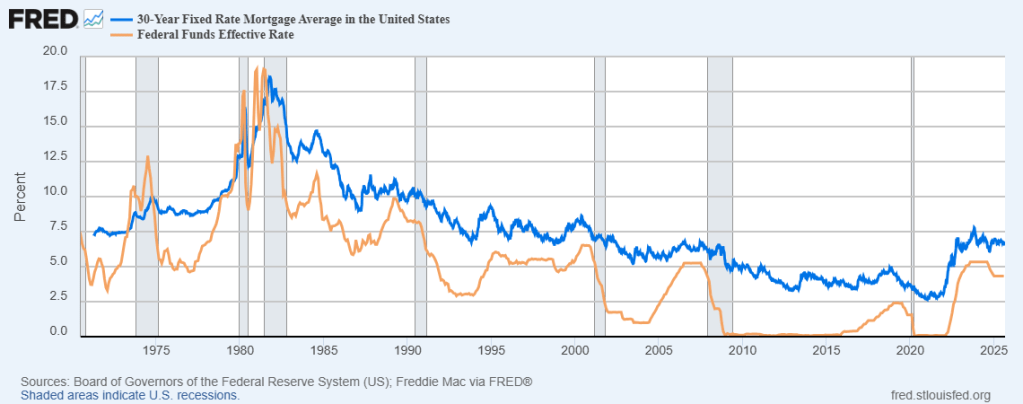
The Fed hasn’t touched rates under Trump, but were hyperactive under Biden.

Let the good times roll? I wonder if Jay Powell and the other Fed honchos are taking Jackalope Rides in Jackson Hole, WYO?

Dazed And Confused? Existing Home Sales Rose 0.8% YoY In July, Median Existing Home Prices Up 0.2% From One Year Ago (And Why Fed Rate Cuts Won’t Matter)

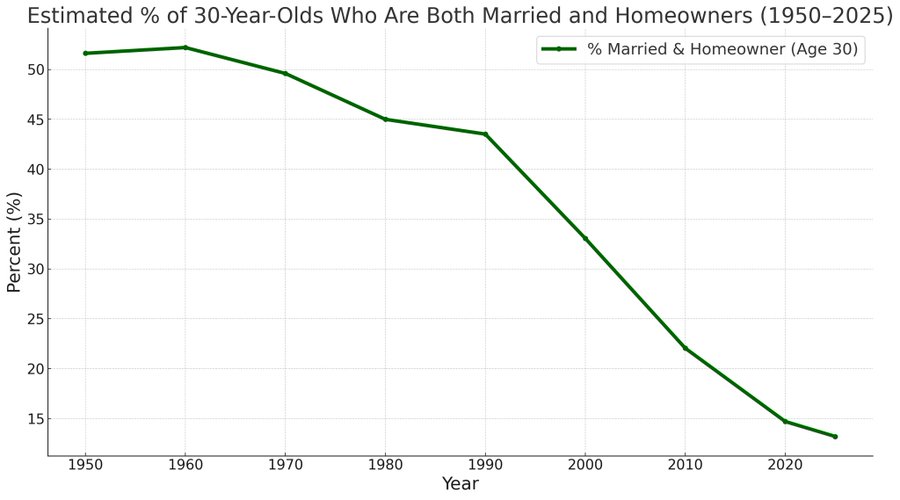
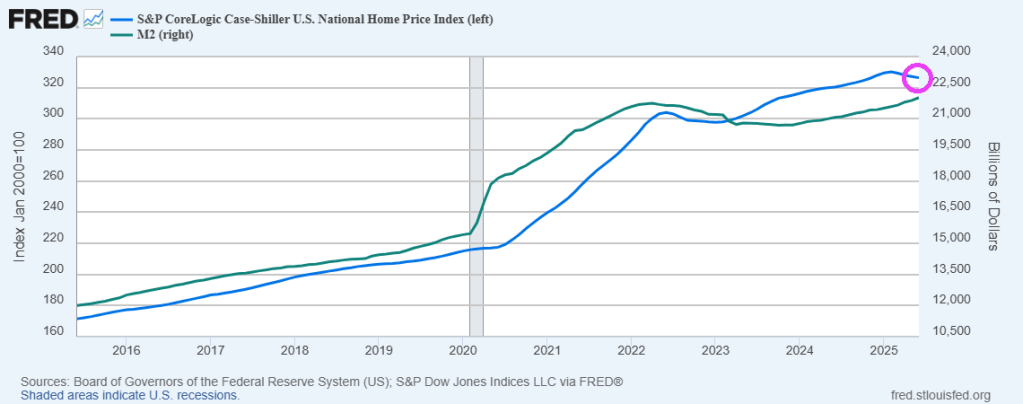
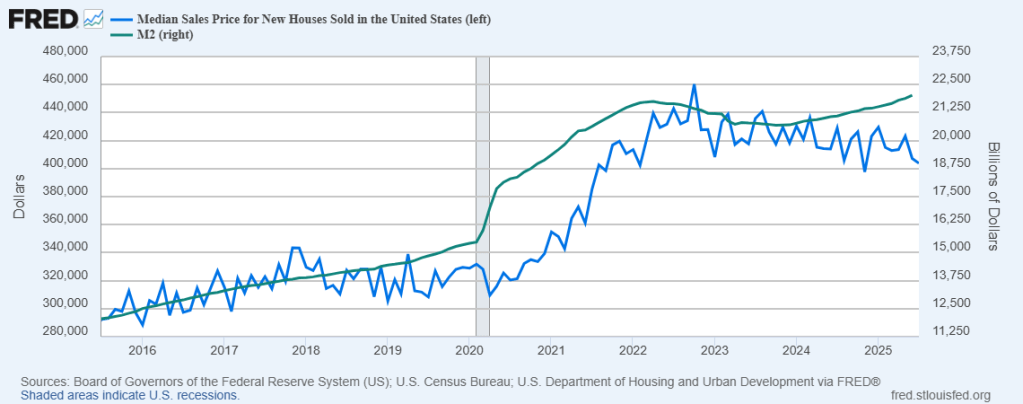
The Federal Reserve is Dazed and Confused. Their money printing is making housing progressively more expensive and unaffordable.

Existing-home sales increased by a measley 2.0% in July, according to the National Association of REALTORS® Existing-Home Sales Report.

Month-over-month sales increased in the Northeast, South, and West, and fell in the Midwest. Year-over-year, sales rose in the South, Northeast, and Midwest, and fell in the West.

• 2.0% increase in existing-home sales – seasonally adjusted annual rate of 4.01 million in July.

Year-over-year: 0.8% increase in existing-home sales

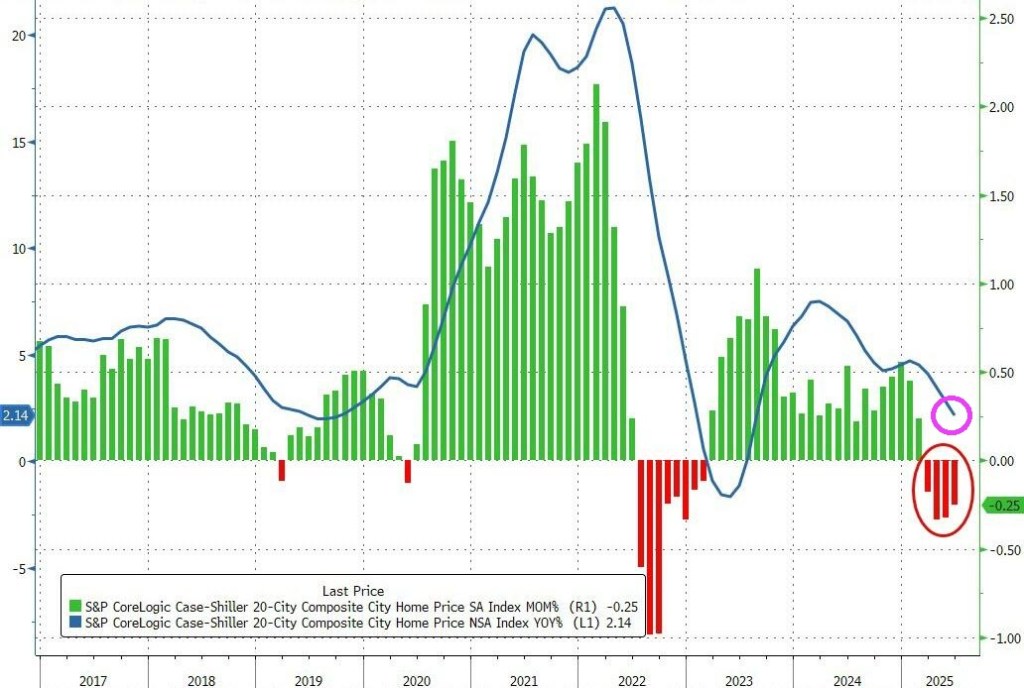
Median existing-home price for all housing types, up 0.2% from one year ago ($421,400) – the 25th consecutive month of year-over-year price increases.

It will be hard to make housing more affordable as long as The Fed keeps printing money.

Powell et al cutting rates 25 basis points won’t really matter as long as they continue to print money. Unfortunately, M2 VELOCITY peaked under the Clinton Administration and has declined since despite frantic money printing.

What happended in 1995? Clinton’s National Homeownership Strategy that mandated HUD partners (GNMA, FHA, Fannie Mae, Freddie Mac, banks, etc.) to lower credit standards to encourage homeownership.

We need FHFA Director Bill Pulte to avoid doing what Democrats love (everything free or cheap).

Keep On Printing? Home Price Growth Linked To Fed Money Printing (Cleveland OH Is Fastest Growing City In Terms of Home Prices Tampa FL Fastest Declining)

Is This My Free One-Way Bus Ticket To Cleveland? Cleveland is leading the nation in home price growth at 4.7% YoY. Followed closely by Hartford CT, Louisville KY, Detroit MI and Buffalo NY.

Well, if The Fed would stop printing money (M2), home prices would decline. But The Fed will keep on printing!

Of course, the top 1% of net worth households are doing quite well thanks to The Fed’s eternal money printing.

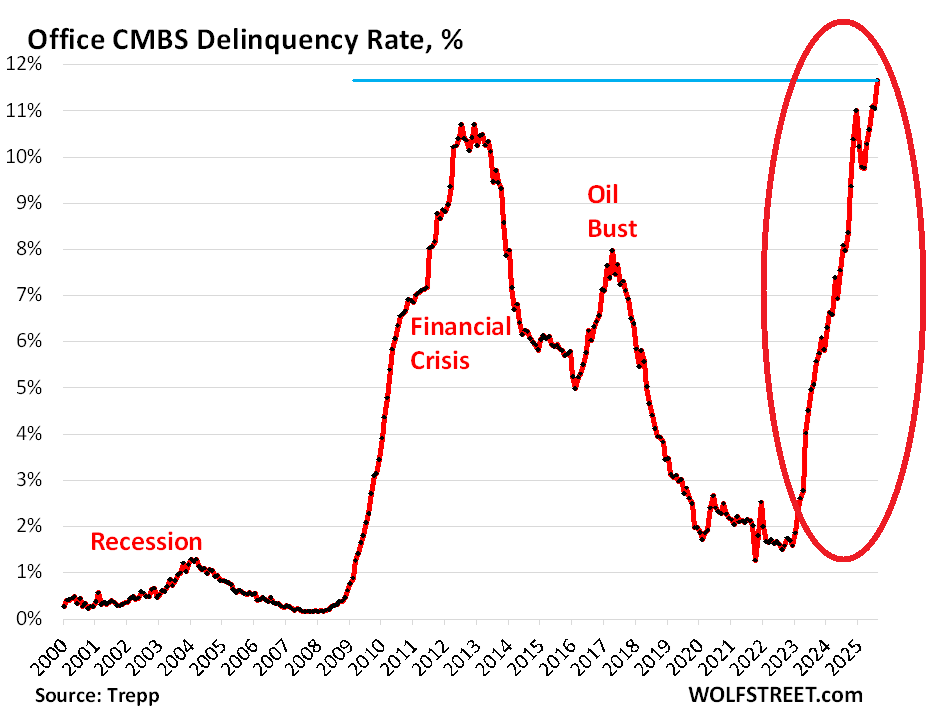
On the commercial RE side, US office vacancy rates are approaching 20%.

Lastly, Tampa FL is the slowest growing area. Actually declining at a rate of -6.2% YoY.

Despite A Glut Of 1-Unit Homes For Sale (511k), 627k Units Built In June (Multifamily Starts Soar!)

Celebrate, dance to THEIR music. Housing construction is massively overregulated leading to a glut in unaffordable housing being built.

I mentioned the glut of new builds in my post yesterday. Construction remains over-regulated driving up the costs of new builds

As you can see, new single family homes for sale is 511,000. But single family homes under construction was 627,000 units in June.

Not surprisningly, housing completions were up in June, but generally down since late 2024.

Multifamily starts soared in June (red line).

Changeling! 511,000 New Homes For Sale In US, Highest Inventory Since October 2007 (Mortgage Rates About The Same As In 2007 But Home Prices Are 87.5% Higher Today Than In 2007!)

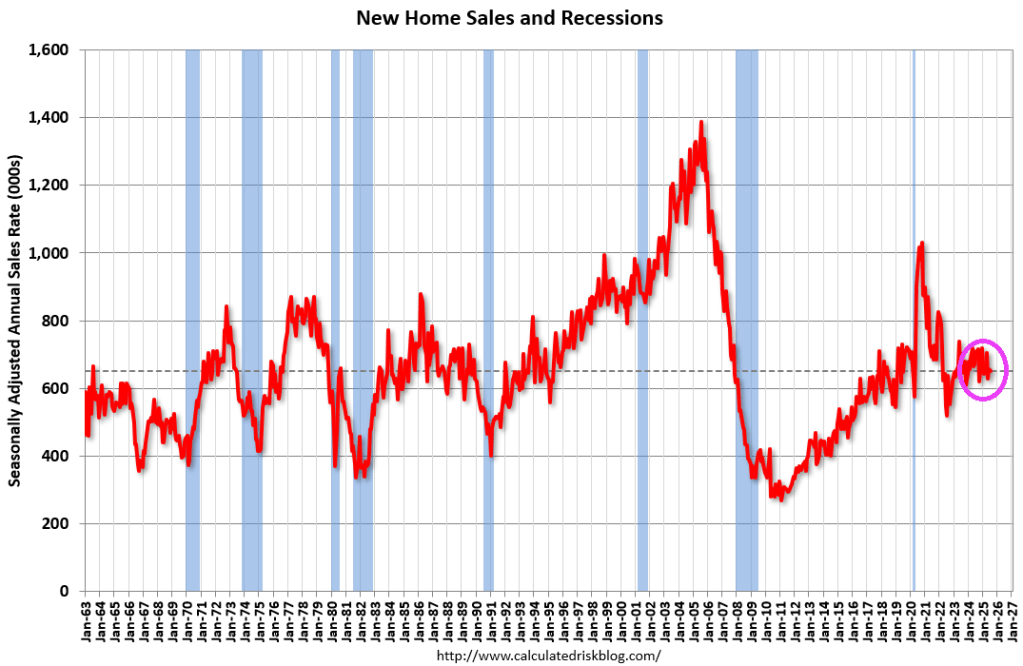
The US housing market is a changeling, going from a mega glut during the financial crisis to a tight market, then back to a glut … again. In fact, there are 511,000 new homes for sales in the US, the highest inventory since the financial crisis.

Combine all-time high home prices with RELATIVELY high mortgages, and we have an affordability crisis once again.

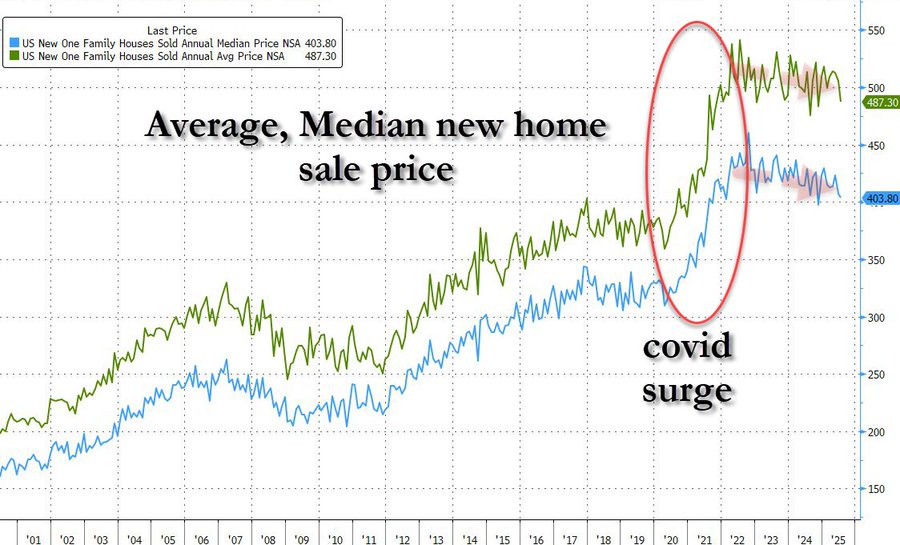
While we have the most new homes for sales since 2007, mortgage rates are about the same as in 2007 (orange line). But home prices are 87.5% higher today than in 2007!

When government gets involved, what could go wrong?

Atlanta Fed’s GDPNow Q3 At 2.5%, Federal Government STILL Spending Like Crazy (Inflation Still Going On)

The Trump economy continues to boom. The Atlanta Fed’s GDPNow forecast model shows real GDP growing at 2.5%.

The GDPNow model estimate for real GDP growth (seasonally adjusted annual rate) in the third quarter of 2025 is 2.5 percent on August 7, unchanged from August 5 after rounding. After this morning’s wholesale trade report from the US Census Bureau, the nowcast of the contribution of inventory investment to third-quarter real GDP growth increased from 0.76 percentage points to 0.82 percentage points.

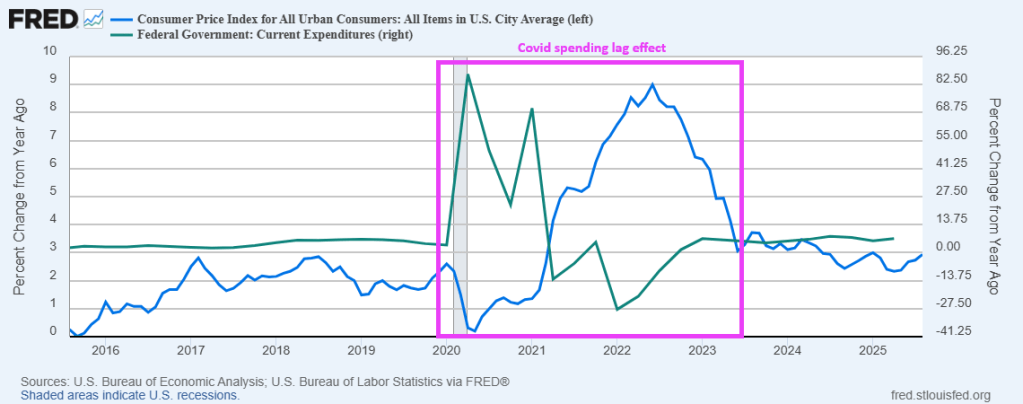
Federal spending, elevated with the outbreak of Covid in 2020 remains higher than pre-Covid levels as does M2 Money printing.

And if you wonder why inflation is still going on, it is because the Federal government is still spending like crazy.

Another sign of economic health under Trump. The gap between 2-year and 30-year US yields has steepened to the widest in three years.

Good News! Purchase Mortgage Applications Rose 17 Percent Since Same Week Last Year (Mortgage Refis Surge 23 Percent From Previous Week)

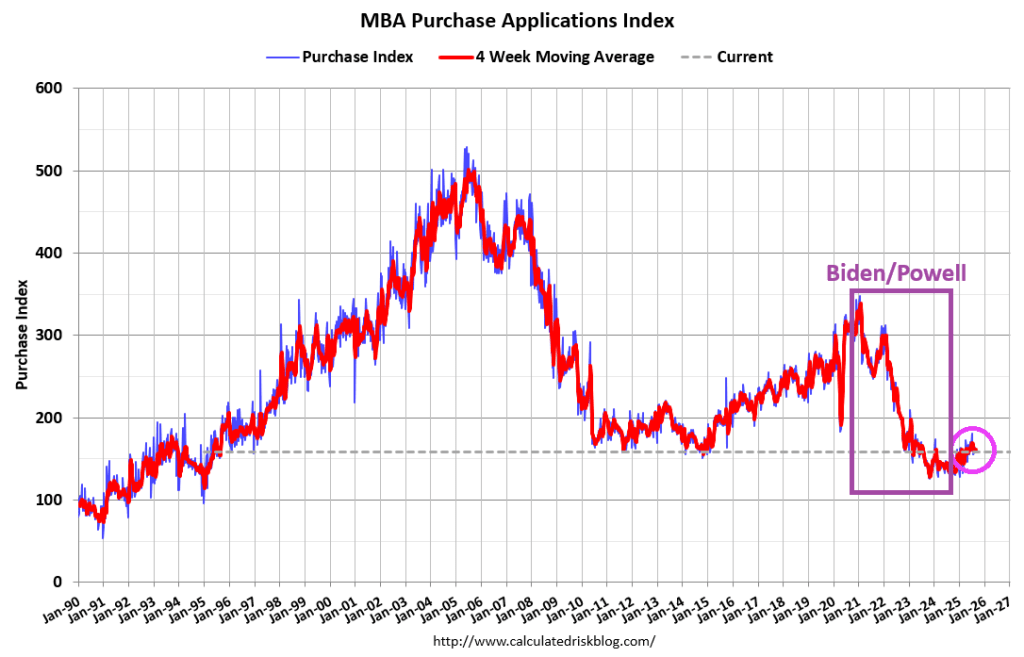
The Fed didn’t try, but mortgage rates fell and mortgage applications rose 10.9% week-over-week.

Mortgage applications increased 10.9 percent from one week earlier, according to data from the Mortgage Bankers Association’s (MBA) Weekly Mortgage Applications Survey for the week ending August 8, 2025.

The Market Composite Index, a measure of mortgage loan application volume, increased 10.9 percent on a seasonally adjusted basis from one week earlier. On an unadjusted basis, the Index increased 10 percent compared with the previous week.  The seasonally adjusted Purchase Index increased 1 percent from one week earlier. The unadjusted Purchase Index increased 1 percent compared with the previous week and was 17 percent higher than the same week one year ago.
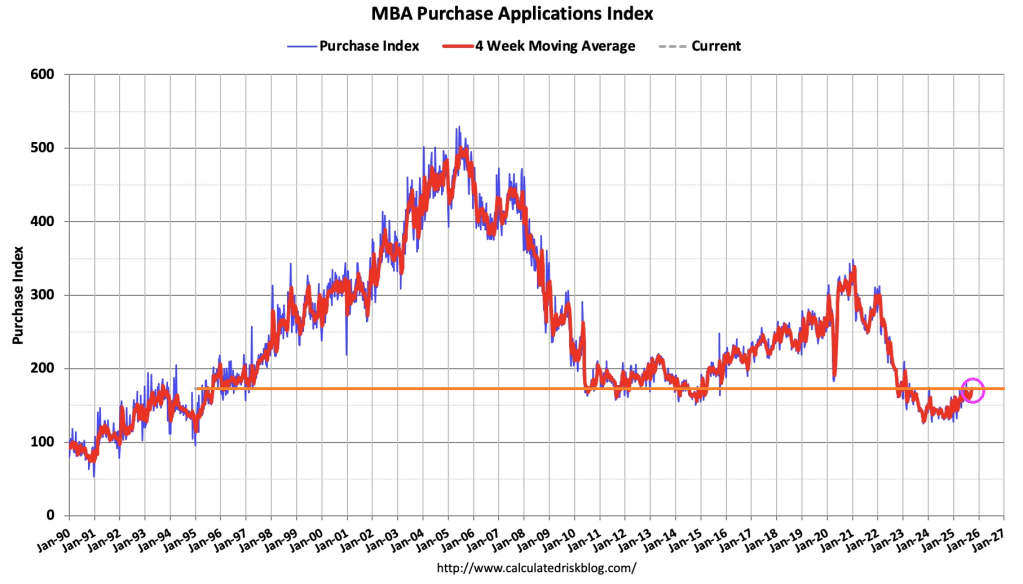
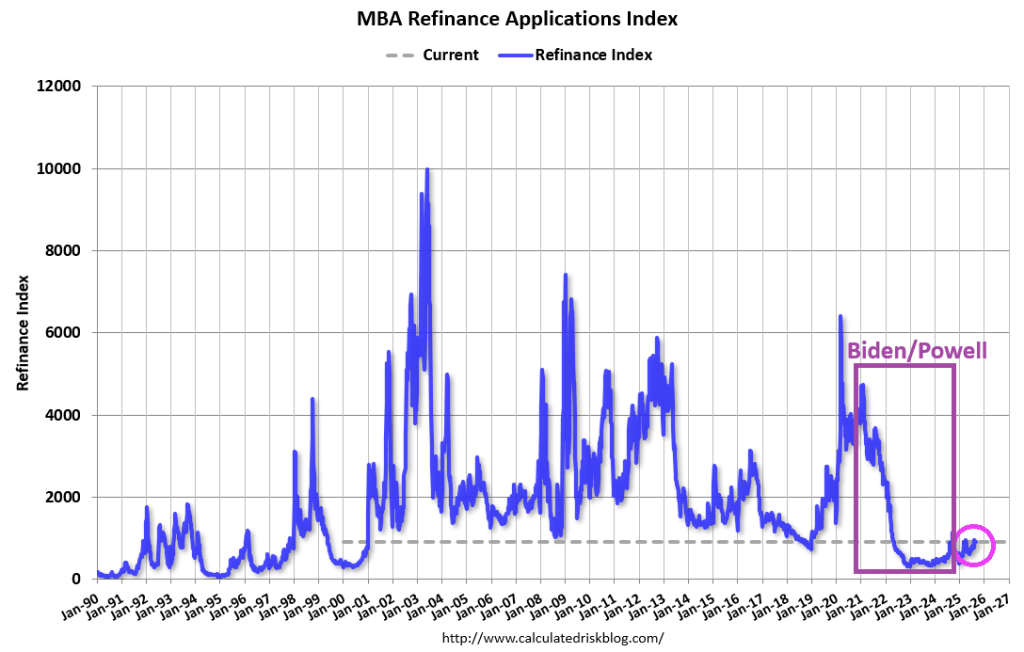
The Refinance Index increased 23 percent from the previous week and was 8 percent higher than the same week one year ago.
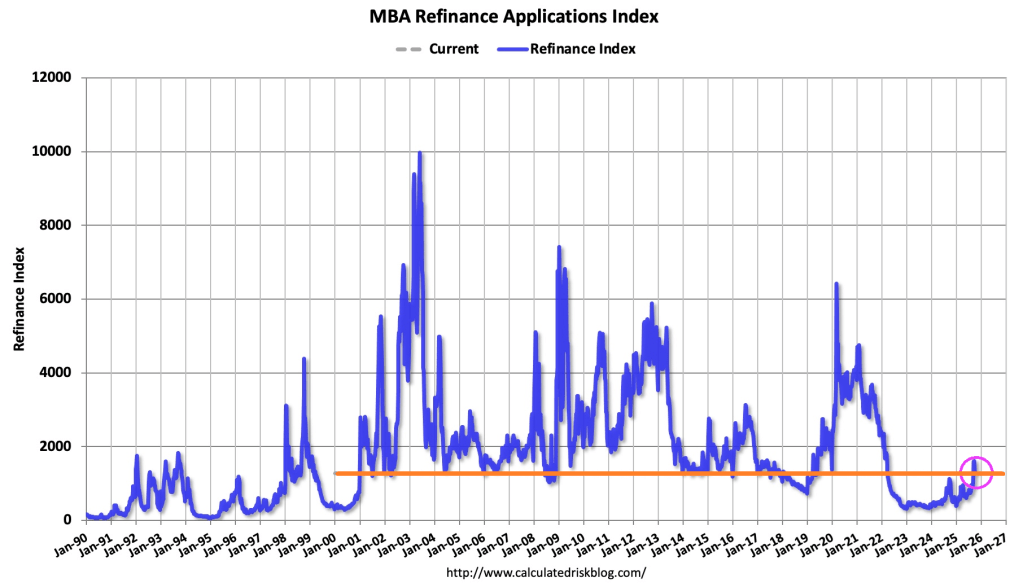
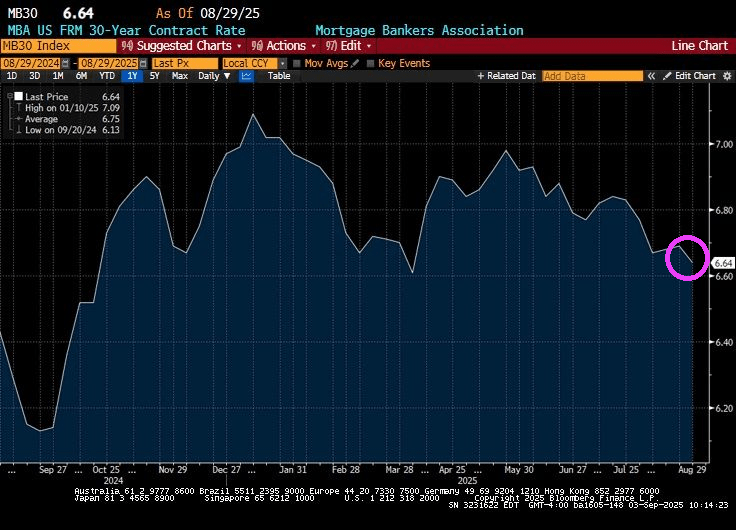
The 30-year fixed mortgage rate declined to 6.67 percent last week, which spurred the strongest week for refinance activity since April. Borrowers responded favorably, as refinance applications increased 23 percent, driven mostly by conventional and VA applications. Refinances accounted for 46.5 percent of applications and as seen in other recent refinance bursts, the average loan size grew significantly to $366,400. Borrowers with larger loan sizes continue to be more sensitive to rate movements.

Good News! Business Applications Booming As Inflation Remains Calm (No Negative Impacts From Tariffs)

Let the good times roll! Booming business applications under Trump and calm inflation.
The latest inflation report continues to show no negative impact from tariffs. Core goods prices were up 0.2% in July. They are up just 1.1% over the past 12 months and are actually up a lesser 0.8% since President Trump began phasing in tariffs.

Business applications are booming under Trump’s economy.

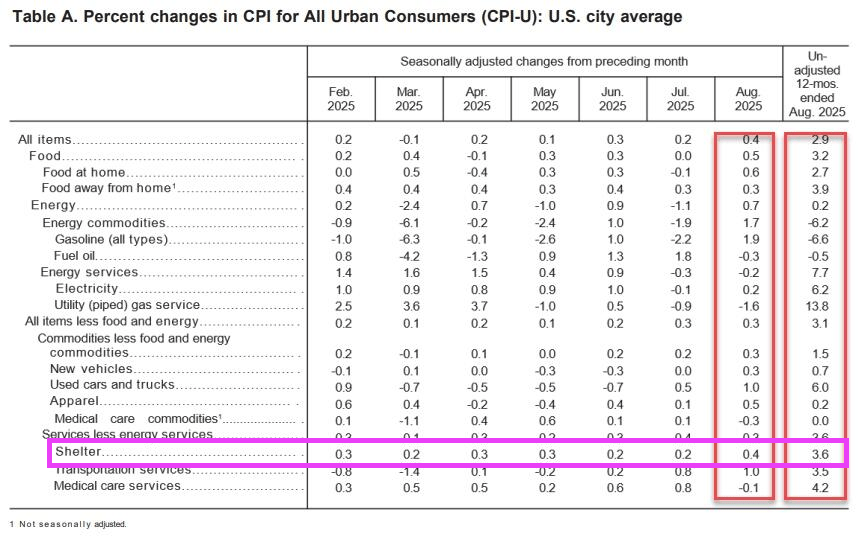
While consumer prices are calm (2.7% YoY).

Shelter inflation is higher than the average price increase (3.7% YoY).

Mortgage Applications Increased 3 Percent From Previous Week (Purchase Apps Rose 1 Percent WoW)

They can’t accuse Fed Chair Jerome Powell of trying too hard to help Donald Trump. Mortgage rates moved lower last week, following declining Treasury yields as economic data releases signaled a weakening U.S. economy. As a result, the 30-year fixed rate decreased for the third straight week to 6.77 percent. As a result …

The Market Composite Index, a measure of mortgage loan application volume, increased 3.1 percent on a seasonally adjusted basis from one week earlier. On an unadjusted basis, the Index increased 3 percent compared with the previous week. The seasonally adjusted Purchase Index increased 2 percent from one week earlier. The unadjusted Purchase Index increased 1 percent compared with the previous week and was 18 percent higher than the same week one year ago.

The Refinance Index increased 5 percent from the previous week and was 18 percent higher than the same week one year ago.

And the number of sellers in the housing market is greatly outweighing the number of buyers.

Mortgage and housing economists should breathe a sigh of relief that Bidenomics is over, but I doubt it they will.