
Call this a double whammy! Red-hot rents combined with a slowing economy.
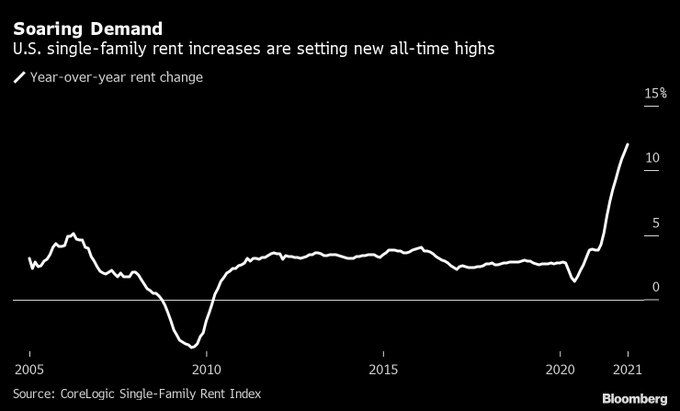
According to CoreLogic, single-family annual rent growth finished 2021 at a new record: 11.7% YoY for high tier rental properties and 10.4% YoY for low tier rental properties.
Of course, southern and southwest rental properties are seeing the fastest rent growth. Particularly Miami at 36% YoY. Phoenix is no slouch at 19% growth in rents.
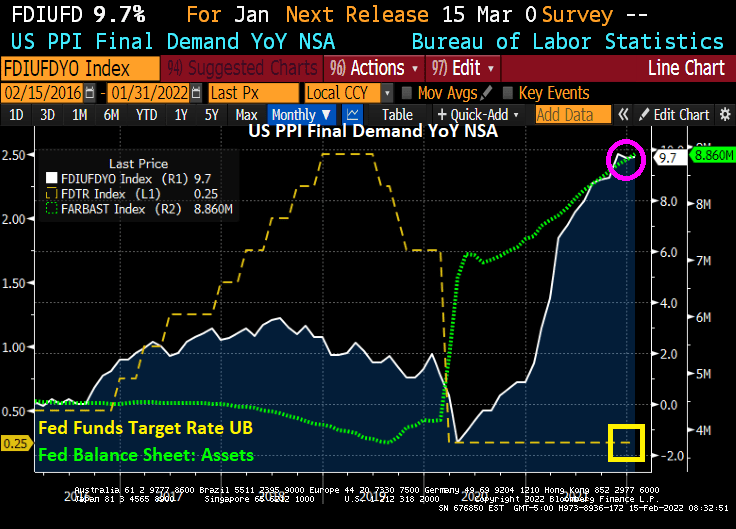
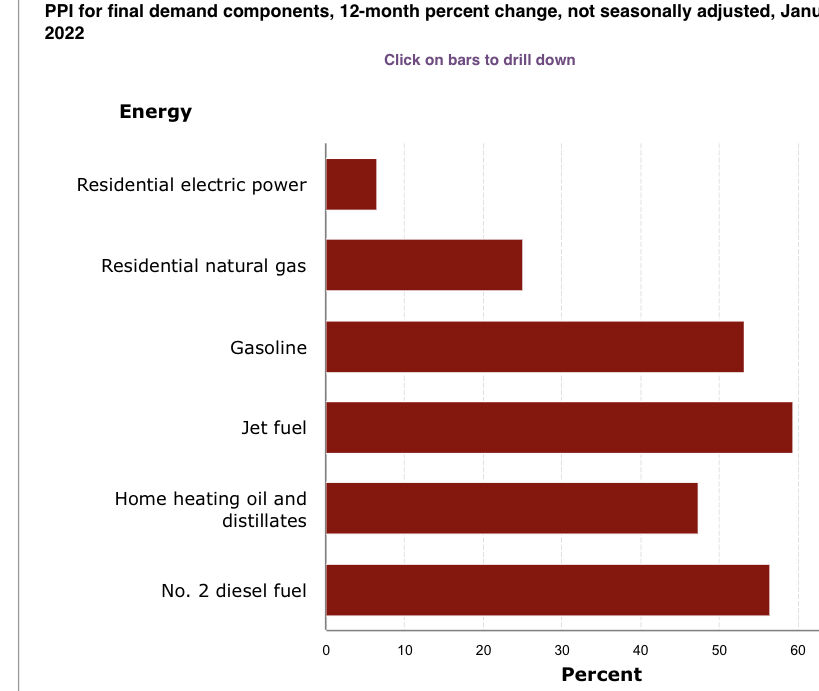
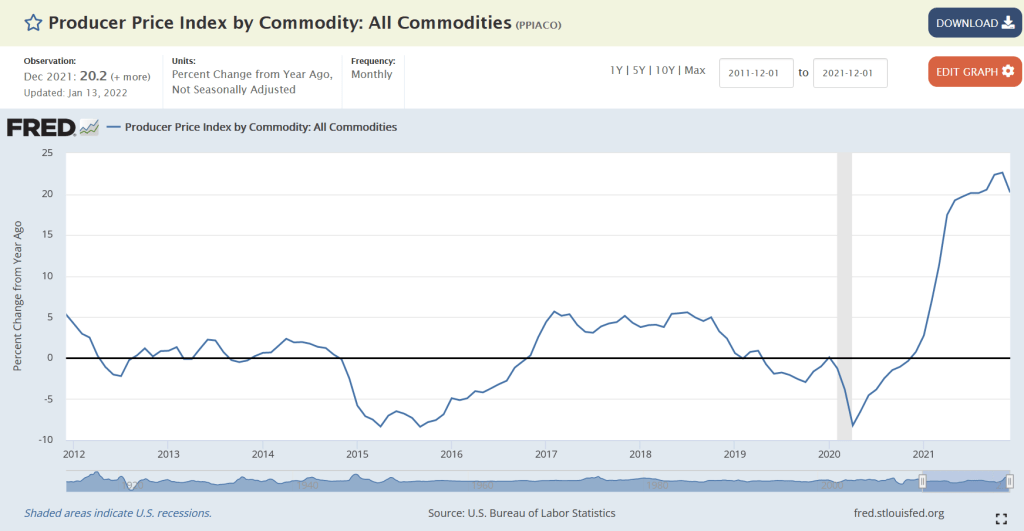
Today, the Final Demand Producer Price Index (PPI) printed at 9.7% YoY.
Biden claimed inflation was caused by COVID. How about 1) Biden’s anti-fossil fuel policies combined with 2) excessive fiscal (Biden and Congress) and excessive monetary stimulus (Fed)?
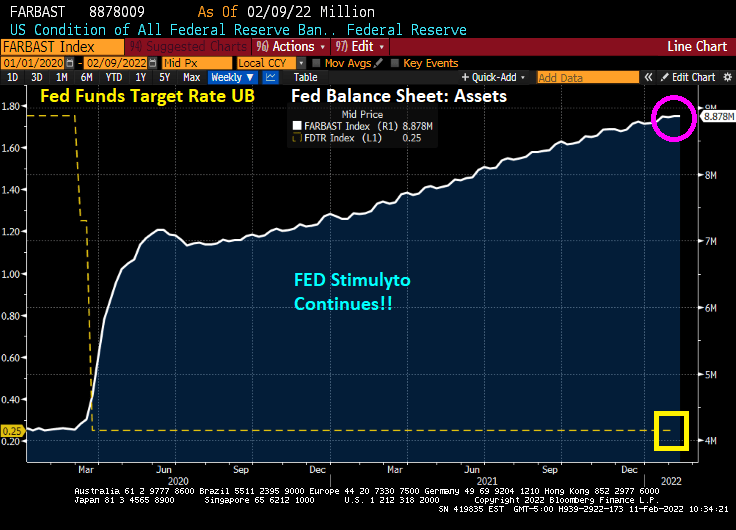
The Fed held its behind-closed-doors meeting on Monday, but nothing has been released about what they discussed. Suffice it to say, they have left the staggering monetary stimulus in play.
I wonder if The Fed is concerned about a soft landing with proposed rate increases.
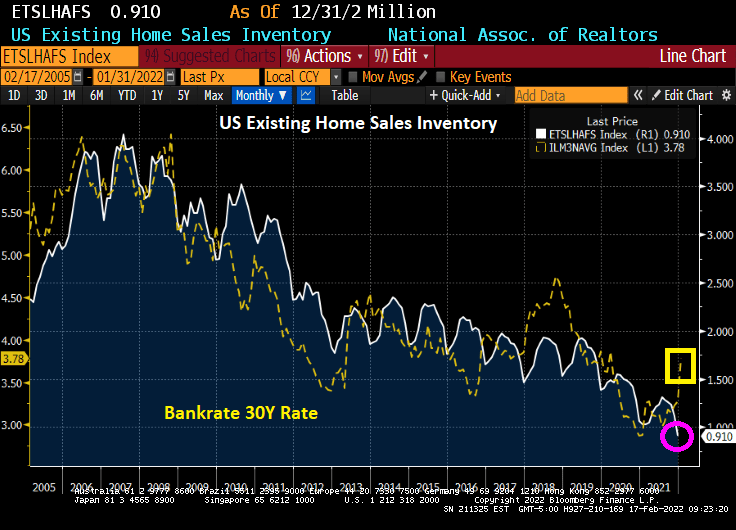
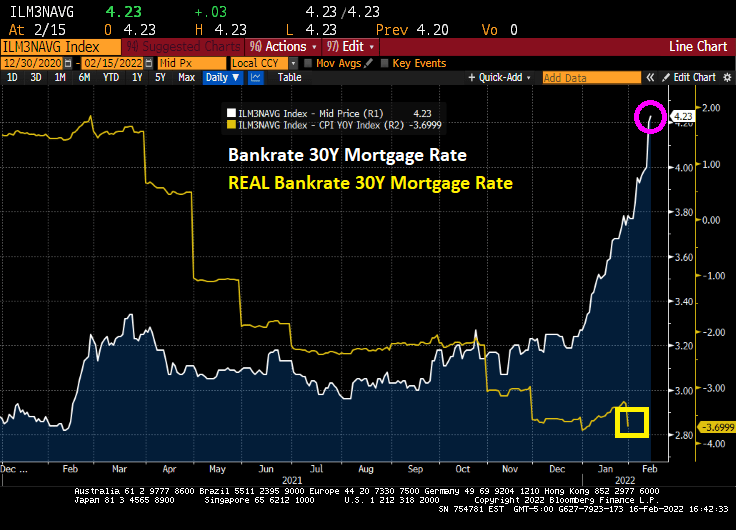
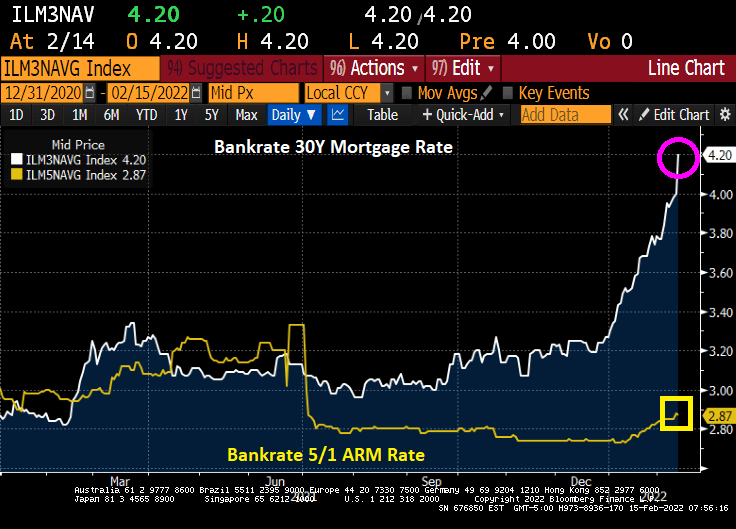
The US 30-year mortgage rate broke through the 4% barrier. According to Bankrate’s mortgage survey, the 30-year mortgage rate is now 4.2%.
Even more interesting is the 5/1 Adjustable Rate Mortgage (ARM) rate falling slightly to 2.87%. That is quite a spread between the 30-year fixed and 5/1 ARM rates! That is 133 basis points.
Federal Reserve Bank of St. Louis President James Bullard said he supports raising interest rates by a full percentage point by the start of July — including the first half-point hike since 2000— in response to the hottest inflation in four decades.
“I’d like to see 100 basis points in the bag by July 1,” Bullard, a voter on monetary policy this year, said in an interview with Bloomberg News on Thursday. “I was already more hawkish but I have pulled up dramatically what I think the committee should do.”
Bullard’s plan involves spreading the increases over three meetings, shrinking the Fed’s balance sheet starting in the second quarter, and then deciding on the path of rates in the second half based on updated data. He said he was undecided on whether the March meeting should begin with 50 basis points, and would defer to Fed Chair Jerome Powell in leading the discussion. Powell, at a press conference in January, didn’t rule out the idea of such a move.
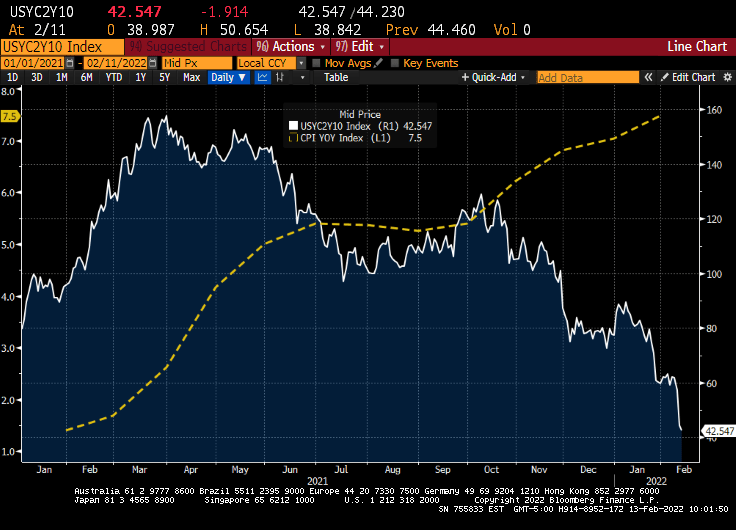
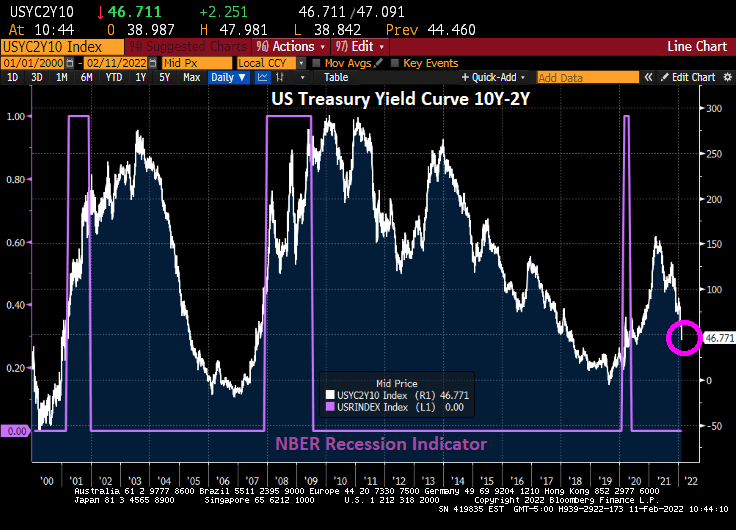
Bullard’s comments, along with the war drums along The Potomac about a Russian invasion of The Ukraine, are causing the 2-year Treasury yield to rise faster than the 10-year yield.
Resulting in a crashing 10Y-2Y curve.
The GINI measure of income inequality is at an all-time high as the purchasing power of the US Dollar is at an all-time low. Way to go, Federal Reserve and Congress!
What will The Fed decide at their emergency, closed-door meeting today? Nice transparency, Powell!
Between raging inflation and the potential wag-the-dog Russian/Ukraine tensions, The Fed has a lot to consider. Particularly if they are watching the 10Y-2Y Treasury yield curve plunging.
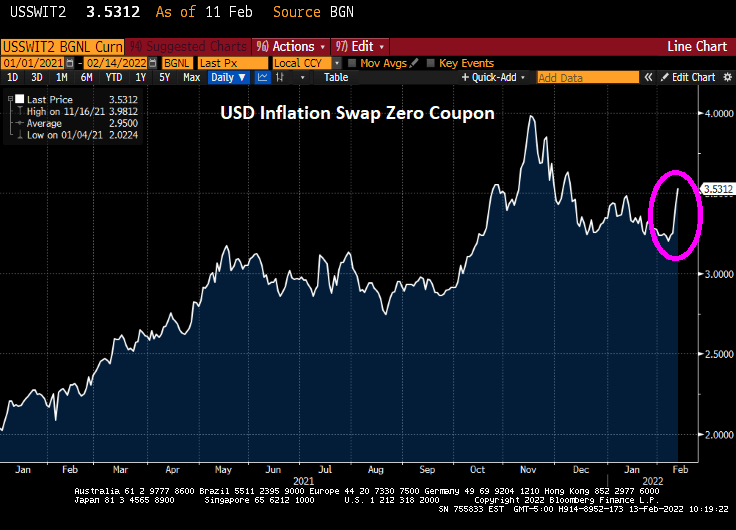
And we have the USD Inflation Swap Zero Coupon rate rising again.
While the Treasury and US Dollar Swaps curve are upward-sloping (not surprising since The Fed has aggressively pushed short-term rates to near zero), we are seeing Treasury Inflation Protected (TIPS) in negative territory until we get to 30 years.
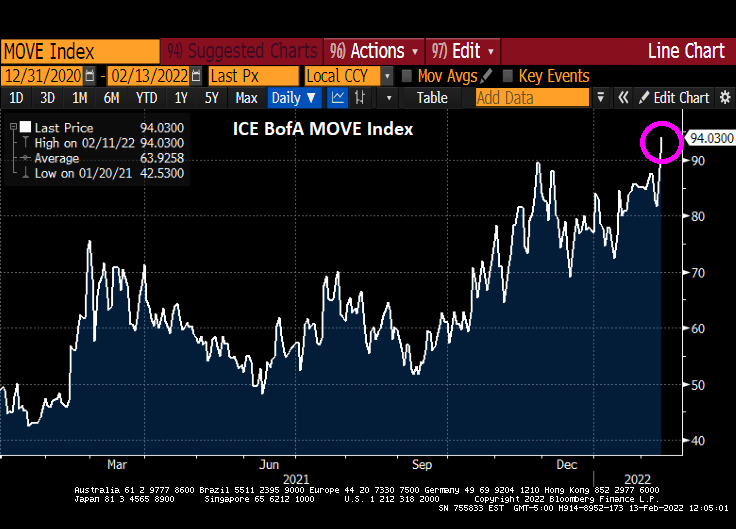
The ICE BofA MOVE volatility index, a yield curve weighted index of the normalized implied volatility on 1-month Treasury options, has more than doubled under Biden.
And with Russian-Ukraine tensions growing, we see WTI crude oil up 96% since Biden took office.
Monday should be an interesting day. The market is now pricing in 6 rate hikes for 2022.
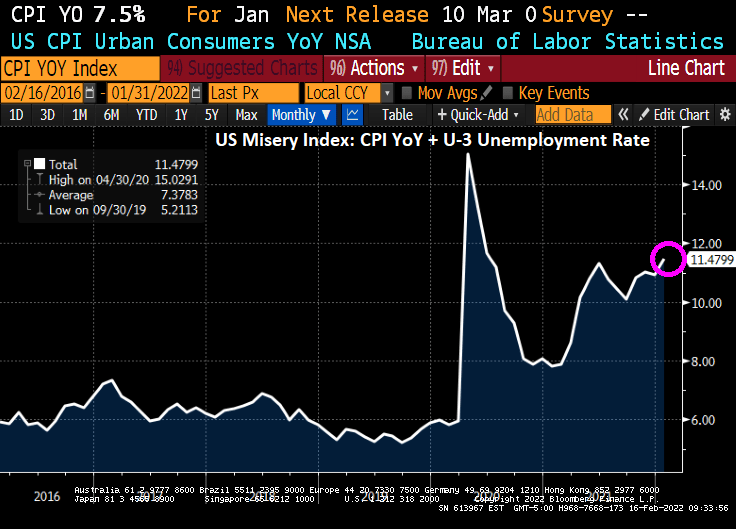
I thought the last inflation report of 7.5% inflation was bad. But then the Atlanta Fed updated their inflation measure for flexible prices. Flexible inflation, less food and energy, is roaring at 19% YoY!
Flexible prices are those prices that adjust rapidly. Along with commodity prices.
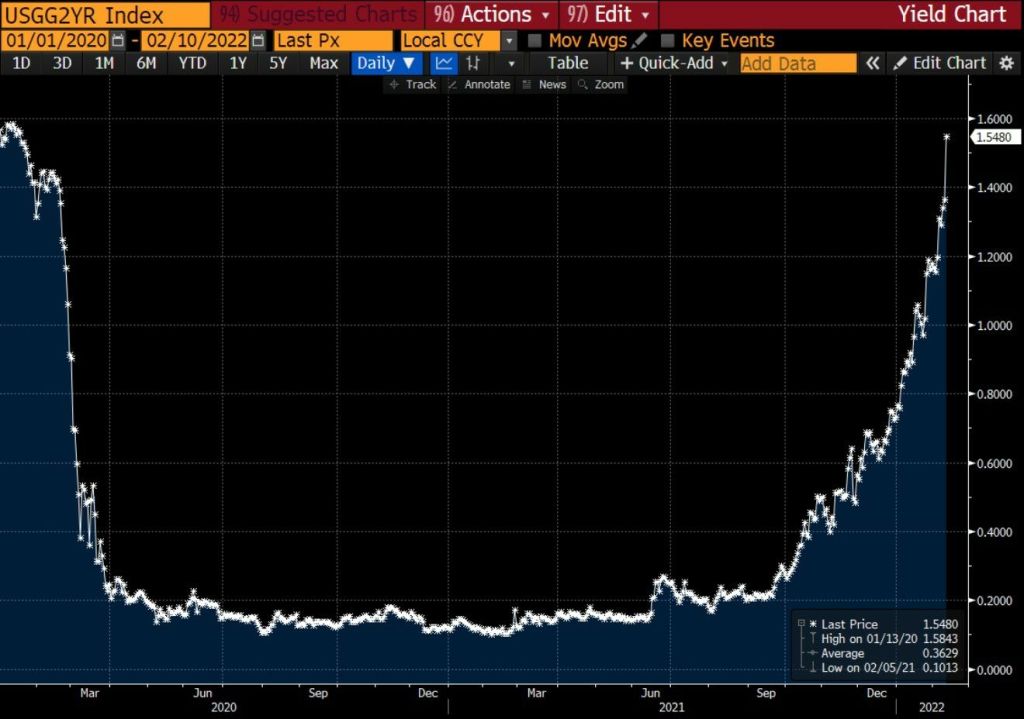
Speaking of rapid rises, take a look at the 2-year US Treasury yield since COVID struck in early 2020.
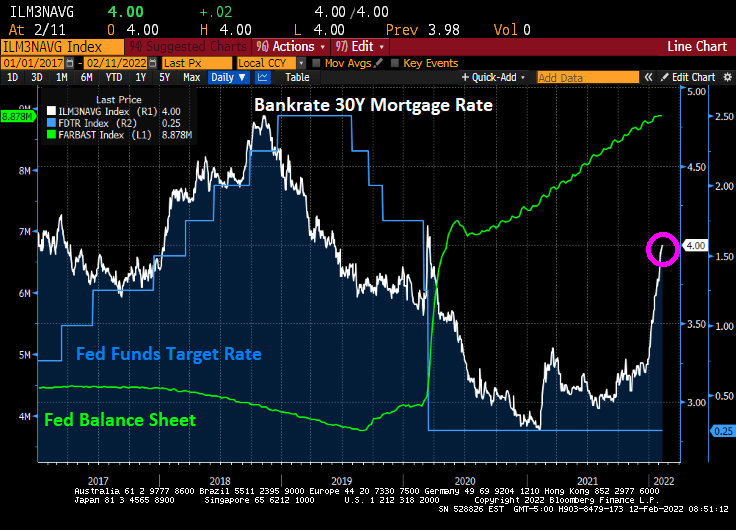
We did see 2-year Treasury yields generally correlated with The Fed Funds Target Rate … at least until COVID struck. Since mid-2020, The Fed Funds Target Rate remains at 0.25% while the 2-year Treasury yield is roaring back with fuzzy expectations from The Fed’s leadership.
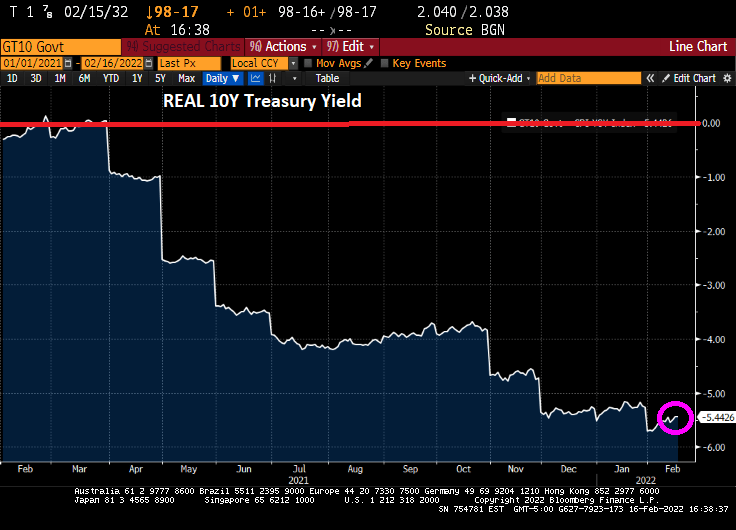
The 10-year Treasury yield is not rising as rapidly as the 2-year Treasury yield, but it is hovering around 2%.
But Bankrate’s 30-year mortgage rate is rising like a comet, similar to the 2-year Treasury yield.
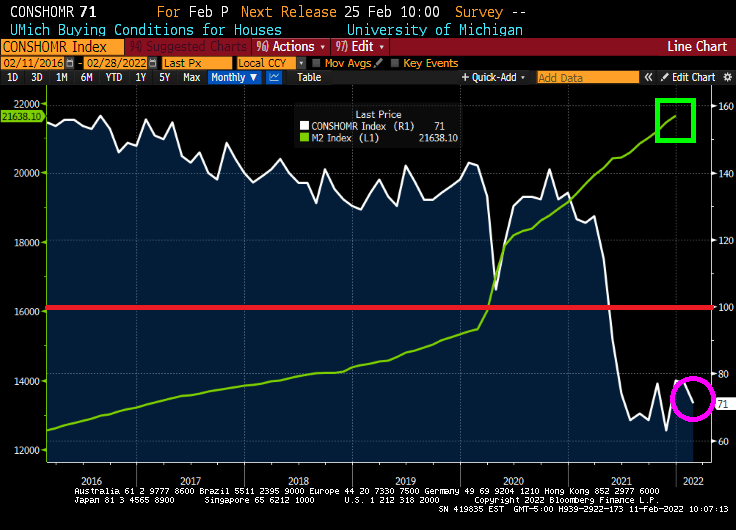
The University of Michigan consumer survey is out for February. And an ugly survey is it! Buying conditions for housing fell to 71 as The Federal Reserve continues it monetary stimulypto!
Despite 7.5% inflation, The Fed continues its “Stimulytpo” monetary policy.
US consumer confidence is the lowest in 10 years as the yield curve crashes.
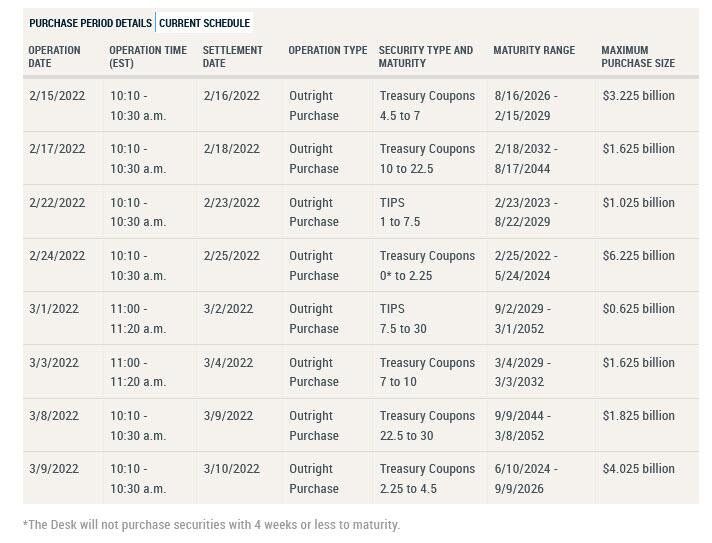
Here is the POMO schedule just released by The Fed.
I am reminded of my roommate at University of Wyoming who played James Brown over and over and over again. Much like The Fed doing nothing to curb inflation. Until they finally do something with a crashing yield curve.
Well, it has been a cringe-worthy year+ under President Biden. West Texas Intermediate Crude futures price is up 91% and the Commodity Research Bureau Foodstuffs index is up 47%. Talk about Biden’s energy folicies being passed through to American households in the form of higher food costs and energy prices!
And then we have mortgage rates. Bankrate’s 30Y mortgage rate is up to almost 4%, up 39% since the beginning of 2021.
Other central banks are raising rates like banshees on the moor, while The Federal Reserve continues to send conflicting signals about possible March rate hikes.
Goldman Sachs sees 7 rate hikes in 2022, culminating in an eventual 2% rate in December.
Fed Funds Futures are signalling 7 rates increases by the February 1, 2023 meeting.
The Mortgage Bankers Association (MBA) released their weekly mortgage application survey this morning. Mortgage applications decreased 8.1 percent from one week earlier, for the week ending February 4, 2022.
The Refinance Index decreased 7 percent from the previous week and was 52 percent lower than the same week one year ago. The seasonally adjusted Purchase Index decreased 10 percent from one week earlier. The unadjusted Purchase Index decreased 3 percent compared with the previous week and was 12 percent lower than the same week one year ago.
And mortgage refinancing applications are down 50% since the same week last week.
Here are the stats. Pretty much down across the board.
You must be logged in to post a comment.