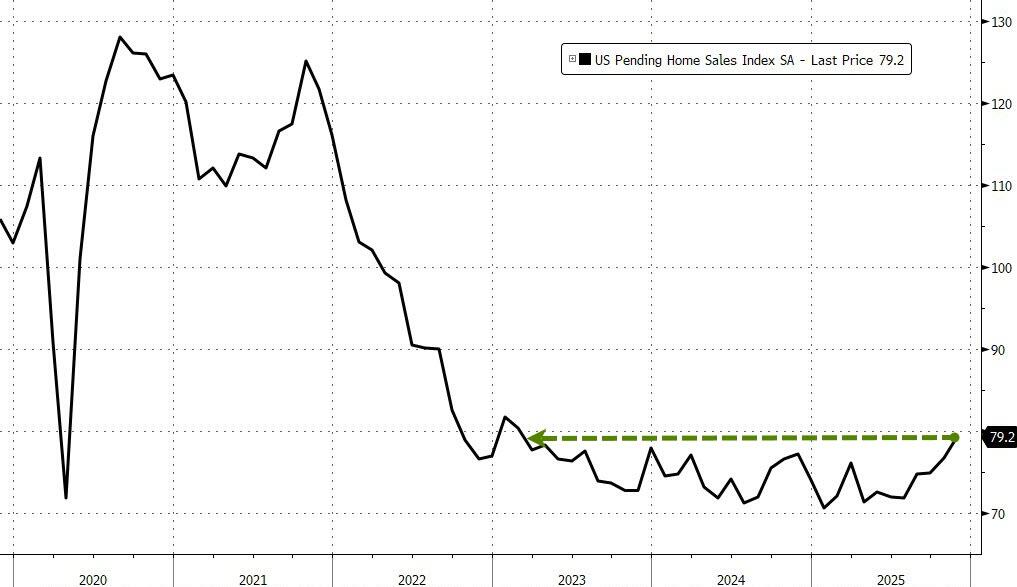
Housing Thunder? Pending Home Sales Surge 3.3% MoM (Highest Since Feb 2023)

Housing thunder? Or housing lightning!

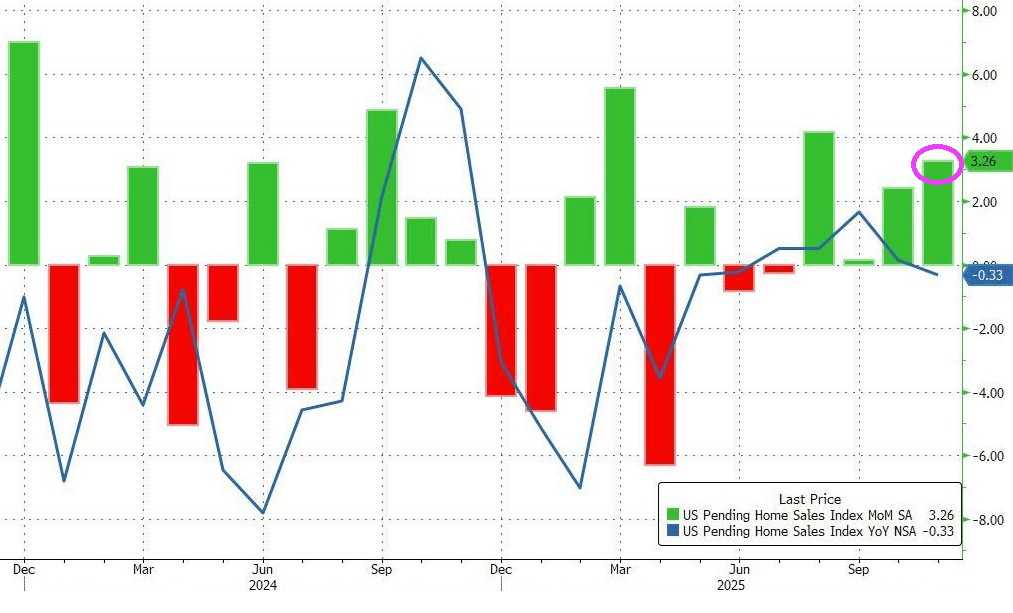
Pending sales of existing homes in the US surged 3.3% MoM (more than the expected 0.9% MoM move) in November as a modest improvement in prices and mortgage rates encouraged buyers.

The gain was broad-based across regions and exceeded all but one estimate in a Bloomberg survey of economists, but left the YoY change in sales somewhat stagnant on an NSA basis.

Signings have now increased for four straight months, matching a streak seen during the frenzied housing market of the pandemic.
The trade association’s report on Monday showed contract signings rose in each US region last month to their highest levels of the year. The West posted the largest increase, followed by the South, the nation’s largest home-selling region.

November’s surge dragged the Pending Home Sales Index to its highest since Feb 2023

Bloomberg reports that the recent data point to the gradual improvement many economists see for the housing market into 2026.

Mortgage rates that were close to 7% in May have since settled in the 6.3% to 6.4% range, and home prices are growing at a much slower rate compared to last year.

That’s helped fuel small gains in contract closings in recent months. However, economists and industry experts have widely different expectations for next year.

In a recent survey of nine market analysts, estimates for the home resale market ranged from 1.7% to 14% sales growth, with the rosiest projection coming from NAR’s Yun.

Pending-homes sales tend to be a leading indicator for previously owned homes, as houses typically go under contract a month or two before they’re sold.
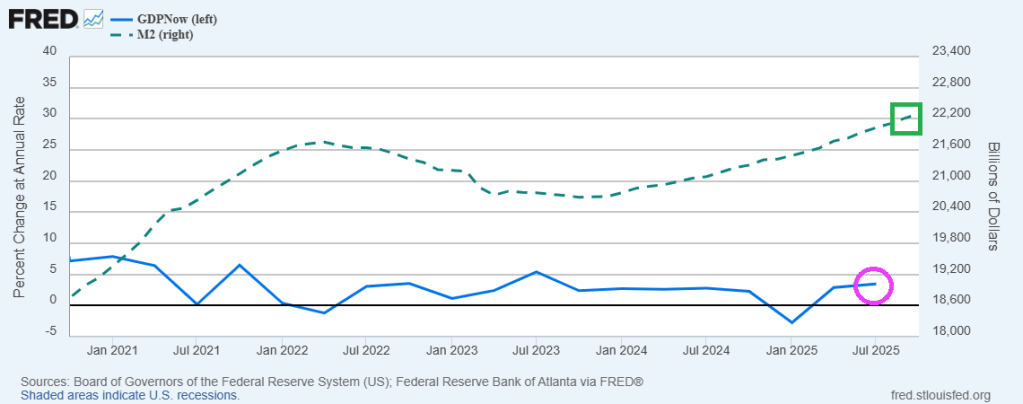
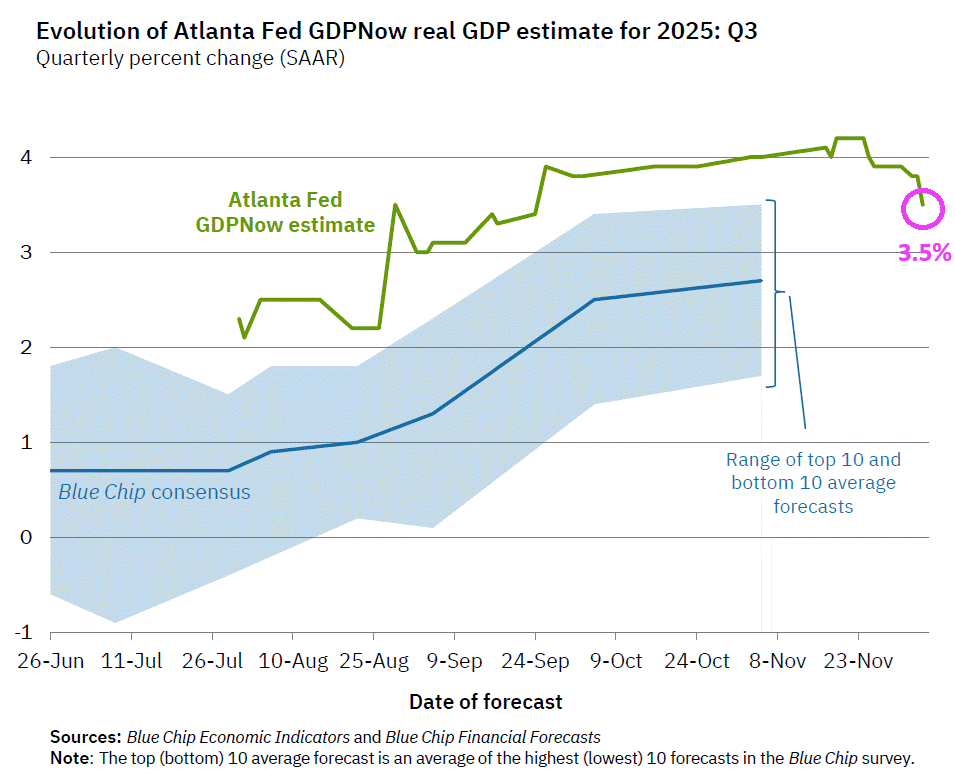
Keep On Printing? US GDP Still Growing At 3.5% Despite Malaise In Construction And Imports (So Much For Tariff Hysteria)

Well, tariffs didn’t turn out to be a lethal weapon as Democrats predicted. The US economy continues to grow!

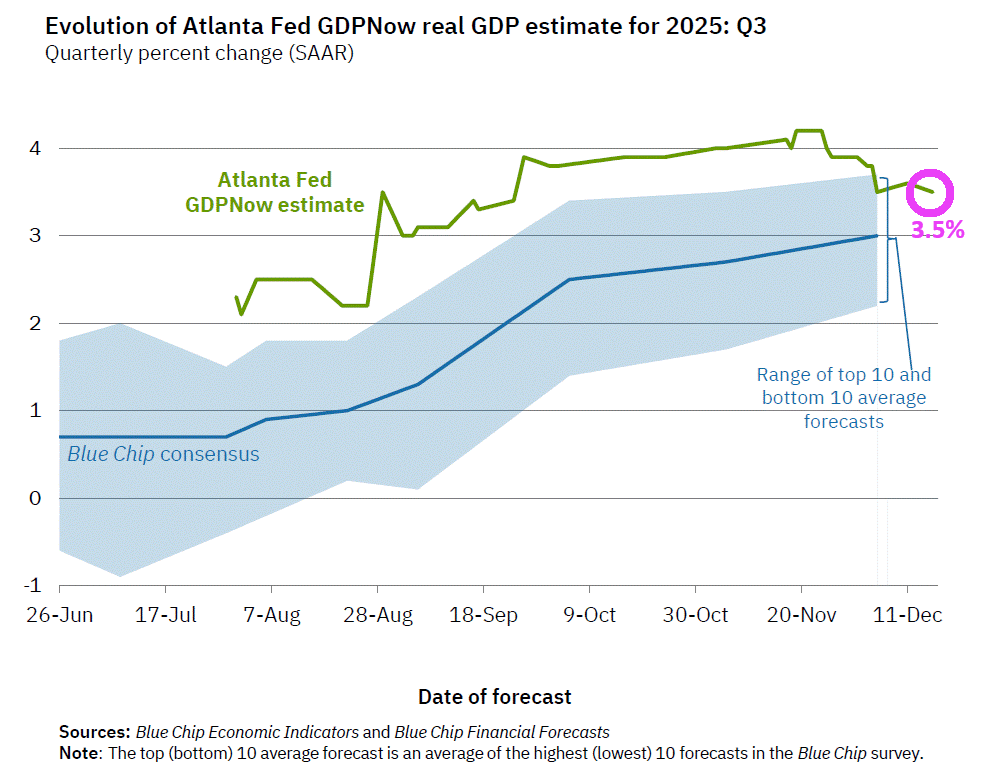
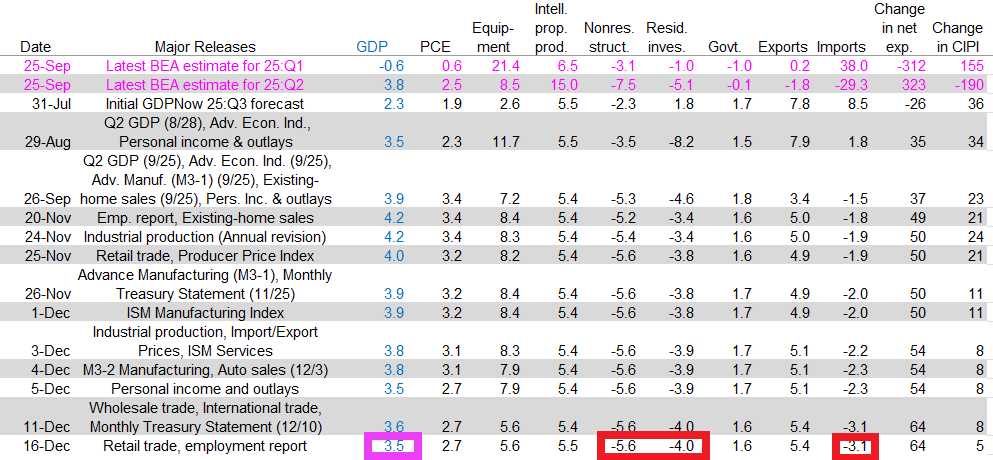
The GDPNow model estimate for real GDP growth (seasonally adjusted annual rate) in the third quarter of 2025 is 3.5 percent on December 16, down from 3.6 percent on December 11. After this morning’s releases from the US Census Bureau and US Bureau of Labor Statistics, the contributions of consumer spending and inventory investment to third-quarter real GDP growth fell slightly to 1.84 and 0.09 percentage points, respectively.

All signs except real estate construction and imports point to continued economic growth.

But as long as The Federal Reserve continues to print money (M2), the economy will continue to grow. Keep on printing?

Keep on printing?

Government Spending Helped Kill Mortgage Demand! Mortgage Demand Decreased 3.8 Percent From One Week Earlier

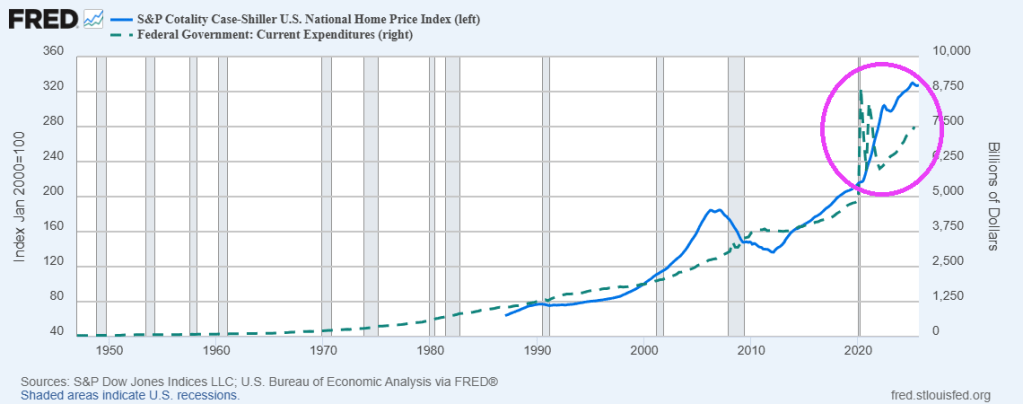
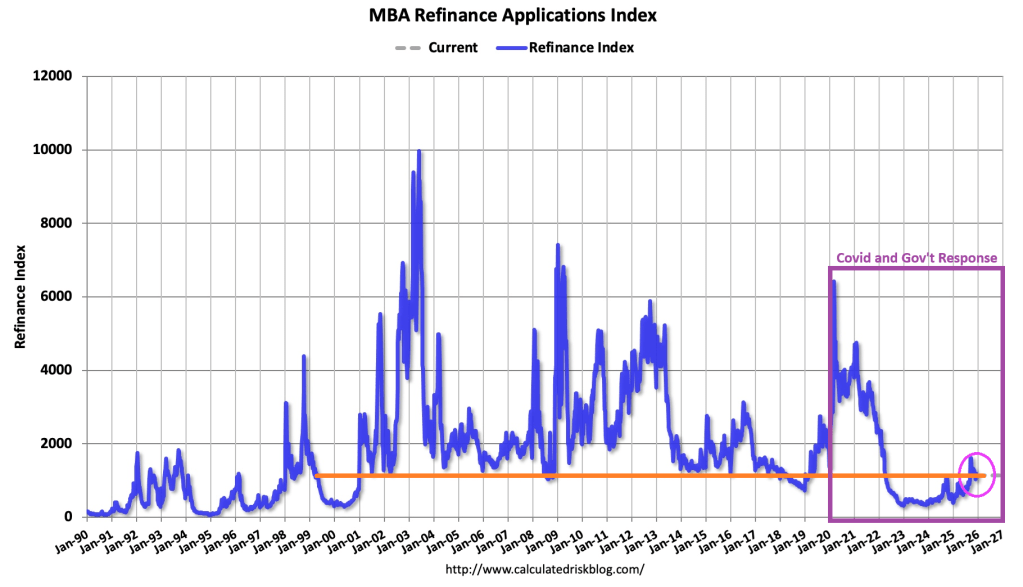
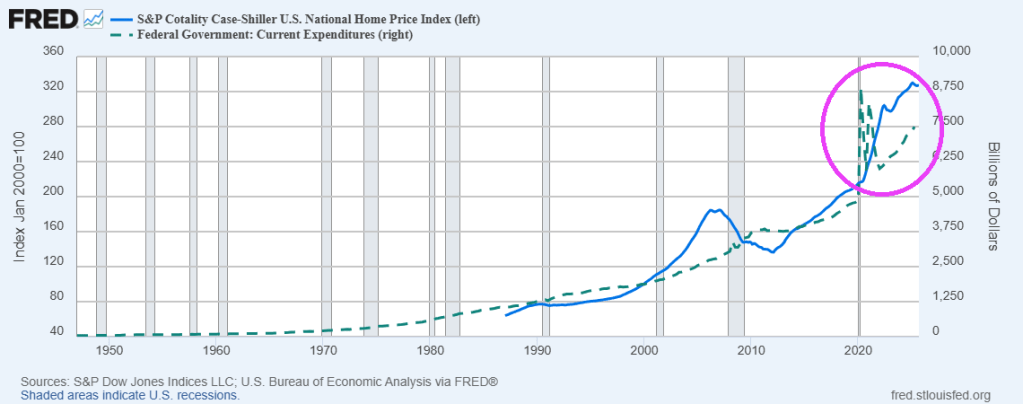
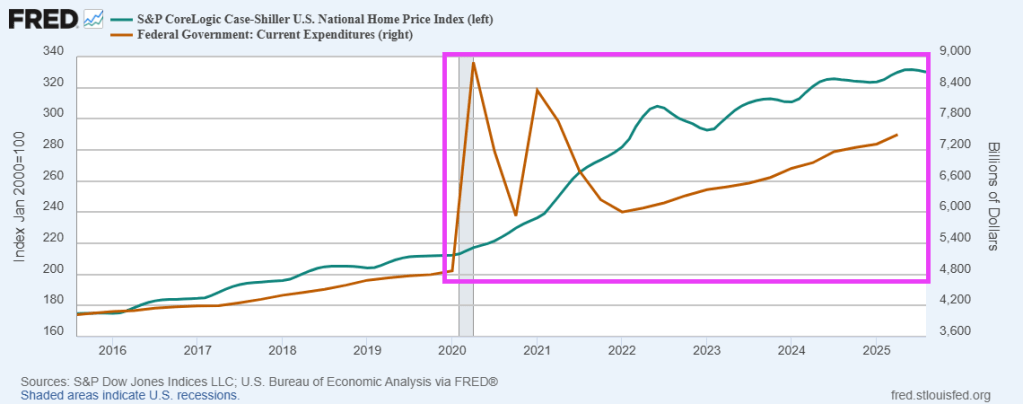
Nobody wastes money like government, particularly around events like Covid where Federal spending led to housing prices spiking after Covid outbreak in 2020. This made housing unaffordable for most households. This in turn helped kill the mortgage market.

Mortgage applications decreased 3.8 percent from one week earlier, according to data from the Mortgage Bankers Association’s (MBA) Weekly Mortgage Applications Survey for the week ending December 12, 2025.

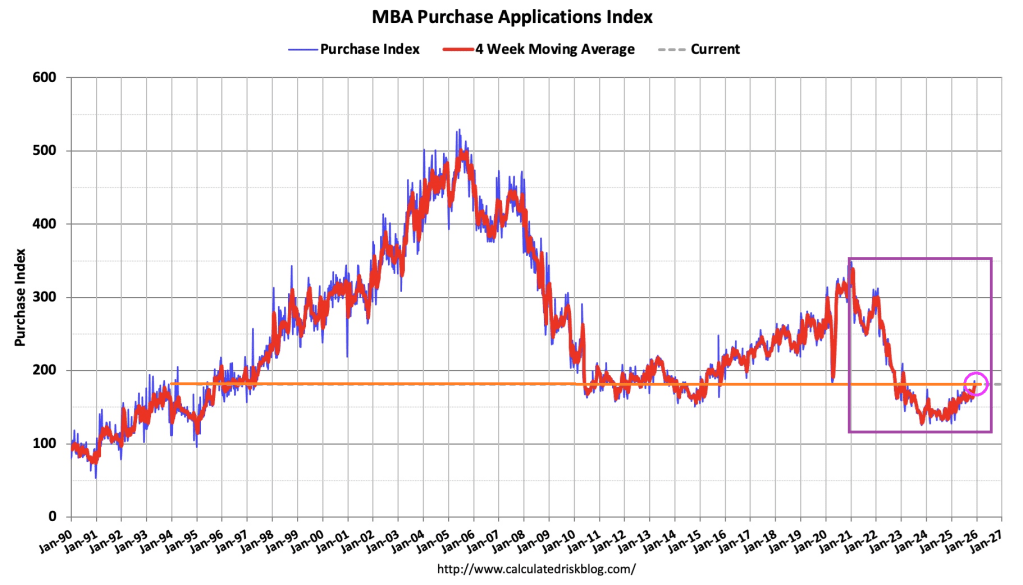
The Market Composite Index, a measure of mortgage loan application volume, decreased 3.8 percent on a seasonally adjusted basis from one week earlier. On an unadjusted basis, the Index decreased 5 percent compared with the previous week. The seasonally adjusted Purchase Index decreased 3 percent from one week earlier. The unadjusted Purchase Index decreased 7 percent compared with the previous week and was 13 percent higher than the same week one year ago.

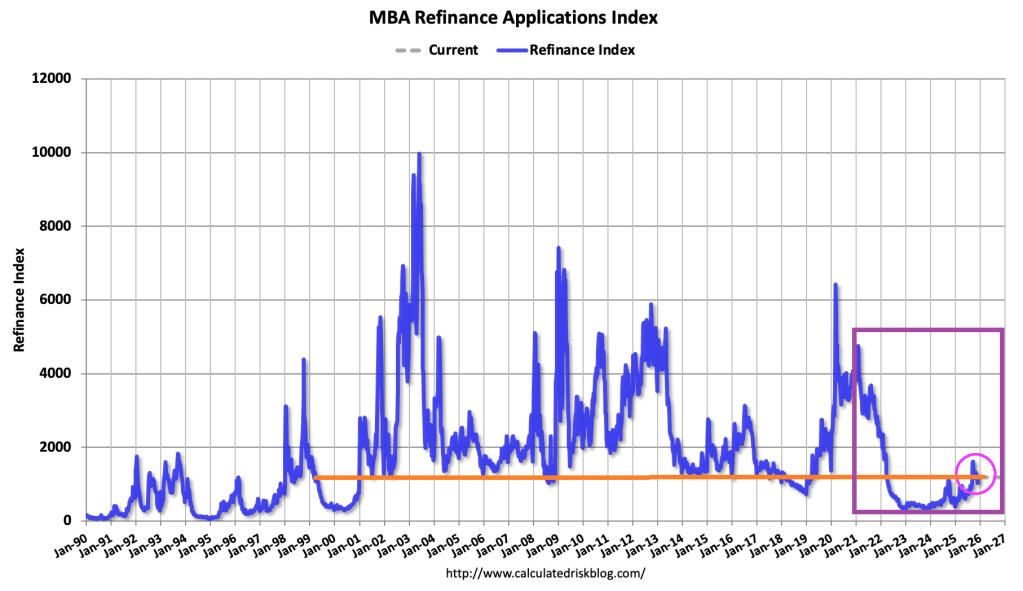
The Refinance Index decreased 4 percent from the previous week and was 86 percent higher than the same week one year ago.

Once again, the government response to the Wuhan Covid virus of 2020 helped drive up housing prices killing off mortgage demand.

Hallelujah! Mortgage Demand Increased 4.8% From Previous Week (Purchase Demand Increased 32%, Refi Demand Increased 14%)

Hallelujah, I love this economy so! Of course, former First Lady Jill Biden is on the national tour trashing the economy saying it was “perfect” under Joe Biden.

Mortgage applications increased 4.8 percent from one week earlier, according to data from the Mortgage Bankers Association’s (MBA) Weekly Mortgage Applications Survey for the week ending December 5, 2025. Last week’s results included an adjustment for the Thanksgiving holiday.

The Market Composite Index, a measure of mortgage loan application volume, increased 4.8 percent on a seasonally adjusted basis from one week earlier. On an unadjusted basis, the Index increased 49 percent compared with the previous week. The seasonally adjusted Purchase Index decreased 2 percent from one week earlier. The unadjusted Purchase Index increased 32 percent compared with the previous week and was 19 percent higher than the same week one year ago.

The Refinance Index increased 14 percent from the previous week and was 88 percent higher than the same week one year ago.

Compared to the prior week’s data, which included an adjustment for the Thanksgiving holiday, mortgage application activity increased last week, driven by an uptick in refinance applications,” said Joel Kan, MBA’s Vice President and Deputy Chief Economist. “Conventional refinance applications were up almost 8 percent and government refinances were up 24 percent as the FHA rate dipped to its lowest level since September 2024. Conventional purchase applications were down for the week, but there was a 5 percent increase in FHA purchase applications as prospective homebuyers continue to seek lower downpayment loans. Overall purchase applications continued to run ahead of 2024’s pace as broader housing inventory and affordability conditions improve gradually.

The average contract interest rate for 30-year fixed-rate mortgages with conforming loan balances ($806,500 or less) increased to 6.33 percent from 6.32 percent, with points increasing to 0.60 from 0.58 (including the origination fee) for 80 percent loan-to-value ratio (LTV) loans.

Little Tariff Effects! US Q3 Real GDP Growth At 3.5%, Real Estate Construction Growth Remains Negative

The US economy is goin’ home! The hysteria about tariffs is nonexistant.

Latest estimate: 3.5 percent — December 05, 2025

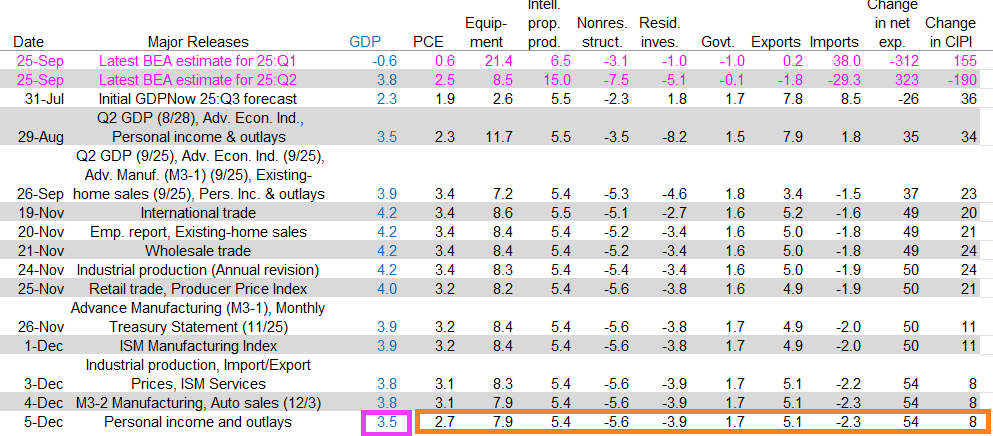
The GDPNow model estimate for real GDP growth (seasonally adjusted annual rate) in the third quarter of 2025 is 3.5 percent on December 5, down from 3.8 percent on December 4. After this morning’s personal income and outlays release from the US Bureau of Economic Analysis, the nowcast for third-quarter real personal consumption expenditures growth declined from 3.1 percent to 2.7 percent.

Unfortunately, residential and non-residential construction are negative as are imports.

Miami FL And Columbus OH Lead Nation In Closed Sales In October ’25 (Will Ohio State Beat Indiana For The Big 10 Championship?)

According to Bill McBride at Calculated Risk, In October, sales in these markets were up 2.4% YoY. Last month, in September, these same markets were up 7.7% year-over-year Not Seasonally Adjusted (NSA). The NAR reported sales were up 2.9% YoY NSA, so this sample is close.

Miami FL and central Florida lead the nation in closed sales of housing with Columbus OH second with 9.5% YoY growth in closed sales.

Let’s see if Ohio State beats Indiana for the Big 10 championship game on Saturday after OSU whooped Michigan 27-9 and won the gold pants this past Saturday.

Former Detroit Lions HC Matt Patricia, now OSU’s defensive coordinator.

October Saw Estimated 36.8% More Home Sellers Than Buyers (Biggest Gap Dating Back To 2013)

Yikes!

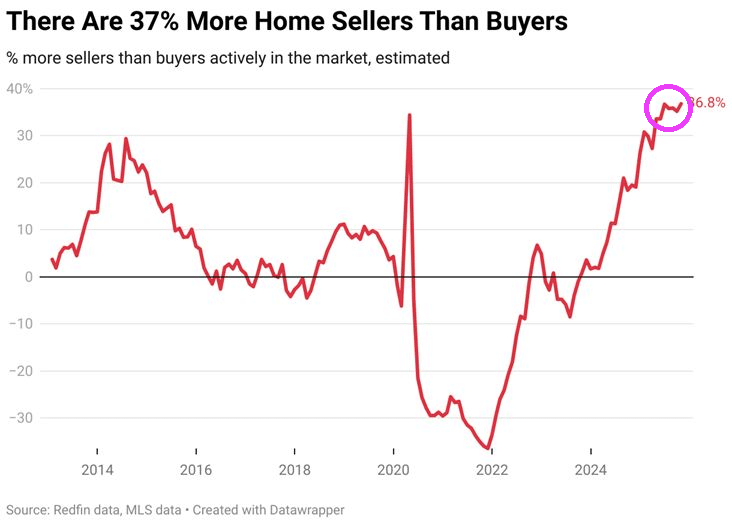
October saw an estimated 36.8% more home sellers than buyers, biggest gap in records dating back to 2013.

Post Covid Blues! Mortgage Demand Decreased 5.2 Percent From One Week Earlier (Purchase Demand Decreased 7 Percent, Refinance Demand Decreased 7 Percent As Mortgage Rates Increase)

Things are tough all over after Covid.

Mortgage applications decreased 5.2 percent from one week earlier, according to data from the Mortgage Bankers Association’s (MBA) Weekly Mortgage Applications Survey for the week ending November 14, 2025.

The Market Composite Index, a measure of mortgage loan application volume, decreased 5.2 percent on a seasonally adjusted basis from one week earlier. On an unadjusted basis, the Index decreased 7 percent compared with the previous week. The seasonally adjusted Purchase Index decreased 2 percent from one week earlier. The unadjusted Purchase Index decreased 7 percent compared with the previous week and was 26 percent higher than the same week one year ago.

The Refinance Index decreased 7 percent from the previous week and was 125 percent higher than the same week one year ago. 

The average contract interest rate for 30-year fixed-rate mortgages with conforming loan balances ($806,500 or less) increased to 6.37 percent from 6.34 percent, with points remaining unchanged at 0.62 (including the origination fee) for 80 percent loan-to-value ratio (LTV) loans.

Mortgage rates increased for the third consecutive week, with the 30-year fixed rate inching higher to its highest level in four weeks at 6.37 percent.

Oyster Stew? Another Bad Government Idea To Fix Housing Affordability: The 50-year Mortgage (Interest Paid By Borrower Increases By 105%!)

Every time the government tries to make housing more affordable, they make the problem worse. Some people should rent and not fall for the government’s latest folly, the 50-year mortgage.

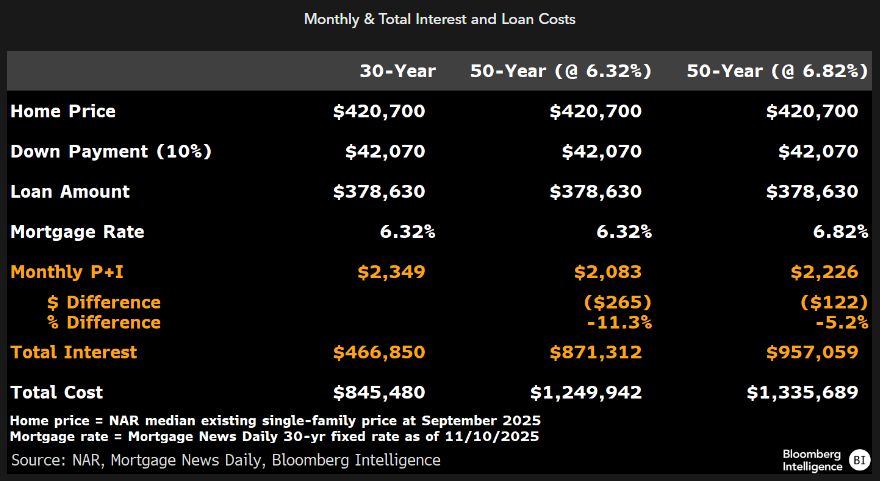
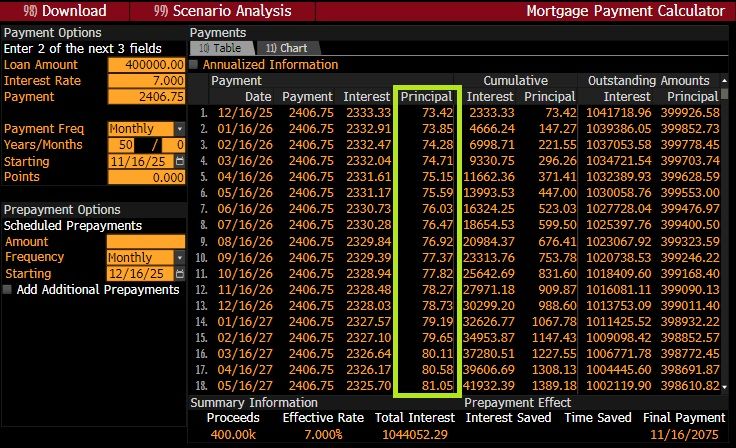
True, the 50-year mortgage would lower the monthly payment by several hundred dollars (see the following example where the monthly payment falls from $2,349 to $2,083. Or from $2,349 to $2,226 if the most rate increases with the longer mortgage life. BUT total interest paid increases 87% if the 50-year rate remains the same and 105% if the rate rises.

Principal paydown slows to a crawl with a 50-year mortgage, leaving the lender (or mortgage holder) exposed to higher risk if home prices fall.

Government housing policies remind me of the Curly versus the oyster stew skit. where Curly can’t catch the oyster. Yet keeps trying.

The 50-year mortgage reminds me of the ill-fated National Homeownership Strategy under Bill Clinton. By prdering all Federal housing finance entities to work with HUD, the National Homeownership Strategy helped crash the housing market (watch The Big Short!)

Housing After Covid! Declining Mortgage Originations And Rising Home Prices Making Affordability Difficult

Housing after Covid.

2020. A year that goes down in infamy. The Covid outbreak and the government’s insane overreaction to it. Masks and massive spending, driving up housing prices.

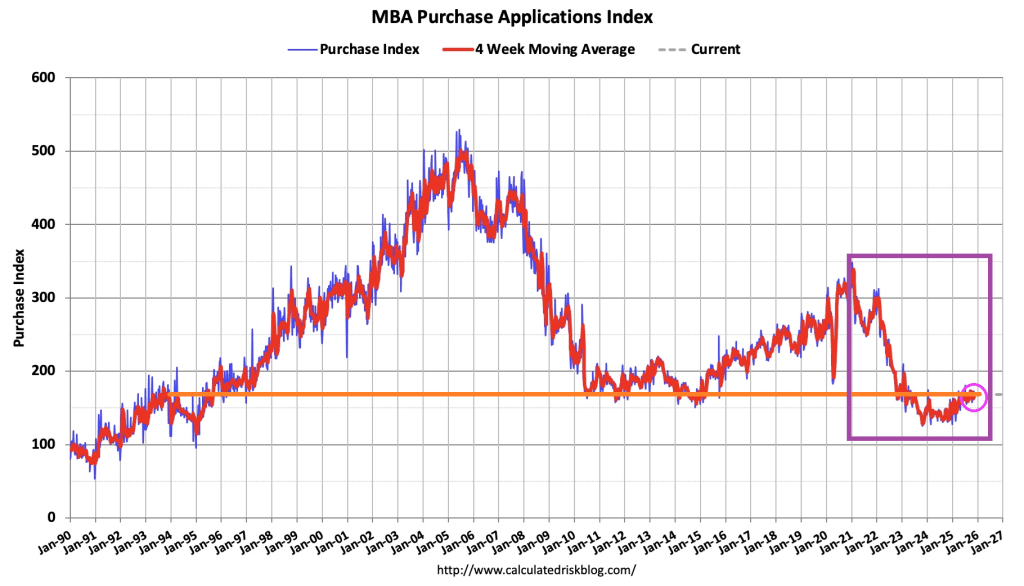
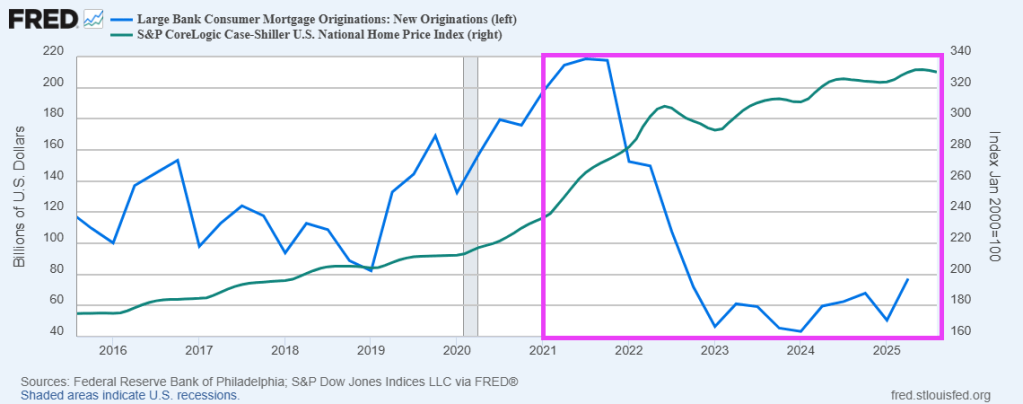
After 2020, mortgage originations plummeted while housing prices soared.

US home prices took off like a scalded cat after the Federal government went on a massive spending spree in 2020.

Housing after Covid.