Treasury And Mortgage Rates In A Never-Ending Balance Sheet World (REAL Mortgage Rates NEGATIVE With Skyrocketing Home Prices)

Headline! “Fed’s Kaplan says delta variant could cause him to rethink his tapering view”

Face it, the Federal Reserve may alter its growth path on asset purchases of Treasuries and Agency Mortgage-backed Securities, but it is doubtful that they will pare back their balance sheet. Call it “A Never-ending balance sheet for you” world.

Why? Seemingly never-ending Covid crisis, etc.

Let’s look at US Treasury yields today. The 10-year Treasury yield is up slightly to 1.25% as of 10am EST.

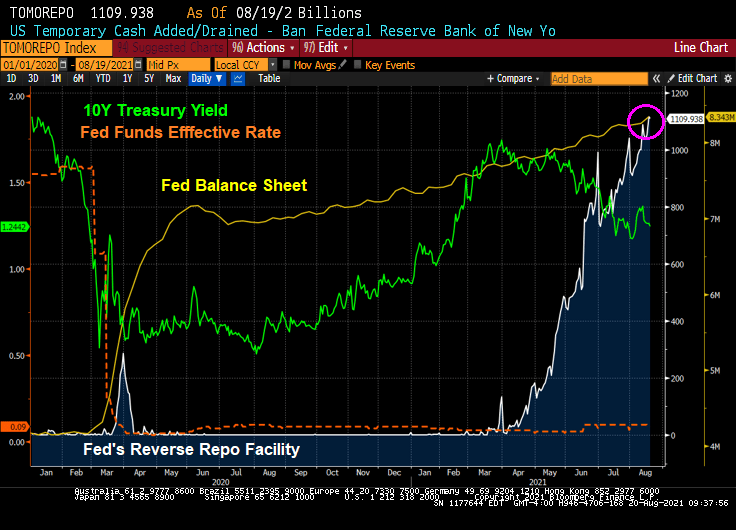
Here is a chart of the 10-year Treasury yield, Fed Funds effective rate, Fed Balance sheet and reverse repos since the Covid outbreak and Fed massive intervention. Bottom line, the have repressed the short-term interest rates and put downward pressure on the 10-year Treasury yield.
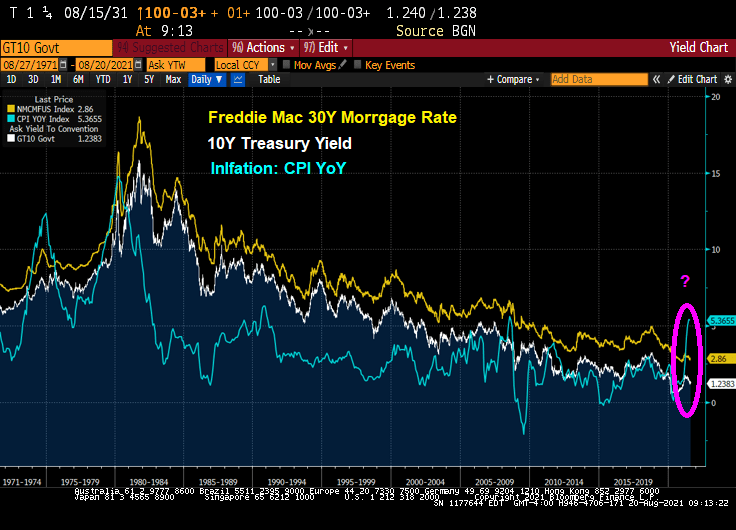
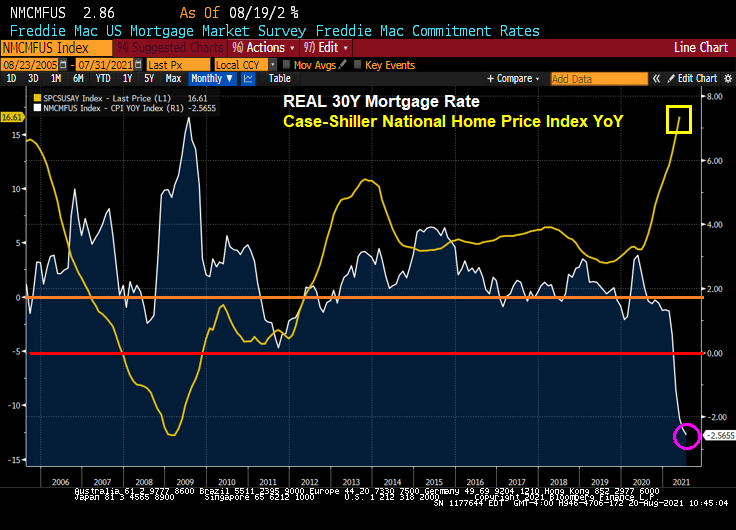
As the 10-year Treasury yield remains repressed DESPITE HIGHEST INFLATION RATE SINCE 2008, the Freddie Mac 30-year mortgage rate remains repressed as well. Yes, that mean NEGATIVE REAL MORTGAGE RATES.
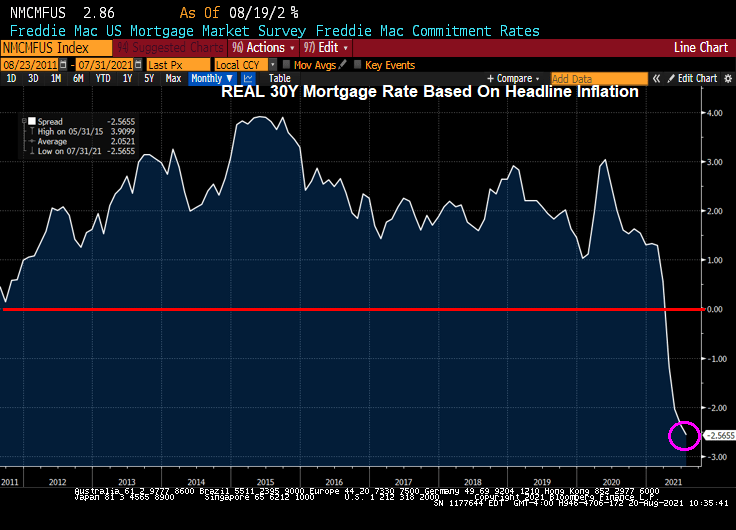
This produces a REAL mortgage rate of -2.56%.
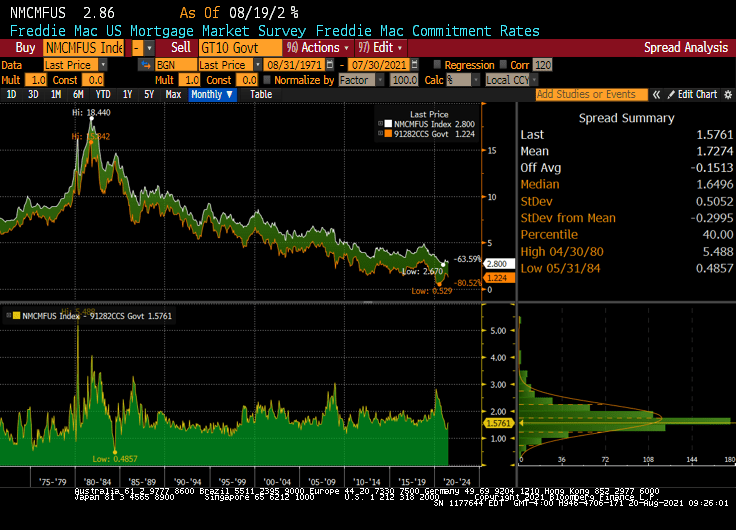
The spread of mortgage rates over the 10-year Treasury yield is about 173 basis point since 1971.
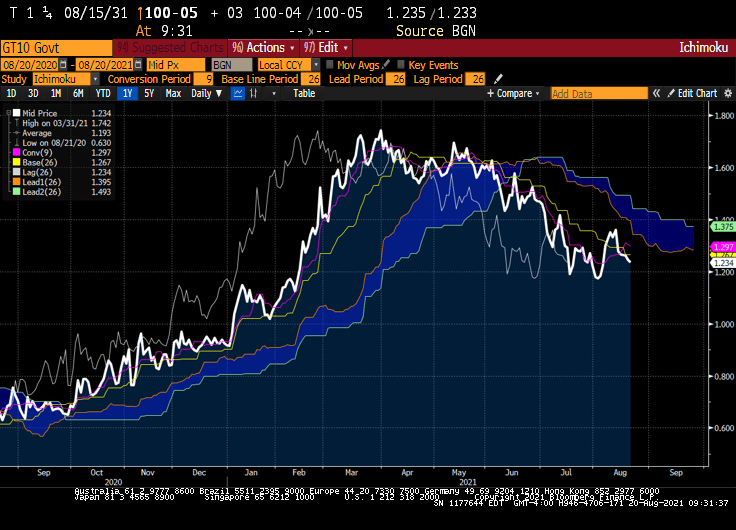
Where will Treasury yields go from hear? If we believe technical analysis like the Ichimoku Cloud, the 10-year Treasury rate will likely rise.
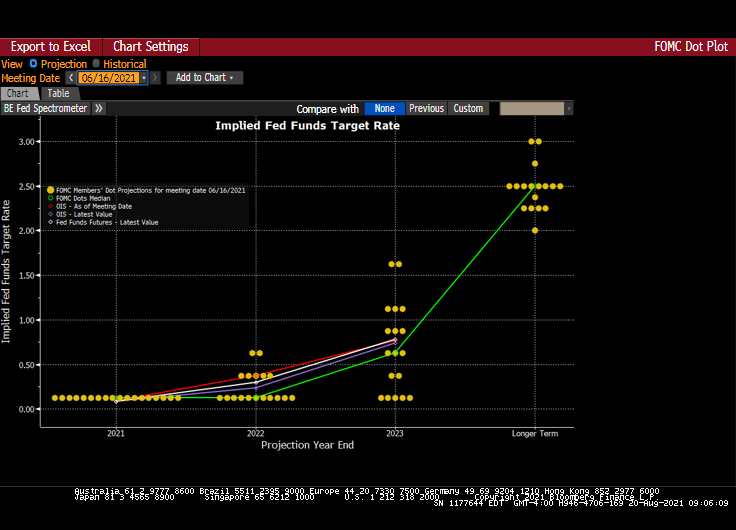
And The Fed’s Dots project also see rates rising (at least on the short-end.
Negative real mortgage rates and blistering home price growth?
Will the attendees at the KC Fed Jackson Hole conference discuss these matters? Or will it just be a Federal Reserve Soul Shake (dance)?

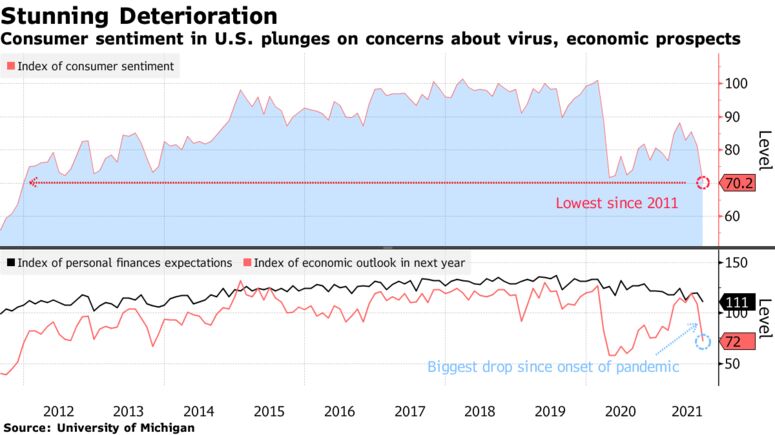
Consumer Sentiment in U.S. Plunges to Lowest Since 2011 (Good Time To Buy A Home Falls To 30% Share Due To Raging Home Price Growth)

U.S. consumer sentiment fell in early August to the lowest level in nearly a decade as Americans grew more concerned about the economy’s prospects, inflation and the recent surge in coronavirus cases.

The University of Michigan’s preliminary sentiment index fell by 11 points to 70.2, the lowest since December 2011, data released Friday showed. The figure fell well short of all estimates in a Bloomberg survey of economists.

Consumer sentiment in U.S. plunges on concerns about virus, economic prospects
  

The slump in confidence risks a more pronounced slowing in economic growth in coming months should consumers rein in spending. The recent deterioration in sentiment highlights how rising prices and concerns about the delta variant’s potential impact on the economy are weighing on Americans.

“Consumers have correctly reasoned that the economy’s performance will be diminished over the next several months, but the extraordinary surge in negative economic assessments also reflects an emotional response, mainly from dashed hopes that the pandemic would soon end,” Richard Curtin, director of the survey, said in the report.

The expectations gauge plummeted almost 14 points to 65.2, the lowest since October 2013. A measure of consumers’ outlook for the economy over the coming year soured, falling the most since the onset of the pandemic in March 2020. 

Only 36% of respondents expect a decline in the jobless rate, down from 52% the prior month, despite record job openings. Consumers also became decidedly downbeat about their income prospects. The gauge of expected personal finances fell to a seven-year low.

Rising prices are having a clear impact on Americans’ budgets, particularly among those with lower or fixed incomes. Nearly a third of those aged 65 or older complained that inflation had lowered their living standards, as did about a fourth of those with incomes in the bottom third or with a high school education or less. 

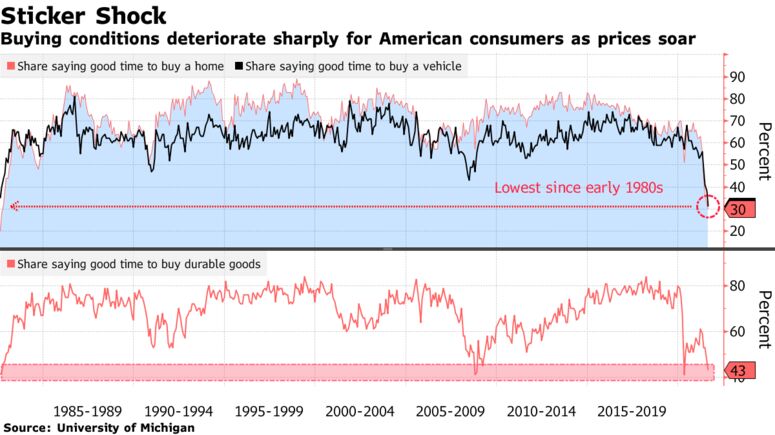
The Michigan report showed buying conditions deteriorated to the lowest since April of last year.

Buying conditions deteriorate sharply for American consumers as prices soar
  

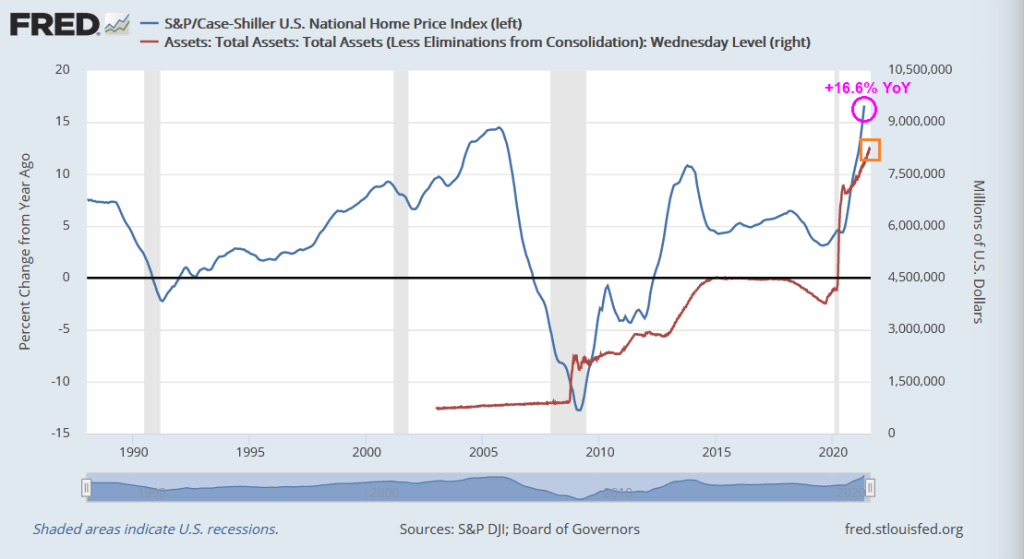
Yes, only 30% of respondents felt that it was a good time to buy a home. Particularly since home prices are rising at a 16.6% YoY pace, faster even than the peak of the infamous home price bubble of 2005. But this time, The Fed is blowing the bubble, not easy mortgage credit like in 2005.

Apparently, Treasury Secretary Janet Yellen does not inspire confidence in consumers.

Bubble? UMich Buying Conditions For Houses (Good) Collapses To 32%, Fed O/N Reverse Repos Breach $1 Trillion

The University of Michigan survey of consumers is out and their buying conditions for housing (good) was a disasters. Only 32% on consumers view buying conditions for a house as good. That means that 68% think buying conditions are not good. Why? With the Case-Shiller National Home Price Index growing at a scorching 16.6% YoY making housing simply unaffordable for many Americans.

On a different note, The Fed’s overnight reverse repo facility (aka, the slosh” just breached the $1 trillion mark.

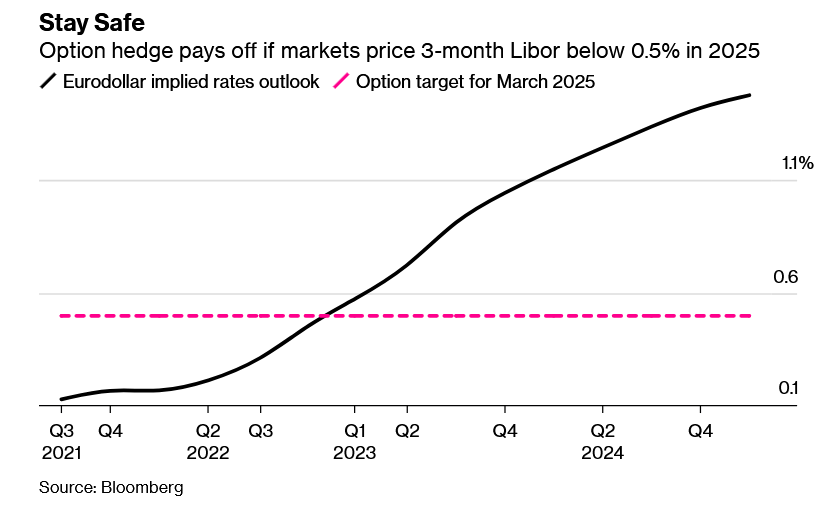
Then we have this tantalizing headline on Bloomberg: “Traders Pile Into Tail-Risk Bets That Fed Won’t Hike at All”.

Treasury yields are rising amid optimism over the global recovery but there has been a run on Eurodollar options betting the Federal Reserve will opt not to raise interest rates at all.

Traders this week have been busy snapping up Eurodollar call options on underlying March 2025 futures that target three-month Libor to fix below 0.5%. These pay off if markets price the Fed keeping its benchmark at its lower bound until then. Futures markets are currently anticipating Libor will rise to about 1.47% by the first quarter of 2025.

So, it looks like The Fed (aka, Greenman) may not be going anywhere.

Have a wonderful weekend!

New York City MSA Rents Fall YoY For First Time Since 1958 (And Ike!) Northern NJ And Long Island Too

Rents in the New York City metropolitan statistical area — which also encompasses northern New Jersey and Long Island — dropped in the 12 months through July for the first time since 1958, according to monthly data on consumer prices published Wednesday by the Labor Department. Before that, the series indicates rents in the region hadn’t fallen on a year-over-year basis since 1934. The figures underscore the historic nature of the pandemic and its impact on the U.S. economy.

On the other hand, New York City home prices are growing at a +15.3% YoY pace.

Apparently, in 1958 Americans liked Ike, but didn’t like living in New York City.