US Purchase Mortgage Demand Increased 3% From Previous Week (Pulte’s 50Y And Layaway Mortgages??)

The US mortgage market is “livin’ on a prayer.” As a result, former homebuilder and current FHFA Director Bill Pulter has suggested 2 mortgage products to make US homes more “affordable”, adding to the legacy of stupid government policies to increase homeownership.

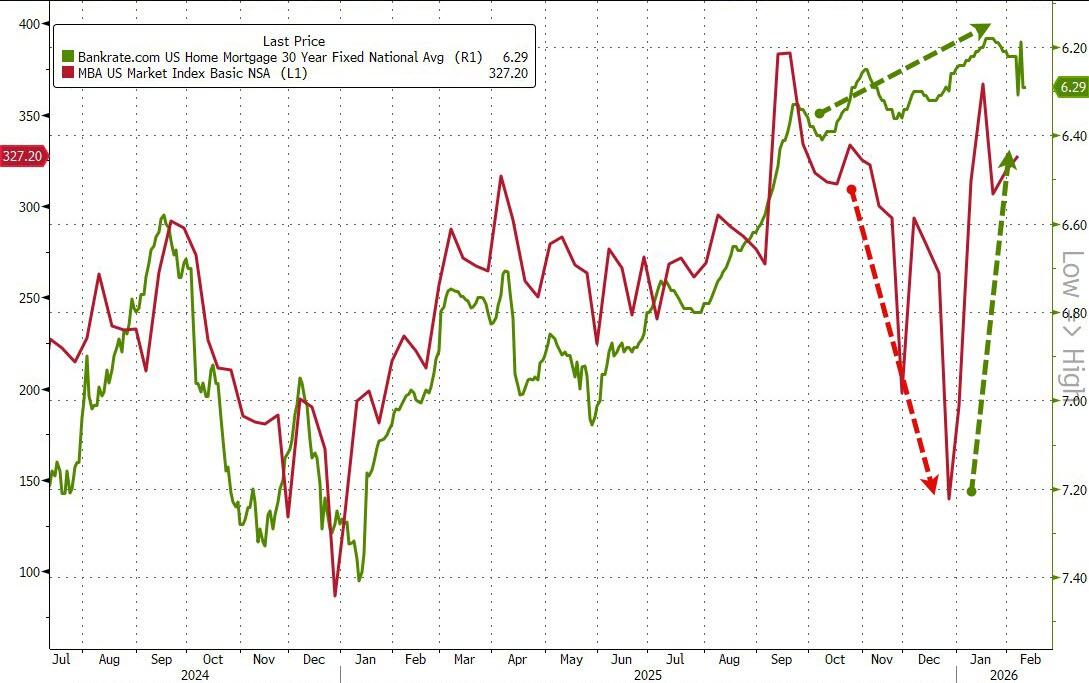
But first, current mortgage demand. Mortgage applications increased 0.6 percent from one week earlier, according to data from the Mortgage Bankers Association’s (MBA) Weekly Mortgage Applications Survey for the week ending November 7, 2025.

The Market Composite Index, a measure of mortgage loan application volume, increased 0.6 percent on a seasonally adjusted basis from one week earlier. On an unadjusted basis, the Index decreased 1 percent compared with the previous week.  The seasonally adjusted Purchase Index increased 6 percent from one week earlier. The unadjusted Purchase Index increased 3 percent compared with the previous week and was 31 percent higher than the same week one year ago.

The Refinance Index decreased 3 percent from the previous week and was 147 percent higher than the same week one year ago.

Now on to Pulte’s stupid mortgage proposals.

Pulte Doubles Down After 50-Year Backlash, Proposes “Layaway Mortgage” 

The 50-year mortgage is a stupid idea. True, it can reduce the monthly mortgage payment by several hundred dollars. But it extends the life of the mortgage from 30 to 50 years, keeping the outstanding mortgage balance elevated for longer, exposing the lender (or mortgage owner) to greater losses in the case of default. Not surprising since the duration risk of a 50-year mortgage is greater than on a 30-year mortgage. Who is going to hold these mortgages??

So, Pulte hearing that the mortgage market thinks this is a stupid idea, introduced another stupid mortgage idea: the “layaway mortgage” where buyers make payments for 5-10 years before they’re allowed to move into the home. This is a variation of “rent to own.”

Under Pulte’s Layaway Mortgage program:

▪️ Buyers select a home and begin making monthly payments immediately
▪️ They continue paying for 5-10 years (the “layaway period”)
▪️ During this time, they cannot live in the home, modify it, or even visit without an appointment
▪️ After the layaway period ends, buyers can move in and begin their 40-year mortgage
▪️ If they miss a payment during layaway, they forfeit everything and the home goes back on the market.

So, in other word, a 50-year mortgage (40+10 layaway).

Note: Japan used to offer 100-year mortgages during their housing bubble, but now 35-year mortgages are more common.

ADP Report Shows Big Job Losses In October, 45,000 Job Losses (Rate Cuts Around The Corner?)

The Federal government is still shut down, so we have to rely on ADP for jobs numbers.

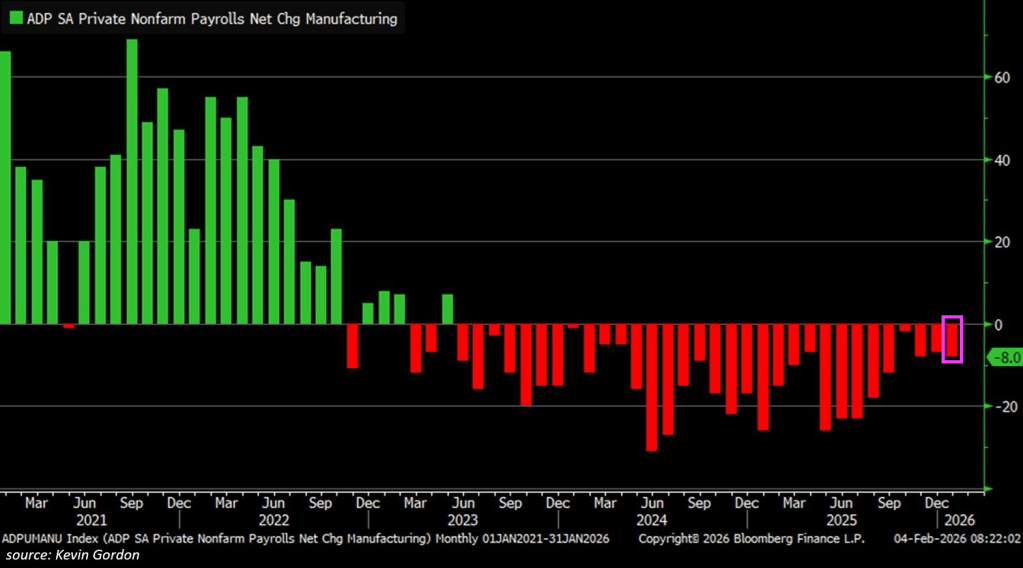
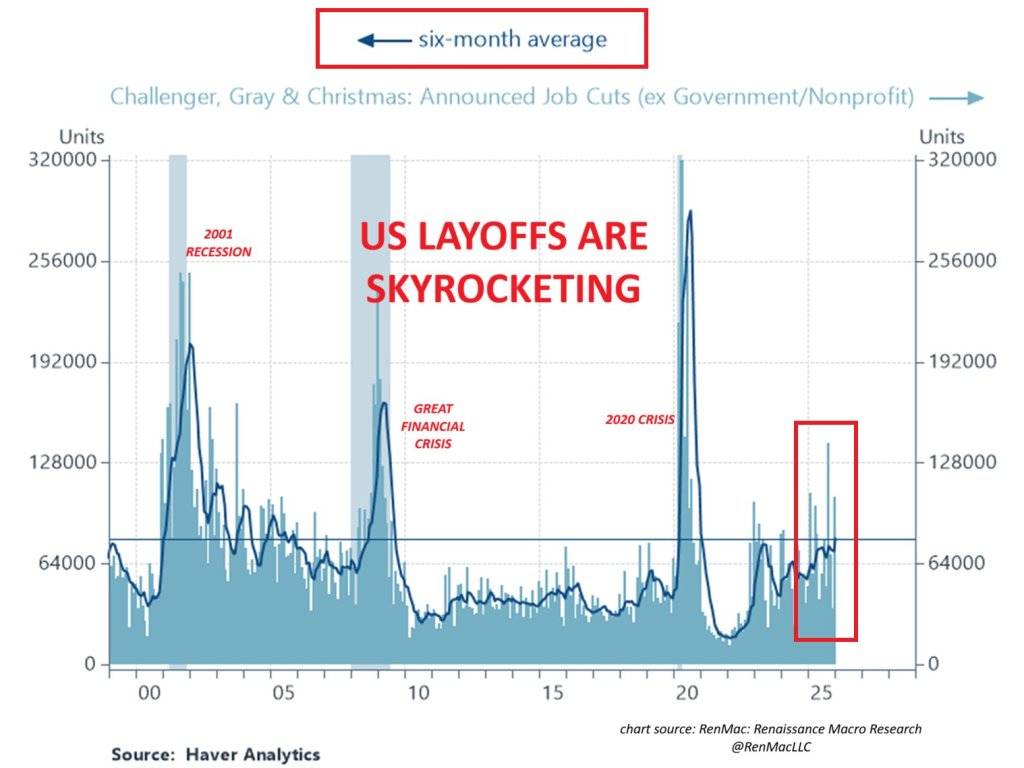
The ADP weekly jobless report pointed to a deterioration in US labor momentum, stating that “for the four weeks ending Oct. 25, 2025, private employers shed an average of 11,250 jobs a week, suggesting that the labor market struggled to produce jobs consistently during the second half of the month.”

Added together that is 45,000 job losses in the month (not including government workers), which would be the largest monthly drop in jobs since March 2023.

A sustained increase in layoffs would be particularly concerning now because the hiring rate is low and it is harder than usual for unemployed workers to find jobs.

It is likely that The Fed will cut rates to compensate. Rate cuts around the corner!

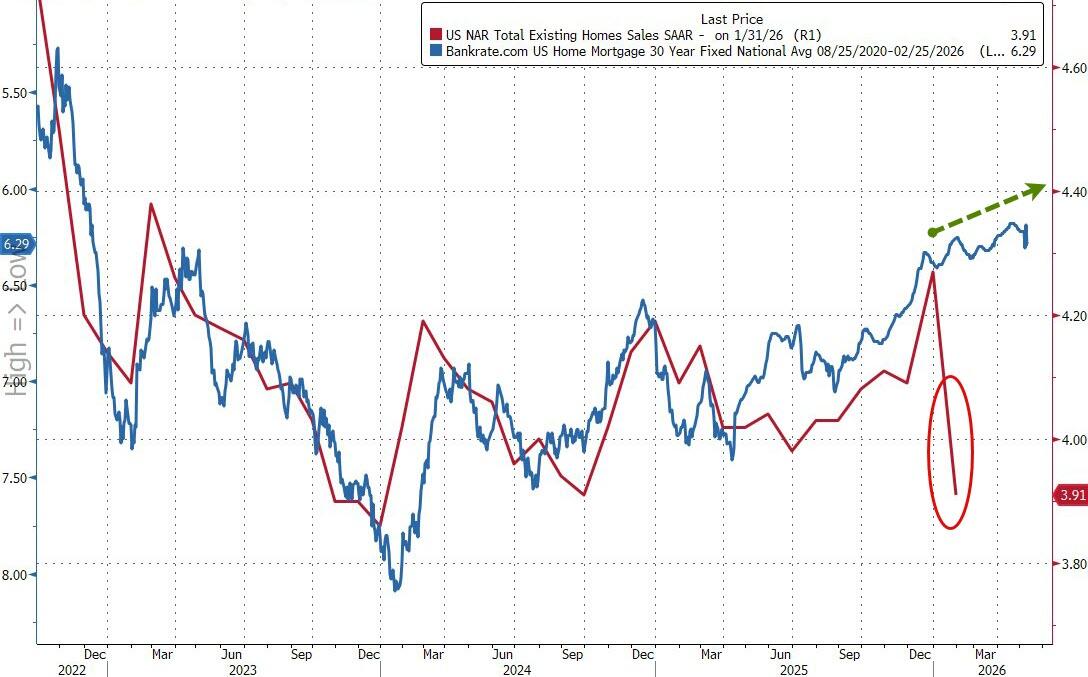
Stagnation Nation! U.S. Housing Market Hits 30-Year Low in Activity (High Home Prices And High Mortgage Rates*)

Redfin’s Housing Turnover Report, Q1–Q3 2025

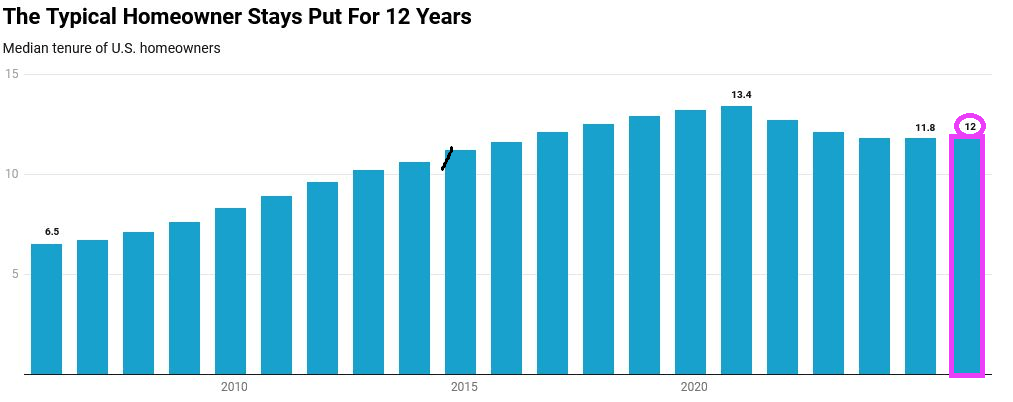
Just 2.8 homes out of every 1,000 changed owners in the first nine months of 2025—the lowest turnover rate in at least three decades. This marks a 38% plunge from the 2021 frenzy, when 44 per 1,000 homes sold, and is 44% below the pre-pandemic 2019 pace of 40 per 1,000.

Why the freeze? – Rate lock-in: Over 70% of homeowners are sitting on sub-5% mortgages and are reluctant to trade them for today’s rates exceeding 6%.

Sticker shock: Record prices combined with high borrowing costs have left many potential buyers on the sidelines. The result is a housing market that remains stagnant.

*Home prices are relatively high as are mortgage rates.

Someone will undoubtedly write me to look at Singapore. Yes, I know. Been there, done that. Or London.

In the US, the lowest turnover rates are in Democrat strongholds New York and California.

Mortgage Demand Decreased 1.9 Percent From One Week Earlier (Purchase Index Decreased 2 Percent, Refinance Index Decreased 3 Percent)

Mortgage applications decreased 1.9 percent from one week earlier, according to data from the Mortgage Bankers Association’s (MBA) Weekly Mortgage Applications Survey for the week ending October 31, 2025.

The Market Composite Index, a measure of mortgage loan application volume, decreased 1.9 percent on a seasonally adjusted basis from one week earlier. On an unadjusted basis, the Index decreased 3 percent compared with the previous week. The seasonally adjusted Purchase Index decreased 1 percent from one week earlier. The unadjusted Purchase Index decreased 2 percent compared with the previous week and was 26 percent higher than the same week one year ago.

The Refinance Index decreased 3 percent from the previous week and was 151 percent higher than the same week one year ago. 

Mortgage originations are still strong for the 760+ bucket.

Let’s see how California’s Prop 50 (Gavin Newsom’s attempt to give Democrats a majority in the US House of Representatives) works?

𝗠𝘂𝗹𝘁𝗶𝗳𝗮𝗺𝗶𝗹𝘆 𝗗𝗲𝗹𝗶𝗻𝗾𝘂𝗲𝗻𝗰𝗶𝗲𝘀 𝗦𝗼𝗮𝗿 𝘁𝗼 𝟳.𝟭%, Office Delinquencies Soar To 11.8% (CMBS Excess Returns Are Dwindling)

𝗠𝘂𝗹𝘁𝗶𝗳𝗮𝗺𝗶𝗹𝘆 𝗗𝗲𝗹𝗶𝗻𝗾𝘂𝗲𝗻𝗰𝗶𝗲𝘀 𝗦𝗼𝗮𝗿 𝘁𝗼 𝟳.𝟭%.🚨

Office CMBS Delinquency Rate Hits Record 11.8%, Much Worse than Financial Crisis Meltdown. (Wolfstreet)

CMBS excess returns are dwindling.

How will New York City commercial real estate returns perform if Madami wins the NYC Mayoral election?

New Week Starts! 10Y Treasury Yield At 4.112%, Down From 4.397% 1 Year Ago (Yield Curve Steepening)

A new week starts! And the all-important 10-year Treasury yields checks in at 4.112%, down from 4.397% one year ago.

Let’s see if Senate Democrats agree to open the Federal government.

Fed’s QT Surprise! Powell Announced That Maturing Mortgage-backed Securities (MBSs) Will Be Reinvested Into Short-term Treasury Bills

Like tuna surprise (bleech!!), Fed Chair Powell announced a move towards reinvesting maturing MBS into ST Treasury bill decreasing the duration of The Fed’s balance sheet.

Fed’s QT Surprise: Powell announced that maturing mortgage-backed securities (MBSs) will be reinvested into short-term Treasury bills instead of longer-duration Treasuries, signaling a shift toward a shorter-duration balance sheet.
🧭 Strategic Implications: This move distances the Fed from potential “yield curve control” strategies and aligns with pre-2008 norms, where the average maturity was under 3 years—suggesting a long-term pivot in portfolio structure.
💰 Market Impact: The decision, coupled with rising Treasury yields and upcoming refunding announcements, intensifies pressure on the 10-year yield, especially as the Treasury seeks to fund a $38 trillion debt load with more short-term instruments.

I just hope the Nittany Kittens (Penn State) don’t surprise Ohio State in today’s football game!

Fed Cuts Target Rate By 25 Basis Points, Treasury Yield Curve Rises, Mortgage Rates Drop

Yesterday, The Federal Reserve Board of Governors lowered their target interest rate by 25 basis points to 4%.

And on that decrease, the US Treasury yield curve rose slightly.

And mortgage rates declined with the cut in The Fed’s target rate.

For an interesting read, try David Stockman’s “How To Cut $2 Trillion Om Federal Spending.”

US Mortgage Demand Rose 7.1% With Mortgage Rates Declining (Purchase Demand Rose 4% While Refi Demand Rose 9% From Preceding Week)

It came out of The Fed.

Mortgage applications increased 7.1 percent from one week earlier, according to data from the Mortgage Bankers Association’s (MBA) Weekly Mortgage Applications Survey for the week ending October 24, 2025.

The Market Composite Index, a measure of mortgage loan application volume, increased 7.1 percent on a seasonally adjusted basis from one week earlier. On an unadjusted basis, the Index increased 7 percent compared with the previous week. The seasonally adjusted Purchase Index increased 5 percent from one week earlier. The unadjusted Purchase Index increased 4 percent compared with the previous week and was 20 percent higher than the same week one year ago.

The Refinance Index increased 9 percent from the previous week and was 111 percent higher than the same week one year ago. 

The average contract interest rate for 30-year fixed-rate mortgages with conforming loan balances ($806,500 or less) decreased to 6.30 percent from 6.37 percent, with points decreasing to 0.58 from 0.59 (including the origination fee) for 80 percent loan-to-value ratio (LTV) loans.

Yesterday, The Fed lowered their target rate by 25 basis points. And the 30-year conforming rate index fell by 0.037 basis points to 6.155%.

On the government shutdown side, USDA applications fell more than 26 percent.

Fed Chair Jerome Powell at The Federal Reserve Building in Washington DC.