It’s Gov’t Gone Wild! That includes The House, Senate, President and Federal Reserve.
The purchasing power of the US Dollar was $1004.4 on 1915-03-01. By 2025-05-01, the purchasing power fell to $31.1, a loss of 97%. Public debt since the last year of GW Bush, Obama/Biden (with a brief hiatus with Trump) rose 317% since January 2009.
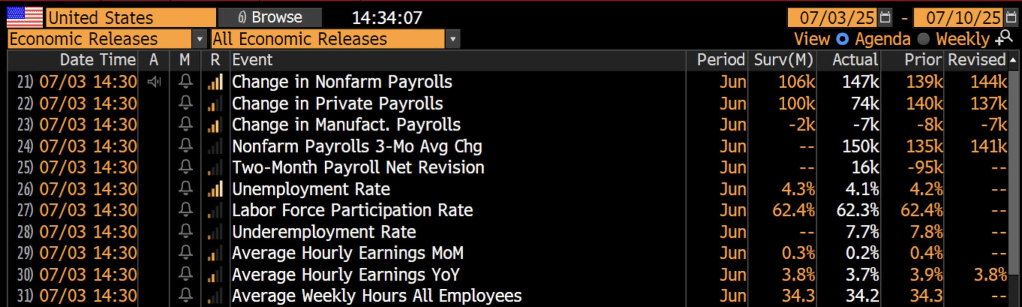
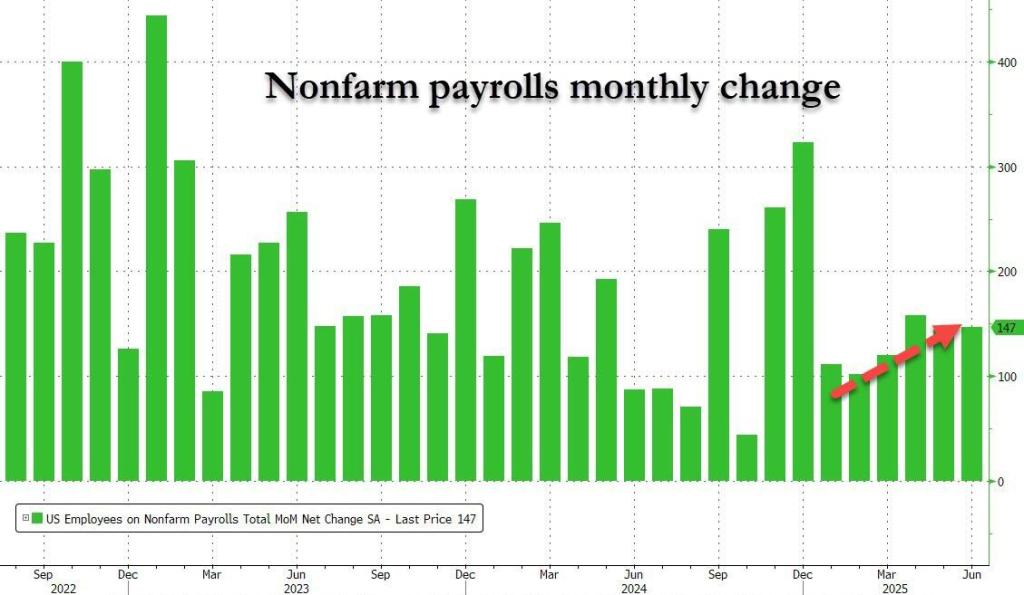
So much for the doom porn about tariffs or anything Trump. The US economy is booming. Example? Non farm payrolls (NFPs) in June rose by 147k jobs added.
As opposed to yesterday’s negative ADP report, the NFP continued to grow despite fears of tariffs, etc.
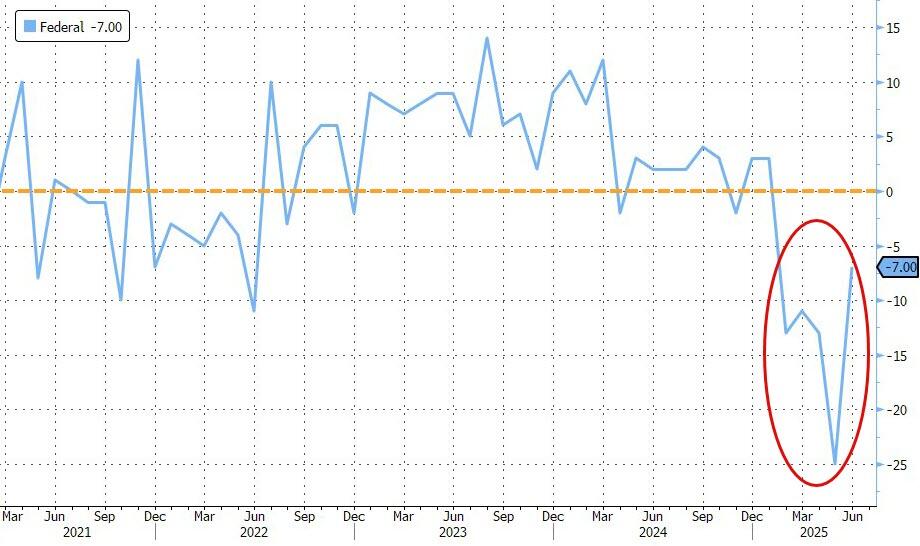
Government employment rose by 73,000 in June. Employment in state government increased by 47,000, largely in education (+40,000). Employment in local government education continued to trend up (+23,000). Job losses continued in federal government (-7,000), where employment is down by 69,000 since reaching a recent peak in January.
Health care added 39,000 jobs in June, similar to the average monthly gain of 43,000 over the prior 12 months. In June, job gains occurred in hospitals (+16,000) and in nursing and residential care facilities (+14,000).
In June, social assistance employment continued to trend up (+19,000), reflecting continued growth in individual and family services (+16,000).
The positive jobs report likely killed any chance of a Fed rate cut at the next meeting.
Finally, US government debt growth (YoY) was approximately equal to US nominal GDP growth in Q1 2025.
Unfortunately, the BBB (Big Beautiful Bill) is projected to add $3.9 trillion of debt. Unfortunately, there are insufficient spending cuts in the BBB. And the Senate just nixed kicking illegal immigrants off of Federal healthcare programs.
Unfortunately, GDP growth is only expected to be modest with debt growth once again rising faster than GDP growth. As Diane Feinstein once said, politicians are elected to spend money. This, of course, was a ridiculous statement embraced by spend-crazy Democrats and RINOs.
So, Congress has committed American taxpayers to debt slavery.
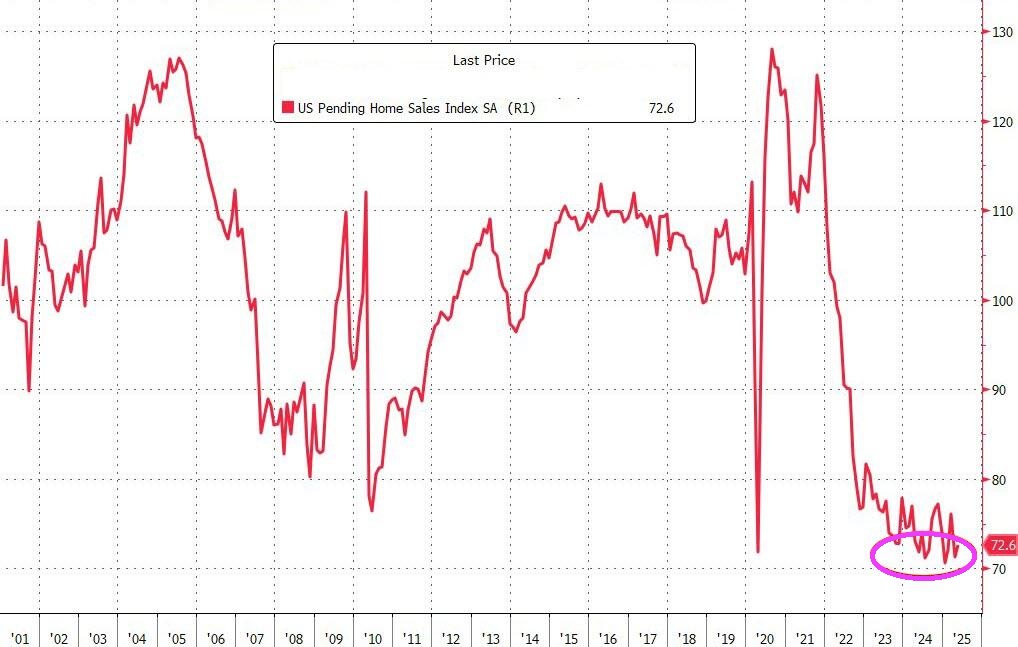
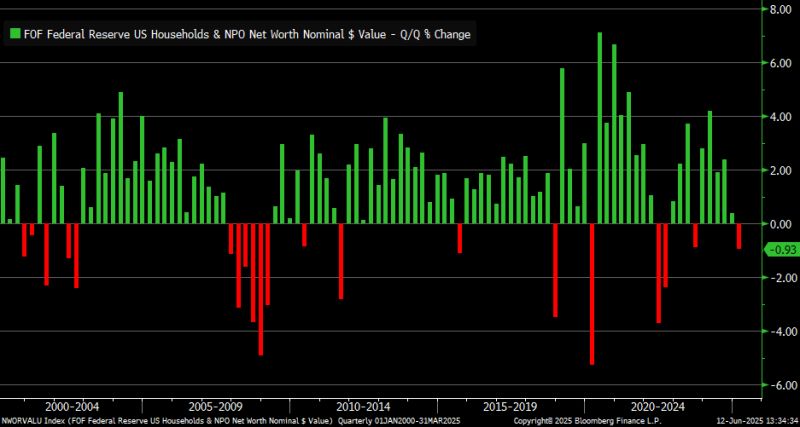
The housing markets is in bits and pieces following The Fed’s fickle management of interest rates and Biden’s disastrous spending policies. U.S. household net worth fell by 0.93% in 1Q2025 … largest decline since 3Q2022, but not necessarily comparable to that quarter in terms of magnitude.
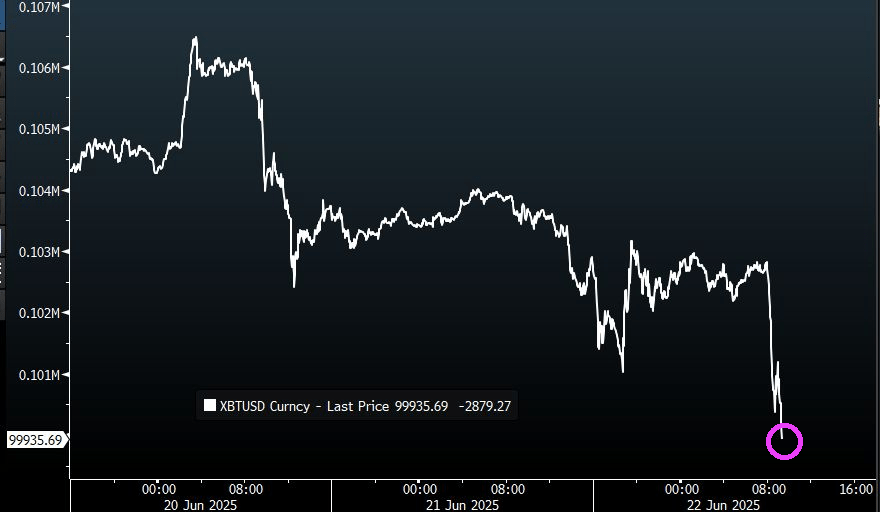
Bitcoin just broke below $100k.
What will The Fed? As I have said over and over again, The Fed needs to cut rates.
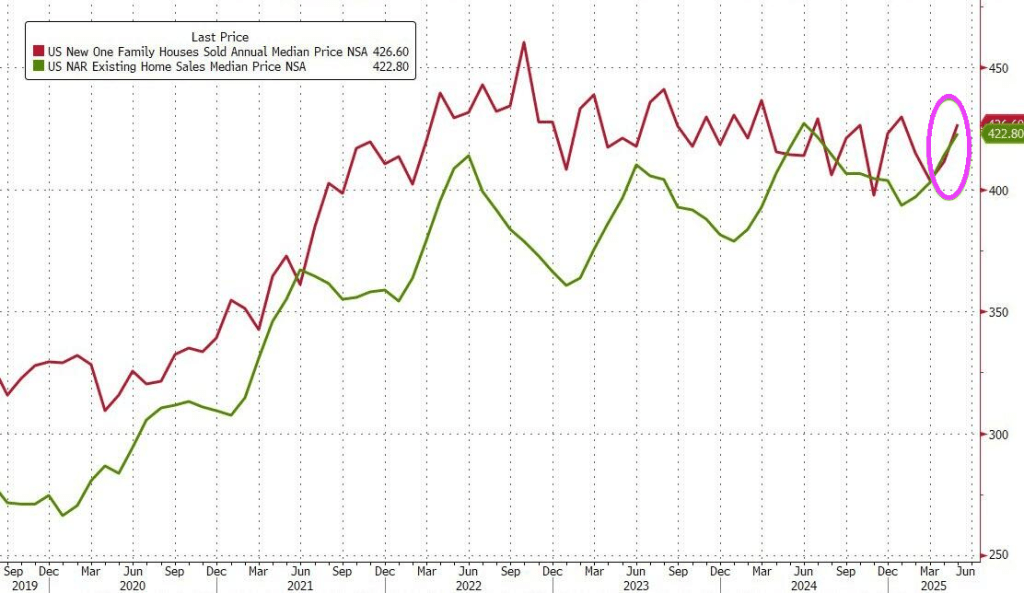
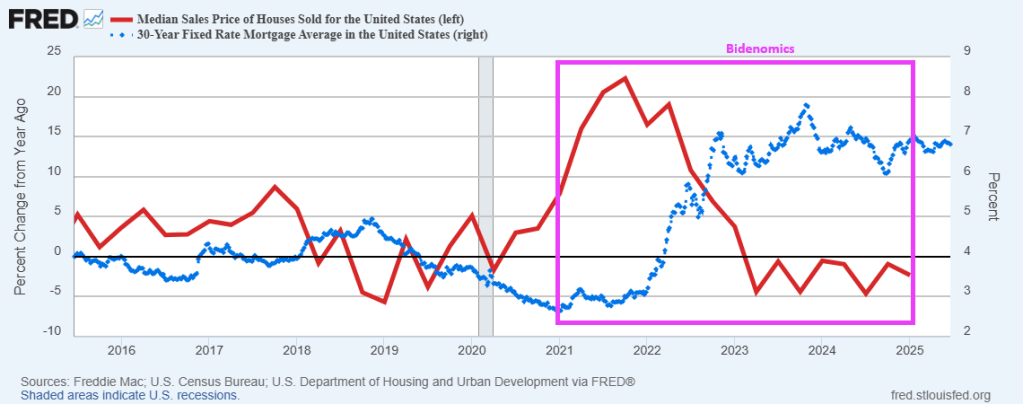
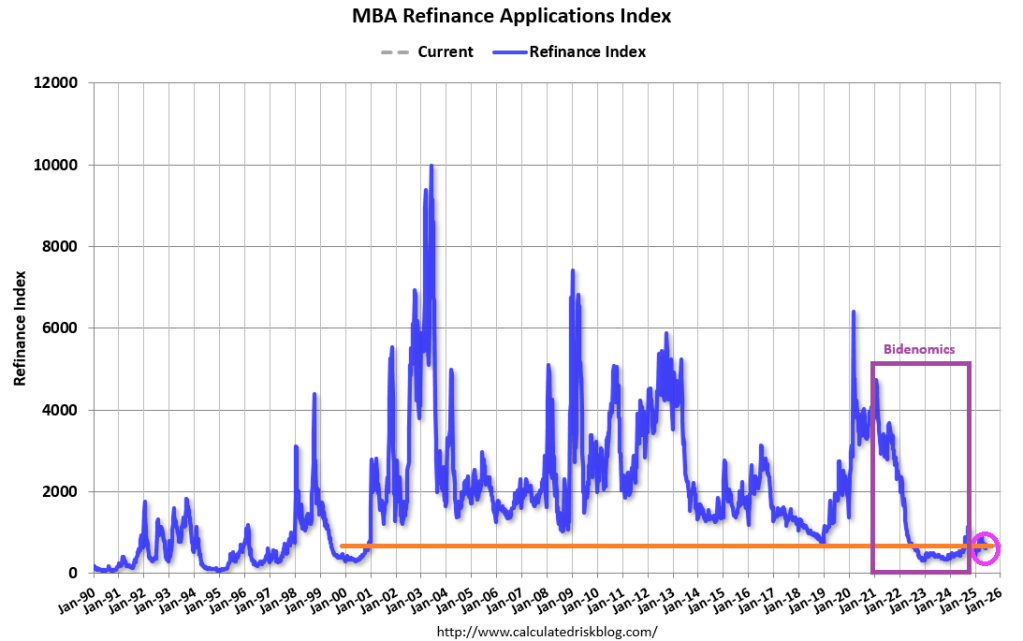
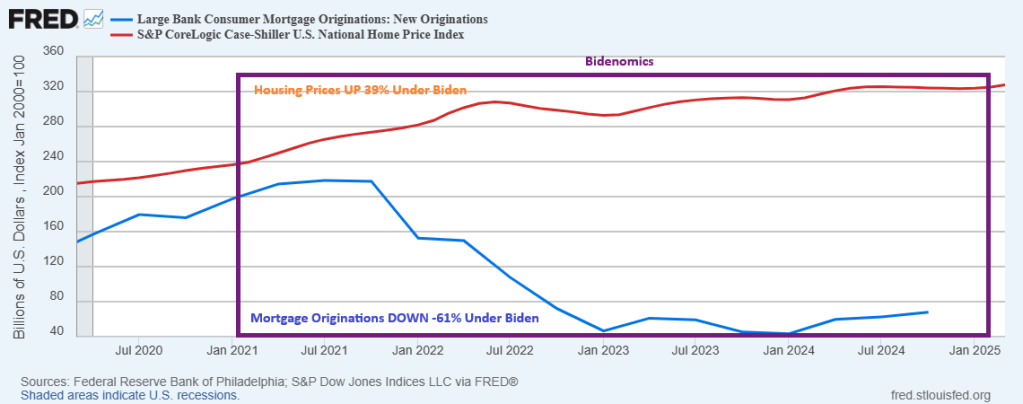
All aboard! The crazy mortgage train! Home prices rose 39% under Biden while mortgage originations at large banks fell -61%. The mortgage market is still recovering from Bidenomics!
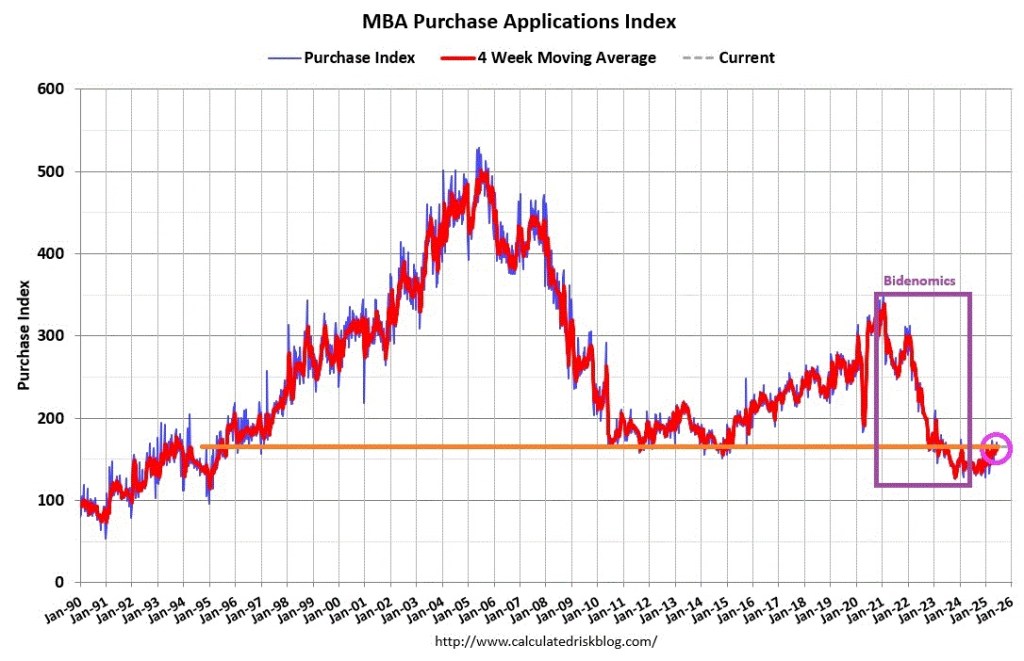
Mortgage applications decreased 2.6 percent from one week earlier, according to data from the Mortgage Bankers Association’s (MBA) Weekly Mortgage Applications Survey for the week ending June 13, 2025.
The Market Composite Index, a measure of mortgage loan application volume, decreased 2.6 percent on a seasonally adjusted basis from one week earlier. On an unadjusted basis, the Index decreased 4 percent compared with the previous week. The seasonally adjusted Purchase Index decreased 3 percent from one week earlier. The unadjusted Purchase Index decreased 5 percent compared with the previous week and was 14 percent higher than the same week one year ago.
The Refinance Index decreased 2 percent from the previous week and was 25 percent higher than the same week one year ago.
Home prices rose 39% under Biden while mortgage originations at large banks fell -61%.
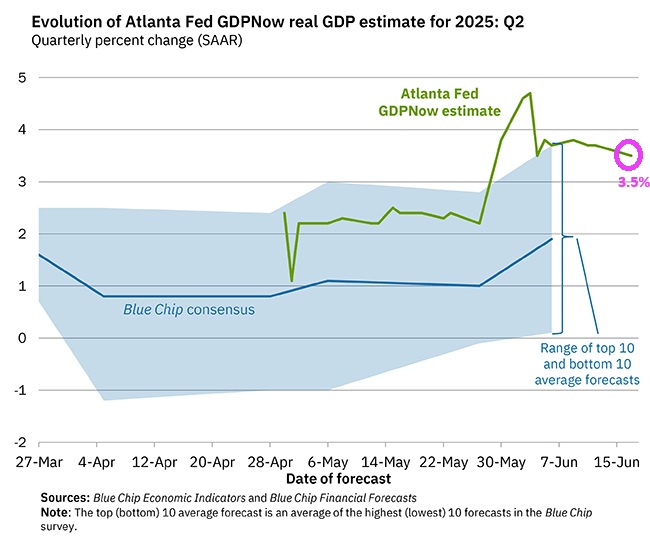
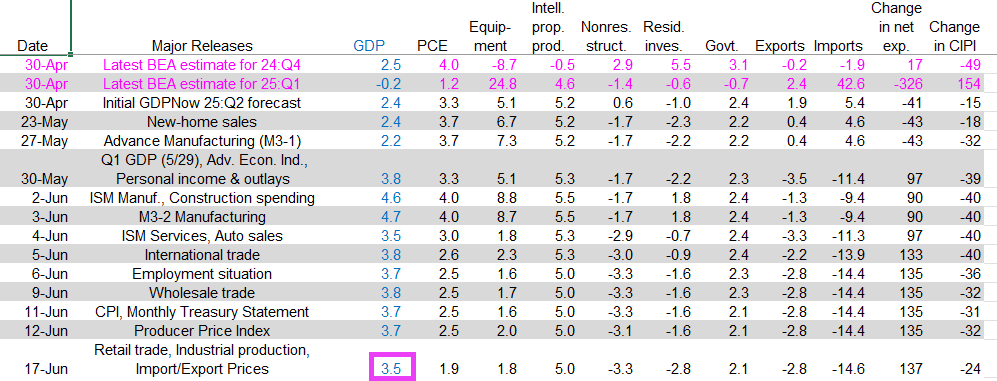
The GDPNow model estimate for real GDP growth (seasonally adjusted annual rate) in the second quarter of 2025 is 3.5 percent on June 17, down from 3.8 percent on June 9. After recent releases from the US Census Bureau, the US Bureau of Labor Statistics, the Federal Reserve Board of Governors, and the Treasury’s Bureau of the Fiscal Service, the nowcasts of second-quarter real personal consumption expenditures growth and second-quarter real government expenditures growth decreased from 2.5 percent and 2.3 percent, respectively, to 1.9 percent and 2.1 percent, while the nowcast of second-quarter real gross private domestic investment growth increased from -1.9 percent to -1.4 percent.
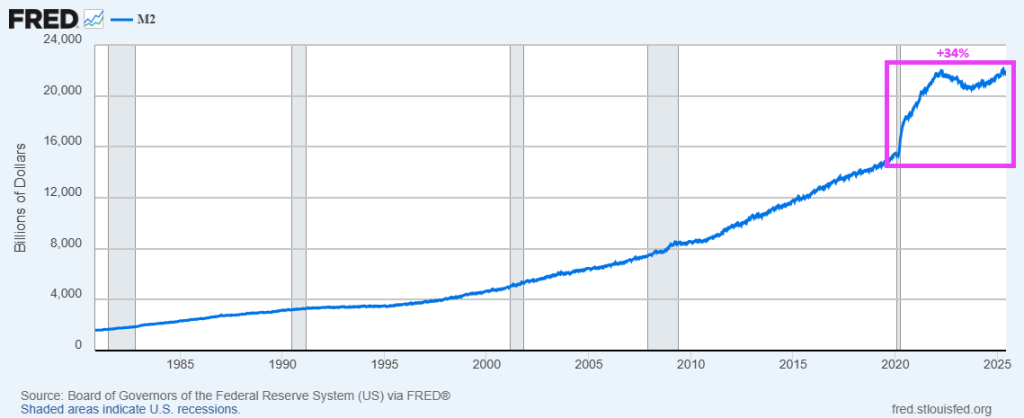
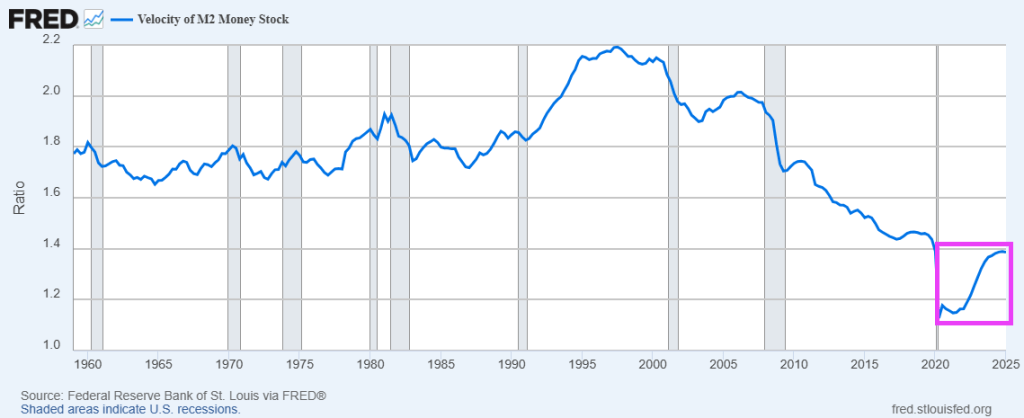
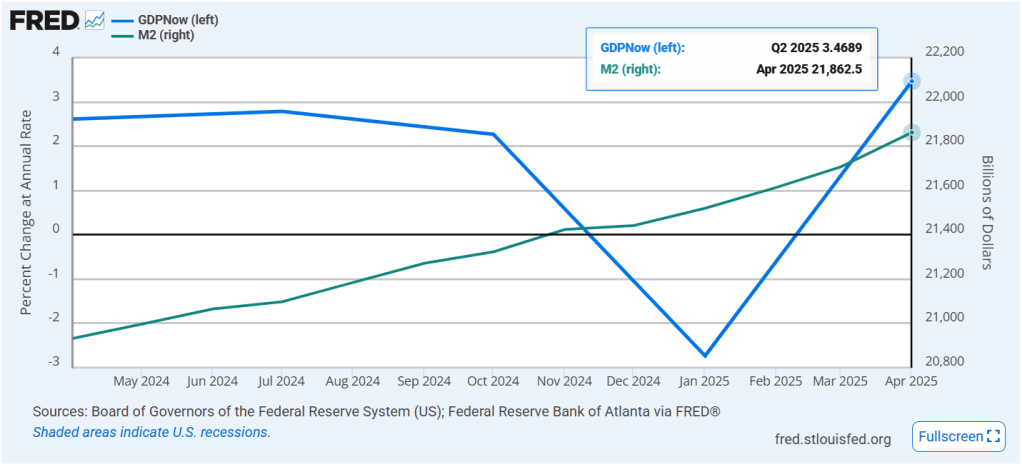
GDP growth corresponds to Fed money printing.
Here is the breakdown. True, real GDP growth has been slowing over June.










 Confounded Interest - Anthony B. Sanders
You must be logged in to post a comment.