February Jobs Report -92k Jobs Lost As US Tries To Recover From 4 Years Of Bidenomics (Oil Prices Soar As Attacks Against Iran Continue)

Trump has been President for 1 year and fighting against Biden and the Democrats economic misery.

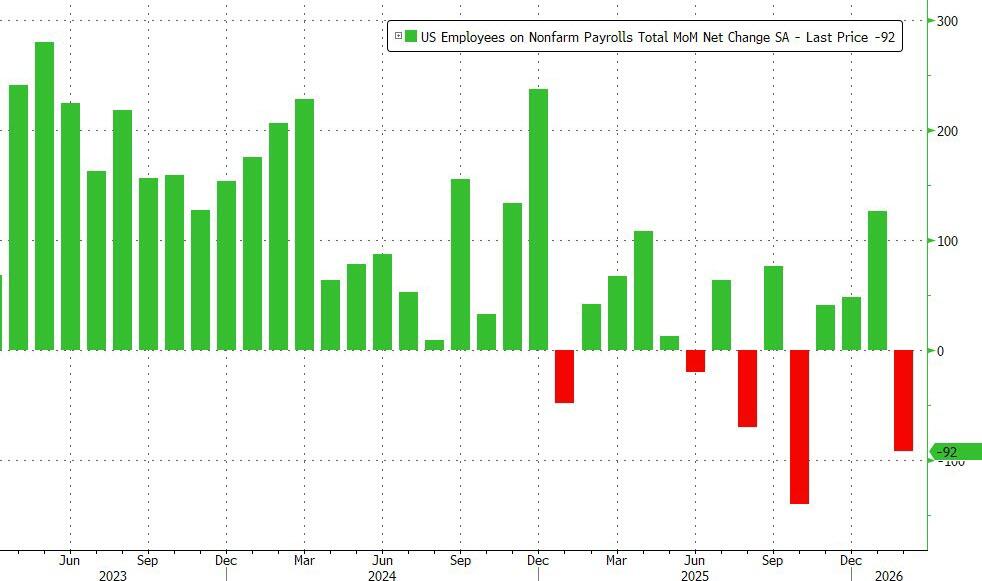
In February, the US lost 92,000 jobs, a huge drop from the downward revised 126K in January, and the second worst print since 2020 (only October’s shock -140K was worse), and this time, the massive drop can’t be dismissed as a one-time drop in government payrolls. The number of private payrolls dropped by 86K, also a huge miss to estimates of a 60K increase.

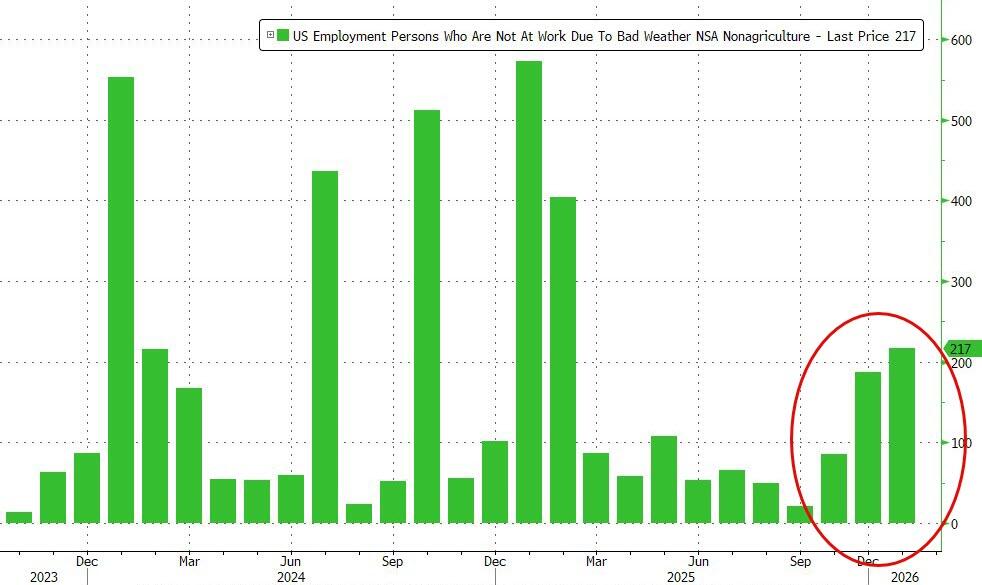
One potential mitigating factor: the number of people who were unable to work due to weather surged to 228K in February, well above last year’s level 167K, due to the powerful winter storms hitting the US.

  • The number of long-term unemployed (those jobless for 27 weeks or more) changed little at 1.9 million in February but is up from 1.5 million a year earlier. The long-term unemployed accounted for 25.3 percent of all unemployed people in February. 
  • The number of people employed part time for economic reasons decreased by 477,000 to 4.4 million in February. These individuals would have preferred full-time employment but were working part time because their hours had been reduced or they were unable to find full-time jobs. 
  • The number of people not in the labor force who currently want a job changed little in February at 6.0 million. These individuals were not counted as unemployed because they were not actively looking for work during the 4 weeks preceding the survey or were unavailable to take a job. 
  • Among those not in the labor force who wanted a job, the number of people marginally attached to the labor force changed little at 1.6 million in February. These individuals wanted and were available for work and had looked for a job sometime in the prior 12 months but had not looked for work in the 4 weeks preceding the survey. The number of discouraged workers, a subset of the marginally attached who believed that no jobs were available for them, decreased by 109,000 in February to 366,000. 

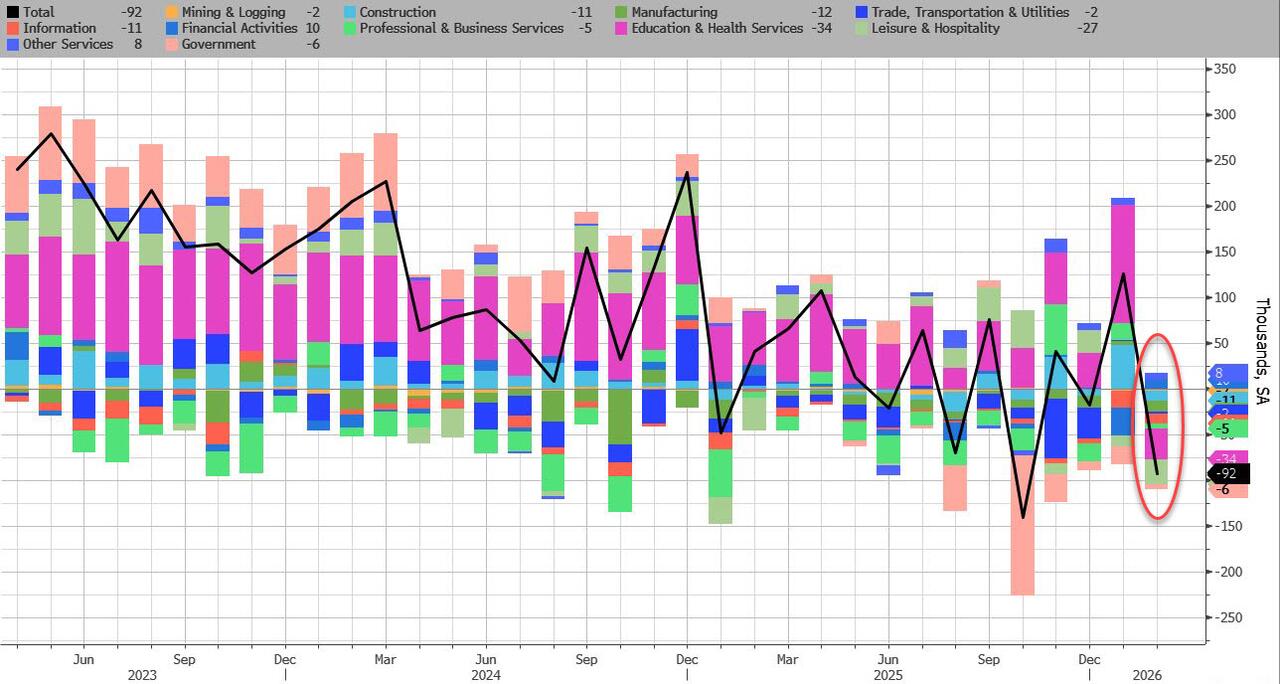
Turning to the establishment survey, which unveiled the shocking February drop, the BLS reported a broad-based decline, driven by striking employment workers:

  • Employment in health care decreased in February, reflecting strike activity. Employment in information and federal government continued to trend down. Payroll employment changed little on net in 2025. 
  • Health care employment declined by 28,000 in February, following a large increase in January (+77,000). Offices of physicians lost 37,000 jobs in February, primarily due to strike activity. Hospitals added 12,000 jobs. Over the prior 12 months, health care had added an average of 36,000 jobs per month. 
  • Employment in information continued to trend down in February (-11,000). The industry had lost an average of 5,000 jobs per month over the prior 12 months.
  • In February, federal government employment continued to decline (-10,000). Since reaching a peak in October 2024, federal government employment is down by 330,000, or 11.0 percent.
  • Employment in social assistance continued its upward trend in February (+9,000), driven by individual and family services (+12,000).
  • Transportation and warehousing employment changed little in February (-11,000). A job loss in couriers and messengers (-17,000) was partially offset by a gain in air transportation (+5,000). Employment in transportation and warehousing has declined by 157,000, or 2.4 percent, since reaching a peak in February 2025.
  • Employment showed little change over the month in other major industries, including mining, quarrying, and oil and gas extraction; construction; manufacturing; wholesale trade; retail trade; financial activities; professional and business services; leisure and hospitality; and other services.

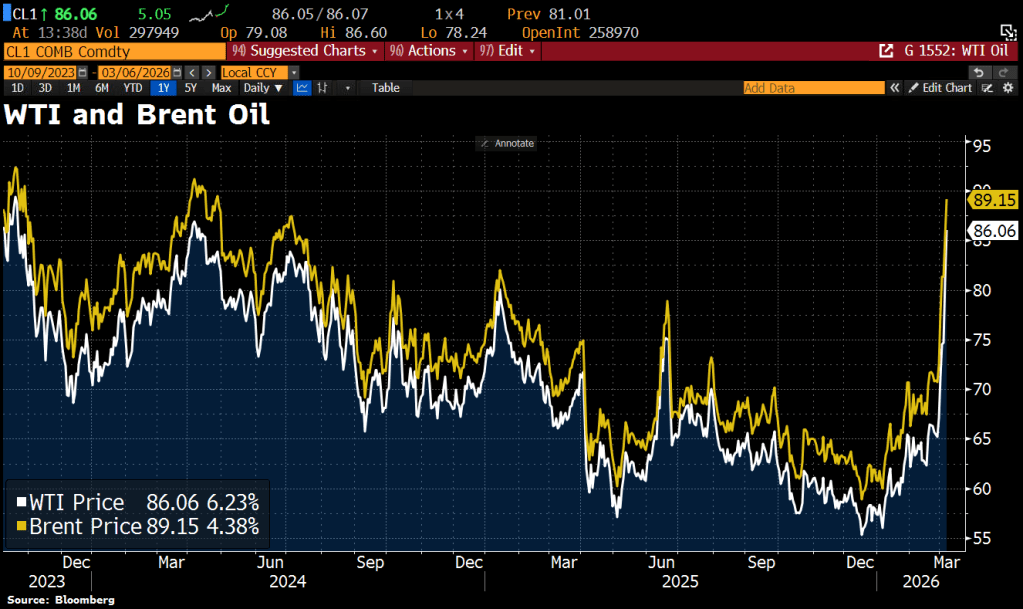
Switching to oil, we see the West Texas Intermediate and Brent Oil prices soaring on the attacks on Iran.

To soothe you.

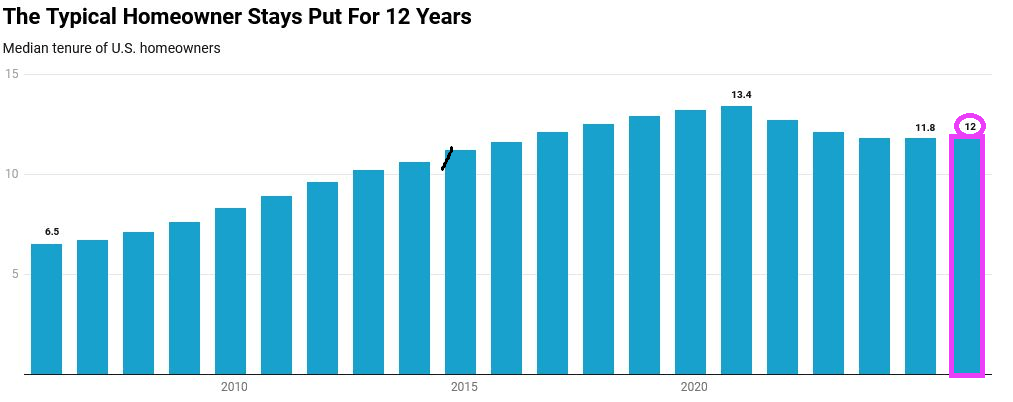
Typical Homeowner Stays In Home For 12 Years, Up From 6.5 Years In 2006 (Average Effective Mortgage Life Is Only 5-7 Years)

People are staying in their homes longer now than in 2006. 12 years now versus 6.5 years in 2006.

The average effective mortgage life is 5-7 years,

12 years in the same home makes housing policy more difficult to implement.

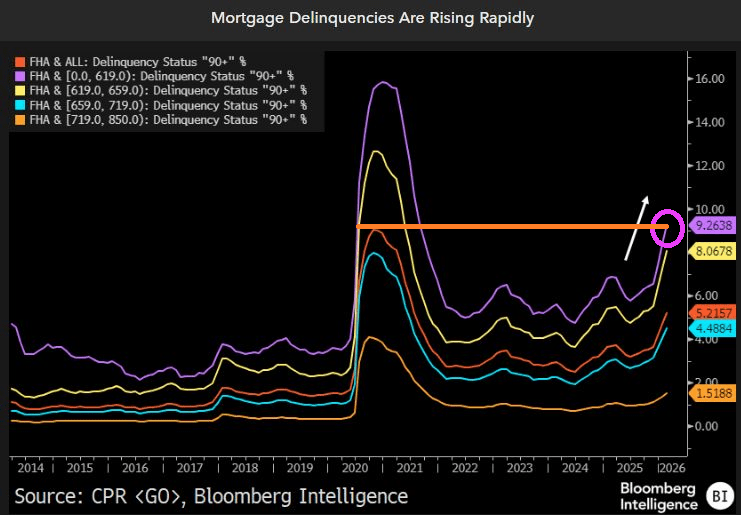
Simply Unaffordable! FHA Lower Credit Score Borrowers (0-619) Suffer Escalating Mortgage Delinquency Rates

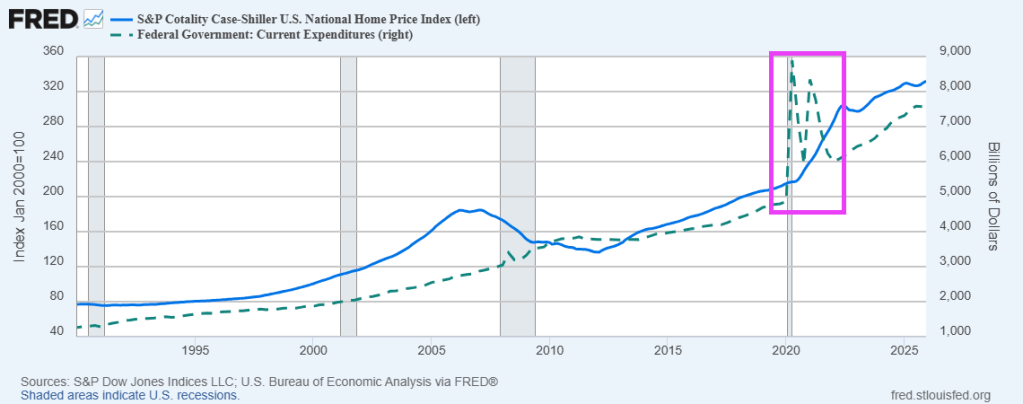
We are seeing the aftermath of the Federal government’s fiscal response to the Covid outbreak of 2020. Home prices exploded following The Federal government’s spending spree. The end result? US housing is simply unaffordable for millions of households.

Not really surprising given the soaring home prices following the Covid Federal spending spree.

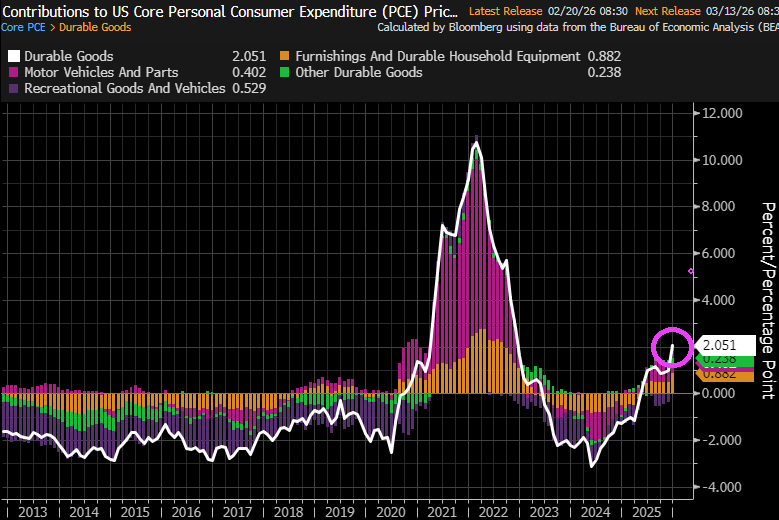
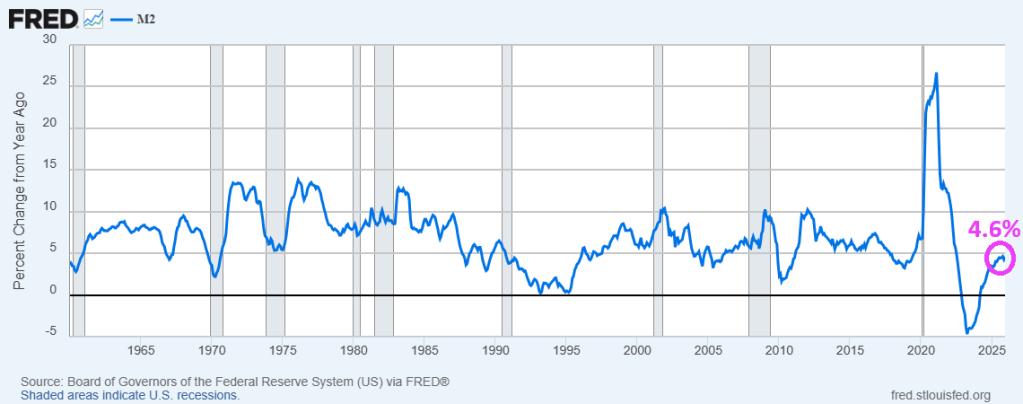
Inflation Power! US Core PCE Jumps On Durable Goods Jumps 2.051% (PCE Up 0.4% In December, M2 Up 4.6% YoY)

I called this inflation power!

Underlying U.S. inflation increased more than expected in December, and signs are pointing to a further acceleration in January, which would strengthen expectations that the Federal Reserve would not cut interest rates before June.

The personal consumption expenditures price index, excluding the volatile food and energy components, rose 0.4% after an unrevised 0.2% gain in November, the Commerce Department’s Bureau of Economic Analysis said on Friday. In the 12 months through December, core PCE inflation advanced 3.0% after increasing 2.8% in November.

The PCE price index increased 0.4% in December after rising 0.2% in November. PCE inflation increased 2.9% year-on-year after gaining 2.8% in November.

But in terms of contributions to the 0.4% figure is that durable goods rose 2.051%.

The Fed has been printing money (M2) like there is no tomorrow. With M2 growing at 4.6% YoY in December.

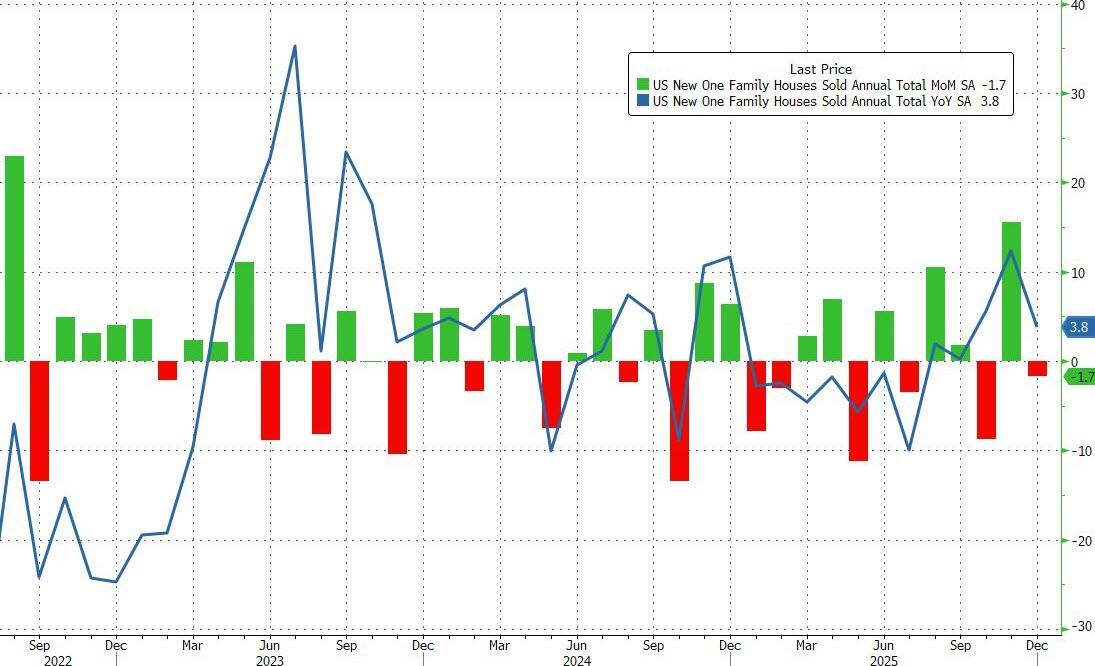
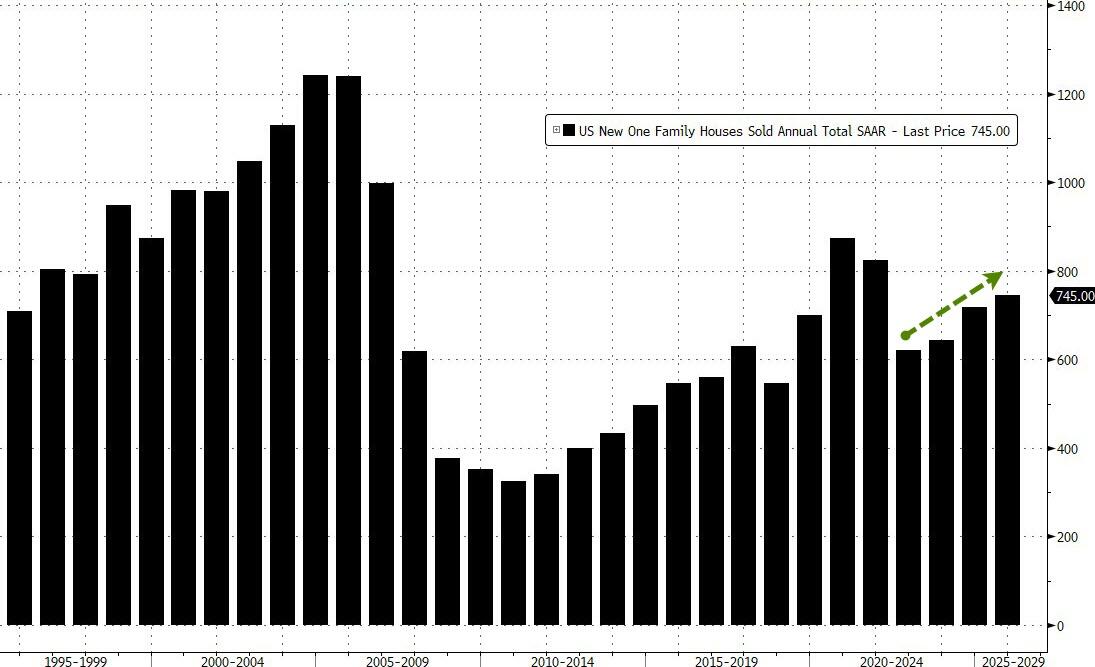
2025 New Home Sales Highest Since 2021 (Down -1.7% MoM In December)

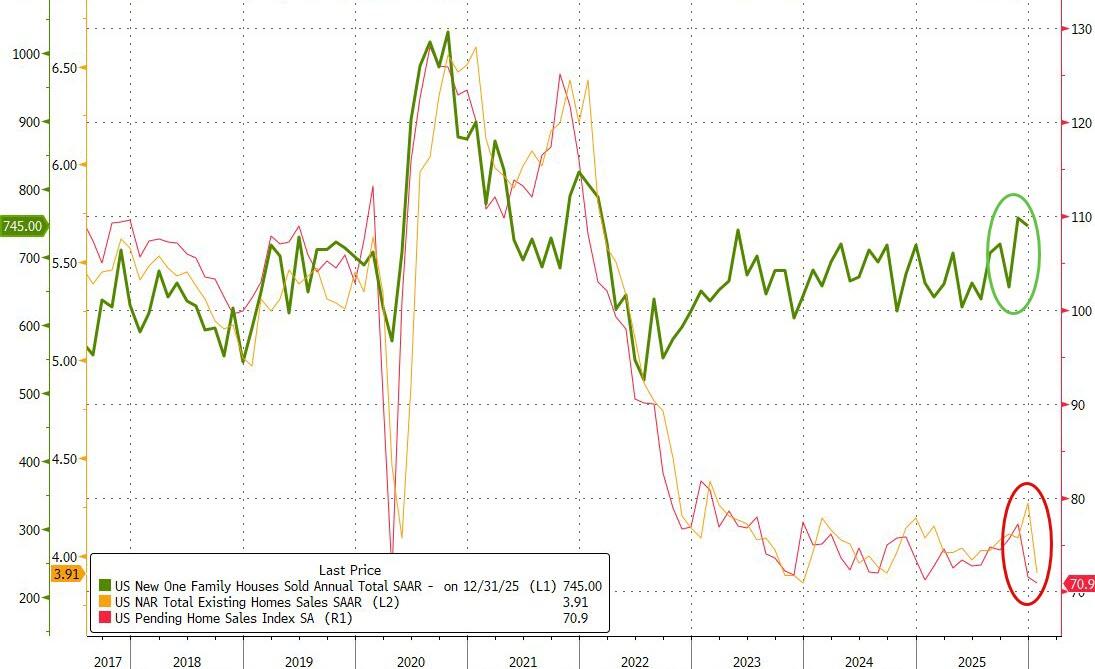
US New Home Sales dipped 1.7% MoM in December (after a 15.5% MoM surge in November)…

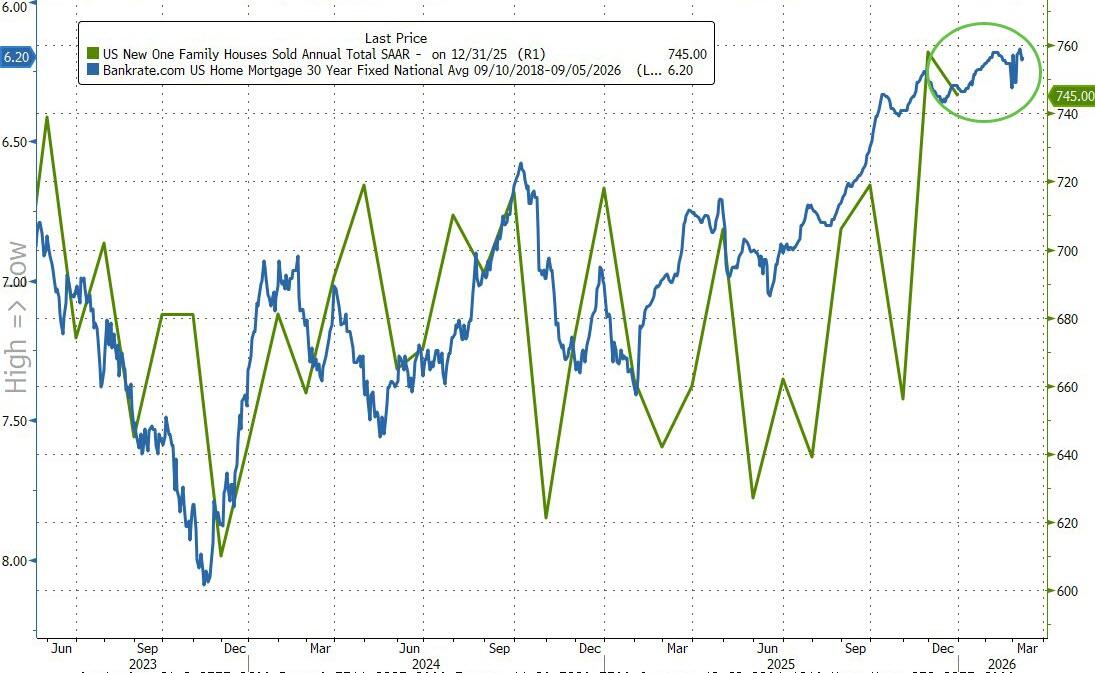
…but ended the year at 745k – the highest SAAR since 2021…


“New” home sales have notably decoupled from “used” home sales in the last few years as homebuilders incentivize buyers (reducing margins) and lower prices (reducing revenues)…

Lower mortgage rates support modest further improvements in sales…

Will Trump get rid of tariffs on Canadian lumber?

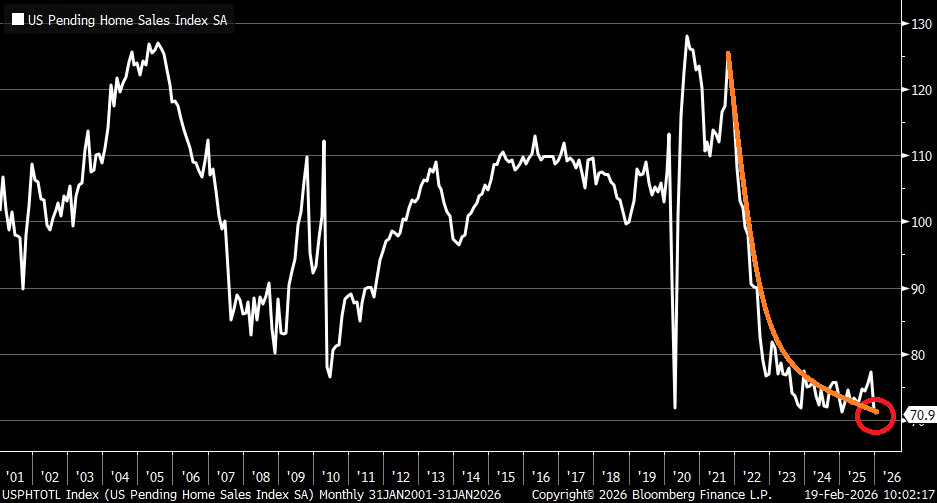
US Pending Home Sales Collapse To Lowest Level Since 2001

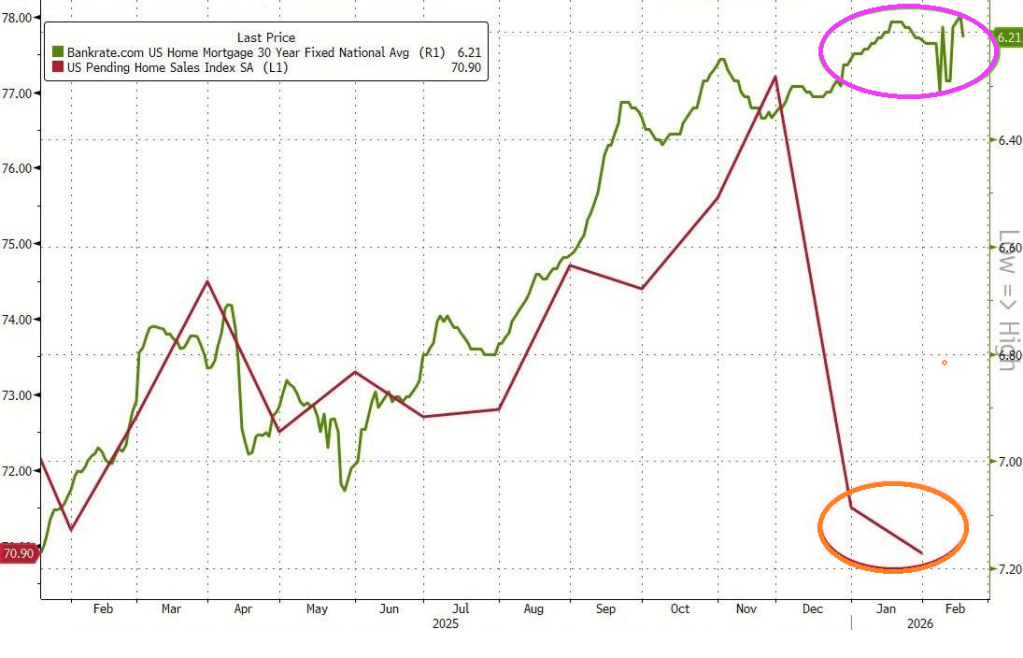
Unfortunately, US pending home sales have collapsed to the lowest level since at least 2001. Nothing has been the same since Biden/Harris administration.

Mortgage rates are still too high by historic standards.

Speaking of Democrats running the economy, New York’s mayor Zoran Mandami (the Ugandan Communist) is seeking to raise property taxes to 9.5% which will hit EVERY New Yorker, not just the billionaires he allegedly wants to tax.

Gimme (Cheaper) Shelter! US Core CPI Falls To Slowest In 4 Years (Real Wage Growth Rises As Rent CPI Rose Only 0.2% In January)

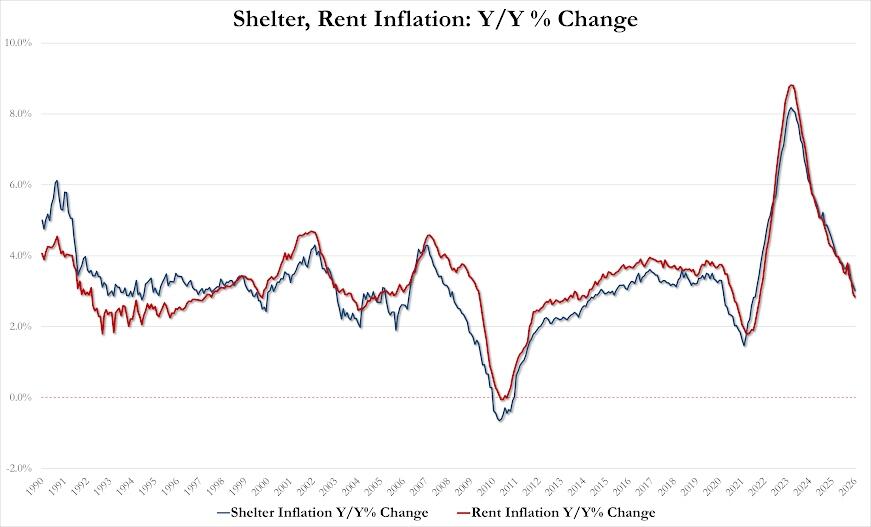
Gimme (cheaper) shelter!

Rate-cut expectations have surged (dovishly) higher this week (along with tumbling Treasury yields) amid a mixed macro picture (Labor market ‘good’, Retail sales bad, Housing ugly).

Today could change all that as CPI for January prints with risk skewed to the upside. January brings annual resets and they tend to surprise on the high side.

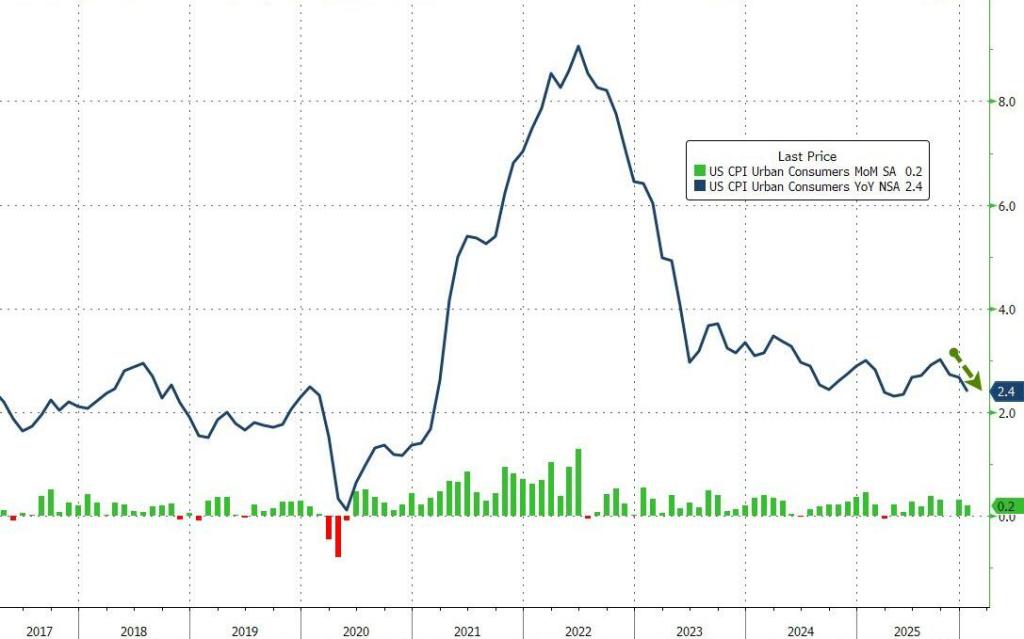
Despite the ‘hot’ whisper numbers (and 4 previous Januarys in a row of upside surprises), headline consumer price inflation came in cooler than expected in January (+0.2% MoM vs +0.3% expected). That pulled the headline CPI down dramatically from +2.7% to +2.4% – near the lowest in 4 years.

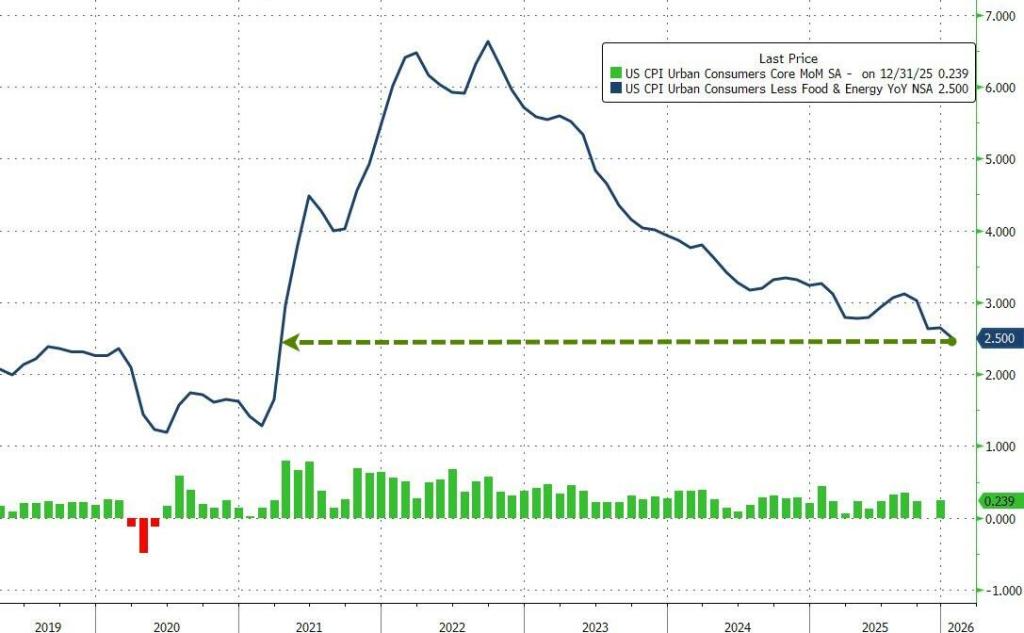
Core CPI printed +0.3% MoM (in line with expectations), lowering the YoY change in core prices to +2.5% – the lowest since March 2021.

The Shelter index rose 0.2% in January and was the largest factor in the all items monthly increase. The food index increased 0.2% over the month as did the food at home index, while the food away from home index rose 0.1 percent. These increases were partially offset by the index for energy, which fell 1.5% in January.

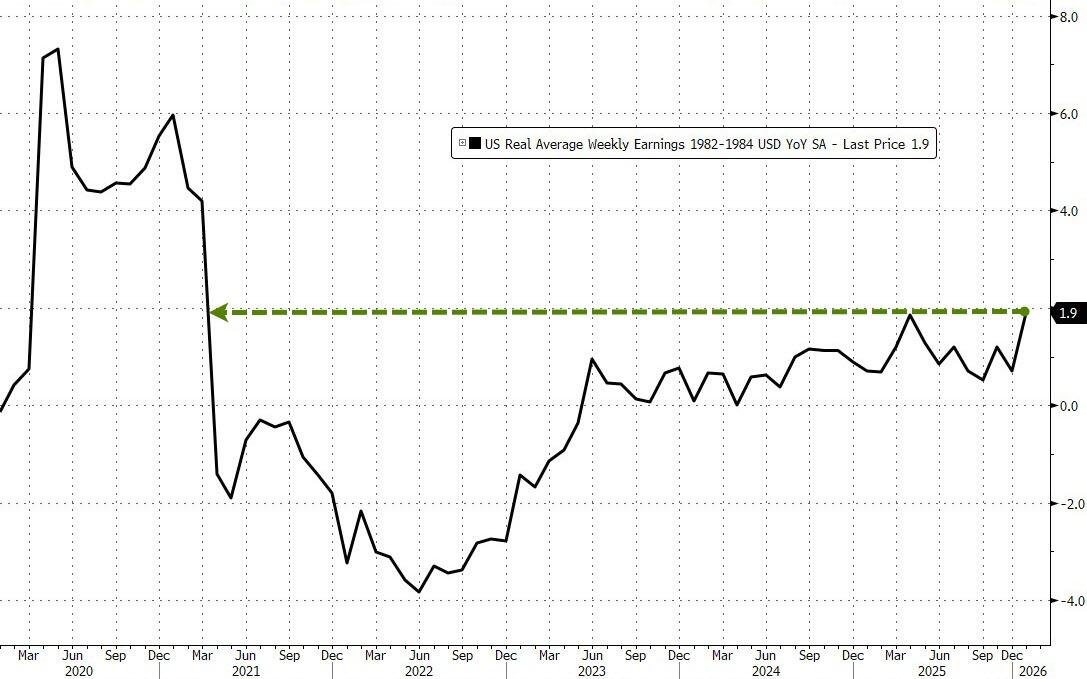
January saw real average weekly earnings rise 1.9% YoY – its highest since March 2021…

Gap Between 2s And 10s Treasuries Now Widest Since Early 2022 (Recession Coming Despite 3.7% Real GDP Growth?)

The gap between 2s and 10s Treasuies is now the widest it’s been since early 2022.

According to the Atlanta Fed GDP Now report, the current real GDP growth rate is 3.7%. But the yield curve is a forward looking measure.

US Unexpectedly Adds 130K Jobs In January, Most Since Dec 2024 (Growing Private Sector Jobs, Declining Government Jobs)

In January the US added 130K jobsdouble the 65K median estimate and up from a downward revised December print of 48K (vs 50K previously). This was also the highest monthly jobs increase since December 2024.

Government jobs fell by -42k. Furthering the trend for growing private sector employment and declining government employment.

Compared to Jan 2025, we see the growth in private sector employment and decline in government jobs.

The jobs report comes with the largest jobs revision since 2009/2010.

Now for the bad news, As my OSU/Chicago/GMU know, I prefer NON seasonally adjusted data when at all reasonable. While Seasonally adjusted jobs added SEASONALLY ADJUSTED was +130K, NOT seasonally adjusted jobs added was -2.649 Million.

Happy birthday to Tina Louis (Ginger from Gilligan’s Island) who turned 92 today.

US Manufacturing Sector Shed -8k Jobs on January (Difficult To Undo Damage Done By Biden and Schumer Including Negative Home Equity)

The manufacturing sector shed -8,000 jobs in January, according to the ADP private employment report.

This marks the 32nd consecutive monthly decline, the longest streak since data began in 2010.

In 2024 and 2025, manufacturing employment fell -154,000 and -177,000, respectively.

Since the 2022 peak, -403,000 jobs have been lost, bringing total manufacturing employment down to 12.483 million, the lowest since November 2021.

The sector has now lost HALF the number of jobs wiped out during the 2020 pandemic.

The US manufacturing sector is in recession.

It is difficult to undo the damage to the economy done by Biden and Chuck Schumer with their insane spending and open borders. Like pushing up housing prices to obscene levels under Clueless Joe.

US Manufacturing Sector Shed -8k Jobs on January (Difficult To Undo Damage Done By Biden and Schumer Including Negative Home Equity).

US layoffs are skyrocketing, largely due to the cost of providing Obamacare to employees. Easier to replace full-time workers with part-time and no healthcare benefits.

Sorry Bad Bunny, Your open border fantasies are a nightmare for law and order.