
The Fed’s Little Beige Book. Keyword? SHORTAGES!
Overall Economic Activity:
- Economic growth downshifted slightly to a moderate pace in early July through August. The stronger sectors of the economy of late included manufacturing, transportation, nonfinancial services, and residential real estate. The deceleration in economic activity was largely attributable to a pullback in dining out, travel, and tourism in most Districts, reflecting safety concerns due to the rise of the Delta variant, and, in a few cases, international travel restrictions.
- The other sectors of the economy where growth slowed or activity declined were those constrained by supply disruptions and labor shortages, as opposed to softening demand. In particular, weakness in auto sales was widely ascribed to low inventories amidst the ongoing microchip shortage, and restrained home sales activity was attributed to low supply.
- Growth in non-auto retail sales slowed a bit in some Districts, rising at a modest pace, on balance, across the nation.
- Residential construction was up slightly, on balance, and nonresidential construction picked up modestly.
- Trends in loan volumes varied widely across Districts, ranging from down modestly to up strongly.
- Reports on the agriculture and energy sectors were mixed across Districts but, on balance, positive.
- Looking ahead, businesses in most Districts remained optimistic about near-term prospects, though there continued to be widespread concern about ongoing supply disruptions and resource shortages.
Employment and Wages:
- All Districts continued to report rising employment overall, though the characterization of the pace of job creation ranged from slight to strong.
- Demand for workers continued to strengthen, but all Districts noted extensive labor shortages that were constraining employment and, in many cases, impeding business activity.
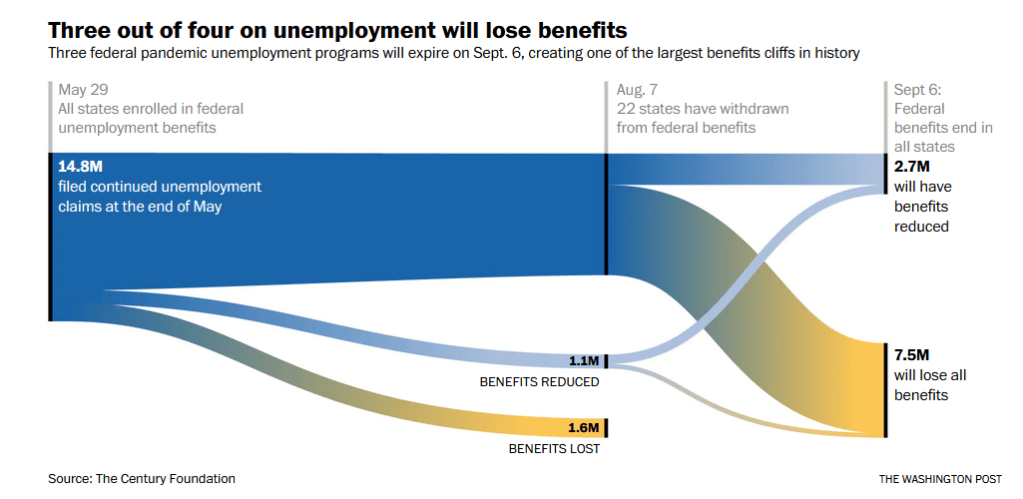
- Contributing to these shortages were increased turnover, early retirements (especially in health care), childcare needs, challenges in negotiating job offers, and enhanced unemployment benefits.
- Some Districts noted that return-to-work schedules were pushed back due to the increase in the Delta variant.
- With persistent and extensive labor shortages, a number of Districts reported an acceleration in wages, and most characterized wage growth as strong—including all of the midwestern and western regions.
- Several Districts noted particularly brisk wage gains among lower-wage workers.
- Employers were reported to be using more frequent raises, bonuses, training, and flexible work arrangements to attract and retain workers.
Prices:
- Inflation was reported to be steady at an elevated pace, as half of the Districts characterized the pace of price increases as strong, while half described it as moderate.
- With pervasive resource shortages, input price pressures continued to be widespread.
- Most Districts noted substantial escalation in the cost of metals and metal-based products, freight and transportation services, and construction materials, with the notable exception of lumber whose cost has retreated from exceptionally high levels.
- Even at greatly increased prices, many businesses reported having trouble sourcing key inputs.
- Some Districts reported that businesses are finding it easier to pass along more cost increases through higher prices.
- Several Districts indicated that businesses anticipate significant hikes in their selling prices in the months ahead.
Here are the highlights by Regional Feds:
- Boston: Economic activity in the First District expanded at a modest to strong pace over the summer of 2021. Contacts reported higher prices and wages but complained more about an inability to get supplies and to hire workers. Contacts were optimistic and hoped supply issues would ease in 2022.
- New York: Growth in the regional economy moderated, though contacts remained optimistic about the near-term outlook. Employment and wages increased, with businesses reporting widespread labor shortages. Tourism leveled off, and service-sector businesses reported some deceleration in activity. Input price pressures remained widespread, and more businesses have raised or plan to raise their selling prices.
- Philadelphia: Business activity continued at a moderate pace of growth during the current Beige Book period – still below levels attained prior to the pandemic. The rise of Delta variant cases has trimmed growth in some sectors, while labor shortages and supply chain disruptions continued apace. Overall, wage growth increased to a moderate pace, while prices continued growing moderately and employment continued to grow modestly.
- Cleveland: Economic activity grew solidly, but supply constraints limited many firms’ ability to meet demand. Staff levels increased modestly amid intense labor shortages. Reports of rising nonlabor costs, wages, and prices continued to be widespread. Firms expected demand would remain strong in the near term, but they were less optimistic that labor and supply challenges would abate enough to ease the upward pressure on wages and costs.
- Richmond: The regional economy expanded moderately, but many firms faced shortages and higher costs for both labor and non-labor inputs. Port and trucking volumes picked up from already high levels, but manufacturers and services firms experienced delays and long lead times for goods. Employment rose moderately as labor shortages and wage increases were widely reported. Price growth picked up and was robust compared to last year.
- Atlanta: Economic activity expanded moderately. Labor markets improved and wage pressures became more widespread. Some nonlabor costs rose. Retail sales increased. Leisure travel was strong and hotel occupancy levels rose. Residential real estate demand remained solid. Commercial real estate conditions were steady. Manufacturing activity expanded. Banking conditions were stable.
- Chicago: Economic activity increased moderately. Employment increased strongly, manufacturing grew moderately, business spending was up modestly, construction and real estate rose slightly, and consumer spending decreased slightly. Wages and prices increased strongly while financial conditions slightly improved. There was some retreat in prospects for agricultural income.
- St. Louis: Economic conditions have continued to improve at a moderate pace since our previous report. Across all industries, contacts are concerned about the Delta variant and its economic impact. Contacts continued to report that labor and material shortages. Overall inflation pressures remain elevated, but firms reported varying degrees of pass-through to customers.
- Minneapolis: The District economy saw moderate growth despite continued inventory shortages and higher prices. Employment grew strongly but hiring demand continued to outstrip labor response by a wide margin. Consumer demand remained strong, leveraging growth in services, tourism, and manufacturing. Drought took a growing toll on agriculture, though higher prices benefited farmers. Minority and women-owned business enterprises saw moderate growth in activity.
- Kansas City: Economic activity continued to grow at a moderate pace through August. Demand remains elevated for most businesses, and a majority of contacts expect activity to remain elevated amid the recent surge in COVID cases. Wages grew at a robust pace, but labor shortages persist. As a result of widespread drought, pasture and range land in several states was in poor or very poor condition.
- Dallas: The District economy expanded at a solid rate, with broad-based growth across sectors. Employment growth was robust, with a pickup seen in the service sector. Wage and price growth remained elevated amid widespread labor and supply chain shortages. Outlooks stayed positive, though surging COVID-19 cases has added uncertainty to outlooks.
- San Francisco: Economic activity in the District expanded moderately. Hiring activity intensified further, as did upward pressures on wages and inflation. Retail sales increased modestly, while conditions in the services sector deteriorated somewhat. Activity in the manufacturing and agriculture sectors increased slightly. Residential construction edged down somewhat, while lending activity remained largely unchanged.
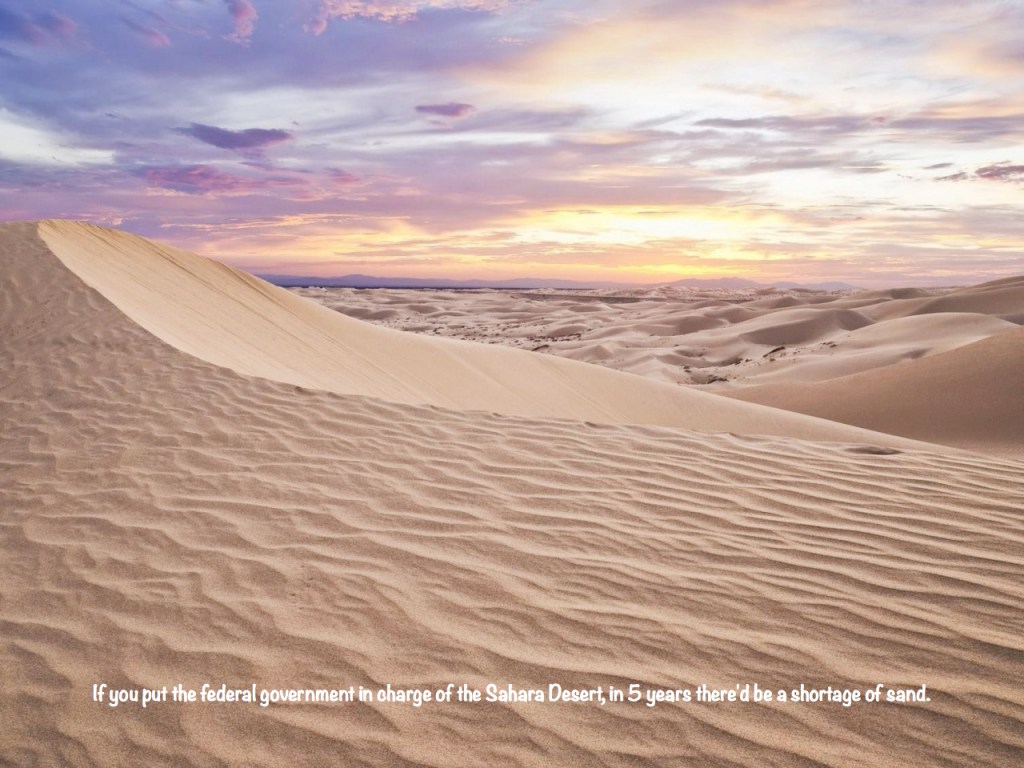
As Milton Friedman once said, “If you put The Federal Government in charge of the Sahara Desert, in 5 years there would be a shortage of sand.” And The Fed is no slouch at creating shortages either.
















You must be logged in to post a comment.