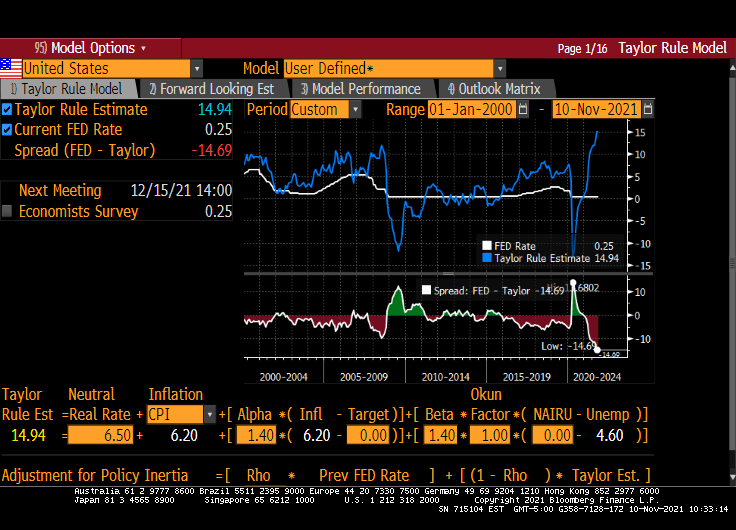
How insanely overstimulated in the US economy by The Federal Reserve? Today’s red-hot inflation report of 6.2% YoY implies a Fed Funds Target rate of … 14.94%!! According to the Taylor Rule model, The Fed Funds Target rate should be almost 15%.
If we use CORE inflation (that is, CPI less food and energy), The Fed’s Target rate should be “only” 11.10%.
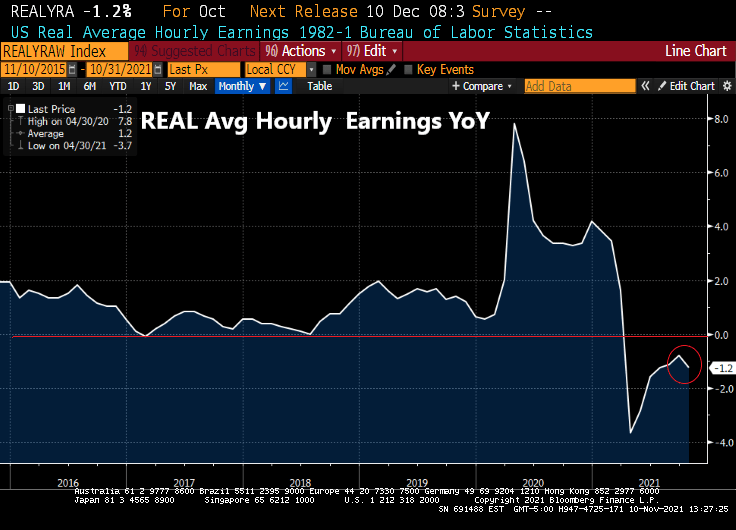
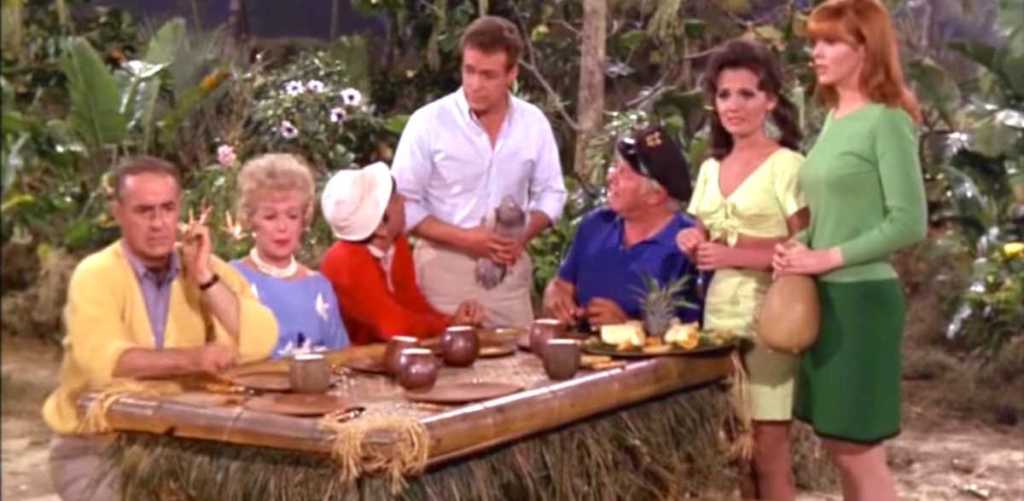
I feel like I am watching re-runs of Gilligan’s Island with Biden as the Skipper and Powell as Gilligan. Thurston Howell III and his wife lovey are the US Congress and Janet Yellen is the Professor. Case in point? REAL average hourly earnings YoY fell to -1.2% under the Gilligan’s Island leadership in DC.
Biden Starts To Freak Out About Soaring Inflation, Orders Economic Council To “Reduce Energy Costs”
My heart goes out to households living on a pension. And households who are not in the elite 1% class of Americans. Particularly if they rely on The Federal Reserve and Federal government to keep inflation low.
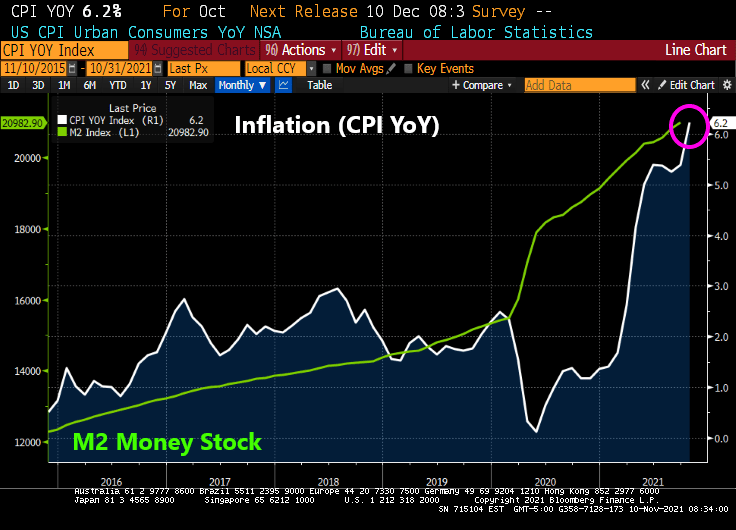
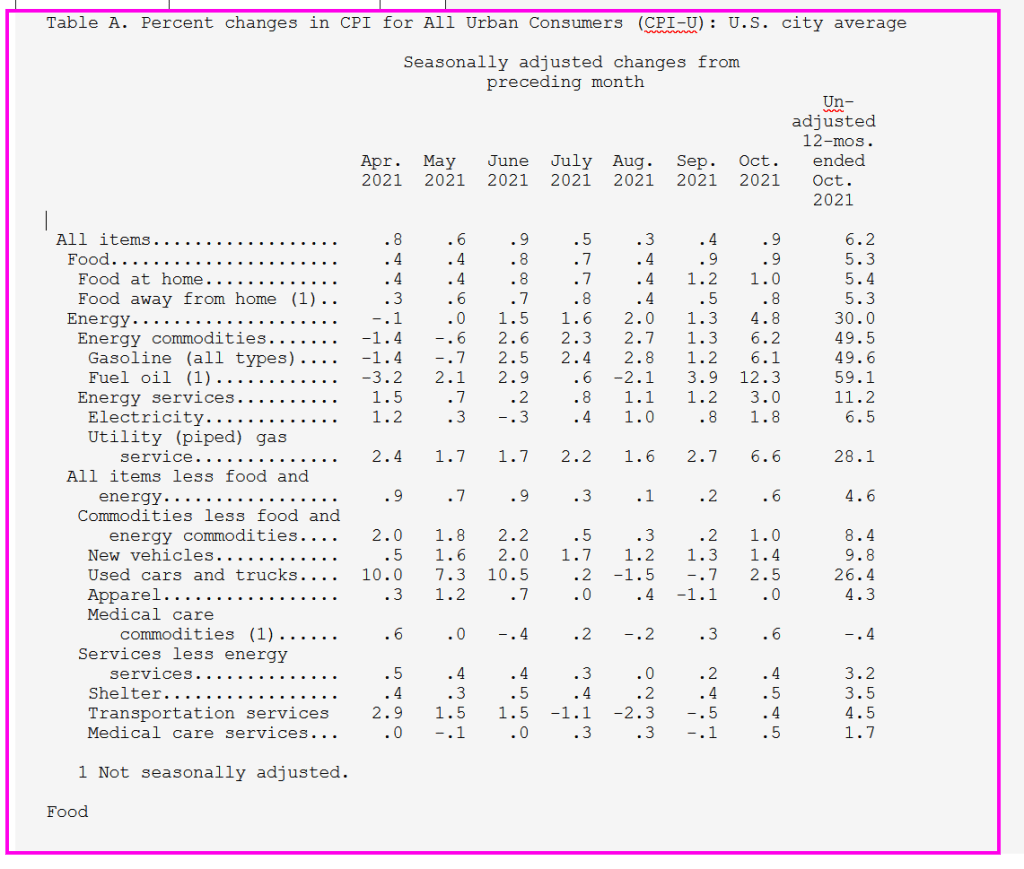
Inflation (as measured by the Consumer Price Index) rose to 6.2%.
Yes, a large chunk of inflation is thanks to the green American lobby who want energy prices much higher. Due to the chip shortage, we have used cars and trucks soaring in price at 26.4% YoY growth.
Then we have my least favorite, most misleading inflation measure: shelter. According to the BLS, shelter rose “only” 3.5% YoY. Odd since home prices are growing a 20% YoY clip.
I know, I know. The media talking heads will say “temporary price increases.” Even with all the money pumped into the economy??
I know, I know, (CNN)President Joe Biden said Wednesday that inflation statistics showing America’s prices are surging more than they have in 30 years are proof that there is “more work to do before our economy is back to normal.”
Then stop printing money and slow down your terrible crony spending policies!!!
President Biden wants to know if you are Tuff Enough to stand rapidly rising energy prices as he shuts down American supply?
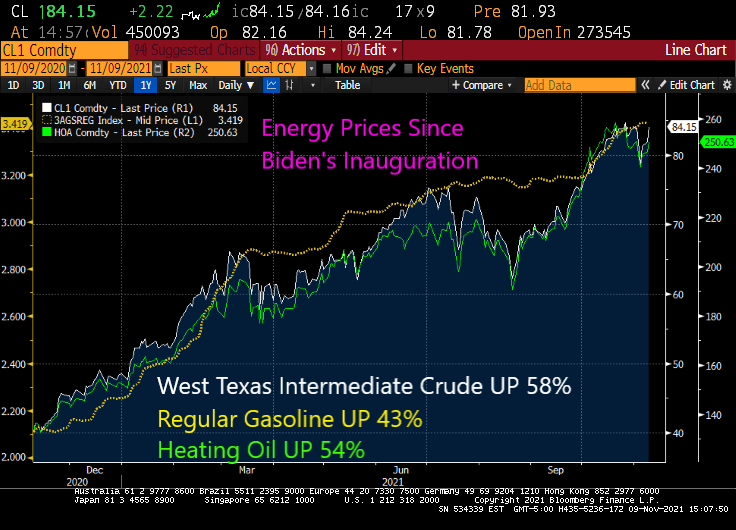
Since Biden’s inauguration, West Texas Intermediate crude prices have soared by 58%, regular gasoline prices have soared by 43% and heating oil has soared by 54%.
Meanwhile, US households are told to put on more blankets and drive less while the DC elites (like Obama, Kerry and Yellen) fly around the world in fossil-fuel guzzling jets lecturing everyone on the need to get rid of fossil fuels.
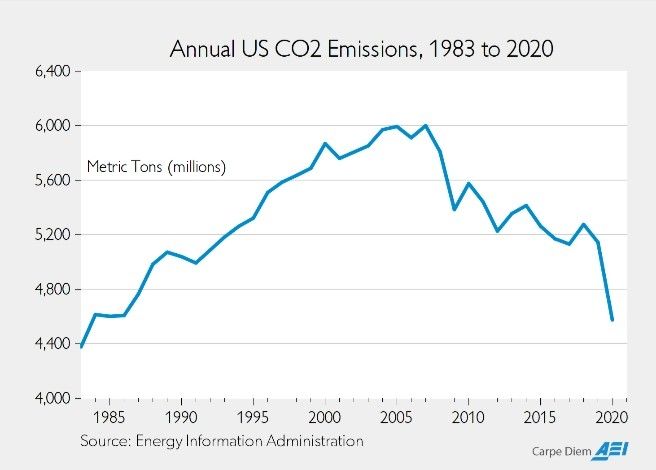
Odd, since annual CO2 emissions have declined significantly from 2007 levels.
Now that President Biden is interviewing Lael Brainard for Federal Reserve Chair, I am really getting a peaceless, uneasy feeling that The Fed will NEVER raise rates and inflation will be perpetual. To whit, …
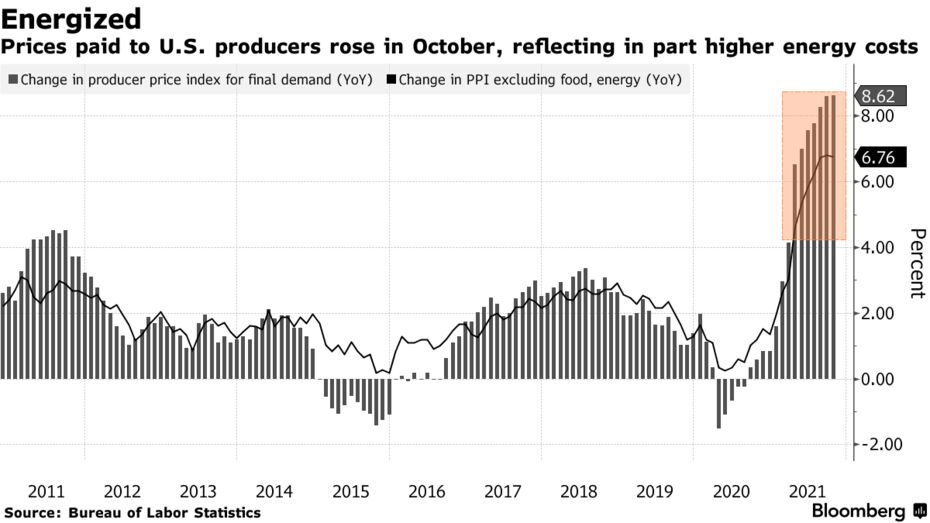
Prices paid to U.S. producers accelerated in October, largely due to higher goods costs, fueling concerns about the persistence of inflationary pressures in the economy.
The producer price index for final demand increased 0.6% from the prior month and 8.6% from a year earlier, matching forecasts, Labor Department data showed Tuesday. The annual advance was the largest in figures back to 2010.
Excluding the volatile food and energy components, the so-called core PPI rose 0.4% and was up 6.8% from a year ago.
More than 60% of the headline increase was due to goods, which jumped 1.2%. Higher energy costs, including that for gasoline, drove the gain. The cost of services rose a more moderate 0.2% for a second month, reflecting a further pullback in the cost of securities brokerages and investment advice.
The report underscores how transportation bottlenecks, materials shortages and increasing labor costs have sent prices soaring across the economy in recent months. Trucking freight costs jumped a record 2.5% from September.
Inflation is a tax created by printing too much money and stupid Federal economic policies (or follicies).
Lael Brainard? Discussing the chairmanship with Brainard could signify that the Biden team is weighing how a break with Powell might help advance their goals for the central bank. Brainard and Powell work closely together on multiple issues and are viewed as holding similar views on monetary policy, but she’s favored a tougher stance on big banks.
Remember, The Federal Reserve is a privately-owned entity independent of The Federal Government. A Brainard appointment would make The Fed the financing arm of the Democrat Party.
With The Federal Reserve leaving its target rate at 0.25%, but hinting at a tapering (slowdown) of asset purchases, I thought it would be good to present where The Fed sits at the moment.
You can see the rise in the effective Fed Funds rate from 2016 to early 2020, then KABOOM! COVID struck, the effective Fed Funds rate crashed while The Fed dramatically increased their purchases of Treasuries and Agency MBS. Both Treasury and Agency MBS purchases are projected to decline by mid-2022. The Fed’s target rate (purple line) is project to rise to 1% after 2023.
Where SHOULD The Fed Funds Target rate be? How about 8.80% instead of 0.25%.
So we still have over-stimulypto with The Fed projected to raise rates at a snail’s pace.
Face it, Wall Street wants interest rates low, even if inflation burns out of control.
Yes, the US economy has been greatly overstimulated by the Federal government (fiscal stimulus) and The Federal Reserve (monetary stimulus). This has caused inflation that we haven’t seen in a long time.
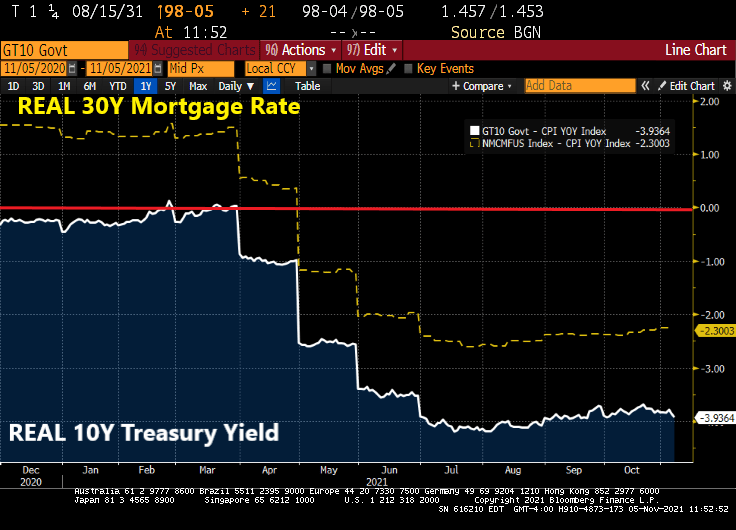
How overstimulated in the economy? The REAL 10-year Treasury yield (nominal less CPI YoY) is now -3.9364% and the 30-year REAL mortgage rate is -2.30%.
If The Federal Reserve is actually looking to achieve full employment in the USA, then it is a fool’s errand.
Today’s jobs report is both good and bad. The good news? 531k jobs were added, more than expected. The U-3 unemployment rate fell to 4.6%, also better than expected.
The bad news? REAL average hourly earnings growth “rose” to -0.8141% meaning that inflation is outpacing wage growth (despite what Joe Bidensaid yesterday).
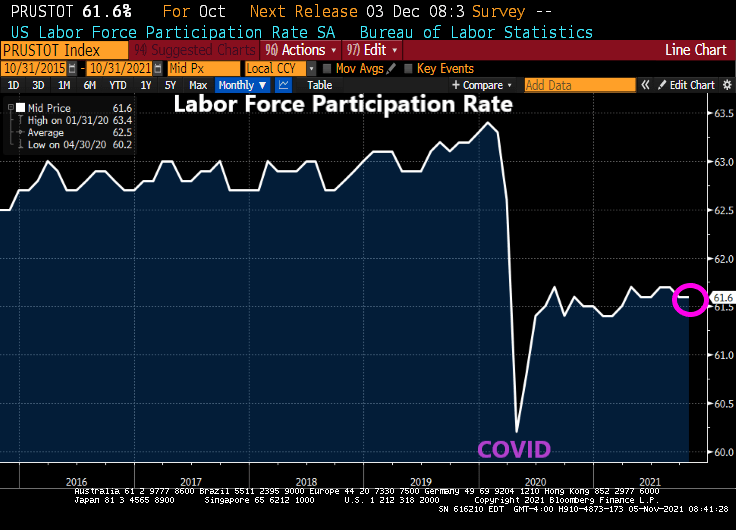
Look at labor force participation both in October and before Covid. After the large decline in LFP, it rose again then leveled-off to near where it is in October 61.6%.
Here is the rest of the story. Zero Hedge had the enticing headline of “October Payrolls Soar To 531K, Smashing Expectations As Prior Months Revised Sharply Higher”. Too bad inflation is eating away at the gains.
Biden: “We have increased labor force participation by inches.”
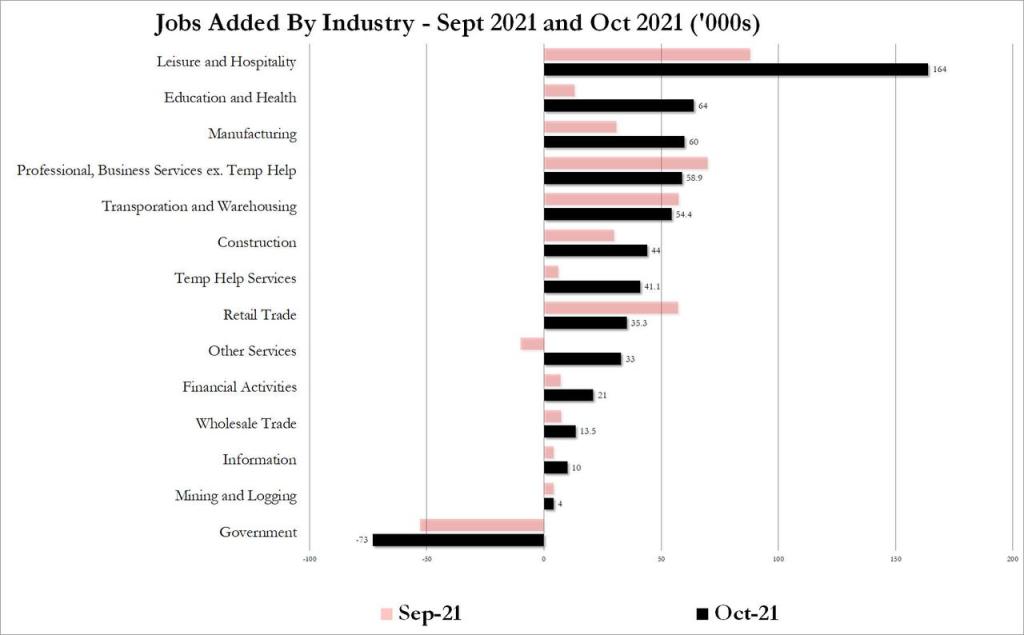
Employment in leisure and hospitality increased by 164,000 in October and has risen by 2.4 million thus far in 2021. Over the month, employment rose by 119,000 in food services and drinking places and by 23,000 in accommodation. Employment in leisure and hospitality is down by 1.4 million, or 8.2 percent, since February 2020.
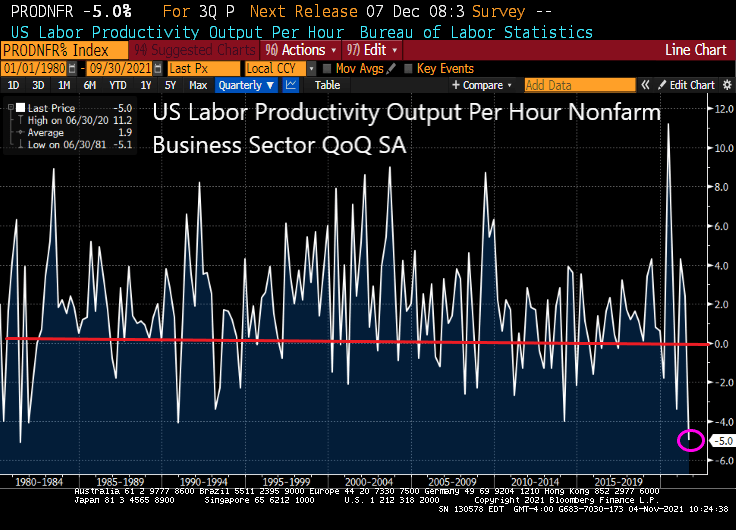
The last time we saw US labor productivity out per hour this low was in 1981 when President Reagan inherited stagflation from President Jimmy Carter.
As unit labor costs soar +8.3%.
Any wonder that the 1% have been doing so well relative to the bottom 50% in terms of wealth since entrance of The Fed in 2008 with zero-interest rate policies (ZIRP) and assets purchases (QE). And also after Covid struck.
“That will be $10,000 for your Big Mac, fries and a soda, please!”
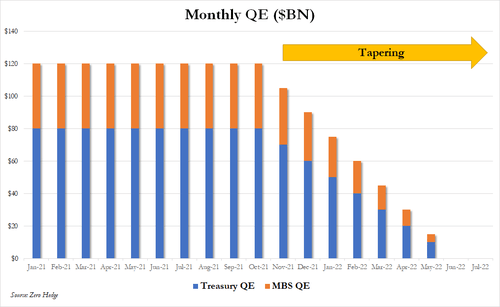
The Federal Reserve Open Market Committee (FOMC) did what was expected today. They left their target rate unchanged at 25 basis points and enacted a slooooowwww tapering of their balance sheet.
Complete the increase in System Open Market Account (SOMA) holdings of Treasury securities by $80 billion and of agency mortgage-backed securities (MBS) by $40 billion, as indicated in the monthly purchase plans released in mid-October.
o Increase the SOMA holdings of Treasury securities by $70 billion and of agency MBS by $35 billion, during the monthly purchase period beginning in mid-November.
o Increase the SOMA holdings of Treasury securities by $60 billion and of agency MBS by $30 billion, during the monthly purchase period beginning in mid-December.
o Conduct overnight repurchase agreement operations with a minimum bid rate of 0.25 percent and with an aggregate operation limit of $500 billion; the aggregate operation limit can be temporarily increased at the discretion of the Chair.
o Conduct overnight reverse repurchase agreement operations at an offering rate of 0.05 percent and with a per-counterparty limit of $160 billion per day; the per-counterparty limit can be temporarilyincreased at the discretion of the Chair.
Yes, a slowdown in the trajectory of Fed asset purchases.
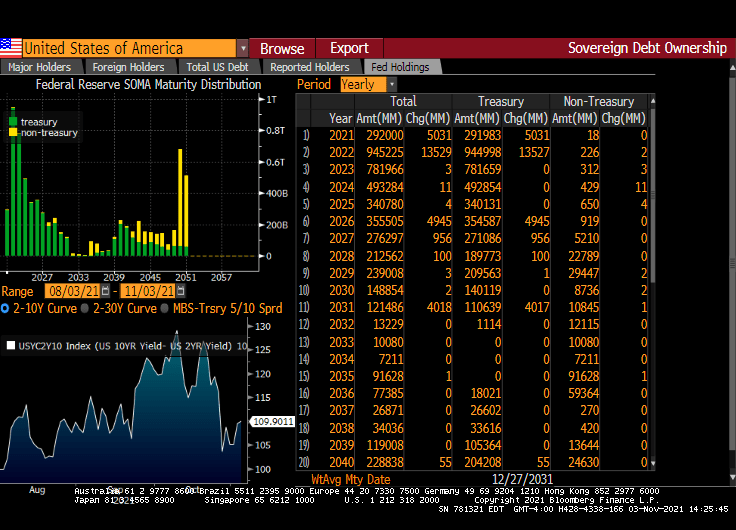
The maturity structure of System Open Market Holdings by The Fed?
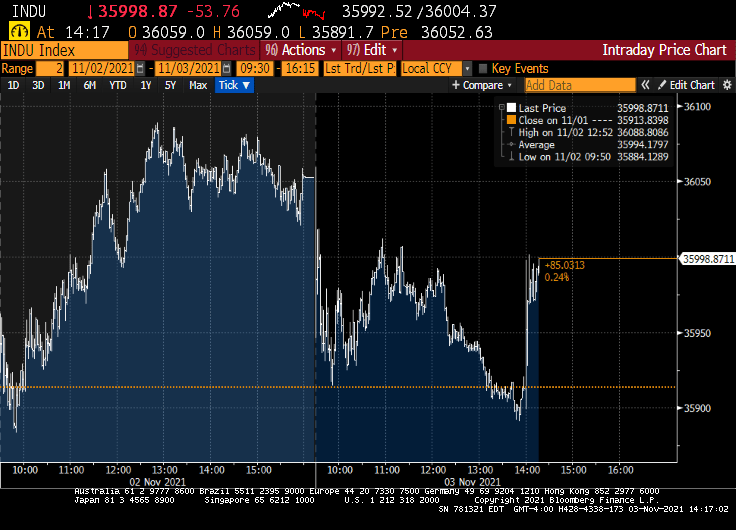
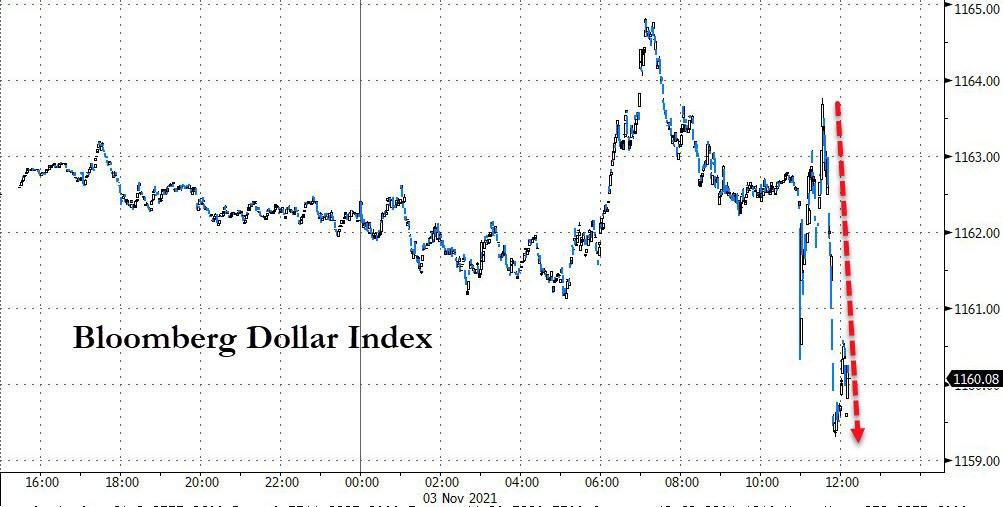
The reaction in the stock market and bond markets? How about the Dow?
















 Confounded Interest - Anthony B. Sanders
You must be logged in to post a comment.