
Addicted To Gov! 40-year Mortgage Proposal And How Government Makes Housing Unaffordable (Declining Real Wage Growth And Rising Mortgage Rates = Bad News)

The housing and mortgage markets are addicted to gov.

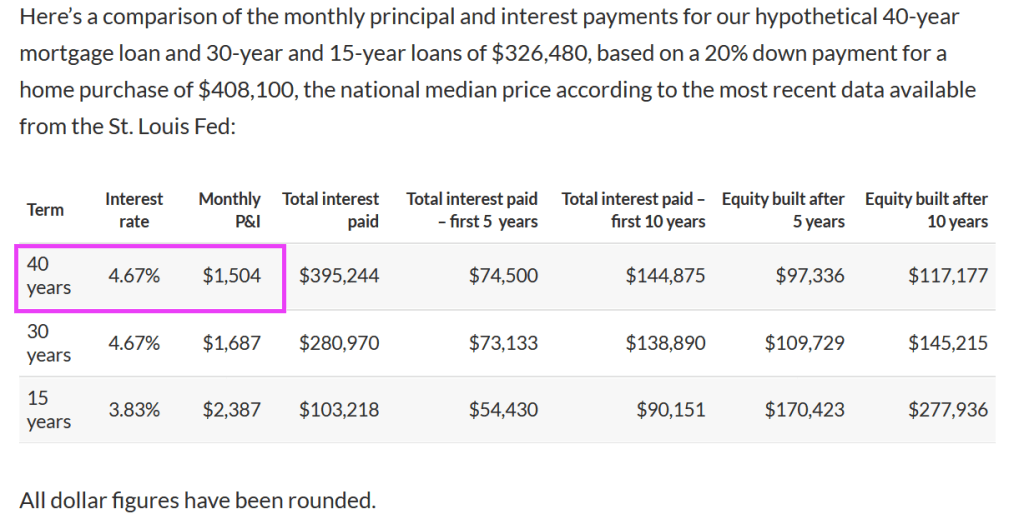
MarketWatch had an interesting piece on mortgages entitled “Here’s how much a 40-year mortgage would save you each month vs. a 30-year loan. And the ultimate cost.”

To make a long story short, a 40-year mortgage, by stretching the payment out from 30 to 40 years, means that the mortgage mortgage payment declines from $1,687 to $1,504.

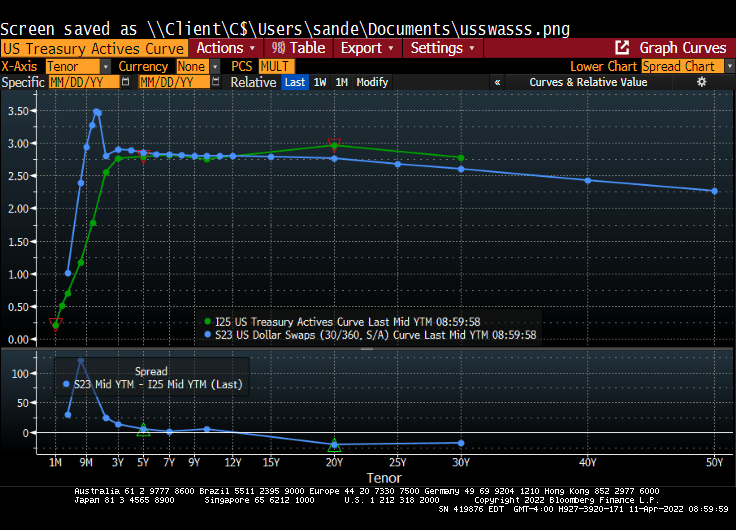
Given that the US Treasury yield curve only goes out to 30 years, lenders (and Fannie Mae and Freddie Mac) will have to use the US Dollar Swaps curve to price mortgages. And since the swaps curve is downward sloping, we could see 50-year mortgages at a lower rate than 30-year mortgages, ceteris paribus.

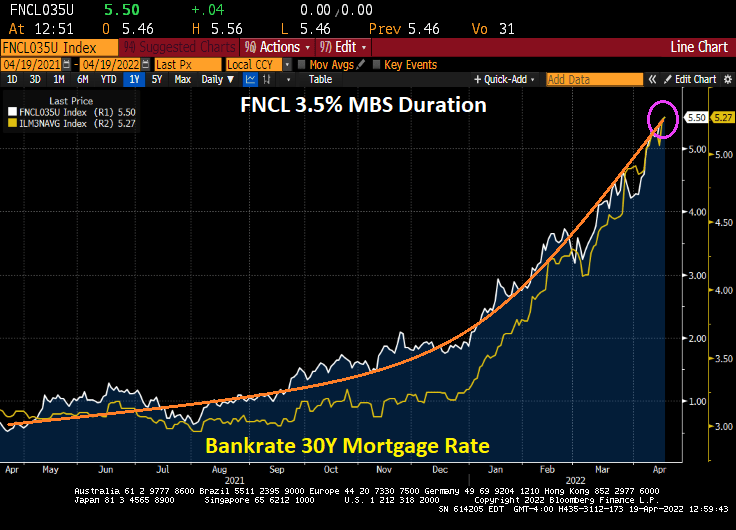
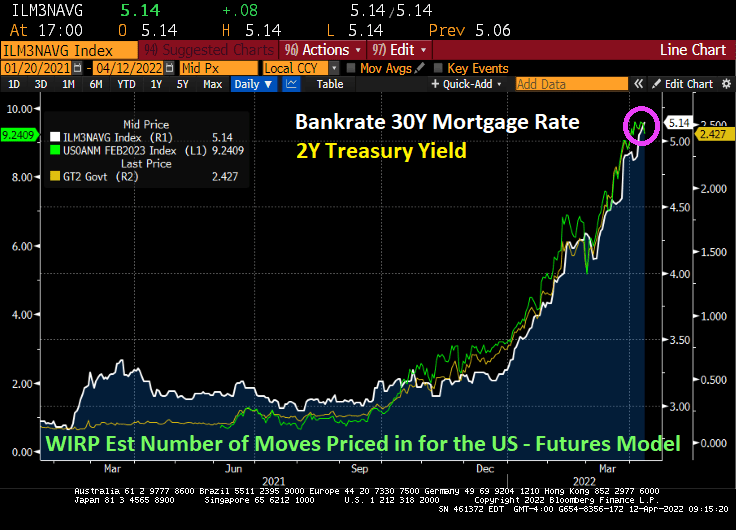
But with The Fed planning on taking away the monetary punchbowl, mortgage rates are rising making housing even more unaffordable.

But most things are not equal. The 40-year mortgage results in a slower paydown of the mortgage, increasing the lender’s exposure to property value declines. A 50-year mortgage would even be worse.

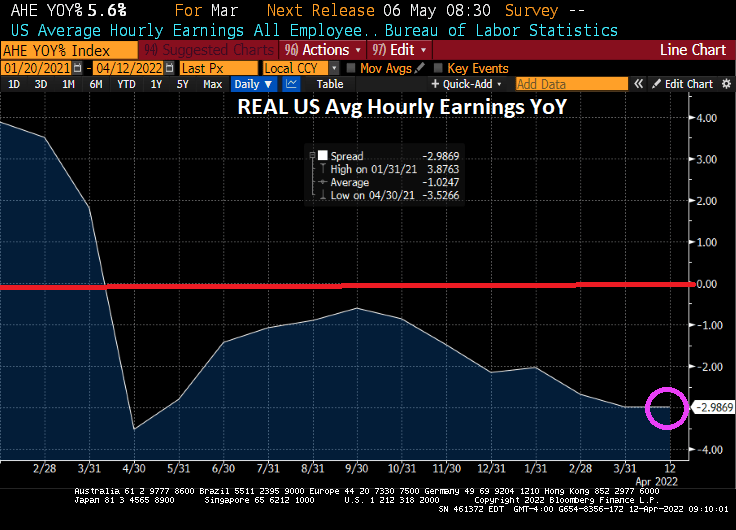
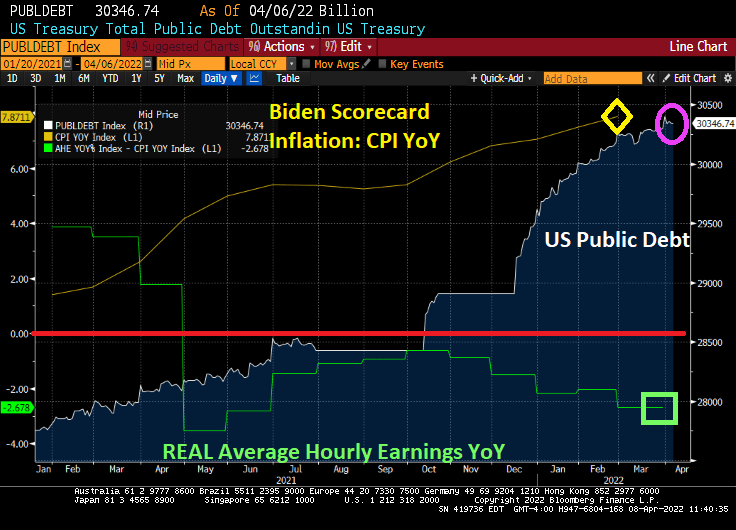
But the real problem with the 40-year mortgage is that it can lead to even MORE unaffordable housing. Yes, going from 30-year to 40-year mortgages lowers the mortgage payment, but a 40-year mortgage could increase the demand for housing. And since we already have soaring home prices since Covid (thanks to Fed monetary policy AND Federal government stimulus), we could actually see a worsening of the housing bubble). Particularly since REAL average earnings are declining.

What a mess that has been created by the government’s pursuit of “affordable housing.” Ideally, the Federal government could help raise household earnings through lowering of Federal tax rates, but the Biden Administration wants to raise taxes. Alternatively, lenders (and Fannie Mae and Freddie Mac) could lower lending standards (e.g., lowering required credit scores), or reduce downpayments to 0%. Lowering credit standards and reducing required downpayments are also inflationary and pose serious potential problems with default risk.

Not to mention that a 40-year mortgage increases the duration risk for owner’s of the 40-year mortgage.

And don’t forget that local governments frown on multifamily (apartment) construction (the Not In My Backyard [NIMBY] problem contributing to rising housing prices.

Yes, the US has a bad case of unaffordable housing. And the 40-year mortgage will make it worse.

Weekend Update: 2022 A Tough Year For Bonds, Mortgages Tighten, Mortgage Demand Backs Off As Rates Surge (Bond Volatility On The Rise)

2022 has been a tough year for bond investors and the mortgage industry.

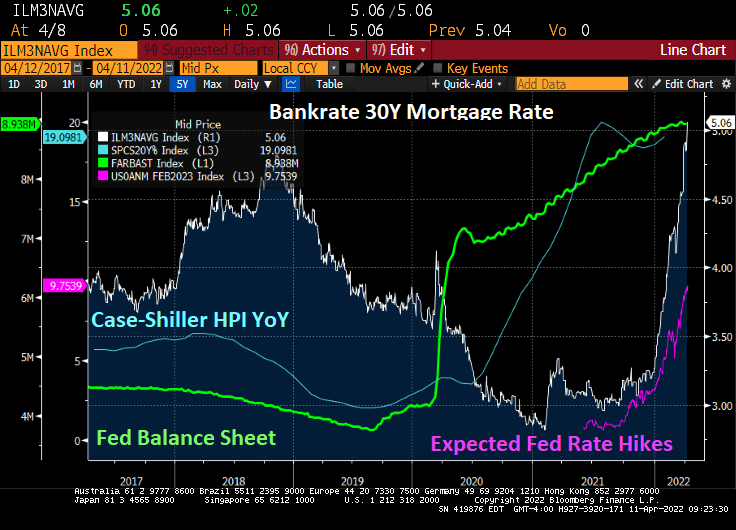
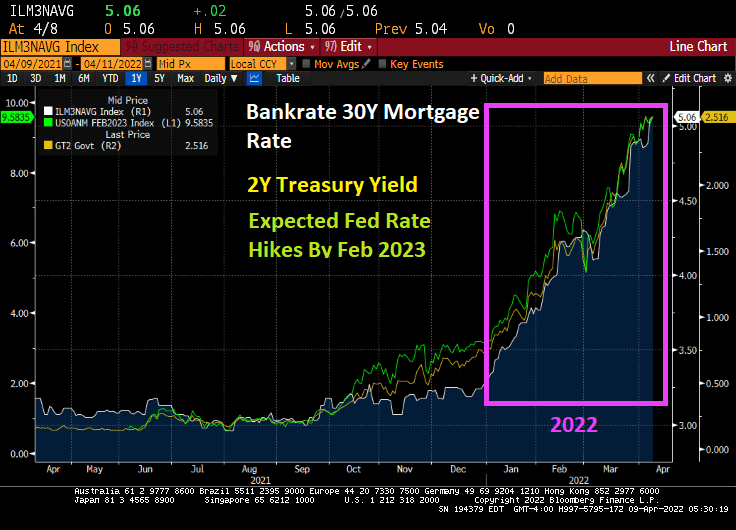
Doubleline’s Jeff Gundlach observed that the 2 Year Treasury yield is up 125 bp over the past month or so. I commented that the 2 Year Treasury Yield is up 179 bp since December 31, 2021 and the 30-year mortgage rate is also up 179 bp since the end of 2021. Yes, 2022 has been a dismal year for bonds and the mortgage market.

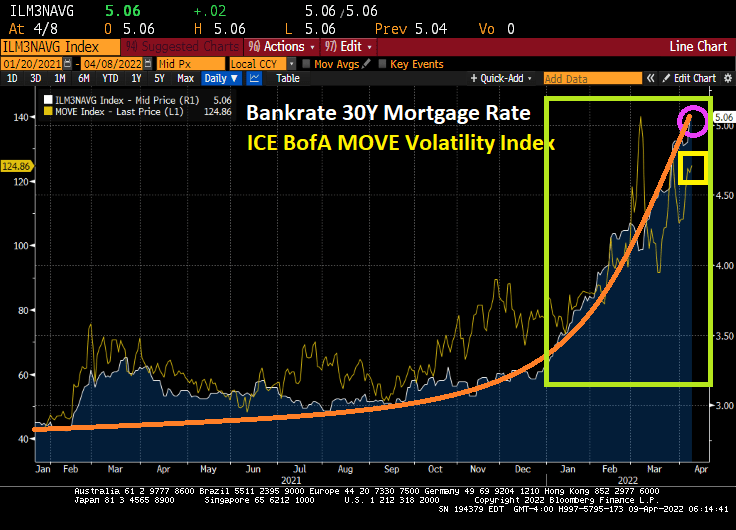
The ICE BofA MOVE index, a yield curve weighted index of the normalized implied volatility on 1-month Treasury options, has risen in 2022 along with the 30-year mortgage rate as the normally dormant Federal Reserve finally waking-up and trying to fight inflation.

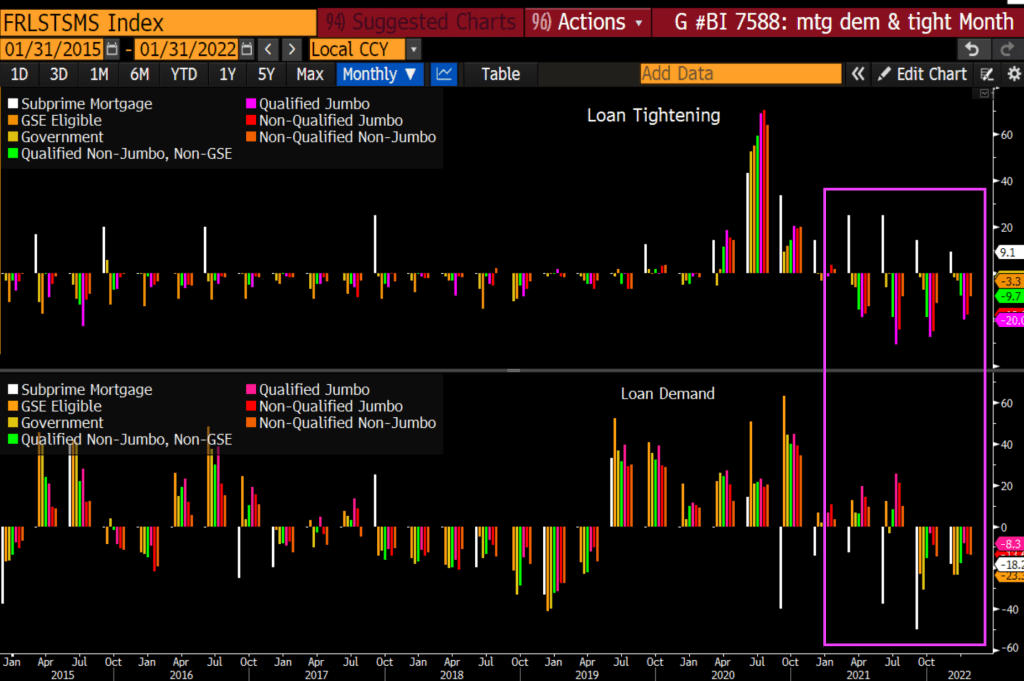
Mortgage demand backs off due to anticipated Fed rate hikes.

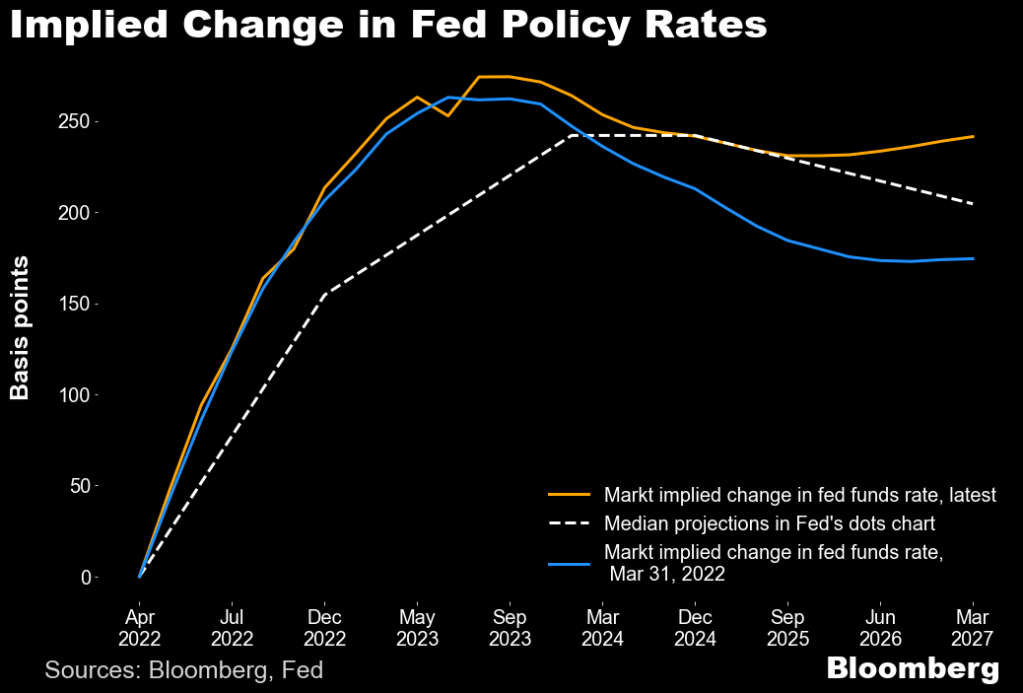
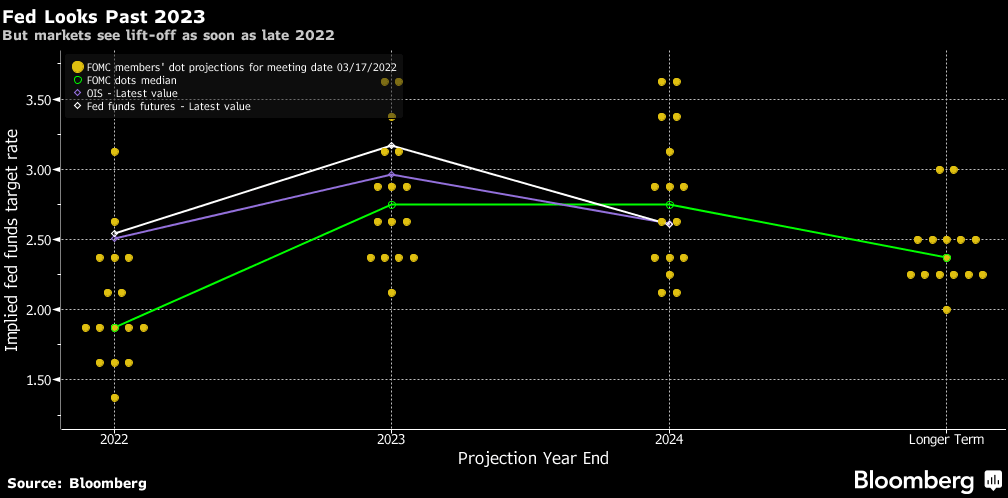
The latest Fed Dots Plot reveals that Fed Open Market Committee members are expecting Fed Funds rate increases in 2023, but remaining the same in 2024 (FOMC median projection). Then falling in the longer term.

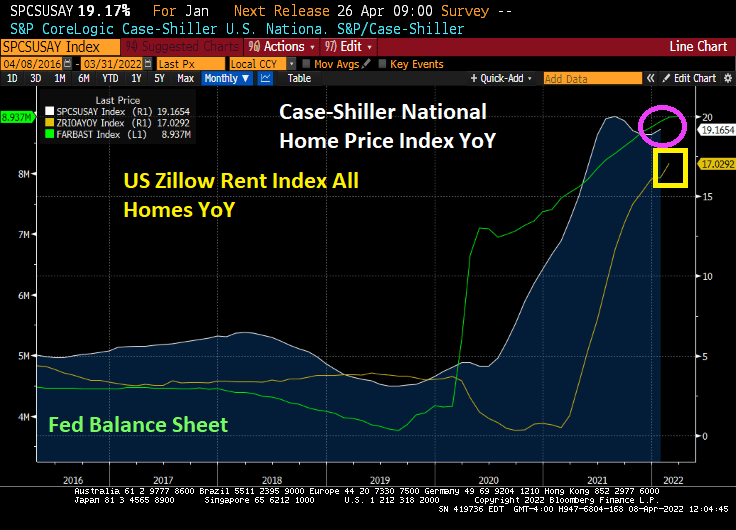
With home prices and rents soaring with Federal Reserve stimulus, let’s see how home prices and rents react to The Fed raising rates. My models forecast a slowdown in late summer 2022 to 6% home price growth YoY as The Fed actually implements their quantitative tightening.

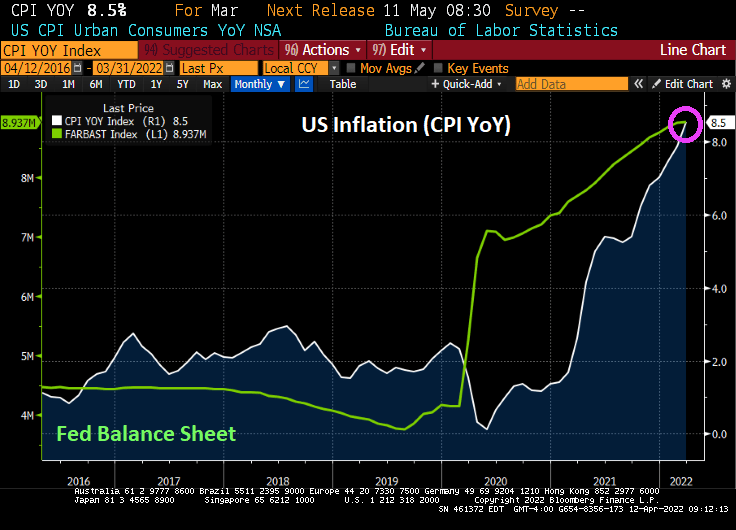
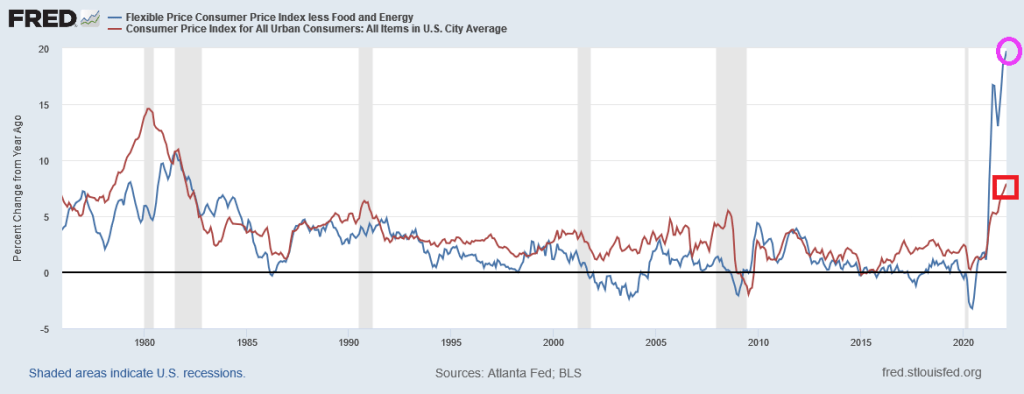
Inflation? CPI YoY is the highest in 40 years and FLEXIBLE Core CPI is 20% and the highest since … Lyndon B. Johnson was President (the flexible price index only goes back to 1968). Actually, Flexible Price inflation is even higher than it was under LBJ. Perhaps this is one of those accomplishments that Biden staffer are complaining never gets discussed.

On a side note, Sheila Bair has stepped down as CEO of government mortgage giant Fannie Mae.

The Financial House is a Rockin’ … but not in a good way.

Fed Fireball! 30-year Mortgage Rate Breaches 5% As Fed Goes On The Offensive (Minutes Indicate Balance Sheet Shrinking Of $95 Billion Starting In May)

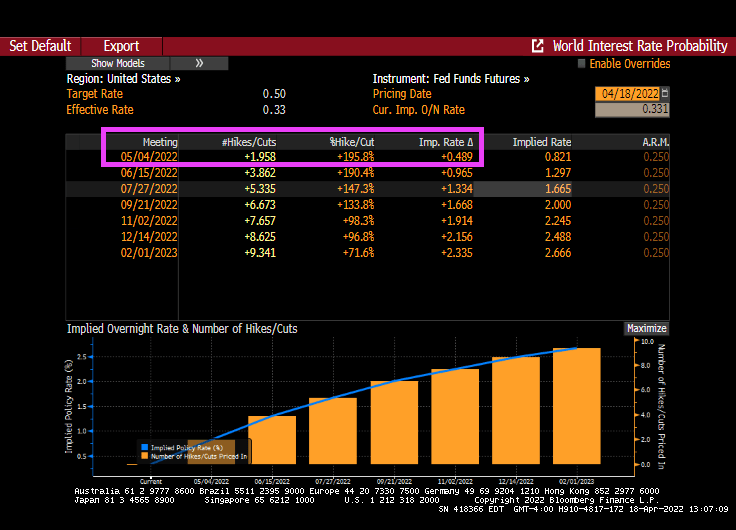
As the US Treasury 2-year yield hits 2.507% (up from 0.128% when Biden was installed as President) and the number of Fed rate hikes over by February 2023 hits 9.6, Bankrate’s 30-year mortgage rate breached the 5% mark at 5.04%.

The most recent data from on existing home sales show YoY sales in negative territory as The Fed begins in monetary fireball tightening.

St Louis Fed’s Bullard said The Fed is “behind the curve.” Ya think??

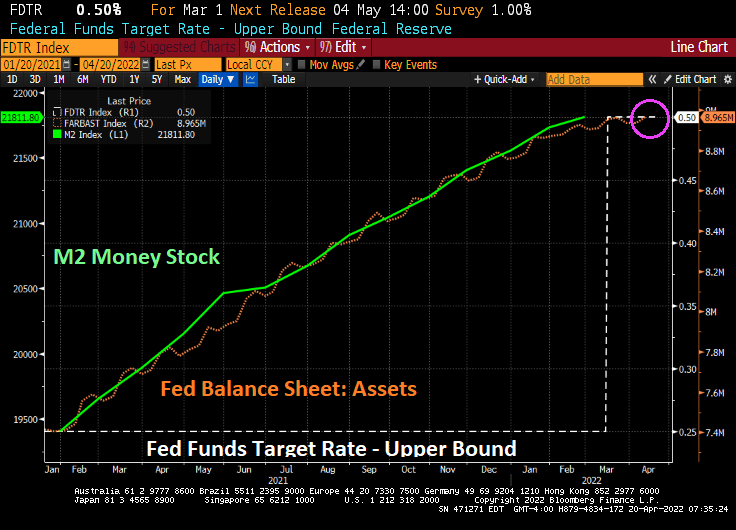
The Fed’s minutes from the most recent meeting indicates that The Fed will shedding $95 billion a month from it swollen balance sheet. At almost $9 trillion mostly populated by Treasuries will be the first asset to run-off the balance sheet (there is almost $1 trillion of Treasuries maturing in 2022 and $856 billion maturity in 2023, etc), The Fed plans to shrink the balance sheet while, at the same, raising The Fed Funds target rate from it near zero levels.

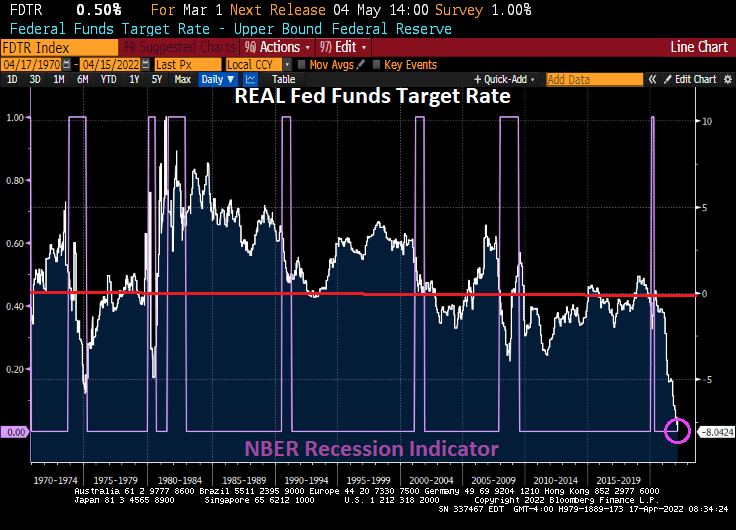
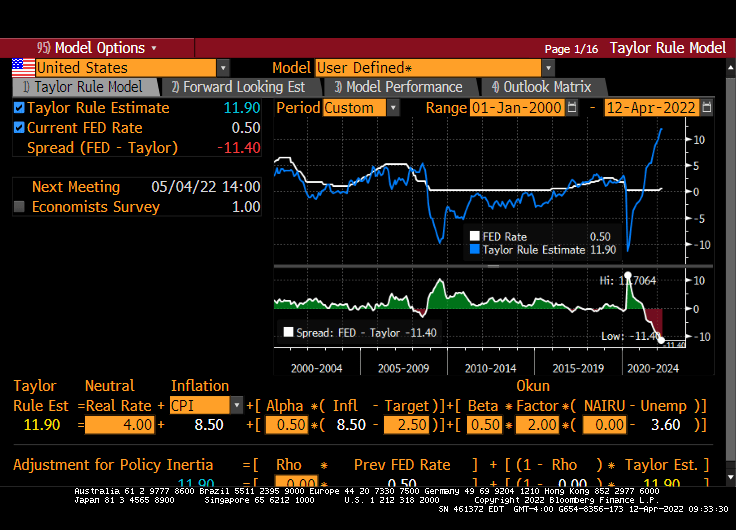
The Federal Reserve has ignoring rules like the Taylor Rule since the financial crisis of 2008-2009, but seemingly are paying attention to the Taylor Rule because of 7.9% inflation. The Taylor Rule is suggesting a 20.42% Fed Funds target while the current target rate is 0.50%. Now THAT would be a real shock to the economy.

Powell: “Unleash the Fed Fireball on the 99%!”

Euphoria! CoreLogic February Home Price Index UP 20% While Real Hourly Wages Decline (Wine Prices UP 25.1%, Foodstuffs UP 52.7 Under Biden)

Euphoria!

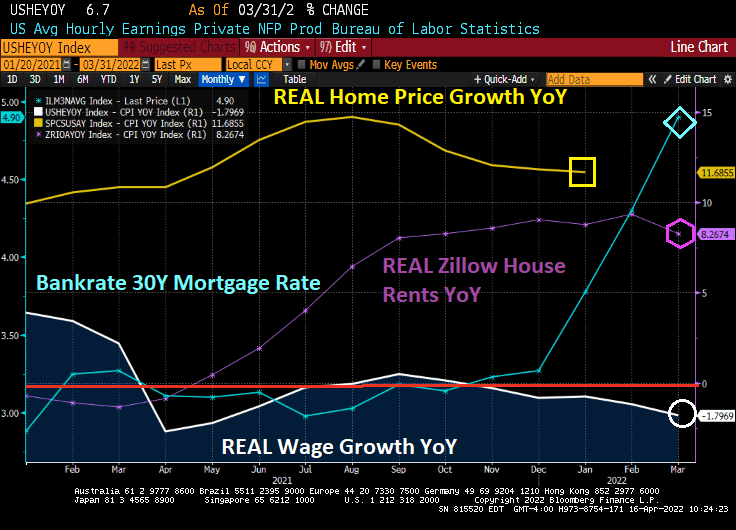
CoreLogic’s Home Price Insights revealed that home prices rose 20% YoY in February despite REAL average hourly earnings declining -2.678% YoY. THAT is euphoria! Or Stimulypto, as I like to call it.

No, The Federal Reserve still hasn’t removed its staggering monetary stimulus. Notice that M2 Money Stock is still growing at a torrid 11% pace.

20% YoY home price growth in February? CoreLogic has increased their forecast of home price growth to 5%, likely because The Federal Reserve is imitating a sloth in removing its monetary Stimulypto.

Of course, there are other assets growing at lightning speeds. US Regular gasoline prices are UP 75.4% under Biden. Foodstuffs are UP 57.2% since Biden was installed as President. At least ground beef is only up 16.8% while the fine wine index is up 25.1%.

Speaking of wine, Hitching Post II in Buellton, CA must be suffering from rising food and grape costs too (I highly recommend eating there and using their HP Magic Stuff at home). Not to mention their spectacular wines. Roast artichokes anyone??
Now A Warning? Dallas Fed Warns That A Housing Bubble Is Brewing (Too Late, Its Already Here!)

This clip from the Bruce Willis and Meryl Streep film “Death Becomes Her” perfectly represents the predicament surrounding The Federal Reserve’s loose monetary policies and housing prices: “Now a warning” after Meryl Streep ingests The Fed’s magic monetary elixir.

The Dallas Federal Reserve issued a warning recently that a housing bubble is brewing … after the economy drank its magic monetary elixir. We can see the housing bubble clearly (defined as the spread between REAL home price growth and REAL average hourly earnings). Notice that the current housing bubble looks similar to the infamous 2005 housing bubble. And the US is seeing several months of the spread between REAL home price growth and REAL hourly earnings be even higher than the peak of the 2005 bubble.

The Federal Reserve is starting to slow down its asset purchases, so we should see a cooling of the housing bubble. Unless, of course, The Fed changes its tune from quantitative tightening (QT) back to quantitative easing (QE) … again.

The Dallas Fed has a measure of housing “exuberance” which shows a bubble forming, but not there yet. I like the spread between real house price growth and real hourly earnings better.

The Dallas Fed also has a price-to-rent chart also showing growing exuberance.

But if we look at the Case-Shiller National HPI YoY to US CPI Urban Consumers Owners Equivalent Rent of Residences YoY we see that the US is currently experiencing a price-to-rent ratio higher than the peak of the 2005 house price bubble. What is the culprit? The vast expansion of monetary and fiscal Stimuylpto surrounding the Covid outbreak in early 2020.

So, the Dallas Fed thinks that is a house price bubble is brewing, but it has actually been in the works since QE3 in 2013 (bubble 2), but really took off with The Fed’s stimulypto and Federal COVID spending surrounding the COVID outbreak in early 2020.

Here is a rare video of Fed Chair Jerome Powell at the recent Fed Open Market Committee meeting deciding on removing the toxic monetary elixir from the system.


Here is a video of Jordan Spieth at the Valero Open engaging in putting errors like The Fed’s policy errors.

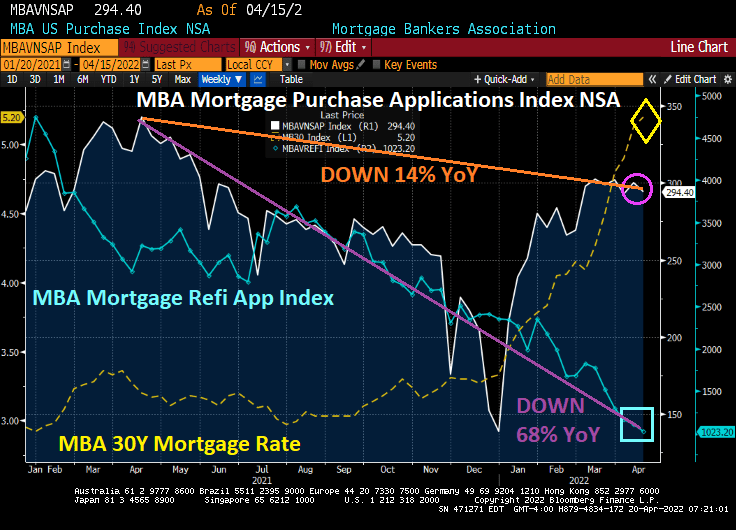
Mortgage Refi Applications Drop 15% Since Last Week As Fed Rate Hikes Cool Market (But MBA Purchase Applications Rose 1% WoW)

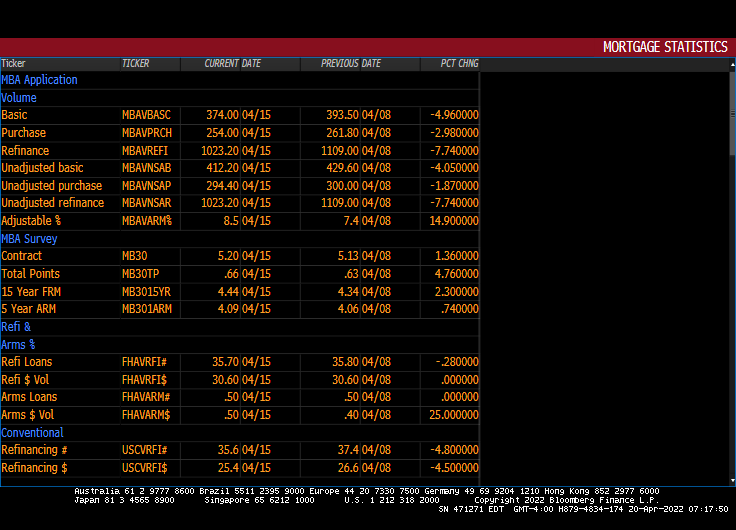
Anticipation about Federal Reserve rate hikes over the next 12 months are seeding mortgage rates soaring and mortgage refinancing applications plummeting.

Mortgage applications decreased 6.8 percent from one week earlier, according to data from the Mortgage Bankers Association’s (MBA) Weekly Mortgage Applications Survey for the week ending March 25, 2022.

The Refinance Index decreased 15 percent from the previous week and was 60 percent lower than the same week one year ago. 

The seasonally adjusted Purchase Index increased 1 percent from one week earlier. The unadjusted Purchase Index increased 1 percent compared with the previous week and was 10 percent lower than the same week one year ago.

Yes, I am surprised at the rise in mortgage purchase applications with rising mortgage rates, unless, of course, people are trying to buy ahead of Fed rate increases.

While The Federal Reserve led to a scorcher in asset prices since 2008, rapid rate increases and quantitative tightening (QT) will have a chilling effect on the housing market.

Bidenflation Leads To 23% Rise In Fixed-rate Mortgage Payments As Home Price Growth Hits 19% (Fertilizer Prices UP 166% Under Biden, Gasoline Prices UP 77%)

Inflation under President Biden (aka, Bidenflation) has hit 7.9%, the highest in 40 years. And no Joe, the inflation surge was well underway before Russia invaded Ukraine on February 24, 2022.

As The Federal Reserve is allegedly going to try to fight inflation by raising their target rate, the 30-year mortgage rate has risen from 2.88% on Biden’s inauguration to 4.56% today.

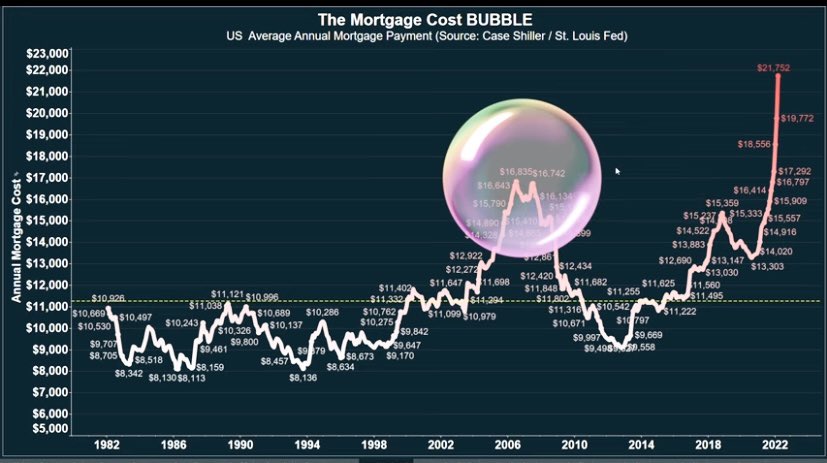
The surge in mortgage rates from 2.88% to 4.56% represents a 58.3% increase in mortgage rates under Biden. That translates to an increase in the 30-year fixed-rate mortgage (FRM) payment of 23%. Apparently Biden-Powell (not to be confused with Baden-Powell, the founder of the Boy Scouts) are not interested in keeping homes affordable for most Americans.

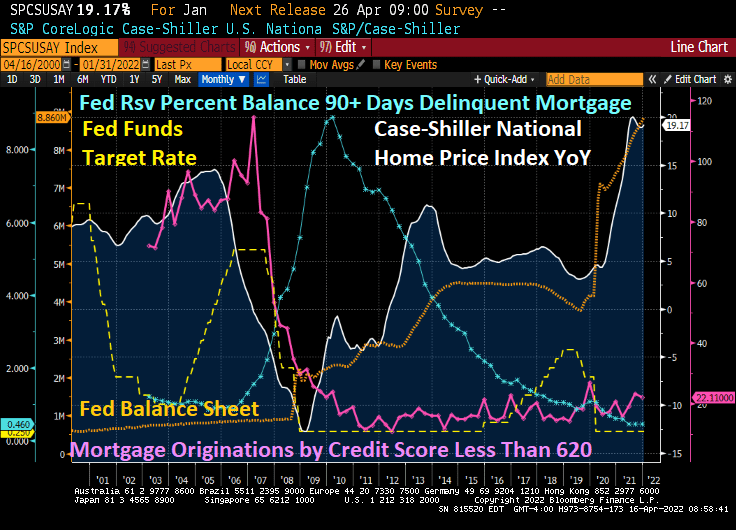
I summarize the predicament facing Americans in the following chart. Home prices were growing at a 19% YoY pace in December (Case-Shiller updates will be available tomorrow for January). Inflation is growing at 7.9% and M2 Money continues to grow.

US fertilizer prices are up 166% under Biden while regular gasoline prices are up 77% under Biden. But to be fair, fertilizer and gasoline prices jumped with Russia’s invasion of Ukraine. Fertilizer prices were up 66% under Biden BEFORE Russia invaded Ukraine and regular gasoline prices were up 50%.

Meanwhile, back at the fixed-income ranch, the US Treasury 10Y-2Y curve has flattened to 14.5 BPS as Fed Funds Futures signal 9 rate hikes over the coming year.

And the US Treasury 10Y-5Y curve continues to invert.

In short, Biden and Congress are anti-fossil fuel, pro-renewable energy helping to drive up energy prices and inflation PRIOR to Russia invading Ukraine. Powell and The Federal Reserve are trying to fight what Biden and Congress did with creating energy-related inflation.

Fear! Adjustable-rate 30Y Mortgages (ARMs) Are 130 Basis Points Lower Than 30Y Fixed-rate Mortgages, But ARMs Are Only 7.9% Of Mortgage Originations

Michael Lea and I wrote a paper several years ago arguing that most borrowers would be better-off with an adjustable-rate mortgage than a fixed-rate mortgage. The US is one of the few countries in the world where the 30-year fixed-rate mortgage is dominant. Why is this the case? FEAR of rising mortgage payments with adjustable-rate mortgages (ARMs) while the fixed-rate mortgage (FRMs) have constant payments over the 30-year term.

The reason why the fear of ARMs is unwarranted is that ARMs generally have CAPS on rate increases, either in a given period or over the life of the loan. Of course, READ the loan terms to ensure that the ARMs has restrictive caps on rate increases.

Currently, the 5/1 ARM is at 3.26% while the 30-year FRM is at 4.56%, a spread of 130 basis points.

Mortgage rates of all flavors are rising rapidly with the expectation of Federal Reserve Quantitative Tightening (QT). There are several headwinds that could counter The Fed’s QT efforts such as low GDP growth (Atlanta Fed’s GDPNow real-time GDP tracker is at 0.9% for Q1), the Russia-Ukraine invasion, approaching midterm elections, etc. But as of today, The Fed seems on a collision course with rising mortgage rates.

With the increasing likelihood of Fed rate hikes over the next year, we are seeing an increase in US ARM loan share from 4% to 7.9%, almost a doubling of ARM share. But FRMs are still over 90% of all mortgage originations.

Lending institutions would prefer consumers to use ARMs rather than FRMs since ARMs allow for the transfer on long-term interest rate risk to the borrower, while the FRM sticks the lender with long-term interest rate risk. Hence, we have Fannie Mae and Freddie Mac, the Government Sponsored Enterprises (GSEs) that allow lenders to originate FRMs and sell them to F&F. We are the only country with twin GSEs.

So, while most consumers would be better-off with an adjustable-rate mortgage, the structure of the mortgage market (particularly after the financial crisis) encourages lenders to originate FRMs and sell them to Fannie Mae and Freddie Mac.

But FEAR drives many US mortgage borrowers into the FRM space rather than getting an ARM with a lower interest rate, even if ARM caps would prevent the mortgage rate from rising more than 100 basis points over the life of the loan.

Number 9! Fed Now Expected To Raise Target Rate 9 Times Over Coming Year As Mortgage Rates Rise To 4.54%

Number 9.

According to Fed Funds Futures data, The Federal Reserve is now forecasting 9 rate increases over the next year.

Fed Funds Futures are pointing to 8.924 rate hikes by the Fed FOMC meeting on February 1, 2023.

The US Treasury 10Y-2Y curve flattened by 5.5 bps today with the entire curve downshifting.

The Federal Reserve reminds me of The Office episode “Malone’s Cones.” They can’t really explain why they kept rates so low for so long (policy error) and seem to risk collapsing the market with rapid rate hikes without much sensible explanation.

Trouble In Potomac City! US Treasury 10Y-5Y Curve Goes Further Into Inversion As Mortgage Rates Keeps Rising

We’ve got Trouble in Potomac City!

The US Treasury 10Y-5Y curve is going deeper into inversion.

The short end of the Treasury curve is rising, as expected, but declining at the 5 year tenor and beyond.

The aggregate Treasury Index is plunging as Fed Funds Futures signal 8.341 rate hikes over the next year.

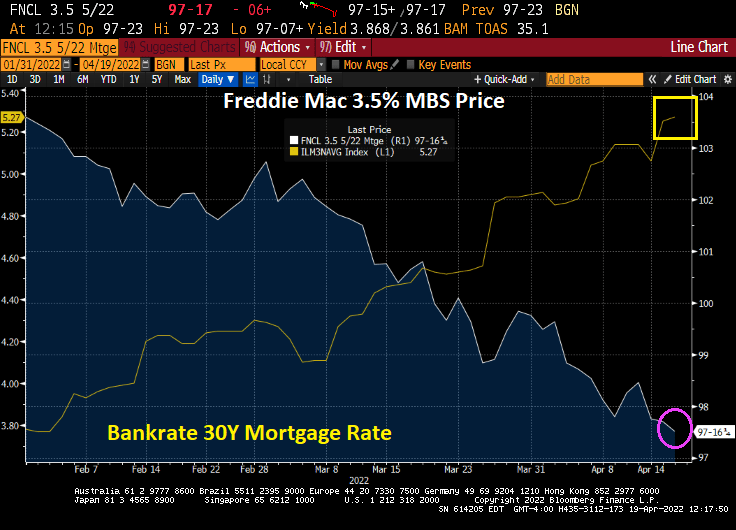
Mortgage rates? Climbing as mortgage refinancing applications fall (as expected).

Is The Federal Reserve actually run by The Office’s Michael Scott?