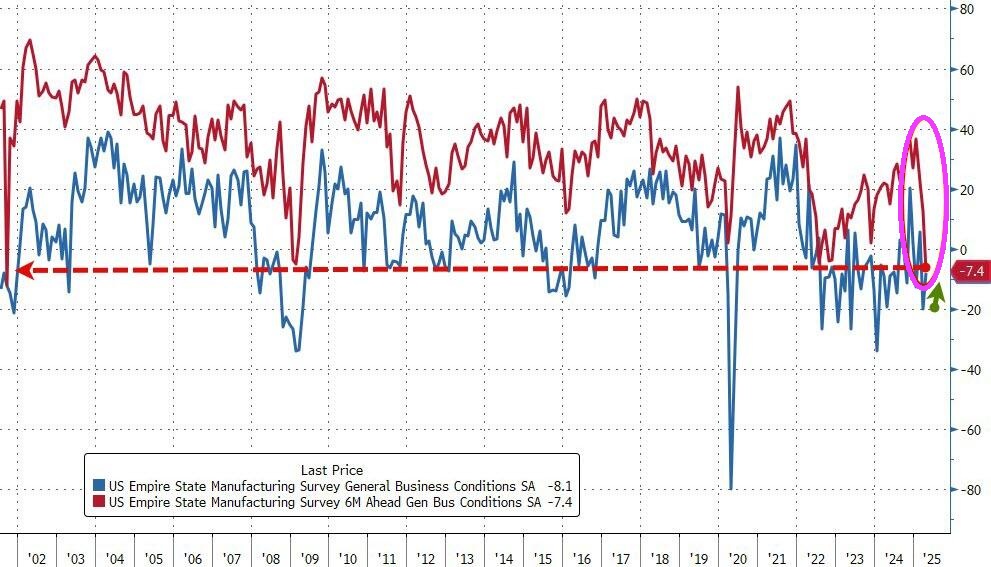
Despite the slump in ‘soft’ survey data, analysts expected Empire Fed Manufacturing to bounce back from March’s tumble to one year lows and they were right with the headline index rising from -20.0 to -8.1 (considerably better than the -13.5), but still negative. However, while current conditions jumped, expectations plunged to the lowest since 9/11/.
Obama/Biden/Harris/Schumer/Pelosi have let the US be the punks for China. Trump is simply trying to level the playing field and China’s Xie doesn’t like the new equilibrium.
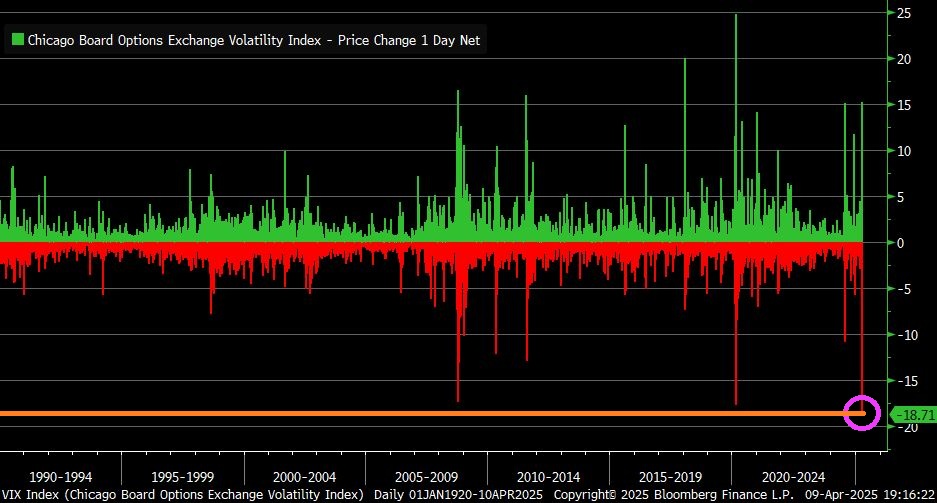
VIX Index fell by 18.7 points yesterday … largest one-day decline in history.
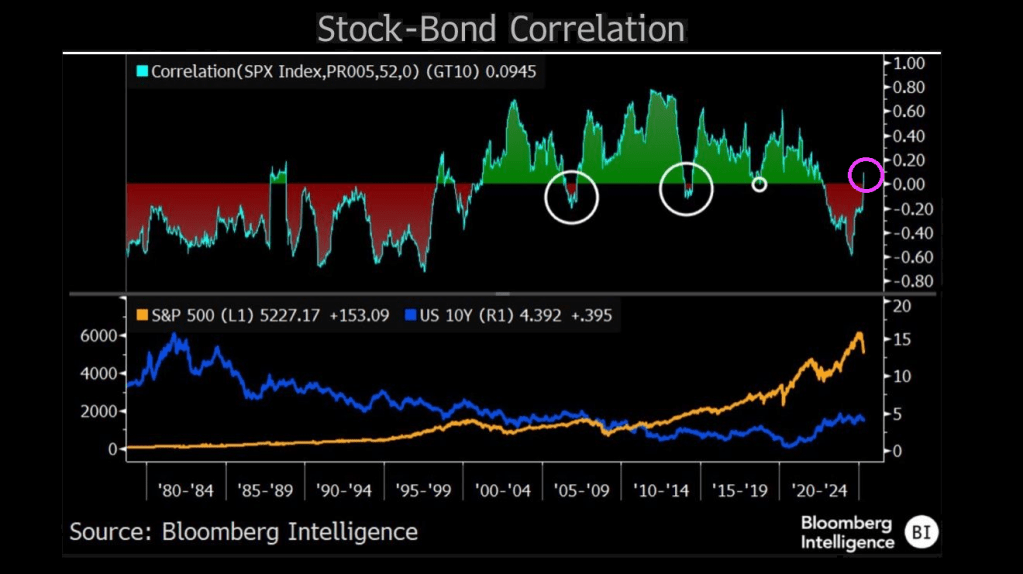
The correlation between stock prices and bond yields has returned to positive territory — hinting at a period of distress in equities and a regime shift in equity and bond markets where recession fears, rather than inflation, may be starting to drive direction of both. The correlation between the two asset classes was positive for the better part of 20 years prior to the pandemic, suggesting equities trended in the direction of yields as inflation mostly coincided with growth. Stocks held a negative correlation to yields throughout most of the 1980s and 1990s, when inflation hurt stocks — and that phenomenon returned for the 2022-24 bear market and recovery period.
Notably, major stock corrections occurred each time the correlation jumped out of its primary regime.
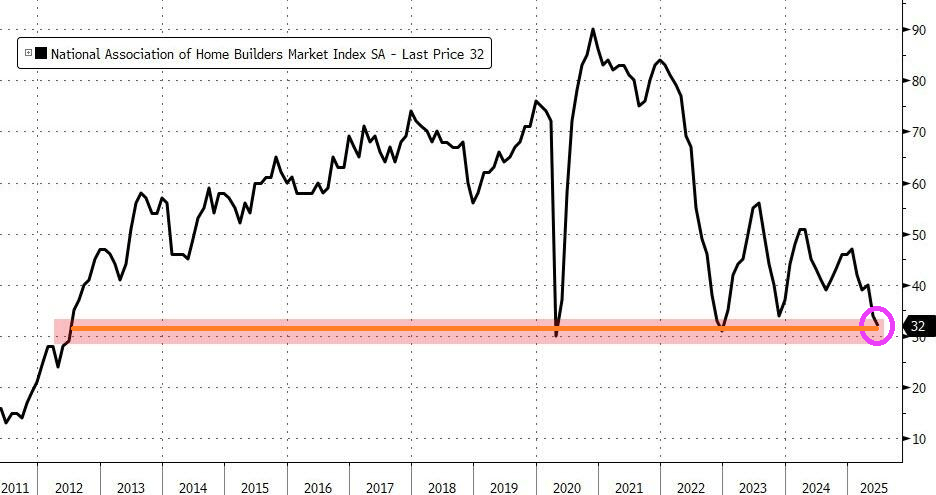
The mortgage market got its mind set on a recovery, but Biden’s mindless economic policies have jammed up the mortgage market. Example? Mortgage applications are down in a season where they typically increase.
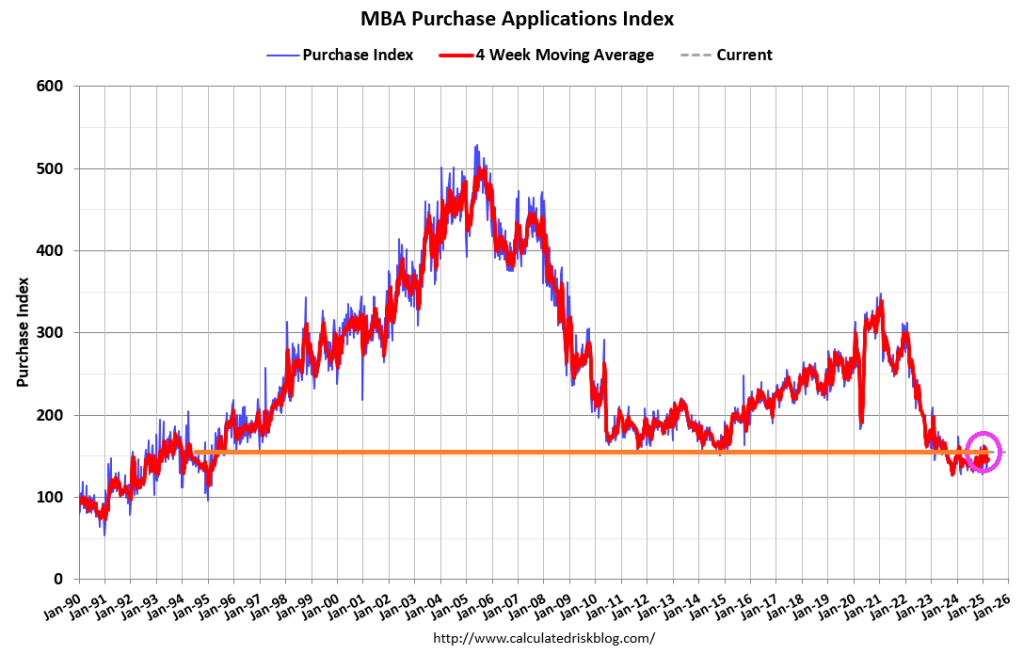
Mortgage applications decreased 1.6 percent from one week earlier, according to data from the Mortgage Bankers Association’s (MBA) Weekly Mortgage Applications Survey for the week ending March 28, 2025.
The Market Composite Index, a measure of mortgage loan application volume, decreased 1.6 percent on a seasonally adjusted basis from one week earlier. On an unadjusted basis, the Index decreased 1 percent compared with the previous week. The seasonally adjusted Purchase Index increased 2 percent from one week earlier. The unadjusted Purchase Index increased 2 percent compared with the previous week and was 9 percent higher than the same week one year ago.
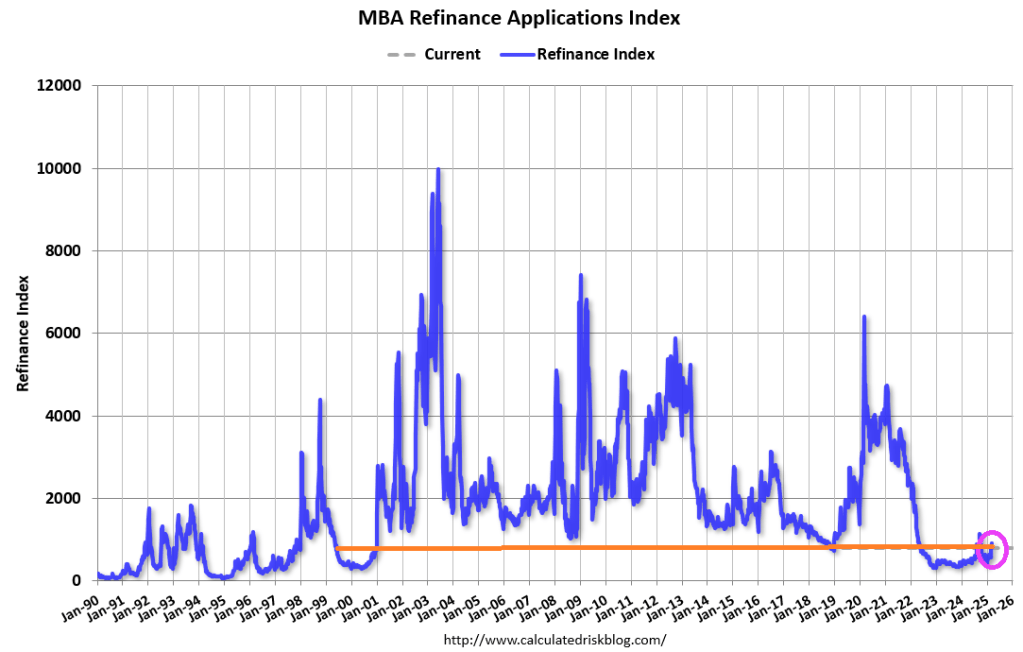
The Refinance Index decreased 6 percent from the previous week and was 57 percent higher than the same week one year ago.
Treasury yields continue to be volatile as economic uncertainty dominates markets. Most mortgage rates finished last week lower, with the 30-year fixed essentially unchanged at 6.70 percent. Last week’s level of purchase applications was its highest since the end of January, driven by a 3 percent increase in conventional purchases, while government purchase applications were down 2 percent.
The average contract interest rate for 30-year fixed-rate mortgages with conforming loan balances ($806,500 or less) decreased to 6.70 percent from 6.71 percent, with points increasing to 0.62 from 0.60 (including the origination fee) for 80 percent loan-to-value ratio (LTV) loans.
Conforming 30Y mortgage rates are up 137% since Biden was elected President.
Soothe me? As we move further away from Sleepy Joe’s horrid economic policies, we should see an improvement in GDP from the current Atlanta Fed GDP Now Q1 Forecast of -2.8%.
The alternative model forecast, which adjusts for imports and exports of gold as described here, is -0.5 percent. After recent releases from the US Census Bureau and the US Bureau of Economic Analysis, the nowcast of the contribution of net exports to first-quarter real GDP growth declined from -3.95 percentage points to -4.79 percentage points in the standard model and from -1.92 percentage points to -2.53 percentage points in the alternative model.
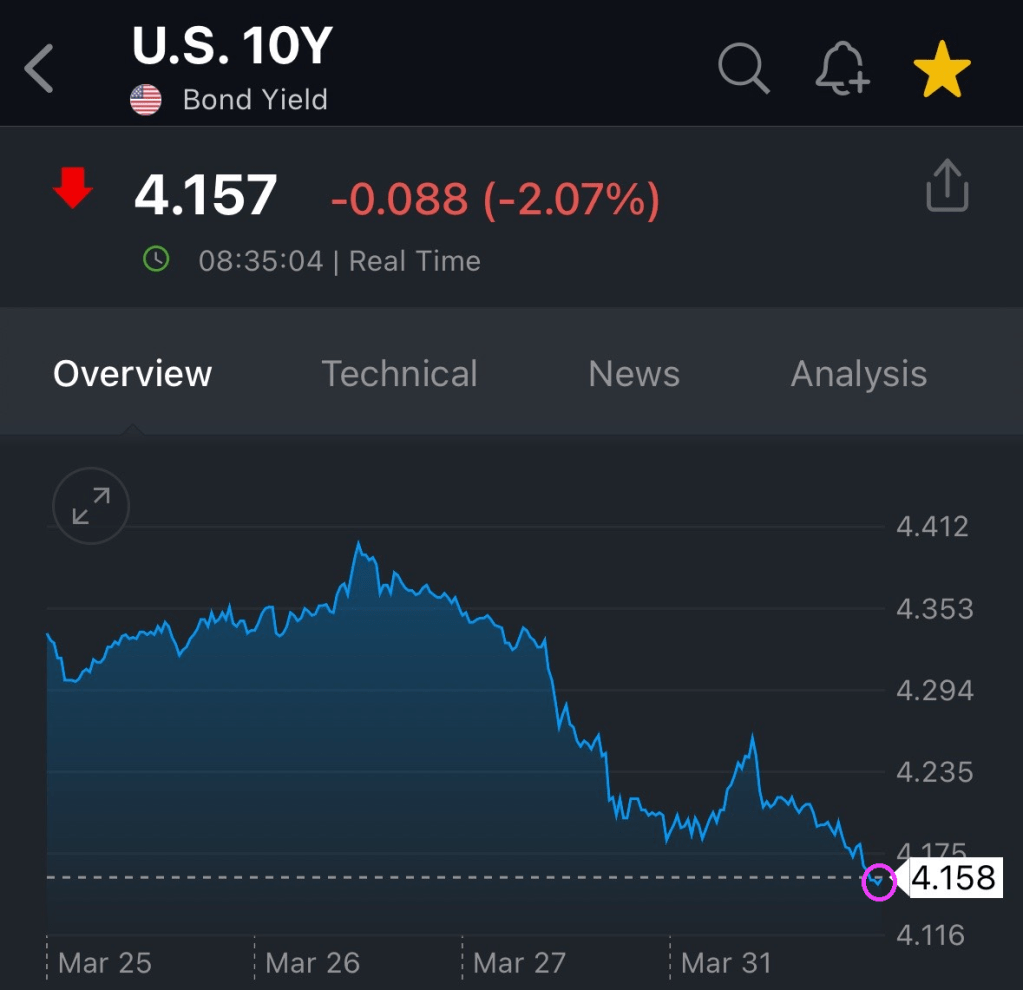
The US Treasury 10Y yield has fallen to 4.157% as recession fears mount.
Mortgage applications decreased 6.2 percent from one week earlier, according to data from the Mortgage Bankers Association’s (MBA) Weekly Mortgage Applications Survey for the week ending March 14, 2025.
The Market Composite Index, a measure of mortgage loan application volume, decreased 6.2 percent on a seasonally adjusted basis from one week earlier. On an unadjusted basis, the Index decreased 6 percent compared with the previous week. The seasonally adjusted Purchase Index increased 0.1 percent from one week earlier. The unadjusted Purchase Index increased 1 percent compared with the previous week and was 6 percent higher than the same week one year ago.
The Refinance Index decreased 13 percent from the previous week and was 70 percent higher than the same week one year ago.
Mortgage rates increased for the first time in nine weeks, with the 30-year fixed rate rising to 6.72 percent. This increase in rates led to a decrease in refinance volume. However, purchase application volume inched up to its highest level in six weeks, led by a 3 percent increase in FHA purchase applications. Overall, purchase application volume is up 6 percent compared to last year at this time. Growing inventories of homes on the market and steadier mortgage rates are supporting homebuying activity thus far this spring.
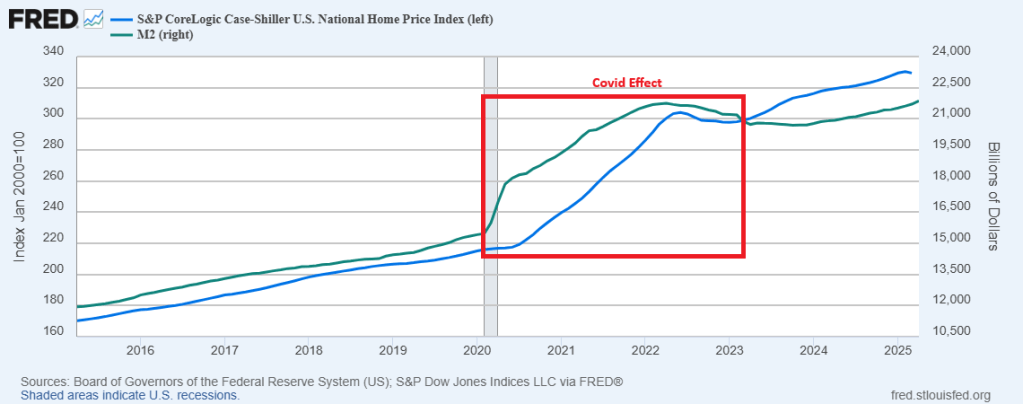
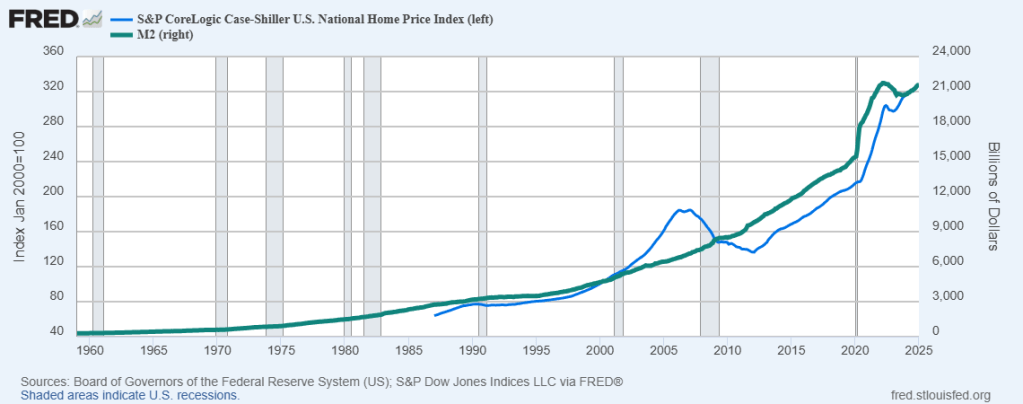
For the second straight month, US home prices accelerated YoY in December (according to the latest data from S&P Global’s Case-Shiller Index). The 20-City Composite saw prices jump 0.5% MoM (faster than expected and the biggest jump since June) and accelerating MoM for the 3rd straight month.
Only Tampa FLA of the top 20 metro areas had a negative YoY price change, but 14 of the top 20 metro areas experienced price declines from November to December: Atlanta, Charlotte, Cleveland, Dallas, Detroit, Los Angeles, Minneapolis, New York, Phoenix, Portland, San Francisco, Seattle, Tampa and Washington DC.
In January, US Industrial Production rose 2.00% YoY, the strongest growth rate since Oct 2022.
Capacity Utilization accelerated again in January (2nd straight month), rejecting the recessionary red flags. But CAPUTE remains below the critcal measure of 80.
Biden is out and so are the crazy job preferences of his administration (e.g., green energy). There is a new sheriff in town (Donald Trump).
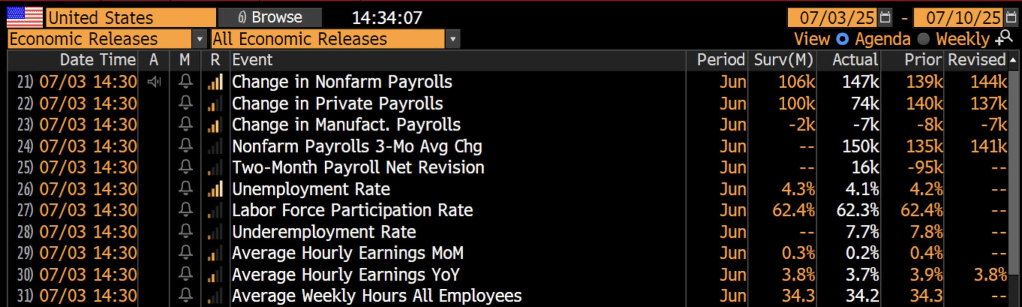
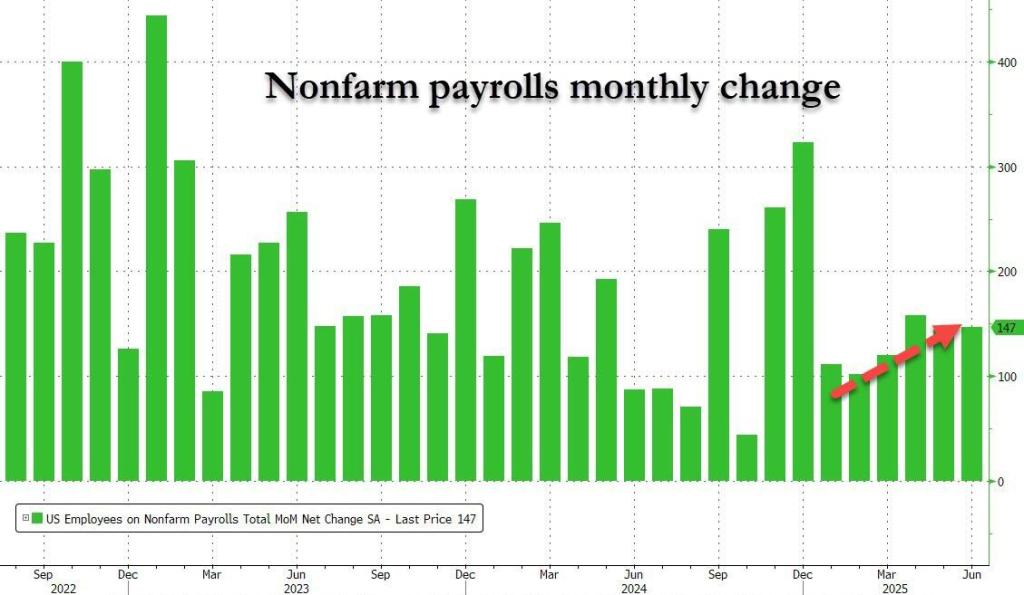
Here’s what the BLS reported in Trump’s first official jobs report since he returned to the White House: total payrolls printed at 143K.
down sharply from an upward revised 307K (256K originally) and missing estimates of 175K.
Looking further back, the change in total nonfarm payroll employment for November was revised up by 49,000, from +212,000 to +261,000, and when adding the +51,000 revision to December employment in November and December combined is 100,000 higher than previously reported
But while the sequential change in the Establishment survey was notable, what was far more remarkable was the Household survey where we saw massive population related revisions (discussed last night), which pushed the civilian labor force higher by 2.2 million to 170.744 million, while the number of employed workers also increased by over 2.2 million to 163.895 million. As a result, the Household survey has finally caught up to Establishment survey.
No, its not 1903. Its 2025 and Dayton Ohio is the third most affordable city in the USA.
Ohio, the cradle of American Presidents (McKinley, Grant, Taft, Benjamin Harrison, Hayes, Garfield, Harding), is also home to 4 of the most affordable cities in the USA, according to The Virtual Capitalist.
As expected, the Trump Administration levied tariffs against Canada, Mexico, China, etc. The short-term result? Gold is stable, Bitcoin fell. Or as Gene Autry sang, “South of the Border (Down Mexico Way)”.
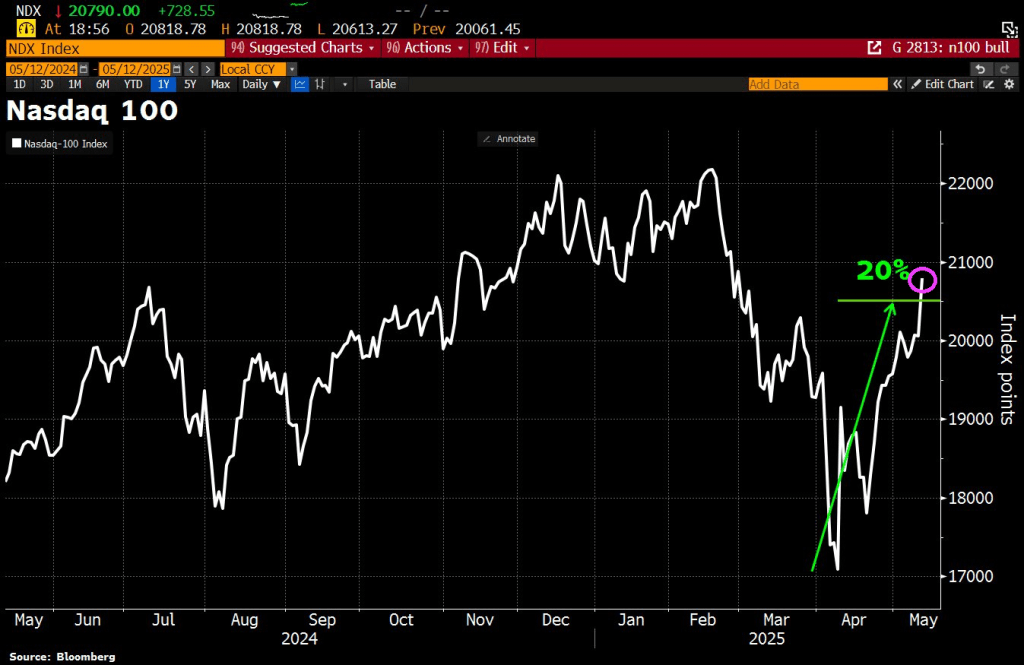
The stock market? Down -1.53%.
And then we have the doom porn about Mexico’s “impending” collapse. The Peso is declining, and Senator Chuck Schumer is getting hysterical about Mexican exports to the USA for Super Bowl Sunday. He incorrectly claimed that most beer is imported from Mexico and avacados for guacamole. Avacados are also grown in the USA, Peru, etc.
Bear in mind that Mexico is like California where the Left holds a supermajority. Hence, Mexico employs destructive economic policies (it could only be worse if California Governor Gavin Newsom was President of Mexico. But Mexico’s impending collapse is years in the making and Trump’s tariffs were only the last nudge over the cliff. Mexico COULD try to get control over the drug and human trafficking cartels, stop illegal immigration and stop the flow of fentanyl.
You must be logged in to post a comment.