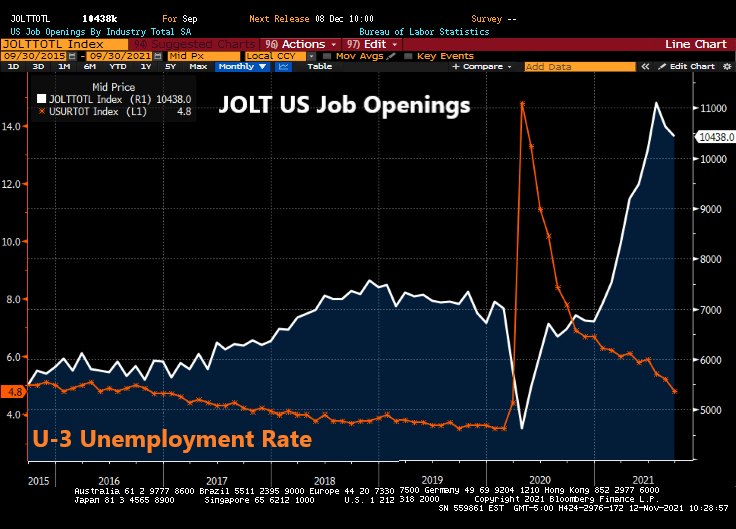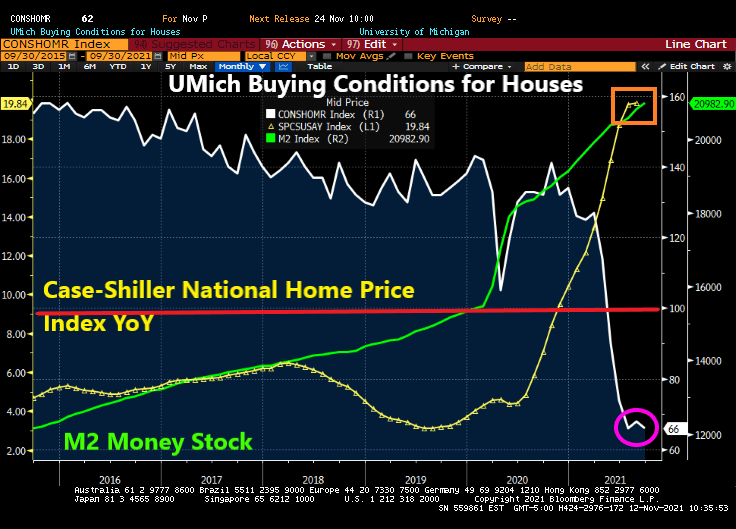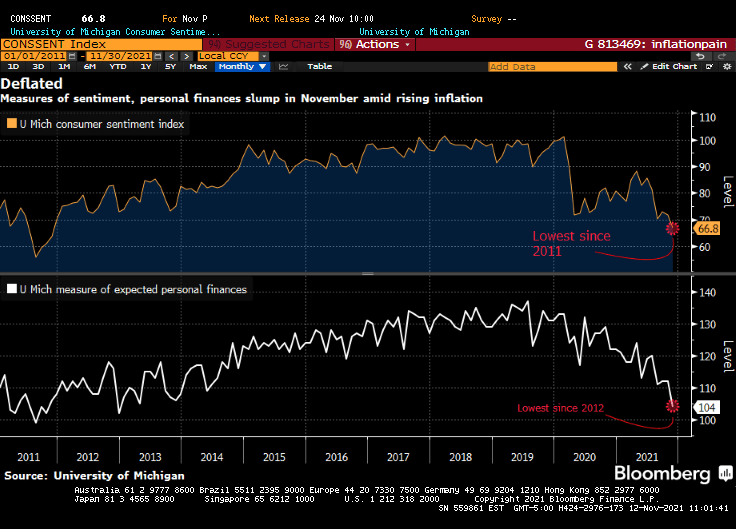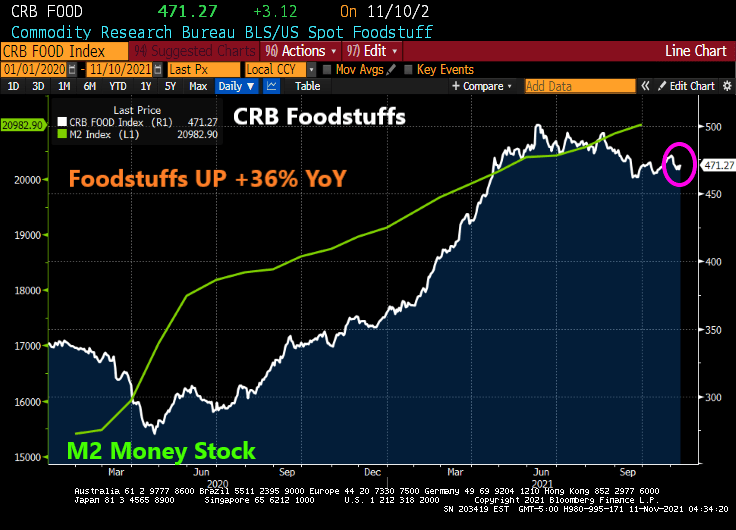
But the forecast for home price growth is for 1.9% YoY in 2022.
As home price growth crashes back to earth as wages don’t keep pace with home prices.
Home prices have been growing in most states out west where The Fed’s money pump has resulted in a boom in second homes and people escaping high tax California and Oregon for Nevada, Idaho, Arizona (again), Utah and Montana. The east coast is seeing the Carolinas booming along with Florida and Indiana. Escape from New York?
Escape from LA … to Arizona, Nevada, Idaho and Utah?
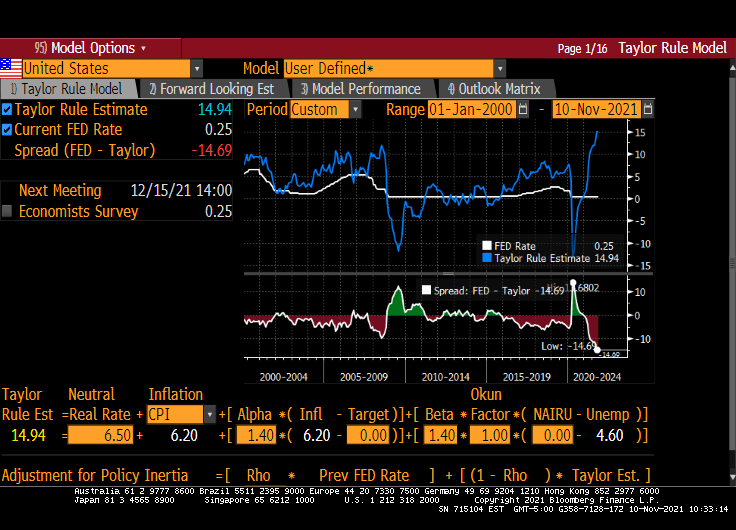
As we approach another Fed Open Market Committee (FOMC) meeting (November 3rd), it is time to look at the Taylor Rule, created by Stanford economist John Taylor to help everyone understand what The Fed is likely to do. Unfortunately, The Fed doesn’t do what expected.
For example, look at the Taylor Rule using Greg Mankiw’s specification. It says The Fed Funds Target Rate should be 8.52%, not the lowly 0.25% it is today.
That is a big gap between where The Taylor Rule says we should be and where Powell and the FOMC is.
Will The Fed raise their target rate on November 3rd? Or at least start slowing the balance sheet?
Somewhere over the Alps, T-Sec Janet Yellen is fearmongering over a possible US debt default if Republicans don’t kowtow to Democrat’s desires to raise the debt ceiling.
(Washington ComPost) — SOMEWHERE OVER THE ALPS — Treasury Secretary Janet Yellen on Sunday said Democrats should be willing to approve a fix to the nation’s debt ceiling without GOP support if necessary, an approach senior Democrats ruled out during arecent standoff over the issue.
In an interview aboard a government airplane between Rome and Dublin, Yellen castigated Republicans for refusing to help raise the debt limit but acknowledged Democrats may be able to address the issue without GOP support through the Senate budget procedure known as reconciliation.
Senior Democratic leaders were adamant that the debt ceiling be resolved on a bipartisan basis last month. Senate Republicans have uniformly insisted that Democrats should alone be responsible for raising the nation’s debt limit. Congress probably will face a deadline of Dec. 3 to act, though the exact date is uncertain.
Well, Janet, the market (Credit Default Swaps for US) doesn’t seem to be worried about raising the debt ceiling.
Likewise, the CDX 5Y IG for the US investment grade corporate bonds is near historic lows. Even Yellen can’t make that rise.
Only a career academic and politico Bambina like Janet Yellen would try to drum up agita about a US debt default when Democrats can cram down most anything through “budget reconciliation.”
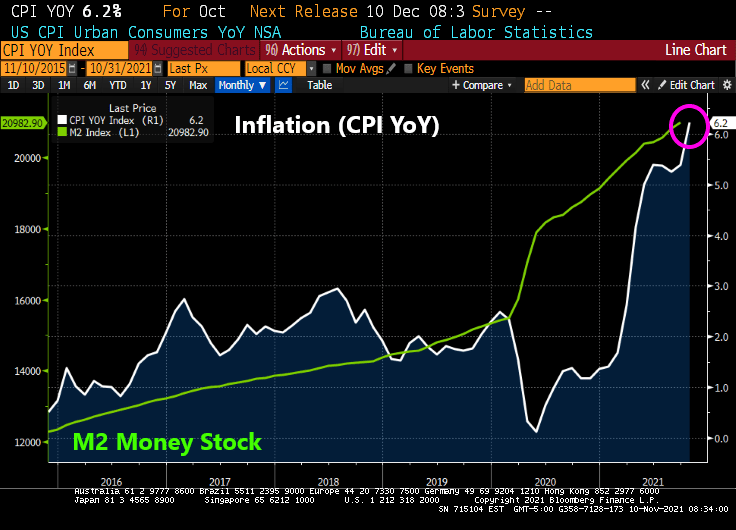
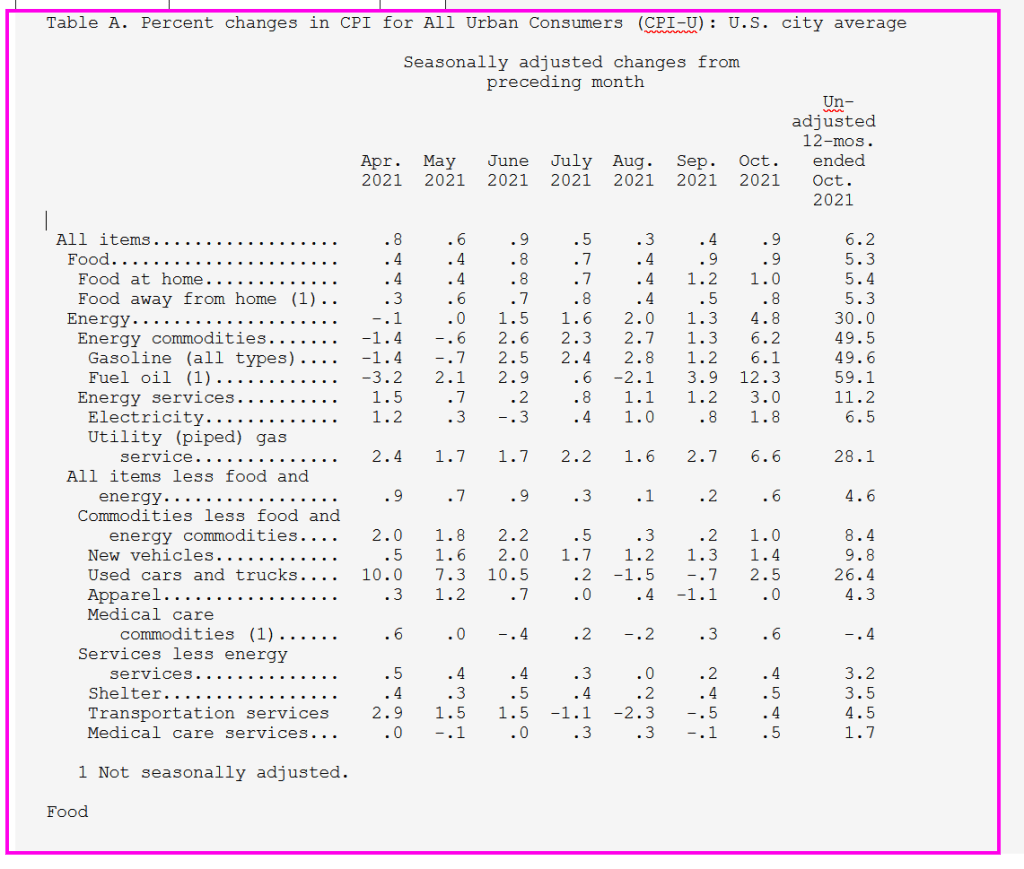
Ethererum, the cryptocurrency, is now at $4,298. It under $200 as the Covid crisis took shape in March 2020. Since Covid, The Federal Reserve went loco and massively increased their money supply and asset purchases. With that response (and economic bottlenecks), inflation has increased to 5.4% YoY.
The Fed’s new moto should be “Policy errors ARE our business!”
No, we don’t look to President Beavis to do much of anything positive about inflation.
With central banks around the world signalling tighter policy amid rising prices, Lagarde said the ECB had done much “soul-searching” over its stance but concluded that inflation was still temporary, so a policy response would be premature.
Soul-searching? The ECB is just doing what Powell and the Fed (aka, Jerome Jett and the Blackhearts) are doing. Keeping the foot on the monetary gas pedal in the face of inflation.
Let’s start Eurozone inflation. It is now sitting a 4.10% YoY. And core inflation is sitting at 2.10% YoY. Inflation is now the highest since 2009 while core inflation is at the highest since 2001.
Like the Federal Reserve, the ECB still has its foot on the monetary accelerator pedal despite booming inflation.
So, Christine, 19 nations in “Europe” having negative 2-year sovereign yields isn’t low enough for you?
The ECB’s platform in Frankfurt reminds me of a bad TV quiz show where participants try to guess prices next year. Call it “The Price Is Wrong.”
Unless, of course, the ECB sees a massive depression ahead.
(Bloomberg) — The largest owner of U.S. rental houses isn’t seeing any let-up in demand, or in its ability to increase rents.
Invitation Homes Inc., which owns more than 80,000 single-family rentals, raised prices by nearly 11% in the third quarter, according to a statement. The company boosted rents by 8% on renewals and 18% when leasing homes to new tenants. Rates are rising fastest in the Southwest, where rents increased 30% on new leases in Las Vegas, and 29% in Phoenix.
“It’s a little bit crazy,” Chief Executive Officer Dallas Tanner said on a conference call with investors Thursday. “There just isn’t enough quality housing available right now.”
Rising rents have been a staple of the economy since early Covid lockdowns lifted in the middle of last year. Surging purchase prices have pushed homeownership out of reach for first-time buyers.
Invitation’s properties, which tend be more centrally located than those owned by other institutional landlords, have been especially popular. And tenants tended to stay put: The company had a record-low turnover rate in the quarter, which reduced the expenses associated with preparing a house for leasing.
Invitation’s shares rose slightly to $40.77 at 12:49 p.m. New York time after the company raised its expectations for full- year revenue and net operating income. The stock is up 37% for the year.
As Milton Friedman once said, “If you put the federal government in charge of the Sahara Desert, in 5 years there’d be a shortage of sand.” In this case, The Federal government and Federal Reserve were put in charge of the Covid epidemic and we have shortages of almost everything. Including housing.
I don’t have Invitations rent growth chart, but here is Zillow’s YoY rent chart against The Fed’s balance sheet.
The good news? The 11% increase is almost half of the 20% YoY Case-Shiller National home price index.
Here is Treasury Secretary Janet Yellen making housing supply disappear.
U.S. employment costs rose at the fastest pace on record in the third quarter as companies across a variety of sectors raised wages against a backdrop of labor shortages.
The employment cost index, a broad gauge of wages and benefits, rose 1.3% from the prior quarter, according to Labor Department data released Friday. The gauge increased 3.7% from a year earlier.
Although there was a record jump in wages and salaries, personal income was reported to have dropped -1.04% in September. On a YoY basis, personal income fell to a 4.15% growth rate. Even more disturbing, the Case-Shiller national home price index is still rising at a near 20% pace.
In the third quarter the median home price hit $404,700, jumping nearly 13% since third quarter of 2020, when the median sales price was $358,700.
Though it’s an eye-catching number, the market has been hot of late, and a lack of inventory and high demand means foretold the rise in home prices.
According to a recent note from Goldman Sachs, home prices could rise another 16% by the end of next year. Goldman economist Jan Hatzius pointed out that of all the pandemic shortages, the housing shortage might last the longest and that a crash is very unlikely.
Sure Jan. That’s what economists were saying in 2007 too before housing prices crashed and burned. Although this time its different: The Federal Reserve hadn’t gone insane buying Treasuries and Agency MBS before the housing bubble burst in 2008/2009.
Freddie Mac’s 30-year mortgage rate rose today to 3.14%.
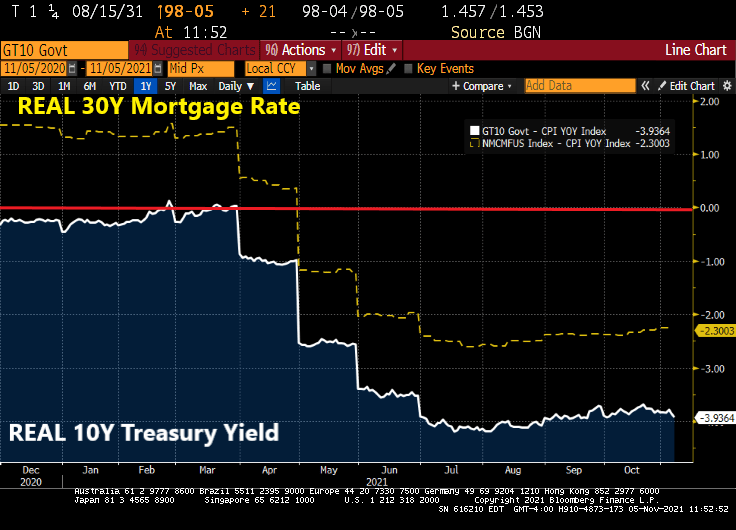
Notice how Freddie’s 30-year loan commitment rate tracked the 10-year Treasury yield … until Covid struck. Then there was a separation of the two rates.
US pending home sales declined -2.3% MoM and -7.19% YoY as US GDP sinks like a paralyzed falcon,
(Bloomberg) — The National Association of Realtors’ index of pending home sales decreased 2.3% in September from a month earlier to 116.7, largest drop since April, according to data released Thursday.
The median estimate ina Bloomberg survey of economists called for a 0.5% advance.
Compared with a year earlier, contract signings were down 7.2% onan unadjusted basis”
Forecast range from -4.6% to 4.5% from 30 economists surveyed
Signings declined in all four U.S. regions from the prior month, led by a 3.5% drop in the Midwest Unlike existing-home sales, which are calculated when a contract closes, the index of pending home sales is based on contract signings
Treasury Secretary Janet Yellen: “What, me worry?”
You must be logged in to post a comment.