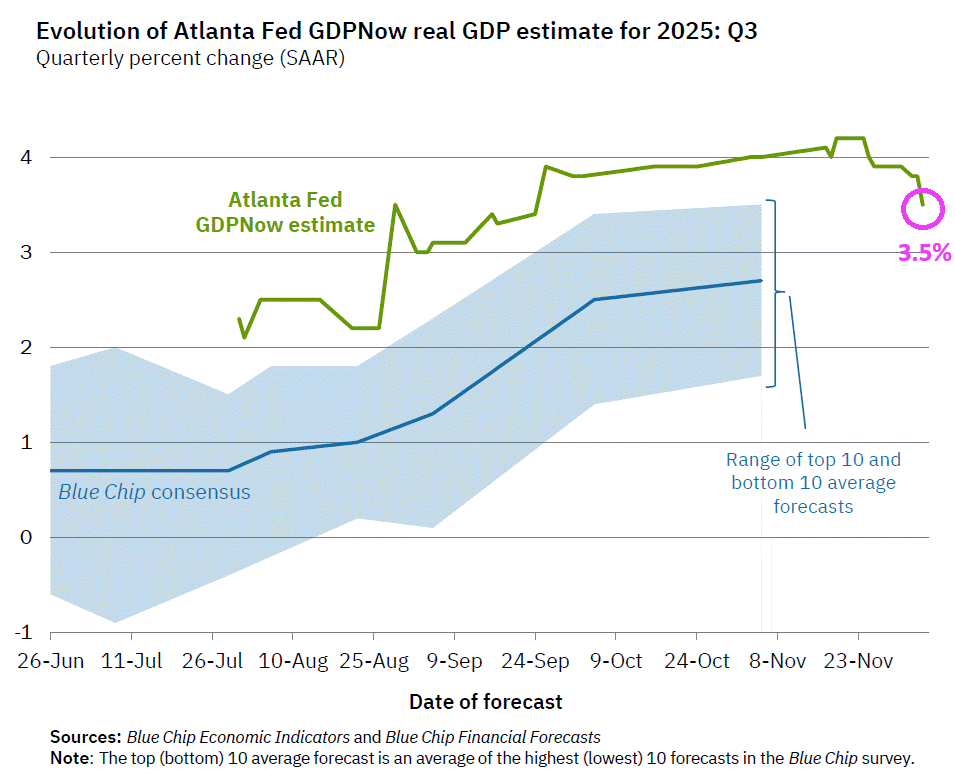
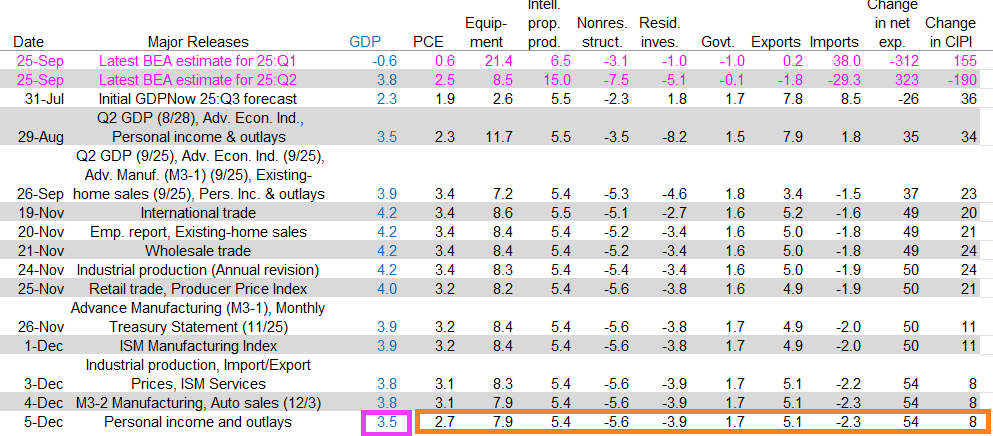
The GDPNow model estimate for real GDP growth (seasonally adjusted annual rate) in the third quarter of 2025 is 3.5 percent on December 5, down from 3.8 percent on December 4. After this morning’s personal income and outlays release from the US Bureau of Economic Analysis, the nowcast for third-quarter real personal consumption expenditures growth declined from 3.1 percent to 2.7 percent.
Unfortunately, residential and non-residential construction are negative as are imports.
The good news / bad news for immigration enforcement is that home prices are declining as immigration enforcement keeps rolling. Good news for new homebuyers. Bad news for recent homeowners.
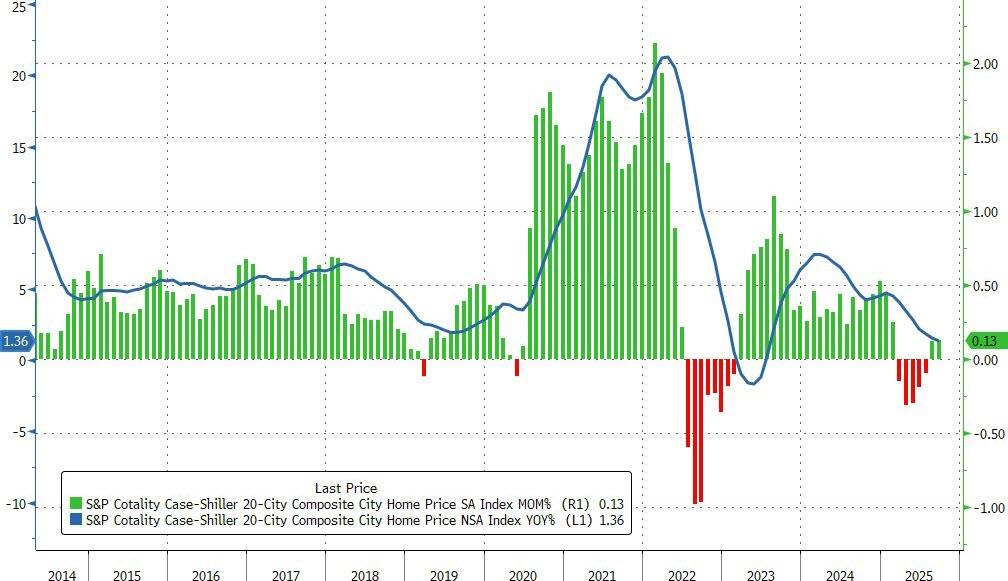
US home prices in the 20 largest cities rose 0.13% MoM in September (very slightly better than the 0.1% rise expected) and up for the second month in a row (after falling for five straight months before). This MoM rise left the average priers up just 1.36% YoY – the lowest since July 2023.
Source: Bloomberg
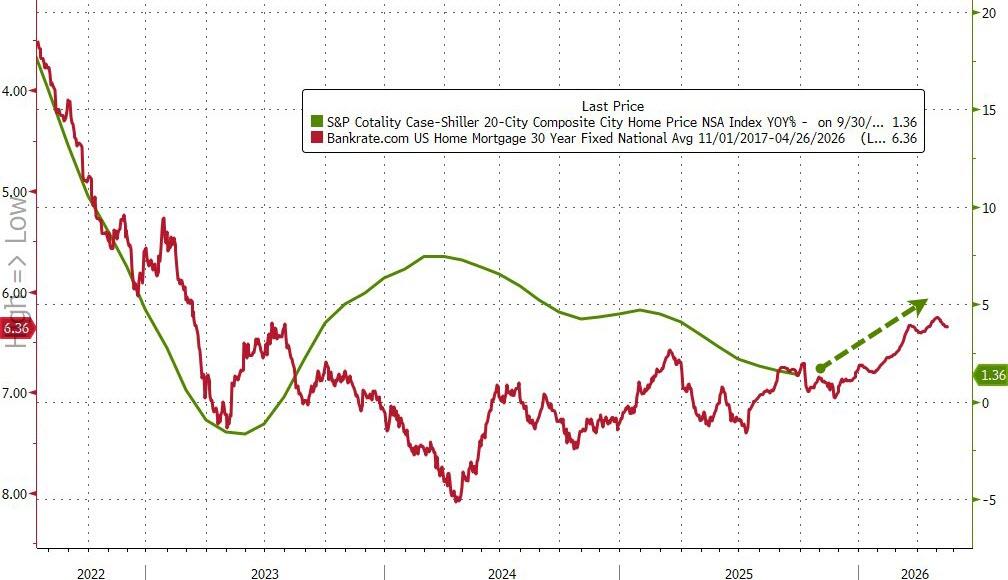
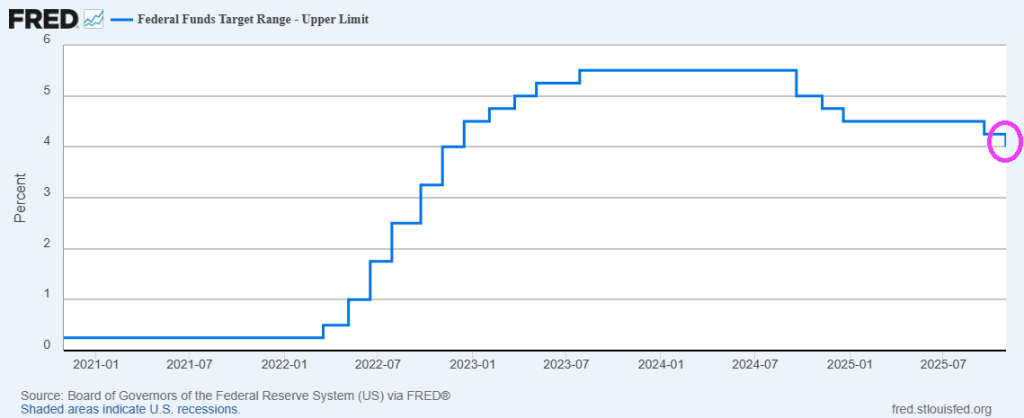
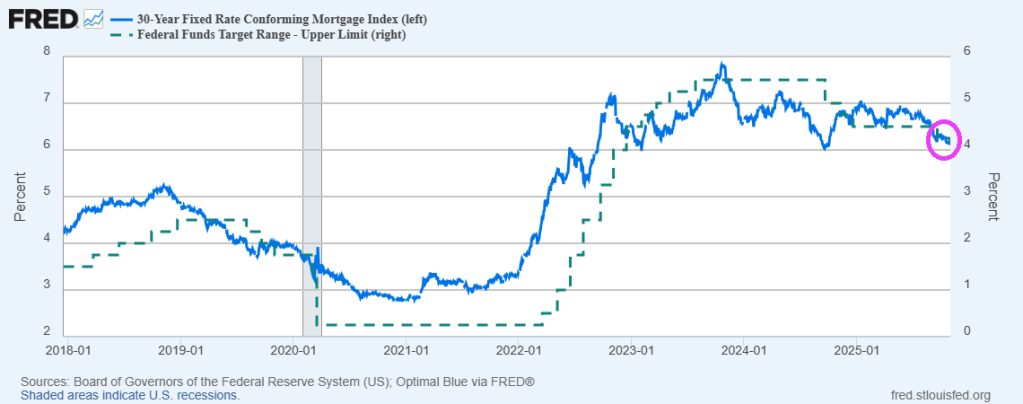
Declining mortgage rates suggest a rebound in aggregate prices could be looming…
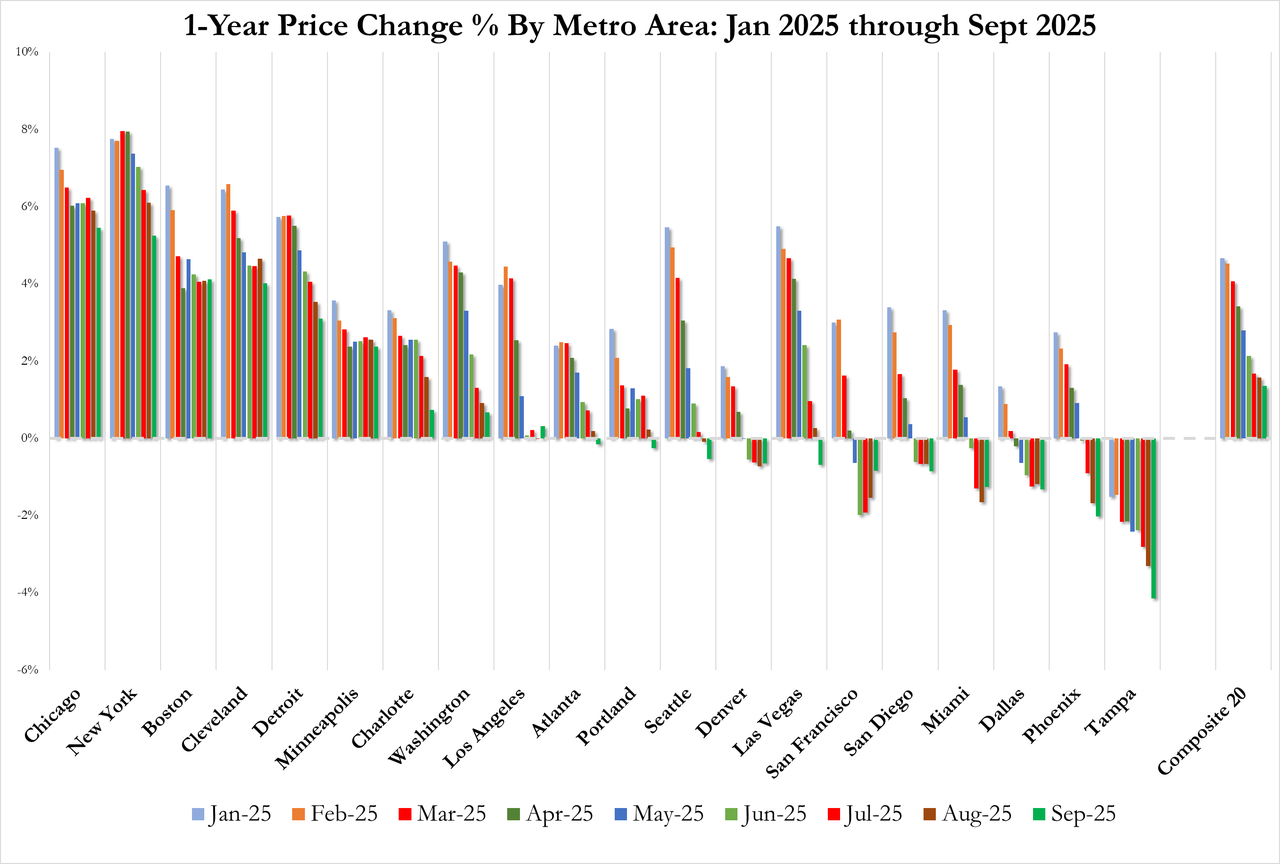
Regional performance reveals a tale of two markets.
Chicago continues to lead with a 5.5% annual gain, followed by New York at 5.2% and Boston at 4.1%. These Northeastern and Midwestern metros have sustained momentum even as broader market conditions soften.
At the opposite extreme, Tampa posted a 4.1% annual decline – the sharpest drop among tracked metros and its 11th consecutive month of negative annual returns. Phoenix (-2.0%), Dallas (-1.3%), and Miami (-1.3%) likewise remained in negative territory, highlighting particular weakness in Sun Belt markets that experienced the most dramatic pandemic-era price surges.
Home Prices are now falling (YoY) in a majority (11/20) of America’s largest cities…
“The geographic rotation is striking,” said Nicholas Godec, CFA, CAIA, CIPM, Head of Fixed Income Tradables & Commodities at S&P Dow Jones Indices.
Meanwhile, traditionally stable metros in the Northeast and Midwest continue to post solid gains, suggesting a reversion to prepandemic patterns where job markets and urban fundamentals drive appreciation rather than migration trends and remote-work dynamics.”
“Markets that were pandemic darlings—particularly in Florida, Arizona, and Texas—are now experiencing outright price declines.
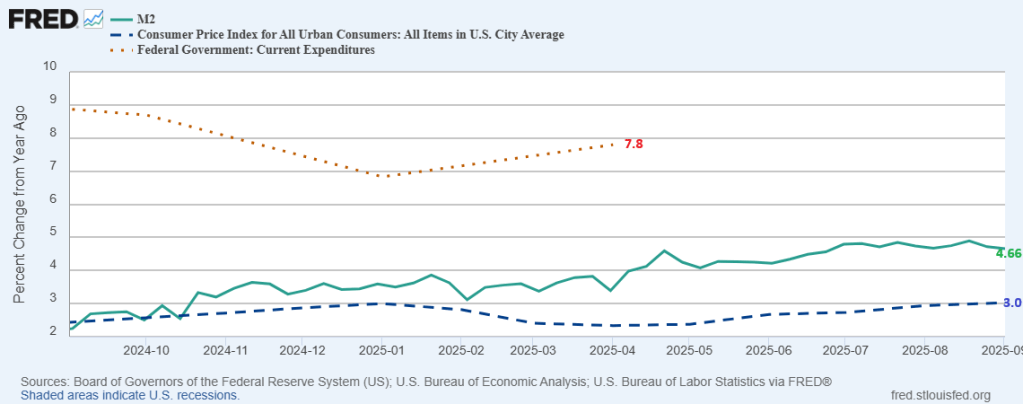
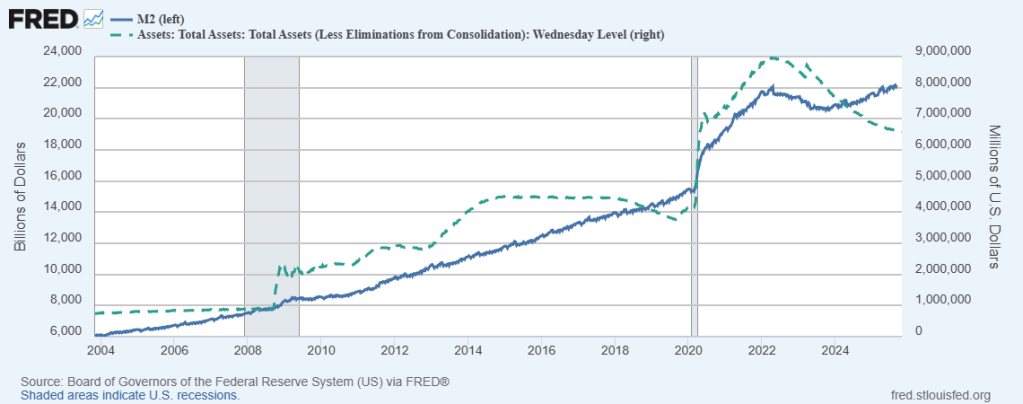
And don’t forget the surge in home prices associated with increased M2 money printing around Covid.
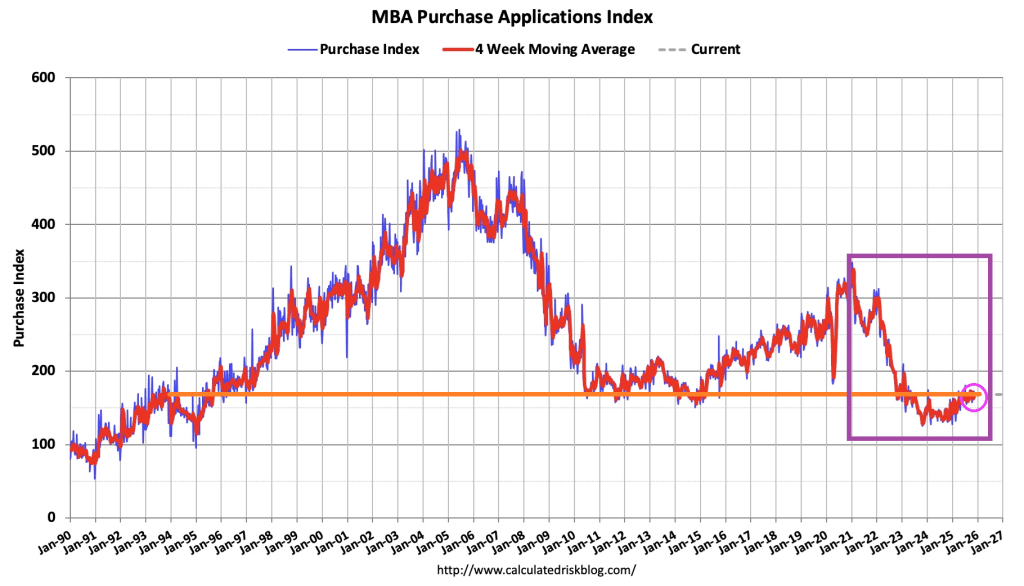
Mortgage applications decreased 5.2 percent from one week earlier, according to data from the Mortgage Bankers Association’s (MBA) Weekly Mortgage Applications Survey for the week ending November 14, 2025.
The Market Composite Index, a measure of mortgage loan application volume, decreased 5.2 percent on a seasonally adjusted basis from one week earlier. On an unadjusted basis, the Index decreased 7 percent compared with the previous week. The seasonally adjusted Purchase Index decreased 2 percent from one week earlier. The unadjusted Purchase Index decreased 7 percent compared with the previous week and was 26 percent higher than the same week one year ago.
The Refinance Index decreased 7 percent from the previous week and was 125 percent higher than the same week one year ago.
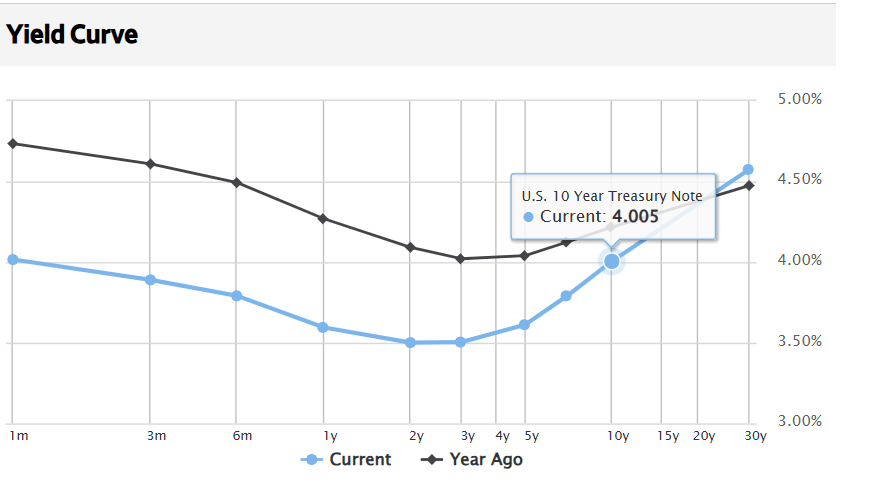
The average contract interest rate for 30-year fixed-rate mortgages with conforming loan balances ($806,500 or less) increased to 6.37 percent from 6.34 percent, with points remaining unchanged at 0.62 (including the origination fee) for 80 percent loan-to-value ratio (LTV) loans.
Mortgage rates increased for the third consecutive week, with the 30-year fixed rate inching higher to its highest level in four weeks at 6.37 percent.
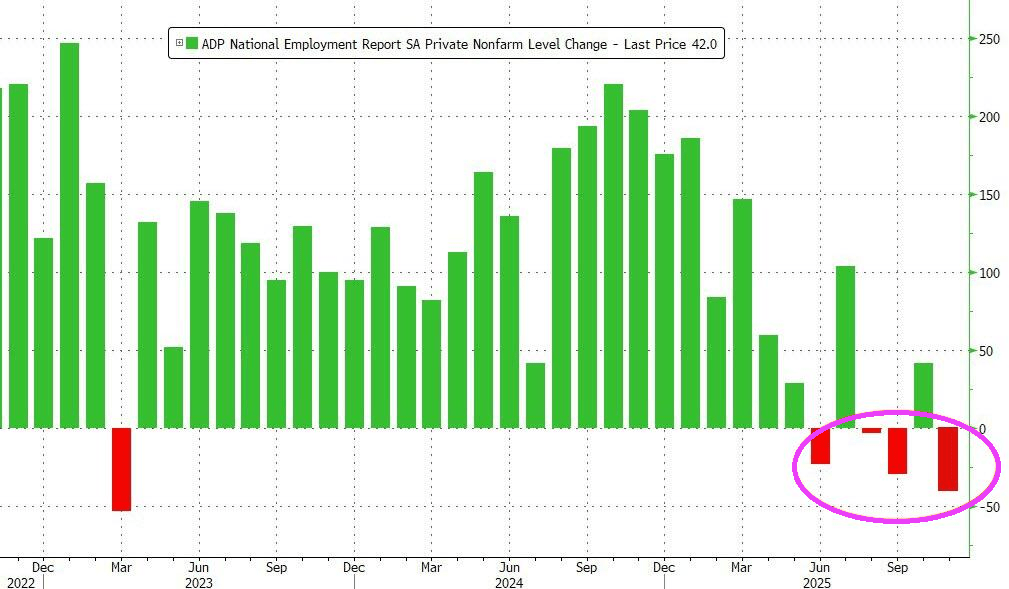
Added together that is 45,000 job losses in the month (not including government workers), which would be the largest monthly drop in jobs since March 2023.
A sustained increase in layoffs would be particularly concerning now because the hiring rate is low and it is harder than usual for unemployed workers to find jobs.
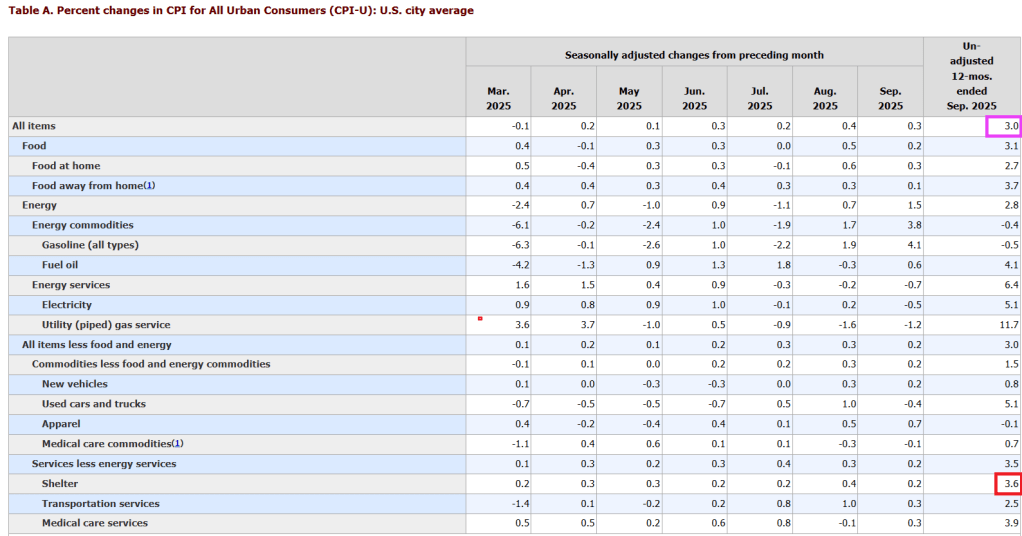
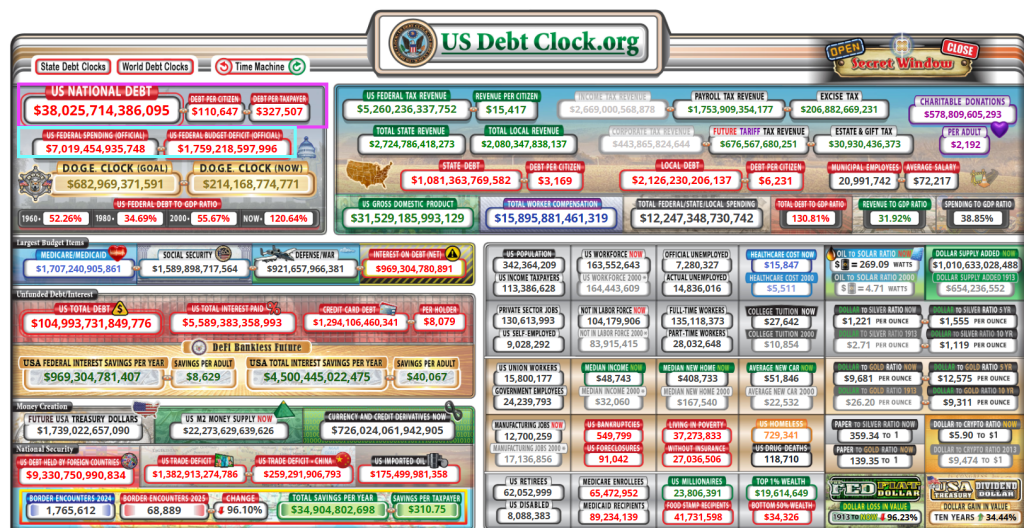
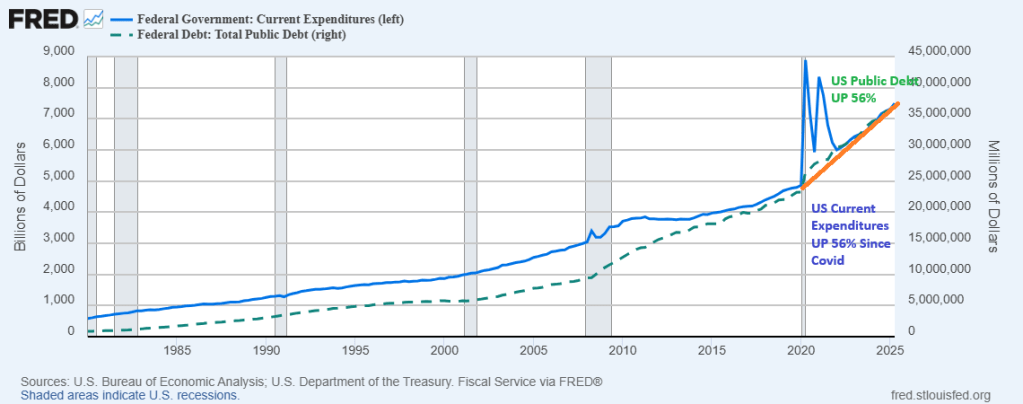
Of course, CPI data release has been delayed thanks to the US Federal government shutdown (aka, the Schumer Shutdown). But never fear, the Federal government is continuing to spending like the proverbial drunken sailors in port. The Federal debt just breached the $38 trillion mark.
And the Federal budget deficit just breached the $7 trillion mark. Why? Too much Federal spending! The Federal government COULD raises taxes, but that would strangle the economy. But politicians in DC are terrified of not being re-elected, so they are terrified of cutting spending.
Can we ask the US House and Senate if they will ever return US Federal government spending to pre-Covid levels? Both US Federal government spending and public debt are up 56% since the Covid outbreak in 2020.
The answer is no. Politicians thrive on Federal spending.






 Confounded Interest - Anthony B. Sanders


You must be logged in to post a comment.