T-Dazzle! Inflation Crushing Households Under $60k, Russian CDS Indicating 99% Probability Of Russia Debt Default Over Next Year (WTI Crude UP 2%+, Wheat UP 3%+)

As we are painfully aware, The Fed’s exaggerated monetary flood combined with Federal stimulus spending has led to horrible inflation.

Yes, despite what government talking heads say, Federal stimulus increases demand for goods, the supply is generally slow to respond resulting in rising prices. Then government policies driving up energy prices also leads to highers prices. Throw in Federal Reserve monetary stimulypto and we have this chart from hell from Penn-Wharton. The chart shows that households earning less that $60,000 experience higher expenses due to rising prices than their gain in earnings.
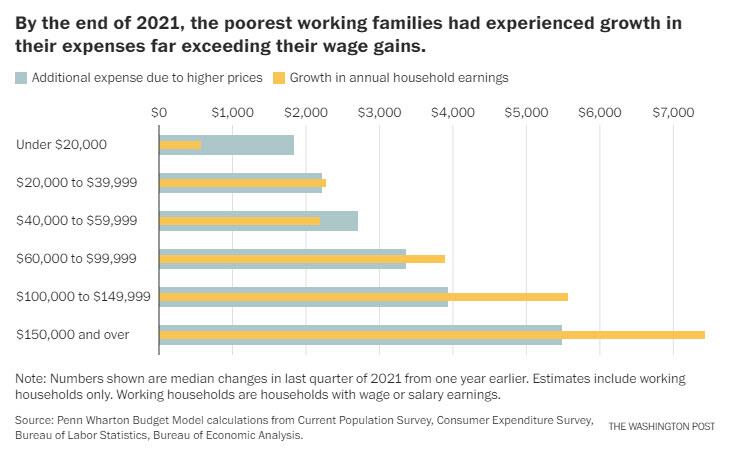
Speaking of the government push to “go green” I saw an ad for a Mercedes Benz EQ sedan that I admit looked really cool, but no price given. I went to Car and Driver’s website and it said “Starting at $103,360.” I’ll take a hard pass, but you can see why households making over $150,000 per year have rising additional expenses due to price increases. To paraphrase April Ludgate, “Thanks for nothing President Biden and Fed Chair Powell.”

Another chart from hell is the Russian USD Credit Default Swap (CDS) curve. It is spiking at over 20,000.
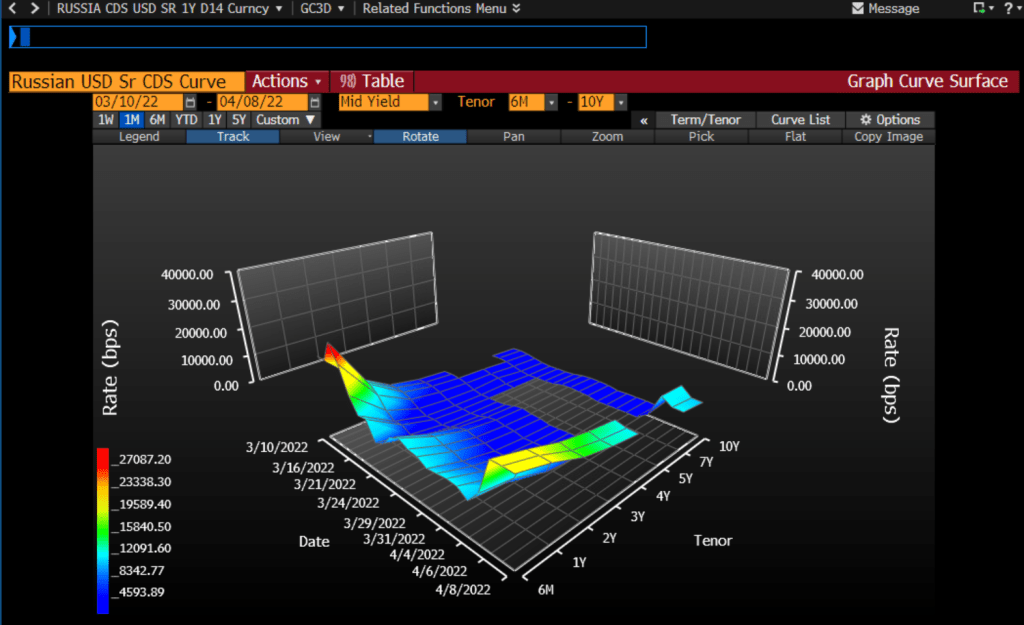
The one-year Russian CDS is currently at a whopping 20,336 indicating that there is about a 99% of a Russian default over the coming year. As someone who lived through the 1998 Russian credit default scare on Wall Street, this will send a shock wave through credit and Treasury markets.

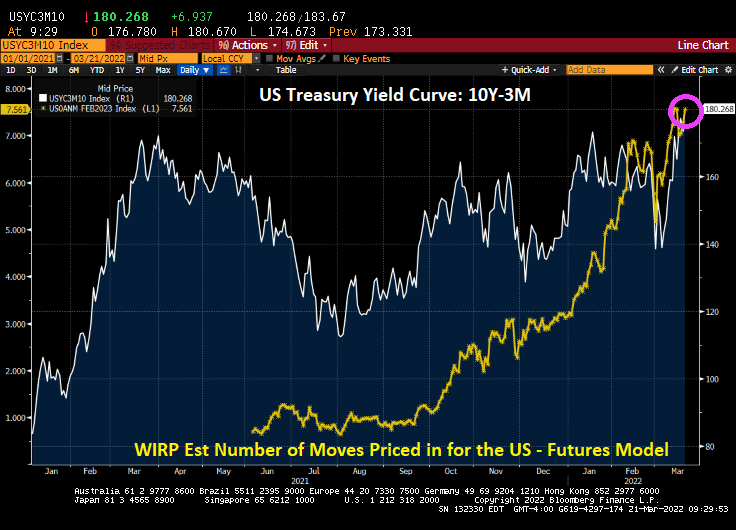
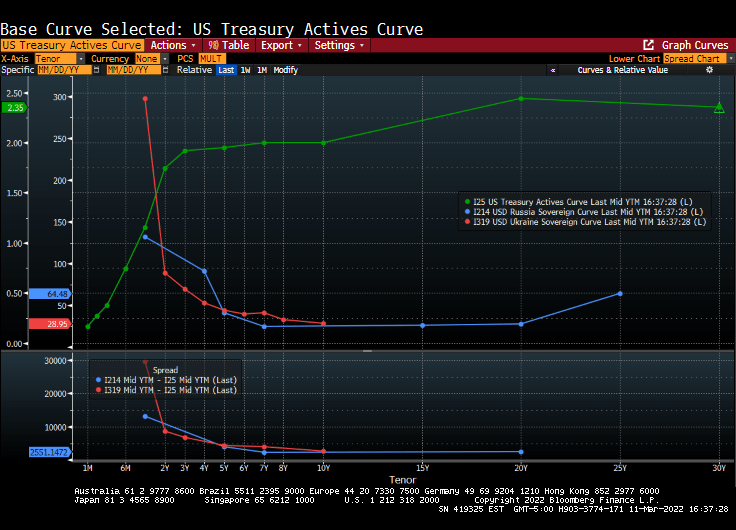
On the US Treasury front, this chart shows how steeply sloped the US Treasury actives curve has become. Steep until 3 years, then flat. I call this chart “T-Dazzle!” T-Dazzle because I can’t believe how badly the Biden Administration and The Federal Reserve are screwing up the country.

Crude oil? WTI Crude is back to almost $100 per barrel while Brent Crude is at $102.78 per barrel. Wheat is up 3.22% thanks largely to problems related to Russia invading Ukraine (Europe’s bread basket) and a dismal Chinese wheat harvest.

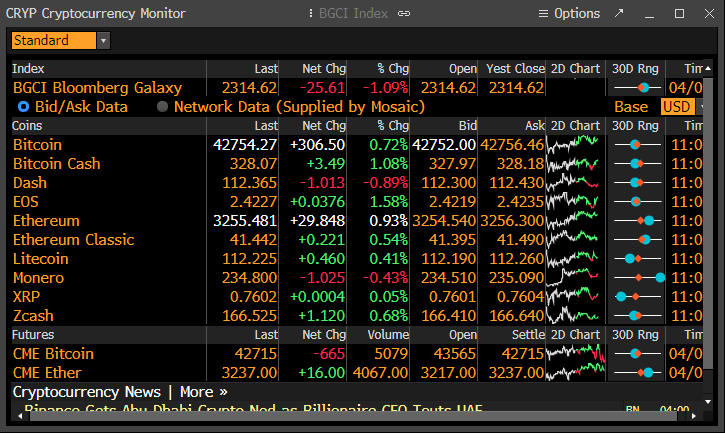
Cryptocurrencies, the alternatives to the US fiat dollar, are rising (in particular, Bitcoin and Ethereum).
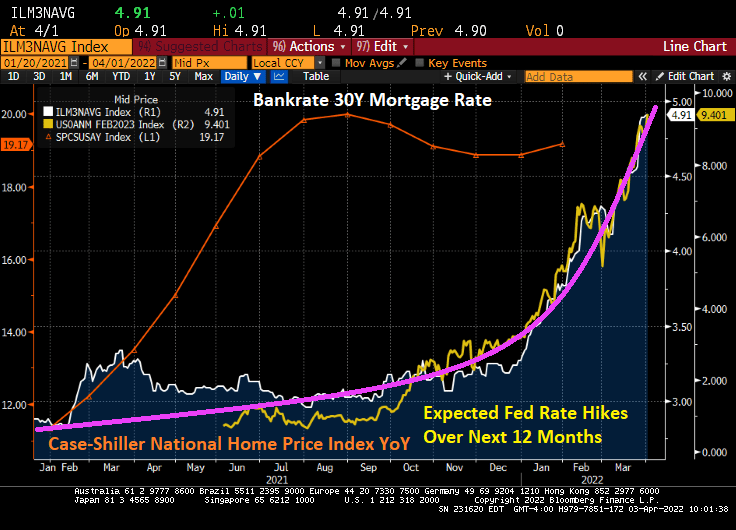
Of course, I have to finish up with the soaring 30-year mortgage rate.

Here are Treasury Secretary Janet Yellen and Transportation Secretary Pete Buttigieg trying to convince people that Treasuries are fantastic and to avoid alternatives to fiat currency like Bitcoin, Ethereum, Stablecoin or anything else.

Stablecoin? US Senator Toomey Announces Legislation to Create Responsible Regulatory Framework for Stablecoins (Bad Day For Cryptos)

Stablecoin refers to a new class of cryptocurrencies which offer price stability and/or are backed by reserve asset. In recent times, stablecoins have gained enough traction as they attempt to offer the best of both world’s – the instant processing and security of payments of cryptocurrencies, and the volatility-free stable valuations of fiat currencies.

US Senator Pat Toomey, ranking member of the Banking, Housing and Urban Affairs Committee, announced today legislation to create a responsible regulatory framework for STABLECOINS.

Toomey Announces Legislation to Create Responsible Regulatory Framework for Stablecoins
Releases Discussion Draft of the Stablecoin TRUST Act

Washington, D.C. – U.S. Senate Banking Committee Ranking Member Pat Toomey (R-Pa.) today released a discussion draft of legislation establishing a new regulatory framework for payment stablecoins.

“While today stablecoins facilitate trading with cryptocurrencies, tomorrow stablecoins could be widely used in the physical economy. They have the potential, among other things, to speed up payments and automate transactions,” said Ranking Member Toomey. “The proposed regulatory framework I’m releasing today will allow this crypto-innovation to continue flourishing while protecting consumers and minimizing potential risks from stablecoins to the financial system. I look forward to receiving feedback on this legislation from my colleagues and stakeholders as Congress continues its work on stablecoin regulation.”

Key Components

·        Authorizes three different options to issue payment stablecoins:

o   Establishes a new federal license designed specifically for stablecoin issuers;

o   Preserves the state-registered money transmitter status for most existing stablecoin issuers; and

o   Clarifies that insured depository institutions are permitted to issue stablecoins.

·        Protects consumers by subjecting all payment stablecoin issuers—regardless of whether they are a state money transmitter or receiving a new federal license—to standardized requirements, including:

o   Disclosures regarding the reserve assets backing the stablecoin;

o   Clear redemption policies; and

o   Subjecting them to routine audits by registered public accounting firms.

·        Provides much-needed clarity that, at a minimum, stablecoins that do not offer interest are not securities.

o   Provides a clear regulatory framework for payment stablecoins and rejects the Securities and Exchange Commission’s approach of regulating through enforcement actions.

·        Applies privacy protections to transactions involving stablecoins and other virtual currencies.


Background

·        In August 2021, Ranking Member Toomey announced he was soliciting legislative proposals to ensure federal law supports the development of digital assets and its underlying technologies while protecting investors.

·        In December 2021, Ranking Member Toomey released a set of principles to lay the framework for forthcoming stablecoin legislation.

Crytpos in general are having a bad day, with Bitcoin down 4.78% today and Ethereum Classic down 12%.

Toomey’s proposal is a great step forward in the regulation of stablecoin.

The Great Reset … In Asset Returns (Commodities Soaring, Treasuries Tanking, Home Price Growth Still 4x Soaring Mortgage Rates)

Numerous elites like Klaus Schwab of The World Economic Forum (and Davos fame) are calling for a “Great Reset” in global economies. But perhaps “The Great Reset” in taking place in asset markets … and not in a good way.

Consider what has happened since President Biden was elected. The S&P 500 total return index (green index) has risen thanks to The Federal Reserve’s balance sheet expansion (orange line) with COVID. Until 2022 when the expectation of Fed rate hikes surged from 3 in late December 2021 to 9.4 expected rate hikes over the next 12 months (yellow line).

The US Treasury total return index (white line) has gotten crushed with The Fed’s signals of rate hikes and quantitative tightening (QT). Call it “White Line Fever.” The commodity total return index (blue line) has surged as The Fed’s expected rate hikes have risen from 3 to 9.4 in 2022.

Is The Fed causing a Great Reset in housing? In 2022, we see the surge in Fed rate hike expectations leading the 30-year mortgage rate to be nearly 5%. The last Case-Shiller home price index was for January and it was still raging at 19.17% YoY growth. Let’s see if The Fed’s QT will slow down home price growth. But home prices are growing at 4x 30-year mortgage rates.

I hope that Klaus Schwab and the global elites pick us up on our way down. But probably not.

So let’s see if The Fed still is going to withdraw its “Snake Juice” from the market.

Zoltan! US Dollar Purchasing Power For Consumers Sinking Faster Than The Titanic As Zoltan Pozsar Suggests Bretton Woods III With Money Backed By Commodities

Zoltan!

(Forbes) – Credit Suisse’s Zoltan Pozsar argues Bretton Woods II crumbled when the G7 countries seized Russia’s foreign exchange reserves. Keeping money inside financial institutions like the IMF was considered risk free. That is clearly no longer the case. Similarly, Bretton Woods I collapsed when Nixon took the US of the gold standard back in 1971 when dollars were convertible to gold at a fixed exchange rate of $35 an ounce. This led to Bretton Woods II, backed by “inside money” or the dollar, which itself is not linked to gold or any other commodity.

Now the basis of this system, which has operated for the past 50 years, is being called into question. The sanctions on Russia, which showed that reserves accumulated by central banks can simply be taken away, raised the question of “what is money?”

That question may explain why Pozsar believes a huge shift in the way the world organizes money and reserves is now underway, “creating a “Bretton Woods III backed by outside money,” (gold and other commodities). Including crude oil and bitcoin.

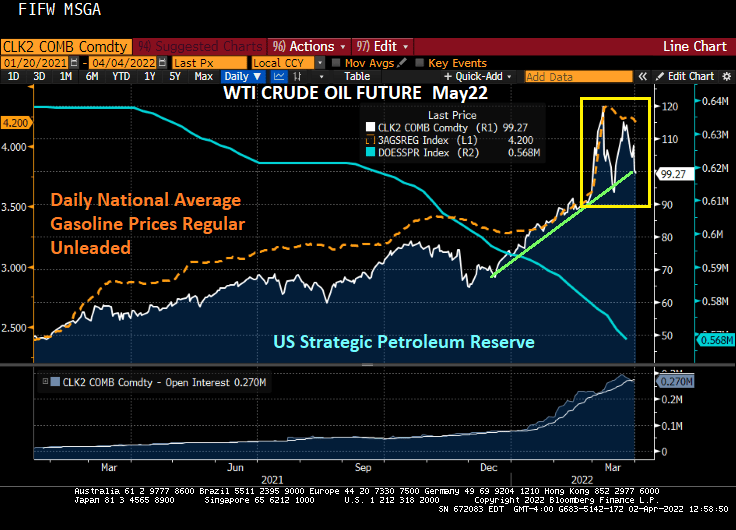
At least crude oil has fallen below $100 as Biden merrily drains the Strategic Petroleum Reserve (SPR). Gasoline prices have fallen slightly as this is being done before the midterm elections with political, not economic, intent. Once the midterms pass, will Biden continue draining the SPR until there is little left forcing the US to convert to “green energy”?

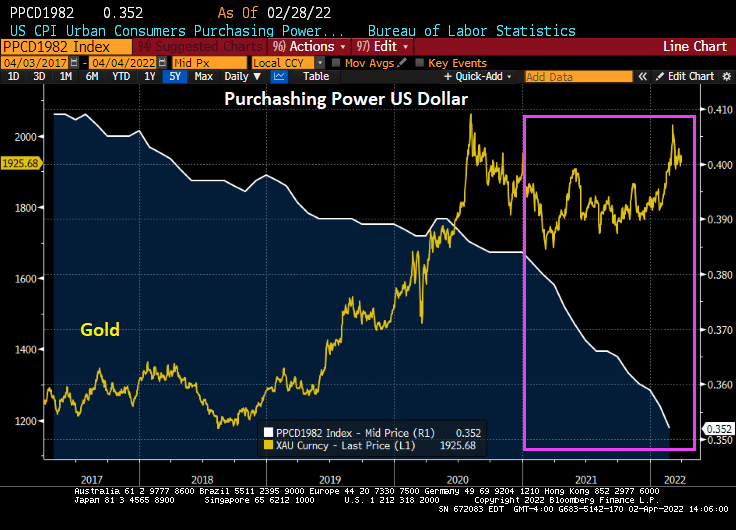
The purchasing power of the consumer dollar took a plunge under Biden as other commodities such as Bitcoin and crude oil soared.

An alternative asset, gold, have generally risen under Biden’s Reign of Error, but particularly after the Russian invasion of Ukraine.

Politicians love to spend money, often recklessly. And with The Fed monetizing Federal government expenditures, the purchasing power of the US dollar for consumers is sinking faster than The Titanic.

Weekend Update! US 10Y Breakeven Inflation Rate Hits Record High As WTI Oil And Lithium Surge (Toronto Home Goes From $613k Over Asking Price)

Unfortunately, the US Breakeven 10Y inflation rate hit another all-time high as West Texas Intermediate Crude Oil (Cushing Spot) soars.

But note that the WTI Crude spot rate is still lower than it previous peak in June 2008. What is notable in the above chart is that M2 Money growth YoY has slowed after Covid “Stimulypto”. But M2 is still growing at an 11% YoY clip, much faster growth than pre-Covid rates. So, Federal stimulypto is still in place, helping to drive inflation to the moon.

Example of how crazy this is getting? A house in Toronto Canada (our cousins to the north) just went to $613,000 OVER ASKING PRICE! While some may dismiss this as “Well, that is Canada” it does show how inflation is ravaging home affordability in North America.

As The Biden Administration and Congress pushes Green Energy and demonizes fossil fuels, we are seeing Green Energy commodities such as Lithium (for batteries) soar even faster than oil prices.

Gold may be set to party like its 1999!

And just an update on The US Dollar, Crypto Currencies and Gold. This is just a sample of alternatives to the US Dollar for transactions. Freedom of choice is a great thing!

What a wonderful time to be a politician! As Winston Churchill once uttered, “Never let a crisis go to waste.” To quote Dwight Schrute from The Office, “It is part of the green initiative. And by green, I mean money.”

US 10Y-3M Treasury Curve Steepest Under Biden Presidency While 10Y-2Y Curve Flattest Under Biden As inflation, Oil Soar (Gasoline UP 10% In New York Port, Mortgage Rates Climb)

Oil prices are soaring as US President Biden pleads like a homeless person to foreign countries for oil rather than let the US produce more oil to drive down prices. Meanwhile, the US Treasury yield curve 10Y-3M is at its steepest (rising 10Y yields while The Fed keeps short rates at near zero).

But if we look at the belly of the beast, so to speak, the 10Y-5Y slope, we can see that the Treasury curve has declined to a mere 0.278 basis points as inflation rages.

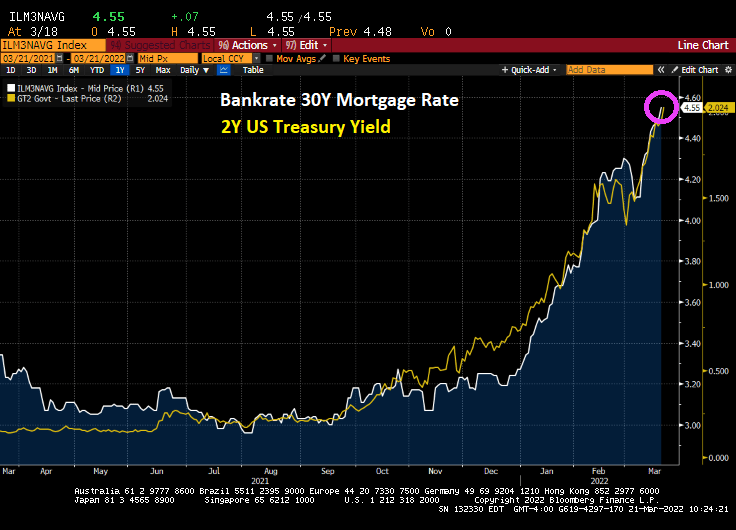
Bankrate’s 30-year mortgage rate keeps on climbing and has hit 4.55% as the 2-year Treasury yield rises rapidly.

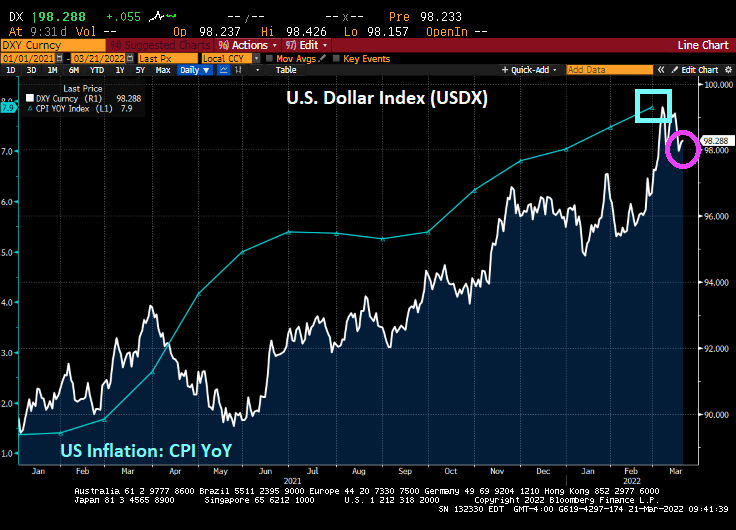
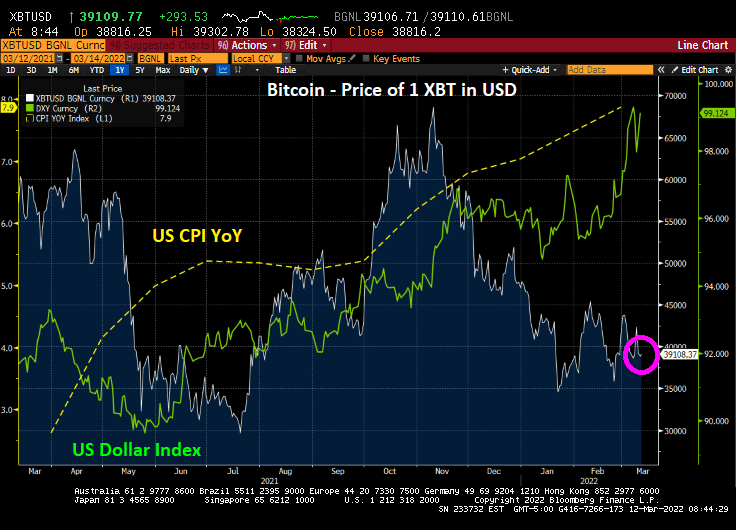
The US Dollar Index has risen dramatically as US inflation has increased dramatically.

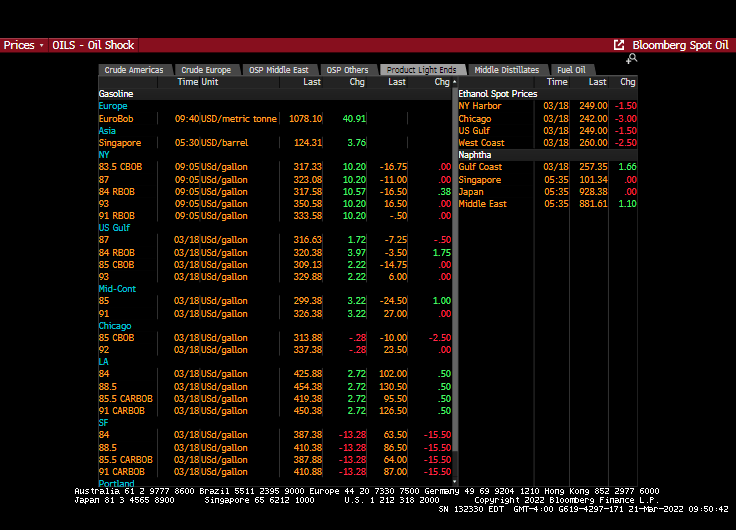
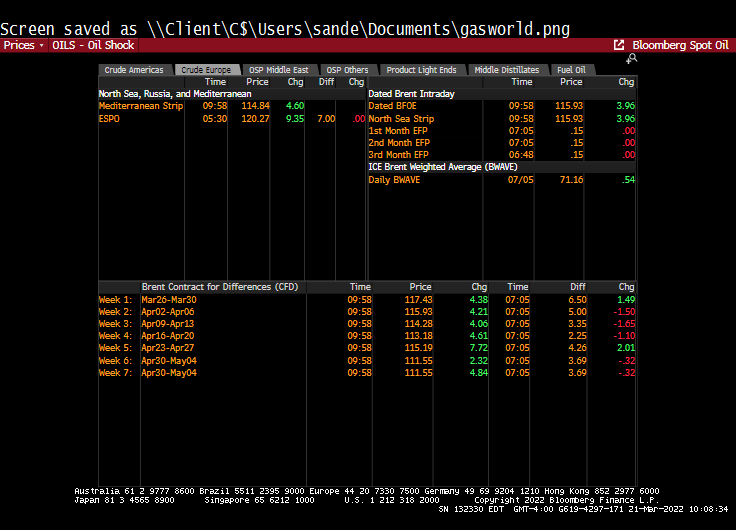
Oil? Oil is up over 4% in the US. Mexican Mix (not a #3 meal at Chuy’s) is up 7.32%.

Gasoline? NY prices are up over 10%.

Russian oil is up 9.35%.

Ah, for the good old days of 30 cents a gallon gasoline, although I always wondered about Gulf’s marketing campaign. “Good Gulf” seems to imply that the other Gulf gasolines aren’t good. And Gulf’s “No-nox” seems to imply that the other Gulf gasolines knock like Biden’s knees as he pleads for foreign oil.

Trouble With The (Yield) Curve! 10Y-2Y Slope Approaching Inversion As Fed Plans Rate Hikes And Bitcoin Falls

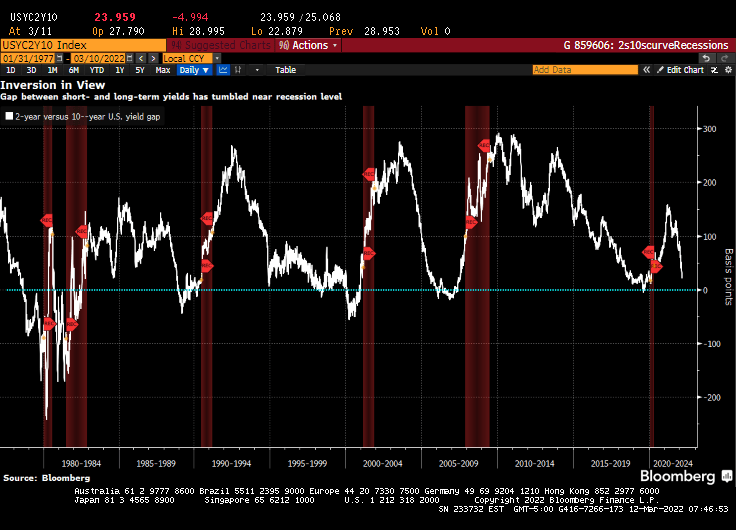
The US Treasury yield curve (10Y-2Y) is rapidly approaching inversion at 20.5 bps (where the 10-year yield is lower than the 2-year yield). But the 10Y-3M curve is generally steepening at 173.33 bps.

Of course, the driving force behind the flattening of the 10Y-2Y curve is the rapidly rising 2-year Treasury yield (orange line). The last time the 10Y-2Y curve inverted was in 2019, prior to the COVID outbreak in early 2020.

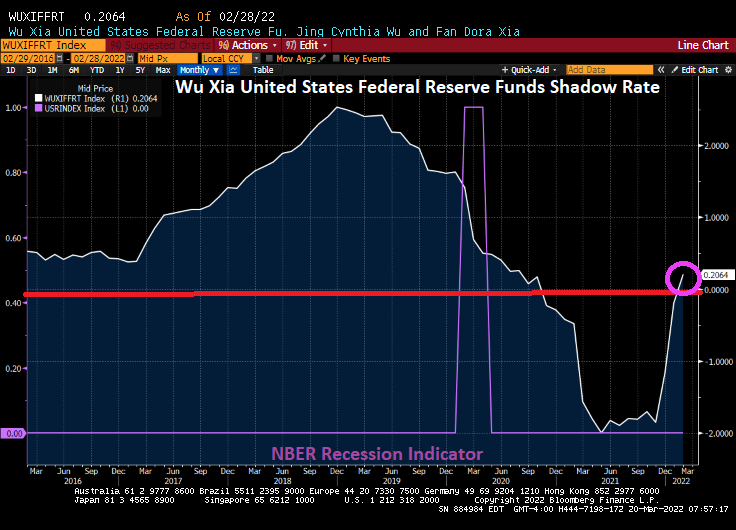
The Wu Xia United States Federal Reserve Funds Shadow Rate has finally climbed back into positive territory.

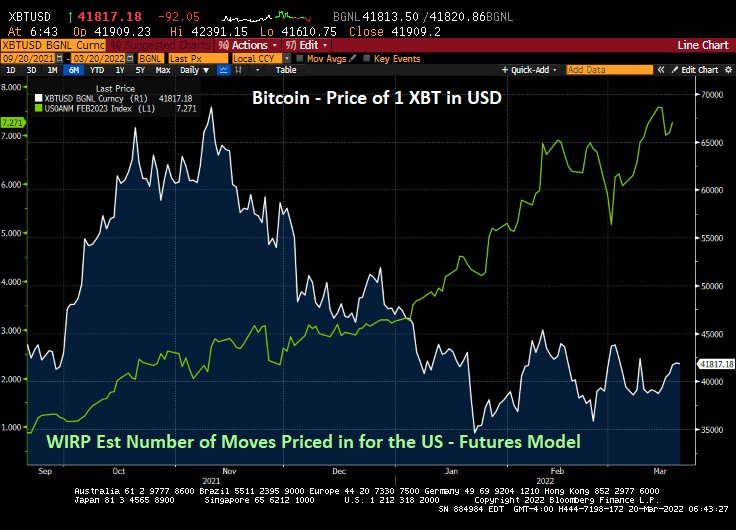
At last look, The Federal Reserve is forecast to raise their target rate 7 times over the coming year. And with the increasing forecast of rate hikes, we are seeing the cryptocurrency Bitcoin fall from near $70,000 to $41,817.

President Biden announced that he will be issuing an executive order to combat rising energy prices (the rising energy prices that he caused in the first place with … executive orders). Let’s see what happens next.

Hello t-r-o-u-b-l-e.

Zoltan! The New Financial Order aka Bretton Woods III Centered Around Commodity-based Currencies In The East (US Yield Curve Signaling Recession)

Zoltan!

Credit Suisse’s Zoltan Pozsar wrote an interesting research note on how the Russia invasion of Ukraine and the G7’s response is causing a major upheaval of the global financial order.

Coindesk: The foundations of Bretton Woods II crumbled last week when the G7 seized Russia’s foreign exchange reserves, the investment bank said.

The Russian-Ukrainian war will create a new world financial order from which Bitcoin is set to benefit, according to Credit Suisse.

Zoltan Pozsar, global head of short-term interest rate strategy at the giant investment bank, wrote in a Monday report that Western sanctions on Russia are likely to cause a paradigm shift in the way the world organizes money and reserves, a “Bretton Woods III” kind of scenario.

“From the Bretton Woods era backed by gold bullion, to Bretton Woods II backed by inside money, to Bretton Woods III backed by outside money,” the strategist wrote.
Pozsar argues that the fall of Bretton Woods II ensued last week as G7 countries decided to seize Russia’s foreign exchange (FX) reserves, leading to a rise of outside money – reserves kept as commodities – over inside money – reserves kept as liabilities of global financial institutions.

“We are witnessing the birth of Bretton Woods III – a new world (monetary) order centered around commodity-based currencies in the East that will likely weaken the Eurodollar system and also contribute to inflationary forces in the West,” the report states.

Russia, a surplus agent in the financial system, can now no longer make use of the hefty FX reserves it accumulated through its commodity exports over the decades to defend its falling ruble or aid its local economy. Moreover, Russia’s ability to export its commodities has been severely hurt due to the “buyer’s strike” in the West.

What we are seeing at the 50-year anniversary of the 1973 OPEC supply shock is something similar but substantially worse – the 2022 Russia supply shock, which isn’t driven by the supplier but the consumer,” the strategist wrote. “The aggressor in the geopolitical arena is being punished by sanctions, and sanctions-driven commodity price moves threaten financial stability in the West.”

Pozsar argues that while Western central banks cannot close spreads between Russian and non-Russian commodity prices as sanctions lead them in opposite directions, the People’s Bank of China can “as it banks for a sovereign who can dance to its own tune.”

“If you believe that the West can craft sanctions that maximize pain for Russia while minimizing financial stability risks and price stability risks in the West, you could also believe in unicorns,” Pozsar wrote.

As outside money keeps trumping inside money, this crisis will likely emerge and end differently than all others ever since Nixon broke off the gold standard in 1971 – which marked the end of the era of commodity-based money.

Meanwhile, US Treasury Secretary Janet Yellen said the U.S. dollar is in no danger of losing its status as the world’s dominant reserve currency as a result of sanctions imposed against Russia over its invasion of Ukraine.

“I don’t think the dollar has any serious competition, and is not likely to for a long time,” Yellen told reporters in response to questions following a speech in Denver on Friday. 

Some commentators, including Credit Suisse Group AG interest-rate strategist Zoltan Pozsar, have warned sanctions that blocked Russia’s access to its foreign currency reserves could drive other countries away from the dollar.

Well, what Zoltan says may be true, but not so far. Bitcoin has been plunging since November 2021 as inflation keeps rising.

Zoltan: “..and Bitcoin (if it still exists then) will probably benefit from all this.” The US Treasury yield curve is listing towards inversion, a signal of impending recession.

Who Benefits The Most From Federal Reserve Stimulypto? (Hint: NOT The Bottom 50% Of Population)

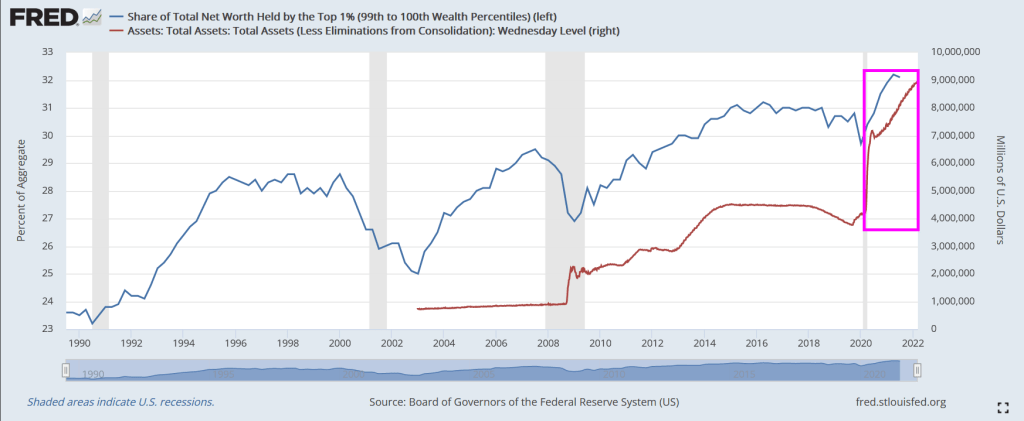
Following the financial crisis of 2008/2009, The Federal Reserve began their dramatic purchase of assets such as Treasuries and Agency mortgage-backed securities (AgencyMBS). And then Covid struck and The Fed went berserk with asset purchases.

So, who benefited the most? The top 1% or the bottom 50%?

Answer? The top 1%. The share of total net worth spiked dramatically after the Fed infusion.

Even the bottom 50% benefited with The Fed’s Covid stimylpto, but no where near how the top 1% benefited.

World Economic Forum’s elitist Klaus Schwab approves of this message!

On an unrelated note, the US Treasury yield curve is strongly UPWARD sloping, while Russia’s and Ukraine’s yield curves are inverted and collapsing.

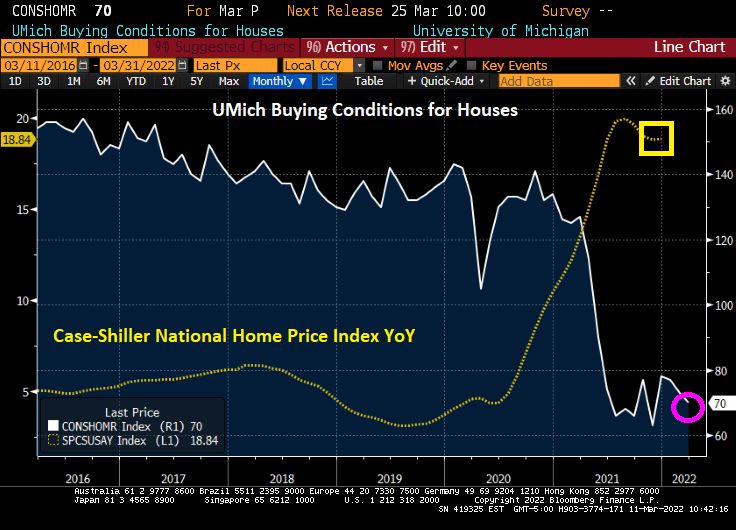
Consumer Confidence Plunges As Inflation Worsens (UMich Conditions For Buying Homes Declines To 70)

As inflation worsens, the University of Michigan survey of consumers fell again as US inflation worsens.

On the housing front, buying conditions for houses fell to 70 as a result of soaring home prices.

MY confidence in Biden and Congress has certainly declined.