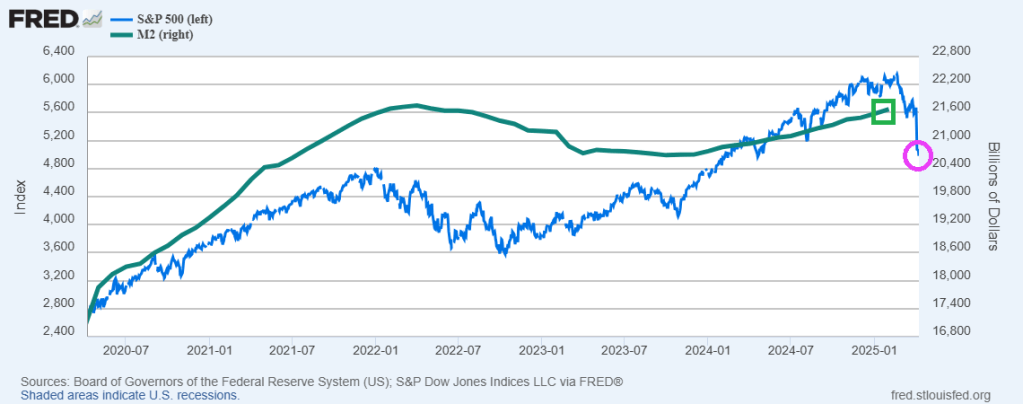
The Federal Reserve has created massive asset bubbles in financial markets. And the “tariff war” between the US and China. Since April 8, 2020, the S&P 500 index is up 81% while The Federal Reserve has printed a staggering amount of money as M2 Money is up 27.4% over the same period.
So, it is not surprising (except to Barstool Sports’ Dave Portnoy) that the stock market has declined with China’s childish petulance over Trump’s tariffs. While Trump levied a 104% tariff on Chinese goods, China counterattacked with a 84% tariff on US goods.
US tariff policies for the last 50 years represent a folly. Particularly since Presidents Obama and Biden (along with Chuck Schumer and Nancy Pelosi) did nothing to correct the enormous disparity in tariffs. Trump is trying to do something to right the ship before it sinks like The Titanic.
Victor Davis Hanson wrote in the Daily Signal, “China has prohibitive tariffs, so does Vietnam, so does South Korea, so does Japan, so does Mexico, and so does Europe. So do a lot of countries. So does India. But if tariffs are so destructive to their economies, why is China booming?
Why is Canada mad at us when it’s running a $63 billion surplus and it has tariffs on some American products at 250%. Doesn’t it seem like the people who started this asymmetrical—if I could use the word—trade war should be the culpable people, not the people who are reluctantly reacting to it?
Were tariffs leveled against countries that had no tariffs against us?
The US hasn’t run a trade surplus since 1975 or 50 years. So, it wasn’t suddenly we woke up and said, “It’s unfair. We want commercial justice.” No. We’ve been watching this happen. For 50 years it’s been going on. And no president, no administration, no Congress in the past has done anything about it.
In the postwar period, we were so affluent, so powerful—Europe, China, Russia were in shambles—that we had to take up the burdens of reviving the economy by taking great trade deficits. Fifty years later, we have been deindustrialized. And the countries who did this to us, by these unfair and asymmetrical tariffs, did not fall apart. They did not self-destruct. They apparently thought it was in their self-interest. And if anybody calibrates the recent gross domestic product growth of India or Taiwan or South Korea or Japan, they seem to have some logic to it.
There’s a final irony. The people who are warning us most vehemently about this tariff quote the Smoot-Hawley Act of 1930. But remember something, that came after the onset of the Depression—after. The stock market crashed in 1929. That law was not passed until 1930. It was not really amplified until ’31. And here’s the other thing that they were, conveniently, not reminded of: We were running a surplus. That was a preemptive punitive tariff, on our part, against other countries. We had a trade surplus. And it was not 10% or 20%. Some of the tariffs were 40% and 50%. And again, it happened after the collapse of the stock market.
In conclusion, don’t you find it very ironic that Wall Street is blaming the Trump tariffs for heading us into a recession, if not depression, when the only great depression we’ve ever had was not caused by tariffs but by Wall Street?”
Average reciprocal tariffs could rise to 35%!
The Mag 7 index has gotten crushed under Trump’s tariffs.
Corporate bond yield has soared with Trump’s tariffs.
The market correction thus far is -17.5%, not even close to the worst correction since 2009 (-35.4% in 2020).
Soothe me? As we move further away from Sleepy Joe’s horrid economic policies, we should see an improvement in GDP from the current Atlanta Fed GDP Now Q1 Forecast of -2.8%.
The alternative model forecast, which adjusts for imports and exports of gold as described here, is -0.5 percent. After recent releases from the US Census Bureau and the US Bureau of Economic Analysis, the nowcast of the contribution of net exports to first-quarter real GDP growth declined from -3.95 percentage points to -4.79 percentage points in the standard model and from -1.92 percentage points to -2.53 percentage points in the alternative model.
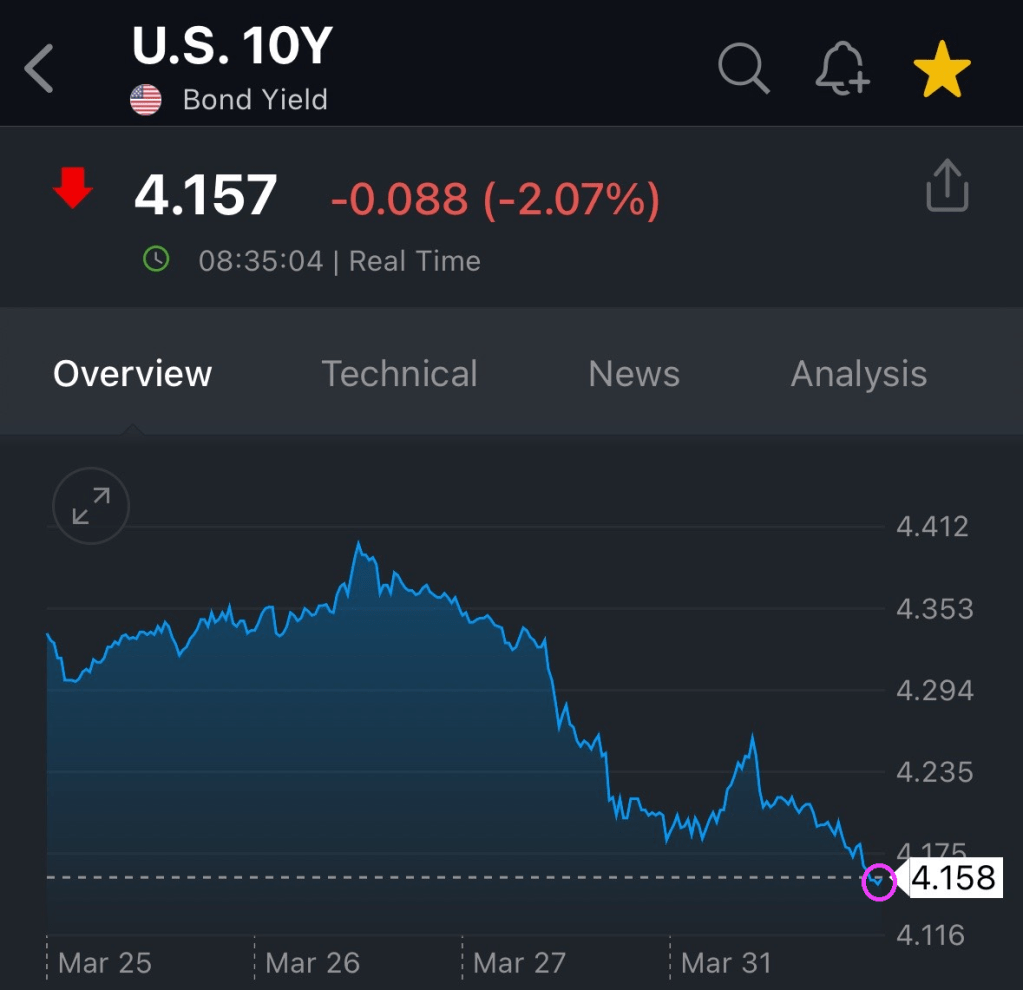
The US Treasury 10Y yield has fallen to 4.157% as recession fears mount.
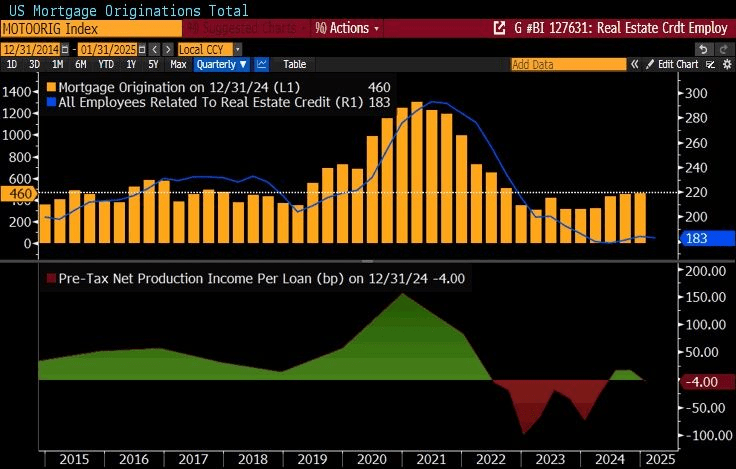
Freddie Mac Serious Delinquency Rate on Multifamily (Apartment) loans soared to highest rate since 2000. Since it is as of January 31, 2025, you can’t blame this on Donald Trump (although I am sure they will try).
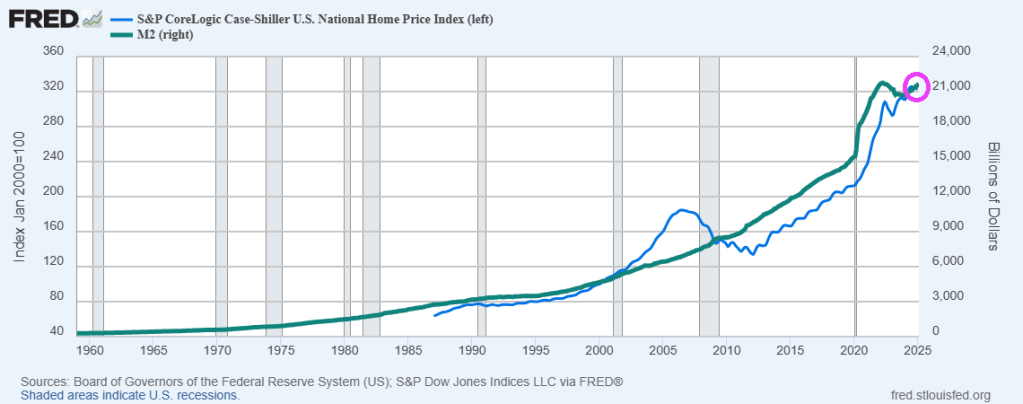
Of course, home prices and rents soared under Biden. Home prices rose 37% under Biden and rents rose 25%. Simply unaffordable.
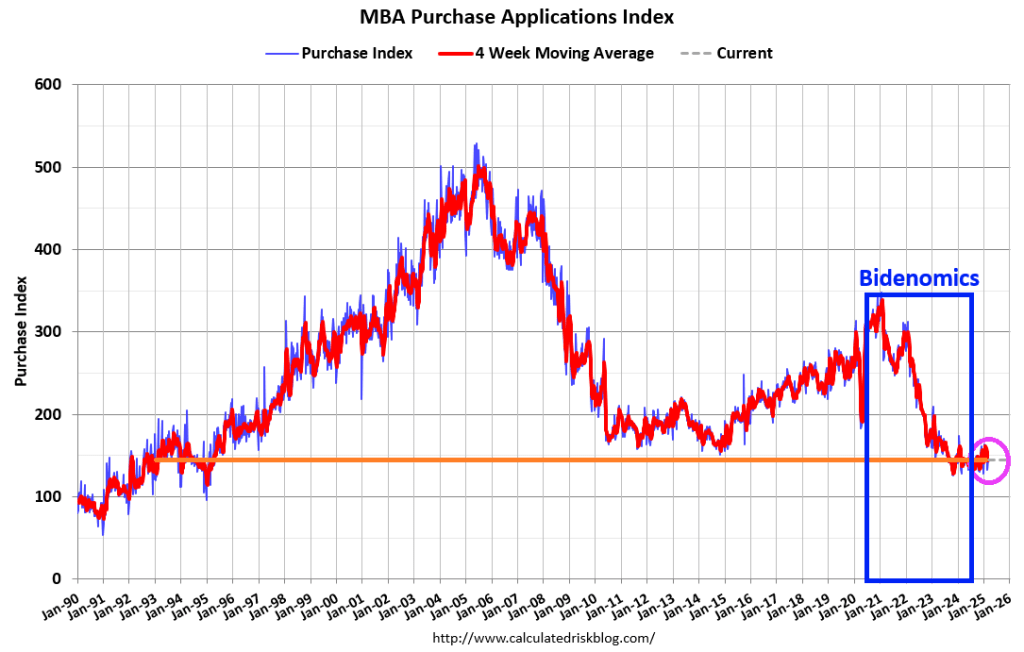
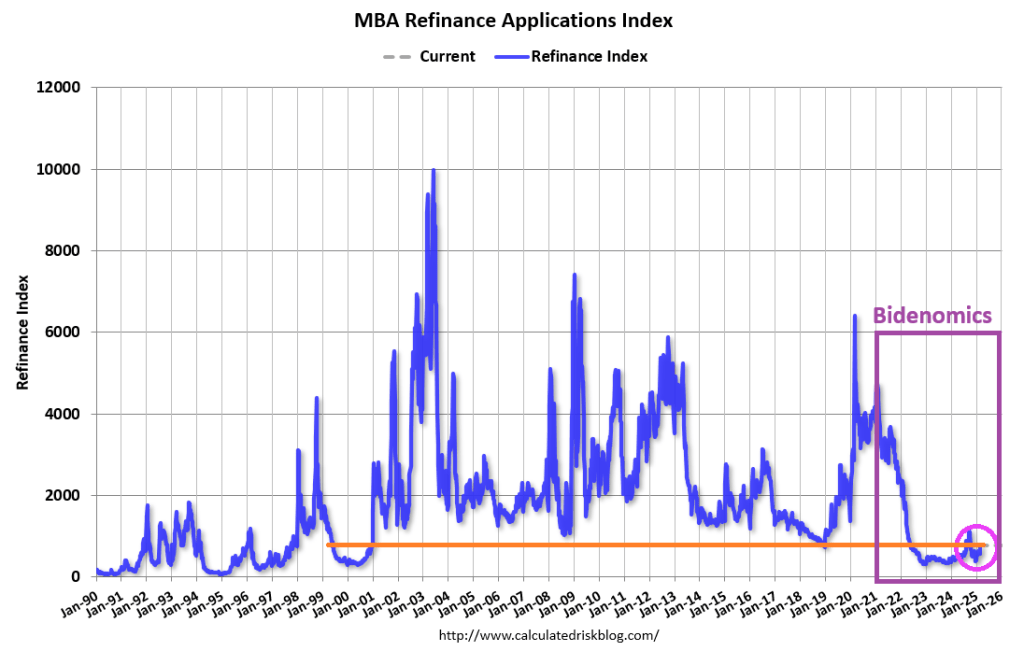
The US economy is gradually recovering from Bidenomics (government/donor dictated spending). Mortgage applications increased 11.2 percent from one week earlier, according to data from the Mortgage Bankers Association’s (MBA) Weekly Mortgage Applications Survey for the week ending March 7, 2025.
The Market Composite Index, a measure of mortgage loan application volume, increased 11.2 percent on a seasonally adjusted basis from one week earlier. On an unadjusted basis, the Index increased 12 percent compared with the previous week. The seasonally adjusted Purchase Index increased 7 percent from one week earlier. The unadjusted Purchase Index increased 8 percent compared with the previous week and was 4 percent higher than the same week one year ago.
The Refinance Index increased 16 percent from the previous week and was 90 percent higher than the same week one year ago.
Mortgage rates declined for the sixth consecutive week, with the 30-year fixed rate dropping to 6.67 percent, the lowest level since October 2024. As a result, applications increased over the week and were up 31 percent from a year ago.
Mortgage applications increased 20.4 percent from one week earlier, according to data from the Mortgage Bankers Association’s (MBA) Weekly Mortgage Applications Survey for the week ending February 28, 2025.
The Market Composite Index, a measure of mortgage loan application volume, increased 20.4 percent on a seasonally adjusted basis from one week earlier. On an unadjusted basis, the Index increased 22 percent compared with the previous week. The seasonally adjusted Purchase Index increased 9 percent from one week earlier. The unadjusted Purchase Index increased 12 percent compared with the previous week and was 2 percent higher than the same week one year ago.
The Refinance Index increased 37 percent from the previous week and was 83 percent higher than the same week one year ago.
Thank God the adults are in charge in DC instead of the children we saw at Trump’s speech last night.
We are now seeing the aftermath of Biden’s failed, top-down, Soviet-style economic policies (or follicies). And it is grim. Bidenomics is now fully exposed like The Fully Month. Except this is The Full Joe!
The GDPNow model estimate for real GDP growth (seasonally adjusted annual rate) in the first quarter of 2025 is -1.5 percent on February 28, down from 2.3 percent on February 19. After recent releases from the US Bureau of Economic Analysis and the US Census Bureau, the nowcast of the contribution of net exports to first-quarter real GDP growth fell from -0.41 percentage points to -3.70 percentage points while the nowcast of first-quarter real personal consumption expenditures growth fell from 2.3 percent to 1.3 percent.
Another sign of Biden’s failed, top-down cronynomics is housing. Pending home sales fell to 70.6.
The most unaffordble countries are Portugal, Canada, the USA, Switzerland, and the Czech Republic. The most affordable? Romania, Finland, Italy, and Bulgaria.
For the USA, Hawaii and California are the least affordable while West Virginia and Iowa are the most affordable.










You must be logged in to post a comment.