Broken Transmission: Bank Deposits Have Exceeded Bank Credit Since Covid (C&I Lending Down -13.5% YoY, Residential Lending Down -2.1% YoY)

US banks have the Phed Pneumonia and the Fauci Flu.

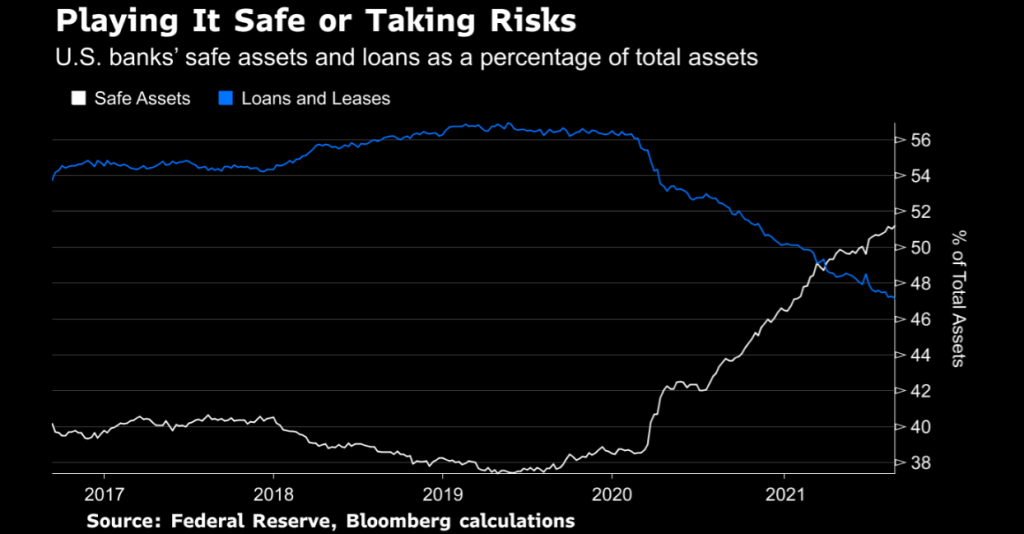
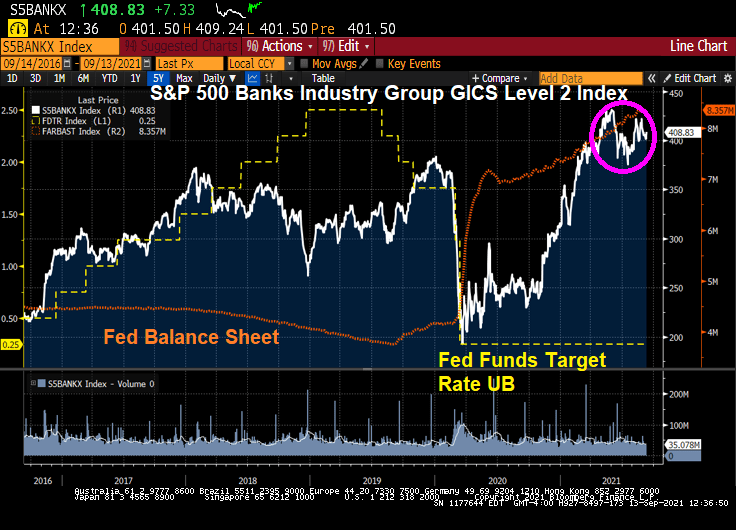
Since the Covid outbreak in early 2020, The Federal Reserve lowered their target rate and super-spiked their balance sheet. Helping to lower bank deposit rates to near zero.

But despite near zero bank deposit rates, we seeing bank deposits are larger than bank credit such as commercial and industrial loans, residential mortgages loans, car loans, etc. Normally, bank credit EXCEEDS bank deposits.

The problem? One of them is negative growth in commercial and industrial lending. It declined 13.5% YoY in August. Of course, The Federal government extended emergency business loans that were counted as C&I loans, hence the spike in C&I loan growth in May 2020. But now we are seeing a real slowdown in C&I lending.

Residential lending is down 2.1% YoY as of September 10 (for August).

Commercial real estate lending? At least it is growing at a 2.9% YoY pace for August.

Credit cards and other revolving plans increase steadily since 2014 and then declined after the Fauci Flu struck. But credit cards and revolving credit has started to rise again.

The Fed’s massive overreaction to Covid caused a storm surge in C&I lending that has subsided. But other bank lending has slowed as well.

Lots of bank assets with nowhere to go.

No wonder M2 Money Velocity (GDP/M2 Money) is at historic lows.

Remember, Federal Reserve Chair Jerome Powell is up for reappointment and President Biden must make a decision on his reappointment.

Rent Inflation: National Average RENT Rose 10.3% YoY (Fed’s Got A Line On YOU!)

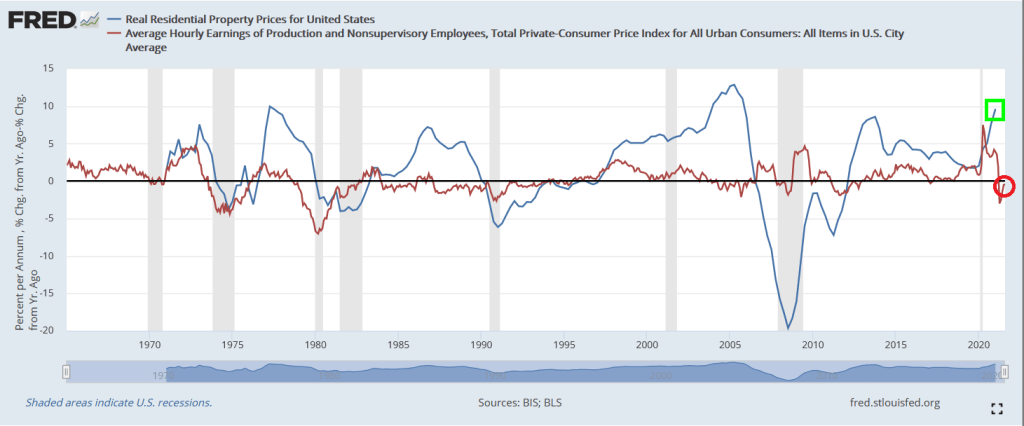
Not only after home prices screaming at near 20% YoY growth, but apartment rents are surging as well.

(Bloomberg) — Apartment rents were up in August from a year earlier in all the top 30 U.S. metro areas, the first time that’s happened since the start of the pandemic, according to a new report by Yardi.

The national average rent in multi-family buildings rose 10.3% from a year earlier to $1,539 — the first double-digit rise in the dataset’s history — after a $25 increase in August, the real-estate firm said. Over the past 10 years, the average pace of growth has been 2%.

Zillow’s rent index of all homes is growing at 9.25% YoY.

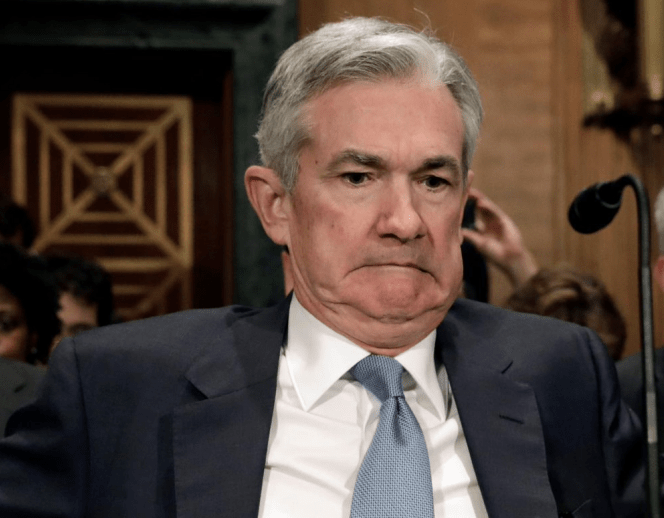
Fed Chair Jerome “Inflation is Transitory” Powell.

The Fed has a line on you! Or at least a bullseye on the back of renters.

Is it safe …. for renters?

Yields Plunge After Spectacular 30Y Auction, Lowest Dealer Takedown On Record (Yellen Fearmongering US Debt Default)

Face it, the 30-year Treasury market is not as interesting as widely-traded as the 10-year Treasury market. But we did see some interesting revelations in today’s 30 year Treasury auction.

If yesterday’s 10Y auction was blockbuster, one of the strongest benchmark sales on record, then today’s $24 billion offering of 30Y paper – the last coupon auction of the week – was nothing short of spectacular.

Printing at a high yield of just 1.910%, the auction not only stopped at the lowest yield since January’s 1.825%, but also stopped through the When Issued by a whopping 1.8bps, the most since April and ended 4 consecutive months of tails in the 30Y tenor.

The bid to cover of 2.486 was not only a big jump from last month’s 2.208 but also the highest since the 2.500% in July 2020, and far above the six-auction average of 2.276.

The bid-to-cover ratio is the dollar amount of bids received in a Treasury security auction versus the amount sold. The bid-to-cover ratio is an indicator of the demand for Treasury securities. A high ratio is an indication of strong demand.

Primary dealers are responsible for absorbing any supply not bought by direct or indirect bidders. Indirect bidders, which include fund managers and foreign central banks. Dealer takedown of the 30Y Treasury is historically low.

The 10-year auction was similar in that the high rate fell. But the bid-to-cover declined.

The US Treasury actives curve remains upward sloping, albeit at lower yields across the curve.

Meanwhile, Treasury Secretary Janet Yellin’ is fear-mongering about a possible US debt default. True, US Treasury cash balance has declined to $231 billion.

Will Congress pass a budget and fill the Treasury coffers will lots of money? Of course. Here is the US CDS curve compared to Venezuela’s CDS curve. The US curve is close to zero while Venezuela’s at near 1,600 across tenors.

Treasury Secretary Janet Yellen.

85% Of High Yield Bonds Have A Negative Real Yield (And Real 30Y Mortgages Rates At -2.5% While Real Fed Funds Target Rate Is -5.12%)

We are living in a negative real yield world.

According to Deutsche Bank, 85% of the US High Yield market has a yield below the current rate of inflation.

Its not only high-yield bonds that have negative REAL yields, but even The Fed Funds Target rate is negative at -5.12%. The real 10-year government bond yield is -4.01% and the REAL Freddie Mac 30-year mortgage survey rate is -2.5%.

Yes, its The Fed’s little green bag at work. Is Fed Chair Powell REALLY Mr. Blonde???

Slowdown! U.S. Annual Home Prices Gain a Record 18% in July (But Forecast To Slow Considerably By July 2022)

Slowdown! Forecast home price growth for July 2022, that is.

(Bloomberg) — U.S. home prices increased 18% in July compared to a year earlier, according to a CoreLogic Inc. report released Tuesday.

The jump is the largest 12-month gain in the index since the series began 45 years ago. On a month-over-month basis, home prices increased by 1.8% in July from June. 

Home price appreciation continues to escalate as millennials entering their prime home buying years, renters looking to escape skyrocketing rents and deep pocketed investors drive demand,” said Frank Martell, president and CEO of CoreLogic, a global property-information firm. 

The rush of home buyers — amid extremely low mortgage rates — has caused a lack of supply, which is unlikely to be resolved over the next five to 10 years “without more aggressive incentives for builders to add new units,” he said in a statement

But it is the forecast for July 2022 that is interesting. A slowdown in home price growth across the board.

Lets see what happens to wage growth are three out of four Americans lose their Covid benefits as of today.

Ironman! Commodities Point To Slowing Economy And Inflation (Atlanta Fed GDPNow Forecast For Q3 Drops To 3.7%)

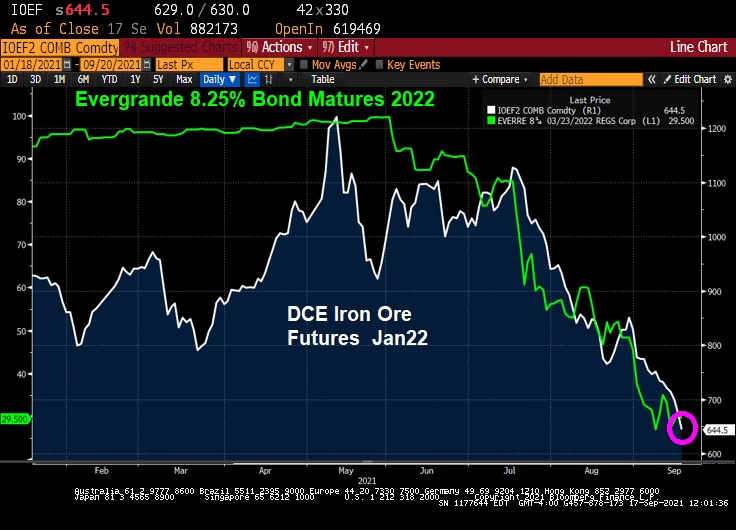
What if inflation is actually transitory like The Federal Reserve has been saying? Or is The Fed really telling us about an impending economic slowdown after the Fed’s and Federal government stimulypto wears off?

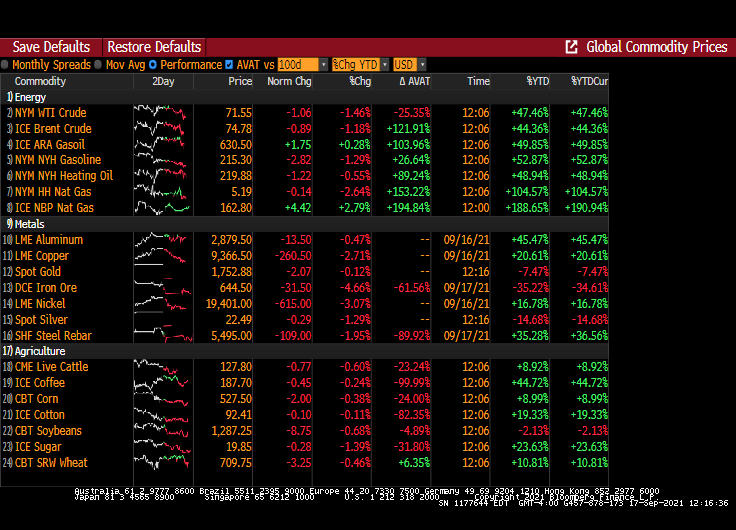
Iron ore prices have slowed noticeably after peaking earlier this year. Lumber futures (random length) have crashed to pre-Covid levels.

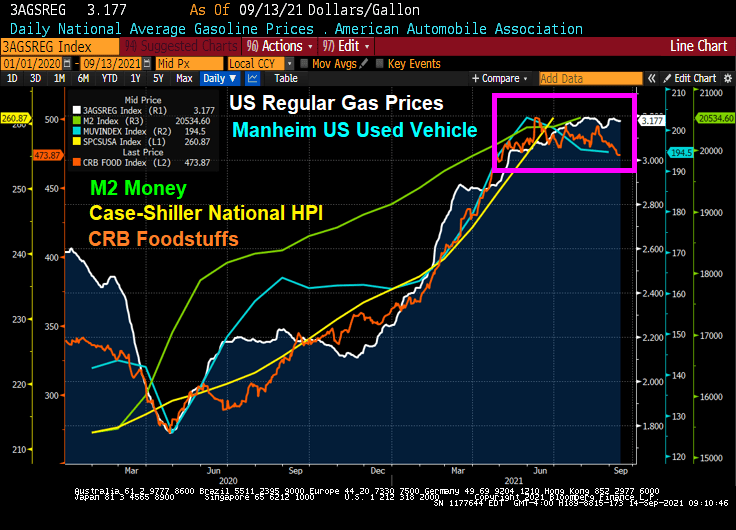
On the other hand, food stuffs and raw industrials remain elevated, but the growth in price has stalled (see pink box).

The Atlanta Fed’s GDPNow model of GDP growth shows a slowing of Q3 GDP to 3.7%. A slowdown from above 7% for the blue chip consensus.

President Biden, aka The Kabul Klutz, is now recommending tax increases as a result of the terrible jobs report from Friday. Rather than focus on The Fed’s monetary stimulus not working for the labor market.

The problem with fiscal stimulus is that the debt lasts forever but the GDP effects are short-lived. And The Fed is a crazy train.

Taper Vapor! Only 235,000 Jobs Added Versus Expectations Of 733,000 (Hopes Of Fed Taper Go Up In Smoke) Silver, Bitcoin, Ethereum Rise

Well, after the dismal ADP print we knew that the August jobs numbers would be worse than imaginable. And they were!

A big miss on the topline job creation number — the establishment survey suggested only 235,000 jobs were created in August, versus expectations for 733,000 — has undercut what little chance there was left of a Fed announcement on tapering later this month. It should make for a very interesting debate among policy makers about forward momentum in the labor market.

The shocker was in the leisure and hospitality sector, which created zero new jobs on net in August after figures of around 400,000 in each of the previous two months. There was a dip in hiring in other service sectors too, but nowhere near as significant. That could perhaps be due to some early impact from the spread of the delta variant in recent weeks.

On the household survey, the numbers looked better. According to those figures, the unemployment rate fell to 5.2%, in line with estimates, thanks to a 509,000 increase in reported employment. That also propelled the prime working-age employment to population ratio to 78%, from 77.8% in July.

Disparities narrowed in August as well, according to prime working-age EPOP ratios by race and ethnicity. Prime working-age Black EPOP, in particular, jumped to 73% from 72.2% the month before — outpacing the rest.

Equity futures pared a modest gain after the release, with contracts on the S&P 500 Index flat as of 9:09 a.m. in New York. With wages climbing, Treasury yields rose, with those on 10-year notes rising 4 basis points to 1.33%. The Bloomberg Dollar Index was down 0.3%.

The unemployment rate dropped which a misleading headline. That simply means that more people dropped out of the labor force than were unemployed. Not a good way to lower the unemployment rate.

Alternative investments silver, Bitcoin and Ethereum rose on the lousy jobs report as the US Dollar dropped.

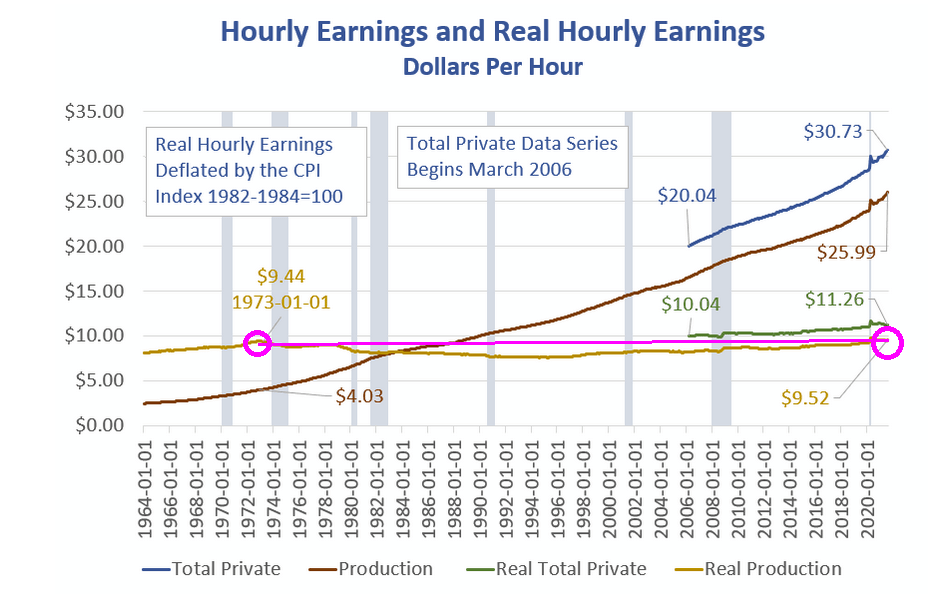
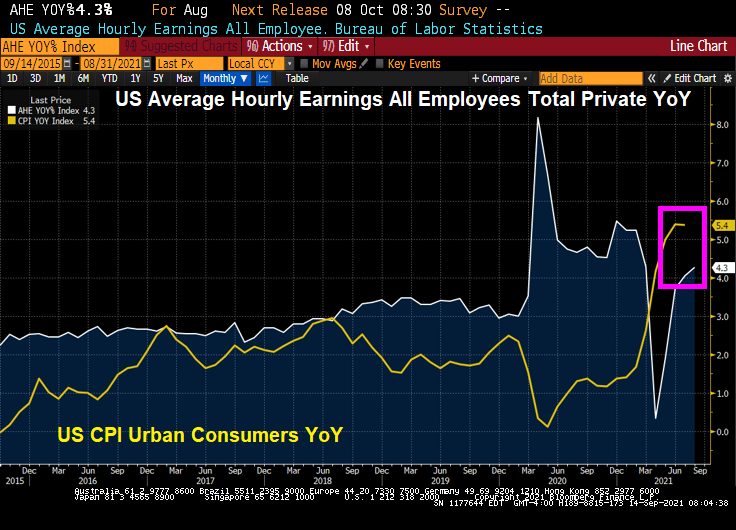
The good news? US Average Hourly Earnings All Employees Total Private YoY rose to 4.28%! The bad news? US home prices are rising at a 18.61% pace.

The bad news? Black unemployment rose to 8.8% in August while white unemployment fell to 4.5%. This represents a widening of the employment gap that is higher in August than pre-Covid.

There are still over 100 million NOT in the labor force, higher than pre-Covid.

So, The Fed’s plans to begin tapering have gone up in smoke.

Bill Gross Says Ultra-low Yields Mean Bonds Are ‘Garbage’ (TIPS Curve Negative With High Treasury Duration)

Strong words from fixed-income guru Bill Gross.

In a meandering and sometimes off-kilter investment outlook posted on his website, the onetime bond king said longer-term Treasury yields are so low that the funds that buy them belong in the “investment garbage can.” 

Ten-year yields traded at 1.29% as of 6:07 a.m. in New York. They are likely to climb to 2% over the next 12 months, handing investors a loss of roughly 3%, he wrote. Stocks could also fall into the category of “trash” should earnings growth fall short of lofty expectations. 

“Cash has been trash for a long time, but there are now new contenders,” said Gross, who co-founded Pacific Investment Management Co. in the 1970s and retired in 2019. “Intermediate to long-term bond funds are in that trash receptacle for sure, but will stocks follow? Earnings growth had better be double-digit-plus or else they could join the garbage truck.”

The Bloomberg U.S. Treasury index has fallen 1.4% this year, and an extension of that decline would make for its first annual loss in eight years. Investment-grade debt in general has suffered similarly, with a Bloomberg gauge on track for the worst yearly performance since 2015.

Gross, 77, has been bearish on bonds for a while. In March, he told Bloomberg TV that he began betting against Treasuries at about the 1.25%. Rates initially sold off in the aftermath, but have since rallied as a resurgent coronavirus raises concerns over economic growth. 
 
In Monday’s note, Gross suggested supply and demand dynamics are stacking up against Treasuries, saying that yields at current levels have “nowhere to go but up.”
 
The Federal Reserve, which has been absorbing about 60% of net Treasury issuances through its quantitative-easing program, may soon start scaling back asset purchases at a time when demand from foreign central banks and investors has already been waning, he wrote. Meanwhile, fiscal deficits of at least $1.5 trillion going forward suggest Treasury supply will remain high. 

“How willing, therefore, will private markets be to absorb this future 60% in mid-2022 and beyond?” Gross wrote. “Perhaps if inflation comes back to the 2%+ target by then, a ‘tantrum’ can be avoided, but how many more fiscal spending programs can we afford without paying for it with higher interest rates?”

Duration of 10-year Treasuries is 9.473 given the low coupon rate indicating relatively high risk given a low coupon rate.

Odd world with negative TIPS yields.

Bitcoin Breaches $50,000 As Ethereum Goes Into Overdrive As US Dollar Falls (Gold Has Been Rising Since August 9th)

I still don’t understand the cryptocurrency craze as an investment since it is a FIAT currency … like the US Dollar. Much like the tulip bulb craze in Holland in 1637. But it is still fun to watch these alternative investments including gold and silver.

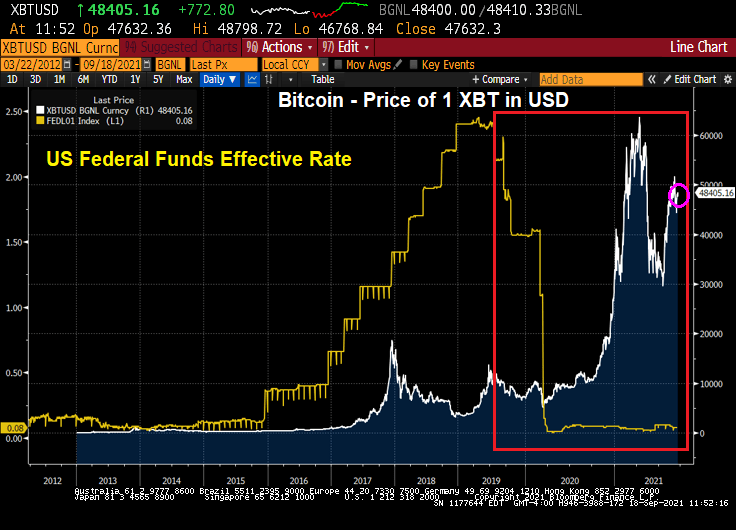
This morning, Bitcoin breached $50,000 before falling below $50,000 again. Ethereum really surged before today and gold, while flat today, has been generally rising since August 9th. The US Dollar index has been generally falling since August 20.

Here is a photo of Bitcoin breaching $50,000.

Bond Market Set to Test Powell Push to Delink Hikes From Taper (As FANG+ Stocks SOAR With Fed Asset Purchases And ADP Added Only 374k Jobs In August)

Since the original model of The Federal Reserve was to purchase Treasuries and Agency MBS in an effort to push down interest rates, it will be quite difficult to delink the two: taper the balance sheet while not raising short-term rates.

(Bloomberg) — Bond investors may not wait long to start pushing back against Federal Reserve Chair Jerome Powell’s efforts to delink the start of asset-purchase tapering from the countdown to eventual policy-rate hikes.

Since Powell last week said the central bank could begin reducing its monthly bond buying this year, traders have stuck with early 2023 as the likely timing for the Fed’s liftoff from zero interest rates, and Treasury yields have barely budged.

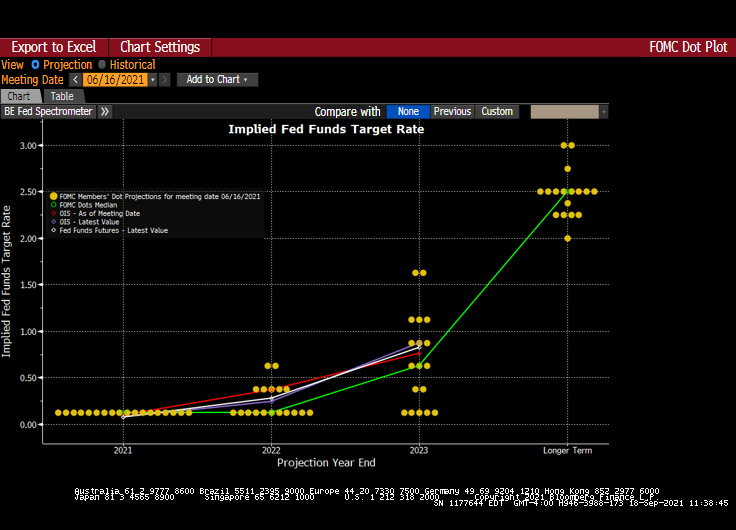
But that calm faces a test starting Friday. The potential for volatility comes from the fact that when Fed officials gather this month, they will release fresh projections for the fed funds rate for the next few years. And with the labor market pivotal for Fed policy now, Friday’s August jobs report is seen as laying the foundation for these forecasts — collectively known as the dot plot — especially as some Fed officials have already been pushing for an early taper.

The upshot is that a robust reading Friday could have investors pulling forward tightening bets regardless of Powell’s efforts last week in his virtual speech at the Fed’s Jackson Hole symposium. The risk is traders will prepare for a repeat of June, when a hawkish signal via the dot-plot took markets by surprise and triggered an abrupt unwinding of wagers on a steeper yield curve. 

If the employment report is “even deemed acceptable, regional presidents will be back on the tape in a flash,” sounding hawkish again, said Jim Vogel, an analyst at FHN Financial. “And you may have more officials penciling in a 2022 hike. And that would have to flatten the yield curve.”

Expectations for a hawkish shift would lift 5-year Treasury yields in particular, shrinking the gap with 30-year rates, Vogel said. That spread was around 114 basis points Wednesday, down from about 140 just before the Fed met in mid-June. 

Dots Math

Officials’ June quarterly forecasts not only showed a median funds rate projection of two hikes in 2023 — after the March dot plot indicated no tightening until at least 2024 — but that seven participants saw at least one increase next year. This time around, it will take just three officials to raise their dots for 2022 for a full hike to be the new median for next year, assuming everyone else keeps their projections where they were.

Traders responded to the Fed’s June rate projections by driving 5-year yields up the most in almost four months. That was even as Powell said in his press conference that the dot plot should be taken with a “big grain of salt” and discussion about raising rates would be “highly premature.”

Powell last week said “the timing and pace of the coming reduction in asset purchases will not be intended to carry a direct signal regarding the timing of interest rate liftoff, for which we have articulated a different and substantially more stringent test.”

But the leadup to the Fed decision on Sept. 22 may culminate in a dot-plot unveiling that yet again presents a communication challenge for policy makers, as has been seen several times since the Fed introduced the projections in 2012.

“There’s information in the dots, and generally it’s good information,” said Shahid Ladha, head of Group-of-10 rates strategy for the Americas at BNP Paribas SA. It makes sense for the Fed, regarding tapering and rate hikes, “to try to separate them, but I don’t think they’ll be ultimately successful in separating them.”

Trouble Ahead

Even some Fed officials are wary of being able to disentangle the tapering from rate hikes, minutes from the July Fed meeting showed.

Kevin Flanagan, head of fixed-income strategy at WisdomTree Investments Inc., which runs exchange-traded funds with assets of $75 billion, sees trouble for the Fed. 

His view is that the labor market will keep gaining ground in its rebound from the pandemic, and that the median September dot may show a hike in 2022. That bodes for higher yields, a flatter curve and makes floating-rate notes appealing, he said.

The median of economists’ projection is for a gain of 725,000 jobs in August, a slowdown from June and July but well above the average for 2021. Of course, with millions still out of work relative to pre-pandemic levels, the Fed may prove to take longer to lift rates than traders expect, especially given the central bank’s “broad and inclusive” maximum-employment goal. But the market may be about to challenge that approach.

Note: Yesterday’s ADP jobs gain was forecast to be 625k jobs added in August, but only 374k jobs were actually added.

Fed Faces ‘Ugly Fight’ Over Jobs Goal in Next Big Policy Debate

“We are going to be all of a sudden talking about rate hikes potentially next year, and that is where the focus of the bond market is going to go,” Flanagan said. “The dot plot will be the Fed’s initial message for its forward guidance on rates. And then it will begin to come from Fedspeak — which is when the rubber will really meet the road.” 

And with the stock market, particularly technology stocks, rising with Fed asset purchases, I wonder if The Fed forecasts that assets prices will keep going if they withdraw the punch bowl?

Let’s see if Powell and The Gang can forecast the stock market if they taper the balance sheet and raise rates.