Mortgage Applications Increased 3 Percent From Previous Week (Purchase Apps Rose 1 Percent WoW)

They can’t accuse Fed Chair Jerome Powell of trying too hard to help Donald Trump. Mortgage rates moved lower last week, following declining Treasury yields as economic data releases signaled a weakening U.S. economy. As a result, the 30-year fixed rate decreased for the third straight week to 6.77 percent. As a result …

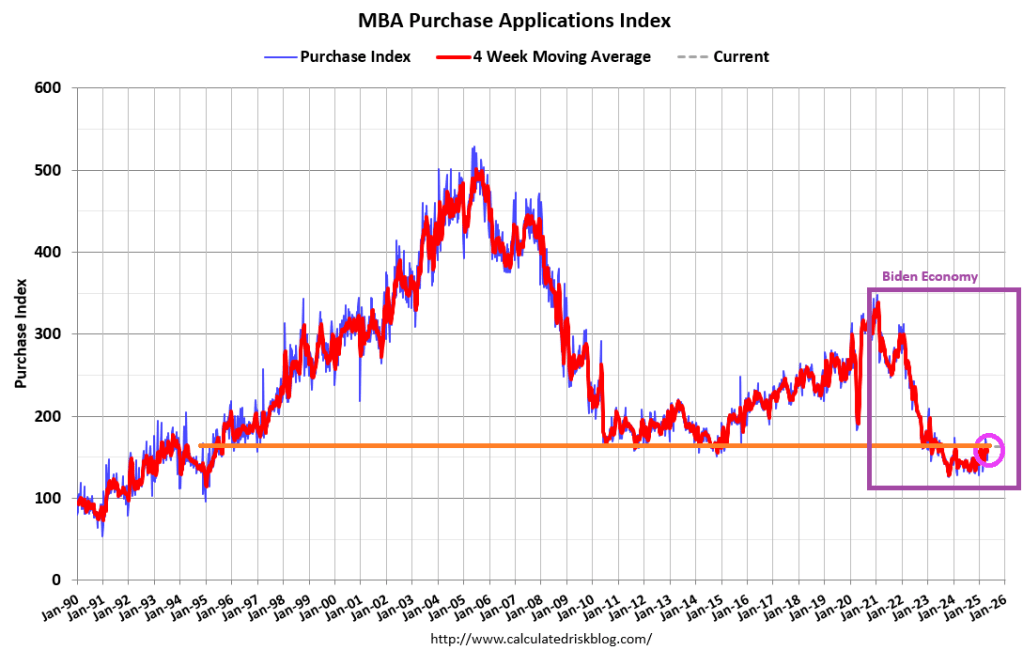
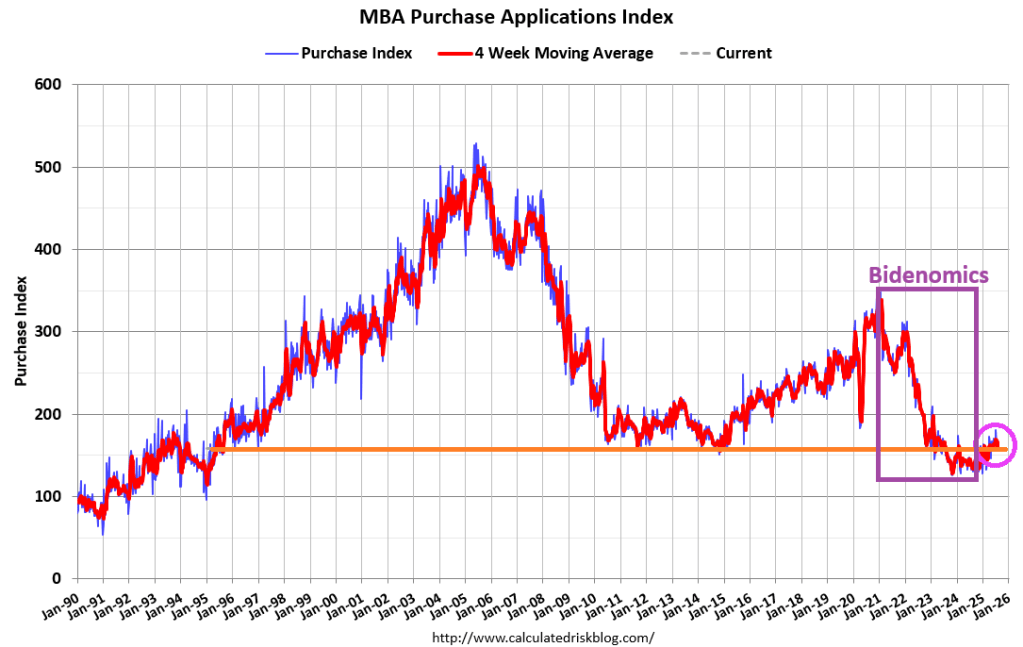
The Market Composite Index, a measure of mortgage loan application volume, increased 3.1 percent on a seasonally adjusted basis from one week earlier. On an unadjusted basis, the Index increased 3 percent compared with the previous week. The seasonally adjusted Purchase Index increased 2 percent from one week earlier. The unadjusted Purchase Index increased 1 percent compared with the previous week and was 18 percent higher than the same week one year ago.
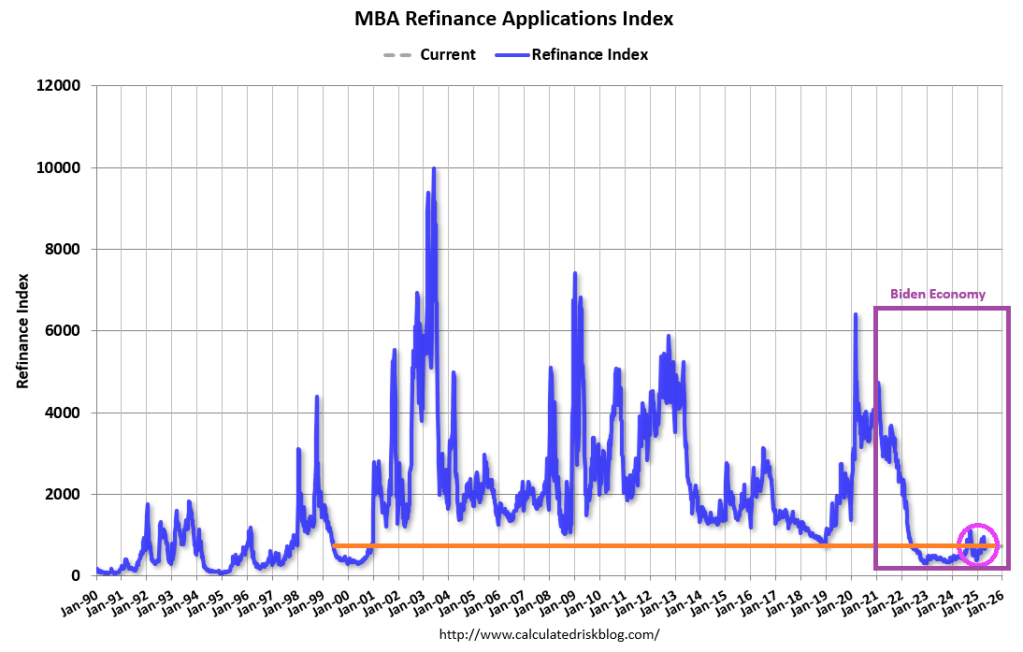
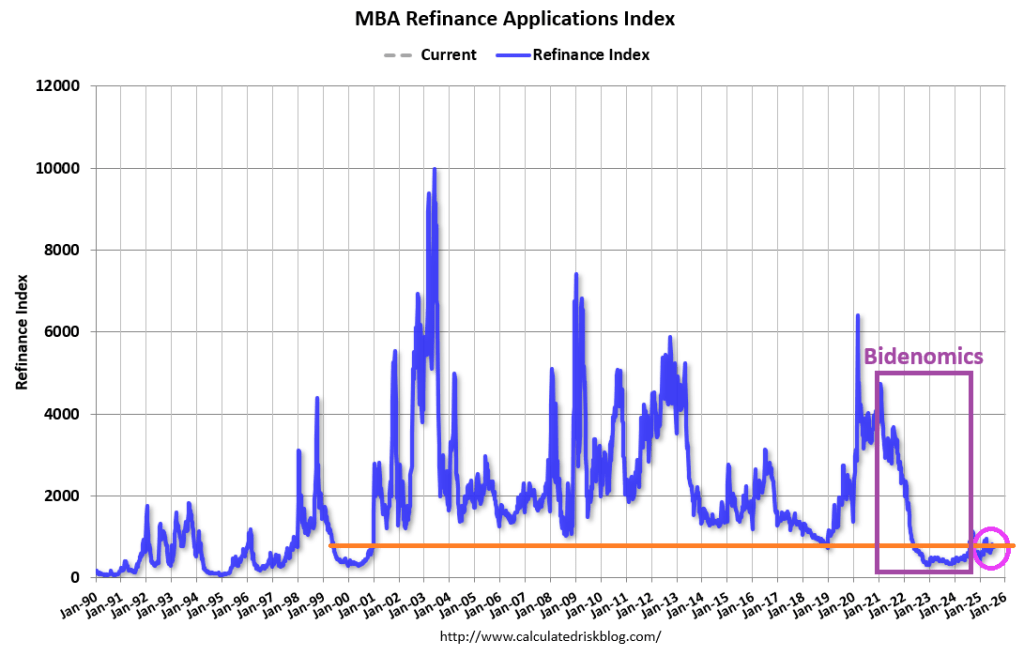
The Refinance Index increased 5 percent from the previous week and was 18 percent higher than the same week one year ago.
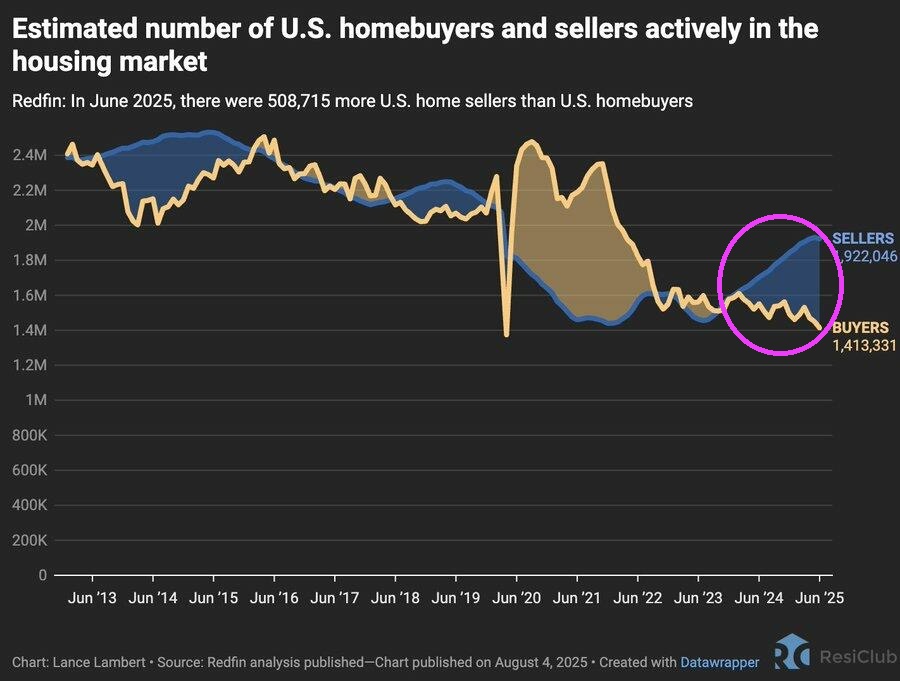
And the number of sellers in the housing market is greatly outweighing the number of buyers.
Mortgage and housing economists should breathe a sigh of relief that Bidenomics is over, but I doubt it they will.

Gov’t Gone Wild! Purchasing Power Of US Dollar Declined 97% Since 1915, US Debt Up 317% Since Jan 2009 (M2 Money Up 210% Since Jan 2009)

It’s Gov’t Gone Wild! That includes The House, Senate, President and Federal Reserve.

The purchasing power of the US Dollar was $1004.4 on 1915-03-01. By 2025-05-01, the purchasing power fell to $31.1, a loss of 97%. Public debt since the last year of GW Bush, Obama/Biden (with a brief hiatus with Trump) rose 317% since January 2009.

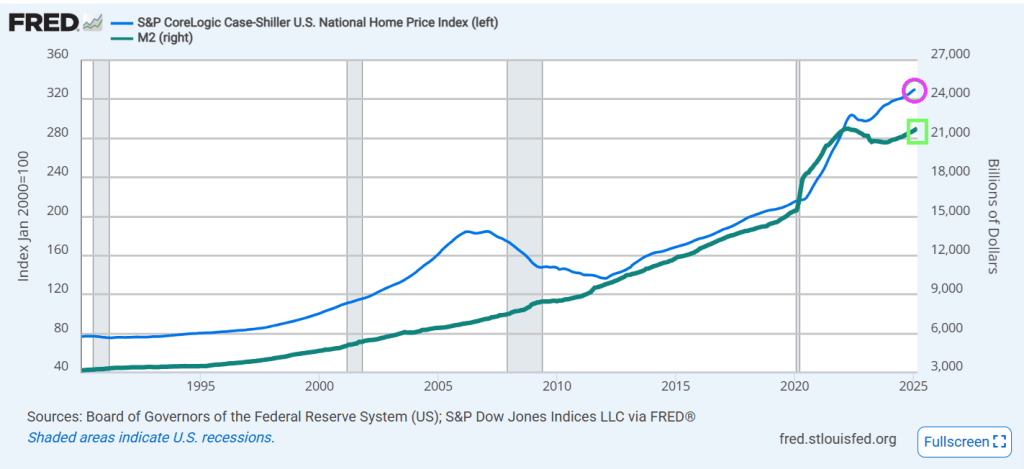
M2 Money printing grew 210% since January 2009.

The music??

Mortgage Applications Increased 11% From Preceding Week, Fed Will Remain On Hold (Purchase Apps Up 12%)

The Fed can help, but won’t. We are still struggling to recover from Biden’s cockeyed management of the economy,

Mortgage applications increased 11.0 percent from one week earlier, according to data from the Mortgage Bankers Association’s (MBA) Weekly Mortgage Applications Survey for the week ending May 2, 2025.

The Market Composite Index, a measure of mortgage loan application volume, increased 11.0 percent on a seasonally adjusted basis from one week earlier. On an unadjusted basis, the Index increased 12 percent compared with the previous week.  The seasonally adjusted Purchase Index increased 11 percent from one week earlier. The unadjusted Purchase Index increased 12 percent compared with the previous week and was 13 percent higher than the same week one year ago.

The Refinance Index increased 11 percent from the previous week and was 51 percent higher than the same week one year ago.

The economic news last week included a negative reading for first-quarter GDP growth and further signs of contraction in the manufacturing sector, mixed with a solid employment report for April. The net impact on mortgage rates was mostly downward but just back to levels from early April. The 30-year fixed rate declined to 6.84 percent.

But there will be no rate cuts today from The Fed.

US Home Prices Hit A New Record High In February (National House Price Index Up 3.9% Year-over-Year In February)

US home prices hit a new record high in February, according to the latest data from S&P CoreLogic Case-Shiller, rising 0.4% MoM (as expected). However, the pace of price rises did slow modestly (after accelerating for the past three months) to +4.50% YoY. And home prices track Fed money printing.

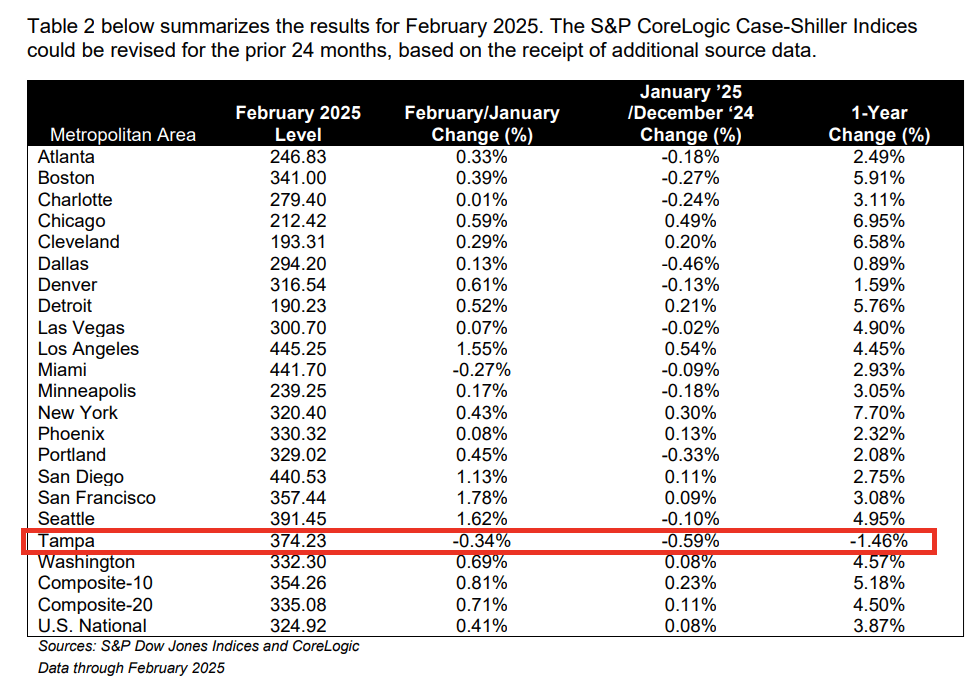
The S&P CoreLogic Case-Shiller U.S. National Home Price NSA Index, covering all nine U.S. census divisions, reported a 3.9% annual return for February, down from a 4.1% annual gain in the previous month. The 10-City Composite saw an annual increase of 5.2%, down from a 5.4% annual increase in the previous month. The 20-City Composite posted a year-over-year increase of 4.5%, down from a 4.7% increase in the previous month. New York again reported the highest annual gain among the 20 cities with a 7.7% increase in February, followed by Chicago and Cleveland with annual increases of 7.0% and 6.6%, respectively. Tampa posted the lowest return, falling 1.5%.

The pre-seasonally adjusted U.S. National, 10-City Composite, and 20-City Composite Indices presented slight upward trends in February, posting 0.4%, 0.8%, and 0.7% respectively.

After seasonal adjustment, the 10-City and 20-City Composite Indices posted month-over-month increases of 0.5% and 0.4%. The U.S. National Composite Index posted a month-over-month increase of 0.3%.

“Even with mortgage rates remaining in the mid-6% range and affordability challenges lingering, home prices have shown notable resilience,” said Nicholas Godec, CFA, CAIA, CIPM, Head of Fixed Income Tradables & Commodities at S&P Dow Jones Indices. “Buyer demand has certainly cooled compared to the frenzied pace of prior years, but limited housing supply continues to underpin prices in most markets. Rather than broad declines, we are seeing a slower, more sustainable pace of price growth.”

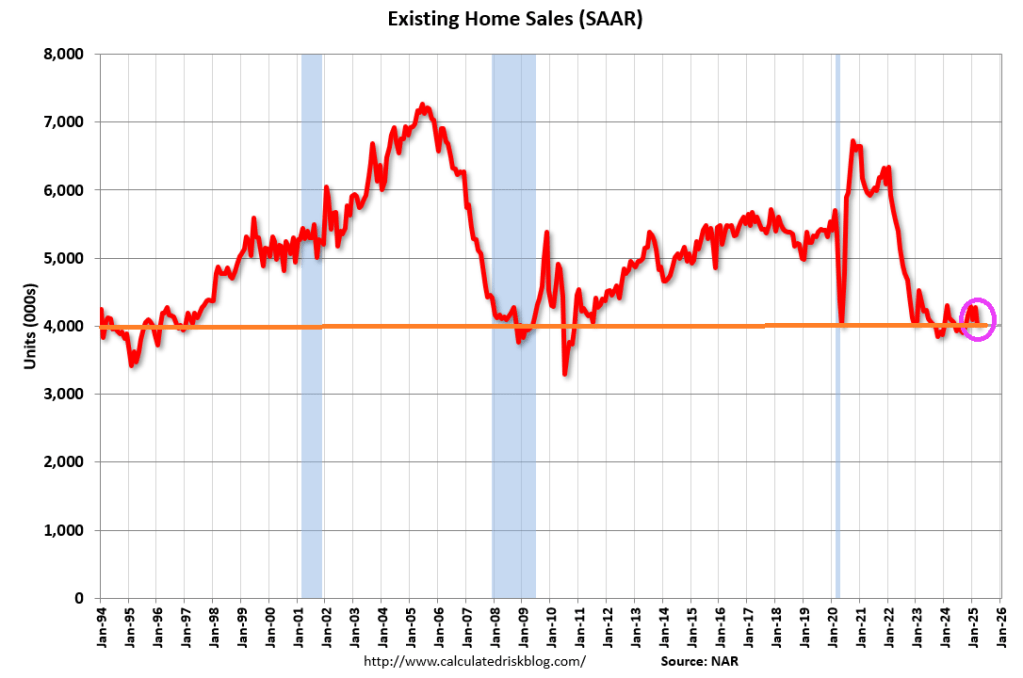
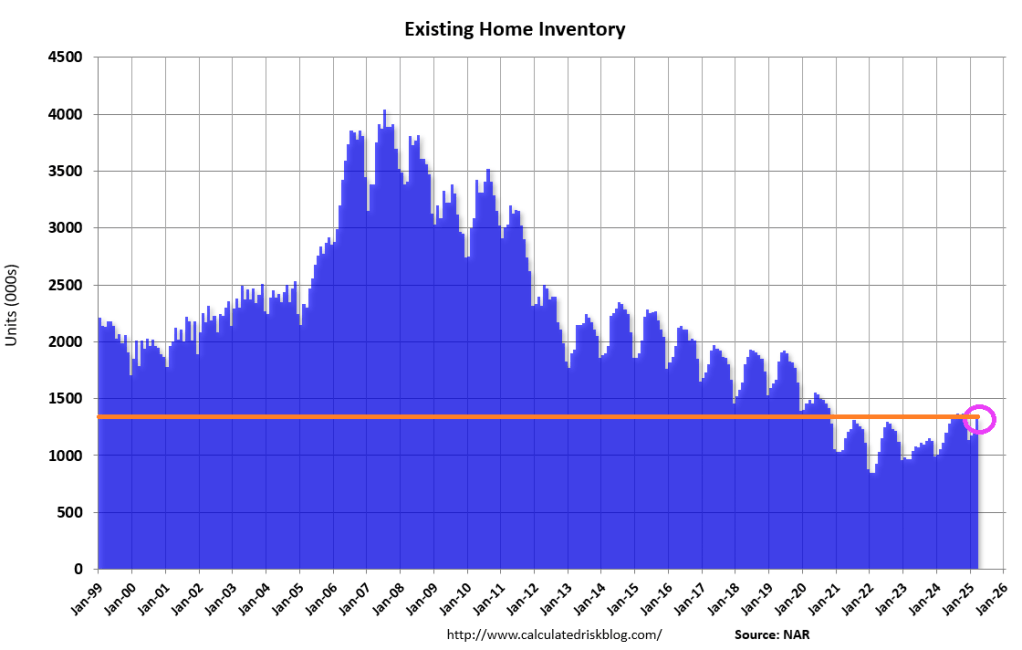
Existing-Home Sales Decreased To 4.02 Million SAAR In March, Down 2.4% YoY (Inventory Remains Depressed)

We are still suffering from Biden’s horrible economic policies. 10% Joe had a heart of fool’s gold.

Existing-home sales descended in March, according to the National Association of REALTORS®. Sales slid in all four major U.S. regions. Year-over-year, sales dropped in the Midwest and South, increased in the West and were unchanged in the Northeast.

Total existing-home sales – completed transactions that include single-family homes, townhomes, condominiums and co-ops – fell 5.9% from February to a seasonally adjusted annual rate of 4.02 million in March. Year-over-year, sales drew back 2.4% (down from 4.12 million in March 2024).


Total housing inventory registered at the end of March was 1.33 million units, up 8.1% from February and 19.8% from one year ago (1.11 million). Unsold inventory sits at a 4.0-month supply at the current sales pace, up from 3.5 months in February and 3.2 months in March 2024.

Till we can undo Biden’s policies.

Powell’d! Mortgage Applications Decline By 13% Since Previous Week (Refi Apps Down 20% From Previous Week)

Fed Chair Jerome Powell is apparently waiting for the tariff “war” to settle down before he pushes for interest rate cuts. Meanwhile, rising mortgage rates are hurting consumers and the mortgage industry.

Mortgage applications decreased 12.7 percent from one week earlier, according to data from the Mortgage Bankers Association’s (MBA) Weekly Mortgage Applications Survey for the week ending April 18, 2025.

The Market Composite Index, a measure of mortgage loan application volume, decreased 12.7 percent on a seasonally adjusted basis from one week earlier. On an unadjusted basis, the Index decreased 11 percent compared with the previous week. The seasonally adjusted Purchase Index decreased 7 percent from one week earlier. The unadjusted Purchase Index decreased 6 percent compared with the previous week and was 6 percent higher than the same week one year ago.

The Refinance Index decreased 20 percent from the previous week and was 43 percent higher than the same week one year ago.

Overall mortgage application activity declined last week, as rates increased to their highest level in two months. The 30-year fixed rate rose for the second straight week to 6.9 percent, an almost 30-basis-point increase over two weeks.

The 10Y-2Y Treasury yield curve is steepening.

Fed Chair Jerome Powell. Nyuk, Nyuk, Nyuk!

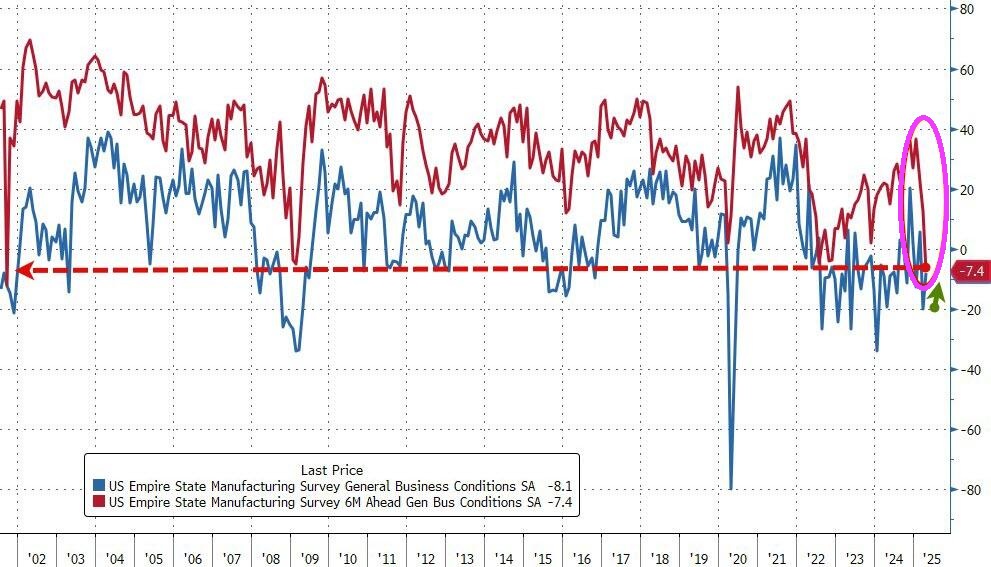
The Empire Strikes Out! Business Conditions Expectations Plunged To Lowest Since 9/11

The Emperor is actually China’s Xi Jinping! Causing the Empire Fed Manufacturing index to decline.

Despite the slump in ‘soft’ survey data, analysts expected Empire Fed Manufacturing to bounce back from March’s tumble to one year lows and they were right with the headline index rising from -20.0 to -8.1 (considerably better than the -13.5), but still negative. However, while current conditions jumped, expectations plunged to the lowest since 9/11/.

Keep On Printin’! US Home Prices Accelerated To New Record High In December As Fed Kept On Printing Money (But 14 Of Top 20 Metro Areas Fell In Price From November To December 2024)

To keep house prices soaring to new highs, The Fed need to keep on printing!

For the second straight month, US home prices accelerated YoY in December (according to the latest data from S&P Global’s Case-Shiller Index). The 20-City Composite saw prices jump 0.5% MoM (faster than expected and the biggest jump since June) and accelerating MoM for the 3rd straight month.

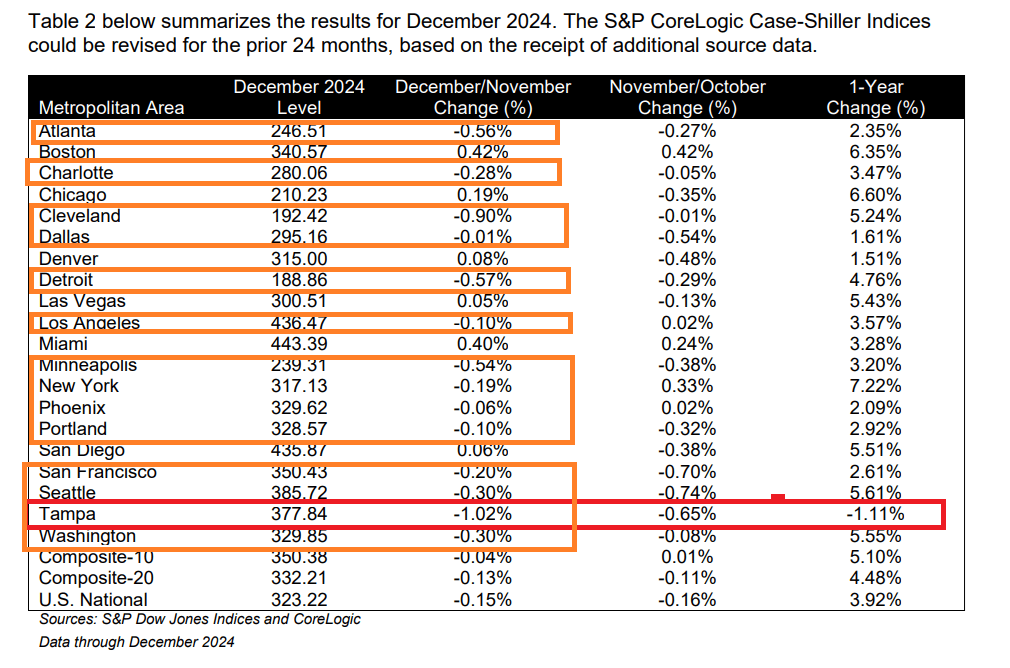
Only Tampa FLA of the top 20 metro areas had a negative YoY price change, but 14 of the top 20 metro areas experienced price declines from November to December: Atlanta, Charlotte, Cleveland, Dallas, Detroit, Los Angeles, Minneapolis, New York, Phoenix, Portland, San Francisco, Seattle, Tampa and Washington DC.

Keep on printin’!

Doesn’t the lead singer for The Gentrys sorty of look like Matt Damon??

Surprise … NOT! Biden’s Failed Policies Resulted In Citi’s Economic Surprise Index Falling To -7.80 In February

In appreciation of German conservatives winning in their recent election,

Citi’s economic surprise index fell to -7.80 in February. This is the remnant of Biden/Democrats horrible economic policies and fear of Trump’s tariff policies.

Gold, Bitcoin and the S&P 500 are doing quite well on the prospects for growth in the US under Trump.

The US economy like an aircraft carrier, doesn’t turn on a dime. Think of the Japanese carriers at Midway in WWII. Thanks Admiral Biden! And Rear Admiral Harris!