Fed Is ‘Just at the Beginning’ of Raising US Rates, Mester Says, MBA Mortgage Purchase Applications Drop -21% WoW As Rates Rise (Mester Channels The Carpenters)

Cleveland Fed’s Mester is channeling The Carpenter’s song “We’ve only just begun … to raise rates.”

Financial markets are anticipating what Mester is saying: rapidly rising interest rates. But as you can see from the following chart, gasoline prices (orange line) are driving rising US prices. So it is doubtful that monetary tightening will slow price increases. But Mester and company can only control monetary stimulus.
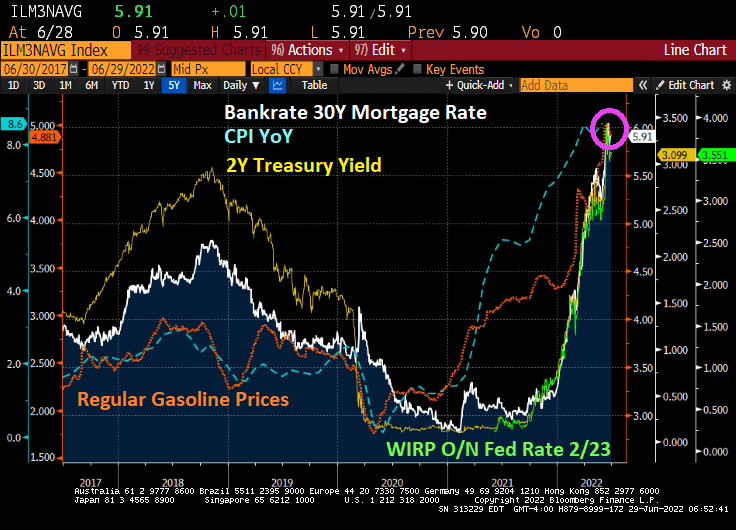
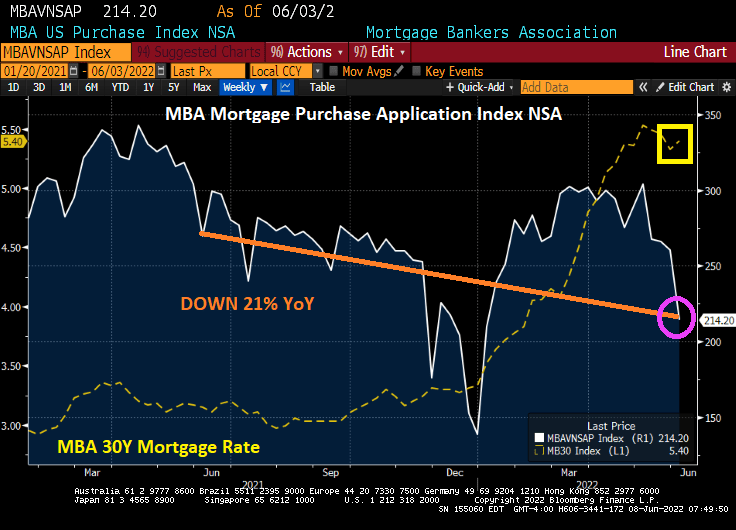
Mortgage rates have soared as The Fed attempts to crush inflation. And mortgage purchase applications fell -21% WoW in the most recent Mortgage Bankers Association survey.
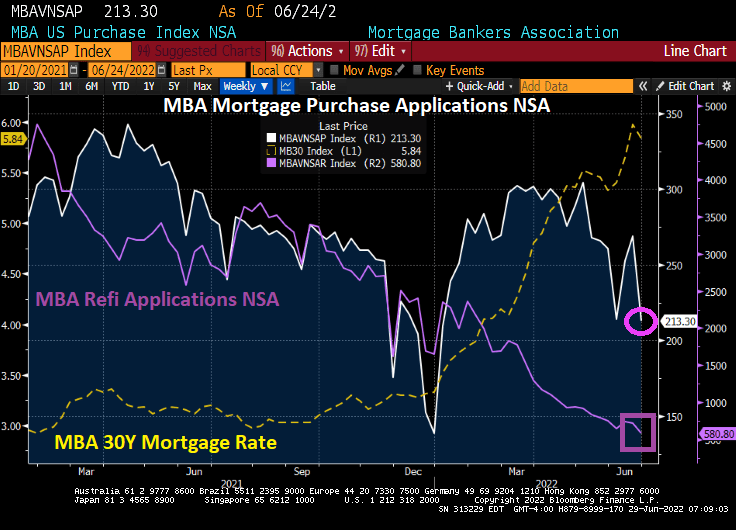
The Refinance Index increased 2 percent from the previous week and was 80 percent lower than the same week one year ago. The seasonally adjusted Purchase Index increased 0.1 percent from one week earlier. The unadjusted Purchase Index decreased 21 percent compared with the previous week and was 24 percent lower than the same week one year ago.

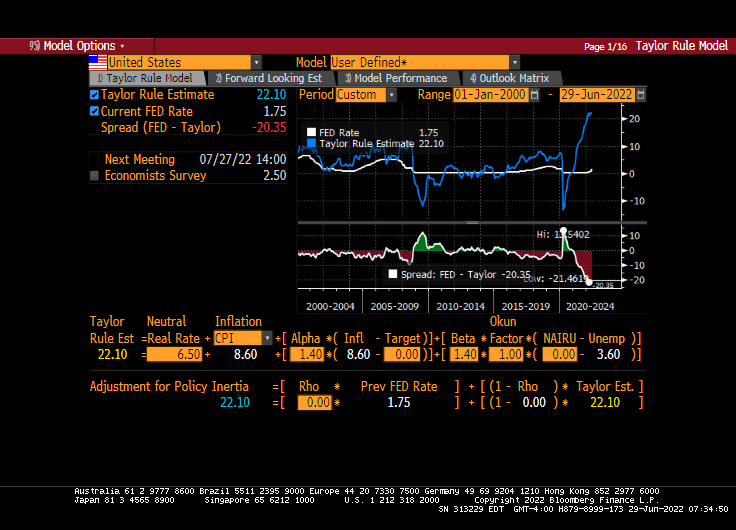
It almost seems like Mester is following the Taylor Rule (not really). But using CPI YoY, the Taylor Rule is saying that The Fed Funds Target Rate should be … 22.10%. It is only 1.75% after years of excessive stimulus following the banking crisis of 2008/2009. And Yellen who seemingly never met a rate hike that she liked.
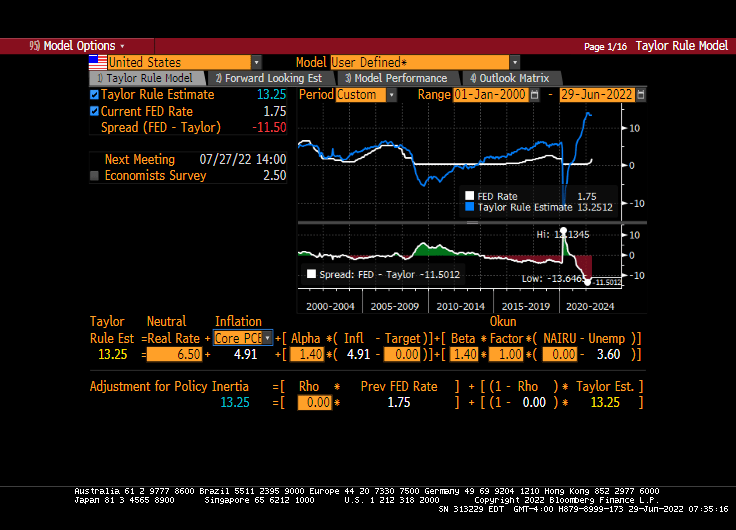
If we use core PCE as our measure of inflation, the Taylor Rule is still high at 13.25%, a whopping 11.50 spread over the current target rate.
Will The Fed drive up rates and risk a recession ala Paul Volcker? Are we sitting on top of the world or about to get fried?

Bear in mind that gasoline prices are up 104% under the Biden Administration and mortgage rates are up 105%.

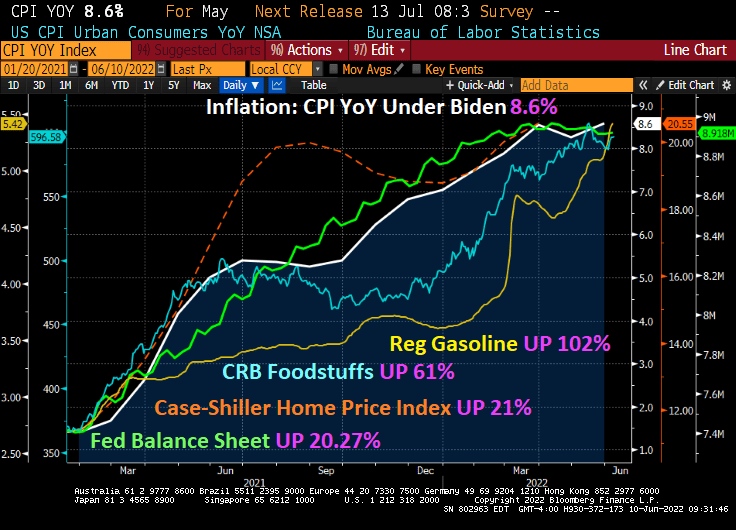
Feelin’ Hot, Hot, Hot! US Inflation Soars To 8.6% YoY For May, Fed Expected To REALLY Start Jacking-up Rates (Mortgage Rates Rise To 5.58%, The Highest Since 2009)

Feelin’ hot, hot, hot!

Inflation, the bane of the middle class and working families, just rose to 8.6%.

Core inflation, that excludes energy and food, actually declined slightly to 6% from 6.2% in April. But since most families are concerned with gas prices and food, (not to mention home prices growing at 21.17% YoY), core inflation really underestimates the suffering.

Under Biden’s leadership in cooperation with eternal Fed stimulus (until now), inflation started at 1.4% YoY and has increased to 8.6% YoY. The Fed’s balance sheet has increased by 20.27% (more monetary Stimulypto!), Case-Shiller home prices started at 10.44% YoY and has now doubled to 20.55% YoY. Regular gasoline started at $2.57 and is now at $5.42, up 102%. Food is up 61%.

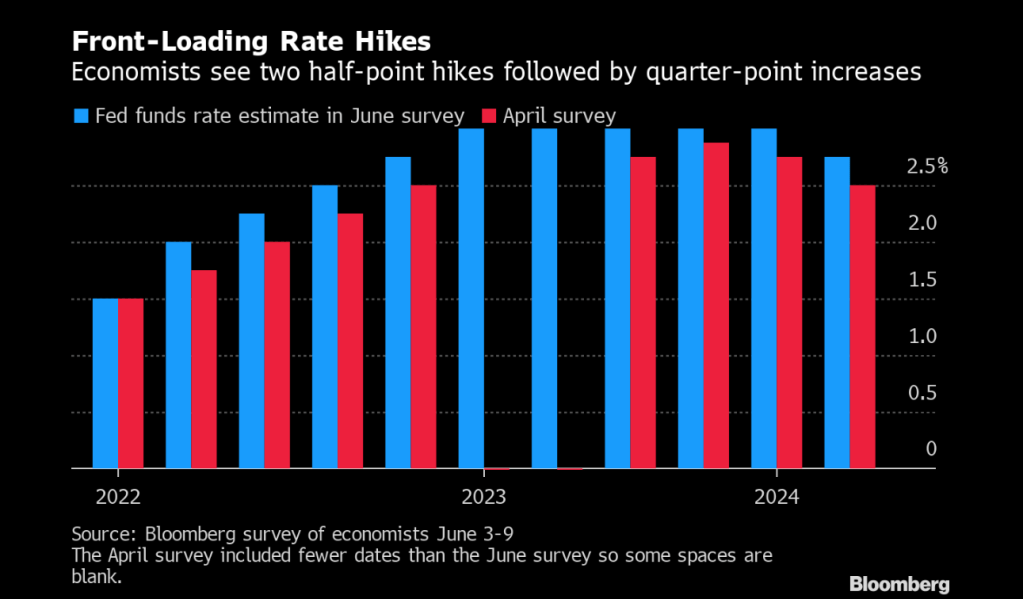
The Fed is expecting two half-point hikes followed by quarter-point increases.

And mortgage rates keep rising as The Fed fights the inflation fire.

Here is a video of Milton Friedman speaking on inflation.

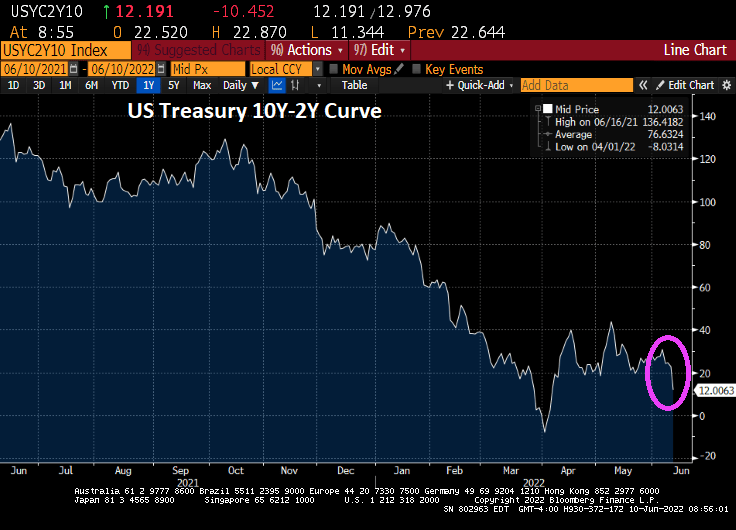
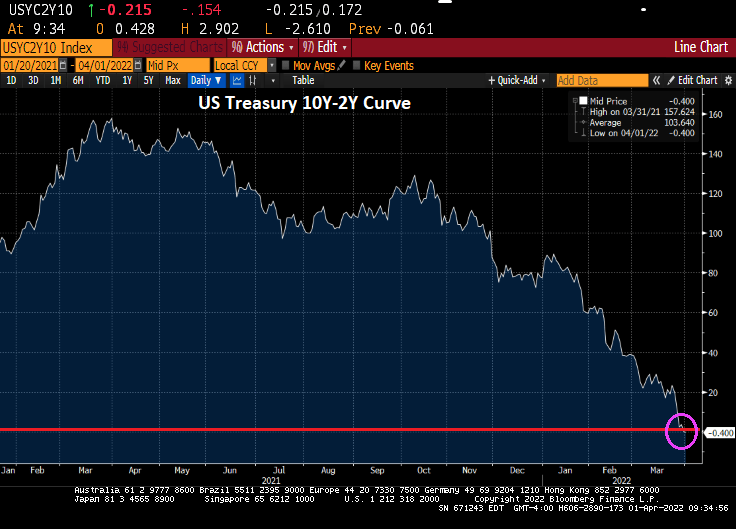
On the hotter than expected inflation news, the US Treasury 10Y-2Y curve flattened to 12 bps.

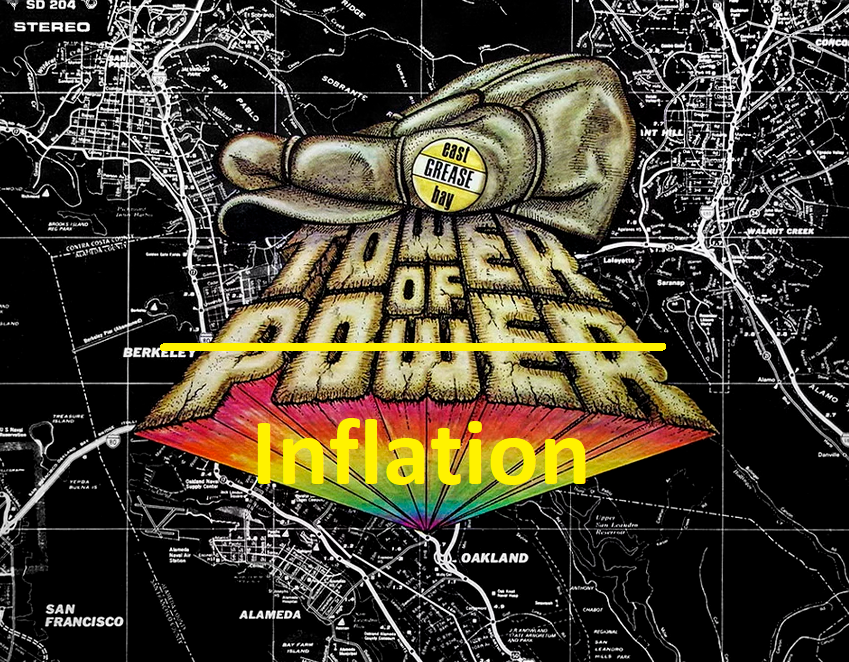
Tower of … inflation?

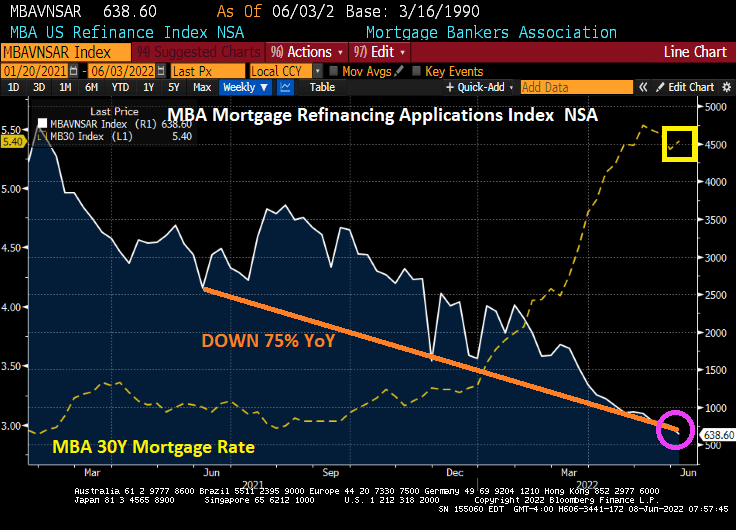
Fed’s Limbo Rock! Mortgage Purchase Applications Drop 18% WoW (And -21% YoY), Refi Applications Drop 6% WoW (And -75% YoY) How HIGH Can They Go??

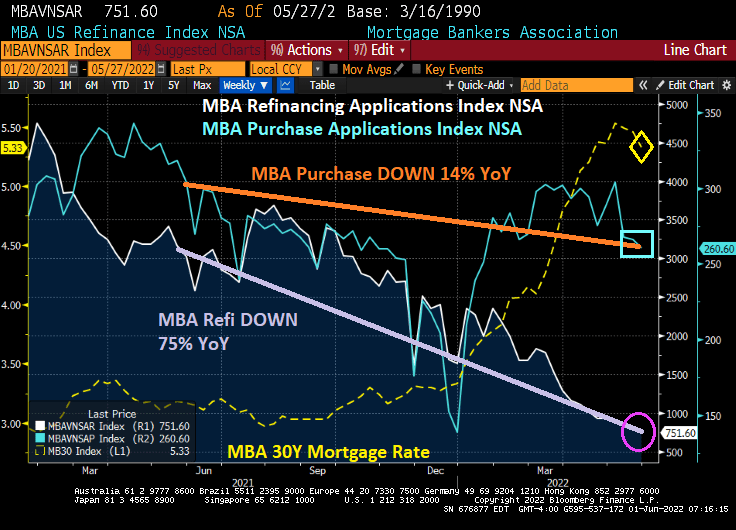
Its The Fed’s Limbo Rock! Except that it is how HIGH can they go? Mortgage rates have soared 71.4% over the past year as The Fed signals tightening of monetary policy.

Mortgage applications decreased 6.5 percent from one week earlier, according to data from the Mortgage Bankers Association’s (MBA) Weekly Mortgage Applications Survey for the week ending June 3, 2022. This week’s results include an adjustment for the Memorial Day holiday.

The seasonally adjusted Purchase Index decreased 7 percent from one week earlier. The unadjusted Purchase Index decreased 18 percent compared with the previous week and was 21 percent lower than the same week one year ago.

The Refinance Index decreased 6 percent from the previous week and was 75 percent lower than the same week one year ago. 

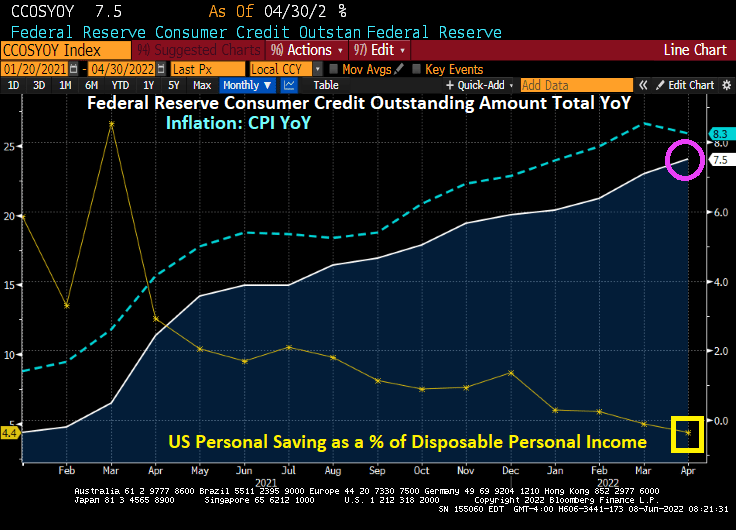
In related news (debt), consumer debt is rising at 7.5% YoY while the personal savings rate plunged to 4.4% in May as consumers borrow more and save less to cope with inflation.

How HIGH can The Fed go?

Fed Data Shows a Half Century of Moderate Growth in the Fed’s Balance Sheet Through Two World Wars – Then a Seismic Explosion Under Bernanke, Yellen and Powell (Mortgage Rates Rise To Highest Since June 2009)

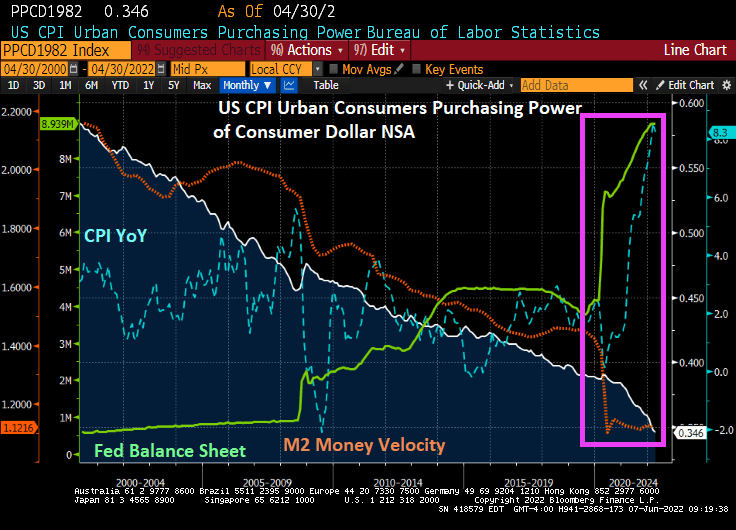
Wall Street on Parade had an excellent article showing the seismic explosion in the Fed’s Balance Sheet after the housing bubble burst and ensuing financial crisis.

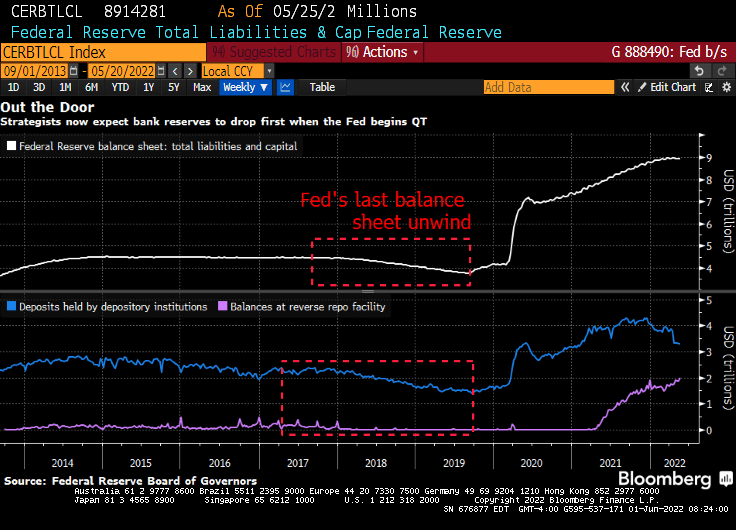
Here is my version of their chart since 2000 where you can seen the seismic shift in the balance sheet (toxic green slime line), particularly with The Fed’s response to Covid. The Fed is signaling a tightening in monetary policy to help reduce inflation (blue line).

But notice that M2 Money Velocity (GDP/M2) is now near the all-time low along with consumer purchasing power.

How BIG is The Fed’s balance sheet? Try more that a third of size of US GDP.

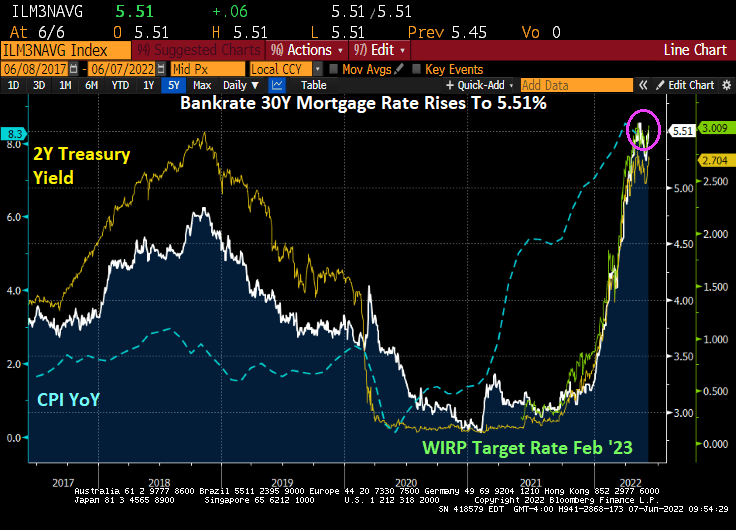
And as The Fed signals its inflation-fighting intentions, mortgage rates have shot up to 5.51%, the highest mortgage rate since June 2009.

Here is a video of the seismic shift in The Fed Balance Sheet, now that they are allegedly tightening monetary policy.

Speaking of seismic shifts, the Atlanta Fed’s Q2 GDP tracker just fell to +0.9%.

The Fed’s noose is tightening on the economy.

Heartaches By The Number! Under Biden, Mortgage Refi Applications Down -82.4%, Purchase Applications Down -7.5% And Mortgage Rates Up+80.7% (Fed FINALLY Begins Removing Stimulus!)

Heartaches By The Number … for American households and mortgage lenders as The Federal Reserve begins FINALLY removing monetary stimulus.

Mortgage applications decreased 2.3 percent from one week earlier, according to data from the Mortgage Bankers Association’s (MBA) Weekly Mortgage Applications Survey for the week ending May 27, 2022.

The Refinance Index decreased 5 percent from the previous week and was 75 percent lower than the same week one year ago. 

The seasonally adjusted Purchase Index decreased 1 percent from one week earlier. The unadjusted Purchase Index decreased 2 percent compared with the previous week and was 14 percent lower than the same week one year ago.

Under Biden, mortgage refi applications are down -82.4%, purchase applications are down -7.5% and mortgage rates are up +80.7%.

Then we have this headline: “Fed Starts Experiment of Letting $8.9 Trillion Portfolio Shrink”

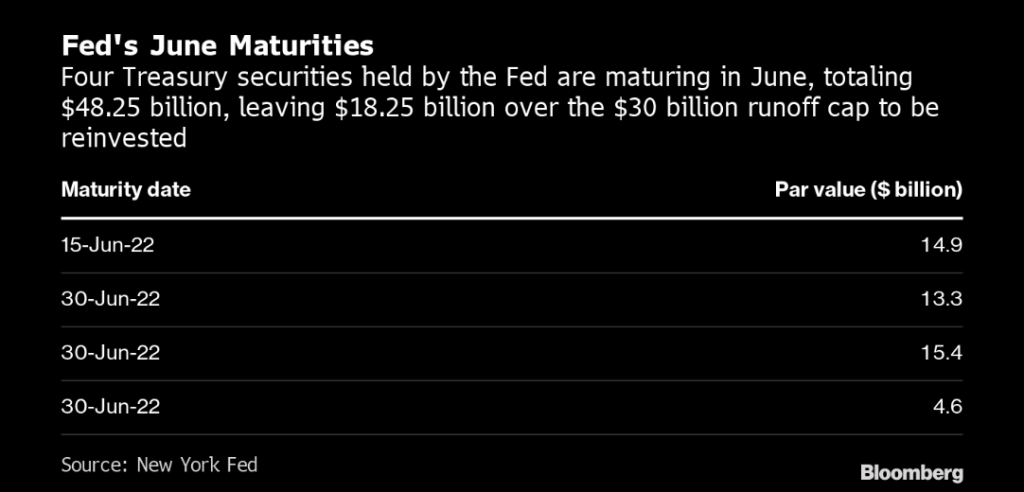
The Fed is capping monthly runoff at $47.5 billion — $30 billion for Treasuries and $17.5 billion for mortgage-backed securities — until September. Those thresholds will then double to a combined $95 billion. That compares to a peak of $50 billion a month when the Fed performed the exercise starting in 2017.

As expectation of Fed rate hikes increase, mortgage rates have soared like Tom Cruise’s Super Hornet aircraft from Top Gun: Maverick climbing over the steep mountain.

And mortgage rates are up a bit today.

Meanwhile, The Federal Reserve begins shrinking their balance sheet for the first time since Yellen and company started shrinking it under Trump.

Beat The Heat! Mortgage Purchase Applications RISE 5% From Previous Week As Homebuyers Scramble To Beat The Fed’s Monetary Tightening

Yes, homebuyers are jumping into a generally slowing housing market to “beat the heat.” That is, beat The Fed’s monetary tightening.

Mortgage applications increased 2.0 percent from one week earlier, according to data from the Mortgage Bankers Association’s (MBA) Weekly Mortgage Applications Survey for the week ending May 6, 2022.

The seasonally adjusted Purchase Index increased 5 percent from one week earlier. The unadjusted Purchase Index increased 5 percent compared with the previous week and was 8 percent lower than the same week one year ago.

The Refinance Index decreased 2 percent from the previous week and was 72 percent lower than the same week one year ago.

Beat the Heat!! Or Beat The Fed!!

As least inflation came in slightly cooler in April at 8.3% YoY. While housing (own or rent) is rising at over 2x CPI.

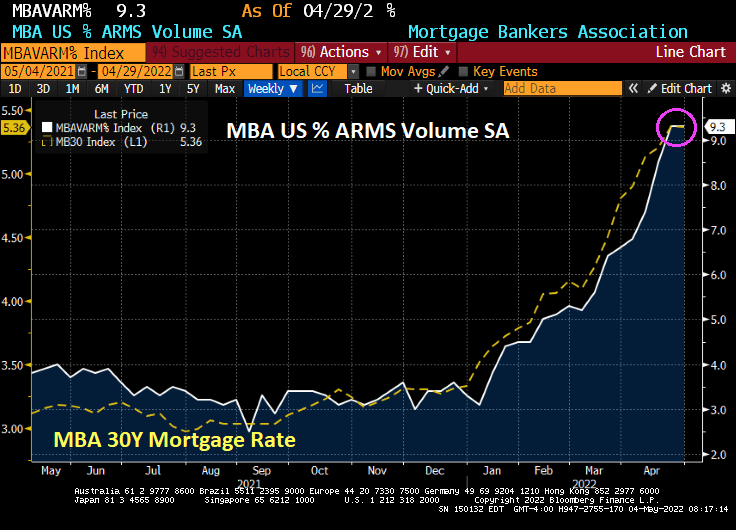
Simply Unaffordable! Mortgage Purchase Applications Rise 5% From Previous Week, But Remains DOWN 11% From One Year Ago As Fed Tightens (ARM Share Rises To 9.3%)

Simply unaffordable! US housing, that is. As The Federal Reserve tries to fight inflation caused by Biden’s Medusa-like policies, mortgage rates are soaring and we are seeing an INCREASE in mortgage purchase applications ahead of Fed tightening. Panic in (Fed) Needle Park!

Mortgage applications increased 2.5 percent from one week earlier, according to data from the Mortgage Bankers Association’s (MBA) Weekly Mortgage Applications Survey for the week ending April 29, 2022.

The Refinance Index increased 0.2 percent from the previous week and was 71 percent lower than the same week one year ago.

The seasonally adjusted Purchase Index increased 4 percent from one week earlier. The unadjusted Purchase Index increased 5 percent compared with the previous week and was 11 percent lower than the same week one year ago.

Adjustable rate mortgage (ARM) share has risen to 9.3% along with mortgage rates.

Between Biden’s energy policies, Congressional Covid relief and seemingly perpetual monetary stimulus from The Fed, we have 20% growth in home prices despite mortgage rates soaring.

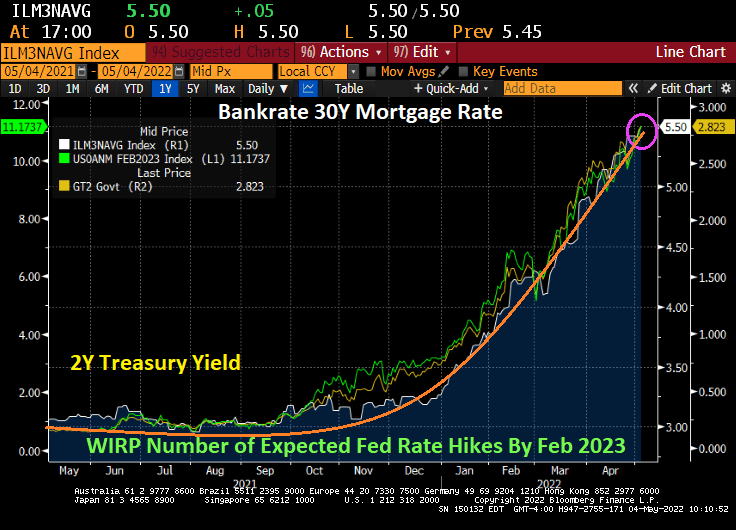
And as The Fed is expected to tighten, mortgage rates hit 5.50%.

Is the US housing market addicted to gov? We will find out if and when The Federal Reserve actually tightens monetary policy.

When Fed Gov Brainard Talks, Markets Listen! Brainard Says Fed Will Shrink The Balance Sheet At A Rapid Rate (10Y Treasury Yield Rises 16 BPS As Nasdaq Falls 300 PTS) Mortgage Rates Will SOAR!!

When Federal Reserve Governor Lael Brainard speaks, markets listen

Federal Reserve Governor Lael Brainard said the U.S. central bank will continue to tighten policy methodically and shrink its balance sheet at a rapid pace as soon as May. 

Brainard’s hawkish remarks sent bond prices crashing and 10Y bond yields up over 16 bps.

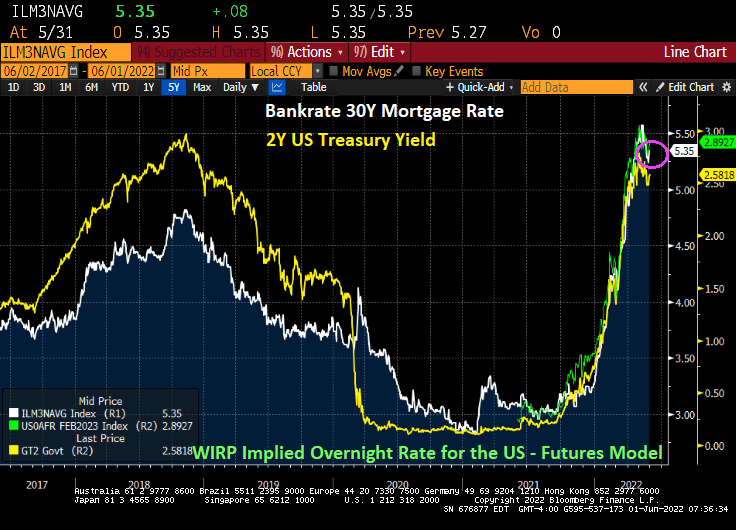
While Bankrate’s 30Y mortgage rate is down slightly today, the surge in the 10Y and 2Y Treasury yields could push mortgage rates above 5% by tomorrow,

Even Europe is feeling Brainard’s wrath. Italian 10Y sovereign yields are up almost 20 bps.

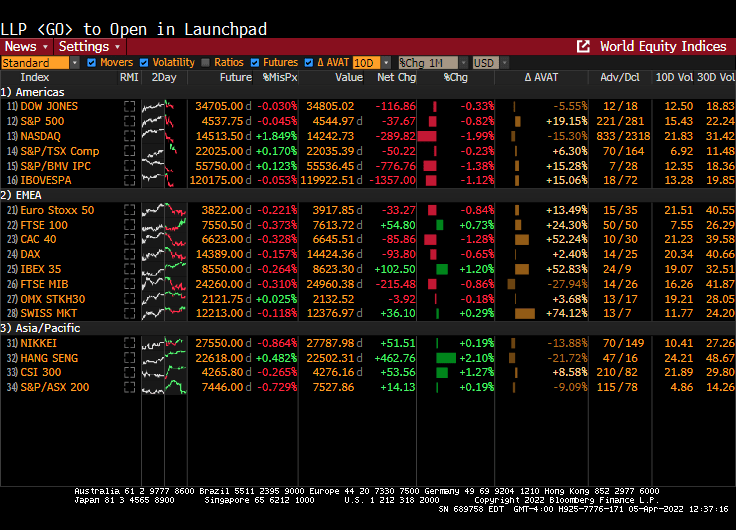
The NASDAQ index is down 300 points on Brainard’s utterance.

Gee thanks Lael from all us wanting to finance the purchase of a house.

Brainless and Brainard.

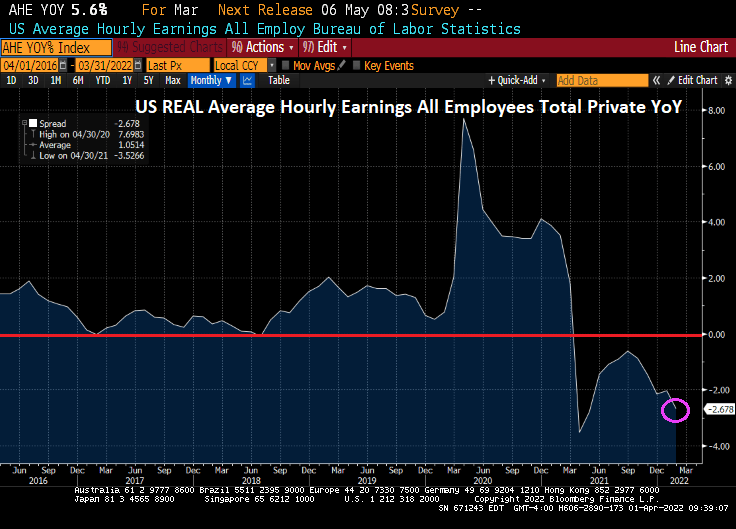
Wasting Away In Biden/Pelosiville! US Treasury 10Y-2Y Yield Curve INVERTS As Real Average Hourly Earnings Decline -2.678% YoY (30Y Mortgage Rate Rises To 4.90%)

Wasting away again in Biden/Pelosiville, looking for my lost inexpensive gasoline and food. Some people say that Putin is to blame, but we know its Biden/Pelosi’s fault.

The US Treasury 10Y-2Y yield curve just inverted, generally a precursor to a recession. Called it, nothing but net!

Meanwhile, today’s jobs report shows that Bidenflation is crushing America’s wage growth. While average hourly earnings grew to 5.6% YoY, we are still seeing inflation growing at 7.9% YoY meaning that inflation is reeling hurting the middle class and lower-income households.

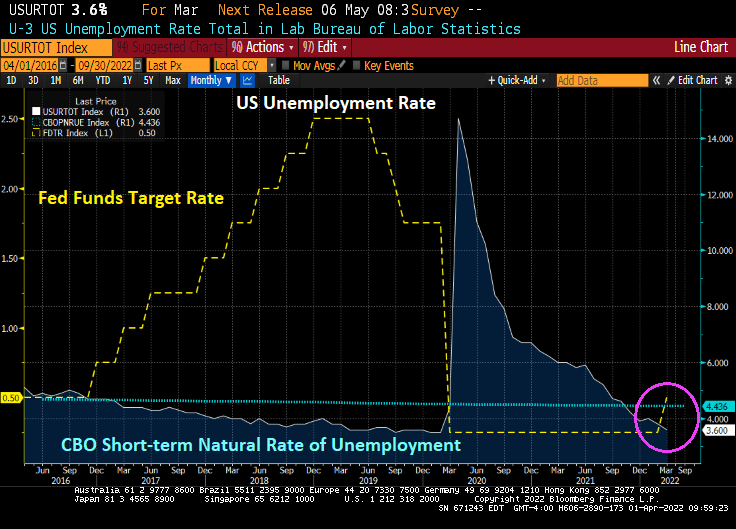
The good news is that the U-3 unemployment rate fell to 3.6%, almost back to the Trump-era unemployment rate of 3.5% prior to the Covid outbreak. And the unemployment rate remains below the CBO’s short-term natural rate of unemployment indicating that the labor market is OVERHEATED.

Today’s jobs report was pretty good, as we would expect from a recovery caused by governments shutting down economies, then reopening them. 431k jobs were added, but less than last month’s jobs added of 678k and less than the forecast 490k.

The number of people NOT in the labor force fell slightly, but it still around 100 million. The number of people holding multiple jobs to overcome Bidenflation rose to 7.5 million.

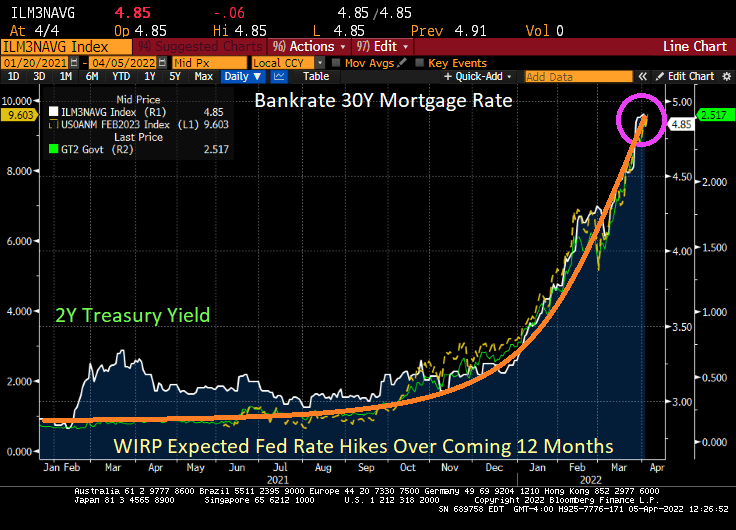
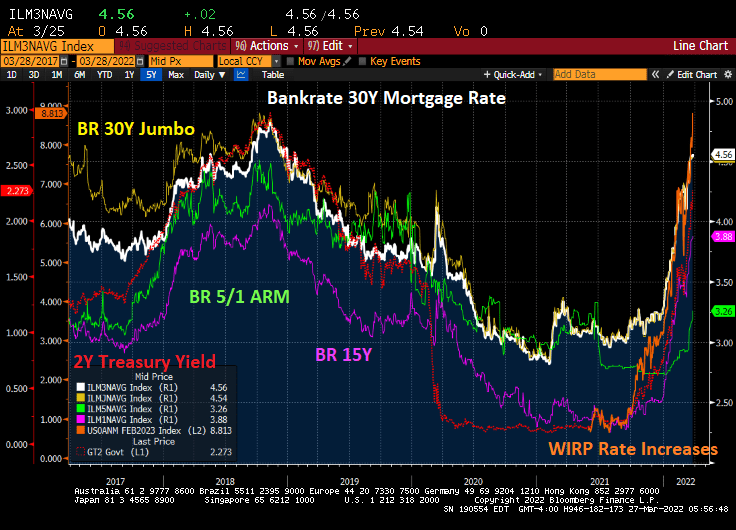
On the mortgage front, Bankrate’s 30-year mortgage rate rose to 4.90% as the 2-year Treasury rate (yellow) rises and the number of expected Fed rate hikes over the coming year is 9.26%.

Fear! Adjustable-rate 30Y Mortgages (ARMs) Are 130 Basis Points Lower Than 30Y Fixed-rate Mortgages, But ARMs Are Only 7.9% Of Mortgage Originations

Michael Lea and I wrote a paper several years ago arguing that most borrowers would be better-off with an adjustable-rate mortgage than a fixed-rate mortgage. The US is one of the few countries in the world where the 30-year fixed-rate mortgage is dominant. Why is this the case? FEAR of rising mortgage payments with adjustable-rate mortgages (ARMs) while the fixed-rate mortgage (FRMs) have constant payments over the 30-year term.

The reason why the fear of ARMs is unwarranted is that ARMs generally have CAPS on rate increases, either in a given period or over the life of the loan. Of course, READ the loan terms to ensure that the ARMs has restrictive caps on rate increases.

Currently, the 5/1 ARM is at 3.26% while the 30-year FRM is at 4.56%, a spread of 130 basis points.

Mortgage rates of all flavors are rising rapidly with the expectation of Federal Reserve Quantitative Tightening (QT). There are several headwinds that could counter The Fed’s QT efforts such as low GDP growth (Atlanta Fed’s GDPNow real-time GDP tracker is at 0.9% for Q1), the Russia-Ukraine invasion, approaching midterm elections, etc. But as of today, The Fed seems on a collision course with rising mortgage rates.

With the increasing likelihood of Fed rate hikes over the next year, we are seeing an increase in US ARM loan share from 4% to 7.9%, almost a doubling of ARM share. But FRMs are still over 90% of all mortgage originations.

Lending institutions would prefer consumers to use ARMs rather than FRMs since ARMs allow for the transfer on long-term interest rate risk to the borrower, while the FRM sticks the lender with long-term interest rate risk. Hence, we have Fannie Mae and Freddie Mac, the Government Sponsored Enterprises (GSEs) that allow lenders to originate FRMs and sell them to F&F. We are the only country with twin GSEs.

So, while most consumers would be better-off with an adjustable-rate mortgage, the structure of the mortgage market (particularly after the financial crisis) encourages lenders to originate FRMs and sell them to Fannie Mae and Freddie Mac.

But FEAR drives many US mortgage borrowers into the FRM space rather than getting an ARM with a lower interest rate, even if ARM caps would prevent the mortgage rate from rising more than 100 basis points over the life of the loan.