February Jobs Report -92k Jobs Lost As US Tries To Recover From 4 Years Of Bidenomics (Oil Prices Soar As Attacks Against Iran Continue)

Trump has been President for 1 year and fighting against Biden and the Democrats economic misery.

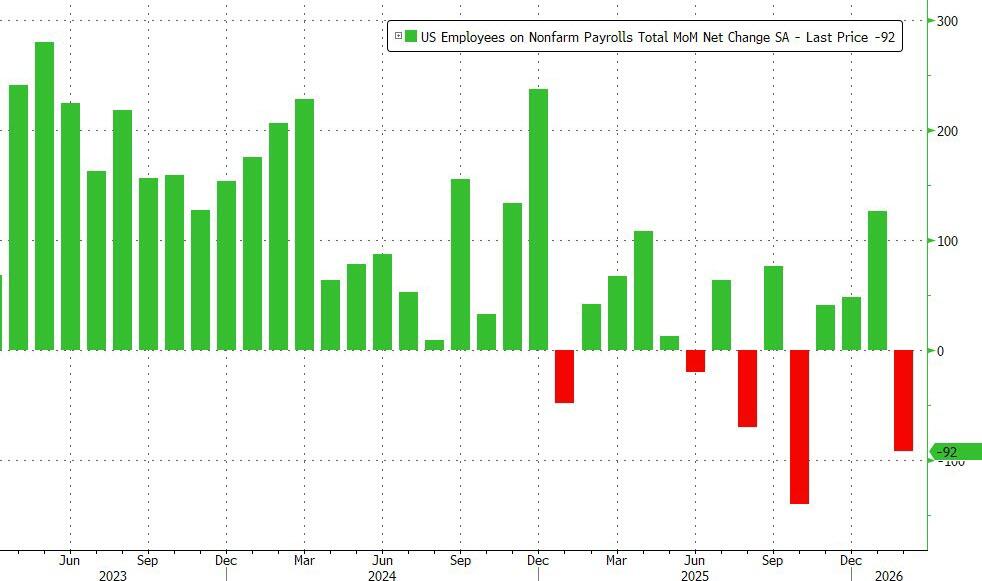
In February, the US lost 92,000 jobs, a huge drop from the downward revised 126K in January, and the second worst print since 2020 (only October’s shock -140K was worse), and this time, the massive drop can’t be dismissed as a one-time drop in government payrolls. The number of private payrolls dropped by 86K, also a huge miss to estimates of a 60K increase.
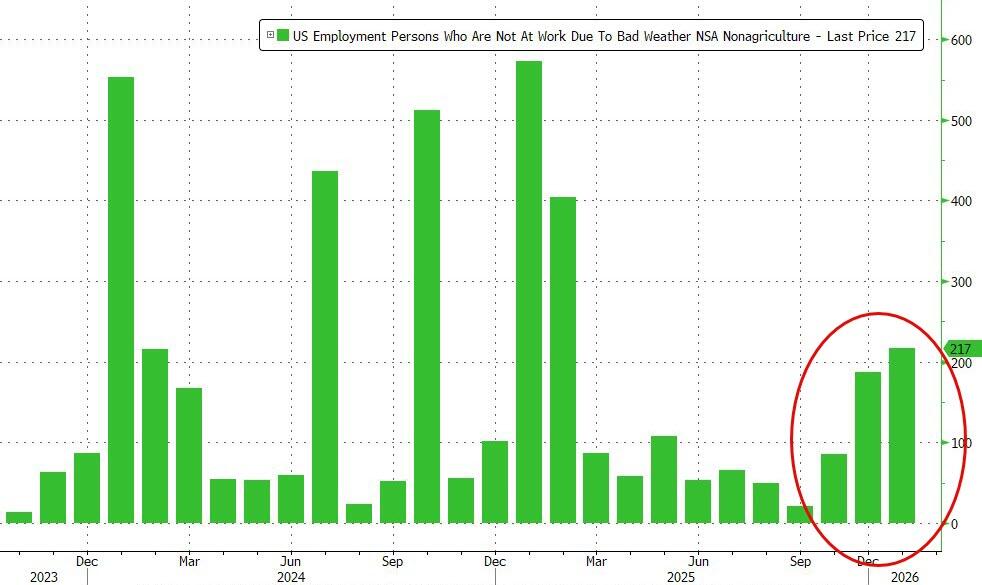
One potential mitigating factor: the number of people who were unable to work due to weather surged to 228K in February, well above last year’s level 167K, due to the powerful winter storms hitting the US.
  • The number of long-term unemployed (those jobless for 27 weeks or more) changed little at 1.9 million in February but is up from 1.5 million a year earlier. The long-term unemployed accounted for 25.3 percent of all unemployed people in February. 
  • The number of people employed part time for economic reasons decreased by 477,000 to 4.4 million in February. These individuals would have preferred full-time employment but were working part time because their hours had been reduced or they were unable to find full-time jobs. 
  • The number of people not in the labor force who currently want a job changed little in February at 6.0 million. These individuals were not counted as unemployed because they were not actively looking for work during the 4 weeks preceding the survey or were unavailable to take a job. 
  • Among those not in the labor force who wanted a job, the number of people marginally attached to the labor force changed little at 1.6 million in February. These individuals wanted and were available for work and had looked for a job sometime in the prior 12 months but had not looked for work in the 4 weeks preceding the survey. The number of discouraged workers, a subset of the marginally attached who believed that no jobs were available for them, decreased by 109,000 in February to 366,000. 

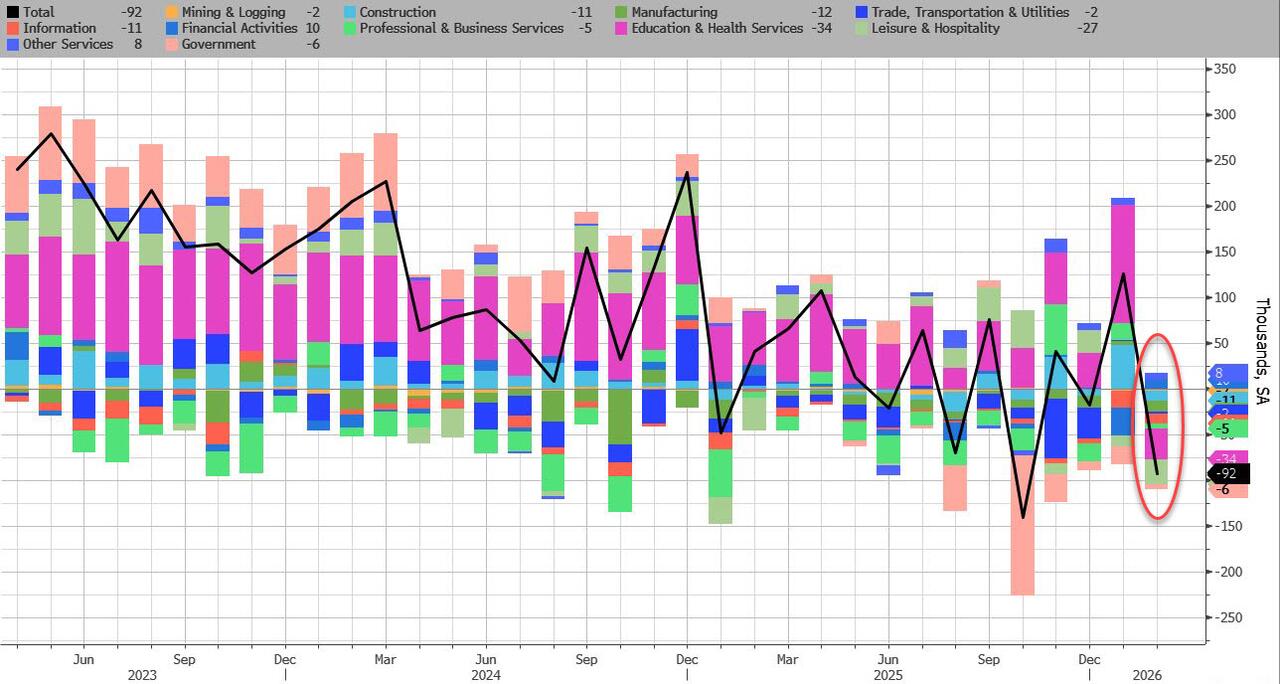
Turning to the establishment survey, which unveiled the shocking February drop, the BLS reported a broad-based decline, driven by striking employment workers:

  • Employment in health care decreased in February, reflecting strike activity. Employment in information and federal government continued to trend down. Payroll employment changed little on net in 2025. 
  • Health care employment declined by 28,000 in February, following a large increase in January (+77,000). Offices of physicians lost 37,000 jobs in February, primarily due to strike activity. Hospitals added 12,000 jobs. Over the prior 12 months, health care had added an average of 36,000 jobs per month. 
  • Employment in information continued to trend down in February (-11,000). The industry had lost an average of 5,000 jobs per month over the prior 12 months.
  • In February, federal government employment continued to decline (-10,000). Since reaching a peak in October 2024, federal government employment is down by 330,000, or 11.0 percent.
  • Employment in social assistance continued its upward trend in February (+9,000), driven by individual and family services (+12,000).
  • Transportation and warehousing employment changed little in February (-11,000). A job loss in couriers and messengers (-17,000) was partially offset by a gain in air transportation (+5,000). Employment in transportation and warehousing has declined by 157,000, or 2.4 percent, since reaching a peak in February 2025.
  • Employment showed little change over the month in other major industries, including mining, quarrying, and oil and gas extraction; construction; manufacturing; wholesale trade; retail trade; financial activities; professional and business services; leisure and hospitality; and other services.
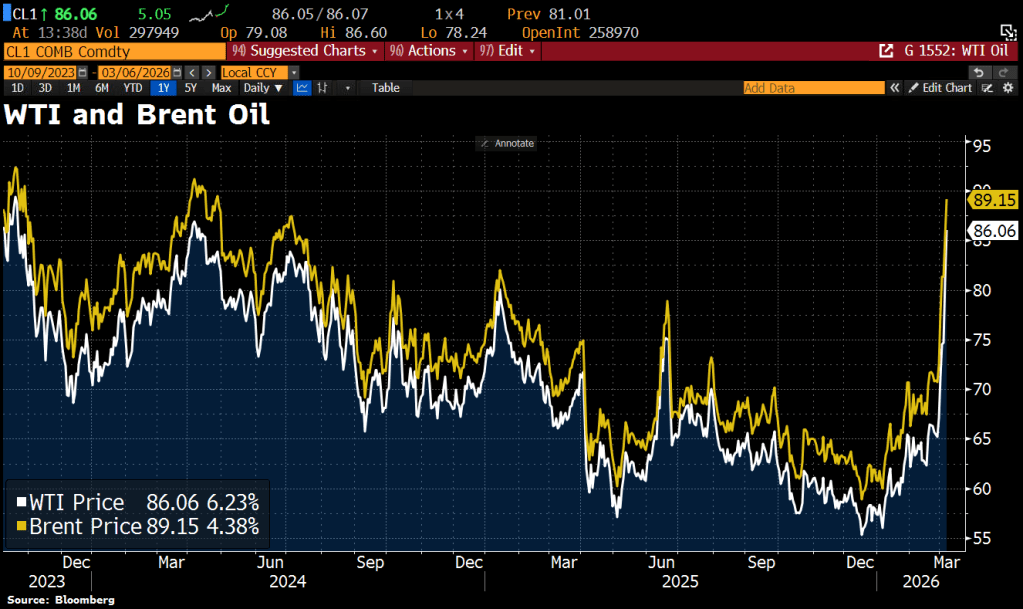
Switching to oil, we see the West Texas Intermediate and Brent Oil prices soaring on the attacks on Iran.
To soothe you.

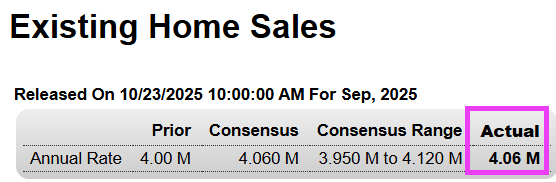
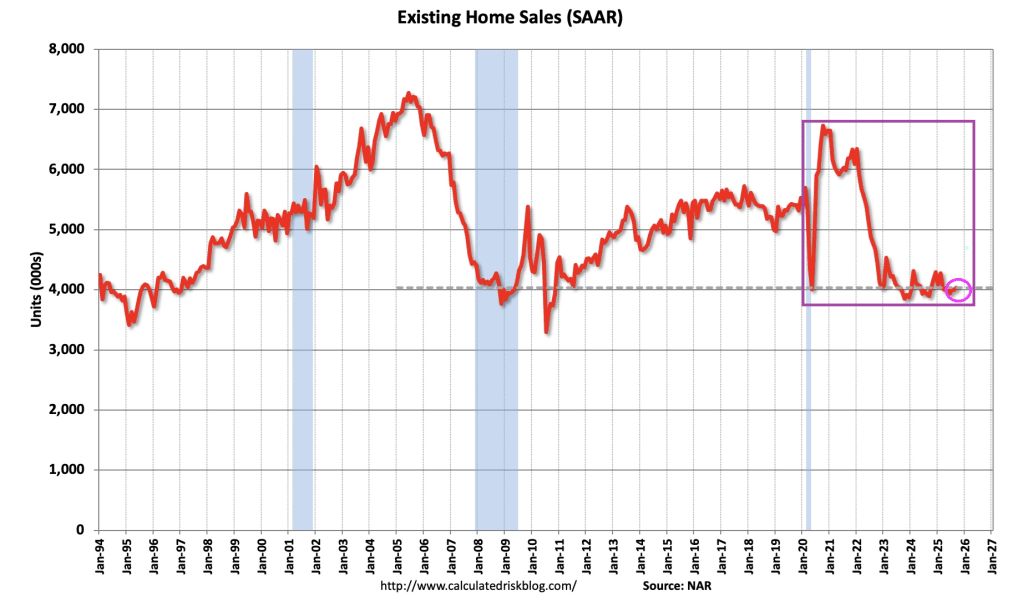
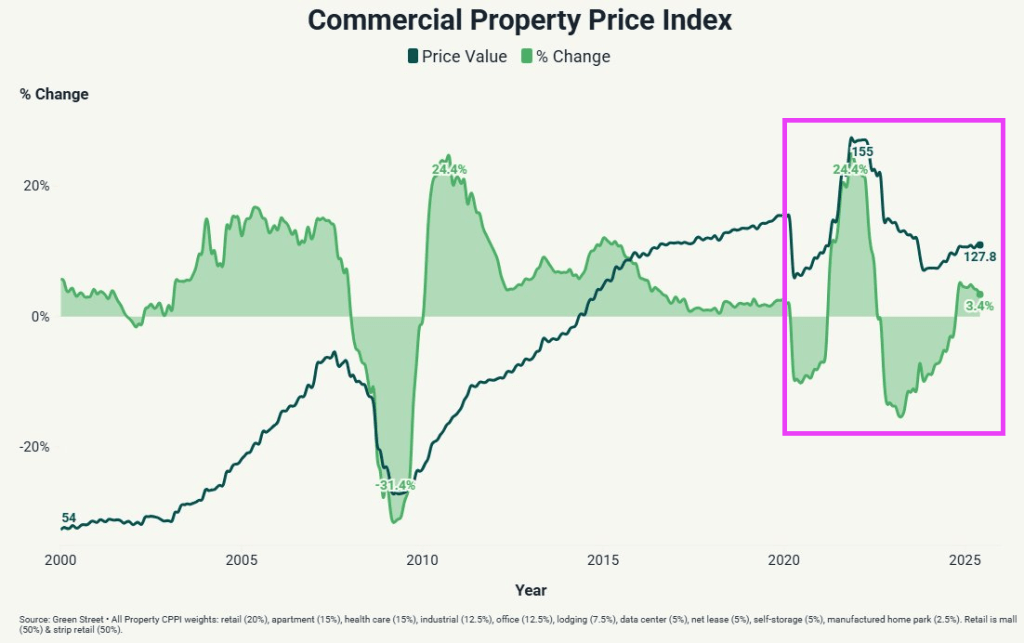
Existing Home Sales Print At 4.06 Million Units In September, Commercial Real Estate Still Lower Than Before Covid 19 Outbreak In 2020

September US home sales printed at 4.06 million units.

The US still hasn’t recovered from the Covid 19 outbreak of 2020 and the Fed’s response to Covid.

On the commercial real estate side, CRE prices remain below Covid 19 outbreak levels.

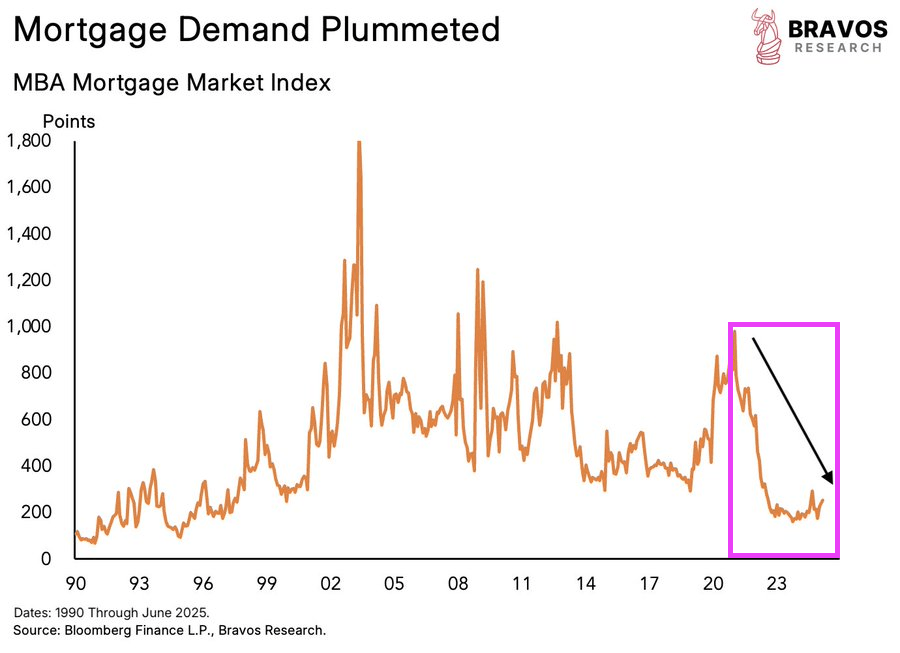
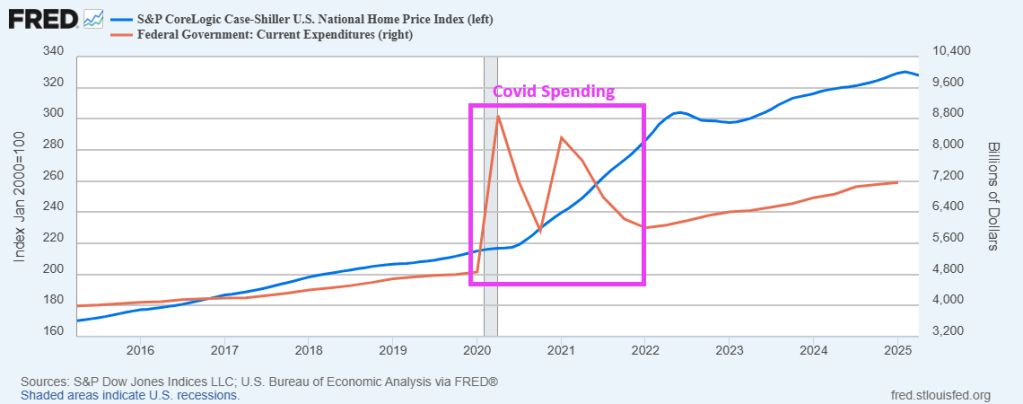
China, Fauci And Home Prices? Mortgage Demand Plummeted With Covid As Federal Spending Soared (New Home Sales Declined 6.6% YoY In June)

China unleashed the Wuhan virus on the globe, Anthony Fauci convinced Congress to binge spend like drunken sailors on Covid prevention and relief. Homes prices soared, mortgage demand sank and nothing has been the same.

Here is a chart of the Case-Shiller national home price index post Covid outbreak and the hysterical overreaction by Congress and the Administration (including Anthony Fauci).

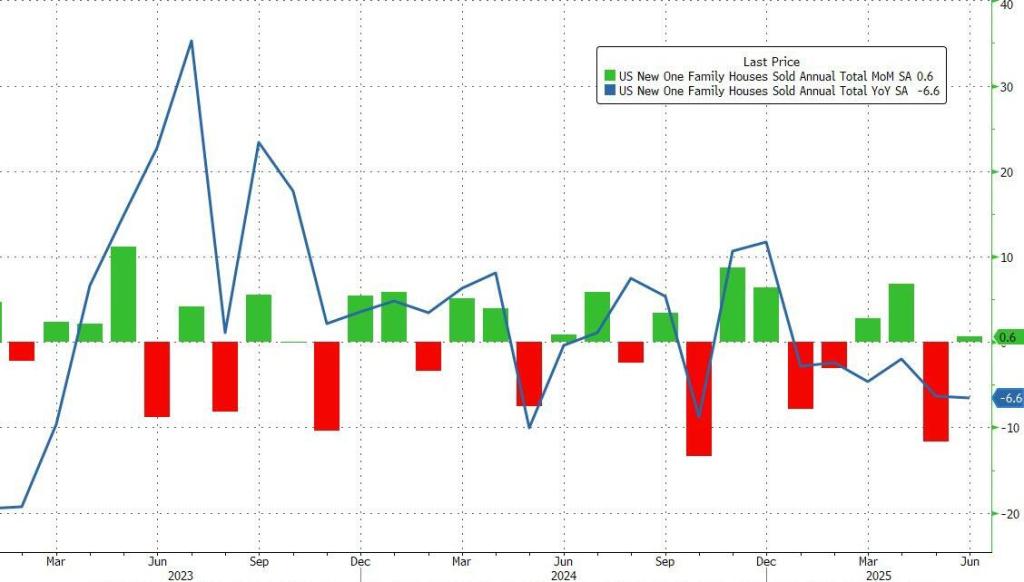
Another example? New home sales are down 6.6% YoY.

Who do we blame? China? Yes. Anthony Fauci? Yes. Congress? Yes.

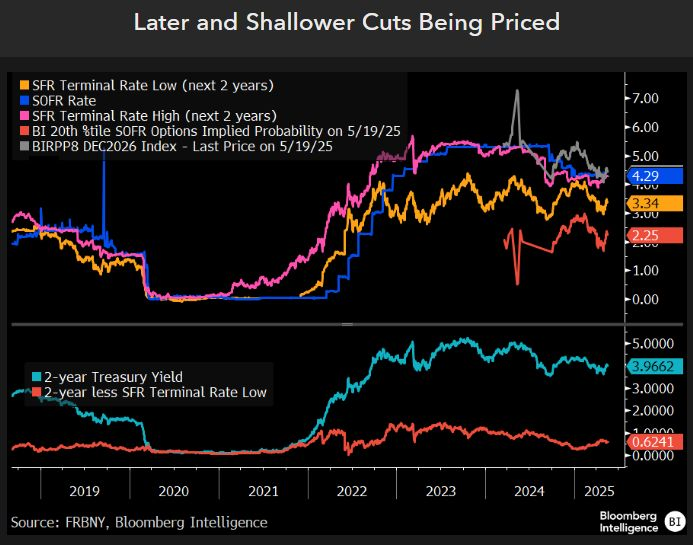
30Y Treasury Yield Headed Towards Highest Since 2007 (US Yield Curve Significantly Steeper Than Under Biden)

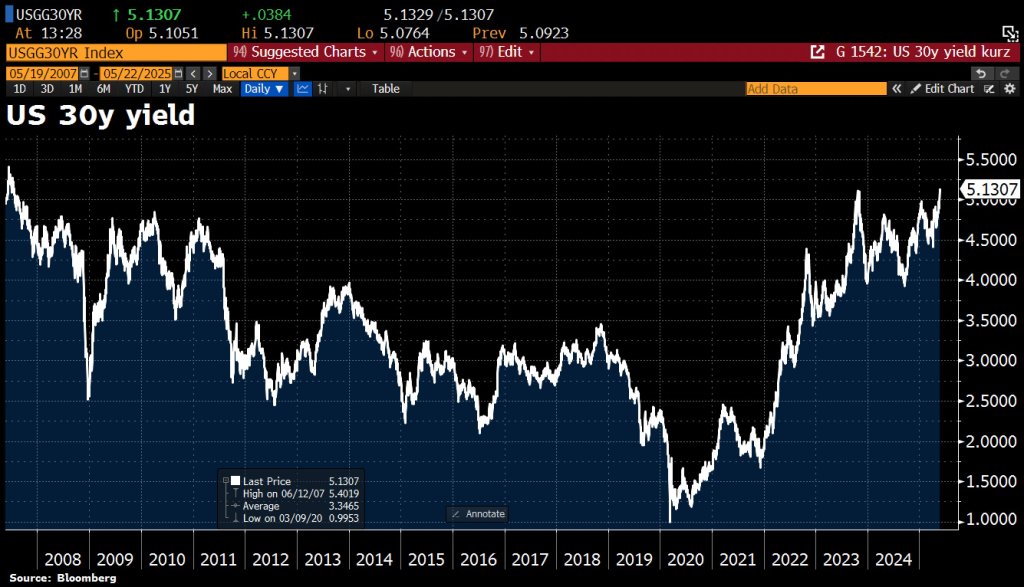
US 30y bond yields are heading toward their highest level since 2007.

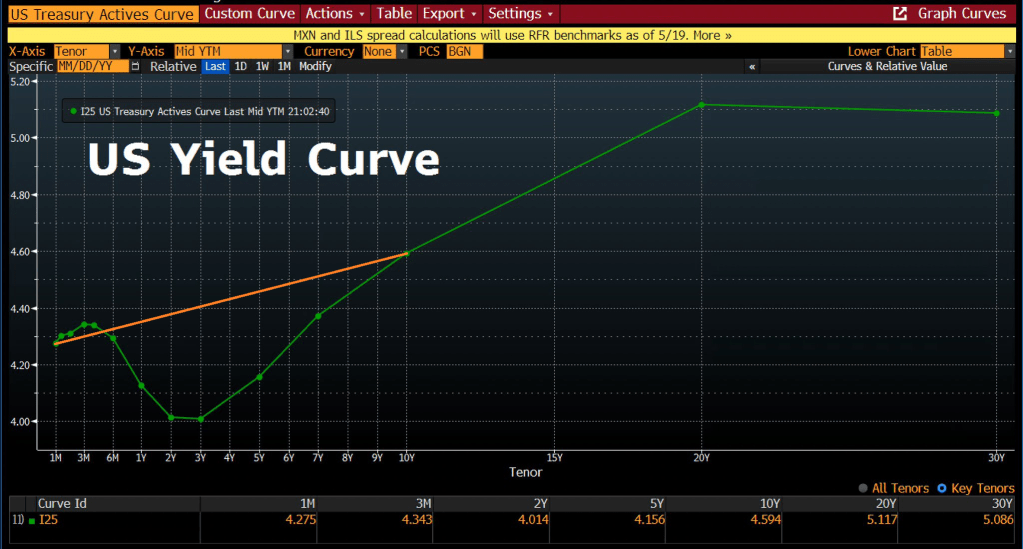
The yield curve has finally normalized!

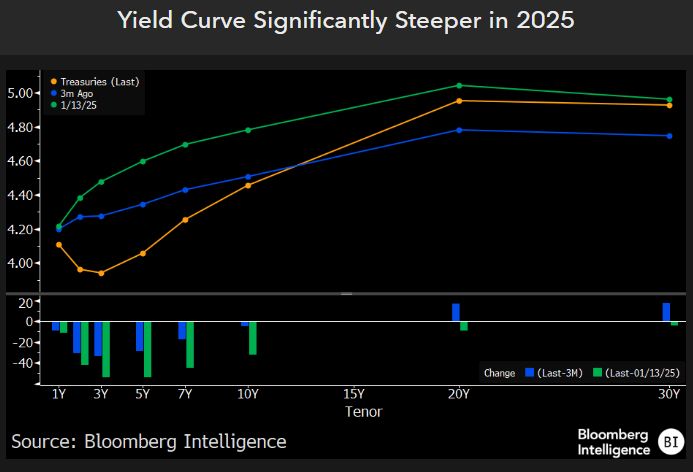
And significantly steeper in 2025.

Later and shallower rate cuts are being priced.

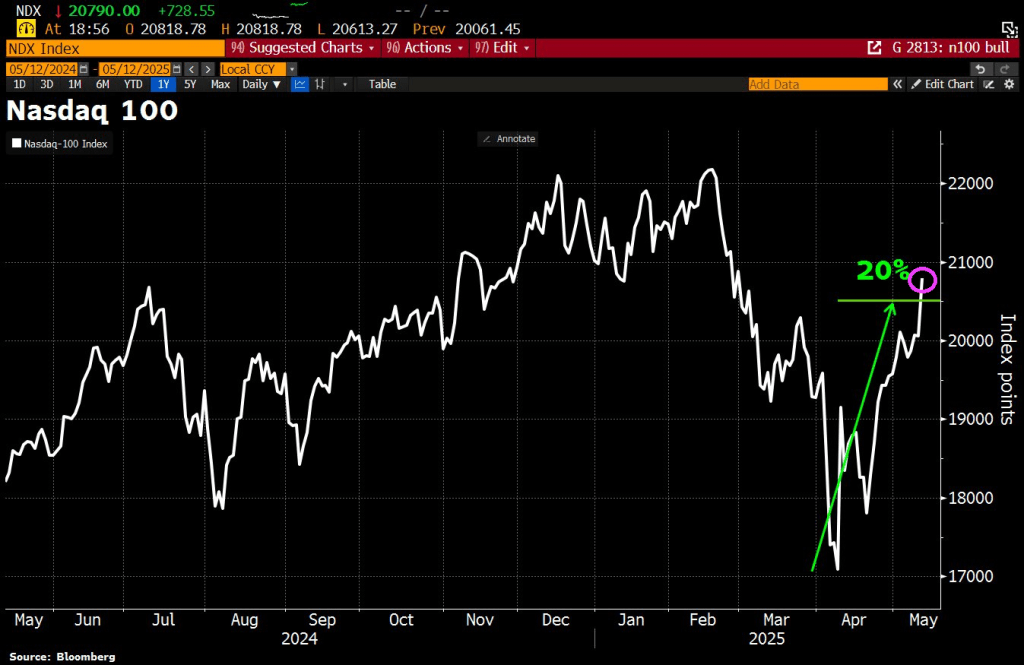
Stock Market Soars As China Flinches! (NASDAQ 100 Highest Since Mid February)

Well, U.S. and China reached an agreement to lower tariffs in a 90-day cool-off period. Despite China claiming they would NEVER agree to tariffs! The result? The NASDAQ 100 rose to its highest level since mid-February.

So much for the MSNBC/CNN doomsayers.

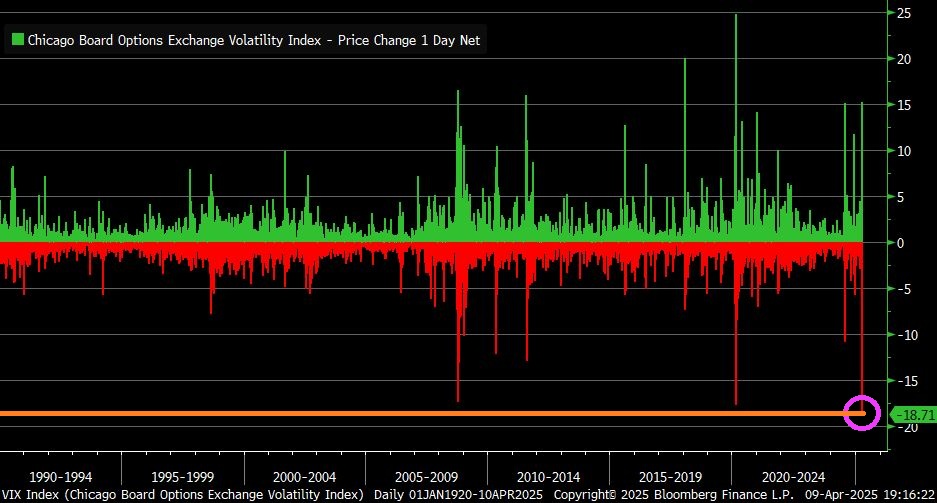
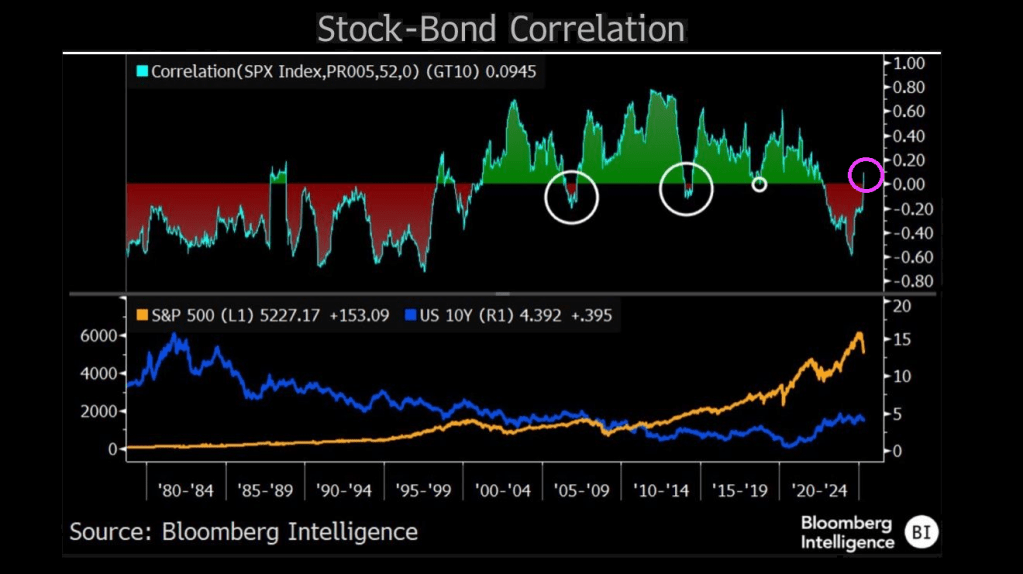
China Trade Uncertainty Causes VIX To Fall By 18.7 Pts, Largest In History (Correlation Between Stocks And Bonds Reverse To Positive)

Obama/Biden/Harris/Schumer/Pelosi have let the US be the punks for China. Trump is simply trying to level the playing field and China’s Xie doesn’t like the new equilibrium.

VIX Index fell by 18.7 points yesterday … largest one-day decline in history.

The correlation between stock prices and bond yields has returned to positive territory — hinting at a period of distress in equities and a regime shift in equity and bond markets where recession fears, rather than inflation, may be starting to drive direction of both. The correlation between the two asset classes was positive for the better part of 20 years prior to the pandemic, suggesting equities trended in the direction of yields as inflation mostly coincided with growth. Stocks held a negative correlation to yields throughout most of the 1980s and 1990s, when inflation hurt stocks — and that phenomenon returned for the 2022-24 bear market and recovery period.

Notably, major stock corrections occurred each time the correlation jumped out of its primary regime.

China’s Xi flashes a Hitler salute!

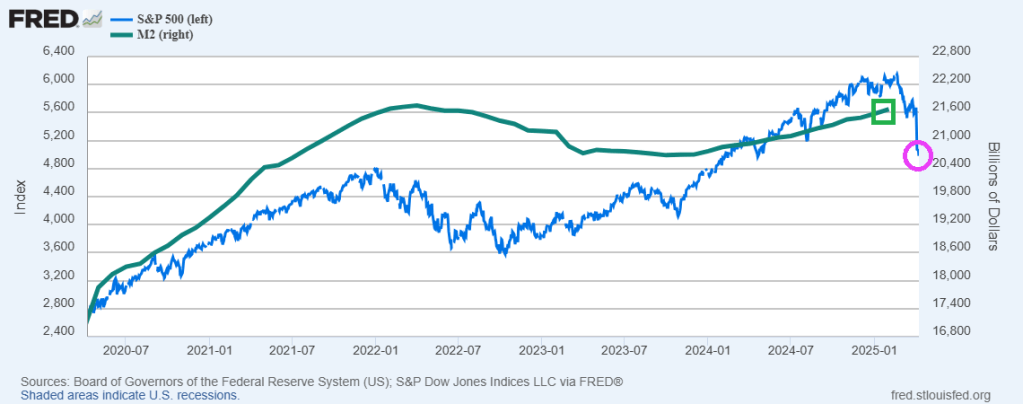
Bubble Or Tariffs? China Retaliates With 84% Tariffs On US Goods, Will The Fed Counterattack? (S&P 500 UP 81% Since April 8, 2020 While M2 Money Is UP 27.4%)

The Federal Reserve has created massive asset bubbles in financial markets. And the “tariff war” between the US and China. Since April 8, 2020, the S&P 500 index is up 81% while The Federal Reserve has printed a staggering amount of money as M2 Money is up 27.4% over the same period.

So, it is not surprising (except to Barstool Sports’ Dave Portnoy) that the stock market has declined with China’s childish petulance over Trump’s tariffs. While Trump levied a 104% tariff on Chinese goods, China counterattacked with a 84% tariff on US goods.

Will The Fed counterattack with more money printing?

Fear! Tariff Fears Are Spooking Markets (China Is Acting Childish)

Markets are ranked by fear about tariffs. Particularly since China is acting like a child.

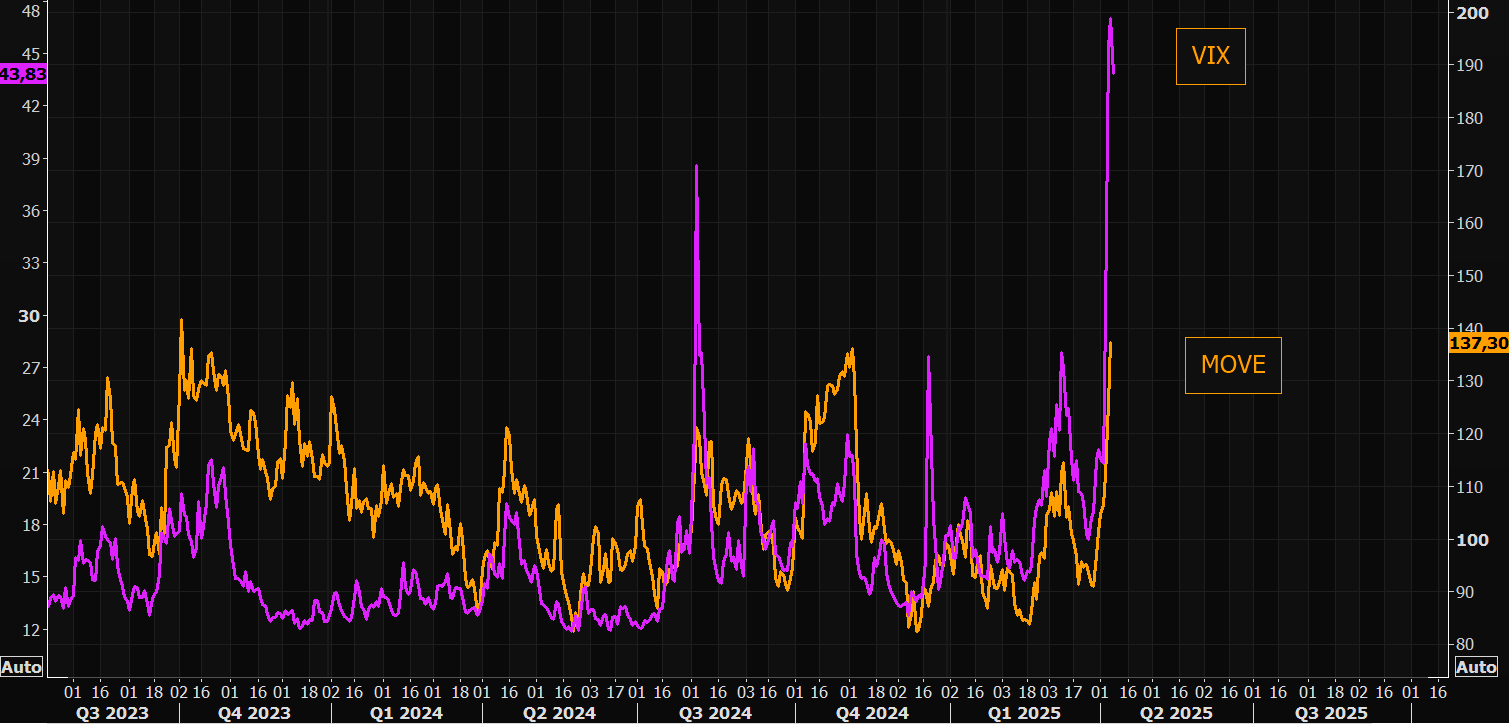
Bond vs equity fear

Bond volatility has shot up higher, but remains “muted” compared to the VIX move.

Source: Refinitiv

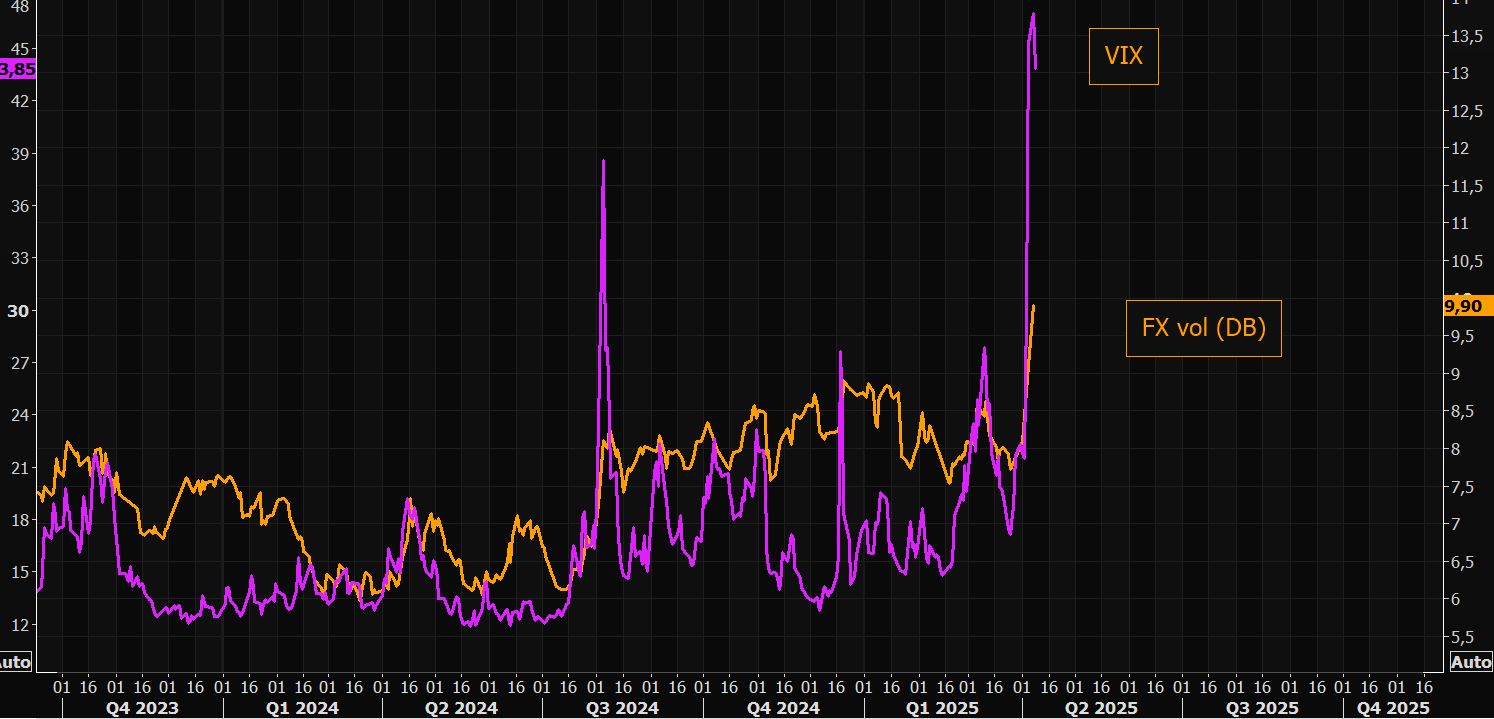
FX vs equity fear

FX volatility has shot up higher as well, but is pale in comparison to the VIX move.

Source: Refinitiv

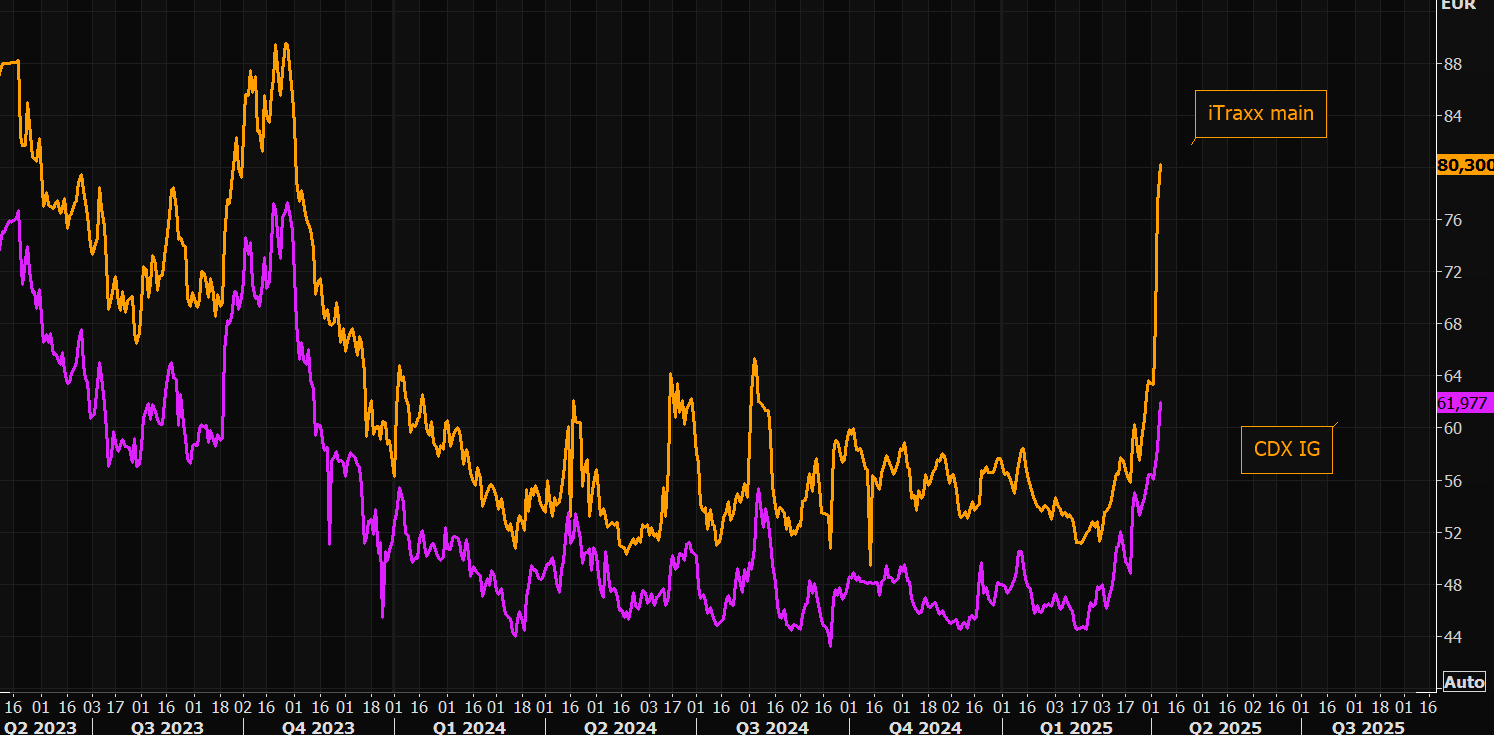
Credit “crunched”

Credit protection has surged during the “chaos”. Chart shows the US and the European versions.

Source: Refinitiv

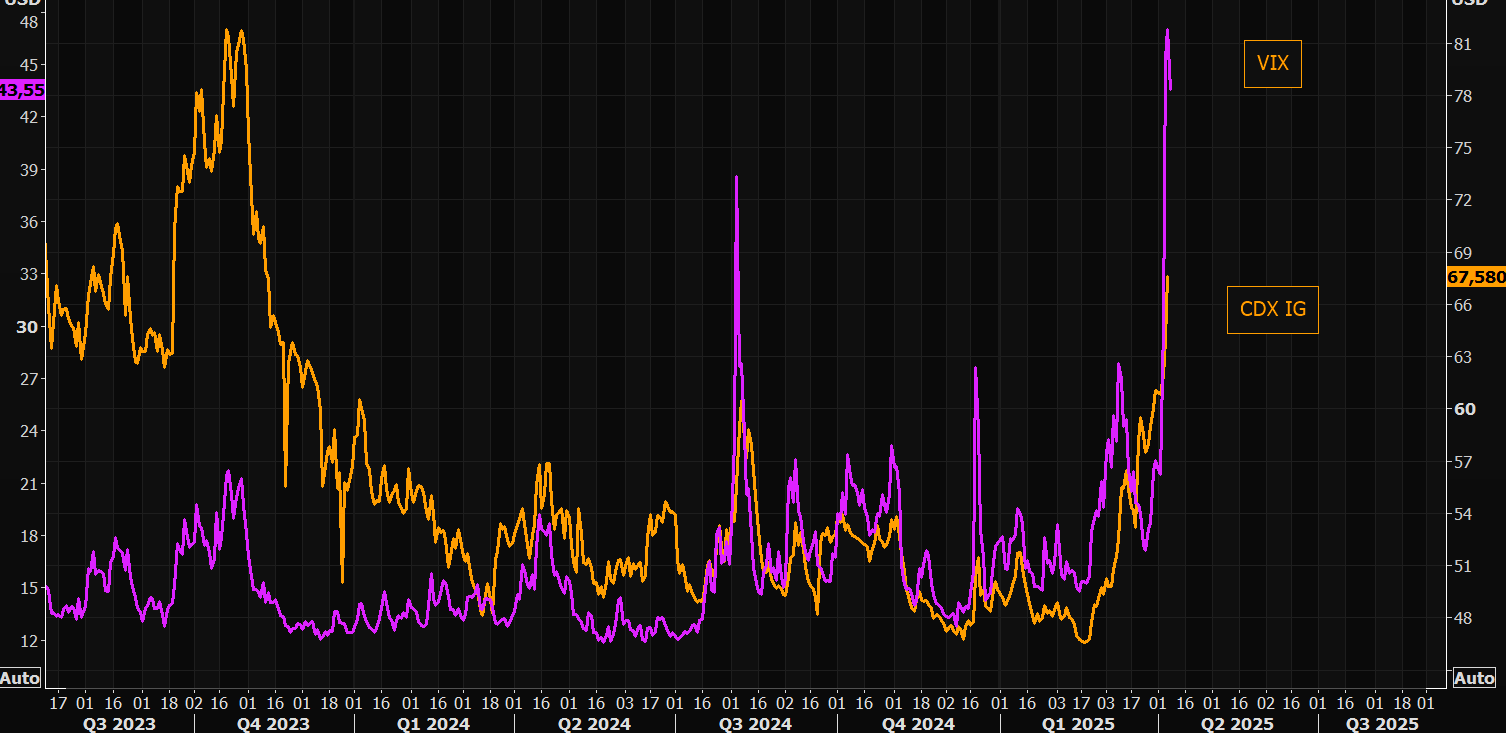
Equity vs credit protection

VIX vs CDX IG.

Source: Refinitiv

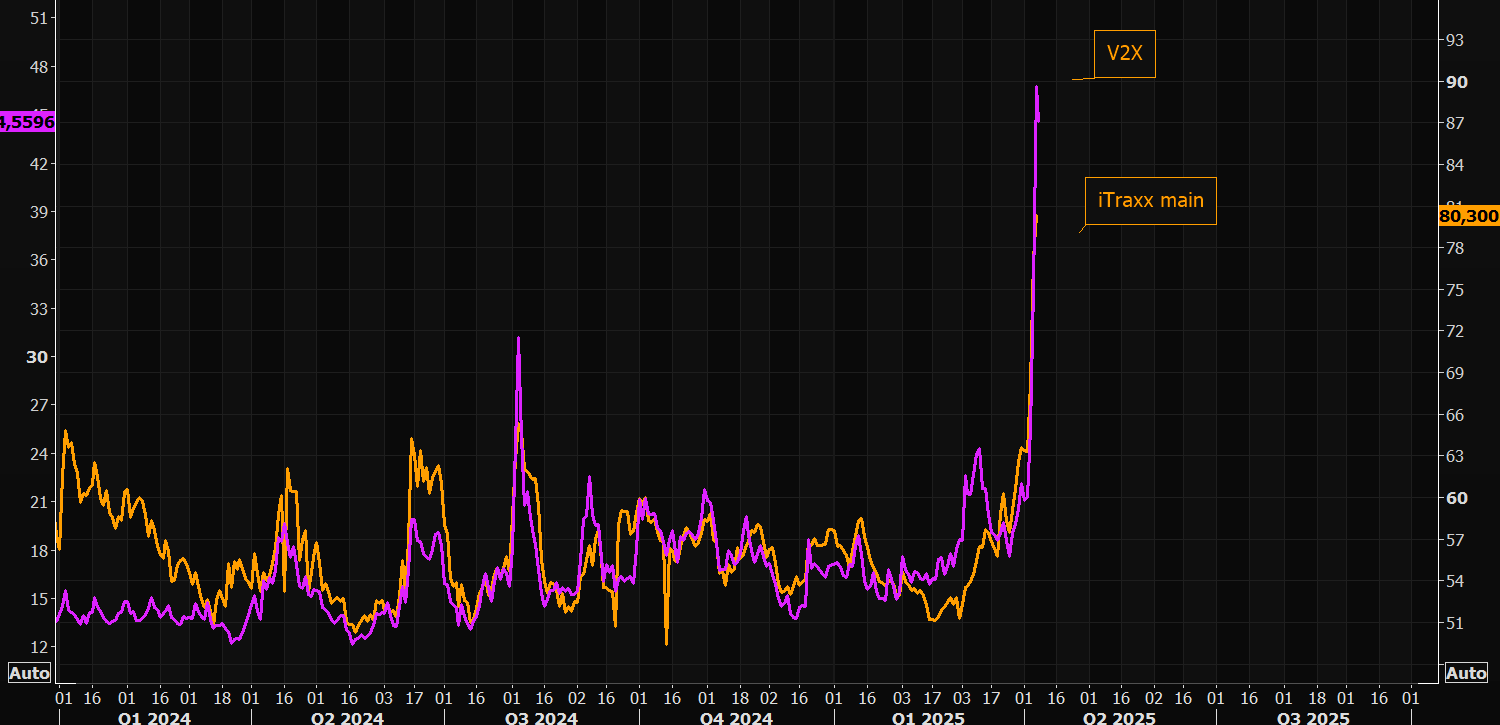
Europe as well

V2X vs iTraxx main.

Source: Refinitiv

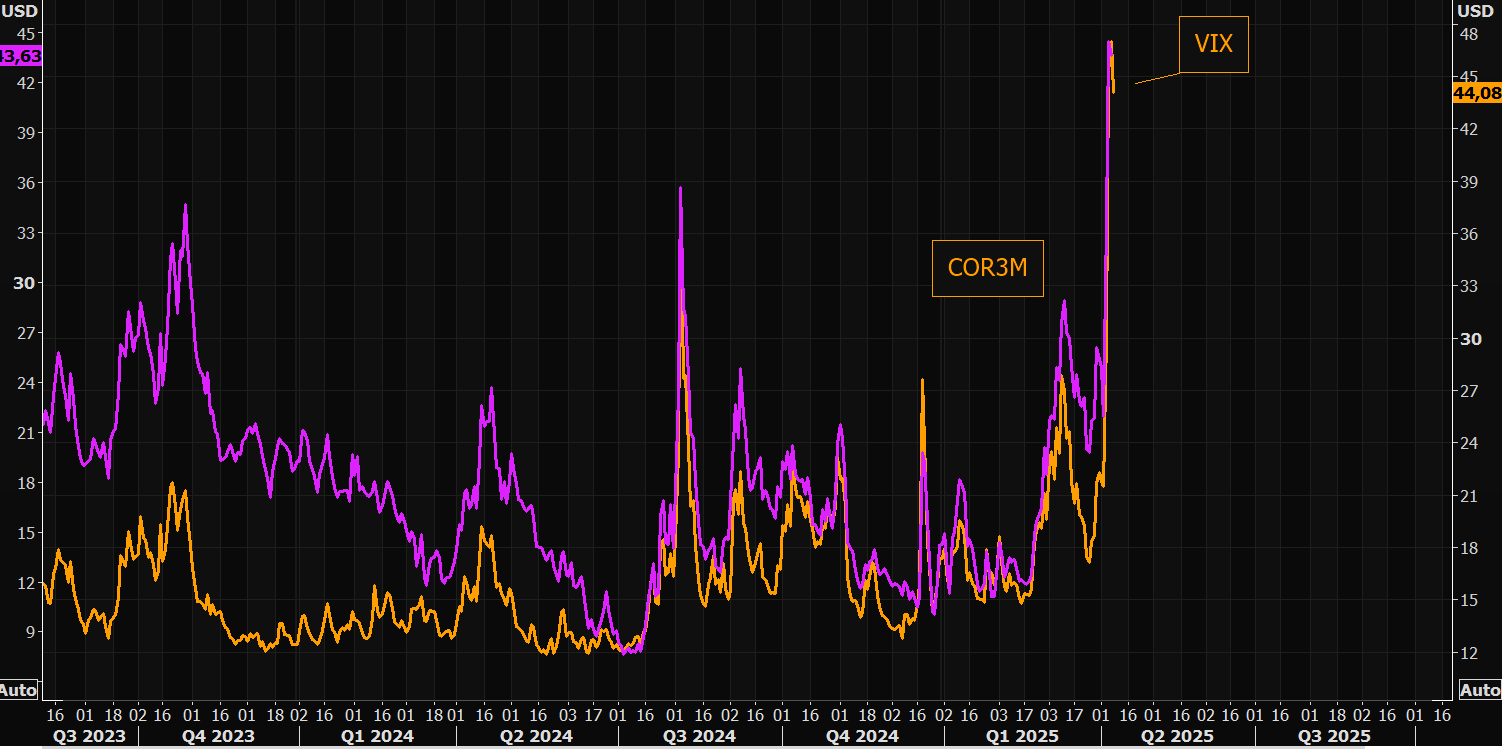
Correlation – the upside crash

Implied correlations showing a lot of “fear” as pretty much everything has been treated as if it were the “same” during the crash.

Source: Refinitiv

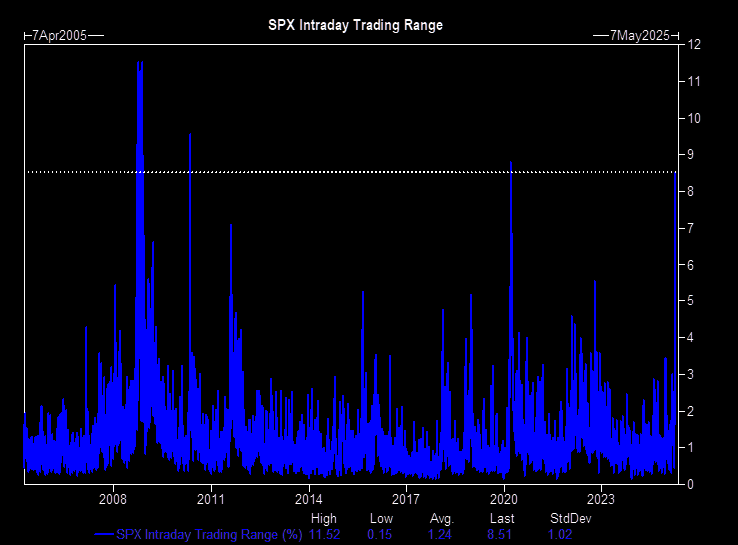
Massive

Intraday range was huge during yesterday’s session, but close to close very modest. Imagine trading short gamma….and hedging the extremes.

Source: GS

The Yuan is having a volatile day.

Fear!

Surprise … NOT! Biden’s Failed Policies Resulted In Citi’s Economic Surprise Index Falling To -7.80 In February

In appreciation of German conservatives winning in their recent election,

Citi’s economic surprise index fell to -7.80 in February. This is the remnant of Biden/Democrats horrible economic policies and fear of Trump’s tariff policies.

Gold, Bitcoin and the S&P 500 are doing quite well on the prospects for growth in the US under Trump.

The US economy like an aircraft carrier, doesn’t turn on a dime. Think of the Japanese carriers at Midway in WWII. Thanks Admiral Biden! And Rear Admiral Harris!

Hey Big Spender! US Gov’t Pays $3 BILLION In Interest Per Day (Federal Unfunded Liabilities At $219 Trillion While Total US Assets At $213 Trillion)

Hey Big Spender! (Federal Government).

The US government now pays out on average $3bn in interest expenses per day…If the Fed cuts interest rates by 1%-point and the entire yield curve declines by 1%-point, then daily interest expenses will decline from $3bn per day to $2.5bn per day.

Even worse, unfunded Federal liabilities total $219 trillion while total US assets total only $213 trillion. In other words, if China (for example) forced us to pay off our unfunded liabilities like Social Security, Medicare, etc., we couldn’t.

Notice how NO politician ever discusses The Federal goverment spending LESS money. Particularly not Joe “The fool on the hill” Biden or Kamala “Word salad Kammie” Harris.