US Treasury Yield Curve Now Back Where It Stated With Biden At The Helm (Inflation Crushing America And The Yield Curve)

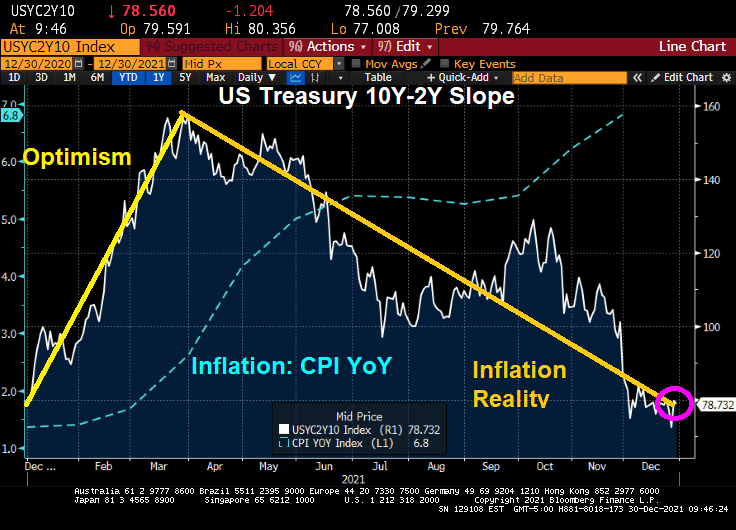
It has been almost a year since Joe Biden has been President of the United States and a Democrat majority took control of The House and Senate. And what has happened to the US Treasury yield curve slope over the past year?

The yield curve is back where it started. There was the “honeymoon effect” where the curve slope rose. After all, Biden was Obama’s Vice President for 8 years and The Democrats has promised so much in the 2020 election. But by early April, the reality of the massive Federal spending (combined with Fed Stimulypto) began showing what was feared: inflation (blue line) started to grow at a rapid rate of speed. With inflation now at 6.8% YoY,

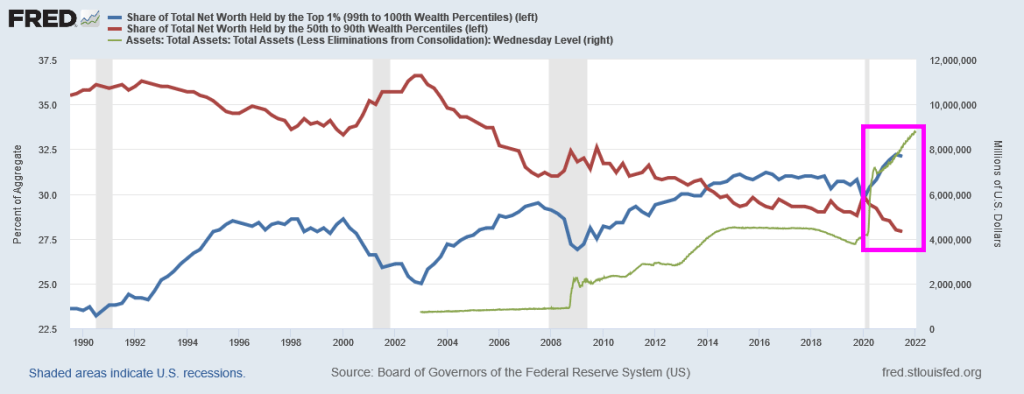
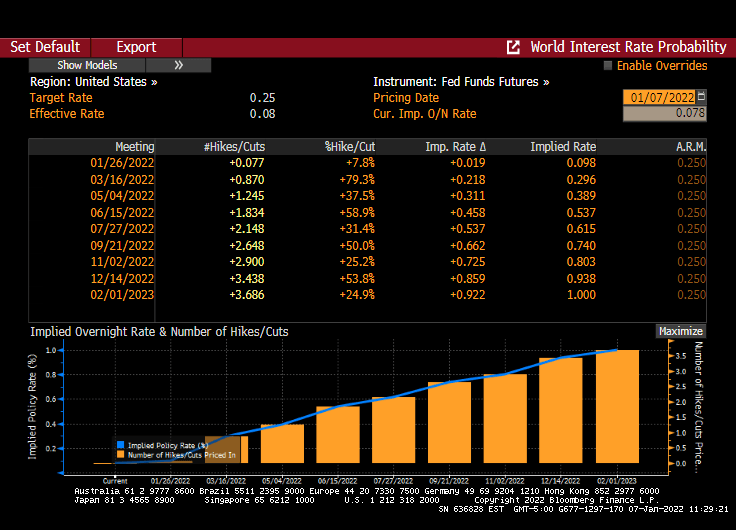
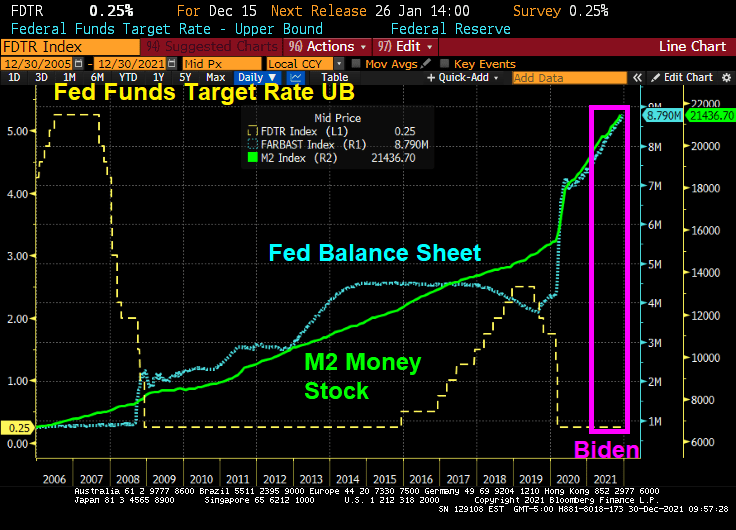
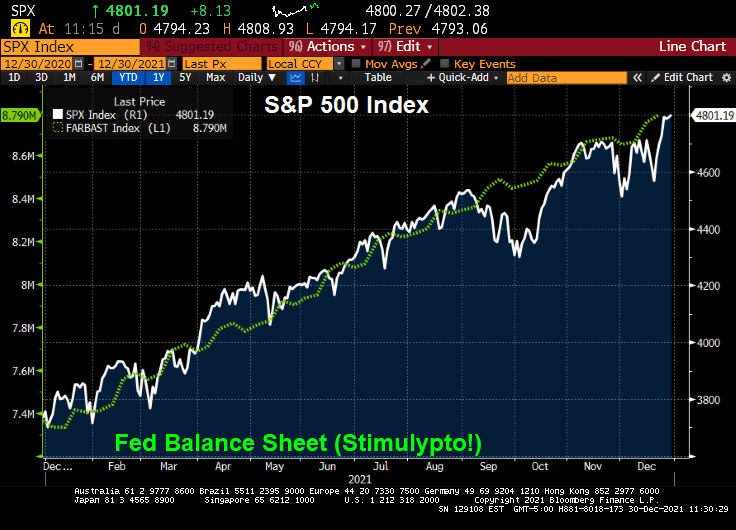
In fairness to Biden, The Federal Reserve has been overstimulating the economy since The Federal Reserve since Ben Bernanke and the Fed Open Market Committee (FOMC) dropped the hammer on The Fed Funds Target Rate once the rate hit 5.25% in September 2007. They kept cutting it reached 25 basis points (or 0.25%) in December 2008. In August 2008, Bernanke and Company began their “Quantitative Easing” or asset purchasing programs. Between The Fed’s Target Rate and QE, The Fed has continued to overstimulate markets ever since. Under Biden, The Fed Funds Target Rate remains at 0.25% and The Fed’s Balance sheet has grown to $8.79 Trillion (bigger than the entire economies of Japan and Germany put together!).

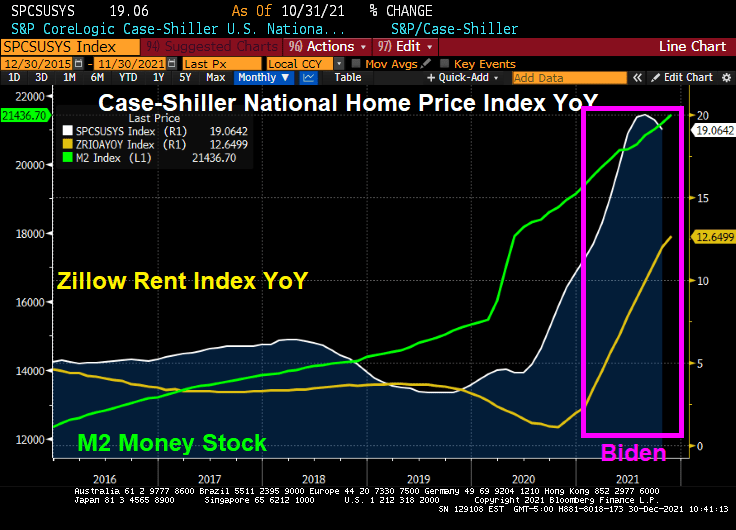
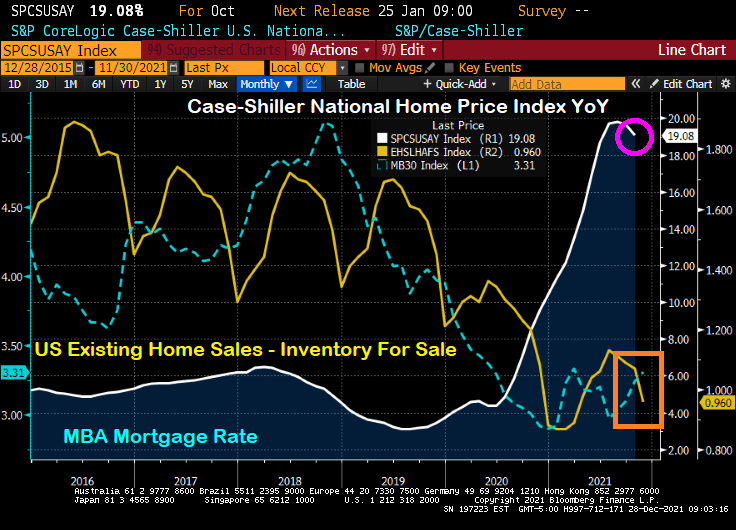
How about housing? Home prices are growing at 19% YoY while rents are growing at 12.65% YoY.

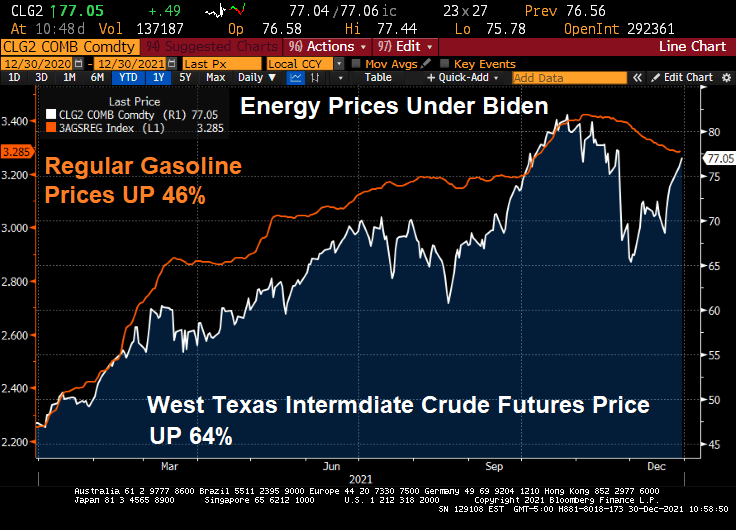
Energy prices have risen dramatically under Biden. Gasoline is up 46% despite a slight reprieve recently. WTI crude prices are up 64%.

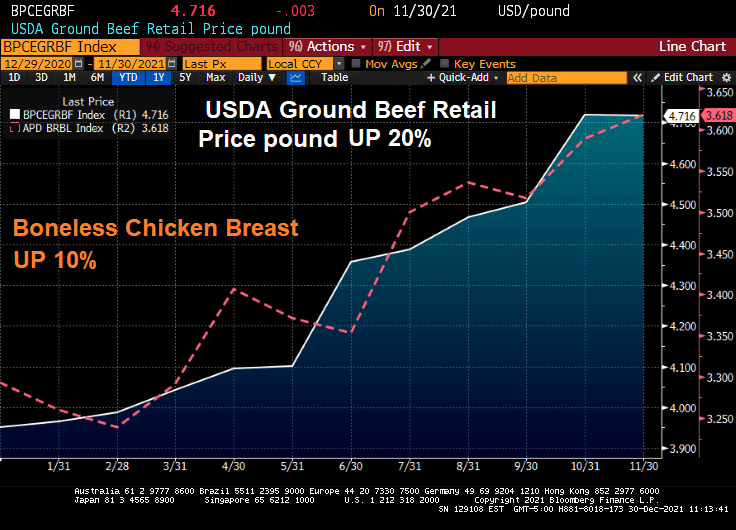
How about food? Beef prices are up 20% and chicken prices are up 10%.

On a positive note, the S&P 500 index has soared … thanks has soared during Biden’s term thanks to Fed stimulus and Federal spending on COVID.

The Build Back Better Act if passed (in its entirety or on a piecemeal basis) will lead to even MORE inflation.

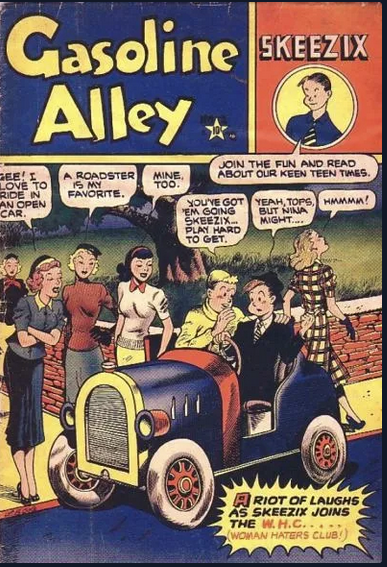
Perhaps Biden’s spokesperson Jen Psaki can recreate the Biden Administration as a lovable, hilarious family like the comic strip Gasoline Alley with old Joe Biden as Skeezix. And insider-trading star, House Speaker Nancy Pelosi as the family matriarch.

FOMO Housing Market: October Home Prices “Slow” To 19.08% YoY As Mortgage Rates Rise (Phoenix Fastest At 32.3% And Minneapolis And Chicago Slowest At 11.5%)

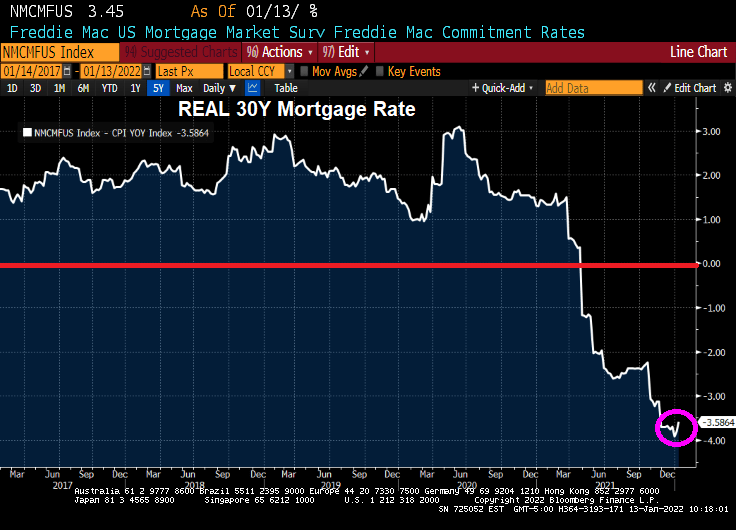
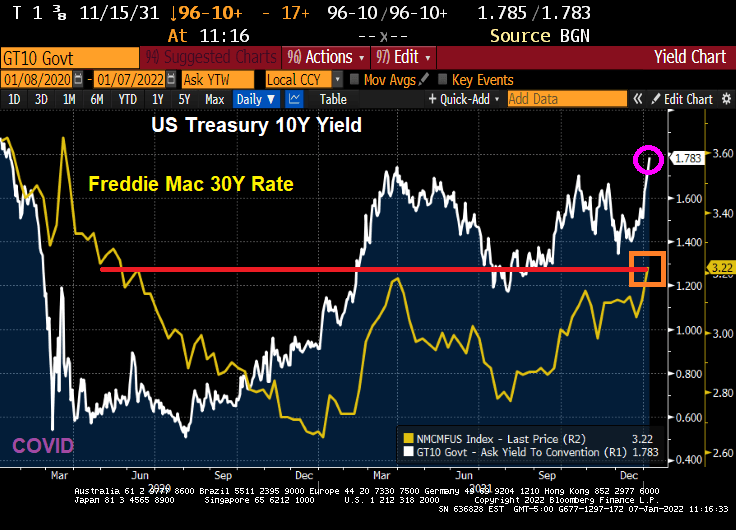
There is a lot going on in the US housing market. Excessive monetary stimulus keeping mortgage rates low, historically low inventory available for sale, and FOMO (fear of missing out … on rapidly rising home prices).

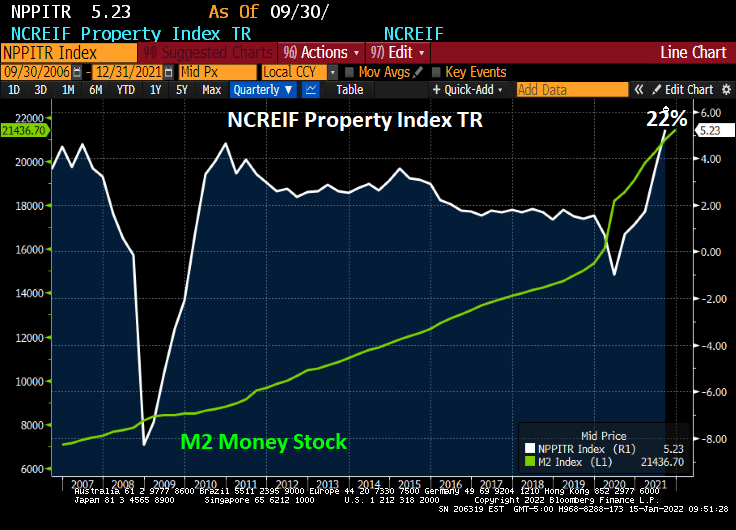
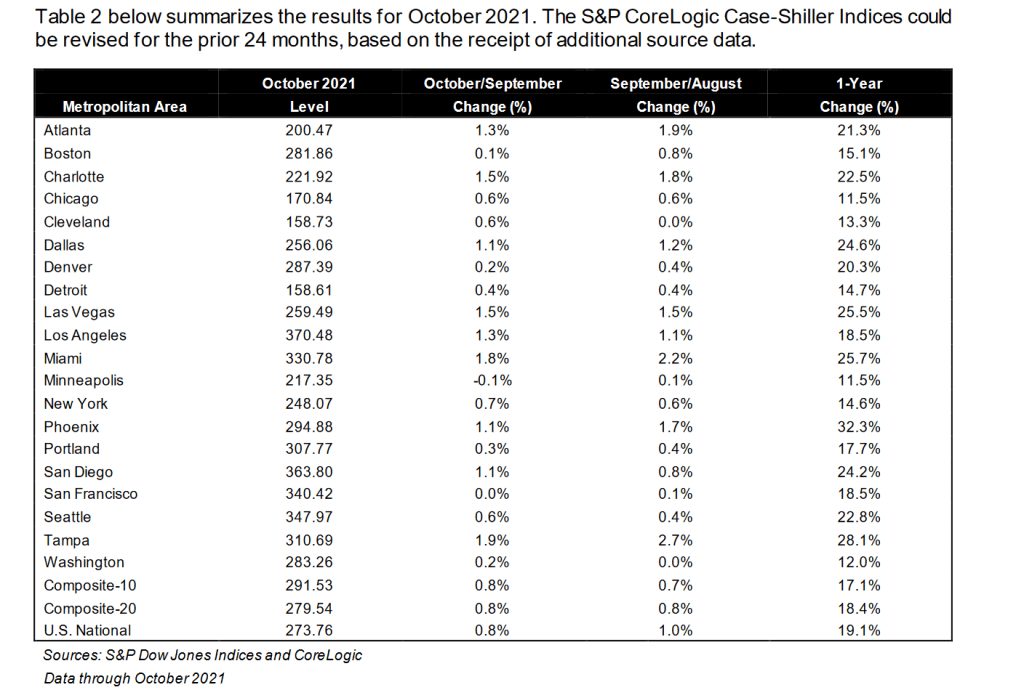
The Case-Shiller repeat sales index for October is out … and the national home price index “slowed” to 19.08% YoY as mortgage rates rose. Note that available inventory of homes for sales remains very low.

By metro area, Phoenix AZ once again leads with 32.3% YoY. Minneapolis MN is the slowest growing metro area in terms of home prices at 11.5% (tied with Chicago, IL).

A distant relative of Anthony Fauci.

Simply Unaffordable! Housing Has Gotten More Unaffordable Over Past Year (Addicted To Gov)

Housing in the US is getting “simply unaffordable.” And it has gotten far worse over the past year. Thanks to BAD government policies.

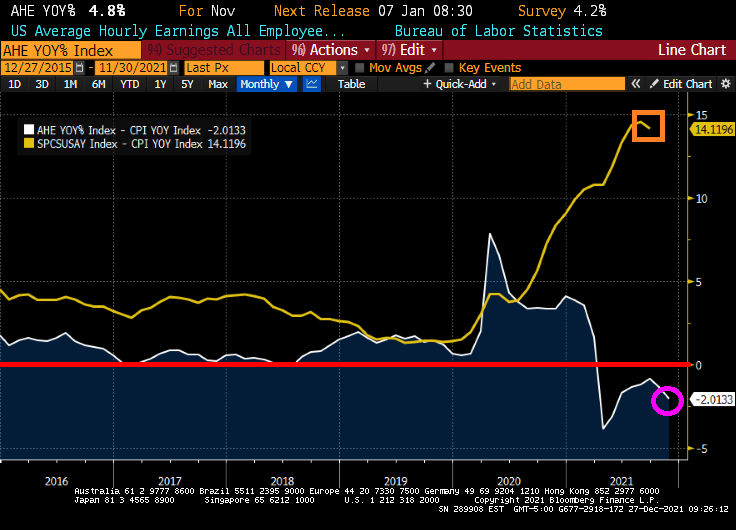
While wage growth is positive, inflation is sucking the life from consumers. REAL average hourly earnings growth is -2.0133%. Even worse, home prices are rising at a 14.12% pace in REAL terms. So, wages are losing to inflation and housing is pulling away from renters in terms of affordability.`

This image has an empty alt attribute; its file name is realwagecs.png

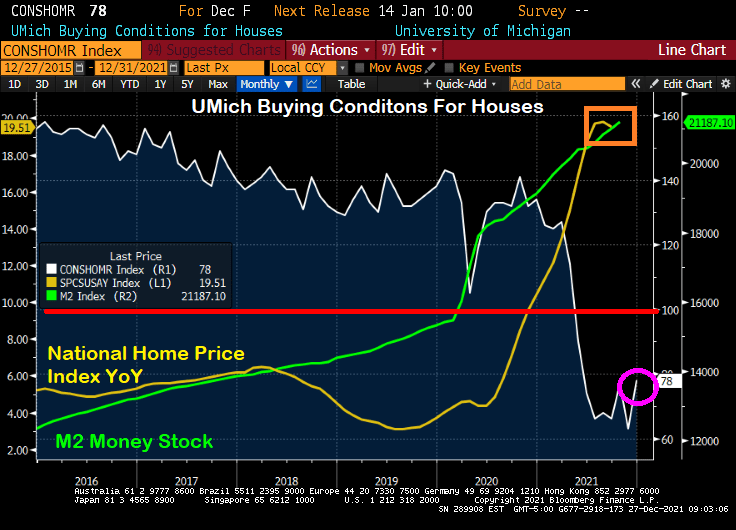
So it is not surprising that the University of Michigan consumer survey for “Buying Conditions For Housing” remains below 100 (meaning that more people think buying conditions for housing are negative than positive). With the Case-Shiller National home price index growing at a 19.51% YoY pace, it is no wonder that consumers are getting scared of the housing market.

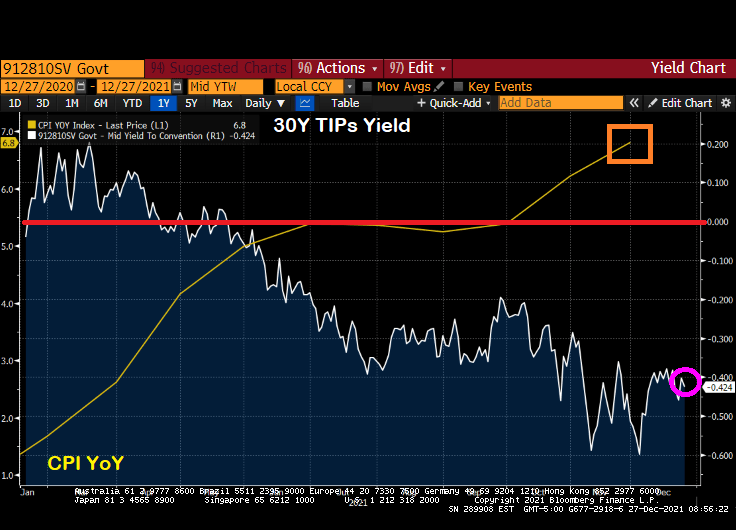
Yes, US inflation is at a 40-year high and the 30-year Treasury Inflation Protected (TIP) yields is at -0.424%. That says quite a bit about the pickle US consumers are in.

US consumer confidence overall has declined to the lowest level since just after the financial crisis and housing bubble burst of 2008-9.


Doctor, Doctor (Yellen), please don’t try to make housing more “affordable” which will result in housing being even LESS affordable.

But I do like how Biden took credit for lowering gasoline prices a little after his anti-energy policies drove up gasoline prices in the first place from $2.20 to $3.40 a gallon, a 55% price increase. Thanks for nothing, Joe!

And with Omicron raging (with few reported deaths), Anthony Fauci, President Biden’s top medical adviser, indicated support for making vaccinations a requirement for domestic fights.

More loss of personal freedom, more government control. We are truly addicted to gov.

Fed Reverse Repo Usage Rises to Record for Fourth Straight Day As Turkish Lira Volatility Hits All-time High And US Current Account Balances Rise To 2006 Levels

(Bloomberg) — The amount of money that investors are parking at a major central bank facility climbed to yet another all-time high as supply-demand imbalances continue to dog U.S. dollar funding markets. 

Eighty-one participants on Monday placed a total of $1.758 trillion at the Federal Reserve’s overnight reverse repurchase agreement facility, in which counterparties like money-market funds can place cash with the central bank. That surpassed the previous record volume of $1.705 trillion from Dec. 17, New York Fed data show.

Demand for the so-called RRP has climbed further as principal and interest payments from government-sponsored enterprises has entered short-end funding markets. However, that cash is expected to exit the overnight space by the end of the week as the Treasury ramps up its issuance of Treasury bills now that Congress has increased the debt limit. 

Overall volume has been rising this year as a flood of cash continues to overwhelm the U.S. dollar funding markets due to central-bank asset purchases and the drawdown of the Treasury’s cash account, which is pushing reserves into the system. The larger takeup looks set to persist even as the Fed tapers its asset-purchase program — something it began this month — because the supply-demand imbalances in short-end securities are likely to persist.

Then we have the Turkish Lira volatility hitting an all-time high.

And finally we have the US Current Account Balance rising to levels last seen in 2006 just after the peak of the US housing bubble.

Mele Kalikimaka!

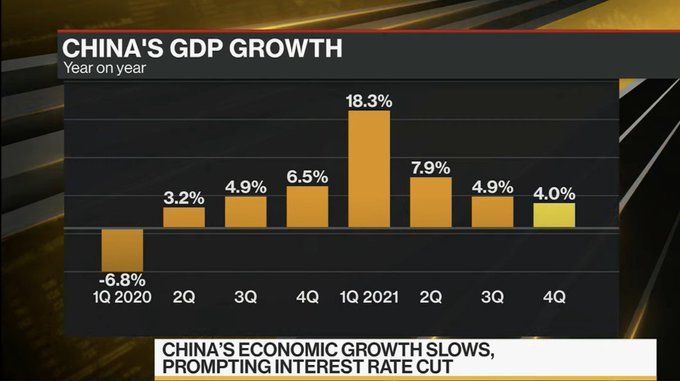
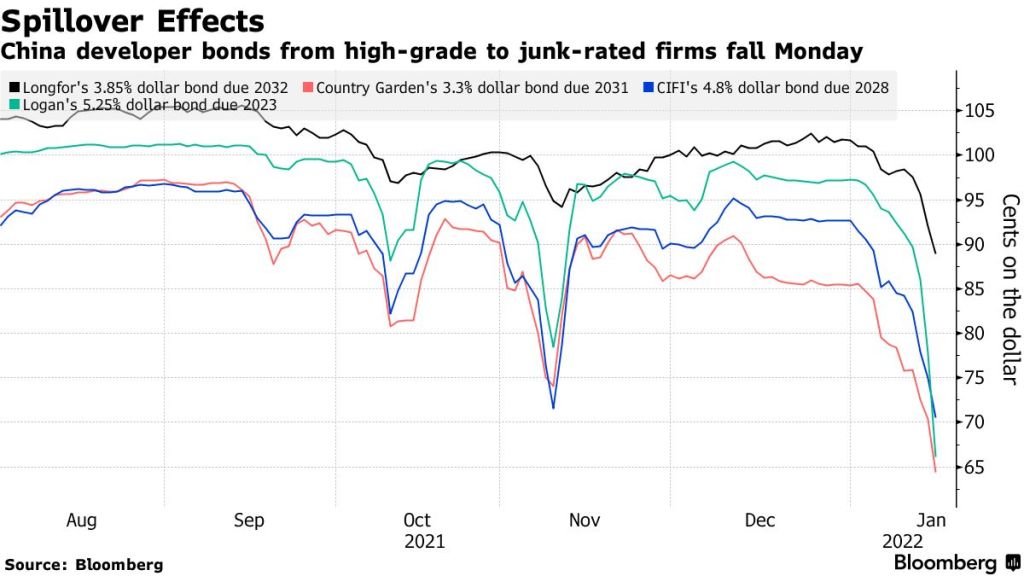
China Contagion (Not Wuhan Virus, But Real Estate), Kaisa Down 13%, Evergrande Down 4.32%, Shimao Down 6.40%, Chinese Estates Down 30.42%

While the Chinese Wuhan virus (aka, the Fauci Flu) has plagued the world, another Chinese “export” is also suffering what is known as contagion: China’s real estate sector.

Real estate companies Evergrande, Kaisa, Shimao and Chinese Estates are falling like a rock today.

But it has been a steady decline since Q1 2021 except for Chinese Estates. But they have resumed their death dive.

On the debt side, Evergrande is down to 18.856 while Kaisa has lost less (but still quite a bit) and Shimao’s bond look almost like a good investment, relative to Kaisa and Evergrande. But they are all sucking wind. Maybe they all have the Fauci Flu?

Let’s see if this latest Chinese “export” washes ashore in the USA.

Evergrande Now Nevergrand! Evergrande Declared in Default by S&P For Failed Coupon Payments

It was bound to happen given the growth rate of Chinese real estate construction.

(Bloomberg) — China Evergrande Group was labeled a defaulter by S&P Global Ratings, the second credit-risk assessor to do so.

S&P Global cut Evergrande to “selective default” over its failure to make coupon payments by the end of a grace period earlier this month, a move that may trigger cross defaults on the developer’s $19.2 billion of dollar debt. S&P Global also withdrew its ratings on the group at Evergrande’s request.

Fitch Ratings was the first to declare the property developer in default on Dec. 9. Long considered by many investors as too big to fail, Evergrande has become the largest casualty of Chinese President Xi Jinping’s campaign to tame the country’s overindebted conglomerates and overheated property market. Concern has since spread to higher-rated firms like Shimao Group Holdings Ltd. as liquidity stress intensifies

A cautionary tale of government pushing real estate construction.

U.S. Producer Prices Jump in Biggest Annual Gain on Record (9.6% YoY Versus CPI Of 6.8%)

Yes, we have trouble in river city with a capital T than rhymes with P and that stands for Producer Prices.

Prices paid to U.S. producers posted a record annual increase of almost 10% in November, a surge that will sustain a pipeline of inflationary pressures well into 2022.

The producer price index for final demand increased 9.6% from a year earlier and 0.8% from the prior month, Labor Department data showed Tuesday. Both advances topped economists’ forecasts.  

Even more interesting (or frightening) is that PPI Final Demand YoY is soaring faster than CPI YoY. If CPI catches up to PPI, then we have serious trouble.

With inflation seemingly growing out of control, Powell and Biden should sing “76 Trillion Dollars” which will be the US national debt after Biden and Congress get done with their spending splurge.

Jerome Powell directing The Inflation Orchestra.

Biden’s Build Back Better Act May Add $3 Trillion To The Federal Deficit (And Cost $4.73 Trillion)

Call it “The Letter That Phil Swagel Wrote.”

The letter from Phil Swagel, Director of the Congressional Budget Office, sent a letter to Congress stating that

“The Congressional Budget Office and the staff of the Joint Committee on
Taxation project that a version of the bill modified as you have specified
would increase the deficit by $3.0 trillion over the 2022–2031 period.”

In short, members of Congress asked the CBO “What would happen if the programs in the bill would be made permanent (which they almost always are made permanent). The result? The Letter That Phil Swagel Wrote: Federal Deficits would increase by $3.0 trillion over the next 10 years.

The Center For A Responsible Federal Budget is even more glaring. The permanent cost of Build Back Better is $4.73 trillion … and a deficit of $3.01 trillion.

Here is all 2,466 pages of the Build Back Better Act (or Build Back Deficits Act).

The Penn-Wharton Budget Model estimates that — if Congress follows White House policy to make most provisions permanent — then Build Back Better will reduce the long-term GDP by 2.8 percent, reduce wages by 1.5 percent, and reduce work hours by 1.3 percent. The only thing it will expand is government debt, by 25 percent.

Build Back Badly?

Psst! US Inflation Is REALLY >11% YoY (Not The Stated 6.9% YoY)

Earlier today I wrote about the horrible November Consumer Price Index (CPI) print of 6.9% YoY.

But that 6.9% YoY is very misleading because of the strange way the Bureau of Labor Statistics measures the largest asset in most households’ expenditures: housing.

The BLS measures inflation in housing using the Shelter measurement. Which was only 3.88% YoY. The problem is that the Case-Shiller National Home Price Index was 19.52% in its last reading. That is quite a discrepancy.

So, if we substitute the Case-Shiller National home price index for the CPI Shelter, we get an inflation rate of greater than 11%.

And with the Zillow Rent for all homes index growing at 11.2%, this feels more like we are being hit over the head with. Or like trying to eat raw oyster stew … when the oyster fight back.

Here is a video of The Federal Reserve and the Biden Administration trying to control inflation.

Real Wage Growth Falls To -1.9% As Inflation Rises To 6.8% In November (Taylor Rule Rate Rises To 16.94% While Fed Remains At 0.25%)

Inflation keeps rising and consumers keep getting hurt. No wonder President Biden’s team sent out a media splash asking them to put a smile on that face and hype the economic recovery.

Real wage growth fell to -1.9% YoY in the latest Consumer Price release. As The Fed keeps its massive foot on the monetary gas pedal.

The overall Consumer Price Index (CPI) rose 6.8% YoY.

The biggest gains in Consumer Prices were for energy with gasoline rising 58.1% YoY. But almost nothing was spared the rod of government policies.

Core inflation (CPI – energy – food) rose to 4.9% YoY, the highest since 1991.

The Taylor Rule, what The Fed Funds Target rate SHOULD be, rose to 16.94%. Versus the current rate of 0.25%. Its as if The Fed Open Market Committee is watching Tik-Tok instead of the economic numbers.