How Fed Tightening Of Rates, Not Balance Sheet, Impacts Mortgage Rates (NAHB Traffic Tanks In August)

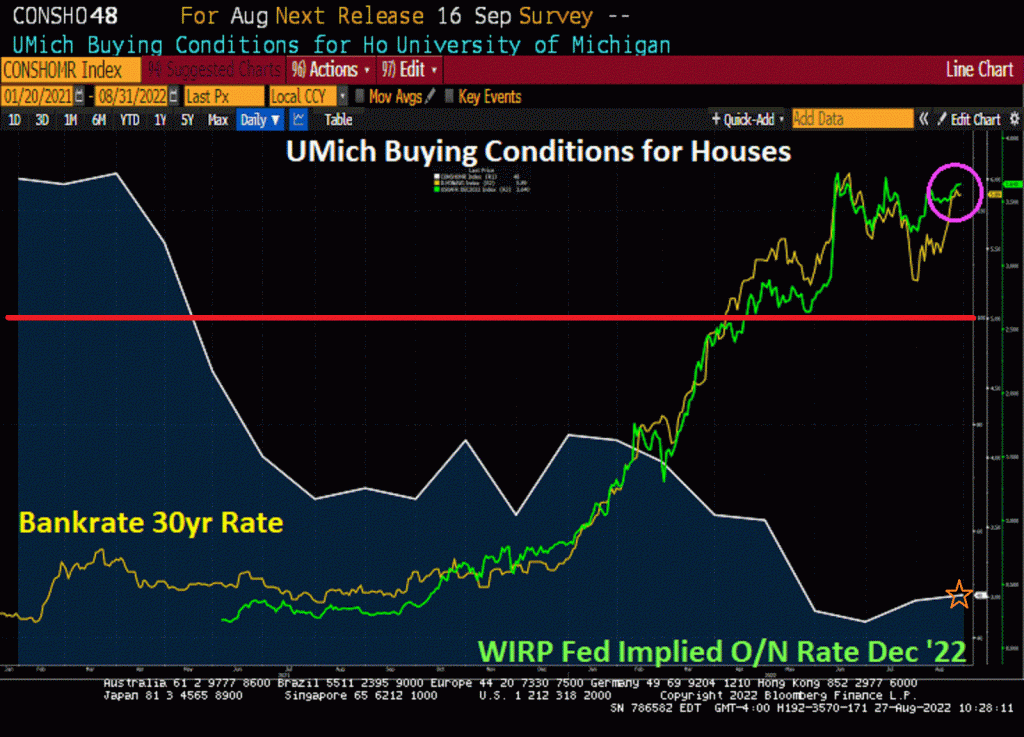
The US housing market is sensitive to Fed “catch-up” monetary tightening. For example, the NAHB’s traffic of prospective homebuyers declined rather dramatically in August as The Fed tightened rates and the 30yr mortgage rate rose. That is what I call a “Nestea Plunge.”

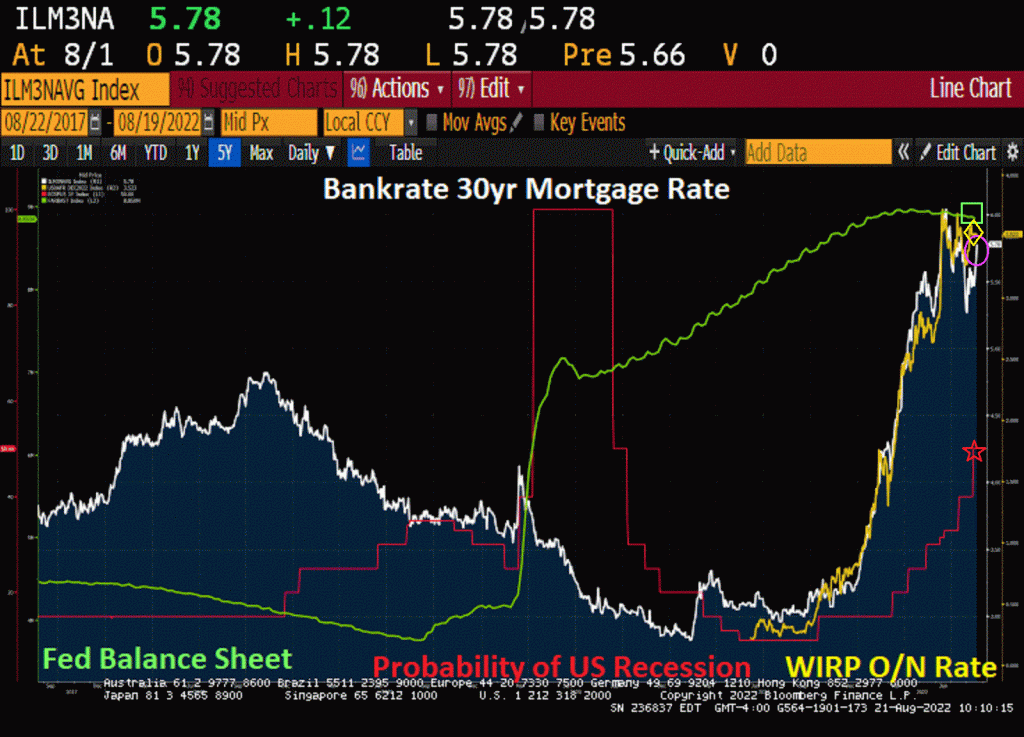
How are mortgage rates impacted by Fed monetary policy? While The Fed began really “sloshing” markets with excess stimulus (QE in late 2008), the latest round of QE (or asset purchases) came with the US Covid shutdowns (what genius thought of that??) and that stimulus has NOT been withdrawn yet. Only the Fed Funds Target rate has tightened.

The 30yr mortgage rate rose with Fed rate tightening, but the Fed’s System Open Market Holdings (SOMH) of Treasury Notes and Treasury Bonds has come down a bit. But not the pare-down The Fed has hinted at. The 30yr mortgage rate is cooling as the prospect of future Fed rate hikes declines.

As of this morning, The Fed Funds Futures market points to rates rising until March 2023 … then easing again.

One reason The Fed has been slow to sell assets off its balance sheet is that a large chunk of T-Notes and T-Bonds are maturing shortly. It will be a matter of whether The Fed reinvests the proceeds or lets the balance sheet wind-down.

The Magic Formula For REIT Investing (What Will The Fed Do?) Powellburg Omen??

Real estate investment trusts (REITs) are an interesting asset class, allowing investors to purchase shares in large-ticket assets like multi-family properties or shopping centers. But given the changing landscape due to online shopping (aka, the Amazon effect), Covid economic shutdowns, etc., REITs should be having a hard time. But aren’t. How come?

Covid economic shutdowns definitely took its toll on retail shopping centers, as an example. And you can see the plunge in the NAREIT All equity index in early 2020. But the NAREIT All-equity index rallied … until The Federal Reserve started tightening their loose monetary policy. Note that as the implied O/N rate rose (orange line), REIT shares declined.

But as the WIRP implied O/N rate settled (pink box), the NAREIT index began to climb again. It is clear that REITs, like other equities, benefit from Fed easing. But how long will The Fed continue tightening?

As of this morning, The Federal Reserve is anticipated to raise their O/N rate to 3.738% by March 22, 2023. Then begin lowering their target rate … again.

Sadly, REITs, like other equity investments such as the S&P 500 index, are sensitive to The Fed’s easing/tightening. Look for REITs to struggle as The Fed tightens, then rally as The Fed eases again.

Here is the (in)famous Hindenburg Omen. Notice how the Hindenburg Omen alarm bells (yellow and red dots) have been silenced by The Fed. But as The Fed tightens (at least until March ’22), we may see the Hindenburg Omen flashing again. Call it the Powellburg Omen.

The NCREIF property index had a decline in the Covid-outbreak era (early 2020) and you can see a slight slowdown in the NCREIF index as The Fed started tightening to fight inflation.

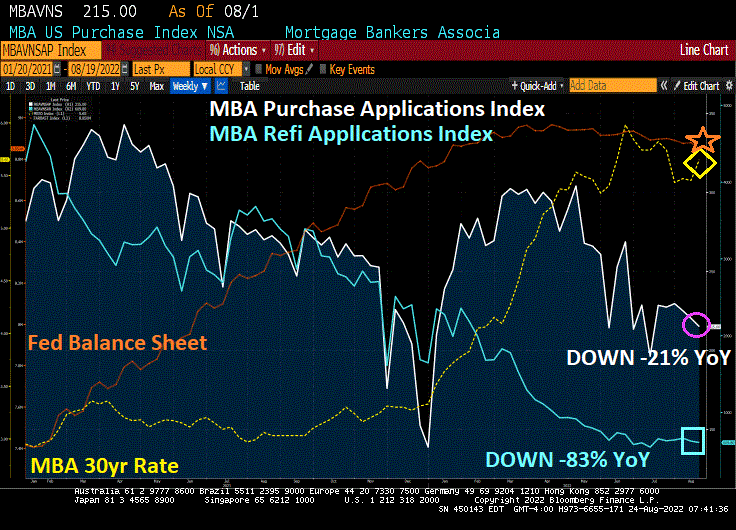
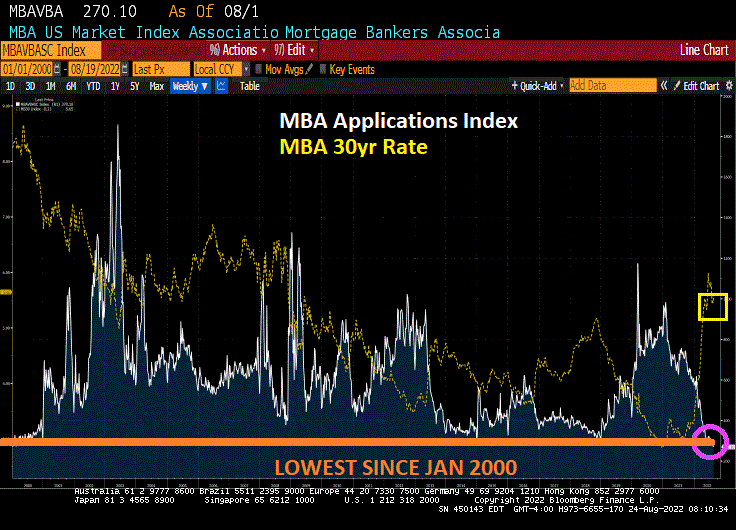
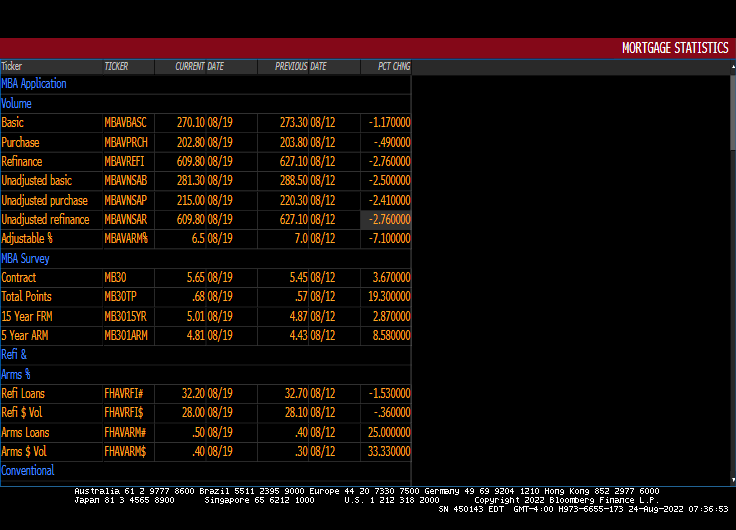
MBA Mortgage Purchase Applications Down 2% WoW, Down 18% YoY (Refi Apps Down 5% WoW, Down 82% WoW)

Mortgage banking in today’s environment reminds me of downhill skiing. Lots of danger lurking ahead.

Mortgage applications decreased 2.3 percent from one week earlier, according to data from the Mortgage Bankers Association’s (MBA) Weekly Mortgage Applications Survey for the week ending August 12, 2022.

The seasonally adjusted Purchase Index decreased 1 percent from one week earlier. The unadjusted Purchase Index decreased 2 percent compared with the previous week and was 18 percent lower than the same week one year ago.

The Refinance Index decreased 5 percent from the previous week and was 82 percent lower than the same week one year ago. 

Please bear in mind that we are in the “dog days” of mortgage applications. Purchase applications usually peak in April/May, then it is all down hill until the end of the year.

US Industrial Production Slows Slightly To 3.90% YoY As Capacity Utilization Rises To 80.27% In July (But M2 Money Growth Is Shrinking Awfully Fast And 10Y-2Y Yield Curve SCREAMS Impending Recession!)

Today’s US industrial production and capacity utilization numbers showed a nice “steady as she goes” slow decline from previous months, though still positive at 3.90% YoY.

And it is difficult to argue that the US is in a recession when capacity utilization is at 80.27%.

Notice that industrial production growth falls below 0% during a recession and capacity utilization slumps. We are NOT there … yet.

However, M2 Money growth is shrinking awfully fast.

While the US is technically in default (two consecutive quarters of negative GDP growth), it doesn’t FEEL like a recession with 3.90% YoY industrial production growth and capacity utilization above 80%. During the Covid recession in early 2020, industrial production growth YoY had declined to -17.65% and capacity utilization shrank to 64.53%.

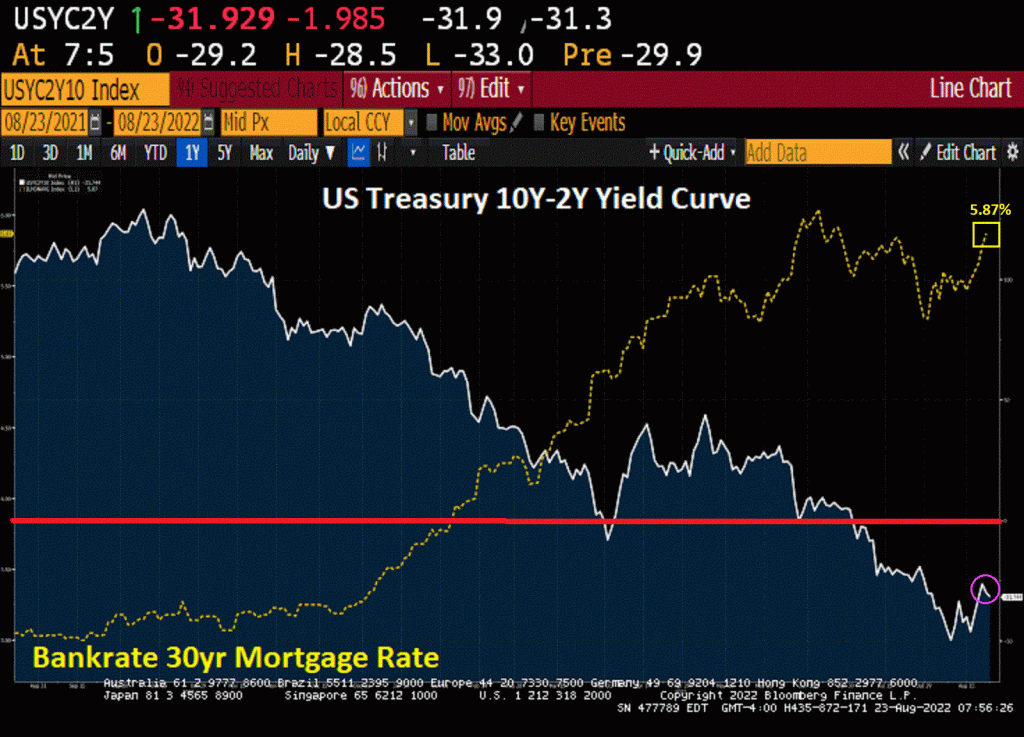
Speaking of a recession SIGNAL, the 10Y-2Y Treasury yield curve is SCREAMING impending recession.

Meet Me At The Bottom? US Housing Starts (1-Unit) Tank -18.5% YoY In July (Down -10.11% MoM, Apartment Starts Down -10% MoM)

Meet Me At The Bottom … of the housing market?

As The Federal Reserve fights inflation (caused by too much Fed stimulus for too long) and Federal energy policies, we are seeing mortgage rates rising and the housing market decaying.

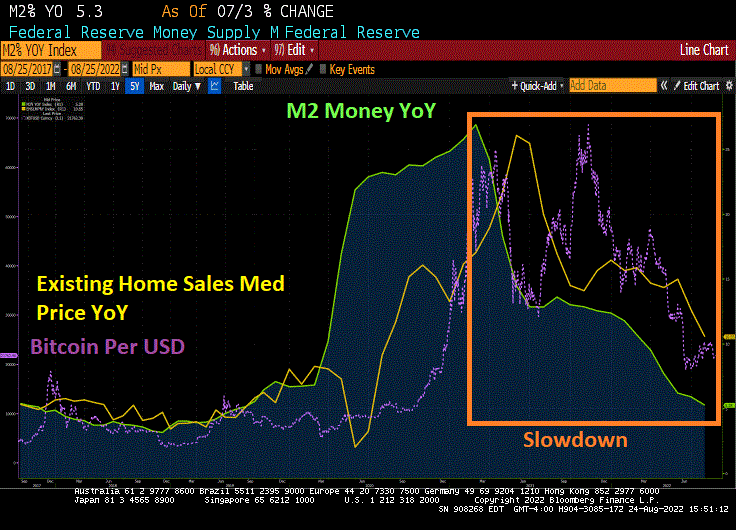
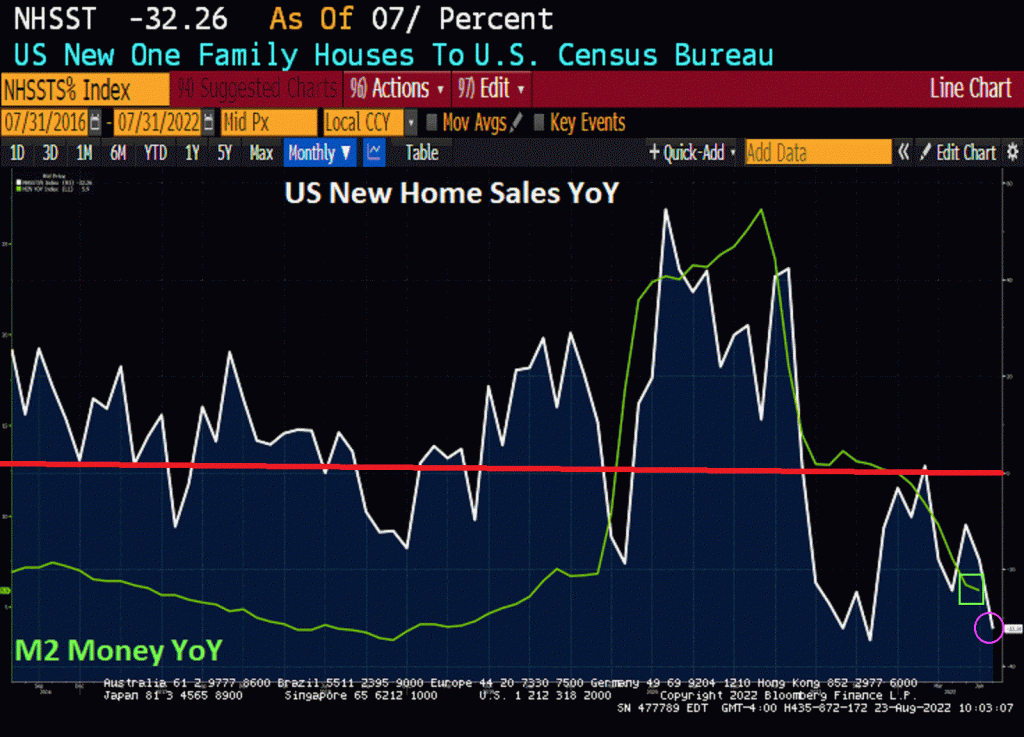
1-unit (single family detached) housing starts dropped -18.5% YoY in July as mortgage rates rose in 2022. Note the impact of the Covid stimulus (green line) and the resulting surge in housing starts in April 2021, but housing starts have decayed as M2 Money growth slows.

5+ unit (apartment) starts were down -10% MoM in July, but at least permits for apartments rose +2.51% MoM.

Well, we at least know why the NAHB Homebuilder index sucked wind so badly yesterday.

Perhaps the housing market needs a little spoonful of QE.

US Home-Sale Cancellations Soar in July (16% Of Properties That Went Into Contract) As Buyers Pull Back

The number of US home-purchase deals that fell through jumped in July as buyers continued to back away from the market amid rising mortgage rates. 

Roughly 63,000 home-purchase agreements were cancelled in July, equal to about 16% of properties that went into contract that month, according to an analysis by Redfin Corp. That was up from 15% of deals that fell apart in June. A year earlier, when the housing market was running hot, it was about 12.5%.

The pandemic housing frenzy has cooled off amid the Federal Reserve’s efforts to control inflation by increasing interest rates. Mortgage costs have also jumped, sidelining many potential buyers who can no longer afford properties after a sudden run-up in borrowing costs. 

Alarm! US Home Builder Index Falls Below 50 As Fed Tightens Monetary Noose

Alarm!

The National Association of Home Builders Market Index slipped into darkness … that is, dropped below 50 to 49 in August as The Federal Reserve continues to tighten its uber-loose monetary policy, resulting in rising mortgage rates.

Note the plunge in the NAHB market index as mortgage rates began rising.

The Empire Strikes Out! Empire State Manufacturing Survey Collapses In August (-31.3), Worst Since Covid Shutdown And Great Recession

The Empire Strikes Out!

The US Empire State Manufacturing Survey General Business Conditions, that is. It just crashed and burned (-31.3) in August, the lowest reading since The Great Covid Shutdown and before that The Great Recession.

The inverted US Treasury yield curve (10Y-2Y) is beginning to make sense.

Jay’s Famous Chili! M1 And M2 Money Velocity Crushed By Covid “Relief” As US Treasury Yield Curve (10Y-2Y) Remains Inverted

The 2020 Covid outbreak led to a massive (and generally awful) reaction. There were economic shutdowns that caused extensive damage (particularly to small firms), but it was the massive overreaction by The Federal government in terms of Covid relief and The Federal Reserve’s expansion of the money supply that caused considerable damage.

One truly horrific chart is that of M1 Money and M1 Money Velocity (M1/GDP). M1 Money surged with Covid driving M1 Money Velocity down to levels never seem before.

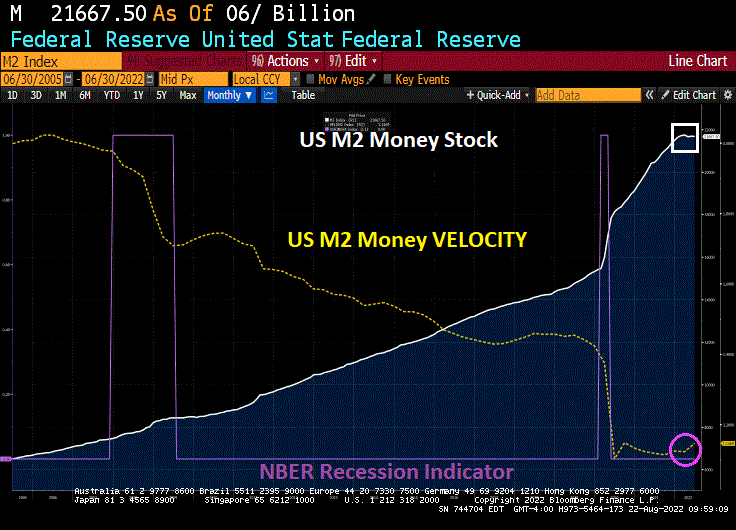
The broader measure of money, M2, isn’t as dramatic, but we also see that M2 Money VELOCITY has plunged to levels never seen before.

What does low money velocity indicate? Simply put, The Fed is printing trillions of dollars, but GDP isn’t moving much. But that won’t stop Congress from spending (and using The Fed to buy its debt).

So, here we sit. This morning, the US Treasury yield curve (10Y-2Y) remains inverted. This AM, the curve inverted another -.591 basis points to -42.725, a sign of impending recession.

Yes, we are living through Jay Powell’s famous chili episode where money velocity is near historic lows and we have an inverted yield curve.

BTW, congratulations to Will Zalatoris (aka, Happy Gilmore’s caddy) for his first PGA Tour victory at the FedEx St. Jude Championship!

Inflation: The Little People Tax (Food UP 10.91% YoY, Home Prices Up 20% YoY, Fed’s Reverse Repos Remains Over $2 TRILLION)

Only in today’s Kafkaesque (having a nightmarishly complex, bizarre, or illogical quality) Federal government would Biden, Schumer and Pelosi cheer about passing a bill hilariously called “The Inflation Reduction Act” that not only will NOT reduce inflation, but also raises taxes on most Americans.

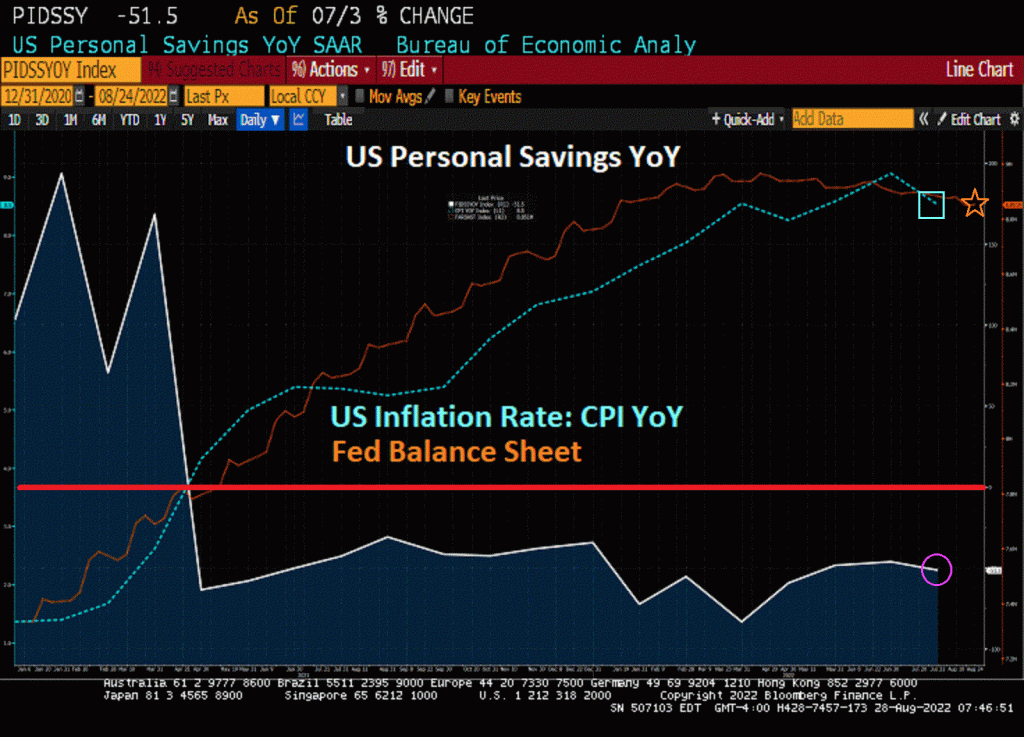
In terms of the inflation tax on the middle class and low-wage workers, we see that FOOD inflation was 10.91% YoY in July and the BLS’s low-ball estimate of “rent” at 5.76% YoY. Odd, since home price growth is 19.75% YoY.

The Fed’s monstrous balance sheet is still near $9 TRILLION (over stimulus) and The Fed’s Overnight Repo Facility remains near $2 TRILLION.

Industrial electricity costs (to be passed on to consumers in the form of higher prices) is up 24.4% YoY. Residential electricity cost is up “only” 7.4% YoY. (Source: Mish GEA)

I loved the Arizona Senator Kyrsten Sinema photo-op at the drought-plagued Lake Mead, where she bragged about $4 billion for drought mitigation. I really do hope that it works, but I fear that it will like Obama’s spending on green energy debacle like Solyndra. That is, billions spent and nothing improves.

Here is a painting of me standing at the Social Security office.