Are You Ready? Banks Postitioned For A Bail-in As Silicon Valley Bank Fails (FDIC, Fed Weigh Special Vehicle After SVB Collapses, AOC Alert!)

Are you ready?

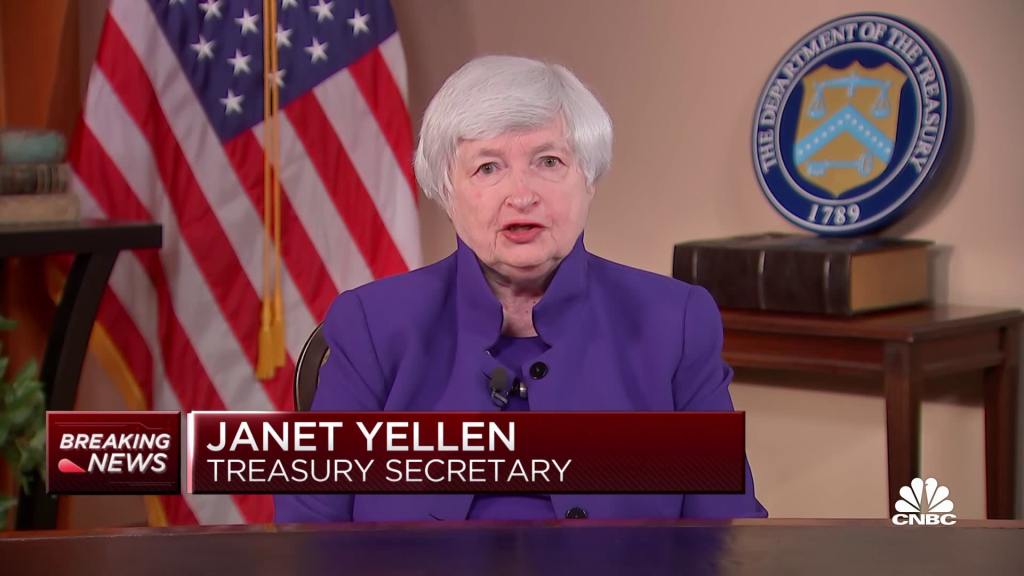
Despite cries from Summers, Yellen and other the DC illuminati (Biden is oddly silent), US banks are NOT fine. In fact, banks in general are suffering from Fed rates increases due to holding of long-term Treasuries and MBS.

In fact, The Federal Reserve’s fight against inflation is causing serious problems, as exemplified by AOC. No, not THAT AOC. but bank Accumulated Other Comprehensive Income.

Accumulated Other Comprehensive Income (AOCI) are special gains and losses that are listed as special items in the shareholder equity section of a company’s balance sheet. The AOCI account is the designated space for unrealized profits or losses on items that are placed in the other comprehensive income category.

On the regulatory call reports, AOCI is added to regulatory capital. Since SVB’s AOCI was negative (because of its unrealized losses on AFS securities) as of Dec. 31, it lowered the company’s total equity capital. So a fair way to gauge the negative AOCI to the bank’s total equity capital would be to divide the negative AOCI by total equity capital less AOCI — effectively adding the unrealized losses back to total equity capital for the calculation.

Getting back to our list of 10 banks that raised similar red margin flags to those of SVB, here’s the same group, in the same order, showing negative AOCI as a percentage of total equity capital as of Dec. 31. We have added SVB to the bottom of the list. The data was provided by FactSet:

Or this chart of vulnerable banks from Morningstar of unrealized losses and liquidity risk.

Here is a snapshot of SVB’s balance sheet. Or UNbalanced sheet.

After Congress passed the greatly flawed Dodd-Frank banking legislation, bailouts of banks are prohibited. But bank BAIL-INs still exist. Banks use money from their unsecured creditors, including depositors and bondholders, to restructure their capital to stay afloat. Put simply, they can convert their debt into equity to increase their capital requirements. Although depositors run the risk of losing some of their deposits, banks can only use deposits in excess of the $250,000 protection provided by the Federal Deposit Insurance Corporation (FDIC).

In any case, the FDIC and Fed are weighing a special vehicle after SVB swiftly collapses. Special vehicle? Sounds an awful like the mega bank bailout of 2008 under Hank Paulson.

No, not THIS AOC!

Fed Terminal Rate Falls To 5.475% On Only 311k Jobs Added After 504k Jobs Added In January (Silicon Valley Bank Seized By Regulators)

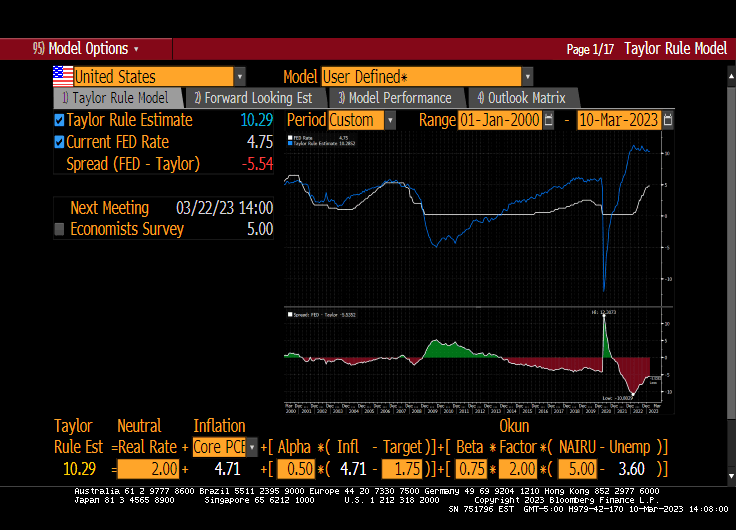
Its just like The Fed. The Taylor Rule says that The Fed’s target rate should be 10.29%, but now the terminal rate has been lowered to 5.475%, almost half of where the target rate should be.

Today’s jobs report for February was a huge disappointment IFF you expected another blowout jobs report like the one from January (504k jobs added). February saw just 311k jobs added, a decline of -38.3% MoM.

And just like that, The Fed’s terminal rate fell to 5.475%, a far cry from the 10.29% rate according to the Taylor Rule.

Today’s Fed Funds Target rate is 4.75% leaving only 72.5 basis points to move.

Today’s market hurl? The Dow fell -300 points and Europe looks like WWIII just broke out.

And the US Treasury 2-year rate plungeed -26.1 basis points.

Of course, Powell until recently followed the Yellen Rule. That is, keep rates at 25 basis points.

This is a classic communications breakdown between The Fed and the economy.

Let’s see if The Fed holds course with Silicon Valley Bank collapsing in biggest failure since 2008.

Silicon Valley Bank became the biggest US lender to fail in more than a decade after a tumultuous week that saw an unsuccessful attempt to raise capital and a cash exodus from the tech startups that had fueled the lender’s rise.

Regulators stepped in and seized it Friday in a stunning downfall for a lender that had quadrupled in size over the past five years and was valued at more than $40 billion as recently as last year.

The move by California state regulators to take possession of the lender, known as SVB, and appoint the Federal Deposit Insurance Corp. receiver underscores the impact that the US’s rapid interest-rate increase is having on smaller lenders. SVB is the second regional lender to fold this week after Silvergate Capital Corp. announced it was voluntarily liquidating its bank, spurring a broader selloff in bank stocks. 

The FDIC has set up a bridge bank to handle the failure of SVB. VERY rare. The last bridge bank was for IndyMac Bank from LA.

SVP is the second biggest bank failure in US history after Washington Mutual (WAMU).

RIP Gary Rossington, the last remaining Lynyrd Skynrd original member.

Big 4 Banks And SVB: Canaries In The Economic Coal Mine? (SVB Racing To Prevent a Bank Run As Funds Advise Pulling Cash)

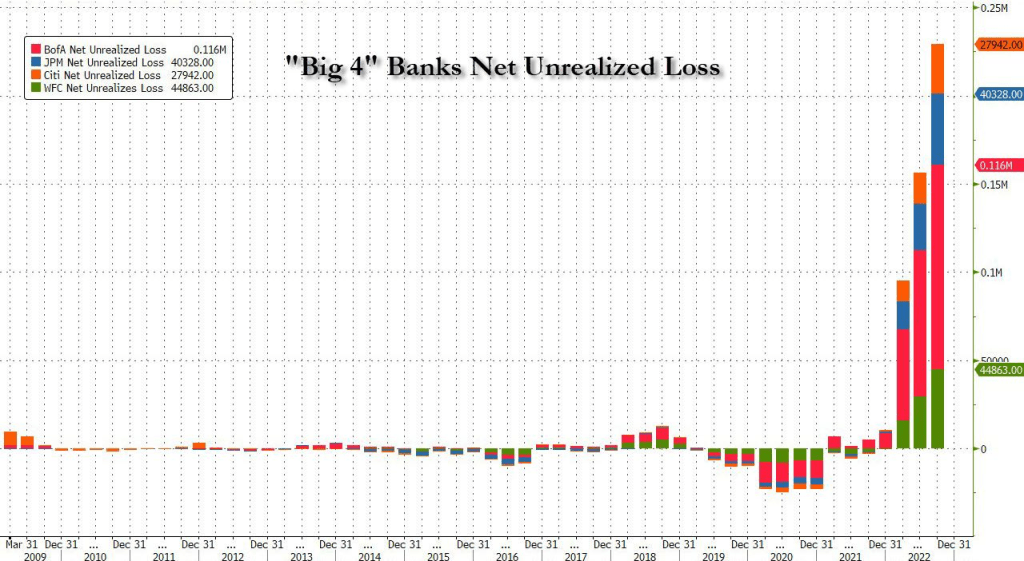
While waiting on the February jobs report from the US Bureau of Labor Statistics (BLS), I noticed that the big 4 banks (Bank of America, JPMorgan Chase, Citi and Wells Fargo) are drowning in net realized losses as The Federal Reserve combats 1) too many years of loose monetary policy under former Fed Chair Janet Yellen and 2) too much spending under Pelosi, Schumer and … McConnell.

At a micro level, we have Silicon Valley Bank (SVB) SVB Is racing to prevent a bank run as funds advise pulling cash.

Panic is spreading across the financial world as concerns about the financial stability of Silicon Valley Bank prompt prominent venture capitalists including Peter Thiel’s Founders Fund to advise startups to withdraw their money.

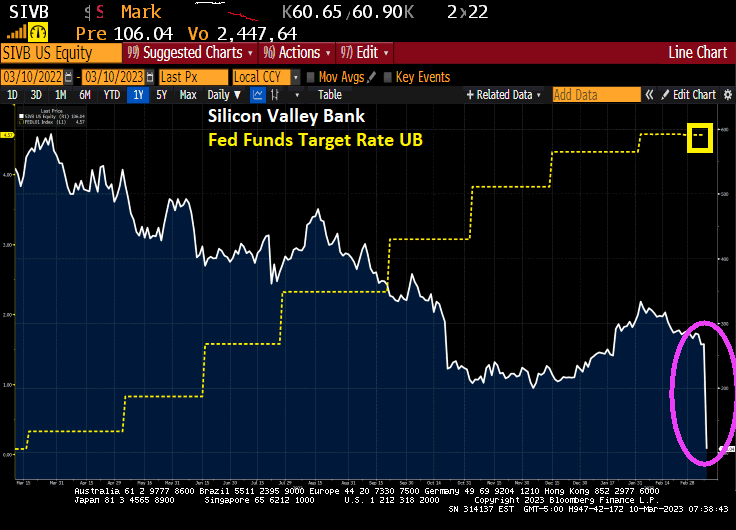
The turmoil followed a surprise announcement from Santa Clara, California-based SVB that it was issuing $2.25 billion of shares to bolster its capital position after a significant loss on its investment portfolio. The stock plunged 44% in premarket trading before exchanges opened in New York on Friday, set to extend its 60% decline on Thursday. Bonds had posted record declines, igniting a broad selloff in US bank shares that also spread to Asia and Europe.
In the US, the KBW Bank Index on Thursday had its worst day since June 2020, as its members shed more than $90 billion of value. In Europe, the biggest banks lost more than $40 billion from their market caps on Friday.

Management’s solution appears to have been to seek out yield through a lot of long-duration bonds. The bank started to lose deposits as VCs pulled cash/burnt through operating capital.

Are banks the canary in the economic coal mine?

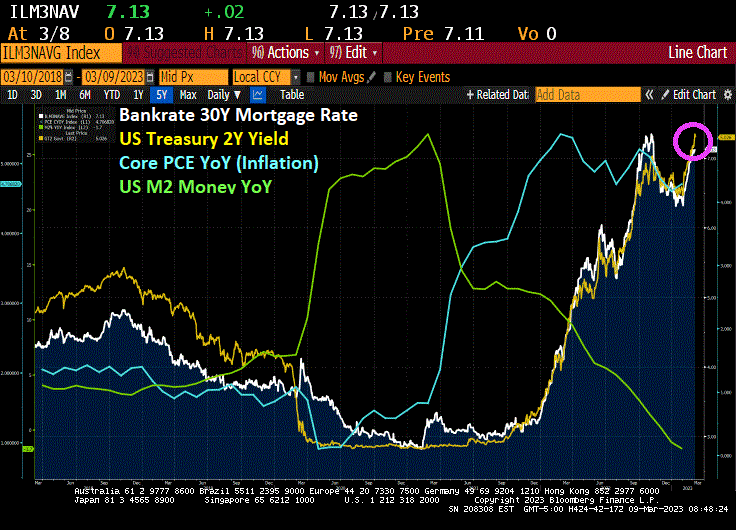
US Mortgage Rate Rise To 7.13% As Inflation Remains And Fed Counterattacks

As Americans are painfully aware, inflation is still haunting us. Despite Administration proclamations that inflation is declining, it is rising again. And with rising inflation (and an overheated labor market), The Federal Reserve is in full counterattack mode, withdrawing stimulus and raising rates.

And with Fed tightening comes rising 30-year mortgage rates.

Out of boredom, I watched the Clive Barker film “Hellraiser” and noticed perpertual Democrat Presidential candidate Hillary Rodham Clinton in the cast as the female Cenobite.

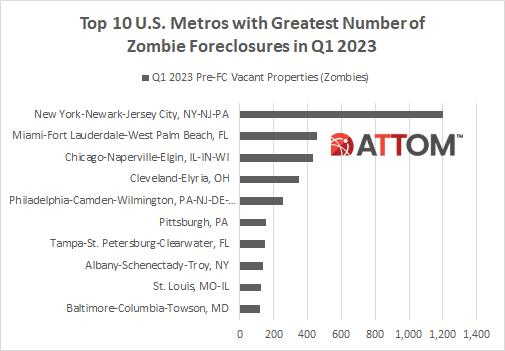
The Walking Dead … Housing Edition! New York City Leads Nation In Zombie Foreclosures In Q1 (Followed By Miami, Chicago, Cleveland And Philadelphia)

According to Attom Data, New York City leads the nation in zombie forceclosures.

A zombie foreclosure refers to a situation where a homeowner vacates their property after receiving a notice of default, expecting they will lose the home in the pending foreclosure. The foreclosure may get canceled for any number of reasons and never completed.

New York City and its surrounding areas lead the nation in zombie foreclosures. Followed by Miami. Chicago and Cleveland. Then Philadelphia.

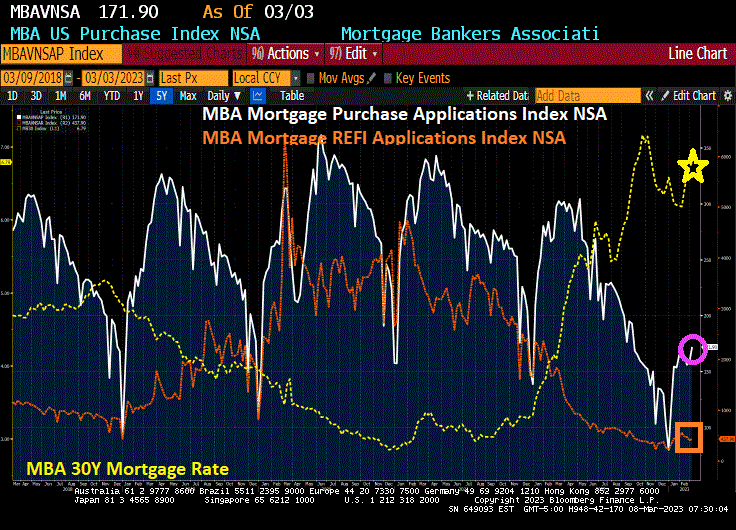
Mortgage Purchase Applications Increased 6.9% In Weekly Survey (But Purchase Apps Down 42% YoY, Refi Apps Down 76% YoY As Fed Tightens Monetary Noose)

Mortgage applications increased 6.9 percent from one week earlier, according to data from the Mortgage Bankers Association’s (MBA) Weekly Mortgage Applications Survey for the week ending March 3, 2023.

The Market Composite Index, a measure of mortgage loan application volume, increased 6.9 percent on a seasonally adjusted basis from one week earlier. On an unadjusted basis, the Index increased 9 percent compared with the previous week. The Refinance Index increased 9 percent from the previous week and was 76 percent lower than the same week one year ago. The seasonally adjusted Purchase Index increased 7 percent from one week earlier. The unadjusted Purchase Index increased 9 percent compared with the previous week and was 42 percent lower than the same week one year ago.

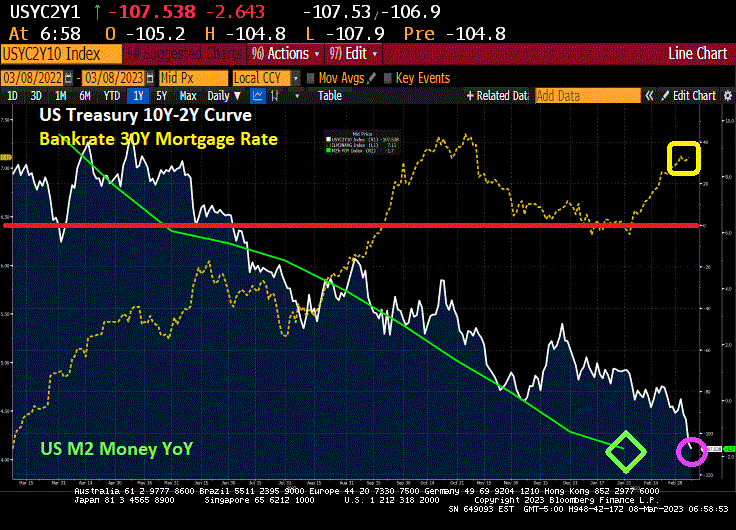
Today, we saw mortgage rates climb further to 7.11% as the US Treasury yield curve (10Y-2Y) descends into Mortgage Mordor as The Fed continues to tighten.

Slippin’ Into Darkness! US Treasury Yield Curve Descends To -108 BPS (169 Days Of Inversion) As US Mortgage Rate Hits 7.11% (Fed No Longer Low Riding Interest Rates)

Slippin’ into darkness! The US Treasury 10Y-2Y yield curve, that is.

At the same time that the 10Y-2Y yield curve inverts to -108 basis points, Bankrate’s 30-year mortgage rate has risen to 7.11%.

Now that The Federal Reserve is no longer low riding interest rates, I expect to see a cooling of the US economy.

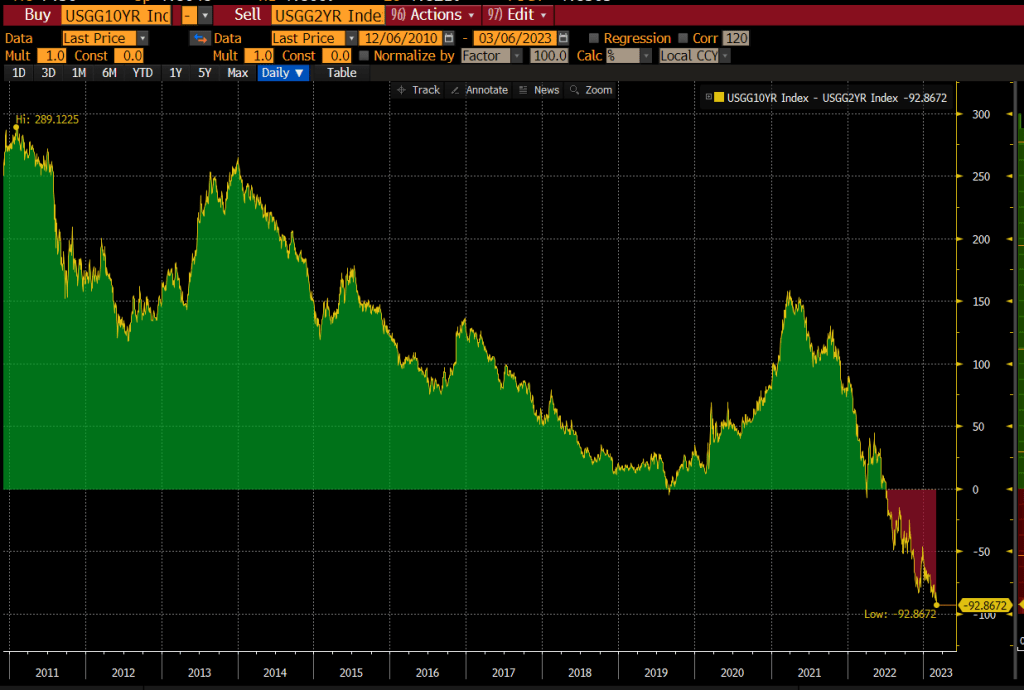
Hang ‘Em High! US Treasury 10Y-2Y Yield Curve Inverts To Near Lowest Since 1981, Credit/Equity Spread Turns Positive As Fed Tightens Monetary Noose

Hang ’em high!

As inflation remains persist (thanks to endless Fed stimulus and endless Federal spending splurges), we are seeing The Federal Reserve finally withdrawing the monetary stimulus (tightening the monetary noose). And with it, the US Treasury yield curve (10Y-2Y) goes down with it.

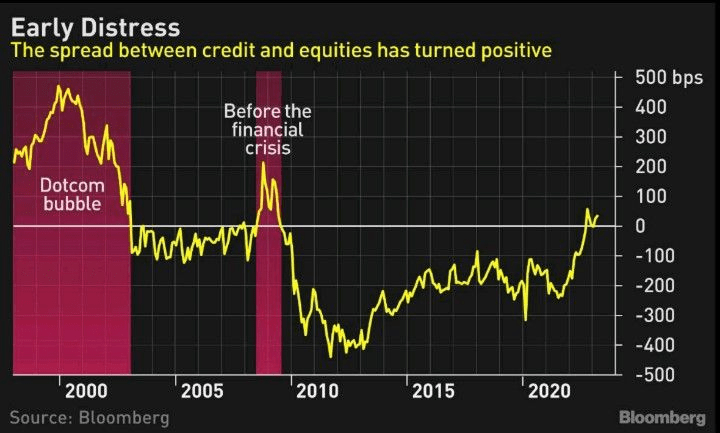
Another sign of distress is the spread between credit and equities which has turned positive as it does in times of crisis.

UPDATE! Recession predictor the US Treasury yield curve just went “red alert”, inverting to -100 basis points.

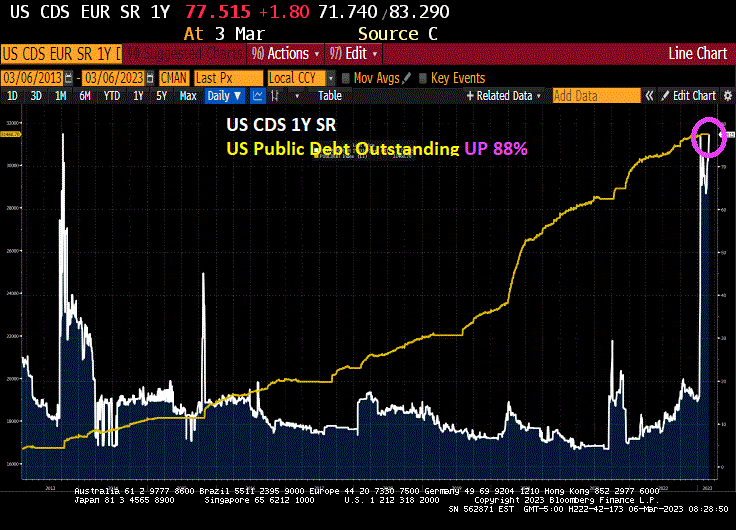
Price Of Insuring Against US Debt Default Highest Since Last Debt Ceiling Crisis In 2013 (Debt Up 88% Since The Last Crisis, $182 In Unfunded US Liabilites)

The last US debt crisis occured in 2013 when Congress finally raised the debt ceiling … and kept on borrowing and spending, But if you thought that a debt crisis would scare Congress (and the Administration) into balancing the Federal budget, you would be wrong. In fact, since the 2013 debt crisis, Federal debt is up 88% (+$14.7 TRILLION over the last 10 years).

And with the massive growth in Federal debt under Obama, Trump and Biden has resulted in an explosion in interest payments on the Federal debt.

And with $182 TRILLION in UNFUNDED liabilities, the debt issuance won’t stop.

Let’s see what is in Treasury Secretary Janet Yellen’s bag of tricks.

LIBOR cracked 5% for first time since 2007.

And the US Treasury 10Y-2Y yield curve is the most inverted since 1981.

Is Janet Yellen the “evil woman” from Crow’s song?

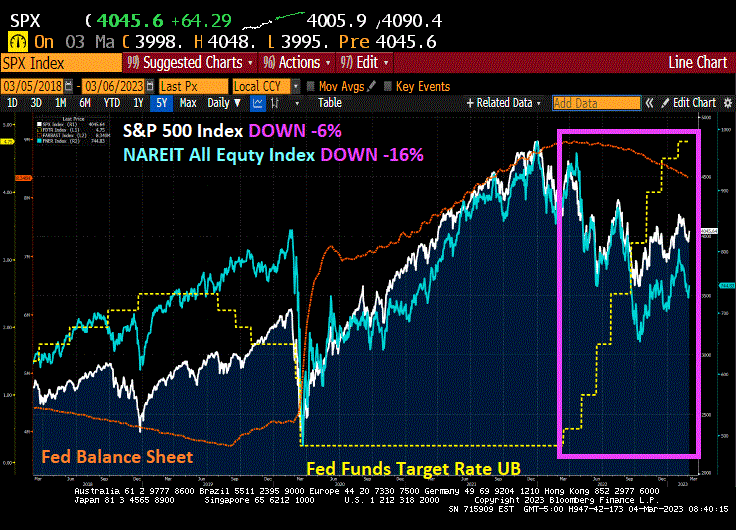
Sink The Economy! S&P 500 Down -6% Since Fed Started Raising Rates On May 4, 2022, Equity REITs Down -16% (Pension Pain From Interest Rate Increases)

Interest rates are an important driver of the economy and financial markets. And what has happened to the S&P 500 index since The Federal Reserve started raising their target rate on May 4, 2023 to fight surging inflation?

Since that fatal day, the S&P 500 index has fallen -6% and equity REITs (commercial real estate) has fallen -16%.

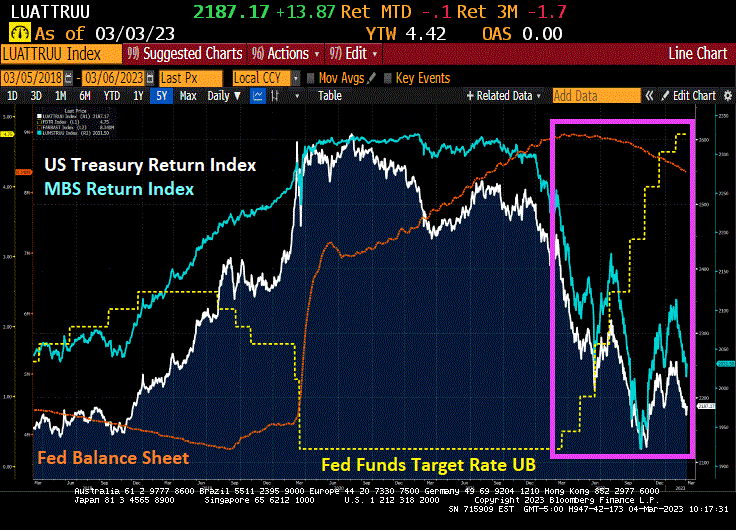
What about returns on US Treasuries and Mortgage-backed Securities (MBS)? Same thing. PAIN!

Although The Fed has pledged to keep raising rates to fight inflation (and further decimate retirement accounts), investors are pointing to a peak (terminal) Fed rate of 5.44% at the September 2023 FOMC meeting. Then rate cuts following the September 2023 meeting.

Of course, much of the blame belongs to former Fed Chair Ben (QE) Bernanke and current Treasury Secretary Janet “Too Low For Too Long” Yellen who never met a Fed rate hike that she liked. But Yellen LOVES giving away US taxpayer dollars … to Ukraine.