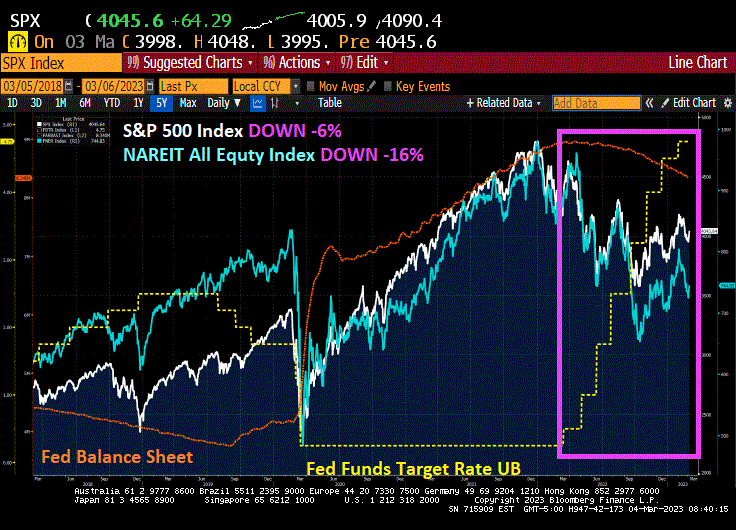
Sink The Economy! S&P 500 Down -6% Since Fed Started Raising Rates On May 4, 2022, Equity REITs Down -16% (Pension Pain From Interest Rate Increases)

Interest rates are an important driver of the economy and financial markets. And what has happened to the S&P 500 index since The Federal Reserve started raising their target rate on May 4, 2023 to fight surging inflation?

Since that fatal day, the S&P 500 index has fallen -6% and equity REITs (commercial real estate) has fallen -16%.
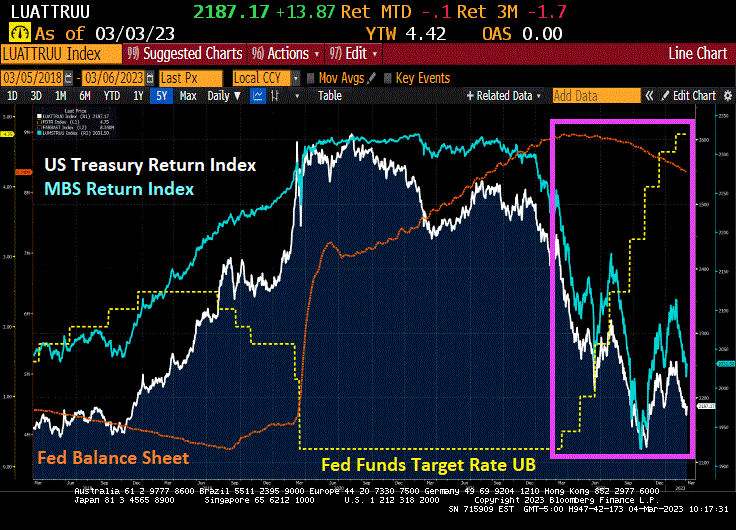
What about returns on US Treasuries and Mortgage-backed Securities (MBS)? Same thing. PAIN!
Although The Fed has pledged to keep raising rates to fight inflation (and further decimate retirement accounts), investors are pointing to a peak (terminal) Fed rate of 5.44% at the September 2023 FOMC meeting. Then rate cuts following the September 2023 meeting.

Of course, much of the blame belongs to former Fed Chair Ben (QE) Bernanke and current Treasury Secretary Janet “Too Low For Too Long” Yellen who never met a Fed rate hike that she liked. But Yellen LOVES giving away US taxpayer dollars … to Ukraine.

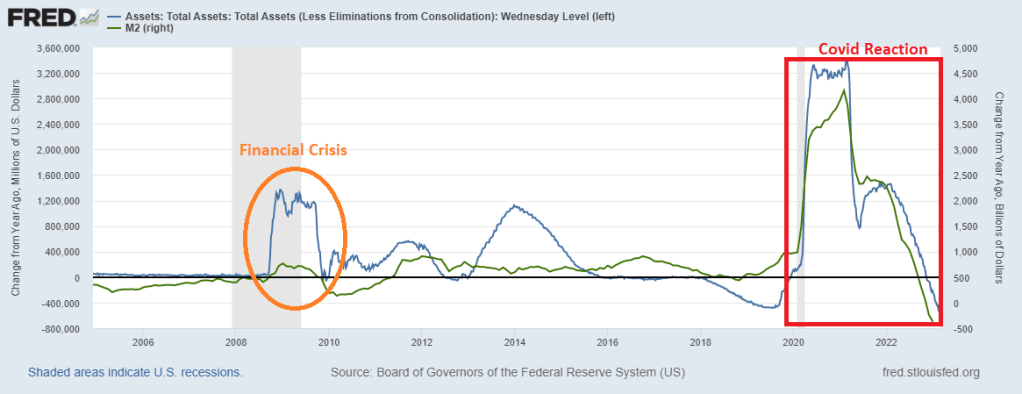
Give The Fed 3 Steps! The Fed’s Overreaction To Covid Shutdown (Over Twice The Reaction To The Crippling Financial Crisis Of 2008/2009)

There is a fascinating film about the 2008/2009 financial crisis called “The Big Short.” Actually, Iiked a similar film a little more called “Margin Call” where the infamous fire sale of securities (primarily subprime asset-backed securities).

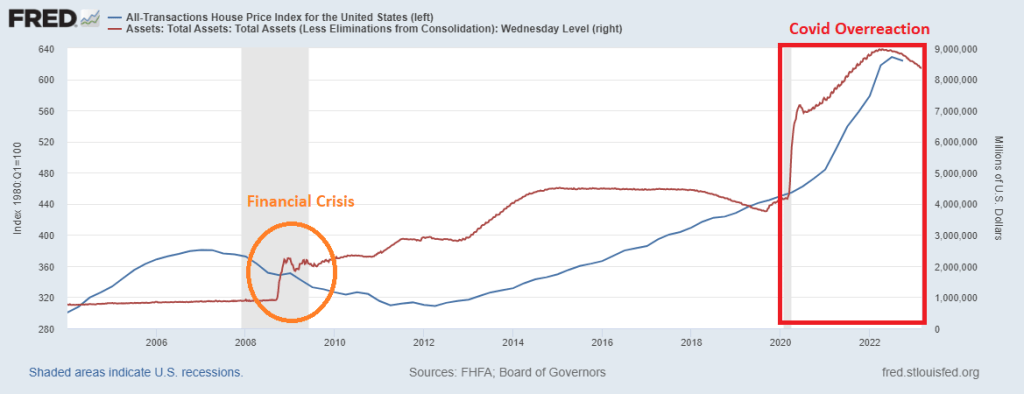
But despite how bad the financial crisis of 2008/2009 was, the growth of Fed assets on it balance sheet (orange oval) paled in comparison to The Fed’s overreaction to the Covid outbreak of 2020. And the government shutdowns and mask mandates.

The good news? The rate of growth YoY of both The Fed’s balance sheet and M2 Money is negative. But it is still startling to see the comparison of Fed reactions to crises.

Give The Fed three steps to catch up to the mayhem they created. Particularly in inflation home prices.

They call Janet Yellen, former Fed Chair and current Treasury Secretary “The Breeze” because idiotic monetary policies just blow over her head.

After all, The Fed is way behind the curve on raising rates.

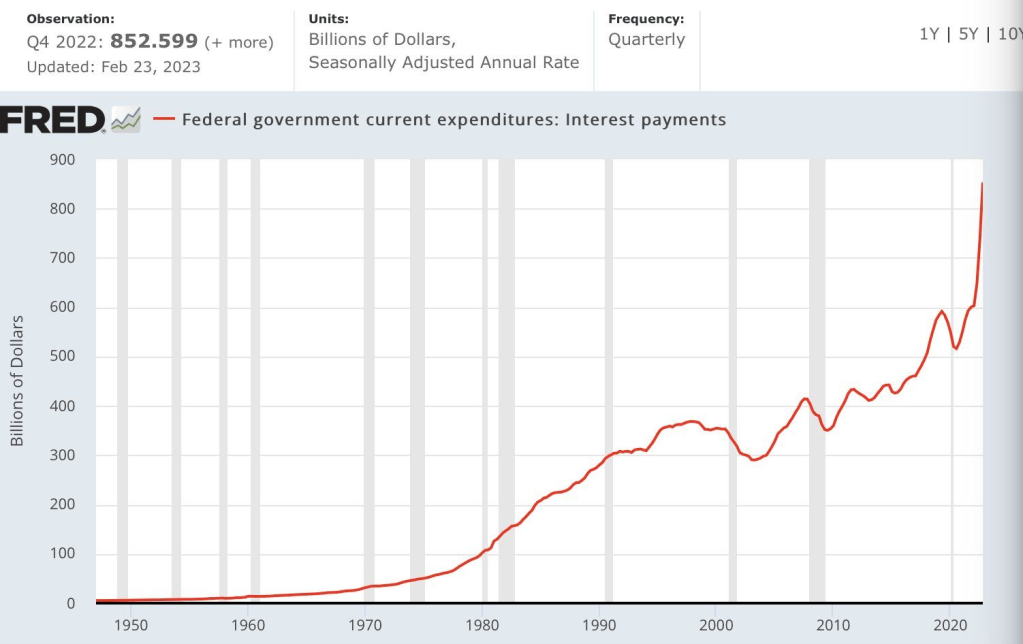
All this is happening as the interest paid on our rapidly expanding Federal debt is getting Titanic-like.

US Mortgage Rates Rise To Over 7% As Fed Tightens Monetary Noose (Is Powell Chanelling Volcker?)

Yesterday’s inflation report (in the form on skyrocketing labor costs) helped lead Bankrate’s 30-year mortgage rate to over 7% … again.

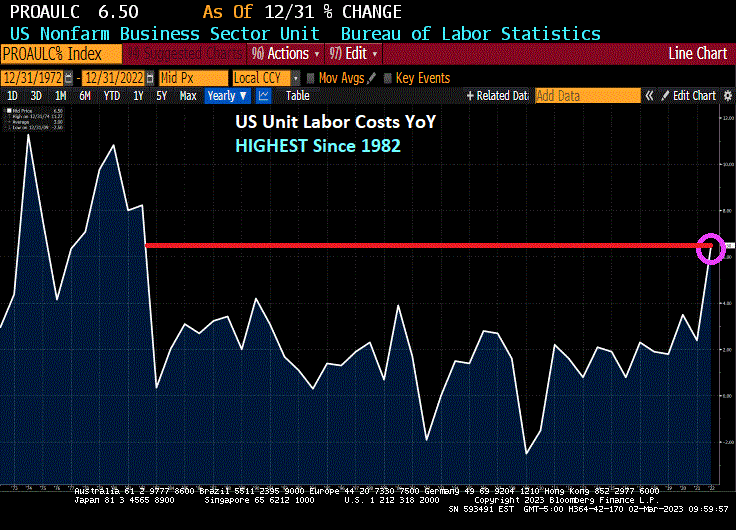
Here is yesterday’s horrible unit labor costs YoY chart showing the fastest growth in labor costs since 1982 and Fed Chair Paul Volcker. Jerome Powell, the current Fed Chair is trying to reduce the Bernanke/Yellen/Powell monetary stimulypto (with an extra dose of “sugar” from the Covid outbreak).

The good news is that the 10-year Treasury yield is down -7.3 basis points this morning.

Here is The Fed’s Open Market Committee (FOMC) trying to summon Paul Volcker to help them figure out how they got inflation so wrong.

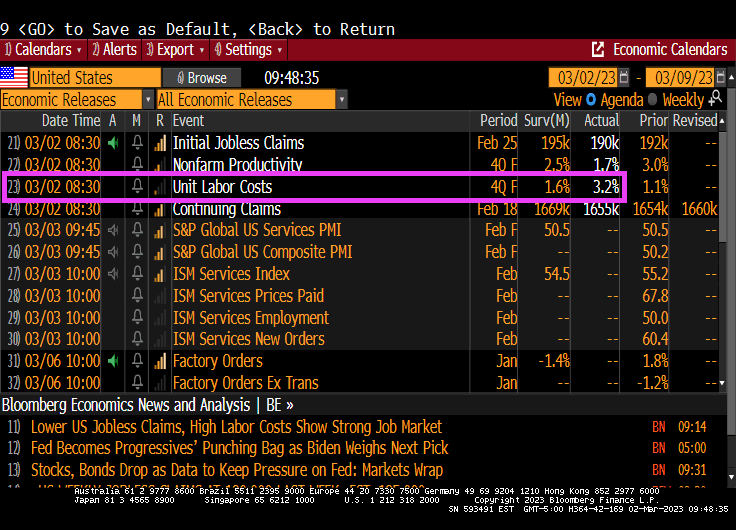
Inflation Alert! US Unit Labor Costs Soar in Q4 2022 To 3.2%, 2x Expectation Of 1.6%, UP 6.50% YoY (The Worst In 30 Years)

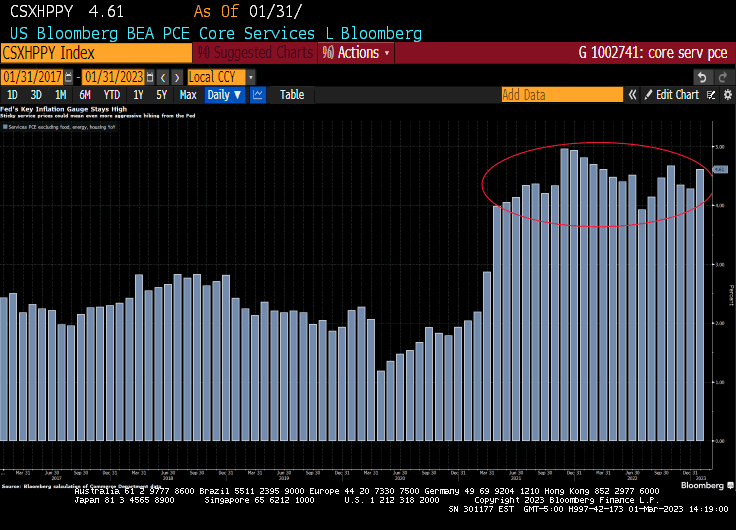
Despite Treasury Secretary Janet Yellen claiming that inflation was only transitory and likely to disappear, we are seeing continued inflation. Now we see that Unit Labor Costs are up 3.2% QoQ for Q4 2022.

Even worse, US unit labor costs rose 6.5% on a year-over-year (YoY) basis, the WORST since 1982.

And yes, Q4 2022 unit labor costs are up 2x the expectations.

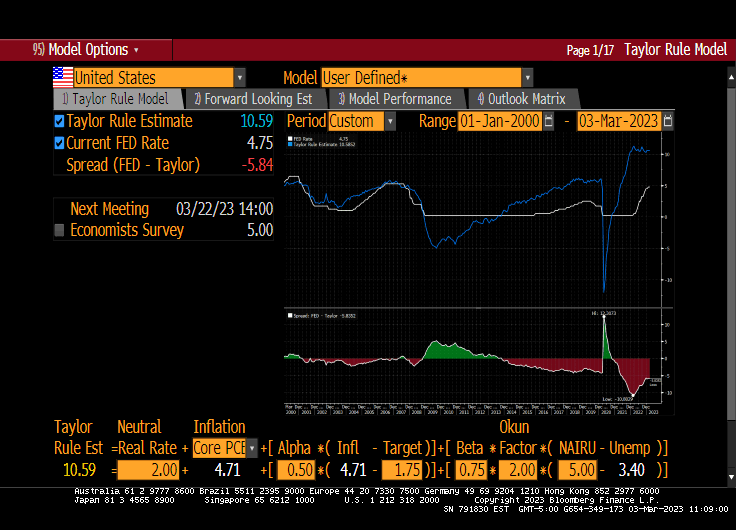
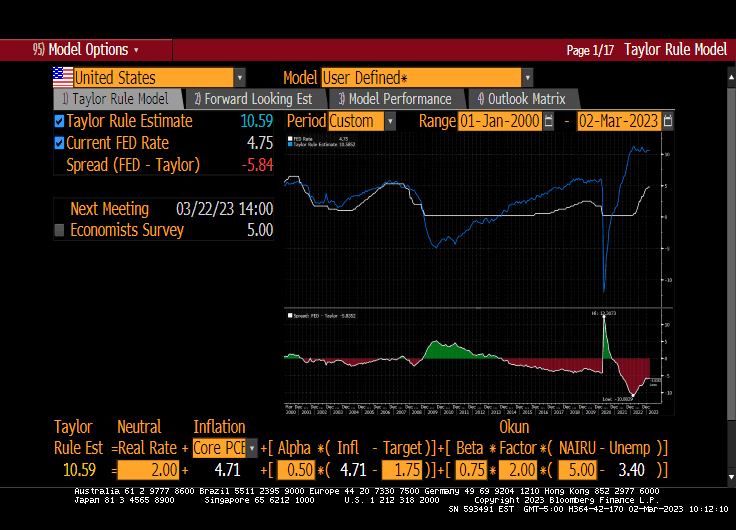
In normal times, The Federal Reserve would raise rates to cool down the economy. The Taylor Rule suggests a Fed target rate of 10.59% versus the current Fed rate of 4.75%. A long way to go!!

Damn it, Janet!

Dazed And Confused! Treasury Flows Show Bullish $2.5 Billion Shift to ST Sovereigns Versus S&P 500 (Credit ETFs Hammered by Record Outflows of Almost $12 Billion As Fed Worries About Inflation)

The Federal Reserve is dazed and confused about inflation.

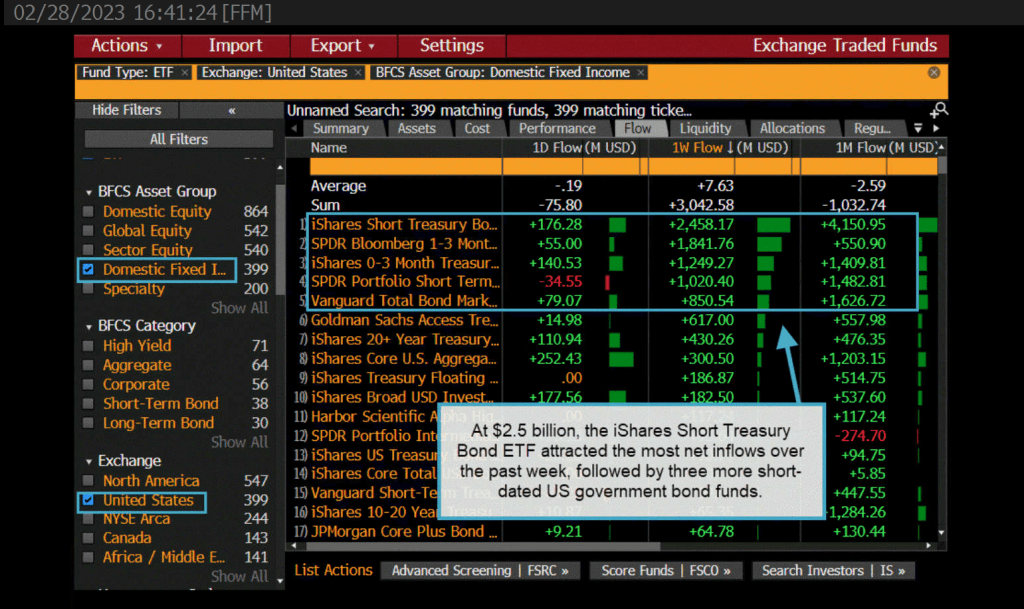
As The Federal Reserve reaffirms their draining of the monetary punch bowl, we are seeing investors flock towards the bond market. Particularly the iShares Short Treasury ETF. $2.5 BILLION to be exact.

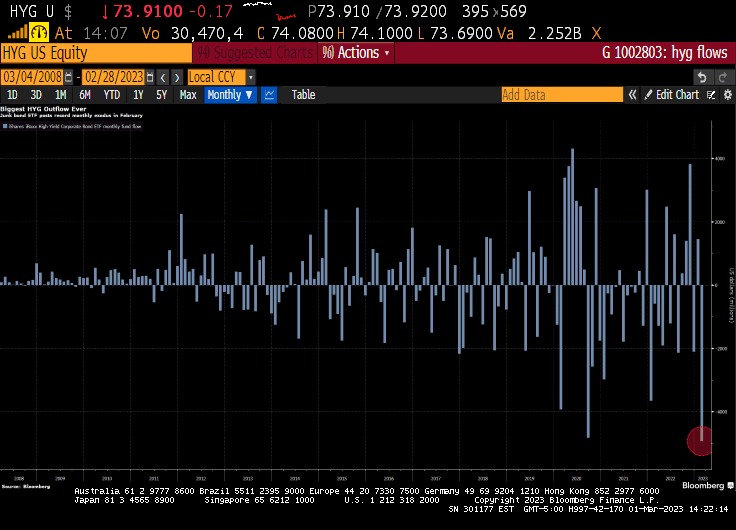
Meanwhile, credit ETFs are hammered by record outflows of almost $12 Billion.

The reason why? Inflation remains elevated which is leading The Fed to keep their foot on the monetary brake pedal.

I’m an economist.

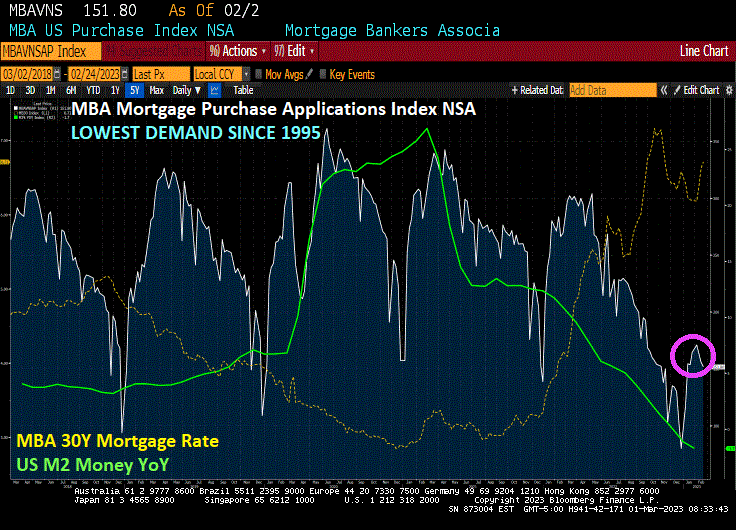
Mortgage Purchase Demand Decreases, Lowest Level Since 1995 As Fed Removes Punch Bowl (Punch Bowl To Dust Bowl)

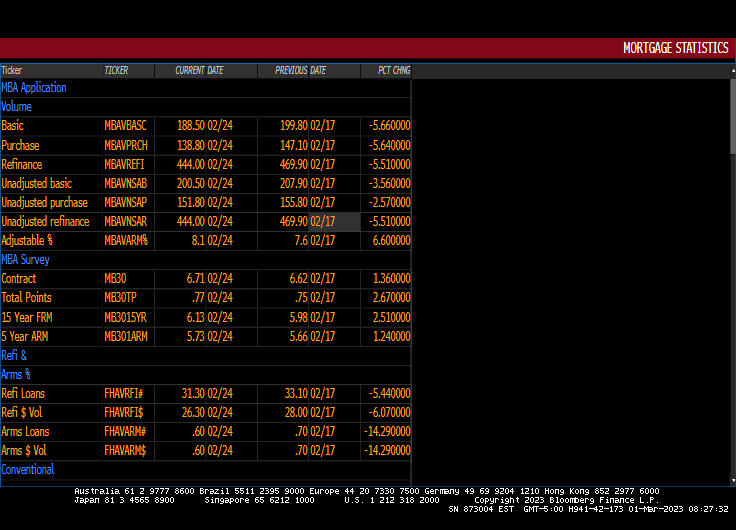
Today’s mortgage application (demand) numbers from the Mortgage Bankers Association was disappointing to say the least. Mortgage purchase demand just sank to it lowest level since 1995.

Typically, mortgage purchase applications peak in May or June of each year before beginning their annual lemmings drive downwards. But this year is seeing a early turn for the worse.

The unadjusted Purchase Index decreased 3 percent compared with the previous week and was 44 percent lower than the same week one year ago. The Refinance Index decreased 6 percent from the previous week and was 74 percent lower than the same week one year ago.

The Fed is hell bent on removing the punch bowl to fight inflation. Looks like Biden’s economic plan is turning the punch bowl into a dust bowl.

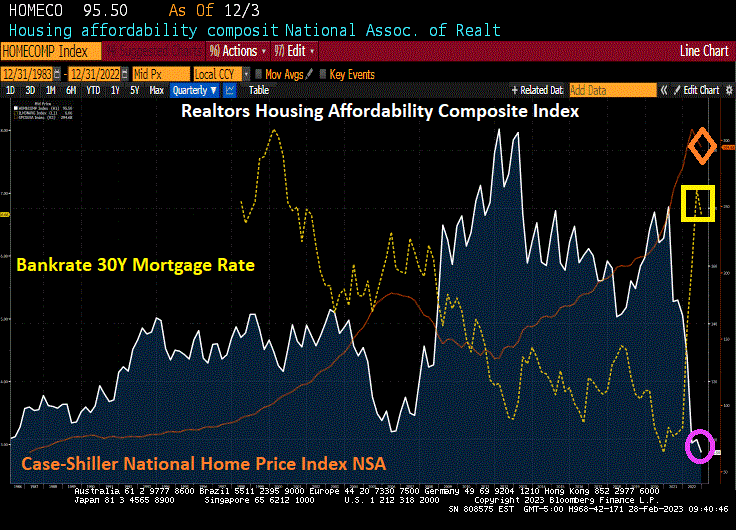
Simply Unaffordable! US Housing (Un)affordability Hits An All-time Low As Fed Tightens (22 Straight Months Of NEGATIVE Real Wage Growth Isn’t Helping)

US housing is simply unaffordable.

Janet Yellen and The Federal Reserve held rates too low for too long and now we are paying for it. Now, after a massive run-up in home prices, The Fed is raising rates helping make US housing the most unaffordable in history (or at least since the early 1980s).

And negative real wage rate growth for 22 straight months isn’t helping!

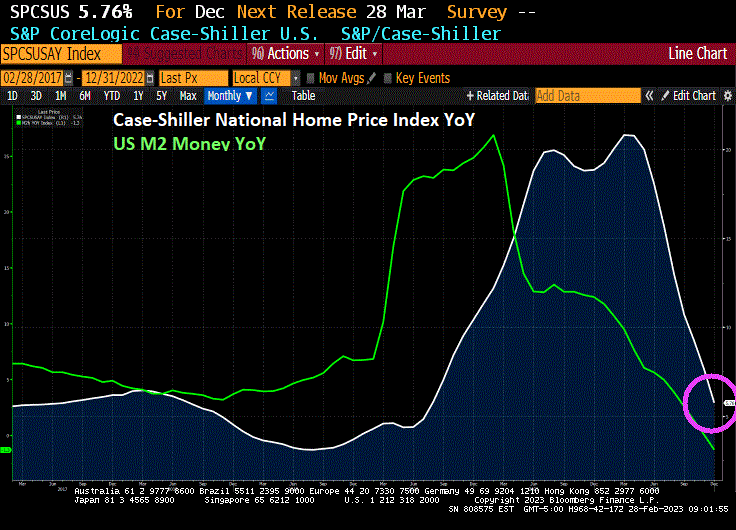
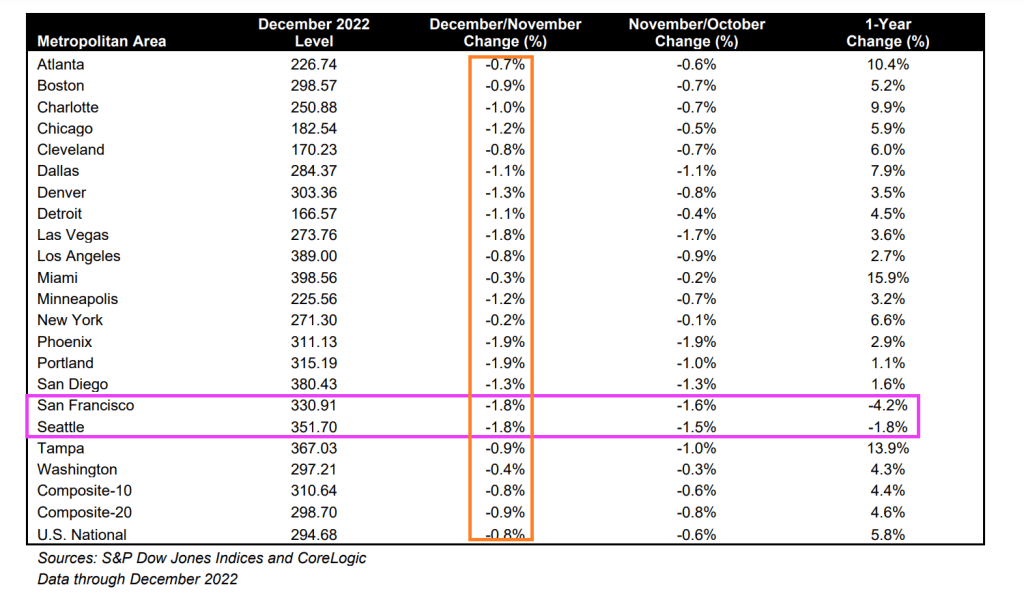
Case-Shiller National Home Price Index Cools To 5.76% YoY As Fed Tightens The Monetary Noose (But Only Seattle And San Francisco Have Negative YoY Price Changes, All 20 Metro Areas Fell In December From November)

The December CoreLogic Case-Shiller home price indices are out … for December 2022. And it shows that the CS National home price index growth continues to slow as The Fed tightens its monetary noose. December’s YoY growth was 5.76%.

Only Seattle and San Francisco experienced negative growth in home prices on a year-over-year basis. All of the top twenty metro areas experience negative month-over-month price declines from November to December.

US Pending Home Sales UP 8.1% MoM In January, But Down -22.4% YoY (Negative YoY Growth For 19 Of Last 20 Months)

US pending home sales rose 8.1% in January. At the same time, pending home sales declined -22.4% on a year-over-year (YoY) basis.

So, YoY pending home sales growth has been negative for 19 of the last 20 months.

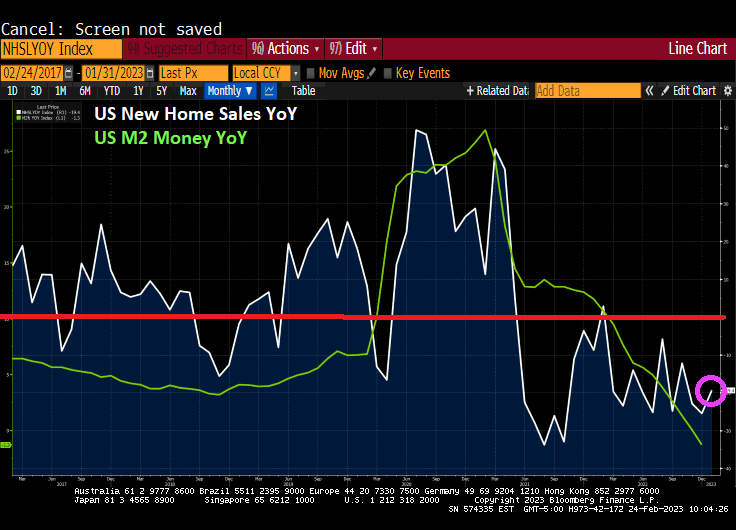
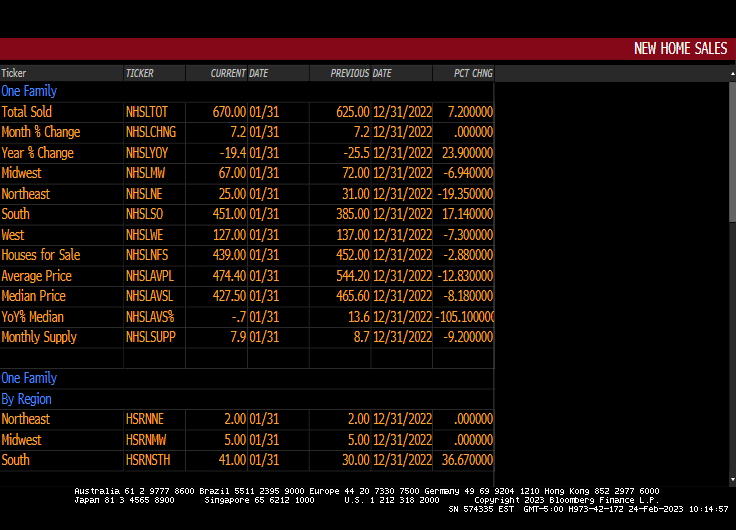
US New Home Sales Collapse (-19.4% YoY) In January As Fed Withdraws Stimulypto

Another sign of a not healthy economy is housing. New Home Sales collapsed -19.4% from January 2022 (aka, year-over-year or YoY).

If I were Joe Biden, I would be touting the month-over-month numbers, up 7.20% from December to January. But the reality is that year-over-year new home sales are down -19.4%.

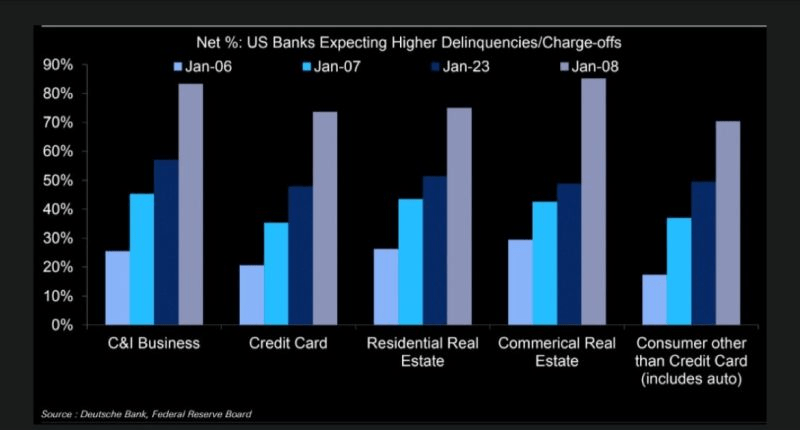
Also, on the “Alarm!” front, US banks are expecting higher delinquencies, including on residential mortgages.

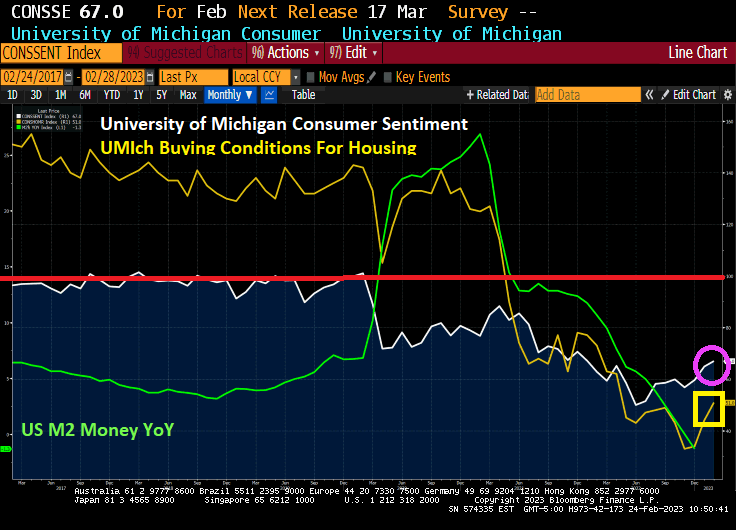
University of Michgan consumer sentiment for housing is rising, but still woefully below the 100 benchmark.