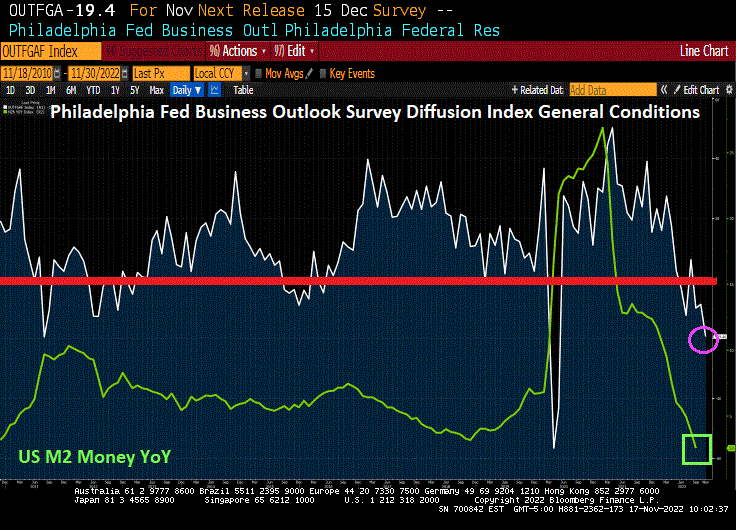
The Philadelphia Fed’s Business Outlook plunged to 1-9.40% YoY, the worst since 2012. Notice how the Philly Phed Plunge is related to M2 Money growth YoY.
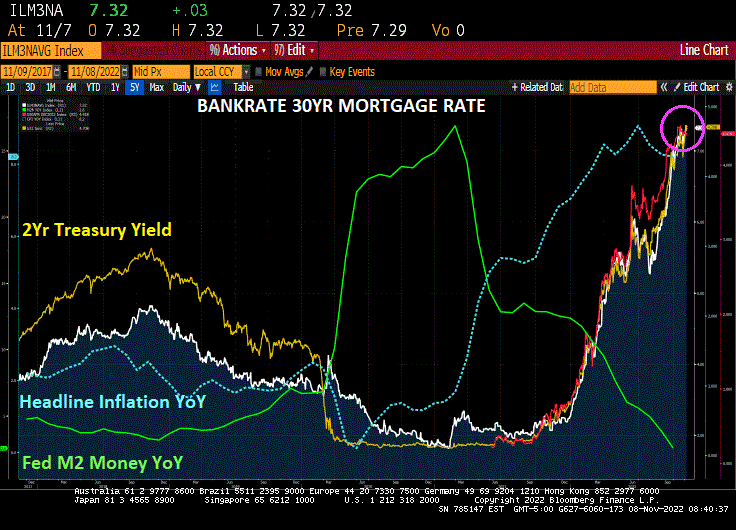
Of course, it is easy to blame the figure on rapidly rising mortgage rates and Federal Reserve tightening.
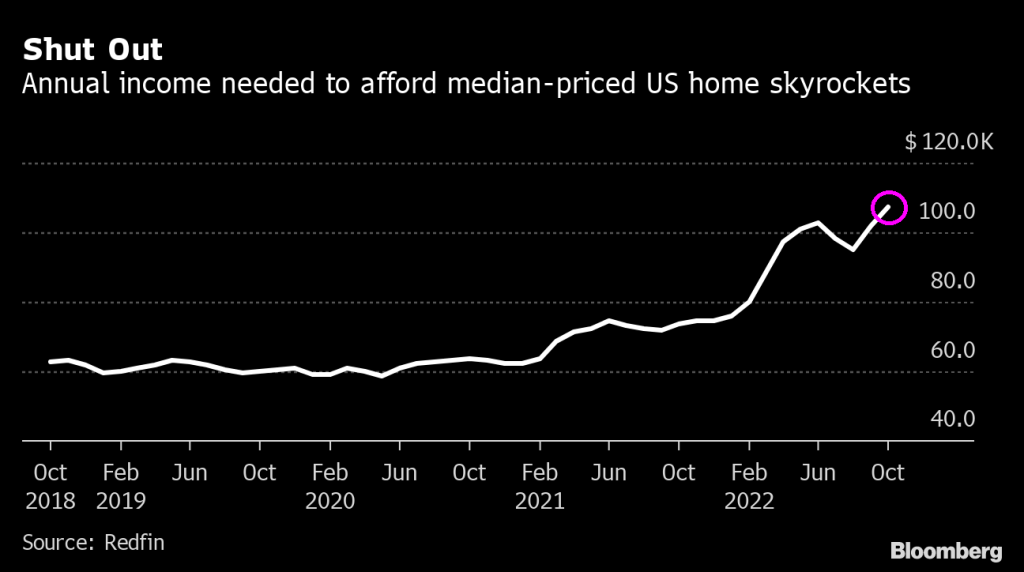
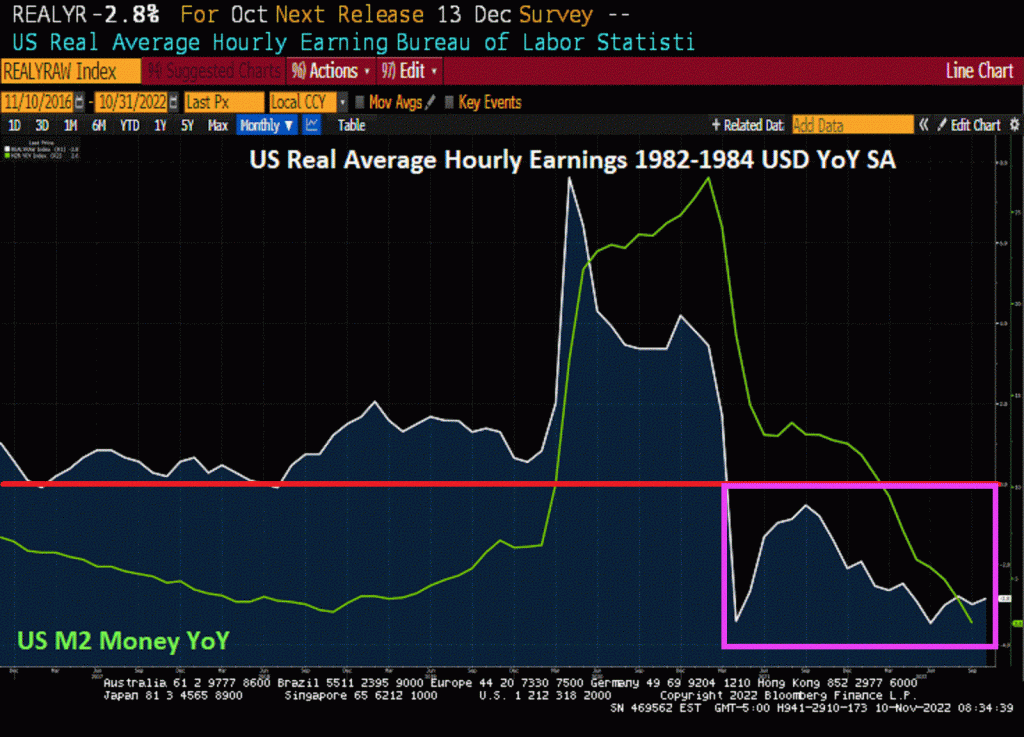
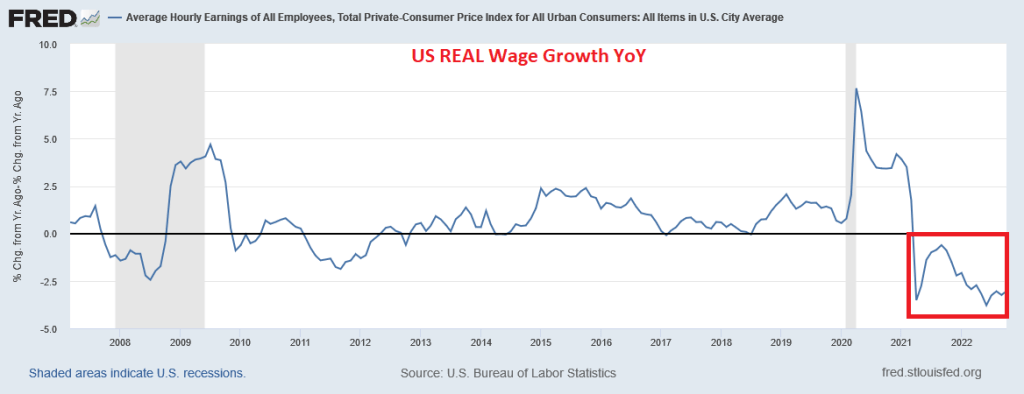
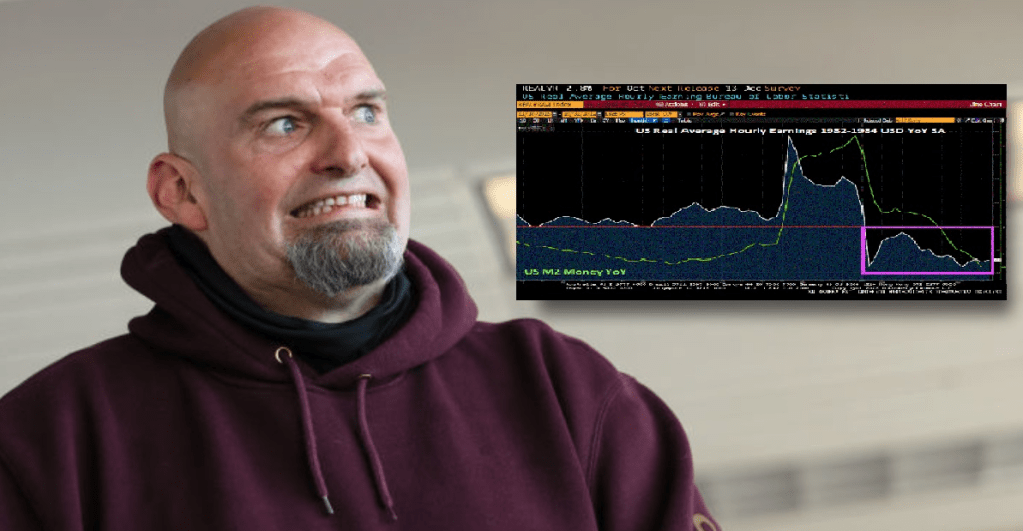
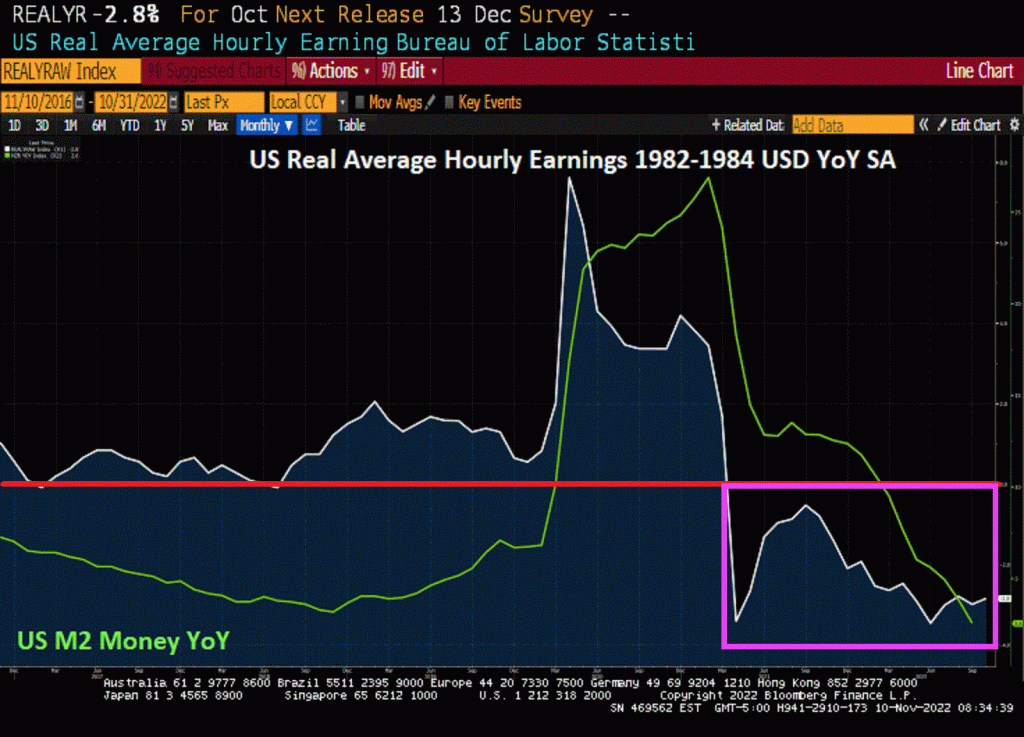
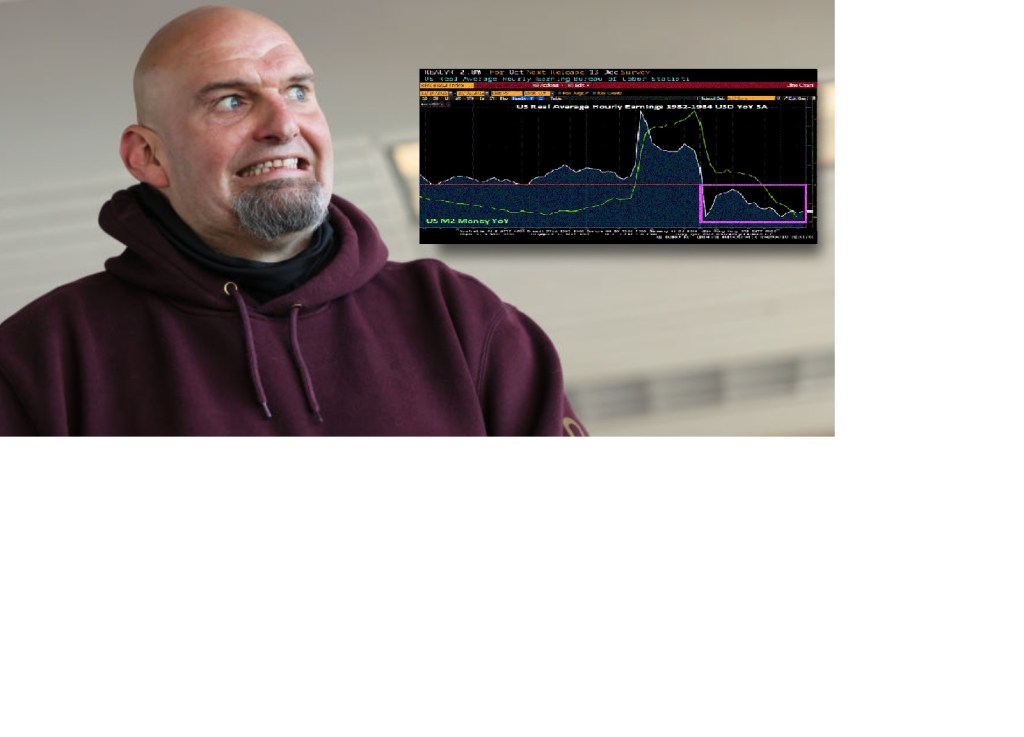
But the rest of the story (as Paul Harvey used to say) is that US REAL wage growth has been NEGATIVE for 19 straight months. This alone makes housing unaffordable for the middle class and low wage workers.
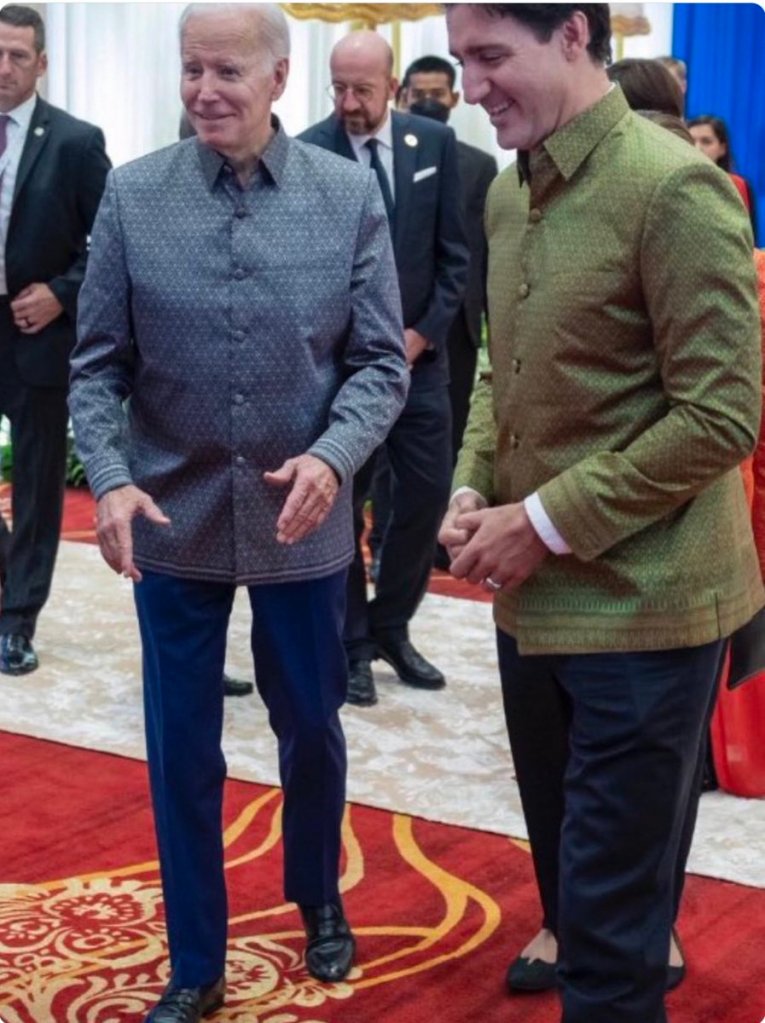
Again, why are Biden and Trudeau wearing Mao jackets in Bali? And why is Biden looking like a robot?? Biden does look like he is saying “Take me to my leader, Pei.”
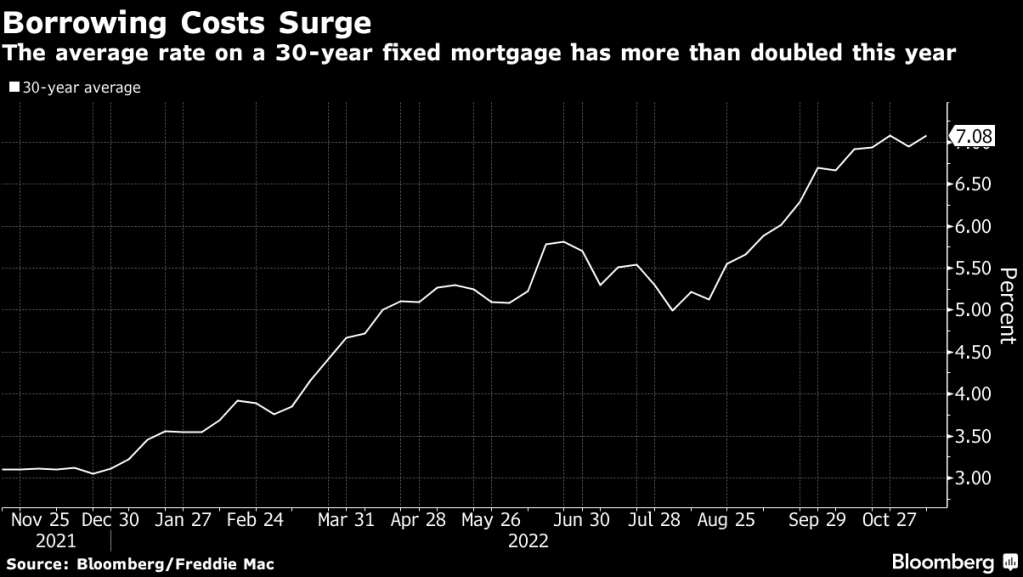
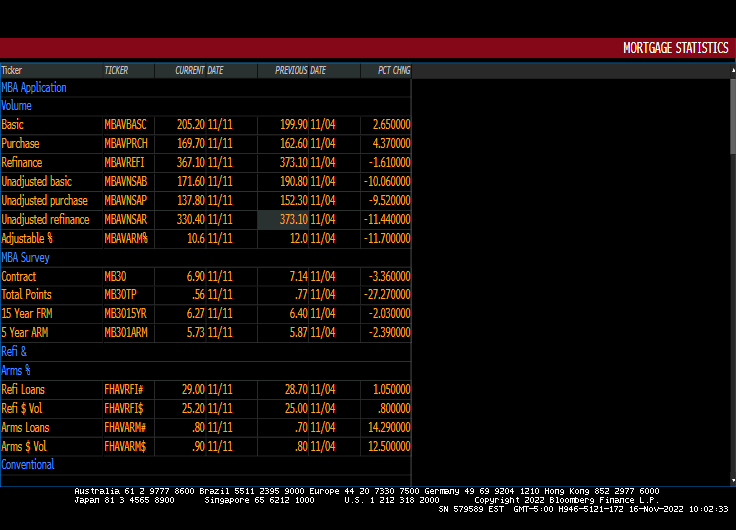
US mortgage rates fell last week by the most since the end of July, slipping below 7% and helping generate a bounce in purchase applications that otherwise remain depressed, but only in the Seasonally Adjusted data. The NON-Seasonally Adjusted data show a hefty decline.
The contract rate on a 30-year fixed mortgage decreased 24 basis points to 6.9% in the week ended Nov. 11, according to Mortgage Bankers Association data released Wednesday. The group’s index of applications to buy a home rose 4.4% — the most since June — but is still near the weakest level since 2015.
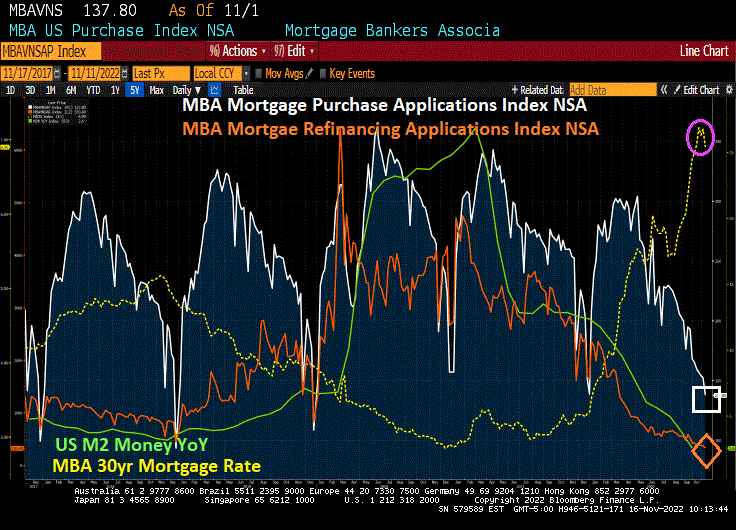
But the bounce was in Seasonally Adjusted data only. The NON-seasonally adjusted data remained depressed.
Mortgage applications decreased -10.0 percent SA from one week earlier, according to data from the Mortgage Bankers Association’s (MBA) Weekly Mortgage Applications Survey for the week ending November 11, 2022. This week’s results include an adjustment for the observance of Veterans Day.
The Refinance Index decreased -11.44% percent from the previous week and was 88 percent lower than the same week one year ago.The unadjusted Purchase Index decreased -10 percent compared with the previous week and was 46 percent lower than the same week one year ago.
Mortgage purchase applications will continue to fall in NSA terms since it is the Winter and home buying season won’t really start until January. Refinancing applications actually dropped -11.44% even with the drop in mortgage rates.
The data. As my former students know, I like the “raw” data, better known as NON-seasonally adjusted (NSA) data and avoid seasonally-adjusted data (SA) since it hides what is going on.
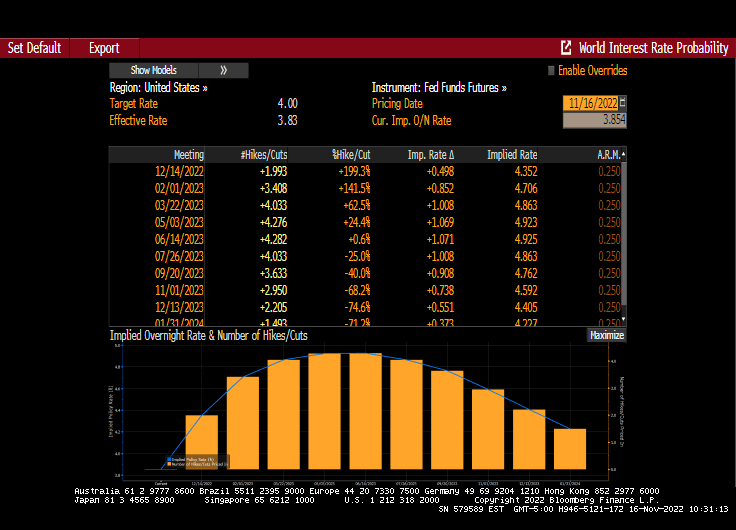
And on The Fed Futures Front, The Federal Reserve is still looking a hiking their target rate from 4% to just under 5%.
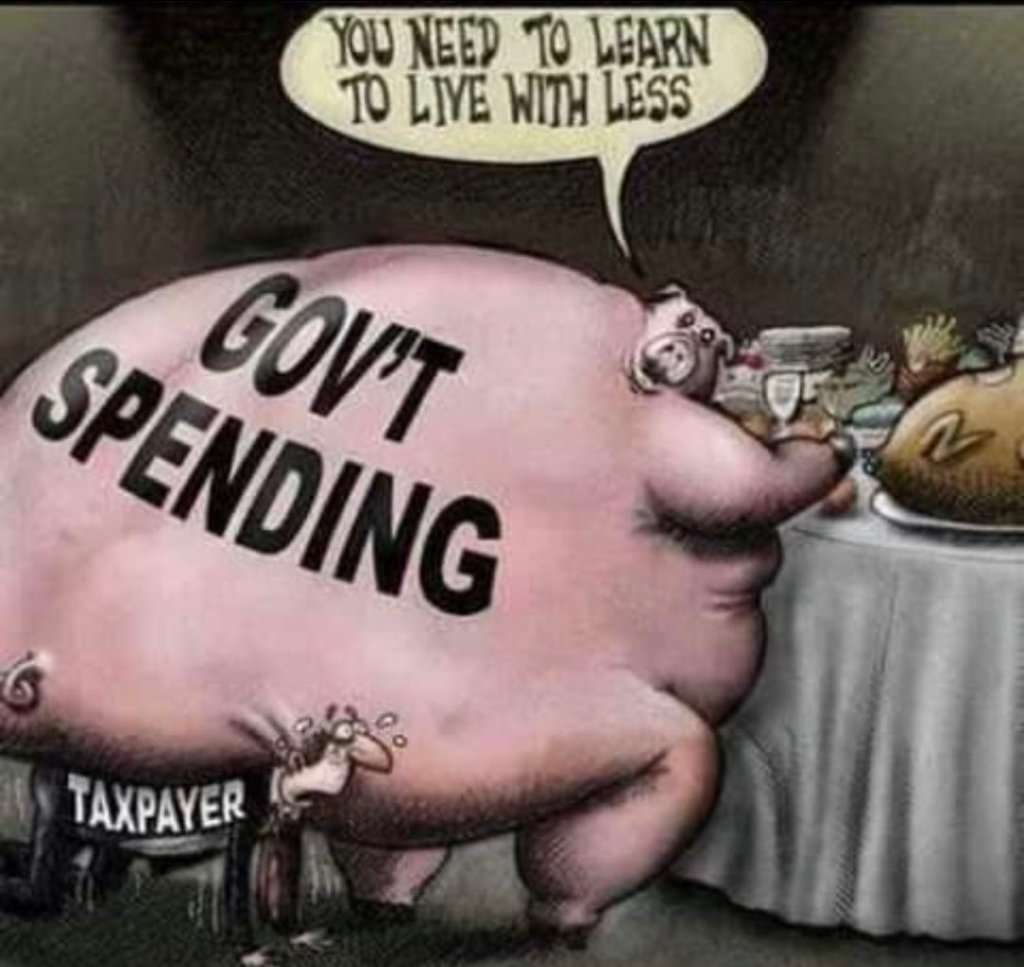
The evidence from the last thirty years is clear. Keynesian policies leave a massive trail of debt, weaker growth and falling real wages. Furthermore, once we look at each so-called stimulus plan, reality shows that the so-called multiplier effect of government spending is virtually inexistent and has long-term negative implications for the health of the economy. Stimulus plans have bloated government size, which in turn requires more dollars from the real economy to finance its activity.
As Daniel J. Mitchell points out, there is evidence of a displacement cost, as rising government spending displaces private-sector activity and means higher taxes or rising inflation in the future, or both. Higher government spending simply cannot be financed with much larger economic growth because the nature of current spending is precisely to deliver no real economic return. Government is not investing; it is financing mandatory spending with resources of the productive sector. Every dollar that the government spends means one less dollar in the productive sector of the economy and creates a negative multiplier cost.
When society decides to use a certain part of the resources generated by the productive sector for non-economic return activities, be it social spending or mitigation of threats, it can only do it by understanding how much of the productive capacity of the economy is able to sustain a larger cost. When costs are not considered as a burden, but considered as entitlements that can only grow, the productive capacity is not strengthened, but weakened.
The main problem of the past decades, but particularly since 2008, is that government spending and monetary policy have become solutions of first resort to any slump in economic activity, even if that decline was created by government decisions, such as shutting down the economy due to a health crisis. Furthermore, government spending increases and loose monetary policy continued even in growth periods. This, in turn, creates an unsustainable public deficit that needs to be monetized or refinanced. Both mean a larger harm for the productive sector as the debt increase leads to higher taxes for everyone but also a soaring cost of living coming from the destruction of purchasing power of the currency.
Government spending does not boost private sector activity, even less so when the entire budget is spent on non-investment outlays. It is even worse when citizens believe that infrastructure or real economic return investments should be conducted with taxpayers’ money. If an investment is productive and economically viable there is no need to involve the government. At best, the government should only participate as a co-investor, as the example of technology and defence shows, but never as a resource allocator for a simple reason. Public intervention is always aimed at perpetuating the existing inefficiencies and maximizing the budget. Efficient resource allocation cannot come from entities that have a core interest in expanding the budget and always perceive any inefficiency or poor result as the consequence of not having spent enough.
Yes, US public debt has exploded, particularly since the 2008 financial crisis and then again the Covid outbreak of 2020.
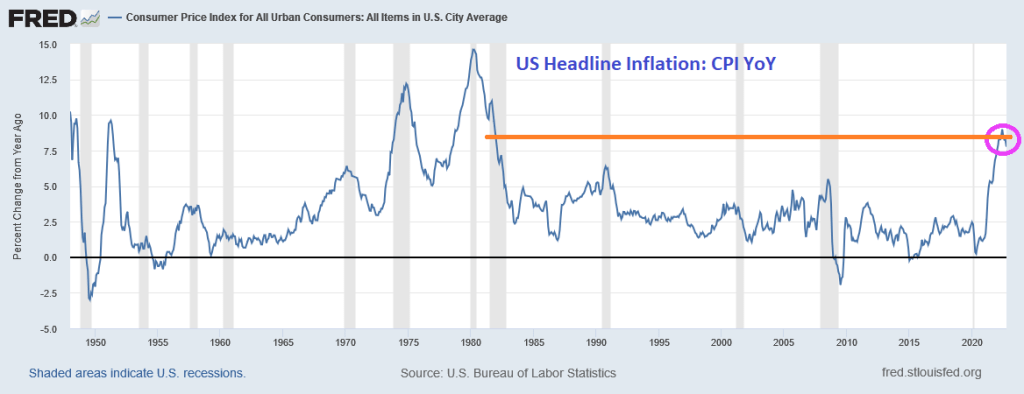
And inflation is near a 40-year high.
Then we have 19 consecutive months of negative wage growth in the US.
Biden is apparently doubling down on “Green Schemes” now that the US House of Lords (aka, Senate) remain under Keynesian control (aka, Democrat). So watch for inflation to start increasing again.
The Fed’s favorite yield curve measure, the implied yield on 3-month T-Bills in 18 months less the 3-month T-bill yield has inverted. Note that this curve inverts prior to a recession.
The new face of reckless Fed policy and Federal spending. 19 straight months of negative REAL earnings growth as America re-elects the same irresponsible fools that are turning the US into Venezuela.
Former Obama economist and Harvard University President Lawrence Summers says that the FTX meltdown whiffs on an Enron-like scandal.
“A lot of people have compared this to Lehman. I would compare it to Enron,” Summers told Bloomberg Television’s “Wall Street Week” with David Westin. “The smartest guys in the room. Not just financial error but — certainly from the reports — whiffs of fraud. Stadium namings very early in a company’s history. Vast explosion of wealth that nobody quite understands where it comes from.”
Lehman, Enron? How about Solyndra, one of the biggest political boondoggles in US history.
About two years after the Obama administration co-signed $535 million loans to Solyndra, the company filed for bankruptcy on September 1, 2011. A 2015 report from the Department of Energy found major flaws in Solyndra’s business practices and claimed the company made “inaccurate and misleading” statements to obtain the loan guarantees, and also found fault with Department of Energy oversight.
Which brings us to FTX and Sam Bankman-Fried (the son of Stanford law professor Barbara Fried and co-founder of the political fundraising organization Mind the Gap, which advocates for progressive political candidates and funds get-out-the-vote groups). Sam Bankman-Fried was a big Biden donor. What are the odds that The Federal government will impartially investigate SBF and the FTX fiasco? ZERO!
Why did FTX run into trouble?
FTX has a native cryptocurrency token called FTT, which traders use for operations like paying transaction fees. Last year, Mr. Zhao sold his stake in FTX back to Mr. Bankman-Fried, who paid for it partially with FTT tokens.
On Nov. 2, the crypto publication CoinDesk reported on a leaked document that appeared to show that Alameda Research, a hedge fund run by Mr. Bankman-Fried, held an unusually large amount of FTT tokens. FTX and Alameda are meant to be separate businesses, but the report claimed that they had close financial ties.
Binance announced on Nov. 6 that it would sell its FTT tokens “due to recent revelations.” In response, FTT’s price plummeted and traders rushed to pull out of FTX, fearful that it would be yet another fallen crypto company.
FTX scrambled to process requests for withdrawals, which amounted to an estimated $6 billion over three days. It seemed to enter a liquidity crunch, meaning it lacked the money to fulfill requests.
How did Binance intervene?
On Tuesday, Binance said it had reached an agreement to bail out FTX by buying the company. But, Mr. Zhao added in the announcement, “Binance has the discretion to pull out from the deal at any time.”
In a concurrent announcement, Mr. Bankman-Fried said the deal would protect customers and allow FTX to finish processing their withdrawals. He attempted to dispel rumors of conflict between FTX and Binance, adding, “we are in the best of hands.”
His last quote made me laugh.
Bitcoin plunged another -6% today as gold (gold line) and the S&P 500 (yellow line) rose. Moral to the story? Nothing has been the same since The Fed started tightening.
All cryptos are down today (except Litecoin). The three biggest, Bitcoin, Ethereum and Binance Coin are all down over 5%.
Why does Sam Bankman-Fried remind me of the late John Belushi?
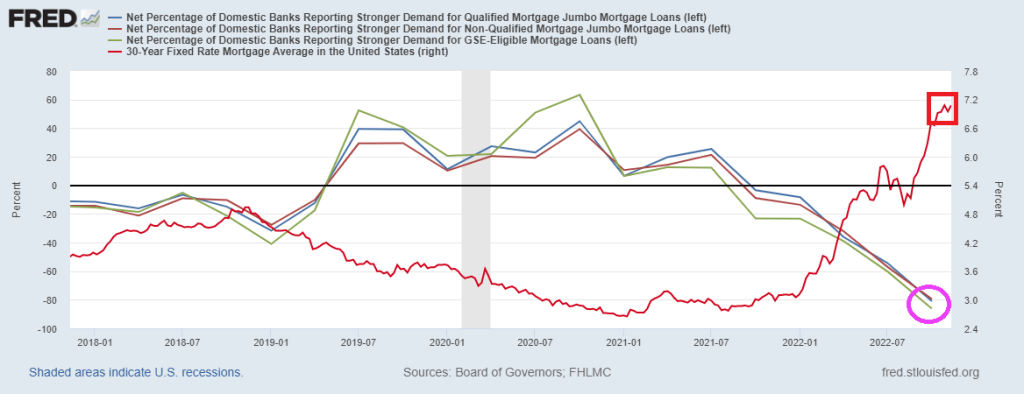
The Net Percentage of Domestic Banks Reporting Stronger Demand for Mortgage Loans is sinking faster than Joe Biden’s oratory skills as The Fed tightens their monetary belts.
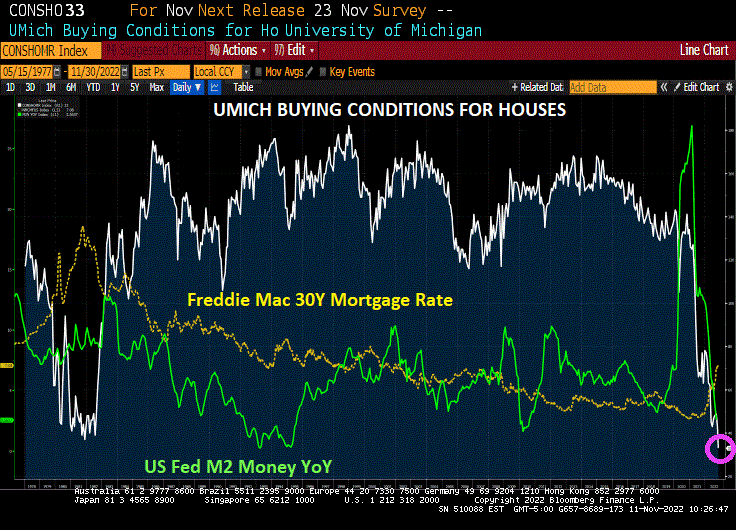
And today, the University of Michigan (BOOO!!) consumer survey for housing buying conditions fell to the lowest level in recorded history.
Given the latest inflation numbers (improving from disastrous, 8.2% YoY to really horrible, 7.70% YoY), and unemployment rate rising from 3.5% to 3.7%, we now see that Taylor Rule estimate for Fed Funds is now … 13.85%. The US is currently at 4.00%. THAT is a big gap!
Yes, The Fed will not be able to fill the gap between the Taylor Rule and the current Fed Funds Target Rate, without incredible damage being done.
Unfortunately, this is an ACTIVE FAILURE for The Fed which has left monetary stimulus too high for too long since late 2008.
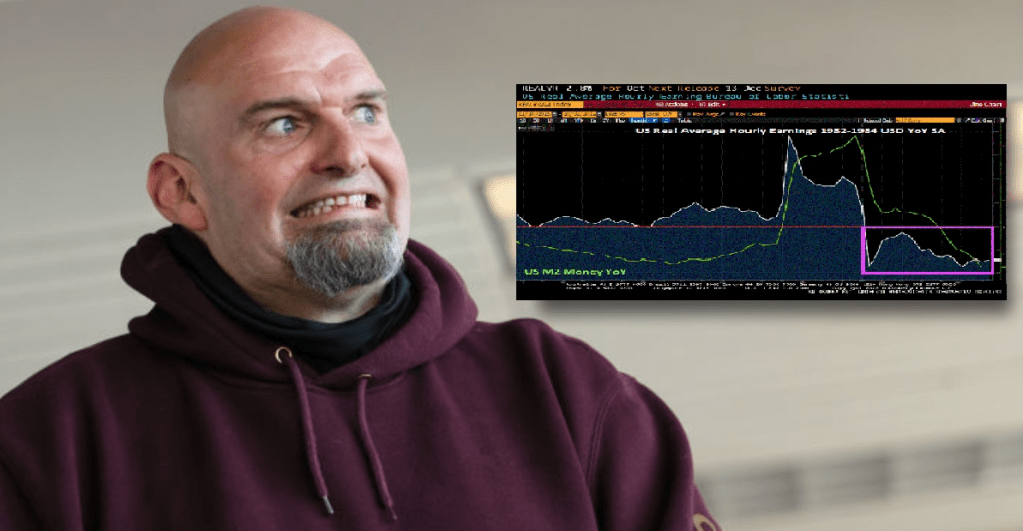
On a personal note, I am glad the midterm elections are over. We saw John Fetterman arguing until he was blue in the face that he loved fracking and will continue to let Pennsylvania frack. Then PA governor-elect Josh Shapiro came out yesterday and said that PA will end all fracking. And we are to believe that Lt Gov Fetterman did not talk with PA Attorney General Shapiro about fracking? To quote Joe Biden, “C’mon man!”
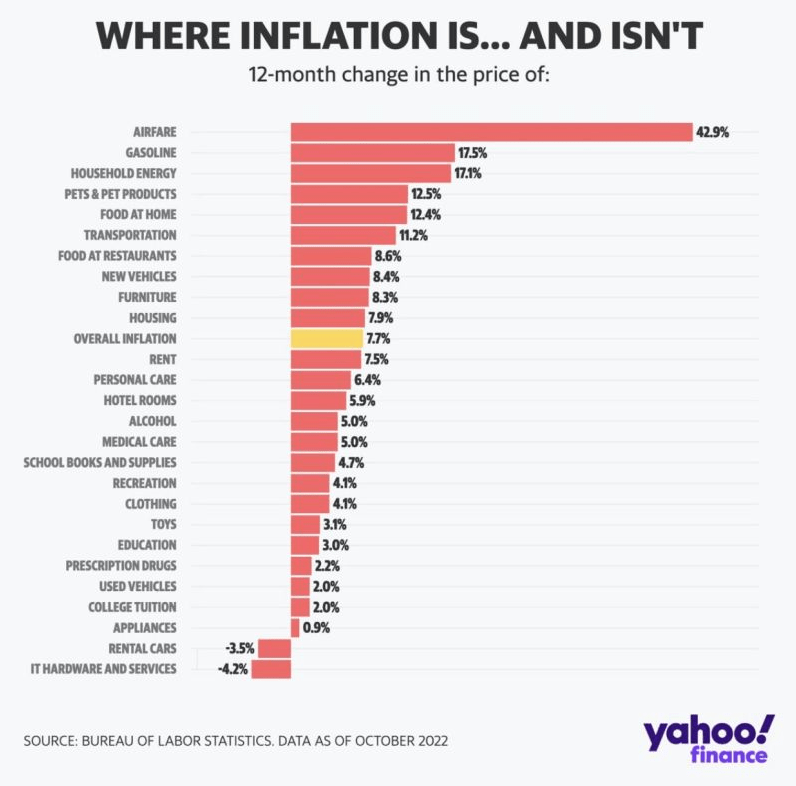
The inflation numbers are out for October and they still stink (headline inflation still sizzling at 7.7% YoY).
But the number that really irks me is … REAL average hourly earnings growth is at a horrifying -2.8% YoY because of Biden’s terrible policies (aka, Bidenflation).
Real average hourly earnings growth YoY has been negative since March 2021. That is 19 straight months of negative earnings growth under Biden/Pelosi/Schumer’s reign of error.
Overall, airfares are leading followed by gasoline and household energy.
So, Pennsylvania elects this guy to perpetuate Biden/Pelosi/Schumer’s awful policies?










 Confounded Interest - Anthony B. Sanders
You must be logged in to post a comment.