Due to high inflation, reduced consumer spending, higher rents and other economic pressures, U.S.-based small business owners’ rent problems just escalated to new heights nationally this month, based on Alignable’s November Rent Poll of 6,326 small business owners taken from 11/19/22 to 11/22/22.
Unfortunately, 41% of U.S.-based small business owners report that they could not pay their rent in full and on time in November, a new record for 2022. Making matters worse, this occurred during a quarter when more money should be coming in and rent delinquency rates should be decreasing. But so far this quarter, the opposite has been true.
Last month, rent delinquency rates increased seven percentage points from 30% in September to 37% in October. And now, in November, that rate is another four percentage points higher, reaching a new high across a variety of industries.
All told in Q4 so far, the rent delinquency rate continues to increase at a significant pace, up 11 percentage points from where it was just two months ago.
Well, this is not good.
And on the mortgage front, not all is quiet.
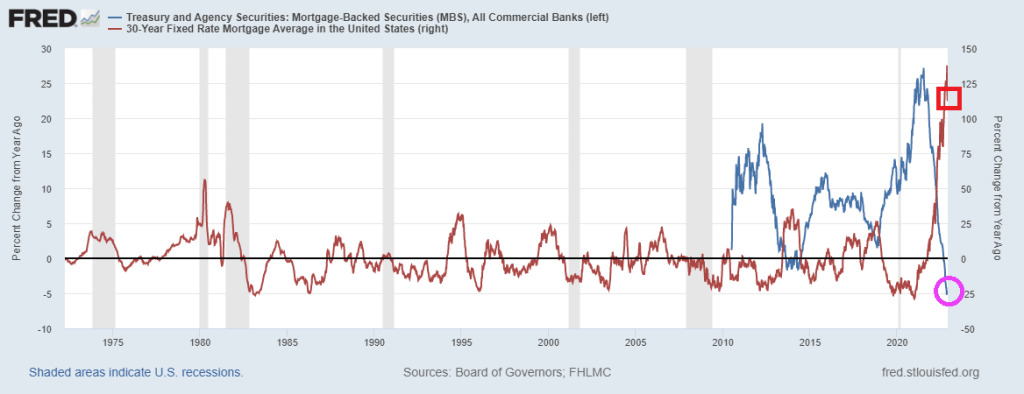
Commercial bank holding of Agency mortgage-backed securities (MBS) has collapsed with Fed tightening and mortgage rate increases.
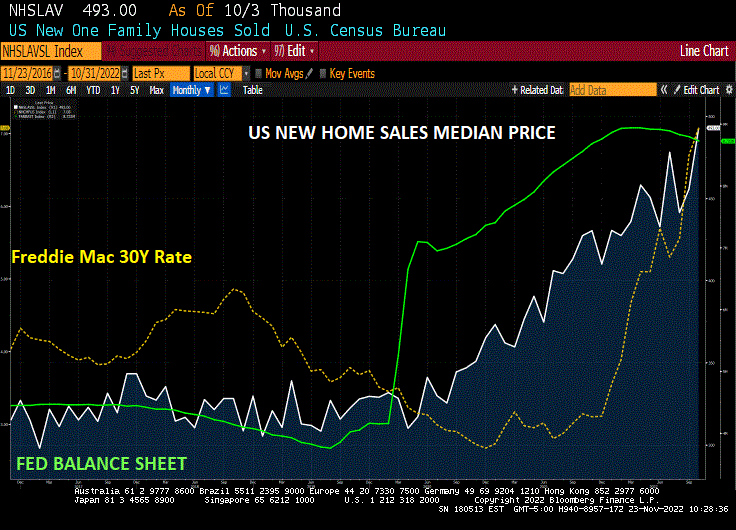
Not surprisingly, the median price of new home sales are up 8.2% MoM (since September).
The Fed’s minutes for their last FOMC meeting will be out at 2pm EST. Let’s see if they discuss WHY they haven’t reduced their balance sheet by much which is contributing to asset bubbles.
Here is The Fed’s Dots plot from the September meeting. I get the impression that The Fed thinks that their target rate will be coming down in 2024 and after.
Again, why did people with professional investment managers not look under the hood, so to speak, when touting FTX and Sam Bankman-Fried’s scam? Or why didn’t Washington DC politicians like Maxine Water (D-CA) look into what was going on with their second largest donor after George Soros?
Former FTX Trading CEO Sam Bankman-Fried, NFL quarterback Tom Brady, supermodel Gisele Bundchen and comedian Larry David are among a celebrity-studded list of people accused of defrauding investors who lost money in the cryptocurrency exchange’s sudden collapse.
A proposed class-action filed in federal court in Florida late Tuesday names those four, along with other athletes and entertainers, as defendants in the case. All promoted FTX, one of the world’s largest crypto trading platform exchanges before it declared bankruptcy on November 11, with the company now under investigation for possible securities violations.
“It is still very difficult to comprehend that just one company defrauded more than $11 billion dollars from consumers, all from our backyard here in Miami,” Adam Moskowitz, the attorney leading the class action, said in an email.The suit seeks unspecified damages and is the first filed against Bankman-Fried and his companies since FTX filed for bankruptcy protection. BECAUSE MR MOSKOWITZ, NOBODY LOOKED UNDER THE HOOD.
Other current and former athletes named in the suit are NBA star Stephen Curry; NFL quarterback William Trevor Lawrence; baseball player Shohei Ohtani; tennis player Naomi Osaka; and broadcaster and former basketball player Shaquille O’Neal. Kevin O’Leary, a host of “Shark Tank,” is also named in the complaint, which was filed Nov. 15 in the Southern District of Florida.
The exchange shuffled customer money between affiliated entities, using new investor funds and loans to pay interest to the old ones in an attempt “to maintain the appearance of liquidity,” Moskowitz alleged, adding that FTX used public figures to give the operation an air of credibility.
Larry David, Trevor Lawrence and Naomi Osaka got stung by SBF like Tom Brady and Step Curry in a fraud scheme. True, celebrities should have excercized caution with dealing with SBF (I would love to see SBF’s investor presentation, but there may not have been one).
Or did SBF show this Bitcoin chart with Fed tightening? Or did ARK’s Cathy Wood look at this chart?/
Despite the recent FTX-fueled crypto market collapse, Cathie Wood, founder and CEO of Ark Invest Management, stood by her prediction that Bitcoin would reach $1 million by 2030.
$16,500 to $1,000.,000 by 2030? In 8 years??
“FTX were geniuses at public relations and marketing, and knew that such a massive Ponzi scheme — larger than the Madoff scheme — could only be successful with the help and promotion of the most famous, respected, and beloved celebrities and influencers in the world,” he said.
FTX did not reply to a request for comment.
FTX’s creditors will be first in line to get whatever assets a bankruptcy judge deems appropriate to distribute as the company seeks to restructure as part of its Chapter 11 filing. Investors in the Bahamas-based company, which had raised some $2 billion in venture capital, come next.
That means FTX account holders, who used the platform to trade bitcoin, ethereum and other digital currencies, may have to wait years to get their money back – if they ever do.
And so it goes. I doubt that Maxine Waters House Financial Services Committee will do anything constructive. The hearing will be a battle cry for more regulation and perhaps even paint SBF as victim of volatility.
The really sad part of this story is that SBF is still trying to raise money to do it all over again. But there are always investors who want to buy a piece of the blue sky, or a bridge in Brooklyn.
The US economy is in “The Deep.” Deep into yield curve inversion, that is.
The US Treasury 10Y-2Y yield curve swam deeper into inversion at -75 basis points. The deepest inversion since just before The Great Recession and housing market crash.
The Biden Administration is setting all sorts of records. One is the worst inflation rate in 40 years. Another is highest gasoline prices in history (until the latest global slowdown). The list goes on, but here is another one: the US Treasury 10Y-2Y yield curve is now at -72.5 basis points, the more inverted curve since 1981.
This is the US Treasury version of 50 Shades Of Grey.
As Americans prepare to hit the road for Thanksgiving, average gas prices will be at their highest seasonal level ever, according to GasBuddy.
GasBuddy says the national average is projected to stand at $3.68 on Thanksgiving Day. This is nearly 30¢ higher than last year, and over 20¢ higher than the previous record of $3.44 set in 2012.
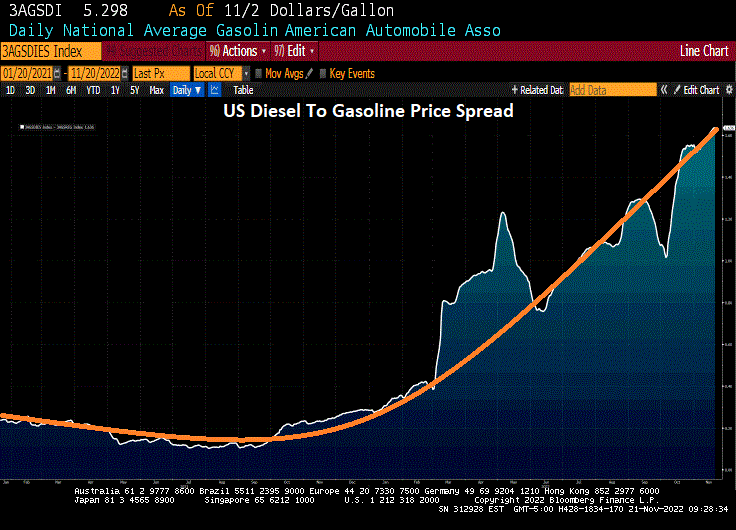
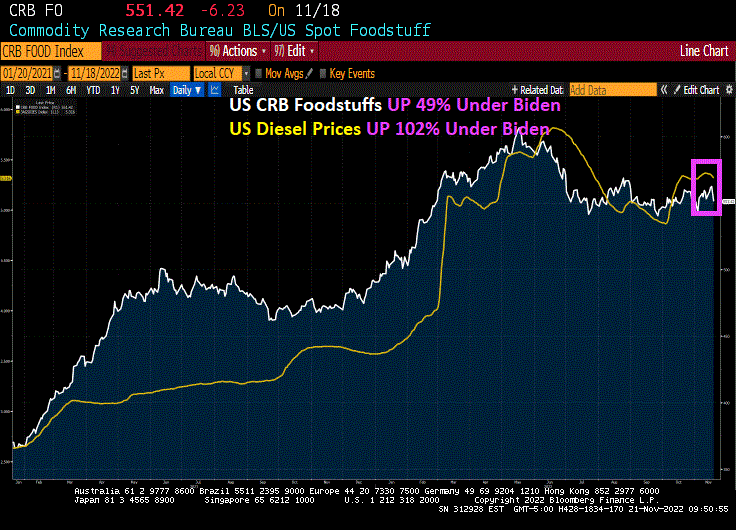
And diesel prices, the life blood of the shipping industry, relative to gasoline prices, are soaring. Highest since 2004.
As we approach Thanksgiving Day, it is important to be thankful … that things aren’t even worse under Billions Biden. US CRB foodstuffs are up 49% under Biden while diesel fuel is up 102%.
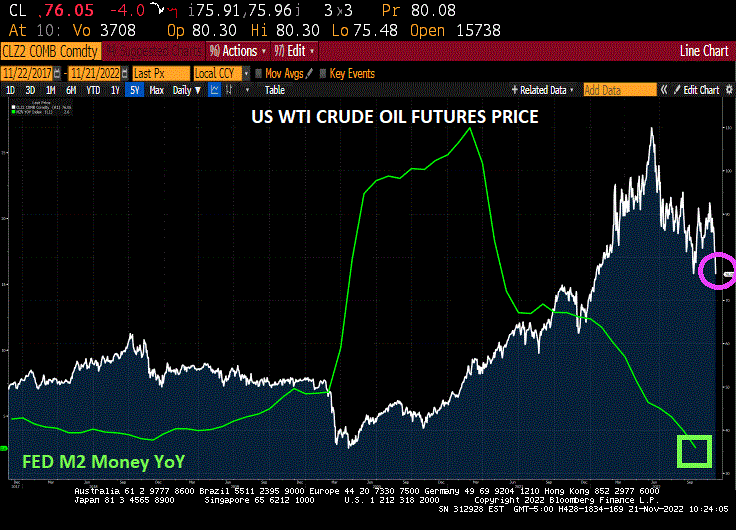
Now, gasoline prices fell recently as WTI crude prices slipped on slowing demand. And as stimulus wears out.
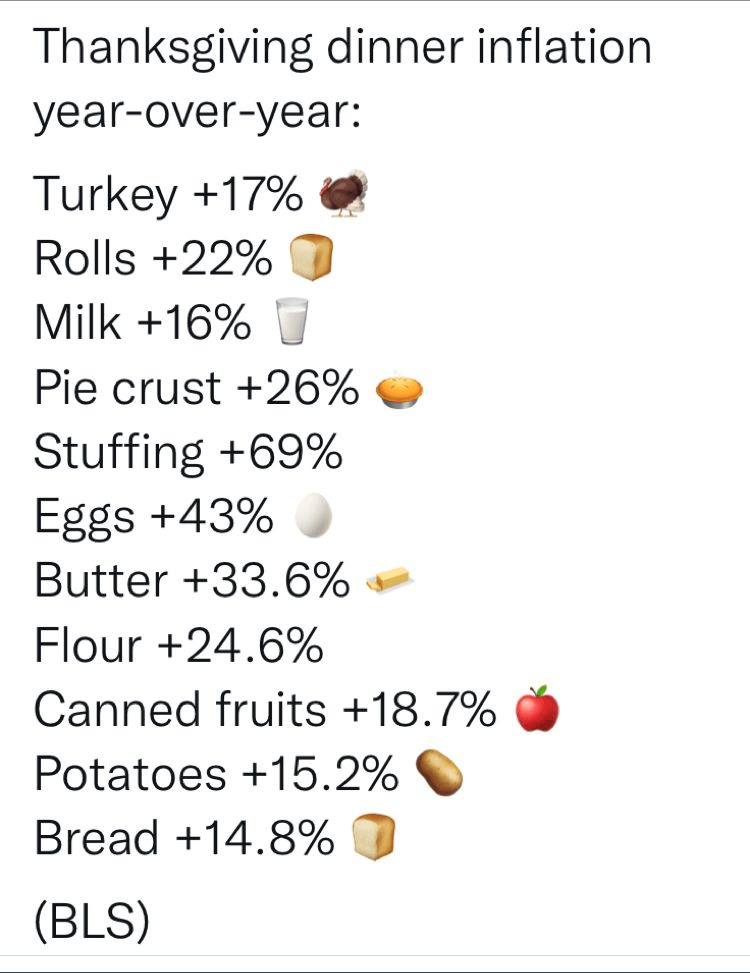
And its now only food.
Have a holly jolly Thanksgiving!!
My Thanksgiving dinner, because of the cost, will be a Jersey Mike’s turkey and provolone sub (mini). Or this canned dinner.
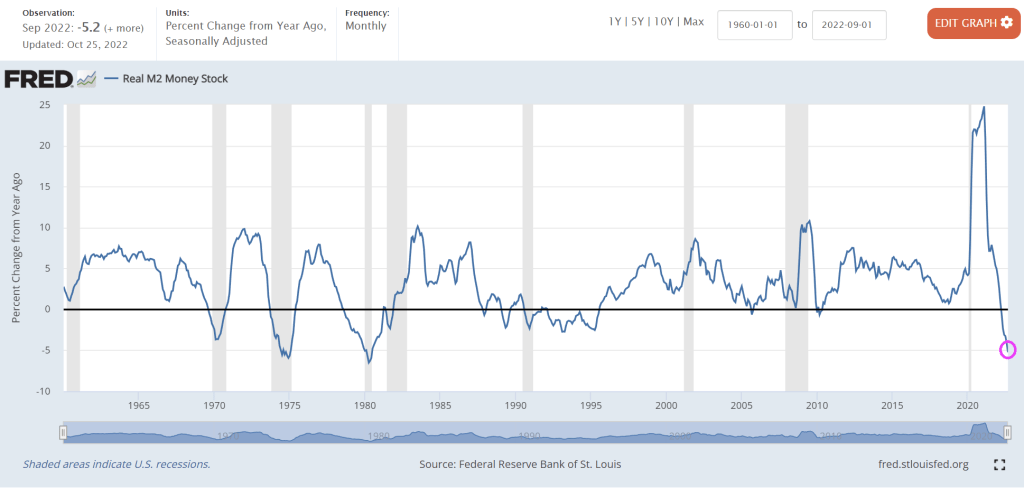
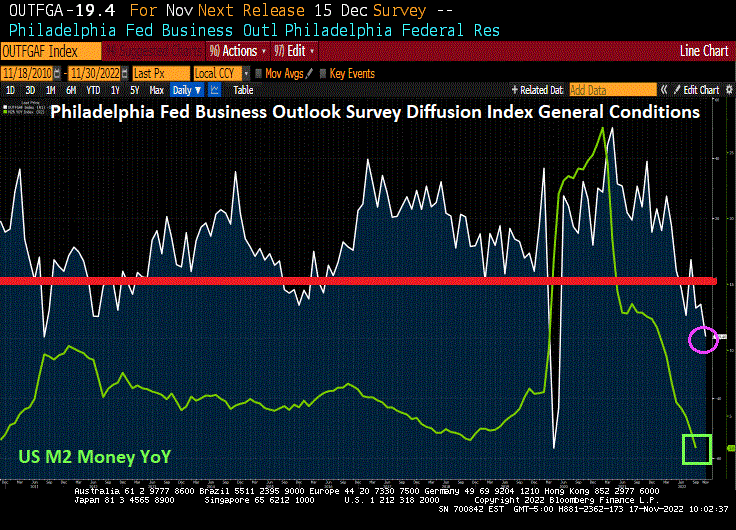
The Philadelphia Fed’s Business Outlook plunged to 1-9.40% YoY, the worst since 2012. Notice how the Philly Phed Plunge is related to M2 Money growth YoY.
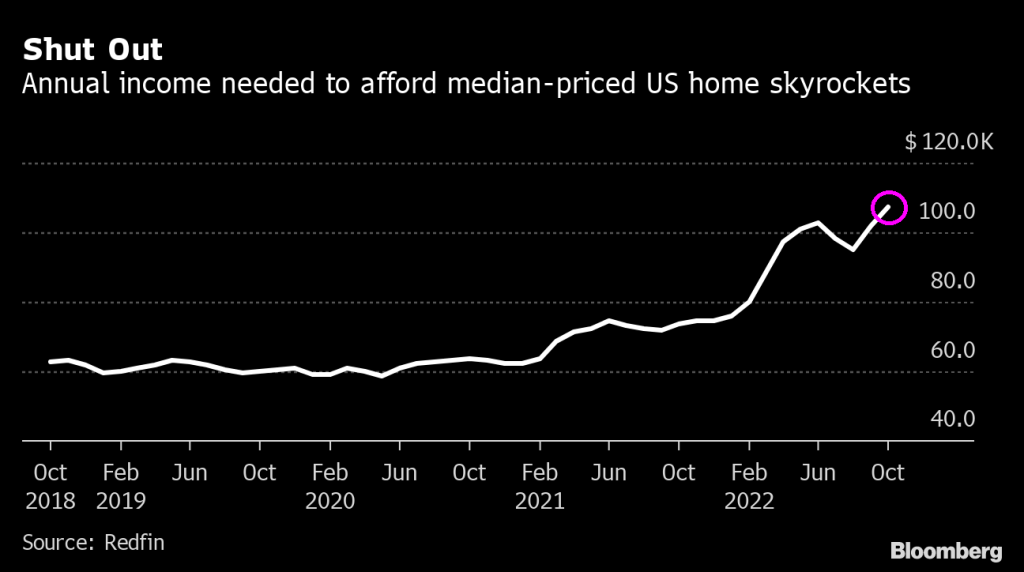
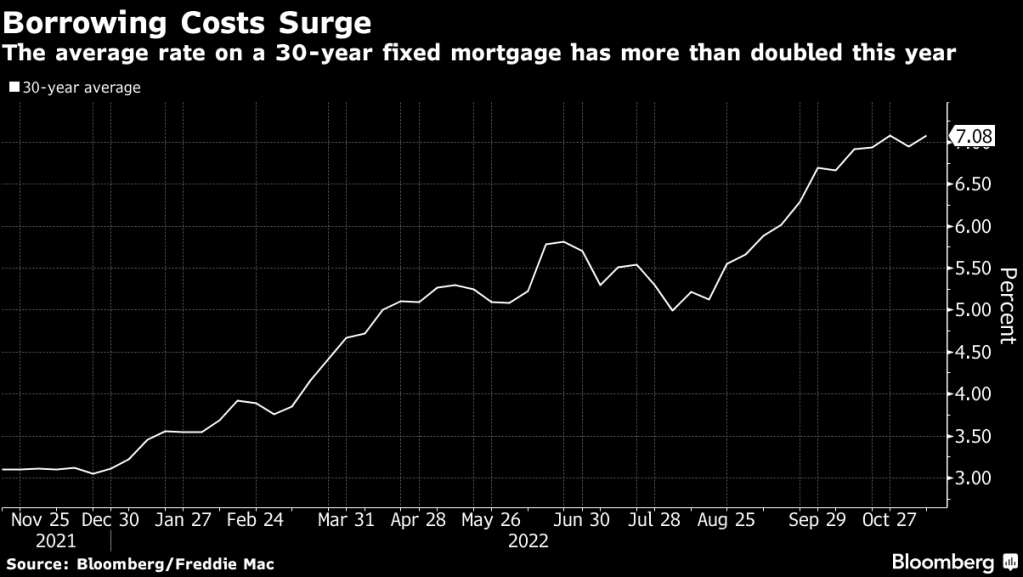
Of course, it is easy to blame the figure on rapidly rising mortgage rates and Federal Reserve tightening.
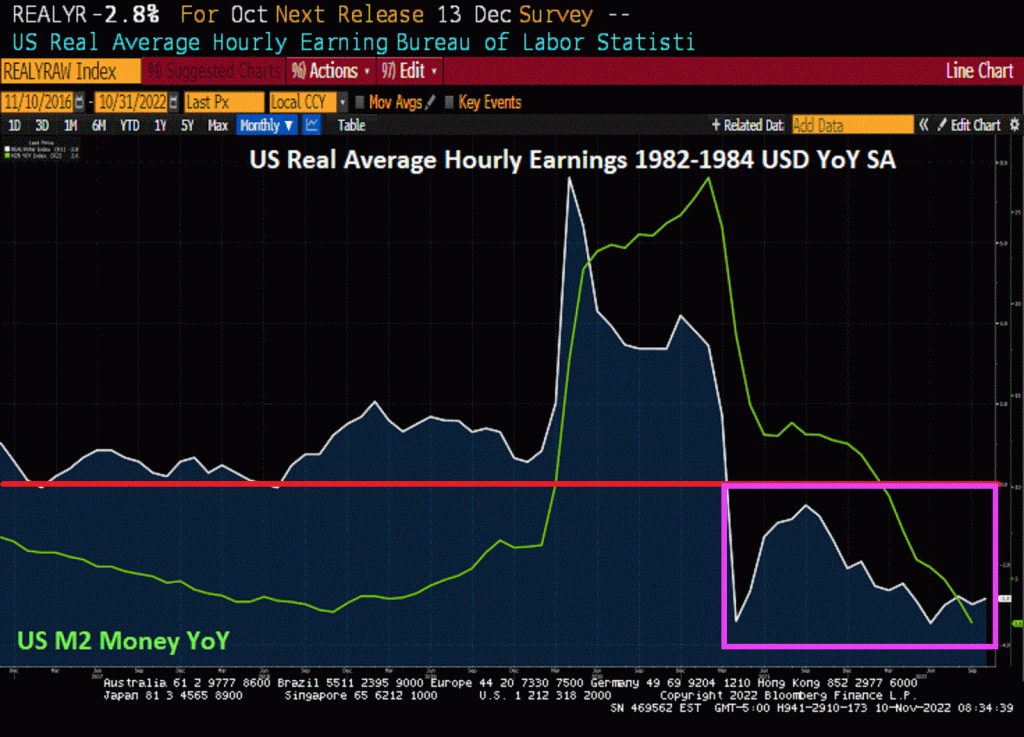
But the rest of the story (as Paul Harvey used to say) is that US REAL wage growth has been NEGATIVE for 19 straight months. This alone makes housing unaffordable for the middle class and low wage workers.
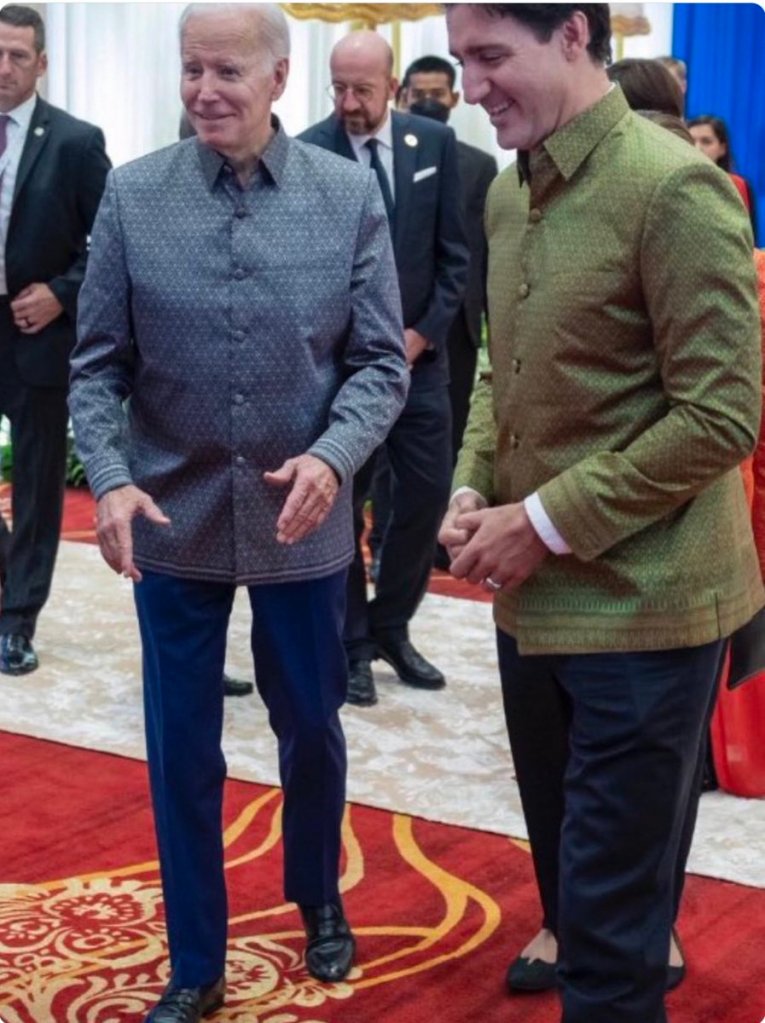
Again, why are Biden and Trudeau wearing Mao jackets in Bali? And why is Biden looking like a robot?? Biden does look like he is saying “Take me to my leader, Pei.”
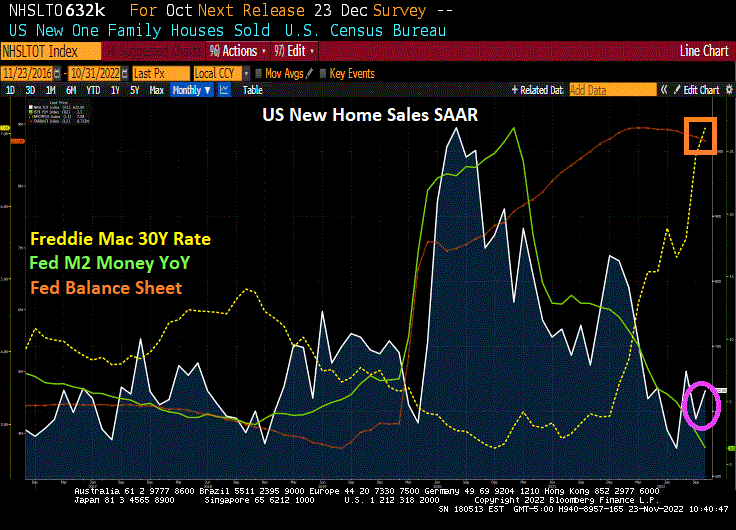
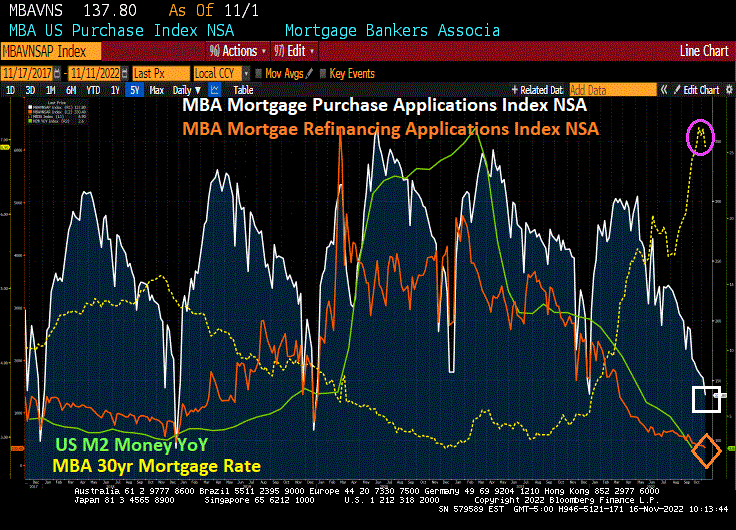
US mortgage rates fell last week by the most since the end of July, slipping below 7% and helping generate a bounce in purchase applications that otherwise remain depressed, but only in the Seasonally Adjusted data. The NON-Seasonally Adjusted data show a hefty decline.
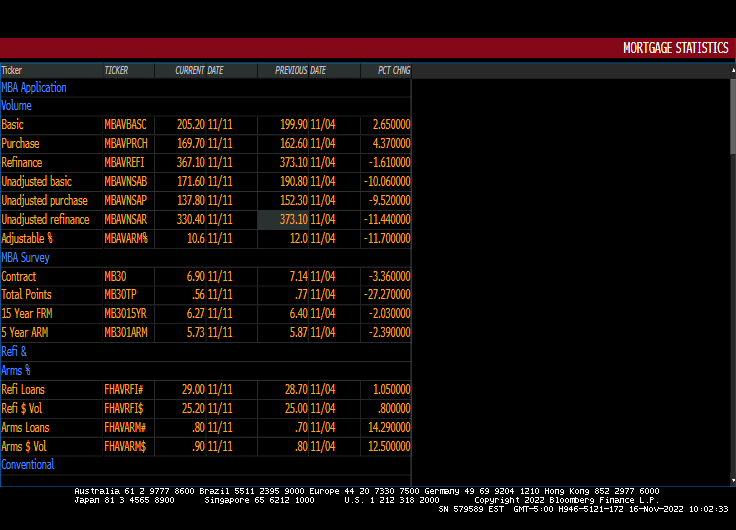
The contract rate on a 30-year fixed mortgage decreased 24 basis points to 6.9% in the week ended Nov. 11, according to Mortgage Bankers Association data released Wednesday. The group’s index of applications to buy a home rose 4.4% — the most since June — but is still near the weakest level since 2015.
But the bounce was in Seasonally Adjusted data only. The NON-seasonally adjusted data remained depressed.
Mortgage applications decreased -10.0 percent SA from one week earlier, according to data from the Mortgage Bankers Association’s (MBA) Weekly Mortgage Applications Survey for the week ending November 11, 2022. This week’s results include an adjustment for the observance of Veterans Day.
The Refinance Index decreased -11.44% percent from the previous week and was 88 percent lower than the same week one year ago.The unadjusted Purchase Index decreased -10 percent compared with the previous week and was 46 percent lower than the same week one year ago.
Mortgage purchase applications will continue to fall in NSA terms since it is the Winter and home buying season won’t really start until January. Refinancing applications actually dropped -11.44% even with the drop in mortgage rates.
The data. As my former students know, I like the “raw” data, better known as NON-seasonally adjusted (NSA) data and avoid seasonally-adjusted data (SA) since it hides what is going on.
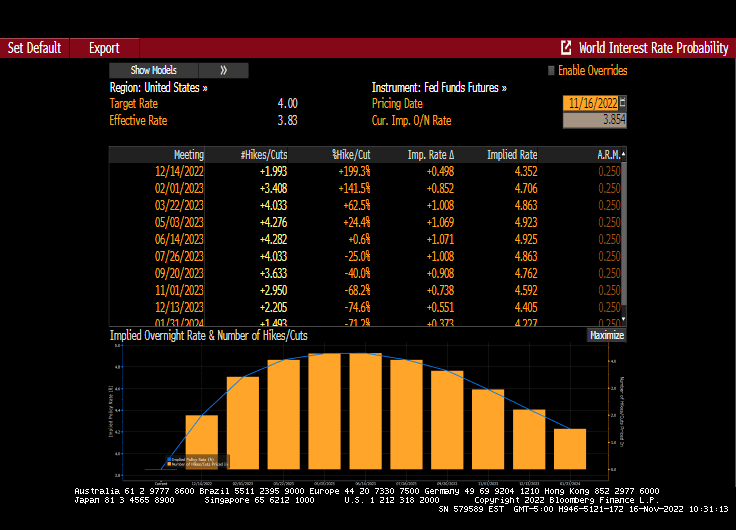
And on The Fed Futures Front, The Federal Reserve is still looking a hiking their target rate from 4% to just under 5%.









 Confounded Interest - Anthony B. Sanders
You must be logged in to post a comment.