Are You Ready? Banks Postitioned For A Bail-in As Silicon Valley Bank Fails (FDIC, Fed Weigh Special Vehicle After SVB Collapses, AOC Alert!)

Are you ready?

Despite cries from Summers, Yellen and other the DC illuminati (Biden is oddly silent), US banks are NOT fine. In fact, banks in general are suffering from Fed rates increases due to holding of long-term Treasuries and MBS.

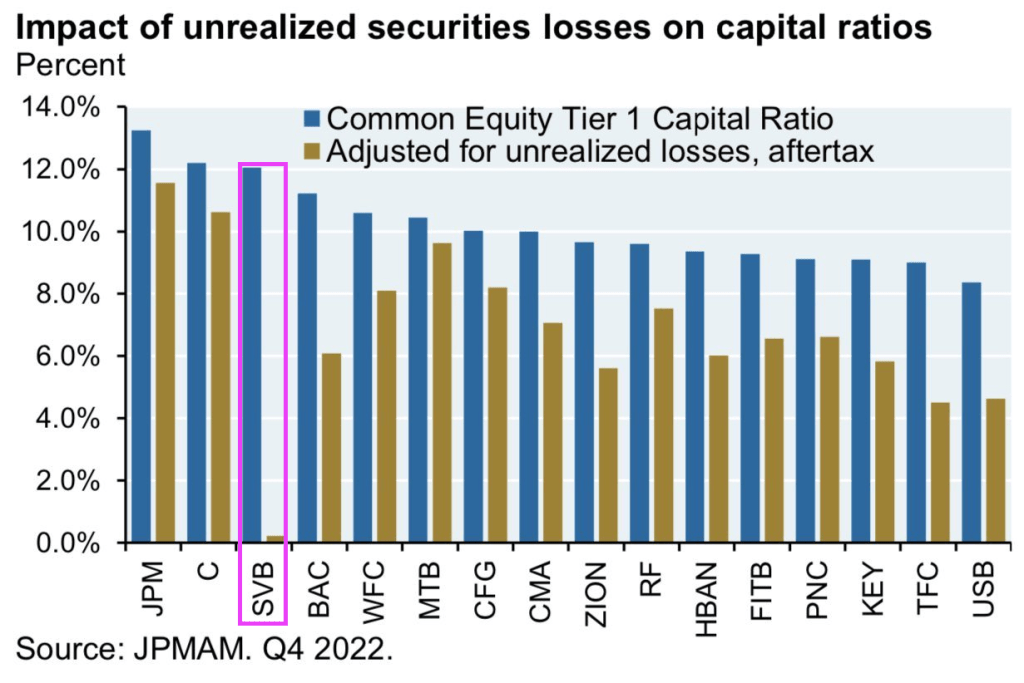
In fact, The Federal Reserve’s fight against inflation is causing serious problems, as exemplified by AOC. No, not THAT AOC. but bank Accumulated Other Comprehensive Income.

Accumulated Other Comprehensive Income (AOCI) are special gains and losses that are listed as special items in the shareholder equity section of a company’s balance sheet. The AOCI account is the designated space for unrealized profits or losses on items that are placed in the other comprehensive income category.

On the regulatory call reports, AOCI is added to regulatory capital. Since SVB’s AOCI was negative (because of its unrealized losses on AFS securities) as of Dec. 31, it lowered the company’s total equity capital. So a fair way to gauge the negative AOCI to the bank’s total equity capital would be to divide the negative AOCI by total equity capital less AOCI — effectively adding the unrealized losses back to total equity capital for the calculation.

Getting back to our list of 10 banks that raised similar red margin flags to those of SVB, here’s the same group, in the same order, showing negative AOCI as a percentage of total equity capital as of Dec. 31. We have added SVB to the bottom of the list. The data was provided by FactSet:

Or this chart of vulnerable banks from Morningstar of unrealized losses and liquidity risk.

Here is a snapshot of SVB’s balance sheet. Or UNbalanced sheet.

After Congress passed the greatly flawed Dodd-Frank banking legislation, bailouts of banks are prohibited. But bank BAIL-INs still exist. Banks use money from their unsecured creditors, including depositors and bondholders, to restructure their capital to stay afloat. Put simply, they can convert their debt into equity to increase their capital requirements. Although depositors run the risk of losing some of their deposits, banks can only use deposits in excess of the $250,000 protection provided by the Federal Deposit Insurance Corporation (FDIC).

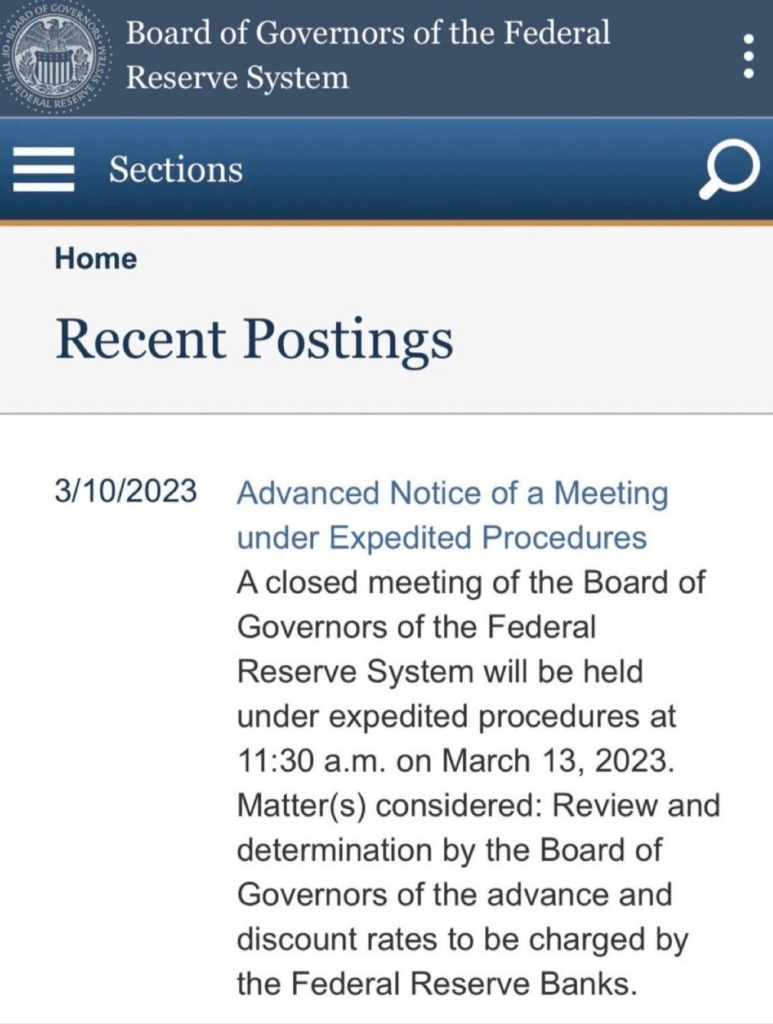
In any case, the FDIC and Fed are weighing a special vehicle after SVB swiftly collapses. Special vehicle? Sounds an awful like the mega bank bailout of 2008 under Hank Paulson.

No, not THIS AOC!

Bernanke/Yellen’s Bear Trap Ensnares SVB And Other Banks (Bets Taken During Pandemic Blow Up As Long Duration Debt Gets Scorched)

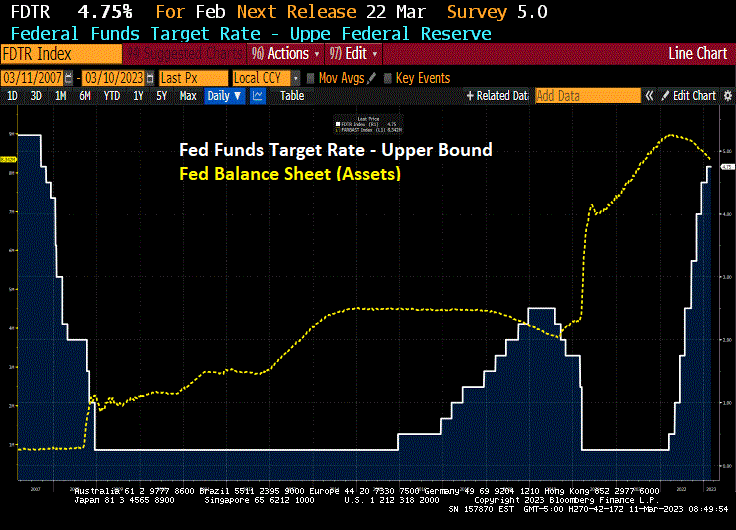
Silicon Valley Bank (SVB), the nation’s 16th largest bank, got caught in Ben Bernanke and Janet Yellen’s bear trap, the trap set when Bernanke/Yellen kept interest rates 25 basis points for too long (from December 2008 through December 2015) and then raising rates only once during Obama’s Presidency, only to raise rates 8 times after Trump was elected President. Then Covid struck in early 2020 and Powell dropped rates to 25 basis points again until inflation struck and Powell started raising rates at the fast pace in history.

Of course, banks got clobbered with interest rate increases, such as Silicon Valley Bank.

SVB’s collapse into Federal Deposit Insurance Corp. receivership came suddenly on Friday, following a frenetic 44 hours in which its long-established customer base of tech startups yanked deposits. But its fate was sealed years ago — during the height of the financial mania that swept across America when the pandemic hit.

US venture capital-backed companies raised $330 billion in 2021 — almost doubling the previous record a year before. Cathie Wood’s ETFs were surging and retail traders on Reddit were bullying hedge funds.

Crucially, the Federal Reserve pinned interest rates at unprecedented lows. And, in a radical shakeup of its framework, it promised to keep them there until it saw sustained inflation well above 2% — an outcome that no official forecast.

SVB took in tens of billions of dollars from its venture capital clients and then, confident that rates would stay steady, plowed that cash into longer-term bonds.

In doing so, it created — and walked straight into — a trap. Set by Fed Chair Ben Bernanke and now US Treasury Secretary Janet Yellen. To be sprung by current Fed Chair Jay Powell.

Becker and other leaders of the Santa Clara-based institution, the second-largest US bank failure in history behind Washington Mutual in 2008, will have to reckon with why they didn’t protect it from the risks of gorging on young tech ventures’ unstable deposits and from interest-rate increases on the asset side.

Outstanding questions also remain about how SVB went about navigating its precarious position in recent months, and whether it erred by waiting and failing to lock down a $2.25 billion capital injection before publicly announcing losses that alarmed its customers. Investors and depositors tried to pull $42 billion on Thursday, leaving the firm with a negative cash balance of almost $1 billion, regulators said.

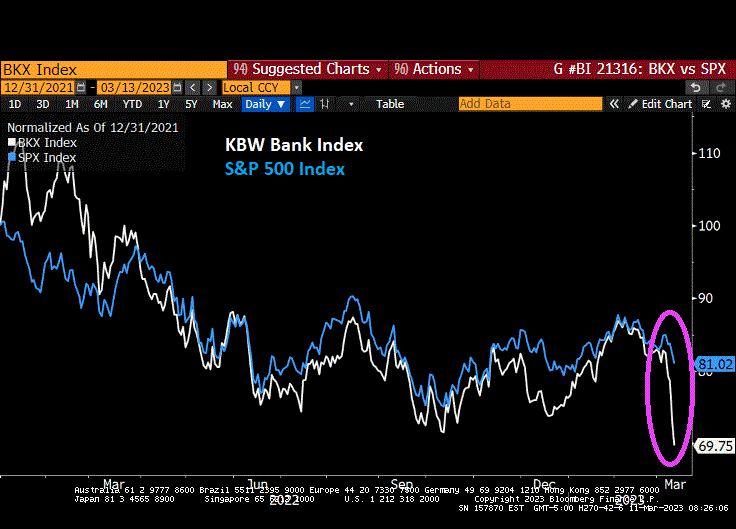
The KBW Bank index shows the slaughter of most banks on Friday.

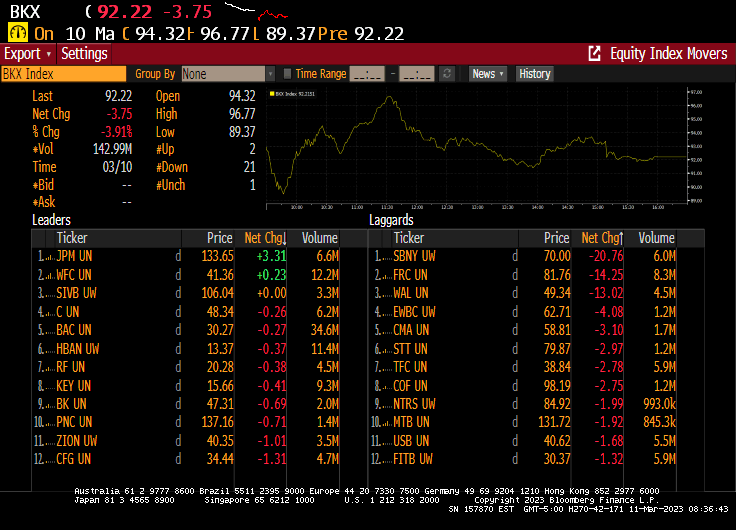
Of course, the notorious Too Big To Fail (TBTF) banks JP Morgan Chase and Wells Fargo actually rose in value on Friday while regional banks got clobbered like Signature Bank, First Republic and Western Alliance Banks all losing over 10% in price on Friday.

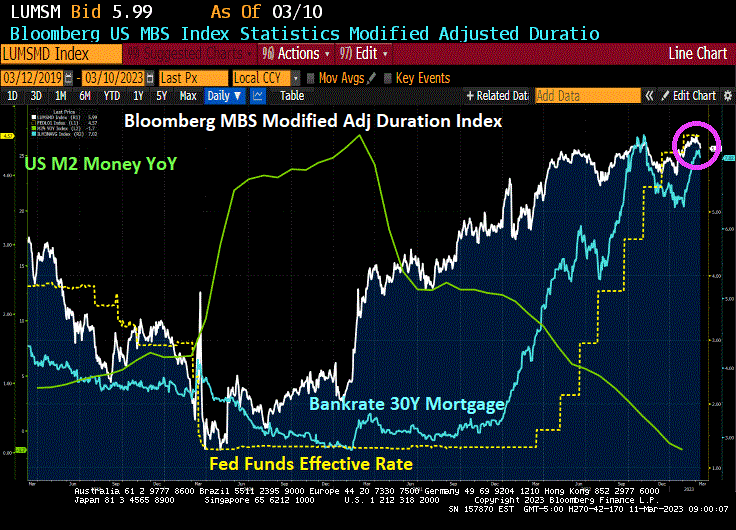
How did this happen? Well bets placed during Covid with The Fed keeping rates at 25 basis points got clobbered when The Fed finally started raising rates again. Modified duration, a risk measure indication the weighted-average life of a bond and mortgage-backed securities (MBS), has been increasing steadily since the initial Covid shock.

SVB’s management’s solution appears to have been to seek out yield through a lot of long-duration bonds. The bank started to lose deposits as VCs pulled cash/burnt through operating capital. Whoops!

Unrealized losses killed SVB, thanks to their long duration bet as The Fed tightened.

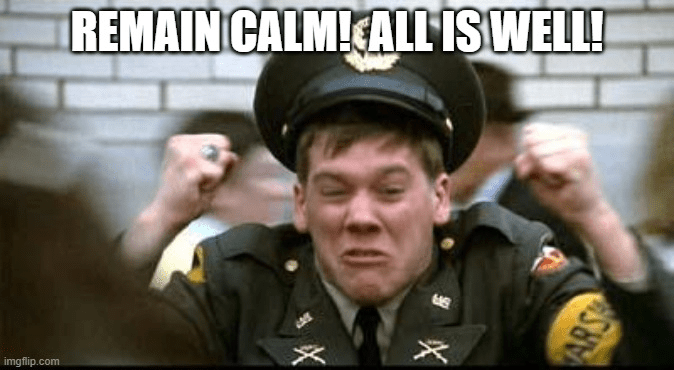
The most terrifying thing was when former Treasury Secretary Larry Summers and current Treasury Secretary Janet Yellen went on TV to exclaim “Remain calm! All is well … in the banking sector.” You know when they wheel out Summers and Yellen that all is NOT well.

Jobless Claims Rise As Layoffs Soar At Fastest Pace (UP 410% MoM) Since Lehman Collapse (UP 427% On YoY Basis)

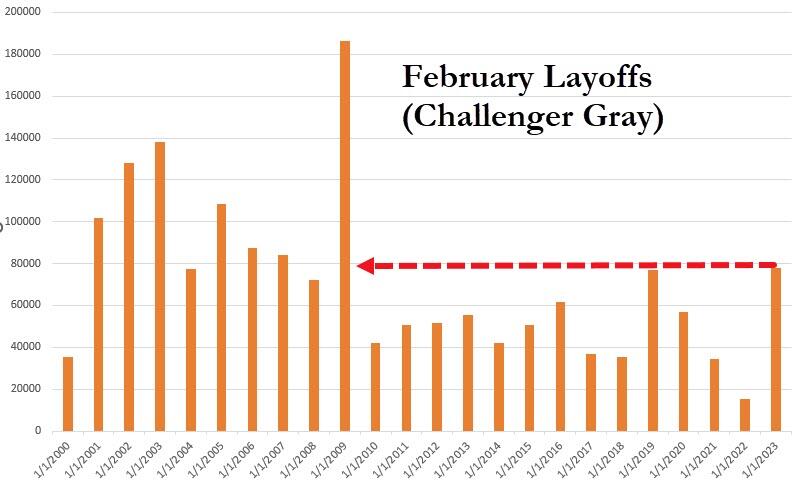
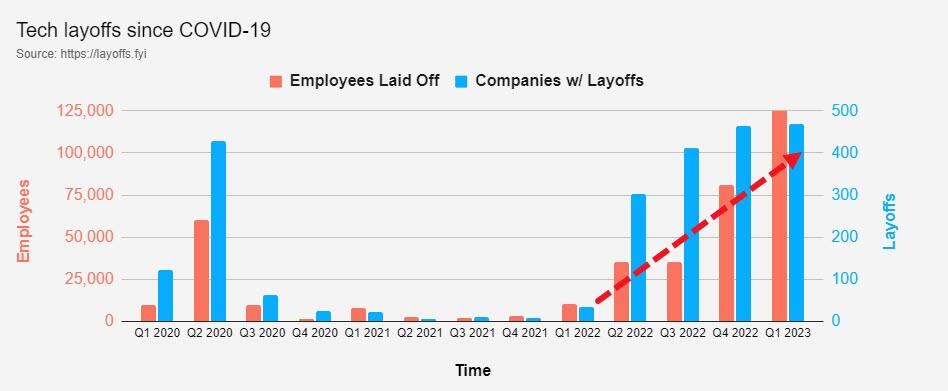
I am waiting for tomorrow’s employment report to see if the Biden Administration plays it straight or give another padded report like first half 2022. But in the meantime, according to Challenger Gray & Christmas, U.S.-based employers announced 77,770 job cuts in February. It is 410% higher than the 15,245 cuts announced in the same month last year.

February’s total is the highest for the month since 2009…

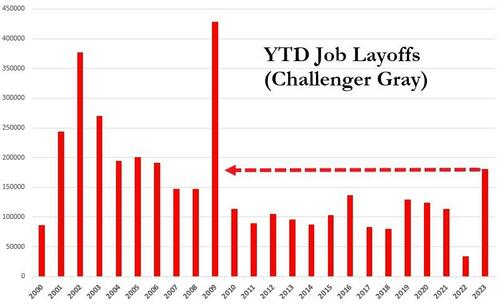
So far this year, employers announced plans to cut 180,713 jobs, up 427% from the 34,309 cuts announced in the first two months of 2022. It is the highest January-February total since 2009

While many of the job cuts is coming in the tech sector,

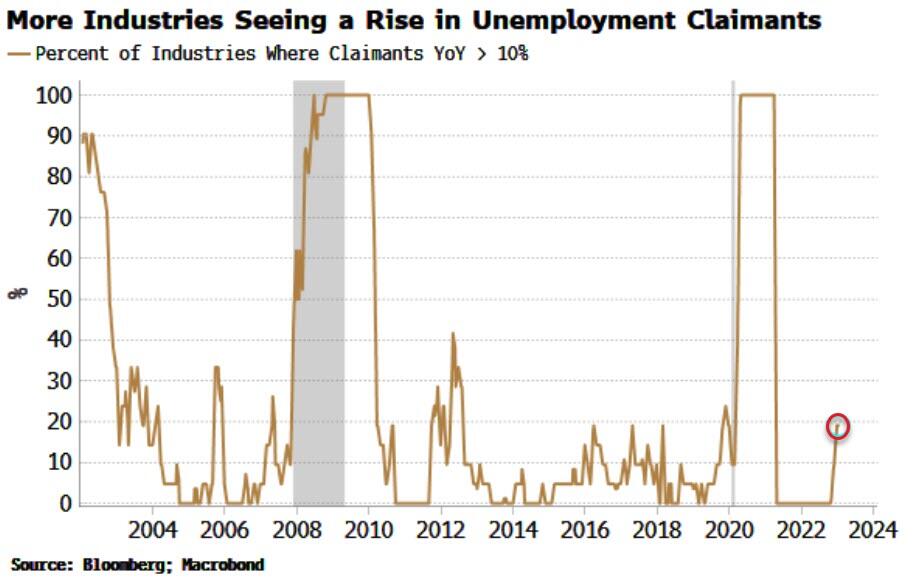
we are seeing more industries reporting a rise in unemployment claims.

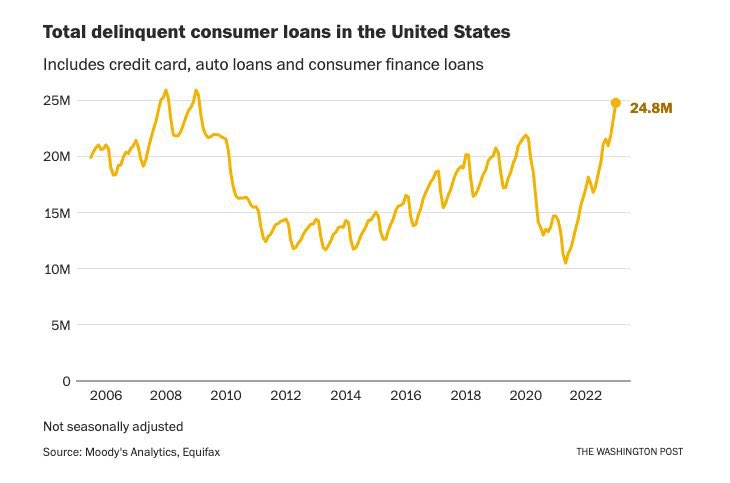
And then we have total delinquent consumer loans at 24.8 million. Highest since 2009.

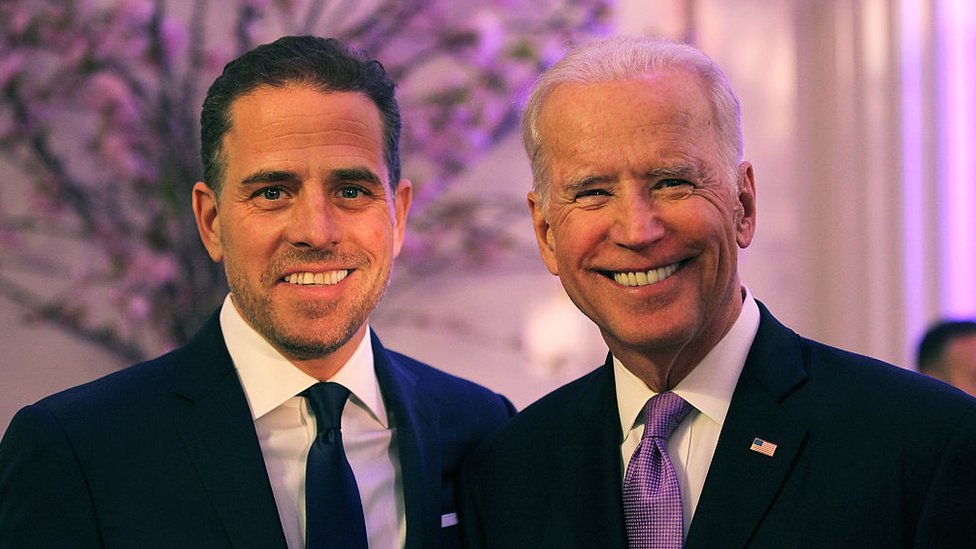
I wonder if the answer to tomorrow’s employment report lies in one of the nine boxes of Biden’s documents taken from a Boston office?

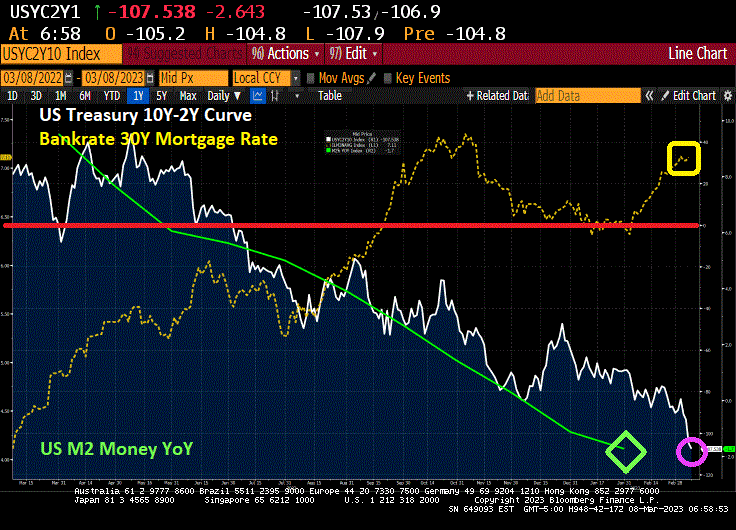
Slippin’ Into Darkness! US Treasury Yield Curve Descends To -108 BPS (169 Days Of Inversion) As US Mortgage Rate Hits 7.11% (Fed No Longer Low Riding Interest Rates)

Slippin’ into darkness! The US Treasury 10Y-2Y yield curve, that is.

At the same time that the 10Y-2Y yield curve inverts to -108 basis points, Bankrate’s 30-year mortgage rate has risen to 7.11%.

Now that The Federal Reserve is no longer low riding interest rates, I expect to see a cooling of the US economy.

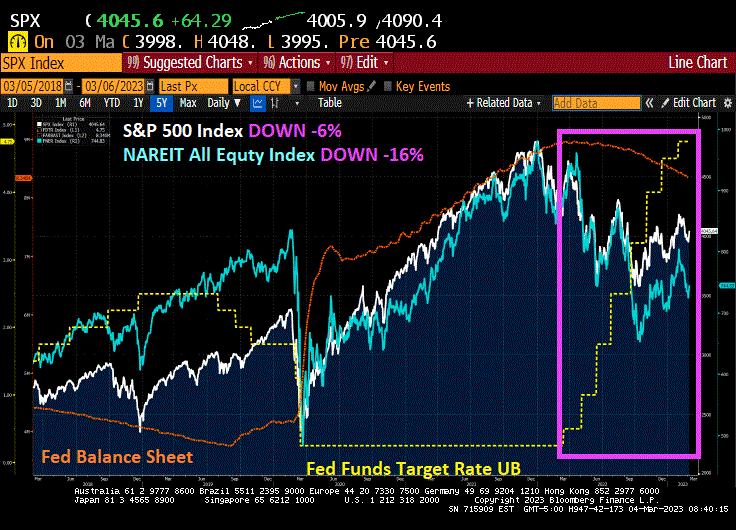
Sink The Economy! S&P 500 Down -6% Since Fed Started Raising Rates On May 4, 2022, Equity REITs Down -16% (Pension Pain From Interest Rate Increases)

Interest rates are an important driver of the economy and financial markets. And what has happened to the S&P 500 index since The Federal Reserve started raising their target rate on May 4, 2023 to fight surging inflation?

Since that fatal day, the S&P 500 index has fallen -6% and equity REITs (commercial real estate) has fallen -16%.

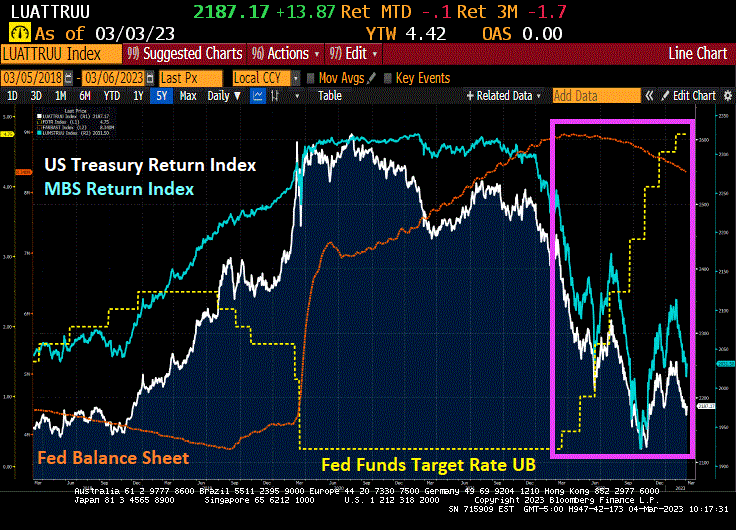
What about returns on US Treasuries and Mortgage-backed Securities (MBS)? Same thing. PAIN!

Although The Fed has pledged to keep raising rates to fight inflation (and further decimate retirement accounts), investors are pointing to a peak (terminal) Fed rate of 5.44% at the September 2023 FOMC meeting. Then rate cuts following the September 2023 meeting.

Of course, much of the blame belongs to former Fed Chair Ben (QE) Bernanke and current Treasury Secretary Janet “Too Low For Too Long” Yellen who never met a Fed rate hike that she liked. But Yellen LOVES giving away US taxpayer dollars … to Ukraine.

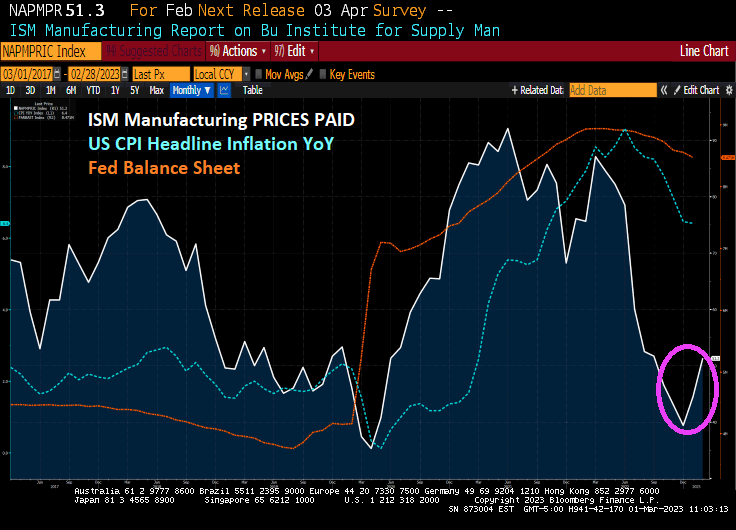
Here We Go Again! ISM Manufacturing Prices Paid Rises For 2nd Straight Month As Fed Slow Walks Balance Sheet Shrinking (Growing Inflation Warning!)

Treasury Secretary (and former Federal Reserve Chair) Janet Yellen kept saying inflation was simply transitory. And for a while, the US saw cooling inflation. But we just saw ISM Manufacturing prices paid rise in February for the second straight month.

Yellen is over in Ukraine handing Zelenksyy yet another couple of billions. This is after Biden just visited Ukraine. Why not VP Kamala Harris?? Or war monger Adam Schiff??

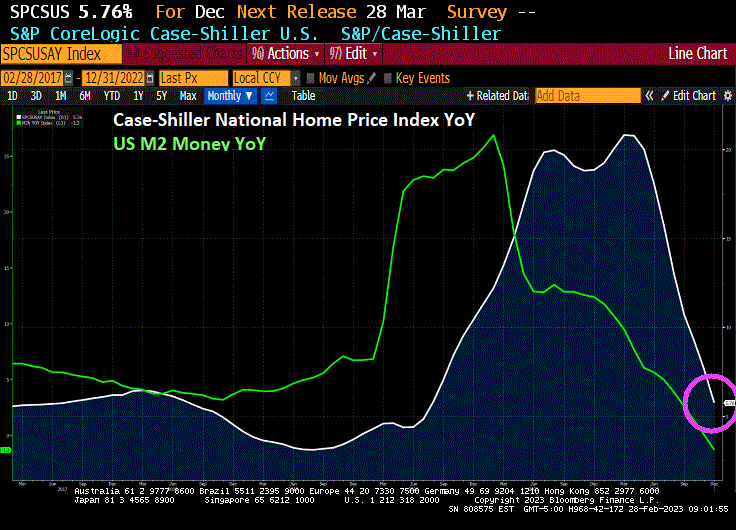
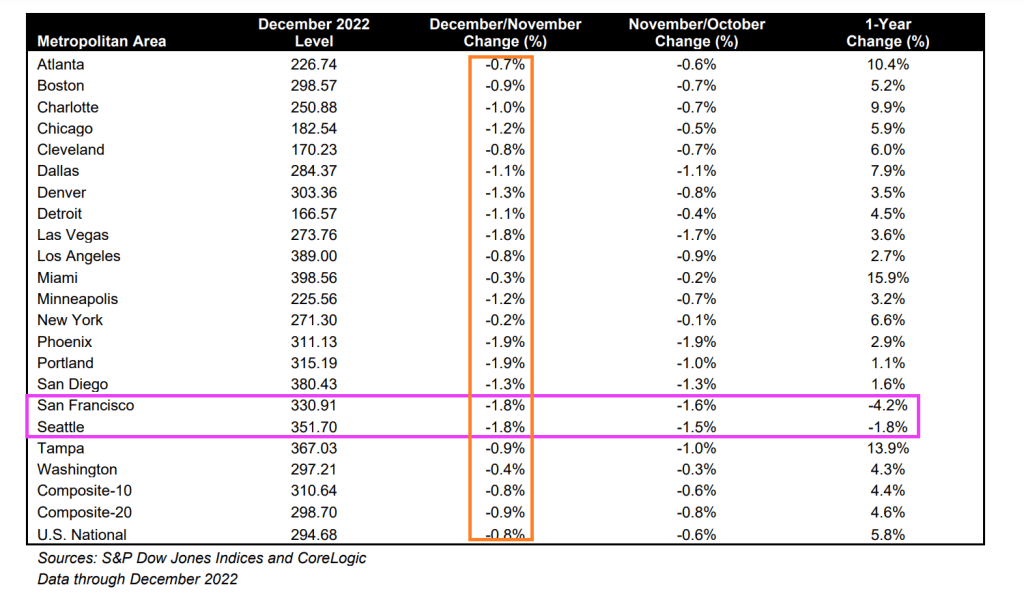
Case-Shiller National Home Price Index Cools To 5.76% YoY As Fed Tightens The Monetary Noose (But Only Seattle And San Francisco Have Negative YoY Price Changes, All 20 Metro Areas Fell In December From November)

The December CoreLogic Case-Shiller home price indices are out … for December 2022. And it shows that the CS National home price index growth continues to slow as The Fed tightens its monetary noose. December’s YoY growth was 5.76%.

Only Seattle and San Francisco experienced negative growth in home prices on a year-over-year basis. All of the top twenty metro areas experience negative month-over-month price declines from November to December.

US Pending Home Sales UP 8.1% MoM In January, But Down -22.4% YoY (Negative YoY Growth For 19 Of Last 20 Months)

US pending home sales rose 8.1% in January. At the same time, pending home sales declined -22.4% on a year-over-year (YoY) basis.

So, YoY pending home sales growth has been negative for 19 of the last 20 months.

US Durable Goods NEW ORDERS Fall -4.5% In January As Fed Retreats (Defense Capital Goods New Orders UP 25.4% YoY)

The Federal Reserve is retreating from its Covid-era monetary expansion. And with the retreat, US durable goods NEW ORDERS fell -4.5%% in January. The worst reading since … Covid in 2020.

A breakdown of new orders shows that while NONDEFENSE capital goods orders dropped -5.4% YoY in January, DEFENSE capital goods orders increased by 25.4% YoY.

Damn, it feels good to be a gangster.

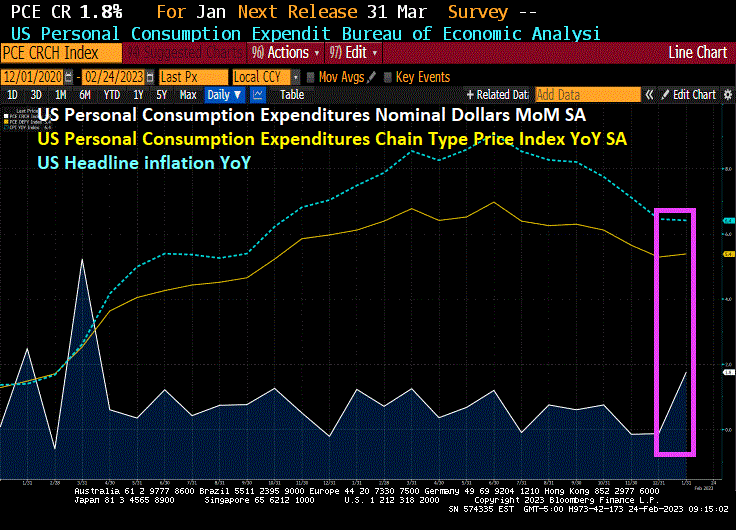
Uh-oh! January Personal Consumption Expenditures Soar 1.8% MoM, PCE Deflator UP 5.4% YoY, 2-year Treasury Yield Rises 10 Basis Points (Here Comes The Fed!)

Not really a surprise, but January’s personal spending numbers came in hot at 1.8% MoM. Also, Personal Consumption Expenditures PRICE index (aka, inflation) rose to 5.4% YoY.

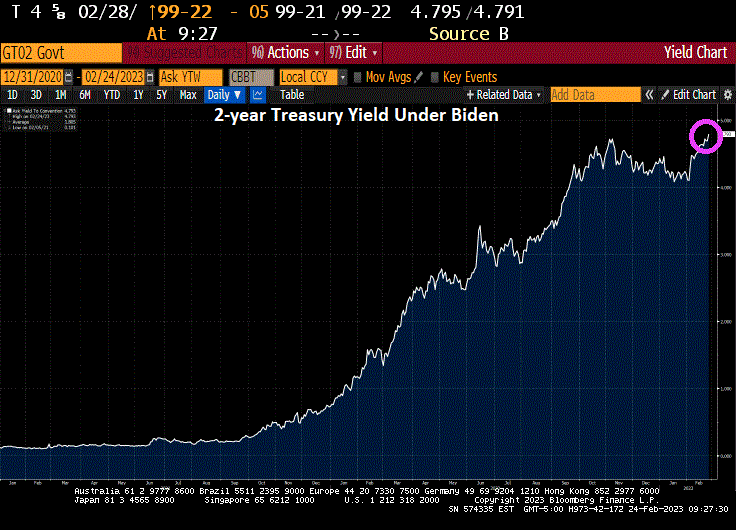
Here comes The Fed! The 2-year Treasury yield rose 10 basis points this morning.

Pelsoi and Schumer (with McConnell) got the gold mine and American consumers got the shaft.