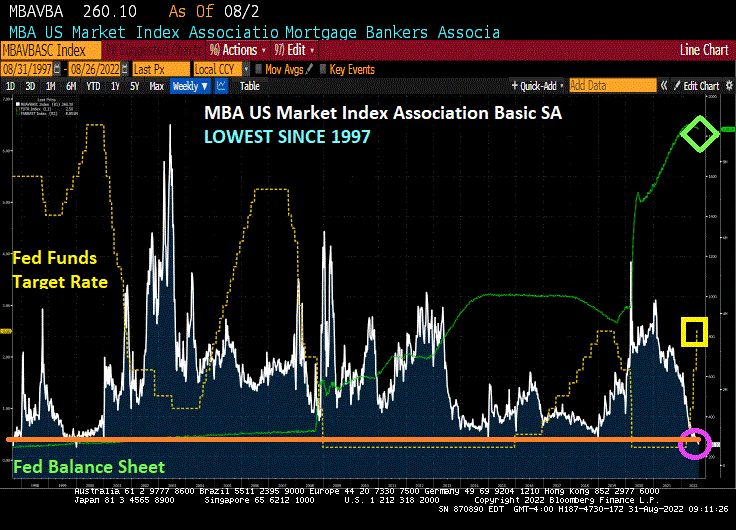
Mortgage application volume dropped and remained at a multi-decade low last week(back to 1997), led by an 8 percent decline in refinance applications, which now make up only 30 percent of all applications. Purchase applications have declined in eight of the last nine weeks, as demand continues to shrink due to higher rates and a weaker economic outlook.
Mortgage applications decreased 3.7 percent from one week earlier, according to data from the Mortgage Bankers Association’s (MBA) Weekly Mortgage Applications Survey for the week ending August 26, 2022.
The unadjusted Purchase Index decreased 4 percent compared with the previous week and was23 percent lower than the same week one year ago.
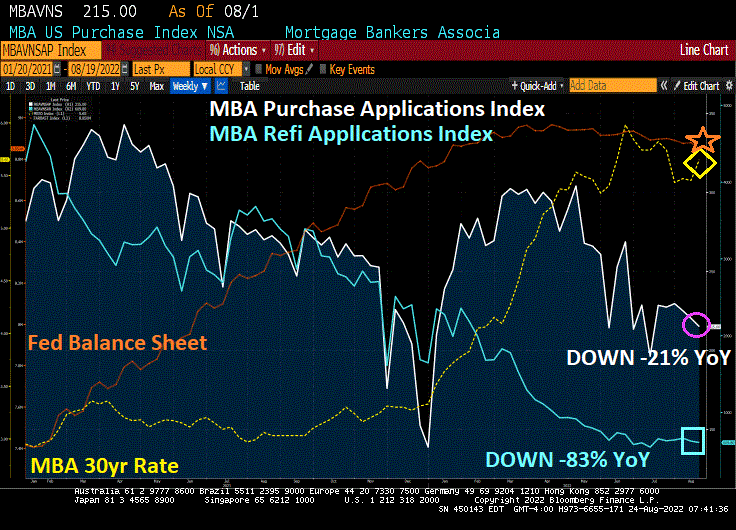
The Refinance Index decreased 8 percent from the previous week and was 83 percent lower than the same week one year ago.
Just wait for The Federal Reserve to start unwinding its enormous balance sheet!
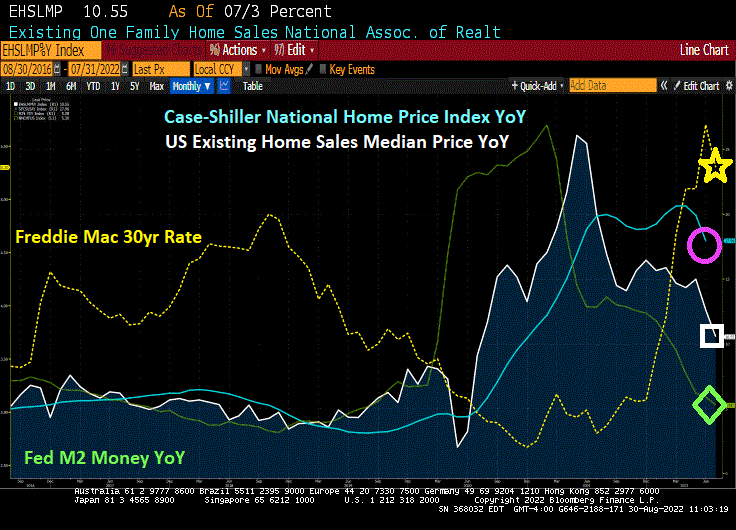
US home price growth is decelerating as The Federal Reserve let’s some of the air out of the monetary tires.
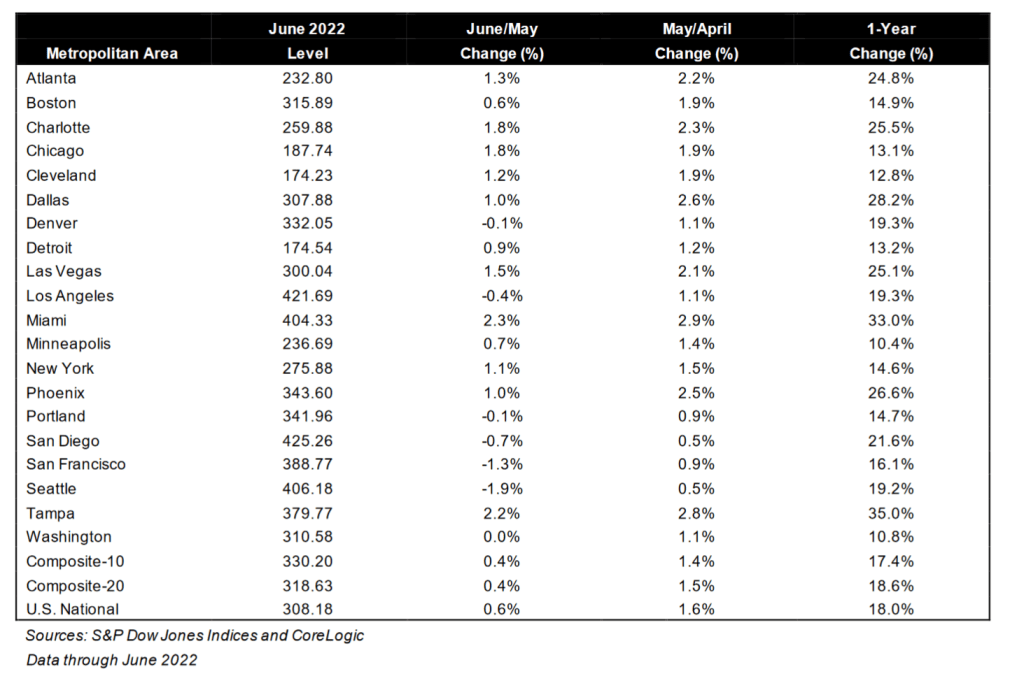
The S&P CoreLogic Case-Shiller U.S. National Home Price NSA Index, covering all nine U.S. census divisions, reported an 18.0% annual gain in June, down from 19.9% in the previous month. The 10-City Composite annual increase came in at 17.4%, down from 19.1% in the previous month. The 20-City Composite posted an 18.6% year-over-year gain, down from 20.5% in the previous month.
Tampa, Miami, and Dallas reported the highest year-over-year gains among the 20 cities in June. Tampa led the way with a 35.0% year-over-year price increase, followed by Miami in second with a 33.0% increase, and Dallas in third with a 28.2% increase. Only one of the 20 cities reported higher price increases in the year ending June 2022 versus the year ending May 2022.
While the Case-Shiller National home price index slowed to 18% YoY in June, the median price for existing home sales slowed to 10.55% YoY in July as The Fed’s M2 Money growth YoY slowed to 5.28% and Freddie Mac’s 30yr mortgage rate rose to 5.3%.
Bear in mind that Case-Shiller is lagged compared to the existing home sales numbers. Much like the New York Yankees manager picking the hottest batter in June to start in September. The Yankees traded poor-hitting Joey Gallo to the LA Dodgers to supplement poor-hitting Cody Bellinger.
In any case, as of June 2022, the 20 metro areas covered by Case-Shiller all grew in price in double digits with alligator-infested Tampa and Miami FL in the 30% rate, rattlesnake-infested Dallas is in 3rd place at 28.2%. Phoenix AZ, where I used to live, slowed to 26.6%. Yes, I had rattlesnakes on my property (a nest of Mohave Rattlers) and a large Diamond-backed Rattler behind my house).
Let’s see how housing holds up with more Fed monetary tightening. Fed Chair Powell is predicting “pain.”
As inflation burns the US middle class and low wage workers, The Federal Reserve reaffirmed at Jackson Hole that they are the NEW Smoky The Bear (only The Fed can fight inflation fire!) But of course, Federal spending and energy policies can drive up prices too.
Having said that, the 2-year Treasury yield and 30yr mortgage rate are rising rapidly.
The Fed is trying to cool demand by raising rates after lax monetary policy since late 2008.
While the US 2-year Treasury yield is up only slightly today, the Eurozone is seeing their 2-year sovereign yields spiking by 11-15+%.
I remember appearing on Fox Business’ Varney and Company about The Federal Reserve. When Stuart Varney asked me what will happen when The Fed finally removes the monetary stimulus, I made an explosion gesture. Well, its starting to happen.
(Bloomberg) The rally that’s bolstered risk assets over the past month was just a blip in a bear market that’s likely to worsen from here.
That’s the view of investors who seem to be finally getting the message that a resolutely hawkish Federal Reserve and central bank peers are planning to raise interest-rates at all costs to combat the hottest inflation in a generation.
Monday’s trading give credence to that prospect: equities, developed and emerging-market currencies and even haven Treasuries tumbled as fund managers digested Fed Chair Jerome Powell’s stern message that rates would keep going up even if it spells pain for households and businesses everywhere.
“The environment has changed,” said Kim Fournais, founder and chief executive of Saxo Bank A/S. “I just have a hard time seeing how this market, that is still trading close to all-time highs, can stay at those levels. There will be a period of great volatility.”
Goldman Sachs Group Inc. pegs the dollar as the main beneficiary amid the market chaos, Westpac Banking Corp. warns of fresh yen pressure and BNP Paribas Wealth Management sees more losses for developing-nation assets.
Almost every equity benchmark tumbled in Asia trading Monday as the fallout from the Fed’s hawkish rhetoric ripped through markets. S&P 500 futures dropped as much as 1.3%, indicating that US stocks are poised to extend a rout that saw the index erase $1.2 trillion on Friday.
Yields on two-year Treasuries jumped to the highest since 2007 as traders ratcheted up rate hike bets, while the yen hurtled toward the closely-watched 140 level. The risk-sensitive Korean won led losses among emerging peers, tumbling to a 13-year low.
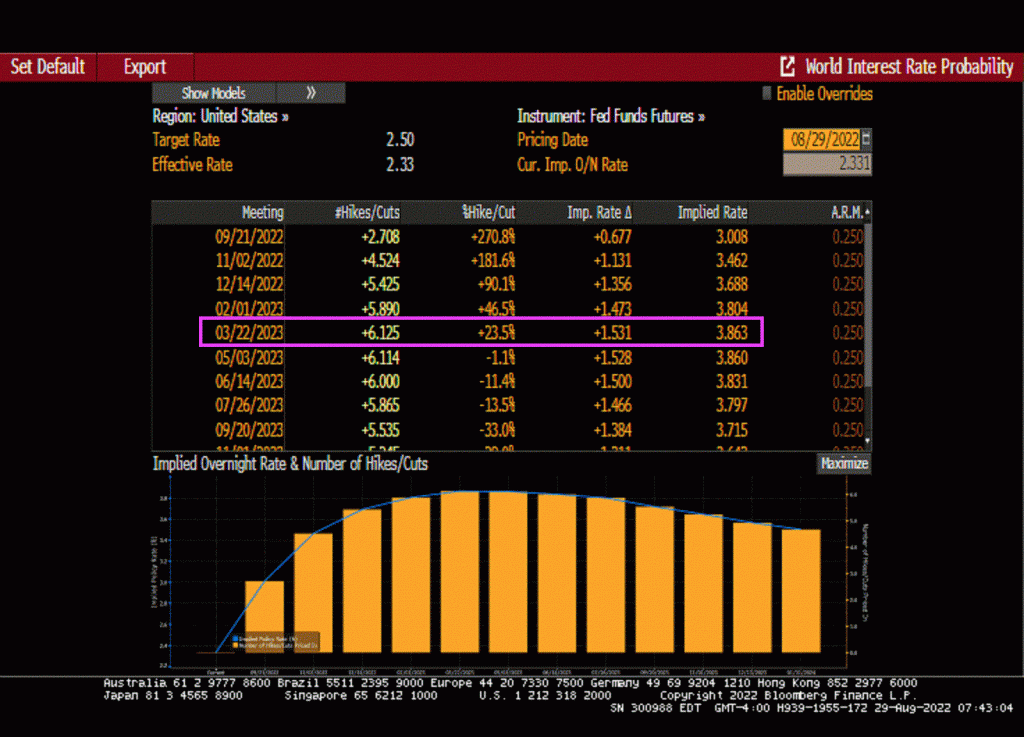
Oddly, the Fed Funds Futures market wasn’t rattled by Powell’s announcement at Jackson Hole. The Fed’s target rate is 2.50% and is expected to rise to 3.863% by March then cool-off. The Cleveland Fed’s Mester said 4% then keeping it at 4% for an extended period of time.
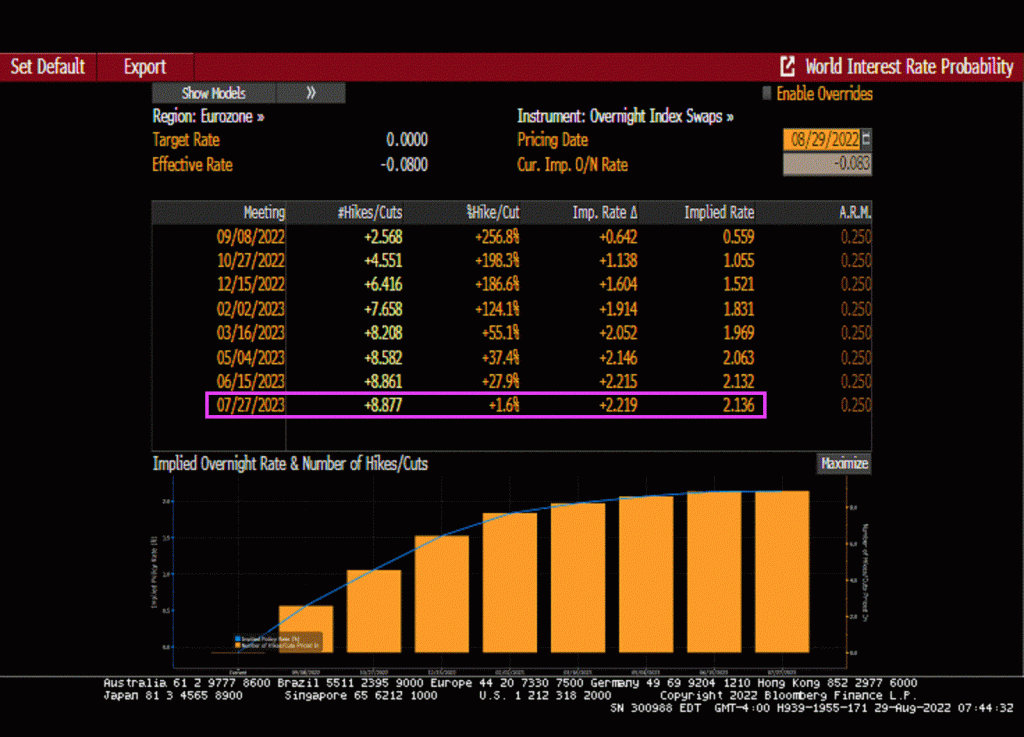
But it is in Europe where Lagarde and company where the REAL action was. The ECB’s target rate is at 0% with a negative effective rate of -0.08%. But the ECB is expected to keep raising their target rate to 2.136% by July 2023.
Sovereign yields are rising across the board. Except for jolly old England.
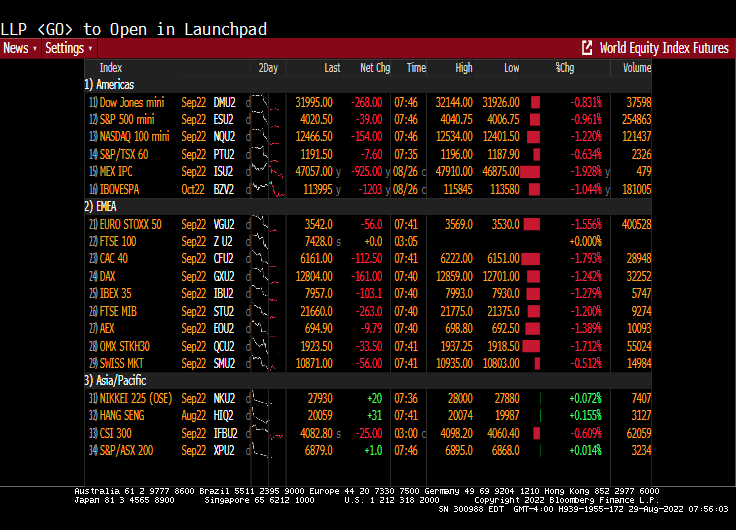
Global equity futures are down across the board as well. But not like Friday’s plunge.
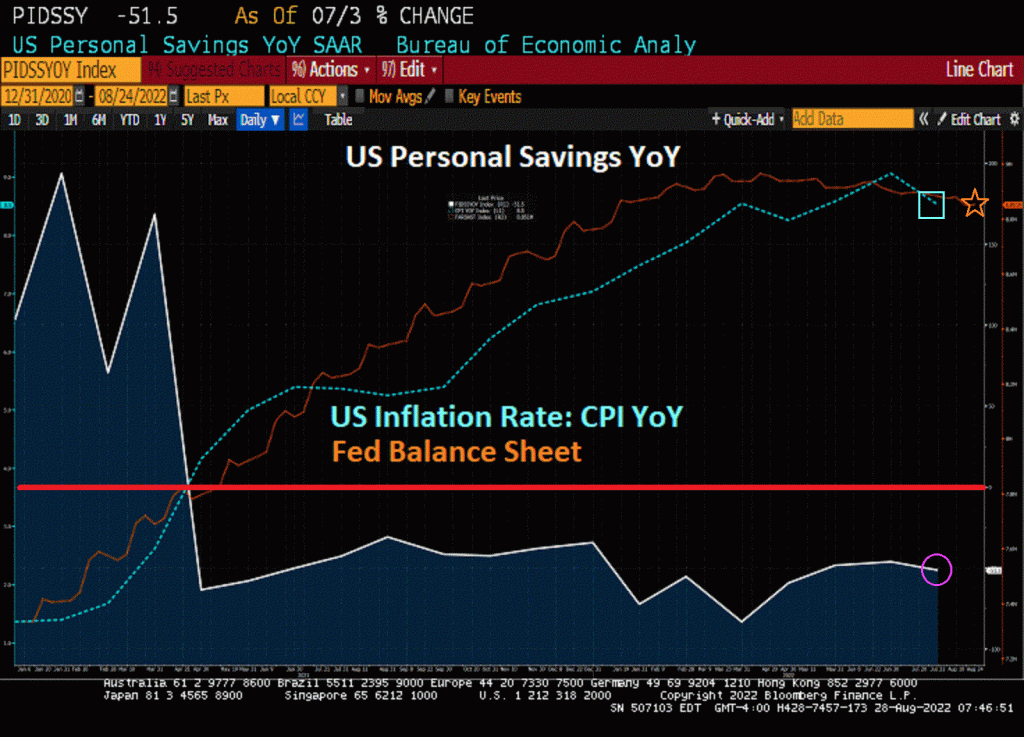
It is amazing that Biden is rising in the polls, simply because he got several inflation-generating, crony pay-off bills passed through a Democrat-controlled Congress. Even more amazing is that Americans aren’t more furious with Biden given that inflation is still raging at 8.5% YoY and the US Personal Savings Rate to cope with raging prices is at -51.5% YoY.
It looks like one quick fix to the inflation problem is for The Federal Reserve to shrink its balance sheet. But they are taking their own sweet time doing it.
And then we have the S&P 500 index which has done poorly since Powell and The Fed have undertaken their “fight inflation” mantra caused by their own folly and Biden’s green, anti-fossil fuel policies. Not to mention Congress spending like drunken sailors in port.
But the same is going on in Europe where inflation is even higher than in the USA and the EUR/USD is plunging like a paralyzed falcon.
And then we have Biden shrinking the Strategic Petroleum Reserve (orange line).
And in Europe, we have Germany suffering through a horrible energy price spike.
Of course, Friday was one of those “Black Fridays” for investors. And pension funds.
The Dow Jone Industrial Average fell -1008.38 points after Powell’s “Mr T” remarks on pain. That was a whopping -3%. The NASDAQ composite index fell almost -4%.
Equity markets struggled in Europe as well, particularly the German DAX index.
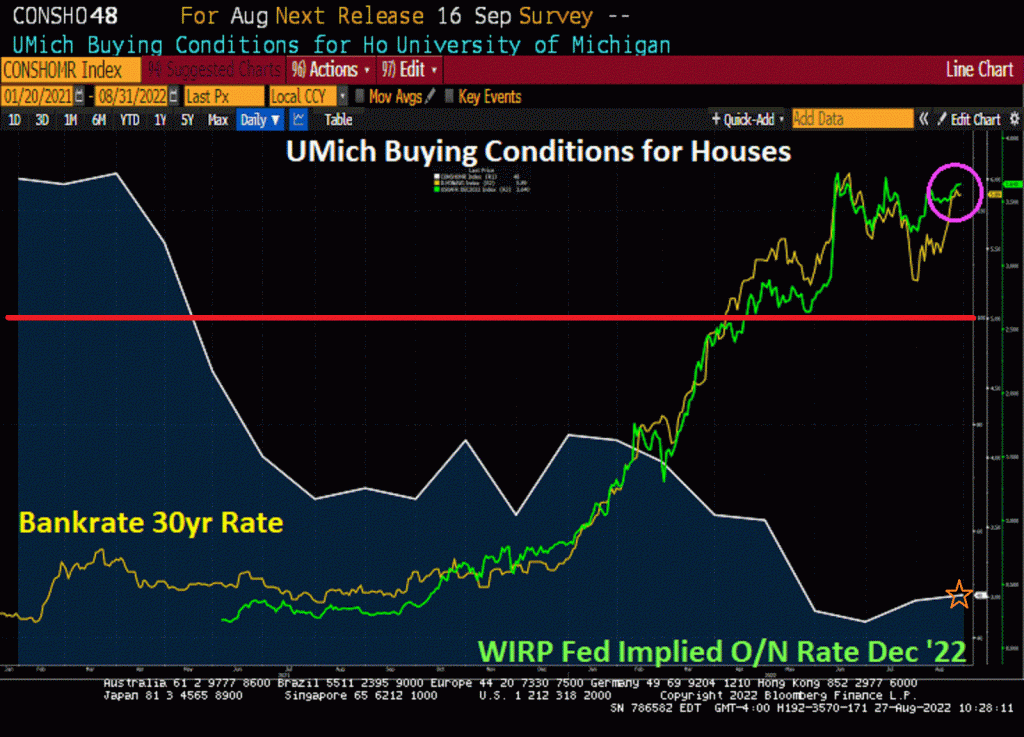
The UMich Buying conditions for houses rose slightly, but remains near the lowest level since 1982.
Clubber Powell, Federal Reserve Chairman.
The Case-Shiller house price numbers are due out Tuesday for June and it is expected that they will show a significant slowing in home prices. Biden and Clubber Powell could then take “credit” for slowing “inflation.”
The elite class “economists” (aka, cheerleaders) are meeting at Jackson Hole, Wyoming this week. But while they are planning our future, the revision to the miserable Q2 Real GDP report came out this morning.
So, the second pass at measuring Real GDP produced a slightly better number (-0.6% vs -0.9%).
But the GDP PRICE index revision worsened from 8.7% to 8.9%. Look at REAL personal consumption (yellow line) as M2 Money growth slows.
Let’s see how things go at The Fed party at Jackson Hole, Wyoming. It is appropriate for The Fed to hold their party/meeting at Jackson Hole (Teton County) since it has the highest concentration of wealth per household than any other county in the nation.
At The Fed continues to tighten to fight inflation, pending home sales in July crashed and burned. That is, pending home sales fell -22.5% in July as M2 Money growth slowed
If I was still teaching at Ohio State or Chicago, I would ask the students if they see the relation between M2 Money growth and pending home sales.
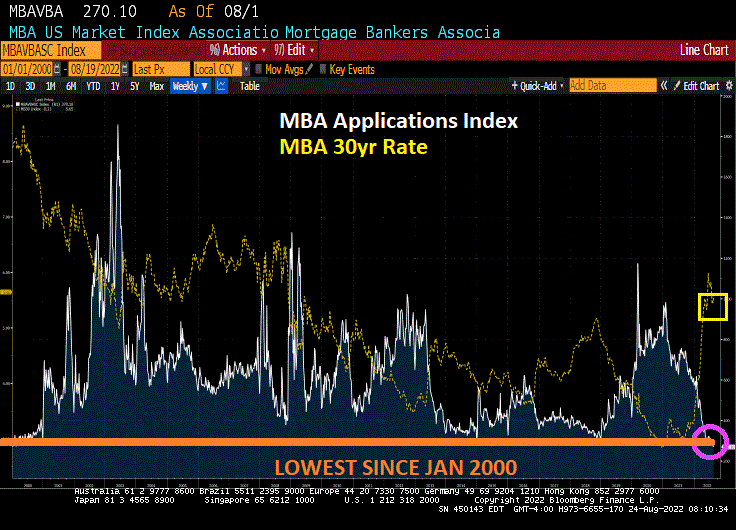
US mortgage applications just hit the lowest levels in 22 years, January 2000 as The Federal Reserve continues monetary tightening to combat Bidenflation.
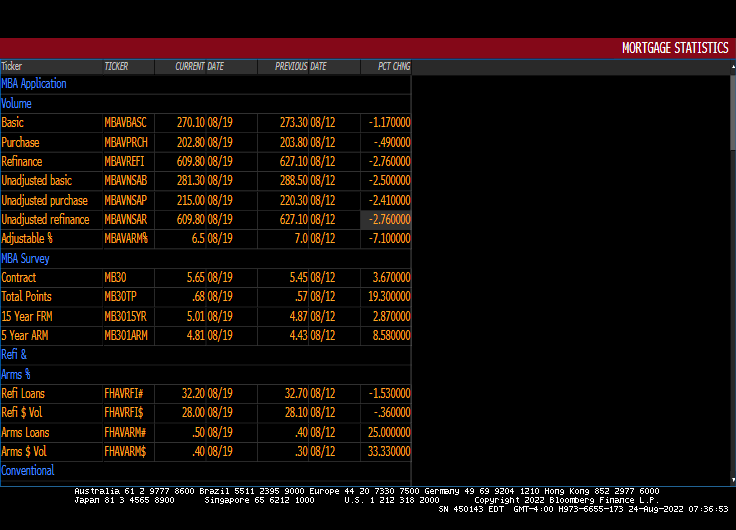
Mortgage applications decreased 1.2 percent from one week earlier, according to data from the Mortgage Bankers Association’s (MBA) Weekly Mortgage Applications Survey for the week ending August 19, 2022. The Refinance Index decreased 3 percent from the previous week and was 83 percent lower than the same week one year ago.The seasonally adjusted Purchase Index decreased 1 percent from one week earlier. The unadjusted Purchase Index decreased 2 percent compared with the previous week and was 21 percent lower than the same week one year ago.
MBA mortgage applications just declined to their lowest level in 22 years (January 2000) as The Fed has begun raising rates to fight inflation caused by 1) excessive monetary stimulus since late 2008, 2) Biden’s green energy policies driving up transportation costs, 3) distortionary Federal spending (e.g., Covid relief, infrastructure bills and now green energy/IRS spending by Biden/Pelosi/Schumer).
Here is the data summary for the latest MBA applications report.
Fed Chair Jerome Powell shrinking The Fed’s balance sheet.
















 Confounded Interest - Anthony B. Sanders
You must be logged in to post a comment.