The next Federal Reserve Open Market Committee (FOMC) meeting in on Wednesday, November 2nd. Let’s see what The Fed does with its BIG GREEN BAG … OF MONEY.
As I set here on Sunday morning waiting to see how the Cleveland Browns will lose to cross-state rival Cincinnati Bengals, I see that both the US Treasury 10yr-2yr and 10yr-3mo yield curves are inverted (below zero).
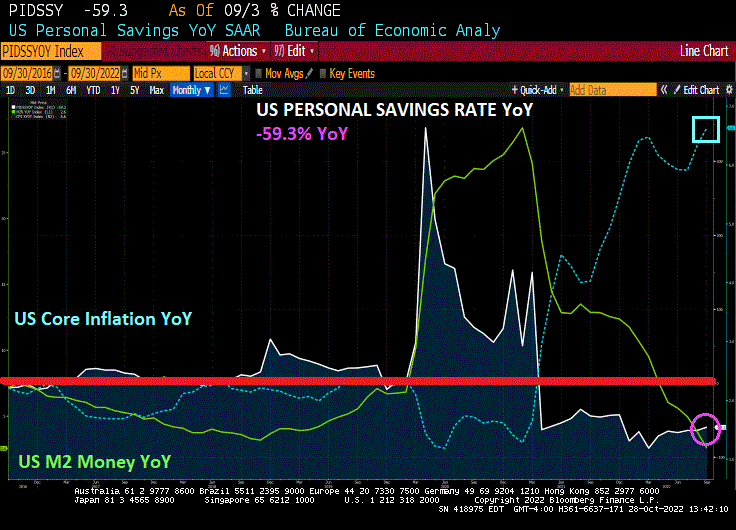
Core inflation (CPI less food and energy) YoY (blue line) was only 1.3% in February 2021 shortly after Biden was sworn-in as President and is now 6.6% in September 2022. That is over a 400% increase in core inflation!
We have this tantalizing headline on Bloomberg:
Goldman Sachs Now Sees Fed Rates Peaking at 5% in March By Simon Kennedy(Bloomberg) —
Goldman Sachs Group Inc. economists said they now expect the US Federal Reserve to raise interest rates to 5%, higher than previously predicted.
The central bank will lift its benchmark rate to a range of 4.75% to 5% in March, 25 basis points more than earlier expected, economists led by Jan Hatzius wrote in an Oct. 29 research report.
The route to the new peak includes increases of 75 basis points this week, 50 basis points in December and 25 basis points in February and March, they said.
The economists cited three reasons for expecting the Fed to hike beyond February: “uncomfortably high” inflation, the need to cool the economy as fiscal tightening ends and price-adjusted incomes climb, and to avoid a premature easing of financial conditions.
Well, not exactly earth-shattering. Fed Funds Futures data point to a peak of near 5% (4.905%) for the May 2023 FOMC meeting, so Goldman Sachs is calling for an earliest peak at the March 2023 FOMC meeting,
Regardless of what Goldman Sachs thinks, Fed officials are expecting a peak in 2023 followed by a decline to 2.5%.
Brainard and Bostic are the only “doves.” Which is silly because Chicago’s Evans is a perma-dove. Let’s see how the Dots Plot changes at the November 2nd meeting.
America’s distressed debt pile is biggest since September 2020.
(Bloomberg) — To understand the highest mortgage rates in two decades, look to the intricacies of the market for bonds backed by home loans.
So says Guillermo Roditi Dominguez, managing director at New River Investments LLC. On the latest episode of the Odd Lots podcast, he describes how the surging cost of home loans can be traced to changes in the market for mortgage-backed securities, or MBS. The average rate on a 30-year fixed mortgage jumped above 7%, according to data released on Wednesday. That’s the highest since 2001.
Of course, mortgage rates are supposed to rise as the Federal Reserve hikes benchmark interest rates. That’s how tighter monetary policy works — by making the cost of credit more expensive. But the average borrowing cost on a 30-year fixed-rate mortgage now far exceeds the yield on equivalent US Treasuries, with the difference between the two at the highest level on record.
At issue is the changing nature of the market for mortgage bonds, and who’s buying them. Once the center of the housing bubble that burst in 2008, the vast majority of mortgage-backed securities come with guarantees from the US housing agencies, meaning investors aren’t necessarily worried about people paying back their loans. Yet their exposure to movements in US interest rates (known as “duration”) means they can still carry significant risks for investors.
“It’s not because people are afraid house prices are going to go down,” Dominguez says. “Mortgage-backed securities went from being effectively short-lived assets because we went through a pretty epic refinancing boom in 2020 and 2021, to all of a sudden rates going up very, very, very quickly — faster than anybody expected.”
Most buyers of MBS — which range from big banks to bond funds and the Fed itself — understand there’s a risk of early repayment. People might refinance their home loans during periods of low interest rates, or simply move and sell their house. Dominguez estimates that some 17% of home-loan balances were extinguished in 2019, compared to 36% in 2020 and 2021 as the Fed pushed interest rates to historic lows.
Mortgage refi activity exploded in early 2020, when rates were cut to basically zero.
In times of low rates, MBS investors who get their loan principal paid back early have to reinvest that money at potentially lower yields. But the transition from low rates to higher ones means that suddenly investors are left with longer-term assets, as borrowers hold onto the lower mortgage rates they locked-in previously. In times of higher interest rates, early repayments disappear and investors don’t have as much money to invest at higher yields. That means many buyers are shying away from the mortgage market, which Dominguez describes as “broken,” even as spreads go higher. Adding to the pressure on mortgage rates is the fact that the Federal Reserve is now reducing its balance sheet after buying the debt as part of its emergency monetary easing.
“A mortgage-backed security is essentially similar to a covered call in equity terms,” Dominguez says. “And that means that you have all of the downside and, you know, very, very little of the upside and you trade that in for a little bit of extra coupon. And when rates were going down, everybody was upset about it because Treasury bonds were going up in price. People were making money there. If you held MBS, you got your money back and then when you went to buy new bonds, you bought them at a lower yield. And right now what we’re seeing is all of a sudden bond prices are going down, yields are going up and you’re not getting any cash flows so you don’t get to reinvest that money.”
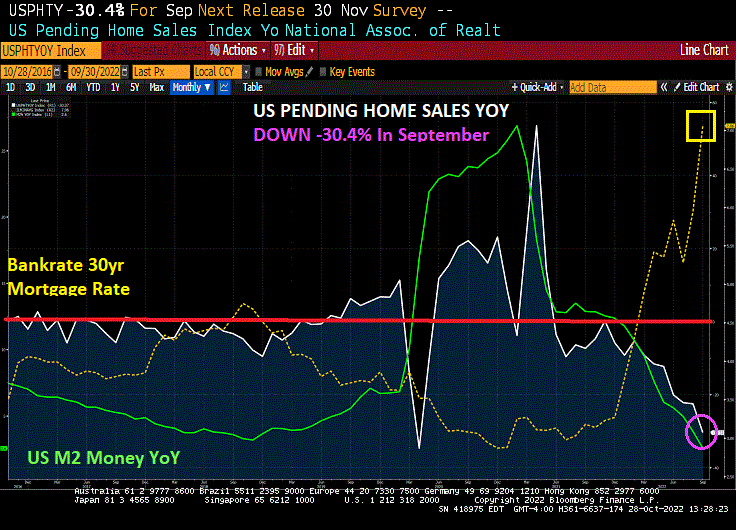
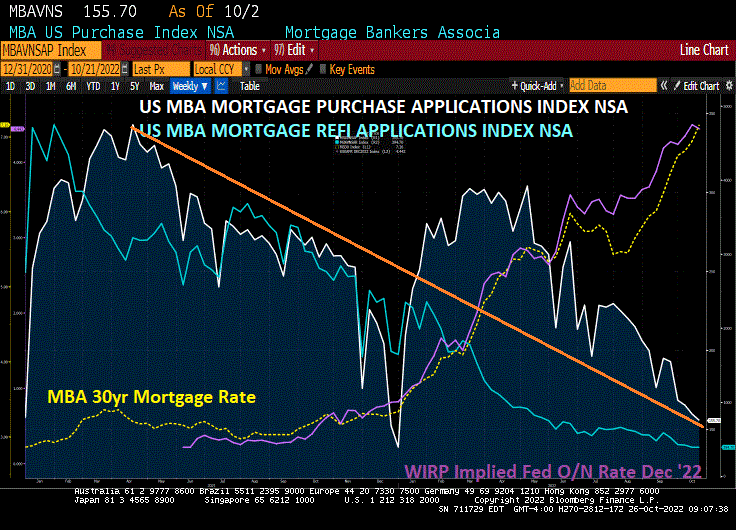
But mortgage purchase and refi applications are showing a strongly negative trend as The Fed tightens.
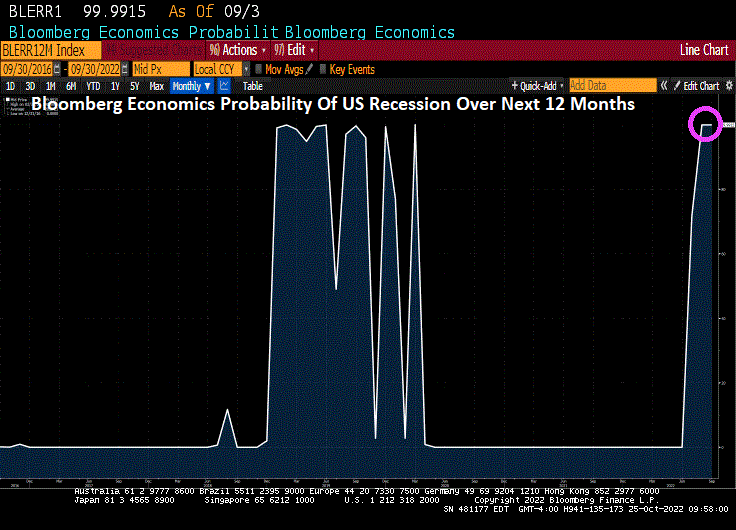
As the midterm elections get close, the news for Americans gets worse.
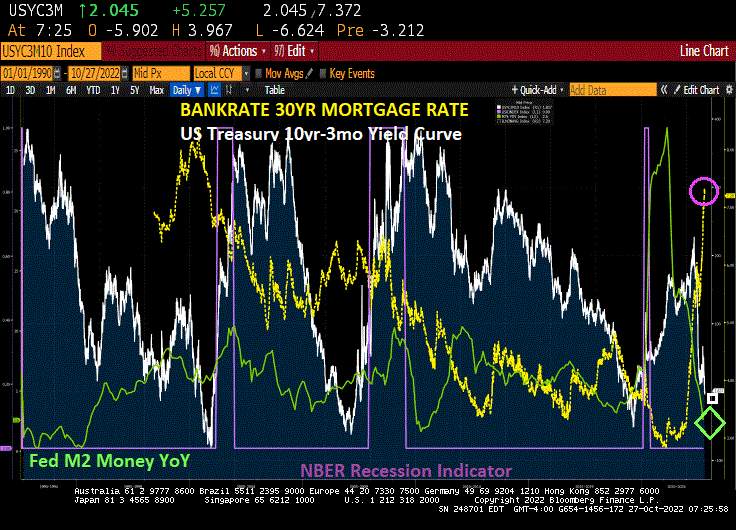
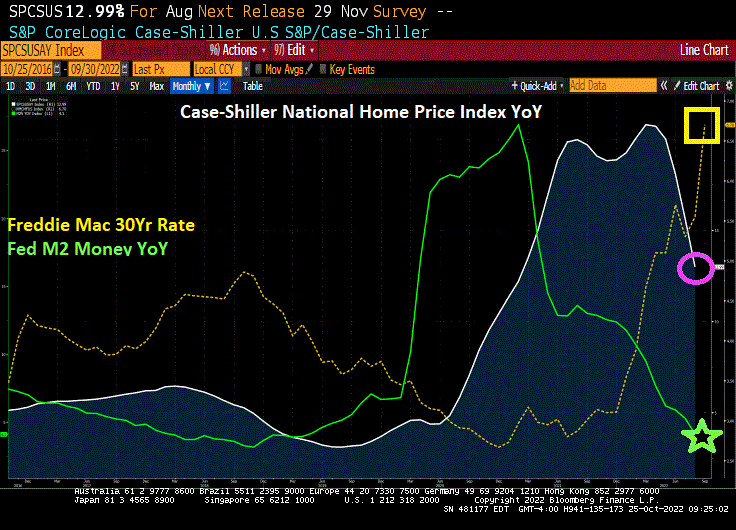
On the housing/mortgage front, Bankrate’s 30-year mortgage rate (yellow line) just hit 7.20%, the highest since 2000. Also, the US Treasury 10yr-3mo yield curve (white line) inverted, historically a precursor to recession, before barely climbing back above 0%.
Meanwhile, M2 Money growth has collapsed to the lowest level since 2010.
US GDP numbers are due out at 8:30AM EST for Q3. The numbers are expected to show slow growth (around 2.4%) with rapid inflation (5.3%). While the GDP numbers are better than Q2’s numbers, they are still pretty lousy.
As The Federal Reserve continues to withdraw its massive Covid-related monetary stimulus, US mortgage applications continue to fall to the lowest level since 1997.
Mortgage applications decreased 1.7 percent from one week earlier, according to data from the Mortgage Bankers Association’s (MBA) Weekly Mortgage Applications Survey for the week ending October 21, 2022.
The Refinance Index increased 0.1 percent from the previous week and was 86 percent lower than the same week one year ago. The seasonally adjusted Purchase Index decreased 2 percent from one week earlier. The unadjusted Purchase Index decreased 3 percent compared with the previous week and was 42 percent lower than the same week one year ago.
Under Biden, we have seen (orange line) a significant decline in mortgage purchase applications (peak 2021 to this week). Mortgage rates are the highest since 2001 (wait for it!)
One reason is diesel fuel prices are up 102% under Biden’s Reign of Error. While inventory of diesel fuel down -37%. Meanwhile core inflation is up from a measly 1.3% to a whopping 6.6% at the latest inflation report.
Introducing Biden’s Thanksgiving dinner … in a can to cope with rising prices.
Just kidding. This is too clever for the clueless Biden Administration. But Karine Jean-Pierre might get as confused as Joe Biden and repeat it as one of the ways that The Biden Administration is helping consumers.
As I told my Chicago, Ohio State and George Mason University finance and real estate students, repeatedly, “Watch out when The Fed begins to tighten monetary policy. It will be a bloodbath for taxpayers.”
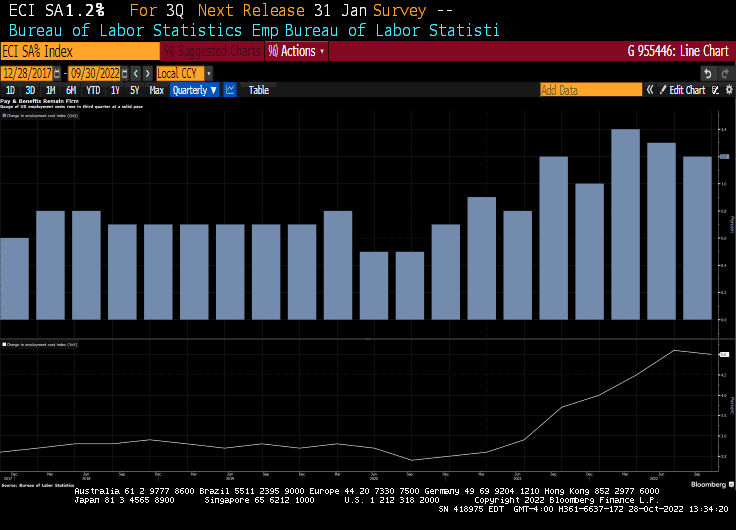
Well, here we are. I argue that Biden’ green energy knucklehead policies are driving inflation, or it could be the insane level of Federal spending that Obama economist Larry Summers warned us about, or rising wages (in part due to Federal spending) is to thank for inflation. Or all of the above.
Regardless of the cause, the bond market is enduring its worst selloff in a generation, triggered by high inflation and the aggressive interest-rate hikes that central banks are implementing. Falling bond prices, in turn, mean paper losses on the massive holdings that the Fed and others accumulated during their rescue efforts in recent years.
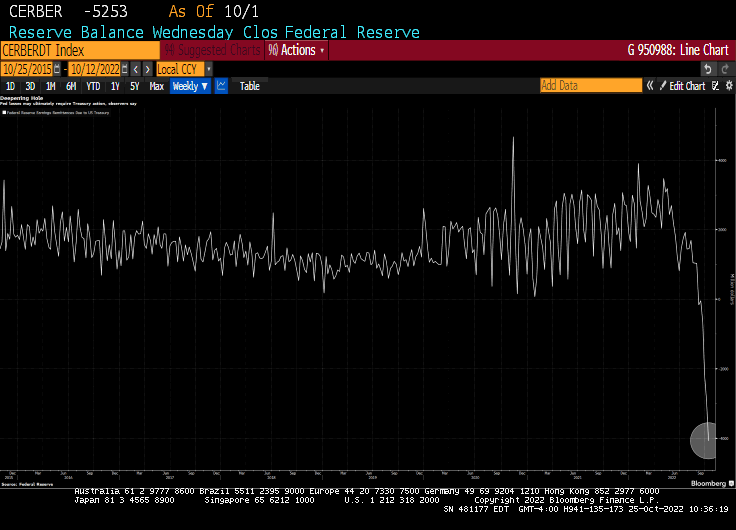
Rate hikes also involve central banks paying out more interest on the reserves that commercial banks park with them. That’s tipped the Fed into operating losses, creating a hole that may ultimately require the Treasury Department to fill via debt sales. The UK Treasury is already preparing to make up a loss at the Bank of England.
The Reserve balance has crashed into negative territory.
And Fed losses are skyrocketing.
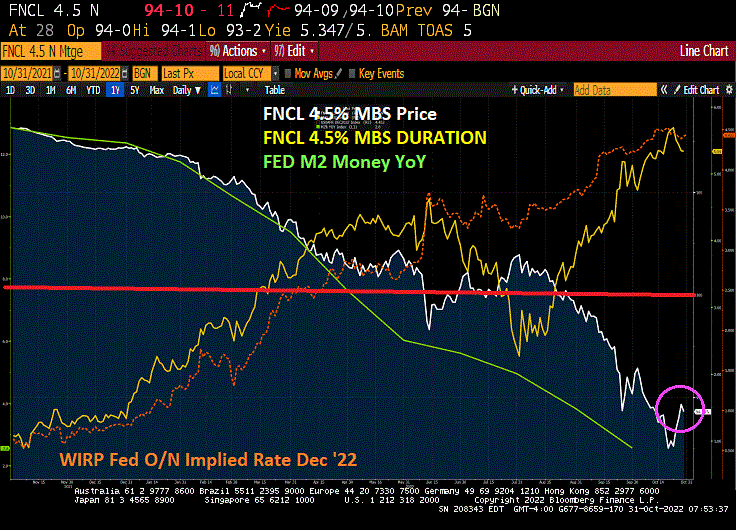
Agency MBS prices are up today, but are down since August 2022. But risk measures duration and convexity are zooming upwards.
Alarm! US home prices are decelerating as inflation rages and The Fed tightens.
Home price growth in the US slowed the most on record as a doubling of borrowing costs (thanks to the US Federal Reserve) has sapped demand.
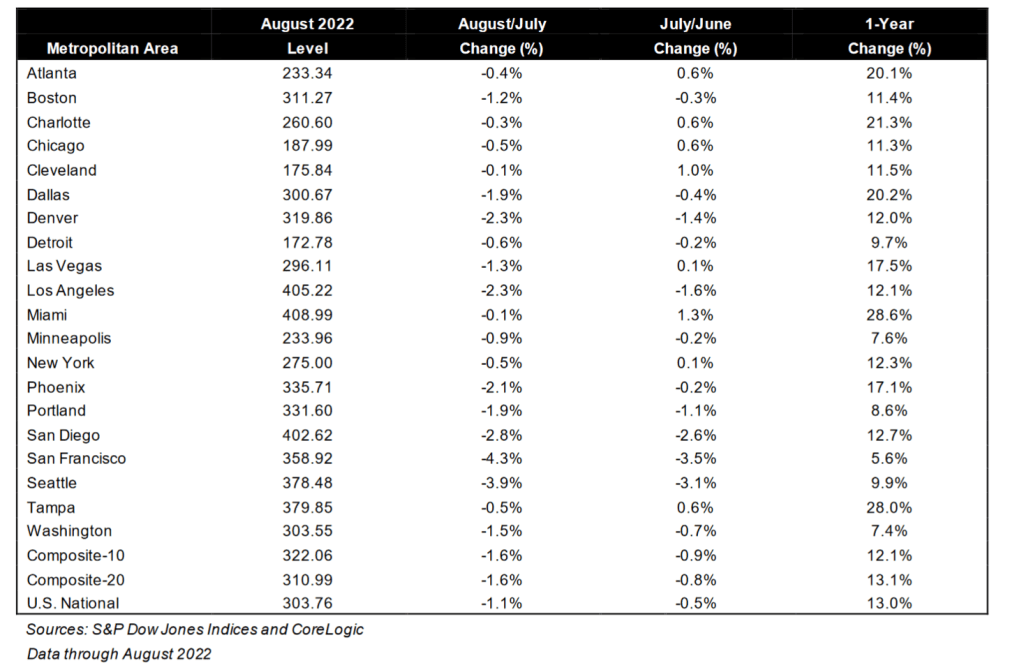
A national measure of prices increased 13% in August from a year earlier, but is down from 20.79% in March, the S&P CoreLogic Case-Shiller index showed Tuesday. That’s the biggest deceleration in the index’s history.
The housing market has started to slump as the Federal Reserve hikes interest rates to curb the hottest inflation in decades. Even with the deceleration, prices remain high compared to last year. Coupled with mortgage rates that are edging closer to 7%, many would-be buyers have been shut out, while some sellers have retreated.
While 13% growth sounds good, it is not good for renters looking to buy a home.
According to S&P/CoreLogic/Case-Shiller, Southern (red) cities Atlanta, Charlotte, Dallas, Miami and Tampa all still grew at over 20% YoY. Other cities like blue cities Detroit, Minneapolis, Portland, San Francisco, Seattle and Washington DC are grew at UNDER 10% YoY.
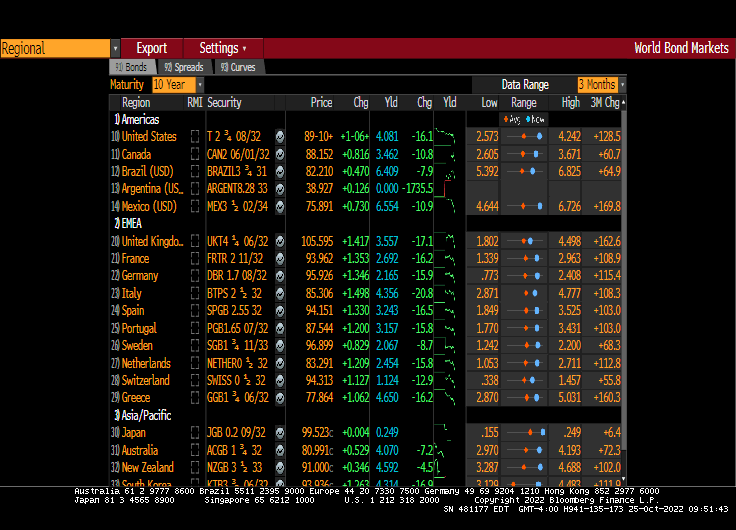
On related news, I always said in my classes that +/- 10 basis point in the US Treasury yield is a big deal. This morning, the US Treasury 10-year yield is DOWN -16.1 bps. In fact, the 10-year yields are down across the board globally.
















 Confounded Interest - Anthony B. Sanders
You must be logged in to post a comment.