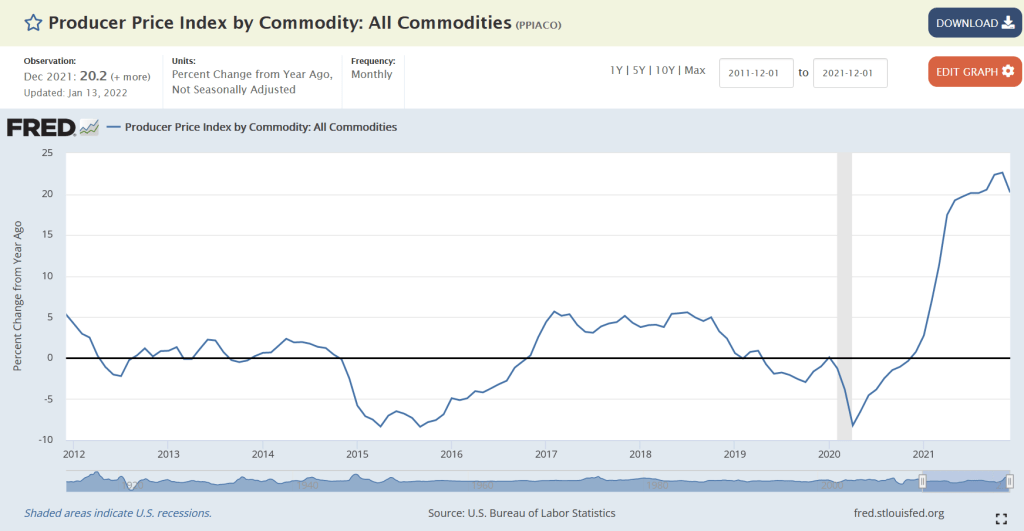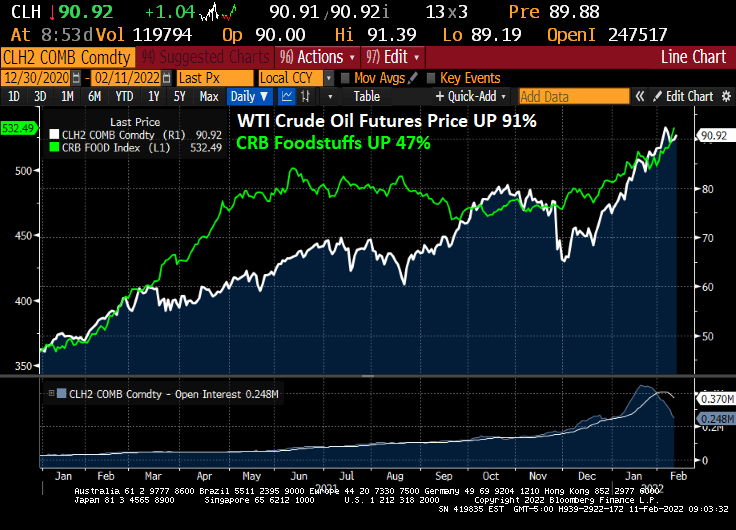

Well, it has been a cringe-worthy year+ under President Biden. West Texas Intermediate Crude futures price is up 91% and the Commodity Research Bureau Foodstuffs index is up 47%. Talk about Biden’s energy folicies being passed through to American households in the form of higher food costs and energy prices!
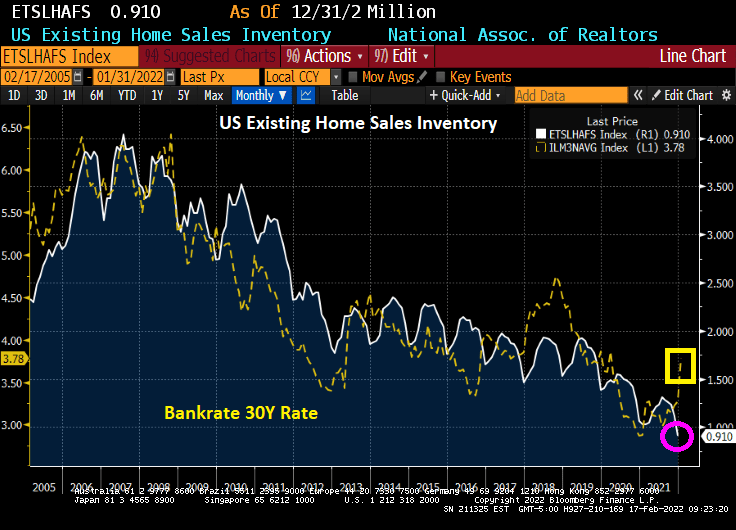
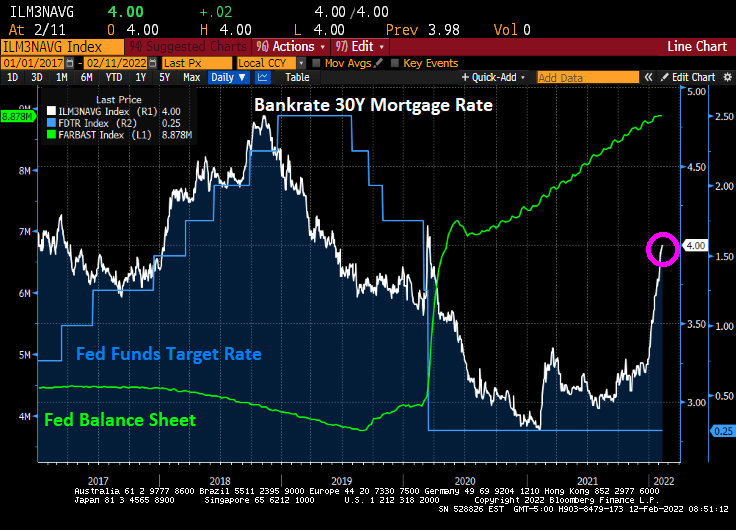
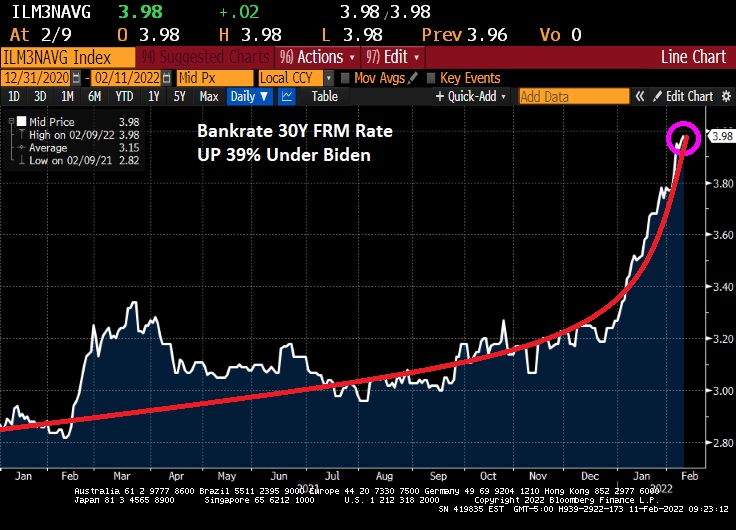
And then we have mortgage rates. Bankrate’s 30Y mortgage rate is up to almost 4%, up 39% since the beginning of 2021.
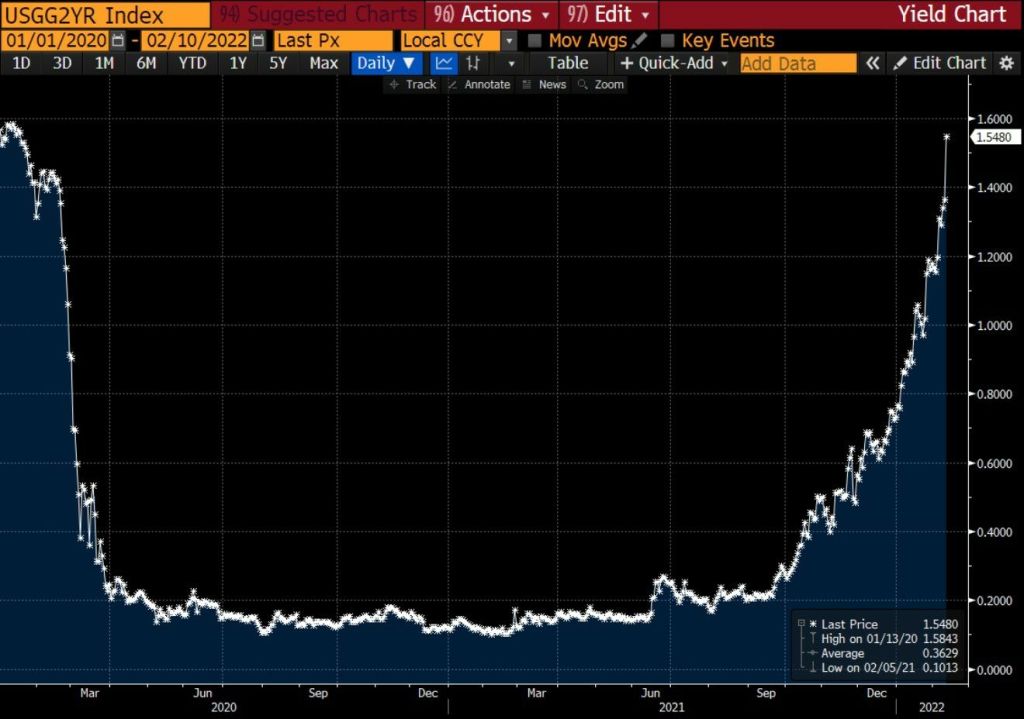
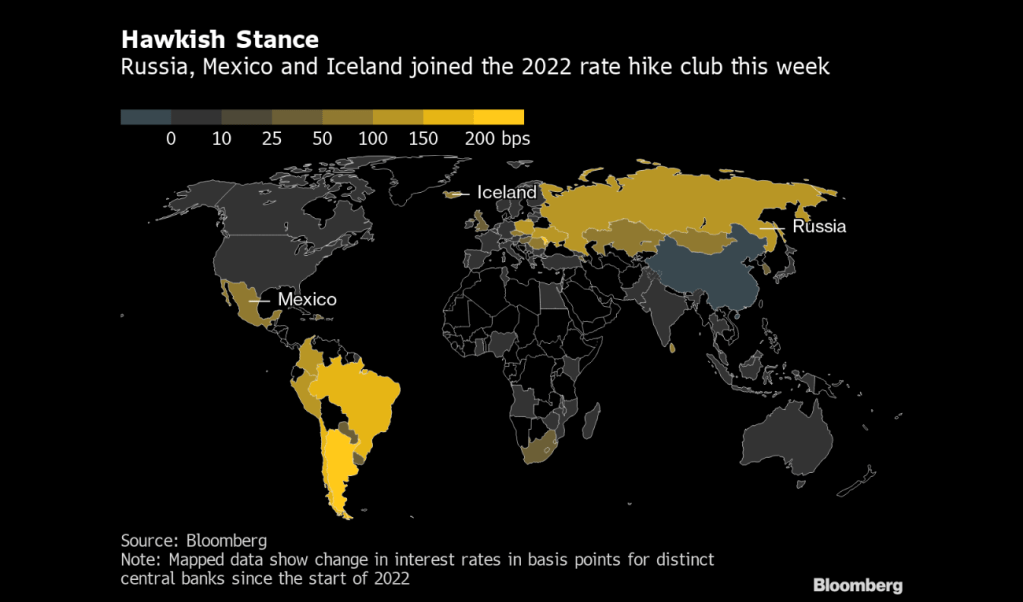
Other central banks are raising rates like banshees on the moor, while The Federal Reserve continues to send conflicting signals about possible March rate hikes.
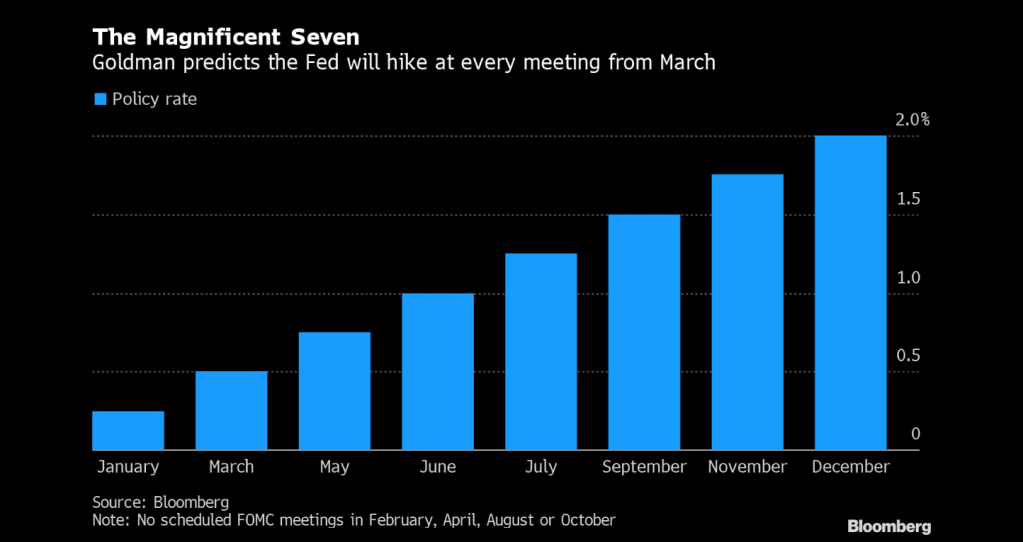
Goldman Sachs sees 7 rate hikes in 2022, culminating in an eventual 2% rate in December.
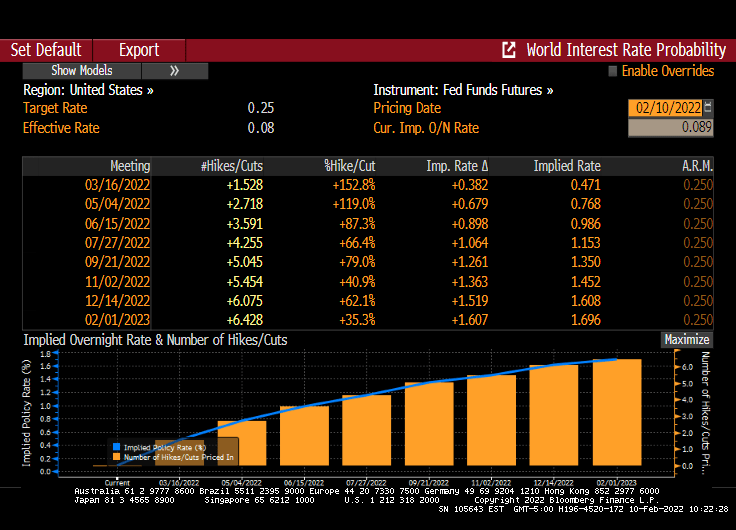
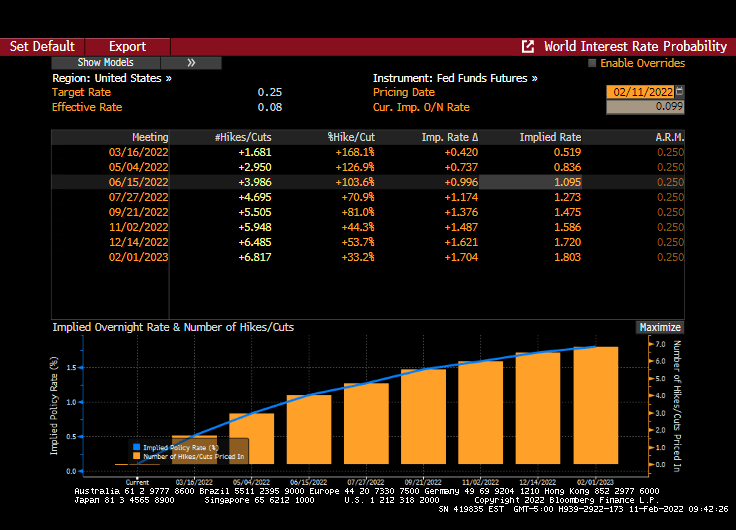
Fed Funds Futures are signalling 7 rates increases by the February 1, 2023 meeting.
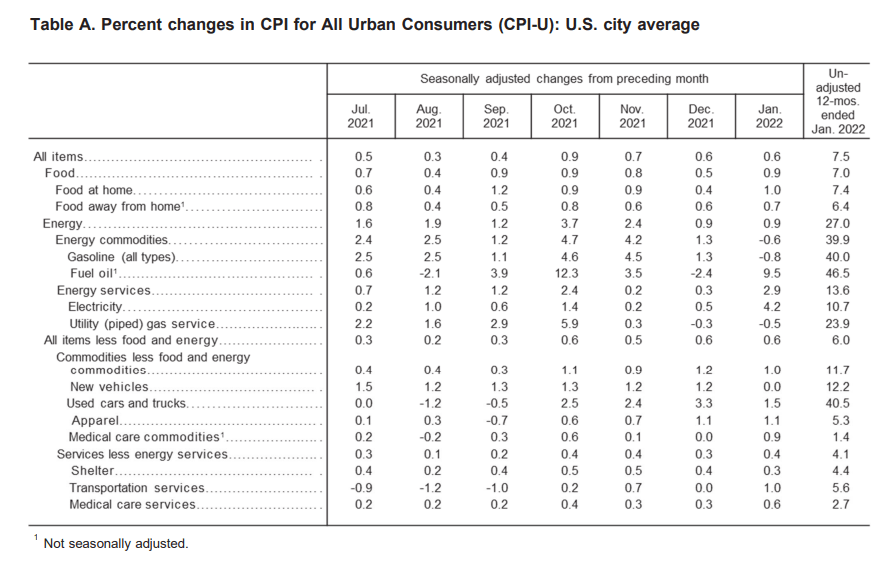
As expected, US inflation surged from 7.0% in December to 7.5% in January.
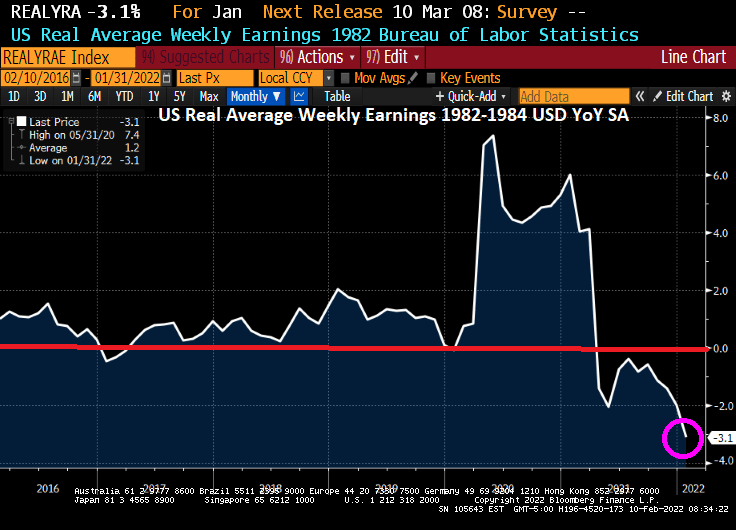
REAL average weekly earnings growth YoY fell to -3.1%.
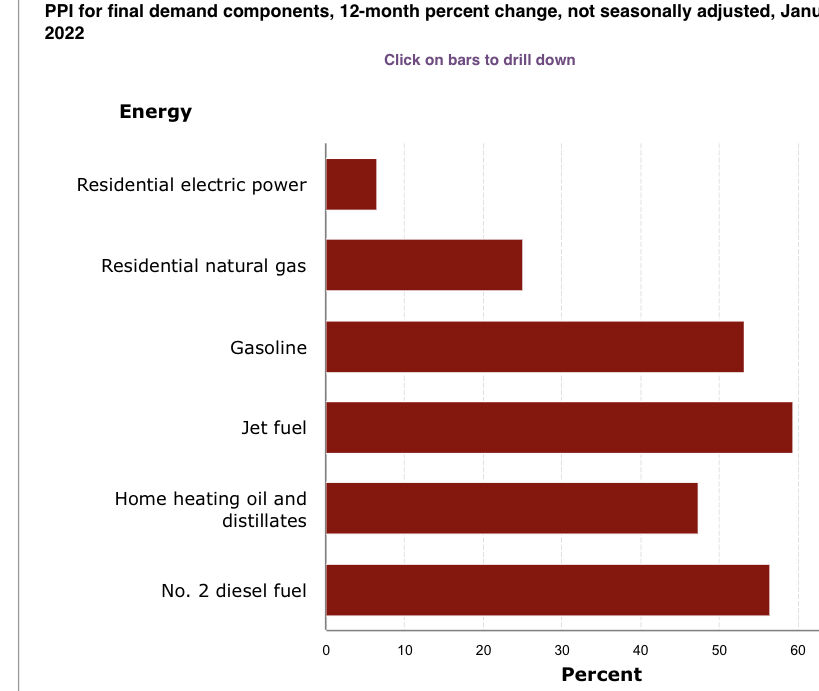
Energy prices YoY lead the wage (fuel oil UP 46.5% YoY). Used cars and trucks UP 40.5%. At least food is up “only” 7%.
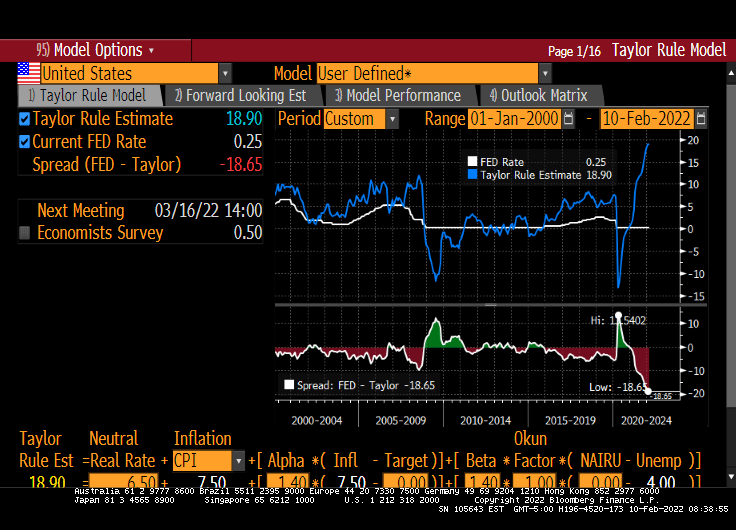
At 7.5% CPI, the Taylor Rule suggests that The Federal Reserve should have their target rate be 18.90%.
At least CORE inflation is “only” 6% YoY.
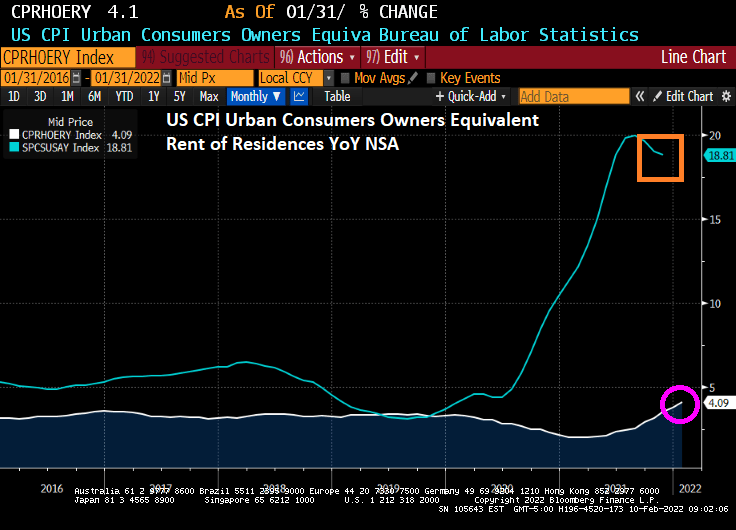
How about rent CPI? The owner’s equivalent rent of residences rose to 4.09% YoY. Seems a little misleading since home prices nationally are growing at 18.81% YoY.
Fed Funds Futures data points to 6-7 rate HIKES over the coming year. BRACE FOR IMPACT!!
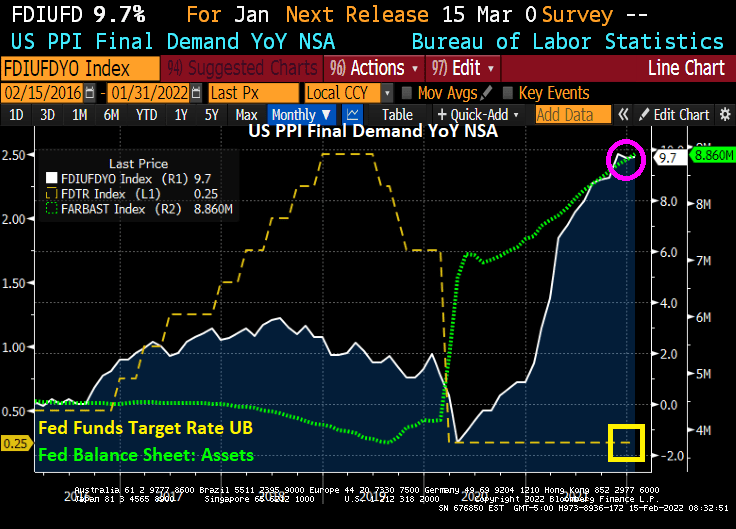
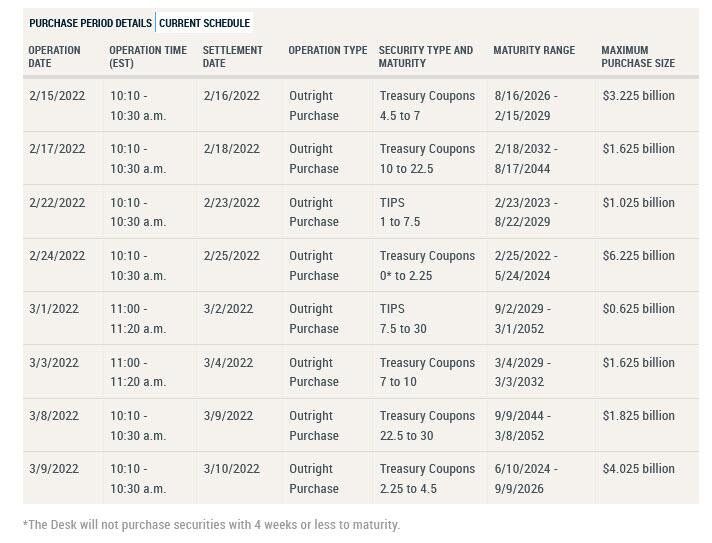
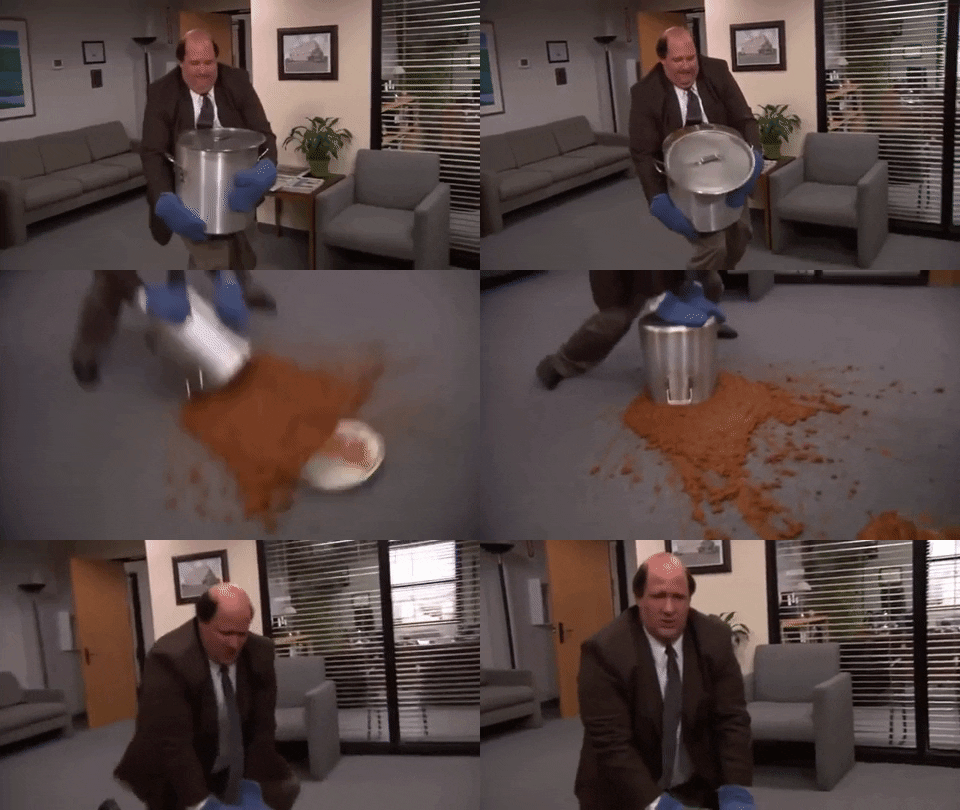
Yes, this is Powell’s famous chili recipe if The Fed actually starts to raise rates and pare back the balance sheet stimulus.
The Mortgage Bankers Association (MBA) released their weekly mortgage application survey this morning. Mortgage applications decreased 8.1 percent from one week earlier, for the week ending February 4, 2022.
The Refinance Index decreased 7 percent from the previous week and was 52 percent lower than the same week one year ago. The seasonally adjusted Purchase Index decreased 10 percent from one week earlier. The unadjusted Purchase Index decreased 3 percent compared with the previous week and was 12 percent lower than the same week one year ago.
And mortgage refinancing applications are down 50% since the same week last week.
Here are the stats. Pretty much down across the board.
How bad is inflation in the USA? Try 18%, based on the Flexible Consumer Price Index.
The Flexible Price Consumer Price Index (CPI) is calculated from a subset of goods and services included in the CPI that change price relatively frequently. Because flexible prices are quick to change, it assumes that when these prices are set, they incorporate less of an expectation about future inflation.
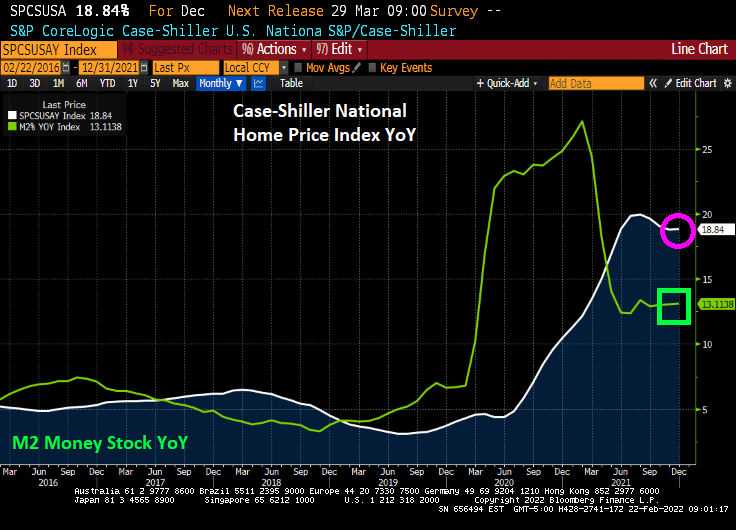
Again, remember that Federal inflation numbers woefully undercount housing and rent inflation. For example, the Case-Shiller National Home Price index (as of November 2021) was growing at 18.8%.
The sad part is that inflation-adjusted average hourly earnings growth of all employees is crashing thanks to inflation.
But the housing market is still blistering hot in January 2022. Mortgage Bankers Association (MBA) mortgage purchase applications for the week of 1/21-1/28 were UP 11.63% week-over-week (WoW).
Refinancing applications were up 18.4% WoW as fear of Fed monetary tightening grips the mortgage market.
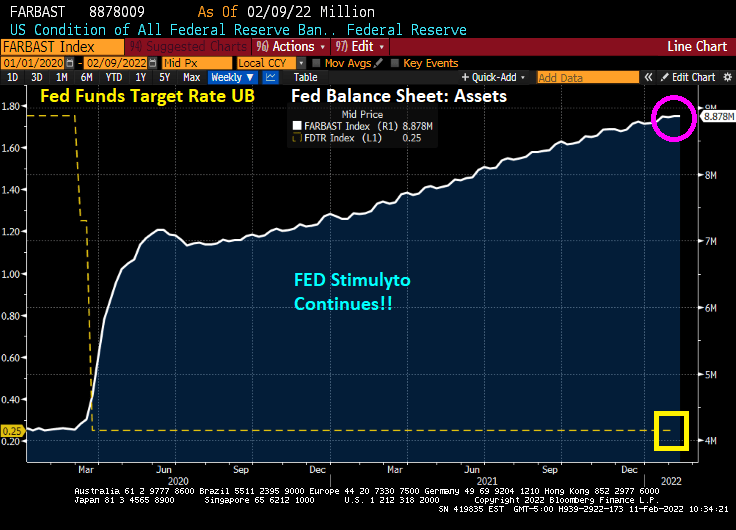
Now, The Fed is expected to raise their target rate 5 times or so over the next year AND slow down asset purchases. Mortgage rates are rising in anticipation of the Fed’s withdrawal of COVID related stimulus.
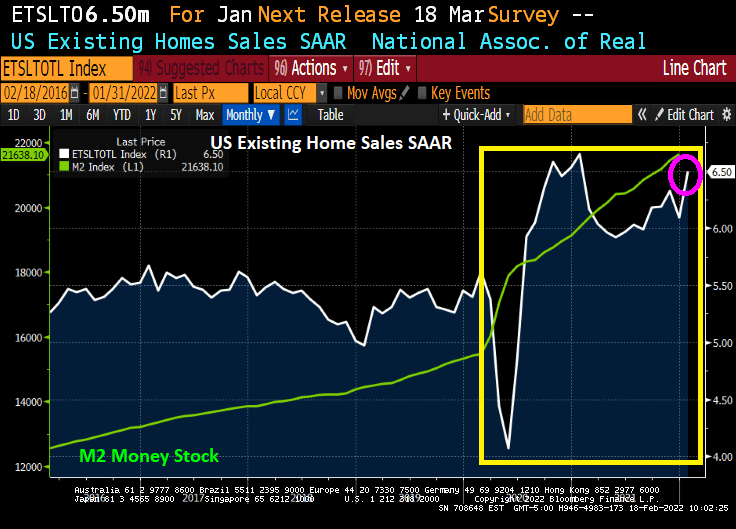
So, the housing market is expected to slowdown in 2022 as The Fed withdraws its ample monetary stimulus.
No, not the Klaus von Bulow type of “reversal of fortune” (when he killed his wife). I am talking about a reversal in fortune for America.
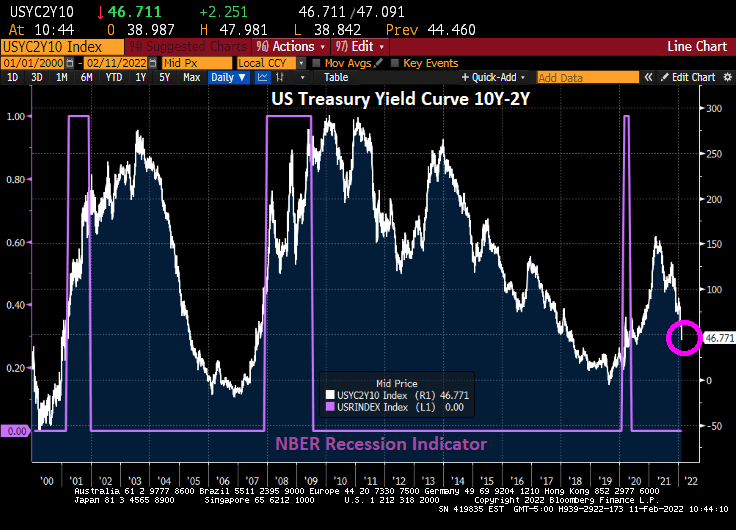
Let’s look at the 10Y-2Y Treasury curve. It typically falls below 0 basis points before every recession. Except the mini-COVID recession of 2020. But notice that the Treasury curve did not recover from the COVID recession as it typically did. More along the lines of 1984-1985.
Speaking of Reversal of Fortune, everything changed once Fed Chair Powell started to speak after Tuesday’s FOMC meeting.
Hmm. Midterm elections, possible Russian invasion of The Ukraine, further problems in China, etc. While The Fed Funds Future data implies that The Fed may raise their target rate 5 times over the coming year, we’ll see.
If 2021 was a great year for the US housing market, 2022 faces “a new normal” marked by a slowing down of home price rises, job layoffs in the mortgage industry, and concerns over rising inflation and interest rate hikes, according to Douglas Duncan (pictured), Fannie Mae’s senior vice president and chief economist.
Duncan said “a shift” was underway in the market and the wider economy, which would result in far more moderate home price appreciation, expected to be between 7% and 7.5% this year due to the ending of fiscal and monetary stimulus.
“One of the elements of the shift is that you’re going to see house prices up, but not nearly as far as they were in the last two years because that was driven hugely by the fiscal and monetary stimulus (now) being removed,” he told MPA.
Ominously, he added that low interest rates “may never be seen again”. Or at least until Biden appoints more doves to The Federal Reserve Board of Governors.
Here is a lesson in Bidenomics. “Going Green” sounds great to some (like Al Gore, Leonardo DiCaprio and Greta Thunberg), but there are costs to not growing America’s energy supply.
Rising energy costs have helped create the rise in consumer prices and inflation. Not to mention chip shortages for car and trucks. The University of Michigan conditions for vehicles plummeted to 46 (100 baseline) as used vehicles prices sky rocket.
Under Biden’s reign of error, West Texas Crude futures prices have risen 87% (regular gas prices are up 49% even with Biden’s releasing two days of supply from the Strategic Petroleum Reserve.
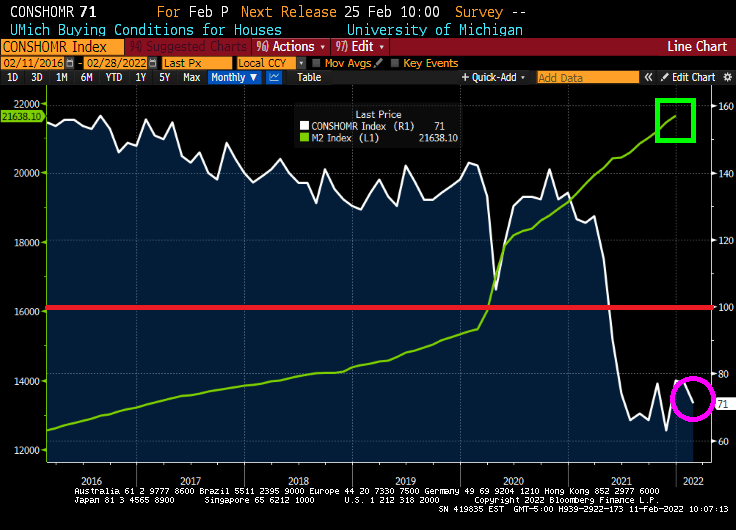
On the housing front, the University of Michigan buying conditions for houses fell to 72 (baseline of 100) as home prices are roaring at a 18.81% YoY clip.
To paraphrase the comic strip “Gasoline Alley,” “Unca’ Joe, what have your done t’ US?”
US new home sales spiked in December by 11.9% from November, but were down 14% year-over-year.
But the median price of new home sales (YoY) declined to 3.4%.
The Midwest saw a surge in new home sales (+56%).
The MBA’s mortgage applications index shows declining purchase applications (-1.83%) and declining refinancing applications (-12.60%) as mortgage rates increased from 3.64% to 3.72% for the week of 01/21.
Now, mortgage purchase applications rose for the week of 01/21 if we used non-seasonally adjusted data.
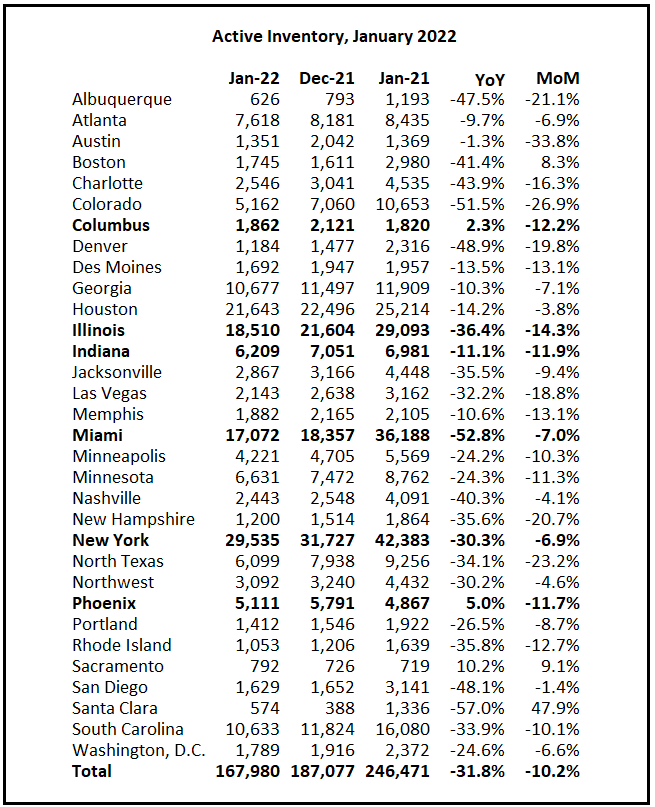
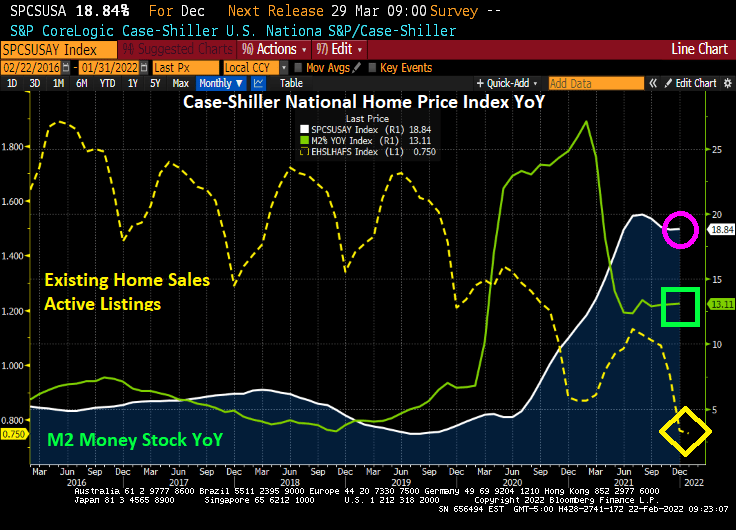
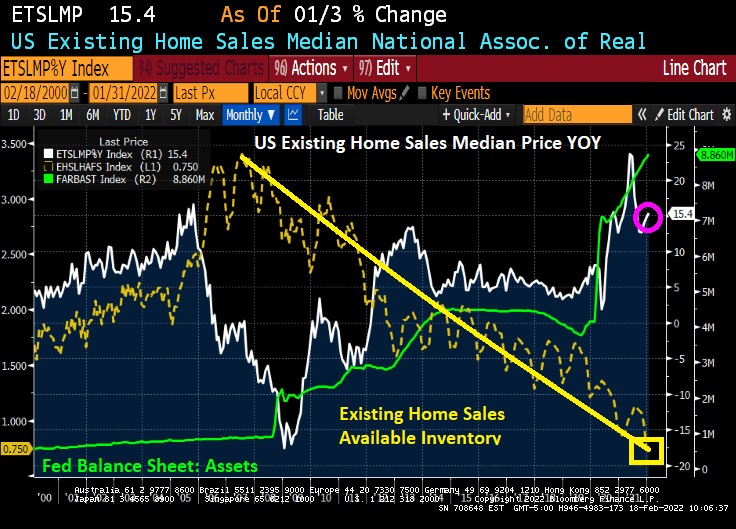
The Case-Shiller National home price index “slowed” to 18.81% YoY in November as The Fed continues its monetary stimulypto. Notice that The Fed is easing even when there is limited inventory available. Result? Hideous home price inflation.
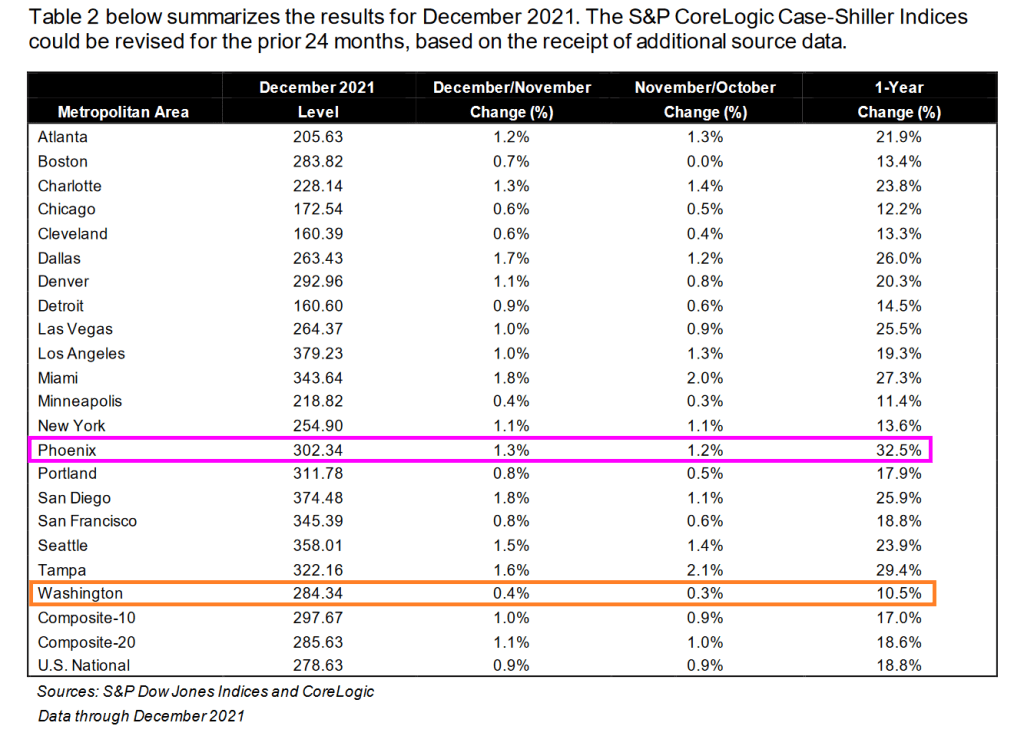
Which metro area is growing the fastest, making housing even more unaffordable for renters? Phoenix AZ is growing at a 32.2% YoY clip while Washington DC is the slowest growing metro area at 11.1% YoY. The second faster growing metro area in Tampa FLA.
Phoenix AZ is growing at the fastest rate in the nation as The Fed still has its monetary stimulus at FULL SPEED AHEAD.
You must be logged in to post a comment.