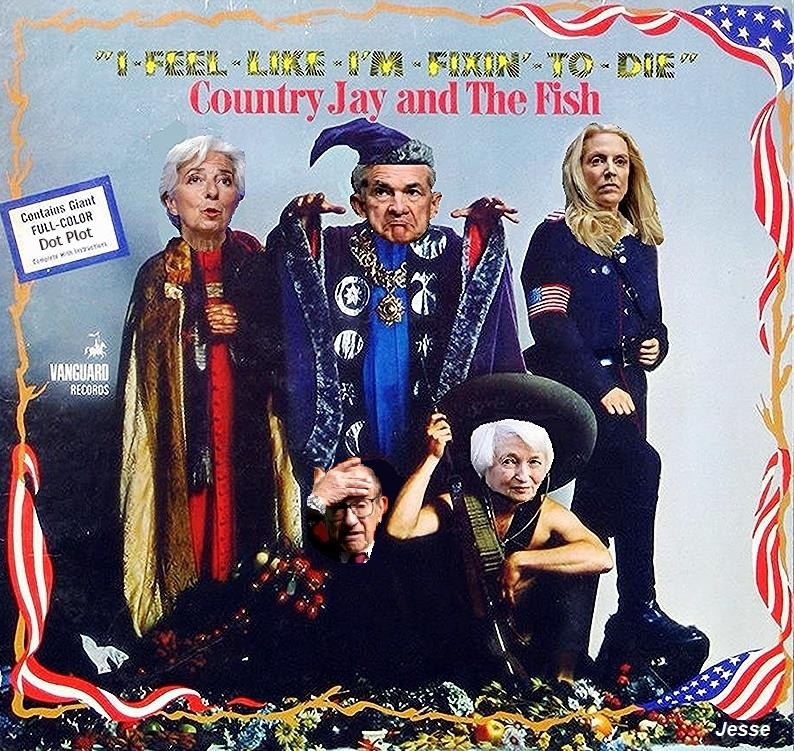
In addition to rampant 40-year highs in inflation, we have the Clark Griswold of the economy, Fed Chair Jerome Powell, slamming his foot on the economic breaks to combat inflation created by Biden’s energy mandates and reckless Federal spending (like the aforementioned, laughable “Inflation Reduction Act.”
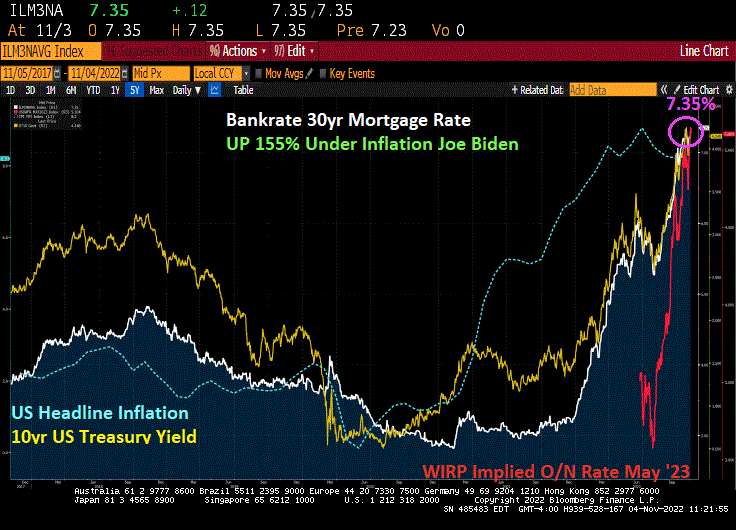
So, Biden helps creates massive inflation and Powell and the Gang counterattacked by raising their target rate with more to come (at least until May 2023). And with the implied Fed Funds rate soaring (red line), we are seeing the FANG stocks (Facebook or Meta, Amazon, Netflix and Google) falling more rapidly (white line) than the S&P 500 index. Which is also falling like a rock (yellow line). All this is happening as M2 Money YoY crashes and burns.
How about growth versus value under Cousin Eddie and Clark Griswold? The Vanguard Growth ETF and Vanguard Real Estate ETF are plunging with Fed tightening (red line). Vanguard’s Value ETV (yellow line) is down too, but not by as much.
Yes, Washington DC elites. The gift that keeps on giving … bad things.
Thanks to my former GMU student Andrew Edwards for the Cousin Eddie suggestion!
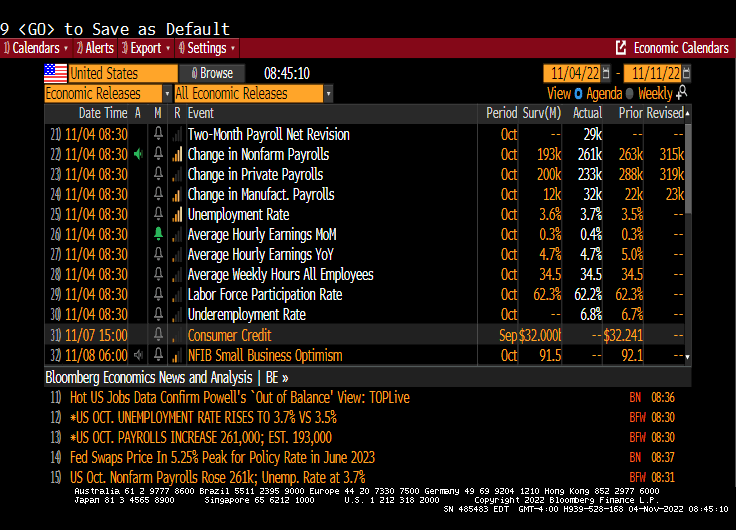
Private payrolls added 233k jobs in October, which is a -27% decline from September’s revised private payroll figures.
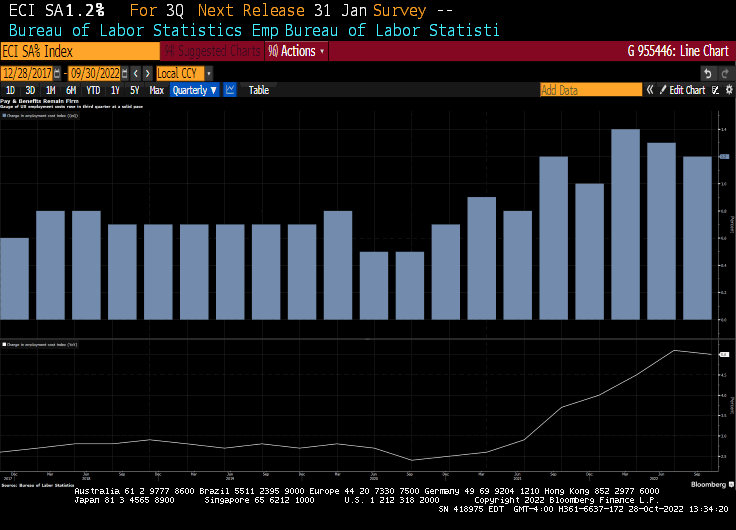
The good news? Average hourly earnings growth is still positive, but fell to 3.7% YoY. But with inflation raging at 8.2% YoY, workers are getting clobbered by inflation.
Here is the rest of the story.
The Fed is now green-lighted to raise rates even higher.
Biden’s campaign promise was to unite rather than divide. But Biden has morphed into Gustaf Holst’s, Mars – Bringer of War! Both domestically and in the Ukraine.
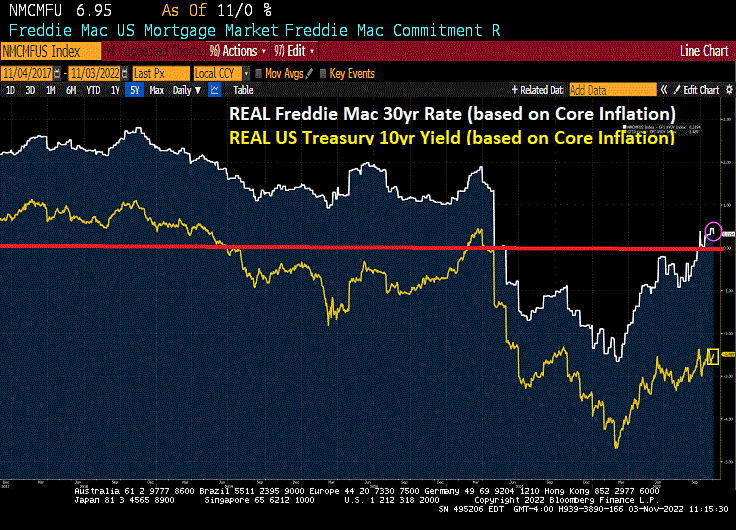
It has been a wild and mostly negative ride under Biden’s Reign of Error. 40-year highs in inflation (caused by Biden’s fossil fuel mandates and Federal spending) have left the US mortgage market FINALLY seeing positive REAL mortgage rates (now 0.32%), even though the REAL 10yr Treasury yield is still negative (-2.50%).
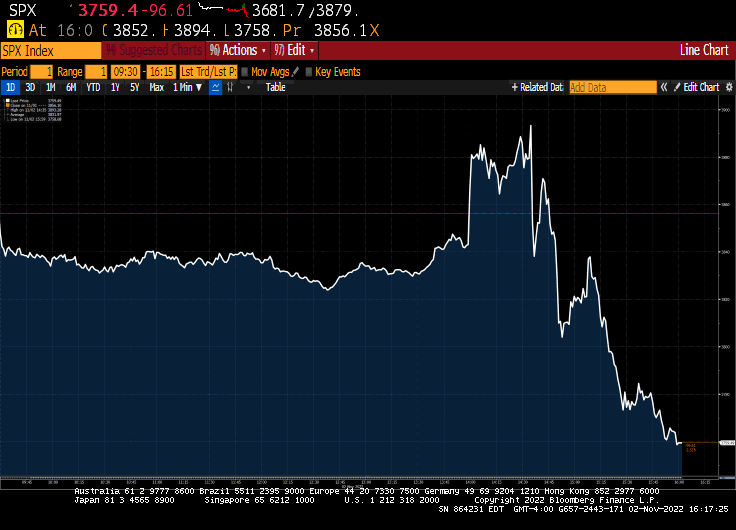
The S&P 500 index tanked -2.35% after Powell and The Fed failed to pivot.
Federal Reserve Chair Jerome Powell opened a new phase in his campaign to regain control of inflation, saying US interest rates will go higher than previously projected, but the path may soon involve smaller hikes.
Addressing reporters Wednesday after the Fed raised rates by 75 basis points for the fourth time in a row, Powell said “incoming data since our last meeting suggests that ultimate level of interest rates will be higher than previously expected.”
Powell said is it would be appropriate to slow the pace of increases “as soon as the next meeting or the one after that. No decision has been made,” he said, while stressing that “we still have some ways” before rates were tight enough.
“It is very premature to be thinking about pausing,” he said.
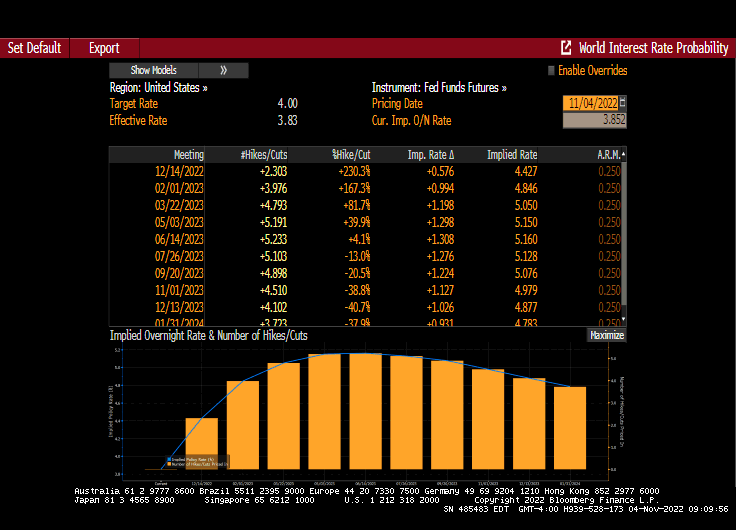
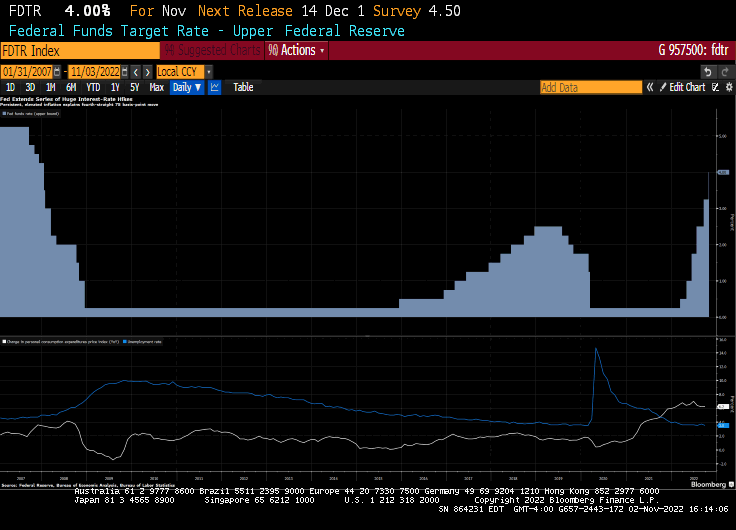
Fed Funds Futures data point now to a June peak in the target rate of 5.055%, then a decline.
The next Federal Reserve Open Market Committee (FOMC) meeting in on Wednesday, November 2nd. Let’s see what The Fed does with its BIG GREEN BAG … OF MONEY.
As I set here on Sunday morning waiting to see how the Cleveland Browns will lose to cross-state rival Cincinnati Bengals, I see that both the US Treasury 10yr-2yr and 10yr-3mo yield curves are inverted (below zero).
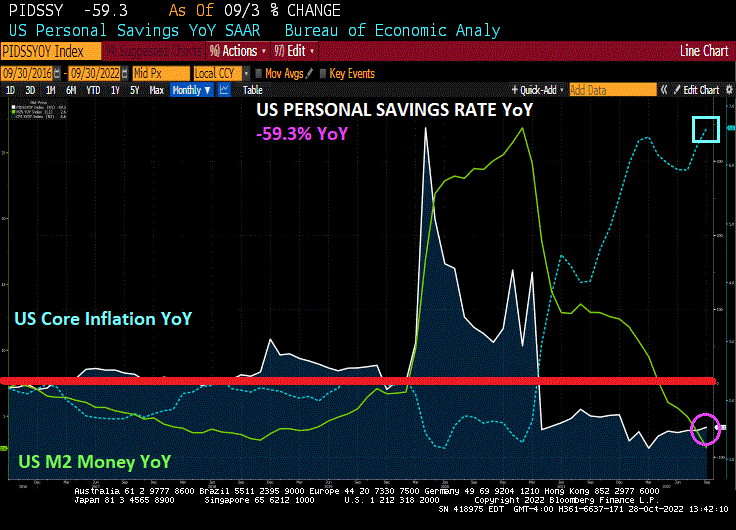
Core inflation (CPI less food and energy) YoY (blue line) was only 1.3% in February 2021 shortly after Biden was sworn-in as President and is now 6.6% in September 2022. That is over a 400% increase in core inflation!
We have this tantalizing headline on Bloomberg:
Goldman Sachs Now Sees Fed Rates Peaking at 5% in March By Simon Kennedy(Bloomberg) —
Goldman Sachs Group Inc. economists said they now expect the US Federal Reserve to raise interest rates to 5%, higher than previously predicted.
The central bank will lift its benchmark rate to a range of 4.75% to 5% in March, 25 basis points more than earlier expected, economists led by Jan Hatzius wrote in an Oct. 29 research report.
The route to the new peak includes increases of 75 basis points this week, 50 basis points in December and 25 basis points in February and March, they said.
The economists cited three reasons for expecting the Fed to hike beyond February: “uncomfortably high” inflation, the need to cool the economy as fiscal tightening ends and price-adjusted incomes climb, and to avoid a premature easing of financial conditions.
Well, not exactly earth-shattering. Fed Funds Futures data point to a peak of near 5% (4.905%) for the May 2023 FOMC meeting, so Goldman Sachs is calling for an earliest peak at the March 2023 FOMC meeting,
Regardless of what Goldman Sachs thinks, Fed officials are expecting a peak in 2023 followed by a decline to 2.5%.
Brainard and Bostic are the only “doves.” Which is silly because Chicago’s Evans is a perma-dove. Let’s see how the Dots Plot changes at the November 2nd meeting.
America’s distressed debt pile is biggest since September 2020.
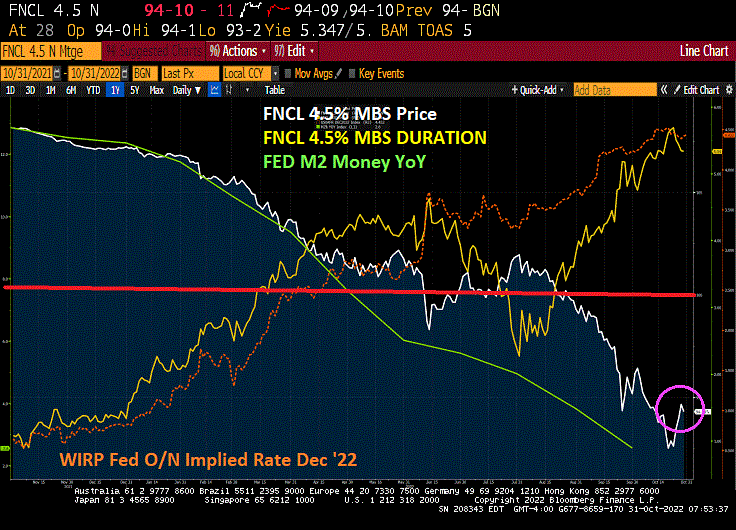
(Bloomberg) — To understand the highest mortgage rates in two decades, look to the intricacies of the market for bonds backed by home loans.
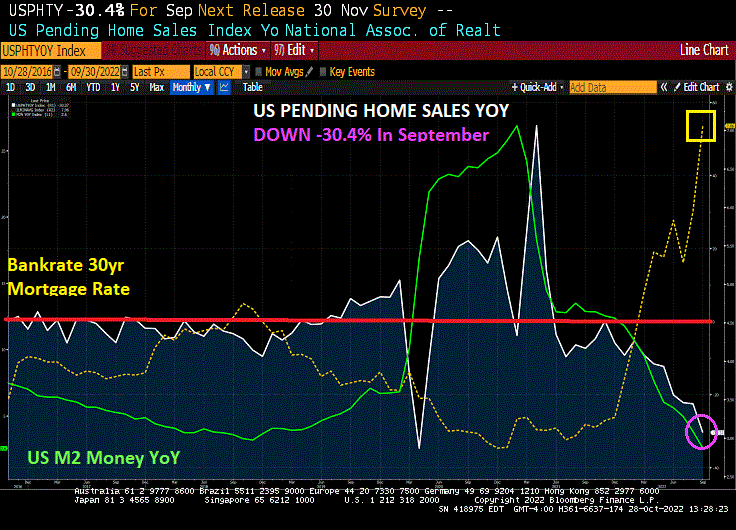
So says Guillermo Roditi Dominguez, managing director at New River Investments LLC. On the latest episode of the Odd Lots podcast, he describes how the surging cost of home loans can be traced to changes in the market for mortgage-backed securities, or MBS. The average rate on a 30-year fixed mortgage jumped above 7%, according to data released on Wednesday. That’s the highest since 2001.
Of course, mortgage rates are supposed to rise as the Federal Reserve hikes benchmark interest rates. That’s how tighter monetary policy works — by making the cost of credit more expensive. But the average borrowing cost on a 30-year fixed-rate mortgage now far exceeds the yield on equivalent US Treasuries, with the difference between the two at the highest level on record.
At issue is the changing nature of the market for mortgage bonds, and who’s buying them. Once the center of the housing bubble that burst in 2008, the vast majority of mortgage-backed securities come with guarantees from the US housing agencies, meaning investors aren’t necessarily worried about people paying back their loans. Yet their exposure to movements in US interest rates (known as “duration”) means they can still carry significant risks for investors.
“It’s not because people are afraid house prices are going to go down,” Dominguez says. “Mortgage-backed securities went from being effectively short-lived assets because we went through a pretty epic refinancing boom in 2020 and 2021, to all of a sudden rates going up very, very, very quickly — faster than anybody expected.”
Most buyers of MBS — which range from big banks to bond funds and the Fed itself — understand there’s a risk of early repayment. People might refinance their home loans during periods of low interest rates, or simply move and sell their house. Dominguez estimates that some 17% of home-loan balances were extinguished in 2019, compared to 36% in 2020 and 2021 as the Fed pushed interest rates to historic lows.
Mortgage refi activity exploded in early 2020, when rates were cut to basically zero.
In times of low rates, MBS investors who get their loan principal paid back early have to reinvest that money at potentially lower yields. But the transition from low rates to higher ones means that suddenly investors are left with longer-term assets, as borrowers hold onto the lower mortgage rates they locked-in previously. In times of higher interest rates, early repayments disappear and investors don’t have as much money to invest at higher yields. That means many buyers are shying away from the mortgage market, which Dominguez describes as “broken,” even as spreads go higher. Adding to the pressure on mortgage rates is the fact that the Federal Reserve is now reducing its balance sheet after buying the debt as part of its emergency monetary easing.
“A mortgage-backed security is essentially similar to a covered call in equity terms,” Dominguez says. “And that means that you have all of the downside and, you know, very, very little of the upside and you trade that in for a little bit of extra coupon. And when rates were going down, everybody was upset about it because Treasury bonds were going up in price. People were making money there. If you held MBS, you got your money back and then when you went to buy new bonds, you bought them at a lower yield. And right now what we’re seeing is all of a sudden bond prices are going down, yields are going up and you’re not getting any cash flows so you don’t get to reinvest that money.”
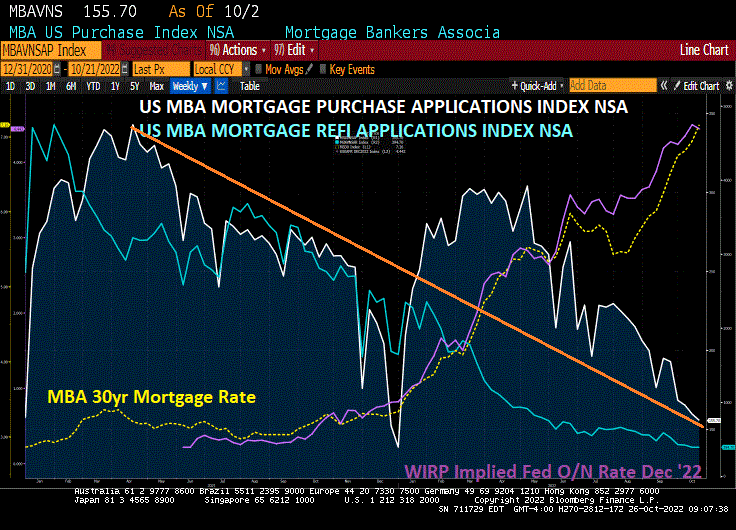
But mortgage purchase and refi applications are showing a strongly negative trend as The Fed tightens.
US Q3 GDP numbers are out and they are … meh. Only Biden and Karine Jean-Pierre would cheer about 1.8% real GDP growth. At least real GDP growth wasn’t negative!
Real GDP rose 2.6% after -0.6% in Q2 and 1.8% YoY. But the most interesting data bit is the GDP Price Index. It fell to 4.1% in Q3 down from a whopping 9.0% in Q2.
But wait! Also declining at a stall speed is M2 Money.
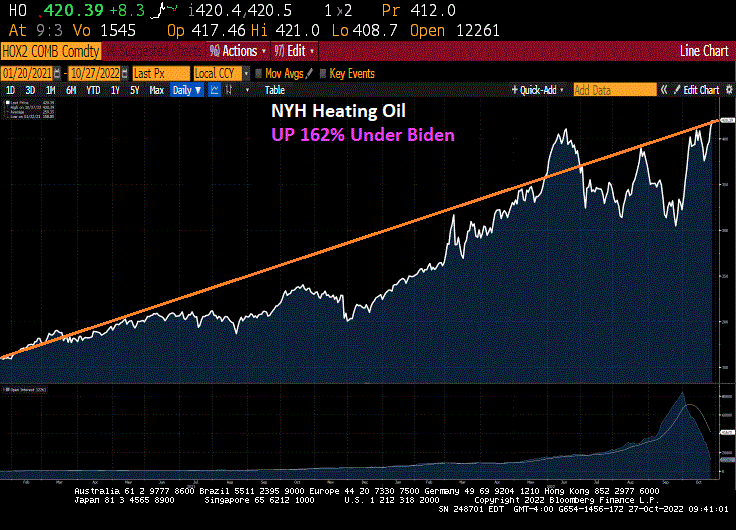
And brace yourself for a cold winter. Heating oil is UP 162% under Biden.















You must be logged in to post a comment.