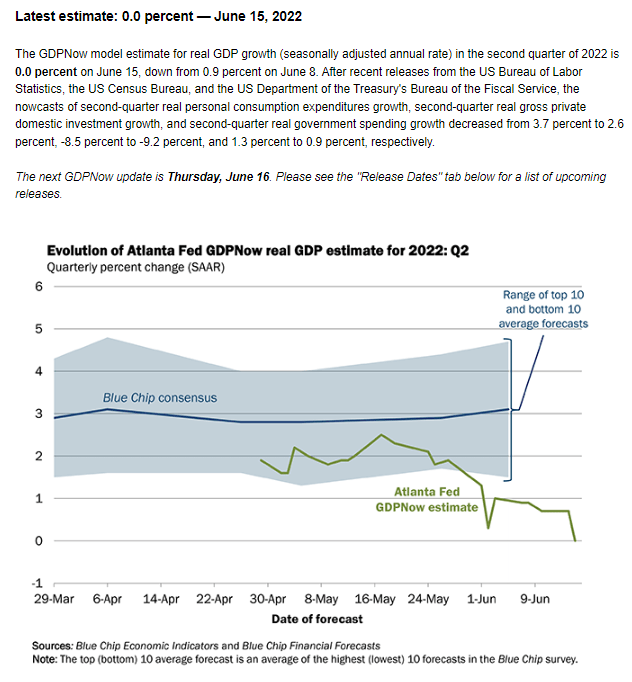

Sometimes I wonder if The Federal Reserve Board of Governors pays attention to economic news. For example, the Atlanta Fed’s GDPNow forecast for Q2 was released today at -0.002%. So what does The Fed do? They raised their target rate by 75 basis points to 1.75%.
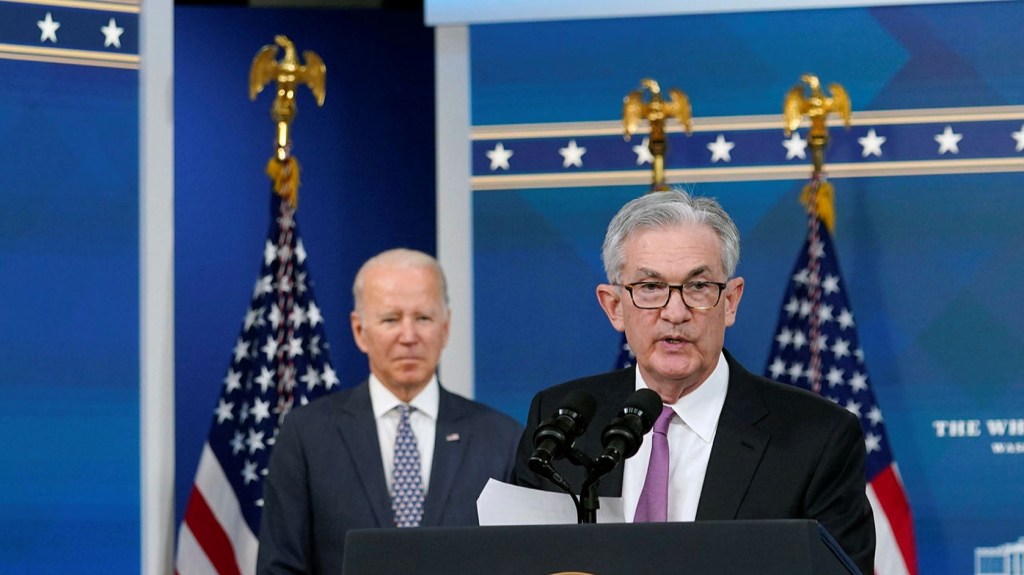
Apparently, The Fed has chosen to fight inflation rather than help the economy.
I just read that President Biden has never been more optimistic about the US economy than he is now.
Well, today’s closing bell is not optimistic and is downright bearish.
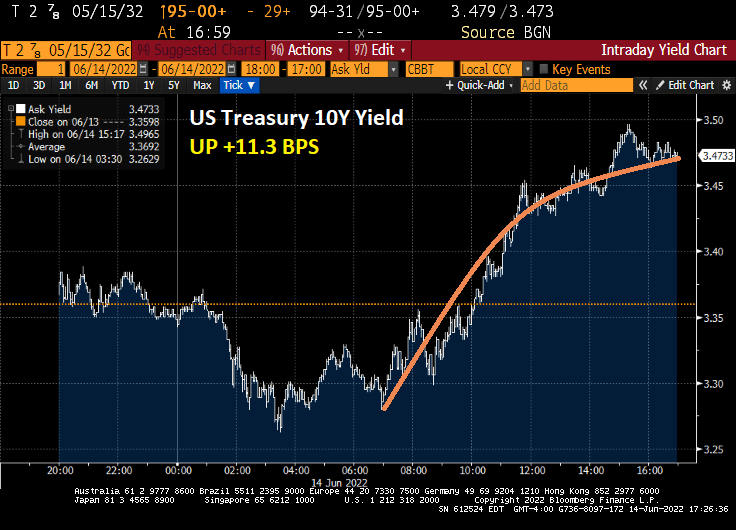
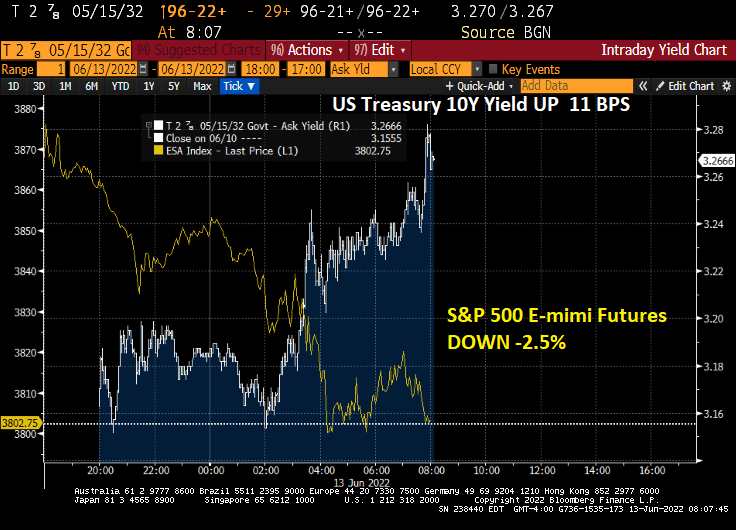
The US Treasury 10-year yield rose … ANOTHER … 11.3 basis points as rumors circulate that The Fed might actually raise their target rate by 75 basis points.
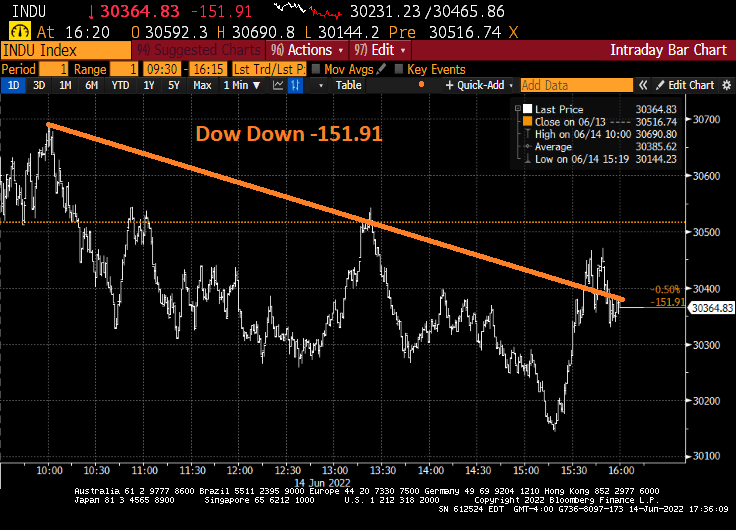
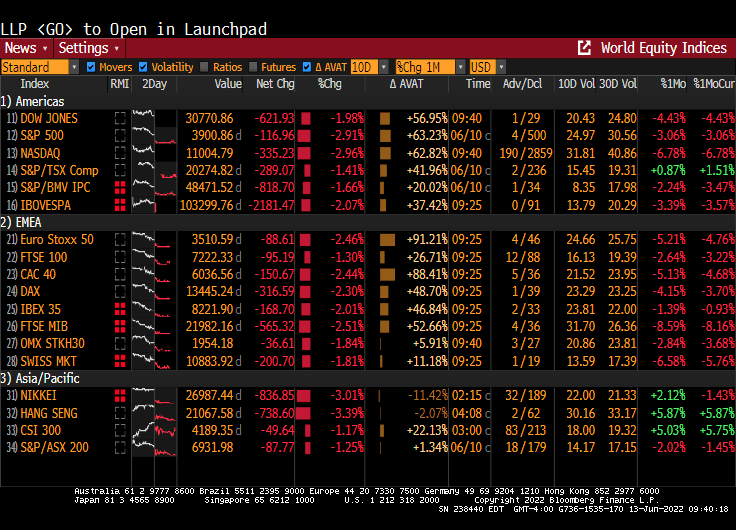
And the venerable Dow (DJIA) is down -152 points today.
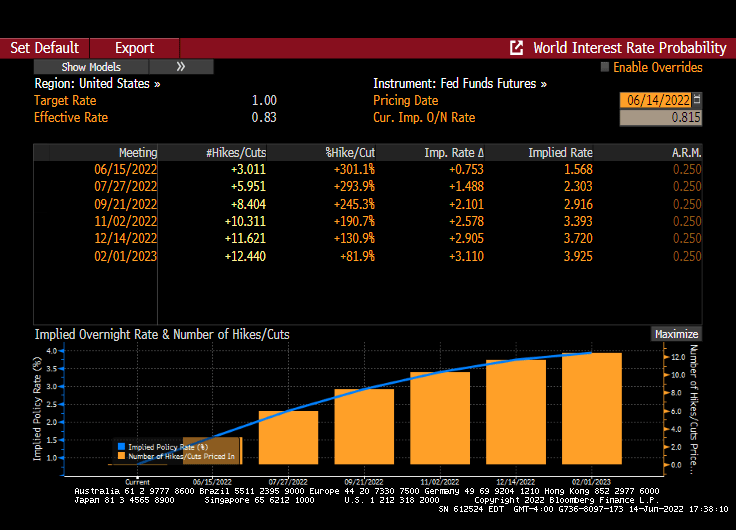
Markets are anticipating an increase of The Fed Funds target rate from 1% to 1.568%, less than the rumored 75 basis point increase being bandied about.
If Biden is wildly optimistic about the economy, then he needs to get out of The White House and talk to average Americans and not people like Robert De Niro.
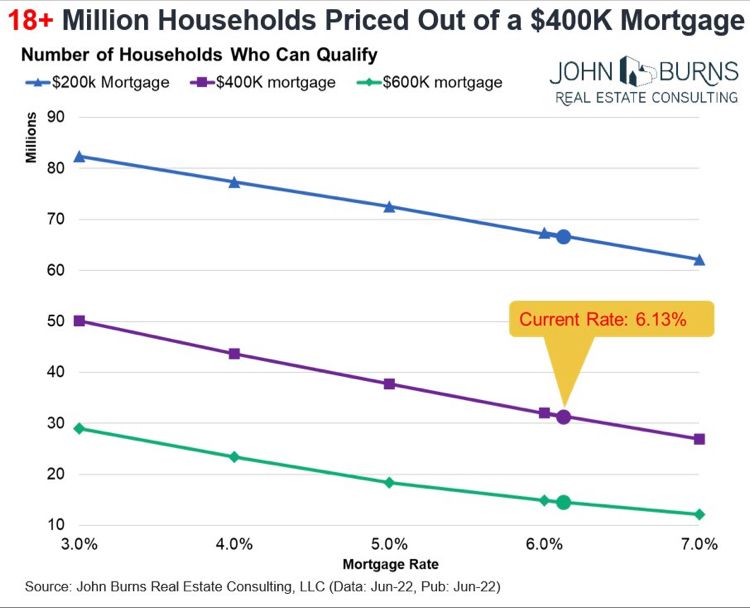
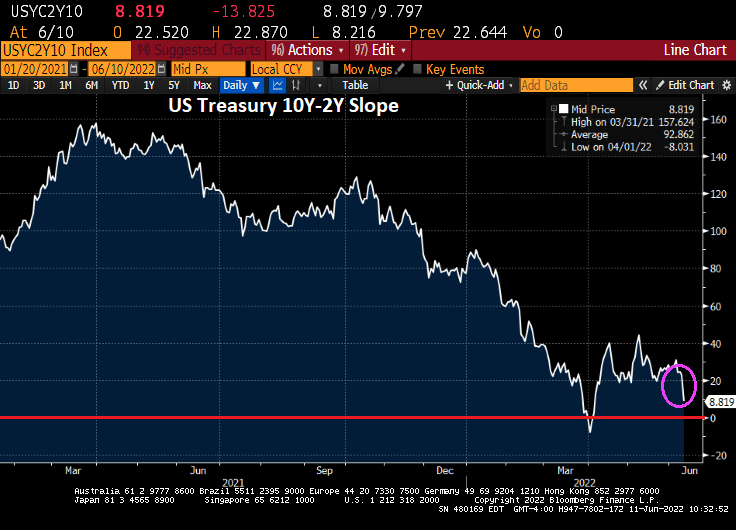
The US Treasury 10Y-5Y yield curve has gone into negative territory (which usually occurs before a recession). At the same time, US mortgage rates are climbing like Tom Cruise in “Top Gun: Maverick” to 5.87% as The Fed tightens its choke hold on markets.
The 10Y-5Y Treasury curve typically goes negative before a recession.
And then we have today’s PPI report (Producer Price Index), rising 10.8% YoY as M2 Money stock starts to decline a bit.
Here is a better view of mortgage rates under Biden/Powell.
The CPI news on Friday was so awful that it changed the bond market’s view of Fed trajectory, and the weakest sector broke. In bond jargon, MBS went “no-bid.”No buyers for MBS. Then a few posted prices beyond borrower demand, not wanting to buy except at penalty prices. (Courtesy of Cherry Creek Mortgage)
Despite what Treasury Secretary Janet Yellen has said, Friday’s inflation report demonstrated that inflation is no longer transitory. And with that realization, there was a dearth of bidders for Agency Mortgage-backed Securities (Agency MBS) on Friday.
As a result, agency MBS 2.5% dropped to under $90 as markets expect The Fed to keep raising rates to combat inflation.
Duration of the FNCL 2.5% agency MBS has been extending with growing inflation. Duration was under 1 on August 2, 2021 but is now 7 times greater at almost 7.
Note to Yellen: inflation seems be permanent, not transitory. Or at least inflation will remain high for the foreseeable future, crushing the life out of Agency MBS.
Regular gasoline prices have breached the $5 a gallon barrier, the highest in recorded history. And it is even worse in states like California where regular gas prices have been above $7 per gallon.
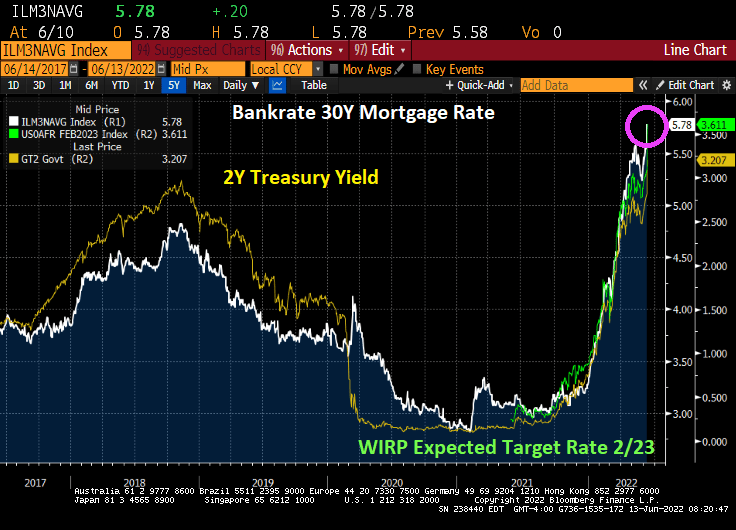
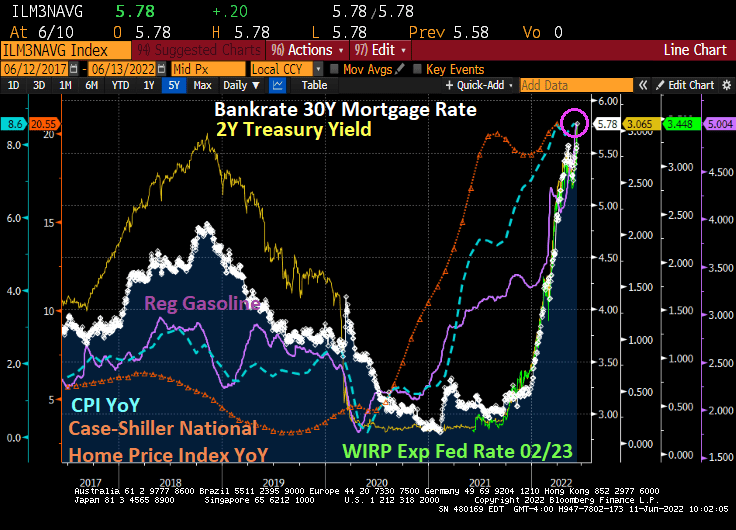
Bankrate’s 30-year mortgage rate is now 5.78%, the highest since 2008. And rising really fast as The Fed tightens the monetary noose.
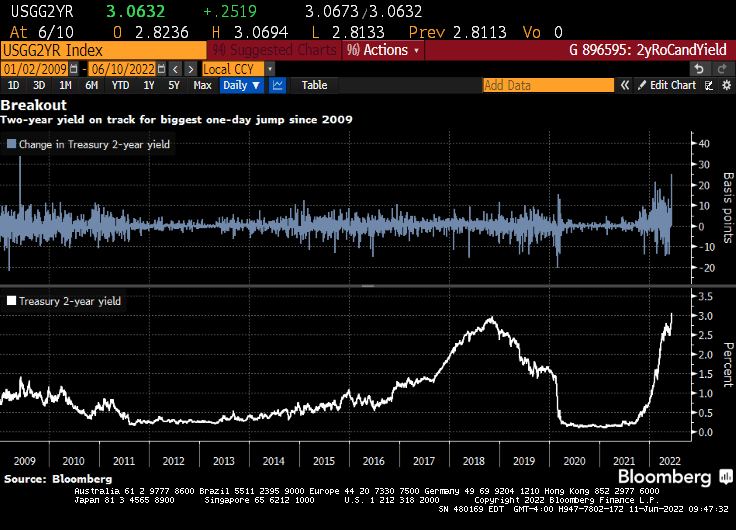
Speaking of noose tightening, the 2-year US Treasury Note yield is rising awfully fast.
The US Treasury 10Y-2Y curve slope just flattened to 8.819 bps and challenging the 0% grade awfully fast.
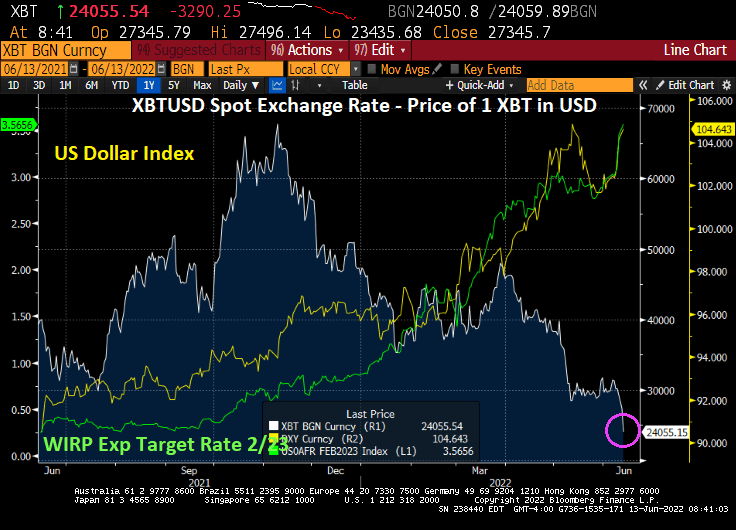
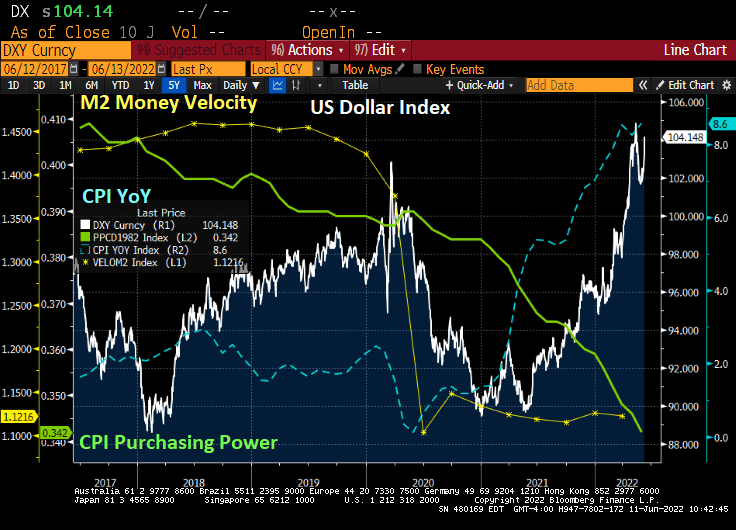
The US Dollar is soaring as US inflation soars, consumer purchasing power (green line) collapses along with M2 Money Velocity.
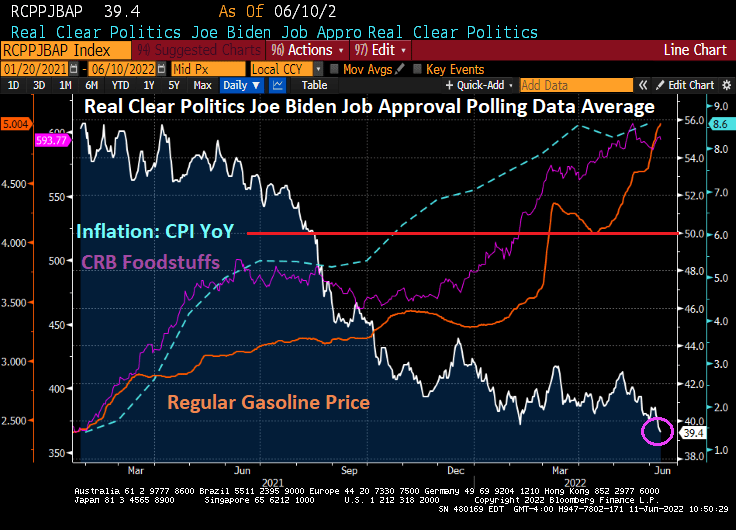
There is little doubt that soaring inflation, gasoline and food prices have hurt Biden’s popularity as well as the Democrats popularity ahead of the upcoming mid-year elections. People for the most part vote with their wallets.
According to estimates by Bloomberg Economics, US households will spend $5,200 more this year than they did last year on the same consumption basket.
That breaks down to $433 extra in expenditures every single month. That is what is called “the inflation tax.” And it hurts.
The Fed is expected to raise their target rate to 2.875% by February 2023. With that expectation, mortgage rates (yellow line) are soaring. And with that, University of Michigan’s Buying Conditions for housing has plunged to 43, the lowest levels since 1982 as the US was trying to recover from high inflation.
The University of Michigan consumer sentiment index just plunged to the LOWEST LEVEL in history on inflation and Fed’s reaction.
Average REAL wage growth has now declined to -2.11% YoY.
You must be logged in to post a comment.