Fed Dead Redemption? A Fed-Induced Recession in 2H 2023 (50-BPS Hike On 12/14 Then Two 25-BPS Hikes In 2023)

The Fed has signaled the terminal rate will likely be around 5% — we think an upper bound of 5% — reached in early 2023. To get there, the central bank will likely raise rates by 50 basis points at its December 2022 meeting, followed by two more 25-bp hikes in 2023. We then see it holding at 5% throughout the year. Markets have priced in a similar amount of tightening. 

Controlling inflation comes at a cost to growth. Yield curves have inverted. A Bloomberg Economics model shows a 100% probability of recession starting by August 2023. Take that — like all model forecasts — with a grain of salt. But the basic view that aggressive Fed tightening will very likely tip the economy into a downturn is correct.
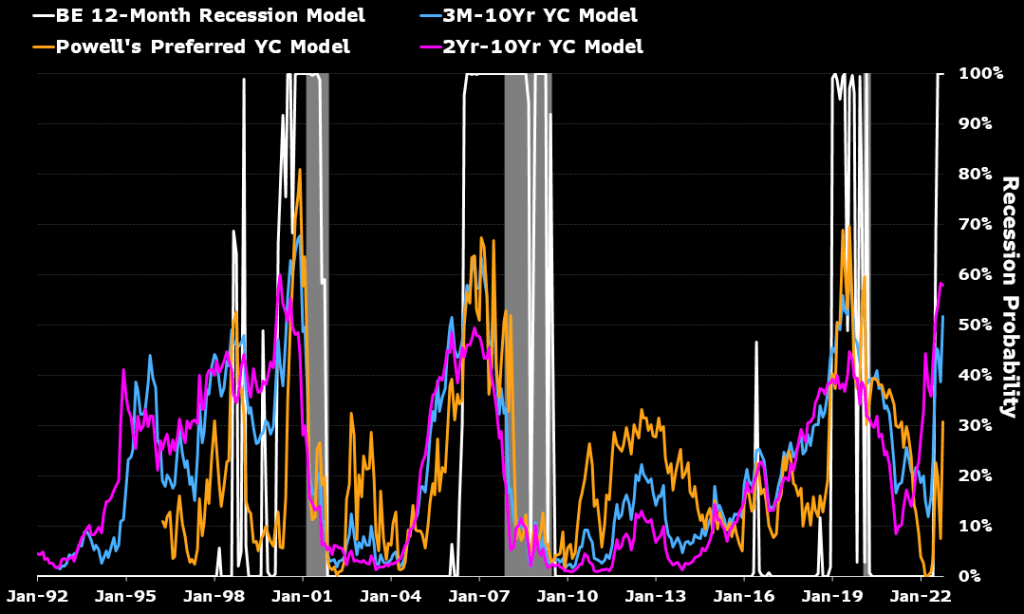
While various measures of impending US recession show a good chance of a 2023 recession, Powell’s preferred measure of the yield curve shows only a 30% chance.

What Might the Recession Look Like?

We project a 0.9% GDP contraction in 2H 2023, driven by an investment downturn as firms pare inventories amid a downshift in consumption. Residential investment will also contract with real interest rates likely to rise steadily throughout 2023 as nominal rates stay high and inflation moderates.

An Inventory-Led Downturn

Resilient consumption should help put a floor under demand. 

Households have enough of a cash buffer — extra savings built up over the course of the pandemic, rising COLAs for Social Security recipients, ongoing state and local government stimulus and solid 2022 wage income growth — to sustain consumption during the recession. Our base case is for real spending to grow at a quarterly annualized pace of about 0.5% in 2023, with strength concentrated in services.

By one measure, households may still have $1.3 trillion in the coffers, based on flows within the personal income report through September. At the current rate of drawdown, that’s enough to last around 15 months, or through the end of 2023. Funds may dry up faster as job losses mount and the unemployed fall back on their savings.

$1.3 Trillion Extra Savings to Keep Spending Positive

The labor market remained exceptionally tight into the end of 2022. We expect it to soften significantly next year, with the unemployment rate rising to 4.5% by the end of 2023. The pace of hiring will slow markedly as support from catch-up hiring dissipates and the effects of restrictive monetary policy settle in. We estimate only 20%-30% of total employment is still in sectors experiencing labor shortages, implying demand for labor is falling fast.

Avoiding a Hard Landing Depends on Inflation, Fed

Extreme circumstances — the pandemic, Russia’s invasion of Ukraine — have made a recession more likely than not. Extreme circumstances can change, and so can policy makers’ response Whether the US can stick a soft landing depends substantially on how external conditions develop and how the Fed responds. 

Not our base case, but we can envision a scenario in which the central bank opts to ease rates in 2023, boosting the chances of a soft landing.

One way that could happen is inflation falling faster than expected. Currently, our baseline is for headline CPI to drop to 3.5% and the core to 3.8% by the end of 2023. The most important assumption there is that energy prices remain flat next year from 2022.

In an alternative scenario, inflation fall faster as China maintains Covid controls and growth stumbles. A Bloomberg Economics model attributes the recent fall in oil prices entirely to a drop in demand — mainly from China. If China’s growth falls off the cliff, perhaps amid a sharp rise in Covid cases and resumed lockdowns, commodity prices could tumble sharply.

A warm winter in Europe and the US could also keep energy prices in check. Lower demand from Europe for US liquefied natural gas would help stem the increase in domestic electricity prices.

In that scenario, US energy prices could fall 20% in 2023 and headline inflation may drop to 2% by the end of the year. Lower gasoline prices would work to soften inflation expectations, easing pressure on the Fed to hold rates at higher level. A rate cut could then come in 2H 2023, raising the possibility of a soft landing.

Scenarios of CPI Inflation in 2023

The risk cuts both ways. A quick and successful pivot to reopening in China could boost oil and other commodities prices. A colder winter in Europe and the US would generate upward pressure for electricity and utility prices. Assuming China is fully open by mid-2023 — the base case for our China team — energy prices could increase by 20% in the year. In that case, headline US CPI would hit a bottom of 3.9% in midyear before surging to 5.7% by year-end.

In that scenario, the terminal fed funds rate would most likely top 5%, possibly closing 2023 near the upper end of St. Louis President James Bullard’s estimated restrictive range of 5%-7%.

Bloomberg Economics US Forecast Table

Thanks to Yellen’s legacy of too low interest rates for too long, The Fed is playing catch-up by finally raising rates.
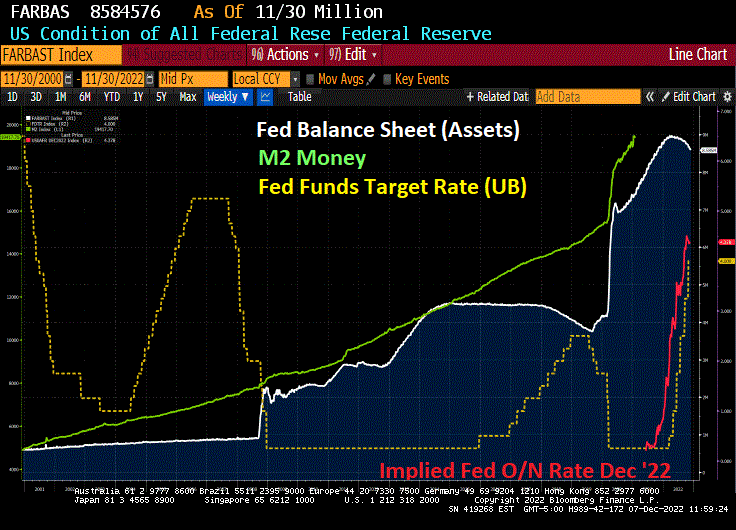
It is truly Fed Dead Redemption!
Fed Dead Redemption! US Treasury 10Y Yield Up 10 BPS As US Debt And Unfunded Liabilities Hits $204 TRILLION (50 BPS Rate Hike Expected At Fed’s 12/14 Meeting)

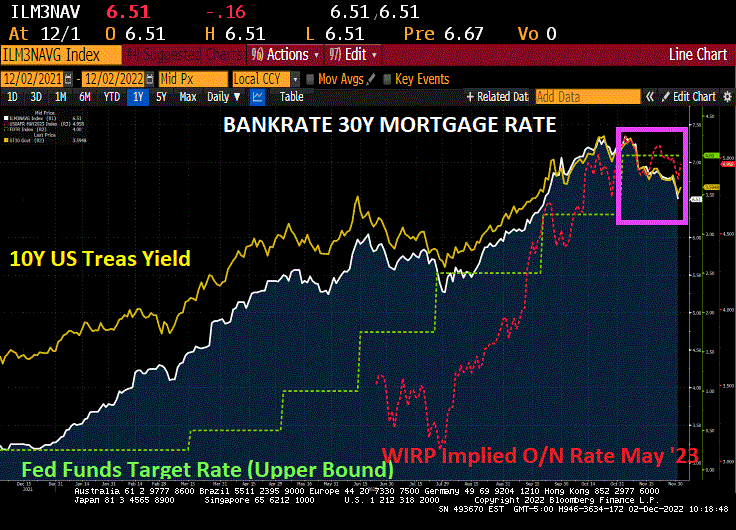
The start of a new week and the US Treasury 10-year yield is up 10 basis points, always a noteworthy change. And with it, the 30-year mortgage rate should climb.

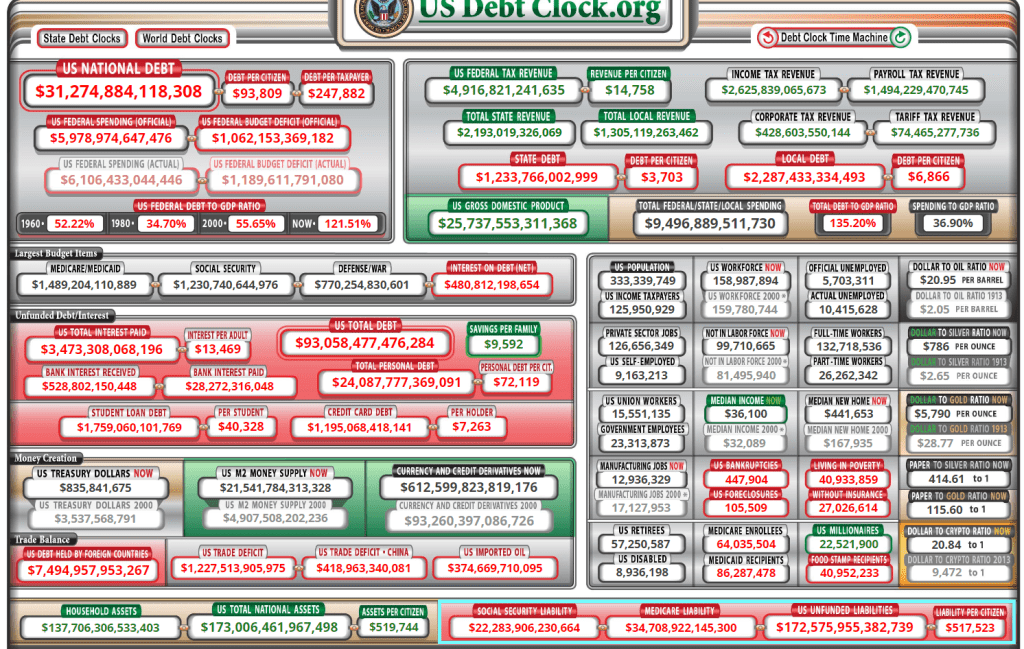
Meanwhile, the political elite party in Washington DC as the US National Debt hit $31.4 TRILLION and unfunded liabilities (the amount that the political elites promised Americans) hit $173 TRILLION for a grand total of … $204 TRILLION.

Since Biden/Pelosi/Schumer are in a lame duck session with Republicans taking the House in January, let’s see if Republicans can halt the insanity in Washington DC.

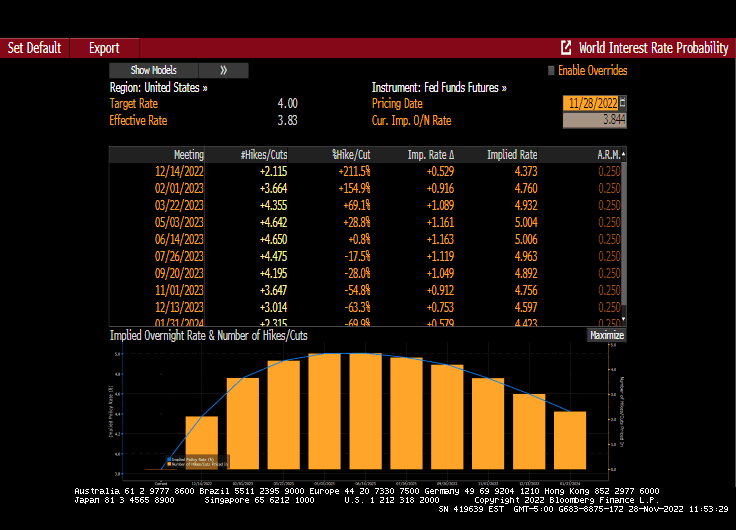
Be that as it may, Fed Funds Futures are pointing at a 50 basis point rate hike at the December 14th FOMC meeting.

Seriously, how is The Federal Reserve going to cope with $204 TRILLION … and growing Federal debt AND unfunded liabilities?

Good November Jobs Report Points To Higher Mortgage Rates, Likely More Rate Hikes Coming From The Fed (REAL Wage Growth At -2.2% YoY, US Yield Curve Inverted For 109 Straight Days)

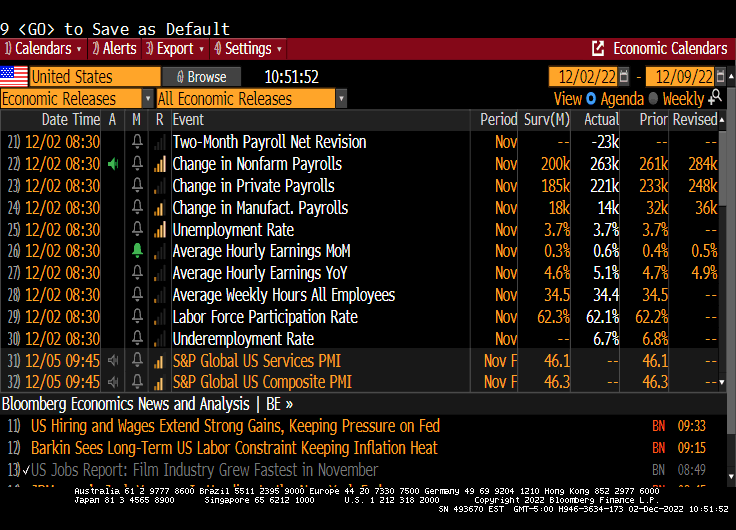
Unlike yesterday’s ADP jobs report (only 127k jobs added), the official Federal government report shows 263k jobs added. I like the ADP report, but The Fed pays attention to the BLS numbers. So, …

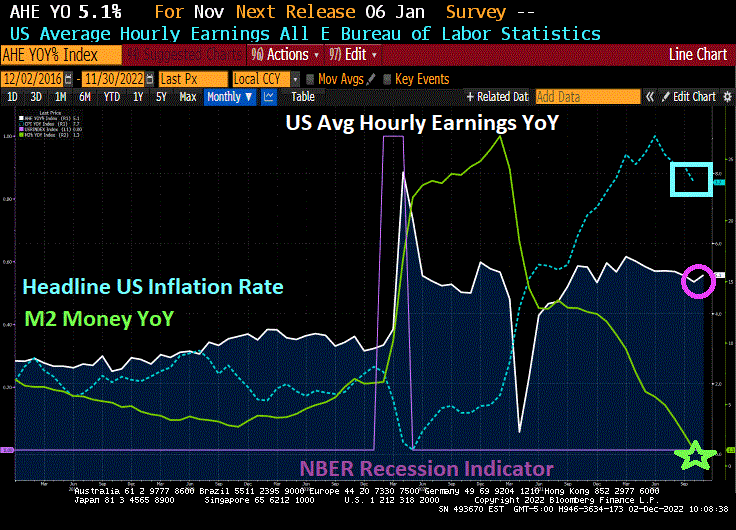
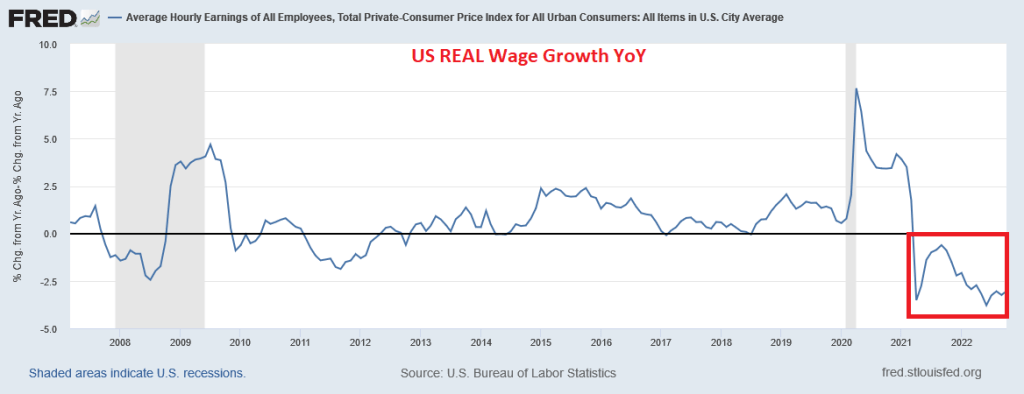
U.S. employers added 263,000 jobs in November, and the nation’s unemployment rate stayed the same at 3.7 percent, according to data released Friday by the Labor Department. Meanwhile, average hourly pay for workers rose 5.1 percent from a year earlier, to $32.82 from $31.23. But the US headline inflation rate at the last reading was 7.7% YoY that equates to -2.2% REAL Average Hourly Earnings YoY.

Mortgage rates fell to 6.51 yesterday, but expectations of Fed rate hikes (WIRP) and the 10-year Treasury yield are up today. In fact, the 10-year US Treasury yield is up 10 basis points this morning. This will likely translate to higher mortgage rate today.

Inflation is still the humming dragon crushhing the US middle class and at last report stood at 7.7% YoY. Average hourly earnings YoY rose to 5.1% in November, which is good. But inflation takes a huge bite out that number, resulting in -2.2% YoY REAL average hourly earnings.

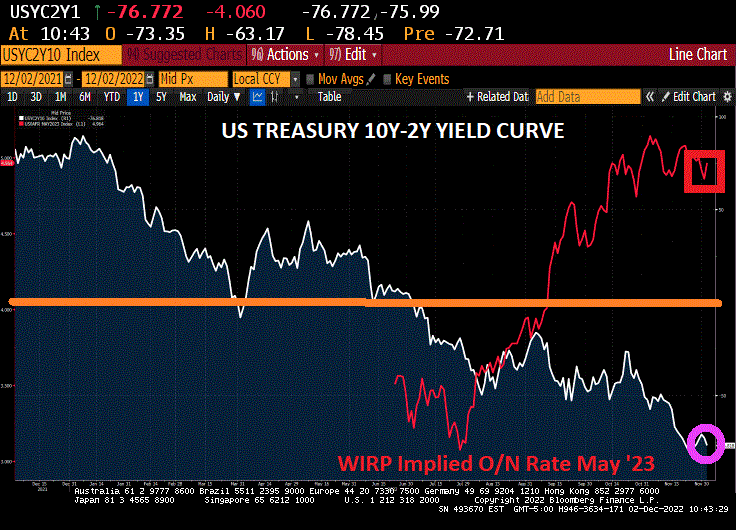
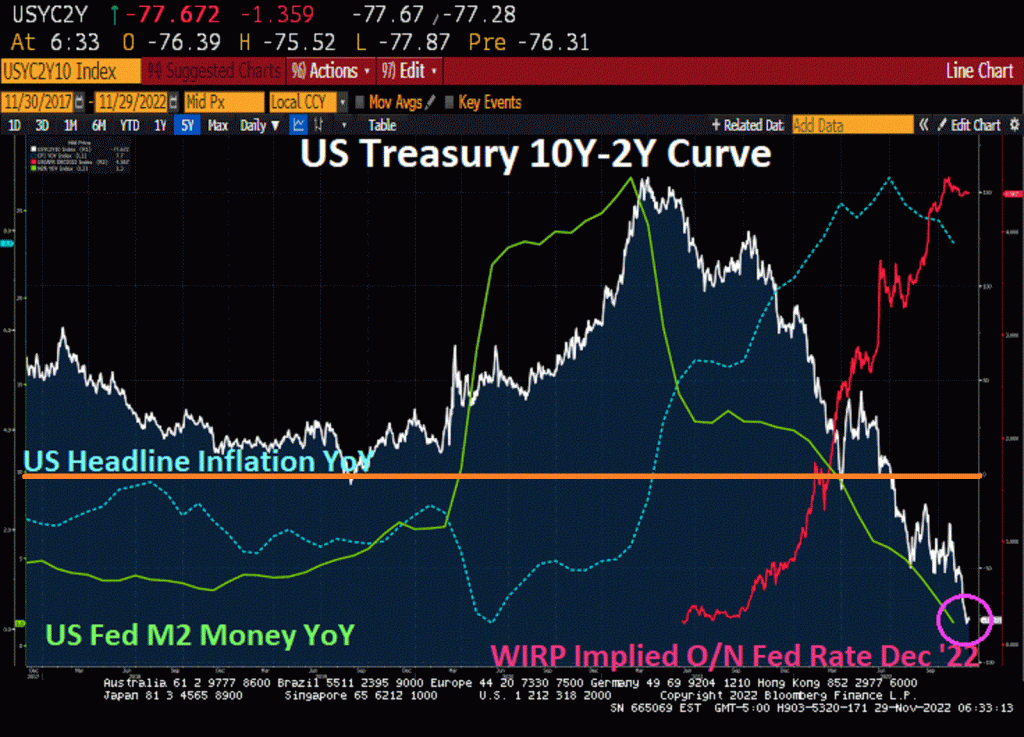
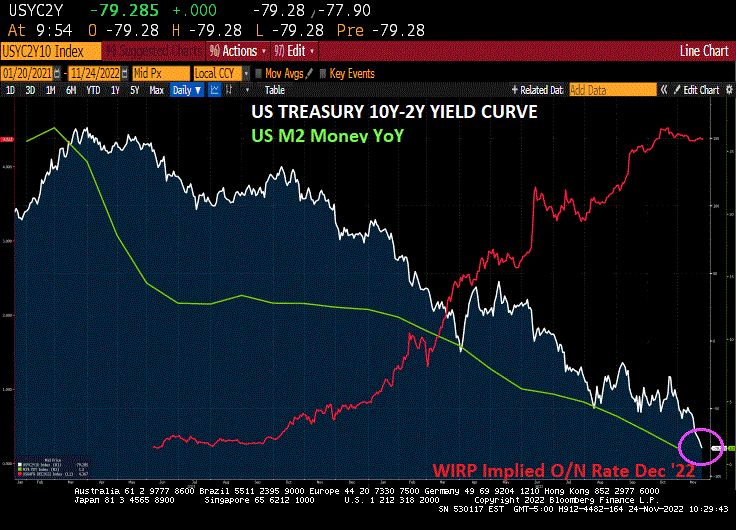
And the US 10Y-2Y Treasury yield curve has been inverted for 109 straight days.

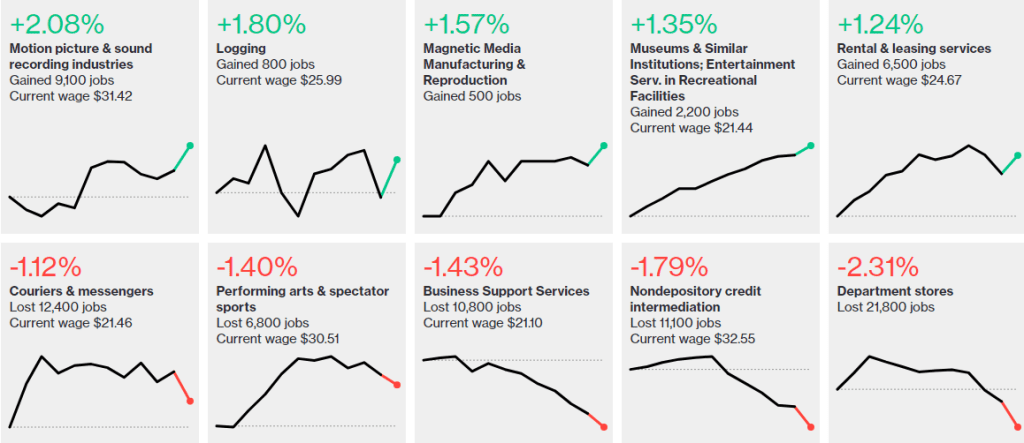
Here is the rest of the jobs report.

The biggest gainer? Motion picture and sound recording industries followed by logging (with rising energy prices, people have to heat their homes somehow).

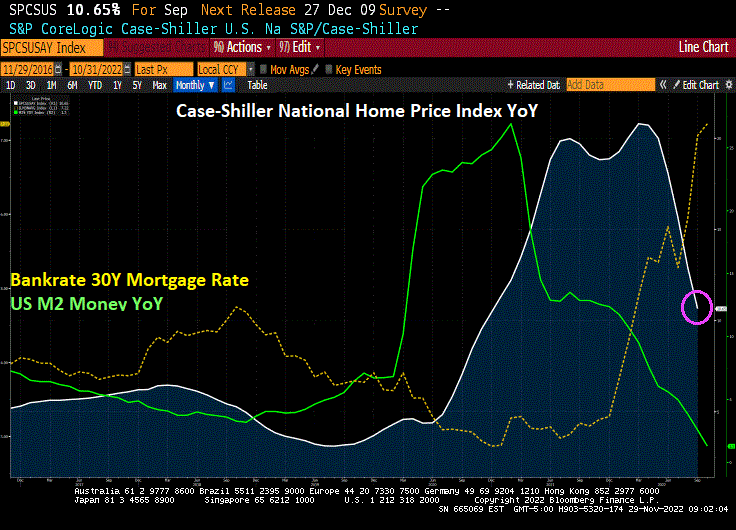
US Home Price Growth Slows To 10.65% YoY In September As Fed Tightens

The Covid outbreak of early 2020 begat a massive surge in monetary stimulus which has dissipated. Notice that home price growth is dissipating as well.

Also causing problems for housing is NEGATIVE REAL WAGE GROWTH. While the US is suffering from inflation and decling real wage growth, trading partner Germany has even a worse REAL WAGE GROWTH problem.

Where? Florida is doing great!!

Do I detect a trend?

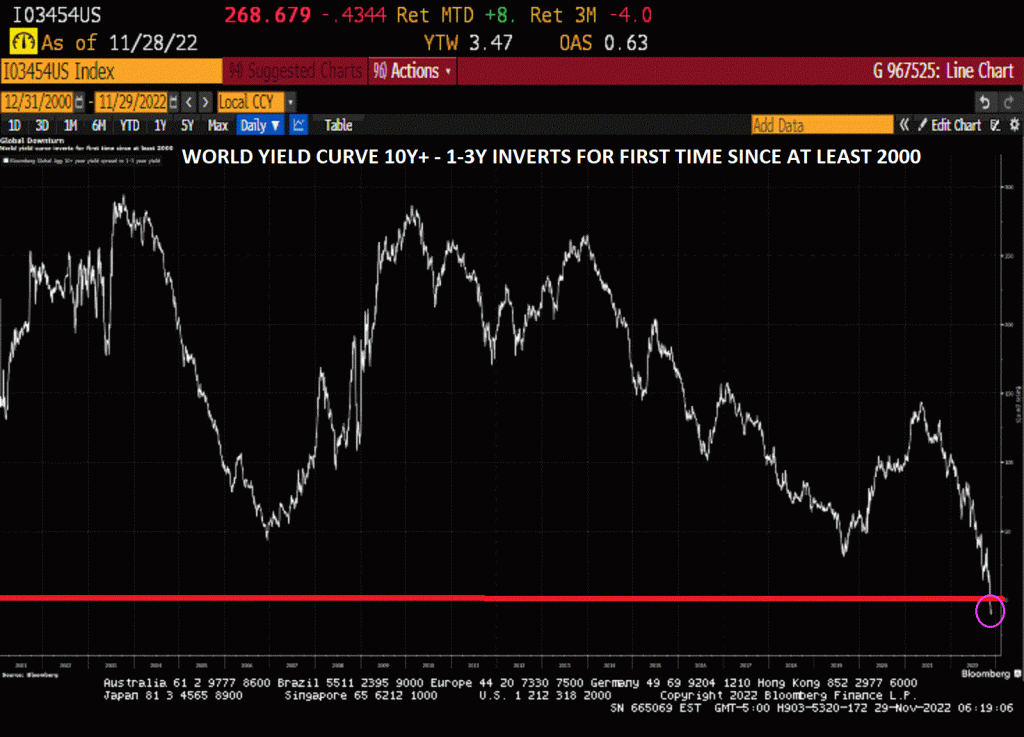
World Yield Curve Inverts For First Time Since At Least 2000 (US Yield Curve Has Been Inverted For 107 Straight Days) Drums Along The Potomac??

Do I hear Drums Along The Potomac or East River??

The hawkish drumbeat from central bankers is raising fears of a downturn, with global bonds joining US peers in signaling a recession, as a gauge measuring the worldwide yield curve inverted for the first time in at least two decades. 

The US Treasury 10Y-2Y yield curve, on the other hand, has been inverted for 107 straight months.

And in Europe, 10-year sovereign yields are dropping like a paralyzed falcon.

The world and US yield curves are pointing to trouble. And drums along the Potomac (DC) and East River (NYC).

Fed Rollercoaster! Fed Will Slash Rates By 200 Basis Points by Mid-2023 Says Deutsche Bank

Fed Rollercoaster!

Deutsche Bank, my former employer, said that The Fed will slash rates by 200 basis points by mid-2024 after staying hawkish in the short term.  

Deutsche Bank increased its view on the terminal rate and now sees it hitting 5.1% in May. 

The Federal Reserve will remain hawkish in the short term but will cut benchmark rates sharply after that, according to a Monday note from Deutsche Bank. 

The central bank has hiked rates by 375 basis points so far this year, with another half-point increase widely expected next month. Even more tightening will come, with analysts at Deutsche Bank increasing their view on the terminal rate, which they now see hitting 5.1% in May. 

“Risks remain skewed to the upside, and we caution that the transition to pausing and eventual cuts may not be entirely linear,” the note said. “If elevated inflation and labor market imbalances persist, or financial conditions fail to tighten, a higher terminal rate could be needed.”

Meanwhile, the economy will slow down amid the aggressive tightening, and Deutsche Bank sees an 80% probability of a recession in the next year. 

Analysts anticipate a moderate recession beginning mid-2023, with real GDP falling about 1.25 percentage
points over three quarters and the unemployment rate reaching a peak of 5.5%.

“With a sharp rise in the unemployment rate and inflation showing clearer signs of progress, the Fed should cut rates by 200bps by mid-2024 when it approaches a neutral level around 3%,” analysts said. “QT should cease when the Fed cuts rates, to ensure both tools are not working in competing directions. Balance sheet drawdown could be modified or halted earlier if reserves continue to fall faster than expected.”

The first rate cut will be 50 basis points in December 2023, followed by 150 basis points of cuts into 2024, the note said.

The last Fed Dots Plot shows the next leg of The Fed Rollercoaster.

In the short term, Fed Funds Futures are pointing at another 106 basis point increase by June 2023.

Yes, its The Fed Rollercoaster!

Bad Sign! What Interest Rates Are Telling Us (US 10Y-2Y Curve Inverts To -80 Basis Points, Euro 10Y Yields Falling, Fed Funds Rate Priced At 2.301% By January 2024)

What interest rates are telling us is a bad sign.

With an impending railroad strike that can torpedo the US economy (but if that is possible, why is the Biden Clan vacationing in Nantucket for Thanksgiving weekend when Joe should be talking with railroads and the unions to not let this happen?), let’s see what interest rates are telling us.

First, the US Treasury 10Y-2Y yield curve continues to descrend into the abyss (now at -80 basis points).

Second, the latest Fed Dot Plot (from September, new one will be issued during December) show that The Fed thinks that their target rate, while rising in 2023, will likely start falling again in 2024.

Third, since it is Thanksgiving Day, US bond markets are closed. But in Europe, the 10-year sovereign yields are falling, a sign that the ECB is reversing course by increasing monetary stimulus and/or a European are slow down.

Fourth, US mortgage rates have cooled since peaking (locally) at 7.35% on November 3, 2022 and now sit at 6.81%, a decline of 54 basis points. A clear sign of cooling.

Fifth, how about Fed Funds Futures data? It is pointing to a peak Fed Funds Target rate of 4.593% at the June FOMC meeting. Then a decline in rates to 2.301% by January 2024.

Now, go and enjoy your Thanksgiving dinner with friends and family (up 20% since last year), courtesy of Jerome Powell, Joe Biden, Nancy Pelosi and Chuck Schumer.

Keynesian Policies Have Left High Debt, Inflation and Weak Growth (Inflation Remains Near 40-year Highs And 19 Straight Months of NEGATIVE Real Wage Growth)

Daniel Lacalle wrote a nice piece about disastrous Keynesian policies that led the US with high debt, inflation and weak wage growth.

The evidence from the last thirty years is clear. Keynesian policies leave a massive trail of debt, weaker growth and falling real wages. Furthermore, once we look at each so-called stimulus plan, reality shows that the so-called multiplier effect of government spending is virtually inexistent and has long-term negative implications for the health of the economy. Stimulus plans have bloated government size, which in turn requires more dollars from the real economy to finance its activity.

As Daniel J. Mitchell points out, there is evidence of a displacement cost, as rising government spending displaces private-sector activity and means higher taxes or rising inflation in the future, or both. Higher government spending simply cannot be financed with much larger economic growth because the nature of current spending is precisely to deliver no real economic return. Government is not investing; it is financing mandatory spending with resources of the productive sector. Every dollar that the government spends means one less dollar in the productive sector of the economy and creates a negative multiplier cost.

When society decides to use a certain part of the resources generated by the productive sector for non-economic return activities, be it social spending or mitigation of threats, it can only do it by understanding how much of the productive capacity of the economy is able to sustain a larger cost. When costs are not considered as a burden, but considered as entitlements that can only grow, the productive capacity is not strengthened, but weakened.

The main problem of the past decades, but particularly since 2008, is that government spending and monetary policy have become solutions of first resort to any slump in economic activity, even if that decline was created by government decisions, such as shutting down the economy due to a health crisis. Furthermore, government spending increases and loose monetary policy continued even in growth periods. This, in turn, creates an unsustainable public deficit that needs to be monetized or refinanced. Both mean a larger harm for the productive sector as the debt increase leads to higher taxes for everyone but also a soaring cost of living coming from the destruction of purchasing power of the currency.

Government spending does not boost private sector activity, even less so when the entire budget is spent on non-investment outlays. It is even worse when citizens believe that infrastructure or real economic return investments should be conducted with taxpayers’ money. If an investment is productive and economically viable there is no need to involve the government. At best, the government should only participate as a co-investor, as the example of technology and defence shows, but never as a resource allocator for a simple reason. Public intervention is always aimed at perpetuating the existing inefficiencies and maximizing the budget. Efficient resource allocation cannot come from entities that have a core interest in expanding the budget and always perceive any inefficiency or poor result as the consequence of not having spent enough.

Yes, US public debt has exploded, particularly since the 2008 financial crisis and then again the Covid outbreak of 2020.

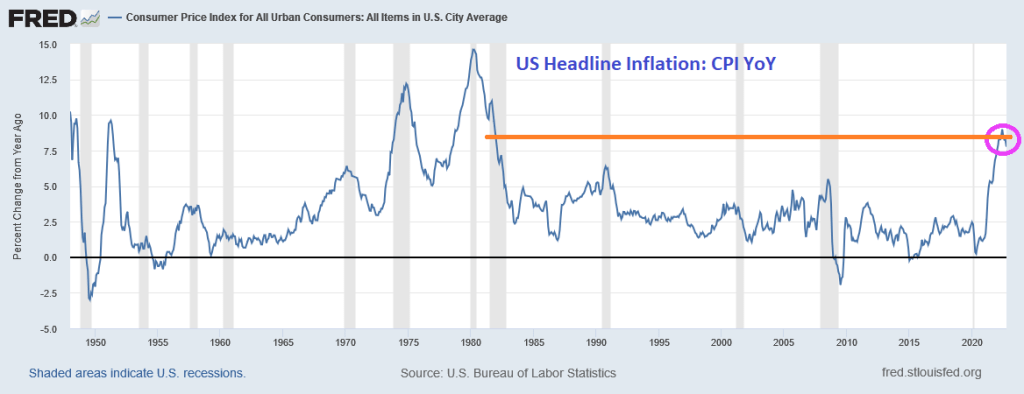
And inflation is near a 40-year high.

Then we have 19 consecutive months of negative wage growth in the US.

Biden is apparently doubling down on “Green Schemes” now that the US House of Lords (aka, Senate) remain under Keynesian control (aka, Democrat). So watch for inflation to start increasing again.

Bankrupt FTX Hit by Mysterious Outflow of About $662 Million (Yellen Calls For Regulation But Ignores Obvious Inflation and Debt Crisis) At Least Dogecoin Is Up Today

Sam Bankman-Fried’s bankrupt digital-asset exchange FTX was hit by a mysterious outflow of about $662 million in tokens in the past 24 hours, the latest twist in one of the darkest periods for the crypto industry.

Customers still coming to terms with the platform’s Friday plunge into Chapter 11 proceedings were subsequently confronted with what the general counsel of its US arm, Ryne Miller, described as “abnormalities with wallet movements.”

Miller said on Twitter that FTX had begun moving digital assets into cold storage — wallets that are unconnected to the internet — following its bankruptcy filing on Friday. The process was later expedited “to mitigate damage upon observing unauthorized transactions.”

Blockchain analytics firm Nansen, which gave the overall estimate of $662 million in withdrawals, said the coins flowed out of both FTX’s international and US exchanges. A separate analysis by Elliptic stated that initial indications showed almost $475 million had been stolen from the exchange in illicit transactions, with the stablecoins and other tokens that were taken being rapidly converted to Ether on decentralized exchanges — “a common technique used by hackers in order to prevent their haul being seized.”

And like that, O’Biden’s Treasury secretary Janet Yellen FTX Debacle said that it shows need for crypto regulation. Or Yellen could suggest a “buyer beware” tactic, but she is part of the most aggressively regulatory administration in history, MORE regulation is needed! /sarc
Regulate, regulate, dance to THEIR music!

At least Yellen is noticing Bankman-Fried (a new twist on Kentucky-Fried) and FTX since she is seemingly oblivious to the harm being done by The Federal Reserve and The Federal government with regards to inflation and debt growth. She is a Bird of War.

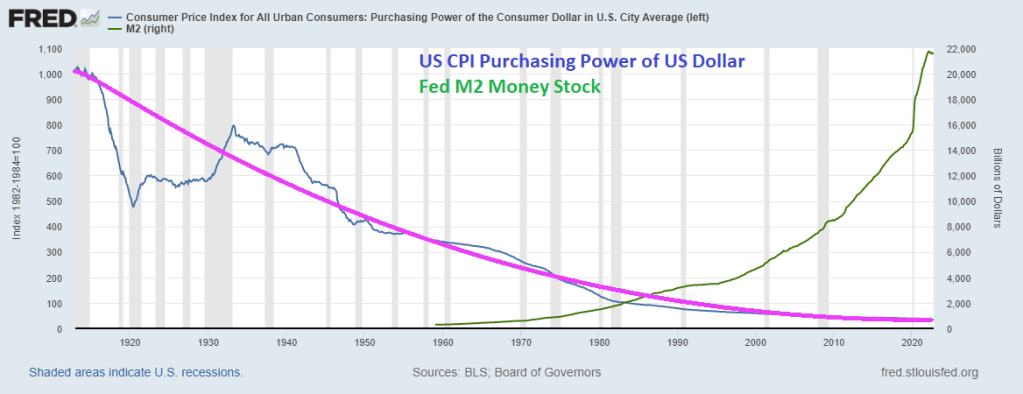
Like this chart of the Purchasing Power of the US Dollar CPI. Janet?

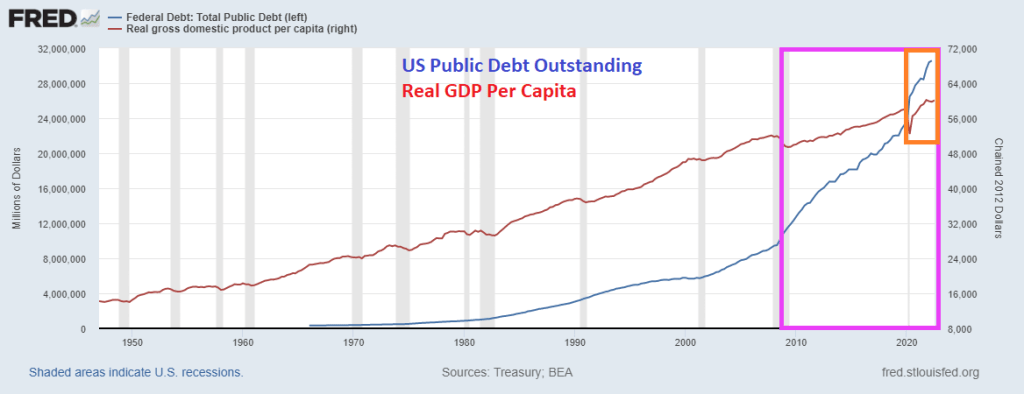
Or how about this chart of US Public Debt Outstanding and Real GDP growth per capita? The Fed and Federal government broke the bank, so to speak, by bailing out the banks in the financial crisis (pink box) and then again for the Covid crisis (orange box). Janet?

Damn it, Janet. Why don’t you discuss the Medicare and Social Security crisis (remember Joe Biden said Republicans may try to fix it which Biden turned into a nasty attack claiming that Republicans were going to take away your Social Security).

Lastly, the US has $172.6 TRILLION in unfunded Federal promises. Janet? A least FLA Senator Rick Scott tried to address the problems with Social Security, but Nasty Joe Biden “yelled Republicans are going to take away your Social Security!” I argue that O’Biden, Yellen and Democrats are going to let SS blow-up rather than take on politically challenging issues. Social Security liability is $22.23 trillion yet O’Biden just promised $500 billion per year to third-world countries and keeps sending billions to Ukraine. Janet?

On the crypto side (that Yellin’ Yellen wants to regulate), at least Dogecoin is up 10.37%.

They call Yellen “The Breeze” because she breezes by the hard decisions and focuses on the easy problems like calling for regulation of cryptos.

Perhaps Sam Bankman-Fried could be ordered to do KFC ads as “The Colonel.”

The Gap! US Mortgage Demand Crashes As Fed Tightens (Taylor Rule Estimate Now 13.85% Versus 4.00% Current Target Rate)

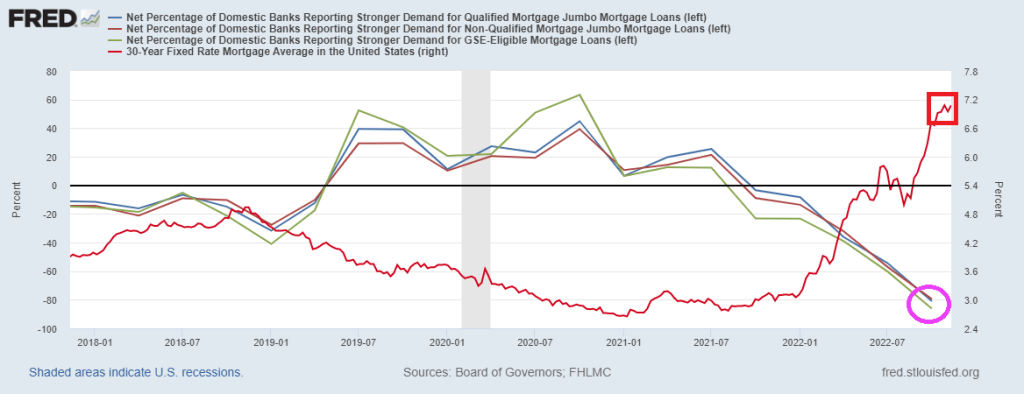
The October Senior Loan Officer Opinion Survey on Bank Lending Practices came out yesterday and its a doozy.

The Net Percentage of Domestic Banks Reporting Stronger Demand for Mortgage Loans is sinking faster than Joe Biden’s oratory skills as The Fed tightens their monetary belts.

Jumbo mortgages, those that are greater than FHFA’s conforming loan limit, are tanking as well.

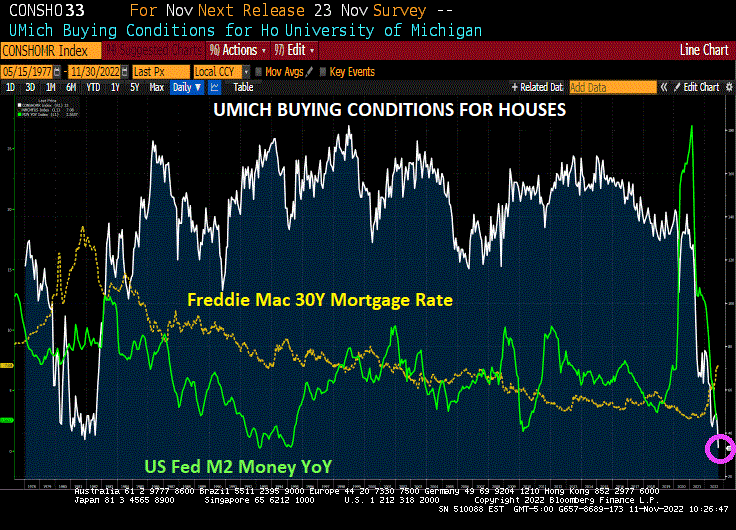
And today, the University of Michigan (BOOO!!) consumer survey for housing buying conditions fell to the lowest level in recorded history.

Given the latest inflation numbers (improving from disastrous, 8.2% YoY to really horrible, 7.70% YoY), and unemployment rate rising from 3.5% to 3.7%, we now see that Taylor Rule estimate for Fed Funds is now … 13.85%. The US is currently at 4.00%. THAT is a big gap!

Yes, The Fed will not be able to fill the gap between the Taylor Rule and the current Fed Funds Target Rate, without incredible damage being done.

Unfortunately, this is an ACTIVE FAILURE for The Fed which has left monetary stimulus too high for too long since late 2008.

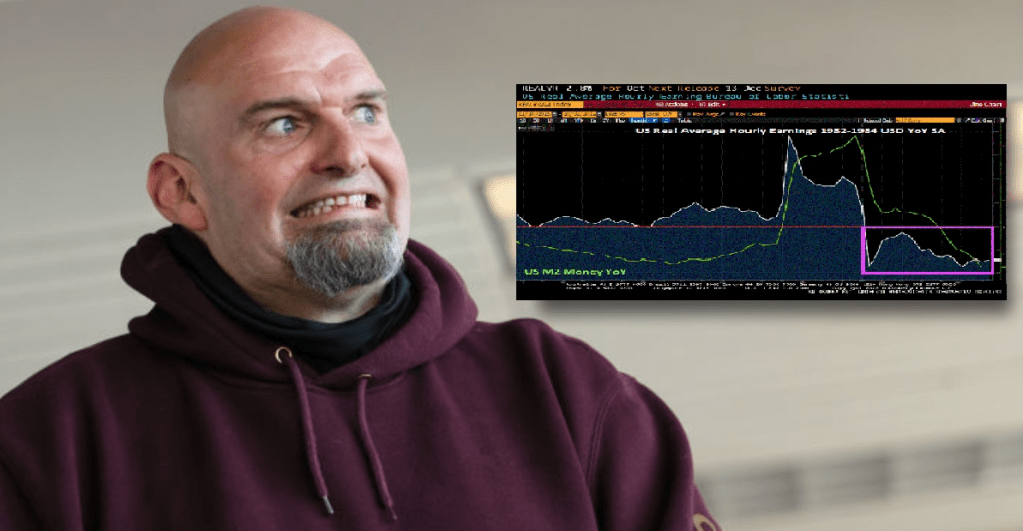
On a personal note, I am glad the midterm elections are over. We saw John Fetterman arguing until he was blue in the face that he loved fracking and will continue to let Pennsylvania frack. Then PA governor-elect Josh Shapiro came out yesterday and said that PA will end all fracking. And we are to believe that Lt Gov Fetterman did not talk with PA Attorney General Shapiro about fracking? To quote Joe Biden, “C’mon man!”