More On Fed’s Bullard’s “Consumers Healthy” Remark (Consumer Sentiment At Lowest Level Since 1977 While Unemployment Rate At Only 3.6%)

St. Louis Fed President Bullard made a remark the other day that consumers are healthy so a recession is unlikely.

Consumers are healthy? It is true that the US U-3 uemployment rate is low (3.6% versus 14.70% in April 2020 thanks to government shutdowns over Covid). But even though unemployment is low, consumer sentiment is at its lowest point since 1977.

Generally, consumer sentiment is high when unemployment is low, but not this time around. Currently, inflation is at the highest level since March 1980 even though consumer sentiment bottomed-out in April 1980.

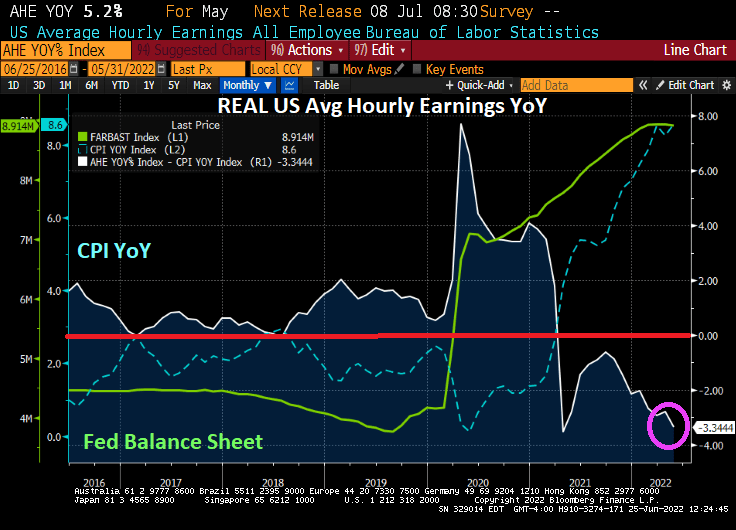
Here is my chart showing that REAL average hourly earnings growth YoY is negative and getting worse, hardly a sign of “healthy consumers.”
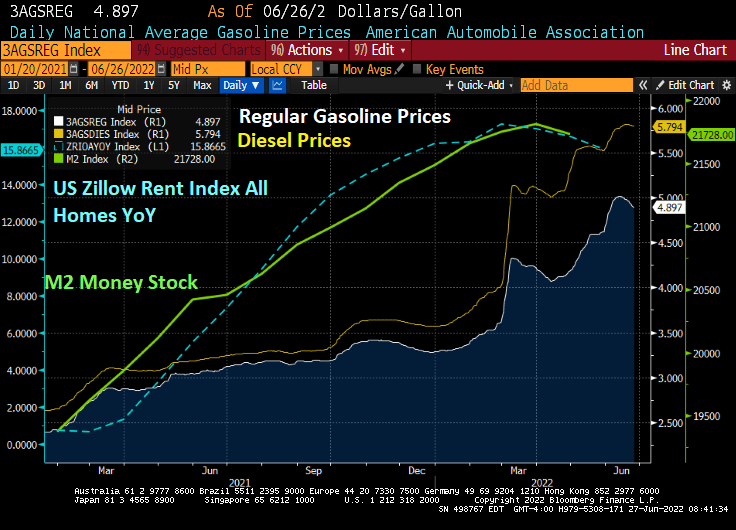
Of course, rising gasoline and diesel prices have risen dramatically since 2021, but are declining slightly thanks to the global economic slowdown (read “lower demand”).

And a M2 Money Stock (green line) declined, US rents (blue line) declined as well.
We are truly living in Birdland. As in bird-brain land.

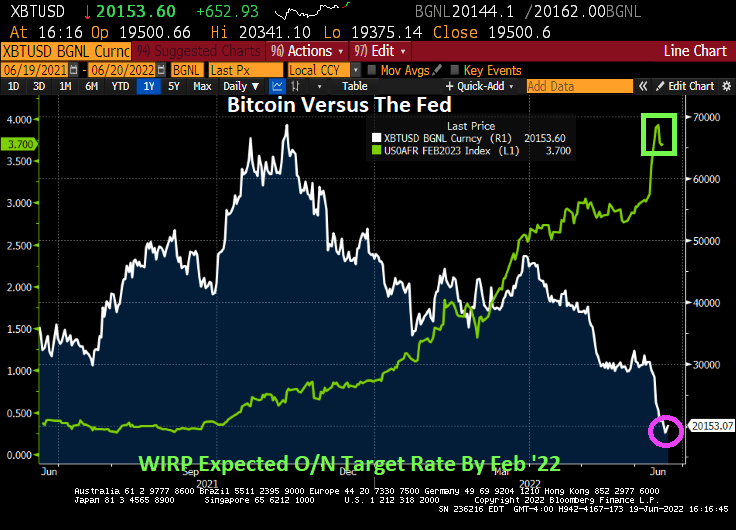
Bitcoin Rallies To $20k As Yellen Confesses That Inflation Will Remain High For 2022 (So, Monetary Tightening ISN’T The Answer??)

US Treasury Secretary and former Federal Reserve Chain, Janet Yellen, admitted on ABC’s This Week that US inflation is “unacceptably high”and prices are likely to stick with consumers through 2022, and that the US economy is likely to slow down.

“We’ve had high inflation so far this year, and that locks in higher inflation for the rest of the year,” she said Sunday on ABC’s “This Week.” 

“I expect the economy to slow,” she said, adding: “But I don’t think a recession at all inevitable.”

US inflation accelerated to 8.6% in May, a fresh 40-year high that signals price pressures are becoming entrenched in the economy. Those figures dashed any hope that inflation was starting to ebb, prompting the Federal Reserve to unleash its biggest interest-rate increase since 1994.

Hey, I thought strangling the US mortgage market and housing markets was supposed to cool the inflation rate, Janet.

On the good news/bad news front, cryptocurrency Bitcoin fell to $17,600 earlier today before rebounding to above $20,000 as the expectation of further Fed rate increases diminished (Yellen admitted the economy is slowing).

Yellen ignored rising mortgage rates which is putting a chokehold on the US housing market.

Hey Janet! So you are admitting that Biden’s energy policies AND massive Congressional spending bills ARE helping to drive prices through the roof and that Fed rate increases won’t tame the savage inflation beast?

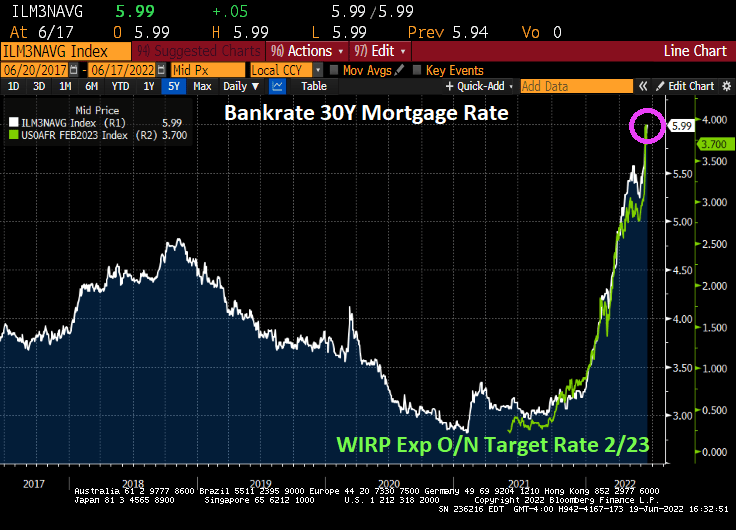
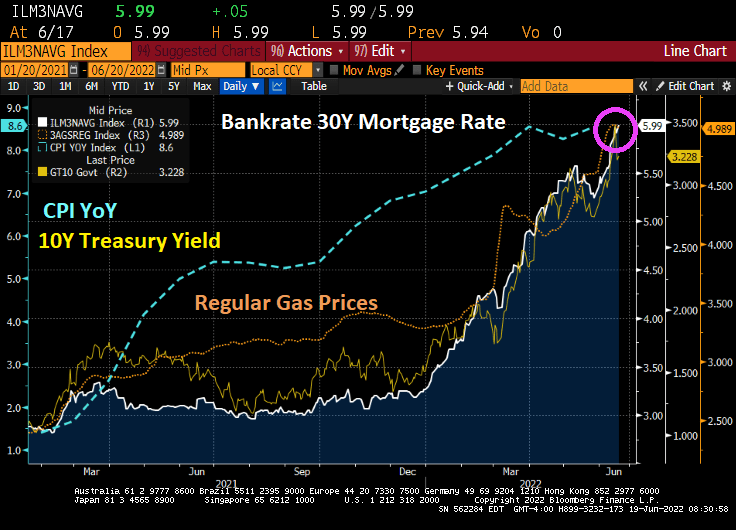
Winter Is Coming 2! Mortgage Rates Hit 6%, Gasoline Prices Hit $5, Inflation Continues To Rage (Taylor Rule Implies 22.10% Target Rate, Only At 1.75%)

Where is Stanford’s John Taylor when we need him?

Even since the housing bubble burst and ensuing financial crisis on 2007-2008, The Federal Reserve under Ben “The Savior!” Bernanke, Janet Yellen and Jerome Powell let their zero/low interest rate policies be too low for too long that anyone with common sense knew would lead to serious problems when The Fed was forced (this time by inflation) to end the massive OVER monetary stimulus. We are now living through The Great Reset of the US economy.

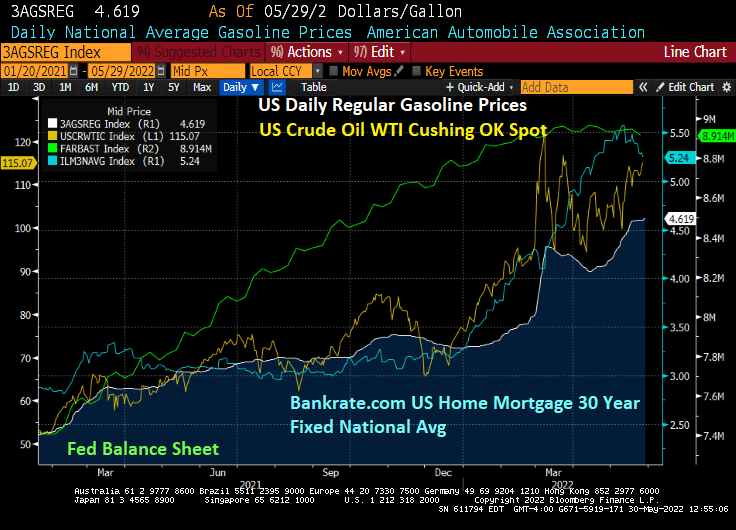
Since Biden was sworn-in as President (or El Presidente) in January 2021, 30-year mortgage rates are up 108% to 6%, regular gasoline prices are up 108% to $5 a gallon nationally. Inflation is up to 8.6% YoY.

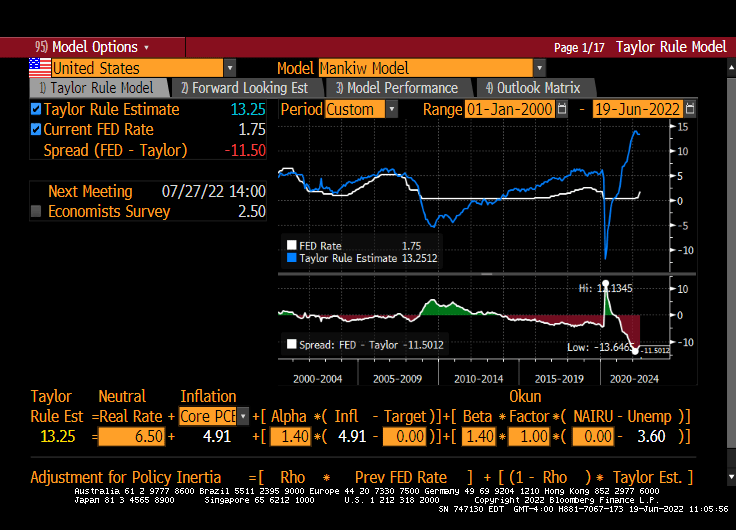
Bernanke, Yellen and Powell did not follow any rule per se, just a “seat of the pants” panic button approach. Using the Mankiw specification of the Taylor Rule model, the Fed Funds target rate should be 13.25% based on CORE PCE. Notice starting in 2014, The TR suggested target rate started to be higher than the actual Fed target rate. And since the Covid monetary blast of 2020, the gap between the Taylor Rule and Fed target rate (red area) has grown to near the highest level in history. Even now Mohamed A. El-Erian, Chief Economic Advisor at Allianz, is starting to admit that The Fed’s ZIRP policies are beginning to hurt.

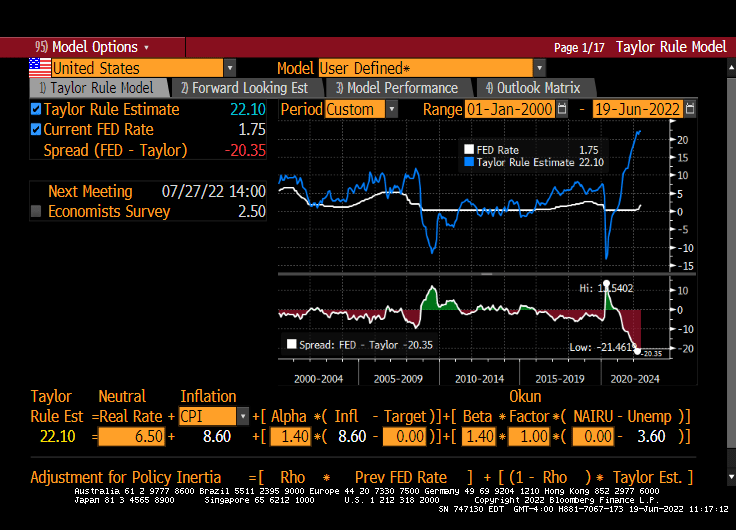
But if we use total inflation rather than core inflation, the measure that picks up the actual pain that Americans are feeling from rising gasoline prices and mortgage rate, we get a Fed Target rate of 22.10%. Since The Fed’s current target rate is only 1.75%, The Fed has “Room To Move.”

And in a painful. bad way.

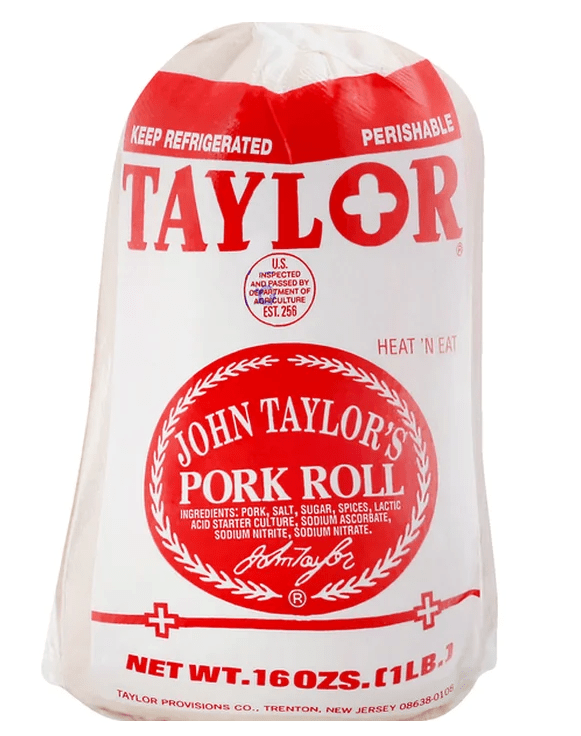
Bernanke, Yellen and Powell must think that The Taylor Rule is the New Jersey ham pork roll.

US Real GDP Sinks To -0.002% As Fed Meets To Discuss Monetary Tightening (Declining Purchasing Power Of US Dollar)

While expected, it is still unwelcome news.

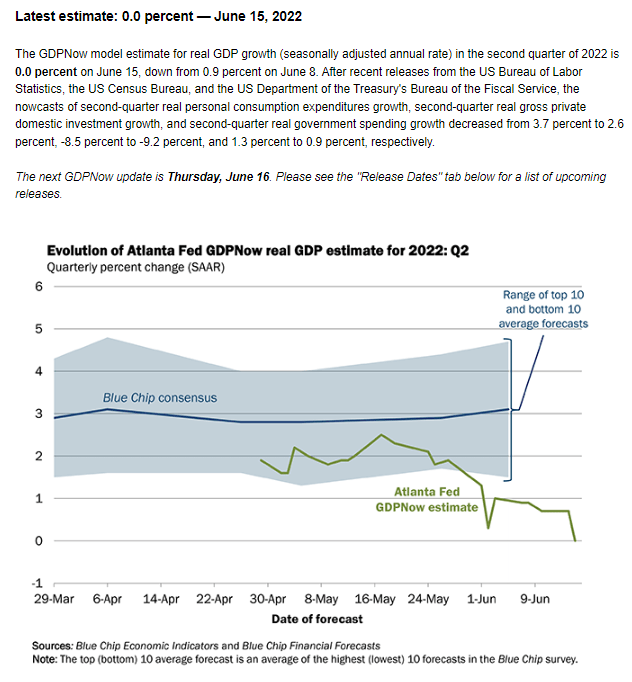
The Atlanta Fed’s GDPNow real-time GDP forecast for Q2 just sank into negative territory at -0.002%.

Let’s see how Real GDP does if The Fed actually withdraws its stimulus needle.

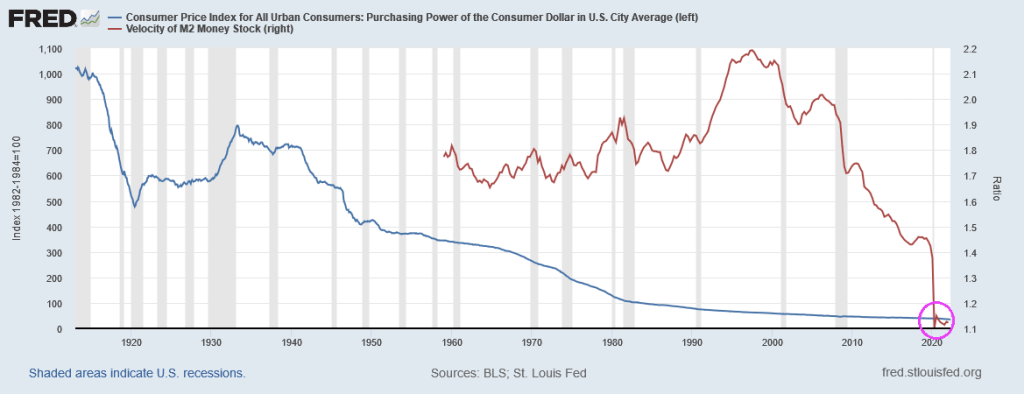
And consumer purchasing power keeps diving as The Fed keeps printing money.

Closing Hell! 10-year Treasury Yield Surges +11.3 Basis Points And Dow Drops -151 (Biden Never More Optimistic?)

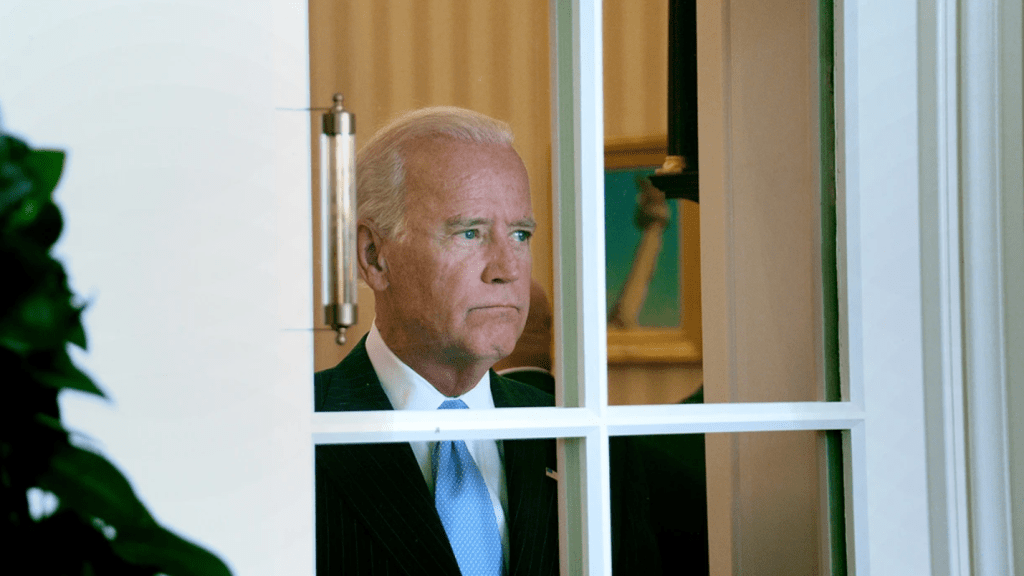
I just read that President Biden has never been more optimistic about the US economy than he is now.

Well, today’s closing bell is not optimistic and is downright bearish.

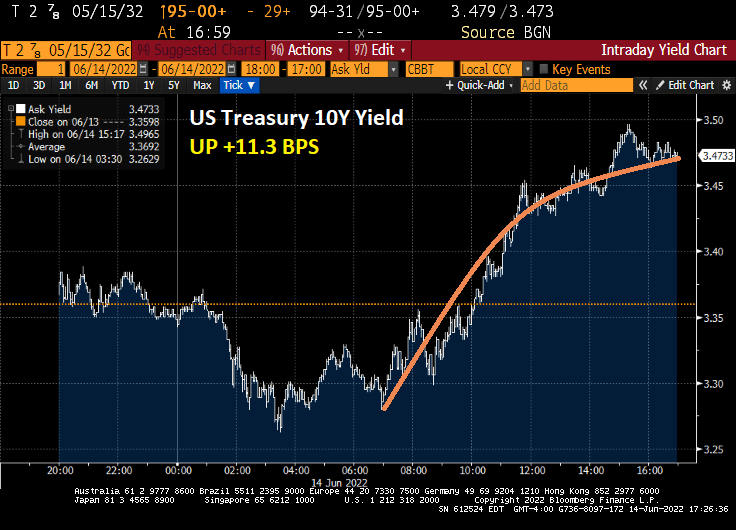
The US Treasury 10-year yield rose … ANOTHER … 11.3 basis points as rumors circulate that The Fed might actually raise their target rate by 75 basis points.

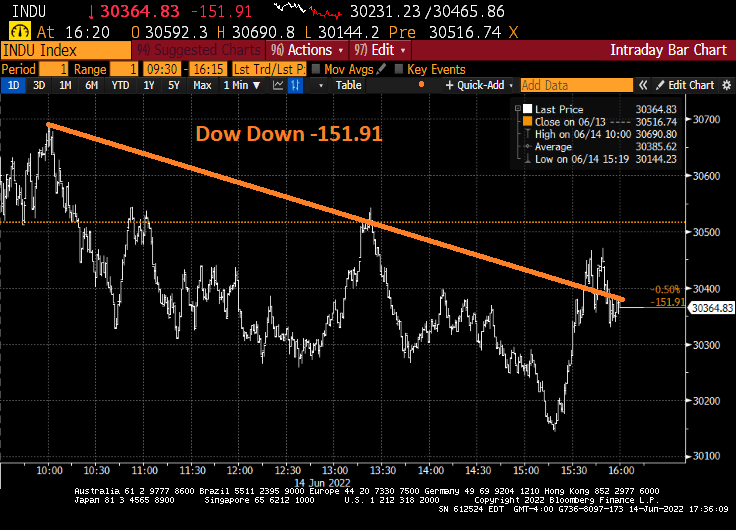
And the venerable Dow (DJIA) is down -152 points today.

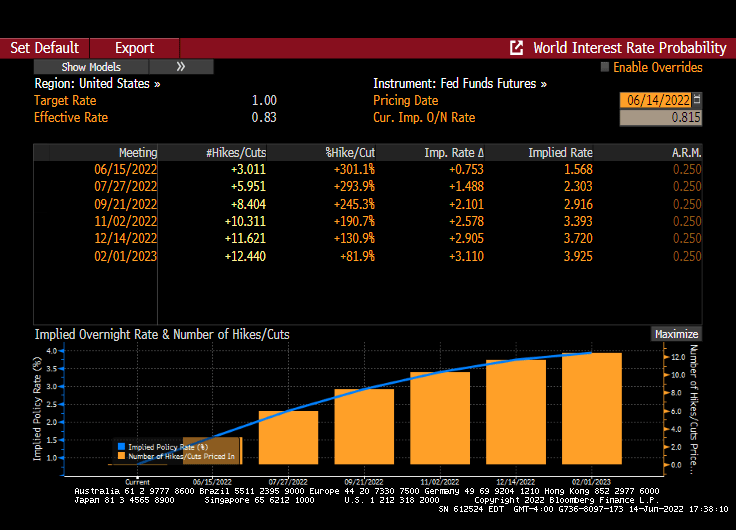
Markets are anticipating an increase of The Fed Funds target rate from 1% to 1.568%, less than the rumored 75 basis point increase being bandied about.

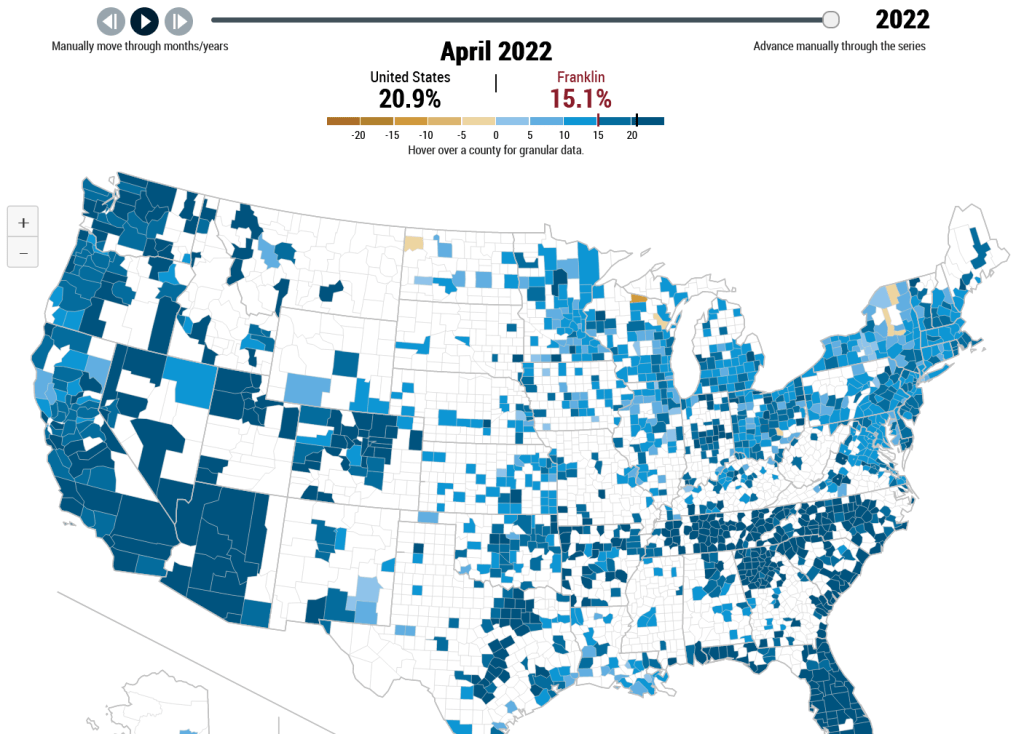
At least Columbus Ohio home prices are growing slower than the national average.

If Biden is wildly optimistic about the economy, then he needs to get out of The White House and talk to average Americans and not people like Robert De Niro.

Black Monday! 10Y Treasury UP 11 BPS, S&P 500 E-Mini DOWN -2.5% (Mortgage Rate Rises To 5.78%, Bitcoin Keeps Dropping)

Black Monday!

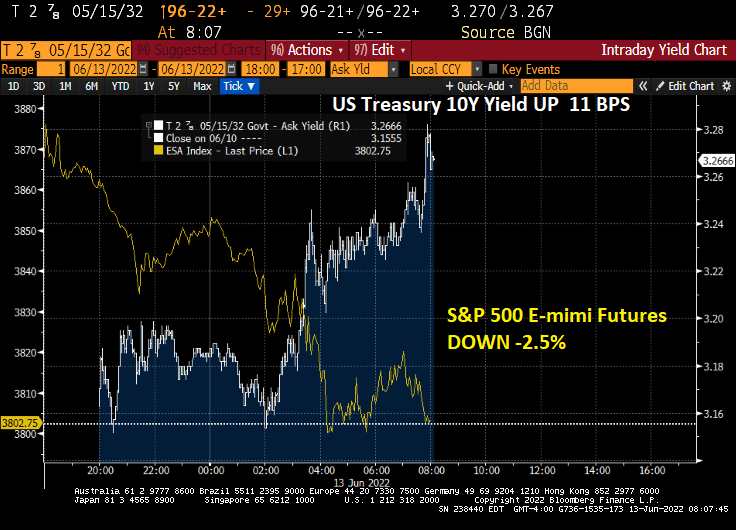
Off to bad start this week. The 10-year Treasury yield rose 11 basis points at 8am EST while the S&P 500 E-mini futures are down -2.5%.

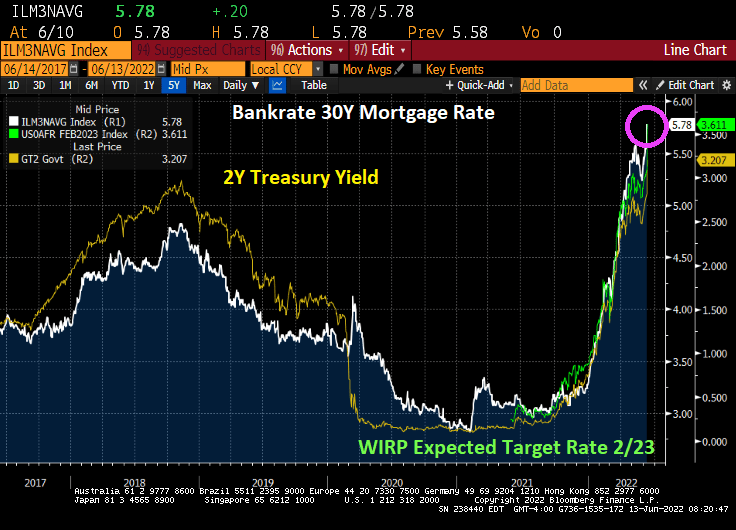
And then we have this scary chart of mortgage rates. Bankrate’s 30-year mortgage rate is now up to 5.78%.

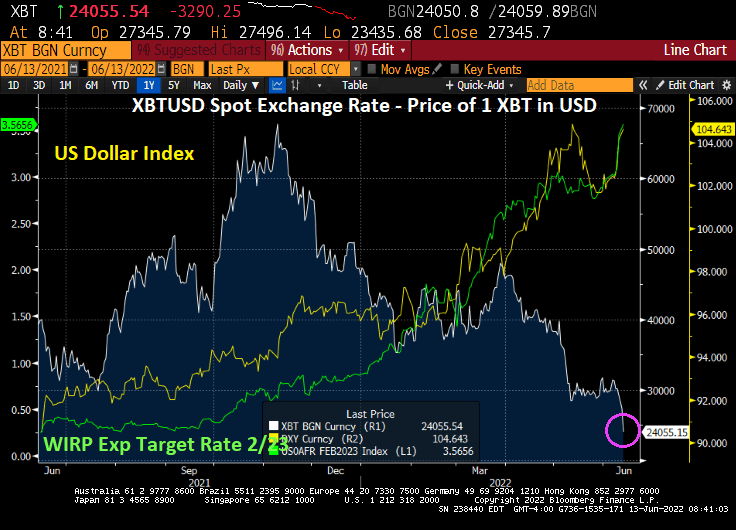
And then we have Bitcoin. Bitcoin is struggling as The Fed tightens the noose on the US economy with expected Fed rate hikes and a rising US Dollar.

I’ve got a whole lotta anxiety over this week.

The dynamic duo.

Fed Data Shows a Half Century of Moderate Growth in the Fed’s Balance Sheet Through Two World Wars – Then a Seismic Explosion Under Bernanke, Yellen and Powell (Mortgage Rates Rise To Highest Since June 2009)

Wall Street on Parade had an excellent article showing the seismic explosion in the Fed’s Balance Sheet after the housing bubble burst and ensuing financial crisis.

Here is my version of their chart since 2000 where you can seen the seismic shift in the balance sheet (toxic green slime line), particularly with The Fed’s response to Covid. The Fed is signaling a tightening in monetary policy to help reduce inflation (blue line).
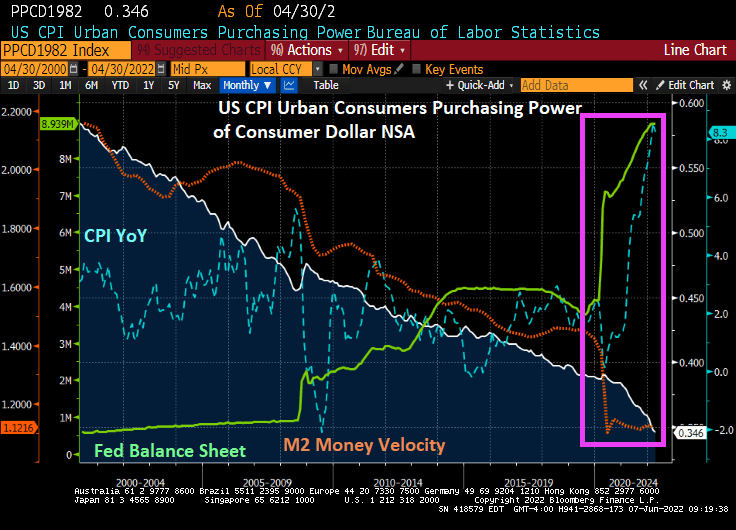
But notice that M2 Money Velocity (GDP/M2) is now near the all-time low along with consumer purchasing power.

How BIG is The Fed’s balance sheet? Try more that a third of size of US GDP.

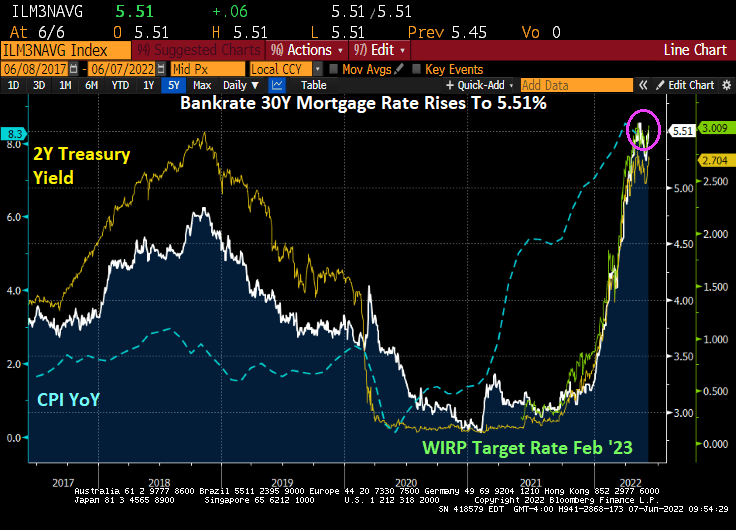
And as The Fed signals its inflation-fighting intentions, mortgage rates have shot up to 5.51%, the highest mortgage rate since June 2009.

Here is a video of the seismic shift in The Fed Balance Sheet, now that they are allegedly tightening monetary policy.

Speaking of seismic shifts, the Atlanta Fed’s Q2 GDP tracker just fell to +0.9%.

The Fed’s noose is tightening on the economy.

German Inflation Hits 60-Year-High As German 10Y Bund Rises +9.4 BPS, US 10Y-2Y Curve Stabilizes At 25.8 BPS After Initial Fed Shock (Mr. President, Have Pity Of The Working Man)

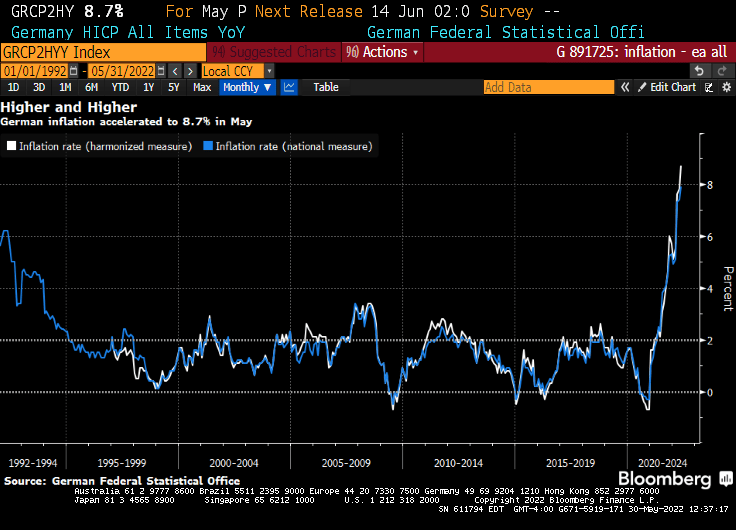
German inflation hit another post-World-War-II record high, piling pressure on The ECB’s need to exit from crisis-era stimulus after numbers from Spain also printed hotter than expected.

Driven by soaring energy and food costs, this morning’s data showed consumer prices in Europe’s largest economy surged 8.7% YoY – far hotter than the +8.1% expected (the highest since the start of the monthly statistics in 1963).

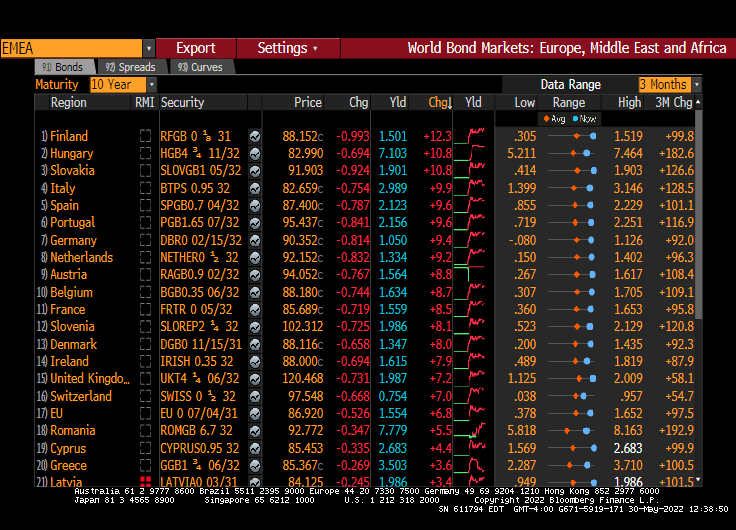
And top of that, the German 10-year Bund rate rose +9.4 BPS this morning, although Finland, Hungary and Slovakia all rose above +10 BPS.

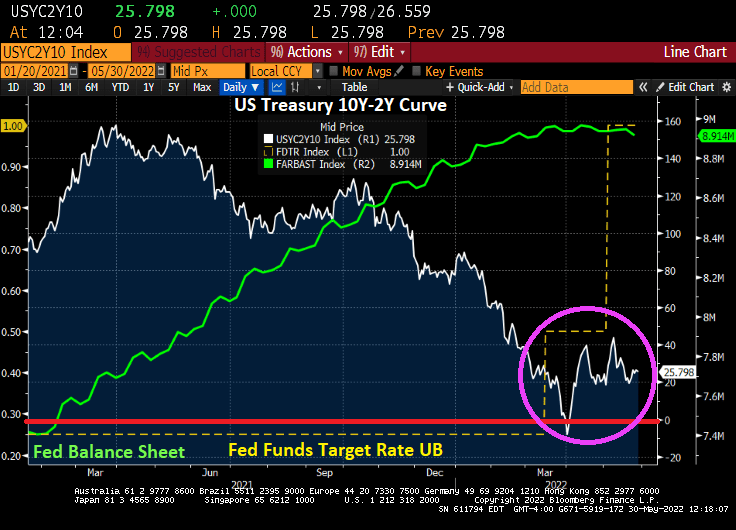
While US markets are closed today in honor of Memorial Day, the US Treasury curve (10Y-2Y) has stabilized at 25.8 basis points after the initial shock of The Fed finally raising rates for the first time under Biden.

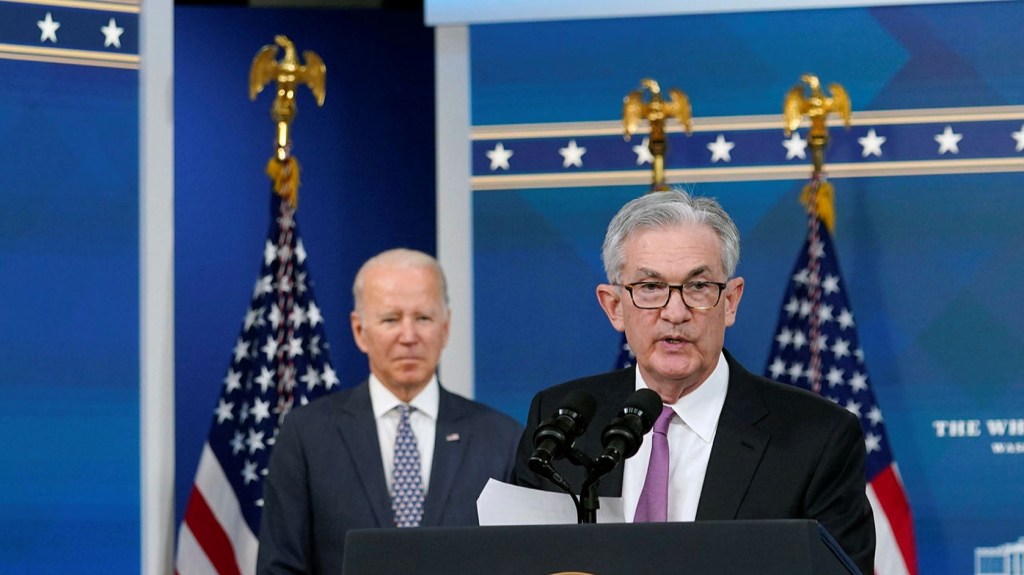
Then there is this headline: Biden to Meet Powell to Discuss Economy Amid Inflation Pain. So much for Fed independence. I wonder if Powell will say “Joe, have you ever considered canceling your executive orders on oil and natural gas exploration?”

Or perhaps Powell can bring Randy Newman to The White House to sing “Mr. President, have pity of the working man.”

OR maybe Biden can tell Powell to pause monetary tightening to avoid mortgage rates from rising to disastrous levels.

Fed Carrying $330B In Unrealized Losses On Its Assets As of Q1 (Purchasing Power Of US Dollar And M2 Money Velocity Collapsing Like Dying Star)

Yikes! One of the unmentioned costs of Fed monetary tightening is the one to US taxpayers.

Fed carrying $330B in unrealized losses on its assets according to Q1 financial statement. Which US tax payers are on the hook.

Adjusting for the appreciation in its assets the Fed had seen through the end of last year, the unrealized losses were an even larger $458 billion.

This makes the Ukrainian relief bill of $30 billion look like chump change. Although it is about the same amount as Biden’s student loan forgiveness plan which would about to $321 billion.

Nobody spends other peoples’ money like politicians and now The Federal Reserve. Who are also DC-based politicians.

And yes, the purchasing power of the US Dollar and M2 Money Velocity (GDP/M2) appear to be collapsing like a dying star.

The Fed Is Pitting Wall Street Against Main Street, Investor Share Of Home Purchases Soars (How Far Will The Fed Go With “Tightening”?)

The Federal Reserve has been signaling a tightening of its loose monetary policy (essentially loose since the housing bubble burst of 2008 and the ensuing financial crisis). It is still loose as The Fed hasn’t really trimmed its massive balance sheet yet and has just raised it target rate to 1%.

So, potential home owners have to pay 5.10% for a 30-year fixed-rate mortgage while the effective Fed Funds rate, the rate at which banks lend to each other, is a measly 0.83%. This puts consumers at a relative disadvantage to large Wall Street firms that are gobbling up houses at an accelerated rate.

RealtyTrac has a Attom-sourced table of investor purchases of housing from Q3 2021, before The Fed started helping to crank-up mortgage rates for consumers.

With the US housing market slowing (thanks to The Fed’s signaling of monetary tightening), the question now is how far will The Fed go in its “War on Inflation!”?

You can see a major cause of inflation in the US since 2000: Federal spending and Federal (public) debt. During The Great Recession of 2008-2009, we saw inflation (CPI YoY) collapse into negative territory as Federal spending and debt soared. But the mini-recession of 2020 caused by the Covid governments shutdowns led to TWO surges in Federal spending and debt: Covid relief followed by the infrastructure spending bill. Combined with Biden’s anti-fossil fuel executive orders and massive splash of Federal spending in to the economy, we have inflation soaring.

If surges in Federal spending (requiring surges in Federal debt) have gone away (except for $40 billion in Ukrainian relief and Biden’s possible student loan cancellation of $10,000 that will cost an estimated $321 billion … and help drive up college tuitions even further), we may be over the “twin gorgings” of the Covid spending spree. This alone may result is a decline in the inflation rate.

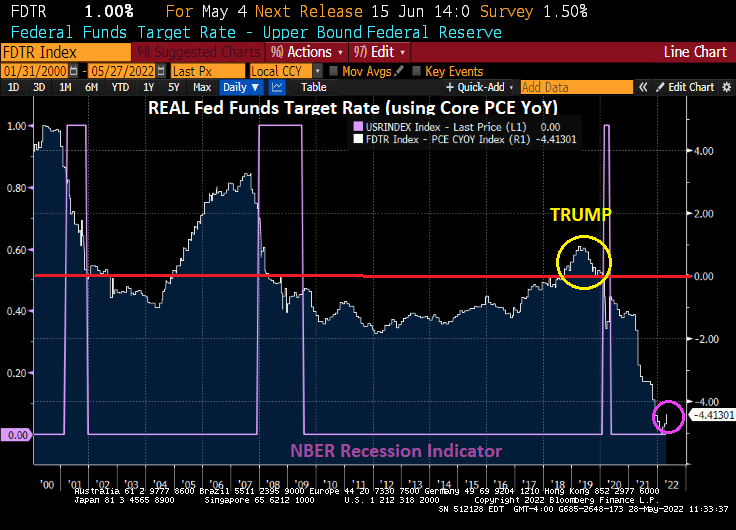
Where do we sit today with the REAL neutral rate? The REAL Fed Funds Target Rate (upper bound) is -4.41%. It was in positive territory during the Trump years. But then Covid struck.

So, we sit here today with Fed Monetary policy “loose as a goose.” And Wall Street investors “drunk as a skunk” on Fed Stimulus.

No wonder Wall Streeters like to go “Down To The Nightclub!” The Fed still has not taken the monetary stimulypto away, but have taken it away for consumers buying housing.