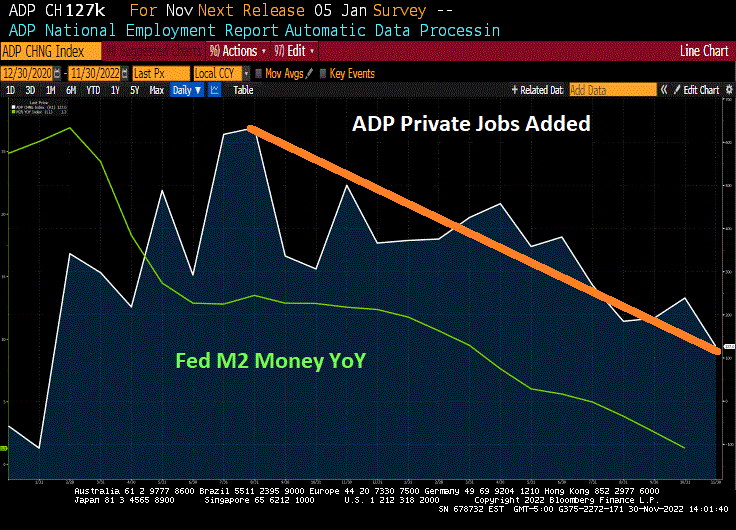
ADP’s jobs added in November shows a continued downward trend in private jobs added as The Fed merrily tightens its monetary follicy.

Confounded Interest – Anthony B. Sanders
Financial Markets And Real Estate
ADP’s jobs added in November shows a continued downward trend in private jobs added as The Fed merrily tightens its monetary follicy.
The Federal Reserve continues to remove the monetary punch bowl despite the global yield curve inverting and The Fed fighting Bidenflation.
On the mortgage front, mortgage applications decreased 0.8 percent from one week earlier, according to data from the Mortgage Bankers Association’s (MBA) Weekly Mortgage Applications Survey for the week ending November 25, 2022. This week’s results include an adjustment for the observance of the Thanksgiving holiday.
The Refinance Index decreased 13 percent from the previous week and was 86 percent lower than the same week one year ago. The unadjusted Purchase Index decreased 31 percent compared with the previous week and was 41 percent lower than the same week one year ago.
On the housing front, US pending home sales fell for a fifth month in October as demand continued to sag under the weight of high mortgage rates.
The National Association of Realtors index of contract signings to purchase previously owned homes decreased 4.6% last month, according to data released Wednesday. And fell -36.7% YoY.
All together now. Look at pending home sales YoY and mortgage purchase applications SA compared with M2 Money YoY.

Is this part of The Great Reset??
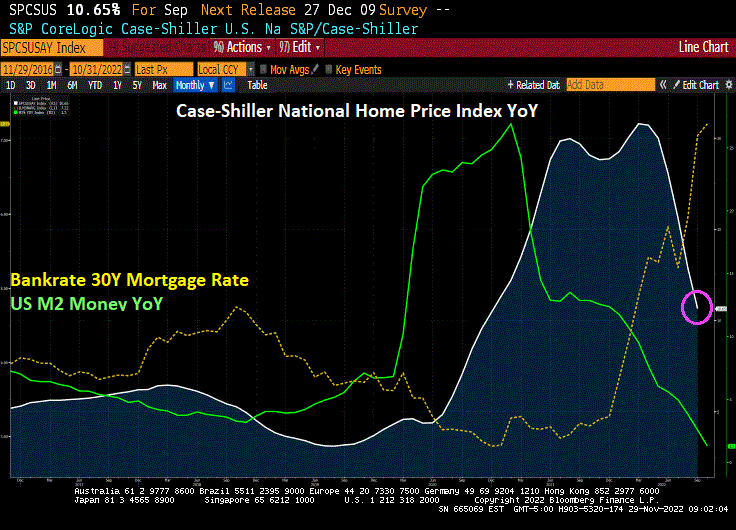
The Covid outbreak of early 2020 begat a massive surge in monetary stimulus which has dissipated. Notice that home price growth is dissipating as well.
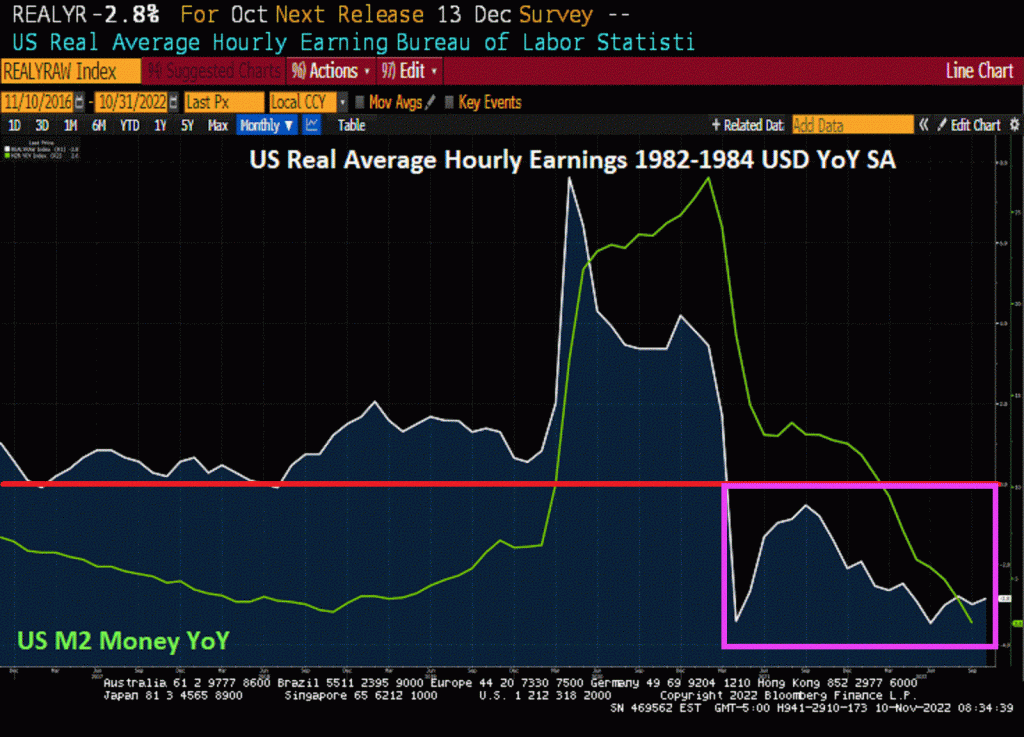
Also causing problems for housing is NEGATIVE REAL WAGE GROWTH. While the US is suffering from inflation and decling real wage growth, trading partner Germany has even a worse REAL WAGE GROWTH problem.

Where? Florida is doing great!!

Do I detect a trend?

What interest rates are telling us is a bad sign.
With an impending railroad strike that can torpedo the US economy (but if that is possible, why is the Biden Clan vacationing in Nantucket for Thanksgiving weekend when Joe should be talking with railroads and the unions to not let this happen?), let’s see what interest rates are telling us.
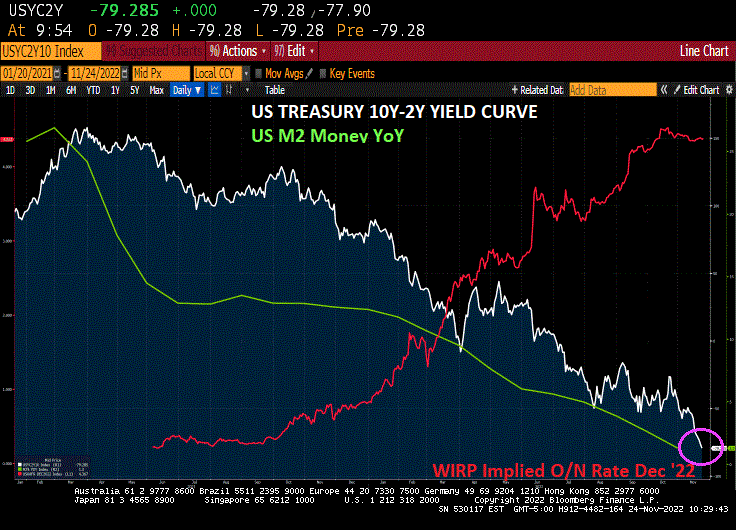
First, the US Treasury 10Y-2Y yield curve continues to descrend into the abyss (now at -80 basis points).
Second, the latest Fed Dot Plot (from September, new one will be issued during December) show that The Fed thinks that their target rate, while rising in 2023, will likely start falling again in 2024.

Third, since it is Thanksgiving Day, US bond markets are closed. But in Europe, the 10-year sovereign yields are falling, a sign that the ECB is reversing course by increasing monetary stimulus and/or a European are slow down.

Fourth, US mortgage rates have cooled since peaking (locally) at 7.35% on November 3, 2022 and now sit at 6.81%, a decline of 54 basis points. A clear sign of cooling.

Fifth, how about Fed Funds Futures data? It is pointing to a peak Fed Funds Target rate of 4.593% at the June FOMC meeting. Then a decline in rates to 2.301% by January 2024.

Now, go and enjoy your Thanksgiving dinner with friends and family (up 20% since last year), courtesy of Jerome Powell, Joe Biden, Nancy Pelosi and Chuck Schumer.


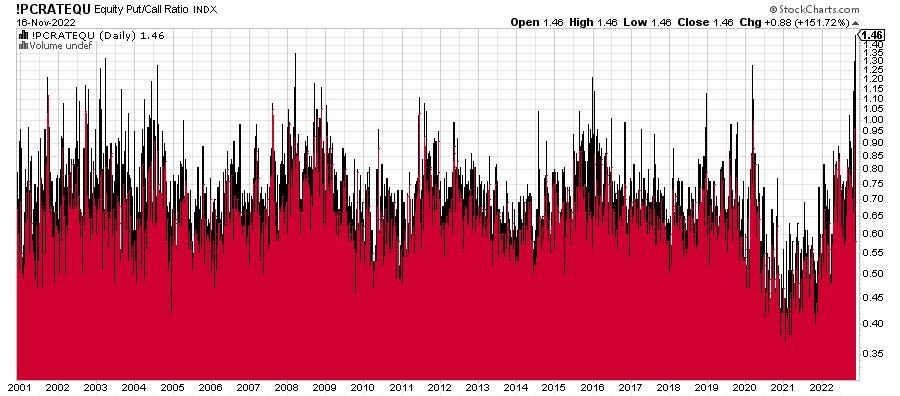
Yesterday’s PUT/CALL ratio was the highest in history at 1.46. That is higher than 2001 and 2008.
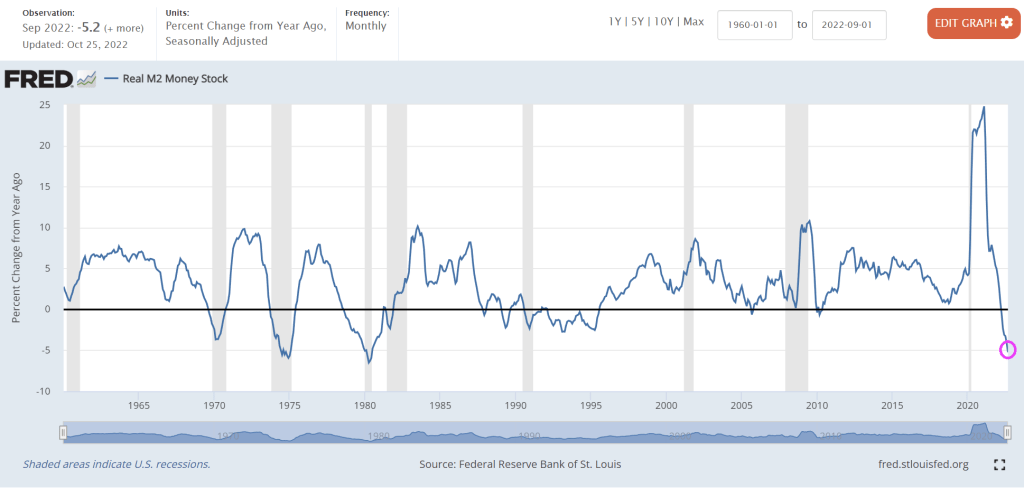
REAL M2 Money YoY has crashed to its lowest level since 1980 and Jimmy Carter.
And the train keeps on rollin’.
Instead of Little Games, The Federal Reserve is making this BIG GAMES.


The US housing market is slowing, to be sure. Yesterday’s existing home sales (EHS) report revealed that US EHS were down -28.43% YoY and the median price of EHS slowed to 6.6% YoY.
But that is just the surface of the EHS report for October. Once I removed inflation (CPI YoY) from the numbers, we are left with REAL median price of EHS growth of -1.17% and REAL average hourly earnings YoY of -3.0% YoY. The REAL 30-year mortgage rate is -5.25%. That reveals how horrible inflation is in the US.
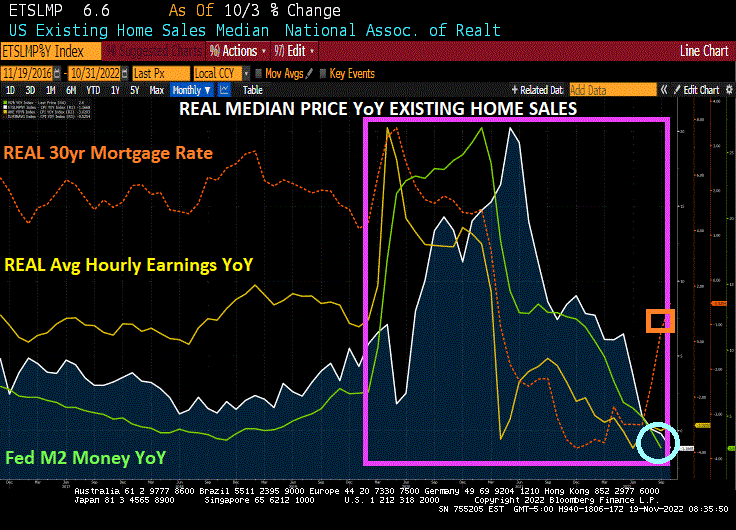
It is important to note that EHS numbers are lower in October than they were before Covid stimulypto (my name for the massive spending spree by Congress and massive injection of monetary stimulus by The Fed. Even the REAL 30-year mortgage rate is negative at -0.5254%.
On a side note, how come fraudulent former Stanford student Elizabeth Holmes gets 11 years in prison for her Theranos scam, but Sam Bankman-Fried only gets a House hearing with Maxine “Dirty” Waters as Chair by losing a far greater amount? Could the fact that SBF and his co-founders at FTX contributed $300,351 to nine members of the House Financial Services Committee, according to Federal Election Commission records?
I guess Elizabeth Holmes did not make the requisite pay-offs.

As I mentioned on Varney and Company on Fox Business, housing is going to suffer when The Fed starts to tighten their monetary policy. And here we are, folks!
US existing home sales fell a staggering -28.43% YoY in October as M2 Money growth grinds to almost a halt.
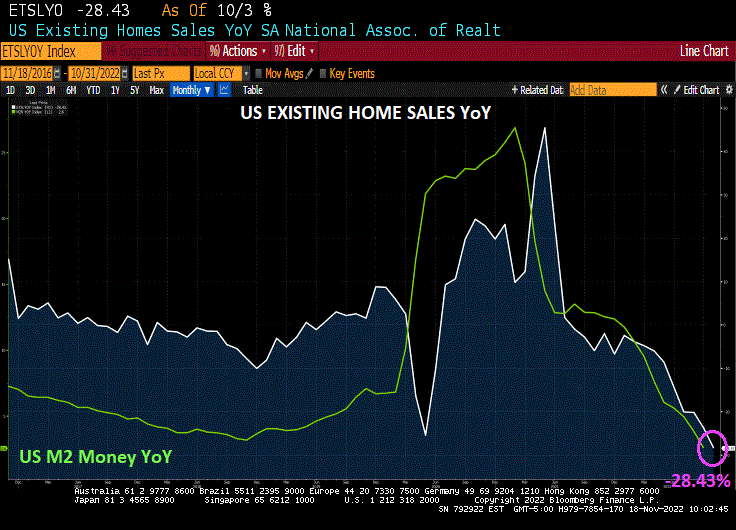
October’s existing home sales YoY of -28.43% is the WORST since The Great Recession and collapse of Lehman Brothers.

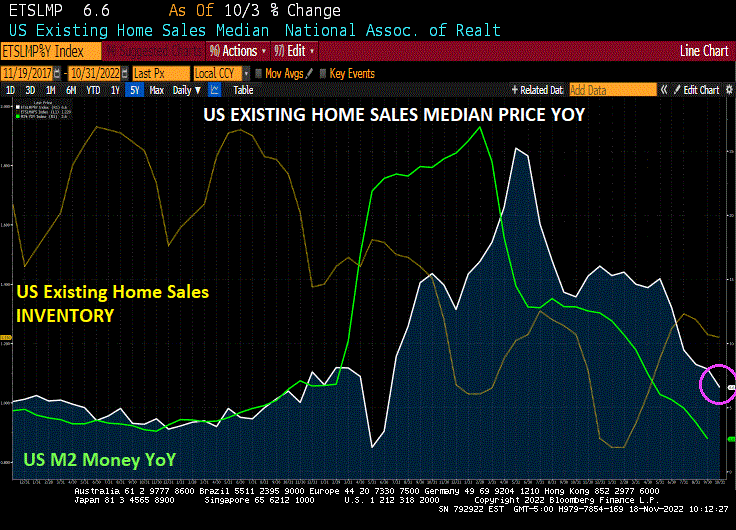
The median price of existing home sales slowed to 6.6% YoY. Inventory of EHS remains below pre-Covid levels.
Unrelated to housing, Prince Imhotep (Federal Reserve Bank of Minneapolis President Neel Kashkari) said Friday that the whole idea of cryptocurrency is “nonsense” after the implosion of FTX revealed the industry’s shortcomings.
“This isn’t case of 1 fraudulent company in a serious industry,” Kashkari said on Twitter, commenting on an article about how investors fell for FTX. “Entire notion of crypto is nonsense. Not useful 4 payments. No inflation hedge. No scarcity. No taxing authority. Just a tool of speculation & greater fools.”
Or it could be that investors don’t trust The Fed or Federal government to act in their best interest.

Here is a crypto investor (in red fez) being lectured by Minneapolis Fed President Neel Kashkari.

Call out The Birds Of War! Aka, The Federal Reserve.
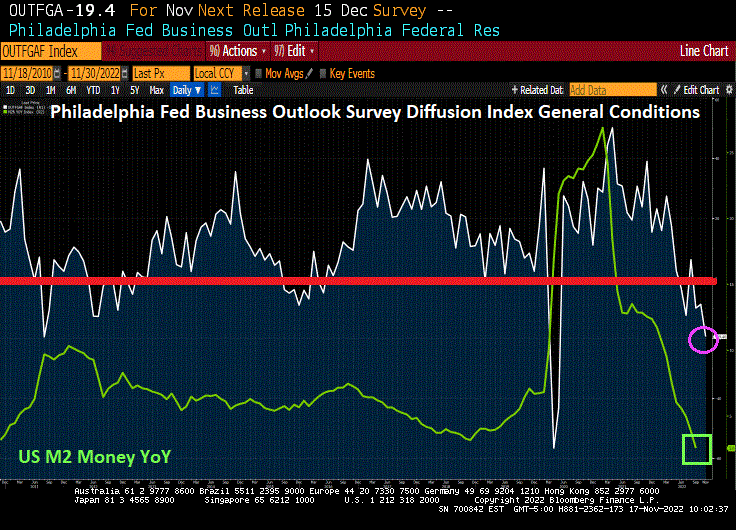
The Philadelphia Fed’s Business Outlook plunged to 1-9.40% YoY, the worst since 2012. Notice how the Philly Phed Plunge is related to M2 Money growth YoY.

Privately‐owned housing starts in October were at a seasonally adjusted annual rate of 1,425,000. This is 4.2 percent below the revised September estimate of 1,488,000 and is 8.8 percent below the October 2021 rate of 1,563,000. Single‐family housing starts in October were at a rate of 855,000; this is 6.1 percent below the revised September figure of 911,000. The October rate for units in buildings with five units or more was 556,000.
The noticeable trends are the decline in 1-unit detached housing starts relative to 5+ unit (multifamily) start as mortgage rates rise/

Privately‐owned housing units authorized by building permits in October were at a seasonally adjusted annual rate of 1,526,000. This is 2.4 percent below the revised September rate of 1,564,000 and is 10.1 percent below the October 2021 rate of 1,698,000. Single‐family authorizations in October were at a rate of 839,000; this is 3.6 percent below the revised September figure of 870,000. Authorizations of units in buildings with five units or more were at a rate of 633,000 in October.
The housing permits chart looks quite similar to the starts chart above. Single-family starts are now lower than before Covid while multifamily permits are still above pre-Covid levels.

Here is a nice chart as well for total housing starts and permits.

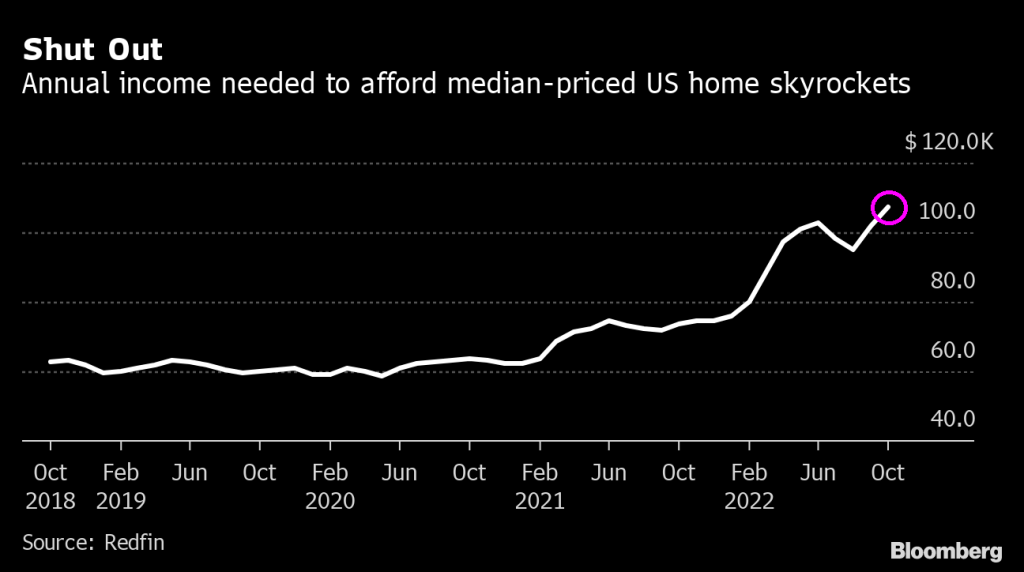
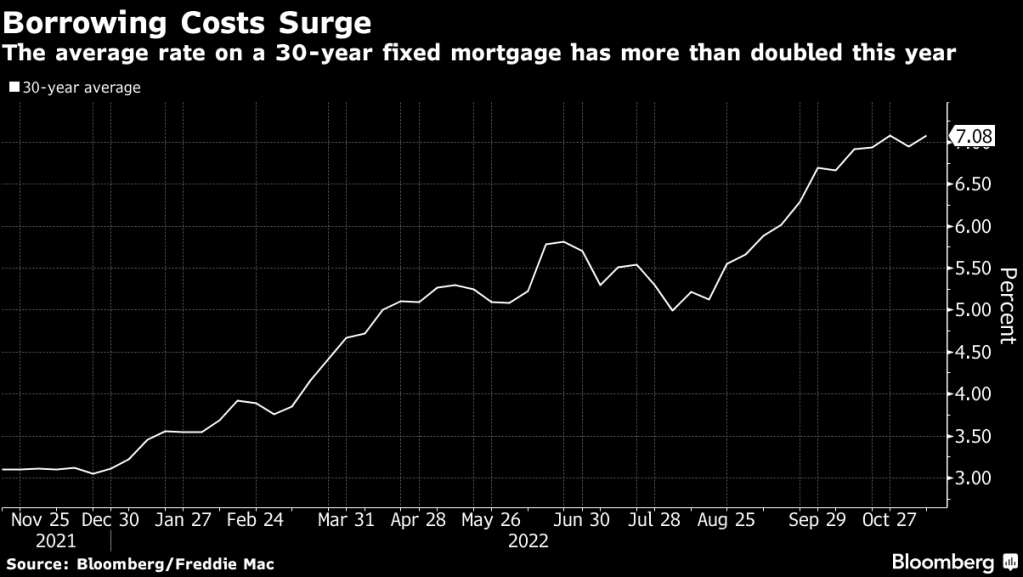
Of course, it is easy to blame the figure on rapidly rising mortgage rates and Federal Reserve tightening.
But the rest of the story (as Paul Harvey used to say) is that US REAL wage growth has been NEGATIVE for 19 straight months. This alone makes housing unaffordable for the middle class and low wage workers.
Again, why are Biden and Trudeau wearing Mao jackets in Bali? And why is Biden looking like a robot?? Biden does look like he is saying “Take me to my leader, Pei.”



You must be logged in to post a comment.