Hail Zorp! The Fed Waited Too Long (Again) To Fight Inflation, Now Banks and Consumers Are Getting Hammered (Mortgage-backed Securities Got Clobbered Once Fed Started Raising Rates)

Former Fed Chair (and current Treasury Secretary) Janet Yellen protected President Obama by raising The Fed’s target rate only once while Obama was in office. Then raised rates 8 times after Donald Trump was elected in November 2016. Well, Fed Chair Jerome Powell was following Yellen’s TLFTL (Too Low For Too Long) playbook by delaying raising rates once inflation hit 2% in March 2021. Then Powell started raising rates like crazy, unlike Yellen and her zero interest rate policies (ZIRP or ZORP for zero OUTRAGEOUS rate policy).

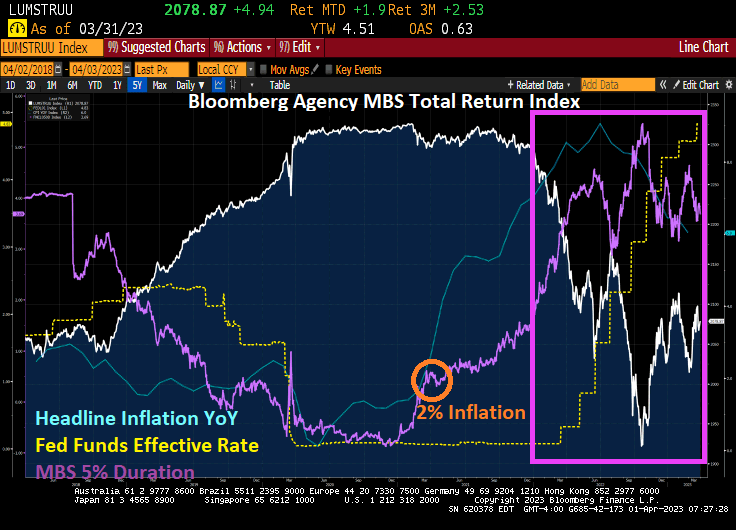
One of the safe assets that Federal regulators encouraged banks to hold was agency mortgage-backed securities. The orange circle denotes when headline inflation YoY hit 2% (March 2021). Powell and the gang waited over a year (remember, they said inflation was “transitory”). But another Democrat, Biden, was now President and Powell (like Yellen) didn’t want to rock the boat. So, Powell and the gang waited until headline inflation hit 7% before they took action. Like Yellen, Powell waited too long .

The result? Agency mortgage-backed securities (MBS) got clobbered (white line) as MBS duration (purple line) rose dramatically. Duration is the weighted-average life of MBS and is a measure of risk.
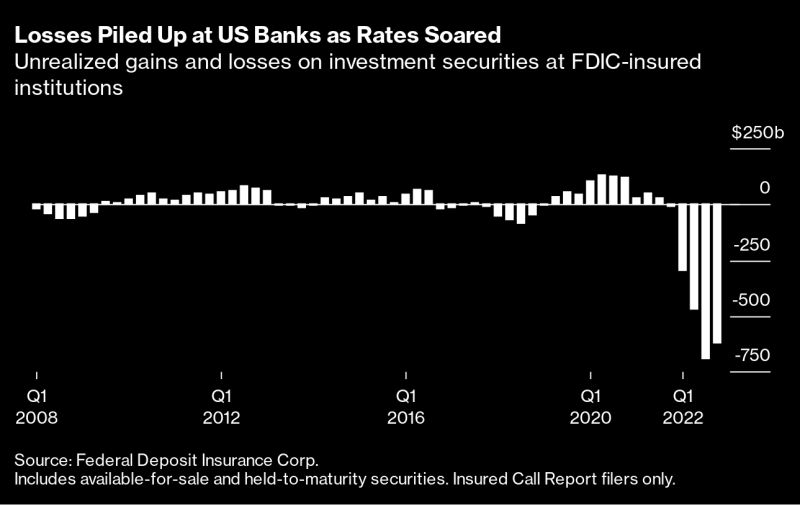
Any surprise that unrealized losses have been piling up at US banks? Not really, only some regional banks weren’t paying attention and got crushed.
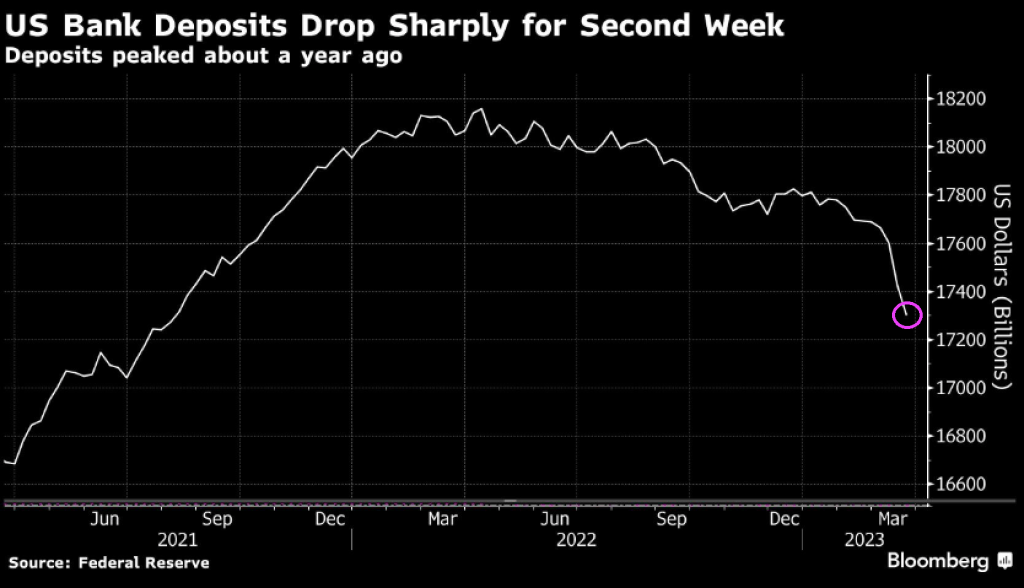
And US bank deposits are crashing despite Biden’s and Yellen’s saying the “all is well!”
Yellen and Powell praising ZORP (Zero OUTRAGEOUS rate policies).
US Consumer Confidence Dips To 62 In March, Never The Same After Covid And Joe Biden (UMich Buying Conditions For Houses Dips To 47 As Fed Withdraws Stimulus … For The Moment)

Well, the University of Michigan consumer sentiment indices are out for March … and they are ugly.

As a baseline, consumer confidence in February 2020 (just before Covid) was 101. After Covid and massive Fed stimulus and Federal government spending spree, consumer confidence in March fell to 62.0, a far cry from 101 under Trump.

Even worse, the UMich buying conditions for housing hit 142 in February 2020 but has declined to 47 in March 2023.

Why would ANYONE have confidence in the US economy under a complete fool with dementia like “China Joe” Biden??

Inflation Slows A Little (Core PCE Price Growth 4.6% YoY) In February, But Remains High Despite Fed Withdrawal (Is US A Failed State?)

Inflation is slowing just a little. But my feeling about The Fed (that partly caused the problem in the first place by keeping rates too low for too long (TLTL) under Yellen is all I can do is laugh.

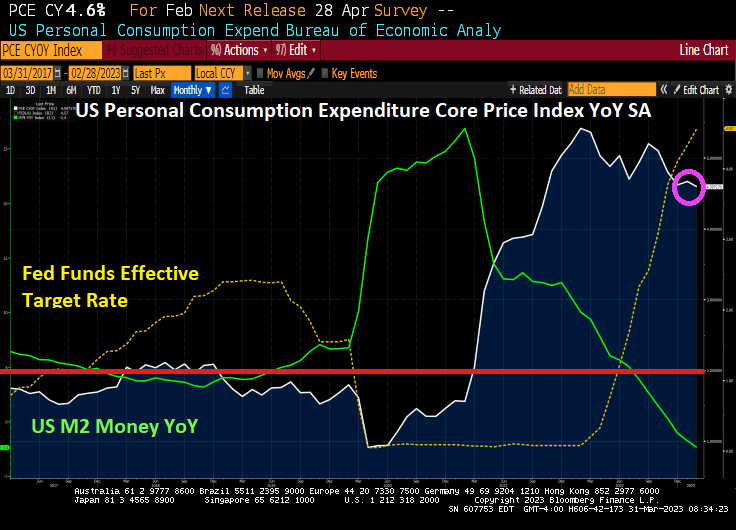
The US Core Deflator (Personal Consumption Expenditure CORE PRICE Index YoY fell only slightly in February to a still-high 4.6% in February despite The Fed jacking up interest rates and slowing M2 Money growth.

I thought Biden and Congress passed the inflation reduction act??

I forgot. Under Obama/Biden, the US is now a failed state. Or a banana republic without bananas. Way to go Joe!

Turnaround Jay! One Small Rate Hike Expected In May, Then A Turnaround With Fed Rate Cuts To 4.28% (Too Bad Taylor Rules Calls For A Target Rate Of 10.29%)

Turnaround Jay!

Fed Funds Futures are pointing to one more rate hike at the May FOMC meeting, then a turnaround with The Fed cutting its target rate.

Too bad the Taylor Rule is calling for a target rate of 10.29%.

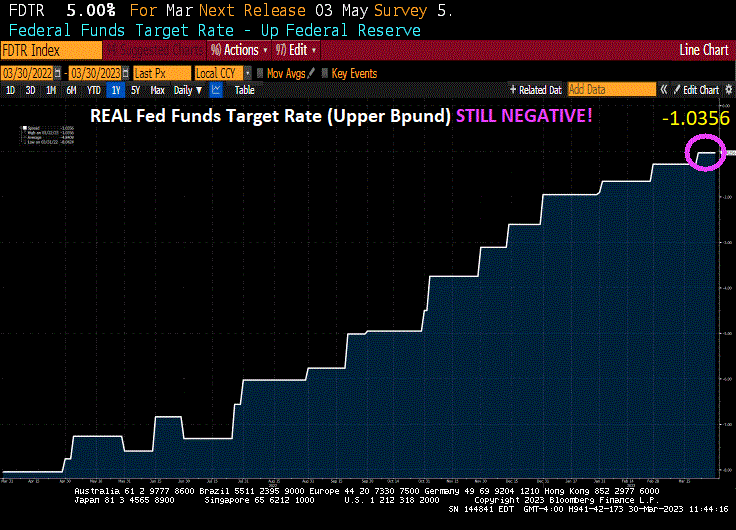
The Fed Funds Target rate (upper bound) is STILL negative at -1.0356%.

Soaring rates to fight inflation is causing unrealized losses to plague US banks.

Like the film, “He Never Died”, The Fed never died. And neither did quantitative easing.

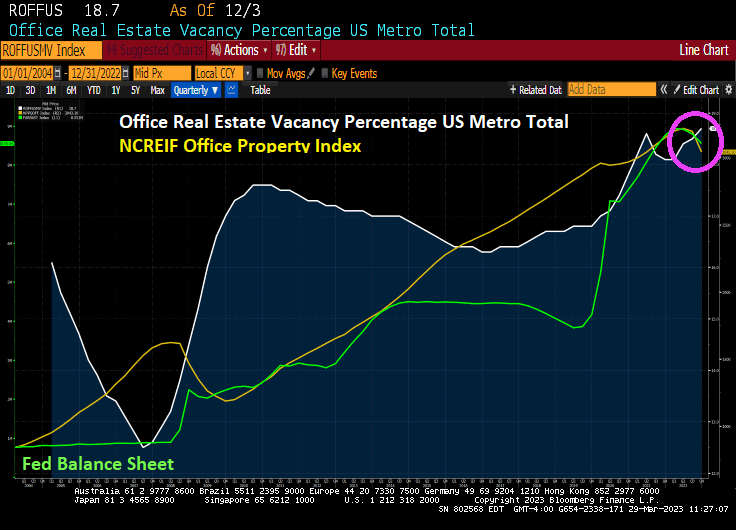
US Office Vacancies Hit All-Time High As Office Property Prices Decline (Fed Retreats)

US metro office vacancies hit an all-time high in Q4 2022 and office properties values began to decline as The Fed retreats as it fights inflation.

So much money printing. Its The Fed’s claim to fame.

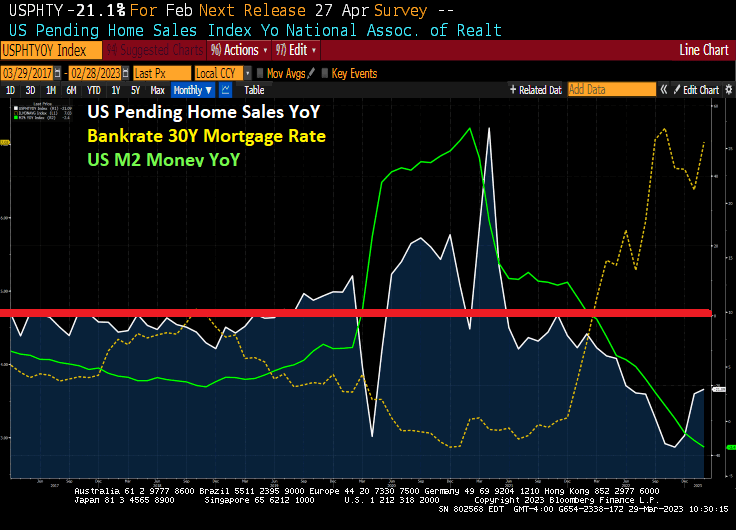
US Pending Home Sales Increased 0.8% in February But Down 21.1% Year-over-year As Fed Retreats (Negative YoY Growth For 20 Of Last 21 Months)

Pending home sales grew in February for the third consecutive month, according to the National Association of REALTORS®. Three U.S. regions posted monthly gains, while the West declined. All four regions saw year-over-year decreases in transactions.

The Pending Home Sales Index (PHSI)* — a forward-looking indicator of home sales based on contract signings — improved 0.8% to 83.2 in February. Year-over-year, pending transactions dropped by 21.1%. An index of 100 is equal to the level of contract activity in 2001.

More notably, the YoY growth rate has been NEGATIVE for 20 of the last 21 months. And 15 straight months.

Biden’s energy policies + insane Federal spending = inflation = Fed slowing M2 Money growth. Hence, pending home sales YoY is down -21.1%.

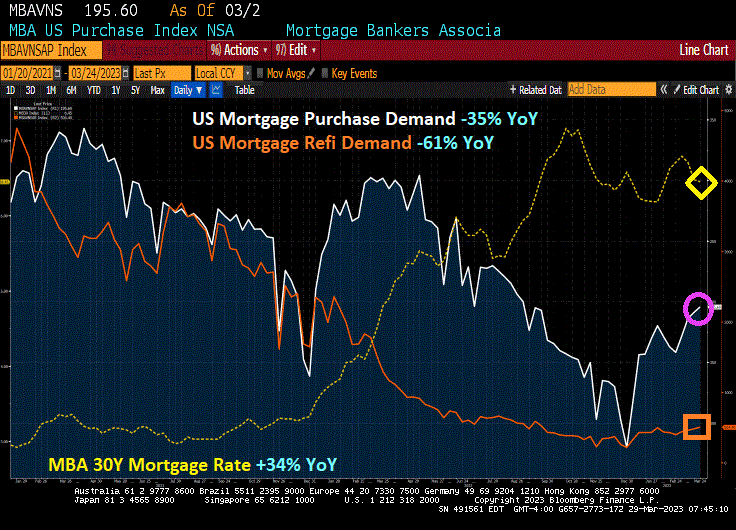
US Mortgage Demand Rises 2.9% Since Last Week, But Purchase Demand DOWN -35% Since Last Year (Refi Demand DOWN -61% YoY)

Well, the regional banking crisis has one positive outcome: mortgage rates dropped -46 basis points since last week. The result? Mortgage demand increased 2.9 percent week-over-week (WoW). Although I don’t recommend banking incompetence by bank management and “regulators” as a strategy to increase mortgage demand.

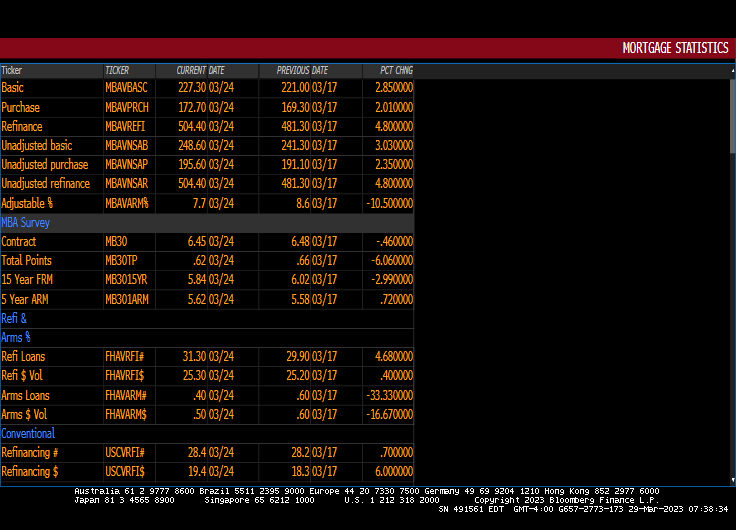
Mortgage applications increased 2.9 percent from one week earlier, according to data from the Mortgage Bankers Association’s (MBA) Weekly Mortgage Applications Survey for the week ending March 24, 2023.

The Market Composite Index, a measure of mortgage loan application volume, increased 2.9 percent on a seasonally adjusted basis from one week earlier. On an unadjusted basis, the Index increased 3 percent compared with the previous week. The Refinance Index increased 5 percent from the previous week and was 61 percent lower than the same week one year ago. The seasonally adjusted Purchase Index increased 2 percent from one week earlier. The unadjusted Purchase Index increased 2 percent compared with the previous week and was 35 percent lower than the same week one year ago.

The rest of the story.

We need a doctor to fix this mess, just not Dr. Yellen or Dr. Jill.

Conference Board Consumer Confidence Remains Much Lower Than Pre-Covid (Massive Federal Spending Spree And Fed Money Printing Failed To Return Consumer Confidence)

Consumer considence (according to the Conference Board) remains below pre-Covid levels despite the massive Federal spending spree and Fed money printing).

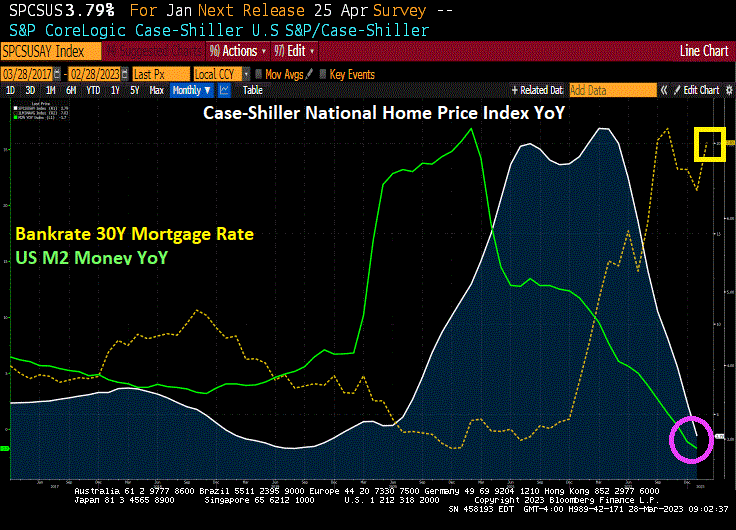
Case-Shiller January Home Prices Slow To 3.79% YoY As Fed Retreats (All 20 Metro Areas Decline MoM With Seattle And Las Vegas Declining The Fastest)

The Federal Reserve is in retreat and housing prices reflect the retreat.

Case-Shiller’s national home price index slowed to 3.79% YoY in January as The Fed slows its money printing.

All 20 cities were down MoM in January with Seatlle declining the fastest with Las Vegas the second fastest decliner.

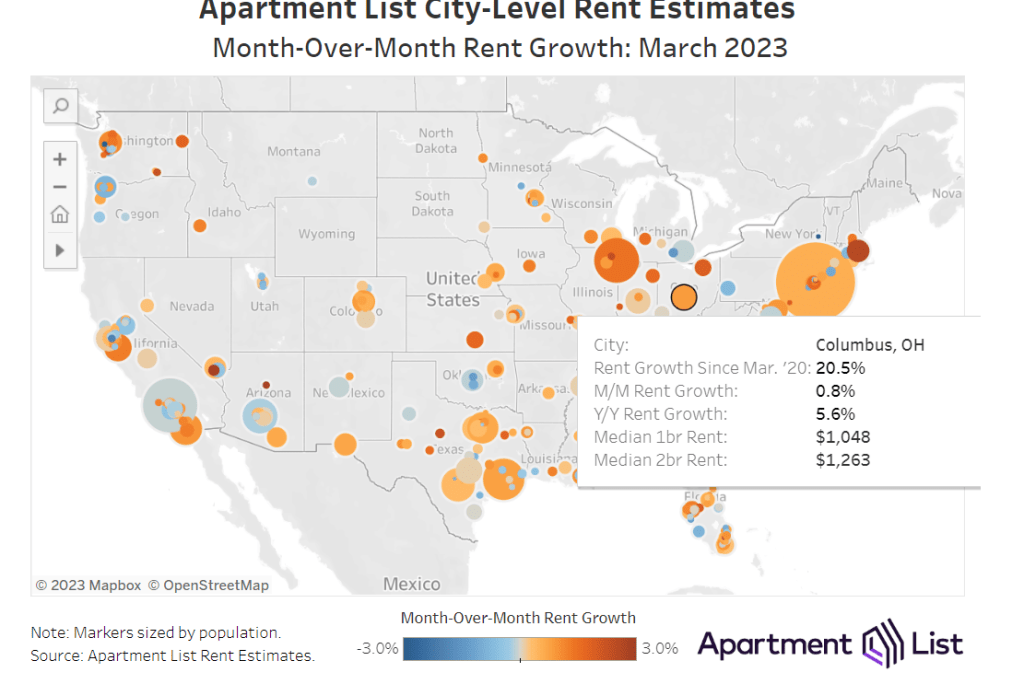
According to ApartmentList.com, apartment rents are up 20.5% YoY in Columbus Ohio (where I live).

Both Miami and Tampa are in double-digit YoY gains in housing prices.

St Louis Fed Financial Stress Index Soars To Highest Level Since Covid Outbreak As Bond Volatility Soars With Fed Rate Hikes And Bank Failures As US Treasury 10Y Yield Rises 12 Basis Points (Flight To Safety)

The US economy got beaten to a pulp by the Chinese Wuhan Covid virus outbreak in early 2020. The Fed intervened with massive money printing along with massive spending by Congress and the Administration. Result? 40-year highs in inflation and a Fed counterattack in terms of rate hikes.

The result of Fed rate hikes? Failing regional banks trying to cope with duration extention and scared depositors. And then we have the St Louis Fed Financial Stress index reaching its highest level since the Covid outbreak of early 2020. And with that, bond volatility is higher than that found during the Covid crisis.

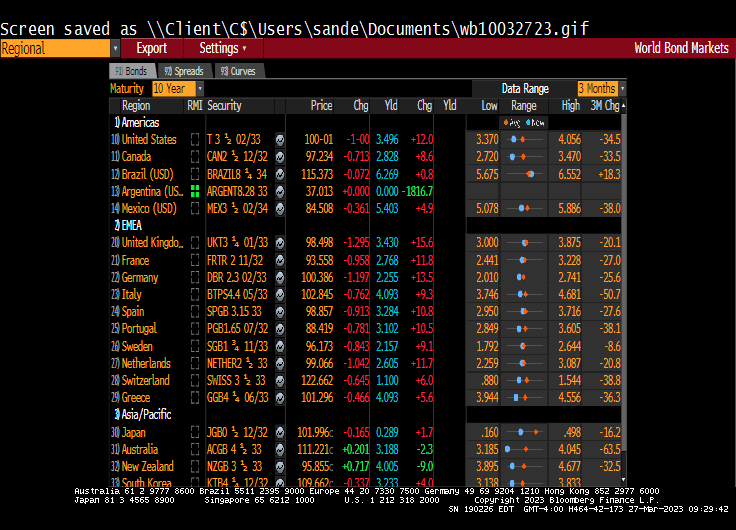
With the expectation of MORE rate hikes, the 10-year Treasury yield jumped 12 basis points.

The architect of The Fed’s “too long for too long” is also the US Treasury Secretary, Janet Yellen.

Yellen: “It wasn’t my fault!”