Household Essentials Cost Far More Under Bidenomics! Gasoline Prices Up 72%, Rent Of Primary Residence Up 16%, Food At Home Up 20% Under Biden! (30Y Mortgage Rate UP 163% Under “Middle Class Joe”)

Middle class Joe my ^%&!

Joe Biden will always be remembered for lying about never raising taxes on households making under $400,000. Inflation is a permanent tax, mostly on those making under $400,000 per year. And household essentials are up substantially under Biden: gasoline prices are up 72%, rent CPI of Primary Residence is up 16%, and food at home CPI is up 20%! That is a HUGE tax on the middle class.

When mainstream economists and politicians cite “improvements” to the inflation problem in the US in recent months, what they are commonly referencing are changes to the Consumer Price Index (CPI).  However, the CPI is not a measure of total inflation, rather, it is a median snapshot of prices at a particular point and time.  True inflation is cumulative – A 10% increase one year and a 5% increase the next year is not a win, it means that you are now paying 15% more on average for everything you buy in the span of only two years.   

When CPI falls this does not mean that prices on goods and services are going down, it only indicates that prices are rising slower than they were the month or the year before.

Another misconception about CPI is that it measures the inflation rate accurately for regular consumers on common purchases.  In reality, the CPI represents mean average price rate increase for a vast basket of goods; over 94,000 items and services with over 200 separate categories.  Most of these items and services you will never use or rarely purchase in the span of a year.  In other words, inflation declines in uncommon goods can dilute the numbers, making it seem like inflation is dropping while prices on daily necessities continue to spike.  

The CPI is weighted according to consumer spending patterns, which is where the calculations can be “adjusted” to a certain extent in an arbitrary manner.  Then there is outright government manipulation through various means.  As we witnessed recently with the Biden Administration’s claims that “Bidenomics” has defeated the inflation threat, what these reports don’t mention is that Biden has been dumping US strategic oil reserves on the market for the past year.  And since energy prices effect the inflation of so many other categories, Biden has artificially manipulated the CPI down using one key resource.  

Now that his ability to dump oil reserves has ended, CPI will rise once again along with energy prices.

The point is, it’s impossible to get a sense of the real damage from inflation without looking at the cumulative inflation in necessities (the goods and services that people are required to purchase on a regular basis to live day to day).  If we throw out the CPI distraction and look at common necessities since 2020, the economic picture is far more bleak.  

Overall food prices have soared by 25%-30% in only three years (again, this means that you are now paying 30% more this year for food than you were paying at the beginning of 2020). Chicken is up from $3 per pound to $4 per pound.  Beef is up from $3.50 to $6 per pound.  Corn is up from $3.50 per pound to $4.70 per pound.  Wheat is up from $5 per pound to $7 per pound.  In 2019 the average American household was spending $8100 on food annually; with a 30% increase, in 2023 Americans will be spending at least $10,500 per household.          

By the end of 2019, the average rental price of a single family home was around $1450 per month.  This year the price is around $2000 per month.  At the beginning of 2020, the median cost of a home was $320,000; by 2023 the price skyrocketed to an average of $416,000.  

For gasoline, the price in early 2020 was around $2.50 per gallon.  The price has fluctuated dramatically due to Biden’s manipulation of the market using strategic reserves, but still remains high today at $3.80 per gallon.  

The cost of electricity has risen swiftly, holding steady around .13 cents per kilowatt hour for a decade, then spiking to at least .17 cents per kilowatt hour by 2023.

Remember, most of these costs are static and are difficult to reduce through household spending cuts.  These are not items that are easily removed from a monthly budget and the expenditures add up to considerable pressure on consumer accounts.  This is probably why around 74% of the public in polls say that the economy is getting worse, not better.  It’s because government statistics are not highlighting the true inflationary crisis.

When we look at the cumulative climb of prices in necessities since before the inflation crisis officially began, the truth is that Americans now have to increase their wages by at least 25%-30% on average to maintain the same standard of living they had three years ago.  This is a disaster not seen since the stagflationary event of the 1970s and early 1980s.  If you have a strange feeling like your bank account is being rapidly drained in recent months, that’s because it is.    

And the 30-year mortgage rate is up 163% under Middle Class Joe.

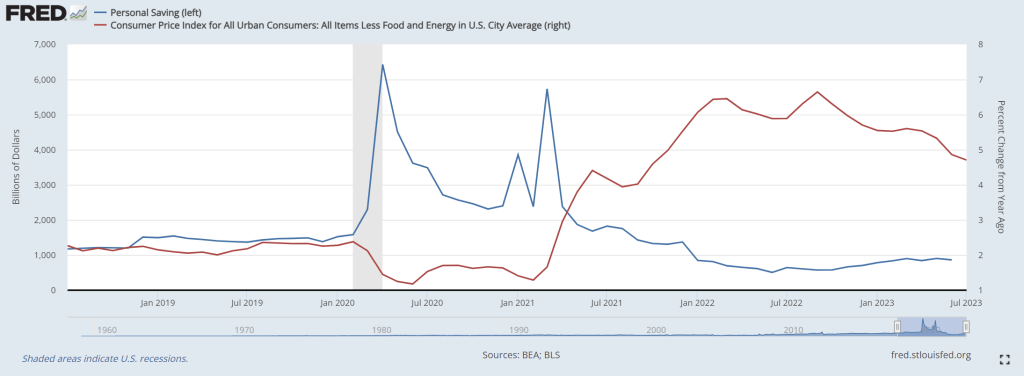
Lowriding! US Personal Savings Lower Than Pre-Covid As Core Inflation Still Hurts At 4.70% YoY (Large Bank Loan Volumes Shrank Last Week As Deposit Outflows Re-Accelerated)

US personal savings are being exhausted as The Fed raises rates to fight inflation. I call this phenomenon “low riding” where consumers are being punished by The Federal Reserve and Biden Administration.

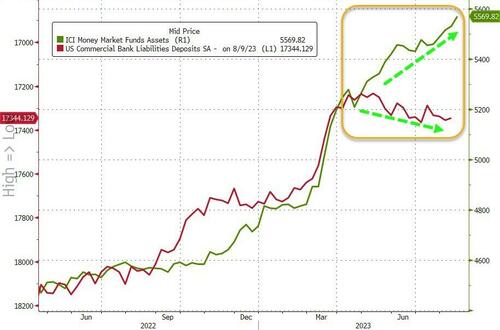
Meanwhile, large bank loan volumes are shrinking. With money-market fund assets hitting new highs, and banks’ usage of The Fed’s emergency funds facility at record highs, we wonder how much longer The Fed can keep the dream of rising deposits alive (after last week’s massive NSA inflows).

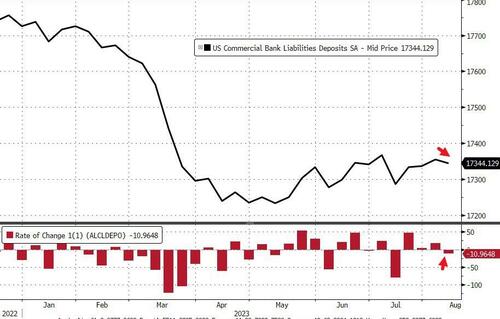
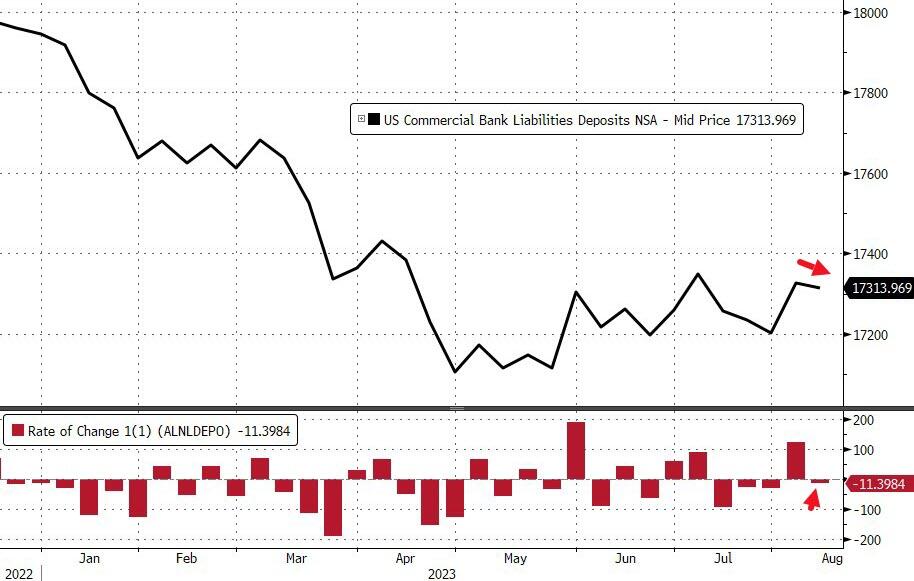
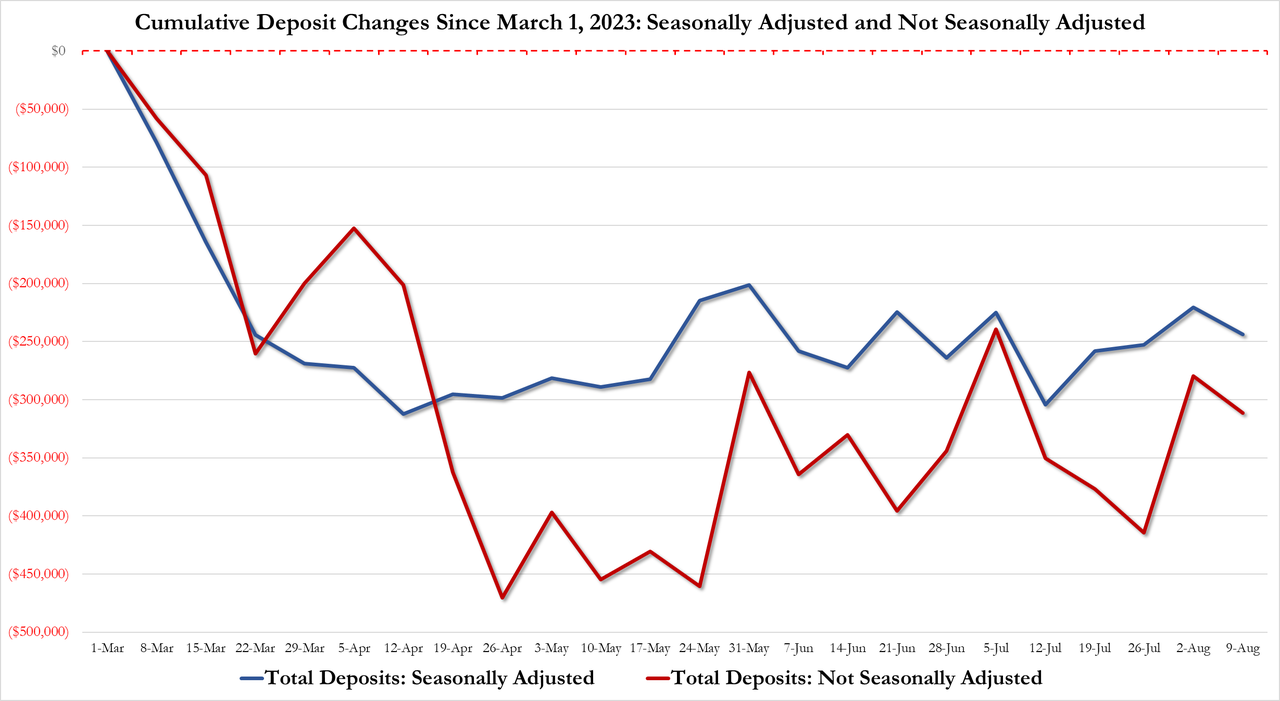
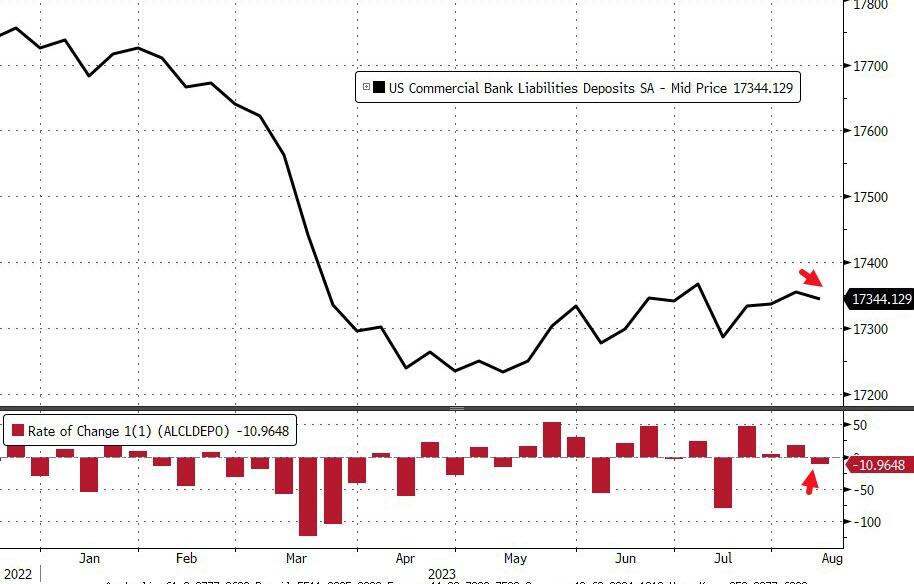
On a seasonally-adjusted basis, The Fed says that total deposits dropped $11BN last week (the first decline in 4 weeks). We also note that the prior week’s inflow was revised higher…

Source: Bloomberg

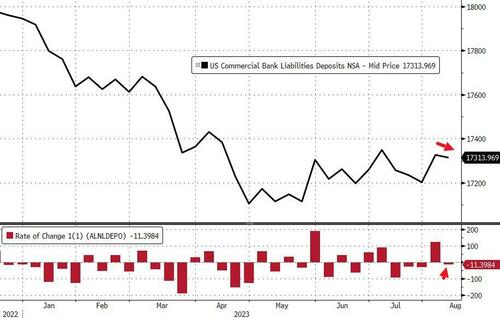
After last week’s enormous $121BN NSA deposits inflow, last week saw an $11BN outflow (on a non-seasonally-adjusted basis)…

Source: Bloomberg

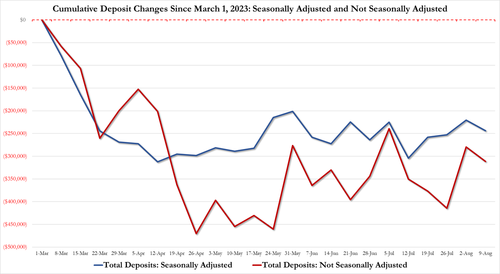
The gap between SA deposits and NSA deposits remains more manageable (until the next time The Fed decides to fiddle)…

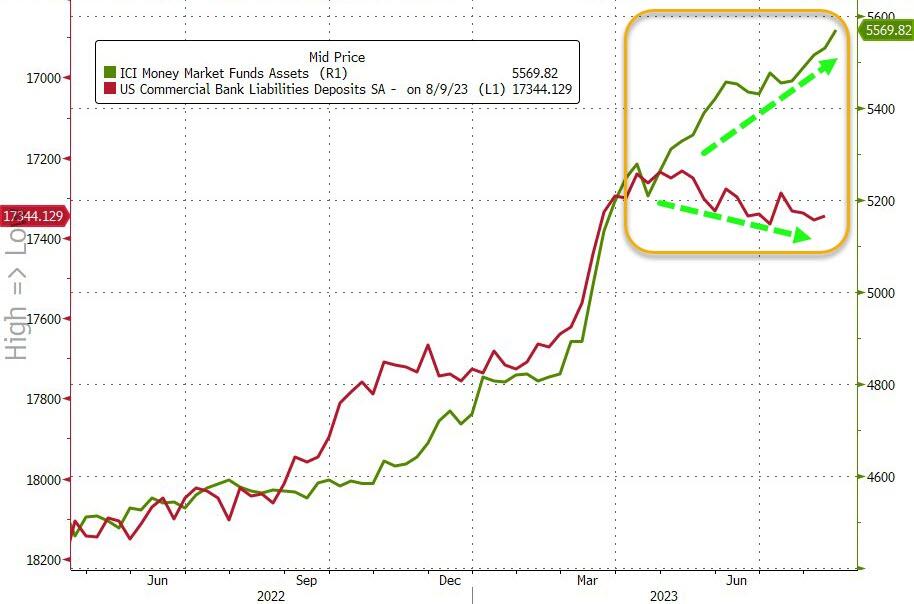
The divergence between money-market fund assets and bank deposits remains extreme…

Source: Bloomberg

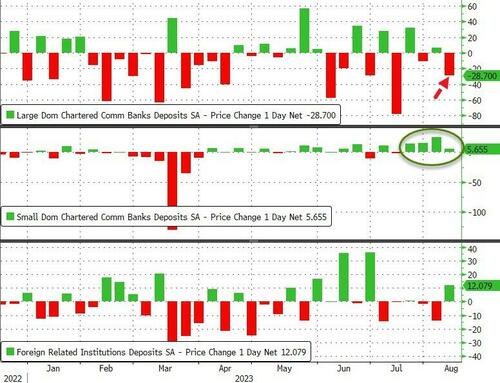
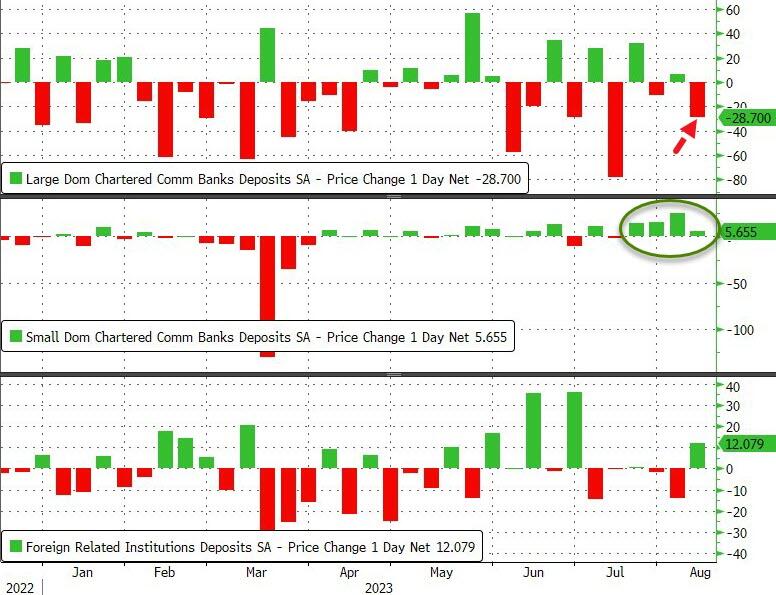
On a seasonally-adjusted basis, Small Banks saw $5.6BN deposit inflows last week while Large Banks suffered $28.7BN outflows (with foreign bank inflows of $12BN making up the difference)…

Source: Bloomberg

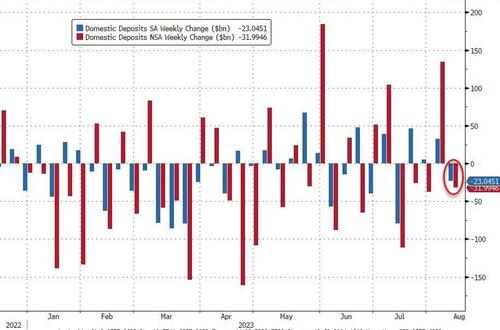
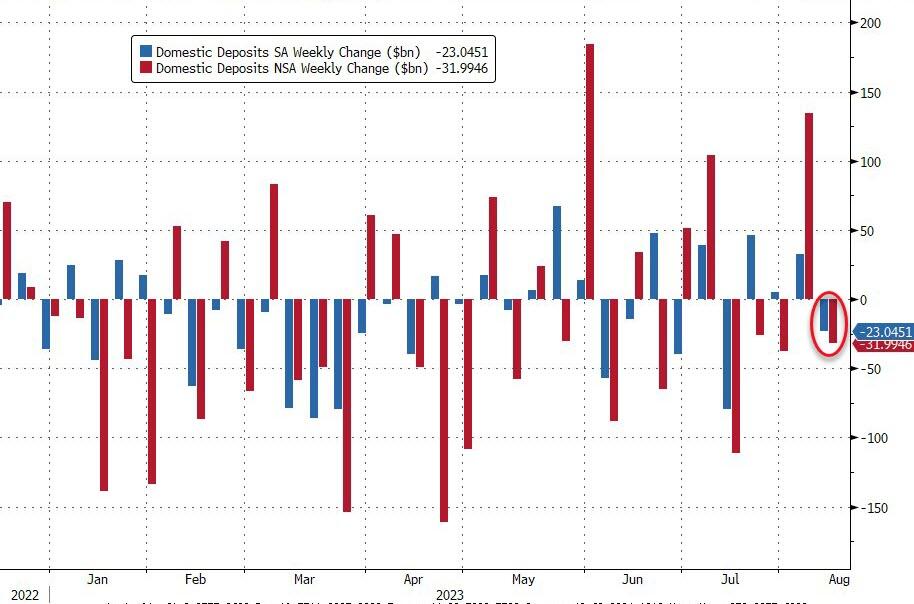
And so, for a nice change, everything is tidy with domestic US banks seeing deposit outflows on an SA and NSA basis…

Source: Bloomberg

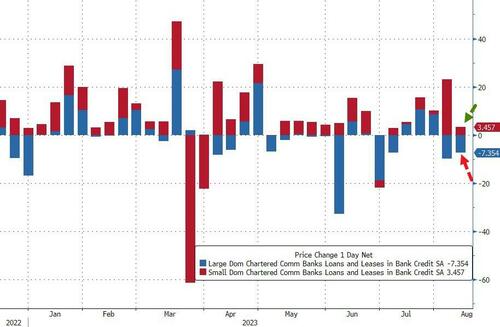
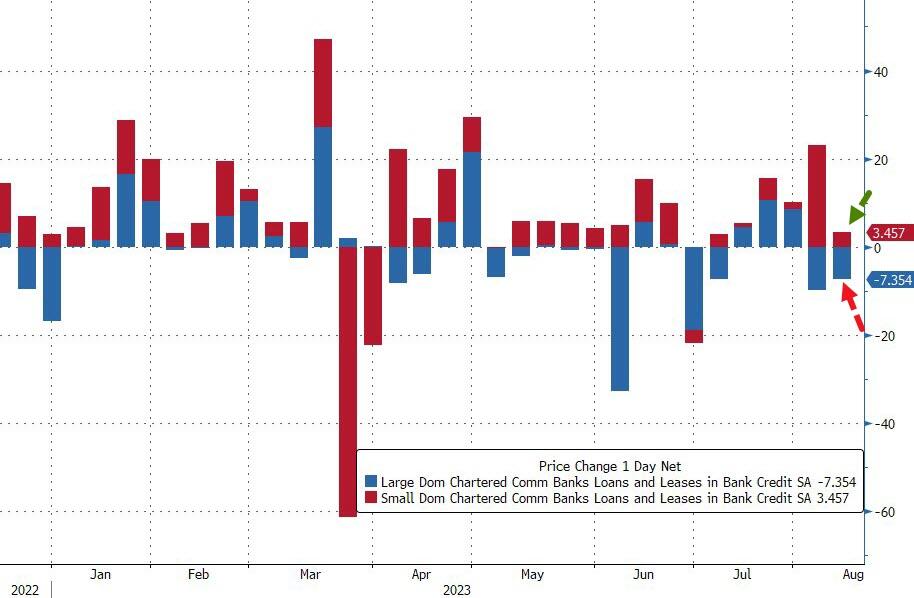
On the other side of the ledger, small banks continued to pump out loans (+$3.56BN, sixth straight week of increases), while large banks saw a $7.4BN contraction in loan volumes

Source: Bloomberg

So, if The Fed’s data is to be believed, Small banks are ‘winning’ – deposit inflows and making loans; while large banks are leaking – deposit outflows and shrinking loans. All while Treasury prices tumble, stressing small bank balance sheets.

Just remember, the sitting US President Joe Biden goes under several psuedonyms like Robert Peters, Robin Ware, and JRB Ware in his email conversations about Ukraine with his son Hunter. But don’t forget another pseudonym: The Reverend Kane from Poltergeist 2!

Argentina Tries Bidenomics! Inflation Rate At 118%, Mortgage Rates Hit 82.2% (350 Argentine Pesos for each US Dollar)

On Monday, Argentina’s central bank raised #interestrates to 118% as Argentina 30-year mortgage is now at a record 82.2%.

There is a record 350 Argentine Pesos for each US Dollar. All courtesy of Argentina’ version of Bidenomics … top down direction of spending and regulation and an out of control Central Bank.

Don’t cry for Argentina. .They voted for endless Peronist polices (Justicialist Party).

Say, are Joe and Jill Biden the new Juan and Eva Peron?

Bidenomics: The Good, The Bad And The Ugly (Atlanta Fed GDP At 4.12% For Q2, Bank Credit Growth Goes Negative, Confernce Board Leading Indicator Goes Negative, REAL Gross Domestic Income Growth = -0.82%)

Bidenomics, which is also Yellenomics (the former Fed Chair and current Treasury Secretary) has The Good, The Bad and The Ugly to say for it.

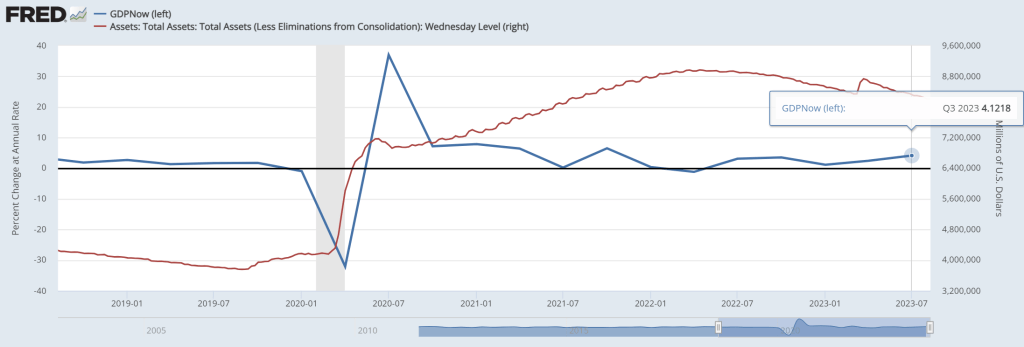
First, The Good! The Atlanta Fed’s GDP Now real time GDP tracker has Q3 GDP at … 4.12%. Pretty good, but bear in mind that there is still more than $8 trillion in Fed Monetary Stimulus outstanding (aka, Yellenomics).

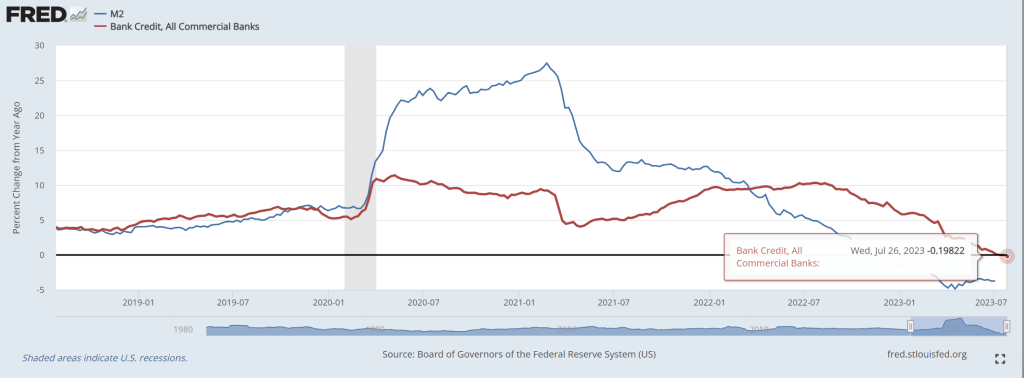
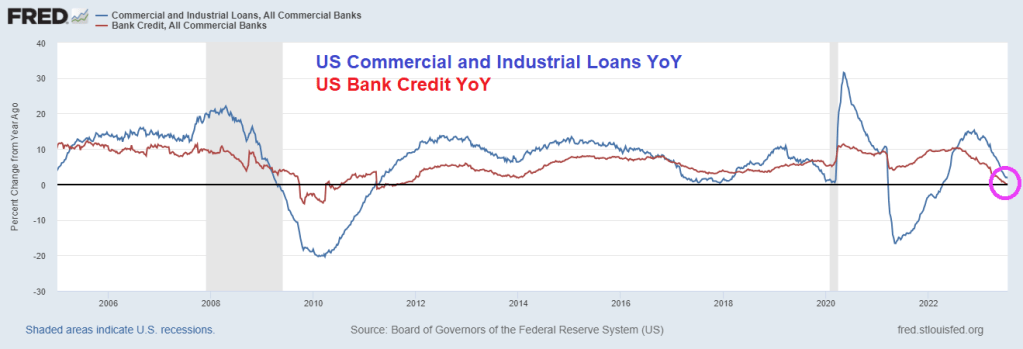
Second, The Bad. Bank credit growth is now negative.

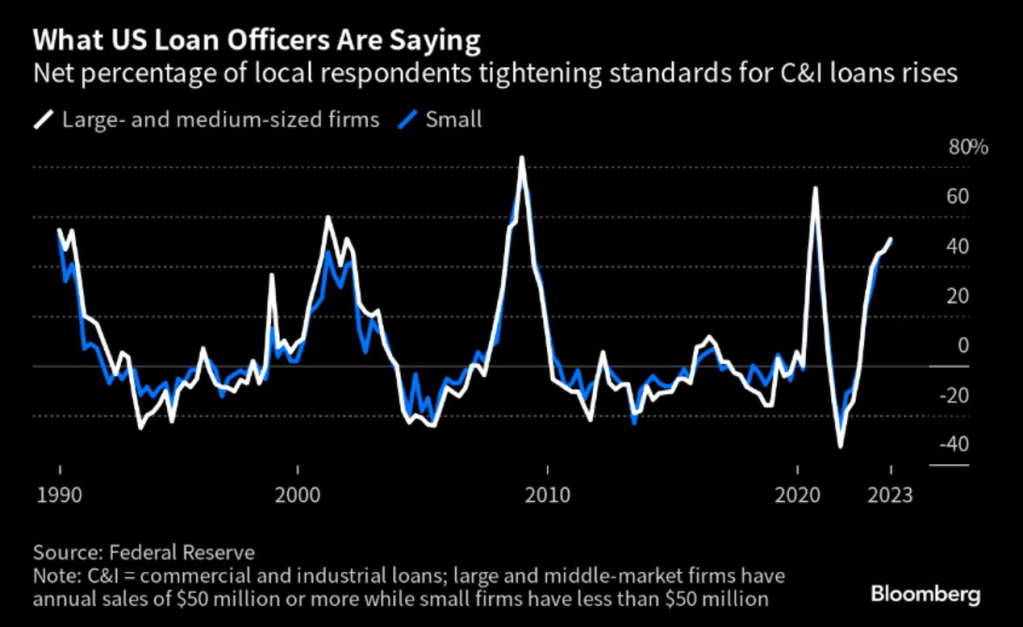
As lenders are tightening credit standards for commercial and industrial loans.

The ugly? There are several candidates for this dishonor.

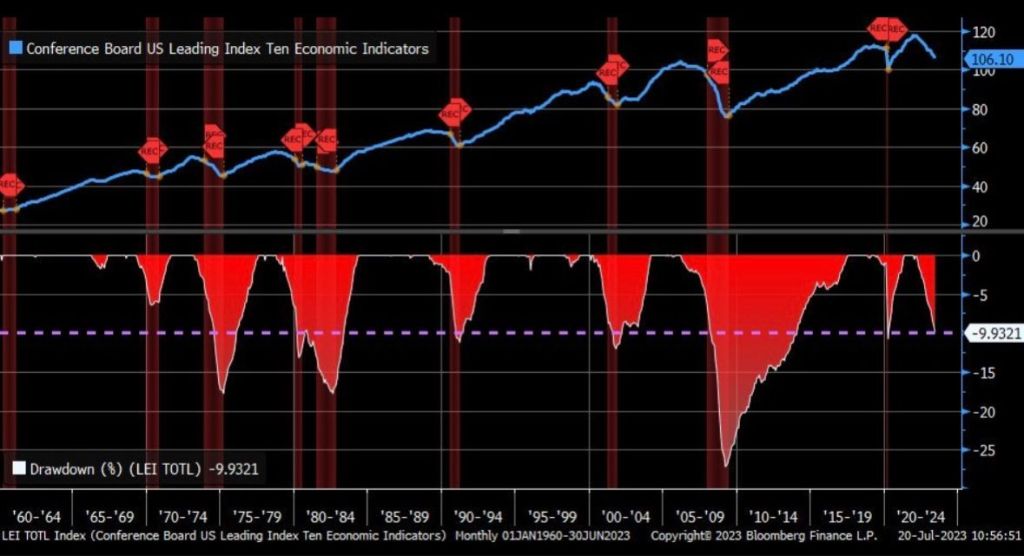
One, The Conference Board’s leading economic indicators is down -10.

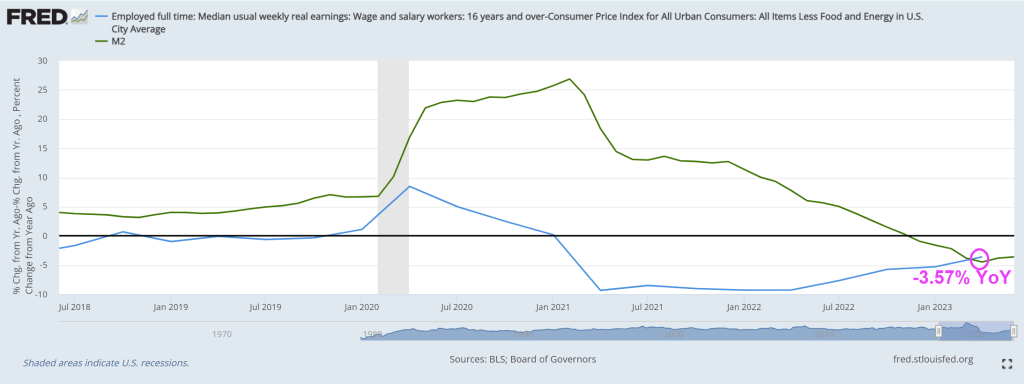
Two, REAL median weekly earnings growth remains negative at -3.57% YoY.

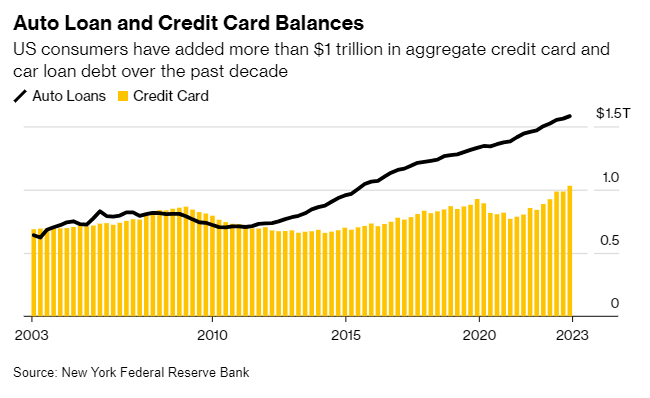
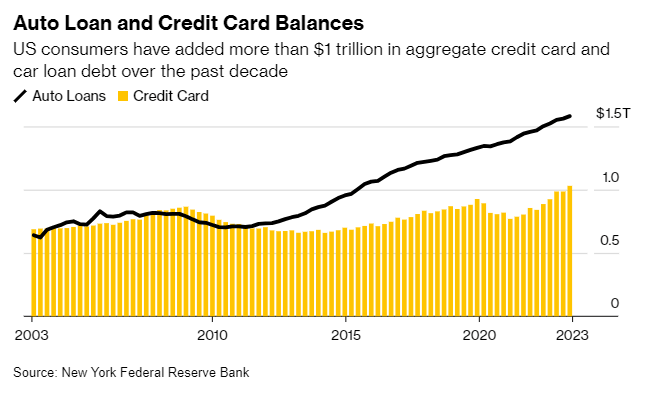
Third, auto loan and credit card balances are at $1.5 TRILLION making further consumer credit more difficult to finance GDP growth.

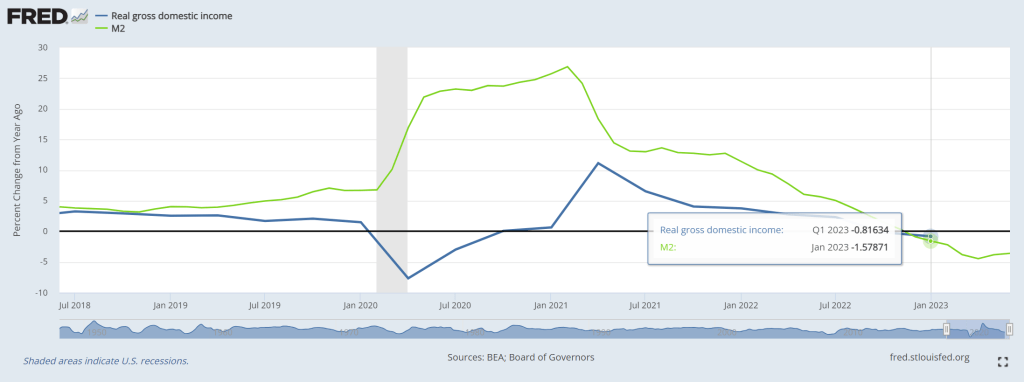
Fourth, Real Gross Domestic Income growth was negative in Q1 2023.

I could go on and on about the negatives of Bidenomics (e.g., massive distortion of Federal spending towards green energy and big donors). Isn’t the earth moving closer to the Sun in its elliptical orbit?? HOW is spending trillions on green energy work as we move closer to the Sun??

I am waiting for Bill Gates to recommend firing nukes at the Sun to reduce the extreme heat as Earth moves closer to the Sun.

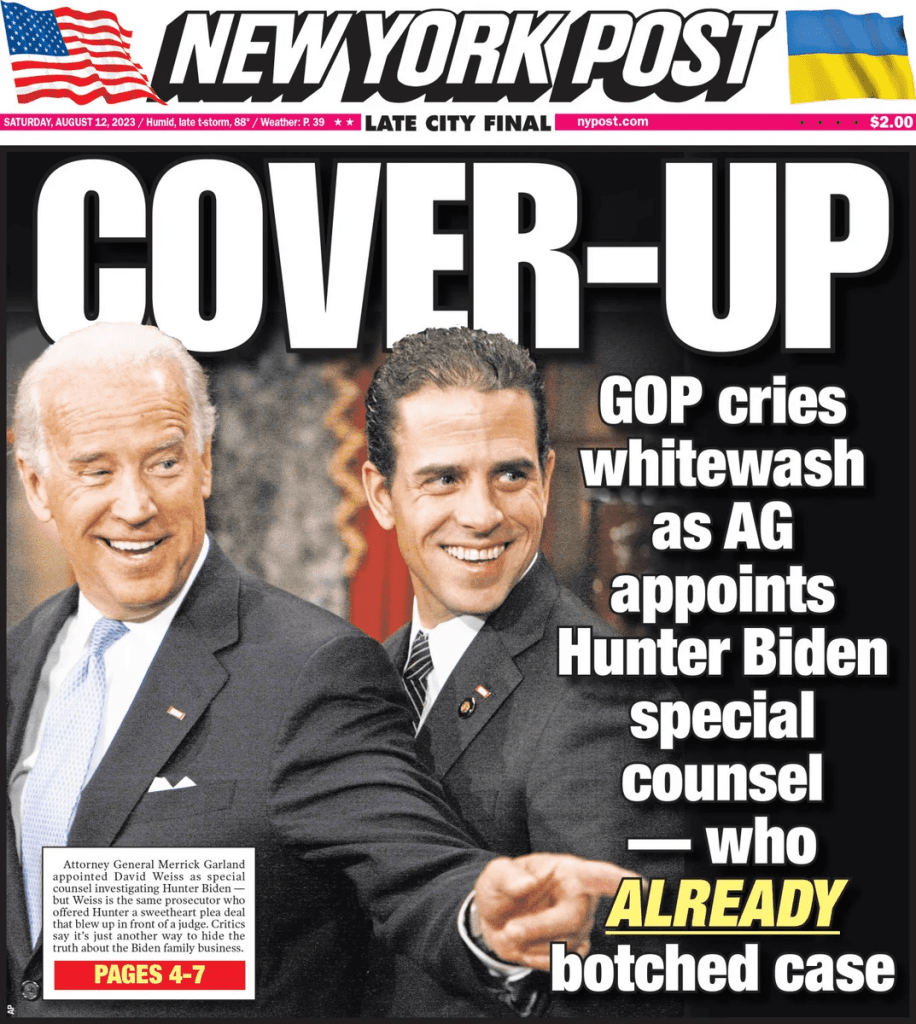
Merrick “The Mouse That Roared” Garland throws up roadblocks to protect “Stonewall Biden.”

CC Riders? US Credit Card Debt Passes $1 Trillion As Americans Continue To Suffer From Inflation (CC + Auto Loans > $1.6 TRILLION)

One of the themesongs of Biden’s Bidenomics should be Credit Card (CC) Rider, since consumers are turning to credit cards to cope with high inflation (Bidenomics).

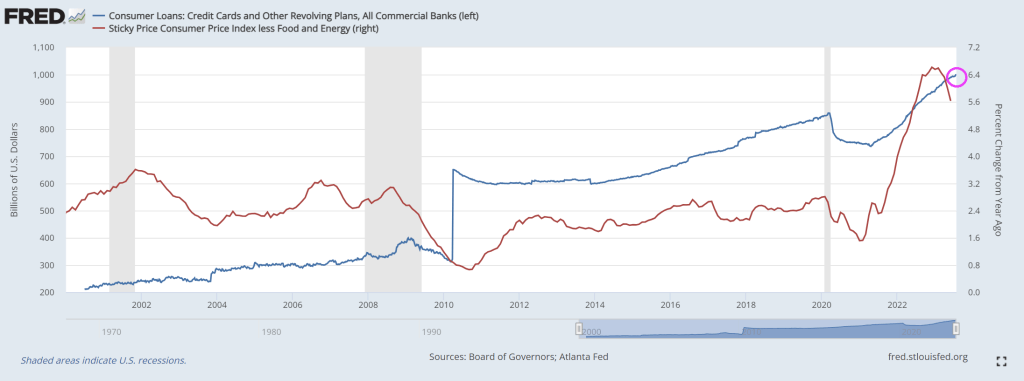
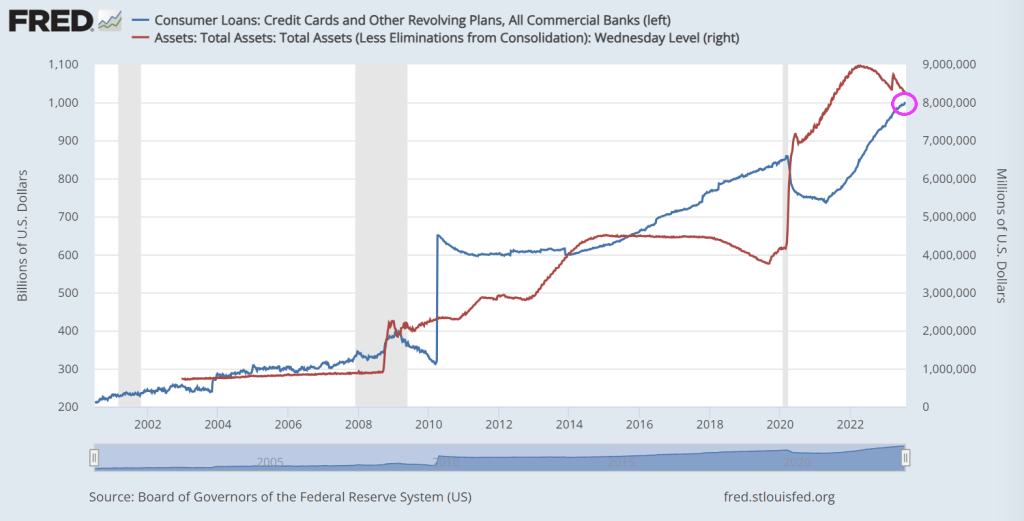
US credit card debt oustanding just passed the $1 trillion mark as consumers continue to struggle with effects of inflation. Caused by The Federal Reserve and insame Federal spending. Note that sticky core inflation is still at 5.63%.

If we look at credit card debt compare to The Fed’s balance sheet, we see the relationship.

Credit cards + auto loan balances are now over $1.6 trillion.

Biden is currently out west trying to sell Bidenomics while announcing prohibitions on uranium m

Banks And CRE Turmoil Worsens As Office Delinquencies Accelerate (Delinquency Rate Rose To 4.41% Last Month, Office Rose To 4.96%)

Its not a wonderful world for regional and small banks given the deterioration of office markets.

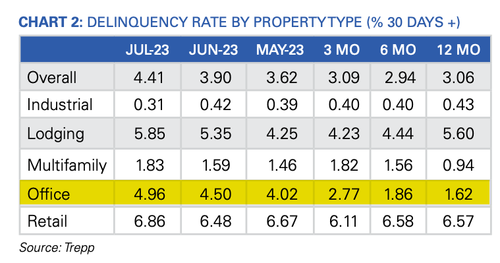
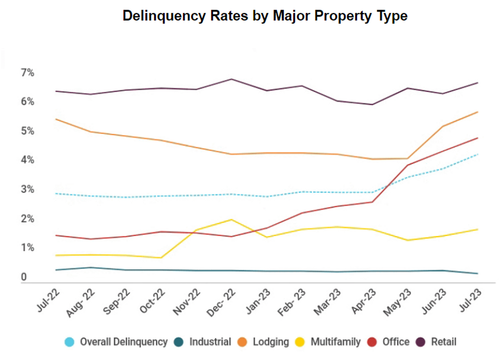
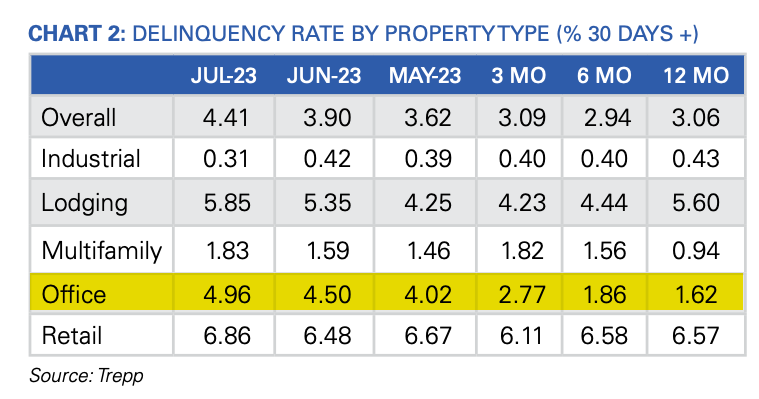
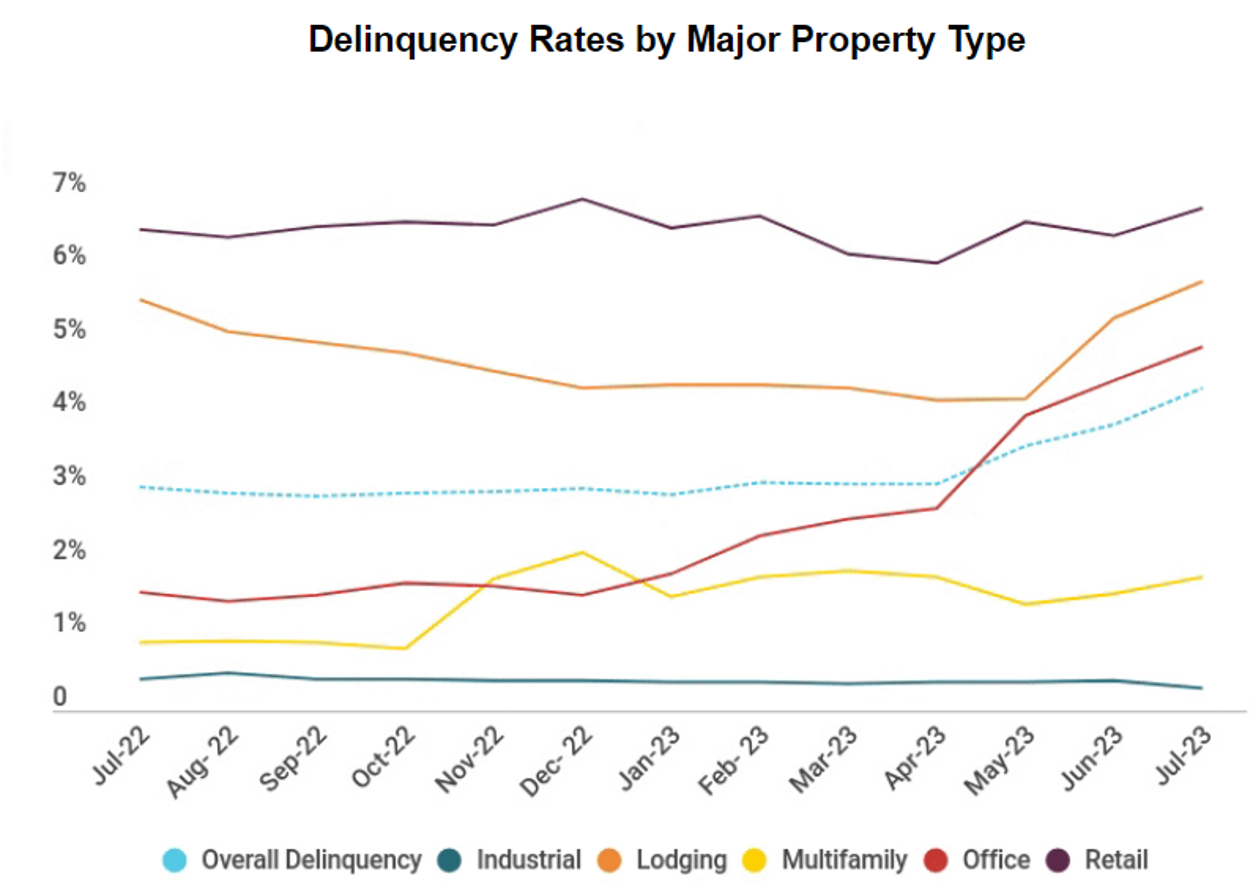
The latest data from Trepp, which tracks commercial mortgage-backed securities (CMBS) securities market data, shows the delinquency rate of commercial property loans packaged up by Wall Street jumped again in July, with four of the five major property segments posting increases. 

“While the rest of the US economy has seen relief in terms of higher equity prices, better-than-expected corporate earnings, and falling inflation numbers, the commercial real estate (CRE) market continues to be left behind,” Trepp wrote in the report. 

Trepp data found the delinquency rate rose 51 basis points to 4.41% last month — the highest level since December 2021. Office delinquencies increased by 46 basis points to 4.96% — up more than 350 basis points since the end of 2022. The deterioration in the office segment is intensifying at an alarmingly rapid pace. 

A broad overview of the US CMBS market shows the delinquency rate increased to 4.41%, a 51bps rise compared to the previous month, but still significantly lower than the 10.34% rate recorded in July 2012. The rate peaked at 10.32% in June 2020 during the government-forced Covid lockdowns. 

Here are more highlights from the report:

  • Year over year, the overall US CMBS delinquency rate is up 135 basis points.
  • Year to date, the rate is up 137 basis points.
  • The percentage of loans that are seriously delinquent (60+ days delinquent, in foreclosure, REO, or non-performing balloons) is now 3.92%, up 20 basis points for the month.
  • If defeased loans were taken out of the equation, the overall headline delinquency rate would be 4.64%, up 51 basis points from June.
  • One year ago, the US CMBS delinquency rate was 3.06%.
  • Six months ago, the US CMBS delinquency rate was 2.94%.

To better understand what might come next for the CRE market, Kiran Raichura, Capital Economics’ deputy chief property economist, recently warned in a note to clients that the office segment might experience a 35% plunge in values by the second half 2025 and “is unlikely to be recovered even by 2040.” 

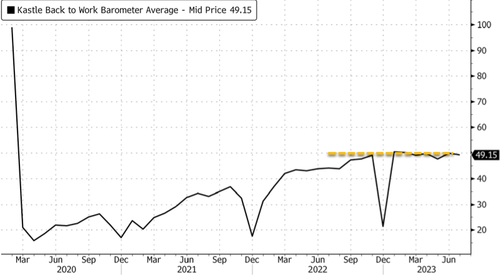
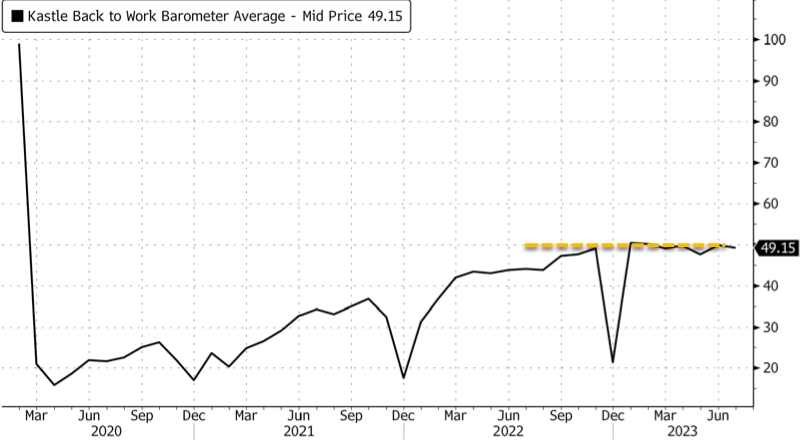
According to swipe data from Kastle Systems, the US office occupancy rate is less than 50%. The figure has plateaued since September, indicating a new reality of remote work. 

One major hurdle for CRE space is that “more than 50% of the $2.9 trillion in commercial mortgages will need to be renegotiated in the next 24 months when new lending rates are likely to be up by 350 to 450 basis points,” Lisa Shalett, chief investment officer for Morgan Stanley Wealth Management, wrote in a note to clients. 

Shalett expects a “peak-to-trough CRE price decline of as much as 40%, worse than in the Great Financial Crisis.” 

Bank of America analysts expect challenges in the CRE space but noted, “They are manageable and do not represent a systemic risk to the US economy.” 

Meanwhile, analysts at UBS warned: 

“About $1.3 billion of office mortgage loans are currently slated to mature over the next three years.

“It’s possible that some of these loans will need to be restructured, but the scope of the issue pales in comparison to the more than $2 trillion of bank equity capital. Office exposure for banks represents less than 5% of total loans and just 1.9% on average for large banks.” 

We’ve already seen major building owners returning their office towers and malls to lenders in California (here & here) and elsewhere (here). This will result in an uptick in CMBS delinquencies moving forward.  

… and remember what we wrote during the regional bank crisis earlier this year — the note was titled “Nowhere To Hide In CMBS”: CRE Nuke Goes Off With Small Banks Accounting For 70% Of Commercial Real Estate Loans. 

Meanwhile, The Federal Reserve is printing the night away.

Sam Cooke sang Joe Biden’s favorite song: “Only Sixteen.”

“So why did I give my heart so fast
It never will happen again
But I was a mere man of 80
I’ve aged a year since then.”


print-icon
print-icon

Bidenomics? C&I Lending Growth Crashes Along With Bank Credit Growth (WTI Crude Oil UP 1% This Morning) 30-year Mortgage Rates At 7.27%

Bidenomics, aka the Federal government takeover of the US economy with Soviet-style economic central planning, is highly dependent on loose Federal Reserve monetary policy (Janet Yellen and Powell’s wild overreaction to the massively inappropriate Covid shutdowns),

So, how is Bidenomics working out? On the bank lending front, commercial and industrial (C&I) lending growth is crashing along with bank credit growth YoY.

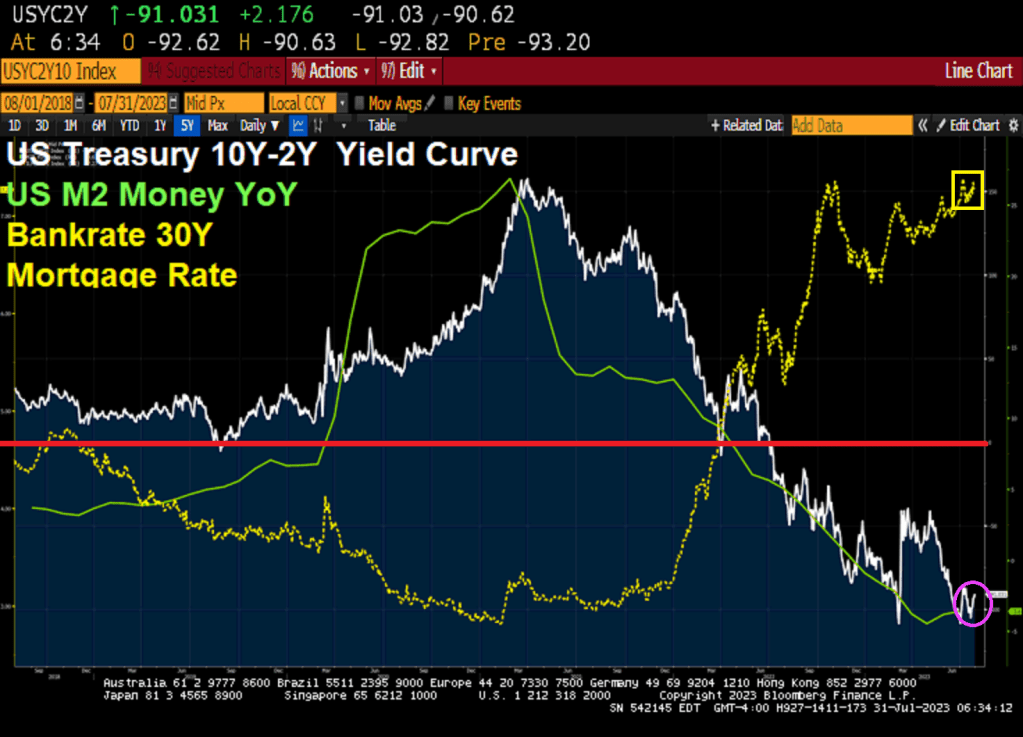
The US Treasury 10Y-2Y yield curve remains deeply inverted at -91.031 basis points and M2 Money growth has crashed. The 30 year mortgage rate is hovering around 7.27%.

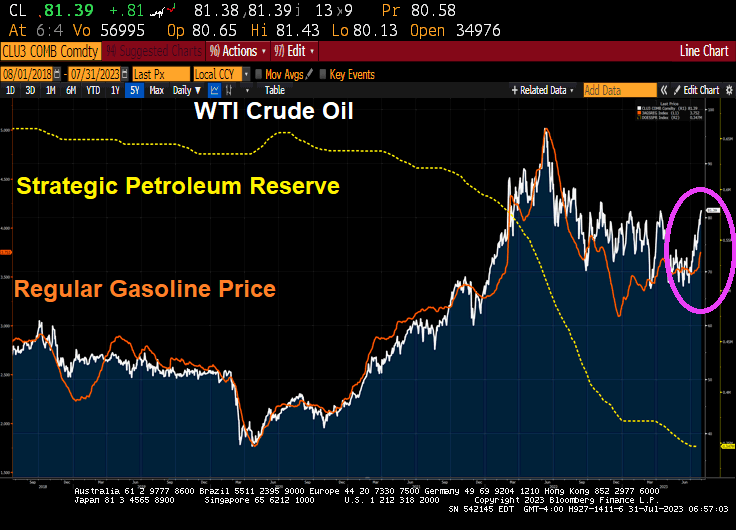
And WTI Crude oil futures are up 1% this morning.

The body of Bidenomics.

Here is a pic of Biden sniffing Idaho.

CRE Storm? “Nobody Understands Where Bottom Is” For Commercial Real Estate (Fed STILL Slow To Remove Monetary Stimulus)

Where is the bottom for commercial real estate (CRE)?

Starwood Capital Group’s Barry Sternlicht recently told Bloomberg’s David Rubenstein about the ongoing crisis in the commercial real estate sector, equating it to a severe “Category 5 hurricane“. He cautioned, “It’s sort of a blackout hovering over the entire industry until we get some relief or some understanding of what the Fed’s going to do over the longer term.”

Currently, the biggest problem in the CRE space is sliding office and retail demand in downtown areas. Couple that with high-interest rates, and there’s a disaster lurking for building owners. According to Morgan Stanley, the elephant in the room is a massive debt maturity wall of CRE loans that totals $500 billion in 2024 and $2.5 trillion over the next five years. 

Senior markets editor for Bloomberg, Michael Regan, chatted with John Fish, who is head of the construction firm Suffolk, chair of the Real Estate Roundtable think tank and former chairman of the board of the Federal Reserve Bank of Boston, in the What Goes Up podcast to discuss the biggest problems in the CRE market. 

Fish warned that “capital markets nationally have frozen” and “nobody understands value.” He said, “We can’t evaluate price discovery because very few assets have traded during this period of time. Nobody understands where the bottom is.” 

For a sense of recent price discovery trends, we were the first to point out to readers of a wicked firesale of office towers in the downtown area of Baltimore City: 

As for the overall CRE industry, Goldman Sachs chief credit strategist Lotfi Karoui recently told clients, “The most accurate portrayal of current market conditions with Green Street indicating a 25% year-over-year drop in office property values.” 

Sooooo, Powell and The Fed will likely raise rates this week. And maybe a few more times over the next few months. And The Fed remains defiant about taking away the Covid monetary stimulus.

Bidenomics Strikes! US Housing Starts 1-unit Plunges -7.4% YoY In June For 14th Straight Month Of Declines (Multifamily Starts Down -11.56% From May To June, Permits Down -13.52%)

Bidenomics strikes! Or as Klaus Schwab and the World Economic Forum sing “I’m going to make (the US) mine!”

Despite the open borders where millions of low wage workers and parasites pour across into the US, we still see 1-unit housing starts plunged -7.4% YoY in June as The Fed continues tightening.

Multifamily starts actually fell worse than 1 unit starts. 5+ unit starts were down -11.56% MoM. Multfamily permits were down -13.52%.

And it just isn’t little girls that Biden is creepy about (like the family member we all keep our kids away from), Biden is creepy towards adult women too! These guys, like most normal people, aren’t digging Old Joe’s creepiness.

Bidenomics! Bank Credit Slows To 0.5% YoY, Lowest Since 2011 As Fed Hikes To Fight Bidenflation (41+ Countries Sign On For BRICs Gold Standard)

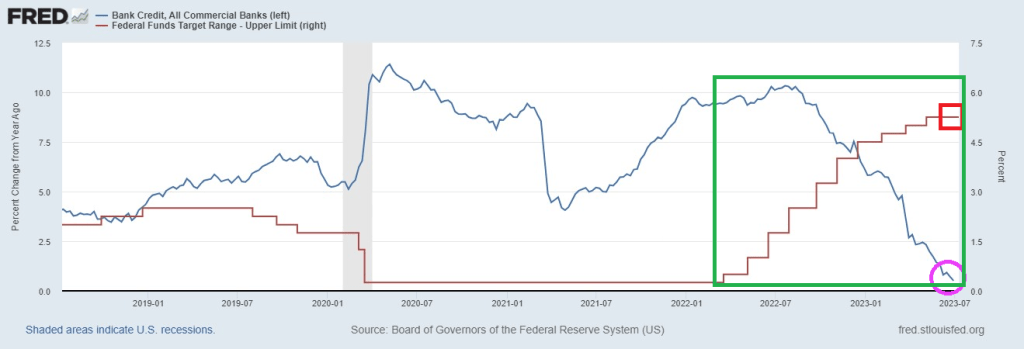
Bidenomics relied of massive Federal spending thanks to Covid and massive monetary expansion. This led to the highest inflation in 40 years (Bidenflation). But now The Fed is slowing M2 Money growth into negative territory and hiking their target rate.

The result? Bank credit growth has crashed to 0.5% YoY. In other words, banks are no longer expanding credit for the first time since the aftermanth of The Great Recession and Financial Crisis of 2008/2009. Of course, Washington DC bailed out their bestest buddies, the banks, while middle America suffered.

As America loses steam under Biden and The Fed, 41+ countries have signed on to the BRICs gold-backed reserve currency. Unlike the USA with its fiat currency (backed by Babbling Biden and Janet “The Midget Marxist” Yellen), this reserve currency will be backed by gold.

Speaking of Yellen, she met the Chinese vice-Chairman (their version of Cacklin’ Kamala) and bowed three times. And the Chinese official didn’t return the bows. Way to capitulate Janet!!