US 30Y Mortgage Rate Climbs To 5.54% While 5/1 ARM Rate At 4.20% (134 Basis Point Spread)

Mike Lea and I wrote a paper entitled “Do We Need The 30yr FRM (Fixed-rate Mortgage)”. We argue that millions of Americans would benefit from an adjustable-rate mortgage like the 5/1 ARM for a host of reasons.

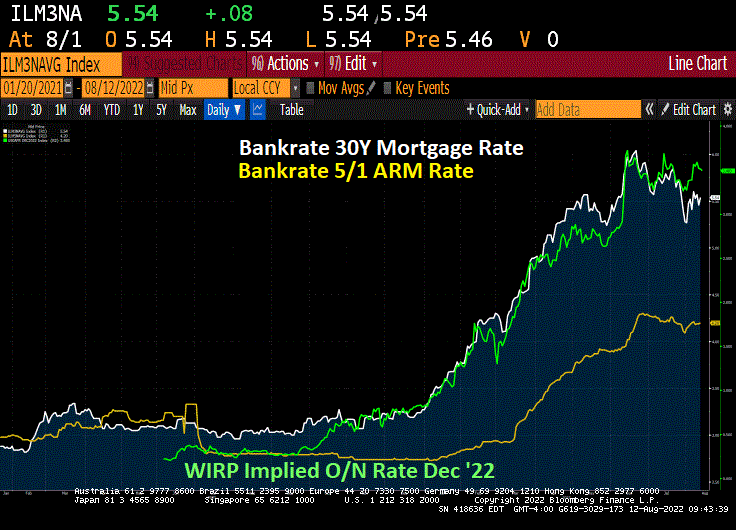
One good reason for a 5/1 ARM is the fact that it 134 basis points less expensive than the 30yr fixed-rate mortgage.

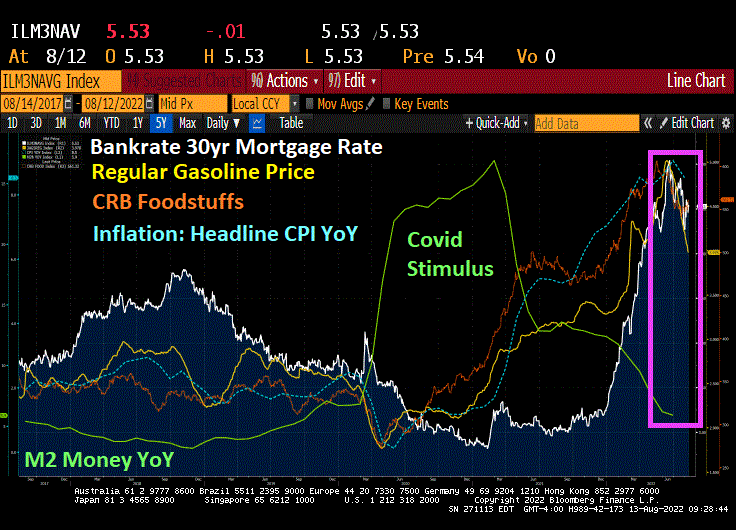
Mortgage rates have risen dramatically with the expectation of Fed rate tightening (green line).

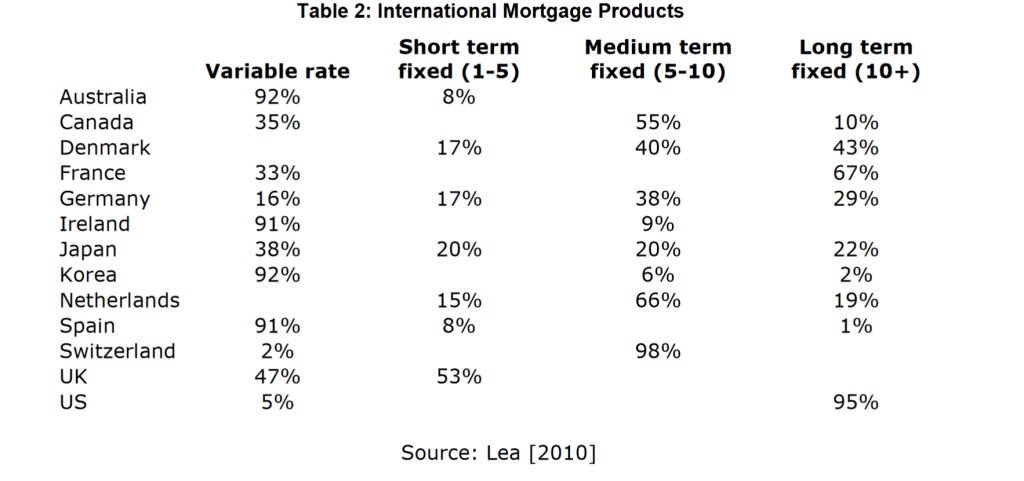
Yes, there is a “fear factor” built in the 30r FRM (“OMG! The mortgage market will collapse without the 30yr FRM!!!!) Hogwash. Or malarkey, as Joe Biden likes to say. The mortgage market actually see the US join the rest of the world in having adjustable-rate mortgage being the predominant mortgage product.

US ARM share peaked at 10.8% in June 2022 before retreating to 7.4% as the 30yr mortgage rate retreated.

The 5/1 ARM product can help the affordable housing crisis in the US if we just let markets work. But in Washington DC, the term “free markets” is like the old Dobie Gillis character Maynard G. Krebs and the word “Work.”

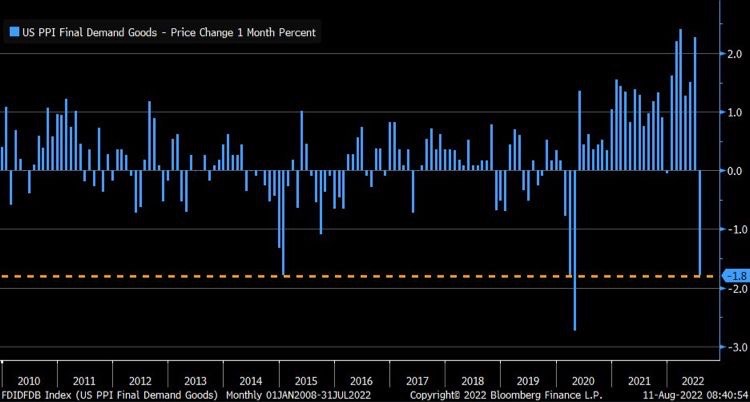
US Producer Price Index Cools To 9.8% YoY In July As M2 Money Growth Cools And Recession Probability Increases

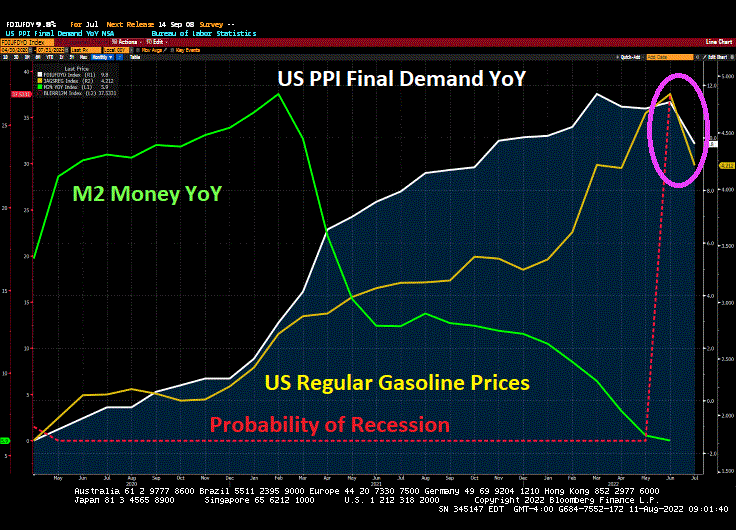
Somehow I doubt if Biden, Harris and Jean-Pierre (Biden’s Press Secretary) will go on the talk show circuit talking about the Producer Price Index Final Demand at 9.8% YoY, meaning that inflation is still raging.

But the curious thing about the PPI Final Demand numbers. While lower than June’s reading of 11.3% YoY, it also coincides with declining gasoline prices and declining growth in M2 Money stock. Which is still growing at 5.9% YoY. The probability of recession is rising (even though technically the US is in recession after 2 consecutive quarters of negative GDP growth.

Here is the more striking chart.

So is the US “improving” on prices because of brilliant Biden strategies (I just laughed at my own “bon mot”)? Or are prices (PPI, gasoline) slowing because of declining demand as the US slips into recession?

Lawrence Summers was once again in the news saying that the way to cool inflation is to raises taxes (and cool demand). Only a true Statist would say something like that. Larry, how about Biden and Congress stop spending so much money that is helping to fuel inflation?

One Washington DC types would rest their hopes on cooling inflation by having the US slip into recession AND raises taxes.

Biden looking for a way out.

Fannie Mae’s Home Purchase Sentiment Index Falls From 81.7 In March 2021 To 62.8 In July 2022 (As Fed Tightens And Home Prices Boom)

Fannie Mae’s Home Purchase Sentiment index has declined from 81.7 shortly after Biden was sworn-in as President to a meager 62.8 in July 2022.

Of course, mortgage rates have risen quite rapidly and home price growth remains elevated as The Fed still has not trimmed its balance sheet as promised.

Goin’ Down! US Treasury 2-year Yield Drops 15 Basis Points In AM (10Y-2Y Treasury Yield Curve Remains Inverted At -38.870 BPS)

Goin’ down!

Lots of volatility in markets culminating in a 15 basis point drop in the US Treasury Note yield.

Since the 10-year Treasury yield dropped only -2.7 basis points, the 10Y-2Y yield curve rose slightly to -38.87 basis points.

Simply Unaffordable! Gap Between Real Home Price Growth (+11.17% YoY) And Real Wage Growth (-2.15% YoY) Near Highest Since 1988 (REAL 30Y Mortgage Rate Is Now -3.23%)

The US housing market is simply unaffordable for millions of Americans. To illustrate the problem, here is a chart of the Case-Shiller National home price index less CPI YoY graphed against Average Hourly Wages less CPI YoY.

The gap between the REAL national home price index YoY and REAL US average hourly earnings YoY is near the largest since 1988. Inflation is making matters far worse since REAL average hourly earnings growth continues to decline.

The only thing positive to say is that REAL home price growth YoY is lower now than at the peak of the 2005 home price bubble that burst catastrophically.

Another “positive” is that the REAL 30-year mortgage rate has fallen to -3.23%. At the peak of the house price bubble in June 2005, the REAL 30-year mortgage rate was +2.58%. THAT is one big difference between the pre-2008 recession and today’s impending recession.

Weekend Update! US Treasury Yield Curve Inversion Worsens Screaming Impending Recession, 30Y Mortgage Rate Rises To 5.6% (5/1 ARM Rate Rises To 4.21%)

Here is your weekend update on Treasury and Mortgage markets.

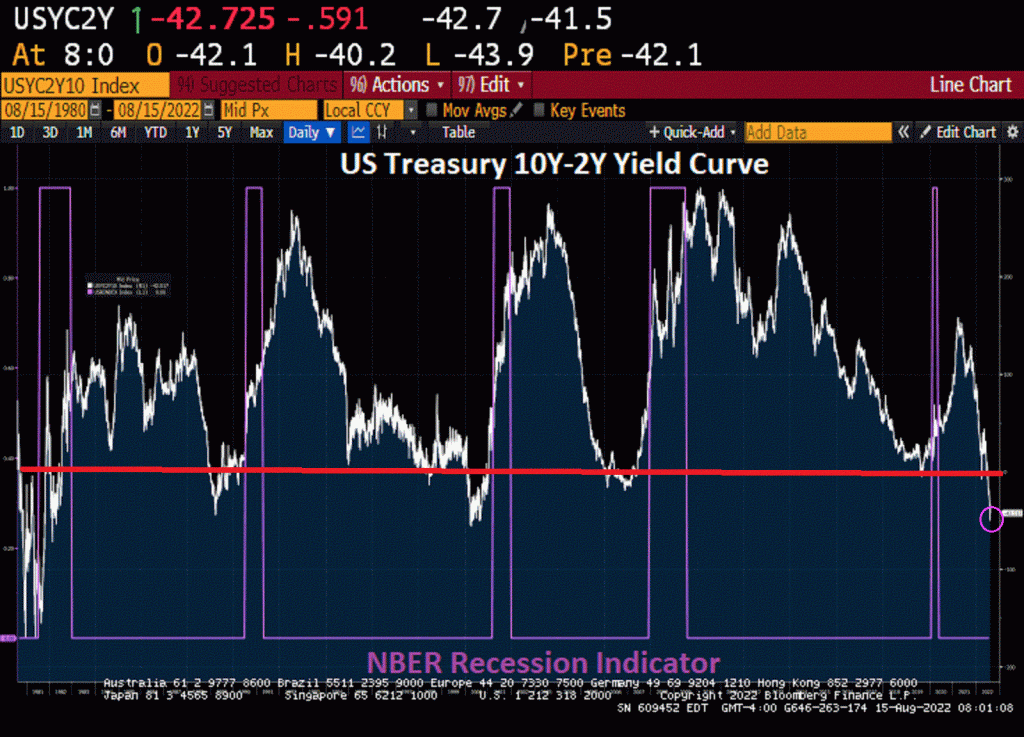
The current US Treasury 10Y-2Y yield curve just slipped further into reversion at -40.299 basis points, screaming impending recession. Oddly, The Federal Reserve has been leaving its balance sheet of Agency Mortgage-backed Securities (MBS) in tact (green line).

On the mortgage front, Bankrate’s 30-year mortgage rate index rose to 5.60% while the affordability-friendly 5/1 Adjustable Rate Mortgage (ARM) rate rose to 4.21%.

Currently, a 5/1 ARM borrower can save 139 basis points over the traditional 30-year mortgage rate.

Have a wonderful weekend!

US 10-year Treasury Yield Surges +14 Basis Points As Strange Jobs Report Spurs Fed Rate Hike Fears

Today’s jobs report was … strange. While the US economy added more jobs than expected, we also saw labor force participation contract and real wage growth decline again.

The reaction in the bond market? US Treasury 10-year yields exploded by +14 basis points. As I used to tell my fixed-income students, any basis point jump or decline of 10 basis points or more is a BIG DEAL.

The implied target rate for The Fed (based on Fed Funds Futures) is now lower for the Jan 1, 2024 FOMC meeting (3.025%) than it is for the Sept 21, 2022 FOMC meeting (3.034%).

Mortgage rates? They will go up as The Fed removes its Brawndo, the economy mutilator.

US 30Y Mortgage Rates On Rise Again, Bankrate 30Y Rate UP 92% Under Biden/Powell (US Yield Curve Inversion Worsens, Worst Inversion Since 2000)

After mortgage rates topped 6%, they settled back down with the global economic slowdown, but are on the rise again.

Bankrate’s 30-year mortgage rate index rose to 5.57% after rising above 6% in June 2022. Mortgage rates are up 92% under the team of Biden and Fed Chair Powell as The Fed tries to extinguish the inflation fire cause by 1) excessive Fed stimulus, 2) Biden’s anti-fossil fuel policies and 3) Biden/Congress’ reckless spending.

The Fed still has not shrunk its balance sheet yet and home price growth is still soaring.

The US Treasury 10Y-2Y yield curve inversion just worsened to -38.503, the most inverted since 2000.

Over the longer-term, the US Treasury 10Y-2Y yield curve is the most inverted since 2000. Remember, the 10Y-2Y yield curve inverts prior to a recession.

In terms of putting out the inflation fire, The Fed is acting more like The Three Stooges.

Bullard Urges Front-Loading Rate Hikes to Boost Fed Credibility (As Flexible Price Inflation Hits 20.13%)

Federal Reserve Bank of St. Louis President James Bullard said he favors a strategy of “front-loading” big interest-rate hikes, and repeated he wants to end the year at 3.75% to 4% to counter the hottest inflation in four decades.

“We still have some ways to go here to get to restrictive monetary policy,” Bullard said in a CNBC interview Tuesday.

“I’ve argued now with the hotter inflation numbers in the spring, we should get to 3.75% to 4% this year. Exactly whether you want to do that at a particular meeting or some other meeting is a great question. I’ve liked front-loading. I think it enhances our inflation-fighting credentials.”

Federal Reserve presidents including Bullard speaking this week emphasized that inflation at a 40-year high has yet to slow, and pushed back against the perception the central bank was pivoting to a less aggressive phase of tightening monetary policy. Fed Chair Jerome Powell last week cited Federal Open Market Committee forecasts that the Fed would raise rates to 3.4% at the end of the year and 3.8% in 2023.

Bullard wants to raise rates to boost Fed credibility?? When flexible price inflation is at 20.13% and The Fed is awfully slow to shrink their balance sheet??? What credibility is he talking about????

Zoltan! Pozsar Says L-Shaped Recession Is Needed to Conquer Inflation (US 10Y-2Y Curve Inverts To -31.69 BPS)

  • Fed may have to hike to 5% or 6% as inflation now structural

Zoltan!

The US economy may need to undergo a deeper and longer recession than investors currently anticipate before inflation can be brought under control, according to Zoltan Pozsar of Credit Suisse Group AG

Markets expect the surge in consumer prices will soon peak and central banks will become less hawkish, but there’s a high risk that global cost pressures will remain elevated, Pozsar, global head of short-term interest-rate strategy at Credit Suisse in New York, wrote in a client note.

The world is being wracked by an economic war that’s undermining the deflationary relationships that have prevailed in recent decades where Russia and China supplied cheap goods and services to more developed nations such as the US and those in Europe, he said.

Markets priced for inflation to come back down very fast

“War is inflationary,” Pozsar wrote. “Think of the economic war as a fight between the consumer-driven West, where the level of demand has been maximized, and the production-driven East, where the level of supply has been maximized to serve the needs of the West.” That pattern held “until East-West relations soured, and supply snapped back,” he said.

The result is that inflation is now a structural problem, rather than a cyclical one. Supply disruptions have arisen from the changes in Russia and China, along with tighter labor markets due to immigration restrictions and a reduction in mobility caused by the coronavirus pandemic, Pozsar said.

There’s now a risk the Federal Reserve under Chair Jerome Powell has to raise interest rates to 5% or 6% and keep them there to create a substantial and sustained reduction of aggregate demand to match the tighter supply profile, he said.

‘More Misguided’

Connect the dots on the biggest economic issues.Connect the dots on the biggest economic issues.Connect the dots on the biggest economic issues.

Dive into the risks driving markets, spending and saving with The Everything Risk by Ed Harrison.Dive into the risks driving markets, spending and saving with The Everything Risk by Ed Harrison.Dive into the risks driving markets, spending and saving with The Everything Risk by Ed Harrison.

Sign up to this newsletter

Pozsar’s warning that inflation will stay elevated puts him at odds with the Treasury market, which rallied last month as investors switched their focus to recession risks from inflation concern. While an economic slowdown typically weighs on consumer prices, the latest annual US inflation reading of 9.1% for June remains far above the Fed’s 2% goal, although the price surge is forecast to slow for the first time in three months to 8.8% in July according to a Bloomberg poll of economists. 

The bond market is more misguided now than at any other time this year as traders wager the US central bank will start cutting rates in early 2023, Bloomberg Economics’ chief US economist Anna Wong and her colleagues said this week. Money markets are wagering on almost one percentage point of hikes by year-end followed by a quarter-point cut by June.

“Interest rates may be kept high for a while to ensure that rate cuts won’t cause an economic rebound (an ‘L’ and not a ‘V’), which might trigger a renewed bout of inflation,” Pozsar wrote in his note. “The risks are such that Powell will try his very best to curb inflation, even at the cost of a ‘depression’ and not getting reappointed.”

Speaking of “recession,” the US Treasury 10Y-2Y yield curve has inverted even further to -31.69 BPS.

Zoltan!