Lehman Debacle 2? Credit Suisse Market Turmoil Deepens After CEO Memo Backfires (Credit Suisse’s CDS Now Higher Than During 2008-2009 Financial Crisis)

  • New CEO Koerner sought to reassure employees in Friday memo
  • Shares fall to a fresh record low, gauge of credit risk rises

It is like the Lehman Brothers debacle in 2008 all over again.

(Bloomberg) — Credit Suisse Group AG was plunged into fresh market turmoil after Chief Executive Officer Ulrich Koerner’s attempts to reassure employees and investors backfired, adding to uncertainty surrounding the bank.

The stock, which had already more than halved this year before Monday’s sell-off, fell as much as 12% in Zurich trading to a record low that values the firm at less than $10 billion. That was accompanied by a spike in the cost to insure the bank’s debt against default, which jumped to its highest ever.

Koerner, for the second time in as many weeks, had sought to calm employees and the markets with a memo late Friday stressing the bank’s liquidity and capital strength. Instead, it focused attention on the dramatic recent moves in the firm’s stock price and credit spreads, and investors rushed for the exit when trading reopened after the weekend.

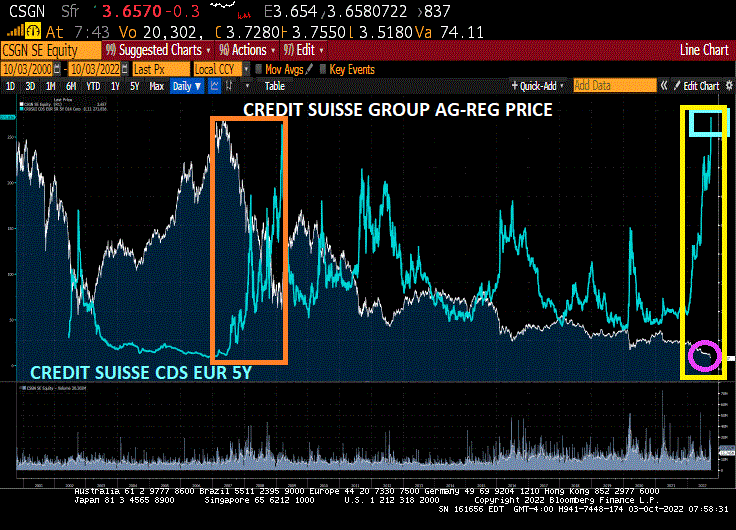
One notable difference between 2008 and today is that Credit Suisse’s equity was flying high in June 2007 then crashed a the global banking crisis went into full motion. We then saw Credit Suisse’s credit default swaps soar in early 2009. But today Credit Suisse’s equity is a pale imitation of its former self, but its credit default swap is now higher than it was at its peak in early 2009.
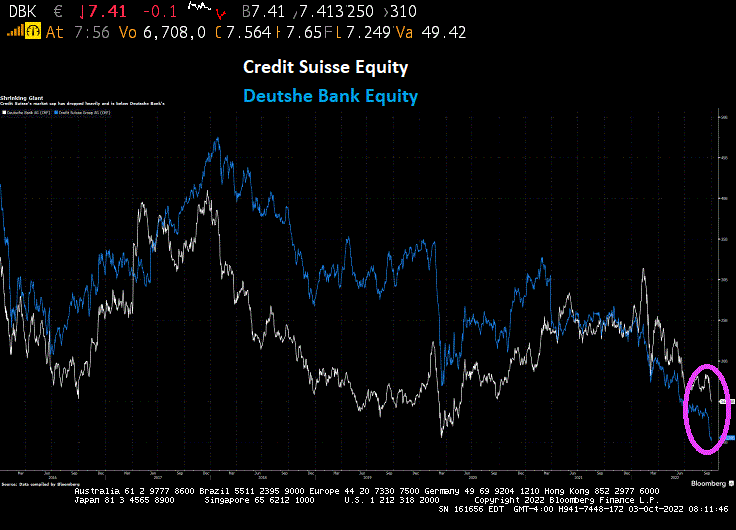
Credit Suisse is now trading lower than its European rival Deutsche Bank (aka, The Teutonic Titanic).
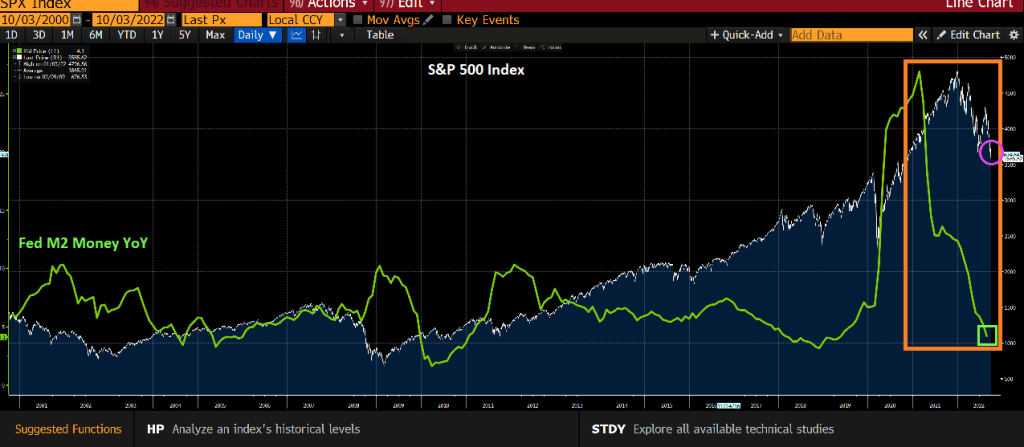
Yes, this brings back sickening memories of the 2008-2009 global financial crisis. Let’s see how The Federal Reserve, ECB and Bank of Switzerland handle this debacle, particularly with M2 Money growth so low.
It appears that we are in another Lehman debacle. Or should I say “Lemur Bros.”

The Great Recession, Part Deux? Evidence From the S&P 500, Treasury Bonds, Mortgage-backed Securities And The Unemployment Rate (Doesn’t Look Good)

Are we looking at The Great Recession, Part Deux?

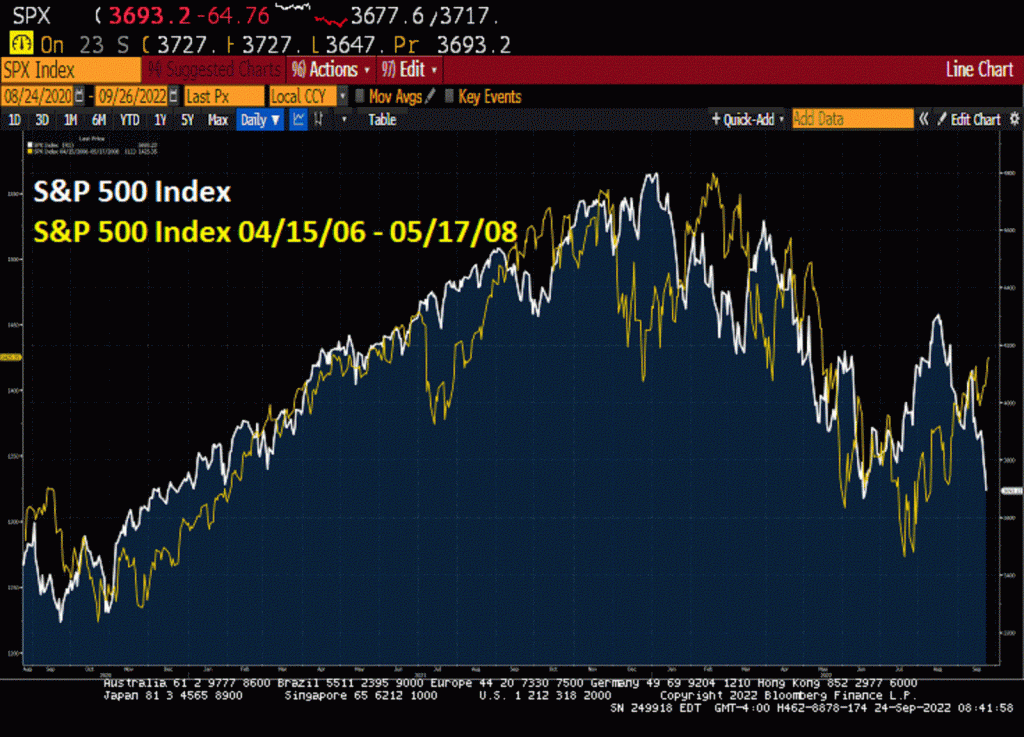
First, let’s look at the S&P 500 index since August 24, 2020 (white line) and compare that to just before The Great Recession 04/15/06 – 05/17/08. They look pretty similar.

Second, let’s look at returns on long-term US Treasuries (10yr+, white line) and US mortgage-backed securities (gold line) since The Fed undertook “Operation Crush Inflation!” (green line).

I saw The President’s press secretary fielding questions about the declining stock returns and impending recession. She responded “But the labor market is strong!” Well, Ms. Karine Jean-Pierre, I am sure President’s Biden economic advisor Jared Bernstein told you unemployment was at a very low level just prior to 1) The Great Recession and 2) The Great Covid-shutdown Recession). So, claiming that the US employment market is strong economy ignores that unemployment will surge if the economy slows … which is what The Fed is trying to do.

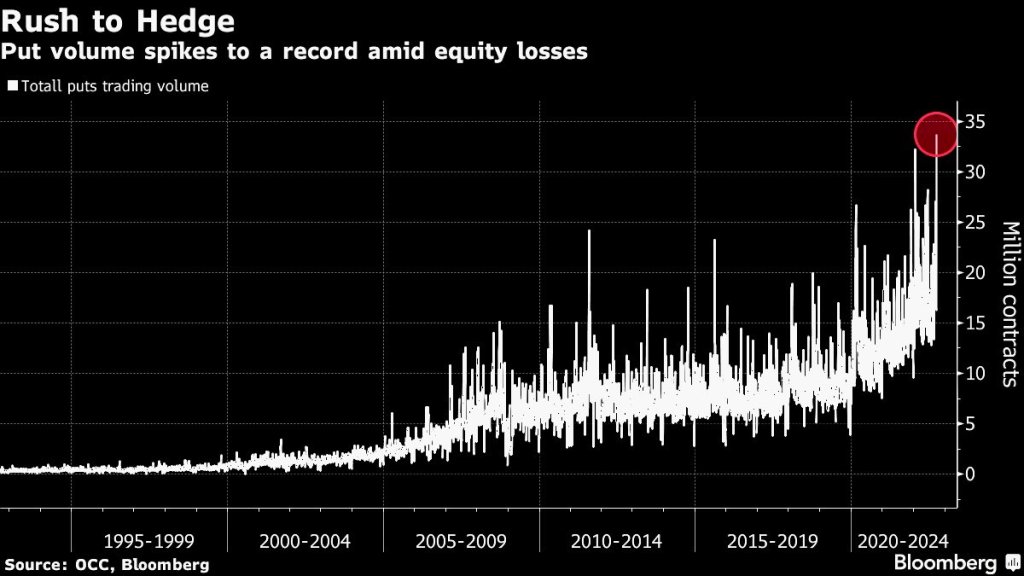
There is a rush to hedge the downside with The Fed tightening the monetary noose.

Unfortunately, KJP’s feeble answers to the shriveling economy remind me of The Office episode when Dunder-Mifflin’s CEO said that “Dunder-Mifflin is still a strong economy.”

Here is a photo of Joe Biden with his press secretary explaining that the US economy is still strong.

Slowdown! US 30Y Mortgage Rate Declines To 5.28% Despite Fed Rate Hikes (Global Recession Alert!)

After breaking the 6% barrier back in June 2022, Bankrate’s 30-year mortgage rate has backed-off to 5.28% despite Federal Reserve rate hikes.

The reason for the decline in the US Treasury 10-year is, amongst other things, a global economic slowdown (partly due to the US and Europe “going green” and cutting the supply of fossil fuel-based energy). Instead of “The Great Reset,” I call it “The Great Economic Suicide.” The 10-year US Treasury yield and Bankrate’s 30-year mortgage rate are declining with declining global GDP.

We are apparently no longer allowed to say the word “recession,” so let’s call it a SLOWDOWN.

Heartaches By The Number! Mortgage Applications Declined For Third week In A Row, Lowest Level Since 2000 (Applications DOWN -71% Under Biden, Mortgage Rates UP 99%)

Heartaches by the number!

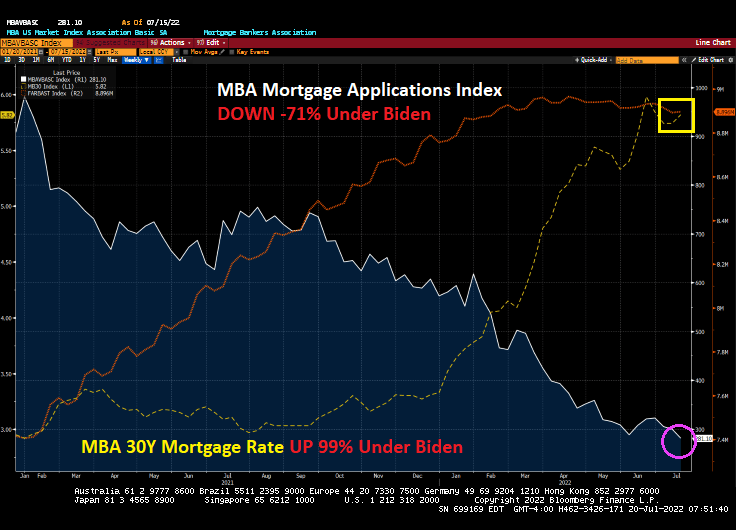
Mortgage applications declined for the third week in a row, reaching the lowest level since 2000.

Mortgage applications decreased 6.3 percent from one week earlier, according to data from the Mortgage Bankers Association’s (MBA) Weekly Mortgage Applications Survey for the week ending July 15, 2022.

The Refinance Index decreased 4 percent from the previous week and was 80 percent lower than the same week one year ago. The seasonally adjusted Purchase Index decreased 7 percent from one week earlier. The unadjusted Purchase Index increased 16 percent compared with the previous week and was 19 percent lower than the same week one year ago.

Heartache #1: Mortgage rates have risen 99% under Biden.

Heartache #2: Mortgage application have fallen -71% under Biden.

As The Federal Reserve continues to fight inflation caused by 1) excessive stimulus by The Federal Reserve and Federal government surrounding Covid and 2) Biden’s energy policies, we are seeing the mortgage market as collateral damage.


PIGS Facing The Fire (Again)! Portugal, Italy, Greece, Spain Seeing Surge In Sovereign Debt Yields

European PIGS must face the fire … again.

Once upon a time, European PIGS (Portugal, Italy, Greece and Spain) saw incredible spikes in their sovereign yields related to Greek credit default contagion. But the European Central Bank (ECB), World Bank (WB), International Money Fund (IMF) rose to the rescue.

But here we go again! Thanks to rising inflation, the ECB is threatening to remove the massive monetary stimulus. Sound familiar??

Here are the Eurozone 10-year sovereign yields as of this morning. Greece is up a whopping 27.4 basis points, Italy is up 11.7 BPS, Portugal is up 9.3 BPS and Spain is up 9.2 BPS. The core of the Eurozone, France and Germany, are up 4.3 and 3.0 BPS, respectively.

Germany has REAL 10Y Bunds yields of -4.7%.

Like the USA, the Eurozone Taylor Rule is much higher than the ECB’s Main Refinancing rate of 0%..

Here is ECB’s Christine Lagarde saying “What, me worry??”

The Nervous 19! Nineteen European Nations Have Negative 2Y Sovereign Yields (Only One Rate Increase Expected In 2022, ECB’s Stiff Monetary Policy)

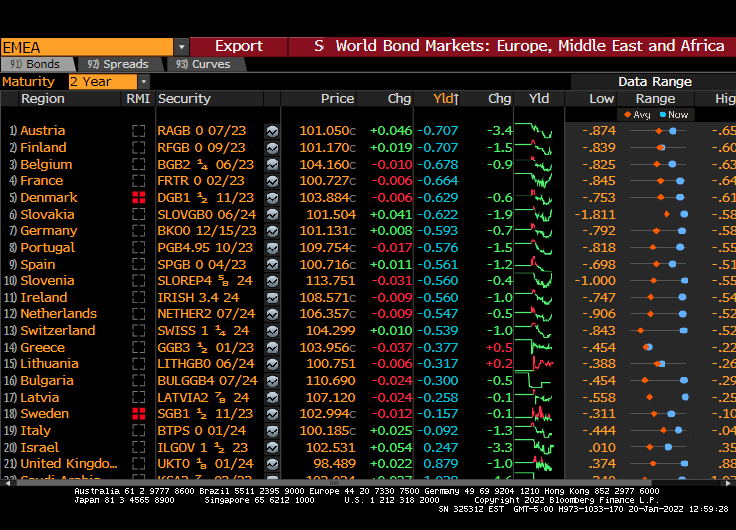
Let’s see how The Federal Reserve is going to compete with other central banks when 19 European nations have negative 2-year sovereign yields. Call them the “Nervous 19.” Note that France has the lowest 2Y yield of the big 3 (France -0.664%, Germany -0.593% and Italy -0.092%).

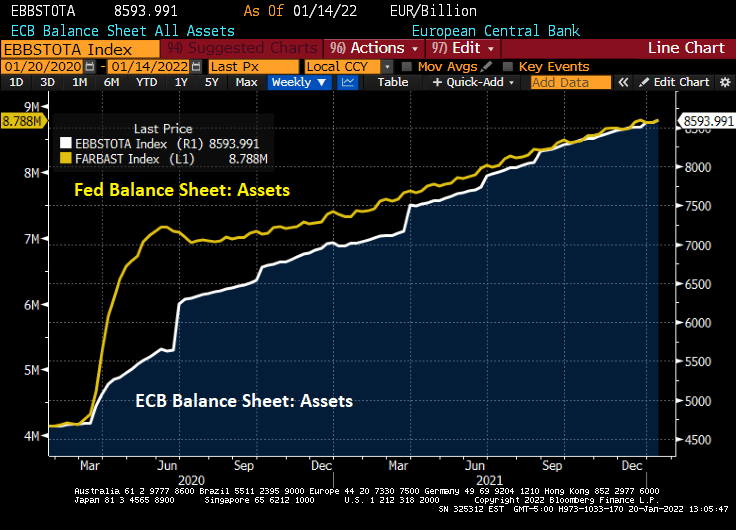
True, The Fed’s reaction to COVID shutdowns was more extreme than the ECB’s reaction.

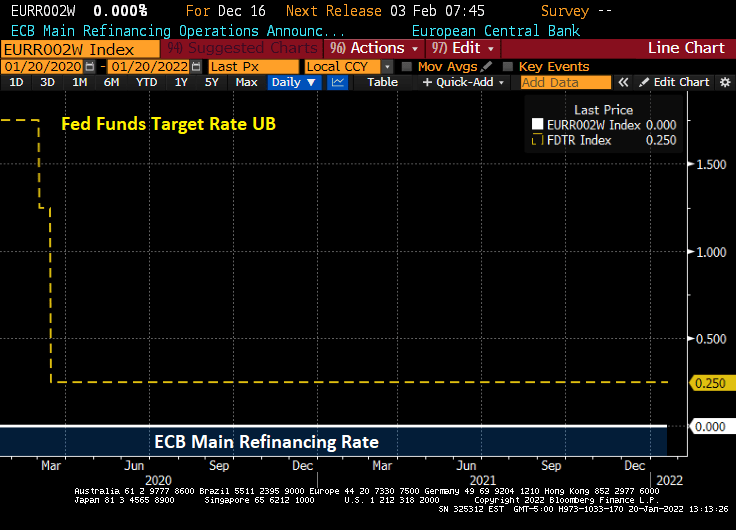
The ECB’s main refinancing rate is 0% and The Fed’s target rate is 0.25%.

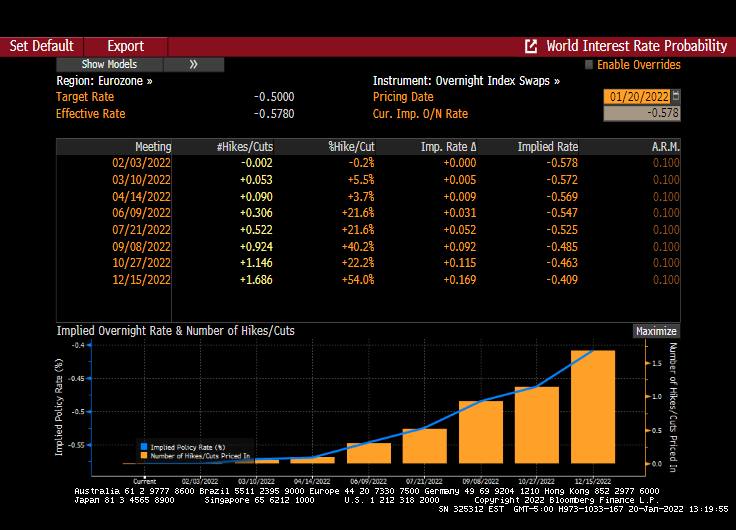
Unlike the US with its 4 expected rate increases, the Eurozone is pricing in only 1 rate increase for 2022 … in October.

The ECB’s monetary policy is as stiff as French President Emmanuel Macron.

German Inflation Rises To 5.3% As 10Y Sovereign Yield ALMOST Rises To 0% (France Inflation 2.7% With 10Y Sov Yield At +0.25%)

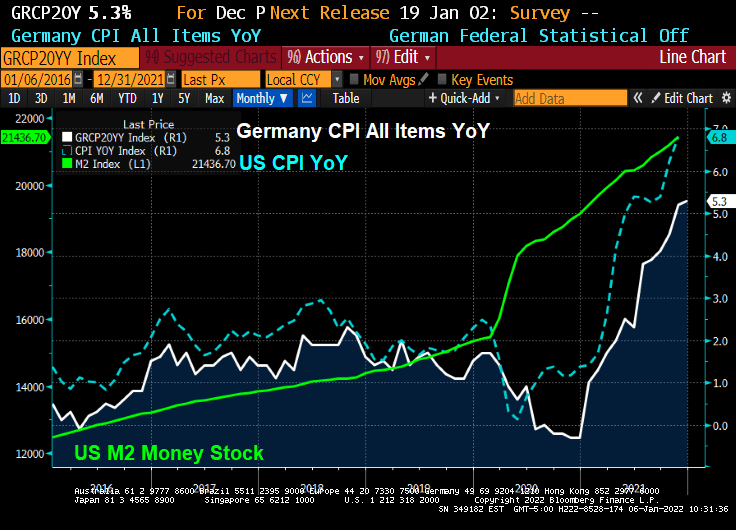
The world has become a wild and wacky place since COVID was unleashed on an unsuspecting population. Since the massive spending spree by The Federal government in the USA coupled with extraordinary monetary stimulus from The Federal Reserve, US inflation has shot up to 6.8% YoY.

German is also having an inflation moment. With their CPI YoY running at 5.3%, faster than the anticipated 5.1%.

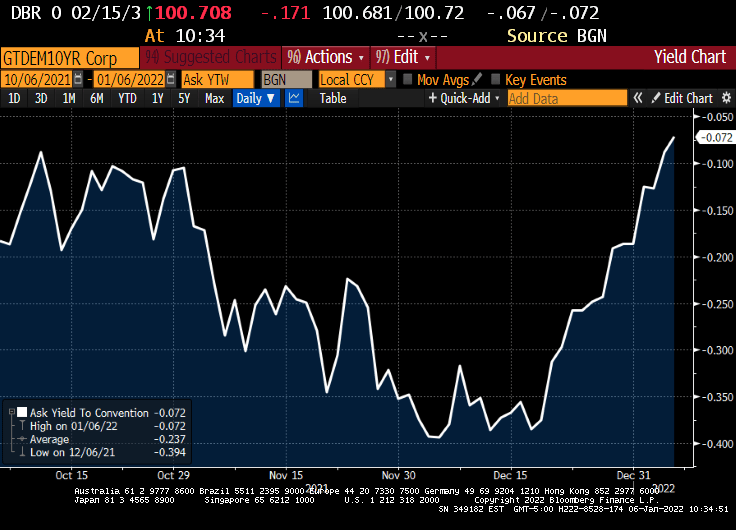
At least the German 10-year sovereign yield is ALMOST back to 0%.

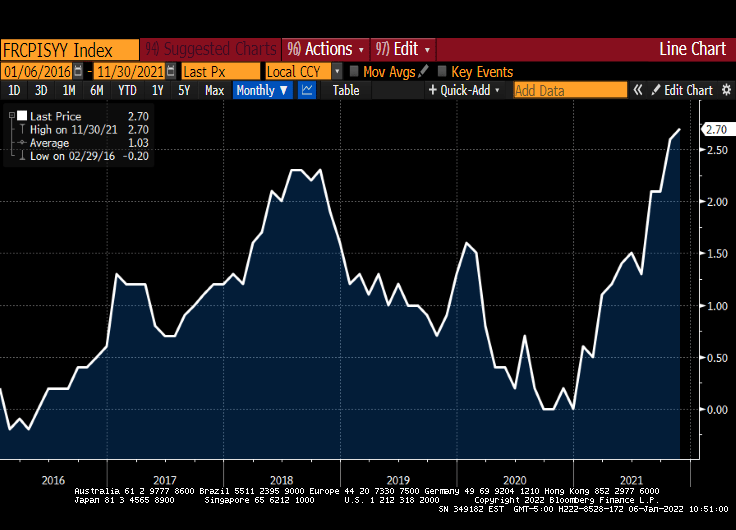
France, on the other hand, is seeing inflation rising to 2.70% YoY.

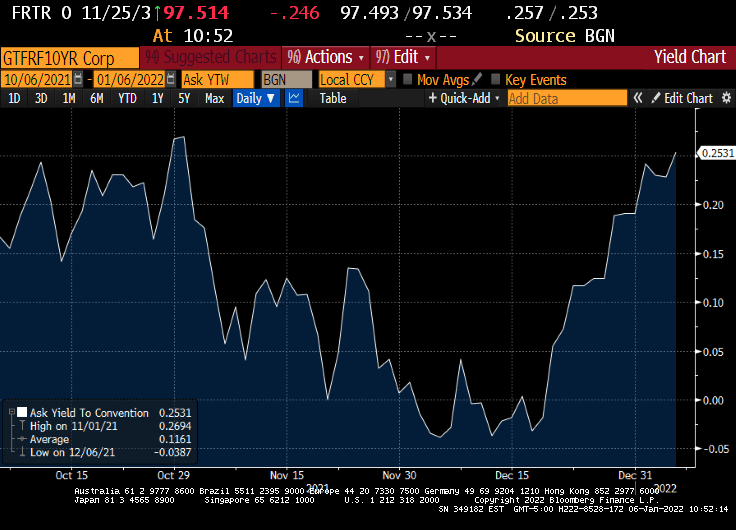
While the French 10Y sovereign yield rose to 0.2531%.

France’s Macron certainly likes to have his photo taken as if he wants to go 10 rounds with UK’s Tyson Fury.