Rocket And United Wholesale Mortgage Equity Drop To All-time Low On Fed Tightening (Despite Ukraine, Fed Looks To Keep Tightening)

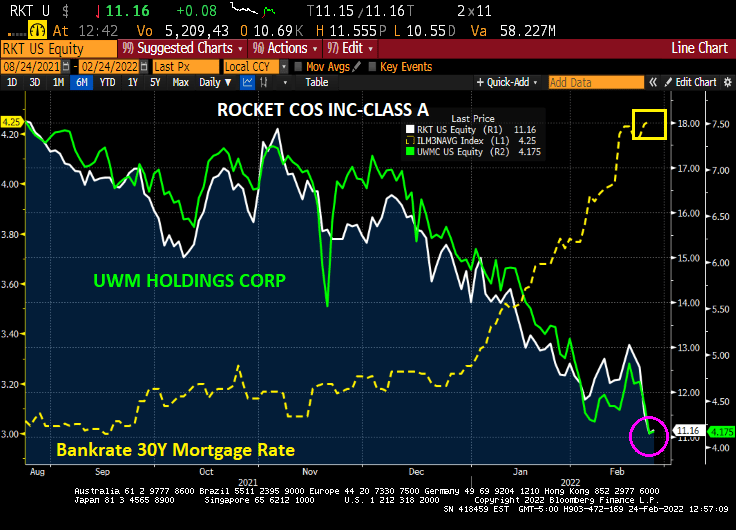
As The Federal Reserve threatens to tighten monetary policy, 30-year mortgage rates have risen to 4.25% leading two major mortgage companies, Rocket Mortgage and United Wholesale Mortgage, to decline to all-time lows.
But wait, Federal Reserve officials signaled they remain on track to raise interest rates next month despite uncertainty posed to the global economy by Russia’s invasion of Ukraine.

While acknowledging the risks created by the conflict, which has triggered one of the worst security crises in Europe since World War II and caused oil prices to surge, U.S. central bankers stressed the need to confront the hottest U.S. inflation in 40 years.

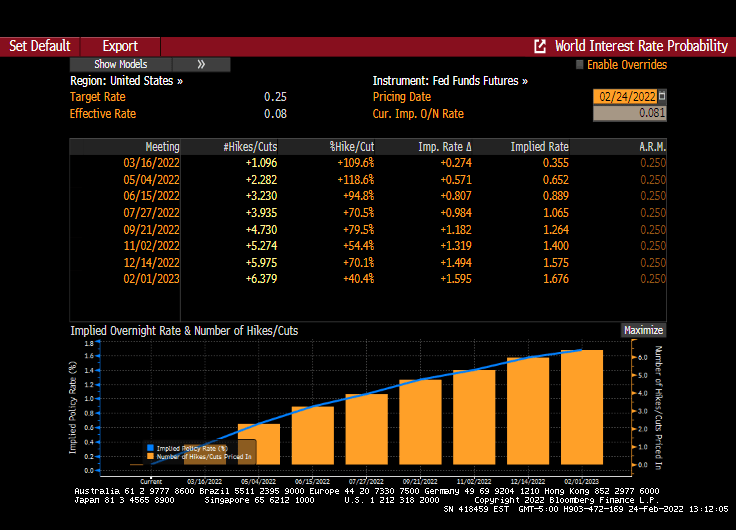
So, The Fed plans to raise rates to fight inflation, even if it tanks the housing and mortgage markets? Fed Funds Futures are still signaling 6 rate hikes over the next year.
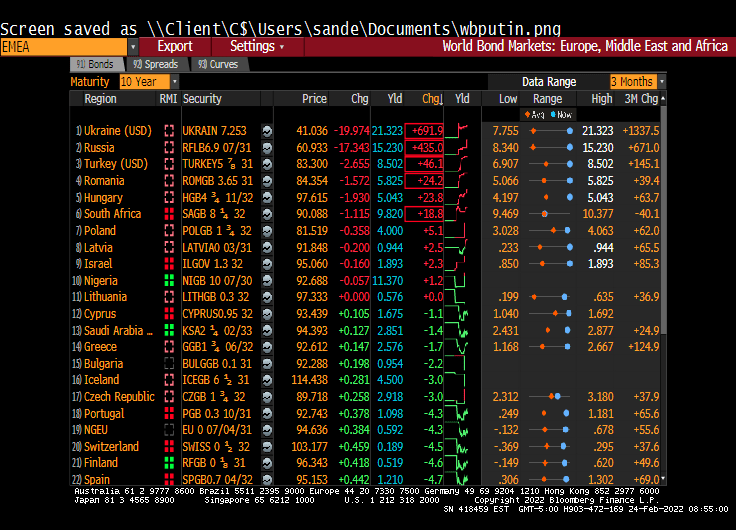
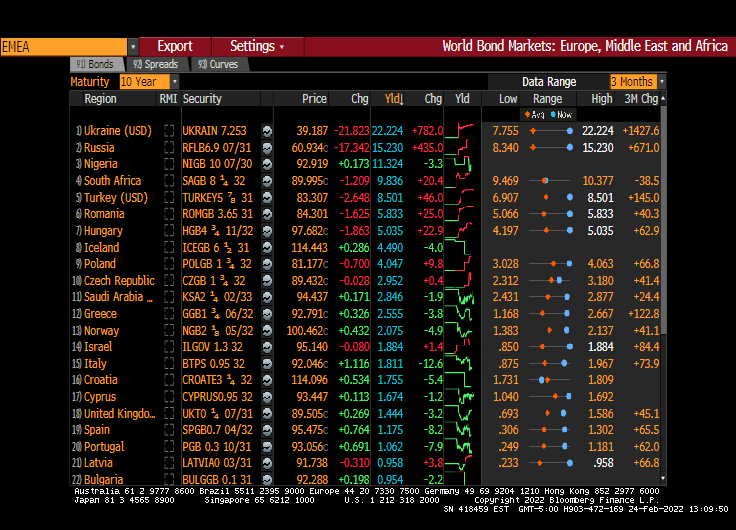
At least US Treasury 10Y yields are down just 7.6 bps. Look at 10Y Russian and Ukraine sovereign yields. Now THAT is a yield surge!

US New Home Sales Decline -19.3% YoY As Mortgage Rates Rise (Median Price Of New Home Sales UP 13.4% YoY)

US new home sales declined -19.3% YoY in January as mortgage rates have risen awfully fast.

On a MoM basis, US housing starts declined -4.53% from December, but heck … its winter. The median price for new homes rose 7.03% from December.

Median price of new home sales YoY is now 13.4% thanks to limited available inventory for sale.

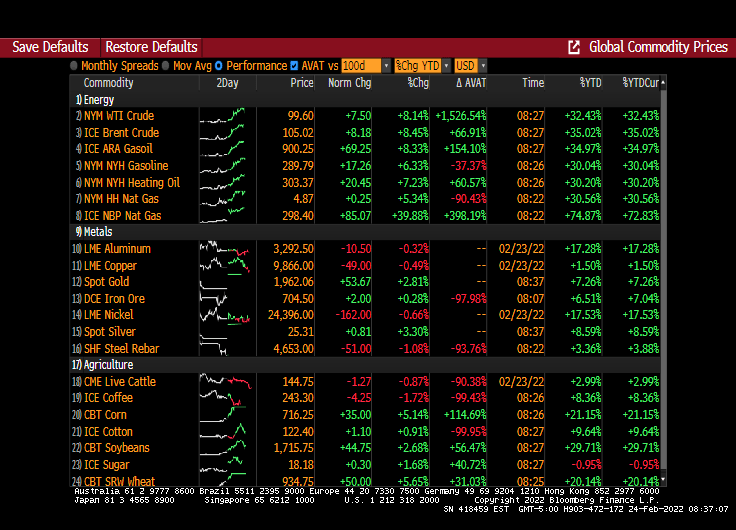
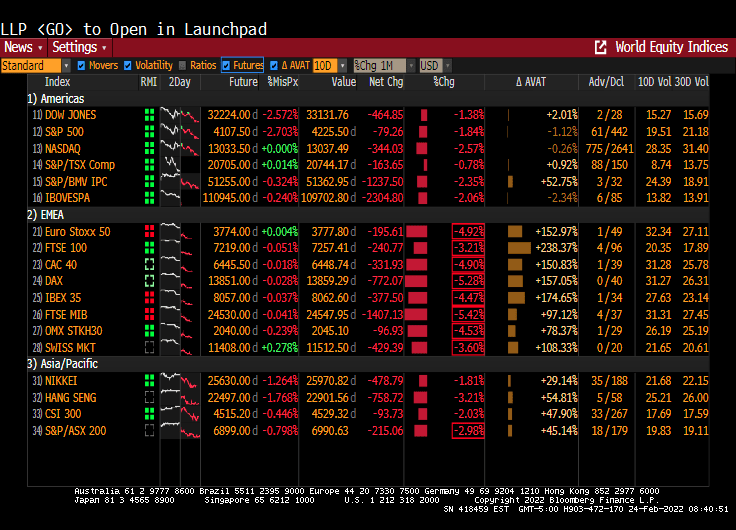
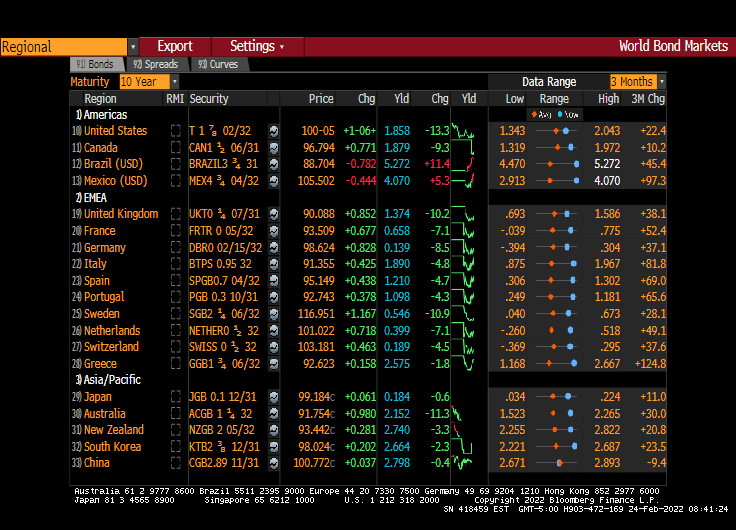
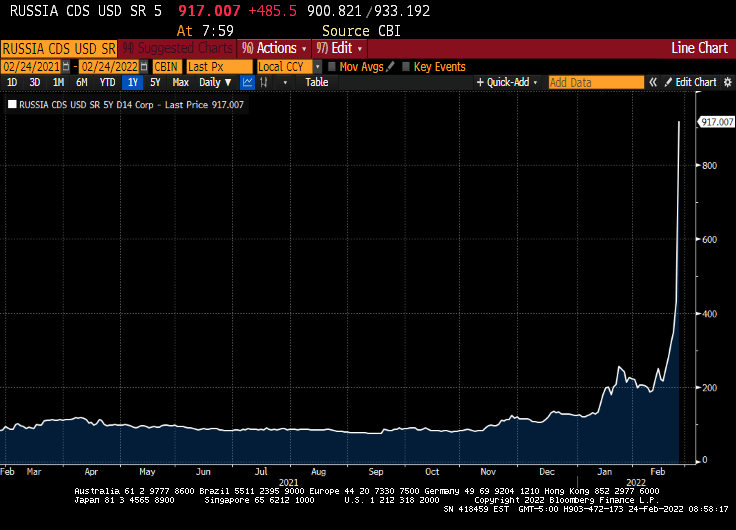
Putinesca! European Markets Tank, Energy Prices Explode, US 10Y Treasury Yields Plunge 13.3 BPS After Russia Invades Ukraine (Russian 5Y CDS Soars To 917)

I admit, I follow market data to get a signal of what is happening to mortgage rates and I got one. With Putin and Russia invading Ukraine, markets are in turmoil

WTI Crude is up 8.14% this morning, Brent Crude is up 8.45% and NBP (UK) Natural gas is up 40%.

Europe is having a bad day equity market-wise. Eurostoxx 50 was down 4.92%. The US Dow is braced for a 2.5% opening.

Now to bonds. The 10-year Treasury yield is down 13.3 bps this morning. Sweden and UK are down 10 bps as well.

How about the new Russian front? Ukraine’s 10y yield rose 691.0 bps while Russia’s 10Y yield rose 435 bps.

Russian 5Y Credit Default Swaps (CDS) leaped to a Greek-like 917.

Well, it looks like the sanctions imposed by Winken (US VP Harris), Blinken (US Secretary of State) and Nod (US President Biden because he always looks half-asleep) apparently didn’t work as intended.

Putin finally made up his mind.

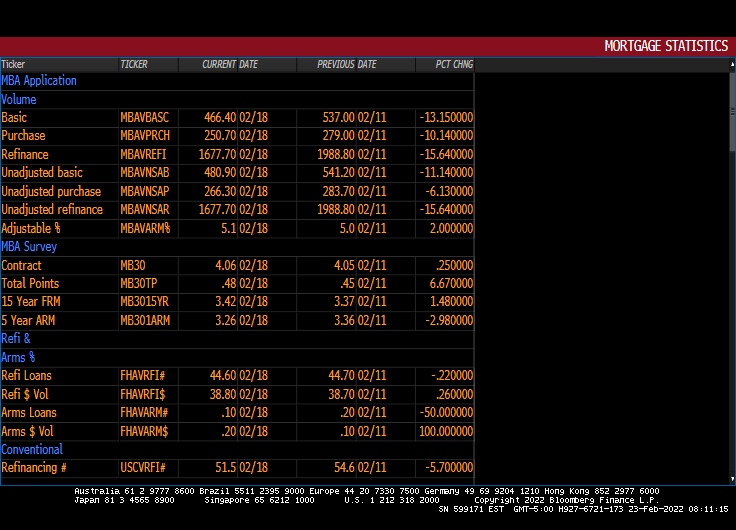
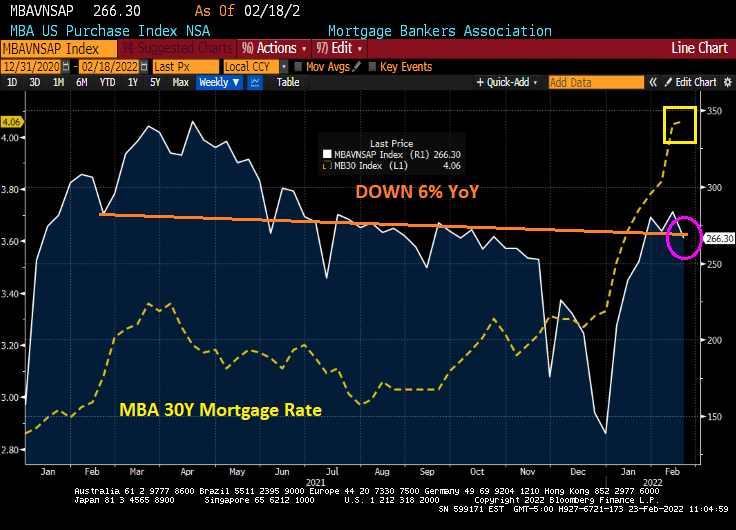
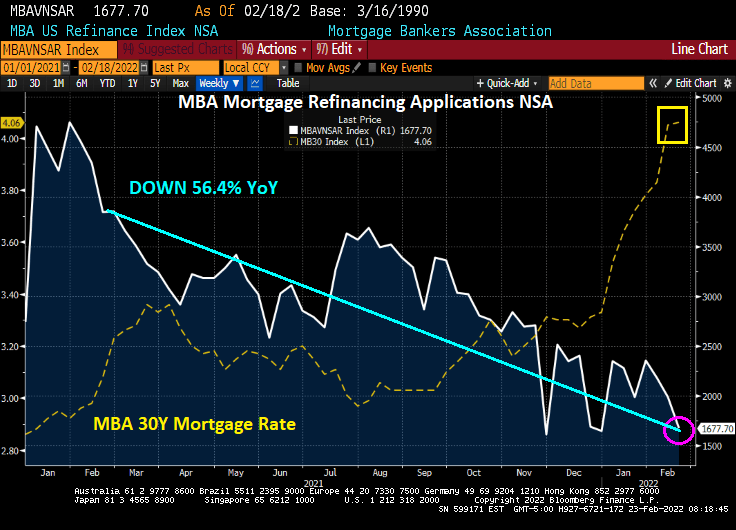
Alarm! Mortgage Purchase Applications DOWN 13.1% WoW, Mortgage Refinancing Applications DOWN 16% WoW (Thanks Federal Reserve!)

Alarm!

It is not surprising that applications for a residential mortgage have crashed and burned after The Federal Reserve’s announced intentions to raise their target rate and trim the ballast in the economic tanks. But dang!

Mortgage applications decreased 13.1 percent from one week earlier, according to data from the Mortgage Bankers Association’s (MBA) Weekly Mortgage Applications Survey for the week ending February 18, 2022.

The seasonally adjusted Purchase Index decreased 10 percent from one week earlier. The unadjusted Purchase Index decreased 6 percent compared with the previous week and was 6 percent lower than the same week one year ago.

The Refinance Index decreased 16 percent from the previous week and was 56.4 percent lower than the same week one year ago.

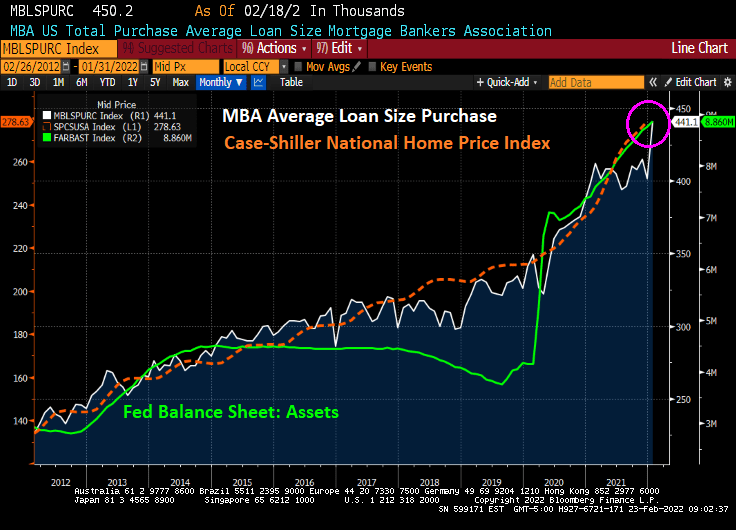
While the average loan size did not increase this week, it remained close to the survey’s record high.

What The Fed giveth, The Fed can taketh away. Let’s see if Thurston Powell The Great Magician can raise rates and NOT crash the housing and mortgage markets.

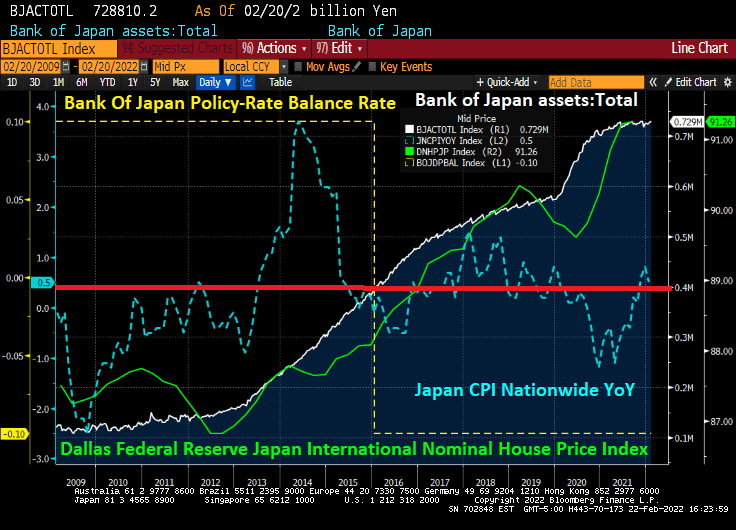
My Kuroda! Japan’s Inflation “Miracle” (0.5% Inflation) Despite $5 Trillion BOJ Balance Sheet And -0.10 Policy Rate

My Kuroda!

Forbes has an interesting article on the Japanese “miracle” entitled “The $5 Trillion Inflation Time Bomb No One’s Talking About.”

It’s taken nine years and the Bank of Japan supersizing its balance sheet to the $5 trillion mark, but Asia’s second-biggest economy finally has some inflation.

Officials in Tokyo are realizing the hard way, though, that it’s best to be careful what you wish for as bond yields spike.

Granted, the gains in consumer prices Japan is reporting are negligible compared to those in the U.S. and China. And inflation is still a good distance from the BOJ’s 2% target. Still, the 0.5% rise in consumer prices in January year-on-year is already unnerving the bond market. It followed a 0.8% jump in December and marks the fifth straight month of increases.

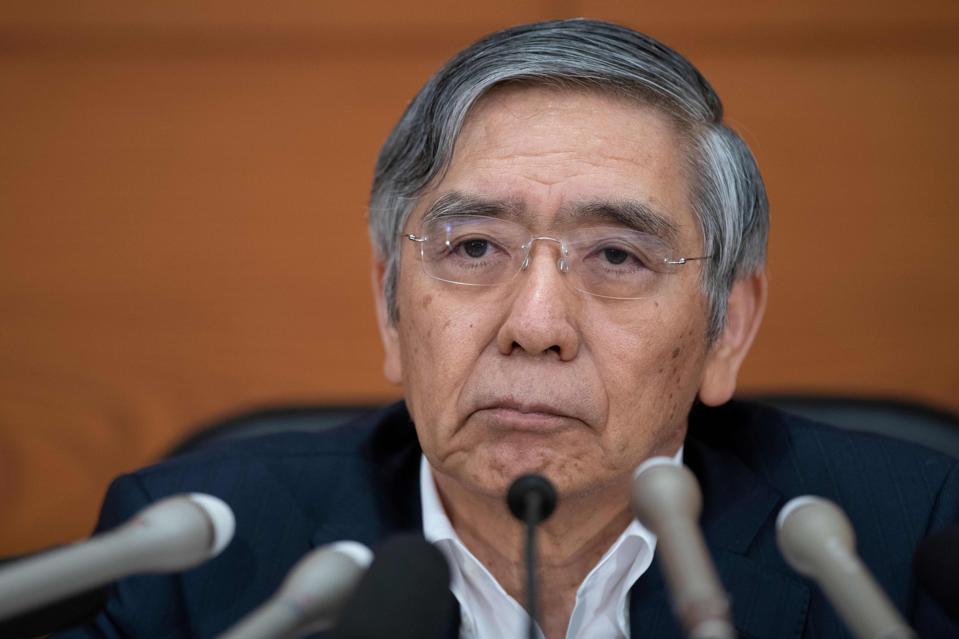
The worry is that Japan’s inflation is the “bad” kind. Haruhiko Kuroda was hired as BOJ governor in March 2013 to end deflation. Kuroda unleashed tidal waves of liquidity. That drove the yen down 30%, generated record corporate profits and sent Nikkei 225 Average stocks to 31-year highs.

Despite a staggering balance sheet with a -0.10 bps policy rate, Japan has only 0.5% inflation.

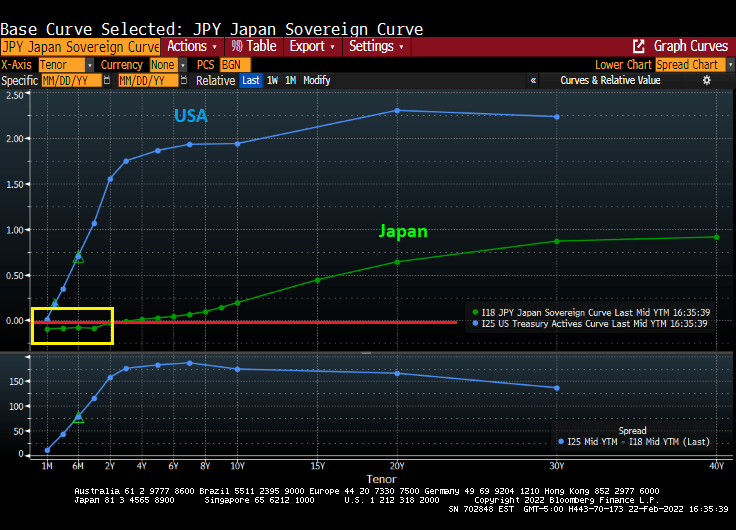
And Japan’s yield curve is negative at 3 year tenor and less.

How is it that Japan has virtually no inflation with negative rates but the USA has 7.5% inflation with a 0.25% target rate? Could it be the USA undertook massive fiscal spending related to COVID and reduced energy sources in an effort to go “green” that led to 7.5% inflation??

My Kuroda!

Good governments don’t go on wild, wasteful spending sprees and shut off energy sources like the Biden Administration and Congress.

Case-Shiller National Home Price Index Still HOT In December +18.84% YoY As Active Inventories Die (Phoenix AZ Fastest Growing At 32.5% YoY While Washington DC Is Slowest Growing At 10.5% YoY)

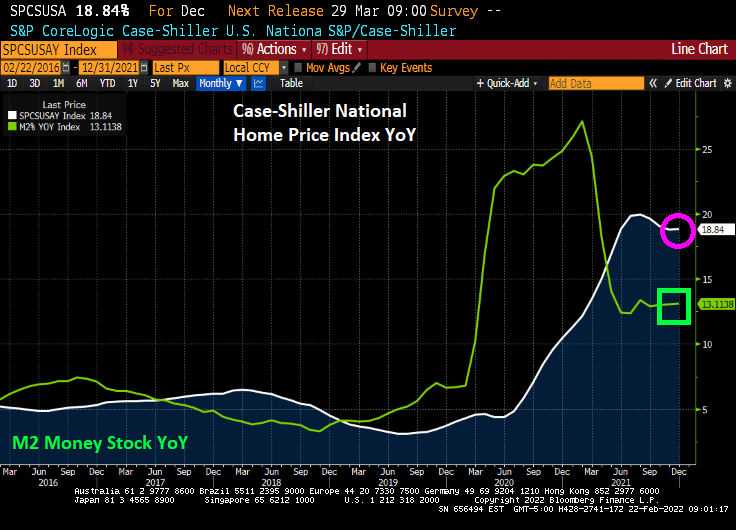
The S&P CoreLogic Case-Shiller National home price index remained HOT in December, growing at a 18.84% pace. M2 Money YoY is still smoking at 13.11%.

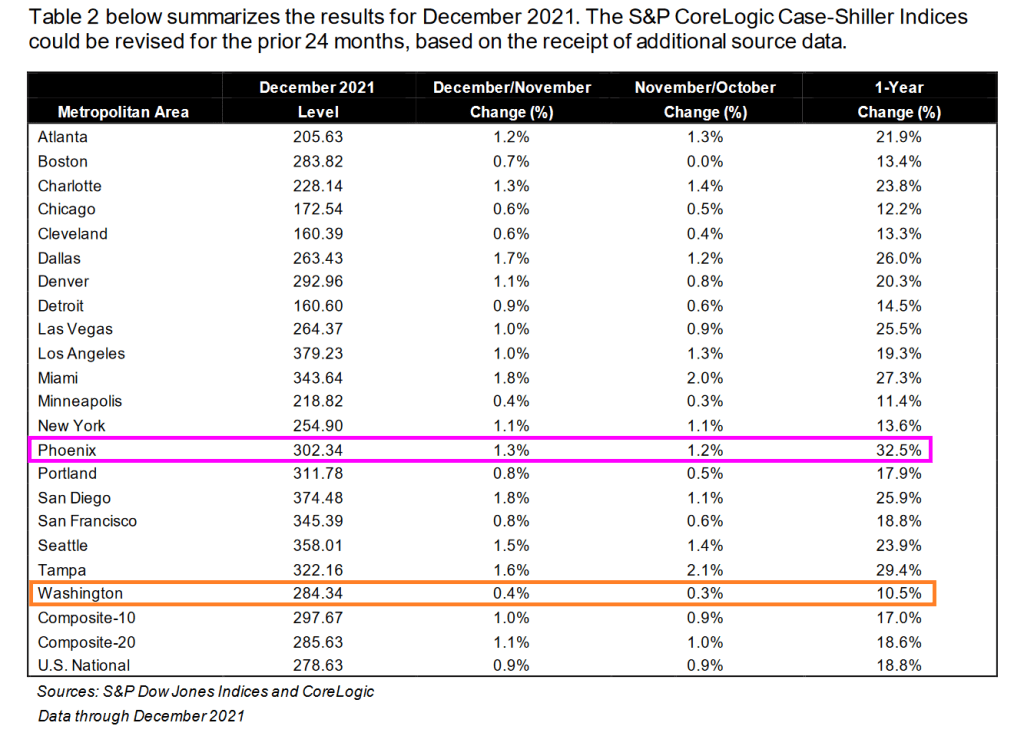
All 20 metro areas in the Case-Shiller 20 index grew at 10% or higher YoY with my former home city Phoenix leading the way at 32.5% YoY house price growth. Washington DC, aka Mordor on The Potomac, was in last place at 10.5% YoY.

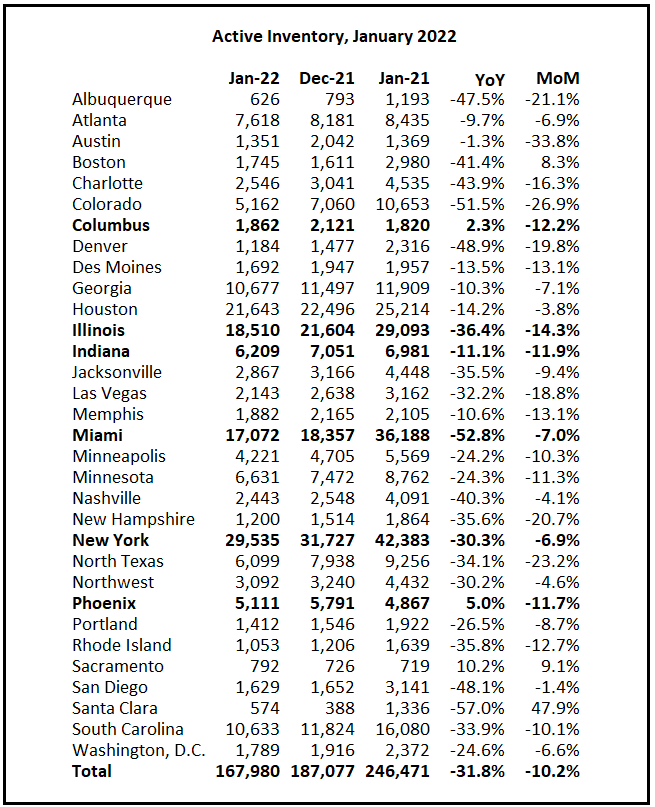
In terms of active inventory of housing, only Phoenix and Columbus Ohio are showing positive growth in active inventory YoY. But even Phoenix and Columbus saw a decline MoM (or month-over-month).

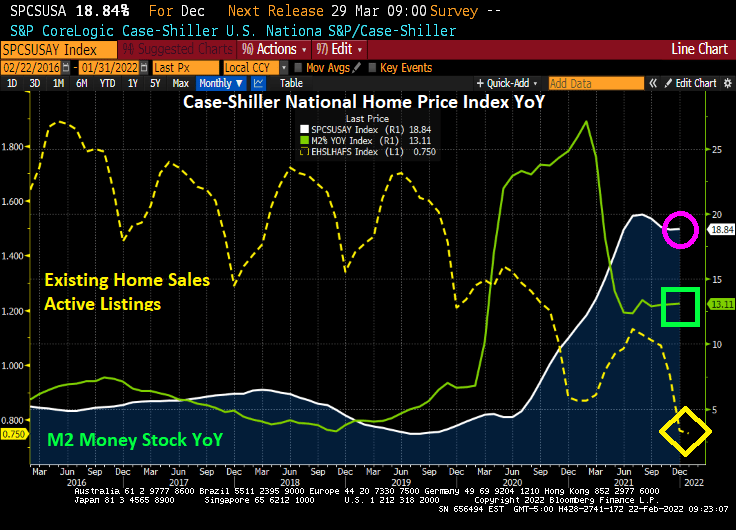
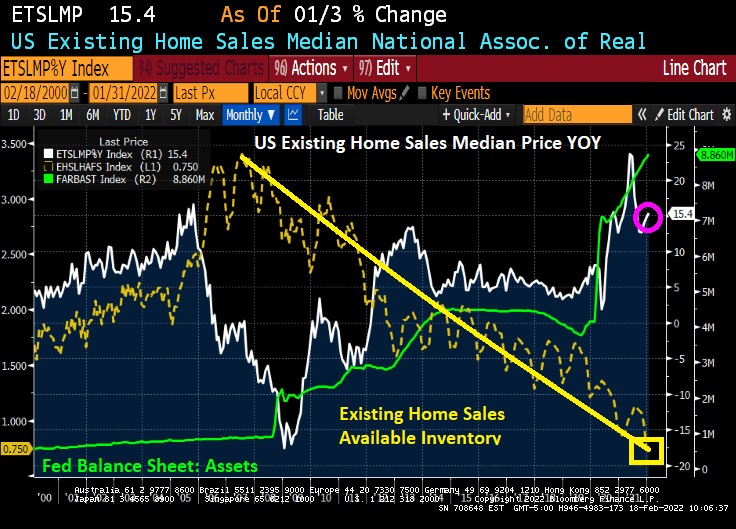
Including Existing Home Sales Active listings in the first chart, we see The Federal Reserve continuing to pump money at at 13.11% clip while active inventory is at an all-time low.

This is nuts.

Mortgage Rate Increases Subside As US Economy Slows, Yield Curve Flattens While Russian/Ukraine Tensions Grow

As US/Russian tensions grow over Ukraine, The Federal Reserve may be forced to postpone or reduce planned rate increases and balance sheet trimming.

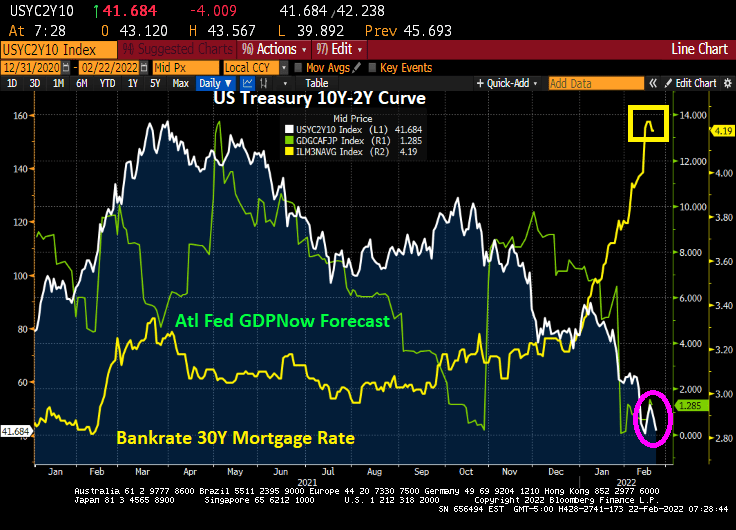
But in addition, we see US GDP slowing to near zero (1.285%) as the US Treasury 10Y-2Y yield curve has flattened to 41.684 BPS. The good news? Bankrate’s 30Y mortgage rate increases have slowed to 4.19%.

On a different note, I noticed the Chicago Bulls logo when turned upside-down looks like a space alien violating a crab.

Whip It! US Misery Index Highest In Modern History As Energy, Food And Building Material Prices SOAR (Flexible CPI Overwhelms Declining Unemployment Rate)

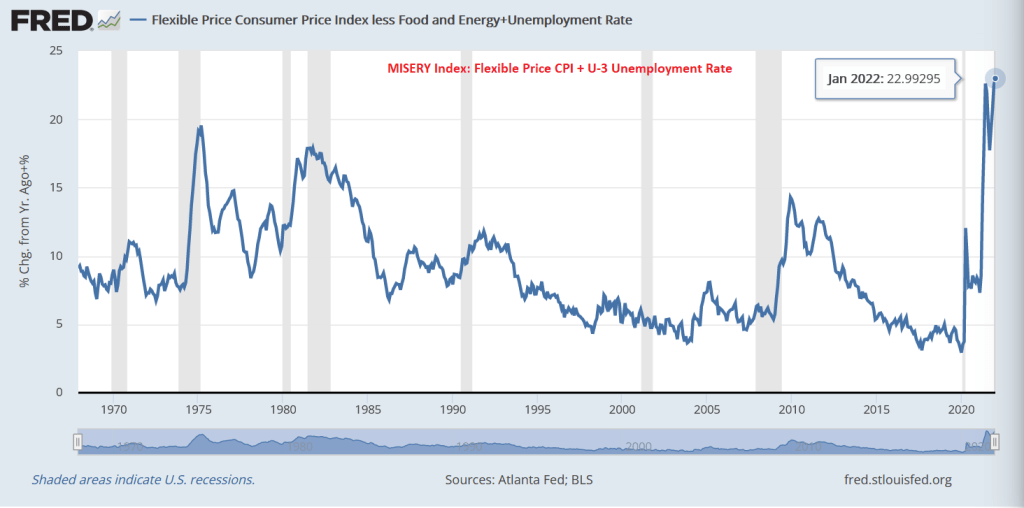
It is truly a miserable time for many Americans as demonstrated by the Misery Index (inflation rate + unemployment rate). But rather than using the CPI YoY measure at 7.5%, I am using the FLEXIBLE CPI YoY to compute the misery index. And is it ever miserable!
In January, the CORE flexible CPI YoY + U-3 unemployment rate hit a modern high at 22.99%. Or at least since 1967.

Like the movie “50 Shades of Gray,” we have 50 shades of inflation. Examples?

How about hardwood? Producer Price Index for hardwood is up 30.8% YoY.

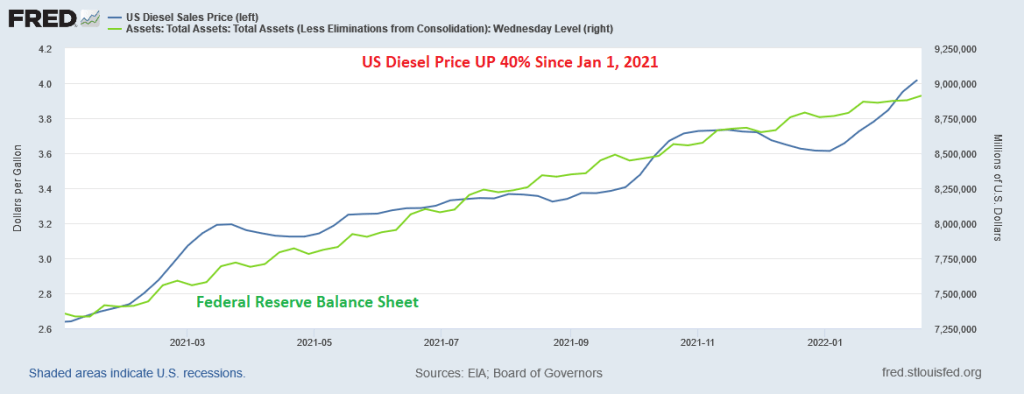
How about diesel fuel prices? They are UP 40% since January 1, 2021.

How about housing? UP 20% YoY according to Zillow’s home value index.

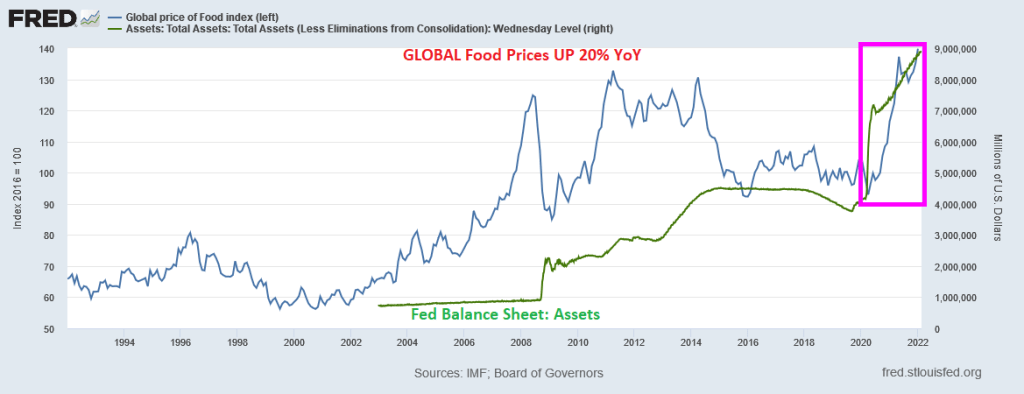
Global food prices? UP 20% YoY.

I could go on and on, but you get the picture. Rising energy, food and construction materials are soaring making many Americans miserable.

But Powell and The Fed have promised to whip inflation. Whip it good … with interest rate increases.

Surprise! US Existing Home Sales RISE 6.7% In January As Inventory Available Shrinks To Lowest Level Since 1981 (Panic Over Fed Rate Increases??)

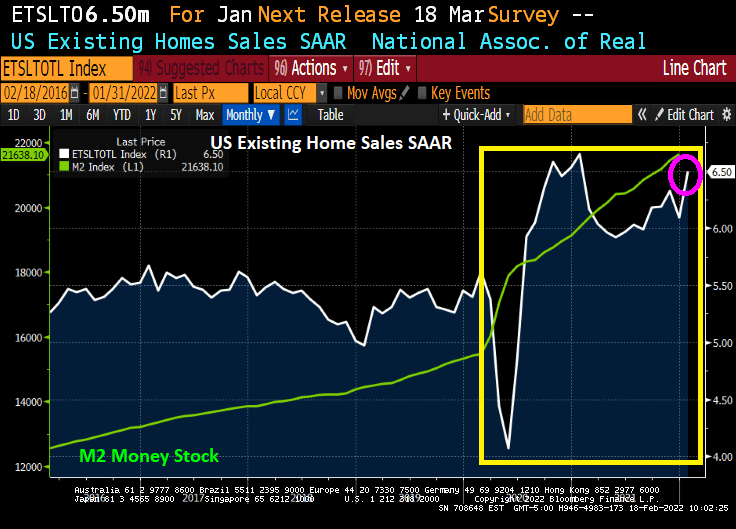
Surprise! US existing home sales in January rose to 6.50 million units SAAR versus the expected 6.10 million units. That is a 6.7% increase over December.

The disturbing news is the continued lack of available inventory that peaked in Q4 2007 and has continued its decline to today … the lowest level of available inventory since 1981. Despite the Fed’s massive stimulus that they allegedly will take away. Median price of existing home sales rose to 15.4% YoY. Making homes affordable should NOT be a slogan for The Federal Reserve, the Biden Administration or Congress.

The massive Federal stimulypto (fiscal and monetary) has helped push existing home sales to 6.50 million units SAAR in January. What will happen after The Fed withdraws it stimulus??

What is surprising is that with declining REAL wage growth, we saw a surge in home buying in January.

Remain calm, all is well!

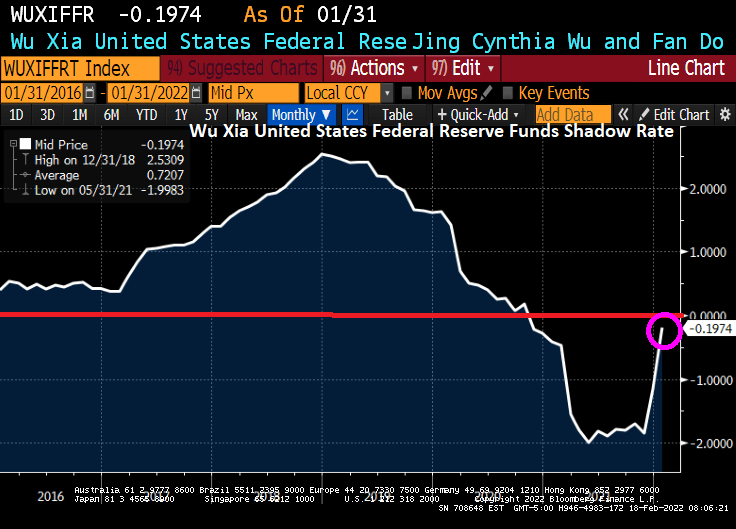
The Shadow Knows! Wu-Xia Shadow Fed Rate Is -0.1974% As Inflation (7.5%) Dwarfs Wage Growth (5.1%) And Q1 GDPNow Falls To 1.285%

The Shadow Knows!

Wu-Xia employs an approximation that makes a nonlinear term structure model extremely tractable for analysis of an economy operating near the zero lower bound for interest rates. It can be used to summarize the macroeconomic effects of unconventional monetary policy (ZIRP + QE). The Shadow Rate is now -0.1974%.

The good news? The Atlanta Fed Wage Growth tracker is showing a 5.1% wage growth. The bad news? Inflation is ruining that growth at a whopping 7.5% rate leaving REAL wage growth at -2.4%.

And the Atlanta Fed’s GDPNow Q1 forecast is a measly 1.285%. Apparently, the fiscal and monetary stimulypto has worn out.

And liquidity in the equity market has seemingly vanished.

The Biden Administration and Congress need a distraction from the awful inflation news caused by Biden’s energy policies, sheer wasteful spending and Federal Reserve policy errors (too much monetary stimulus for too long).