Inversion Therapy? Yield Curve Continues Inversion As Fed Slows Down Treasury Purchases (Mortgage Rates Climb To 4.91%) Biden Orders Autos Have 49 MPG By 2026

Its official! I submitted my resignation from George Mason University effective June 1, 2022. I will miss teaching the students, past and present.

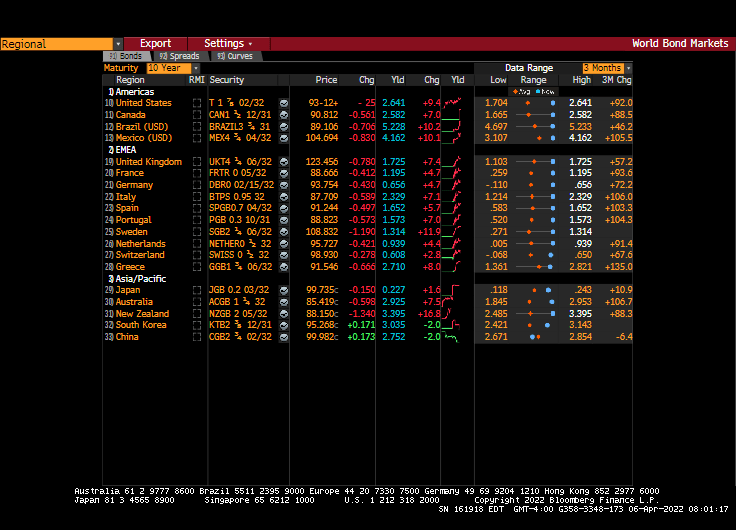
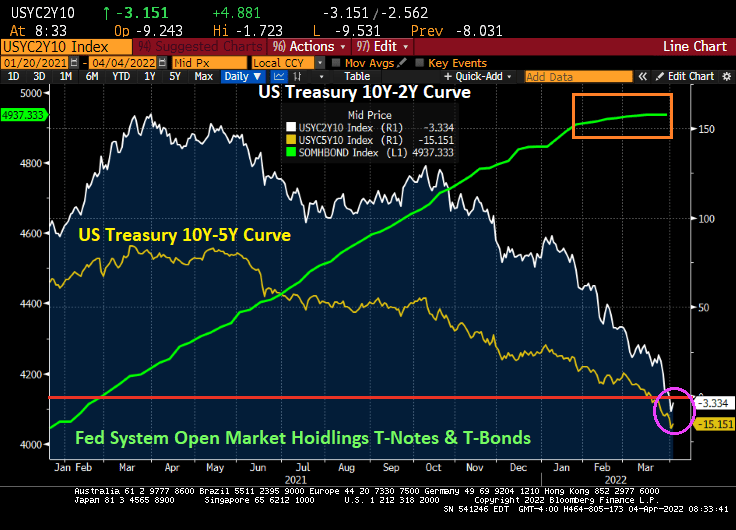
But back to the US Treasury yield curve. It remains in reversion (meaning shorter-term Treasuries have higher yields than longer-term Treasuries, usually a sign of impending recession. The Fed has actually started quantitative tightening (QT) and the growth rate of Treasury note and bond purchases has slowed to a crawl.
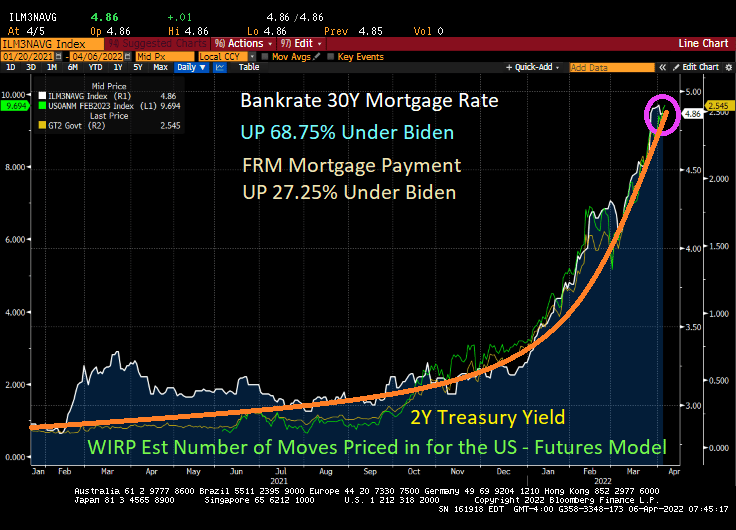
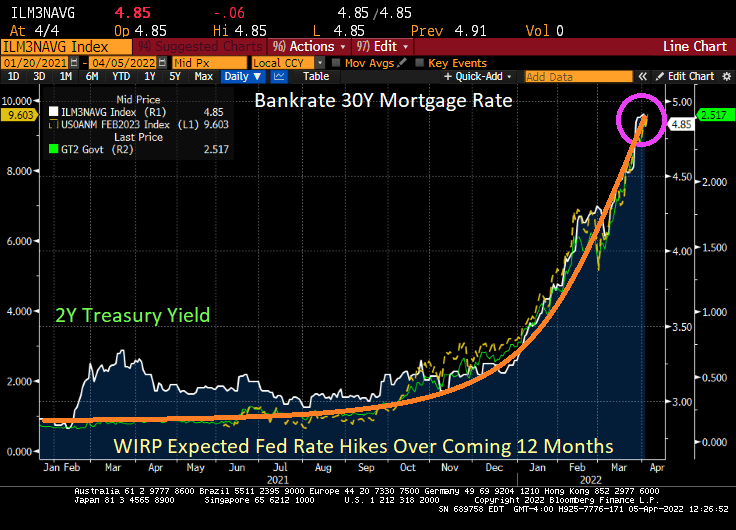
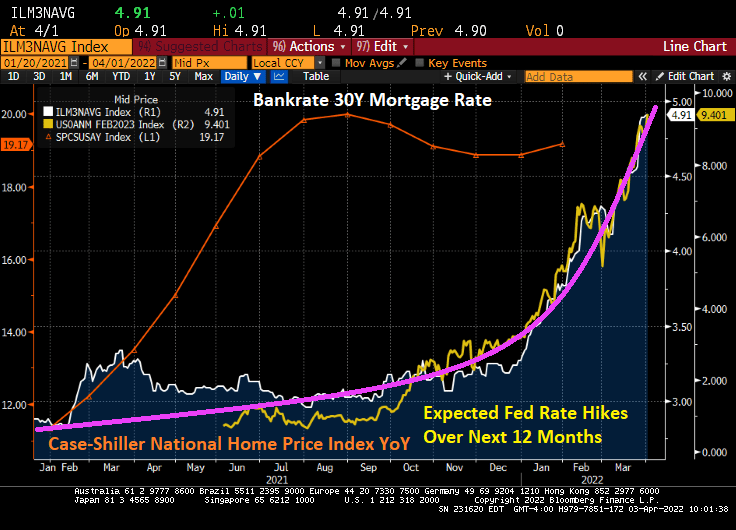
Meanwhile, Bankrate’s 30-year mortgage rate rose slightly to 4.91%.

Meanwhile, President Joe “The Big Guy” Biden has ordered carmakers to increase their average fuel economy to about 49 miles (78.8 kilometers) per gallon by 2026. Of course, this is intended to kill-off gasoline-powered autos and make all cars electric or hybrid like the Toyota Prius.

According to Kelley Blue Book, the average transaction price for an electric vehicle in April 2021 was $51,532. That’s more than $11,000 higher than what you’d pay at the dealership for a full-size gas-powered car, and nearly $30,000 more than the average compact car sale.

This can be the Democrat’s midterm election slogan: “Making living in the USA unaffordable!”

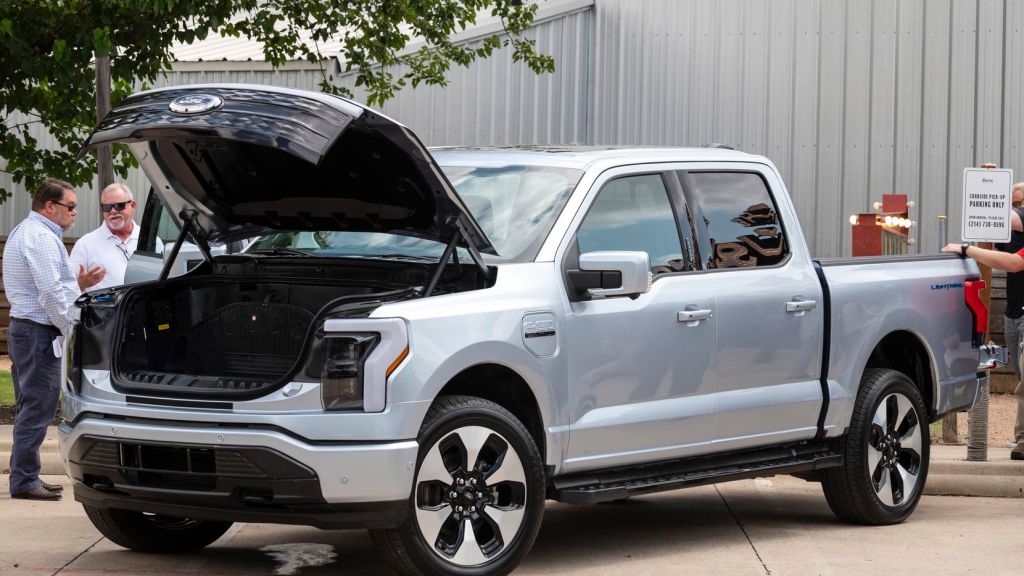
The middle-class unaffordable Ford F-150 Lightning at nearly $100,000. Thanks Joe!

Alternatively, you can buy a Buick Envision (made only in Shanghai China) with up to 24 city / 31 highway MPG. Well, kiss that baby goodbye under Biden’s new MPG mandate.

The Great Reset … In Asset Returns (Commodities Soaring, Treasuries Tanking, Home Price Growth Still 4x Soaring Mortgage Rates)

Numerous elites like Klaus Schwab of The World Economic Forum (and Davos fame) are calling for a “Great Reset” in global economies. But perhaps “The Great Reset” in taking place in asset markets … and not in a good way.

Consider what has happened since President Biden was elected. The S&P 500 total return index (green index) has risen thanks to The Federal Reserve’s balance sheet expansion (orange line) with COVID. Until 2022 when the expectation of Fed rate hikes surged from 3 in late December 2021 to 9.4 expected rate hikes over the next 12 months (yellow line).

The US Treasury total return index (white line) has gotten crushed with The Fed’s signals of rate hikes and quantitative tightening (QT). Call it “White Line Fever.” The commodity total return index (blue line) has surged as The Fed’s expected rate hikes have risen from 3 to 9.4 in 2022.

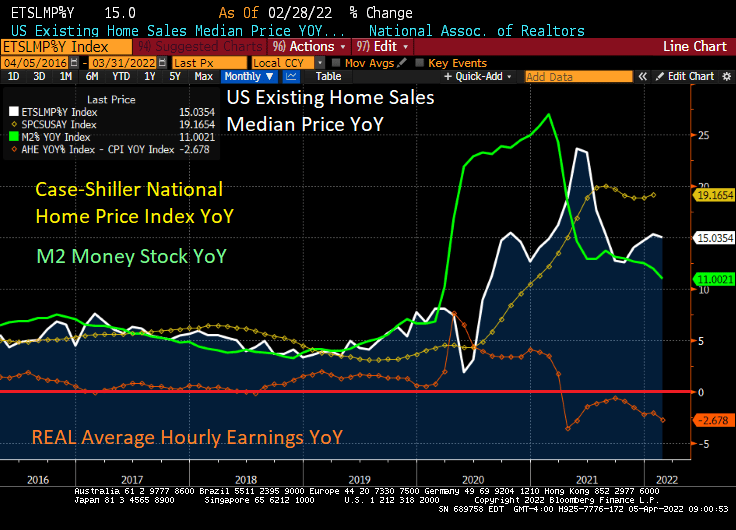
Is The Fed causing a Great Reset in housing? In 2022, we see the surge in Fed rate hike expectations leading the 30-year mortgage rate to be nearly 5%. The last Case-Shiller home price index was for January and it was still raging at 19.17% YoY growth. Let’s see if The Fed’s QT will slow down home price growth. But home prices are growing at 4x 30-year mortgage rates.

I hope that Klaus Schwab and the global elites pick us up on our way down. But probably not.

So let’s see if The Fed still is going to withdraw its “Snake Juice” from the market.

Now A Warning? Dallas Fed Warns That A Housing Bubble Is Brewing (Too Late, Its Already Here!)

This clip from the Bruce Willis and Meryl Streep film “Death Becomes Her” perfectly represents the predicament surrounding The Federal Reserve’s loose monetary policies and housing prices: “Now a warning” after Meryl Streep ingests The Fed’s magic monetary elixir.

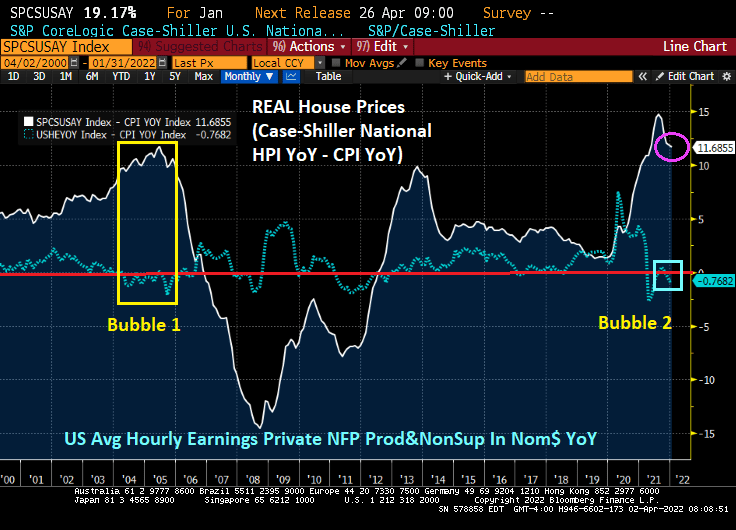
The Dallas Federal Reserve issued a warning recently that a housing bubble is brewing … after the economy drank its magic monetary elixir. We can see the housing bubble clearly (defined as the spread between REAL home price growth and REAL average hourly earnings). Notice that the current housing bubble looks similar to the infamous 2005 housing bubble. And the US is seeing several months of the spread between REAL home price growth and REAL hourly earnings be even higher than the peak of the 2005 bubble.

The Federal Reserve is starting to slow down its asset purchases, so we should see a cooling of the housing bubble. Unless, of course, The Fed changes its tune from quantitative tightening (QT) back to quantitative easing (QE) … again.

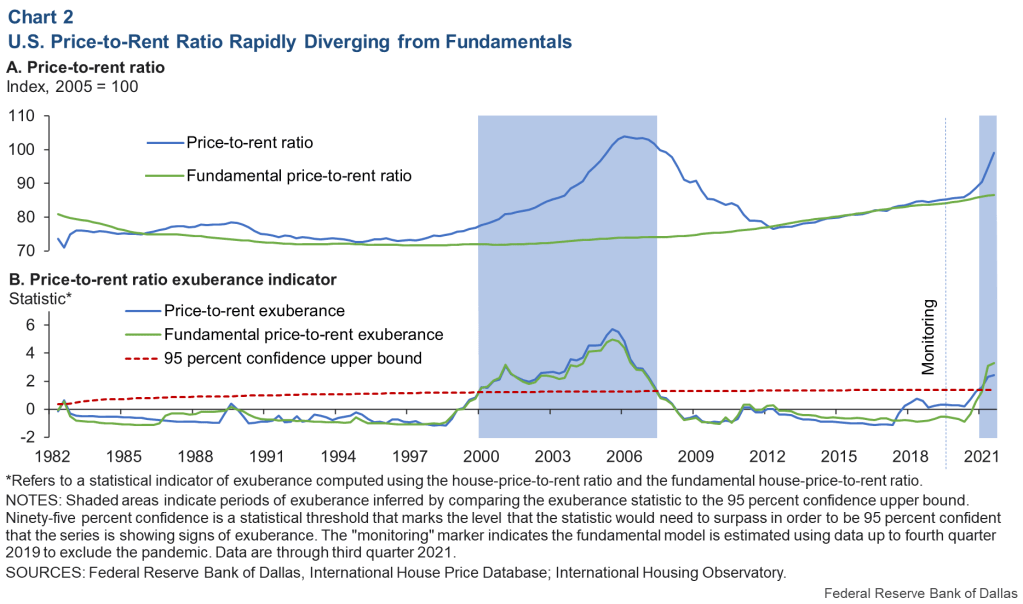
The Dallas Fed has a measure of housing “exuberance” which shows a bubble forming, but not there yet. I like the spread between real house price growth and real hourly earnings better.

The Dallas Fed also has a price-to-rent chart also showing growing exuberance.

But if we look at the Case-Shiller National HPI YoY to US CPI Urban Consumers Owners Equivalent Rent of Residences YoY we see that the US is currently experiencing a price-to-rent ratio higher than the peak of the 2005 house price bubble. What is the culprit? The vast expansion of monetary and fiscal Stimuylpto surrounding the Covid outbreak in early 2020.

So, the Dallas Fed thinks that is a house price bubble is brewing, but it has actually been in the works since QE3 in 2013 (bubble 2), but really took off with The Fed’s stimulypto and Federal COVID spending surrounding the COVID outbreak in early 2020.

Here is a rare video of Fed Chair Jerome Powell at the recent Fed Open Market Committee meeting deciding on removing the toxic monetary elixir from the system.


Here is a video of Jordan Spieth at the Valero Open engaging in putting errors like The Fed’s policy errors.

Run, Runaway! February PCE Core Deflator YoY Rises To 5.4%, Highest Since 1983, As Fed Keeps Foot On Monetary Gas Pedal (Spread Between PCE Core Deflator And Fed Funds Target Rate Highest Since 1970)

Run, runaway!

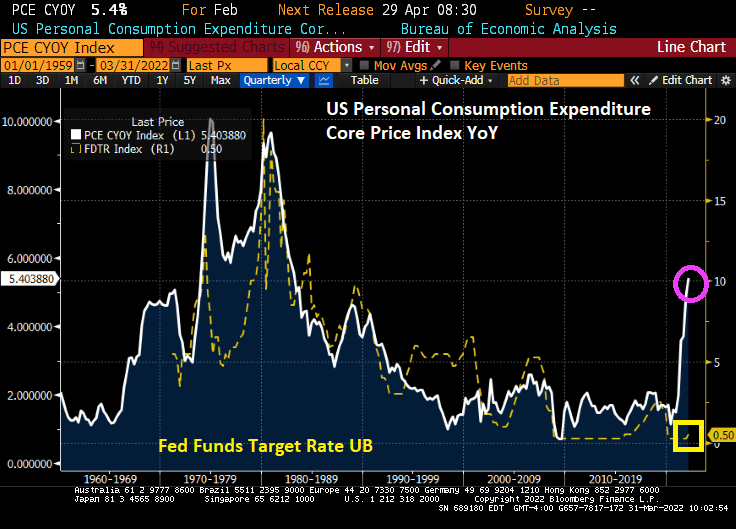
February’s Core Personal Consumption Expenditures (PCE) price YoY grew to 5.4%, the highest since 1983. The spread between the PCE Core Deflator and The Fed Funds Target Rate (upper bound)

In terms of the spread, it is the highest since the 1970s.

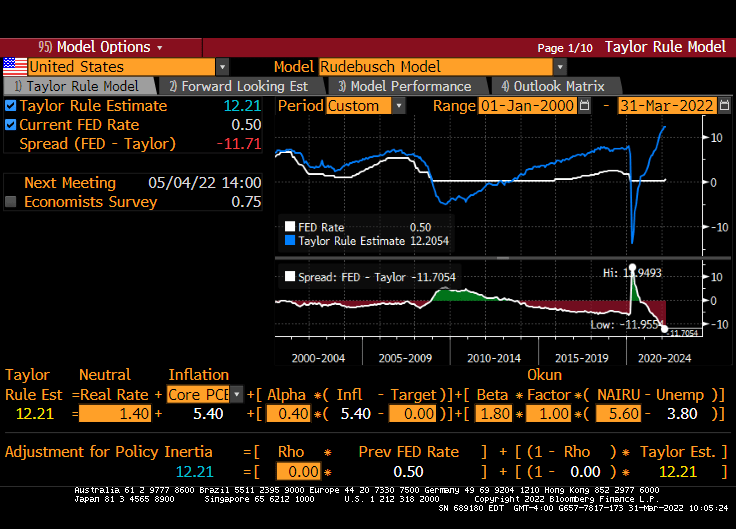
The Taylor Rule (which Jerome Powell probably thinks is the New Jersey breakfast meat “Taylor Ham”) indicates that The Fed’s target rate should be 12.21%. This is using the Rudebusch specification of the Taylor Rule.

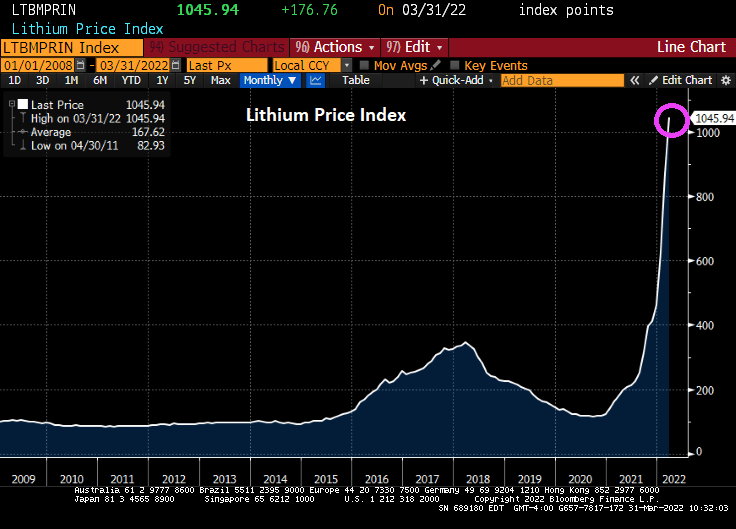
Now that the Biden Administration is going gangbusters on building electric cars, lithium prices are going through the roof.

The Federal Reserve’s new theme song is “Come Feel The Inflation!”

Noddy Powell?

The Powellenburg Omen! Will Powell Pop The Asset Bubble Created By The Fed’s Repeated Policy Errors? (Blackrock Rises, NVR Homes Gets Crushed)

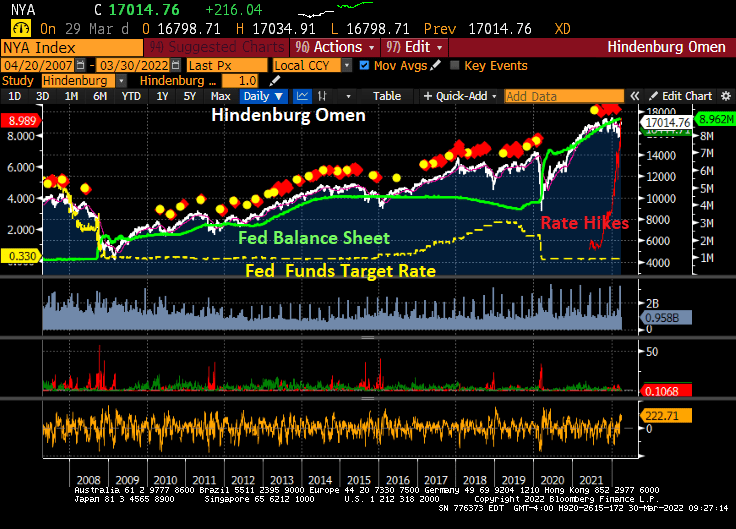
As of today, Jerome “Nero” Powell and The Gang at The Federal Reserve have not trimmed the Fed’s balance sheet and have only raised their target rate once under President Biden.

Here is the Hindenburg Omen, named for the catastrophic explosion on May 6, 1937 at Lakehurst Naval Air Station in New Jersey. The Hindenburg Omen was flashing red before the stock market correction of late 2007-2009. But, the Hindenburg Omen has flashed red repeatedly since the financial crisis, yet the S&P 500 index has kept rising. The reason? Repeated policy errors by The Fed leaving monetary stimulus in place for too long leading to a bubble forming in the stock market.

The Shiller CAPE (Cyclically-adjust price-earnings) ratio is at the second highest level since the 1800s. The highest point was the infamous Dot.com bubble and bust in 2000/2001.

Since The Fed continues to say “We have a plan!” to slow/shrink The Fed’s balance sheet and raise their target rate … it has not done anything yet (other than a 25 basis point bump at the March meeting).

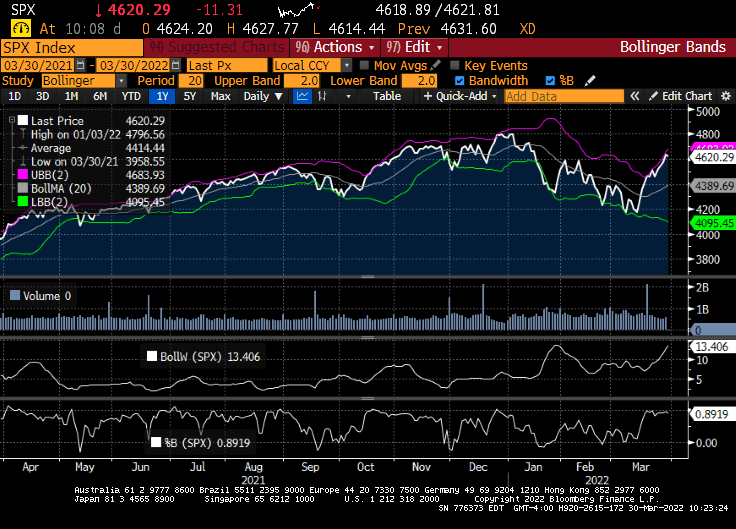
I am not advocating technical analysis for stocks, but the Bollinger Band analysis for the S&P500 index is showing the S&P 500 index near the top band indicating that a decline in likely.

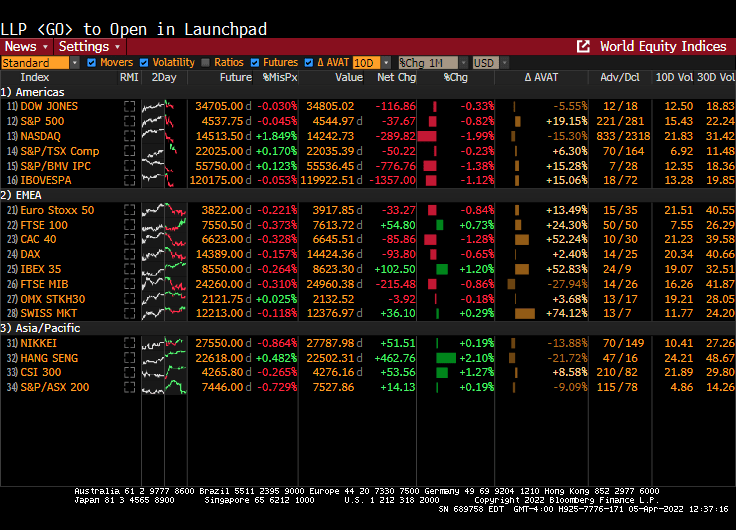
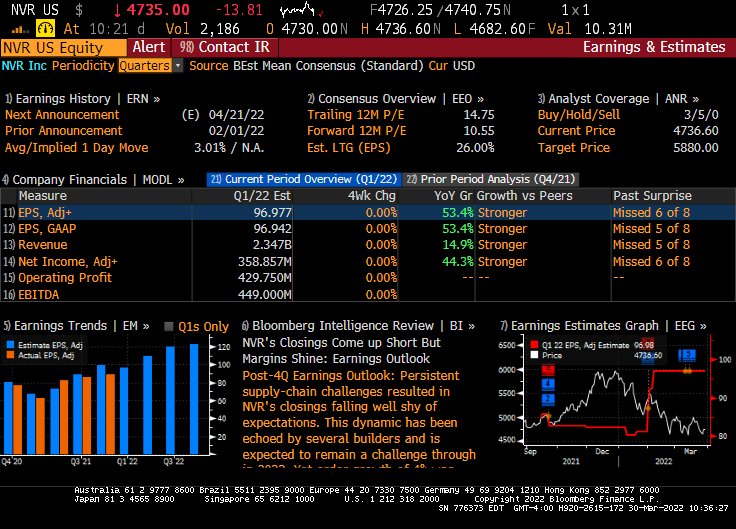
Today, the US equity market in essentially flat given the massive uncertainty about the Russia/Ukraine situation and whether the US economy is slipping into darkness. But this morning, Federal government blessed companies (healthcare, solar energy and Blackrock) are doing quite well, while homebuider NVR is taking it on the chin thanks to hints that The Fed will raising rates.

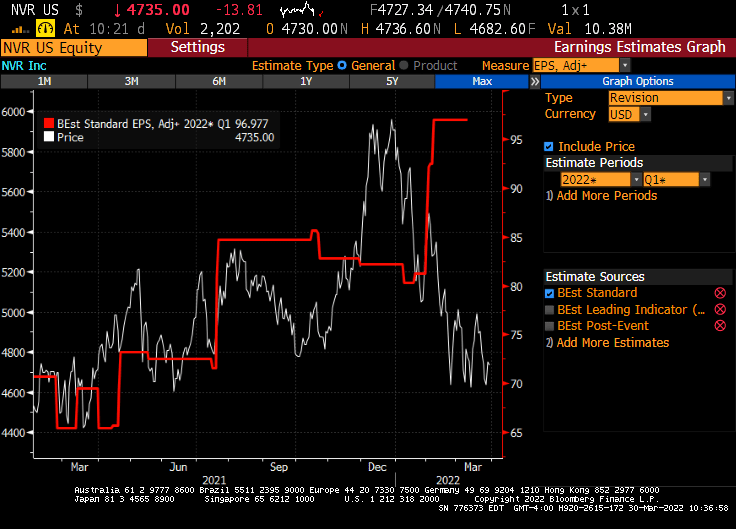
Now, NVR (Northern Virginia Homes, Ryan Homes) had explosive earnings growth in their February 1, 2022 report.

But the market is pricing in the crushing Fed rate hikes that are expected.

So, will Foul Powell pull a Volcker and raise rates and crush the economy (and stocks)? Or will Foul Powell And The Fed gang let inflation burn out of control, but preserve the massive asset bubbles?

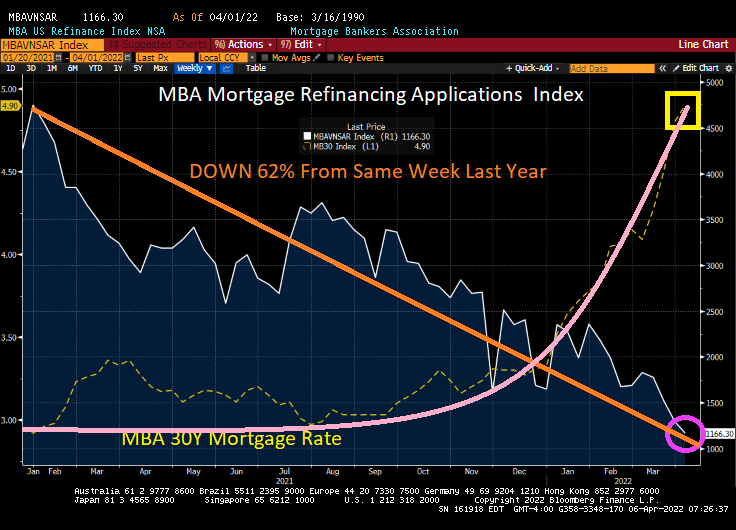
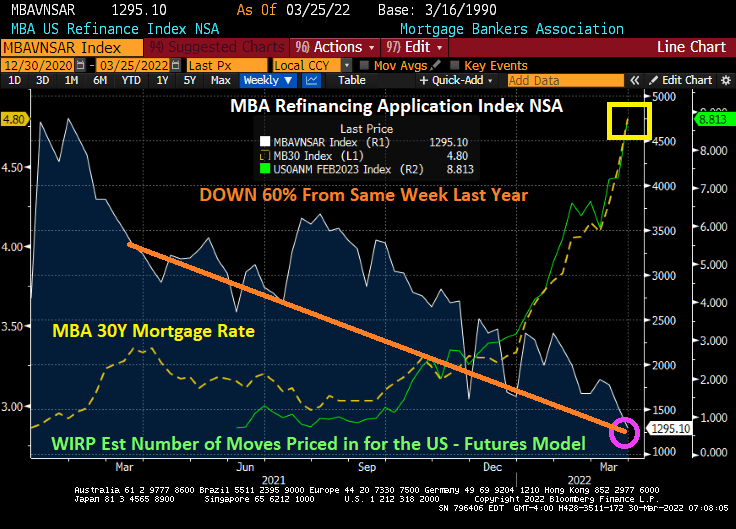
Mortgage Refi Applications Drop 15% Since Last Week As Fed Rate Hikes Cool Market (But MBA Purchase Applications Rose 1% WoW)

Anticipation about Federal Reserve rate hikes over the next 12 months are seeding mortgage rates soaring and mortgage refinancing applications plummeting.

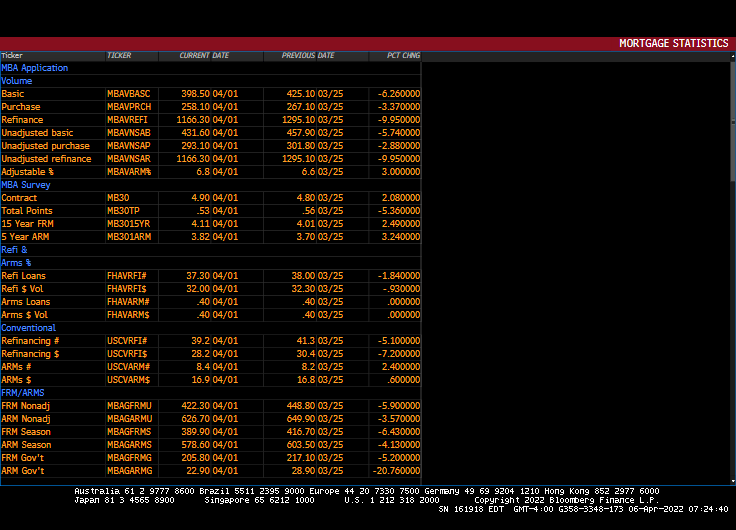
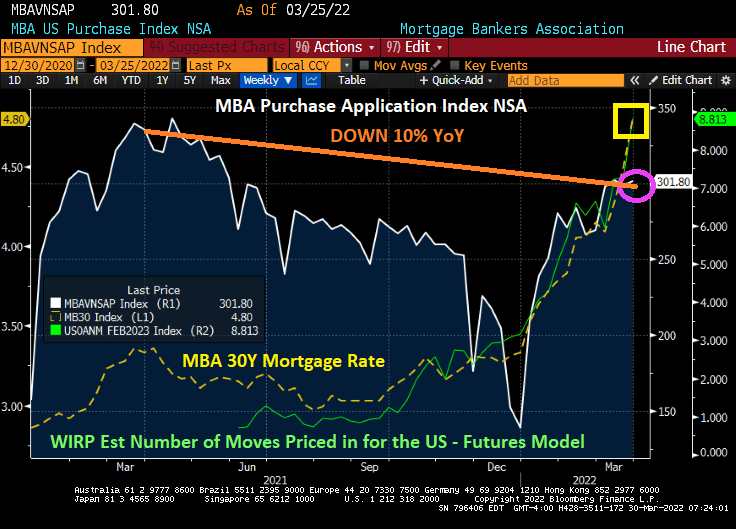
Mortgage applications decreased 6.8 percent from one week earlier, according to data from the Mortgage Bankers Association’s (MBA) Weekly Mortgage Applications Survey for the week ending March 25, 2022.

The Refinance Index decreased 15 percent from the previous week and was 60 percent lower than the same week one year ago. 

The seasonally adjusted Purchase Index increased 1 percent from one week earlier. The unadjusted Purchase Index increased 1 percent compared with the previous week and was 10 percent lower than the same week one year ago.

Yes, I am surprised at the rise in mortgage purchase applications with rising mortgage rates, unless, of course, people are trying to buy ahead of Fed rate increases.

While The Federal Reserve led to a scorcher in asset prices since 2008, rapid rate increases and quantitative tightening (QT) will have a chilling effect on the housing market.

Fire! Case-Shiller National Home Price Growth Accelerates To 19.17% YoY In Spite Of Mortgage Rate Increases (Phoenix, Miami And Tampa Biggest Gainers)

As The Federal Reserves twiddles it thumbs, US housing continues to burn … hot!

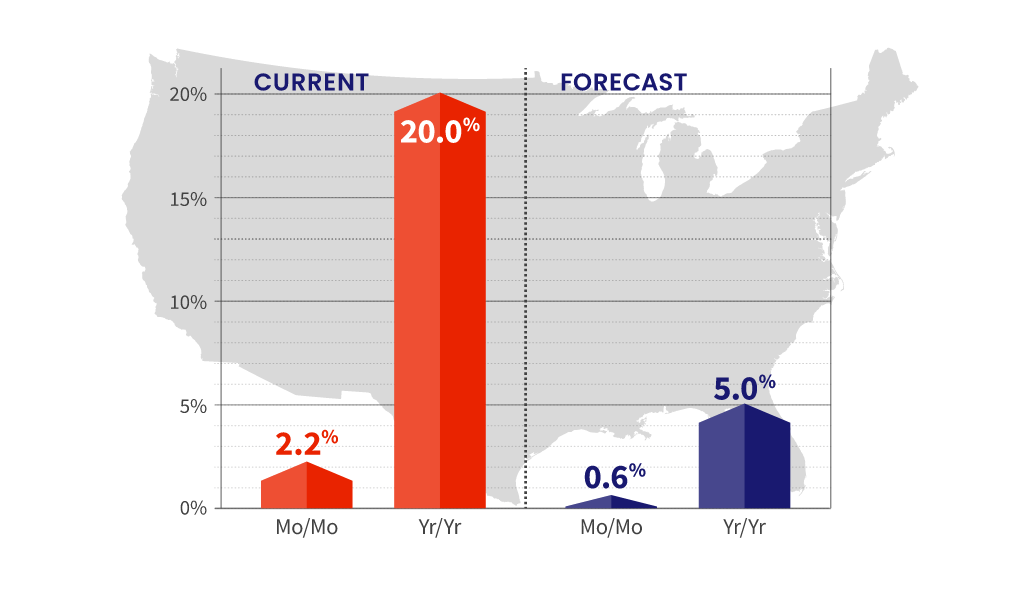
The Case-Shiller National home price index (HPI) grew at a 19.17% YoY rate in January despite mortgage rate increases.

Where? Phoenix, Tampa and Miami lead the way with Dallas, San Diego and Las Vegas close behind.

And Fed Chair Jerome “Nero” Powell continues to let housing prices burn red-hot!

By the time I get to Phoenix … home prices will completely unaffordable.

Fear! Adjustable-rate 30Y Mortgages (ARMs) Are 130 Basis Points Lower Than 30Y Fixed-rate Mortgages, But ARMs Are Only 7.9% Of Mortgage Originations

Michael Lea and I wrote a paper several years ago arguing that most borrowers would be better-off with an adjustable-rate mortgage than a fixed-rate mortgage. The US is one of the few countries in the world where the 30-year fixed-rate mortgage is dominant. Why is this the case? FEAR of rising mortgage payments with adjustable-rate mortgages (ARMs) while the fixed-rate mortgage (FRMs) have constant payments over the 30-year term.

The reason why the fear of ARMs is unwarranted is that ARMs generally have CAPS on rate increases, either in a given period or over the life of the loan. Of course, READ the loan terms to ensure that the ARMs has restrictive caps on rate increases.

Currently, the 5/1 ARM is at 3.26% while the 30-year FRM is at 4.56%, a spread of 130 basis points.

Mortgage rates of all flavors are rising rapidly with the expectation of Federal Reserve Quantitative Tightening (QT). There are several headwinds that could counter The Fed’s QT efforts such as low GDP growth (Atlanta Fed’s GDPNow real-time GDP tracker is at 0.9% for Q1), the Russia-Ukraine invasion, approaching midterm elections, etc. But as of today, The Fed seems on a collision course with rising mortgage rates.

With the increasing likelihood of Fed rate hikes over the next year, we are seeing an increase in US ARM loan share from 4% to 7.9%, almost a doubling of ARM share. But FRMs are still over 90% of all mortgage originations.

Lending institutions would prefer consumers to use ARMs rather than FRMs since ARMs allow for the transfer on long-term interest rate risk to the borrower, while the FRM sticks the lender with long-term interest rate risk. Hence, we have Fannie Mae and Freddie Mac, the Government Sponsored Enterprises (GSEs) that allow lenders to originate FRMs and sell them to F&F. We are the only country with twin GSEs.

So, while most consumers would be better-off with an adjustable-rate mortgage, the structure of the mortgage market (particularly after the financial crisis) encourages lenders to originate FRMs and sell them to Fannie Mae and Freddie Mac.

But FEAR drives many US mortgage borrowers into the FRM space rather than getting an ARM with a lower interest rate, even if ARM caps would prevent the mortgage rate from rising more than 100 basis points over the life of the loan.

Weekend Update! US 10Y Breakeven Inflation Rate Hits Record High As WTI Oil And Lithium Surge (Toronto Home Goes From $613k Over Asking Price)

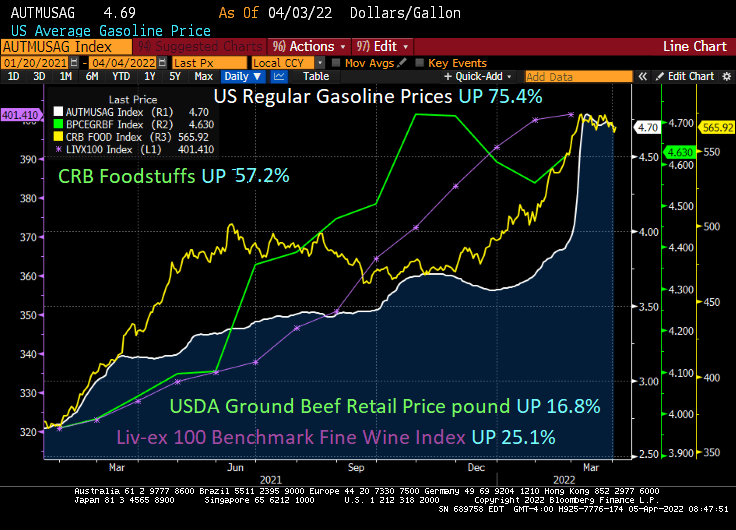
Unfortunately, the US Breakeven 10Y inflation rate hit another all-time high as West Texas Intermediate Crude Oil (Cushing Spot) soars.

But note that the WTI Crude spot rate is still lower than it previous peak in June 2008. What is notable in the above chart is that M2 Money growth YoY has slowed after Covid “Stimulypto”. But M2 is still growing at an 11% YoY clip, much faster growth than pre-Covid rates. So, Federal stimulypto is still in place, helping to drive inflation to the moon.

Example of how crazy this is getting? A house in Toronto Canada (our cousins to the north) just went to $613,000 OVER ASKING PRICE! While some may dismiss this as “Well, that is Canada” it does show how inflation is ravaging home affordability in North America.

As The Biden Administration and Congress pushes Green Energy and demonizes fossil fuels, we are seeing Green Energy commodities such as Lithium (for batteries) soar even faster than oil prices.

Gold may be set to party like its 1999!

And just an update on The US Dollar, Crypto Currencies and Gold. This is just a sample of alternatives to the US Dollar for transactions. Freedom of choice is a great thing!

What a wonderful time to be a politician! As Winston Churchill once uttered, “Never let a crisis go to waste.” To quote Dwight Schrute from The Office, “It is part of the green initiative. And by green, I mean money.”

Number 9! Fed Now Expected To Raise Target Rate 9 Times Over Coming Year As Mortgage Rates Rise To 4.54%

Number 9.

According to Fed Funds Futures data, The Federal Reserve is now forecasting 9 rate increases over the next year.

Fed Funds Futures are pointing to 8.924 rate hikes by the Fed FOMC meeting on February 1, 2023.

The US Treasury 10Y-2Y curve flattened by 5.5 bps today with the entire curve downshifting.

The Federal Reserve reminds me of The Office episode “Malone’s Cones.” They can’t really explain why they kept rates so low for so long (policy error) and seem to risk collapsing the market with rapid rate hikes without much sensible explanation.