Meet Me At The Bottom? US Housing Starts (1-Unit) Tank -18.5% YoY In July (Down -10.11% MoM, Apartment Starts Down -10% MoM)

Meet Me At The Bottom … of the housing market?

As The Federal Reserve fights inflation (caused by too much Fed stimulus for too long) and Federal energy policies, we are seeing mortgage rates rising and the housing market decaying.

1-unit (single family detached) housing starts dropped -18.5% YoY in July as mortgage rates rose in 2022. Note the impact of the Covid stimulus (green line) and the resulting surge in housing starts in April 2021, but housing starts have decayed as M2 Money growth slows.

5+ unit (apartment) starts were down -10% MoM in July, but at least permits for apartments rose +2.51% MoM.

Well, we at least know why the NAHB Homebuilder index sucked wind so badly yesterday.

Perhaps the housing market needs a little spoonful of QE.

Alarm! US Home Builder Index Falls Below 50 As Fed Tightens Monetary Noose

Alarm!

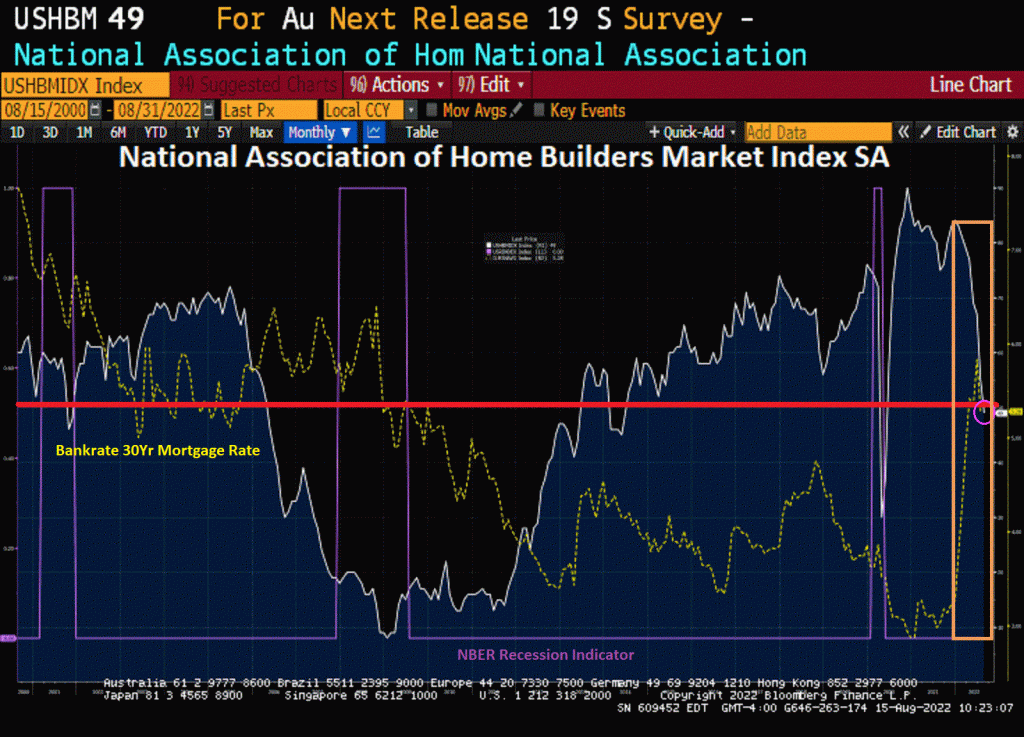
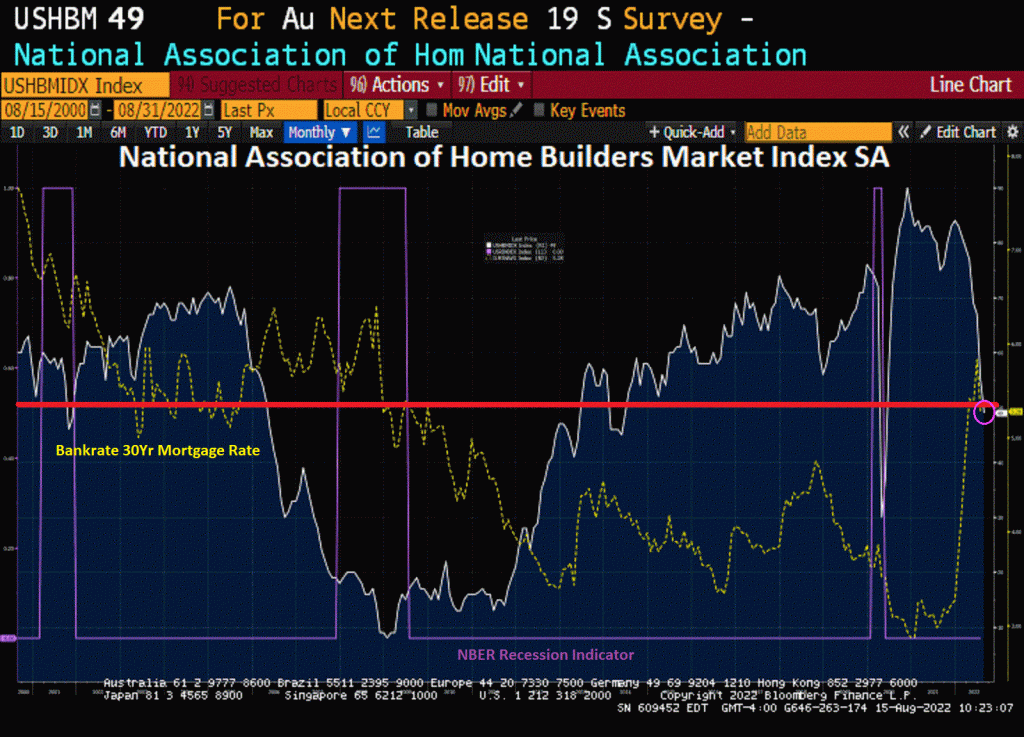
The National Association of Home Builders Market Index slipped into darkness … that is, dropped below 50 to 49 in August as The Federal Reserve continues to tighten its uber-loose monetary policy, resulting in rising mortgage rates.

Note the plunge in the NAHB market index as mortgage rates began rising.

Jay’s Famous Chili! M1 And M2 Money Velocity Crushed By Covid “Relief” As US Treasury Yield Curve (10Y-2Y) Remains Inverted

The 2020 Covid outbreak led to a massive (and generally awful) reaction. There were economic shutdowns that caused extensive damage (particularly to small firms), but it was the massive overreaction by The Federal government in terms of Covid relief and The Federal Reserve’s expansion of the money supply that caused considerable damage.

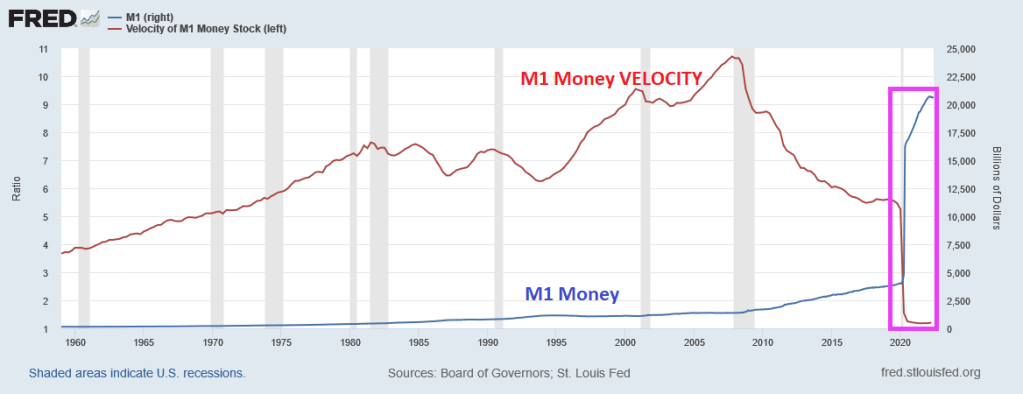
One truly horrific chart is that of M1 Money and M1 Money Velocity (M1/GDP). M1 Money surged with Covid driving M1 Money Velocity down to levels never seem before.

The broader measure of money, M2, isn’t as dramatic, but we also see that M2 Money VELOCITY has plunged to levels never seen before.

What does low money velocity indicate? Simply put, The Fed is printing trillions of dollars, but GDP isn’t moving much. But that won’t stop Congress from spending (and using The Fed to buy its debt).

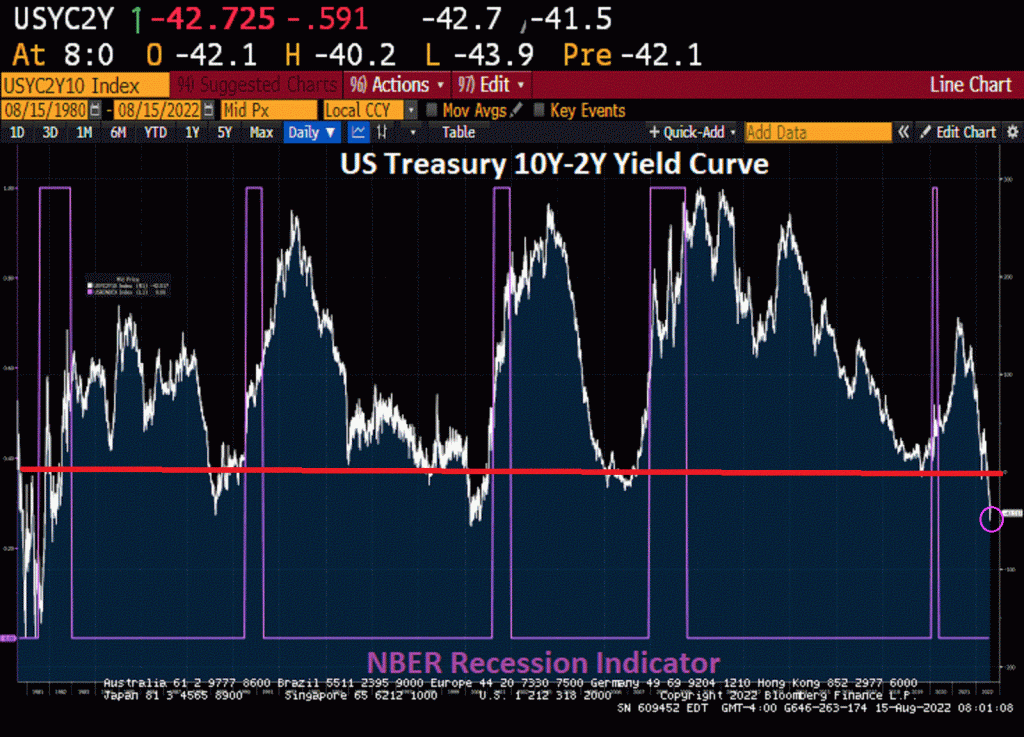
So, here we sit. This morning, the US Treasury yield curve (10Y-2Y) remains inverted. This AM, the curve inverted another -.591 basis points to -42.725, a sign of impending recession.

Yes, we are living through Jay Powell’s famous chili episode where money velocity is near historic lows and we have an inverted yield curve.

BTW, congratulations to Will Zalatoris (aka, Happy Gilmore’s caddy) for his first PGA Tour victory at the FedEx St. Jude Championship!

University Of Michigan Consumer Sentiment Index Improves From Disastrous To Horrible (Buying Conditions For Houses Remains Horrible)

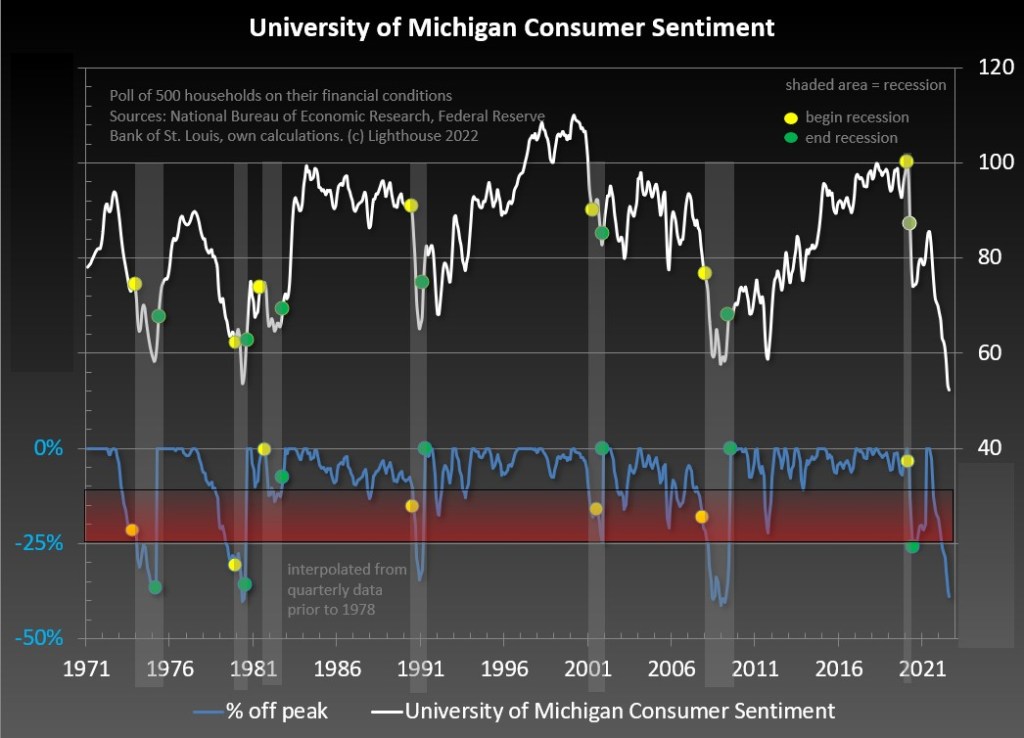
The University of Michigan consumer survey is out for August and the results show improvement … from disastrous to just plain horrible.

The University of Michigan Buying Conditions for Houses remained depressed and didn’t improve.

Bear in mind that today’s consumer sentiment reading in the lowest since 1970, lower than during any recession.

The Conference Board’s leading economic indicator plunged in June despite nearly $8 trillion in Fed stimulus still outstanding.

The good news? President Biden and his son Hunter boarded Air Force One for a carbon-spewing plane trip to South Carolina for a one-week vacation. At least he can do less damage to the US while on vacation.

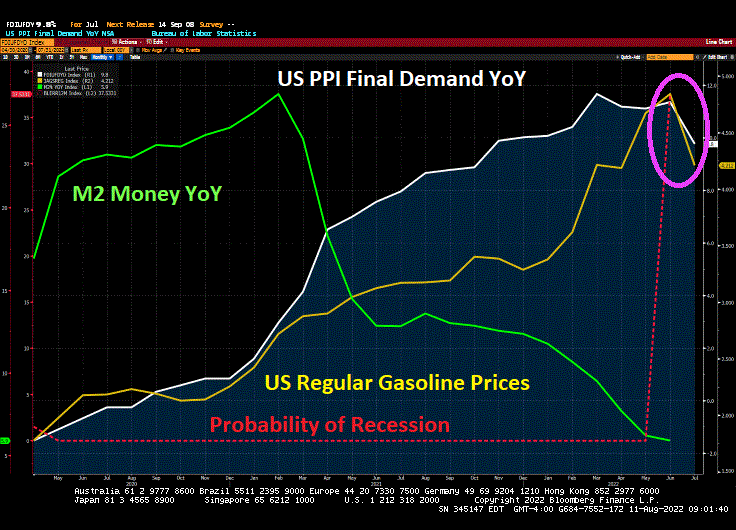
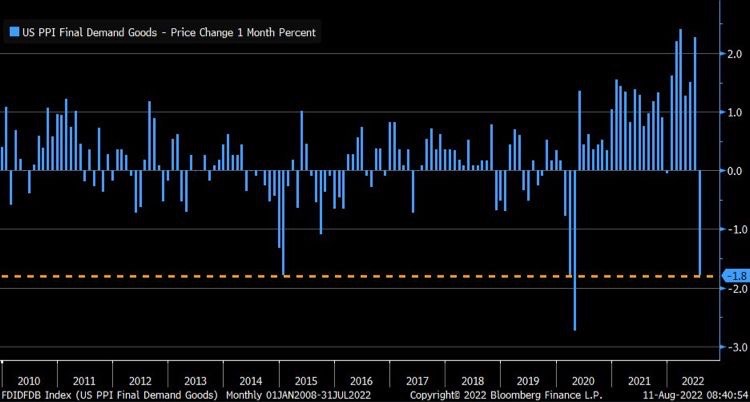
US Producer Price Index Cools To 9.8% YoY In July As M2 Money Growth Cools And Recession Probability Increases

Somehow I doubt if Biden, Harris and Jean-Pierre (Biden’s Press Secretary) will go on the talk show circuit talking about the Producer Price Index Final Demand at 9.8% YoY, meaning that inflation is still raging.

But the curious thing about the PPI Final Demand numbers. While lower than June’s reading of 11.3% YoY, it also coincides with declining gasoline prices and declining growth in M2 Money stock. Which is still growing at 5.9% YoY. The probability of recession is rising (even though technically the US is in recession after 2 consecutive quarters of negative GDP growth.

Here is the more striking chart.

So is the US “improving” on prices because of brilliant Biden strategies (I just laughed at my own “bon mot”)? Or are prices (PPI, gasoline) slowing because of declining demand as the US slips into recession?

Lawrence Summers was once again in the news saying that the way to cool inflation is to raises taxes (and cool demand). Only a true Statist would say something like that. Larry, how about Biden and Congress stop spending so much money that is helping to fuel inflation?

One Washington DC types would rest their hopes on cooling inflation by having the US slip into recession AND raises taxes.

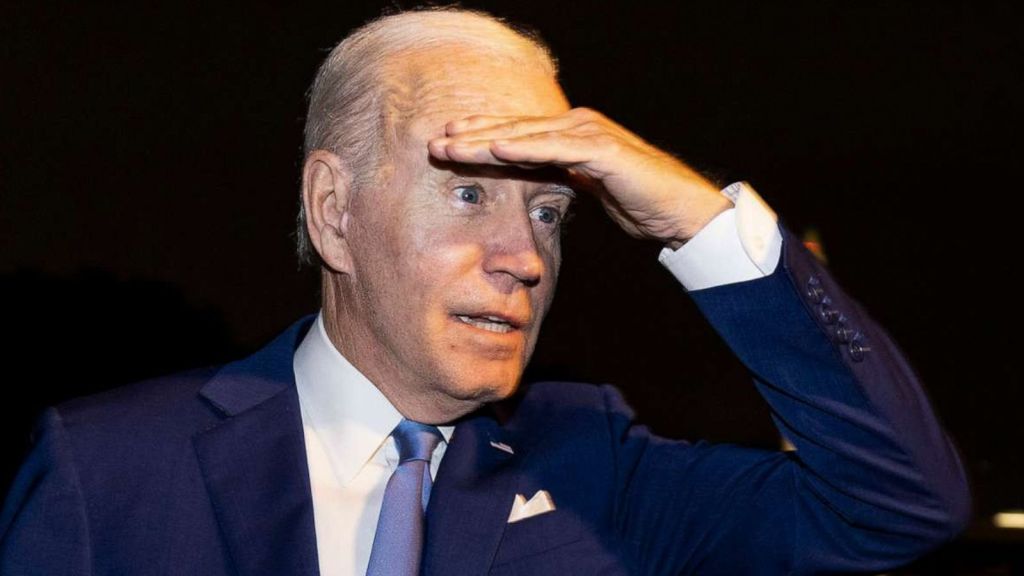
Biden looking for a way out.

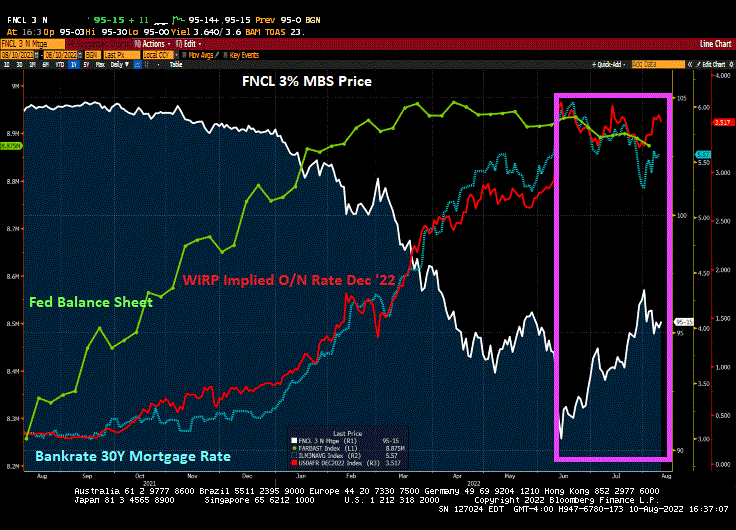
Jurassic MBS Market! Agency MBS Prices Swoon With Implied Fed Hikes (Duration Risk Increases Too)

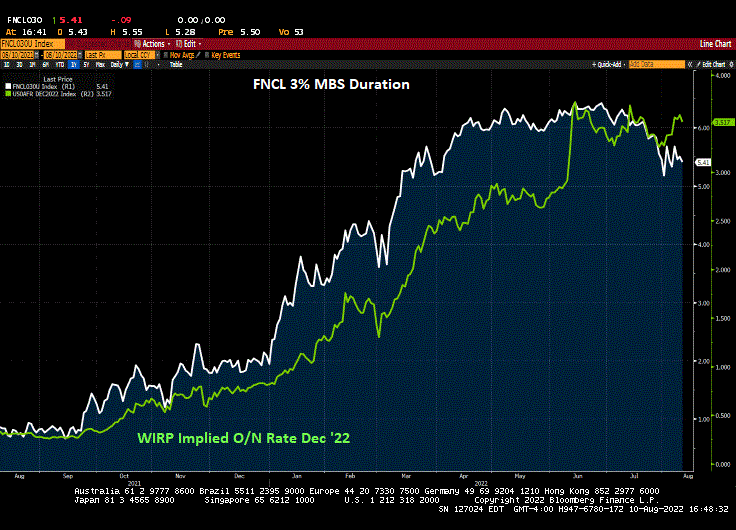
Agency mortgage-backed securities (MBS) prices started to degrade as The Federal Reserve started to try to combat inflation caused by Biden’s energy policies and rampant Federal spending. That is, under June when the implied Fed O/N rate (red line) cooled and the 30-year mortgage rate (blue line) has come down a little.

In terms of duration risk, the FNCL 3% MBS duration has risen with anticipated Fed tightening.

So, further Fed tightening will result in greater MBS losses AND rising duration risk.

Hold on to your butts!

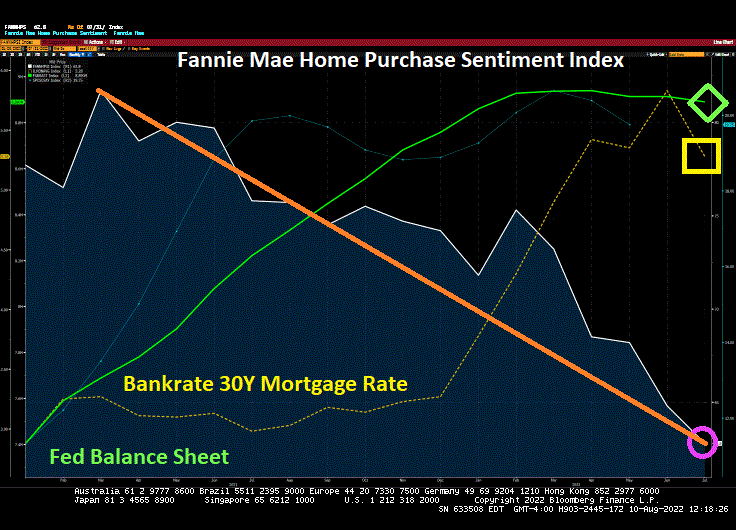
Fannie Mae’s Home Purchase Sentiment Index Falls From 81.7 In March 2021 To 62.8 In July 2022 (As Fed Tightens And Home Prices Boom)

Fannie Mae’s Home Purchase Sentiment index has declined from 81.7 shortly after Biden was sworn-in as President to a meager 62.8 in July 2022.

Of course, mortgage rates have risen quite rapidly and home price growth remains elevated as The Fed still has not trimmed its balance sheet as promised.

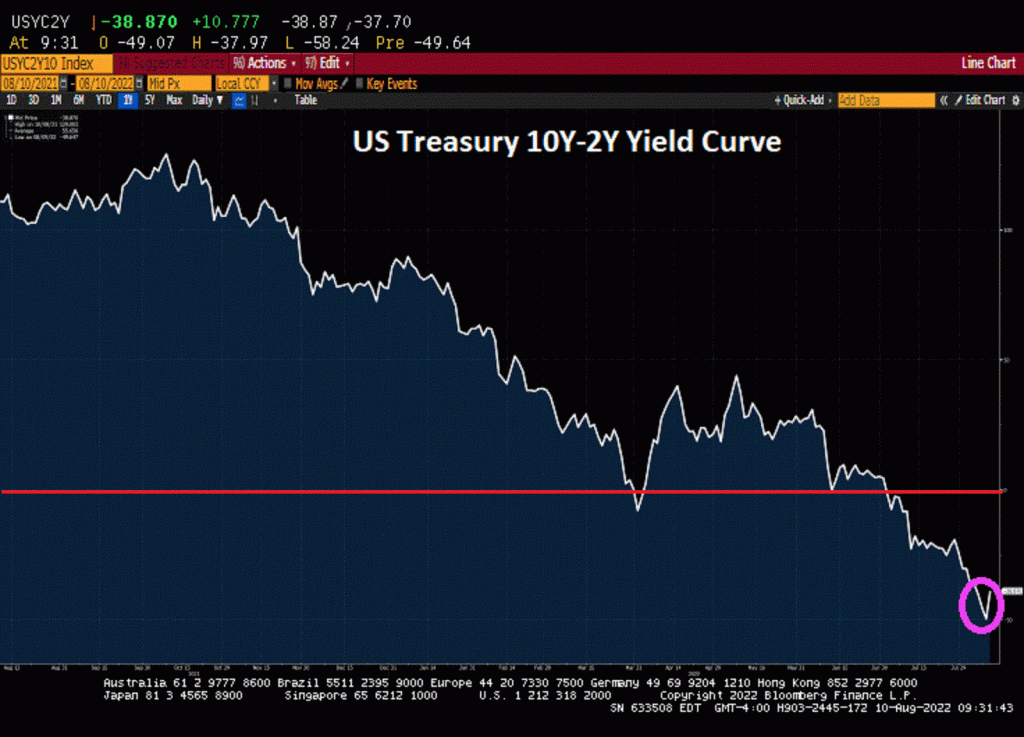
Goin’ Down! US Treasury 2-year Yield Drops 15 Basis Points In AM (10Y-2Y Treasury Yield Curve Remains Inverted At -38.870 BPS)

Goin’ down!

Lots of volatility in markets culminating in a 15 basis point drop in the US Treasury Note yield.

Since the 10-year Treasury yield dropped only -2.7 basis points, the 10Y-2Y yield curve rose slightly to -38.87 basis points.

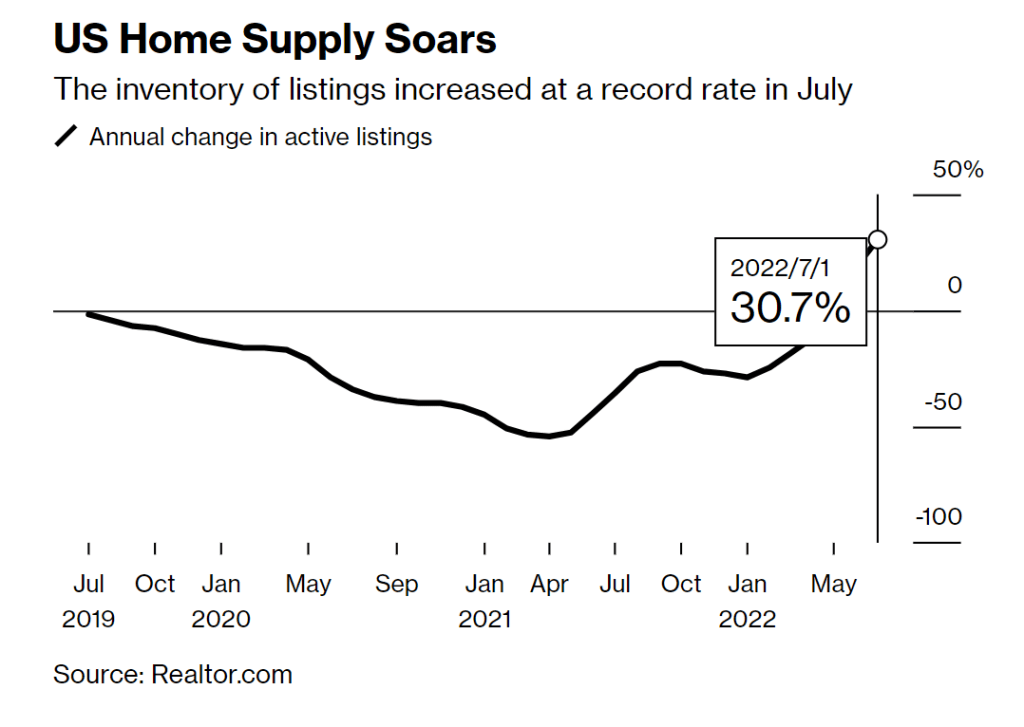
US Treasury Yield Curve Descends Further Into Darkness (-48.4 BPS) As Supply Of Homes Increases 30.7% In June (Fed Is Cooling Off Housing Market)

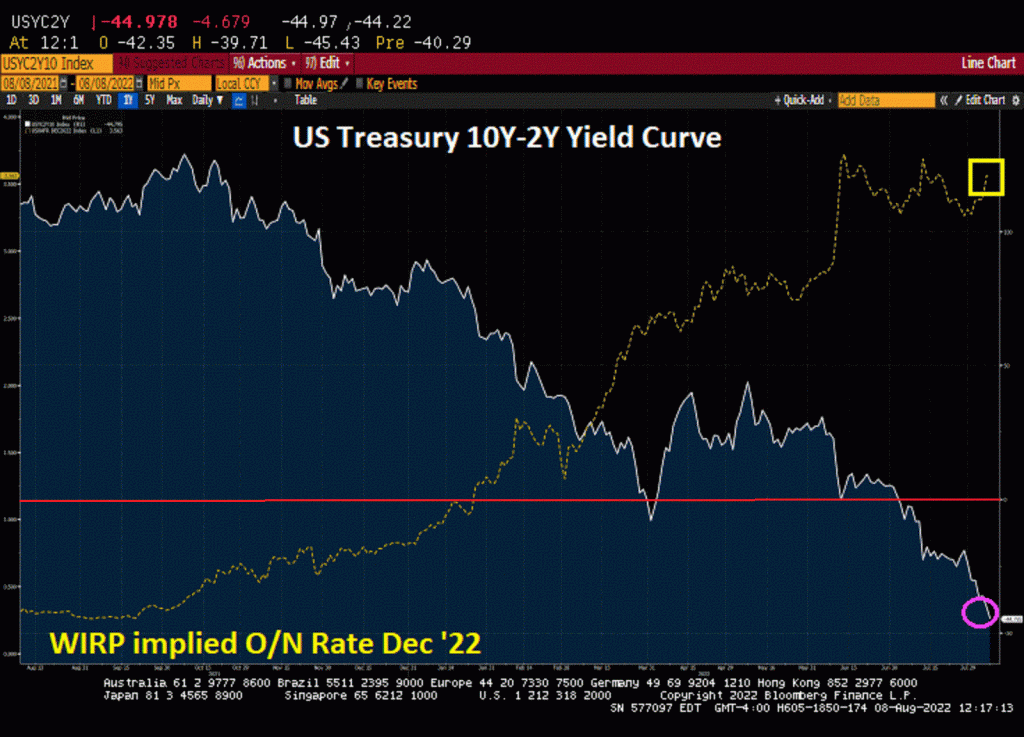
The US Treasury 10Y-2Y yield curve is descending further into darkness (aka, inversion).

The 10Y-2Y yield curve hit the worst inversion since 2000 as the curve slope hit -47.7 basis points, inverting another -2.267 basis points today.

Yes, the 10Y-2Y Treasury yield curve is SCREAMING RECESSION.

(Bloomberg) – Prashant Gopal – The supply of homes for sale across the US grew at a record rate last month, another sign that higher mortgage costs are cooling down the housing market.

The number of active listings nationwide jumped 31% from a year earlier, a record-high increase for a third straight month, according to a report Tuesday by Realtor.com. 

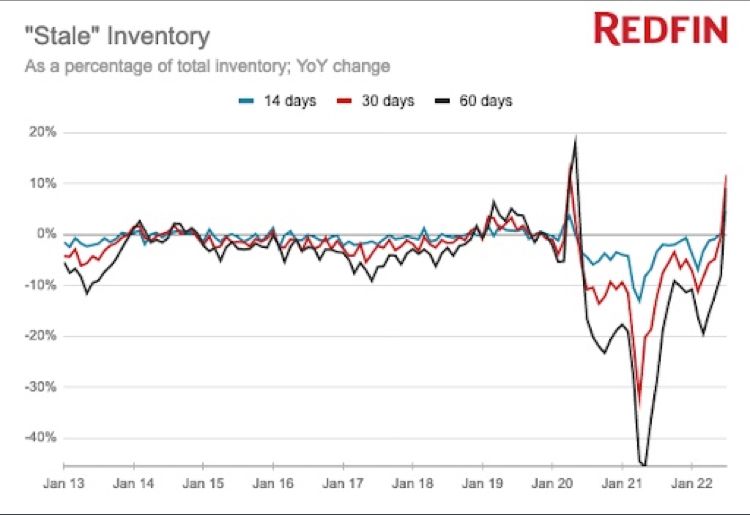
And according to Redfin, stale inventory is accelerating.

The Federal Reserve is no friend of the US middle class and low wage worker.

Pushin’ Too Hard? US Treasury Yield Curve Inverts To -45 Basis Points (Most Inverted Since 2000) Despite Senate Passing “Inflation Reduction” Boondoggle

Is The Federal Reserve pushin’ too hard on raising their target rate?

The US Treasury 10Y-2Y yield curve descended further into inversion, signaling impending recession.

The US unemployment rate (U-3) tends to be the lowest when the 10Y-2Y yield curve inverts, then explodes when recession strikes.

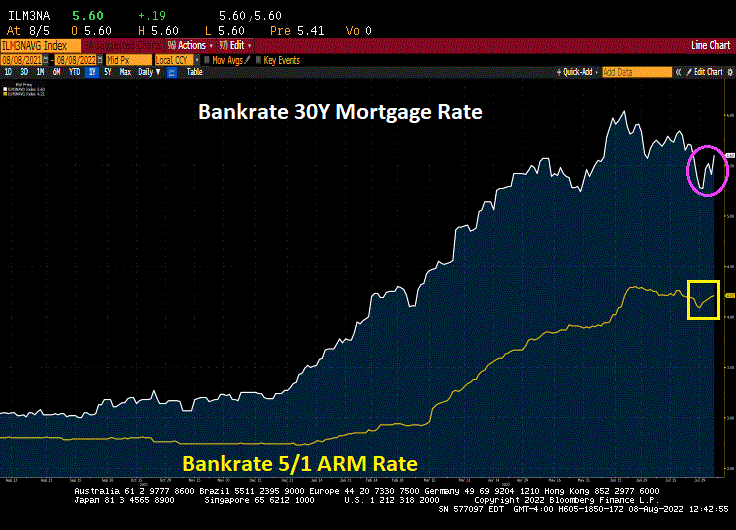
The spread between the Bankrate 30-year mortgage rate and the Bankrate 5/1 ARM rate widened to 139 basis points.

This is happening as The Fed is expected to keep raising their target rate (yellow line) and the US Senate passed its massive “inflation reduction” boondoggle that is expected to NOT reduce inflation, but raise taxes on the middle class and low-wage workers.