Preliminary benchmark revision smaller than some had projected
Biggest payrolls adjustment in transportation and warehousing
Are you surprised that the Biden Administration has been lying about job creation?? Not really since Biden compulsively lies about everything. Including his corruption.
US job growth was probably less robust in the year through March than previously reported, according to government data released Wednesday.
The number of workers on payrolls will likely be revised down by 306,000 for March of this year, according to the Bureau of Labor Statistics’ preliminary benchmark revision.
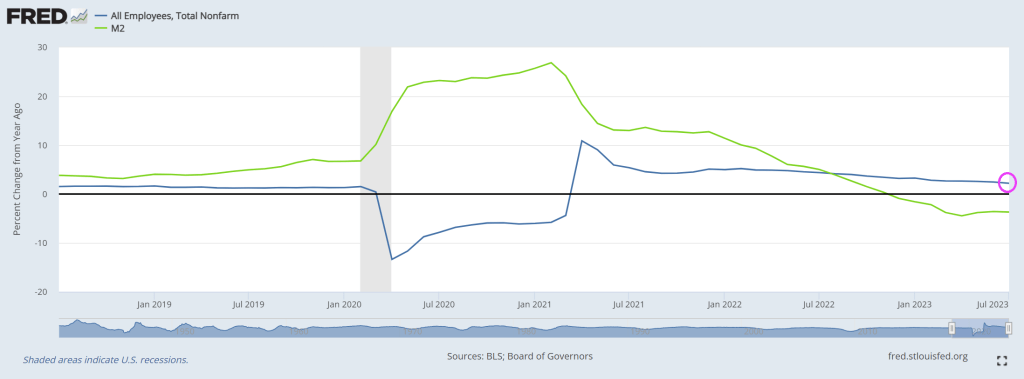
Even without the revision, job growth has slowed to 2.2% YoY in July as M2 Money growth slowed to -3.7% YoY.
Let see what our Overlords say at the Jackson Hole Fed symposium.
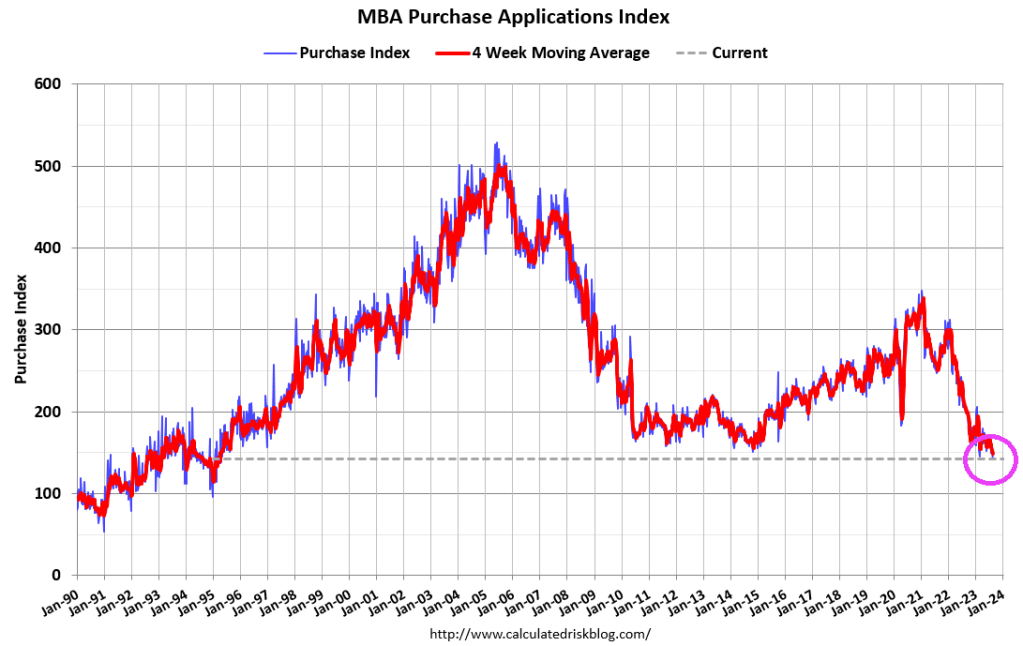
Mortgage demand (applications) decreased 4.2 percent from one week earlier, according to data from the Mortgage Bankers Association’s (MBA) Weekly Mortgage Applications Survey for the week ending August 18, 2023.
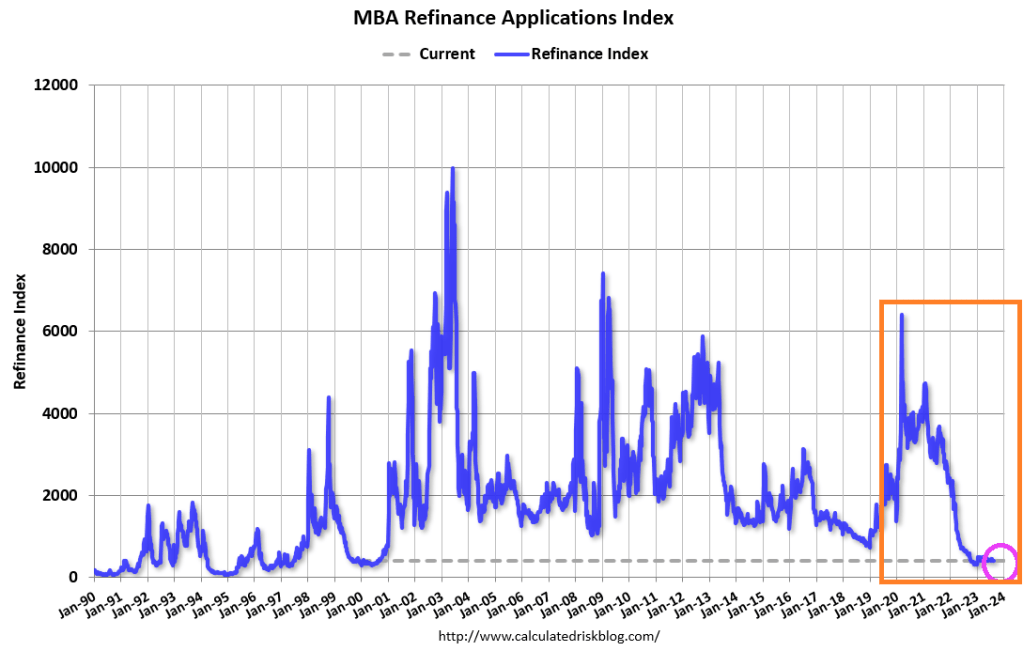
The Market Composite Index, a measure of mortgage loan application volume, decreased 4.2 percent on a seasonally adjusted basis from one week earlier. On an unadjusted basis, the Index decreased 6 percent compared with the previous week. The Refinance Index decreased 3 percent from the previous week and was 35 percent lower than the same week one year ago. The seasonally adjusted Purchase Index decreased 5 percent from one week earlier. The unadjusted Purchase Index decreased 7 percent compared with the previous week and was 30 percent lower than the same week one year ago.
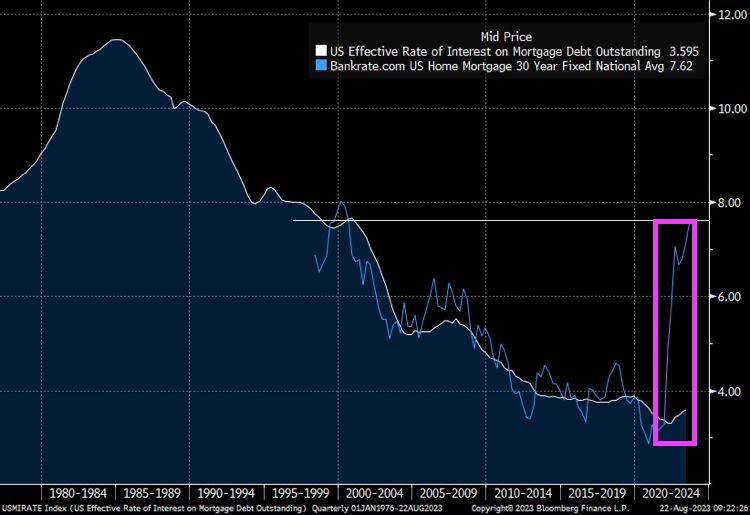
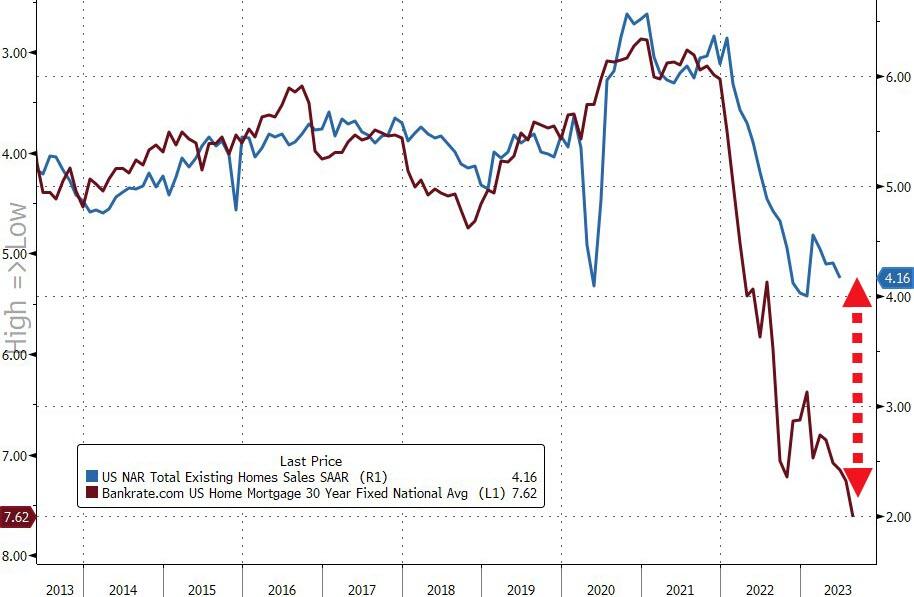
The spread betweenn Bankrate’s 30 year rate at 7.62% and the effective rate on mortgage debt outstanding at 3.595% has exploded as mortgage rates jump.
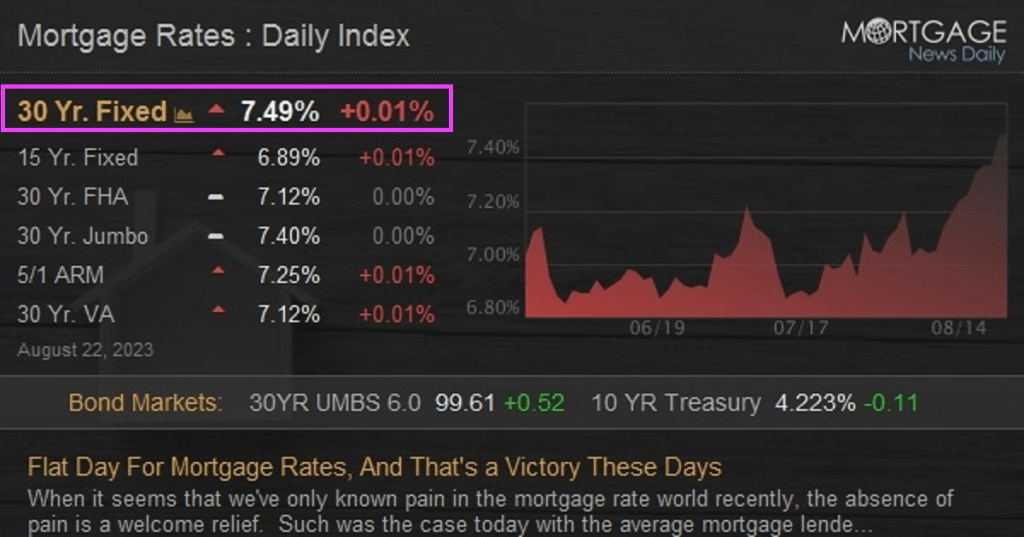
Today’s mortgage rates are up to 7.49%. OMG!
Bidenomics (code for making large donors wealthier and the middle class getting the boot) and catch-up for Yellenomics (rates too low for too long), and Powell are helping to burn down the housing market.
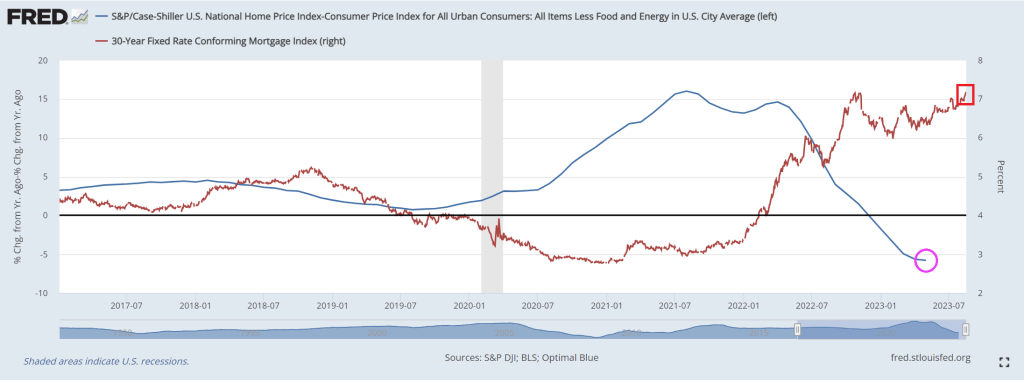
Thanks to the crippling effects of Bidenomics (Fed easing then tightening to combat inflation caused by insane green spending and a war in Ukraine), US mortgage rates (conforming 30-year) has increased 159%.
On the yield curve side, the US Treasury curve 10Y-2Y CMT fell from 99 basis points the day after Maui Joe was sworn-in as El Presidente to the inverted curve we see today (-63 basis points).
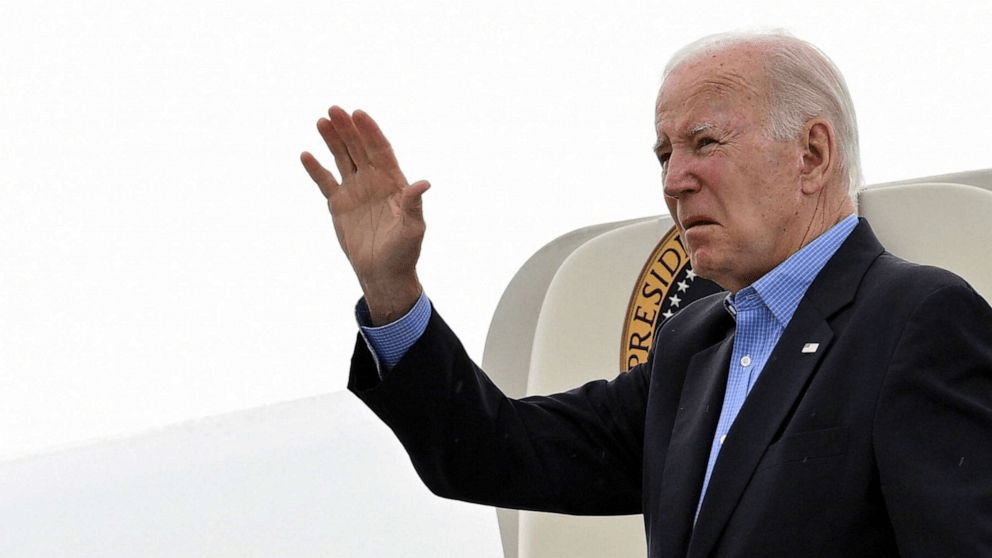
Dynamic Maui Joe looking less than happy trying to visit Maui while he could be partying with mega-donor Tom Steyer (a big green energy con artist).
At least Biden didn’t wear his aviator sunglasses or down an ice cream in a show of “empathy.” But, of course, he did find time to assault a child! Watch the hands Maui Joe!!!!
Bidenomics should be called Sovietnomics. Meaning the same type of command-driven economy that helped demolish the old Soviet Union instead of a western-style demand-driven economy. Biden’s reliance on “goin’ green” has been bad for the middle class (but a boon for the wealthy donor class like Tom Steyer, the donor when The Bidens are spending on their vacation at Lake Tahoe in California).
But back to the ravages being infliced on the US middle class due to 1) bad monetary policy and 2) insane levels of spending by Biden and Congress. (Congress of Blunders?)
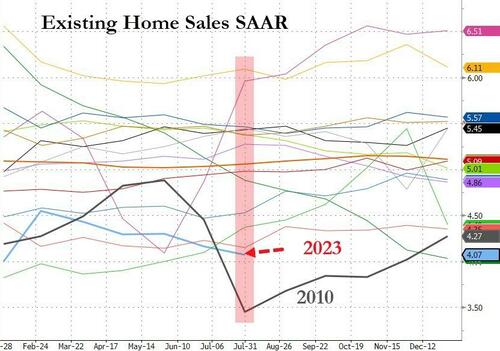
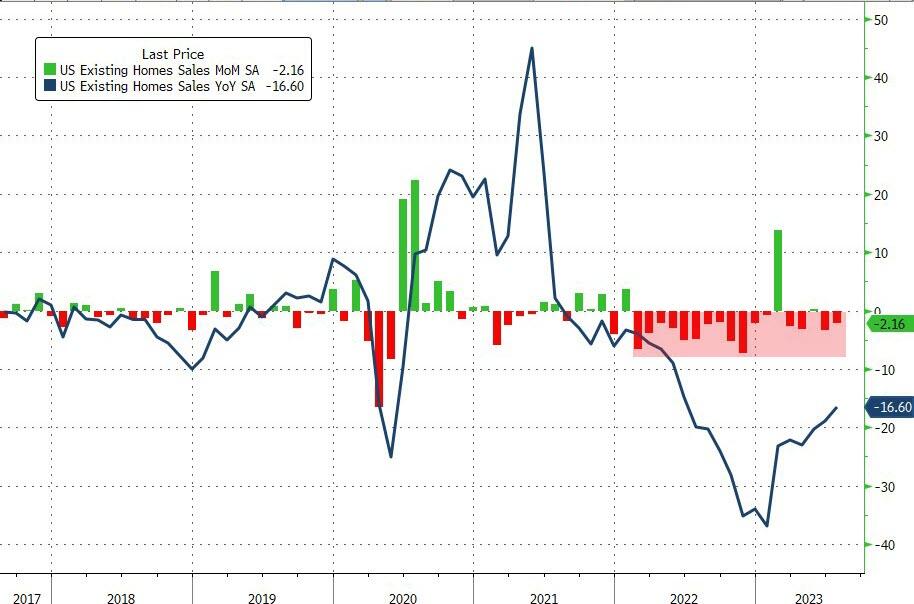
Existing home sales were expected to decline very modestly in July (-0.2% MoM) – after June’s drop (the biggest since Nov ’22). However, existing home sales tumbled more than expected (down 2.2% MoM), leaving sales down 16.6% YoY…
Source: Bloomberg
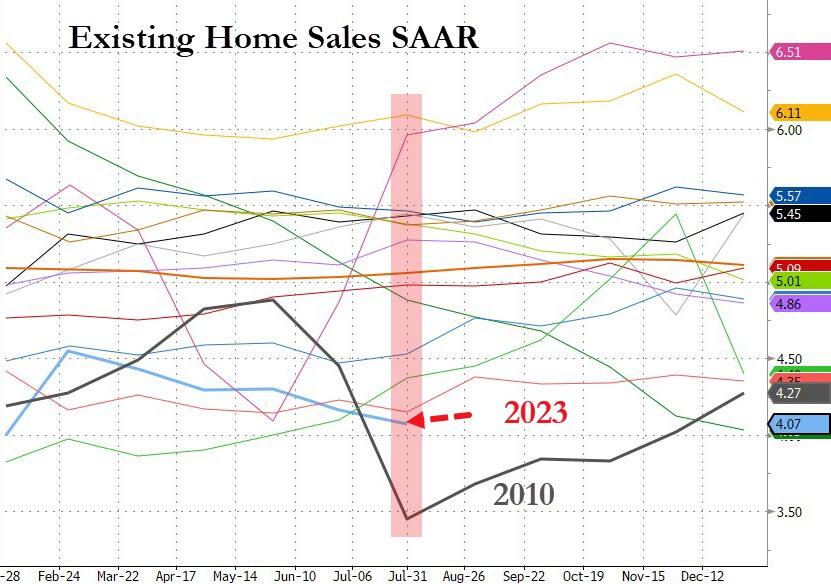
On a SAAR basis, that is the slowest pace of sales for July since 2010…
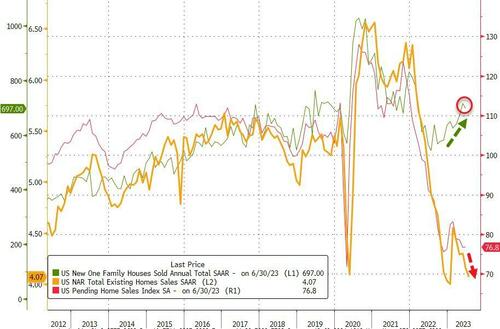
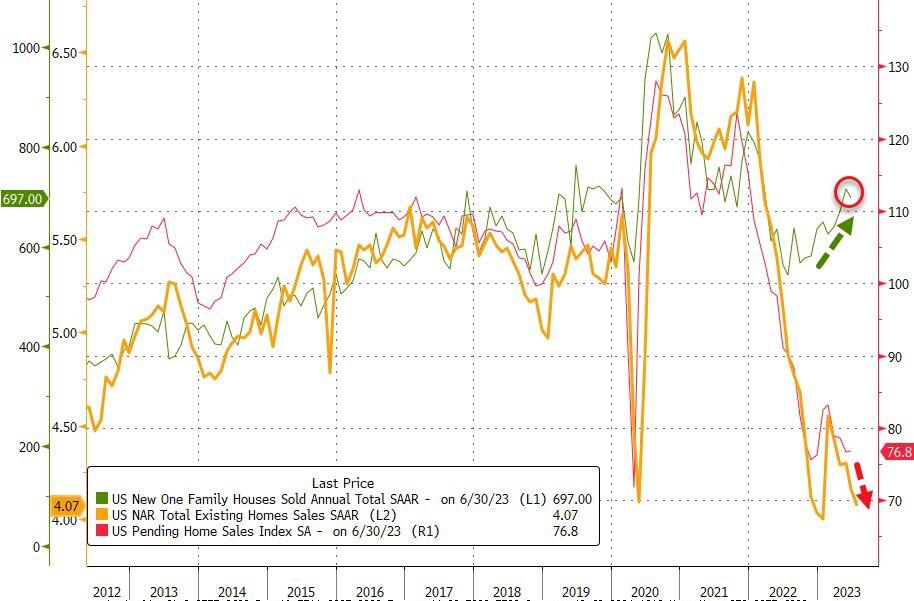
…and is worse than at the peak/trough of the COVID lockdowns…
Source: Bloomberg
On the bright side, at the margin, the inventory of unsold existing homes increased 3.7% from the previous month to 1.11 million at the end of July, or the equivalent of 3.3 months’ supply at the current monthly sales pace.
“Two factors are driving current sales activity – inventory availability and mortgage rates,” said NAR Chief Economist Lawrence Yun.
“Unfortunately, both have been unfavorable to buyers.”
To boost sales, builders have passed along drops in lumber prices, reduced home sizes, reduced lot sizes, and bought down mortgage rates. But the easy fruit is off the vine.
For existing home sales, current transactions reflect a combination of mortgage rates, price, and willingness of consumers to speculate on rising home prices.
For new home sales, factor in ability and willingness of homebuilders to make homes more affordable with incentives or by building smaller homes. More incentives reduces profit.
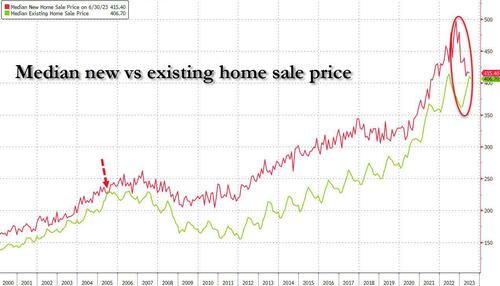
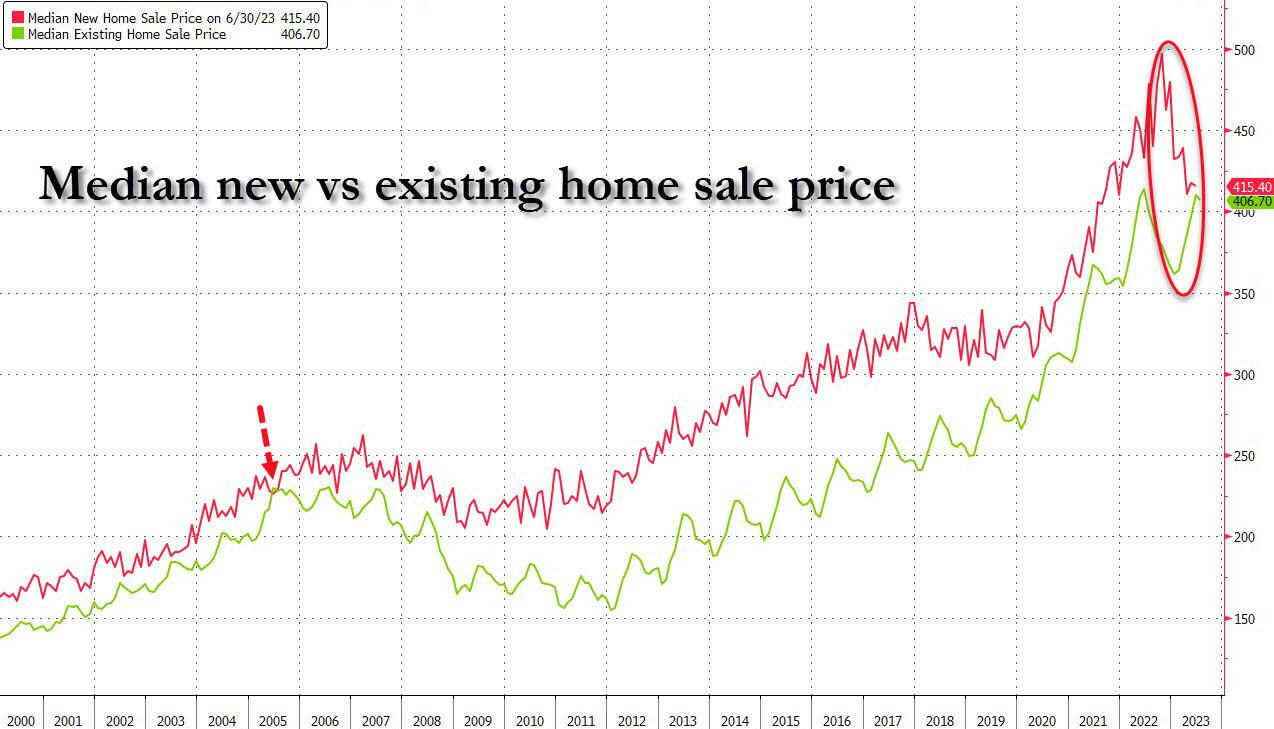
At this rate, new home prices will drop below existing home prices for the first time since 2005 – when the last housing bubble peaked..
Source: Bloomberg
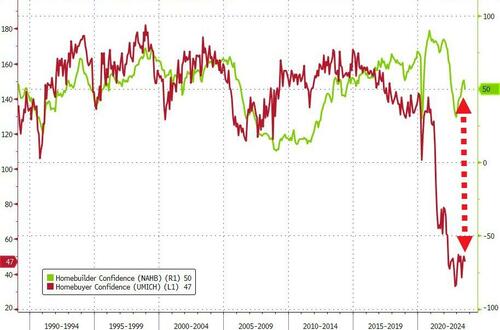
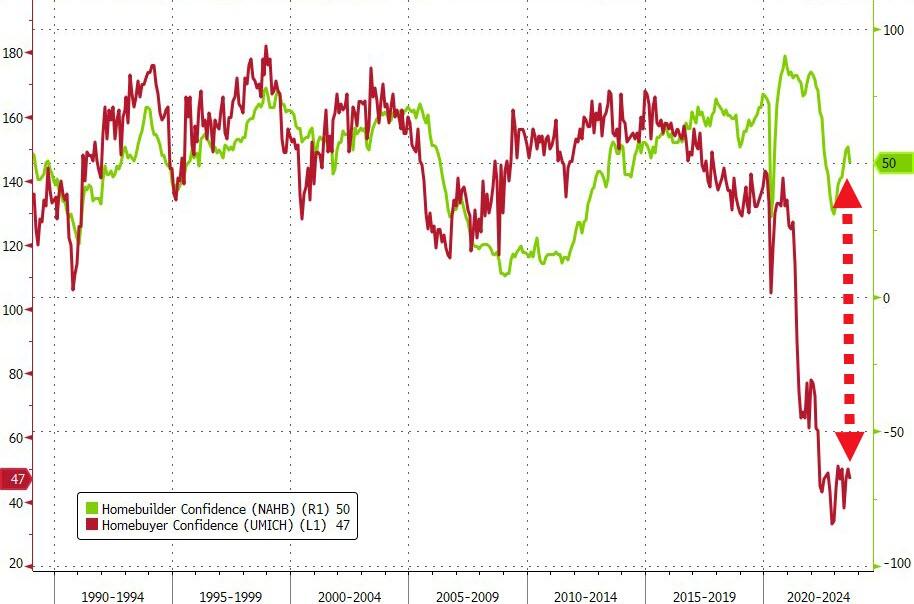
Despite all the excitement of homebuilder stocks and new (over-incentivized) home sales, there remains a giant chasm between homebuyer confidence and homebuilder confidence…
Source: Bloomberg
And if mortgage rates are anything to go by, it’s about to get very real…
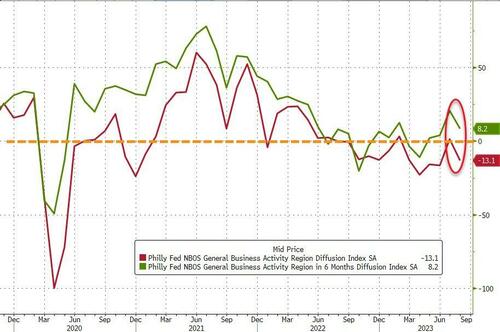
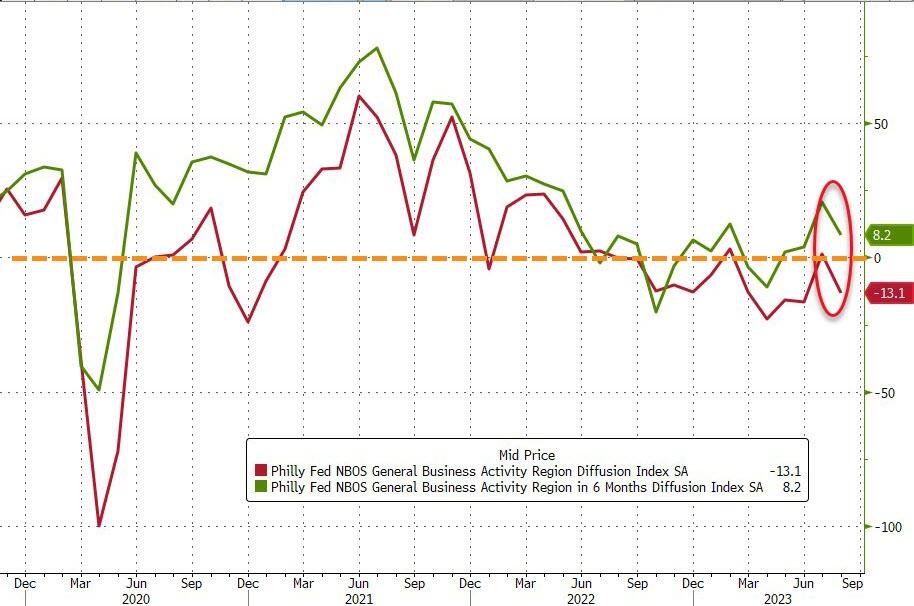
It’s NOT always sunny in Philadelphia. Particularly when the Philly Fed non-manufacturing survey screams stagflation (a nauseating combination of economic slowdown and inflation).
On a non-seasonally-adjusted basis, the Philly Fed Services survey plunged to -20.0 – practically its lowest level since the COVID lockdowns…
Source: Bloomberg
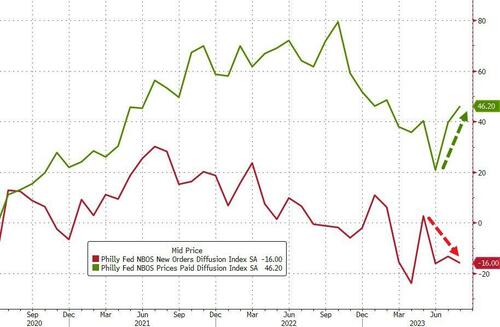
Under the hood it’s even uglier with stagflationary impulses rearing their ugly heads.
Price indicator readings suggest continued increases in prices for inputs and the firms’ own goods and services.
The prices paid index increased 7 points to 46.2 this month. More than 50 percent of the firms reported increases in input prices. Regarding prices for the firms’ own goods and services, the prices received index rose from 7.8 to 14.6.
At the same time the indexes for sales/revenues and new orders both recorded negative readings this month
Source: Bloomberg
Is the ‘Services’ side of the economy finally catching down to the reality of the ‘Manufacturing’ side as savings run dry?
What is the difference between a porcupine and the KC Fed Jackson Hole conference? At the annual Jackson Hole Federal Reserve retreat, the pricks are on the inside! (Source: Clive Owen from “Shoot ‘Em Up” about drivers of BMW cars).
Yes, the elites of The Federal Reserve System will gather at Grand Teton National Park in Wyoming to discuss “Structural Shifts in the Global Economy,” and will be held on Aug. 24-26.
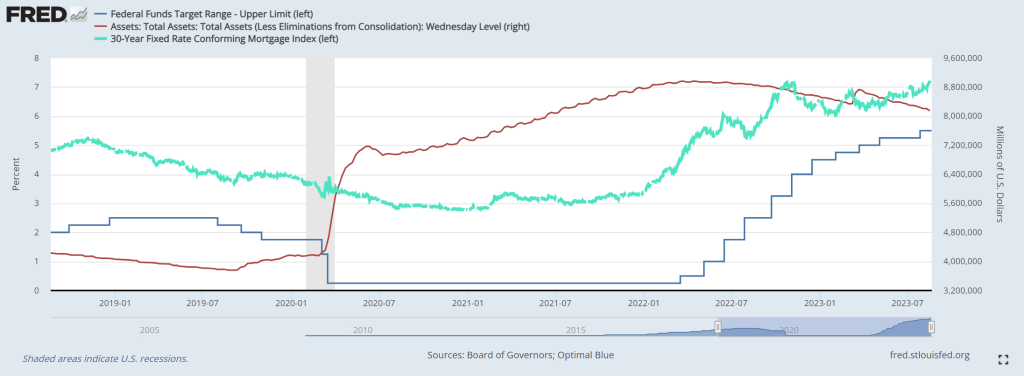
Here is where we sit on Sunday. The 30-year conforming mortgage rate (blue-green line) is over 7% and up 154% under Biden. The Fed’s target rate is now 5.50% (dark blue line) and The Fed still has over $8 TRILLION on its balance sheet. So they haven’t really done all they can do to fight inflation.
Do you remember what happened in 2008? Many people believe that another historic financial disaster is coming and that it will absolutely devastate the U.S. economy. Earlier this week, I wrote about an investor named Michael Burry that has actually bet 1.6 billion dollars that the stock market is going to crash. He made all the right moves in 2008, and he fully intends to be proven right once again in 2023. Of course current conditions definitely resemble 2008 in so many ways. The residential housing market is so dead right now, and commercial real estate prices are plummeting at a very frightening pace. Unfortunately, officials at the Federal Reserve are making it quite clear that they are not done strangling the economy.
This week, mortgage rates jumped above the 7 percent mark to the highest level that we have seen in more than 20 years…
Mortgage rates surpassed 7% this week, hitting the highest level in more than two decades.
The average rate on the popular 30-year fixed mortgage increased to 7.09% this week, up from 6.96% the week prior, according to Freddie Mac’s release on Thursday. That’s the highest point since the first week of April 2002 and marks just the third time rates have exceeded 7% since then. The last times were in October and November of last year, when the rate reached 7.08%.
Needless to say, high mortgage rates have been crippling the housing market in recent months.
At the midpoint of this year, existing home sales were down a whopping 18.9 percent from the same time in 2022…
Total existing-home sales1 – completed transactions that include single-family homes, townhomes, condominiums and co-ops – receded 3.3% from May to a seasonally adjusted annual rate of 4.16 million in June. Year-over-year, sales fell 18.9% (down from 5.13 million in June 2022).
There are certainly lots of people out there that would like to buy homes, but thanks to how high mortgage rates have become they simply cannot afford to do so.
Housing has become extremely unaffordable in this country. According to Redfin, the percentage of teachers that can afford to buy a home close to the school where they work has fallen to just 12 percent…
The number of teachers who can afford a reasonably priced home in their school district nationwide has collapsed to just 12%, down from 17% last summer and 30% in 2019, amid the worst housing affordability crisis in a generation, according to data from Redfin.
Redfin’s analysis of median teacher salaries for 2022 across 50 major cities for over 70,000 PreK-12 public and private schools revealed no teacher in San Jose and San Diego could afford homes within “commuting distances” to their respective school, which means home and work are 20 minutes during typical rush hour conditions.
So much damage has already been done.
But apparently officials at the Federal Reserve believe that even more carnage is necessary, because they are indicating that more rate hikes are on the table…
Most Federal Reserve officials signaled during their July policy-setting meeting that high inflation still poses an ongoing threat that could necessitate additional interest rate hikes this year.
Minutes from the U.S. central bank’s July 25-26 meeting released Wednesday showed that central bank officials observed that inflation remains well above the Fed’s 2% target — and that policymakers need to see “further signs that aggregate demand and aggregate supply were moving into better balance to be confident that inflation pressures were abating.”
No.
Don’t do it.
Even if rates stay at current levels, we are headed for extreme pain.
Raising rates even higher would just be suicidal.
But it looks like they are going to do it anyway, and that could push mortgage rates up to the 8 percent level…
Economists have predicted mortgage rates could go above 8 percent if the economy continues to show signs of strength and the US Federal Reserve decides to raise interest rates again.
Mortgage Rates have not hit such levels since 2000, according to data compiled by Freddie Mac.
Do officials at the Fed actually believe that our system can handle such high rates?
Unless the Fed changes course, the housing market is going to absolutely implode.
And of course the commercial real estate market is already imploding.
The chaos that is already transpiring is putting an enormous amount of strain on our financial institutions, and Fitch is warning that we could soon see sweeping rating downgrades in the banking industry…
A Fitch Ratings analyst warned that the U.S. banking industry has inched closer to another source of turbulence — the risk of sweeping rating downgrades on dozens of U.S. banks that could even include the likes of JPMorgan Chase . The ratings agency cut its assessment of the industry’s health in June, a move that analyst Chris Wolfe said went largely unnoticed because it didn’t trigger downgrades on banks.
In many ways, I feel like I am watching a repeat of 2008.
Officials at the Fed can clearly see everything that is happening, but they just keep insisting on making things even worse.
So I hope that you have been preparing for turbulent times, because things are going to get crazy.
Sadly, the truth is that most Americans are not prepared for tougher times. In fact, one recent survey discovered that 72 percent of Americans are not financially secure…
For many Americans, payday can’t come soon enough. As of June, 61% of adults are living paycheck to paycheck, according to a LendingClub report. In other words, they rely on those regular paychecks to meet essential living expenses, with little to no money left over.
Almost three-quarters, 72%, of Americans say they aren’t financially secure given their current financial standing, and more than a quarter said they will likely never be financially secure, according to a survey by Bankrate.
Many of those people will lose their jobs during this new economic crisis, and because they don’t have any sort of a financial cushion to fall back on many of them will also end up losing their homes.
Delinquency rates are already starting to move higher, and that should deeply alarm all of us.
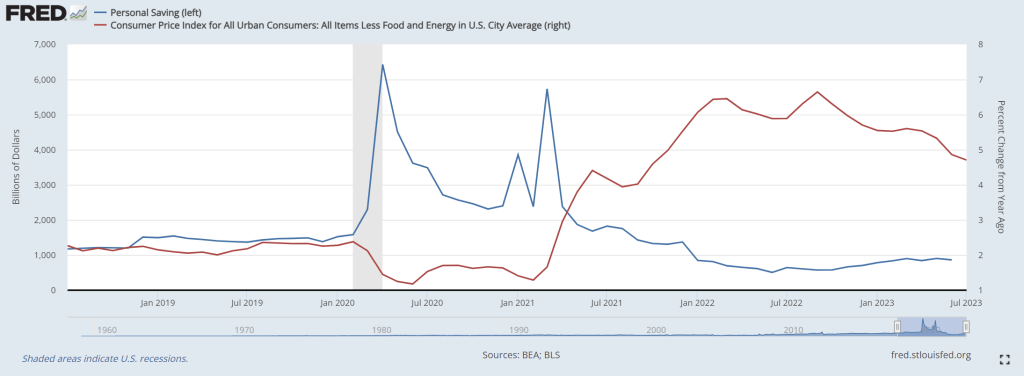
US personal savings are being exhausted as The Fed raises rates to fight inflation. I call this phenomenon “low riding” where consumers are being punished by The Federal Reserve and Biden Administration.
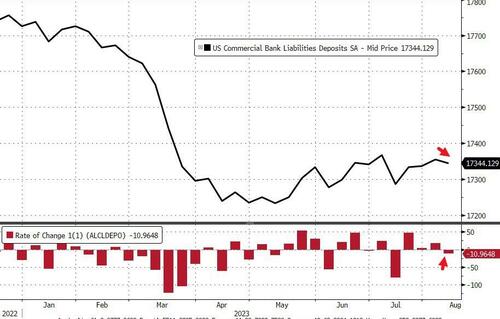
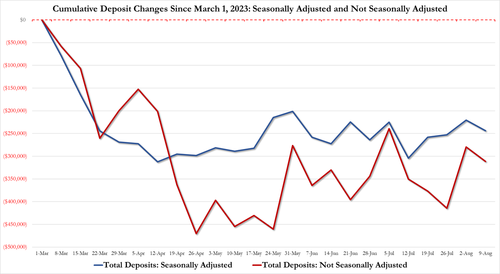
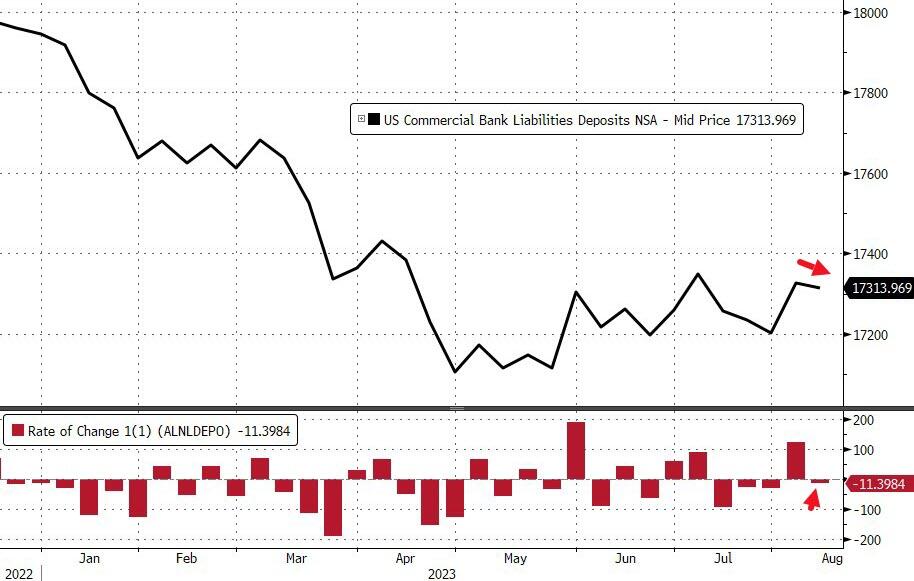
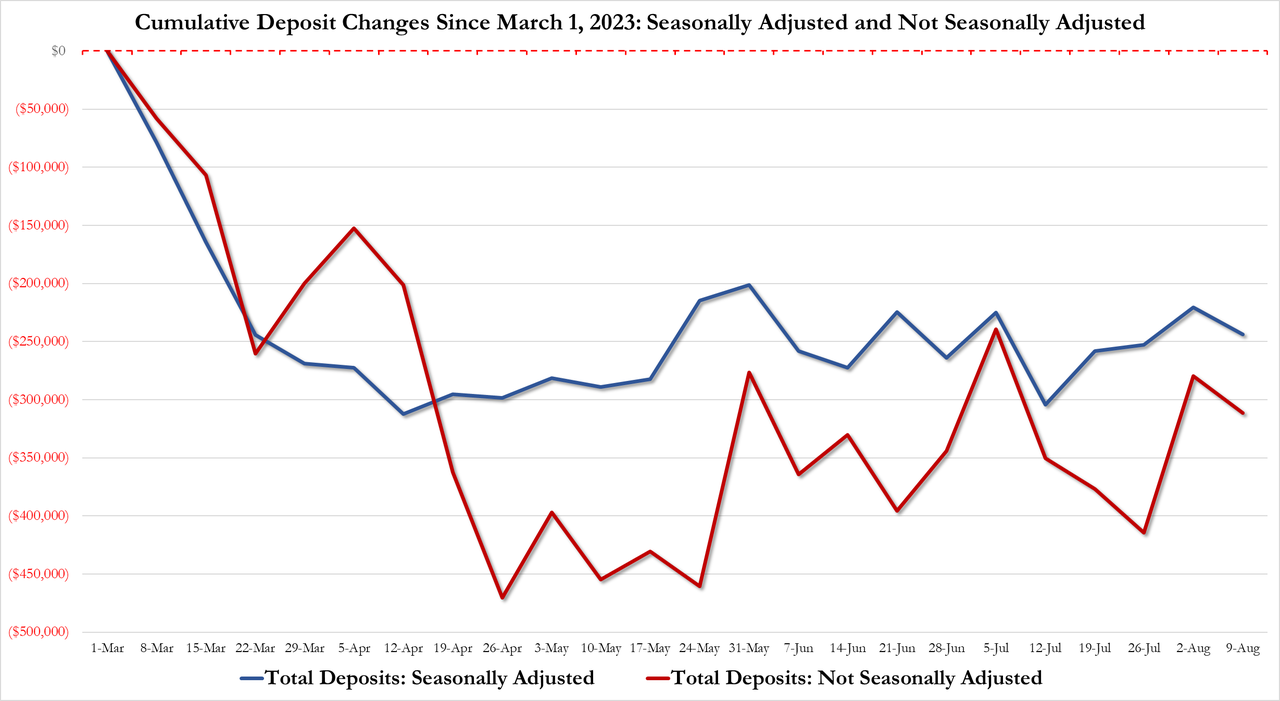
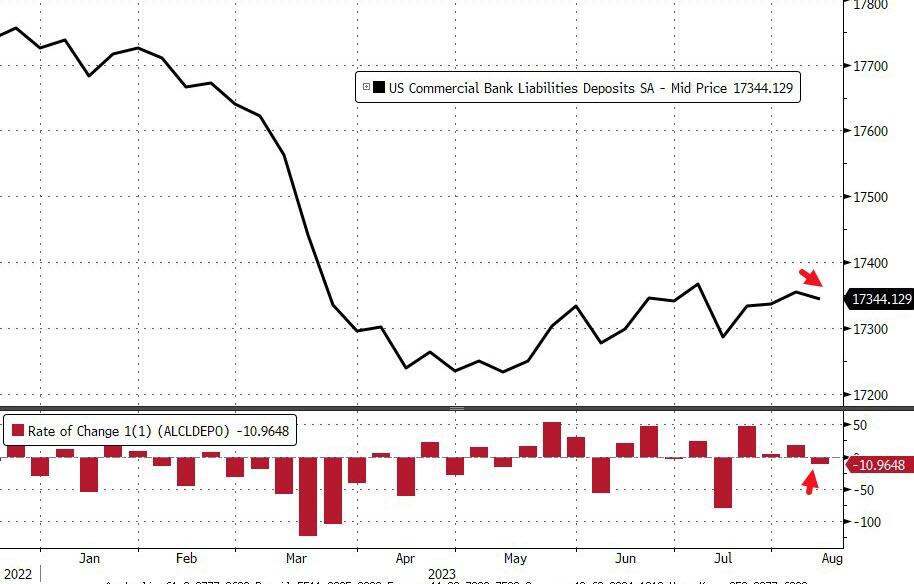
On a seasonally-adjusted basis, The Fed says that total deposits dropped $11BN last week (the first decline in 4 weeks). We also note that the prior week’s inflow was revised higher…
Source: Bloomberg
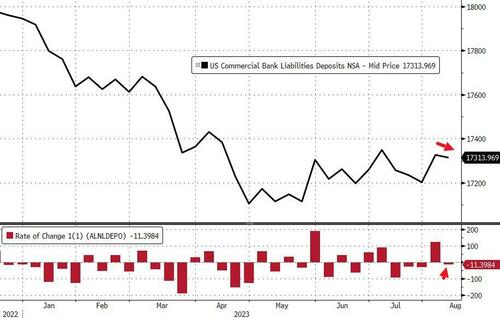
After last week’s enormous $121BN NSA deposits inflow, last week saw an $11BN outflow (on a non-seasonally-adjusted basis)…
Source: Bloomberg
The gap between SA deposits and NSA deposits remains more manageable (until the next time The Fed decides to fiddle)…
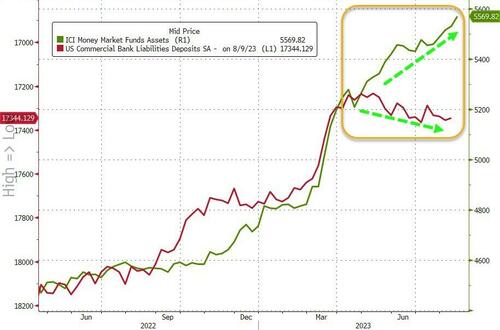
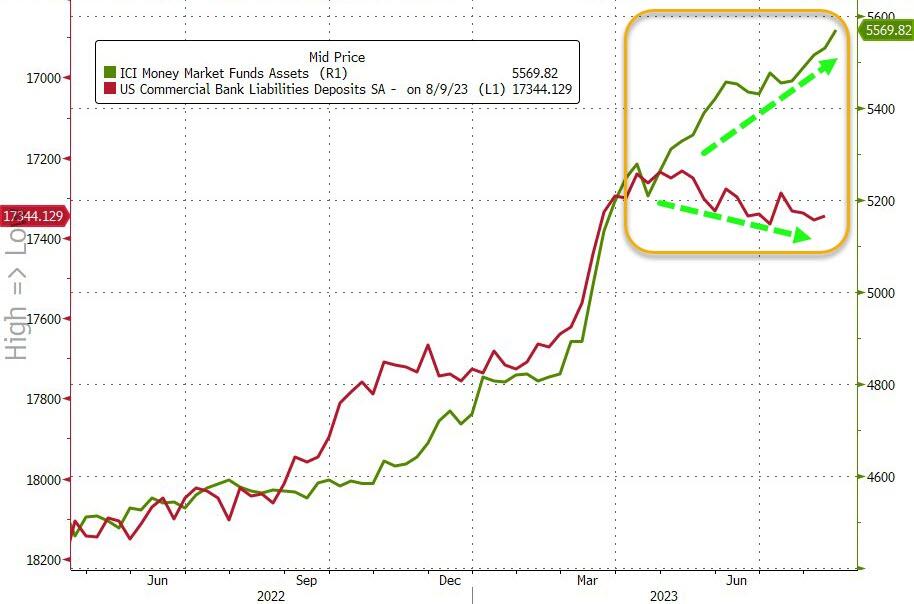
The divergence between money-market fund assets and bank deposits remains extreme…
Source: Bloomberg
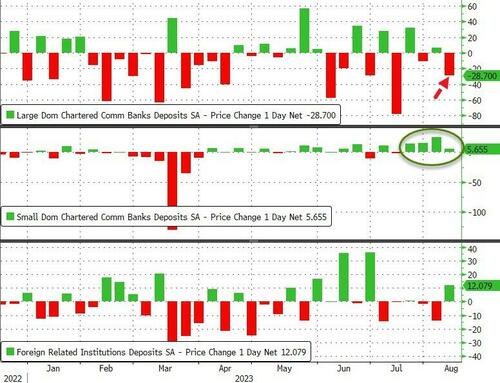
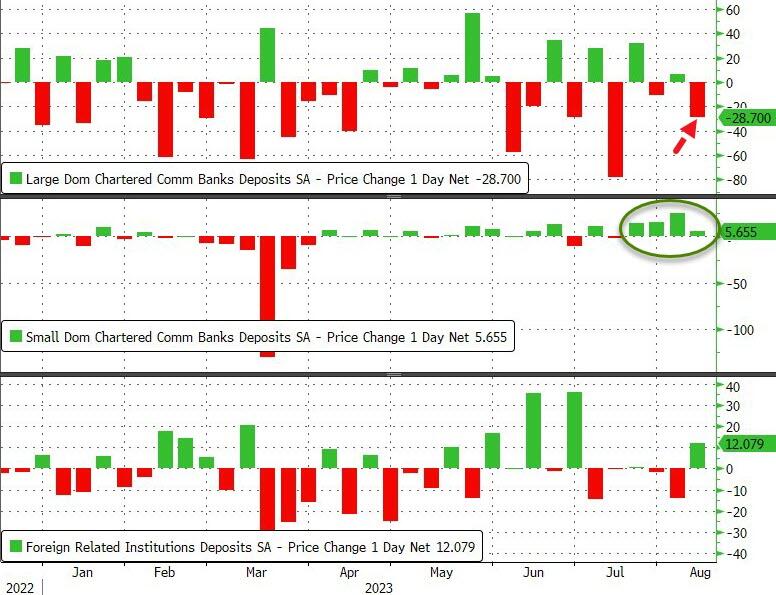
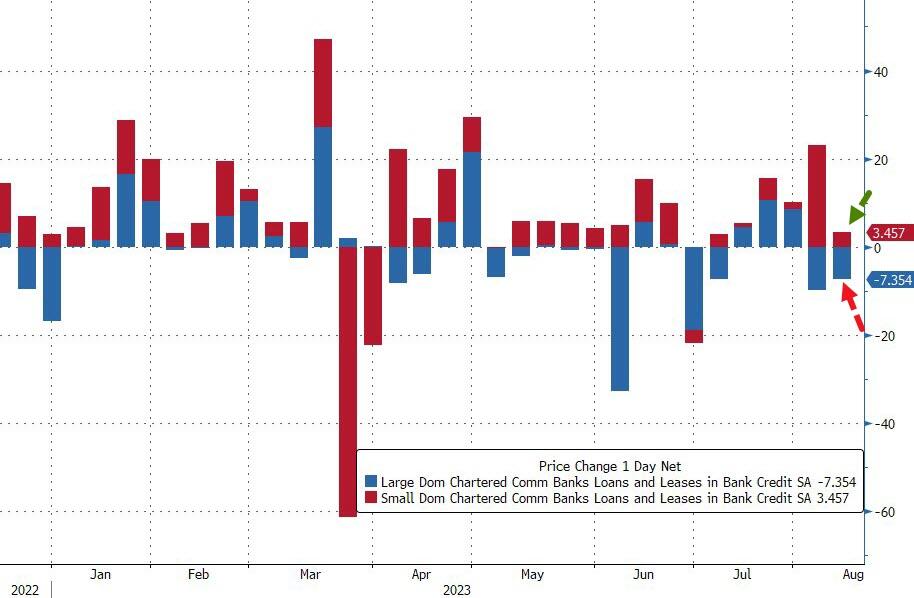
On a seasonally-adjusted basis, Small Banks saw $5.6BN deposit inflows last week while Large Banks suffered $28.7BN outflows (with foreign bank inflows of $12BN making up the difference)…
Source: Bloomberg
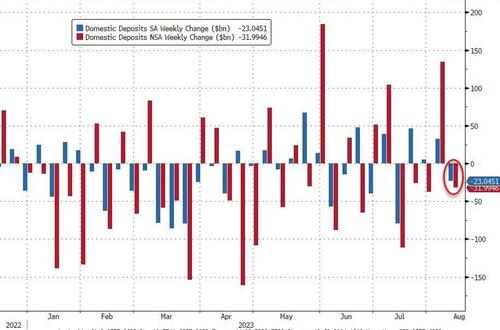
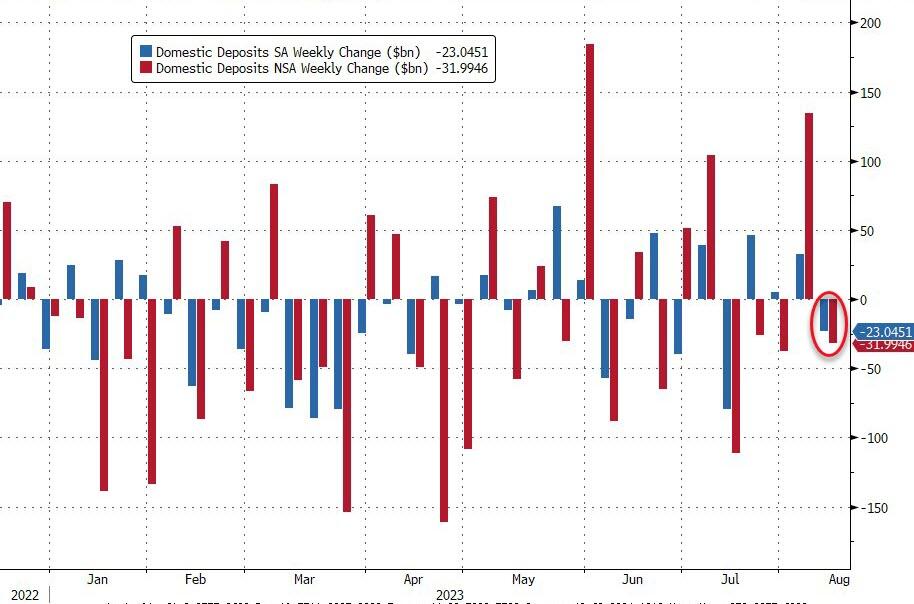
And so, for a nice change, everything is tidy with domestic US banks seeing deposit outflows on an SA and NSA basis…
Source: Bloomberg
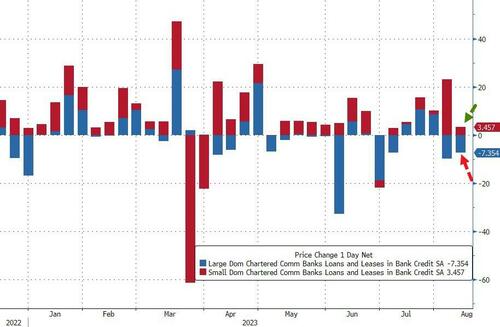
On the other side of the ledger, small banks continued to pump out loans (+$3.56BN, sixth straight week of increases), while large banks saw a $7.4BN contraction in loan volumes…
Source: Bloomberg
So, if The Fed’s data is to be believed, Small banks are ‘winning’ – deposit inflows and making loans; while large banks are leaking – deposit outflows and shrinking loans. All while Treasury prices tumble, stressing small bank balance sheets.
Just remember, the sitting US President Joe Biden goes under several psuedonyms like Robert Peters, Robin Ware, and JRB Ware in his email conversations about Ukraine with his son Hunter. But don’t forget another pseudonym: The Reverend Kane from Poltergeist 2!
Between The Federal Reserve’s outrageous overreaction to Covid (printing like there was no tomorrow), and Biden’s massive spending spree (lots of moldy (green) spending, we have see horrid inflation.
And The Fed trying (sort of) to combat inflation, we see that 30-year CONFORMING mortgage rate for 80% LTV or lower credit borrowers is up 163.5% under Bidenomics.
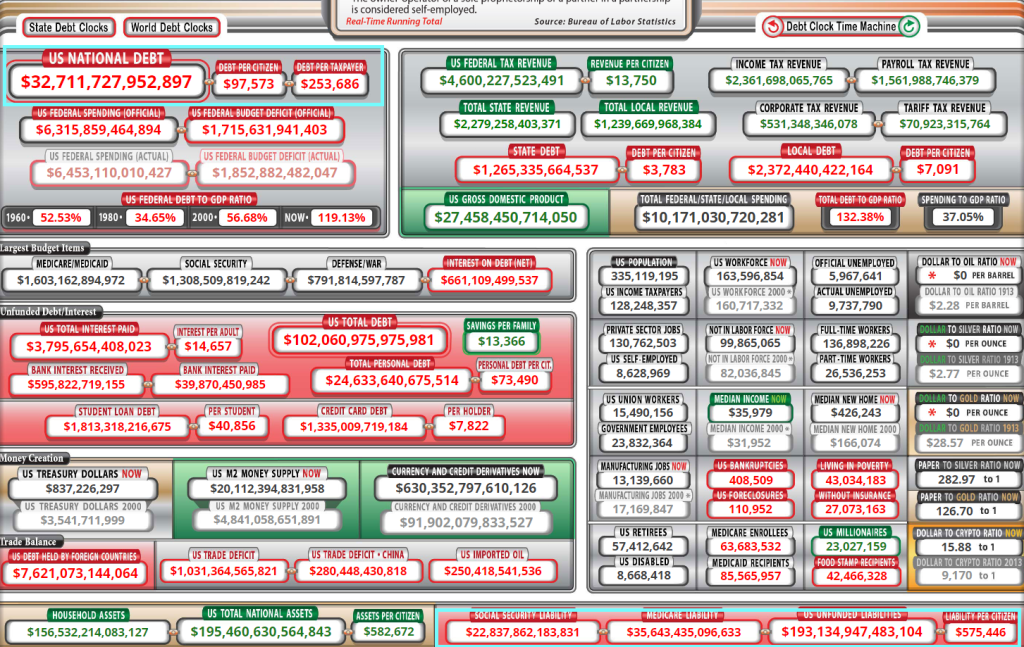
Under Bidenomics, public debt (owed by the US Treasury) is up 19% or greater than $5 triillion. Now wonder Biden throws are billions like it is water.
I seriously want the Biden Administration (and almost every member of Congress) why we are sending billions of dollars to Ukraine while barely giving Maui fire victims barely anything. The US is already $33 trillion in debt with >$193 trillion in unfunded liabilites. I want to ask Biden and Congress HOW the US is going to afford $193 trillion in unfunded liabilites?
Of course, NO ONE wants to face the reality of the disastrous fiscal poliicies of Washington DC politicians. Not McConnell, not McCarthy, not Schumer and especially not Billions Biden. Remember 10% for The Big Guy where Democrats argue that is meaningless. Or mini-me, Robert Reich (Clinton’s labor secretary) who claimed that the US economy is the best he has ever seen! Yes, Reich, for the top 1%. Of couse, no one will ask fools like Reich how we will pay for $33 trillion in debt and the $193 trillion in unfunded liabilies … and fund a war in Ukreiane in seeming perpetuity.
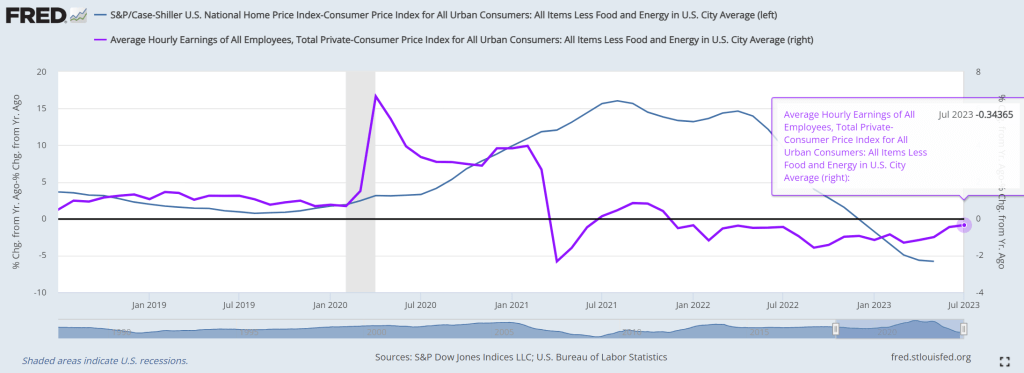
But REAL home price growth (Case-Shiller National HPI YoY – Core CPI YoY) has been declining as The Fed helped jack up mortgage rates above 7%. REAL home price growth was last reported as -5.8% YoY.
And real home price growth corresponds to negative REAL hourly earnings growth YoY.
The source of funding for mortgage lending is bank deposits. But bank deposit growth remains negative, along with M2 Money growth.
What has Bidenomics and The Fed brought us? DECLINING REAL home price growth as bank deposit growth has stalled.
On Monday, Argentina’s central bank raised #interestrates to 118% as Argentina 30-year mortgage is now at a record 82.2%.
There is a record 350 Argentine Pesos for each US Dollar. All courtesy of Argentina’ version of Bidenomics … top down direction of spending and regulation and an out of control Central Bank.





















You must be logged in to post a comment.