TED refers to the difference between the three-month Treasury bill and the three-month LIBOR based in U.S. dollars, a measure of fear in the market.
The 3-month TED spread is rising awfully fast. A sign of impending recession.
US bank credit default swaps (CDS) are rising fast as inflation gets ugly.
The US Treasury 10Y-3M curve is bumping against the zero barrier.
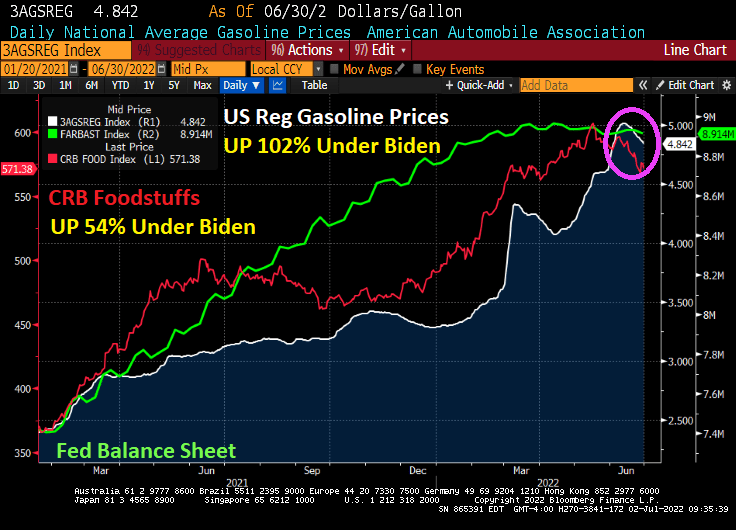
I am still shaking my head at President Biden chastising gasoline stations for not lowering prices at the pump when refiners are near full capacity and the Biden Administration is doing nothing to increase the supply of US-source non-green energy.
Hey, I thought Mayor Pete Buttigieg, the US Transportation Secretary, was supposed to unclog the supply-chain crisis! Instead, we get heartaches on heartaches as diesel prices rise 118% under Biden AND now the bottle-necks may get a lot worse.
A US Supreme Court decision that could force California’s 70,000 truck owner-operators to stop driving is set to create another choke point in already-stressed West Coast logistics networks, a truckers’ organization said.
“Gasoline has been poured on the fire that is our ongoing supply-chain crisis,” the California Trucking Association said in a statement following the Supreme Court’s decision to deny a judicial review of a decision of a lower court, a process known as certiorari.
“In addition to the direct impact on California’s 70,000 owner-operators who have seven days to cease long-standing independent businesses, the impact of taking tens of thousands of truck drivers off the road will have devastating repercussions on an already fragile supply chain, increasing costs and worsening runaway inflation,” the CTA said.
The association asked the Supreme Court for a review of a case challenging California’s Assembly Bill 5, a law that sets out three tests to determine whether a worker is an employee entitled to job benefits or an independent contractor who isn’t. The trucking industry relies on contractors, and has fought to be exempt from state regulations for years because of federal law.
With few exceptions, the relationship between independent truckers and their carriers, brokers and shippers will be governed by the tests.
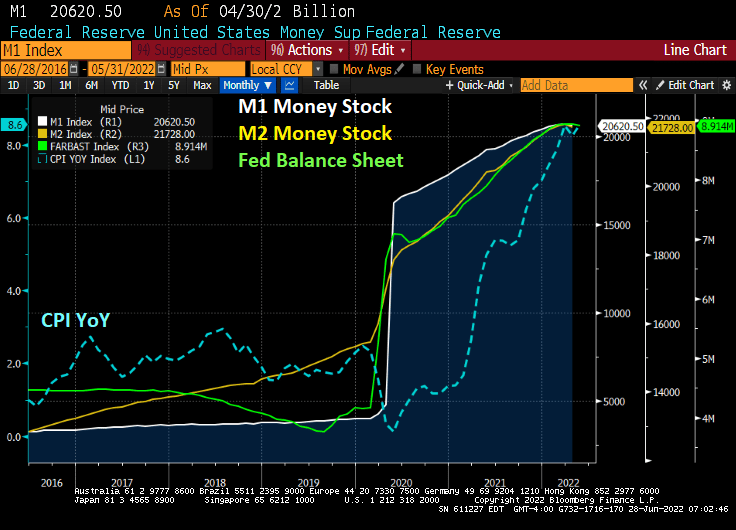
As if US consumers aren’t getting crushed by rising prices already. In response to the Covid outbreak, The Fed slammed its foot on the money accelerator along with Federal government stimulus. Throw in Biden’s anti-drilling executive orders, and we have a nightmare.
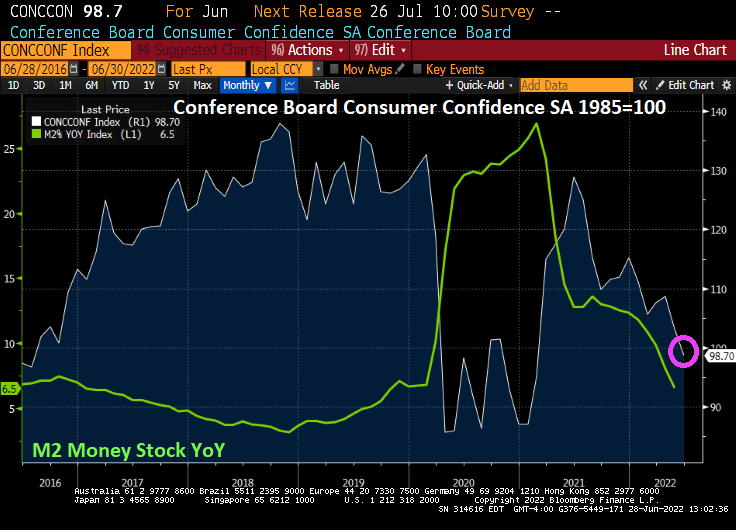
Consumer confidence is already crumbling under inflation and rising energy prices.
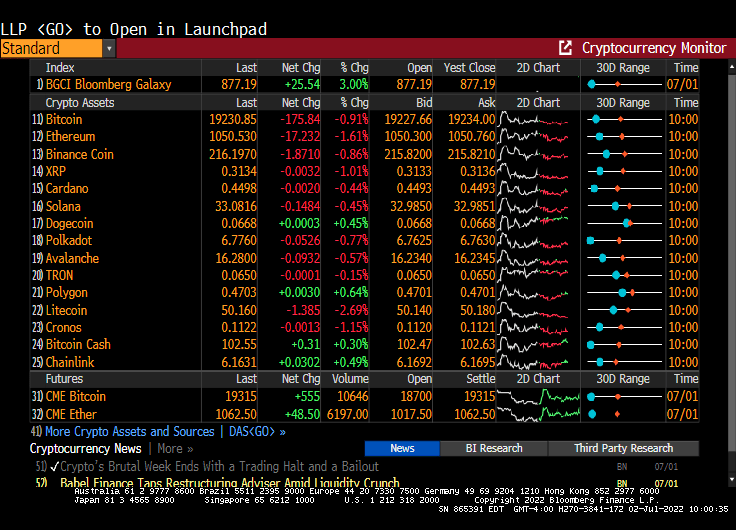
Crypto markets have slumped, adding to a decline that has wiped away some $2 trillion of market value and left market participants uneasy heading into the long Fourth of July weekend.
Bitcoin has fallen below $20,000 as the US Dollar strengthens.
At least Dogecoin is up today.
Enjoy your expensive 4th of July weekend! As long as you don’t eat much due to expensive food prices or drive anywhere due to high gasoline prices.
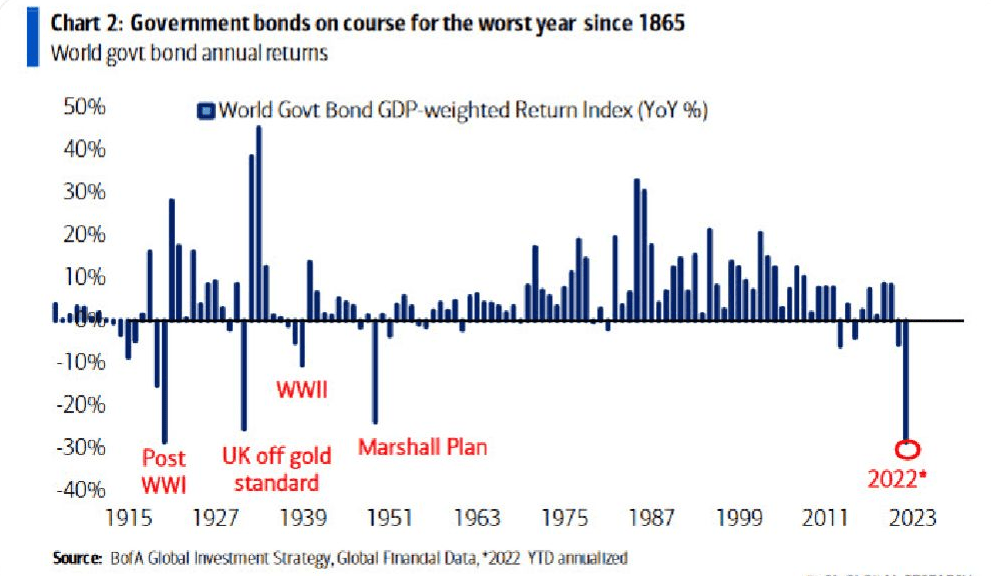
And government bonds on course for worst year since 1865 and President Abraham Lincoln (then President Andrew Johnson).
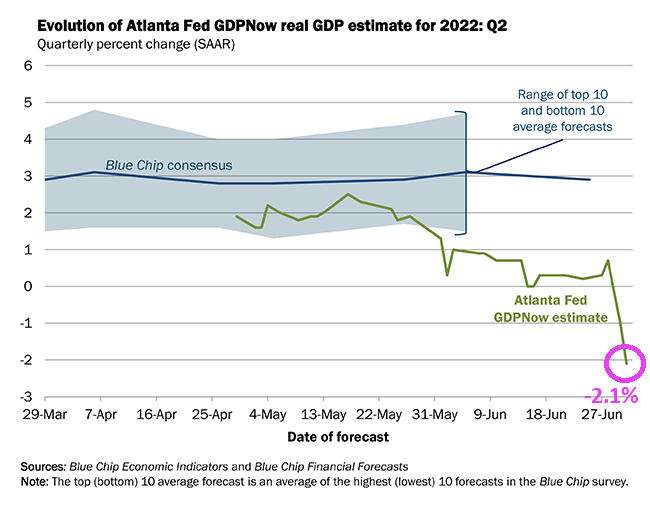
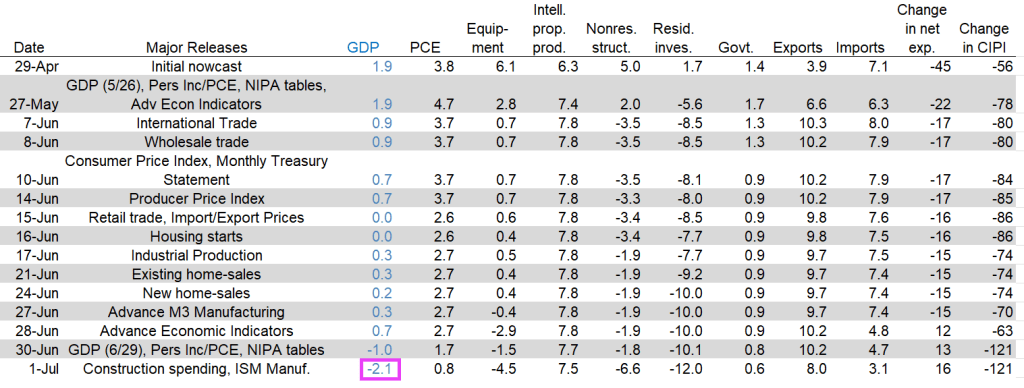
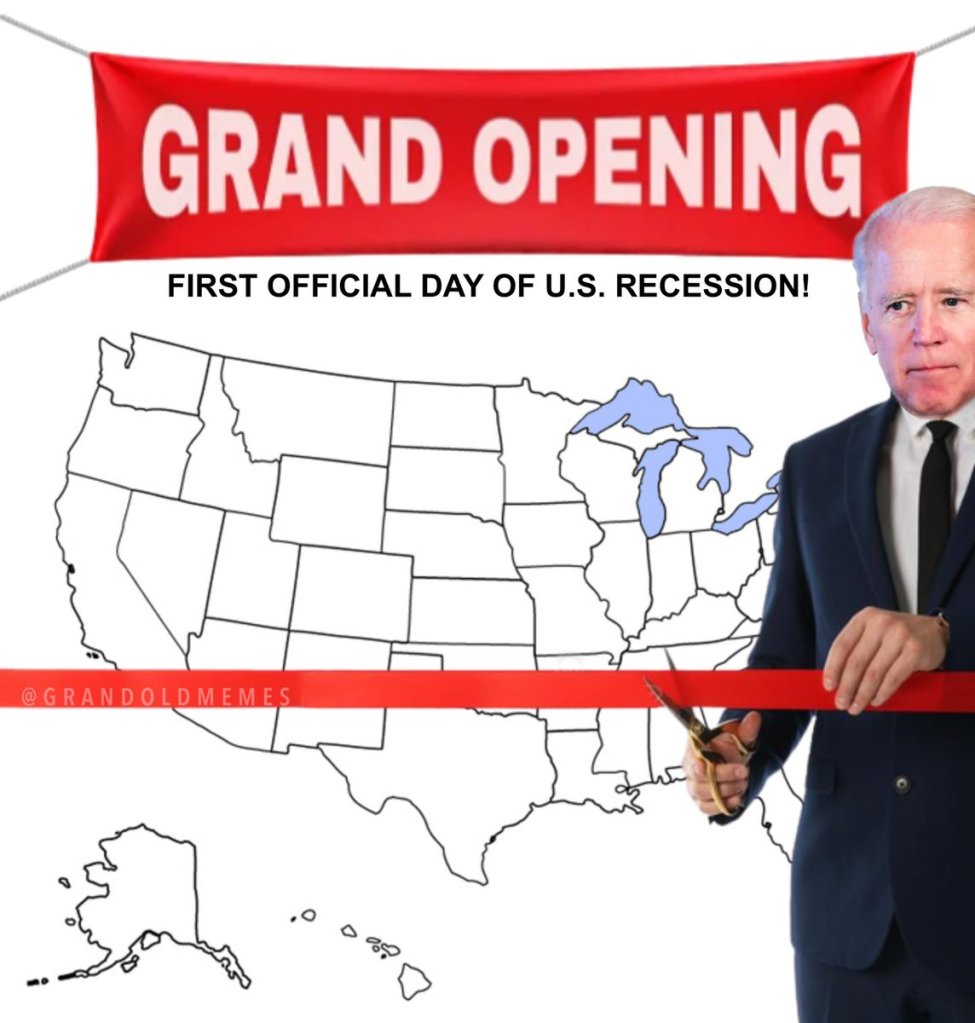
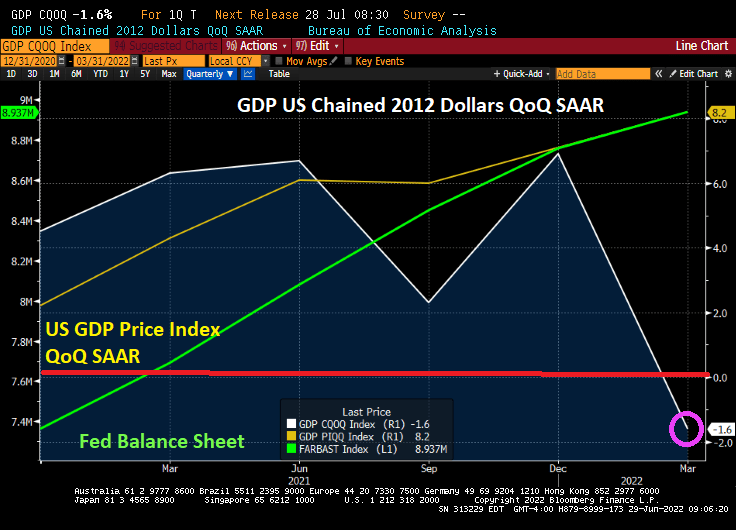
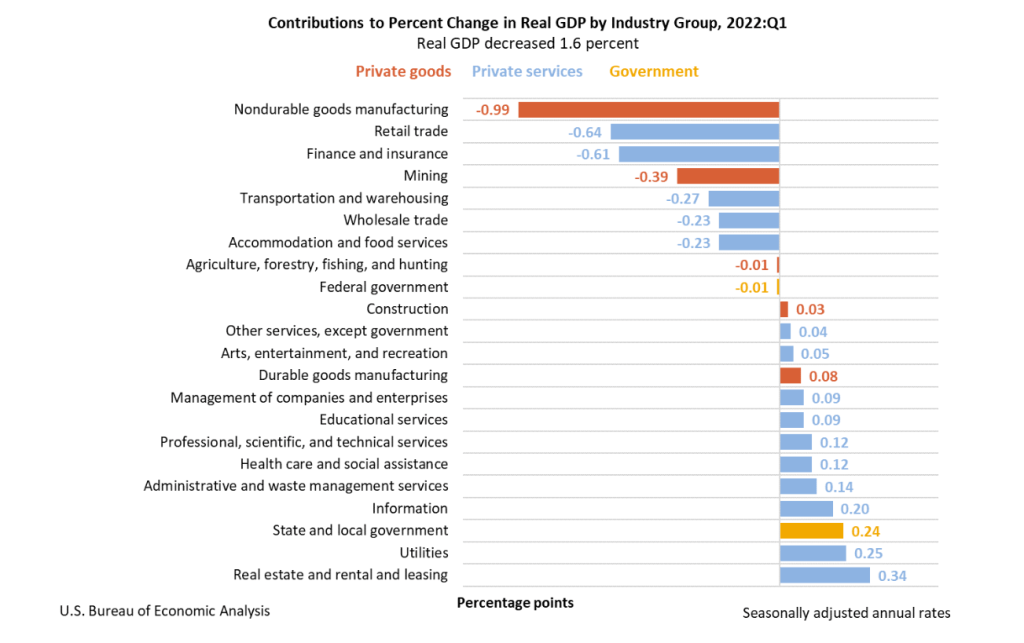
Which is bad news for Biden and Democrats after Q1’s bad GDP report of -1.6% “growth”, we now see the Atlanta Fed’s real-time GDP report for Q2 at -2.1%.
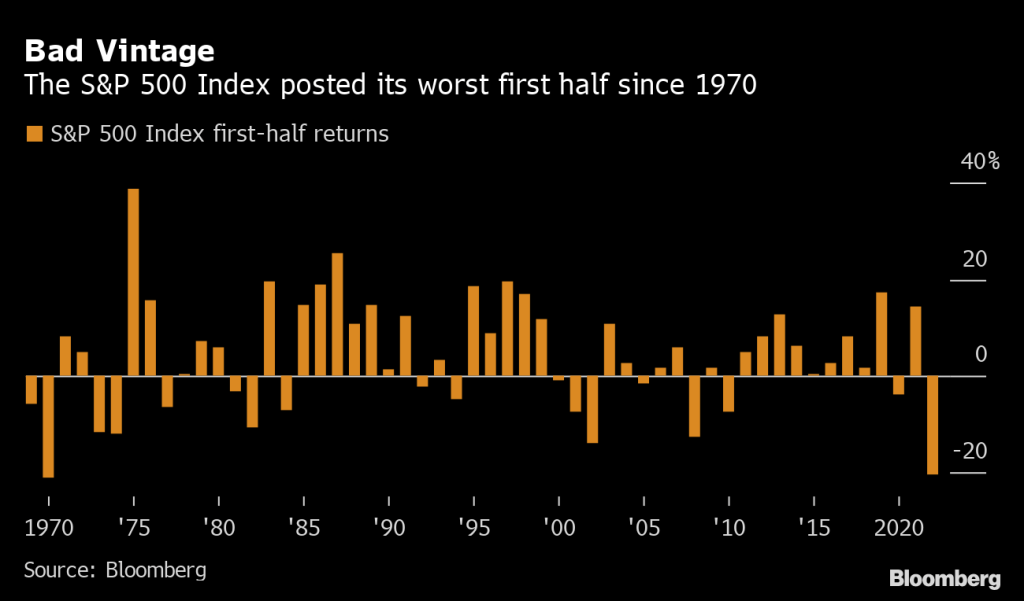
A “recession shock” begins for markets following the worst first-half for the S&P 500 in more than 50 years.
And investors are running to Treasuries for safety as US Treasury 10-year yields tank 14 basis points.
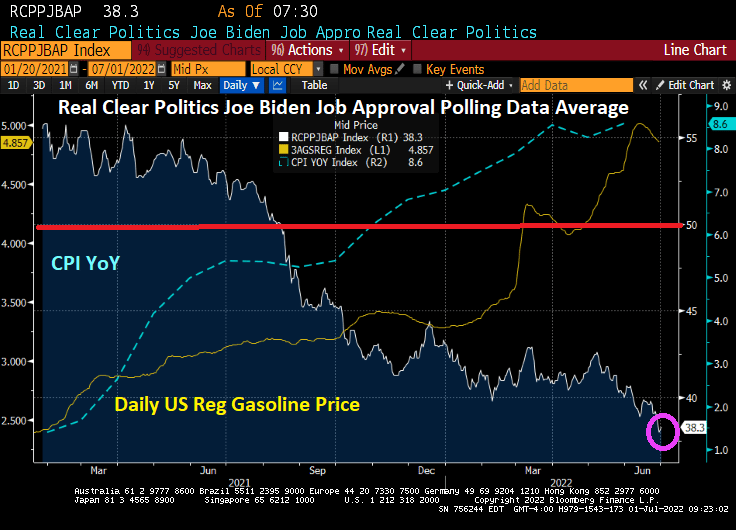
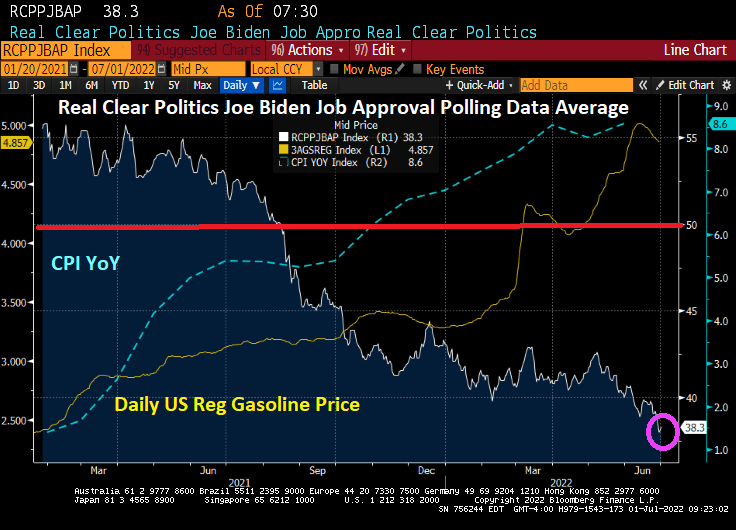
Biden’s approval rating has collapse with inflation and rising gasoline prices. Note that Biden’s approval rating dropped below 50 in mid-August 2021, long before the Russian invasion of Ukraine in late February 2022. Gasoline prices had risen 49% since Biden’s inauguration as President, but before the Russian invasion of Ukraine.
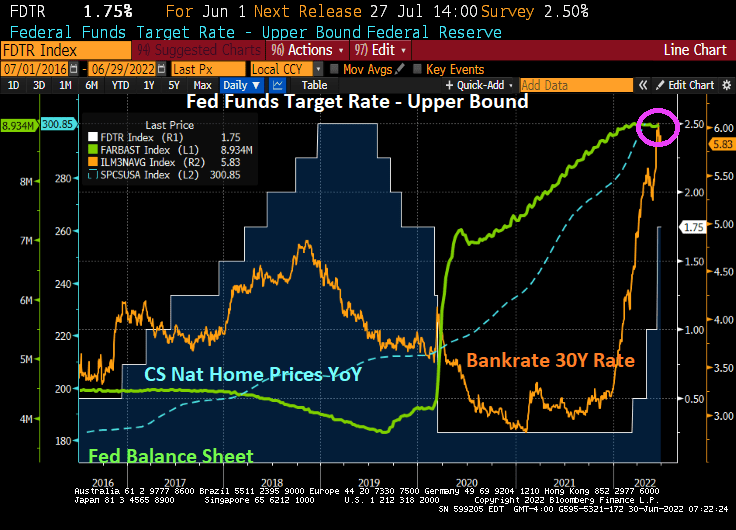
The Federal Reserve under Berananke, Yellen and Powell kept monetary stimulus out there too long and rates too low, but Powell is now trying to reverse that trend to fight inflation. But how will that impact the housing market?
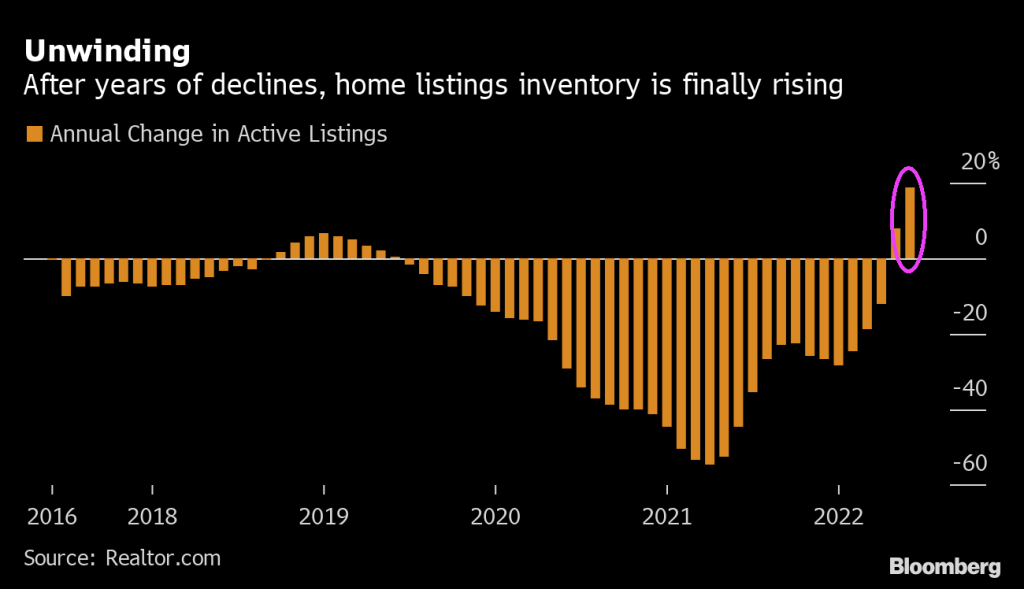
(Bloomberg – Prashant Gopal) The housing slowdown is helping to solve one of the US real estate market’s most intractable problems: tight inventory.
With fewer buyers competing, the number of active US listings jumped 18.7% in June from a year earlier, the largest annual increase in data going back to 2017, Realtor.com said in a report Thursday. And new sellers entered the market at an even faster rate than before the pandemic housing rally began.
The Federal Reserve is cooling off the red-hot housing market as it fights to curb inflation by driving up interest rates. The resulting spike in mortgage costs is making homes less affordable and pushing would-be buyers to the sidelines. That means properties aren’t selling as quickly and must compete with the growing number of new offerings.
I wonder if it is all the Covid monetary and fiscal stimulus that is finally getting homeowners to put their houses on the market, perhaps fearing the end of the housing price run-up with Fed-induced rate hikes?
Let’s see if The Fed’s Frolic Room (aka, open market committee) keeps driving rates up and home affordability down. Or is it The End for the house price bubble?
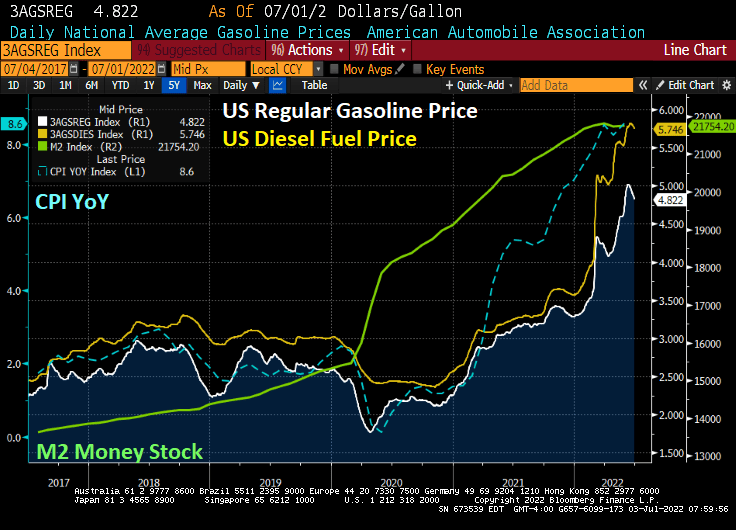
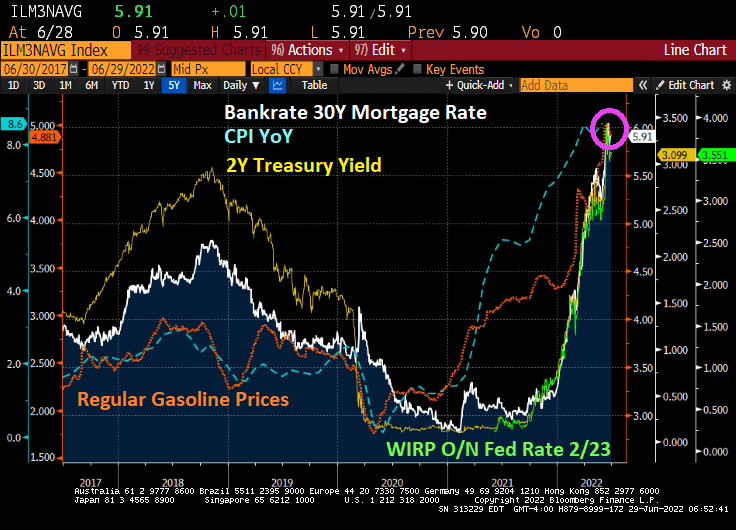
Financial markets are anticipating what Mester is saying: rapidly rising interest rates. But as you can see from the following chart, gasoline prices (orange line) are driving rising US prices. So it is doubtful that monetary tightening will slow price increases. But Mester and company can only control monetary stimulus.
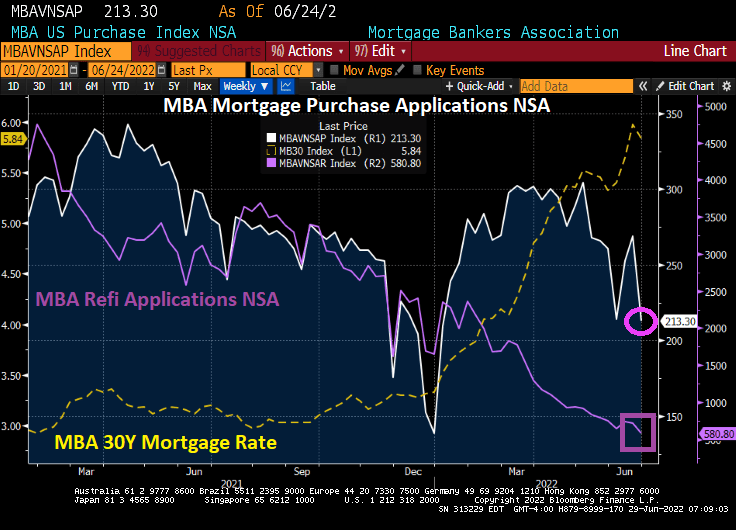
Mortgage rates have soared as The Fed attempts to crush inflation. And mortgage purchase applications fell -21% WoW in the most recent Mortgage Bankers Association survey.
The Refinance Index increased 2 percent from the previous week and was 80 percent lower than the same week one year ago. The seasonally adjusted Purchase Index increased 0.1 percent from one week earlier. The unadjusted Purchase Index decreased 21 percent compared with the previous week and was 24 percent lower than the same week one year ago.
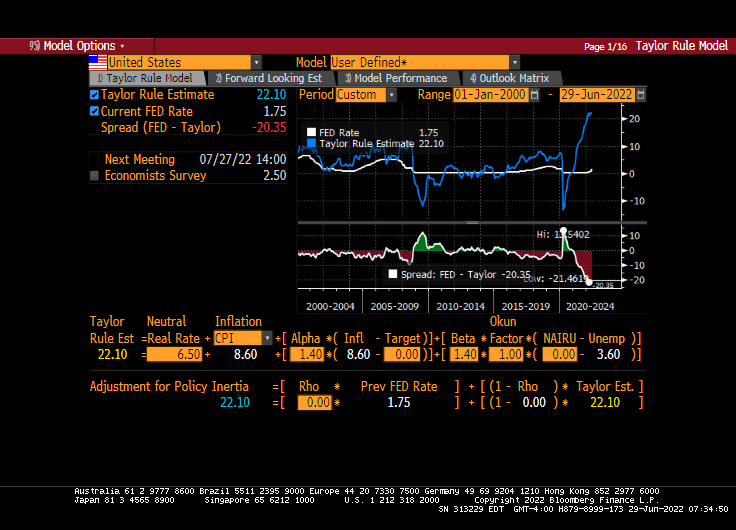
It almost seems like Mester is following the Taylor Rule (not really). But using CPI YoY, the Taylor Rule is saying that The Fed Funds Target Rate should be … 22.10%. It is only 1.75% after years of excessive stimulus following the banking crisis of 2008/2009. And Yellen who seemingly never met a rate hike that she liked.
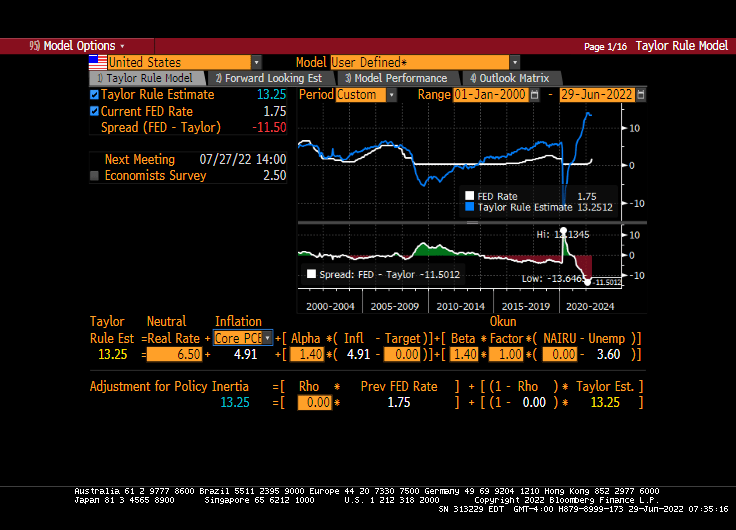
If we use core PCE as our measure of inflation, the Taylor Rule is still high at 13.25%, a whopping 11.50 spread over the current target rate.
It took a while and trillions in fiscal and monetary stimulus to recover from Covid-era economic lockdowns, but now that the monetary stimulus is being withdrawn, the economy is stalling.
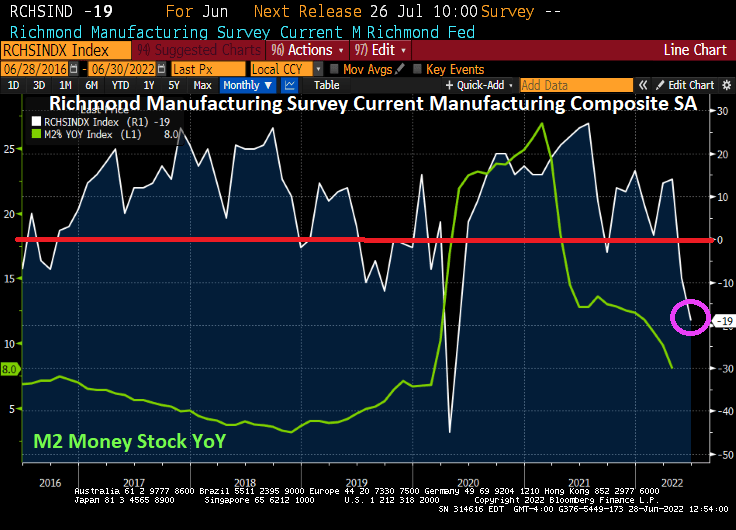
If you look at the chart below, you can see that “The Thrill Is Gone” from monetary and fiscal stimulus.
And The Conference Board’s Consumer Confidence Index fell below 100 as M2 Money Stock YoY returns to pre-Covid levels.
A national measure of prices climbed 20.4% in April, down from the 20.6% gain in March, the S&P CoreLogic Case-Shiller index showed Tuesday. Craig Lazzara, a managing director at S&P Dow Jones Indices, noted that April data was showing initial, but inconsistent, signs of a deceleration in price gains.
Mortgage rates have nearly doubled since the end of 2021. The run-up in rates, combined with high prices, are squeezing potential buyers and starting to slow housing markets in some of the most popular pandemic boomtowns.
Covid monetary stimulus remains in place at inflation hits 8.6%.
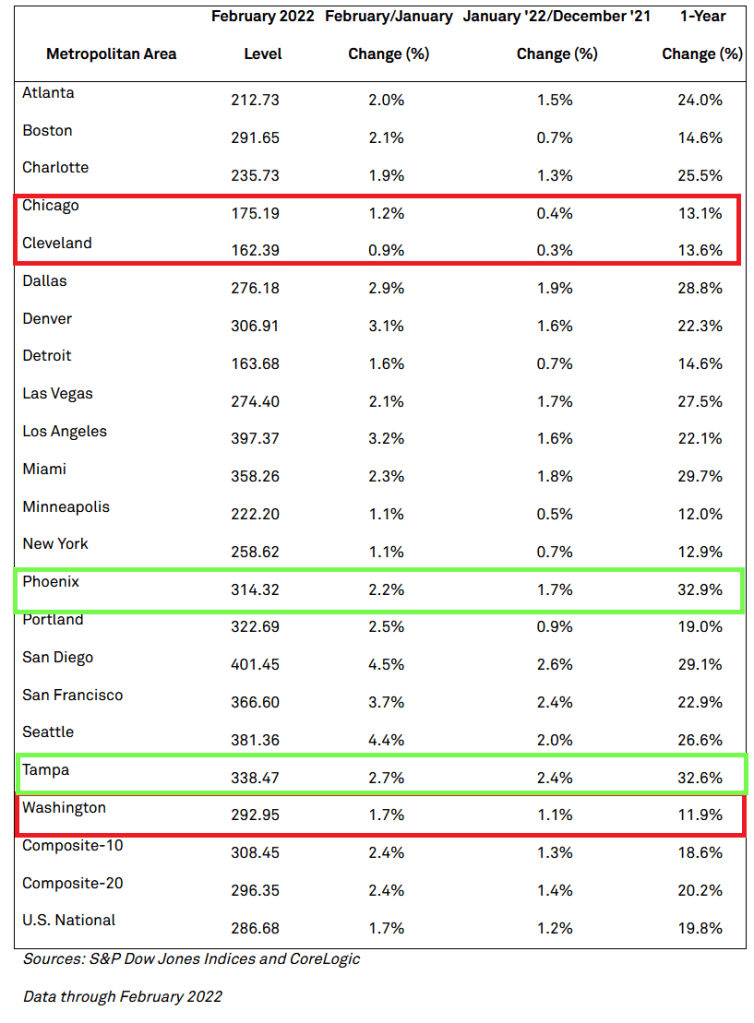
Washington DC has the slowest growth in home prices at 11.9% with Chicago and Cleveland close behind. Phoenix barely beat Tampa, FL for hottest home prices with both above 30% YoY.












 Confounded Interest - Anthony B. Sanders
You must be logged in to post a comment.