Doom Loop? The US Dollar Is Booming, But Will A Doom Loop Follow? (US Treasury Yield Curve Inverted At -20 BPS)

Here we go doom loop de loop?

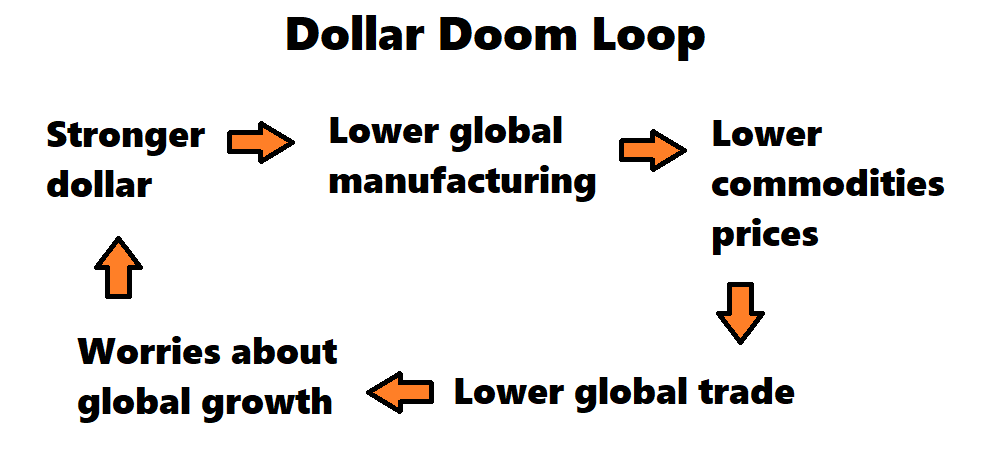
The dollar’s gain is the world’s pain — and based on its current trajectory, the world may be in for a whole lot more discomfort.

Concerns over global growth have recently sent the US Dollar Index to the strongest level on record, with the greenback hitting multi-decade highs against currencies like the euro and the yen.

But the move risks becoming a self-reinforcing feedback loop given that the vast majority of cross-border trade is still denominated in dollars, and a stronger US currency has historically translated into a broad hit to the world economy.

Against the backdrop of higher-than-expected inflation and still-elevated commodities prices, the concern is that we’re in for a dollar ‘doom loop’ like never before, according to Jon Turek, the founder of JST Advisors and author of the Cheap Convexity blog.

With the Federal Reserve hiking interest rates at the fastest pace in decades, he says, it’s much less clear what could break the feedback loop in the next few months.

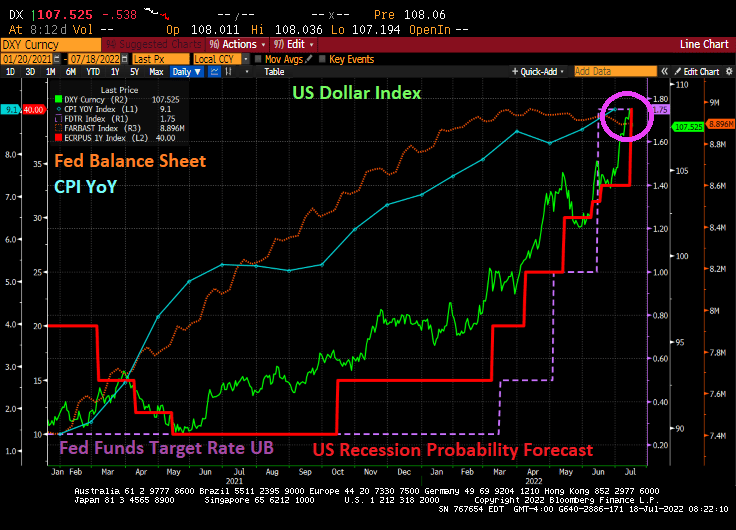
The Dollar Doom Loop with US inflation causing The Fed to tighten
Under Biden’s policies, inflation hit a 40-year high (blue line), and the US Dollar (green line) is strengthening. Then we have The Fed raising the target rate (purple line) and the probability of recession rising with Fed tightening.
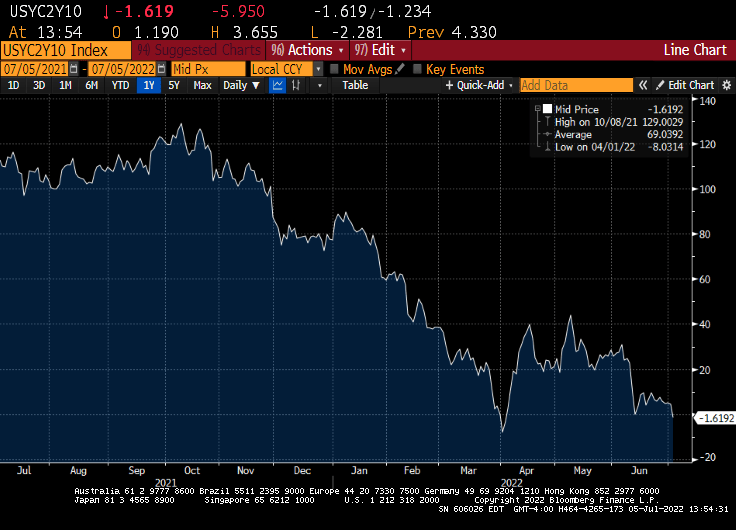
Is a US recession coming? The US Treasury 10Y-2Y yield curve is inverted at almost -20 basis points.

There is a Fed open market committee meeting in one week and they are expected to raise their target rate by 75 basis points according to Fed Fund Futures data. Inflation keeps rising as does the probability of a US recession. So, The Fed will keep on tightening.

Bidenflation Strikes! Dow Down 2% As Recession Fears Grow (Check Out M1 Money Growth!)

Lightning strikes!

Inflation has been a disaster for millions of Americans. As inflation grows (highest in 40 years), fears of recession are jolting markets.

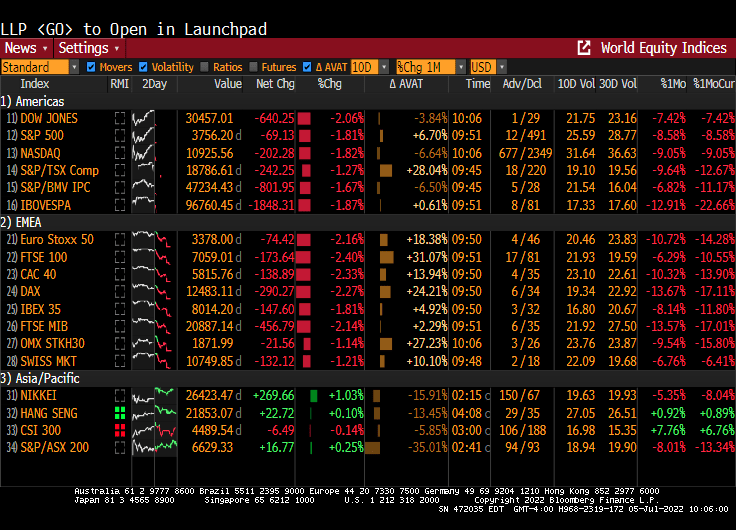
The Dow today is down 2%.

Then again, Europe is down even more.

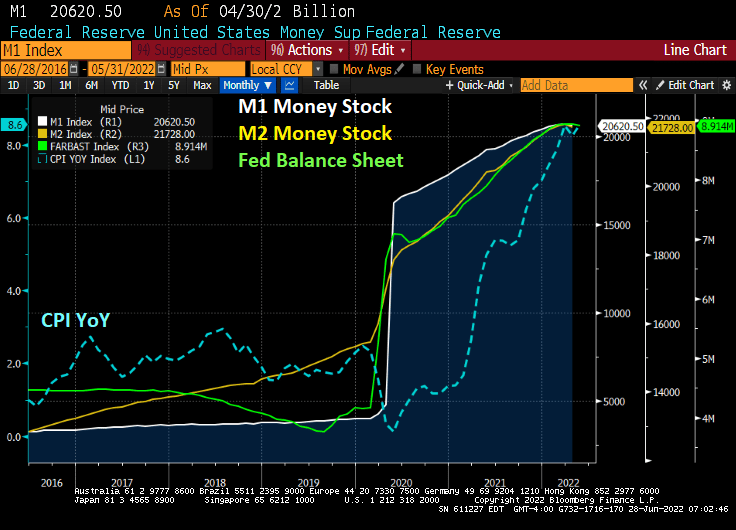
My favorite chart for explaining the surge in inflation is M1 Money Stock around the Covid outbreak in early 2020. Which has NOT been removed.

The US Treasury 10Y-2Y yield curve just inverted.

No, this is not a real ECB currency, but it might as well be.

Slowing! US Personal Consumption Expenditures Drop To 0.2% MoM In May As PCE Deflator Hits 6.3% YoY (US Mortgage Rates Slip to 5.7%, the First Decline in Four Weeks)

The US economy is slowing as inflation ravages consumers. US Regular Gasoline prices, for example, are up 104% under President Biden which helps to slow the economy.

US personal consumption expenditures fell to +0.2% MoM in May as “inflation” or real personal consumption expenditures PRICES rose +6.3% YoY as The Fed’s balance sheet (aka, Master Blaster!) remains.

As I mentioned above, US regular gasoline prices are UP 103% under President Biden, diesel prices (the cost of shipping goods to markets like … food is up 119% under Biden while CRB foodstuffs is up 55% under China Joe.

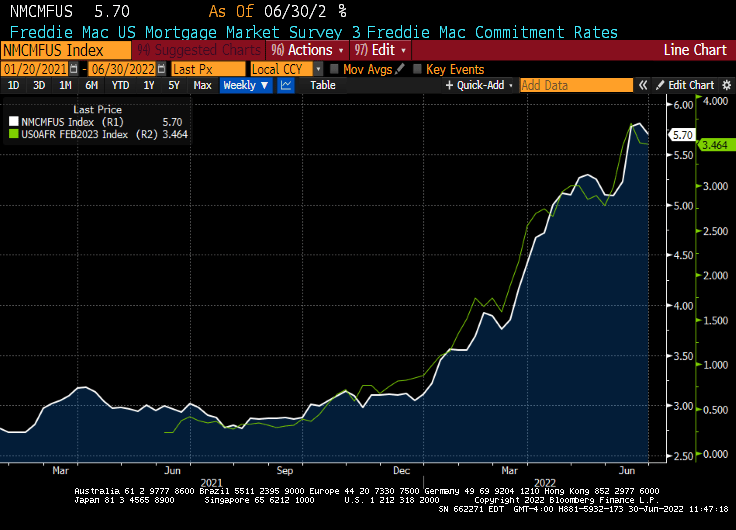
Now we have mortgage rates in the US falling for the first time in four weeks. The average for a 30-year loan was 5.7%, down from 5.81% last week, Freddie Mac said in a statement Thursday.

This year’s Fourth of July celebration is going to cost 18% more than last year’s celebration.

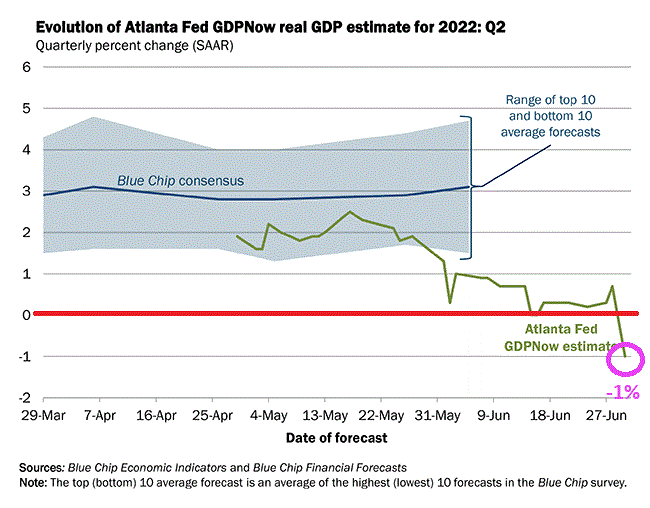
Lastly, the Atlanta Fed GDPNow real time tracker for Q2 is showing … -1% GDP “growth.”

So, yes, the US economy is slowing.

Hot, Hot, Hot! Case-Shiller National Home Price Index Slows … To 20.4% YoY In April As Fed Stimulypto Remains

Housing market is still hot, hot, hot!

A national measure of prices climbed 20.4% in April, down from the 20.6% gain in March, the S&P CoreLogic Case-Shiller index showed Tuesday. Craig Lazzara, a managing director at S&P Dow Jones Indices, noted that April data was showing initial, but inconsistent, signs of a deceleration in price gains.

Mortgage rates have nearly doubled since the end of 2021. The run-up in rates, combined with high prices, are squeezing potential buyers and starting to slow housing markets in some of the most popular pandemic boomtowns. 

Covid monetary stimulus remains in place at inflation hits 8.6%.

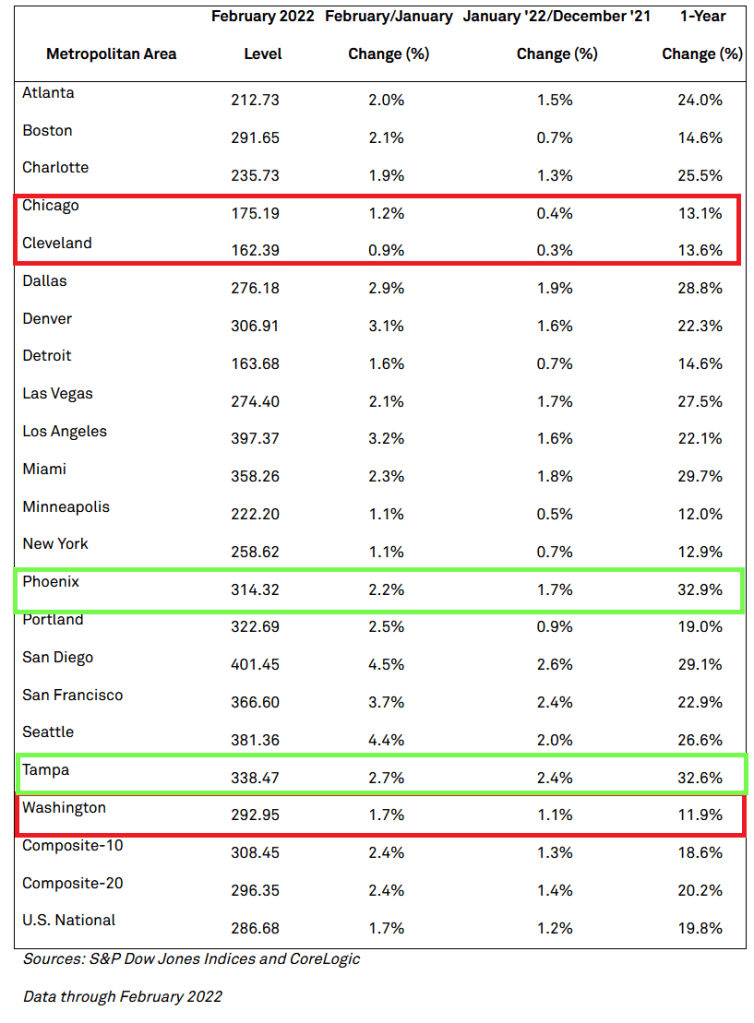
Washington DC has the slowest growth in home prices at 11.9% with Chicago and Cleveland close behind. Phoenix barely beat Tampa, FL for hottest home prices with both above 30% YoY.

Fed inferno!

Blitzkrieg Bop! ECB to Activate First Line of Defense in Bond Market July 1 (Lagarde Calls For Monetary Maginot Line) WIRP Forecasts US Rate Hikes Until March 2023, Then Declining Rates

The ECB is planning on a Blitzkrieg Bop, monetary style.

When Lagarde talks about the first line of defense, all I can picture is The Maginot Line in France, a failed defensive line that was easily bypassed by the German Wehrmacht (army).

The European Central Bank will activate the bond-purchasing firepower it’s earmarked as a first line of defense against a possible debt-market crisis on Friday, according to President Christine Lagarde.

Applying “flexibility” to how reinvestments from the ECB’s 1.7 trillion-euro ($1.8 trillion) pandemic bond-buying portfolio are allocated is aimed at curbing unwarranted turmoil in government bonds as interest rates are lifted from record lows to curb unprecedented inflation.

Net buying under a separate asset-purchase program is also set to end on Friday.

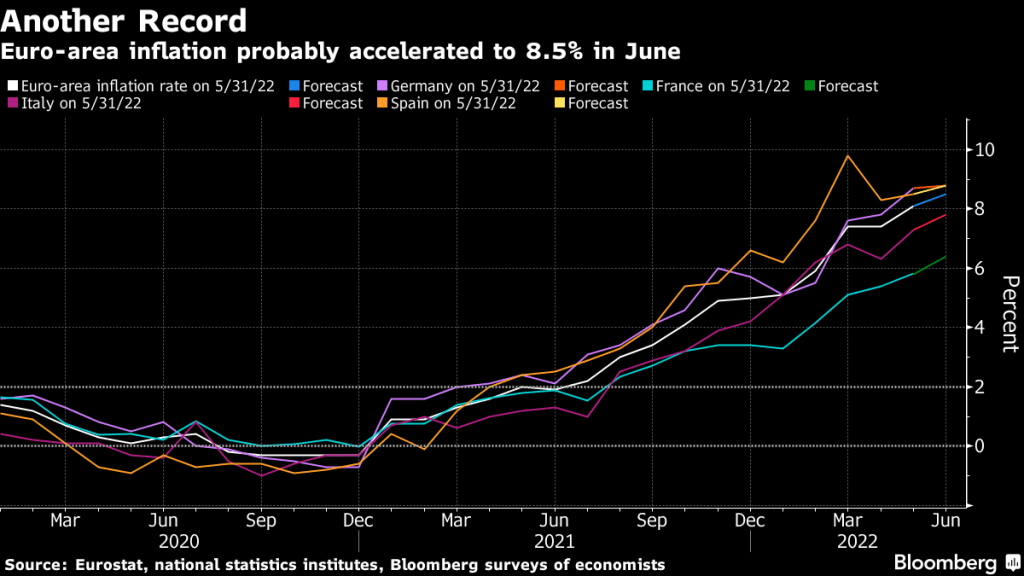
In other words, Euro-area inflation has exploded in 2021, just like the USA.

But the US also has an inflation problem caused in part by Covid and the government’s reaction to Covid: economic shutdown and massive Federal monetary and fiscal stimulus. The stimulus is still in play.

The bond market is already anticipating an about-face by The Federal Reserve (implied overnight rate peaking at the March 2023 FOMC meeting, then receding.

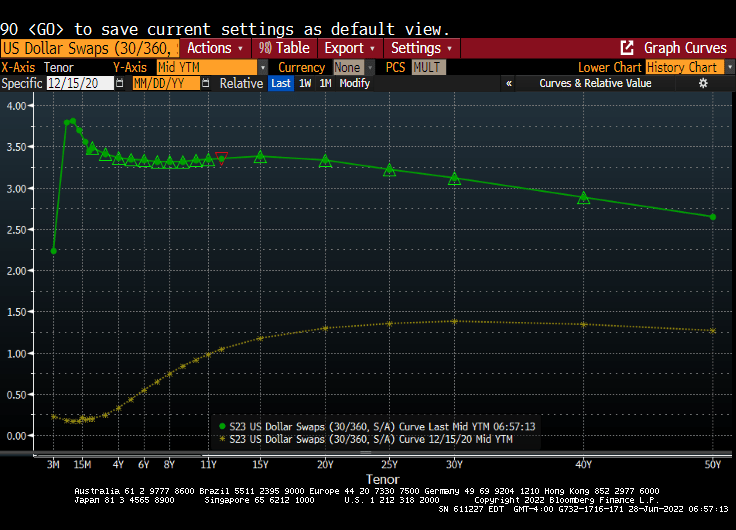
Again, nothing has been the same since the Covid outbreak of 2020 and Fed monetary blitz. Here is the US Dollar Swaps curve before Covid (yellow line) and today’s Fed-enhanced curve (green).

Mortgage rates in the US have climbed to 6% then backed-off slightly. The good ole Back-off Boogaloo as The Fed attempts to unwind its monetary stimulypto.

The French Maginot Line, easily bypassed by German tanks. The Federal Reserve is the US’s Maginot Line. The Yellenot Line??

Opening Hell! Markets In Sea Of Red Thanks To Global Slowdown And Fed Signals Of Tightening (Global Markets In Sea Of Red)

Today’s opening bell is “Opening Hell!”

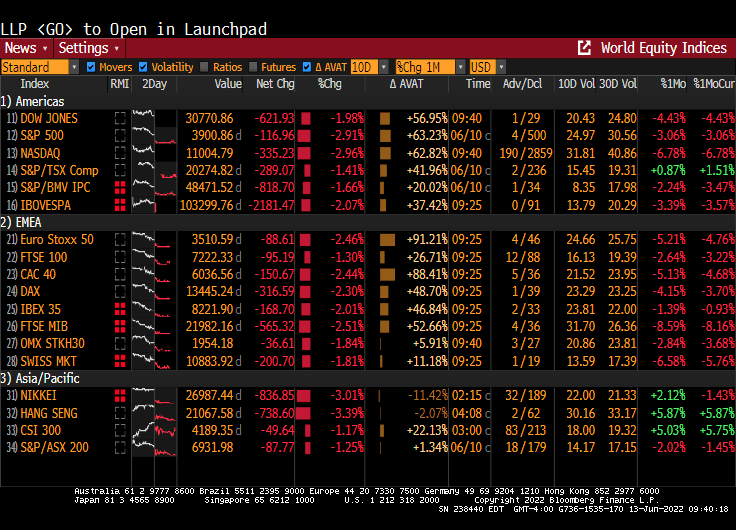
US Treasury 10Y yields are up +12.1 basis points as of 9:40am EST. And rising across the globe.

Equity markets? Dow is down -621.93 points and the NASDAQ is down almost -3%. But equity markets are down across the globe.

Commodities? Once again, all commodities in the red except corn (which I don’t eat) and natural gas.

Speaking of opening hell. The US Treasury 10Y-2Y yield flattened to 7 basis points.

And then we have Markit’s Credit Default Swaps index rising to the highest level since Covid (April 2020).

Markets are in a “Sea of Red.”

Morning Update: Bankrate’s 30Y Mortgage Rate Rises Slightly To 5.29% (Housing Rents UP 16.4% YoY, Gasoline UP 92% Under Biden, Food UP 60%)

US mortgage rates are up slightly this morning. Bankrate’s 30-year mortgage rate survey is up to 5.29%.

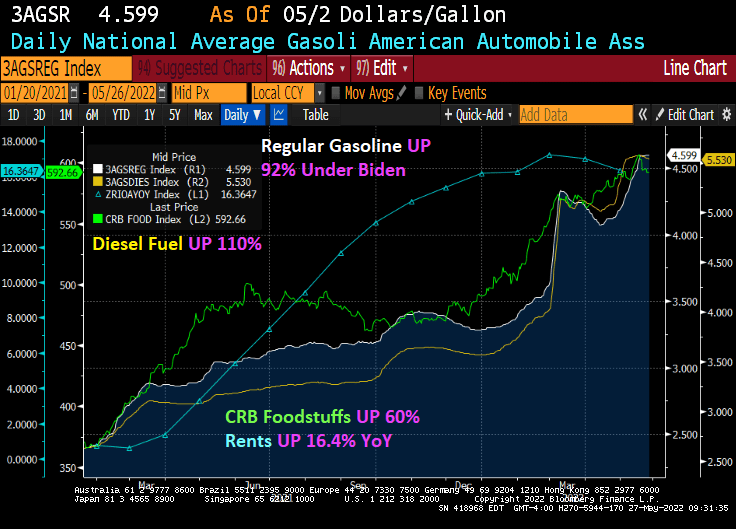
The Biden Scorecard is still a bleak one (for non-elitists). Regular gasoline is UP 92% under Biden, Diesel fuel is UP 110%, foodstuffs are up 60% under Biden, Zillow all-house rents are UP 16.4% YoY.

It hurts to be in the middle class under Biden.

Medusa Touch! Goldman’s Blankfein Warns Of Recession, Fed Reverse Repos Soar With Inflation, Stock Futures Down While S&P 500 Forward 12-Month P/E Ratio Falls To Pre-Covid (2016) Levels

Goldman Sachs Senior Chairman Lloyd Blankfein urged companies and consumers to gird for a US recession, saying it’s a “very, very high risk.”

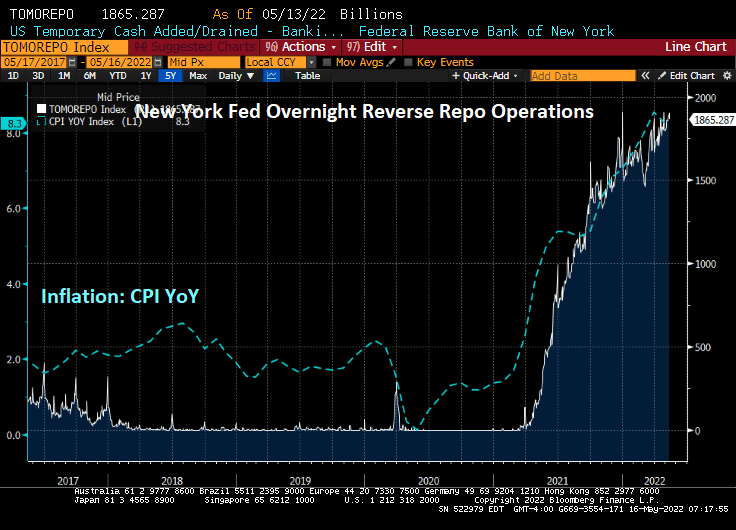
I am not surprised. Take a look at The Fed’s Overnight Reverse Repo operations. As inflation surged in 2021 and 2022, banks are parking more funds at The Fed. Fear?

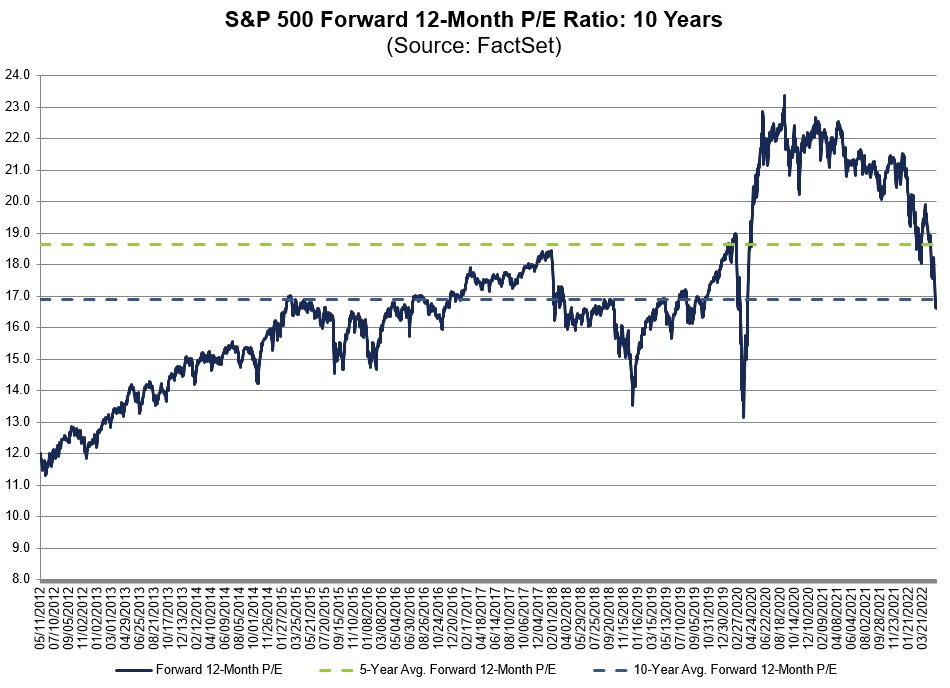
We are seeing the S&P 500 futures down today after a nice rally on Friday. The &P 500 forward 12-month P/E ratio is back to pre-Covid, pre Federal spending surge, pre Fed monetary Stimulypto of 2016.

Goldman Sachs see the 10-year Treasury yield rising to 3.3%. That bodes ill for 30-year mortgage rates, perhaps push mortgage rates up another 40 basis points to 5.80%.

And NASDAQ is having its worst year since 2008.

Its The Medusa Touch of Big Government.

Commodities Versus S&P 500 And The New World Order (Crashing Currencies And Flight To Commodities) The End Of US Dollar Hegemony?

Here is Dvorak’s New World Symphony, an appropriate piece the global turmoil that has taken place after Russia’s invasion of Ukraine.

Here is the ratio of the S&P 500 index against the Bloomberg Commodity Price Index. This ratio is plotted against The Federal Reserve’s balance sheet of assets. Notice the decline in the Commodity Ratio in 2022, even ahead of the Russian invasion of Ukraine.

Global currencies, on the other hand, have been really crushed since the Russian invasion of Ukraine. The Japanese Yen, China’s Renminbi and Europe’s Euro relative to the US Dollar are falling due to a variety of reasons. Covid lockdown in China, Japan’s insistence on monetary easing while other Central Banks are tightening and the Euro with Russia threatening nuclear war.

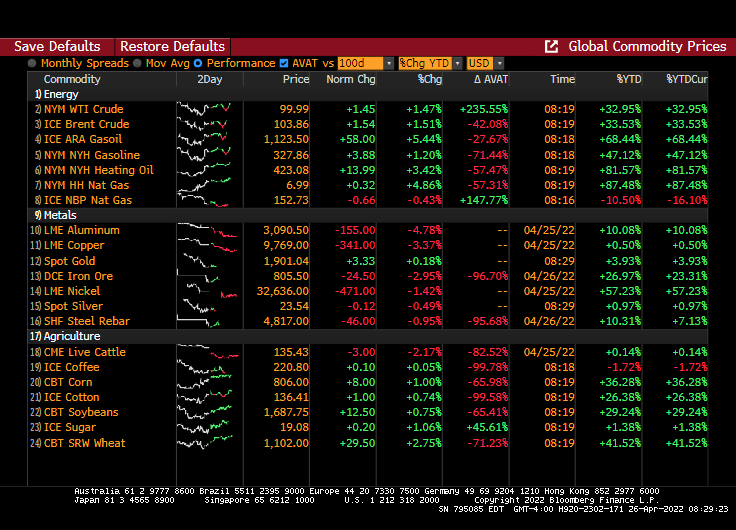
WTI Crude is back to $100 a barrel. Critical metals are down today related to a slowing global economy and wheat is up 2.75%.

Could it be that US Dollar hegemony is nearly over and commodity-backed currencies are the way of the future?

Panic In (Fed) Needle Park! Mortgage Purchase Applications INCREASE Despite Rapid Rise In Mortgage Rates (FEAR Of Further Fed Taking Away Punchbowl)

Today, the US Treasury 10-year yield exploded upwards by over 12 basis points. With it, the 30-year mortgage yield is above 5%. And MBA Mortgage Purchase Applications are actually increasing.

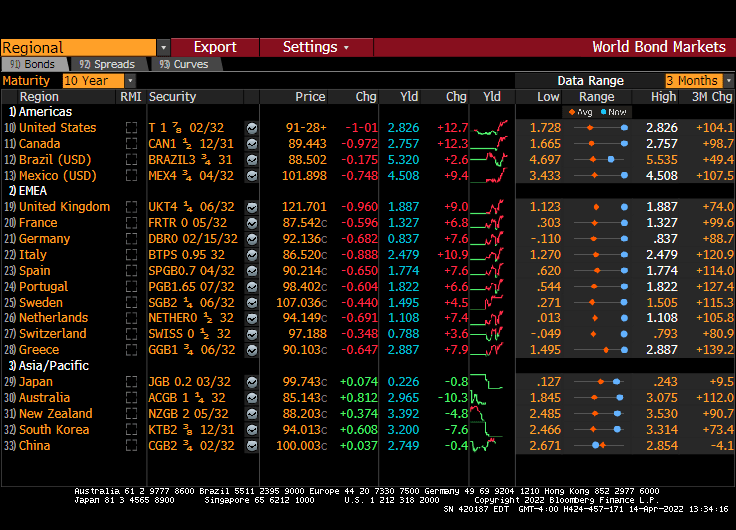
Today’s bond market summary shows the 10-year Treasury yield up 12.7 basis points. Its the same all over the western world. Asia? Not so much.
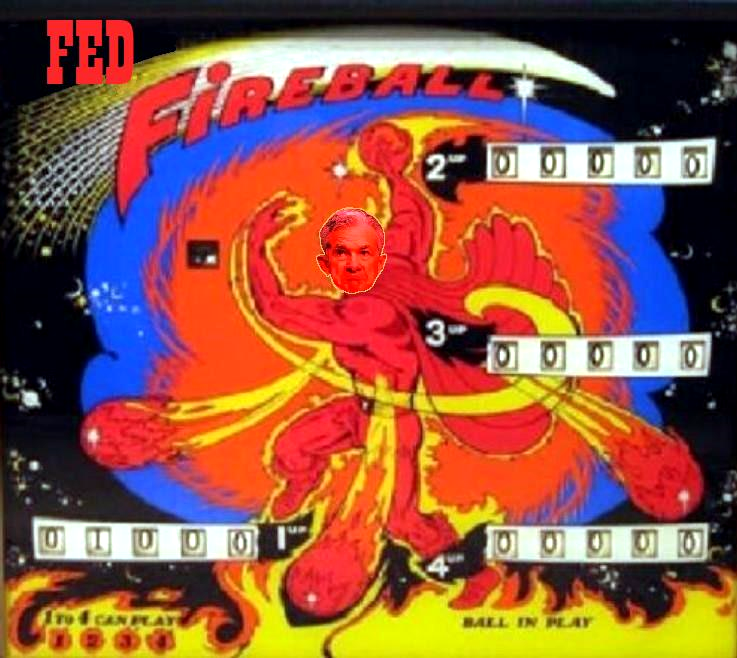
Fear of further Fed fireballs coming from removal of the monetary punchbowl.