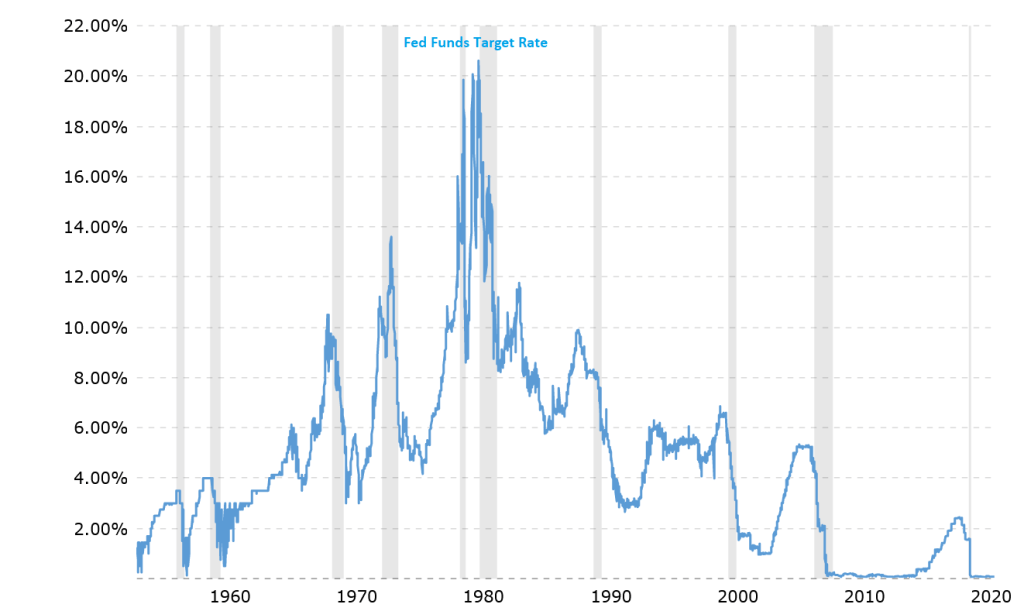
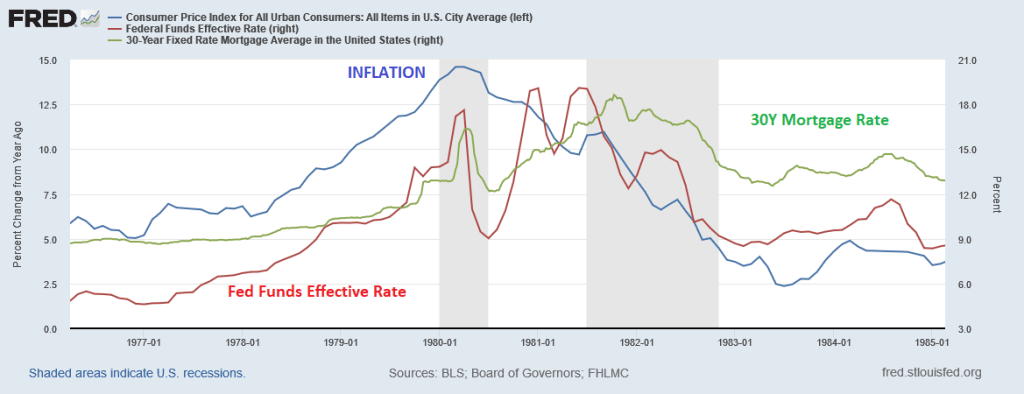
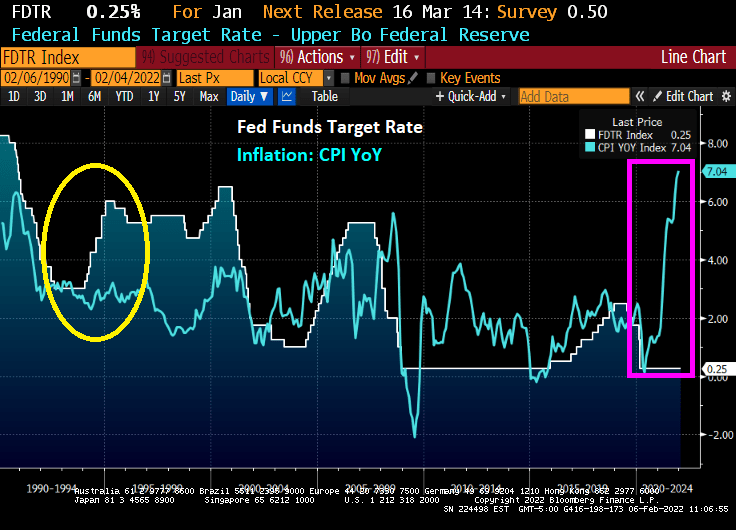
In August 1979, when Paul Volcker became chairman of the Federal Reserve Board, the annual average inflation rate in the United States was 11%. Inflation peaked in 1980 at 14.6%. Volcker raised the federal funds rate from 11.2% in 1979 to 20% in June of 1981.
Inflation (defined as CPI YoY) declined from over 14.6% in 1980 to 3.6% by 1985. But 30-year mortgage rates resumed their upward trajectory and peaking in October 1981 at 18.63 before beginning a gradual decline as inflation was tamed.
But will Powell enact another Volcker moment by raising the target rate abruptly?
The bank is joining others on Wall Street in ramping up bets for faster policy tightening, after U.S. consumer prices posted the biggest jump since 1982 in January. Goldman Sachs Group Inc. is forecasting seven hikes this year, up from its earlier prediction of five.
“We now look for the Fed to hike 25bp at each of the next nine meetings, with the policy rate approaching a neutral stance by early next year,” the JPMorgan team, led by chief economist Bruce Kasman, said in a research note.
January U.S. inflation readings “surprised materially to the upside,” the economists wrote. “We now no longer see deceleration from last quarter’s near-record pace.”
On inflation, the economists said a “feedback loop” may be taking hold between strong growth, cost pressures, and private sector behavior that will continue even as the intensity of current price pressures in the energy sector eventually fade.
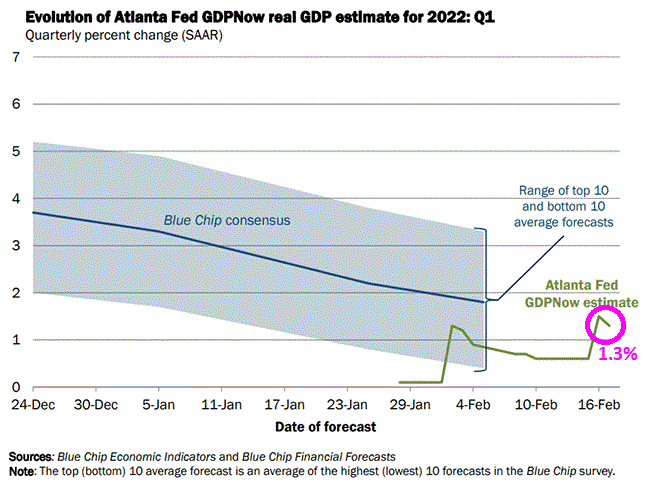
Strong growth? 1.3% is strong growth??
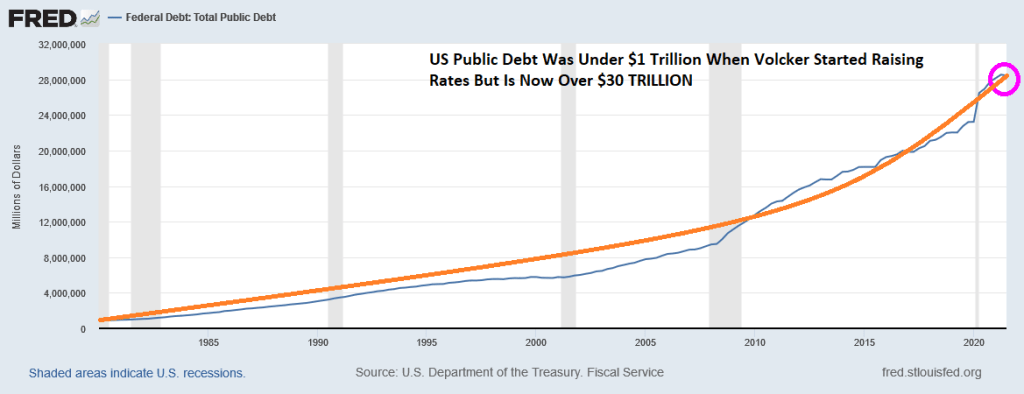
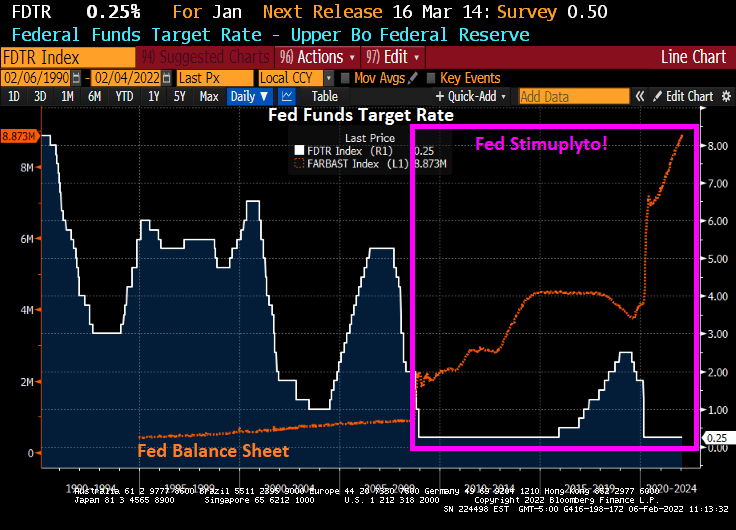
Be that as it may, the US economy is at a different place today than under President Jimmy Carter. When Volcker started raising The Fed Funds Target rate, US public debt was still under $1 trillion. It has ballooned to over $30 trillion today.
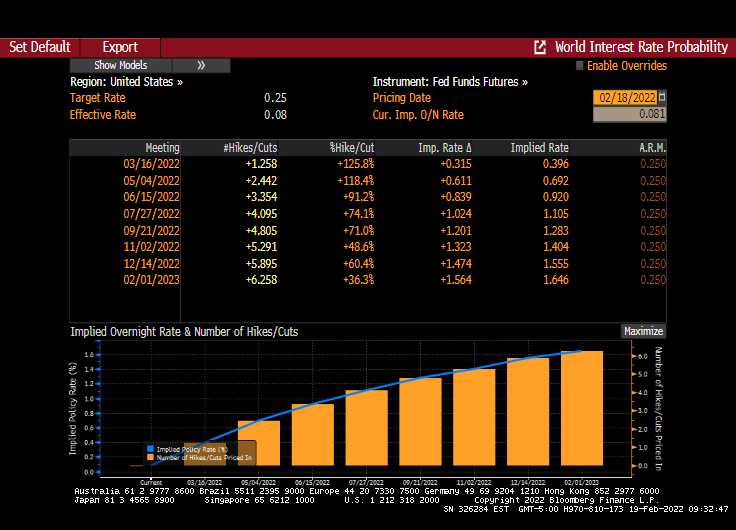
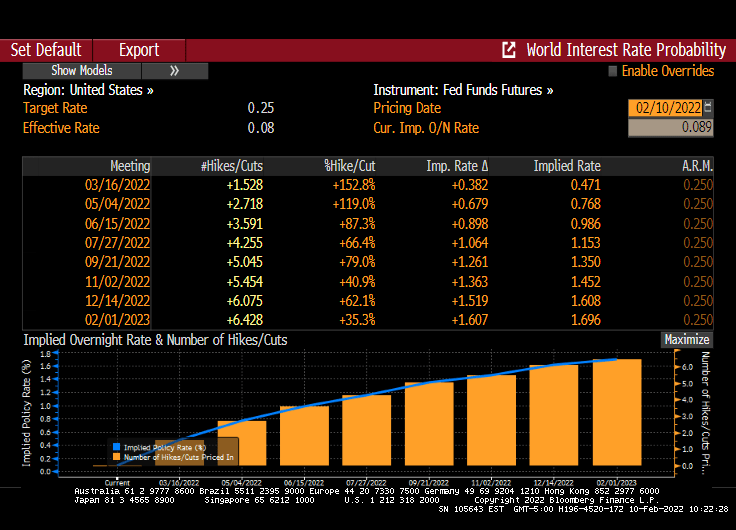
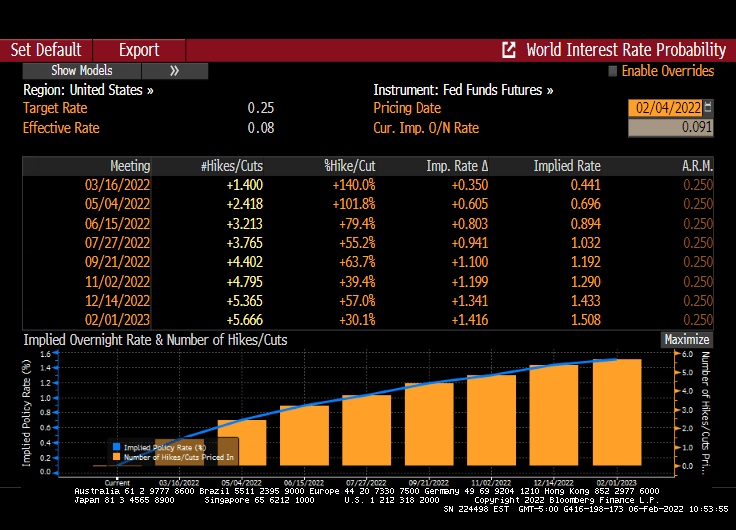
9 rate increases is above what is being priced in The Fed Funds FUTURES market which is 6 rate increases over the coming year.
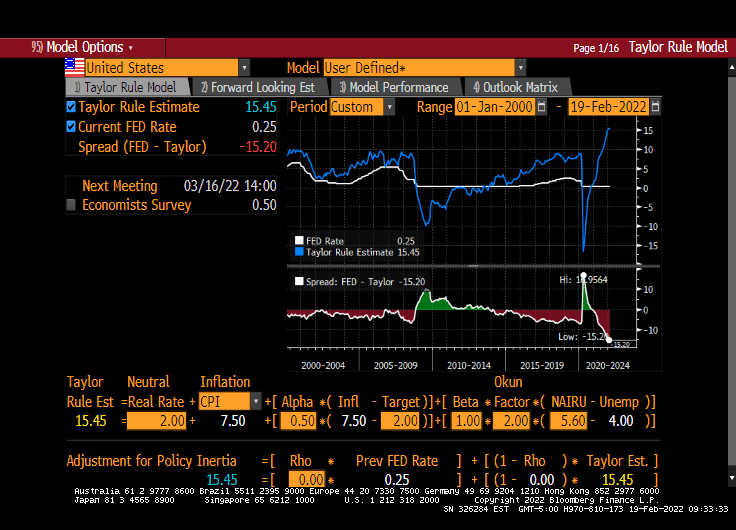
With 7.5% inflation, the Taylor Rule suggests a target rate of 15.45%. Talk about “Shock and Awful!”
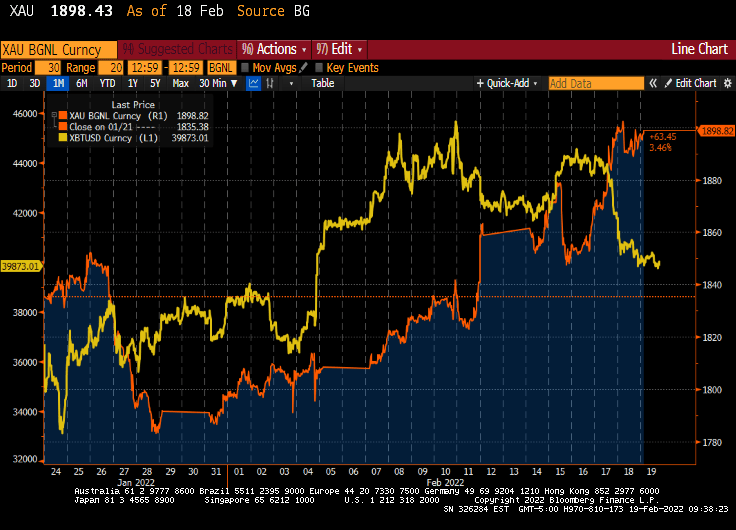
We are starting to see GOLD (gold) surging and Bitcoin (yellow) falling as The Fed prepares “shock and awful” rate hikes and Biden continues to beat the war drums over Russia invading Ukraine.
If The Fed actually raises rates 9 times and dramatically pares back its massive monetary stimulus, it will be “shock and awful.”
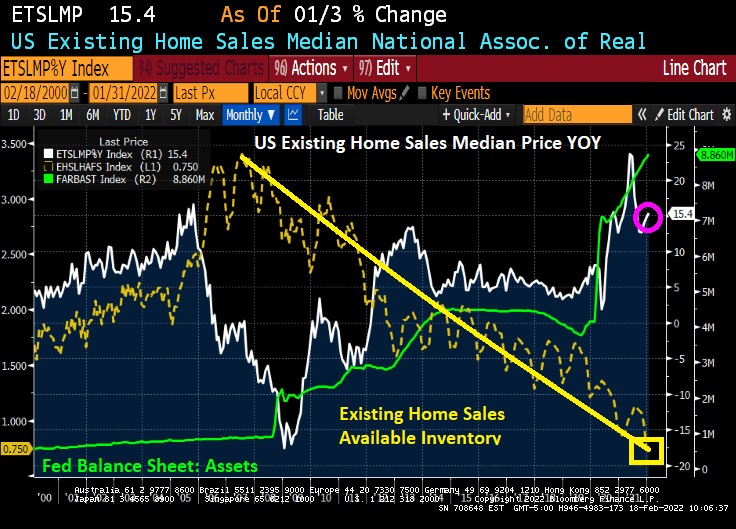
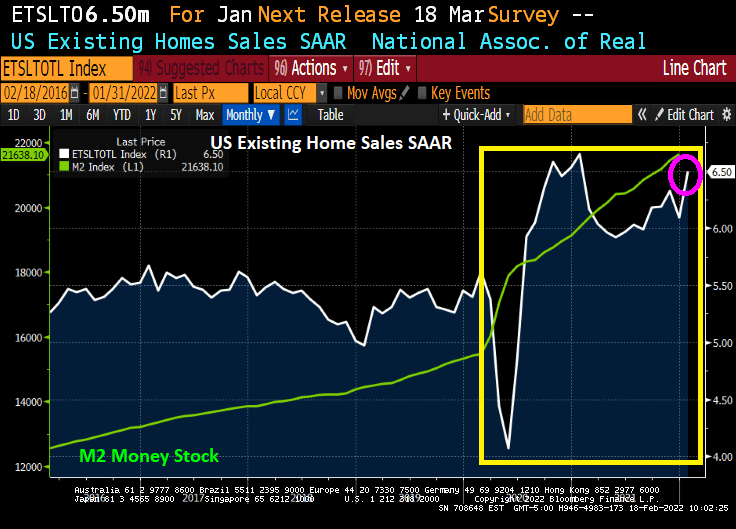
Surprise! US existing home sales in January rose to 6.50 million units SAAR versus the expected 6.10 million units. That is a 6.7% increase over December.
The disturbing news is the continued lack of available inventory that peaked in Q4 2007 and has continued its decline to today … the lowest level of available inventory since 1981. Despite the Fed’s massive stimulus that they allegedly will take away. Median price of existing home sales rose to 15.4% YoY. Making homes affordable should NOT be a slogan for The Federal Reserve, the Biden Administration or Congress.
The massive Federal stimulypto (fiscal and monetary) has helped push existing home sales to 6.50 million units SAAR in January. What will happen after The Fed withdraws it stimulus??
What is surprising is that with declining REAL wage growth, we saw a surge in home buying in January.
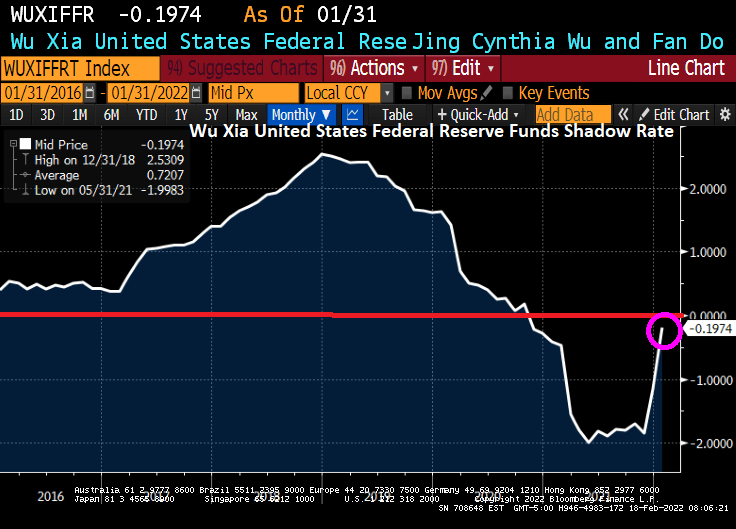
Wu-Xia employs an approximation that makes a nonlinear term structure model extremely tractable for analysis of an economy operating near the zero lower bound for interest rates. It can be used to summarize the macroeconomic effects of unconventional monetary policy (ZIRP + QE). The Shadow Rate is now -0.1974%.
The good news? The Atlanta Fed Wage Growth tracker is showing a 5.1% wage growth. The bad news? Inflation is ruining that growth at a whopping 7.5% rate leaving REAL wage growth at -2.4%.
And the Atlanta Fed’s GDPNow Q1 forecast is a measly 1.285%. Apparently, the fiscal and monetary stimulypto has worn out.
And liquidity in the equity market has seemingly vanished.
The Biden Administration and Congress need a distraction from the awful inflation news caused by Biden’s energy policies, sheer wasteful spending and Federal Reserve policy errors (too much monetary stimulus for too long).
Another effect of The Federal Reserve’s reckless monetary policy coupled with Biden/Congress reckless spending is bad foreign policy. The US is exporting inflation around the globe.
US export price YoY is at 15.1%. The US is importing less inflation at 10.8% YoY.
Here is the export/import stack.
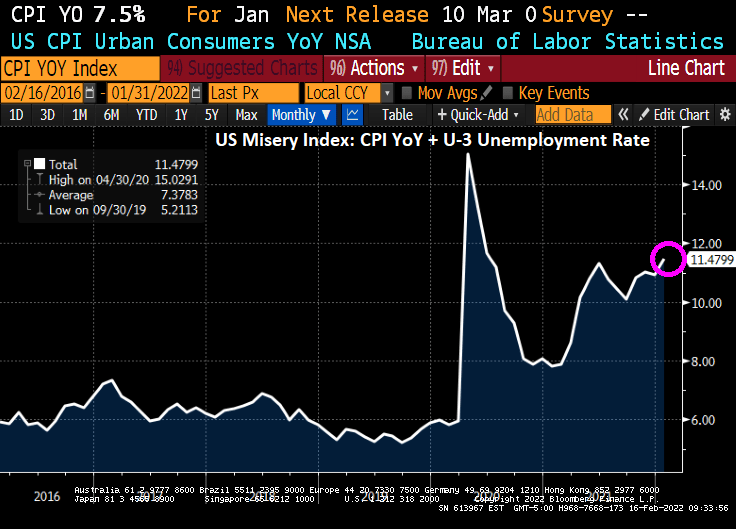
Things are not well in the US either. The misery index keeps rising under Biden’s Reign of Error.
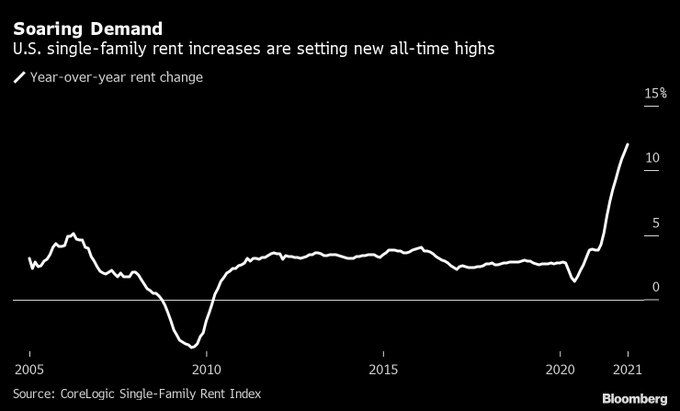
Call this a double whammy! Red-hot rents combined with a slowing economy.
According to CoreLogic, single-family annual rent growth finished 2021 at a new record: 11.7% YoY for high tier rental properties and 10.4% YoY for low tier rental properties.
Of course, southern and southwest rental properties are seeing the fastest rent growth. Particularly Miami at 36% YoY. Phoenix is no slouch at 19% growth in rents.
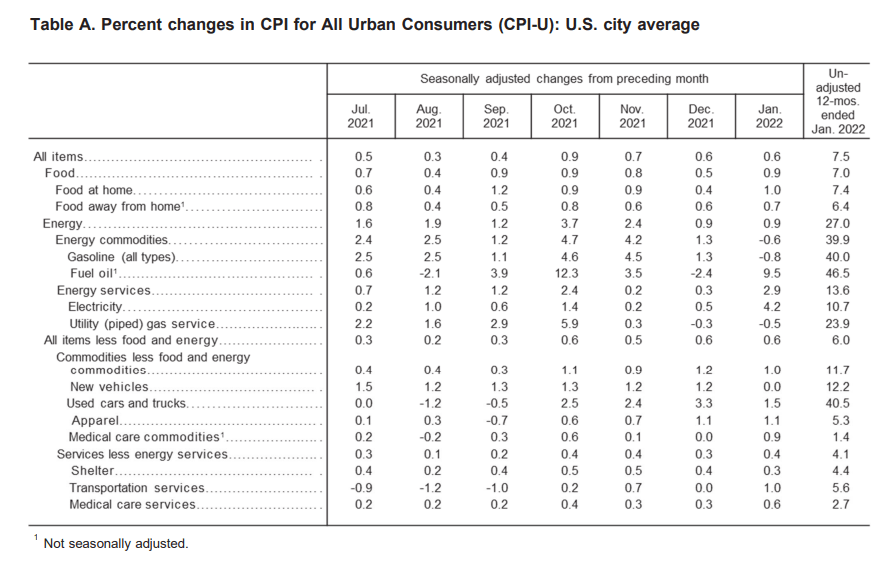
As expected, US inflation surged from 7.0% in December to 7.5% in January.
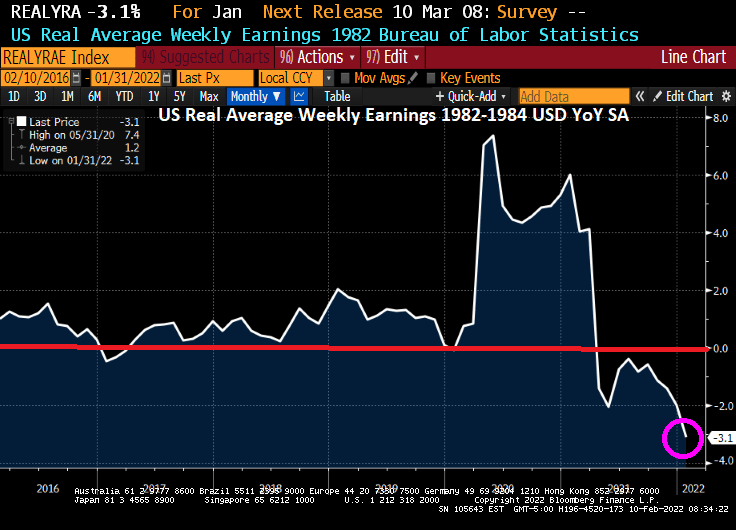
REAL average weekly earnings growth YoY fell to -3.1%.
Energy prices YoY lead the wage (fuel oil UP 46.5% YoY). Used cars and trucks UP 40.5%. At least food is up “only” 7%.
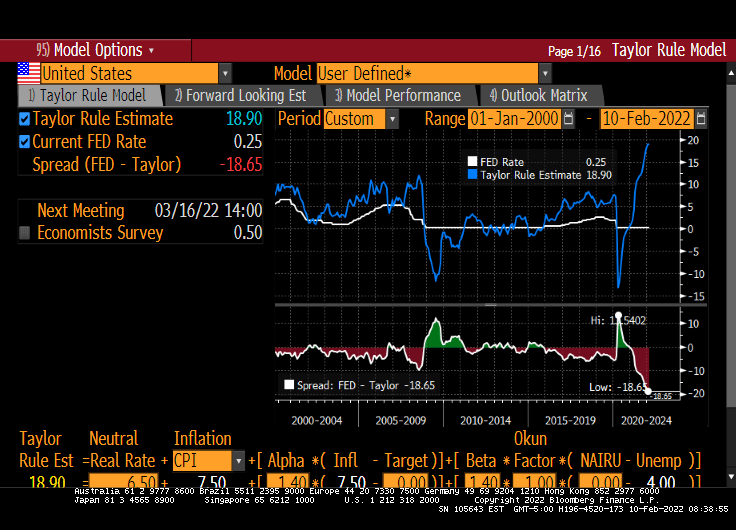
At 7.5% CPI, the Taylor Rule suggests that The Federal Reserve should have their target rate be 18.90%.
At least CORE inflation is “only” 6% YoY.
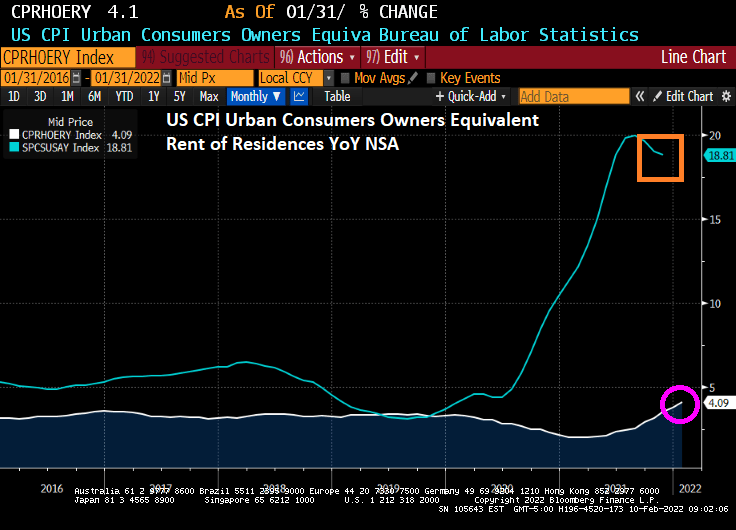
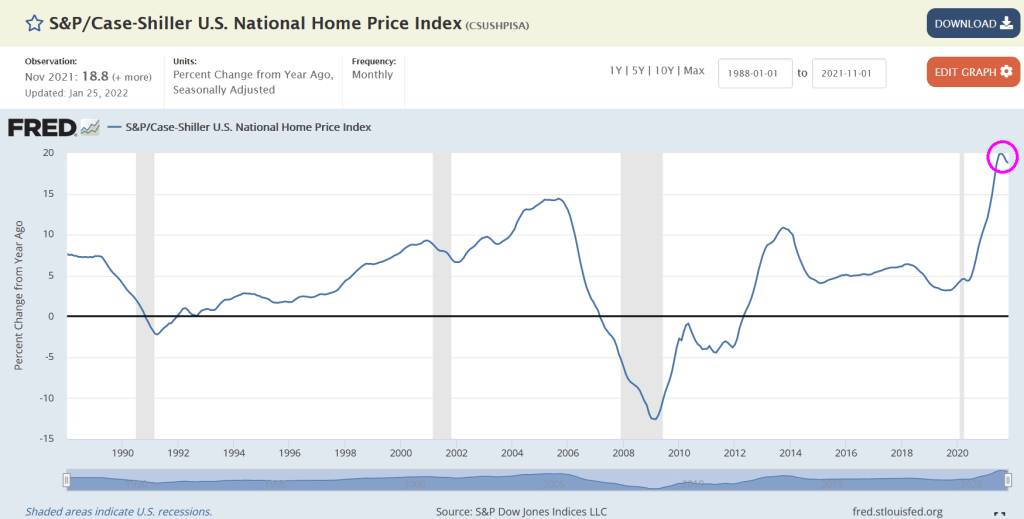
How about rent CPI? The owner’s equivalent rent of residences rose to 4.09% YoY. Seems a little misleading since home prices nationally are growing at 18.81% YoY.
Fed Funds Futures data points to 6-7 rate HIKES over the coming year. BRACE FOR IMPACT!!
Yes, this is Powell’s famous chili recipe if The Fed actually starts to raise rates and pare back the balance sheet stimulus.
Once upon a time, European PIGS (Portugal, Italy, Greece and Spain) saw incredible spikes in their sovereign yields related to Greek credit default contagion. But the European Central Bank (ECB), World Bank (WB), International Money Fund (IMF) rose to the rescue.
But here we go again! Thanks to rising inflation, the ECB is threatening to remove the massive monetary stimulus. Sound familiar??
Here are the Eurozone 10-year sovereign yields as of this morning. Greece is up a whopping 27.4 basis points, Italy is up 11.7 BPS, Portugal is up 9.3 BPS and Spain is up 9.2 BPS. The core of the Eurozone, France and Germany, are up 4.3 and 3.0 BPS, respectively.
Germany has REAL 10Y Bunds yields of -4.7%.
Like the USA, the Eurozone Taylor Rule is much higher than the ECB’s Main Refinancing rate of 0%..
Here is ECB’s Christine Lagarde saying “What, me worry??”
(Bloomberg) What a difference 25 years makes. Worried that inflation was about to turn higher, the Federal Reserve in February 1994 began raising interest rates, taking the federal funds rate from 3% to 6% a year later. As it turned out, those worries were unfounded: The U.S. consumer price index barely budged, finishing the year at 2.7%, right where it had started.
Although inflation in many developed-world countries is now well above those levels — 7% in the U.S. alone — of the major central banks only the Bank of England has started to raise short-term rates. They are now, um, 0.25%. Across the developed world, short rates are still either barely above zero or negative. What’s more astonishing is that even though they have cut their purchases, the Federal Reserve and European Central Bank continue to buy about $140 billion of longer-maturity bonds every month, suppressing long-term yields even as inflation rages.
Some central banks say that rate hikes are coming, but their extraordinary reluctance to deal with actual inflation means it will become entrenched. Not only will policy makers have to raise rates more than they envision, but they will have to cut the size of their massive balance-sheet assets, too. Don’t expect that the process will be anything other than awful for risky assets of all stripes.
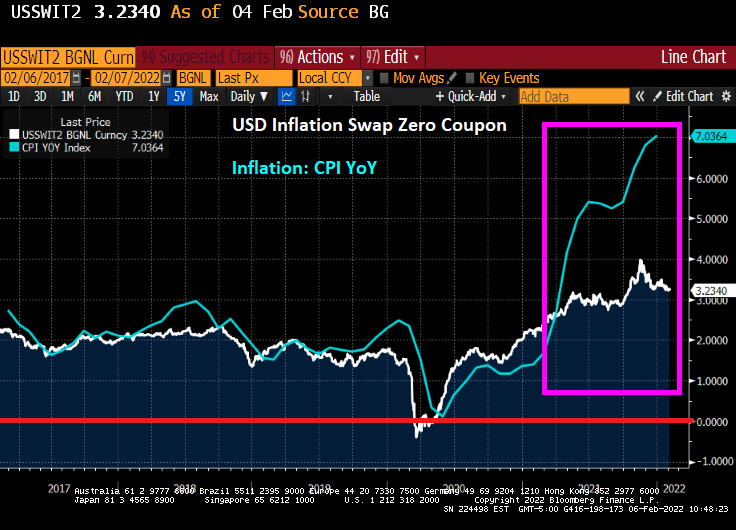
Over the last year and a half, inflation has not only accelerated but also broadened. It started with goods prices and has now expanded to services, even in the moribund euro zone. Central bankers and markets still believe inflation rates will come down a lot. The part of the swaps market that in essence predicts inflation in the future is pricing in a drop in the U.S. CPI to 3.6% by the spring of 2023 and to 3.25% the year after. Alas, like central bankers, the inflation swap market’s record is dreadful. In late spring of 2020, markets predicted a CPI of minus 1.35% a year later and staying below zero by the spring of 2022.
The US DollarInflation Swap is a poor predictor of inflation, at least under President Biden.
I’m not suggesting inflation will remain at current nosebleed levels. More likely is that having had a couple of decades of headline inflation that was on the low side — for central bankers, but not for anyone else — we are in for a few years when it remains above their targets.
Short rates will of course need to rise. That is problem enough for markets, but the bigger problem comes from the trillions of dollars of assets that central banks have accumulated on their balance sheets. Taken together, the Fed, ECB, Bank of Japan, Bank of England and Swiss National Bank have some $27 trillion of assets. In 2007, before the global financial crisis, the combined total was a little more than $4 trillion. Central bank assets will stop growing this year, undermining a major source of support for all types of bonds. But if inflation remains persistently high, central banks won’t simply be able to let their assets roll off as they mature, as most assume. They will have to start selling them. That is the big problem.
Central banks resorted to buying bonds and other financial assets (so-called quantitative easing) for a few reasons. The main one was to drive up inflation and inflation expectations from uncomfortably low levels by injecting more liquidity into the financial system and driving down longer-dated yields. Now that central banks have got much more inflation than they wanted, they will, by the equal and opposite token, need to sell the assets they bought. The longer inflation remains at current levels, the greater the pressure to sell. And they will probably need to do so sooner and faster than most expect and at prices a lot lower than they fetch today. The Fed alone owns about 30% of all the notes and bonds issued by the U.S. Treasury Department.
To say that central bank purchases have had a large effect on yields would be an understatement. One way of seeing this is to split the yield of a longer-dated bond into the part that reflects the expected path of interest rates over the life of the security from everything else. That “everything else” is the term premium. This should compensate investors for, say, sudden surges in inflation. Clearly, this is no longer true. Depending on what model you use, the term premium on 10-year Treasury reached a high of 450 basis points to 500 basis points in the early 1980s. At the nadir of the pandemic, it was minus 100 points and is now about minus 10 points. To be clear, this means that you get less buying a 10-year Treasury than would be suggested by the expected path of rates over the life of the bond — expectations that are almost certainly too low.
Term premiums below zero suggest bond investors are no longer compensated for things like inflation.
The driving down of government bond yields also compressed yields and spreads on investment-grade and junk bonds. That was the intent. Junk spreads reached their narrowest level ever in June of last year. With so little yield available in fixed income and central banks seemingly always on hand to bail them out, investors flooded into equities. As a result, many developed-world equity indexes are either very expensive or, in the case of the U.S., not far off their most expensive levels ever based on valuation measures that are a decent guide to future returns. That is what a decade and a half of market manipulation by central banks has done.
The policies of zero or negative rates and seemingly infinite QE looked idiotic (and were) when they were adopted, and time has not been kind. Paradoxically, they could only be sustained if central banks were wrong, and their policies failed to spark inflation. Now that inflation has taken hold, rates will go up substantially and balances sheets will need to shrink.
What would you pay for fixed-income assets now if you knew that central banks will become, in effect, forced sellers later? I can’t see how any financial asset will escape the damage from the likely lurch higher yields. The way out of these policies will be as nasty as the way in was nice.
Particularly since Fed Funds Futures are pointing toward 6 rate increases over the next year.
At least Treasury Secretary Janet Yellen is wearing her Mao jacket.
How bad is inflation in the USA? Try 18%, based on the Flexible Consumer Price Index.
The Flexible Price Consumer Price Index (CPI) is calculated from a subset of goods and services included in the CPI that change price relatively frequently. Because flexible prices are quick to change, it assumes that when these prices are set, they incorporate less of an expectation about future inflation.
Again, remember that Federal inflation numbers woefully undercount housing and rent inflation. For example, the Case-Shiller National Home Price index (as of November 2021) was growing at 18.8%.
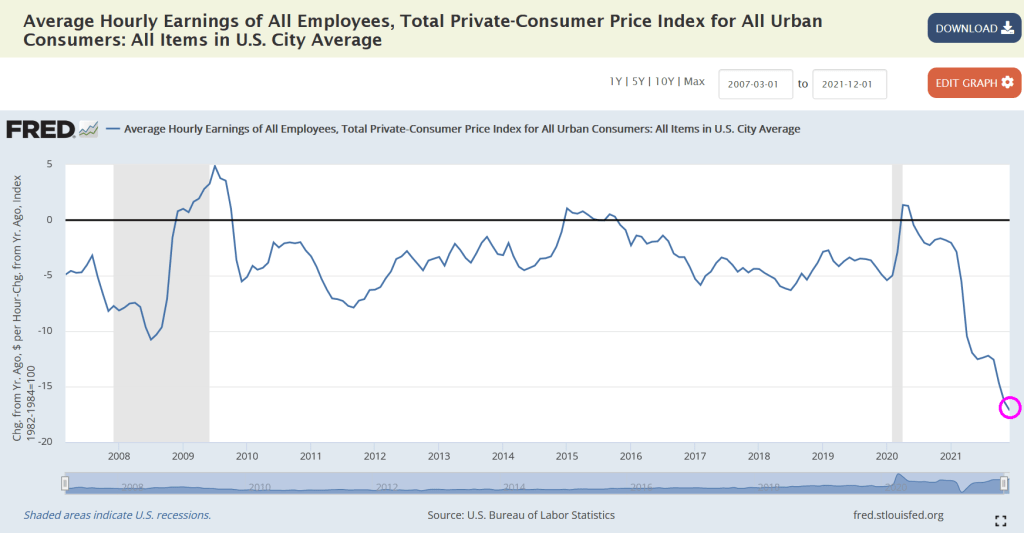
The sad part is that inflation-adjusted average hourly earnings growth of all employees is crashing thanks to inflation.
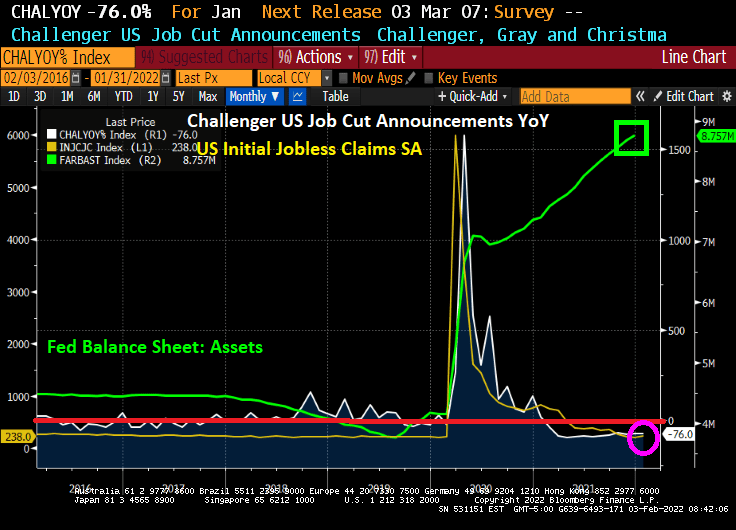
Between the Biden Administration, Anthony Fauci and the media constantly screaming about the devastating effects of Omicron, I would have expected massive job cuts and a large spike in jobless claims. But alas, the numbers and charts tell a different story.
Today, we saw that the Challenger job cuts for January fell further to 76%. Initial jobless claims fell to 236k. And The Federal Reserve is still hyper-stimulating the economy.
After listening to Biden spokesperson Jen Psaki preparing us for an end-of-times job report, I was expecting today’s news dump to be terrible. But alas, it just looks like another day in Stimulyoptoville.
Hey Jen, where’s the beef? Now that I think of it, Jen Psaki looks like Wendy from the burger franchise. Except that the burger Wendy doesn’t terrify people.






















You must be logged in to post a comment.