Biden’s Follies! Banks’ Usage Of Fed’s Emergency Funds Jumps To New Record High, Money-Market Inflows Soar As Bank Deposit Growth Remains Negative

What a mess Biden and his Progressive backers have made. And we are forced to suffer the consequeinces of his policies. Or follies!

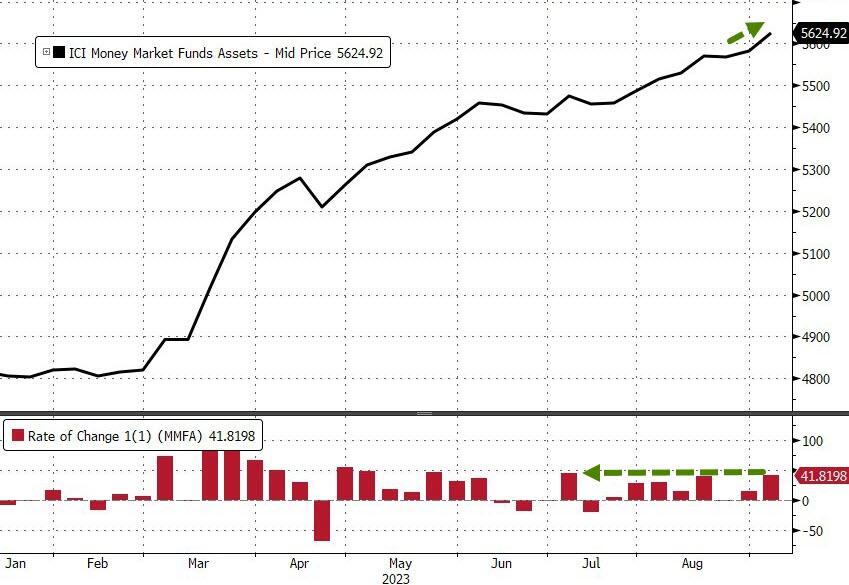
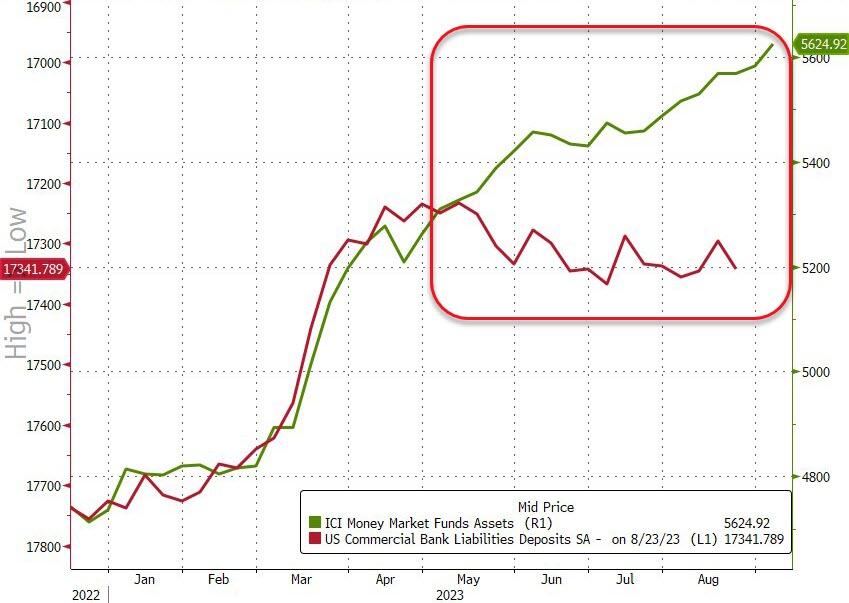
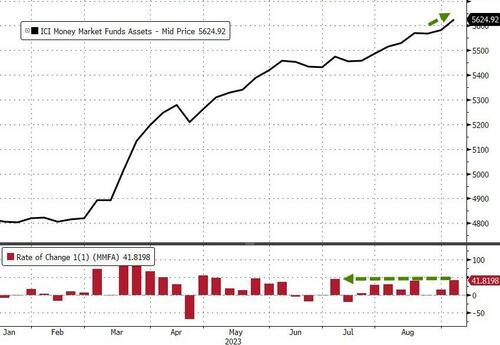
Money-market funds saw inflows for the 7th week of the last 8 with a $42BN jump (the most in 2 months) to a new record high of $5.625TN…
Source: Bloomberg

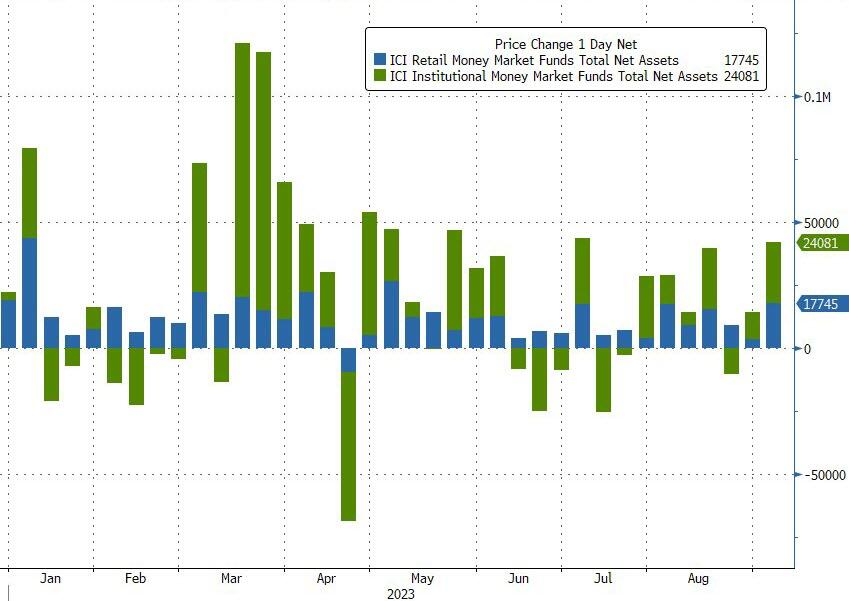
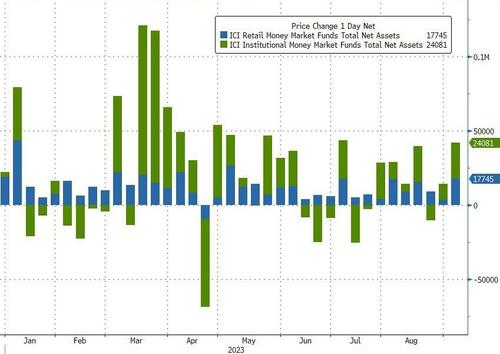
The inflow was dominated by a $24BN increase in Institutional fund assets while Retail also saw a sizable $17.7BN increase…
Source: Bloomberg

And the divergence between money-market fund assets and bank deposits continues to grow…
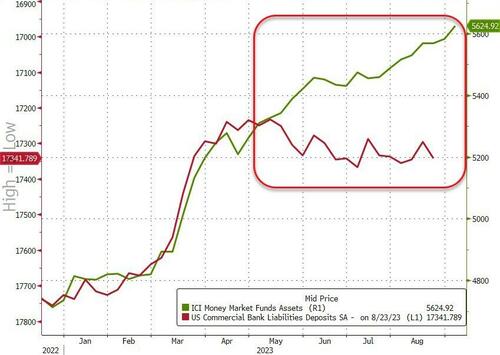
Source: Bloomberg

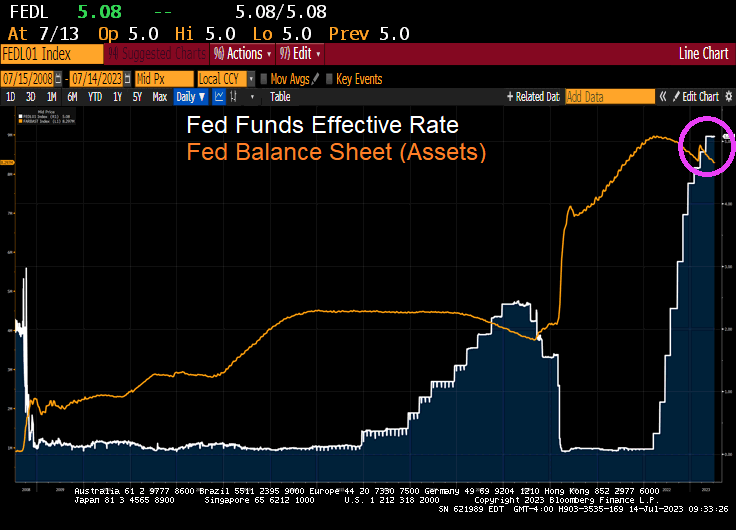
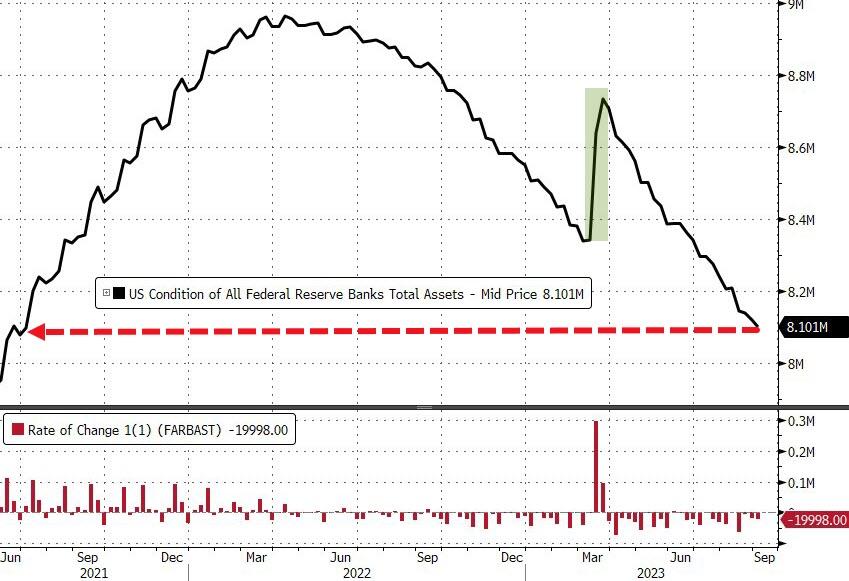
And while we actually saw huge deposit outflows (on a non-seasonally-adjusted basis) – despite The Fed’s seasonally-adjusted deposits increase – The Fed balance sheet shrank by another $20BN last week to its smallest since June 2021…
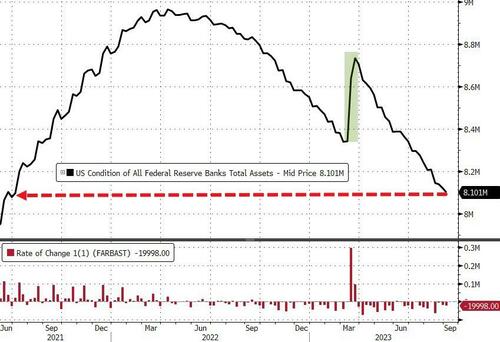
Source: Bloomberg

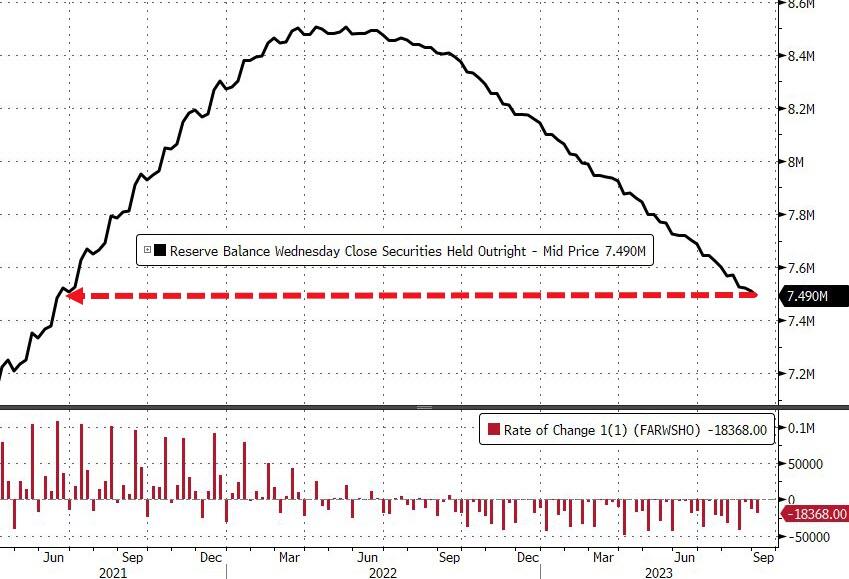
The Fed’s QT program continues apace with$18.4BN sold last week to its smallest since June 2021…
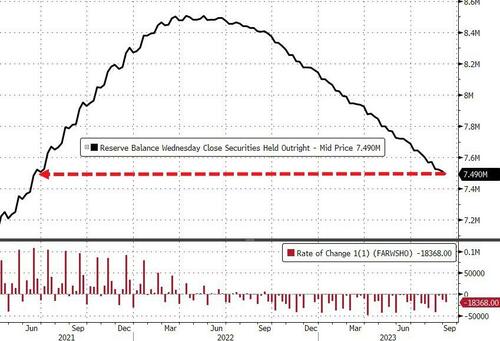
Source: Bloomberg

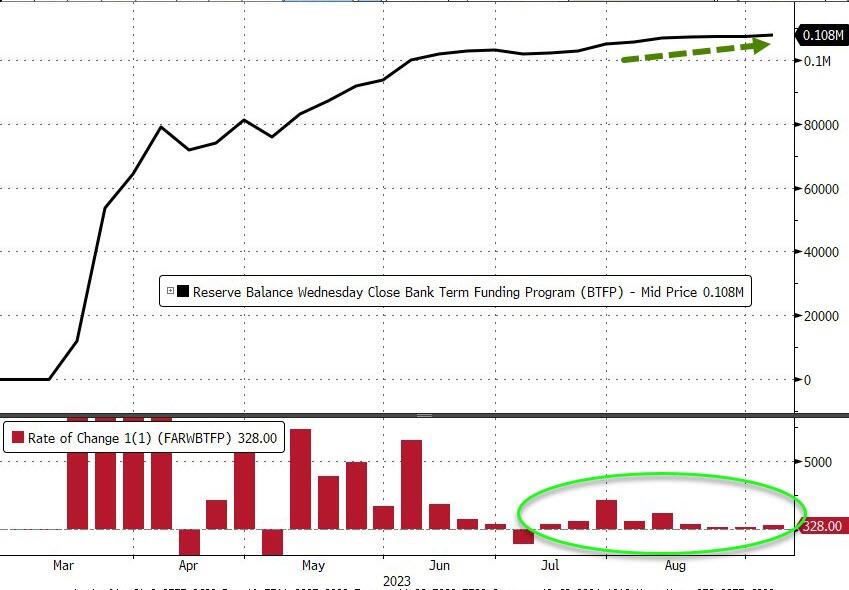
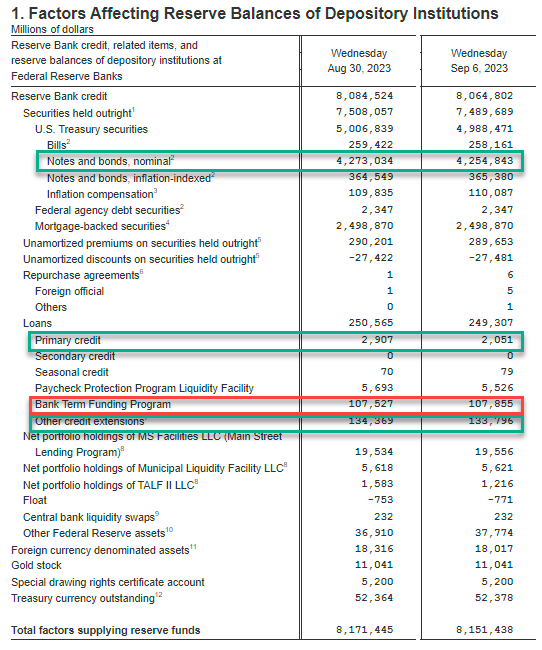
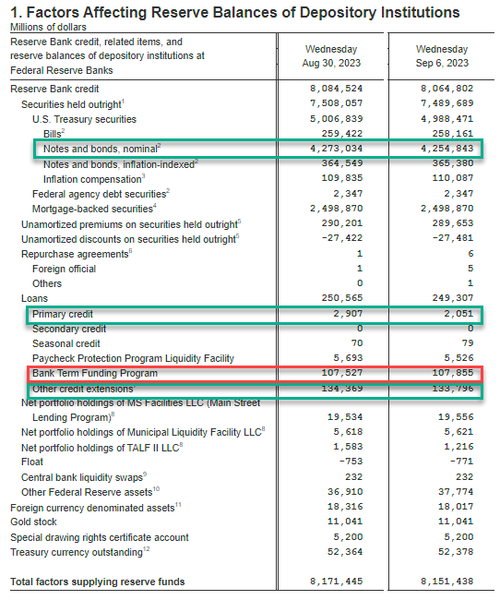
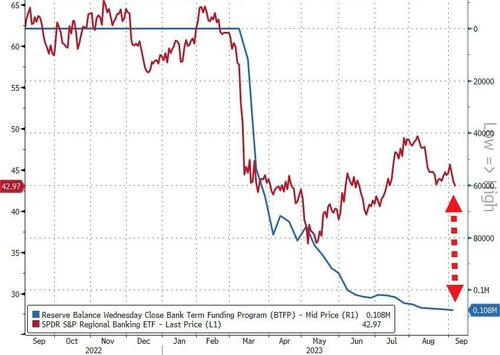
Usage of The Fed’s emergency bank funding facility jumped by $328 Million last week to a new high of $108BN…
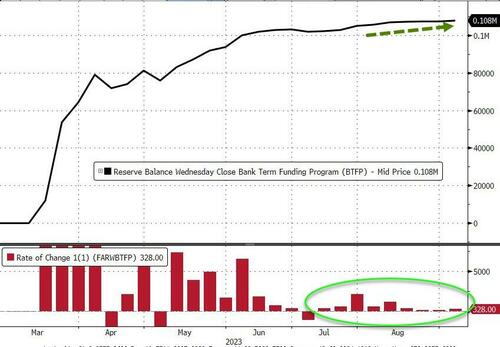
Source: Bloomberg

Fed BS weekly change:

  • Fed balance sheet QT (Notes and bonds decline): $4.255 trillion, down $18,2BN
  • Discount Window $2.1BN, down $800M from $.29BN
  • BTFP new record $107.9BN, up $400MM
  • Other Credit Extensions (FDIC Loans): $133.8BN, down $0.6BN from $134.4BN
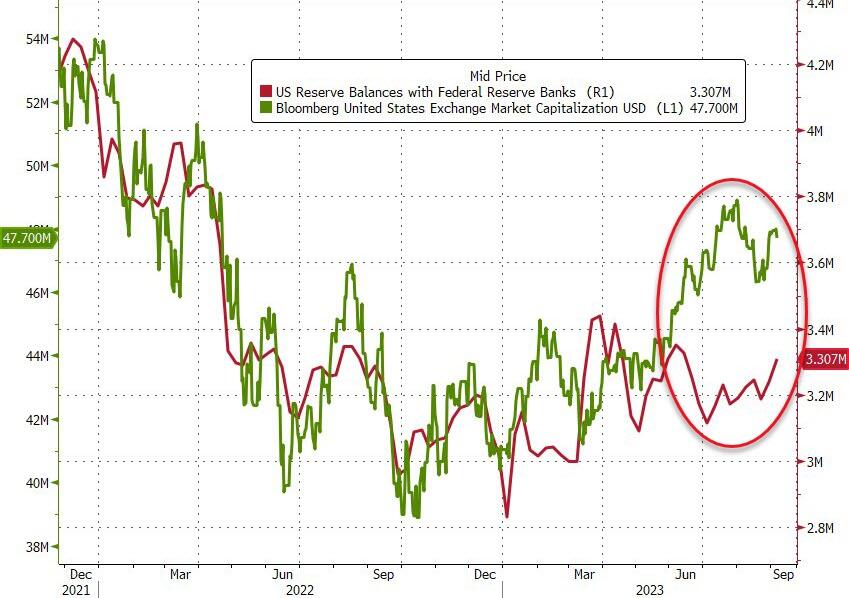
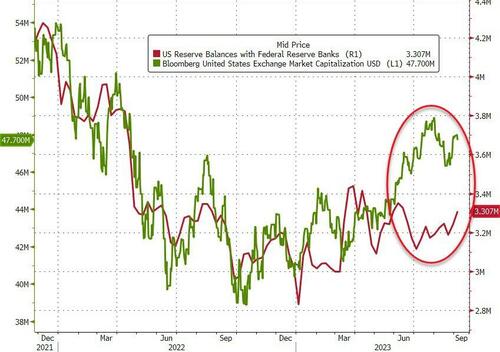
Finally, US equity markets and bank reserves at The Fed have converged a little recently, but the gap remains wide (thanks to the plunge in reverse repo balances)…
Source: Bloomberg

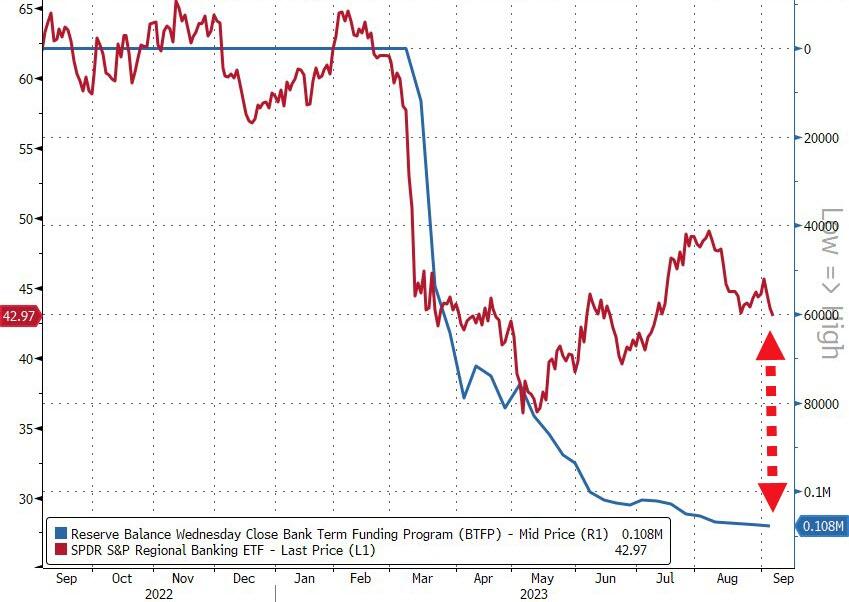
Tick, tock, banks!
Source: Bloomberg

You have six months to figure out how to clean up the $108 Billion hole in your balance sheet that you’re currently paying The Fed’s exorbitant rates to fill.

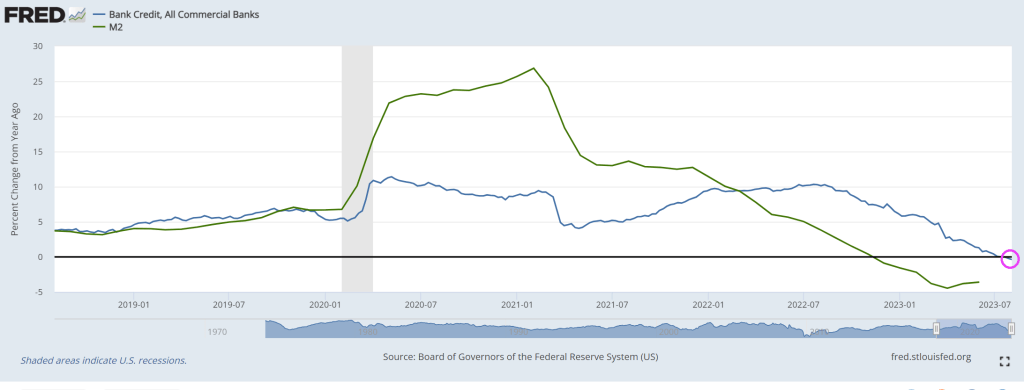
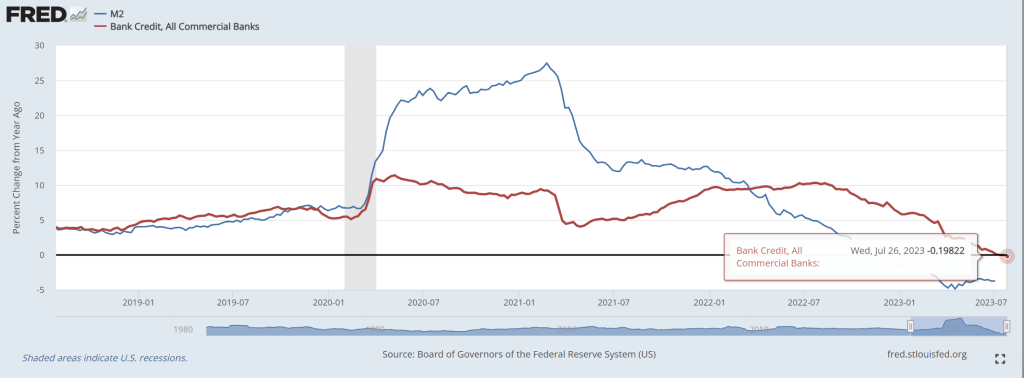
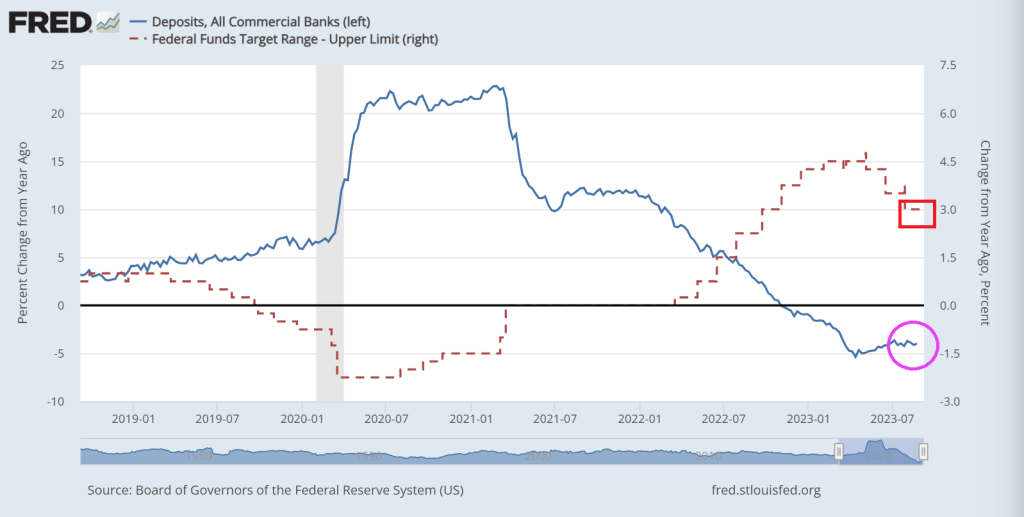
Bank deposit growth remains negative as The Fed tightens its overly accomodative monetary policy.
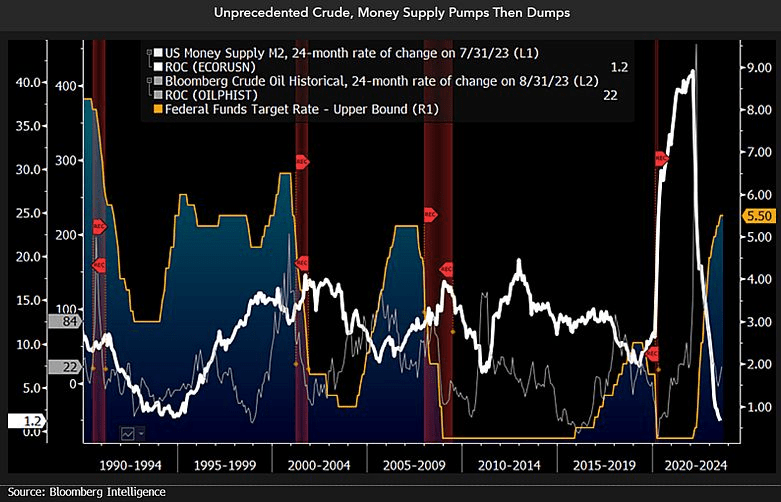
And then we have this chart showing plinging M2 Money (white line fever).
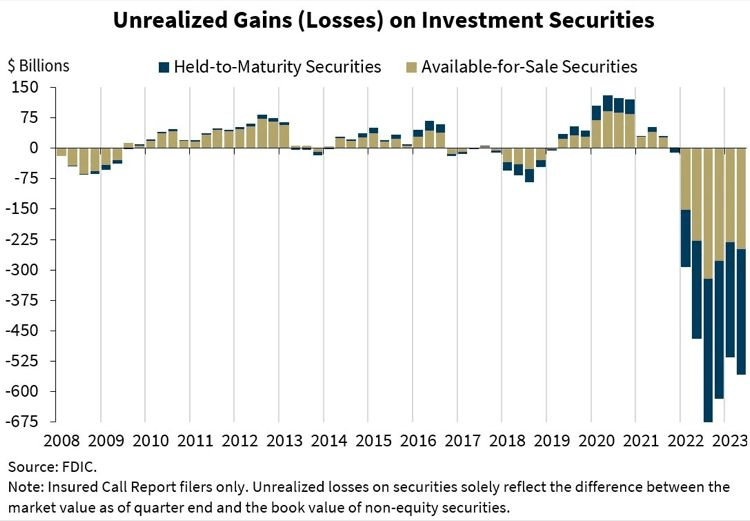
And the horrific unrealized losses on bank’s books.
Bidenomics is failing America. Primarily because Biden was one of the stupidest members of the US Senate. Not to mention nasty. Great President, America! /sarc

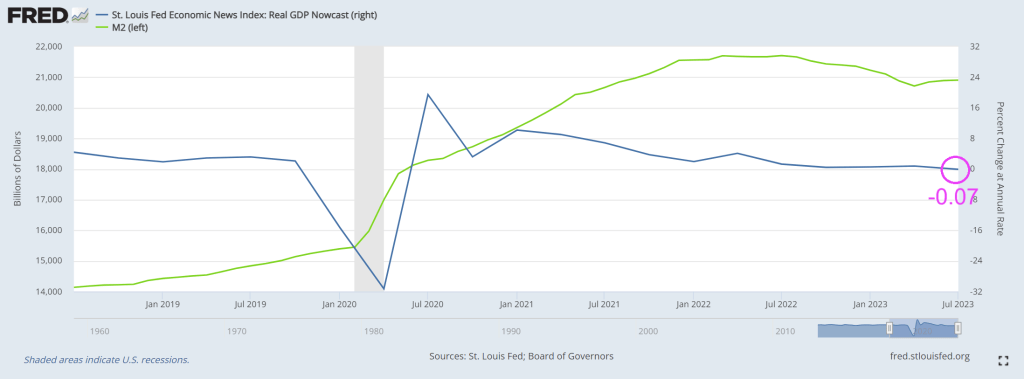
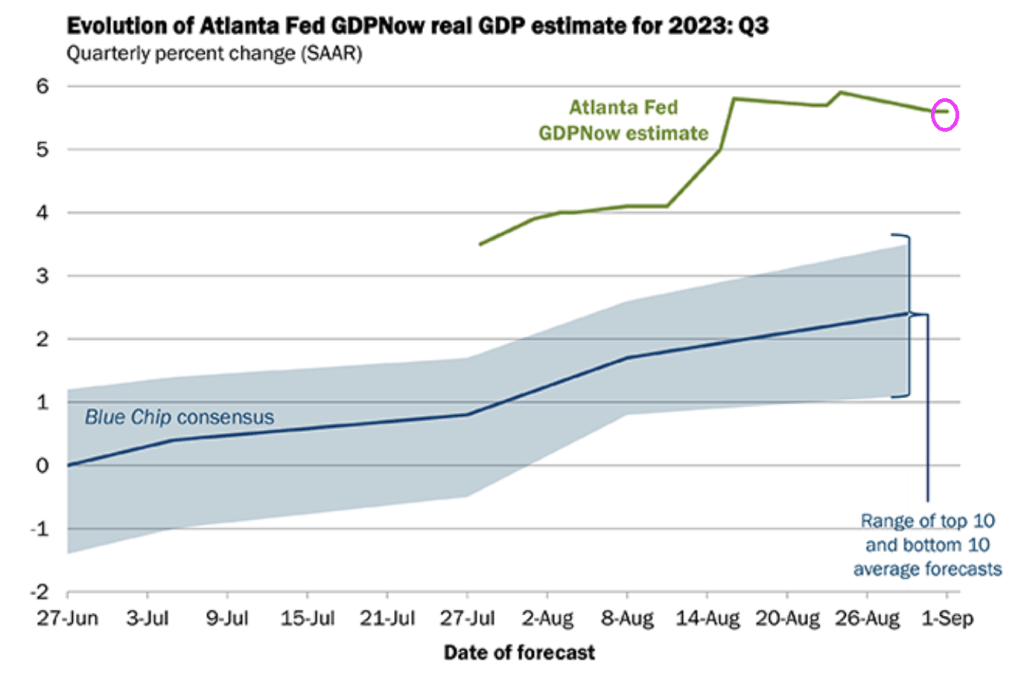
Slippin’ Into Darkness! St Louis Fed Nowcast Q3 GDP Growth At -0.07% As M2 Money Growth Collapses (While Atlanta Fed GDPNow At 5.6% Growth?)

Slippin’ into darkness! Bidenomics, that is! Joe Biden is not a friend of the US middle class.

The St Louis Fed’s real time GDP tracker known as Nowcast has Q3 GDP at -0.07%. This happening at M2 Money growth collapses.

If you want to feel good, check out Atlanta Fed’s GDPNow estimate (housing economist Raphael Bostic is its President) which has Q3 GDP at 5.6%.
When will The Fed return to it low riding rates days?

Reverend Biden.

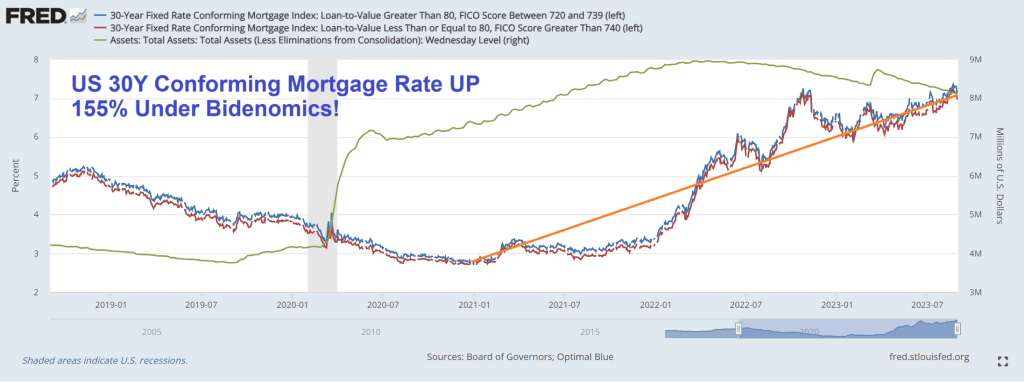
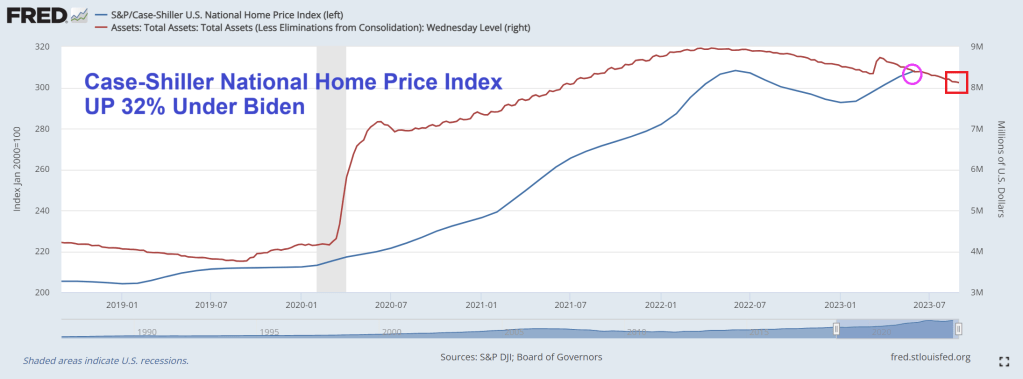
Bidenomics 101 (Mortgage Rates) Conforming 30Y Rate UP 155% Under Biden, Home Prices UP 32% (Fed Balance Sheet Still Exceeds $8 Trillion, UP 10% Under Vacation Joe)

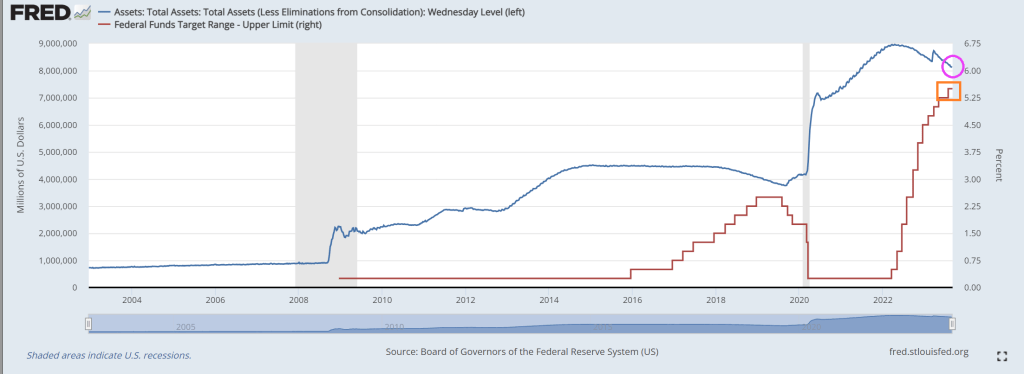
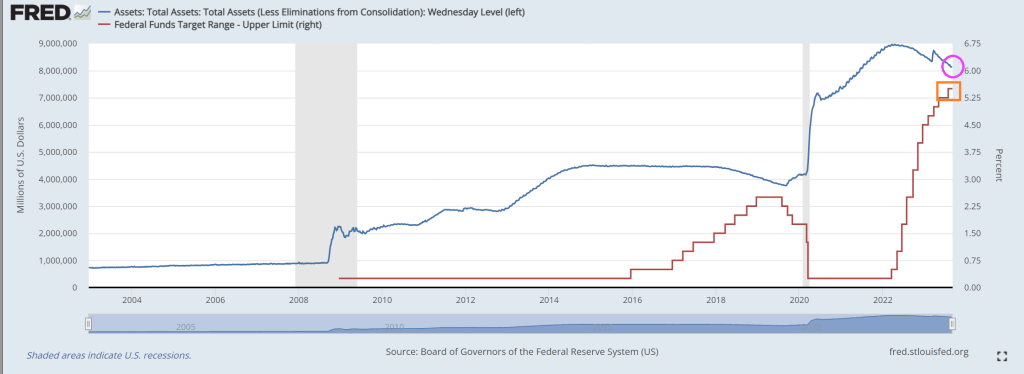
Under Bidenomics, there is still too much Fed monetary stimulus in the form of >$8 trillion on its balance sheet. While the biggest surge in Fed activity occurred with Covid, The Fed has added 10% to its balance sheet under Billions Biden.

Despite not backing off the assets purchases by The Fed, conforming 30Y mortgage rate is still up 155% under Bidenomics.

Yes, The Fed is raising its target rate to cool inflation, but doing little with its balance sheet.

The Case-Shiller national home price index is up 32% under Vacation Joe!

It seems prices are out of control and The Fed refuses to trim its balance sheet. But don’t worry, Vacation Joe is probably on yet another vacation while Maui and Flordia suffer and The Ukraine war is seeing bodies pile up. Meanwhile, he still hasn’t visited East Palestine Ohio like promised.

“Soviet Joe” Biden Bails Out US Auto Industry With Up To $12 Billion In Loans/Grants As Green Energy Mandates Crush Auto Industry (Shades Of Banking Crisis, Another Federally Created Monster!)

Soviet Joe Biden, who is a believer in Soviet-style command economies where rather than rely on free market capitalism, we now have CC (Crony Communism) running the US economy. Into the ground. But in the tradition of bad Federal policiies, Soviet Joe and Energy Secretary Granholm (with help from Congress) mandate green energy transition at all costs, watch the auto industry suffer, then bail them out. Sounds a lot of like the banking crisis of 2008 where The Federal government pushed homeownership until it helped almost collapse the banking sector, then the Federal government bailed out the banks. Rinse, repeat, bailout. And the bailout of banks in going! (Notice that The Fed has barely shrunk its $8+ trillion balance sheet!).

Automakers are looking to finish the week with strength after it was announced on Thursday that the Biden administration would be making “up to $12 billion” available to retrofit facilities to make both EVs and hybrids.

The money will include $10 billion from a US Energy Department loan program for clean vehicles and an additional $3.5 billion in financing to expand domestic battery manufacturing, according to Bloomberg

The United Auto Workers, currently in negotiations with Detroit, has argued that a shift to EVs will cost the industry union jobs. US Energy Secretary Jennifer Granholm said on Thursday that the funding would help Detroit retain workers.

However, we’ve seen this “bailout” business model to save jobs before – at banks and during Covid, to name two examples – and it always winds up turning into a company cash grab before ultimately firing workers regardless. The UAW will try to prevent such a situation from taking place as it negotiates.

UAW President Shawn Fain “cautiously” welcomed the news after warning earlier this month that the White House should not push an EV agenda if it means the loss of jobs in Detroit. 

Almost like the government should stay out of the auto industry as a whole, right? But that would make too much sense. 

“The EV transition must be a just transition that ensures auto workers have a place in the new economy,” Fain said this week. Meanwhile, the Alliance for Automotive Innovation, a Washington lobby group that represents most Detroit automakers, said this week the funding “will further advance the domestic automotive supply chain and globally competitive battery manufacturing platform that automakers have already made sizable investments.”

Instead, Bloomberg calls the move the Biden administration “doubling down on efforts to support carmakers’ transition to EVs”. In a statement this week, President Biden said: “This funding will help existing workers keep their jobs and have the first shot to fill new good jobs as the car industry transforms for future generations.”

The Biden administration continues to aim for half of all vehicles on the road being EVs by 2030. 

Oh and now that UAW Boss seeks 46% raise and 32-hour work week. Reminds me of Federal student loans where students run up massive amounts of debt to major in useless degrees like political “science” and gender/race studies, yet universities hire more admininstrators.

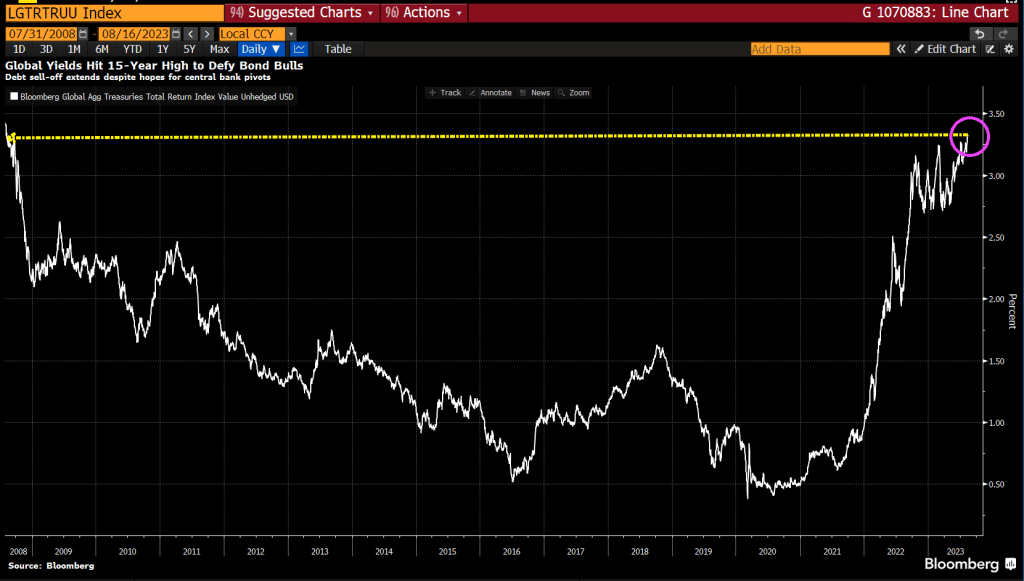
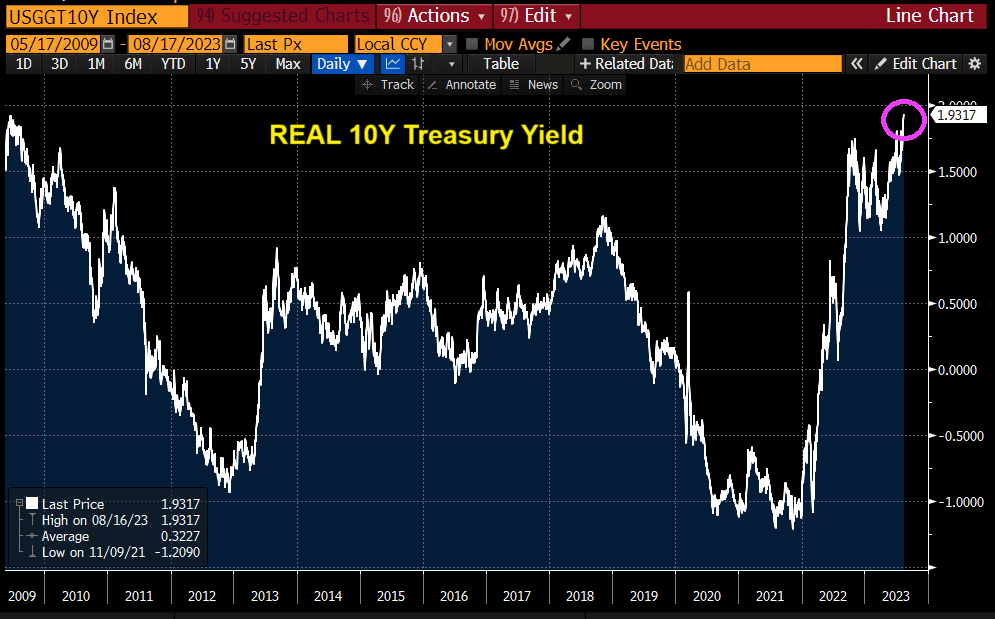
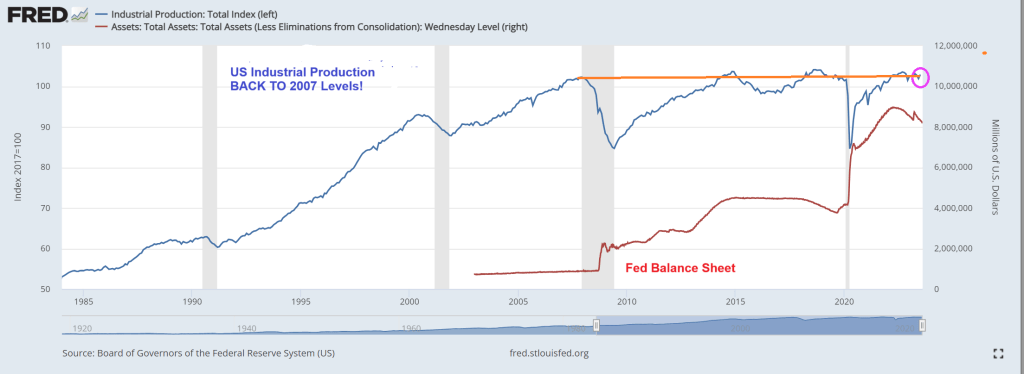
Global Treasury Yield Hits 15-Year High, Back To 2008 Despite No Change In Industrial Production (REAL 10Y Yield Now Highest Since 2009, Approaching 2%)

This is very strange. Global Treasury Yields just rose to a 15-year high (2008). This is primarily due to Central Bank moneta

And REAL 10-year Treasury yields also the highest since 2009.

At the same time, US industrial production is at the same level as pre-financial crisis (2007). Despite Federal Reserve monetary stimulypto (remember, The Fed’s balance sheet remains abouve $8 trillion.

This is Obama/Biden/Yellenomics. Trillions of dollars of fiscal (green) stimulus and monetary stimulus only to have industrial production be at the same level BEFORE The Great Recession and financial crisis.

Bidenomics? US Housing Starts UP 6% YoY, But Building Permits Stagnate In July As Mortgage Rates Topped 7% (MBA Purchase Demand Down -26% YoY, Down -2% WoW)

“Ice Cream Joe” Biden is at Lake Tahoe for a week, probably to avoid being asked questions about his tin-ear respoonse to the tragic Maui fires that have killed 106 people so far. Instead, Joe is inappropriately chuckling (showing he doesn’t care!) and taking photo ops of him eating ice cream. The Biden administration angered a lot of people when it was announced that households that have been affected by the fires would only be getting a one time emergency aid payment of $700 while he gives billions for Ukraine.

After last month’s surprisingly large declines, Housing Starts and Building Permits were expected to rebound modestly in July data released today (still losing altitude from May’s major surge).

At least housing starts were up 6% year-over-year (YoY).

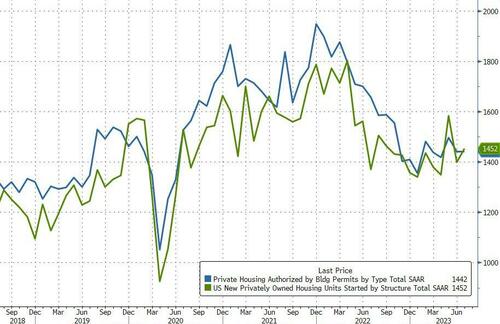
However, the picture was more mixed with starts rising 3.9% MoM (vs +1.1% exp), but that was impacted by a notable downward revision in June (from -8.0% to -11.7%). Building Permits rose just 0.1% MoM (well below the 1.5% MoM expected).

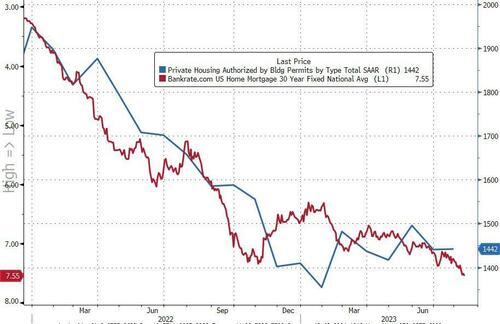
On a SAAR basis, Permits disappointed (1.442mm vs 1.463mm exp) while Starts were in line at 1.452mm (up from a significantly downwardly-revised 1.398mm in June).

Source: Bloomberg

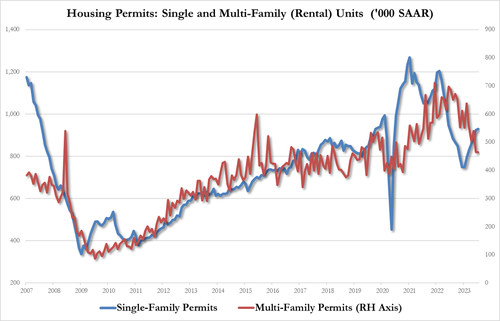
On the Permits side, single-family rose as multi-family fell:

  • Single-family up to 930K from 924K, highest since June 2022
  • Multi-family down to 464K from 465K, lowest since Oct 2020

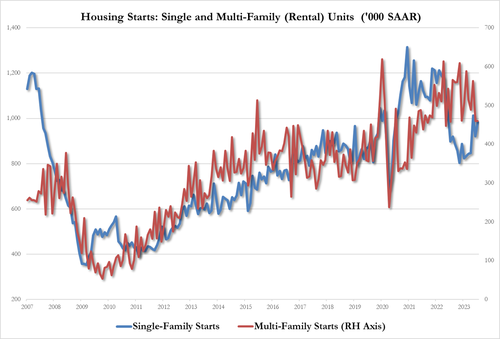
July Housing Starts data followed the same trajectory with rental units growth underperforming single-family:

  • single-family housing up 6.7% to 983K, up from 921K, highest since May
  • multi-family housing unch at 460K, tied for lowest since July 2022

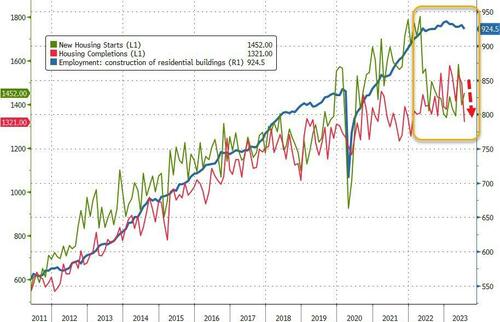
Additionally, we note that while Housing Starts and Completions remain well off their 2022 highs, Construction Jobs remain very close to those highs…

Source: Bloomberg

Finally, we note that Mortgage Bankers Association data released earlier this morning showed applications for home purchases dropped again last week (back near 1996 lows) as the contract rate on a 30-year fixed mortgage surged above 7% (highest since Dec 2001).

Source: Bloomberg

This won’t end well.

Speaking of not ending well, mortgage applications decreased 0.8 percent from one week earlier, according to data from the Mortgage Bankers Association’s (MBA) Weekly Mortgage Applications Survey for the week ending August 11, 2023.

The Market Composite Index, a measure of mortgage loan application volume, decreased 0.8 percent on a seasonally adjusted basis from one week earlier. On an unadjusted basis, the Index decreased 2 percent compared with the previous week. The Refinance Index decreased 2 percent from the previous week and was 35 percent lower than the same week one year ago. The seasonally adjusted Purchase Index decreased 0 percent from one week earlier. The unadjusted Purchase Index decreased 2 percent compared with the previous week and was 26 percent lower than the same week one year ago.

Dark Side Of Federal Stimulus! Checkable Deposits Soared For The Top 1% In Terms Of Wealth Compared To Bottom 50% (The More The Fed Prints, The Wealthier The 1% Becomes)

Yes, there is a Dark Side to Federal stimulus! And it isn’t Dark Side of the Moon, but the dark side of who benefits from Federal stimulus. Its all about money.

Example? Take Checkable Deposits of the to 1% (blue line) of wealth compared to the bottom 50% of wealth (red line) after The Fed cranked up monetary stimulus to combat the Covid shutdowns.

On the wealth side, Covid-related monetary stimulus benefitted the top 1%.

But the middle class is expericing a tighening of credit coutesy of Cap’n Crunch (Fed Chair Powell).

Bidenomics: The Good, The Bad And The Ugly (Atlanta Fed GDP At 4.12% For Q2, Bank Credit Growth Goes Negative, Confernce Board Leading Indicator Goes Negative, REAL Gross Domestic Income Growth = -0.82%)

Bidenomics, which is also Yellenomics (the former Fed Chair and current Treasury Secretary) has The Good, The Bad and The Ugly to say for it.

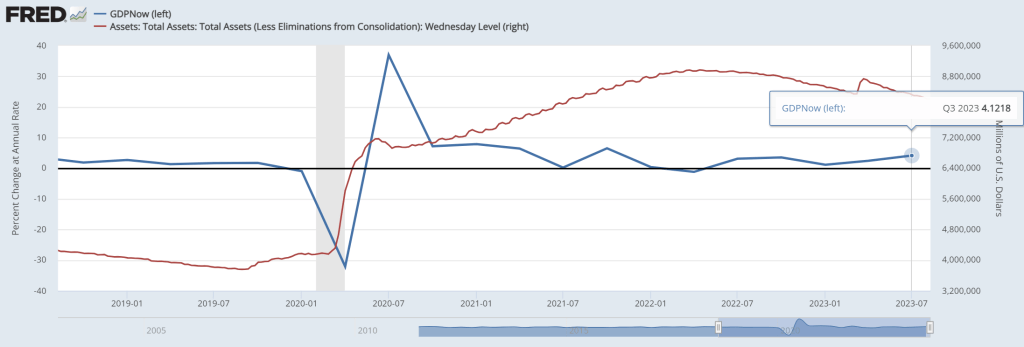
First, The Good! The Atlanta Fed’s GDP Now real time GDP tracker has Q3 GDP at … 4.12%. Pretty good, but bear in mind that there is still more than $8 trillion in Fed Monetary Stimulus outstanding (aka, Yellenomics).

Second, The Bad. Bank credit growth is now negative.

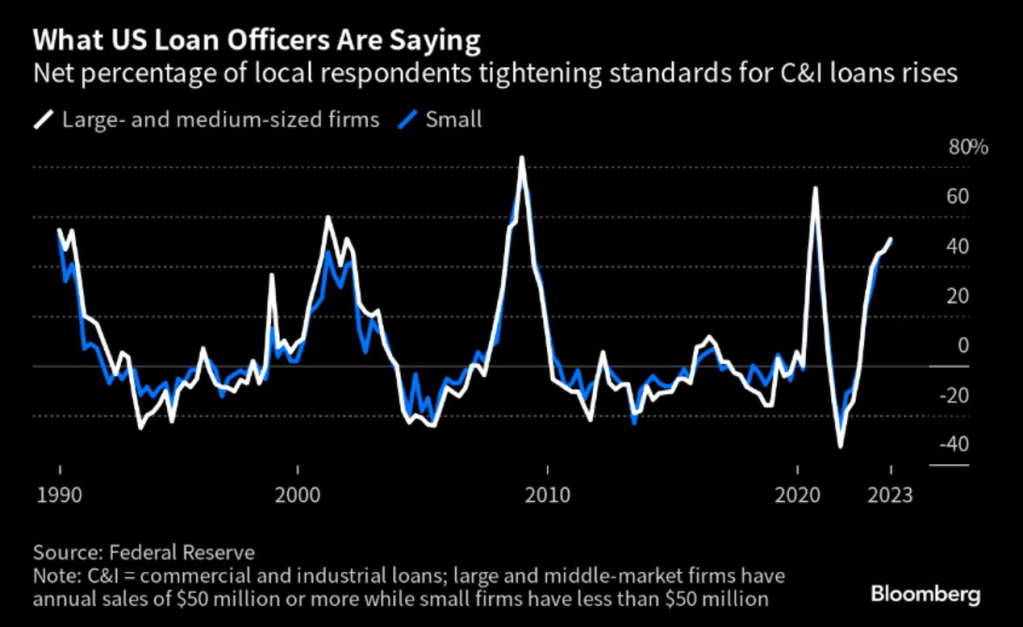
As lenders are tightening credit standards for commercial and industrial loans.

The ugly? There are several candidates for this dishonor.

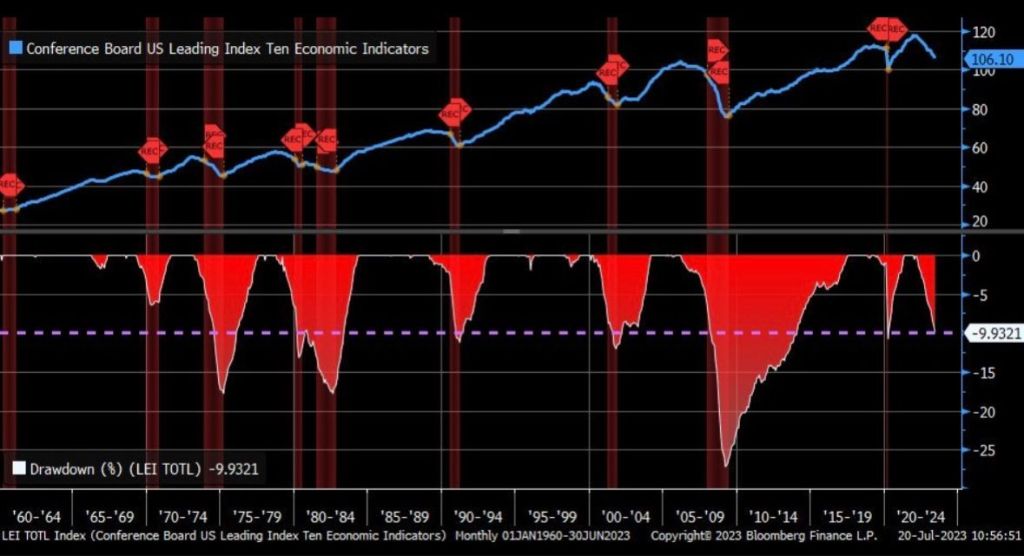
One, The Conference Board’s leading economic indicators is down -10.

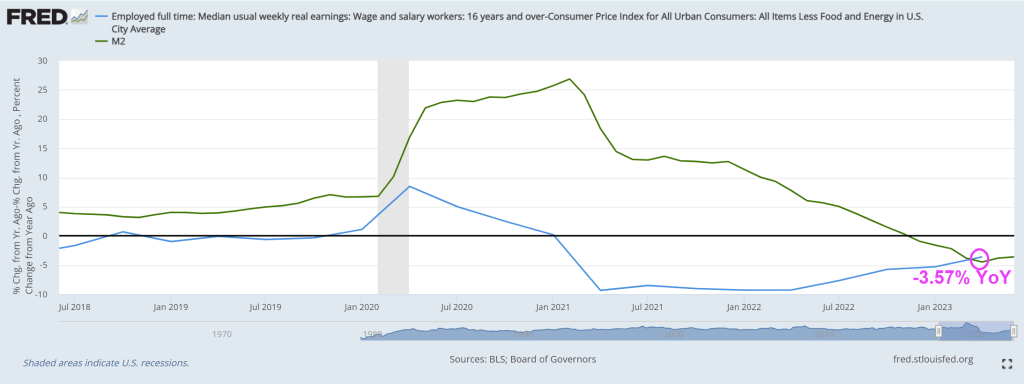
Two, REAL median weekly earnings growth remains negative at -3.57% YoY.

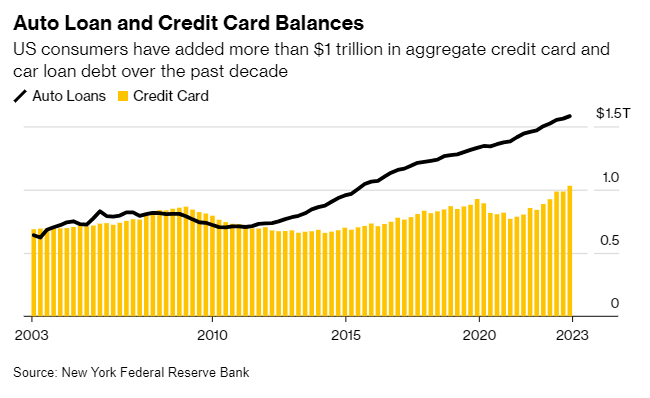
Third, auto loan and credit card balances are at $1.5 TRILLION making further consumer credit more difficult to finance GDP growth.

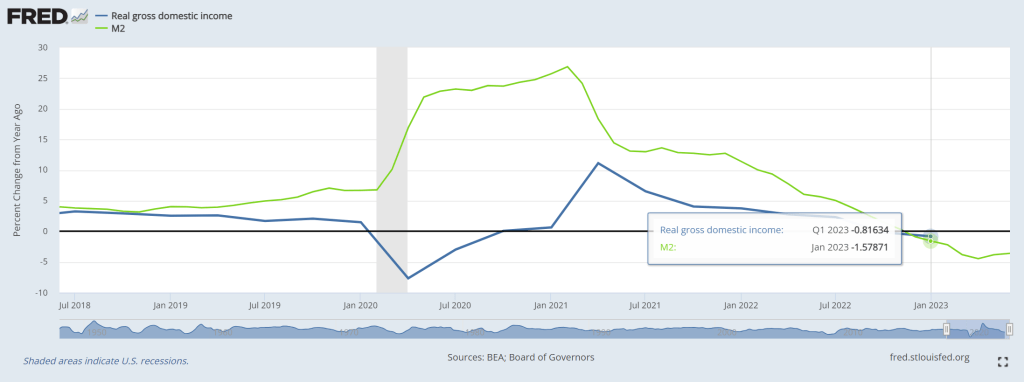
Fourth, Real Gross Domestic Income growth was negative in Q1 2023.

I could go on and on about the negatives of Bidenomics (e.g., massive distortion of Federal spending towards green energy and big donors). Isn’t the earth moving closer to the Sun in its elliptical orbit?? HOW is spending trillions on green energy work as we move closer to the Sun??

I am waiting for Bill Gates to recommend firing nukes at the Sun to reduce the extreme heat as Earth moves closer to the Sun.

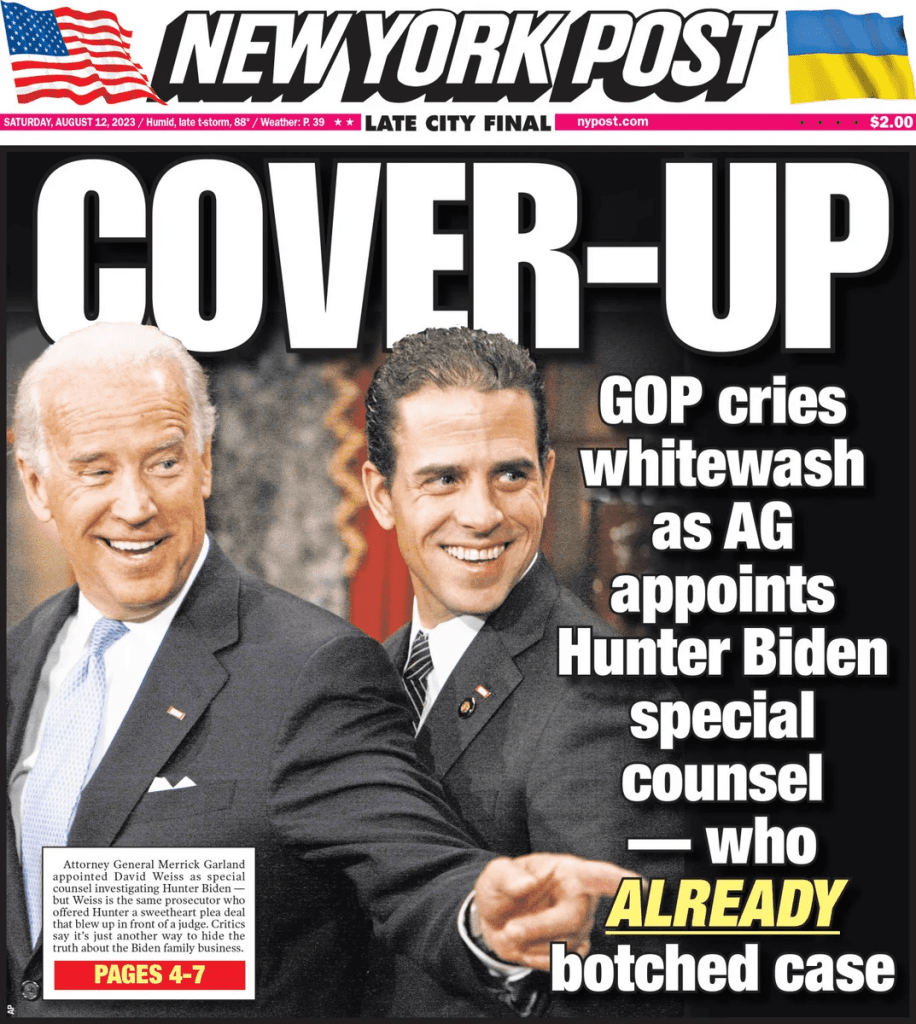
Merrick “The Mouse That Roared” Garland throws up roadblocks to protect “Stonewall Biden.”

Banks And CRE Turmoil Worsens As Office Delinquencies Accelerate (Delinquency Rate Rose To 4.41% Last Month, Office Rose To 4.96%)

Its not a wonderful world for regional and small banks given the deterioration of office markets.

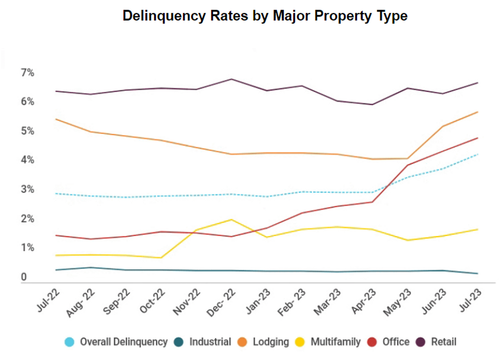
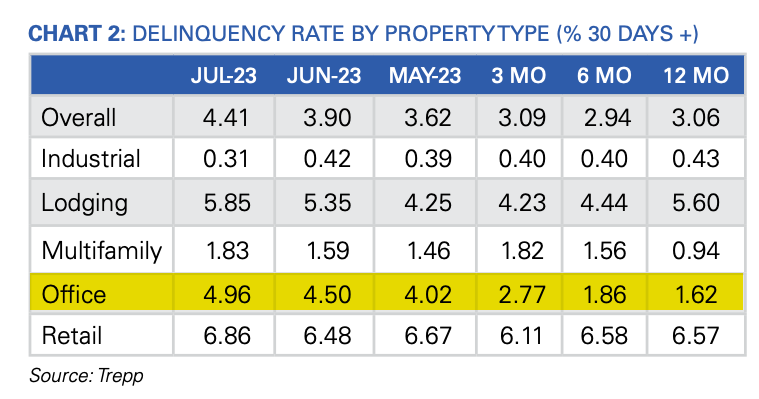
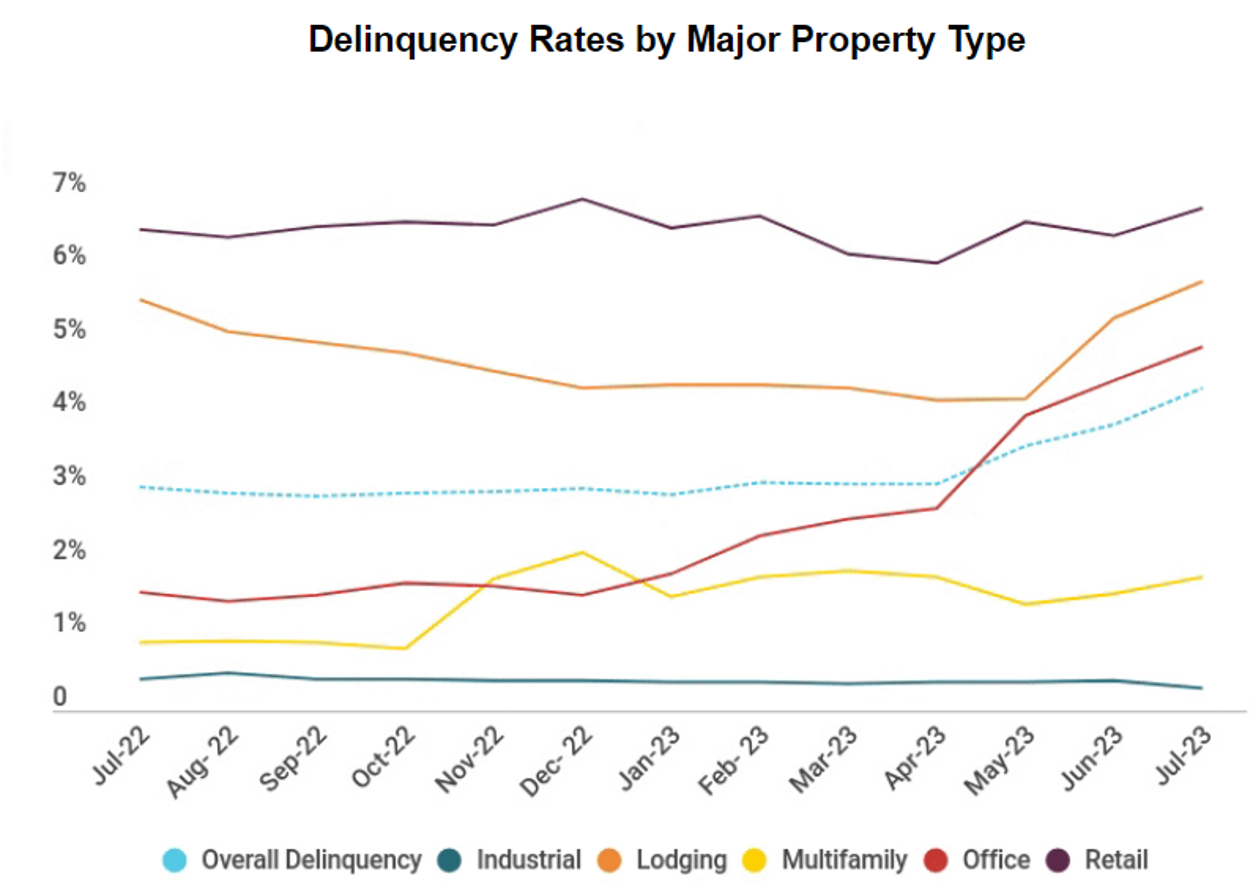
The latest data from Trepp, which tracks commercial mortgage-backed securities (CMBS) securities market data, shows the delinquency rate of commercial property loans packaged up by Wall Street jumped again in July, with four of the five major property segments posting increases. 

“While the rest of the US economy has seen relief in terms of higher equity prices, better-than-expected corporate earnings, and falling inflation numbers, the commercial real estate (CRE) market continues to be left behind,” Trepp wrote in the report. 

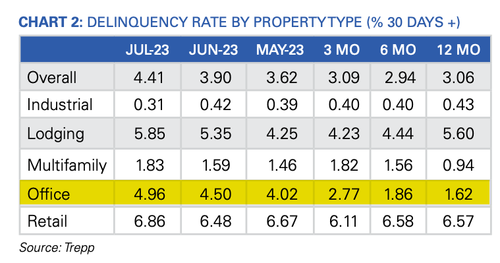
Trepp data found the delinquency rate rose 51 basis points to 4.41% last month — the highest level since December 2021. Office delinquencies increased by 46 basis points to 4.96% — up more than 350 basis points since the end of 2022. The deterioration in the office segment is intensifying at an alarmingly rapid pace. 

A broad overview of the US CMBS market shows the delinquency rate increased to 4.41%, a 51bps rise compared to the previous month, but still significantly lower than the 10.34% rate recorded in July 2012. The rate peaked at 10.32% in June 2020 during the government-forced Covid lockdowns. 

Here are more highlights from the report:

  • Year over year, the overall US CMBS delinquency rate is up 135 basis points.
  • Year to date, the rate is up 137 basis points.
  • The percentage of loans that are seriously delinquent (60+ days delinquent, in foreclosure, REO, or non-performing balloons) is now 3.92%, up 20 basis points for the month.
  • If defeased loans were taken out of the equation, the overall headline delinquency rate would be 4.64%, up 51 basis points from June.
  • One year ago, the US CMBS delinquency rate was 3.06%.
  • Six months ago, the US CMBS delinquency rate was 2.94%.

To better understand what might come next for the CRE market, Kiran Raichura, Capital Economics’ deputy chief property economist, recently warned in a note to clients that the office segment might experience a 35% plunge in values by the second half 2025 and “is unlikely to be recovered even by 2040.” 

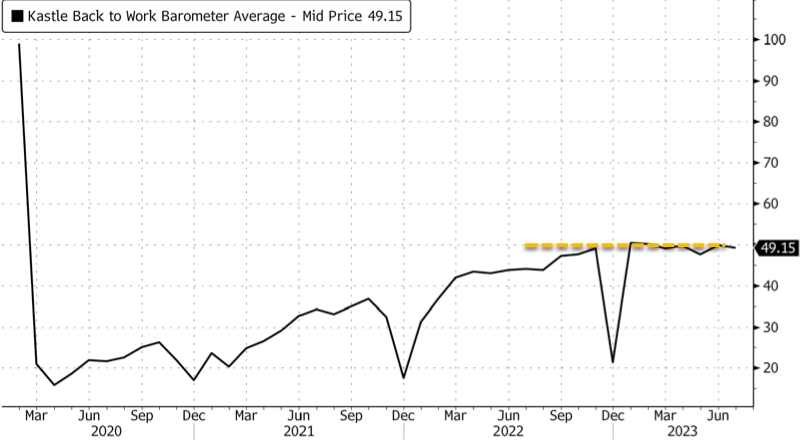
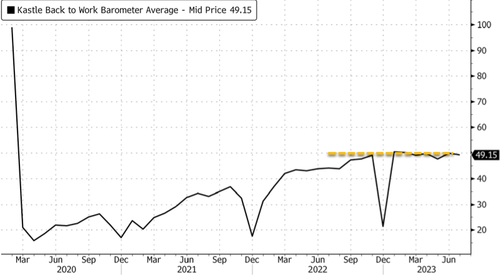
According to swipe data from Kastle Systems, the US office occupancy rate is less than 50%. The figure has plateaued since September, indicating a new reality of remote work. 

One major hurdle for CRE space is that “more than 50% of the $2.9 trillion in commercial mortgages will need to be renegotiated in the next 24 months when new lending rates are likely to be up by 350 to 450 basis points,” Lisa Shalett, chief investment officer for Morgan Stanley Wealth Management, wrote in a note to clients. 

Shalett expects a “peak-to-trough CRE price decline of as much as 40%, worse than in the Great Financial Crisis.” 

Bank of America analysts expect challenges in the CRE space but noted, “They are manageable and do not represent a systemic risk to the US economy.” 

Meanwhile, analysts at UBS warned: 

“About $1.3 billion of office mortgage loans are currently slated to mature over the next three years.

“It’s possible that some of these loans will need to be restructured, but the scope of the issue pales in comparison to the more than $2 trillion of bank equity capital. Office exposure for banks represents less than 5% of total loans and just 1.9% on average for large banks.” 

We’ve already seen major building owners returning their office towers and malls to lenders in California (here & here) and elsewhere (here). This will result in an uptick in CMBS delinquencies moving forward.  

… and remember what we wrote during the regional bank crisis earlier this year — the note was titled “Nowhere To Hide In CMBS”: CRE Nuke Goes Off With Small Banks Accounting For 70% Of Commercial Real Estate Loans. 

Meanwhile, The Federal Reserve is printing the night away.

Sam Cooke sang Joe Biden’s favorite song: “Only Sixteen.”

“So why did I give my heart so fast
It never will happen again
But I was a mere man of 80
I’ve aged a year since then.”


print-icon
print-icon

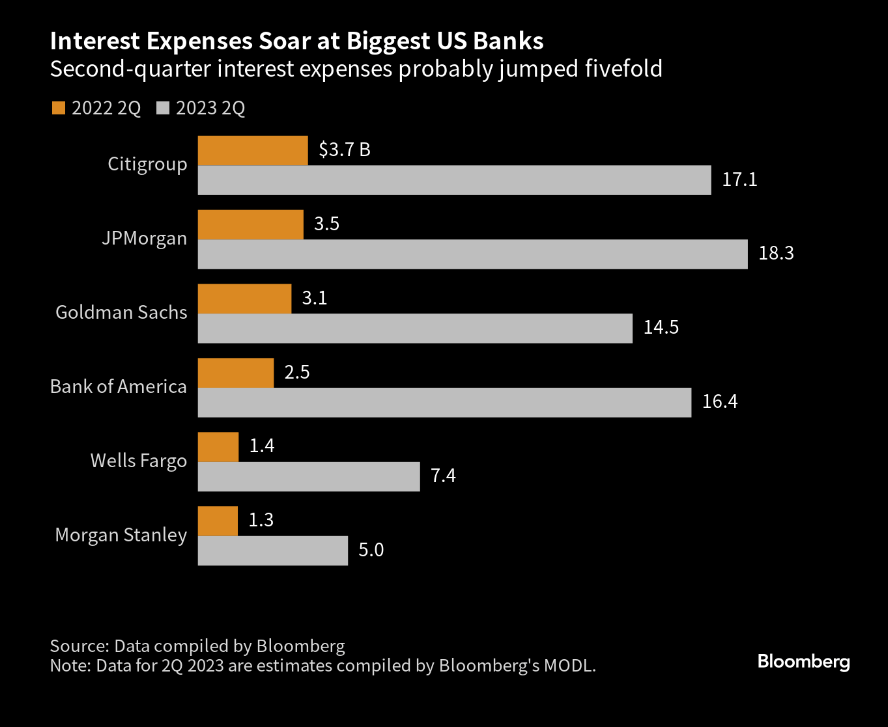
Powell’d! Interest Expenses Soar At Big Banks As Fed Tightens Money (The Fed Is Playing A Game)

What screams may come! Actually, the aftermath of excessive monetary policies under Bernanke, Yellen and Powell are coming home to bit the big banks.

Interest expenses at big US banks are rising much more quickly than interest income. Across the six largest US banks, interest expenses are set to climb to roughly $78.7 billion from $15.5 billion in the same period last year.

There is still $8.3 Trillion in monetary stimulus sloshing around the monetary system.

The Fed played a game. And is still playing!!