I love to teach, but my students at Chicago, Ohio State and George Mason would fall asleep when I would discuss repurchase and reverse repurchase agreements (or REPOs and Reverse REPOs). But repos and reverse repos are a critical part of the banking system.
In short, the Repo market is a window into what’s going on behind the scenes.
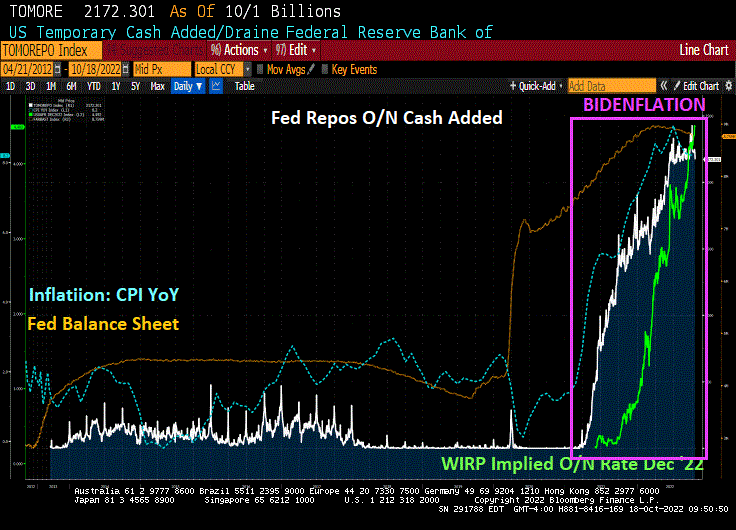
As Bidenflation soars, and The Fed counterattacks, we see Fed’s repo market remains elevated. Note that The Fed’s balance sheet (orange line) is only slowly being reduced.
Right now, the risk lurking in the shadows is Balance Sheet Runoff. The Fed, the markets, the regulators, have limited experience with the Fed shrinking the balance sheet. Bottom line: there’s a risk that Balance Sheet Runoff will breaking something.
The global stock market is up again today, despite Fed tightening and a war in Ukraine. The Dow is up 1.38% and the S&P 500 is up 1.75%.
Likely cause? Rumors that The Fed and other global central banks will pivot sooner than later.
It is likely that The Fed will pivot to prevent a crash and the stock market in pricing in that pivot.
Bernanke, Yellen and Powell are NOT Paul Volcker. In fact, I am coining a new nickname for Fed Chair Jerome Powell: Pivot Powell.
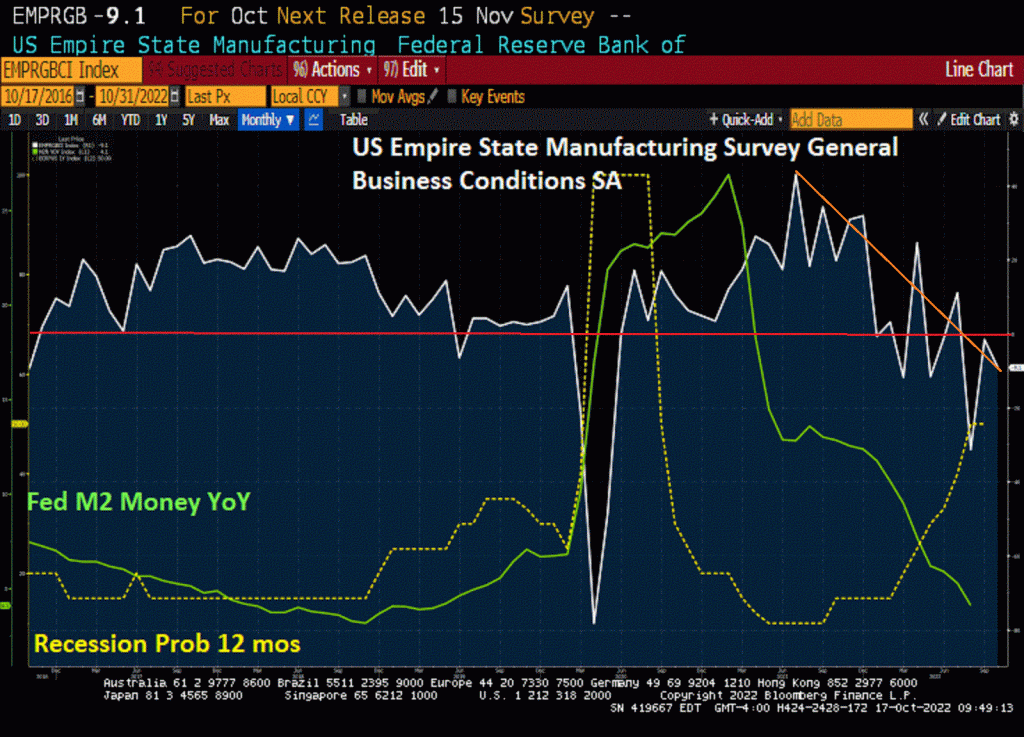
The US Empire State Manufacturing Survey General Business Conditions SA index fell to -9.1 in October, continuing a downward trend along with the downward trend in Fed M2 Money stock growth.
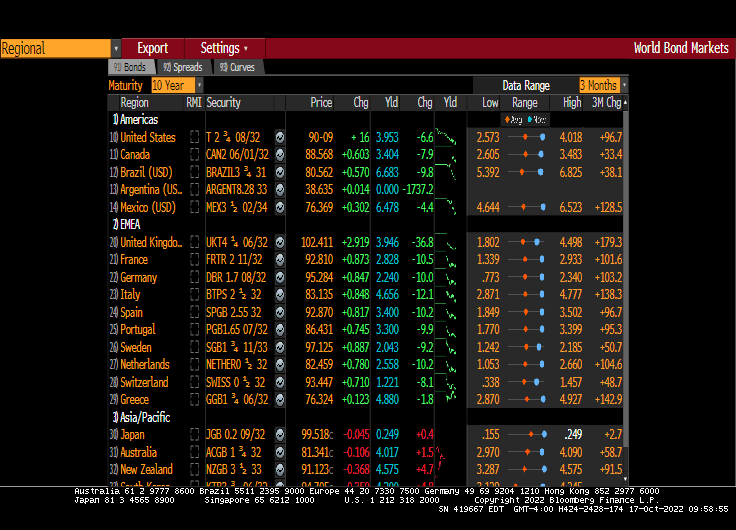
And the global sovereign debt market is showing fear as 10-year sovereign yields drop -10 basis points. The UK 10-year is down -36.8 bps! The US is down only -6.6 bps this morning.
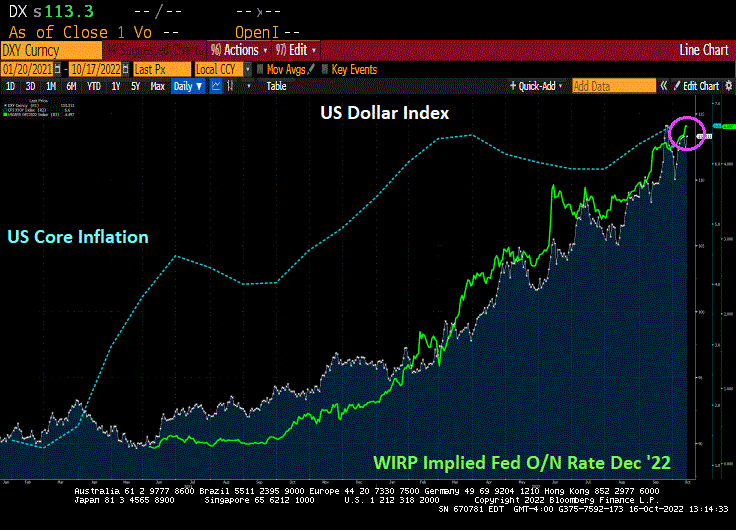
Over the past year, the dollar has been on a tear: The U.S. Dollar Index, which measures the dollar’s strength against a basket of foreign currencies, is up 18%. And up 25.2% under 80-year old US President Joe Biden (well, he will be 80 in November).
For tourists, a strong dollar is great news. It means you get more for your money abroad.
But for investors, a beefed-up buck is decidedly bad news.
When the dollar strengthens, that means foreign revenues are going to translate into fewer dollars. Those earnings are going to come in lower and any overseas investment you own is going to hurt you in a rising dollar environment.
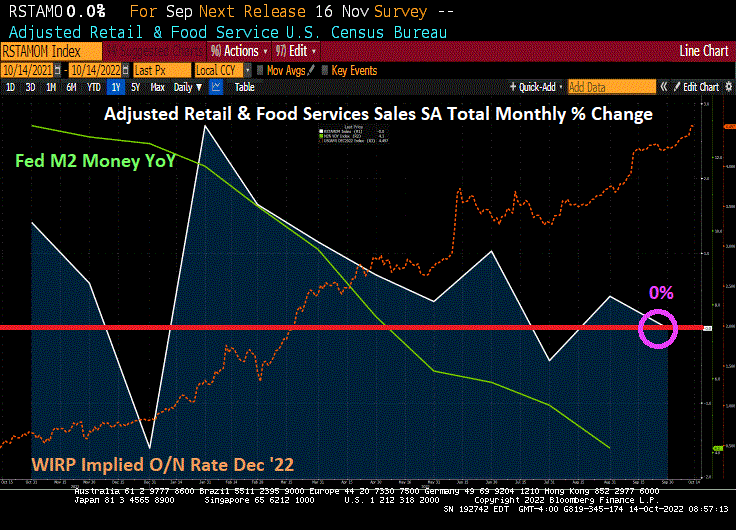
Bidenflation is just killing us. Now rising prices and The Fed’s counterattack are killing retail sales for American consumers.
US retail sales were sluggish last month, suggesting shoppers are becoming more guarded about discretionary purchases in the worst inflationary environment in decades.
The value of overall retail purchases were little changed in September after an upwardly revised 0.4% gain in August, Commerce Department data showed Friday. Excluding gasoline, retail sales were up 0.1%. The figures aren’t adjusted for inflation.
The median estimate in a Bloomberg survey of economists called for a 0.2% advance in retail sales. Seven of 13 retail categories declined last month, according to the report, including a drop in receipts at auto dealers, furniture outlets, sporting goods stores and electronics merchants. The value of sales at gas stations fell 1.4%, reflecting cheaper fuel prices, but they’re now climbing.
At least Export Prices YoY are down below 10%! I hope exporting inflation to the world isn’t Secretary of State Antony Blinken’s idea of good foreign policy.
My favorite headline of the day is “Macron Reminds Biden to Think Before Speaking: “Biden’s Reckless Rhetoric puts World at Risk”“
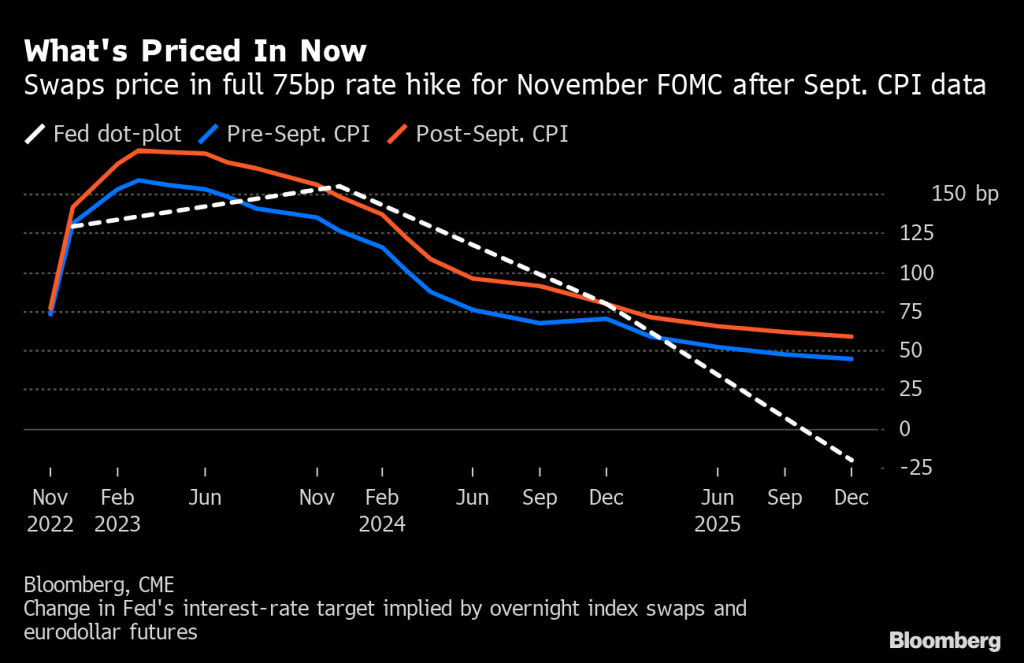
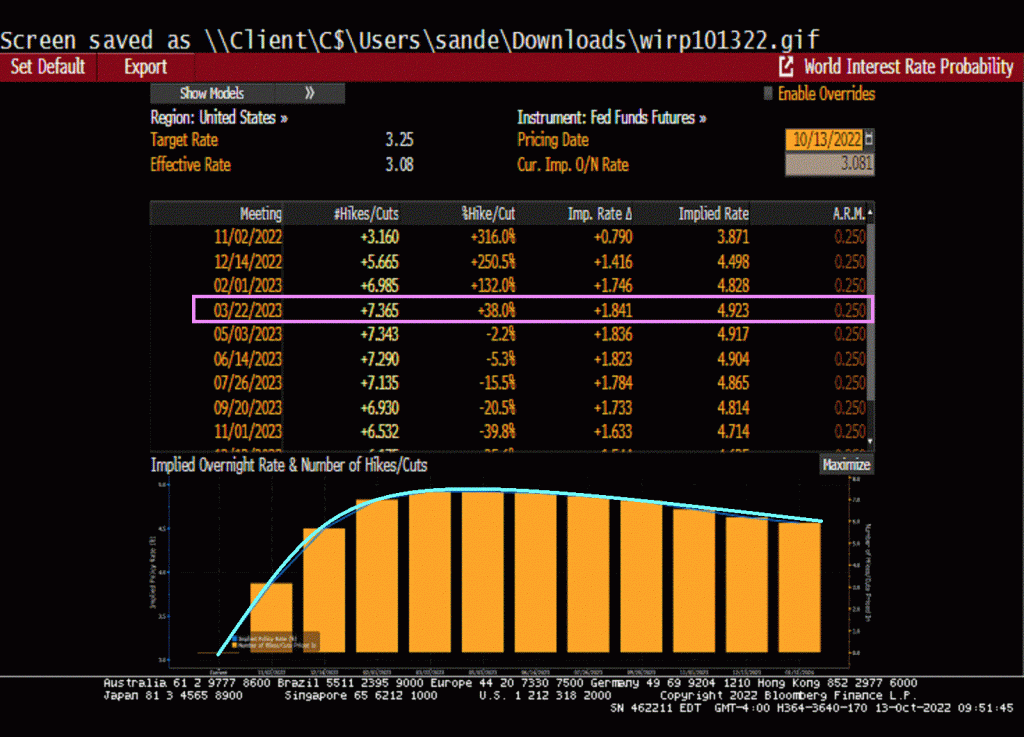
* Fed Swaps Lean Toward Back-to-Back Three-Quarter-Point Hikes * Hotter-than-expected September inflation data spark shift
(Bloomberg) — The market for wagers on the Federal Reserve’s policy rate is leaning toward pricing back-to-back 75 basis point rate hikes in the next two central bank meetings after consumer prices rose more than forecast in September.
The rate on the November overnight index swap contract rose to 3.86%, more than 75 basis points above the current effective fed funds rate, while the one referring to December climbed to 4.50%. A total of 142 basis points of rate hikes are now priced in for the next two policy meetings, just short of consecutive three-quarter-point hikes.
Prior to the inflation data, OIS markets were leaning toward the central bank cooling the pace of tightening to a 50 basis point move in December. At Wednesday’s close, swaps priced in around 130 basis points of hikes over the remaining of the year, which is equivalent to 55 basis points for December.
The market also priced in a higher eventual peak for the policy rate, with the March 2023 contract touching 4.864%.
The CPI data was “clearly a shock for the markets and the markets are off because of it,” Seth Carpenter, chief global economist at Morgan Stanley said on Bloomberg television. “There is persistence, particularly in the services side of inflation.”
Excluding food and energy, the Consumer Price Index increased 6.6% from a year ago, the highest level since 1982, Labor Department data showed Thursday. From a month earlier, the core CPI climbed 0.6% for a second straight month.
The Fed has raised its policy rate five times since March, most recently to a range of 3%-3.25% in September, after dropping the lower bound to 0% two years earlier at the onset of the pandemic.
The Fed Funds Futures data is pointing further Fed rate hikes with a turnaround in March 2023.
And with that awful inflation report and the likely Fed counterattack, the two year US Treasury yield has risen to 4.4361%, the highest since The Great Recession and banking crisis.
Fed Fireball! Comin’ at ya!!
Biden and Powell should appear on Saturday Night Live as the joint Debbie Downer. Or Democrat Downer.
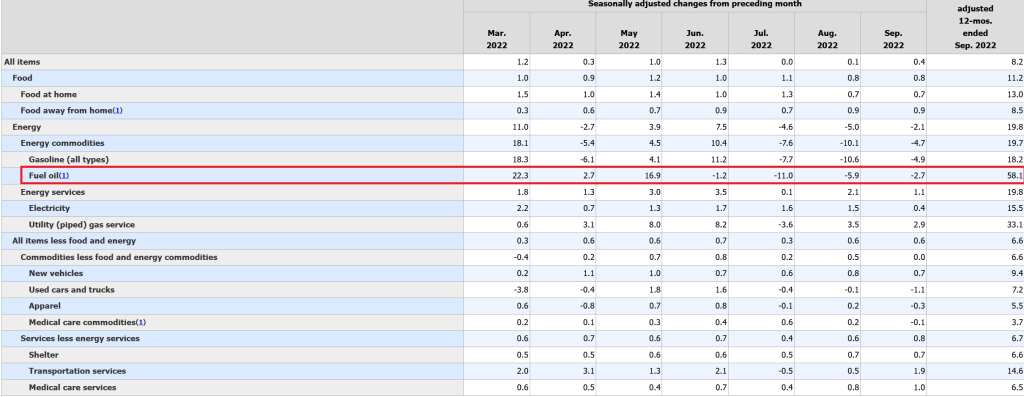
To begin with, headline inflation remains high at 8.2% YoY while CORE inflation (headline less food and energy) rose to 6.6% YoY.
Meanwhile, REAL average weekly earnings growth YoY further declined to -3.8% YoY.
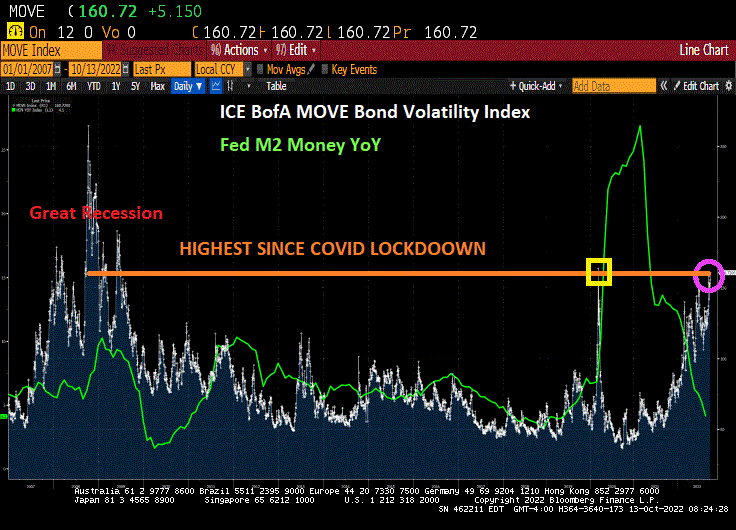
On the bond front, the Bank of America ICE bond volatility index rose to Great Recession/banking crisis levels (also achieved during the Covid government shutdowns).
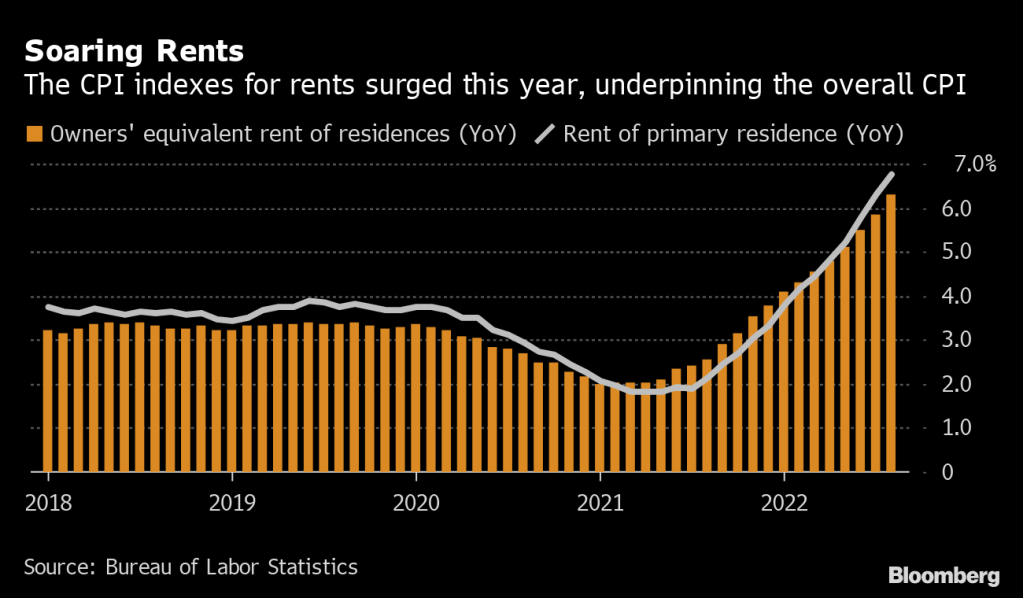
But back to the low-ball BLS inflation data. The biggest gain in price is … fuel oil at 33.1% YoY. Food at home rose 13.0% while gasoline rose 18.2%. Rent, according to the BLS, rose 6.6%.
Biden has probably been told by Ron Klain and Susan Rice that this is a good report.
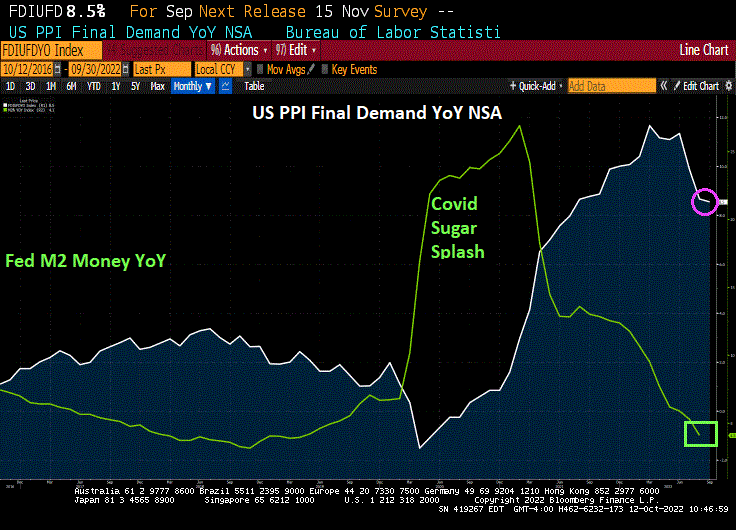
The US Producer Price Index (Final Demand) printed at a higher than expected 8.5% YoY, throwing cold water on the notion that inflation is “transitory.”
A key US inflation measure due Thursday is set to return to a four-decade high, underscoring broad and elevated price pressures that are pushing the Federal Reserve toward yet another large interest-rate hike next month.
The so-called core consumer price index that excludes food and energy is projected to rise 0.4% in September from the prior month and 6.5% from a year earlier, matching the rate seen in March that was the highest since 1982.
The overall CPI, however, is expected to decelerate to a still-rapid 8.1% annual pace, restrained by a decline in gasoline prices, based on the median estimate.
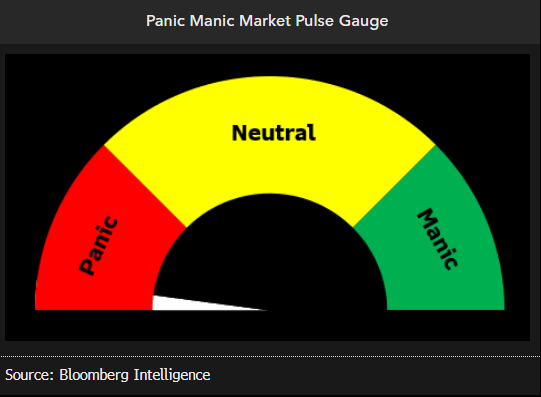
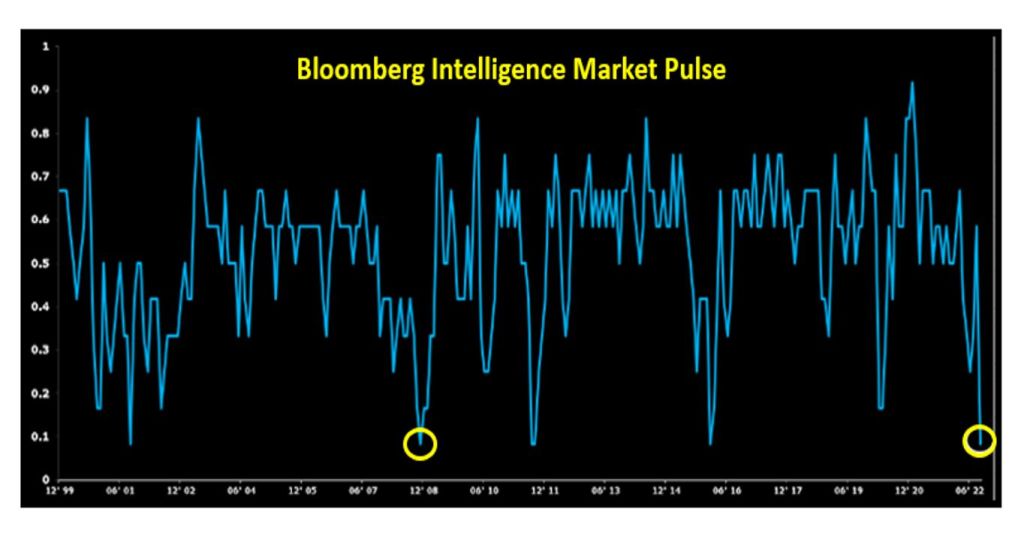
Bloomberg’s market pulse gauge is signalling panic.
The Bloomberg market pulse index quantifies sentiment using 6 factors — price breadth, pairwise correlation, low vol performance, defensive vs. cyclical sector performance, high vs. low leverage performance and high yield spreads.
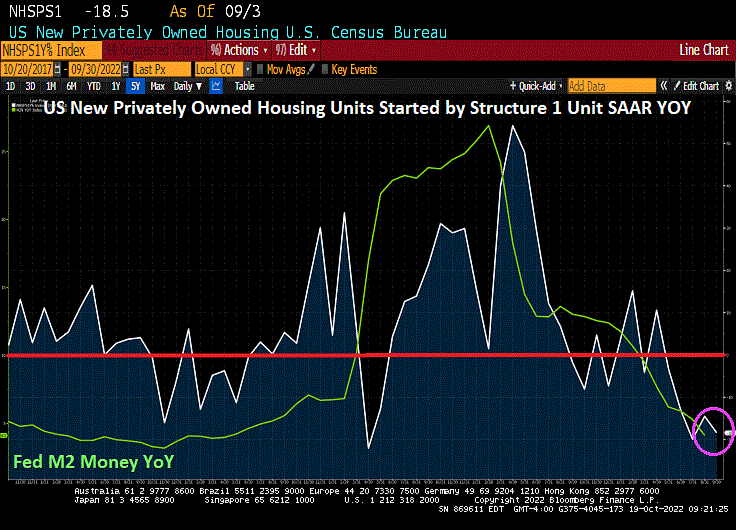
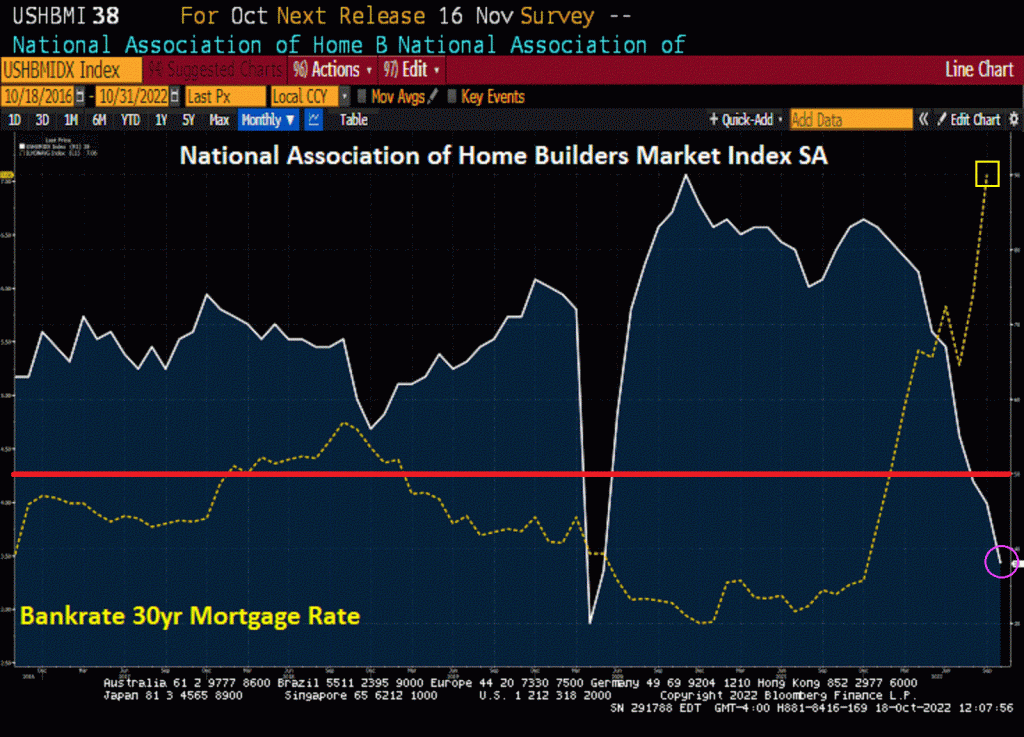
In addition to creating the highest inflation rate in 40 years, we are now seeing the highest mortgage rate in 16 years. I feel like we are all on a chain gang.
(Bloomberg) — US mortgage rates jumped to a 16-year high of 6.75%, marking the seventh-straight weekly increase and spurring the worst slump in home loan applications since the depths of the pandemic.
In fact, mortgage application just fell to the lowest level since May 1997.
The contract rate on a 30-year fixed mortgage rose nearly a quarter percentage point in the last week of September, according to Mortgage Bankers Association data released Wednesday. The steady string of increases in mortgage rates resulted in a more than 14% slump last week in applications to purchase or refinance a home.
Over the past seven weeks, mortgage rates have soared 1.30 percentage points, the largest surge over a comparable period since 2003 and illustrating the abrupt upswing in borrowing costs as the Federal Reserve intensifies its inflation fight.
The effective 30-year fixed rate, which includes the effects of compounding, topped 7% in the period ended Sept. 30, also the highest since 2006.
The Refinance Index decreased 18 percent from the previous week and was 86 percent lower than the same week one year ago. The seasonally adjusted Purchase Index decreased 13 percent from one week earlier. The unadjusted Purchase Index decreased 13 percent compared with the previous week and was 37 percent lower than the same week one year ago.
Here is today’s table of MBA mortgage applications and its ugly.
Unfortunately for the US chain gang, gasoline prices are rising again as the US drains its petroleum reserve. Because, that’s the way … uh-huh … they like.
You must be logged in to post a comment.