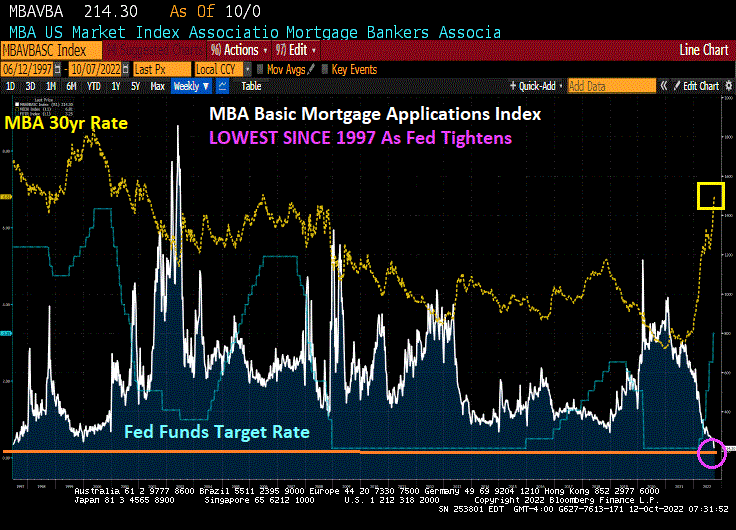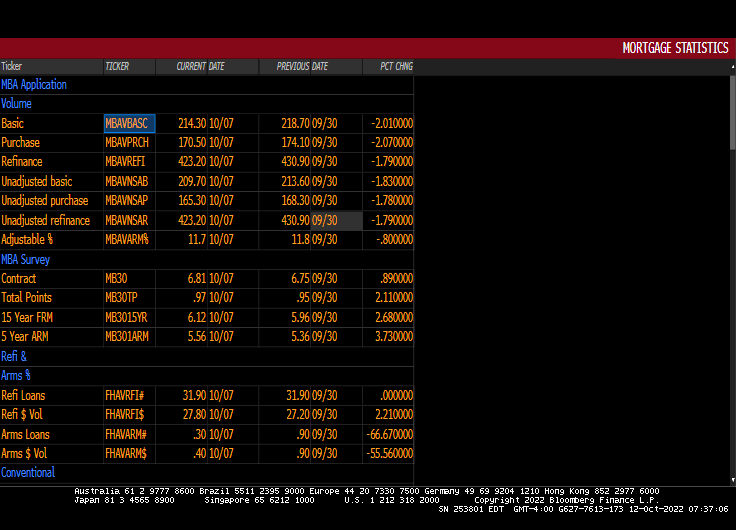
Mortgage applications decreased 2.0 percent from one week earlier, according to data from the Mortgage Bankers Association’s (MBA) Weekly Mortgage Applications Survey for the week ending October 7, 2022. As mortgage rates soar with Federal Reserve tightening.
The Refinance Index decreased 2 percent from the previous week and was 86 percent lower than the same week one year ago. The seasonally adjusted Purchase Index decreased 2 percent from one week earlier. The unadjusted Purchase Index decreased 2 percent compared with the previous week and was 39 percent lower than the same week one year ago.
I feel sorry (sort of) for people like White House Press Secretary Karine Jean-Pierre who has to read ridiculous scripts in defense of awful Federal policies. For example, yesterday she touted Biden’s “accomplishments” of rising real disposable US income and declining gasoline prices. What? Doesn’t she read Confounded Interest?? /sarc
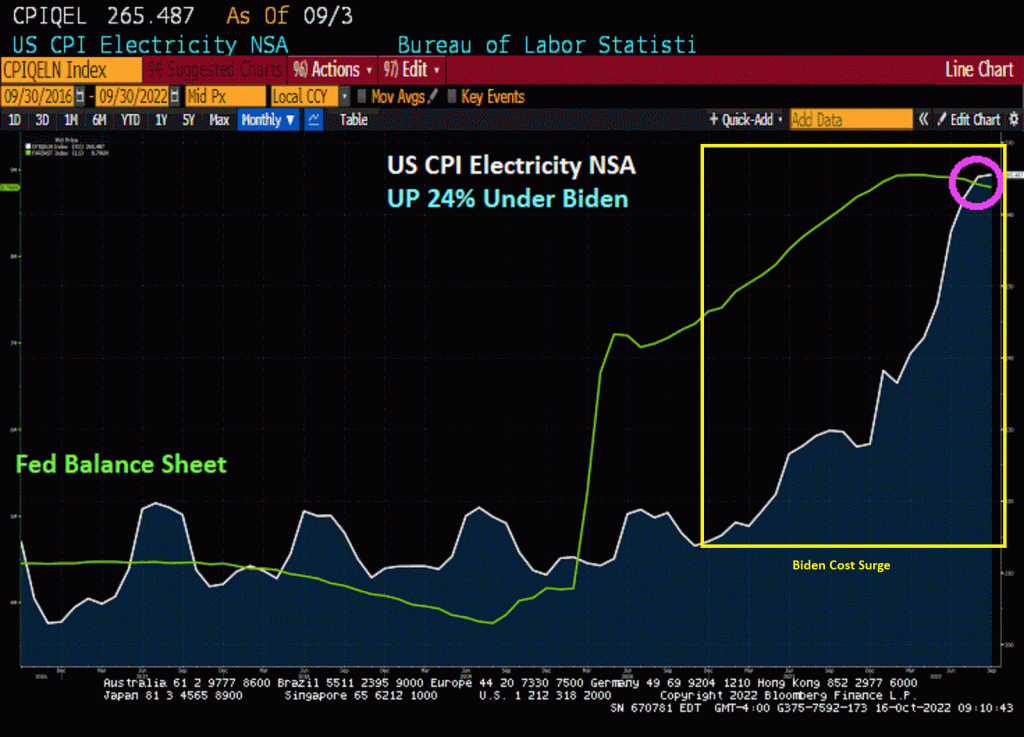
First, REAL disposable personal income growth for the US is NEGATIVE and has been since Biden and Congress embarked on their green energy crusade driving US inflation to its highest level in 40 years. Not exactly a great sales point for the midyear elections.
If we look at REAL average hourly earnings growth, a similar measure, we see that it is negative also. So, what on earth is Jean-Pierre talking about?
She also mentioned that gasoline prices are falling. Except that they are rising again. Apparently her talking points were from September.
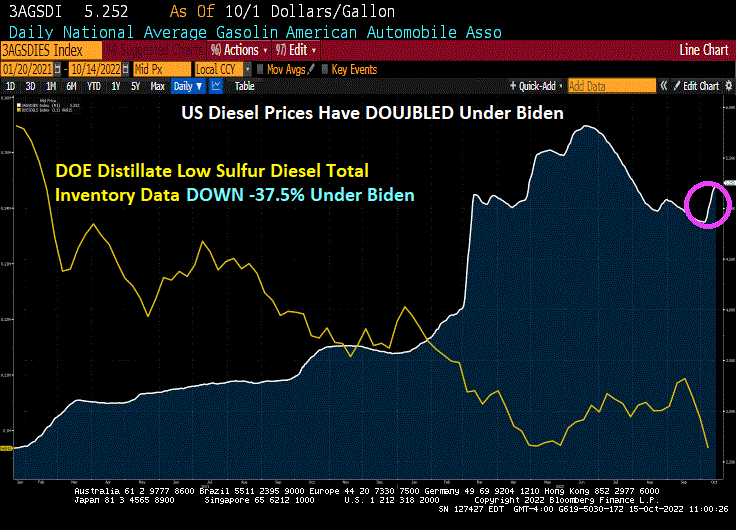
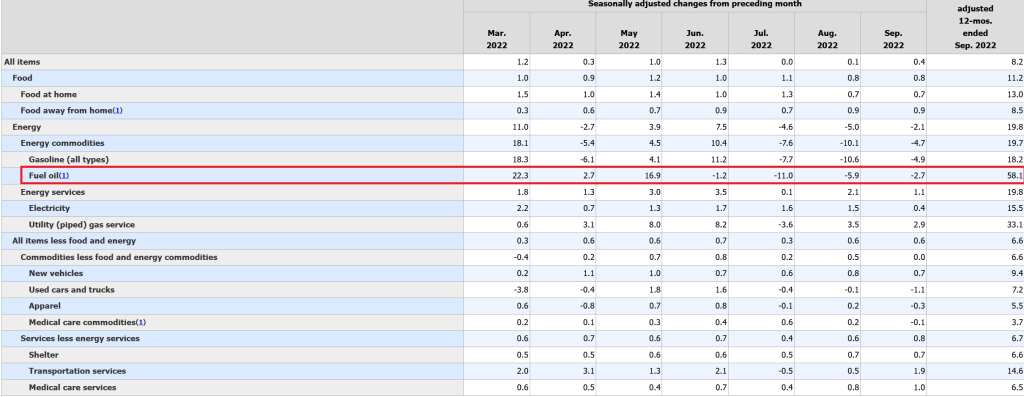
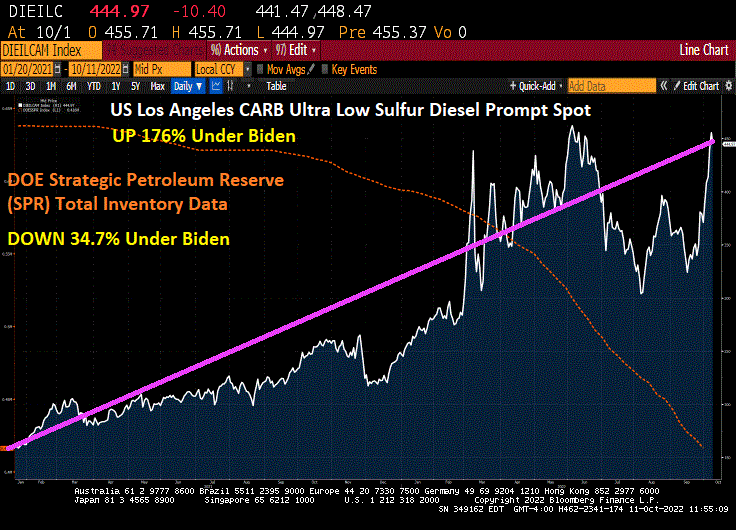
Then we have diesel fuel prices, the backbone of the shipping industry, rising like crazy as Biden drains the strategic petroleum reserve.
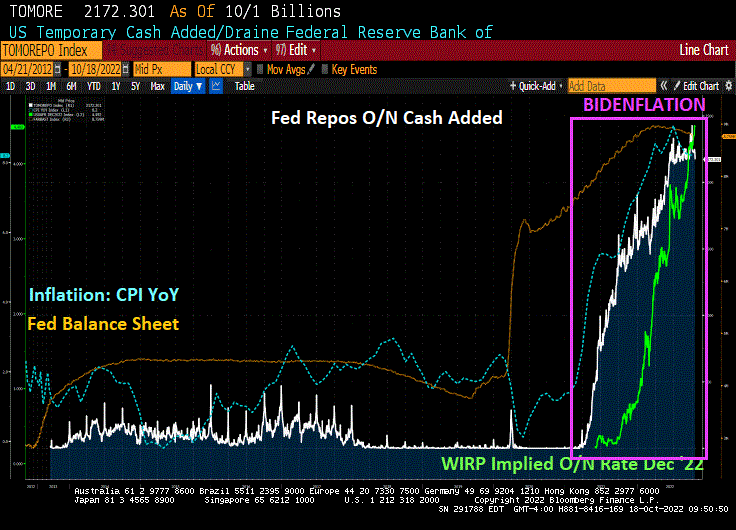
Meanwhile, The Federal Reserve is tightening their uber-loose monetary policies (thanks Bernanke, Yellen and Powell). Will The Fed pivot to help with the midterm elections OR will The Fed keep trying to extinguish inflation by raising rates and withdrawing Fed monetary stimulus?
Sweet home DC! At least for the ruling elites. For the rest of us mortals, Bidenflation is crushing our finances.
To combat Bidenflation, The Fed has signaled that they will continue to raise interest rates. But at what cost?
(Bloomberg) — The world’s leading central banks are finally pushing their interest rates into restrictive territory, causing fears of overkill in financial markets and stoking chatter that policymakers may need to pivot at some point.
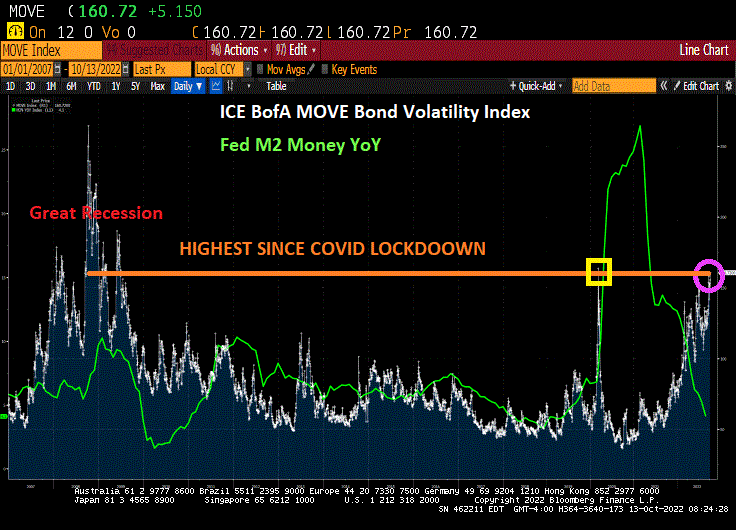
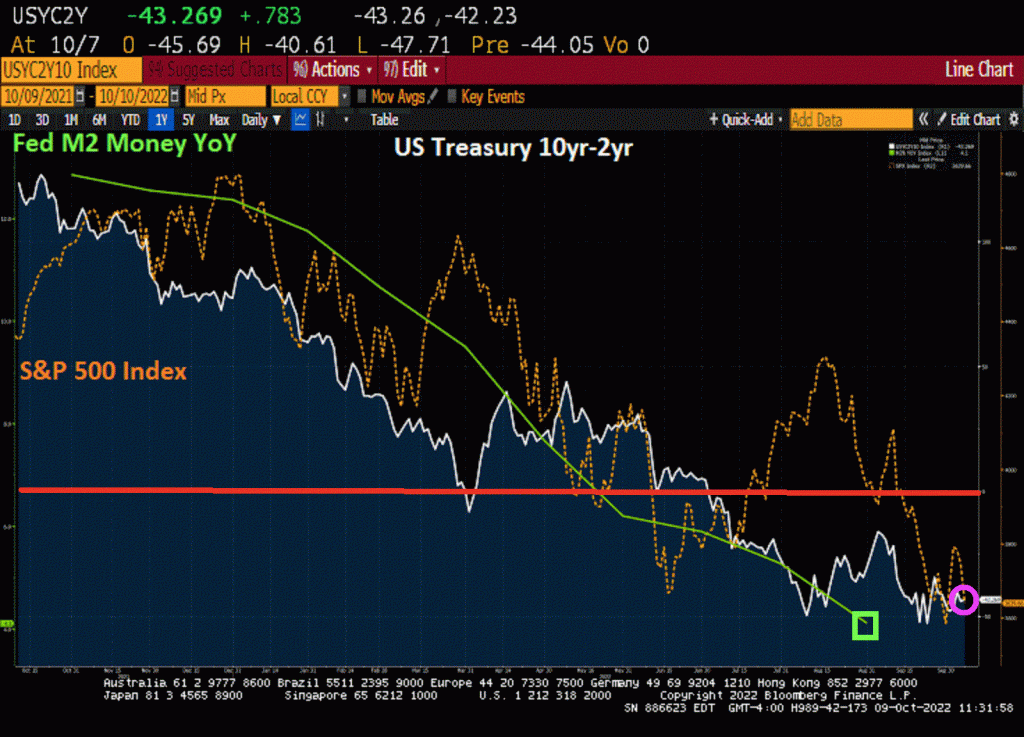
And with the withdrawal of monetary stimulus comes the slowdown of US M2 Money growth (green line). And with that slowdown, we see a declining stock market and an inverted US Treasury yield curve.
Of course, Biden could reverse his green energy agenda and allow for oil and natural gas exploration … again. Or begin building nuclear power plants again. But nooooo.
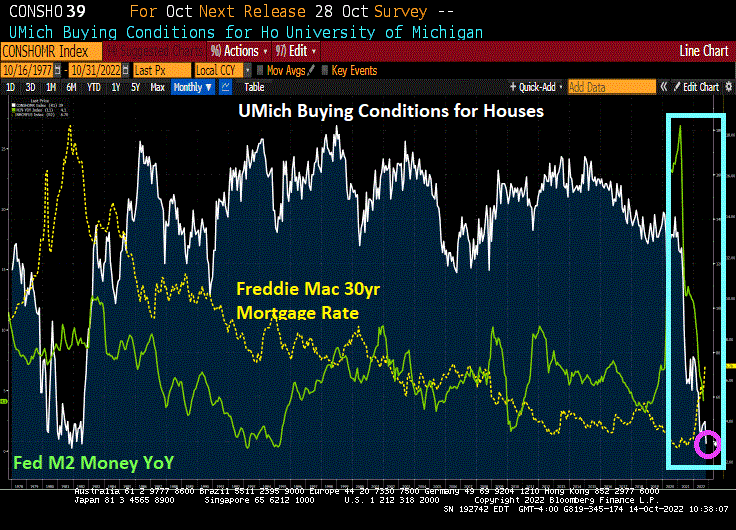
Another peril is rising mortgage rates.
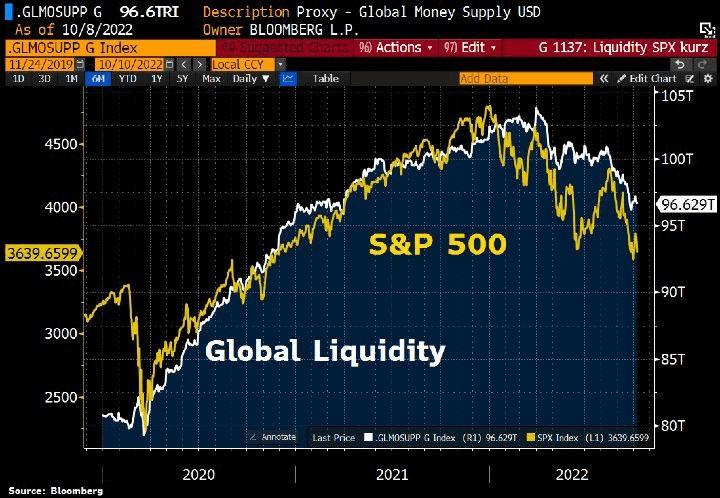
Here is the S&P 500 against global liquidity.
Speaking of Freddie King, here is Joe Biden’s favorite song: hideaway.
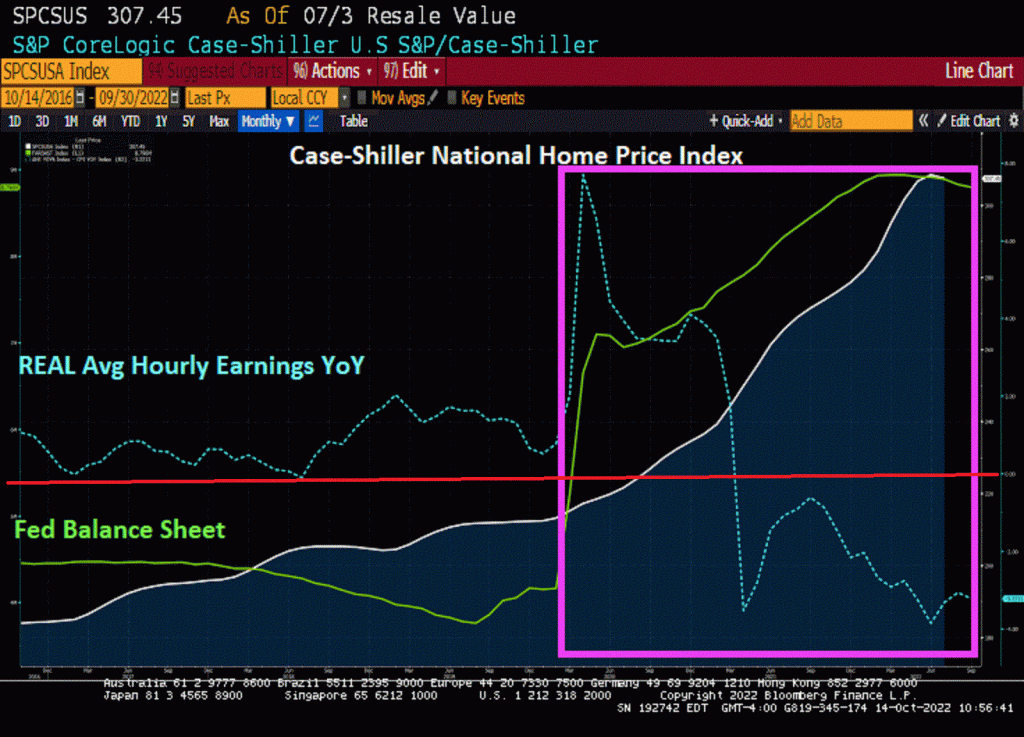
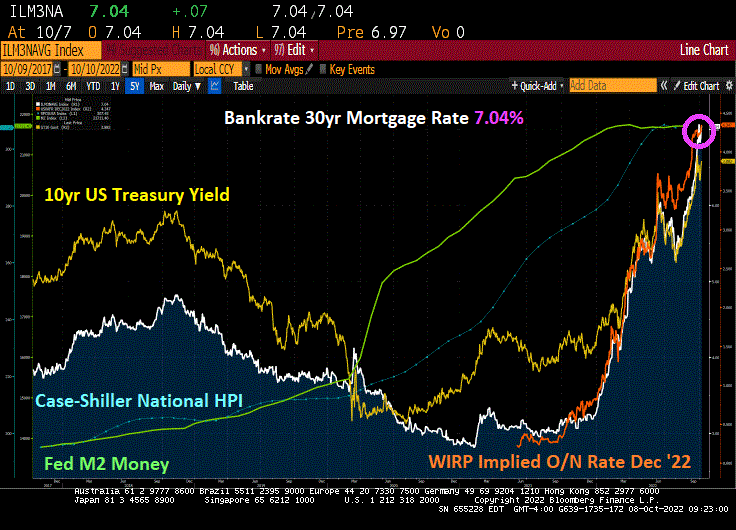
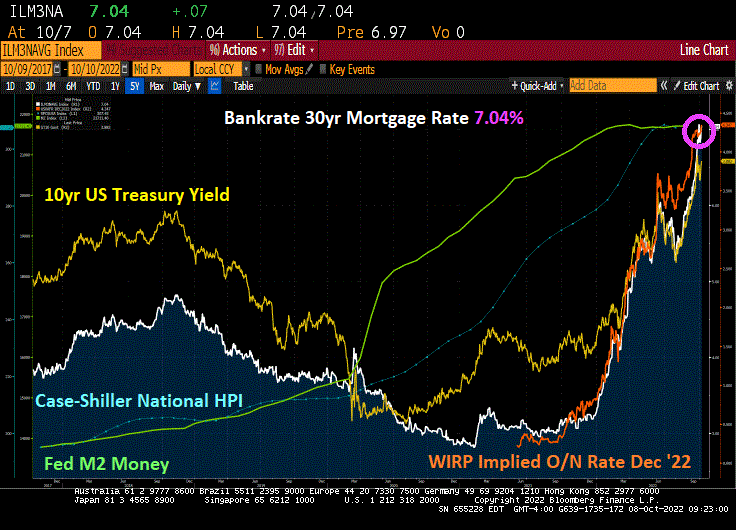
As the Biden Administration touts “affordable housing,” we are seeing the 30-year mortgage rate rise above 7% as The Federal Reserve fights inflation … caused by the Biden Administration. Meanwhile, US home prices are falling.
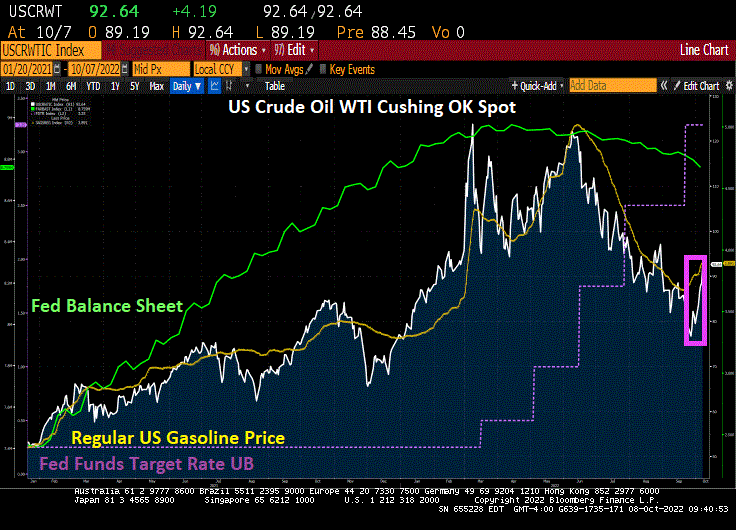
The Biden Administration launched a war on domestic energy production, resulting in crude oil prices rising 74% under Biden and regular gasoline prices rising 62.4%.
As Biden pleaded with OPEC to increase oil production, he was embarrassingly rejected. Hence, West Texas Crude Oil prices have begun to rise again along with gasoline prices (pink box).
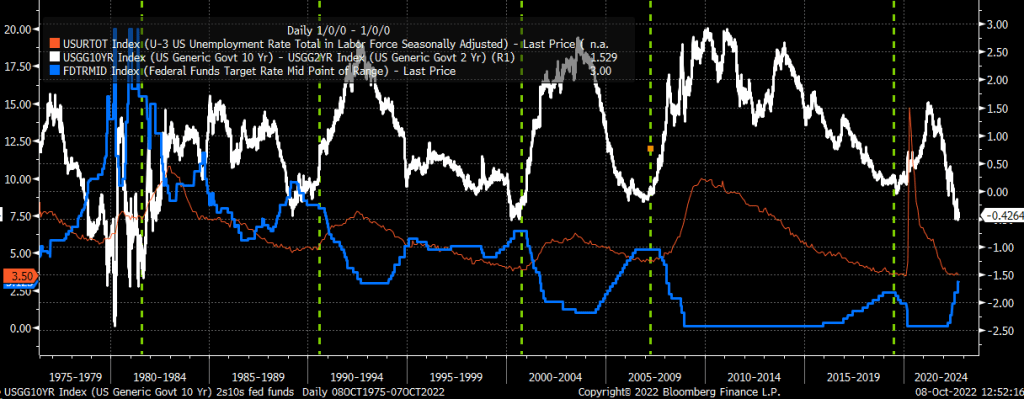
How about unemployment and the 10yr-2yr yield curve?
Bloomberg’s market pulse gauge is signalling panic.
The Bloomberg market pulse index quantifies sentiment using 6 factors — price breadth, pairwise correlation, low vol performance, defensive vs. cyclical sector performance, high vs. low leverage performance and high yield spreads.
Challenger US Job Cut Announcements for September rose 67.6%, the highest since … Covid-19 outbreak in early 2020. This comes after the JOLTS (job openings) fell the most since … Covid-19.
This index quantifies sentiment using 6 factors — price breadth, pairwise correlation, low vol perf, defensive vs. cyclical sector perf, high vs. low leverage perf and high yield spreads.
In addition to creating the highest inflation rate in 40 years, we are now seeing the highest mortgage rate in 16 years. I feel like we are all on a chain gang.
(Bloomberg) — US mortgage rates jumped to a 16-year high of 6.75%, marking the seventh-straight weekly increase and spurring the worst slump in home loan applications since the depths of the pandemic.
In fact, mortgage application just fell to the lowest level since May 1997.
The contract rate on a 30-year fixed mortgage rose nearly a quarter percentage point in the last week of September, according to Mortgage Bankers Association data released Wednesday. The steady string of increases in mortgage rates resulted in a more than 14% slump last week in applications to purchase or refinance a home.
Over the past seven weeks, mortgage rates have soared 1.30 percentage points, the largest surge over a comparable period since 2003 and illustrating the abrupt upswing in borrowing costs as the Federal Reserve intensifies its inflation fight.
The effective 30-year fixed rate, which includes the effects of compounding, topped 7% in the period ended Sept. 30, also the highest since 2006.
The Refinance Index decreased 18 percent from the previous week and was 86 percent lower than the same week one year ago. The seasonally adjusted Purchase Index decreased 13 percent from one week earlier. The unadjusted Purchase Index decreased 13 percent compared with the previous week and was 37 percent lower than the same week one year ago.
Here is today’s table of MBA mortgage applications and its ugly.
Unfortunately for the US chain gang, gasoline prices are rising again as the US drains its petroleum reserve. Because, that’s the way … uh-huh … they like.
On the real estate side, Bankrate’s 30-year mortgage rate dropped to 6.85% as the 10-year US Treasury yield drops.
On the home price front, according to the Black Knight Home Price Index (HPI), median home prices fell 0.98% in August, only marginally better than July’s upwardly revised 1.05% monthly decline July. August 2022 marked the largest single-month price declines seen since January 2009 and rank among the eight largest on record. The monthly rate of home price decline is now rivaling that seen during the Great Recession – the question is how long it will continue to do so, and how far off peaks prices will fall.
Now, will The Fed pivot to correct the plunging M2 Money growth?
As I frequently told my investment and fixed-income securities students at Chicago, Ohio State and George Mason University, any 10 basis point change in the US Treasury 10-year yield is significant.
But how about today’s 20 basis point decline in the US Treasury 10-year yield?
The UK’s 10-year yield is down even more at -24.1 basis points. Germany is down -18 bps and France is down -10.3 bps.
Speaking of credit default swaps, Credit Suisse is back to financial crisis levels while UBS and Deutsche Bank are not … yet.
With all the turbulence in markets thanks to the war in Ukraine and Biden’s green energy mandates and spending (not to mention Statists like Klaus Schwab screaming about a Great Reset), I was reminiscing about more simple times.
New CEO Koerner sought to reassure employees in Friday memo
Shares fall to a fresh record low, gauge of credit risk rises
It is like the Lehman Brothers debacle in 2008 all over again.
(Bloomberg) — Credit Suisse Group AG was plunged into fresh market turmoil after Chief Executive Officer Ulrich Koerner’s attempts to reassure employees and investors backfired, adding to uncertainty surrounding the bank.
The stock, which had already more than halved this year before Monday’s sell-off, fell as much as 12% in Zurich trading to a record low that values the firm at less than $10 billion. That was accompanied by a spike in the cost to insure the bank’s debt against default, which jumped to its highest ever.
Koerner, for the second time in as many weeks, had sought to calm employees and the markets with a memo late Friday stressing the bank’s liquidity and capital strength. Instead, it focused attention on the dramatic recent moves in the firm’s stock price and credit spreads, and investors rushed for the exit when trading reopened after the weekend.
One notable difference between 2008 and today is that Credit Suisse’s equity was flying high in June 2007 then crashed a the global banking crisis went into full motion. We then saw Credit Suisse’s credit default swaps soar in early 2009. But today Credit Suisse’s equity is a pale imitation of its former self, but its credit default swap is now higher than it was at its peak in early 2009.
Credit Suisse is now trading lower than its European rival Deutsche Bank (aka, The Teutonic Titanic).
Yes, this brings back sickening memories of the 2008-2009 global financial crisis. Let’s see how The Federal Reserve, ECB and Bank of Switzerland handle this debacle, particularly with M2 Money growth so low.
It appears that we are in another Lehman debacle. Or should I say “Lemur Bros.”
You must be logged in to post a comment.