Undun! Fed’s $8.6 Trillion Balance Sheet in Focus as Banks Seek Cash (25 BPS Increase At Next Meeting Then DOWN To 3.820% By Jan 2024)

Undun. The Fed’s balance sheet, that is.

For all the focus on whether the Federal Reserve is about to pause its interest-rate hikes, there’s another critical policy decision sure to draw plenty of attention come Wednesday: What the central bank does with its massive pile of bond holdings.

The banking-sector turmoil that has only appeared to deepen, combined with a previous increase in funding pressures, has left financial markets keenly attuned to what the Fed will say about its $8.6 trillion balance sheet. 

Until this month the stash had been shrinking as part of the Fed’s efforts to return it back to pre-pandemic levels. But now it has started to expand again as the Fed acts to bolster the banking system through a slate of emergency lending programs. Its latest step came Sunday, when it moved with other central banks to boost US dollar liquidity.

Some say financial-stability concern may spur policymakers to dial back the runoff of its bond portfolio, a process known as quantitative tightening that’s designed to drain reserves from the system. Still, others argue that even if the Fed does pause its rate increases, the central bank’s overarching goal of taming inflation means it’s unlikely it will signal any shift this week in efforts to shrink the holdings of Treasuries and mortgage-backed debt. The one exception, they note, would be if stress in the banking sector were to become much more severe.

The Fed’s move to backstop US banks “clearly expands the Fed’s balance sheet,” said Subadra Rajappa, head of US rates strategy at Societe Generale SA. If usage of the Fed’s liquidity facilities is “small and contained they probably continue QT, but if the take-up is large then they probably stop as it then starts to raise concerns over reserve scarcity.”
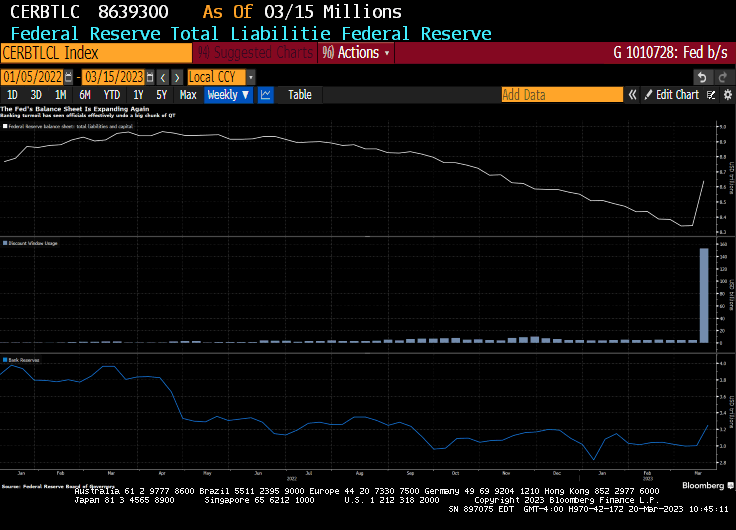
The fate of the Fed’s portfolio is a subject of debate after the collapse of several US lenders led the central bank to create a new emergency backstop, known as the Bank Term Funding Program, which it announced March 12. Banks borrowed $153 billion from the Fed’s discount window — lenders’ traditional liquidity backstop — in the week ended March 15, Fed data show, a record that eclipsed the previous all-time high set during the 2008 financial crisis. They also tapped the new program for $11.9 billion.

The central bank’s various liquidity programs added about $300 billion to the Fed’s balance sheet last week, reversing about half of the reduction the Fed has achieved since the runoff began last June. But some economists say the two programs can work in tandem, with the banking efforts targeting financial stability and QT remaining a steady part of the Fed’s plan to remove the support it provided during the pandemic.

It looks like a 25 basis point increase at the next meeting, then cuts in The Fed Funds Target Rate to 3.820% by January 2024.

The labor market is still tight. So tight, we get this!!

Strange Days! US Mortgage Rate Falls To 6.97% As Banking Crisis Persists (Yellen, Bank Consolidations, Bailouts And The Return Of QE)

Strange days, indeed.

Despite endless promises from Washington DC that there would never be another bank bailout, the Biden Administration bailed out Silicon Valley Bank (SVB) by removing the $250,000 cap on deposit insurance. Then Treasury Secretary Janet Yellen added that in the future, only banks that posed SYSTEMIC RISK to the economy will be bailed out. Translation: only the big four Too Big To Fail (TBTF) banks will be bailed out. Meaning that the Biden Administration prefers big banks to community banks. “Middle-class Joe” loves BIG Pharma, BIG defense, BIG tech, BIG media and now BIG banks. He should rename himself “Big Joe” Biden for the 2024 Presidential election.

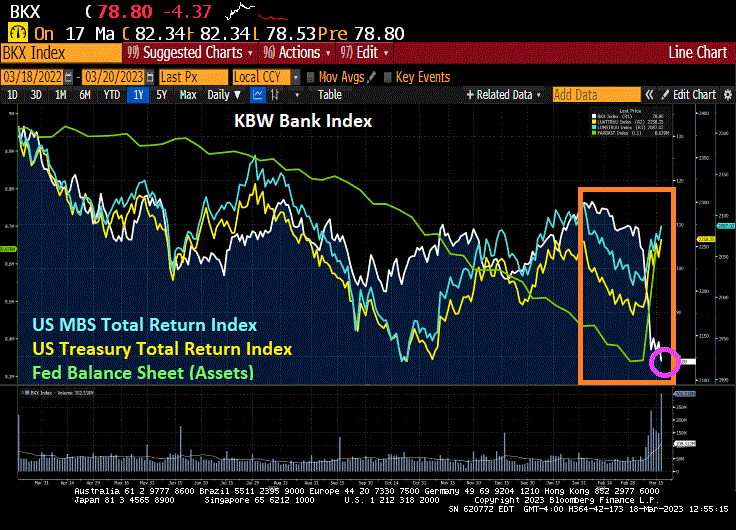
Of course, we are aware of The Fed’s about face on shrinking their balance sheet (green line). While Bankrate’s 30-year mortgage rate has now declined below 7% to 6.97%, it has only fallen -15 basis points since the recent peak of 7.12% on 3/2/2023 when the 10-year Treasury yield was 4.056%. So, the 10-year Treasury yield has fallen -62.7 basis points since 3/2/2023 while the 30-year mortgage rate dropped only -15 basis points.

On the European banking front, Credit Suisse is kaput and both Swiss Bank and Deutsche Bank are considering buying the assets of Credit Suisse. In other words, MORE bank consolidation.

Here is a chart of US bank consideration as of 2009 with 37 banks in 1990 shriveling to 4 mega, TBTF banks in 2009 that remain today. But will the now unprotected community and local banks be absorbed into the 4 superbanks? Time will tell, but if history is repeated, the answer is yes.

The KBW bank index continued to fall despite the bailouts of SVB and Signature Banks. But at least total returns on Treasuries and MBS that banks hold increased with the return of QE!

Yellen and Biden compete for the Knucklehead Of The Century Award. While not as sloppy as the sudden Afghanistan withdrawal, bailing out the Silicon Valley elites will not end well.

Argentina Raises Benchmark Leliq Rate By 300 Basis Points To 78% To Fight Inflation Of 102.5% (While Fed INCREASES Balance Sheet To Fight Banking Crisis)

Cry for Argentina! Their central bank boosted its benchmark Leliq rate by 300 basis points to 78%. The monetary authority’s board considered the increase in response to accelerating inflation and after leaving the key rate unchanged for several months. 

Of course, the US Federal Reserve is going in the opposite direction to combat the US banking crisis created by inflation and Yellen’s “Too low for too long” Fed policies.

I am beginning to wonder in Treasury Secretary Janet Yellen and Chicago Mayor Lori Lightfoot are the same person. Both complete Statist screw-ups.

US Financial Conditions Collapse On Fed Failures (Bank Stocks Continue To Fall Despite Biden’s Assurances)

The Fed (Bernanke, Yellen, Powell) kept rates too low for too long (their new moto?), and hell is now being paid.

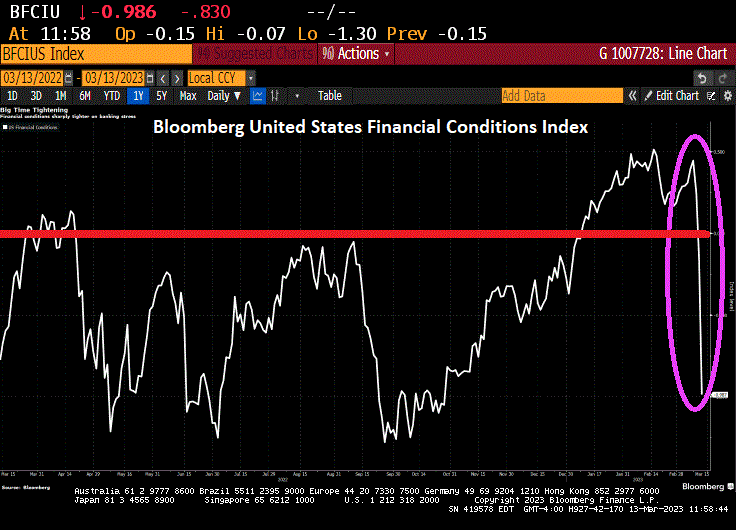
US financial conditions index collapsed on the 3 bank failures … so far.

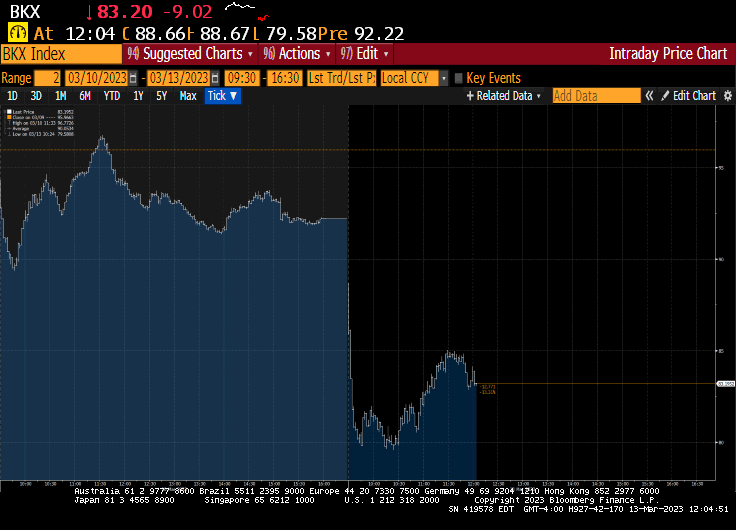
Despite what Resident Biden said about banks, bank stocks fell again today.

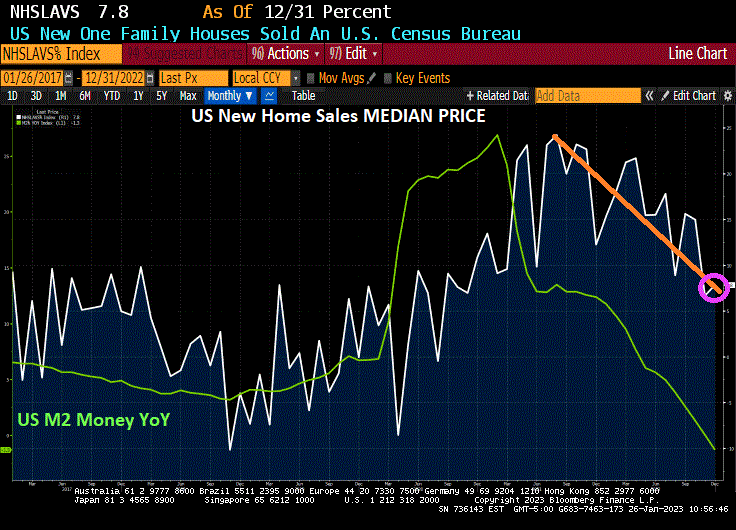
Good News, Bad News! US New Home Sales Rise 2.3% In December, But DOWN -23% YoY (Median Price UP 7.8% YoY While M2 Money Growth Goes Negative)

The December new home sales report is good news and bad news.

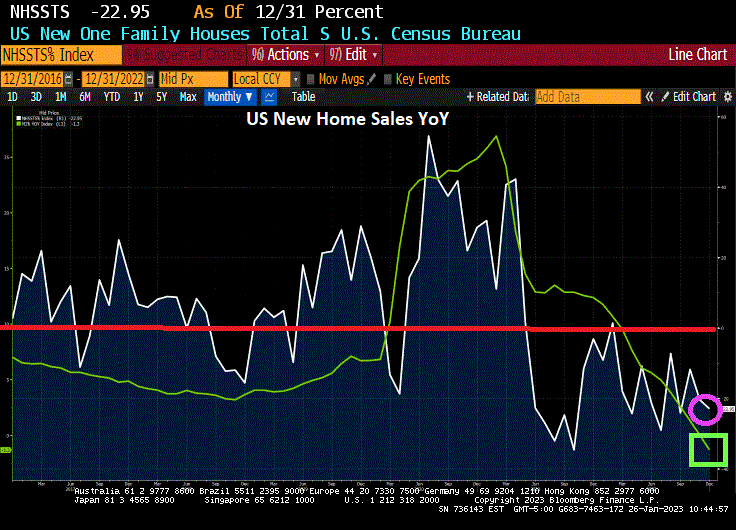
The good news? US new home sales rose by 2.3% in December from November to 616k units sold SAAR. That is the good news.

The bad news? Since December of 2021, new home sales fell -23% year-over-year (YoY).

The median price of new home sales rose 7.8% YoY, but the trend as The Fed withdraws monetary stimulus (orange line) is not good.

Perhaps there is a communications breakdown between the Biden Administration and The Federal Reserve.

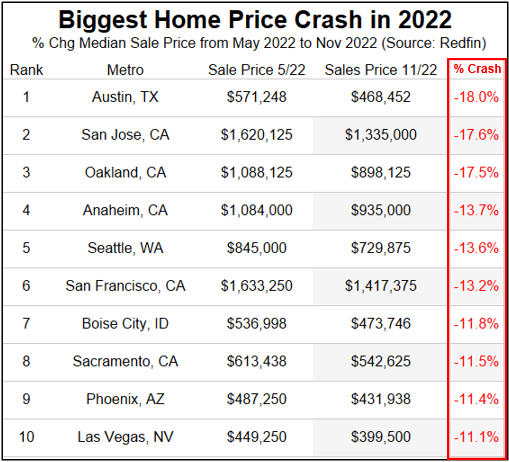
California Screamin’! 2022 Home Prices Crashed Mostly In California As Fed Withdraws Monetary Stimulus (Austin TX And Seattle WA Also Crashed Hard)

California Screamin’!

6 of the top 8 metro areas with the largest home price crash in 2022 were in California, according to Redfin.

Sadly, I lived in three of these metro areas (Austin TX, San Jose CA and Phoenix AZ), although I wouldn’t confuse correlation with causation.

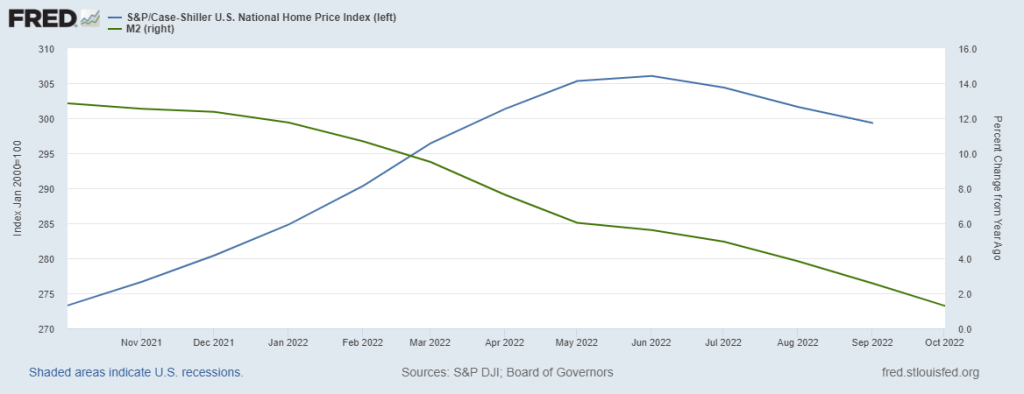
The trend for home price growth (blue line) is definitely on the downturn as The Fed removes its ample stimulus (green line).

Here is California governor Gavin (Nancy Pelosi’s nephew) Newsome screaming about crashing California home prices.

Cry Havoc! Consumer Confidence For Purchasing Housing Rises In December But Still Near Historic Low (Fed Rate Hikes Creating Havoc)

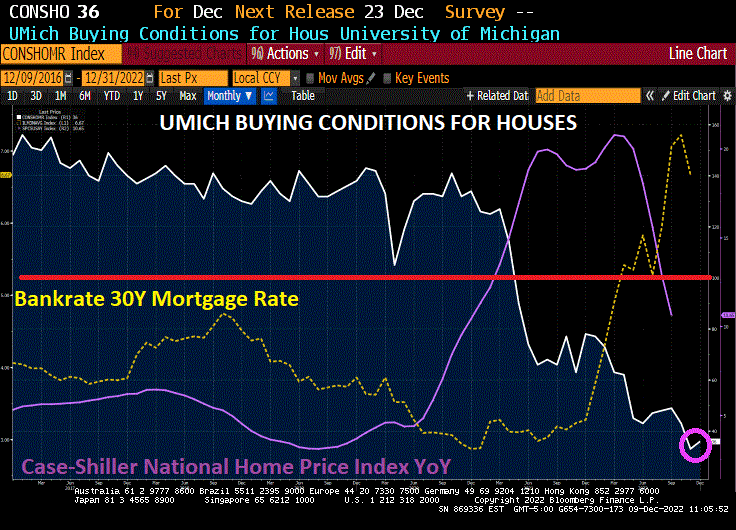
The Federal Reserve is removing the massive punch bowl from the US economy and markets. And with the rising US mortgage rates, we got crashing buying conditions for housing.

The UMich consumer survey for buying conditions for house rose slightly in December to 36, well below 100 (the baseline).

Cry havor and let slip The Federal Reserve!

US Treasury Yield Curve Inverts To -82 Basis Points, Worst Since 1981 As Fed Tightens Policy (112 Straight Days Of Inversion)

Whoop there it is!

The US Treasury 10y-2y yield curve descended further into inversion at -82 basis point, the worst since 1981.

This is not a good sign, since the 10Y-2Y curve typically inverts just prior to a recession.

The current US Treasury curve is currently humped at 1 year, then declining rapidly. The swaps curve is peaking at 9 months, then declining rapidly.

The Fed Funds Futures market is pointing to a peak Fed Funds rate of 5% at the May 3rd FOMC meeting.

Yes, a recession is headed our way.

US Economy Adds 263K Jobs In September, REAL Average Hourly Earnings Growth At -3.06% (100 Million NOT In Labor Force)

Yesterday, I told my family “The good news is that Rotolo’s Pizza tastes even better reheated in the morning. The bad news? I ate the only two piece left.”

Which brings me to the September jobs report. The good news is that 263k jobs were added to the US economy. That means 10,521k jobs have been added in the 21 months under Biden! (Bear in mind that 12,100k jobs were added in the 7 months under Trump following the Covid economic shutdown, yet no media outlet trumpeted that accomplishment).

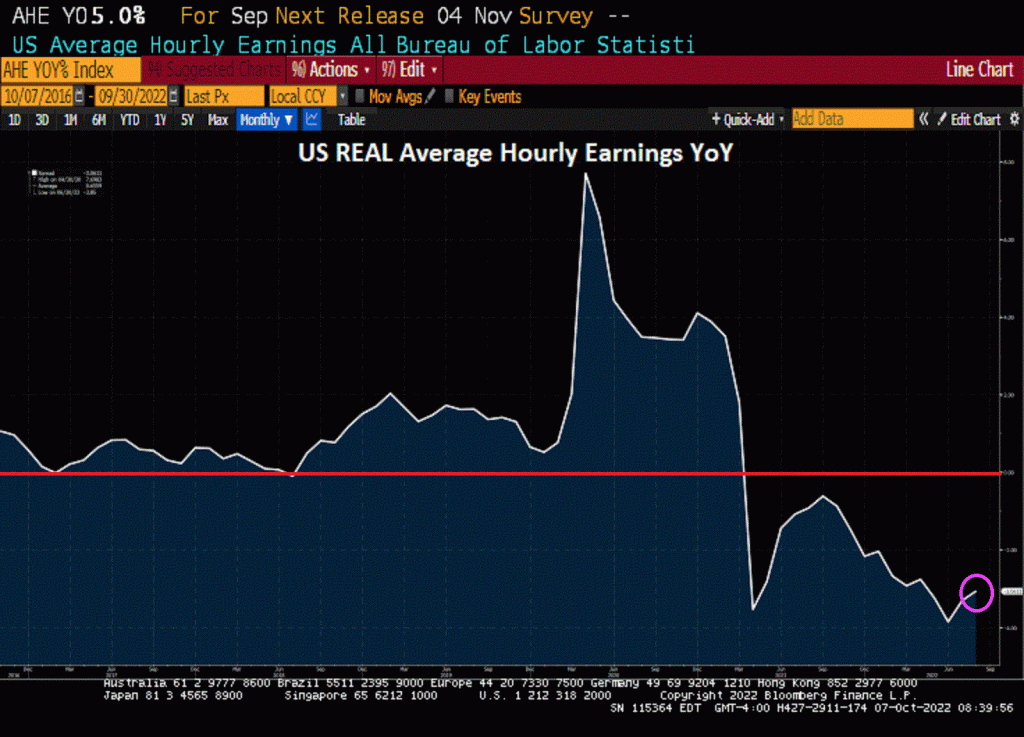
The bad news? While nominal average hourly earnings grew by 5% YoY, when I subtract Bidenflation from that number I get -3.06% growth. Or should I say that REAL wages are shrinking under Biden.

Now for the “Biden Miracle” of jobs being added. Here is a chart of NFP jobs added (white line) against M2 Money and headline inflation. Both The Fed and the Federal government pumped trillions into the economy leading to the highest inflation rate in 40 years. Once governments stopped with their Covid shutdown nonsense, jobs would return regardless of who was President. BUT Federal spending and Fed money printing went off the rails in early 2020.

As Paul Harvey used to say, “Here is the rest of the story.” Labor force participation fell in September and the U-3 unemployment rate fell slightly to 3.5%.

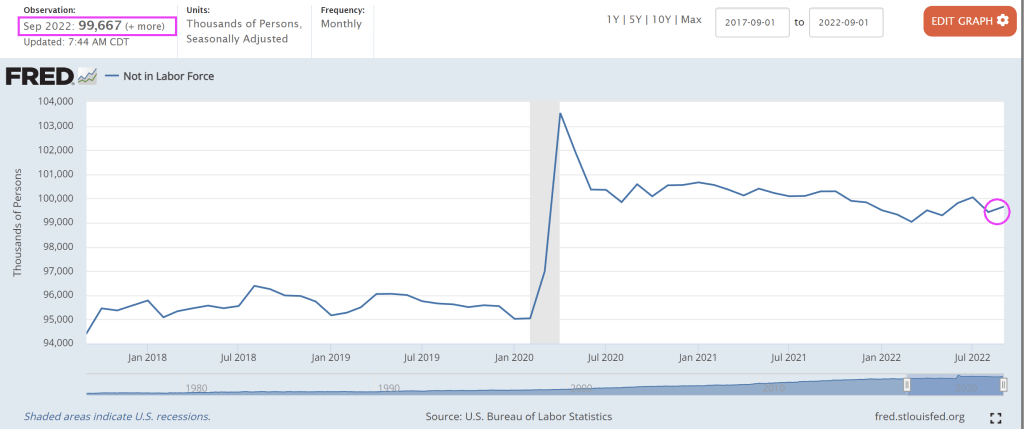
But labor force dropouts increased leading U-3 unemployment to decline. The number of people NOT in the labor force grew to nearly 100 million. Nothing has been the same since Covid.

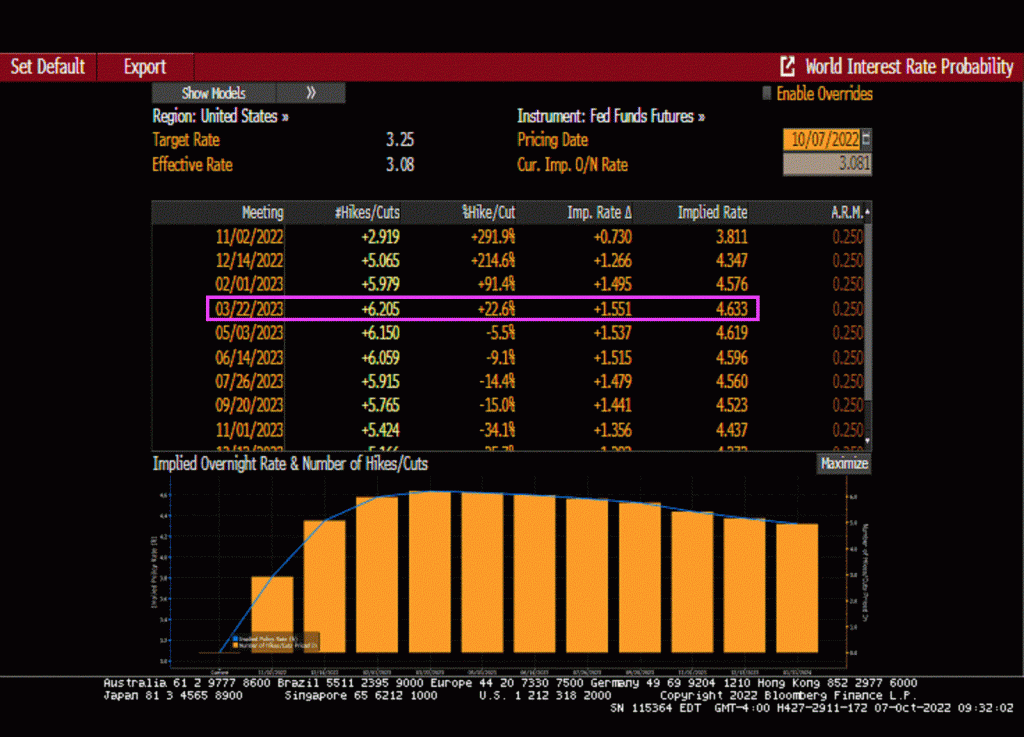
So what will The Fed do? According to Fed Funds Futures data (WIRP), The Fed will keep raising rates until March ’23 then slowly start lowering interest rates again.

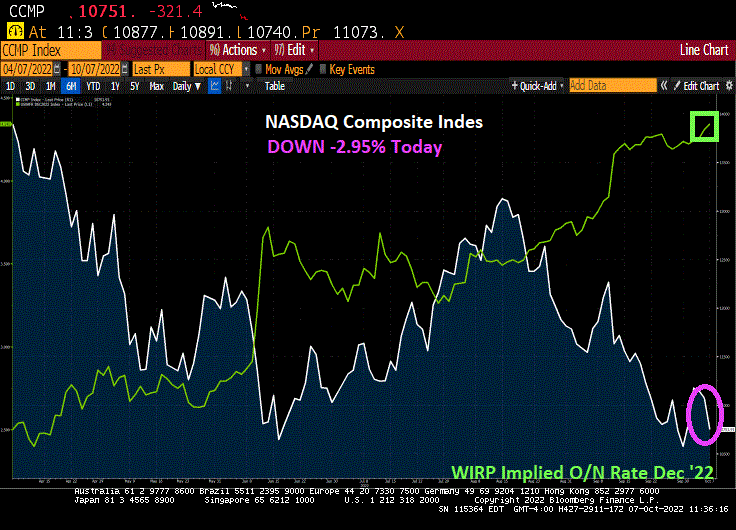
And with that “positive” jobs report, The Dow is down almost -500 points and the NASDAQ is down over -3%.

And with Fed tightening, we are seeing a collapse in M2 money supply.

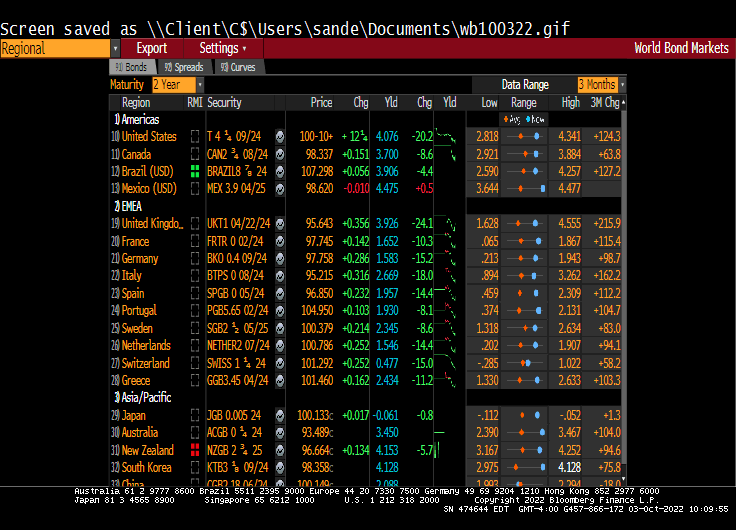
Great Reset?? US Treasury 10yr Yield Tanks -20 Basis Points (UK 10yr Tanks -24.1 BPS)

As I frequently told my investment and fixed-income securities students at Chicago, Ohio State and George Mason University, any 10 basis point change in the US Treasury 10-year yield is significant.

But how about today’s 20 basis point decline in the US Treasury 10-year yield?

The UK’s 10-year yield is down even more at -24.1 basis points. Germany is down -18 bps and France is down -10.3 bps.

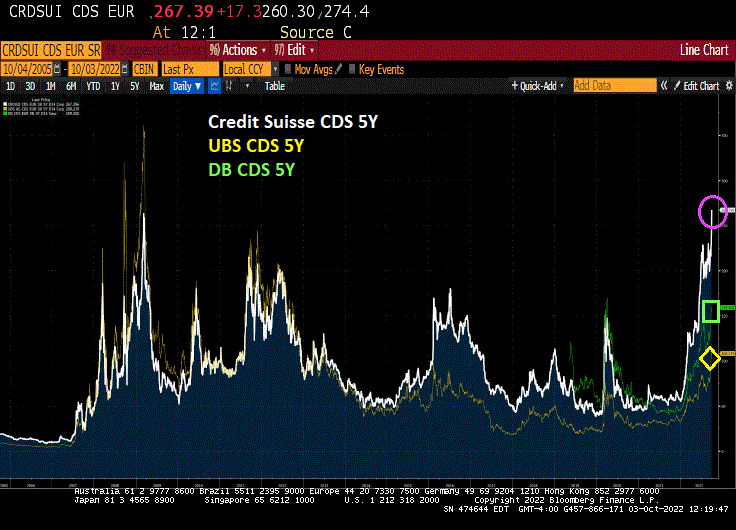
Speaking of credit default swaps, Credit Suisse is back to financial crisis levels while UBS and Deutsche Bank are not … yet.

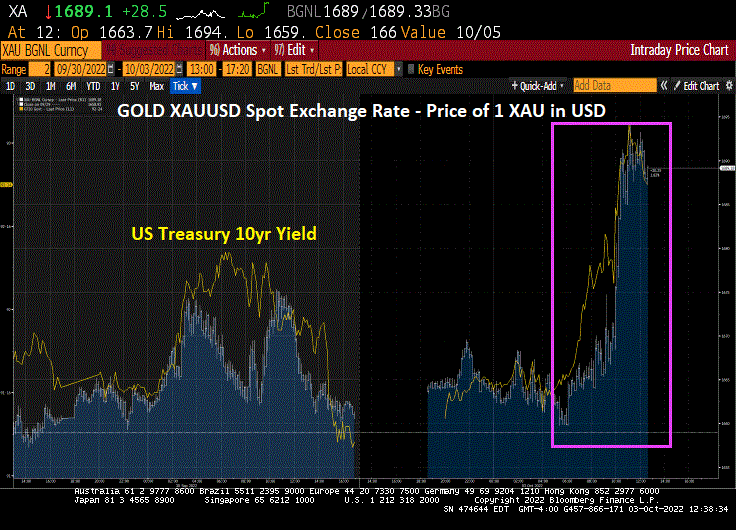
And gold jumped $28.5 dollars today as POP goes the yield.

With all the turbulence in markets thanks to the war in Ukraine and Biden’s green energy mandates and spending (not to mention Statists like Klaus Schwab screaming about a Great Reset), I was reminiscing about more simple times.