Chicago PMI Screams RECESSION! Falls To Cycle Low Of 35.4, Back To 2008 Recession Levels (Copper Prices Rising!)

Not so Sweet Home Chicago!

After unexpectedly slumping last month to 37.9, the Chicago PMI index cratered even more unexpectedly in May, when it defied hopes of a rebound to 41.5, and instead tumbled even more, sliding to a cycle low of 35.4 which was not only below the lowest estimate, but was staggeringly low. To get a sense of just how low, the last two times it printed here was during the peak of the covid and global financial crises…
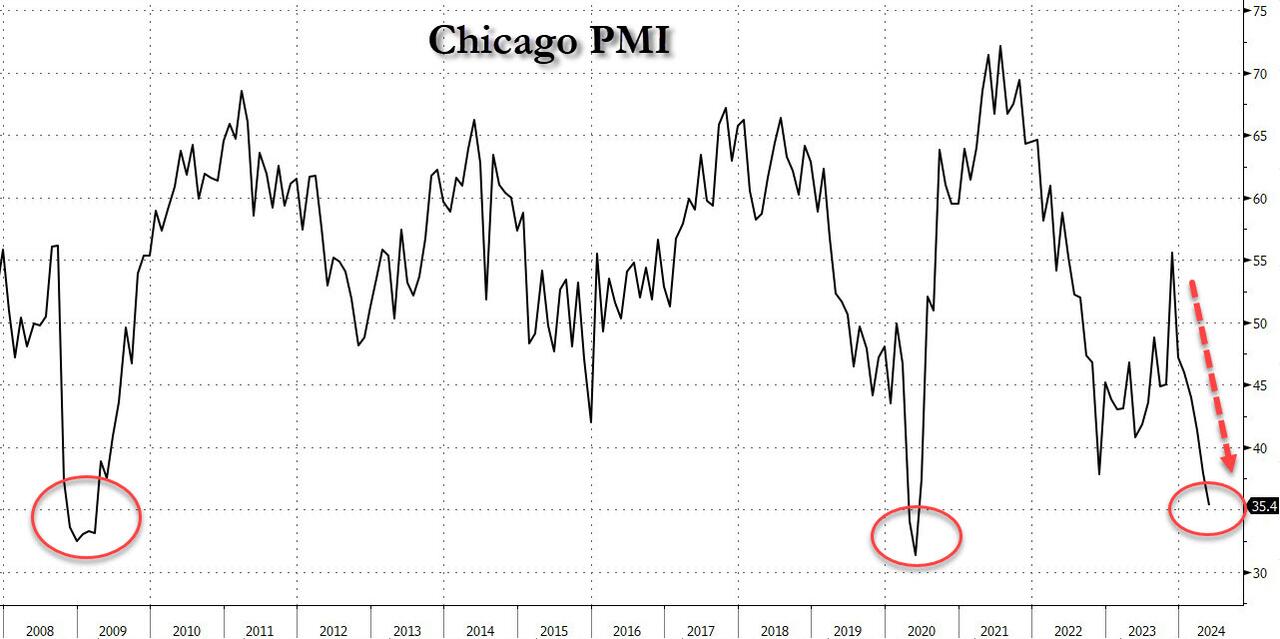
… which seems to suggest that at least according to Chicago-based purchasing managers, the economy is in a depression.

This is how the final number looked relative to expectations.
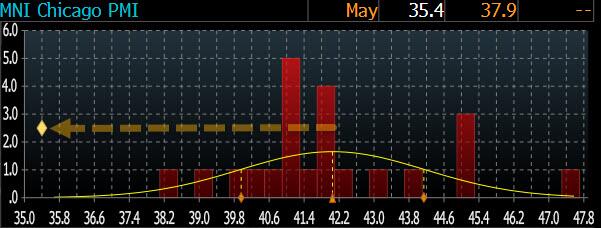
Looking at the report we find the following:

  • Business barometer fell at a faster pace; signaling contraction
  • New orders fell at a faster pace; signaling contraction
  • Employment fell at a faster pace; signaling contraction
  • Inventories fell at a faster pace; signaling contraction
  • Supplier deliveries fell at a slower pace; signaling contraction
  • Production fell at a slower pace; signaling contraction
  • Order backlogs fell at a faster pace; signaling contraction

Did nothing rise? One thing did:

  • Prices paid rose at a slower pace; signaling expansion

So we have not just a depression, but a stagflationary depression in which everything else is going to hell, except prices: they keep on rising.

And while it is unclear what has prompted this unprecedented bearishness (the surely negative contribution from Boeing is likely to blame for a substantial portion of the apocalyptic outlook), one thing is certain: Goldman will have to come up with even more goalseeked surveys that explain away reality and tell us how purchasing managers really should feel…

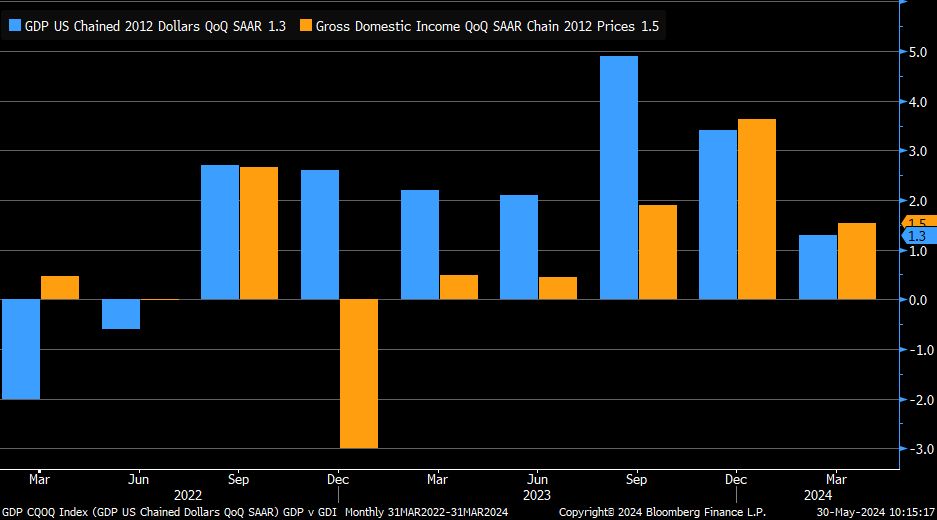
On the good news front, REAL Gross Domester Income rose to 1.5%.
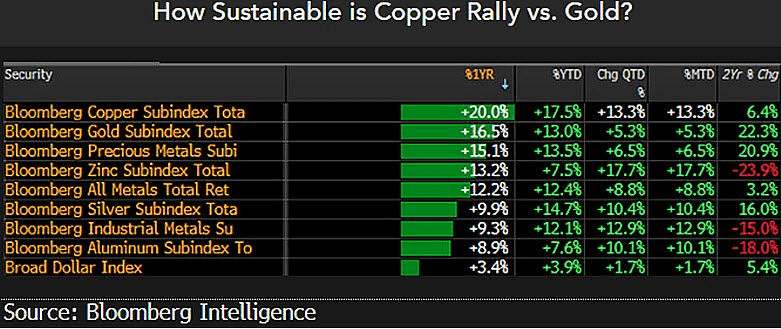
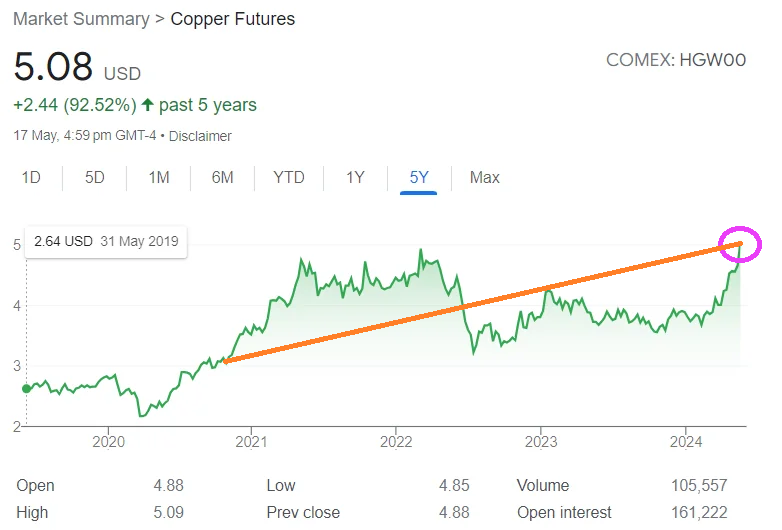
As copper prices keep on rising. Which is bad news for Biden’s shift to EVs! (Once again, Biden is driven around in gas guzzling Chevy Tahoes/Suburbans and owns a Chevy Corvette). There isn’t enough copper production to build the EVs that Biden wants.
Biden drove his Chevy to the STRATEGIC PETROLEUM RESERVE and the reserve was dry. And them good old Democrats were drinkin’ whiskey and rye after a New York Jury found Trump guilty of 34 felony counts, despite there not being any laws broken.

I have testified and sat through many trials in New York city and have never seen a court case quite like the one the Trump lost with the Judge effectively telling the jury to find Trump guilty.

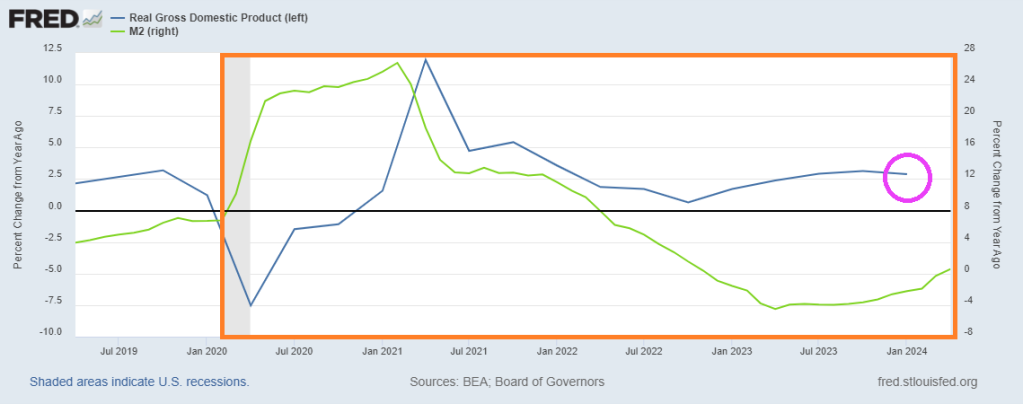
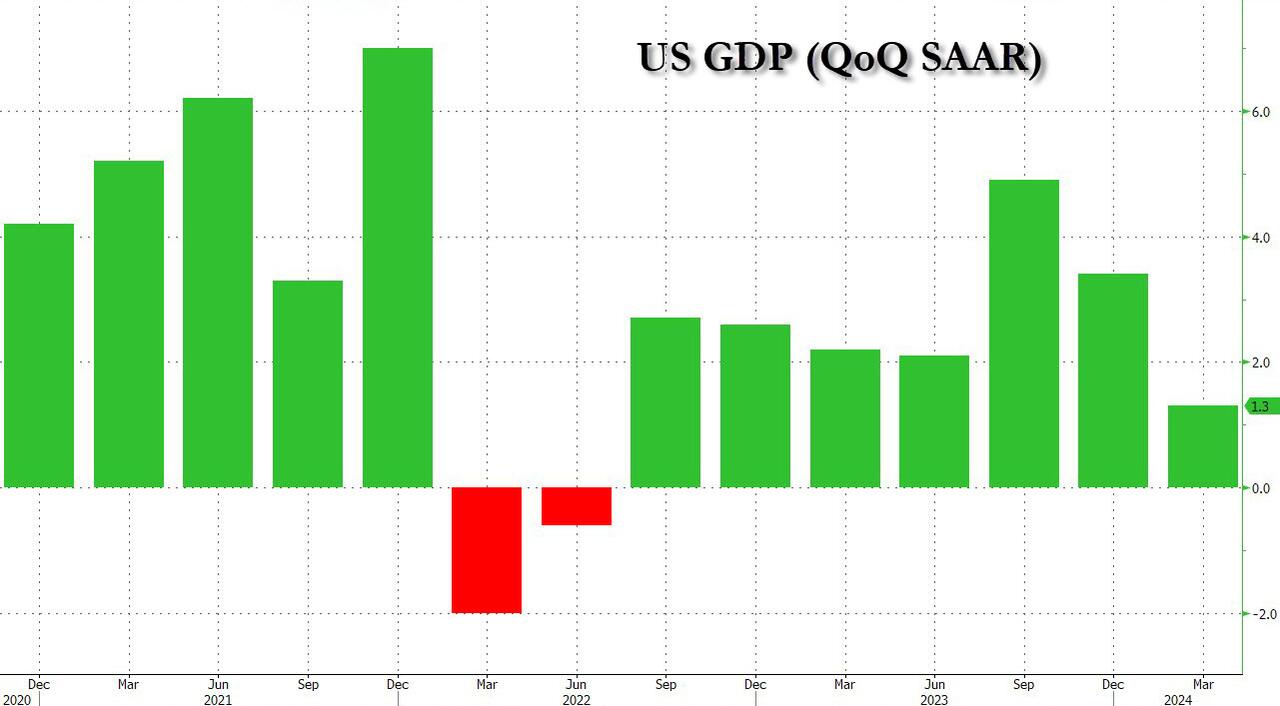
Q1 GDP Revised Lower To Just 1.3%, Lowest In Two Years As Consumption Slows (Most Of Biden’s “Growth” Came From Covid-related Policies In 2020)

What I like about Biden’s economy … nothing. Most of Biden’s economic growth came from Trump’s spending and Fed monetary policy from the Covid shutdown of 2020.

What was until recently a “red-hot” economy, with the US reportedly growing at an annual rate of 4.9% in Q3 and 3.4% in Q4 2024, has suddenly and dramatically downshifted, and according to the latest GDP data released from Biden’s BEA, Q1 GDP was revised downward from 1.6% to just 1.3% (1.250% to be specific), which was the lowest GDP since the mini-recession of Q2 when GDP declined for 2 quarters in a row.

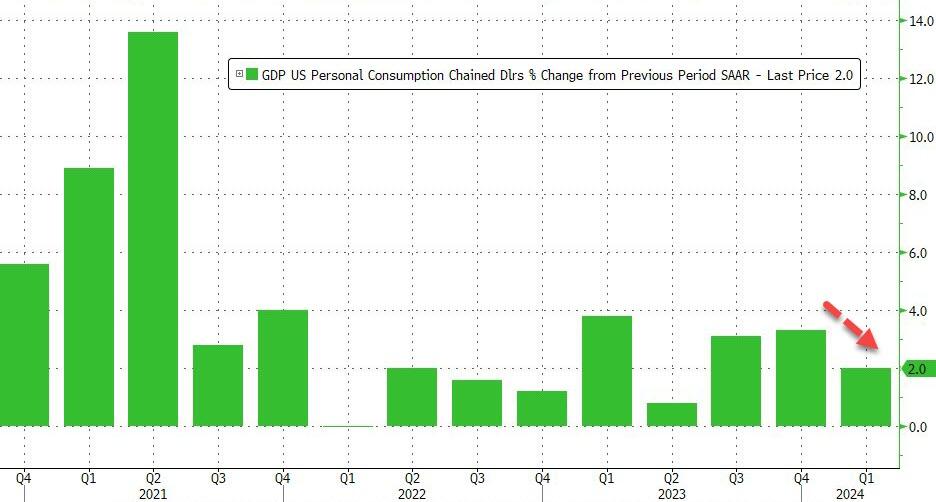
The sharp downward revision primarily reflected a downward revision to consumer spending, which rose 2.0% annualized, down from 2.5% in the first GDP report and below the 2.2%  estimate.

Drilling down into the number, the 1.3% increase reflected increases in consumer spending (below previous forecasts) and housing investment that were partly offset by a decrease in inventory investment. Imports, which are a subtraction in the calculation of GDP, increased.

  • The increase in consumer spending reflected an increase in services that was partly offset by a decrease in goods. Within services, the leading contributors to the increase were health care as well as financial services and insurance. Within goods, the leading contributors to the decrease were motor vehicles and parts as well as gasoline and other energy goods.
  • The increase in housing investment was led by brokers’ commissions and other ownership transfer costs as well as new single-family housing construction.
  • The decrease in inventory investment was led by decreases in wholesale trade and manufacturing

In terms of bottom-line contributions, we find the following:

  • Personal consumption accounted for 1.34% (down from 1.68%), or more than the entire GDP print.
  • Fixed Investment added 1.02%, up from 0.91% in the first estimate.
  • The change in private inventories subtracted -0.45%, a deterioration from the -0.35% estimated previously.
  • Net trade (exports less imports), subtracted -0.89% from the bottom line print, comparable to the -0.86% detraction in the first estimate.
  • Finally, government added just 0.23%, up from 0.21% initially estimated, yet still the lowest contribution since Q2 2022.

Is The Thrill Gone From Mortgages? US Mortgage Puchase Demand Falls 3% From Previous Week, Down 10% From Last Year, Down 40% Under Biden (Refi Demand Down -15% Since Last Week)

The thrill is gone …from the US mortgage market.

Mortgage applications decreased 5.7 percent from one week earlier, according to data from the Mortgage Bankers Association’s (MBA) Weekly Mortgage Applications Survey for the week ending May 24, 2024.

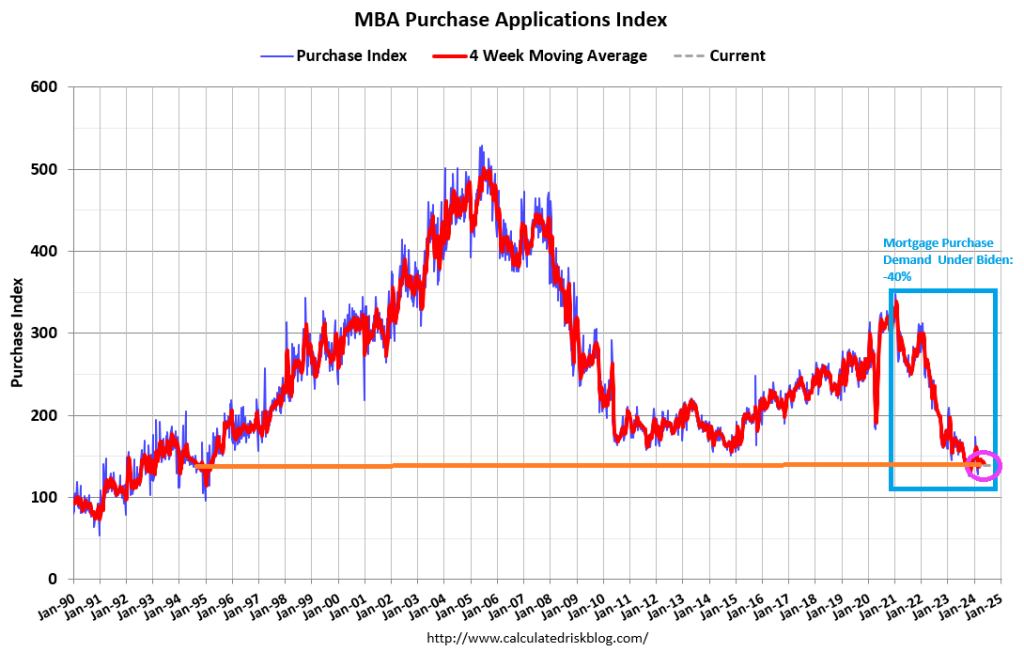
The Market Composite Index, a measure of mortgage loan application volume, decreased 5.7 percent on a seasonally adjusted basis from one week earlier. On an unadjusted basis, the Index decreased 6.3 percent compared with the previous week.  The seasonally adjusted Purchase Index decreased 1 percent from one week earlier. The unadjusted Purchase Index decreased 3 percent compared with the previous week and was 10 percent lower than the same week one year ago. And -40% under Biden.

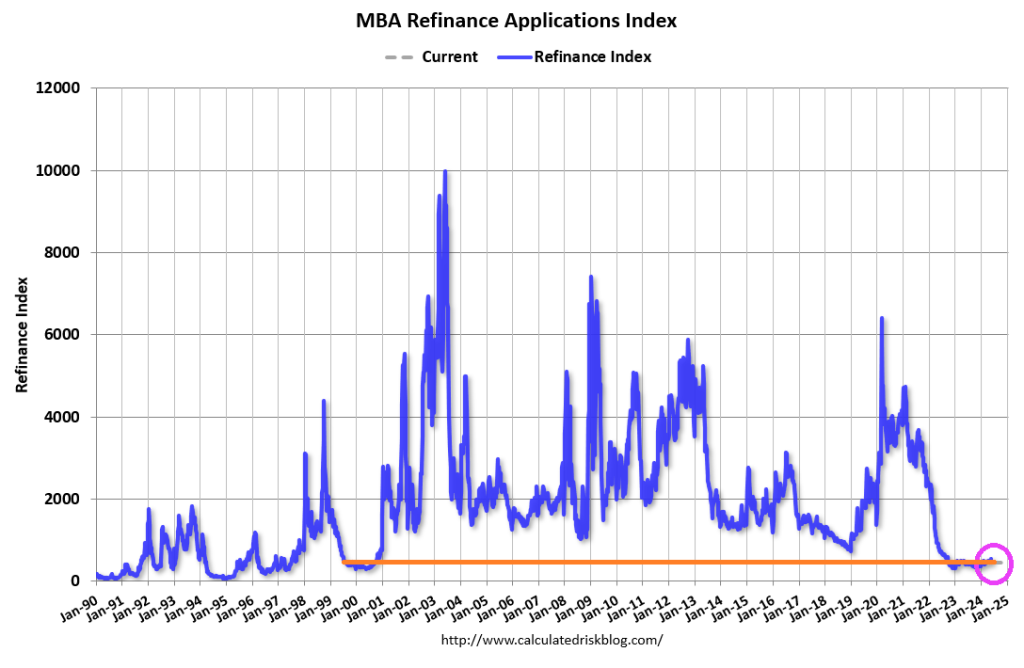
The Refinance Index decreased 14 percent from the previous week and was 12 percent higher than the same week one year ago.

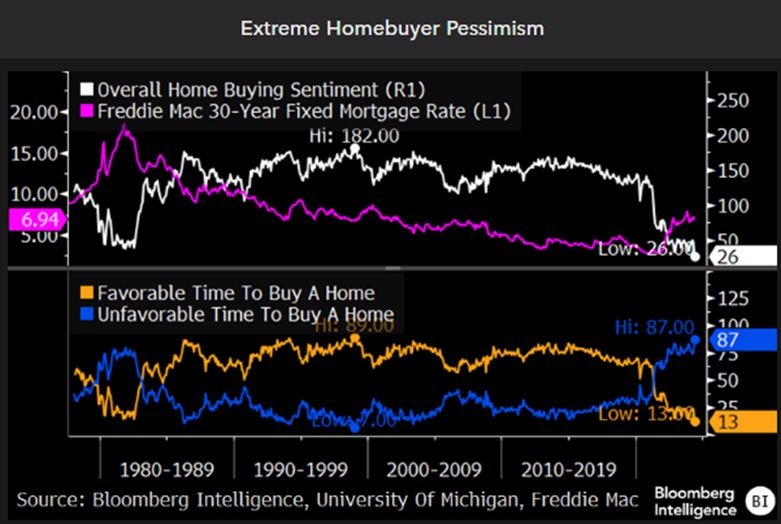
It is still an unfavorable time to buy a home!

From the film “Ronin” that sums up actor Robert DeNiro in one sentence.

Spence (Sean Bean): “You know, you think too hard.”
Sam (Robert DeNiro): “Nobody ever told me that before.”

How would DeNiro consider the 40% drop in mortgage purchase demand under Biden?

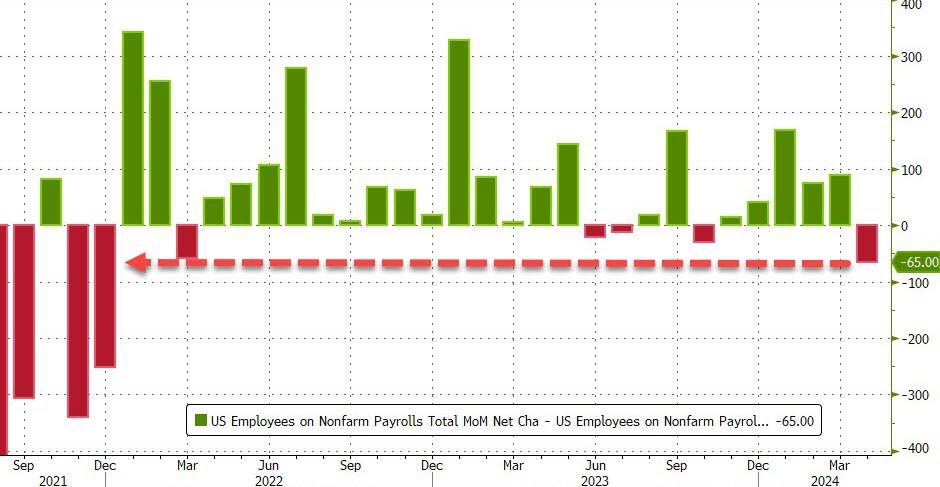
Yet Another Lousy Jobs Report! US Added Just 175k Jobs In April, Almost A 50% Drop In Revised March Estimate Of 315k Jobs Added (Rate Cut Odds Soar!)

Hey Joe! Where is the strongest jobs recovery in history??

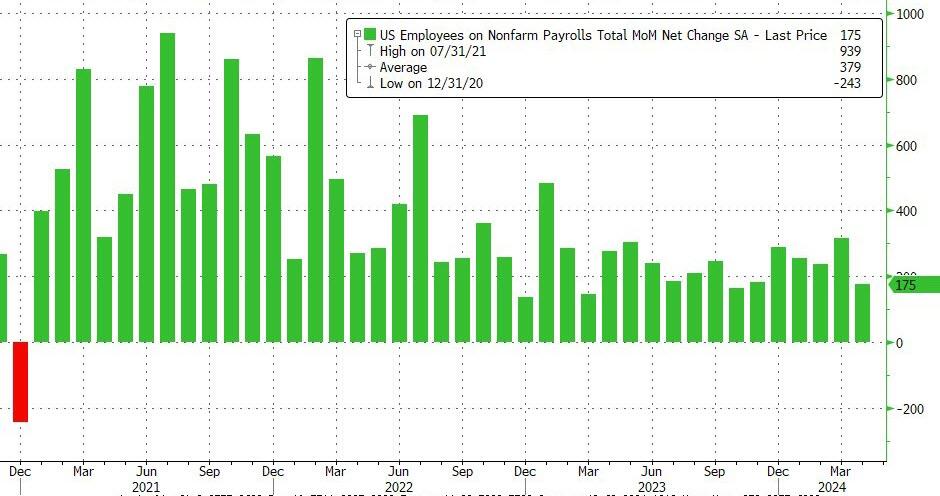
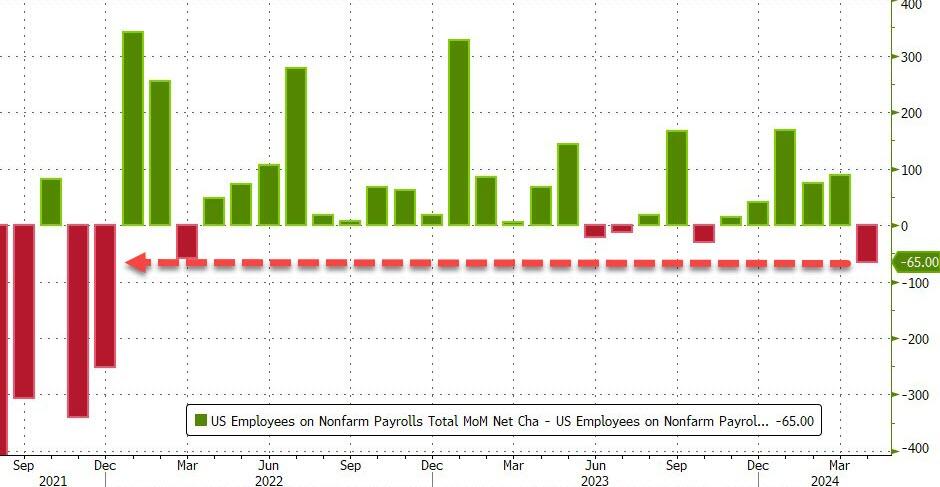
 BLS reported that in April the US added just 175K jobs, a nearly 50% drop from the upward revised 315K (was 303K)…

.. and a huge miss to estimates of 240K… in fact, as shown below, this was the biggest miss since Dec 2021 

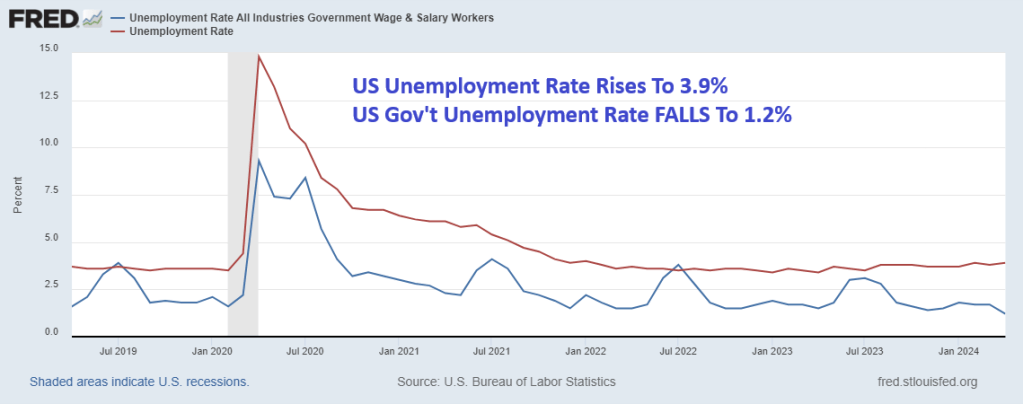
The weakness was pervasive, and while payrolls were a huge miss, the unemployment rate also rose more than expected, from 3.8% to 3.9%, vs estimates of an unchanged print.

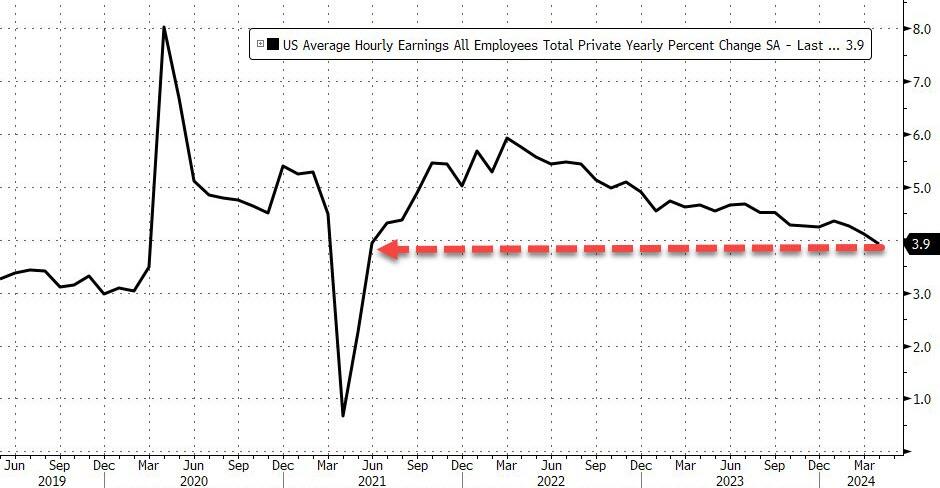
Wages also eased back with average hourly earnings rising 0.2% MoM, below the expected 0.3% increase and down from last month’s 0.3% print. On an annual basis, earnings rose 3.9%, down from 4.1% last month and below the 4.0% estimate.

Where were the jobs added? Health care and social assistance with 87k jobs added.

Speaking of government, rate government unemployment rate fell 1.2% in April.

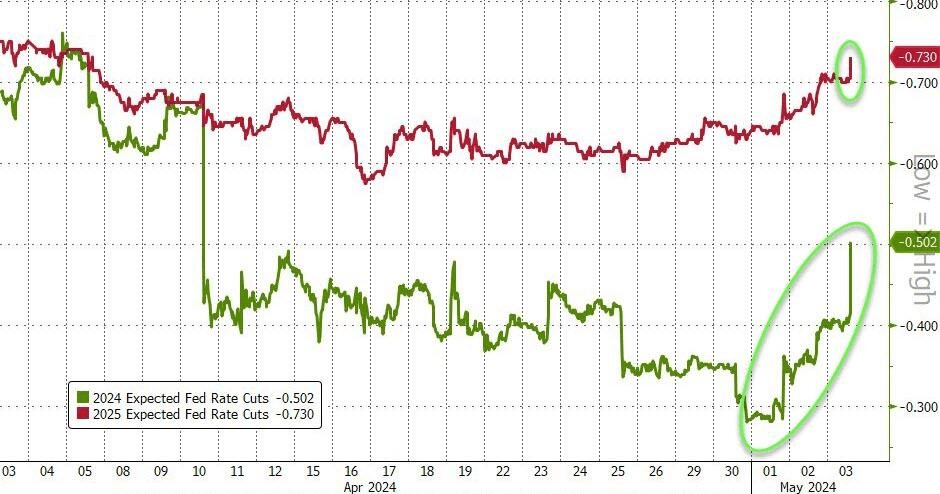
The lousy jobs report sent odds of a Fed rate cut soaring.

“C’mon Jay, cut rates for me!”

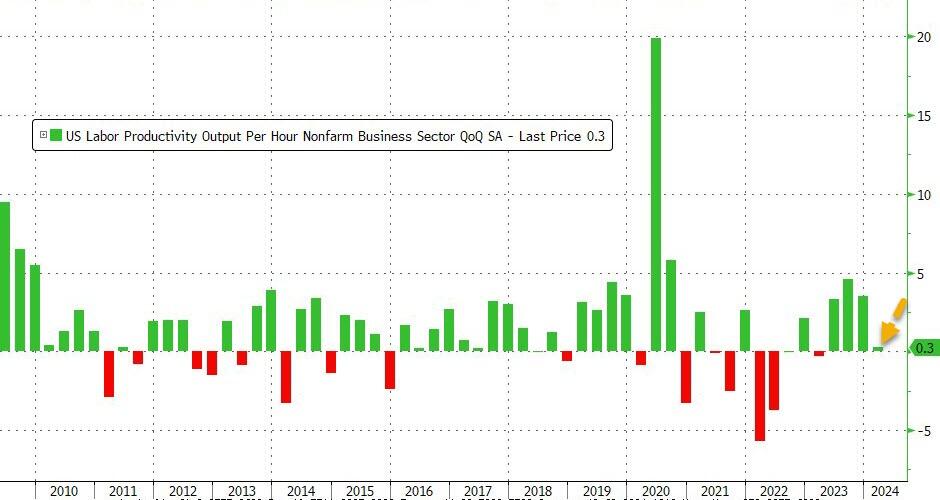
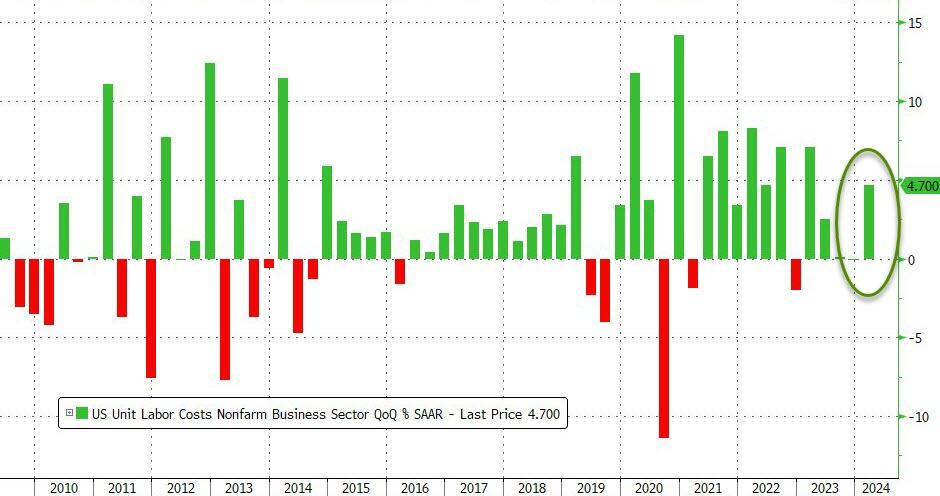
The Stag In Stagflation! Non-farm Productivity In Q1 Grew At A Measly 0.3% Annuaized While Unit Labor Costs Soared 4.7%

Fed Chair Powell yesterday said he doesn’t see the “stag” in stagflation. Really?

Well, in Q1 in the US… it failed to show up as non-farm productivity – or nonfarm employee output per hour – rose at a measly 0.3% annualized rate after an upwardly revised 3.5% gain in the prior period (well below expectations)…

Source: Bloomberg

On the flip-side of that – and echoing the market-worrying ECI data earlier this week – Unit Labor Costs soared 4.7% in Q1 (well above the 4.0% expected and the 0.4% rise in Q4)…

Source: Bloomberg

So wage inflation is confirmed – rising at the fastest pace in a year – as all the gains we have been told to expect from AI just aren’t there in the data.

While quarterly productivity figures are quite volatile, a sustained slowdown represents another hurdle for the Federal Reserve’s inflation fight. With interest rates expected to stay at a two-decade high for awhile longer, business investment in equipment will likely continue to be a weak factor in overall economic growth.

Today’s data corroborates other data that showed gross domestic product cooled in the first quarter while employment costs rose by the most in a year. As a result, inflation is proving stubborn, supporting the Fed’s pivot to a more hawkish stance that will keep interest rates higher for longer than anticipated.

Of course, Fed Chair Powell told us yesterday that he “doesn’t see the stag or the flation” in US data…

Perhaps Cazadores tequila should be the official drink of the Biden Administration. It has the “stag” on the label and it is produced in Mexico … who Biden can’t (or won’t) stand up to.

Tequila!

Tumbling Markets! Q1 Employment Cost Index Saw Biggest QoQ Jump Most In A Year (Stocks Decline, Treasury Yields Rise)

The Biden regime highlights the problem of politicians running the economy. Call it “Tumbling Markets.”

Highlighting just how sensitive the market is to any ‘inflation/deflation’ narrative questions, the Q1 Employment Cost Index (ECI) – a data point that is typically of secondary import – printed hotter than expected this morning and sent markets reeling.

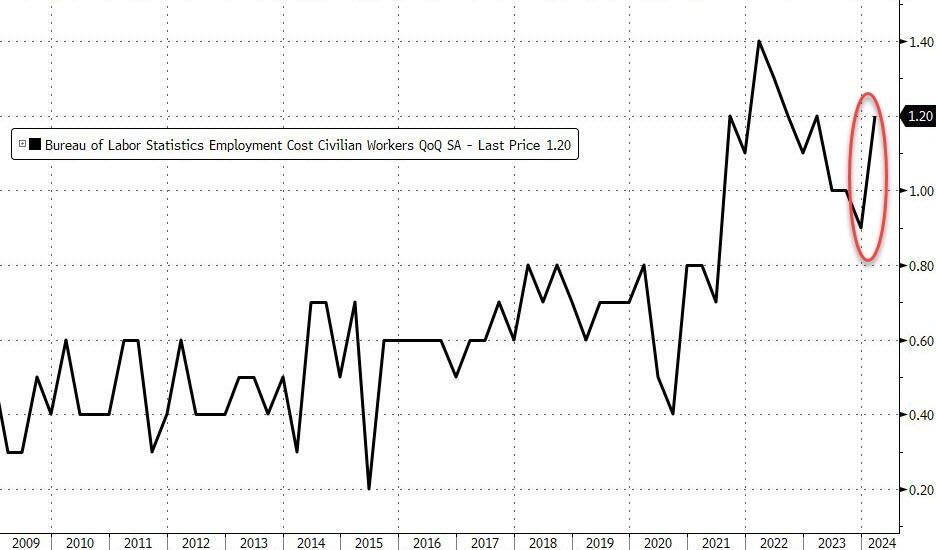
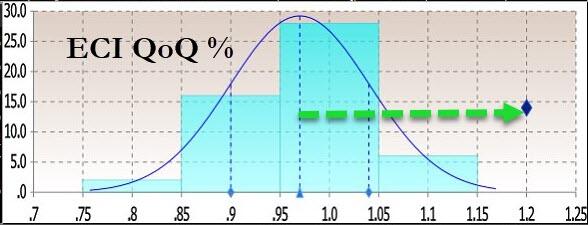
The ECI rose from +0.9% QoQ in Q4 to +1.2% QoQ in Q1 (well above the +1.0% QoQ expected). That is the biggest QoQ jump in a year…

That was higher than the highest forecast…

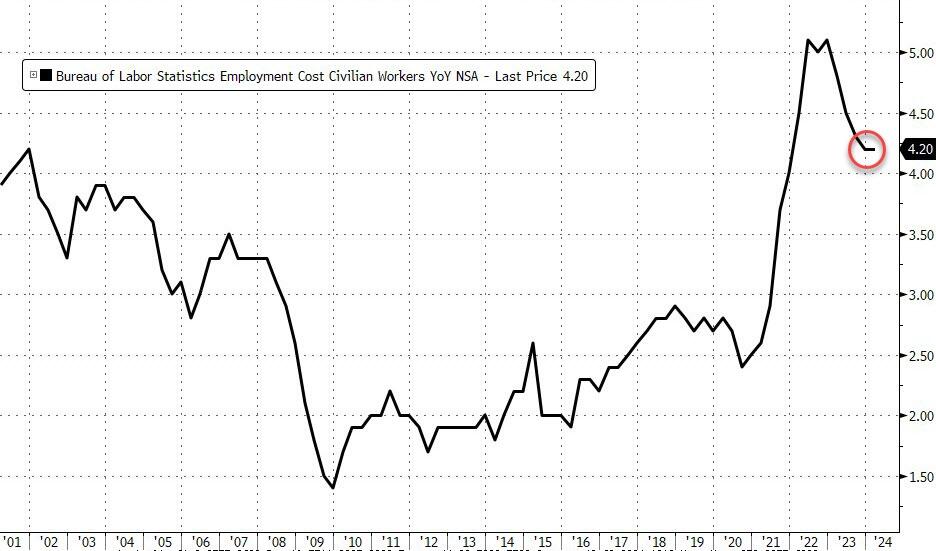
Which leaves the civilian worker ECI up 4.2% YoY, stalling the disinflationary path it had been on…

In other words, persistent wage pressures are keeping inflation elevated.

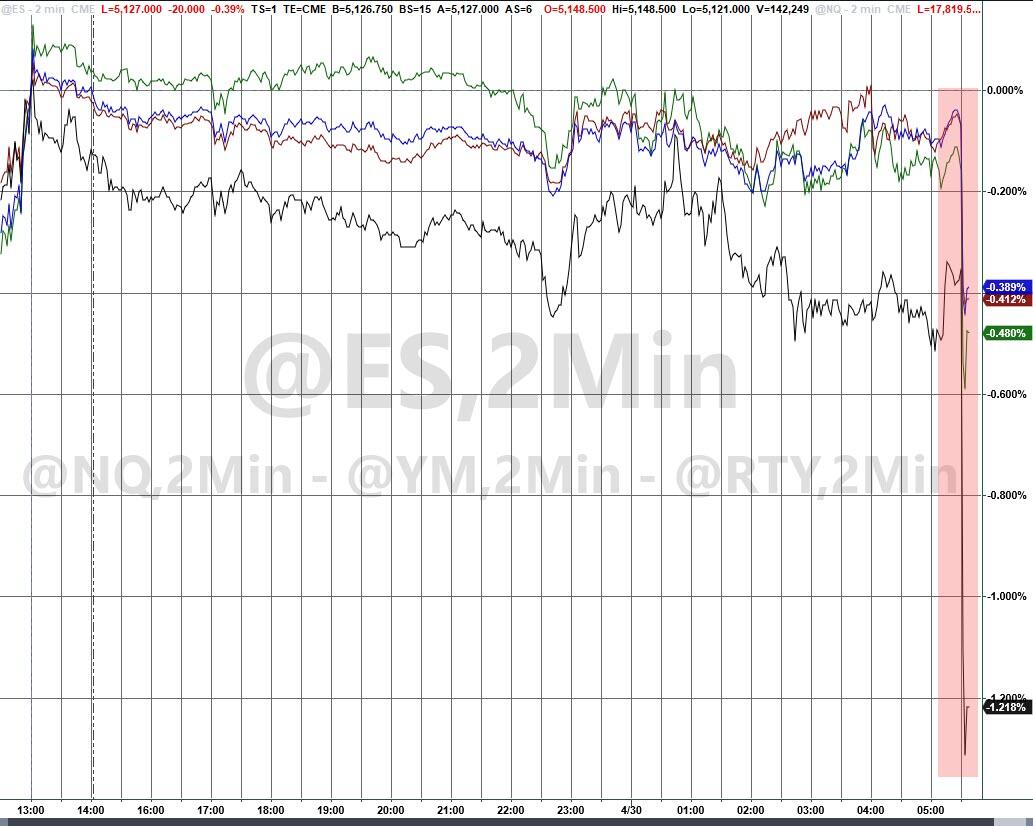
This sent stocks tumbling lower…

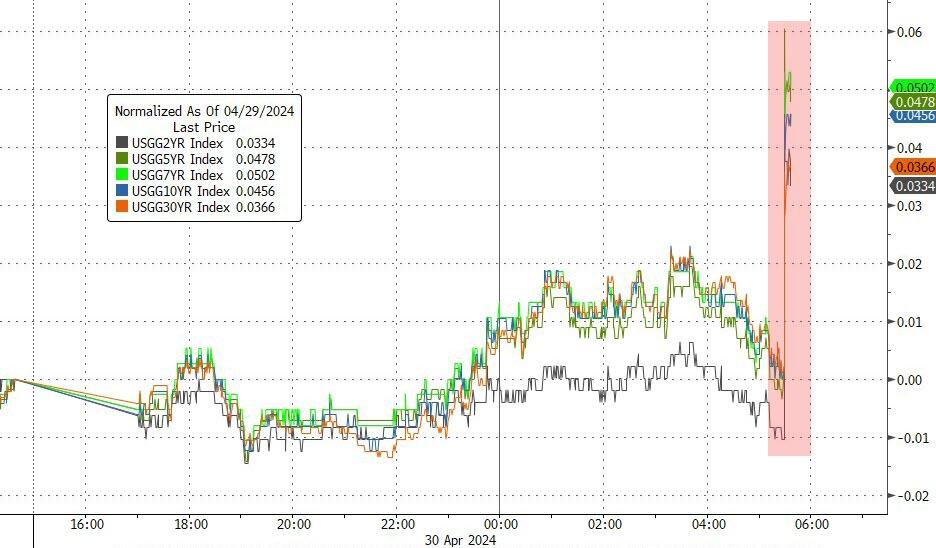
…and Treasury yields higher…

Just add this data point to the ‘the disinflation narrative is dead’ side of the ledger.

Dallas After Midnight! Dallas Fed Manufacturing Contracts, Every Month Since May 2022 (Stagflation Warning!!!)

Dallas … and the US economy … after midnight.

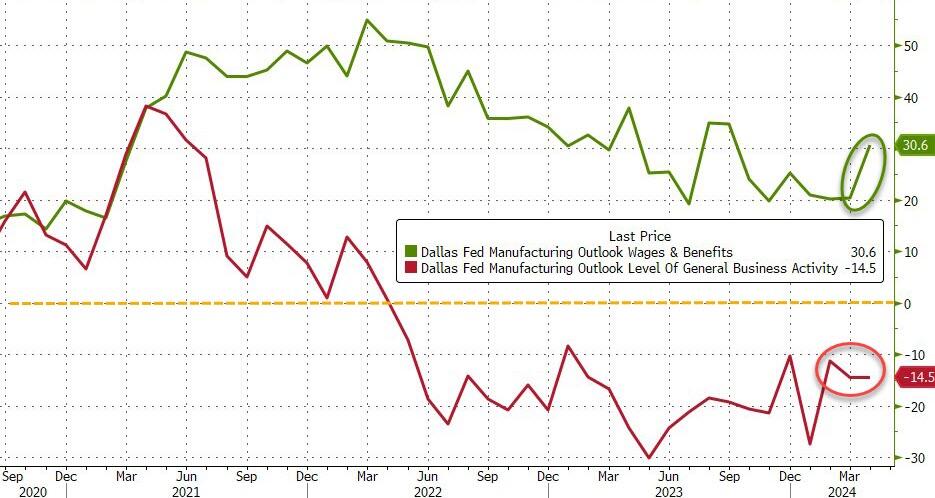
The Dallas Fed Manufacturing Outlook survey has now been in contraction (below zero) every month since May 2022, falling modestly to -14.5 in April (worse than the -11.2 expected).

New Orders also remain negative (but did improve) and prices continue to rise (though at a slower pace). Labor market measures suggested flat employment and slightly shorter workweeks (hours worked index remained negative for a seventh month in a row) this month.

However, wit that said, wage pressure picked up dramatically this week to a seven-month high

Source: Bloomberg

However, as always, we glean the most informative perspective from the respondents completed surveys where the pessimism shines through…

  • The business and political environment is terrible.
  • Business has not been this slow since COVID, and I’m worried.
  • Consumer confidence for consumer goods has noticeably worsened.
  • Customer orders have dropped. The indication is the economy is hurting spending in our area specifically. Customer uncertainty is worsening.
  • I keep thinking we’ll hit bottom and either level out or turn up, but we keep pushing those hopes out a month, and another month, and another.
  • There has been a decrease in new orders for three weeks now. Currently, we think this will come around, but we get more concerned as time goes on.
  • Industrial manufacturing is showing signs of positivity due to the possibility of an interest rate decrease. Please do it. Manufacturing is really hurting.

High prices remain problem for many businesses:

  • Inflationary pressures on raw materials and construction costs are driving up the cost of public projects. This is causing states to delay or scramble for funding for projects that have long lead times.
  • Business is generally good, but we’re starting to see more customer resistance to prices. Our costs have increased dramatically over the last two years, and we have customers asking to hold prices to last year’s level, which we just can’t do. We continue to make capital investments to improve productivity and reduce unit labor cost.

And finally, many are fearful of another four years of Bidenomics:

  • Political instability and politicization have hampered growth. We are entering stagflation.
  • Fewer governmental regulations would lower our cost of doing business. An example is the 332 report, which we must fill out for the U.S. government; it has no value for us, just expense.
  • Business is extremely slow, and we see no signs of improvement. We think it will stay slow until after the presidential election, after which, we will either have four more years of slow business or an improving economy.

US Treasury Bond Issue Set To Increase To $1.9 Trillion In 2024 As Personal Saving Rate Crashes To Near Low Since 2010 (Goverment Displacing Households)

Joe Biden could barely eat his dinner at the White House Correspondents’ Dinner. And we think he is calling the shots in The White House?? Oh well. Perhaps it is Treasury Secretary Janet Yellen or Klaus Schwab of the World Economic Forum.

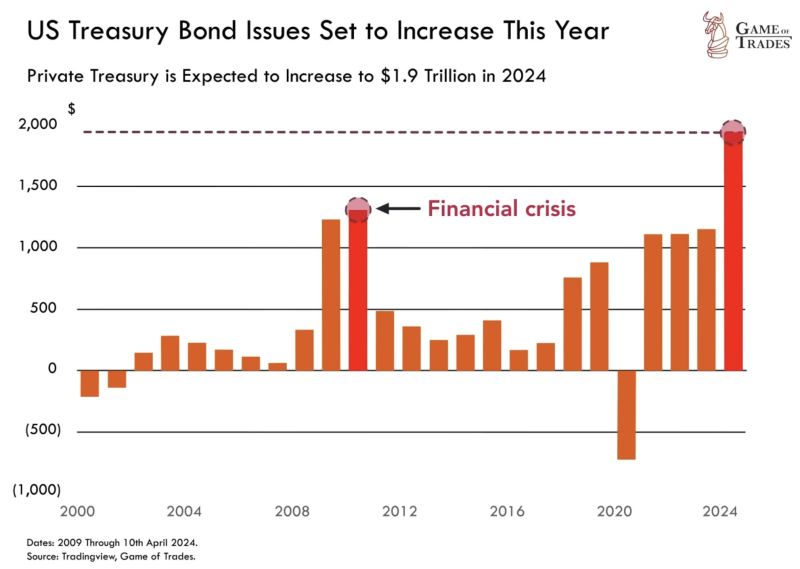
In any case, Treasury bond issuance in 2024 is expected to hit $1.9 TRILLION. Surpassing levels seen even during the 2008 financial crisis.

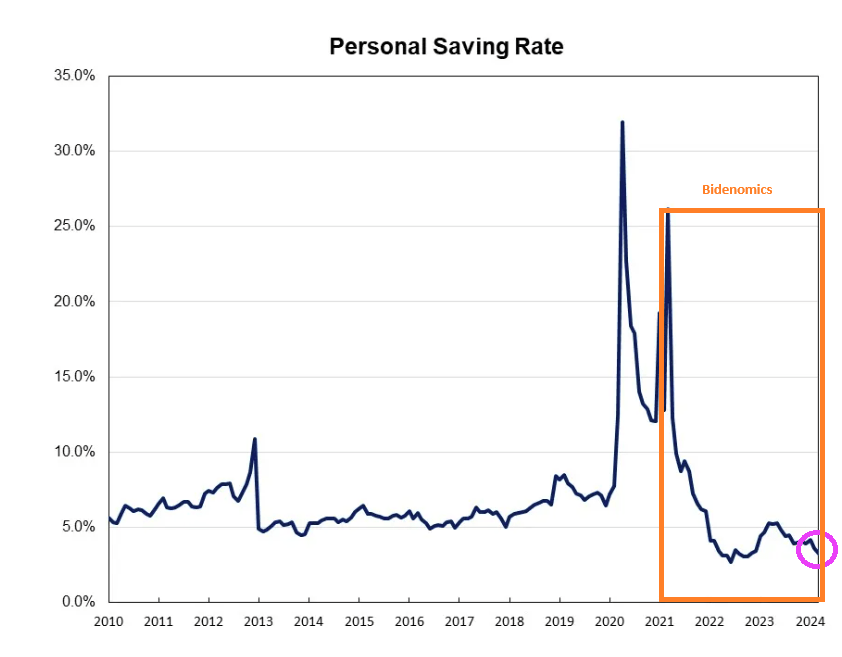
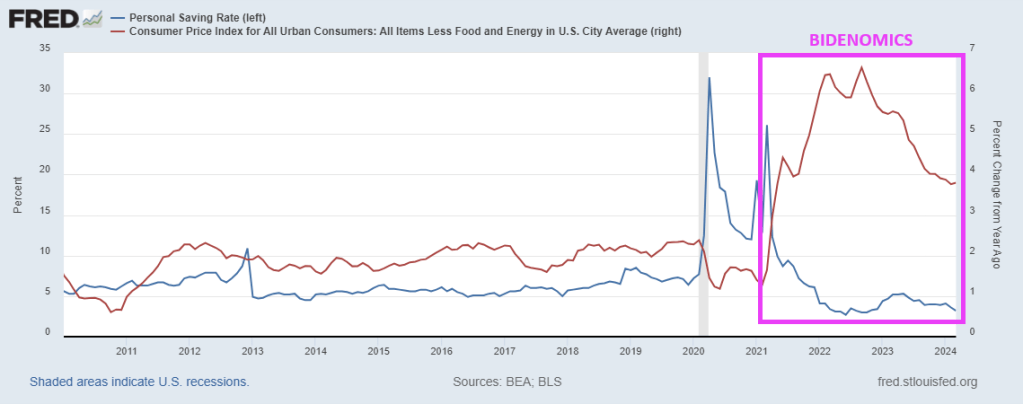
And with inflation, the US personal saving rate is near the lowest level since Obama (2010).

And with the core inflation rate still higher than anytime since 2010, households are paying more for … everything depleting their savings.

With Biden and Congress spending like drunken sailors on shore leave, and no end in sight, this will eventually explode. Ukraine, foreign aid, no border security, virtually no money for Maui fire, E. Palestine Ohio is still a wreck, etc. They always have money for someone else. And if Trump is elected in November, watch CNN and MSNBC and Biden/Congress blame Trump.

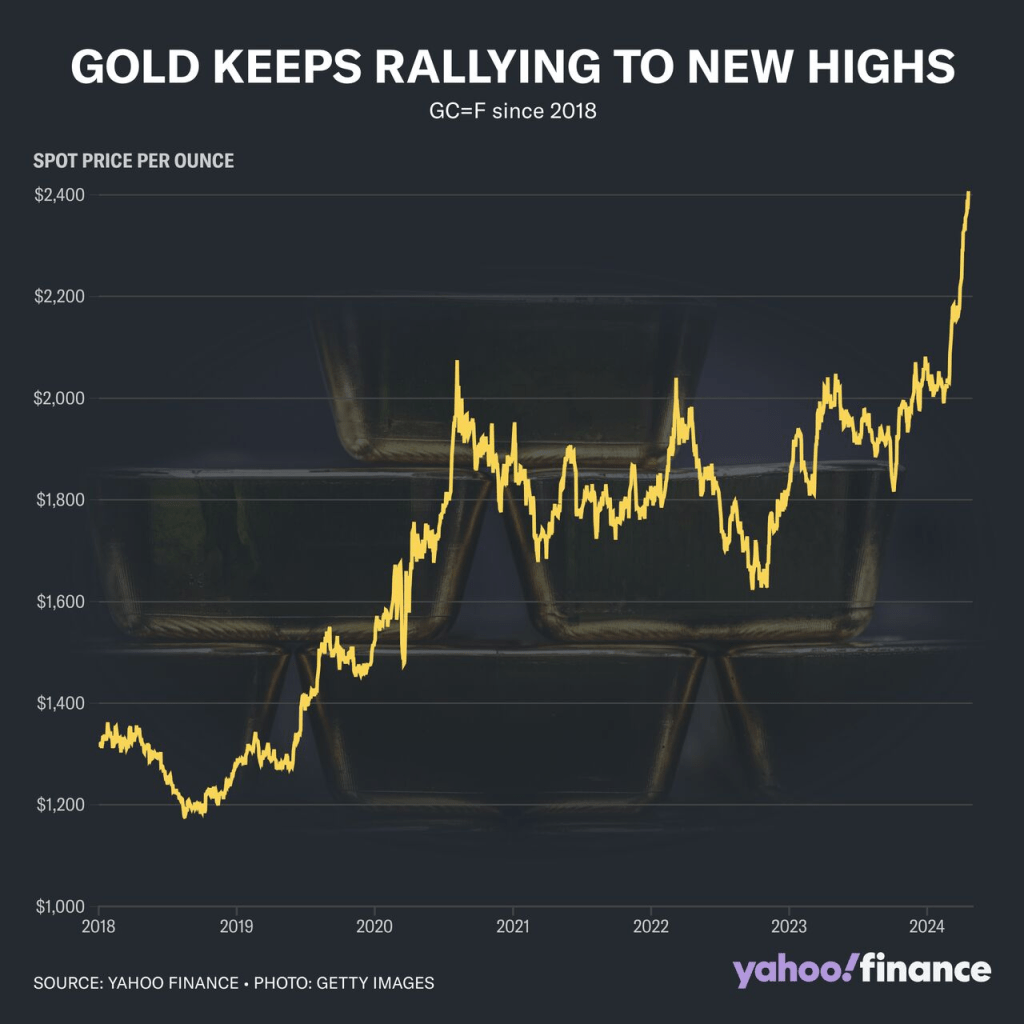
Commodities are a way to protect yourself against the government and their insane spending and debt.

My point? Gold keeps rising!

The leading foreign holder of US debt is Japan, which is following the insane path as the US and resembles a banana republic.

Former Fed chair under Obama and current Treasury Secretary Janet Yellen under Biden is Doctor Wonderful. NOT!!

I don’t know what Biden thinks is so funny. Maybe it is because House “Majority” Leader Mike Johnson (RINO-LA) gave Biden and Schumer everything they wanted (Ukraine, Israel funding but nada for security our borders). Life is good when you are stupid and mean-spiritied like Joe Biden!

Biden is so vain: capped teeth, hair plugs, constant tan, face lifts, etc.

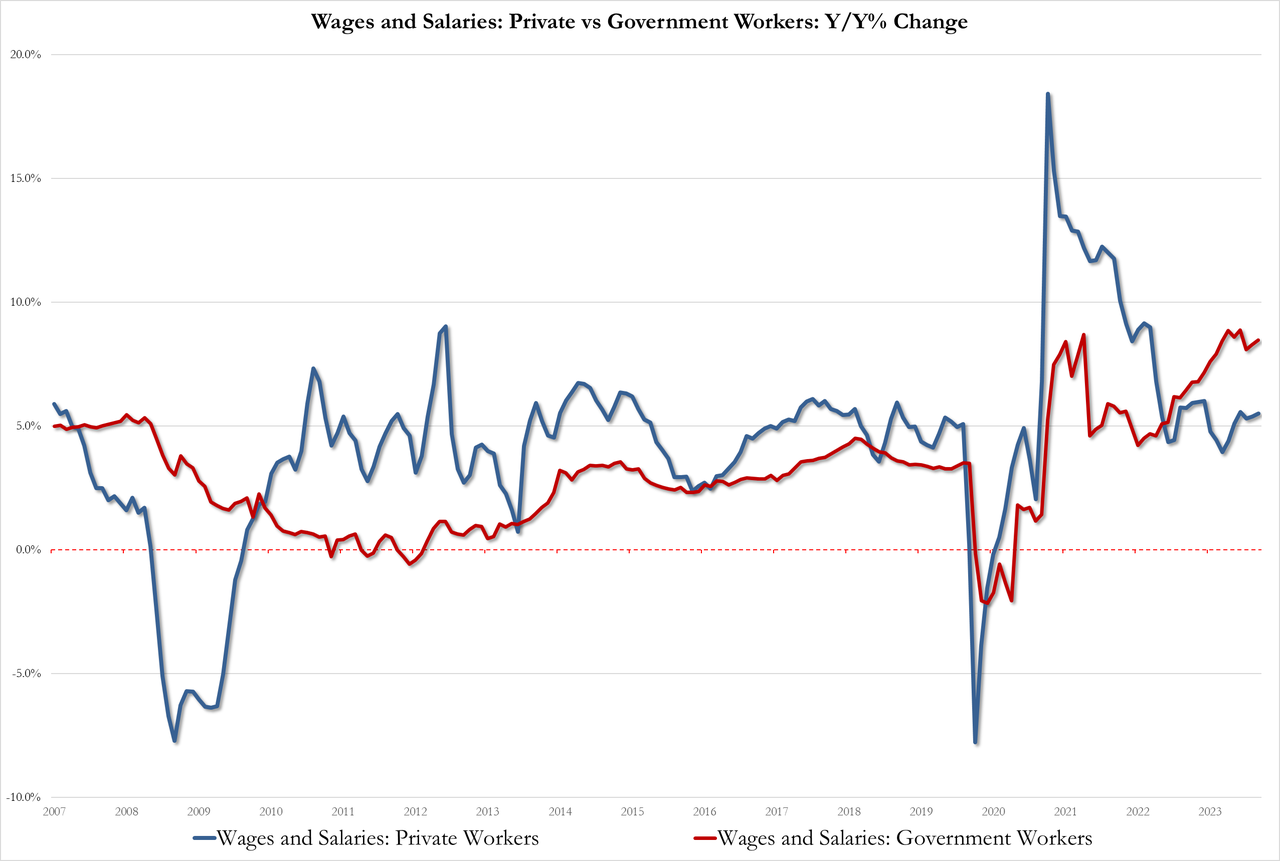
Bidenomics Warning! Fed’s Favorite Inflation Indicator Prints Hotter-Than-Expected As Savings Rate Plunges (Govt Wages Rose To 8.5% YoY, Private Sector Wages Up 5.5% YoY)

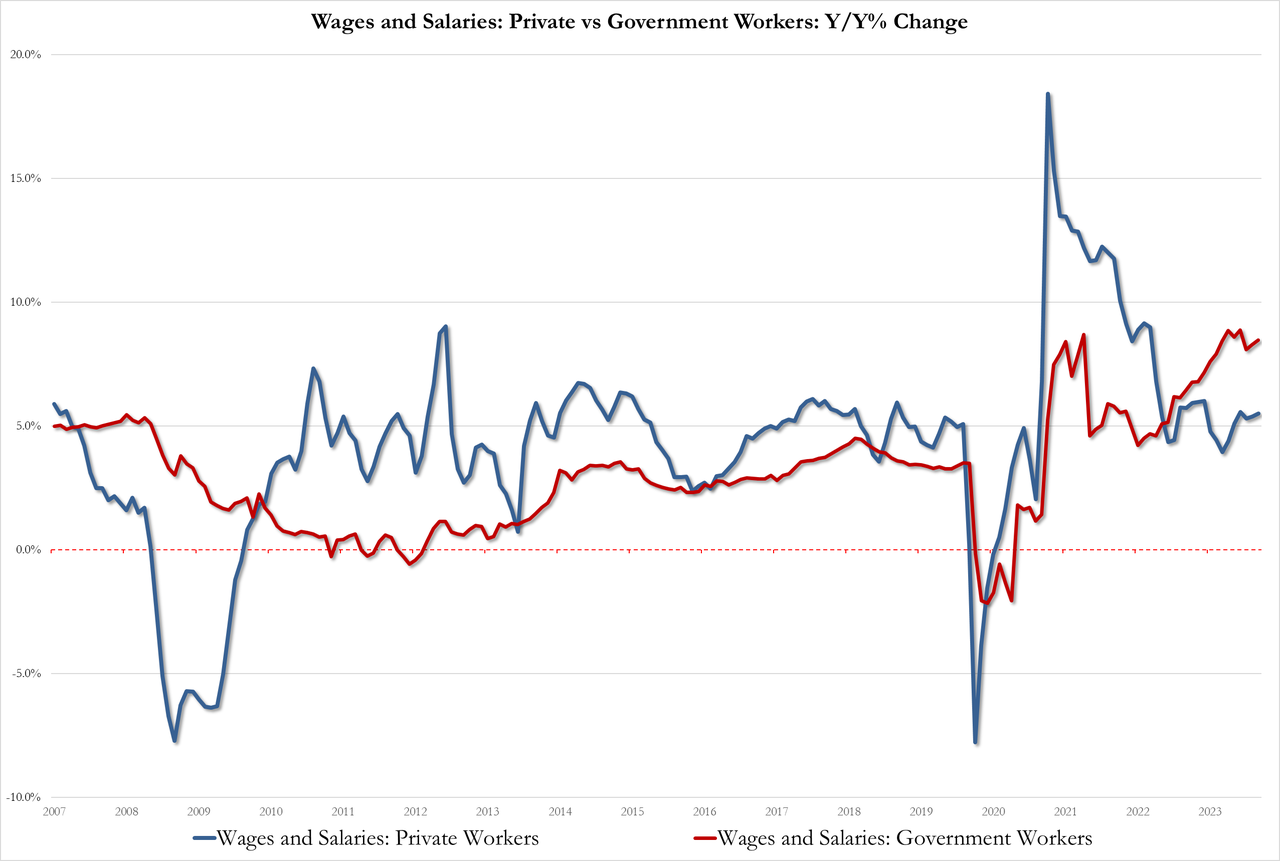
Today’s economic news highlights “Government Power.” Unproductive government jobs saw wages rise 8.5% YoY while productive private sector jobs saw wages rise by only 5.5% YoY. This is Bidenomics!!!

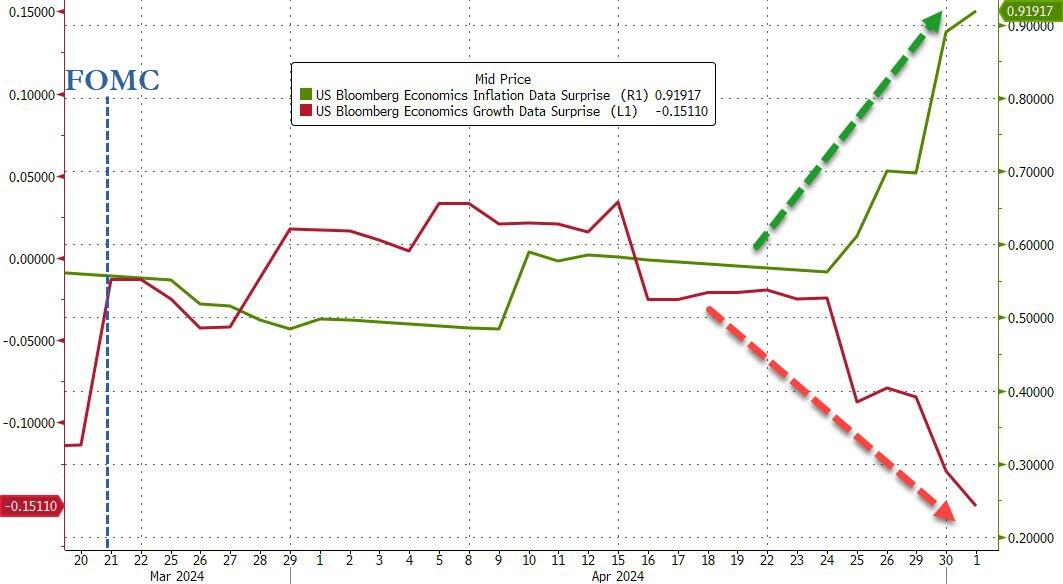
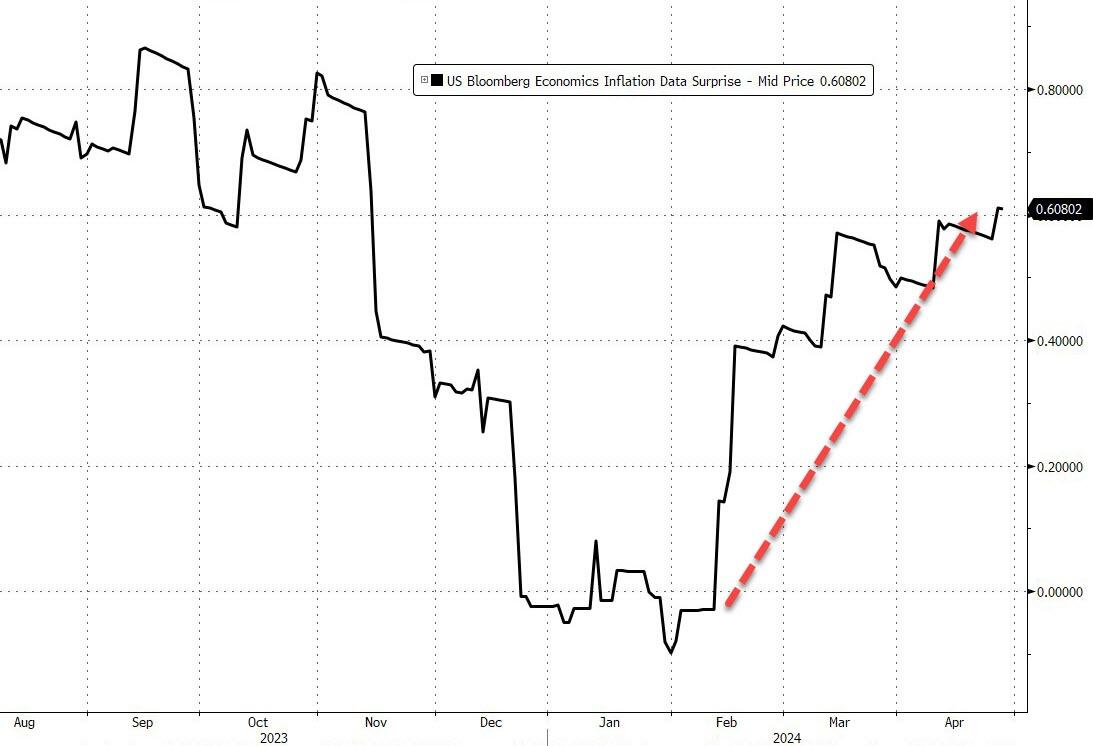
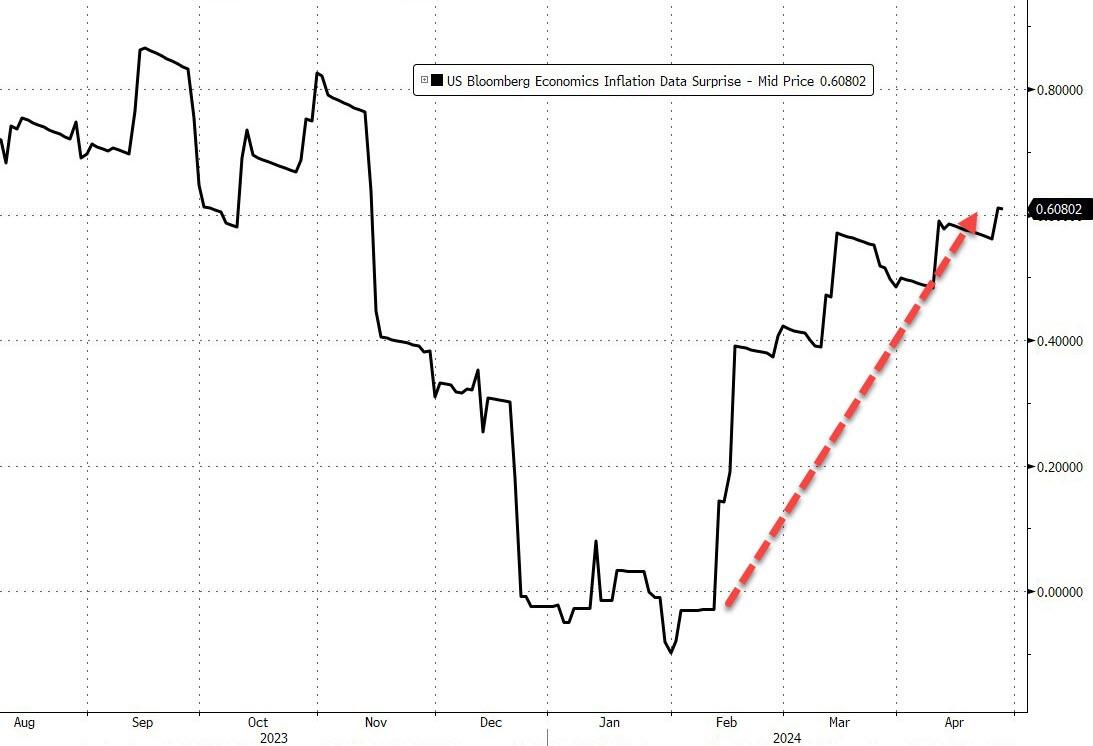
With inflation data surprising to the upside recently…

Source: Bloomberg

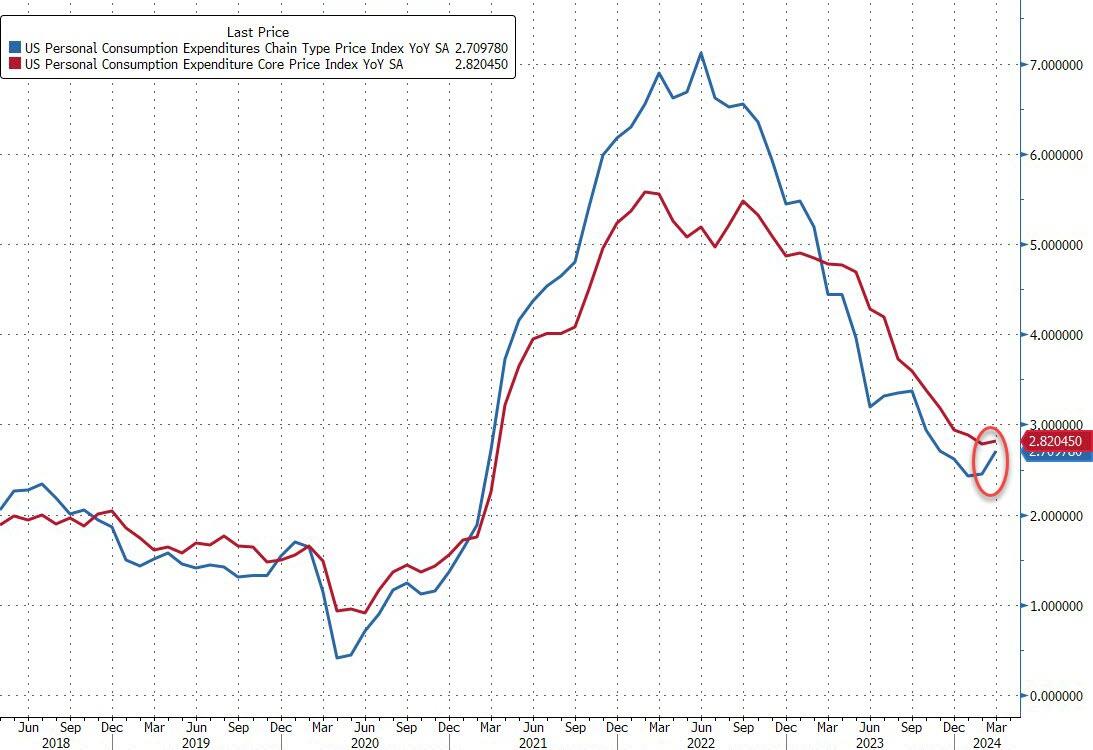
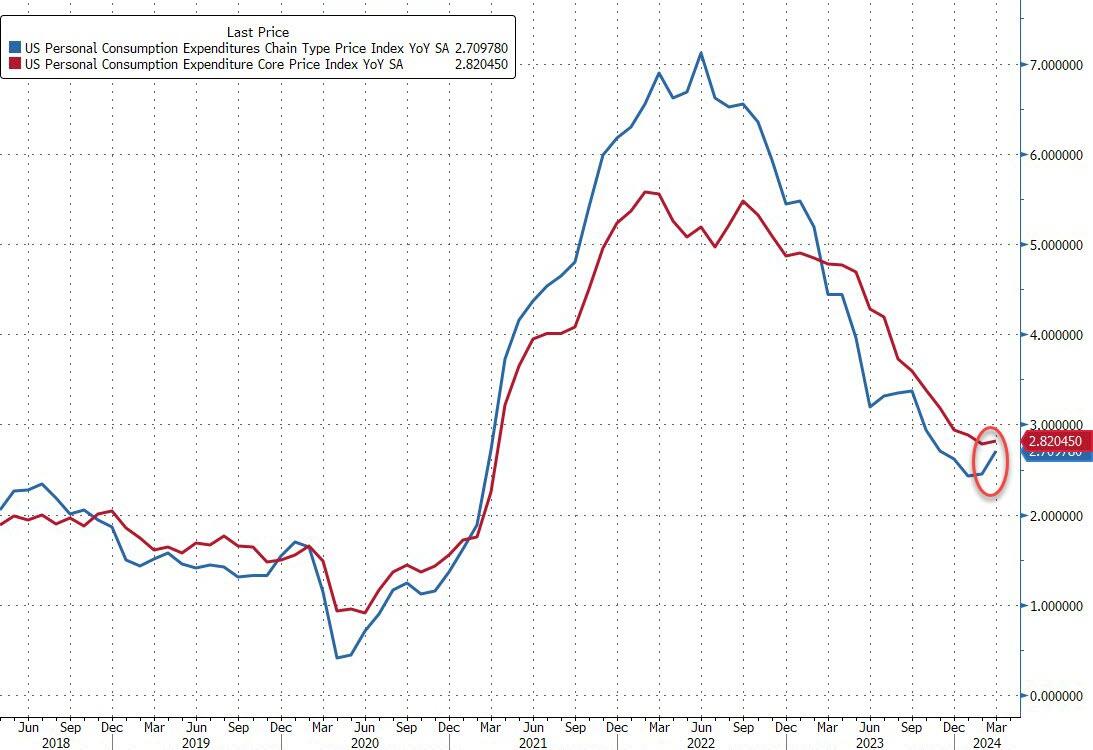
…the doves’ last chance for sooner than later rate-cuts is today’s Core PCE Deflator – often described as The Fed’s favorite inflation signal. Last month saw an uptick in the headline deflator and following yesterday’s core PCE rise for Q1, all eyes are on the March data released this morning.

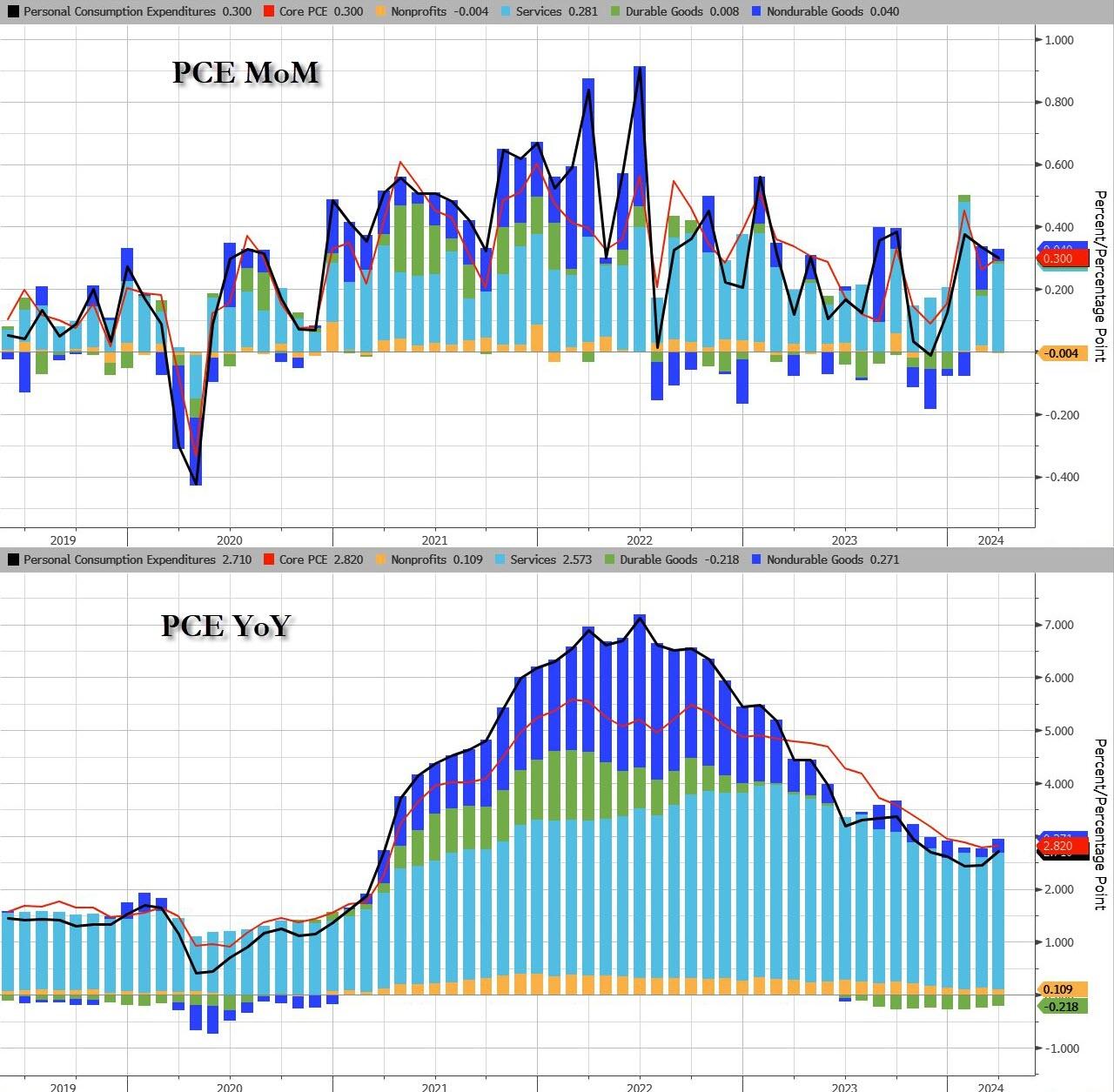
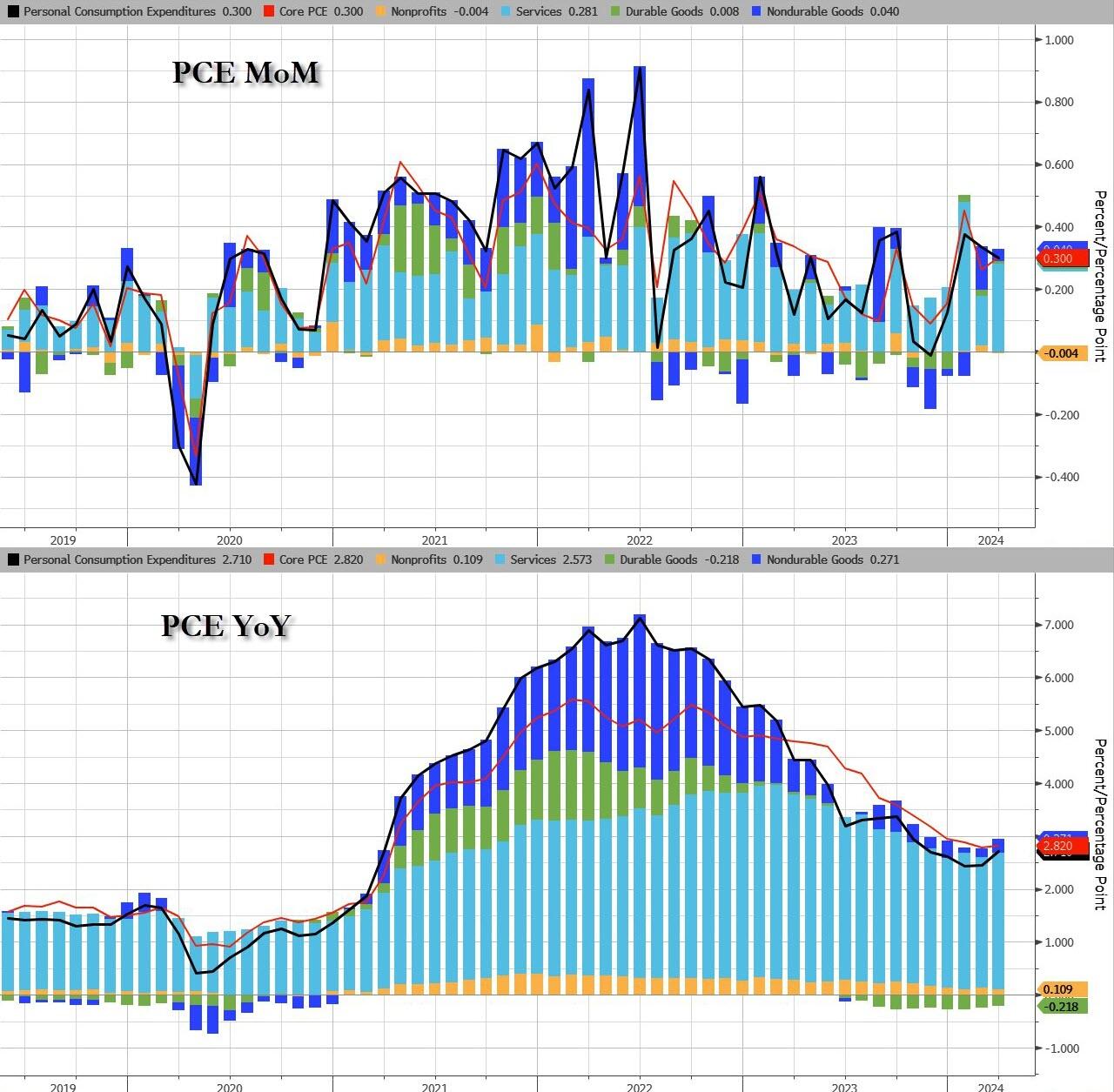
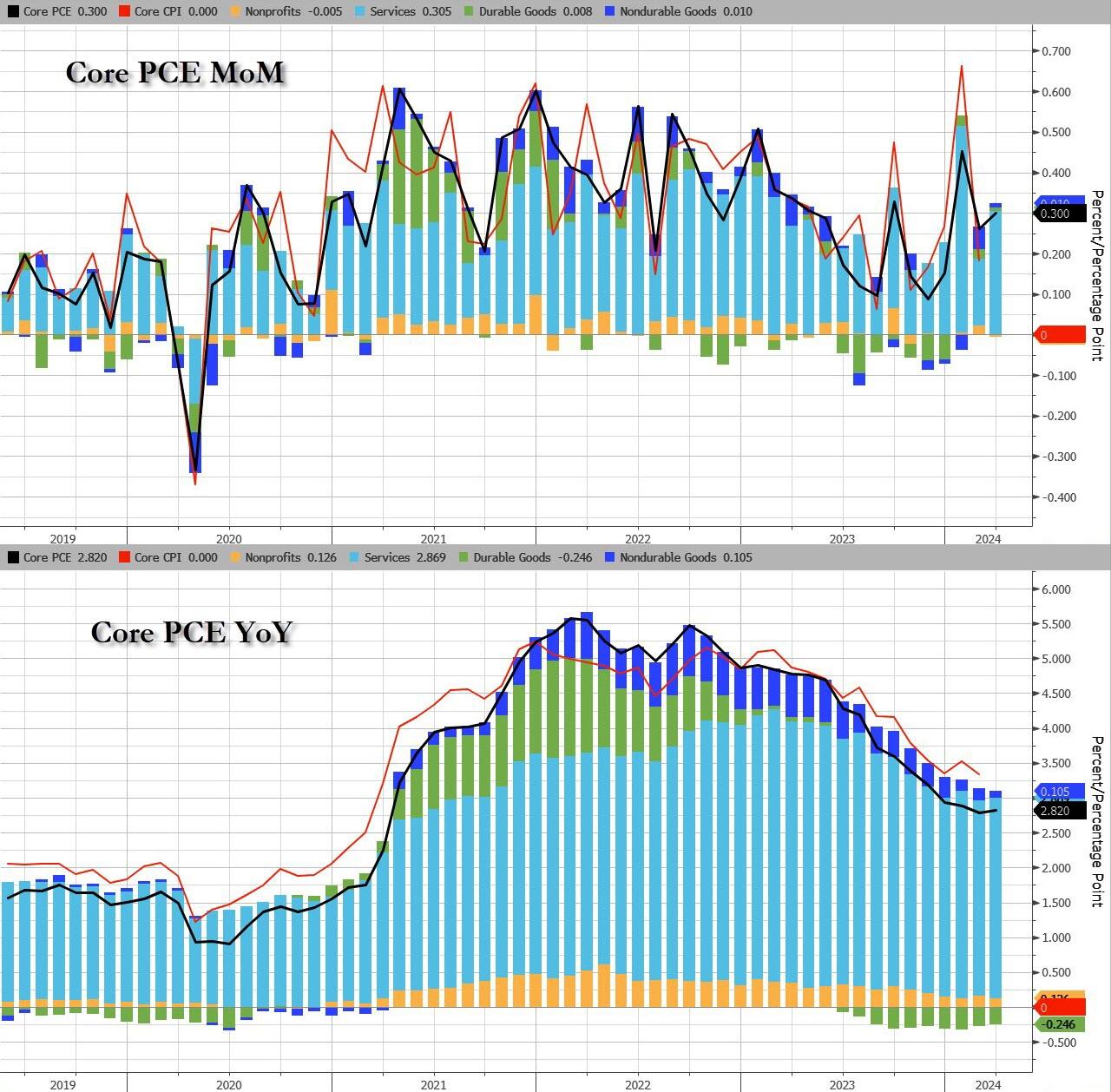
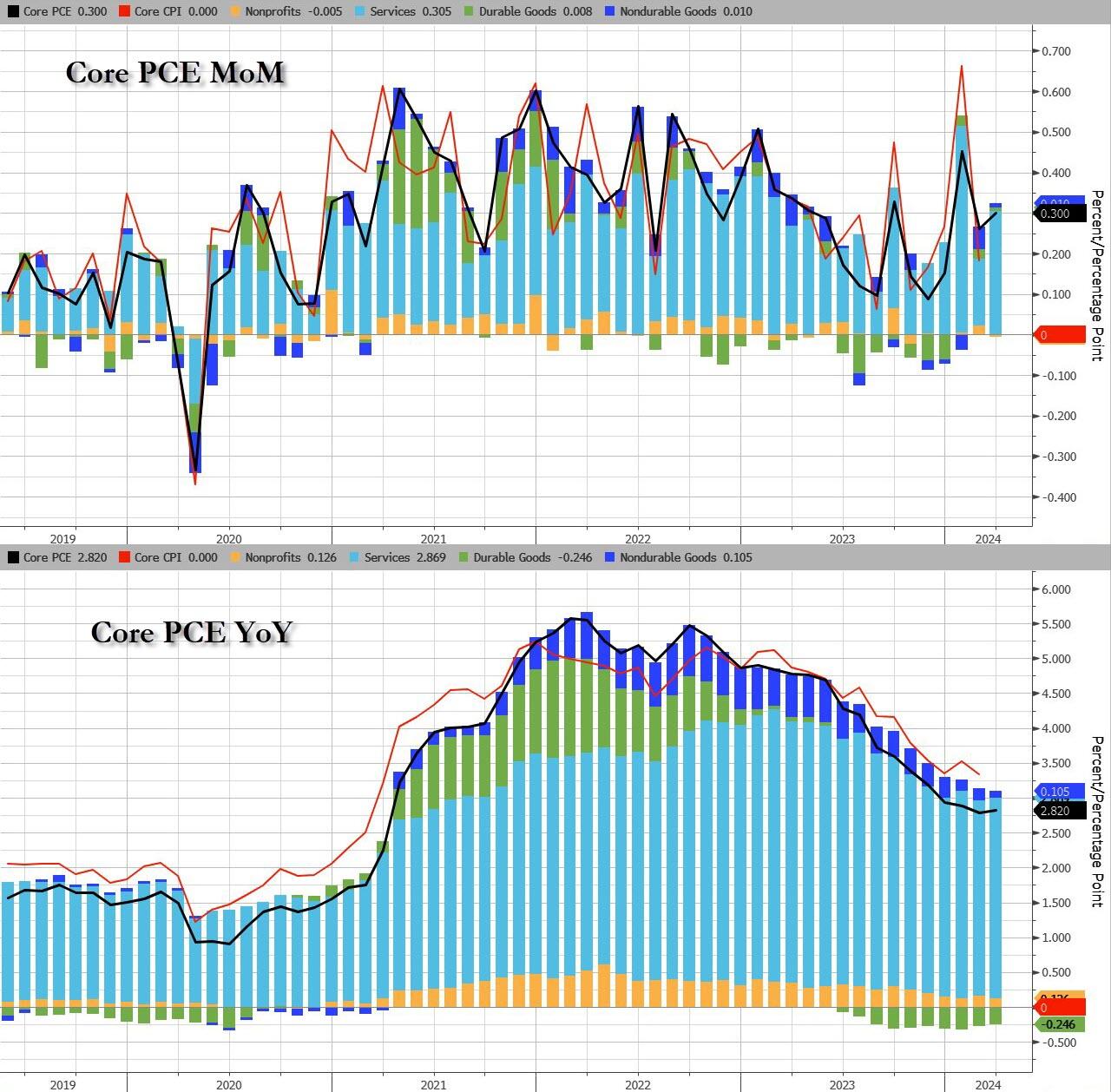
However, both the headline and core PCE Deflator data printed hotter than expected (+2.7% vs +2.6% exp vs +2.5% prior and +2.8% vs +2.7% exp vs +2.8% prior respectively)…

Source: Bloomberg

The silver lining is that this hot PCE print is ‘dovish’ relative to the GDP-based data we saw yesterday, with whisper numbers of +0.4 to +0.5% MoM (vs the +0.3% print).

But still – it’s not good for the doves.

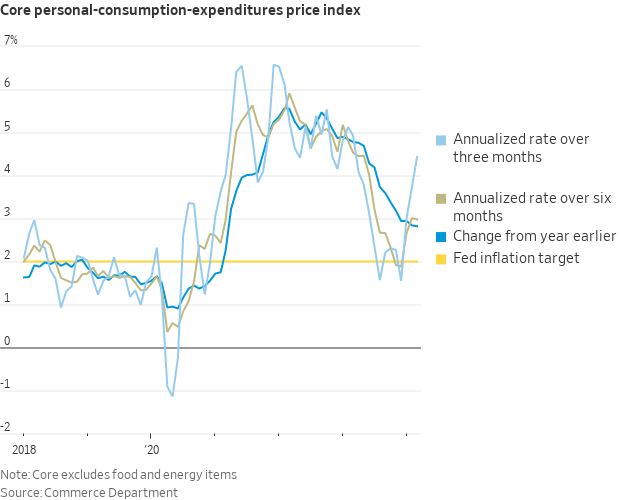
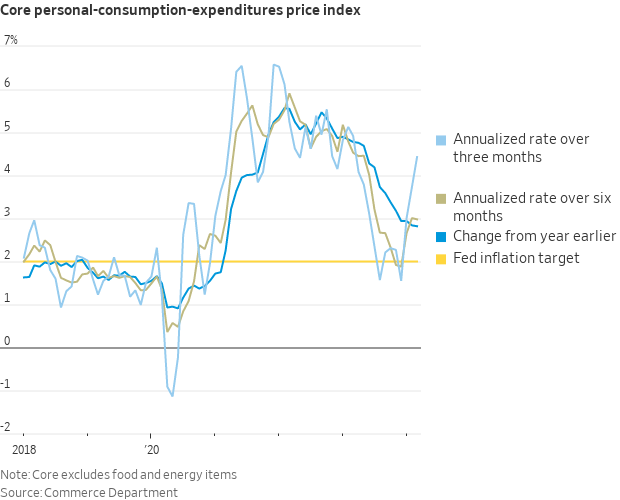
As WSJ Fed Whisperer Nick Timiraos notes, the 3-Month annualized core PCE jumped to 4.4%…

The Service sector led the MoM and YoY acceleration in headline PCE…

Source: Bloomberg

And for Core PCE, it was Services prices too that drove the acceleration…

Source: Bloomberg

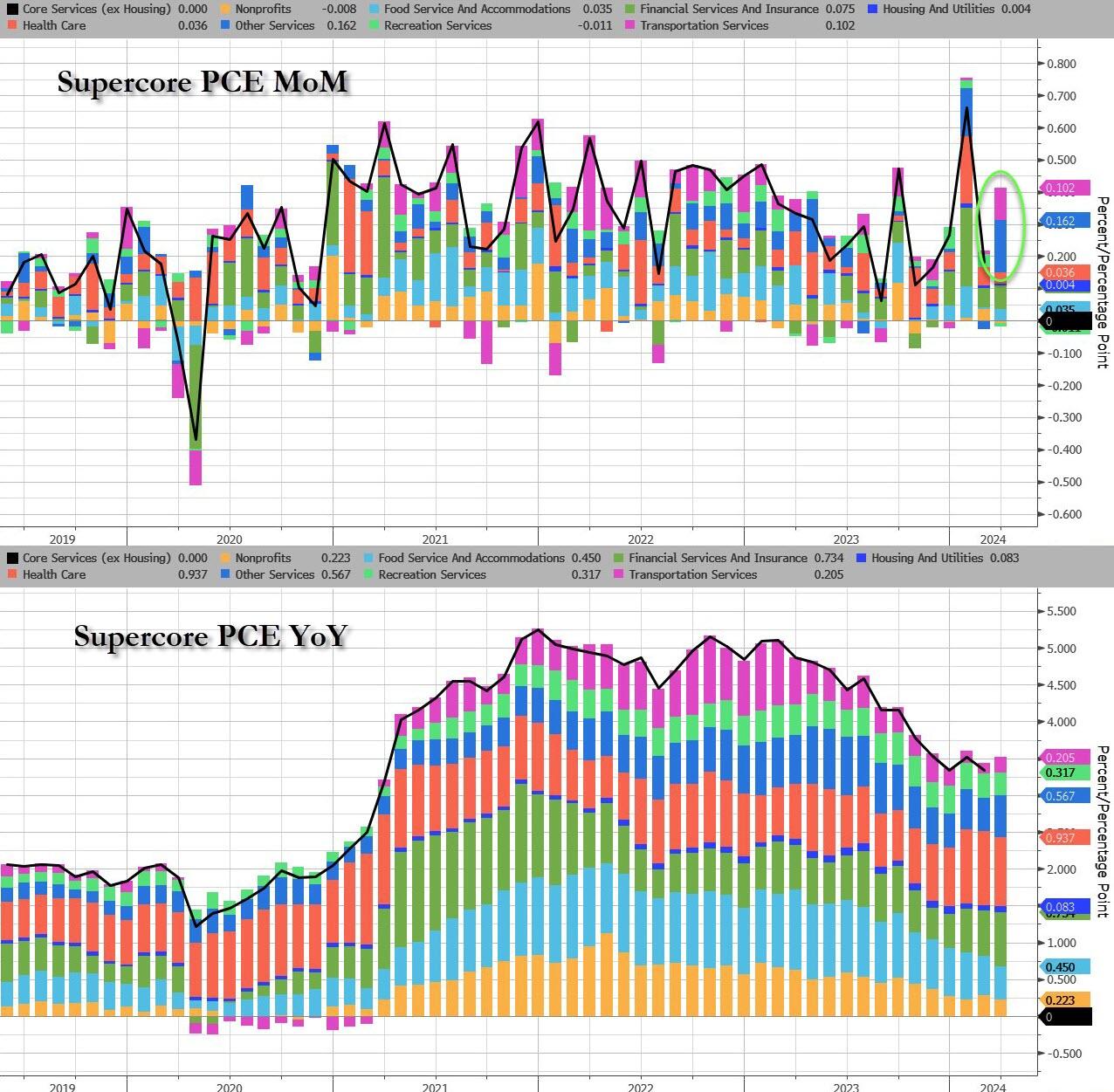
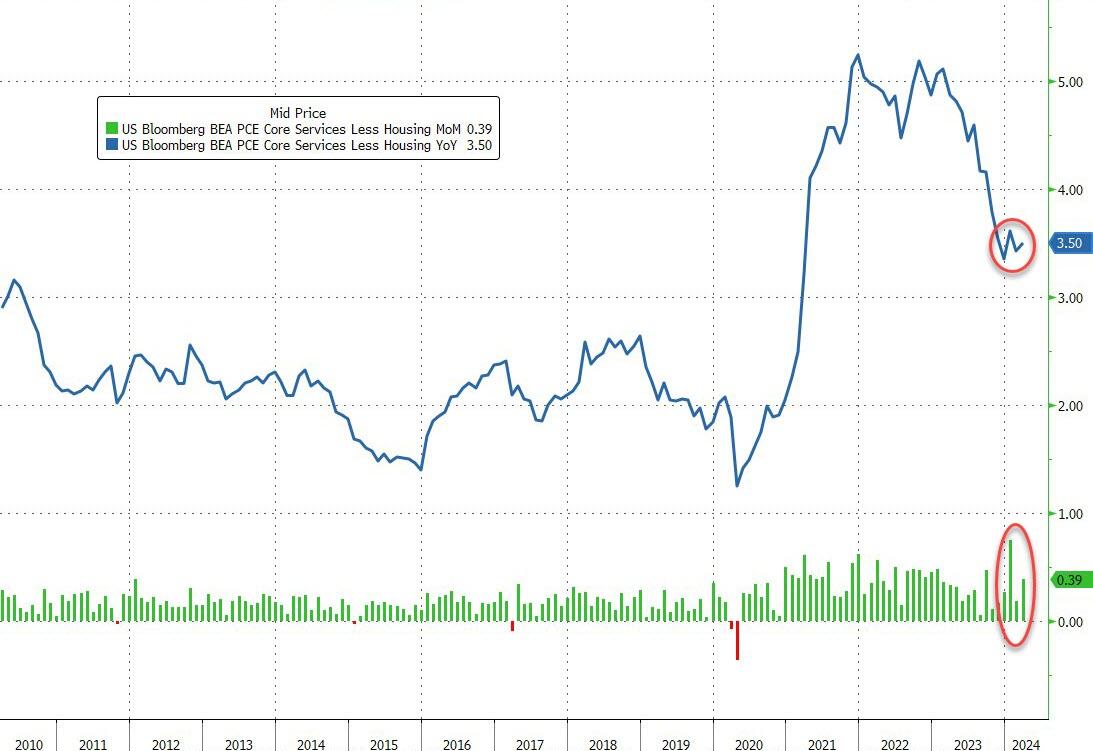
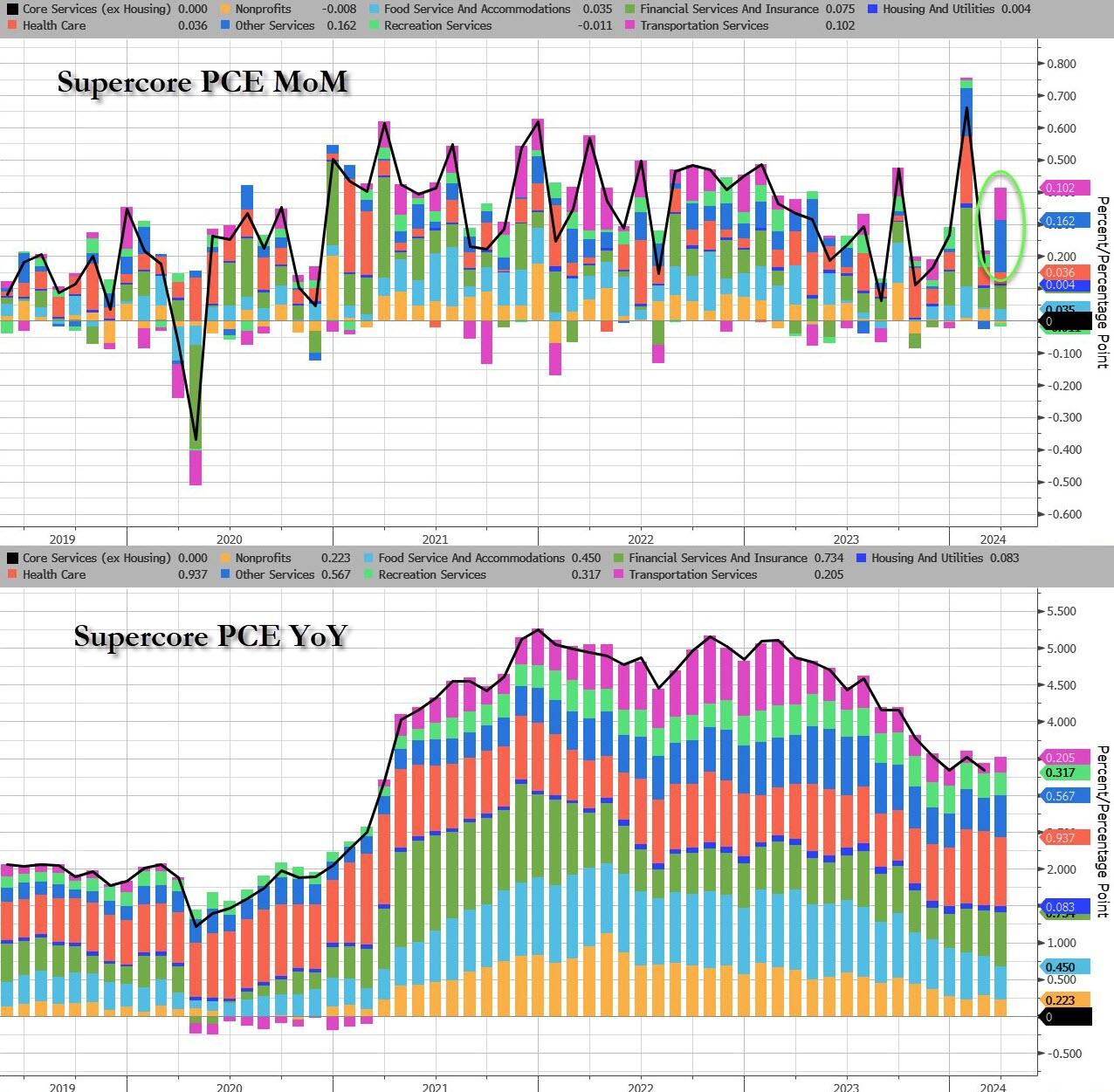
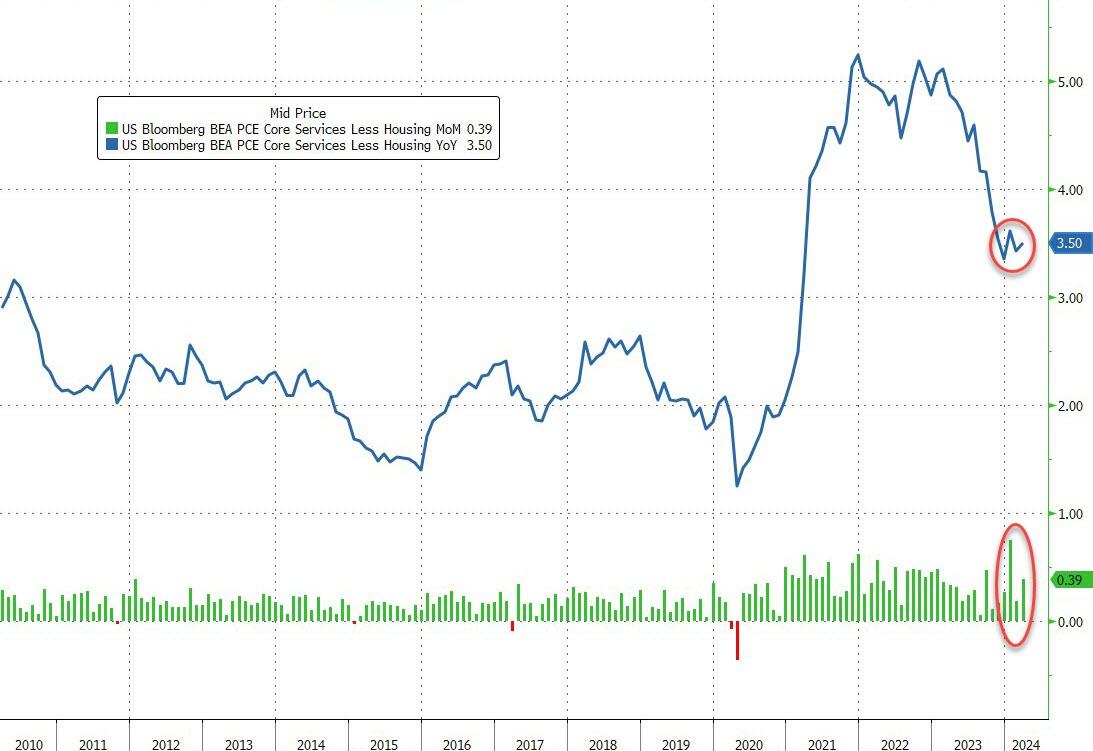
The so-called SuperCore – Services inflation ex-Shelter – rose once again, and was revised higher…

Source: Bloomberg

Stripping it back even further, Transportation Services and ‘Other Services’ were the biggest gainers in SuperCore…

Source: Bloomberg

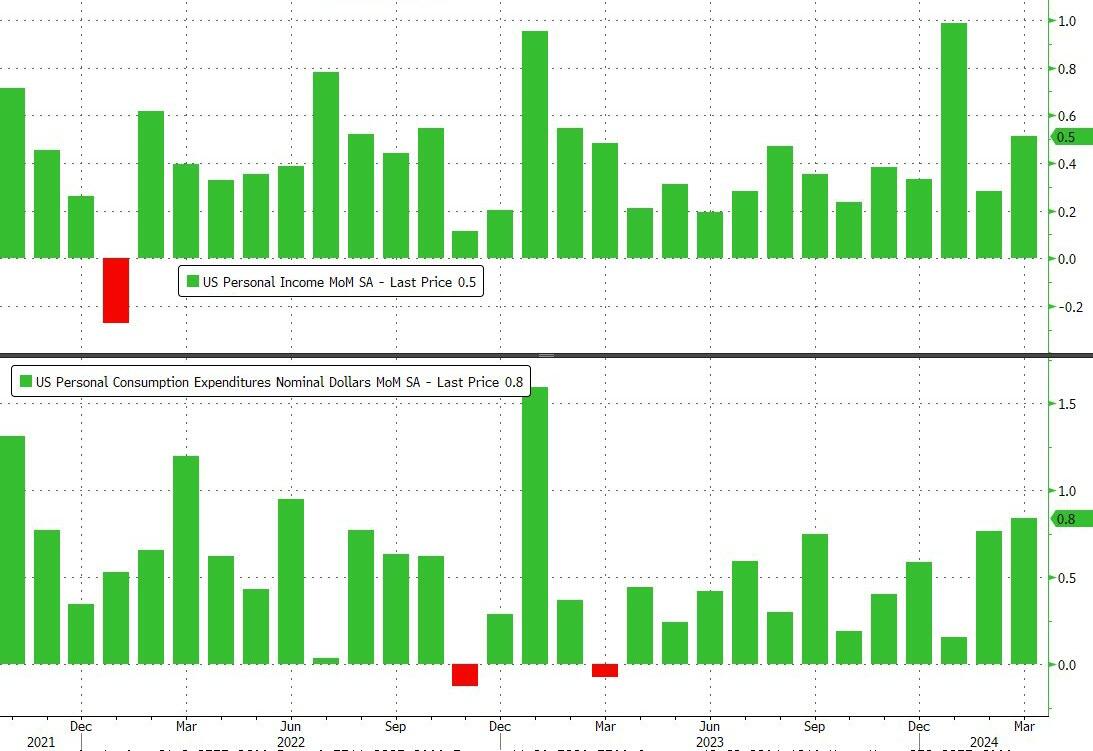
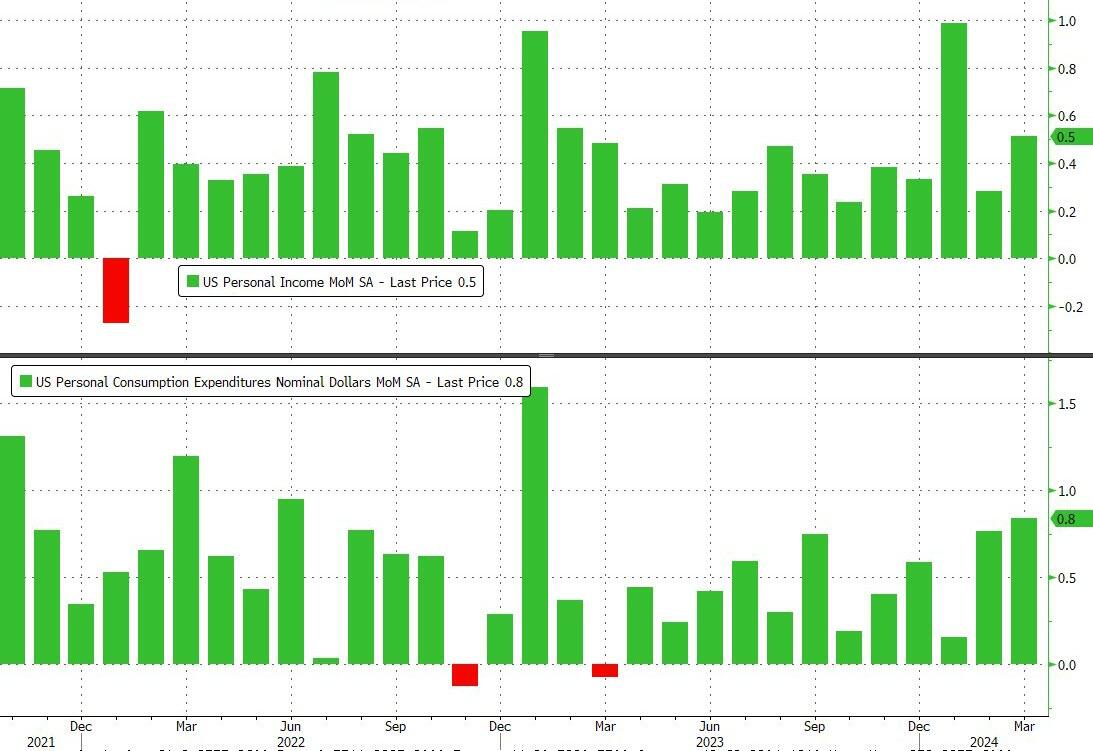
Income and Spending both rose again on a MoM basis with spending outpacing income (again). The 0.8% MoM rise in spending was the highest since Jan 2023…

Source: Bloomberg

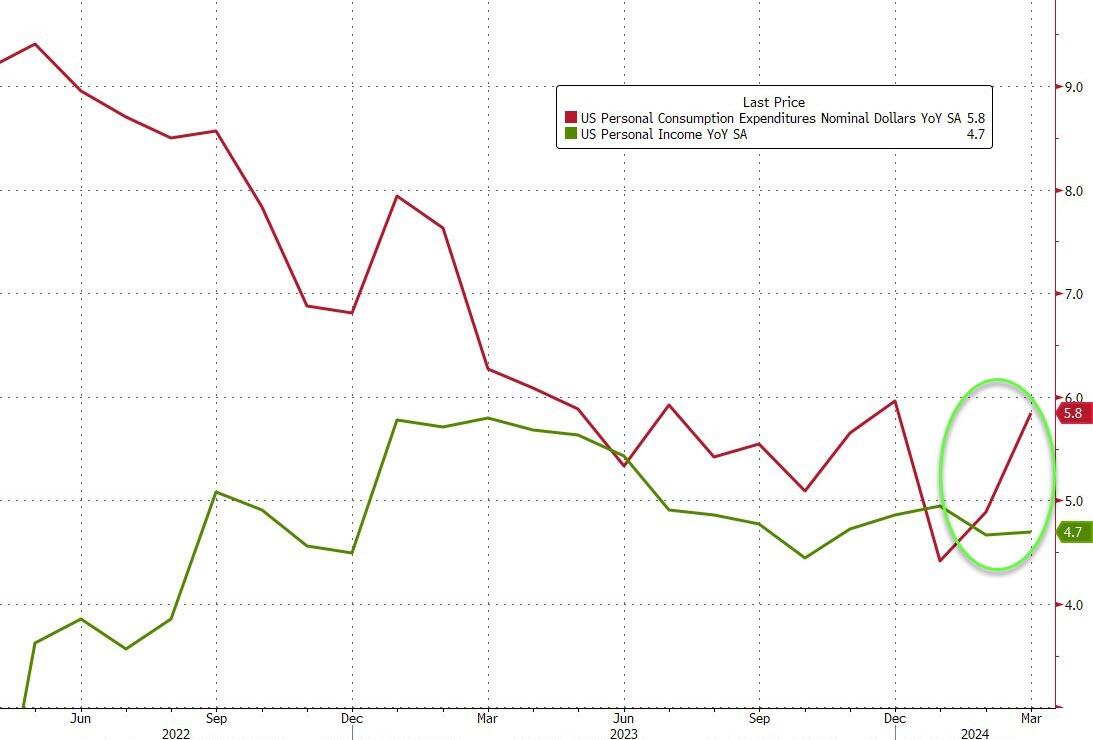
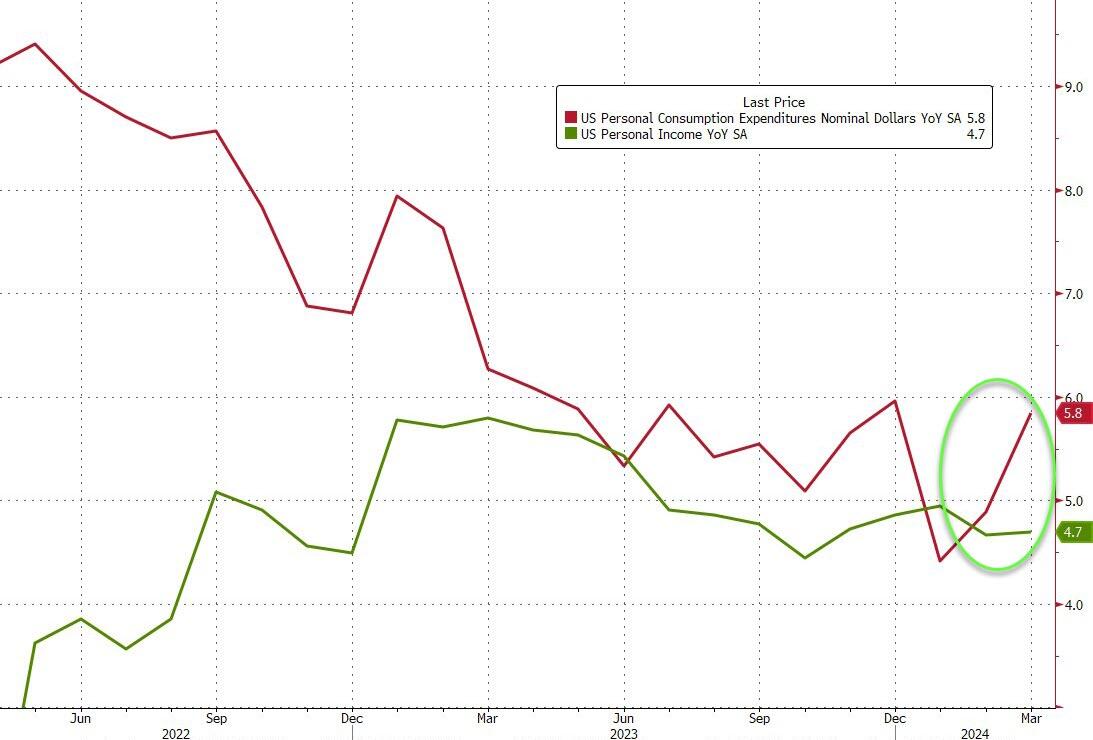
Spending is accelerating fast relative to incomes (on a YoY basis) – and remember this is all nominal

Source: Bloomberg

On the income side, government and private wage growth accelerated:

  • Govt wages rose to 8.5% YoY, from 8.3%, the highest Dec 22
  • Private wages rose to 5.5% YoY, from 5.4%, highest since Dec 22 as well

Source: Bloomberg

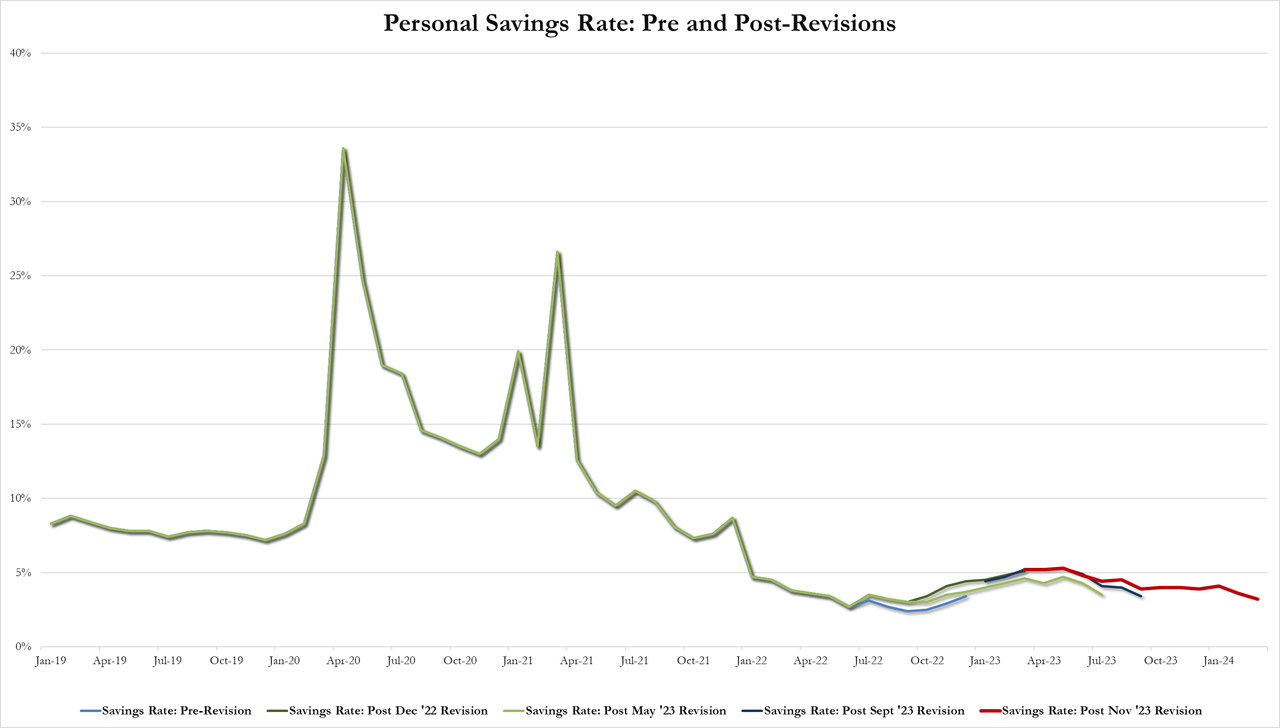
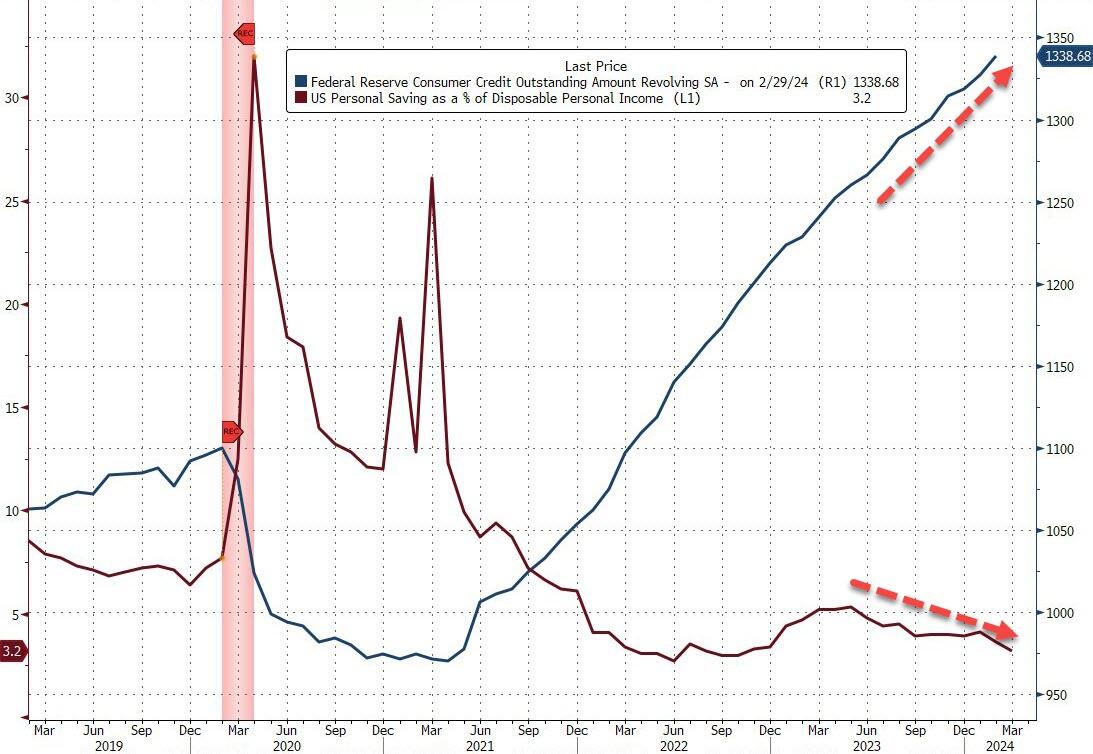
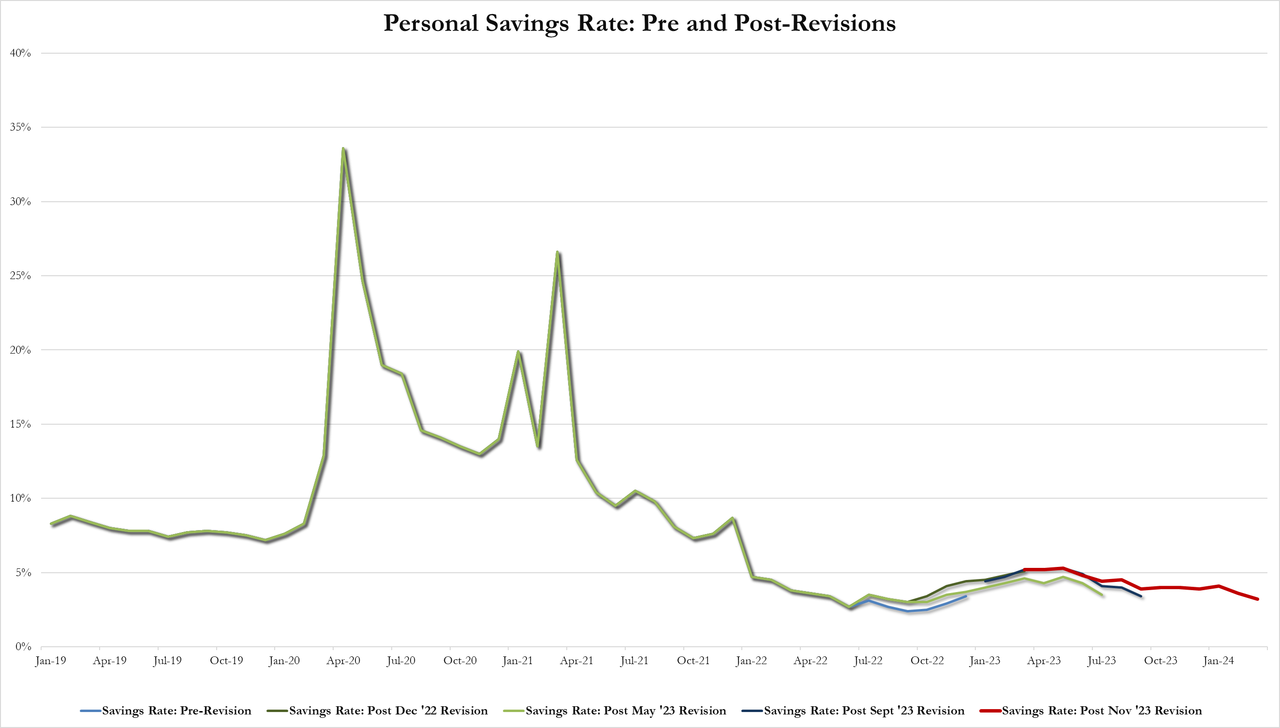
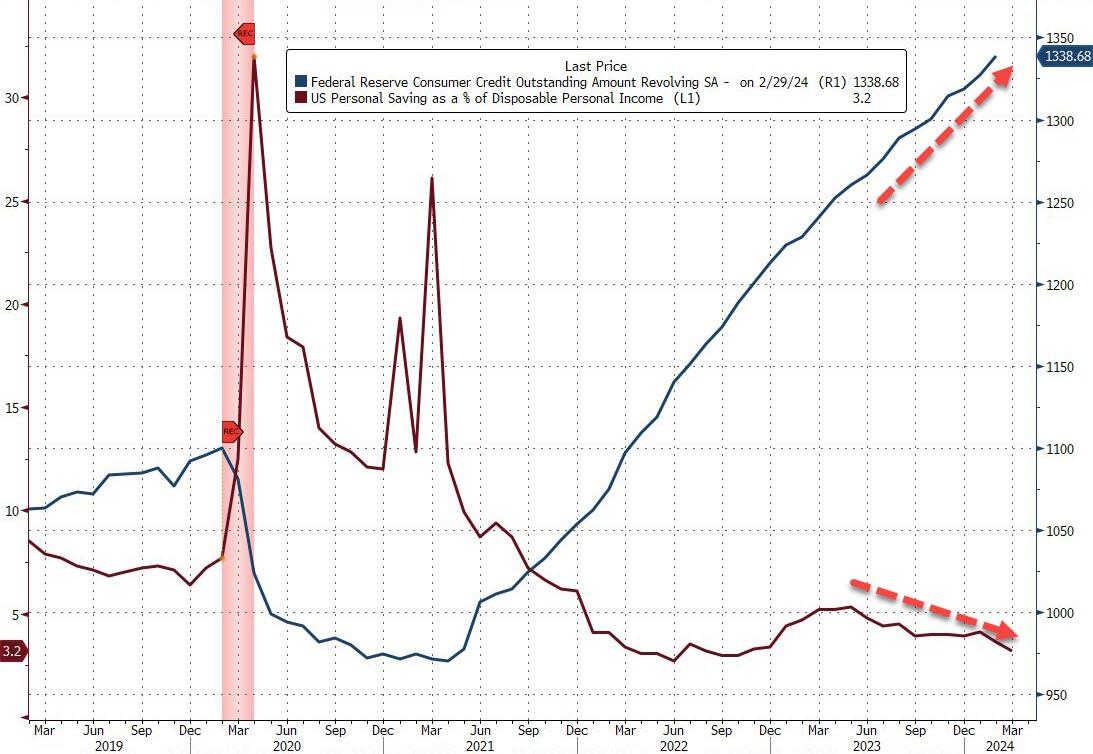
Which meant the personal savings rate plunged to 3.2% from 3.6% – its lowest since Nov 2022…

And the soaring credit card balance explains how people are getting by…

Source: Bloomberg

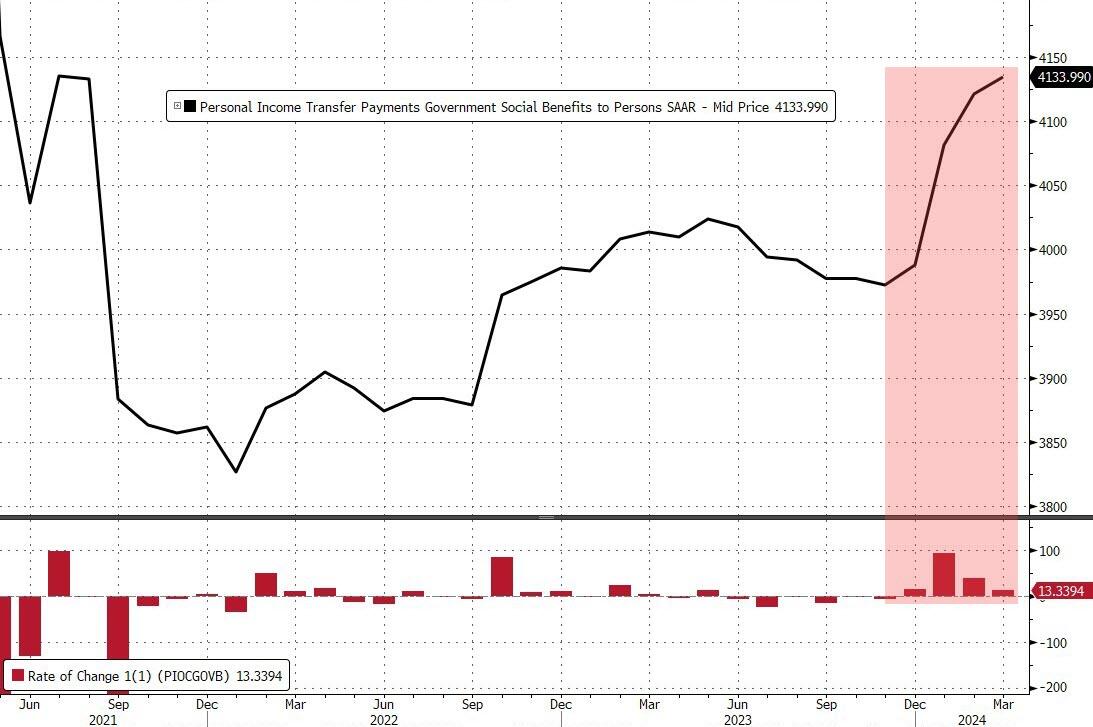
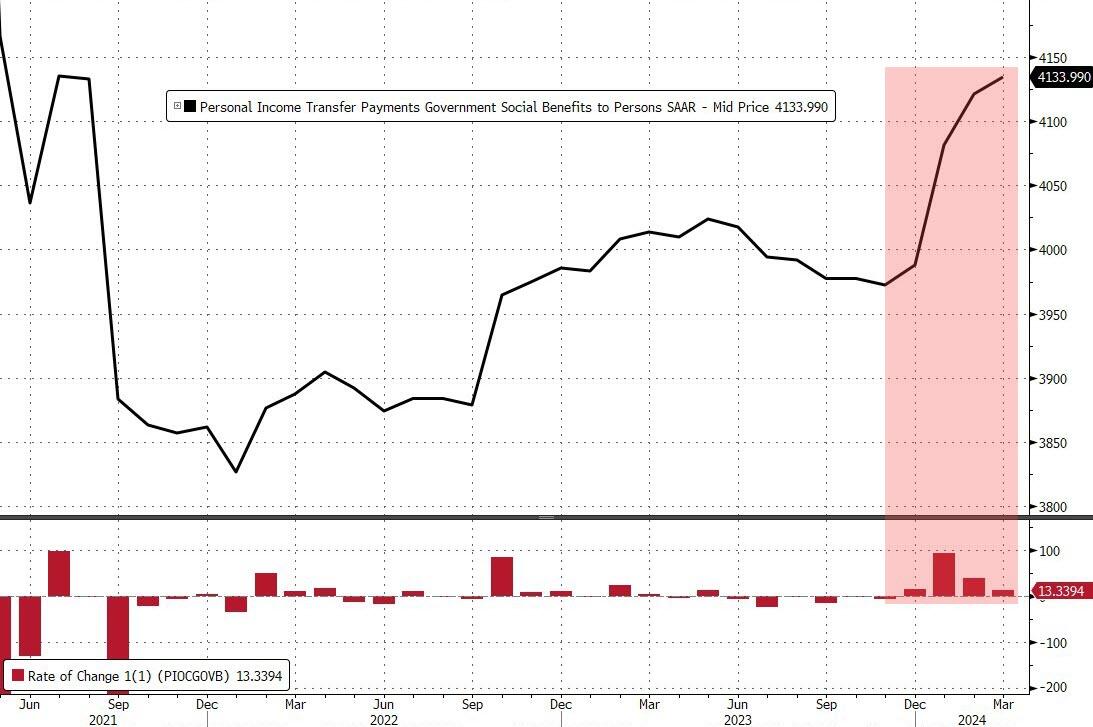
And all this amid the fourth straight month of government handouts…

Source: Bloomberg

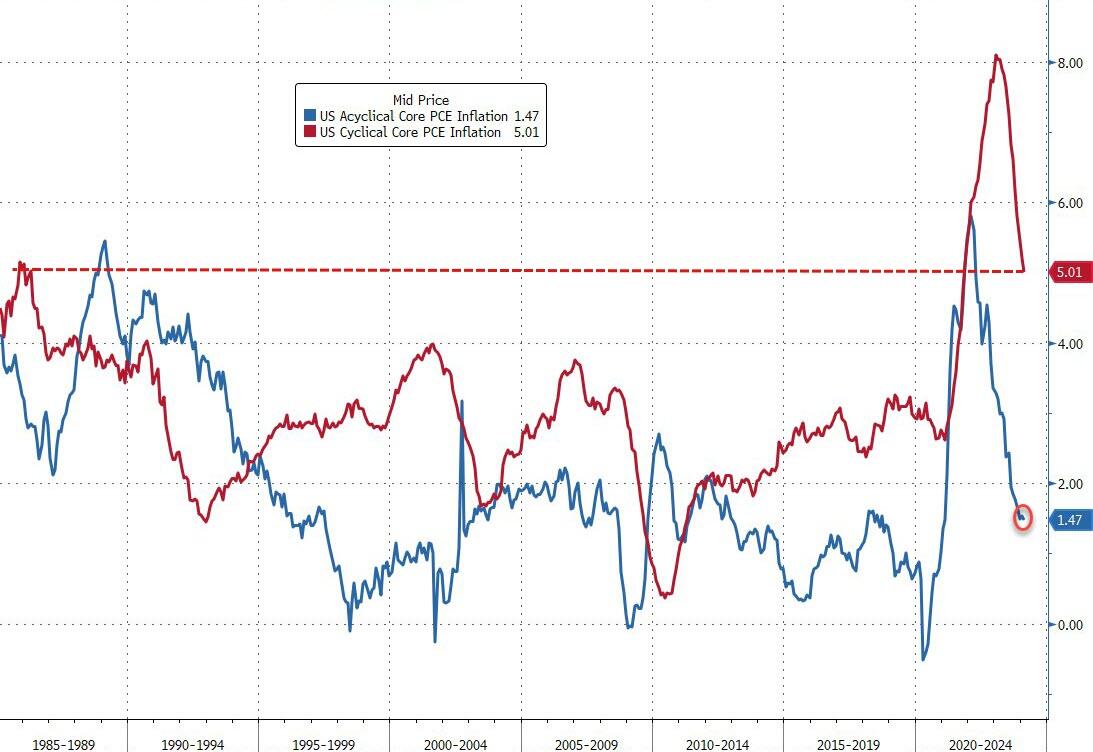
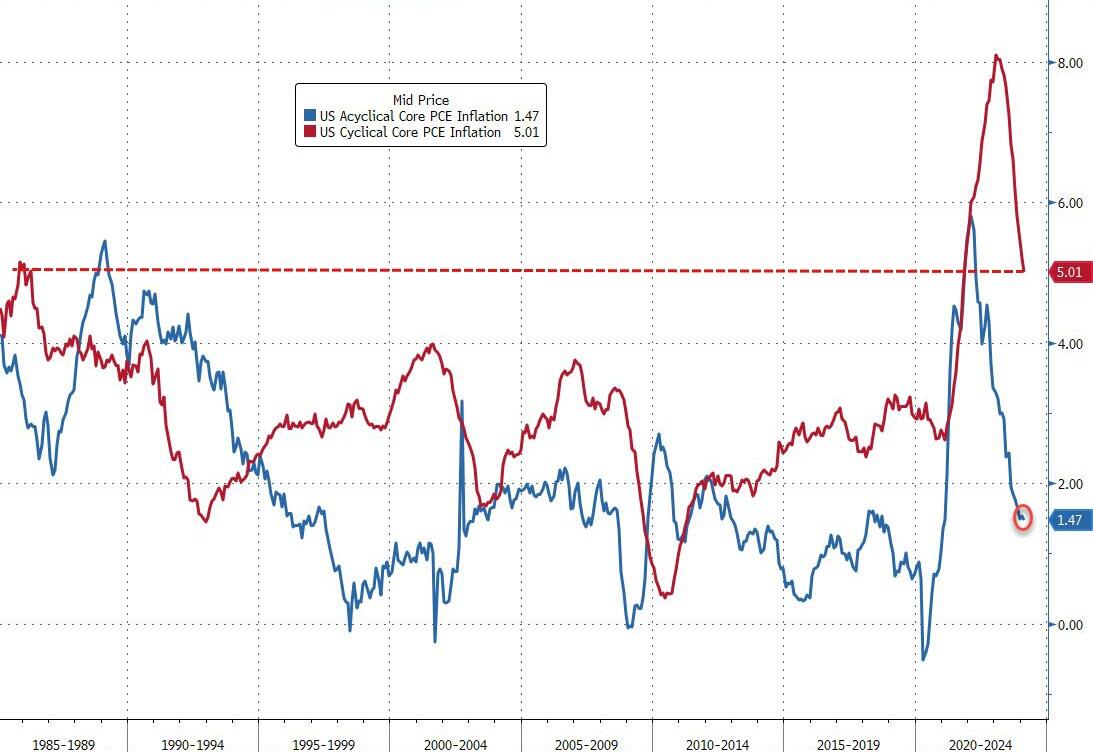
Finally, while the markets are exuberant at the survey-based disinflation, we do note that it’s not all sunshine and unicorns. The vast majority of the reduction in inflation has been ‘cyclical’

Source: Bloomberg

Acyclical Core PCE inflation remains extremely high, although it has fallen from its highs.

Is The (apolitical) Fed going to be able to cut at all this year like Joe Biden said they would?

Traders Now Pricing In One Rate Cut This Year, But Not Until The End Of 2024, After The Election (Home Prices UP 32.5% Under Biden, Mortgage Rates UP 160%)

The Federal Reserve is playing the song “Don’t rock the boat” ahead of the Presidential election. Despite the horrible economic news.

1) 4 months of hotter inflation (like today’s stagflationary GDP report)

2) Nearly 1.5 million full-time jobs decline with 1.9 part-time jobs created over a year

3) $2 trillion annual deficits

Leading traders to price in 1 rate cut in December 2024. AFTER THE PRESIDENTIAL ELECTION!

Under Biden, home prices are up 32.5% and conforming 30Y mortgage rates are UP 160%.

One of my colleagues at George Mason University in finance (an economics PhD) constantly quoted Lenin’s famous “You have to break a few eggs to make an omelet.” But why is it always OUR eggs that have to be cracked, never the wealthy elite.